
Should You Eat Carbs at Night? (The Science Behind It)
⚠️ Disclaimer: The information in this article is for general educational purposes only and does not constitute medical, nutritional, or professional fitness advice. Individual results may vary. Always consult a qualified healthcare professional or certified fitness trainer before starting any new exercise program, changing your diet, or making decisions about injury treatment or recovery. If you experience pain, discomfort, or any unusual symptoms during exercise, stop immediately and seek professional guidance.
The Science of Nighttime Carbohydrates: What the Research Actually Shows
Few nutritional beliefs are as widespread and as poorly supported by evidence as the idea that eating carbohydrates at night causes fat gain. The notion — often stated as absolute fact in fitness circles — is that carbohydrates consumed in the evening hours are preferentially stored as fat because metabolism slows at night, insulin sensitivity is lower, and the body has no immediate use for the energy. I believed this for years, avoiding carbohydrates after 6pm with dietary discipline that produced social inconvenience and training performance problems, before reading the actual research and discovering that the rule I had followed religiously was not well-supported by controlled experimental evidence. Understanding what the science actually shows — rather than what popular fitness culture asserts — produces a more nuanced, more practical, and ultimately more effective nutritional approach to the question of when to eat carbohydrates.
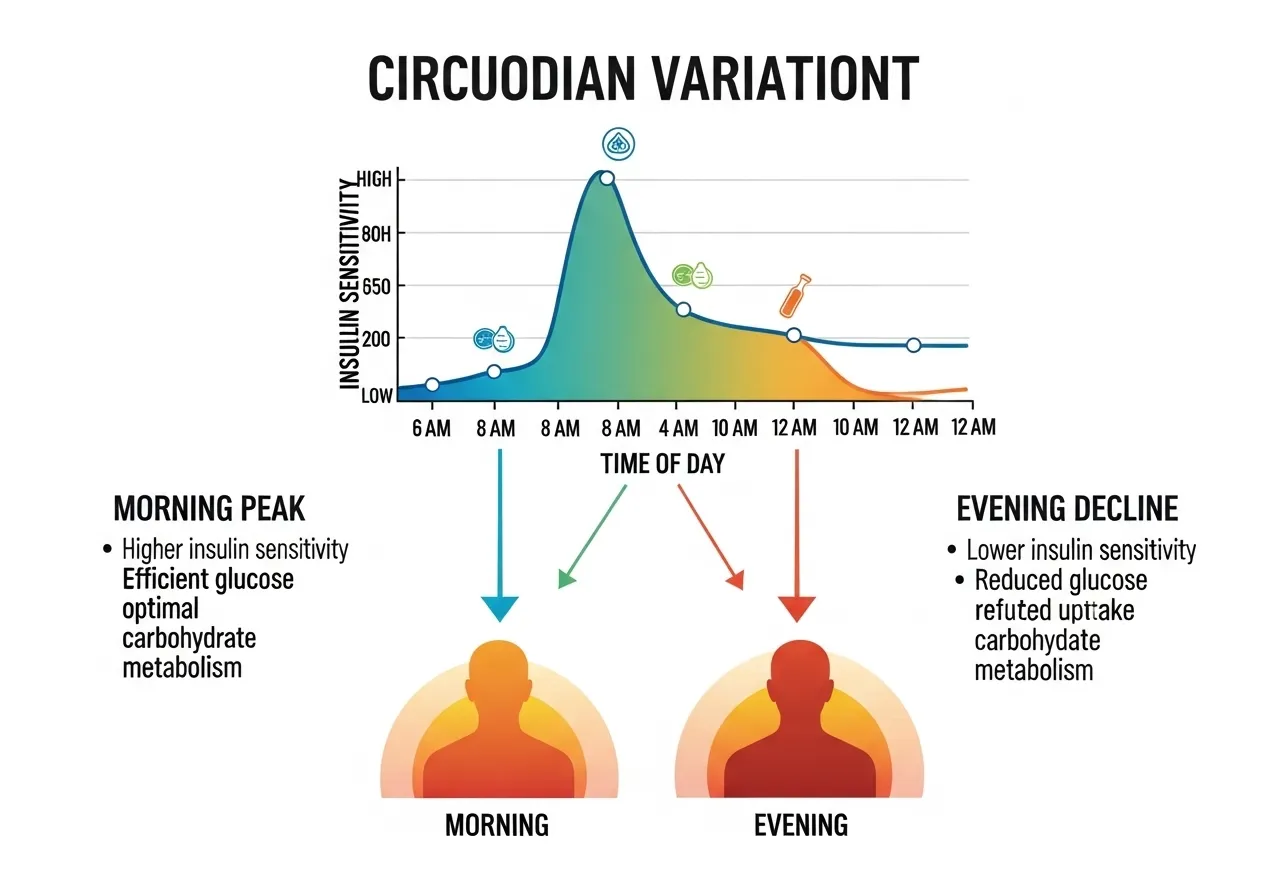
The biological case for avoiding nighttime carbohydrates rests on two premises: that metabolism slows dramatically during sleep, reducing caloric utilization; and that insulin sensitivity is lower at night, meaning carbohydrates are processed less efficiently and more likely to be stored as fat. Both premises have some physiological basis but are substantially overstated in their implications for practical nutrition. Metabolic rate during sleep is not dramatically lower than daytime resting metabolic rate — it declines approximately 10–15% during light sleep stages and somewhat more during deep sleep, but remains active throughout the night as the body performs the tissue repair, protein synthesis, immune function, and hormonal secretion that make sleep the most metabolically important period of the 24-hour cycle. Insulin sensitivity does follow a circadian pattern, with somewhat lower sensitivity in the late evening compared to morning, but the magnitude of this difference is modest in healthy individuals and does not translate into meaningfully different fat storage outcomes from carbohydrate-containing meals across the day.
What Controlled Research Shows About Nighttime Carbs and Fat Loss
The most direct evidence on the question of nighttime carbohydrates and fat loss comes from controlled trials comparing isocaloric diets with carbohydrates distributed differently across the day. Research published in the American Journal of Clinical Nutrition comparing nighttime carbohydrate consumption to daytime carbohydrate consumption at equivalent total caloric intake found no significant difference in fat loss outcomes between the two conditions. A notable Israeli study specifically designed to examine the effect of nighttime carbohydrate concentration found that subjects consuming the majority of their daily carbohydrates at dinner — the opposite of conventional advice — lost more weight and fat, reported better satiety throughout the day, and had better hormonal markers (lower cortisol, better adiponectin profiles) at 6 months than subjects consuming carbohydrates spread evenly throughout the day. The mechanisms proposed for this counterintuitive finding: concentrating carbohydrates at the evening meal produces a larger insulin response that suppresses appetite hormones more effectively for the following morning, and the circadian effects on leptin (the satiety hormone that peaks in the early morning hours after an evening carbohydrate-stimulated insulin response) may support daytime appetite control. While this single study is not sufficient to establish evening carbohydrate consumption as universally superior to daytime distribution, it is sufficient to refute the claim that nighttime carbohydrates are metabolically inferior for fat loss compared to daytime consumption.
Circadian Rhythm and Carbohydrate Metabolism: The Real Nuance
The circadian rhythm does influence carbohydrate metabolism in ways that have practical relevance — but the implications are more nuanced than the simple “don’t eat carbs at night” rule acknowledges. Research on circadian variation in glucose tolerance finds that the same glucose load produces higher peak blood glucose and slower clearance in the evening compared to the morning — confirming that insulin sensitivity is somewhat lower in the evening hours. However, this circadian glucose tolerance variation is substantially modulated by prior physical activity: exercise performed in the hours preceding a meal dramatically improves insulin sensitivity and glucose uptake in the active muscles, largely offsetting the circadian disadvantage of evening carbohydrate consumption for athletes who train in the afternoon or evening. For athletes who train at 5–8pm, the post-exercise period is when insulin sensitivity in muscle tissue is at its daily maximum — the opposite of what the “low evening insulin sensitivity” rule implies — making post-workout evening carbohydrate consumption an insulin-sensitive window rather than a metabolically unfavorable one. The circadian glucose tolerance disadvantage is most relevant for sedentary individuals consuming large carbohydrate loads in the late evening without preceding physical activity, not for athletes whose evening training session has prepared the metabolic environment for carbohydrate utilization.
The Role of Total Daily Caloric Intake vs. Meal Timing
The fundamental principle that the research consistently supports is that total daily caloric intake — not the timing of those calories across the day — is the primary determinant of fat loss or fat gain outcomes. A caloric deficit of 400 calories per day produces fat loss regardless of whether those calories are distributed in 3 daytime meals, 5 small meals, a 16:8 intermittent fasting window, or a reverse approach concentrating calories in the evening. Studies comparing matched caloric intake and macronutrient distribution across different meal timing patterns consistently find negligible differences in fat loss outcomes attributable to timing alone — the caloric deficit is doing the work, and the timing of that deficit’s creation is secondary. This conclusion does not mean timing is entirely irrelevant — it means that timing is a second-order optimization that produces meaningful differences only in the context of already-adequate total intake management and appropriate macronutrient distribution. For someone whose total caloric intake is significantly above their fat loss target, optimizing the timing of those excess calories will produce essentially no fat loss benefit — the priority is establishing the deficit first and timing second.
Glycogen Storage at Night: The Athlete’s Perspective
For athletes with significant training demands, the question of nighttime carbohydrates has a specific dimension that differs from the general population considerations above: overnight glycogen replenishment. Muscle glycogen — the stored carbohydrate that fuels high-intensity training — is depleted by training and requires dietary carbohydrates to replenish. The rate of glycogen resynthesis is highest in the first 30–60 minutes post-exercise but continues at an elevated rate for several hours afterward, meaning that carbohydrates consumed in the evening following an afternoon training session are actively utilized for glycogen replenishment rather than passively processed without immediate demand. An athlete who trains at 6pm and consumes carbohydrates at dinner is filling depleted muscle glycogen stores for the following day’s training — a metabolically important and physiologically appropriate use of the ingested carbohydrates that is entirely consistent with body composition goals when total caloric intake is managed correctly. For this athlete, avoiding carbohydrates at dinner impairs recovery and next-day training quality without producing any measurable body composition benefit — a straightforward trade-off that the research supports avoiding.
The Satiety Argument for Evening Carbohydrates
One of the most practically relevant findings from nighttime carbohydrate research is that consuming a substantial portion of daily carbohydrates at the evening meal — rather than throughout the day — produces better appetite control in the following morning and reduces overall daily food intake in some populations. The mechanism: carbohydrates stimulate insulin secretion, which suppresses ghrelin (the primary hunger hormone) and this suppression persists into the following morning, producing lower breakfast hunger and easier dietary adherence throughout the day. People who eat a carbohydrate-containing dinner report less morning hunger and lower spontaneous food intake than those who front-load carbohydrates and consume a lighter, lower-carbohydrate dinner — a finding with direct practical implications for people who struggle with morning hunger and overeating at breakfast. Whether this effect applies universally or varies with individual metabolic phenotype is not fully established, but it provides a mechanistic rationale for some people finding that keeping carbohydrates at dinner improves overall daily dietary control more effectively than distributing them earlier in the day.
Sleep Quality and Nighttime Carbohydrates: The Tryptophan Connection
Beyond fat loss and glycogen replenishment, nighttime carbohydrate consumption has a sleep quality dimension that is directly relevant to athletes for whom sleep is the primary recovery mechanism. Tryptophan — an essential amino acid and the precursor to serotonin (which converts to melatonin) — competes with other large neutral amino acids for transport across the blood-brain barrier. When carbohydrates are consumed alongside tryptophan-containing foods (dairy, turkey, eggs, nuts), the resulting insulin response clears competing amino acids from circulation, improving tryptophan’s brain uptake and increasing serotonin and melatonin synthesis. Research on carbohydrate consumption before sleep consistently finds faster sleep onset and improved sleep quality in subjects who consumed moderate carbohydrates (25–30g) 1–2 hours before bed compared to those who avoided carbohydrates entirely in the evening. For athletes whose sleep quality directly determines recovery and next-day training performance, this tryptophan-facilitation mechanism provides a physiological rationale for moderate evening carbohydrate consumption that is independent of the body composition arguments entirely. The pre-sleep carbohydrate does not need to be large — a small serving of oats, a piece of fruit, or rice alongside a protein-containing evening snack provides the tryptophan uptake facilitation that supports melatonin synthesis without adding meaningful caloric excess beyond the day’s targets.
Individual Variation: Who Should Eat Carbs at Night and Who Shouldn’t
The research on nighttime carbohydrates does not produce a uniform recommendation for all people — individual variation in insulin sensitivity, training timing, lifestyle schedule, and metabolic health creates genuine differences in how different people respond to evening carbohydrate consumption. Individuals who benefit most from evening carbohydrates: athletes who train in the afternoon or evening (post-exercise insulin sensitivity makes evening carbohydrates metabolically appropriate for glycogen replenishment); people who experience high morning hunger that impairs dietary adherence throughout the day (evening carbohydrates may blunt morning ghrelin more effectively); and people whose work or lifestyle schedules make significant daytime carbohydrate consumption impractical (the flexibility to consume carbohydrates at dinner allows dietary adequacy within practical constraints). Individuals who may do better limiting evening carbohydrates: people with diagnosed insulin resistance or type 2 diabetes (the circadian glucose tolerance decline is clinically more significant in metabolically compromised individuals); people who find that evening carbohydrates trigger appetite and overeating rather than suppressing it (individual response varies, and some people experience carbohydrate-stimulated appetite increase rather than suppression); and people who train exclusively in the morning and have fully replenished glycogen stores by evening with no next-day training until later the following day (the glycogen replenishment rationale is weaker in this schedule). The rule “don’t eat carbs at night” is wrong as a universal prescription — the appropriate guidance is to eat carbohydrates when they support training performance, recovery, and dietary adherence, which for many athletes means evening is a perfectly appropriate time.
The research summary: eating carbohydrates at night does not inherently cause fat gain, does not produce meaningfully worse fat loss outcomes than daytime carbohydrate consumption at equivalent total caloric intake, and in some contexts — particularly for athletes training in the evening and people who benefit from the satiety effects of evening carbohydrate consumption — produces superior outcomes. The total daily caloric deficit is the determining variable; the timing of carbohydrate consumption within that deficit is a secondary consideration whose practical importance has been dramatically overstated by popular fitness culture relative to what controlled research supports. The evidence base reviewed in this section consistently points toward the same conclusion: the nighttime carbohydrate restriction rule, while intuitively appealing and widely repeated, is not supported by the controlled research evidence on meal timing and body composition. Athletes who implement the evidence-based framework described here — prioritizing total caloric management and protein adequacy over carbohydrate timing rules — will find both better training performance and more sustainable dietary adherence than the rigid timing approach produces.

How Carbs at Night Affect Fat Loss, Muscle Gain, and Body Composition
Understanding how nighttime carbohydrate consumption specifically affects the three primary body composition outcomes — fat loss rate, muscle gain, and overall body composition trajectory — provides the practical framework for deciding how to manage carbohydrate timing in your own diet. The effects are different for each outcome, and the optimal approach for someone primarily pursuing fat loss differs from the optimal approach for someone in a muscle-building phase or attempting body recomposition. This section addresses each outcome specifically, with the research evidence that informs the recommendation.
Fat Loss: The Evidence That Timing Doesn’t Determine Outcome
The dominant finding across controlled research on meal timing and fat loss is that caloric deficit magnitude, not meal timing, determines fat loss rate. Studies comparing multiple meal timing approaches at identical caloric intakes — including research comparing breakfast-heavy versus dinner-heavy carbohydrate distribution, early versus late eating windows in time-restricted feeding protocols, and uniform versus skewed caloric distributions — consistently find that the fat loss difference attributable to timing alone, at equivalent total calories and macronutrients, is small to negligible over 8–24 week periods. The practical implication: if you are in a consistent caloric deficit consuming appropriate protein, the distribution of carbohydrates across morning versus evening meals is not a meaningful fat loss variable. Directing attention and effort toward managing total caloric intake and protein adequacy — the variables with strong evidence for large effect sizes — rather than carbohydrate timing — a variable with weak evidence for small effect sizes — produces better time-on-task investment for fat loss outcomes. The exception worth acknowledging: some research suggests that very late eating (consuming a significant portion of daily calories in the 2–3 hours before sleep) may be associated with worse body composition outcomes, potentially through sleep quality disruption from large meals that compete with thermoregulatory sleep onset requirements. This exception applies to large, heavy evening meals eaten immediately before sleep — not to moderate evening carbohydrate consumption 2–3 hours before bedtime that falls within normal dinner timing.
Muscle Gain: Why Evening Carbohydrates Matter for Anabolism
For athletes in a muscle-building phase, the argument for including substantial carbohydrates in the evening meal is stronger than the fat loss context suggests — because muscle protein synthesis and glycogen availability during the overnight recovery period directly influence the adaptation outcomes from resistance training. Carbohydrates consumed at dinner provide the circulating glucose and insulin environment that supports muscle protein synthesis alongside the protein in the evening meal — insulin’s anabolic signaling complements dietary amino acids in driving the muscle protein synthesis that converts training stimulus into muscle hypertrophy. Research on muscle protein synthesis across the day consistently finds that protein is most anabolically effective when consumed alongside sufficient carbohydrates to produce an insulin response that suppresses muscle protein breakdown — making carbohydrate-inclusive evening meals more anabolically effective than protein-only or low-carbohydrate evening meals for muscle building. Additionally, glycogen availability at the start of the next morning’s or afternoon’s training session is partially determined by evening carbohydrate intake — athletes who consume adequate carbohydrates at dinner begin the following day’s training with fuller glycogen stores, supporting higher training quality and the progressive overload that drives muscle adaptation. For athletes training twice per day or on consecutive days, evening carbohydrate adequacy is directly connected to the next session’s performance quality through overnight glycogen resynthesis.
Insulin Sensitivity at Night: How Much Does It Actually Matter?
The concern about lower evening insulin sensitivity — the physiological basis for much of the anti-nighttime-carb advice — deserves a more complete examination than popular fitness discussion typically provides. Insulin sensitivity does follow a circadian rhythm with a genuine morning-to-evening decline in glucose tolerance in healthy individuals, as confirmed by controlled glucose tolerance testing across the day. However, several factors substantially modulate this pattern in ways that reduce its practical relevance for most active people. Exercise within the preceding 4–8 hours improves insulin sensitivity in the working muscles to a degree that substantially offsets the circadian decline — a person who has trained in the afternoon has higher insulin sensitivity in their trained muscles in the evening than they did that morning without training. The magnitude of the circadian insulin sensitivity decline is largest for high glycemic load meals: a large serving of high-glycemic carbohydrates (white bread, sugary foods) in the evening produces a meaningfully higher blood glucose excursion and slower clearance than the same serving in the morning. However, moderate servings of lower-glycemic carbohydrates (brown rice, sweet potato, oats) produce more modest blood glucose responses that the circadian disadvantage affects less dramatically. For metabolically healthy, physically active individuals, the practical impact of the evening insulin sensitivity decline on fat storage outcomes from a moderate, lower-glycemic evening carbohydrate serving is small — the research on body composition outcomes confirms this, finding no meaningful fat gain difference from evening versus morning carbohydrate consumption in active populations.
Body Recomposition: The Optimal Carbohydrate Timing for Simultaneous Goals
Body recomposition — simultaneously losing fat and building muscle — is the goal that most clearly benefits from strategic carbohydrate timing, because the opposing caloric and hormonal requirements of fat loss and muscle gain can be partially reconciled through time-of-day variation in macronutrient distribution. The recomposition approach to carbohydrate timing: consume the majority of daily carbohydrates in the meals surrounding training (pre-workout and post-workout), creating an anabolic peri-workout environment that supports muscle protein synthesis and glycogen replenishment; consume lower carbohydrates at meals distant from training to create the caloric variation that supports the overall modest deficit; and include moderate carbohydrates at the dinner meal when it follows an afternoon training session for the glycogen and anabolic rationale described above. This approach effectively creates a micro-cycling of carbohydrate availability within each day — higher carbohydrate availability during and immediately after training, lower availability during the sedentary afternoon and morning hours on non-training-proximate meal times — that approximates the conditions that support both fat oxidation (lower insulin between meals) and muscle anabolism (higher insulin and amino acid availability around training). Evening carbohydrates in this recomposition framework are appropriate when training occurs in the afternoon or evening; they are less important (though not harmful) when training occurs in the morning and the post-workout period is already several hours removed from the dinner meal.
Carbohydrate Type Matters More Than Timing
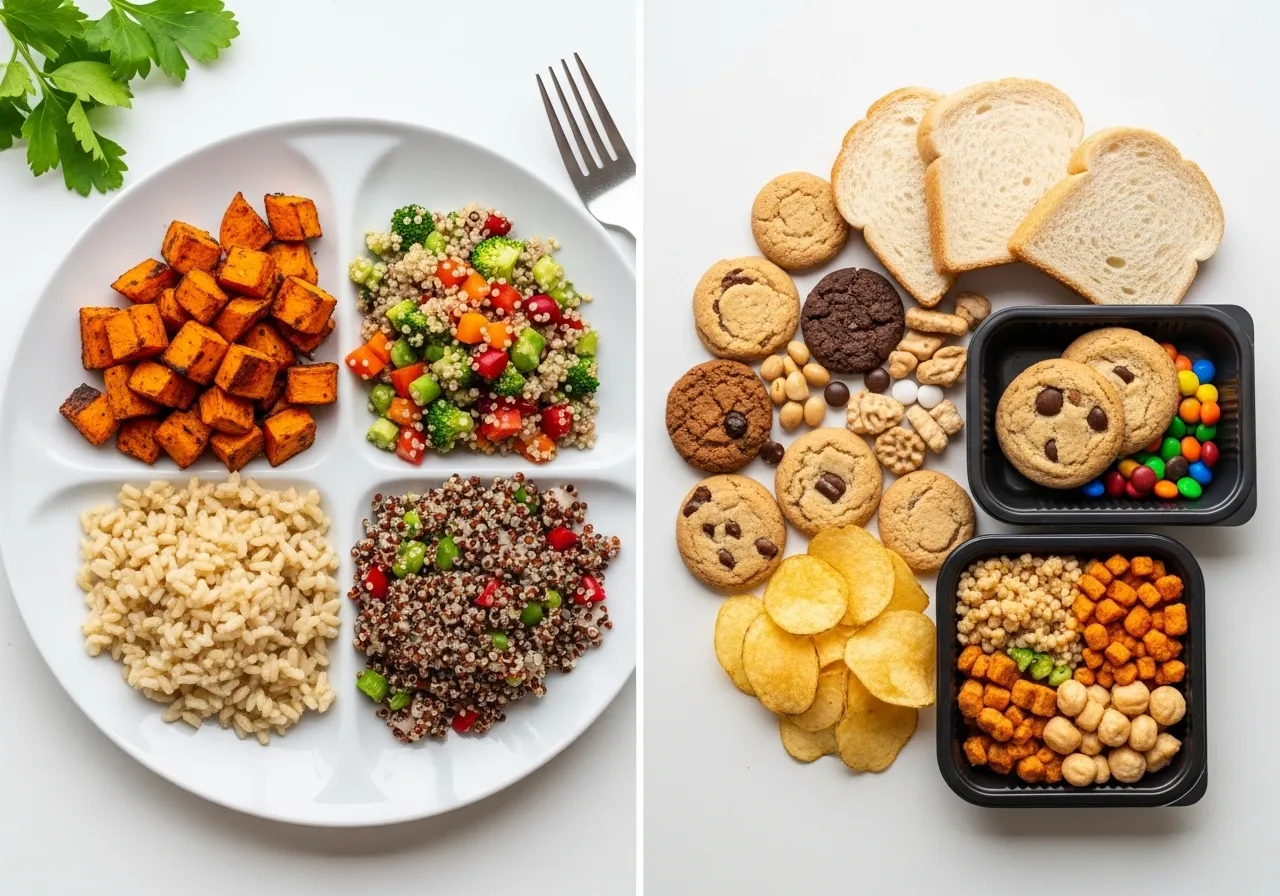
Among the carbohydrate variables that influence body composition outcomes, carbohydrate quality — the glycemic index, fiber content, and micronutrient density of the carbohydrate sources — matters more than the time of day at which they are consumed. High-fiber, lower-glycemic carbohydrates (sweet potato, brown rice, quinoa, oats, legumes, whole fruit) produce more moderate blood glucose responses, higher satiety per calorie, and better micronutrient delivery than refined, low-fiber carbohydrates (white bread, refined pasta, sugary cereals, processed snacks) regardless of when they are eaten. Consuming high-quality carbohydrates at night is nutritionally superior to consuming low-quality carbohydrates in the morning — the time of consumption matters less than the quality of what is consumed. Research published in the Journal of the International Society of Sports Nutrition on nutrient timing emphasizes that for most people not at elite performance levels, the quality and quantity of nutrient intake is more impactful than precise timing — a principle that applies directly to the carbohydrate timing question. A dinner of brown rice, roasted vegetables, and salmon is nutritionally excellent regardless of the hour; a breakfast of frosted cereal and orange juice is nutritionally poor regardless of the conventional wisdom that eating carbohydrates in the morning is metabolically superior.
Hormonal Effects of Evening Carbohydrates: Cortisol, Leptin, and Ghrelin
The hormonal environment influenced by evening carbohydrate consumption has practical implications for both next-day dietary adherence and overnight recovery quality. Carbohydrate consumption in the evening suppresses cortisol — the stress hormone that rises in response to caloric restriction and produces abdominal fat deposition — through the insulin response that evening carbohydrates trigger. Athletes who maintain very low carbohydrate intake throughout the day, including the evening, maintain elevated cortisol that impairs sleep quality, increases muscle catabolism, and paradoxically impairs the fat loss that the carbohydrate restriction was intended to support. The cortisol-suppressing effect of moderate evening carbohydrate consumption contributes to the lower cortisol profiles and better body composition outcomes observed in evening-carbohydrate protocols in some research. Leptin — the primary satiety hormone — is secreted primarily by adipose tissue and rises in response to insulin stimulation following carbohydrate consumption. The timing of leptin’s peak (approximately 8 hours after an insulin-stimulating meal) means that evening carbohydrate consumption produces a leptin peak during early morning hours — the period when appetite regulation for the following day is being established. This morning leptin elevation from the previous evening’s carbohydrate consumption contributes to the reduced morning hunger and better dietary control throughout the following day that some research observes in evening-carbohydrate subjects compared to carbohydrate-avoiding dinner eaters.
Time-Restricted Eating and Nighttime Carbohydrates: The Intermittent Fasting Context
The explosion of interest in time-restricted eating (TRE) and intermittent fasting protocols has created a specific context in which nighttime carbohydrates become more relevant: TRE practitioners who eat within a compressed eating window often consume a significant portion of their daily carbohydrates in the late afternoon and evening simply because that is when their eating window permits consumption. Research on time-restricted eating outcomes — finding generally comparable fat loss to continuous caloric restriction at equivalent intakes — confirms that this evening concentration of carbohydrates within a TRE window does not produce systematically worse body composition outcomes than a more distributed approach. For TRE practitioners who find the late-afternoon or early-evening eating window most practically compatible with work and social schedules, the evening carbohydrate concentration is a necessary feature of the protocol rather than a metabolic concern — and the research supports this approach as producing body composition outcomes comparable to alternative timing strategies. The TRE research further supports the fundamental principle that eating window duration and total caloric intake are the primary variables, with specific carbohydrate timing within the window being a secondary consideration that does not independently determine fat loss or muscle gain outcomes.
Practical Summary: The Evidence-Based Carb Timing Decision Tree
Translating the research on nighttime carbohydrates into practical decision-making: If you train in the afternoon or evening (3–8pm), consuming carbohydrates at dinner is appropriate, supported by the post-exercise insulin sensitivity window, and necessary for glycogen recovery between sessions — do not avoid nighttime carbohydrates in this context. If you train in the morning (5–9am), carbohydrate needs are higher in the morning around training and can be lower at dinner without impairing recovery — though dinner carbohydrates remain appropriate if they fit within total caloric targets. If you are pursuing fat loss, manage total caloric intake and protein adequacy as the primary variables, and adjust evening carbohydrate quantity to fit within the daily caloric budget — neither prioritizing nor avoiding evening carbohydrates specifically. If you struggle with morning hunger or poor morning dietary adherence, consider moving more of your daily carbohydrates to the evening meal and observing whether it improves next-day appetite control. The evidence does not support a universal prohibition on evening carbohydrates for any active, metabolically healthy person.
The body composition effects of nighttime carbohydrates are ultimately determined by the total dietary context — caloric balance, protein intake, training quality — rather than by the specific clock hour at which carbohydrates are consumed, making the elaborate timing rules of popular fitness culture a poor use of dietary attention relative to the foundational variables that actually drive results. Understanding that carbohydrate timing is a second-order optimization — meaningful in the context of already-optimized total intake and protein distribution, but irrelevant without that foundation — allows athletes to direct their finite dietary attention to the variables that most powerfully influence their outcomes: maintaining the caloric deficit for fat loss, hitting protein targets for muscle preservation and gain, and consuming sufficient total carbohydrates to fuel the training quality that drives adaptation. These foundational variables deserve 80% of dietary attention; timing refinements like evening carbohydrate distribution deserve the remaining 20% once the foundations are consistently in place.
When Eating Carbs at Night Makes Sense for Athletes
The question “should I eat carbs at night?” has a different answer for different athletes based on their training schedule, training goals, and individual metabolic responses. Rather than applying a universal rule, identifying the specific scenarios where evening carbohydrates are most clearly beneficial — and the scenarios where they are least important — produces a personalized approach grounded in the physiological principles established in the preceding sections. This section identifies the six most common athletic scenarios and provides specific guidance for each.
Scenario 1: Evening Training (5–9pm)
Athletes who train in the late afternoon or evening have the strongest case for evening carbohydrates. The post-exercise window — approximately 30–120 minutes after completing training — is when insulin sensitivity in trained muscles is at its daily maximum, glycogen resynthesis is proceeding at its fastest rate, and carbohydrate utilization for recovery is highest. The post-workout meal that follows evening training should contain 40–60g of carbohydrates alongside 30–40g of protein to capitalize on this recovery window, making evening carbohydrate consumption not just acceptable but physiologically necessary for optimal recovery. Athletes who train at 6pm and target a 10pm bedtime have a 4-hour post-workout window to consume recovery nutrition — easily accommodating a post-workout snack at 6:30–7pm and a more complete dinner at 8–9pm, both of which can and should contain carbohydrates for glycogen replenishment. Avoiding carbohydrates in this window to comply with the “no carbs after 6pm” rule directly impairs recovery quality, reduces glycogen stores available for the next training session, and produces no compensating body composition benefit.
Scenario 2: Morning Training (5–8am)
Morning trainers present the scenario where evening carbohydrates are least urgently needed for recovery purposes — the post-workout window from morning training has passed many hours before dinner, and glycogen stores have had the full day to replenish from daytime eating. However, “least urgently needed for recovery” does not mean evening carbohydrates are inappropriate or harmful for morning trainers. The dinner carbohydrate for a morning trainer serves a different purpose: partially pre-loading glycogen for the following morning’s training session, which begins approximately 12–14 hours after the evening meal. Athletes who train at 6am find that their training quality is influenced by both the previous evening’s dinner (overnight glycogen pre-load) and the immediate pre-workout snack consumed 30–60 minutes before training. A higher-carbohydrate dinner the night before a hard training session supports the next morning’s performance through partial glycogen loading — making evening carbohydrates strategically useful for morning athletes preparing for demanding sessions even in the absence of same-day recovery needs.
Scenario 3: Two-a-Day Training
Athletes training twice daily — morning and afternoon/evening sessions — have the most pressing need for evening carbohydrates of any training schedule, because full glycogen recovery between the first and second session of the day is critical for the quality of the second session, and evening carbohydrates support the full overnight glycogen replenishment needed before the following morning’s session. Inadequate carbohydrate intake at any point in a two-a-day schedule — including the evening — creates cumulative glycogen debt that progressively impairs training quality across the training block. Two-a-day athletes should consume carbohydrates liberally at all meals including dinner, targeting the higher end of the carbohydrate range (5–7g/kg body weight on high-volume days) with distribution across all meals including a substantial evening portion. For these athletes, avoiding evening carbohydrates is among the most consequential nutritional errors they can make for training quality and adaptation.
Scenario 4: Muscle Building Phase
Athletes in a dedicated muscle-building phase — consuming a caloric surplus to support hypertrophy — should include substantial carbohydrates at dinner for the anabolic rationale detailed in Section 2: the insulin response from evening carbohydrates supports muscle protein synthesis alongside the protein in the meal, and glycogen availability for the following day’s training is fully maintained. The muscle-building context has no meaningful fat gain concern from evening carbohydrates when total caloric intake is managed within the modest surplus appropriate for lean bulking (300–500 calories above maintenance), making evening carbohydrates an appropriate and recommended component of the muscle-building dietary plan. The specific carbohydrate amount at dinner during a muscle-building phase: 50–80g of complex carbohydrates alongside 40–50g of protein, adjusted to fit within the day’s total caloric target while filling any remaining carbohydrate quota after pre- and post-workout meals.
Scenario 5: Fat Loss Phase With Evening Training
This is the scenario where carbohydrate timing requires the most careful management: the fat loss goal creates pressure to minimize evening carbohydrates (to keep the dinner meal within caloric budget), while the evening training schedule creates physiological need for post-workout carbohydrates. The resolution: consume carbohydrates primarily in the post-workout recovery meal immediately following the evening training session (30–40g alongside post-workout protein) and reduce carbohydrates at the dinner meal itself if needed to maintain the overall daily caloric deficit. This approach captures the post-workout recovery benefit of carbohydrates while managing total evening carbohydrate intake within the fat loss caloric budget. The specific carbohydrate distribution: post-workout snack at 7:30pm (30g carbs, 35g protein), dinner at 9pm (20–30g carbs, 30g protein) fits within a fat loss caloric budget while maintaining the post-workout recovery window that evening training requires.
Scenario 6: Active Recovery Days and Rest Days
On rest days and active recovery days, glycogen depletion from training is absent or minimal, reducing the post-exercise physiological case for evening carbohydrates. However, as established in the research review, the absence of a specific physiological need does not make evening carbohydrates harmful — it means they are less targeted than on training days. The appropriate approach for rest-day evening carbohydrates: reduce total carbohydrate intake on rest days (2–3g/kg versus the 3–5g/kg appropriate for training days) with the reduction distributed across the day including a smaller dinner carbohydrate portion. The smaller rest-day carbohydrate intake reflects lower total energy expenditure and glycogen turnover rather than a specific concern about evening consumption — the reduced quantity is appropriate for all meals, not specifically the evening meal.
High-Volume Training Blocks: Carb-Loading and Evening Nutrition
During peak training blocks — multi-day training camps, competition preparation weeks, or high-volume strength cycles — carbohydrate requirements increase substantially and evening carbohydrates become a critical component of maintaining the fuel availability that daily training demands. Carbohydrate loading for endurance events (consuming 8–12g/kg body weight for 1–3 days before a competition) necessarily includes substantial evening carbohydrate consumption — the volume of carbohydrates required simply cannot be consumed without including the dinner meal as a major carbohydrate source. Even during non-loading high-volume training blocks, athletes should view the evening meal as an important carbohydrate delivery opportunity rather than a restriction zone, ensuring that the day’s training is fully supported by the total carbohydrate intake across all meals including dinner.
Competition and Pre-Event Nutrition: Evening Carbohydrates as Performance Strategy
For athletes competing or performing the following day, the evening meal before a competition is one of the most strategically important nutrition opportunities of the training year — and carbohydrates are its most important component. The pre-competition dinner serves two functions: maximizing liver and muscle glycogen stores for the following day’s performance, and providing a metabolically familiar, comfortable meal that does not cause digestive stress during competition. Research on pre-competition carbohydrate loading consistently identifies evening consumption of complex, familiar carbohydrates (pasta, rice, potatoes, oats) as the appropriate approach for glycogen maximization before endurance events and high-intensity competitions. The pre-competition dinner carbohydrate target: 2–3g/kg body weight at the evening meal (for a 70kg athlete, 140–210g of carbohydrates at dinner — a substantial pasta or rice bowl with protein and minimal fiber to reduce digestive bulk). This is not the time for low-carbohydrate dinners, and it illustrates the clearest possible application of the principle that carbohydrates at night are not inherently problematic — they are, in this context, the most performance-critical nutritional decision of the day.
The Psychological Dimension of Evening Carbohydrates
Beyond the physiological considerations, the psychological relationship between carbohydrate timing rules and dietary adherence is worth addressing because it significantly affects real-world outcomes for many people. Arbitrary food timing rules — “no carbs after 6pm” — create a binary dietary framework where any deviation from the rule constitutes failure, triggering the all-or-nothing thinking that leads to complete dietary abandonment following inevitable social situations that require eating carbohydrates in the evening. A person who eats dinner at a restaurant at 7:30pm and has pasta, then believes they have failed their diet for the day and eats whatever they want for the remainder of the evening, has been harmed by the rule more than by the pasta. Replacing arbitrary timing rules with physiologically grounded principles — total caloric intake management, protein adequacy, training-aligned carbohydrate distribution — creates a flexible, adherence-supporting dietary framework that accommodates the full range of social eating situations that real life produces. The athlete who understands that dinner carbohydrates are not the enemy can eat appropriately at restaurants, social gatherings, and family dinners without either the guilt of rule violation or the caloric excess of rebound eating after perceived failure.
Monitoring Your Individual Response: A 4-Week Self-Experiment
Given the individual variation in response to carbohydrate timing, a structured 4-week self-experiment provides the most relevant data for any individual wondering whether their evening carbohydrate habits are helping or hurting their goals. Week 1–2 (baseline): eat carbohydrates at your current pattern and track daily caloric intake, training performance (weights used, reps completed, energy during sessions), morning hunger ratings (1–10), and weekly body weight average. Week 3–4 (test condition): shift the same total daily carbohydrate intake toward the evening (larger dinner carbohydrate portion, smaller daytime portions, same total) and track the same metrics. Compare: Did training performance change? Did morning hunger change? Did body weight trend differently at equivalent caloric intake? Did dietary adherence feel easier or harder? The individual who finds morning hunger lower, training better, and dietary adherence easier with evening carbohydrates should use evening carbohydrates. The individual who finds no meaningful difference can distribute carbohydrates according to preference and convenience. This empirical individual-response approach produces better dietary outcomes than adherence to universal rules that may or may not apply to a specific individual’s metabolism, schedule, and response pattern.
Special Athletic Populations: Endurance Athletes vs. Strength Athletes
Endurance athletes and strength athletes have different carbohydrate requirements that influence the evening carbohydrate question differently. Endurance athletes training for events over 60–90 minutes have very high total carbohydrate requirements (5–10g/kg/day at higher training volumes) that simply cannot be met through daytime meals alone for most people with regular work schedules — the evening meal must be a substantial carbohydrate source to hit daily targets. For endurance athletes, the question is not “should I eat carbs at night?” but “how do I distribute the very large total carbohydrate intake I need across all meals including dinner?” Strength athletes have more modest carbohydrate requirements (3–5g/kg/day) but still benefit from evening carbohydrates for the anabolic and glycogen reasons described. Both populations share the fundamental principle that carbohydrate timing is secondary to total carbohydrate adequacy — meeting the total daily carbohydrate target across all meals, including dinner, is the primary objective, with the specific distribution across meals being a secondary optimization guided by training timing and individual response.
Ultimately, the question of when eating carbs at night makes sense has the same answer across all athletic scenarios: whenever it supports training performance, recovery, and overall dietary adherence within appropriate total caloric intake — which for most athletes with afternoon or evening training schedules means every training day. The scenarios where evening carbohydrates are most clearly beneficial — post-evening-training glycogen replenishment, pre-competition carbohydrate loading, pre-sleep tryptophan facilitation for sleep quality — represent the specific conditions that physiology predicts and research confirms. Understanding these mechanisms allows athletes to apply the principle intelligently across new situations rather than memorizing rules that may or may not apply to their specific training context.

Practical Nighttime Nutrition: What to Eat, What to Avoid, and How Much
With the research context established and the scenario-specific guidance provided, this section translates the principles into practical, actionable nighttime nutrition recommendations: specific foods, amounts, timing, and combinations that support training recovery, body composition goals, and sleep quality. These are the concrete answers to the practical questions that arise when implementing evidence-based nighttime nutrition rather than following arbitrary food timing rules.
The Optimal Dinner Composition for Athletes
A well-composed athlete’s dinner supports three simultaneous goals: adequate protein for overnight muscle protein synthesis, appropriate carbohydrates for glycogen recovery and sleep quality support, and sufficient micronutrients from whole food sources for the enzymatic and hormonal processes of overnight recovery. The macronutrient targets for an athlete’s dinner: 35–50g of protein (the primary non-negotiable — dinner is a critical protein distribution opportunity in the daily 4-meal protein schedule), 40–80g of carbohydrates (scaled to training day vs. rest day and position in the daily carbohydrate budget), and 15–25g of fat from quality sources (supports fat-soluble vitamin absorption and hormonal function). Food sources that naturally provide this composition: 150–200g of salmon or chicken (35–45g protein, 0–5g carbs), alongside 120g cooked brown rice or sweet potato (35–40g carbs), with roasted vegetables (micronutrients, fiber) and an olive oil or avocado dressing (healthy fats). This combination provides the macronutrient profile that supports both the glycogen replenishment and the muscle protein synthesis of overnight recovery, from whole food sources that provide the micronutrient density that processed alternatives lack.
Best Evening Carbohydrate Sources for Athletes
Not all carbohydrate sources are equally appropriate for the evening meal, and the differences in glycemic response, fiber content, and digestive comfort matter more for evening consumption than for pre-workout carbohydrates where rapid digestion and glucose availability are prioritized. The best evening carbohydrate sources for athletes: sweet potato (moderate glycemic index, high fiber, rich in potassium and vitamin A, excellent digestive tolerance, slow-digesting for sustained overnight glucose availability), brown rice (lower glycemic index than white rice with higher fiber and micronutrient content, familiar and easy to prepare in bulk), quinoa (complete protein alongside carbohydrate, very high satiety, excellent magnesium and zinc content relevant for athletic recovery), oats (beta-glucan fiber that supports gut health and produces slow, sustained glucose release), and legumes (black beans, chickpeas, lentils — very high fiber and protein alongside carbohydrate, producing the lowest glycemic response of any carbohydrate source and excellent satiety). Evening carbohydrate sources to moderate or avoid: high-glycemic refined carbohydrates (white bread, sugary cereals, candy, sweetened beverages) that produce rapid blood glucose spikes and rapid return to baseline hunger; very high-fiber foods in large amounts (cruciferous vegetables, beans in large quantities) that may produce digestive discomfort during sleep; and extremely large carbohydrate portions (150g+) immediately before sleep that maintain elevated digestive activity competing with thermoregulatory sleep onset.
Protein Sources for the Evening Meal
Protein source selection at dinner matters for the overnight muscle protein synthesis function of the evening meal. Casein-rich proteins — cottage cheese, Greek yogurt, milk-based dishes — provide the slow-digesting protein that extends amino acid availability throughout the overnight fasting period, making them superior to fast-digesting whey-based proteins for pre-sleep protein nutrition. Animal proteins (salmon, chicken breast, eggs, lean beef) provide complete amino acid profiles alongside the micronutrients — zinc, iron, B12, omega-3s from fatty fish — most relevant to athletic recovery. For athletes who consume a post-workout meal at 7–8pm and then a lighter pre-sleep snack at 9:30–10pm, the post-workout meal can feature any high-quality protein (including whey shake) while the pre-sleep snack specifically features casein (cottage cheese, Greek yogurt) for the overnight synthesis optimization described in Section 2 of the pre-bed habits article. This combination — complete post-workout protein for immediate recovery followed by casein-dominant pre-sleep protein for sustained overnight synthesis — represents the evidence-based optimal approach to evening protein nutrition for recovery-focused athletes.
Evening Meal Timing: How Late Is Too Late?
The specific timing of the evening meal relative to sleep onset influences both sleep quality and digestive comfort in ways that create a practical upper limit for very late eating. Research on meal timing and sleep quality finds that large meals consumed within 1–2 hours of sleep onset increase core body temperature through digestive thermogenesis, delay sleep onset, and reduce deep sleep quality — the specific mechanisms through which very late eating impairs recovery even when total caloric intake is appropriate. The practical guideline: aim to complete the main evening meal at least 2–3 hours before target sleep time, with a smaller pre-sleep snack (casein protein, light carbohydrate) allowable in the final 30–60 minutes before sleep because it is small enough not to significantly elevate core temperature through digestion. For a 10:30pm sleep target, dinner at 7:30–8pm is appropriate, with a 9:30–10pm cottage cheese snack well within the pre-sleep window that research supports for casein protein benefits. Athletes with late training sessions (8–9pm completion) who cannot complete dinner 3 hours before sleep should consume a moderate post-workout recovery meal (not an enormous dinner) and supplement with a pre-sleep casein snack rather than eating a large dinner within 60–90 minutes of sleep, reducing the digestive load that impairs sleep quality while maintaining the protein and carbohydrate delivery for recovery.
Sample Evening Meal Plans for Different Training Schedules
Evening meal plan for an athlete training at 6pm (dinner at 8:30pm, sleep at 10:30pm): Post-workout snack at 7pm — banana, 250ml chocolate milk (32g carbs, 16g protein). Dinner at 8:30pm — 180g salmon fillet, 120g cooked brown rice, roasted asparagus and cherry tomatoes with olive oil (40g protein, 42g carbs, 22g fat). Pre-sleep snack at 10pm — 200g cottage cheese with cinnamon and a small handful of almonds (28g protein, 8g carbs, 14g fat). Total evening nutrition (post-workout through pre-sleep): 84g protein, 82g carbs, 36g fat — appropriate for a moderately active 75–80kg athlete’s evening recovery needs.
Evening meal plan for an athlete training at 7am (dinner at 7pm, sleep at 10pm, preparing for next morning’s training): Dinner at 7pm — 200g chicken thigh or breast, 150g cooked sweet potato, large mixed green salad with chickpeas and olive oil dressing (45g protein, 55g carbs, 20g fat). Evening snack at 9pm — Greek yogurt with banana and a drizzle of honey (22g protein, 38g carbs, 5g fat). This front-loaded dinner carbohydrate provides the partial pre-load for the following morning’s 7am training session while staying within total daily caloric targets.
What to Avoid in the Evening for Sleep and Recovery
The foods and substances to specifically minimize or avoid in the evening hours for optimal sleep quality and athletic recovery: caffeine (coffee, black tea, pre-workout) — cut off by 12–1pm for most people or earlier for caffeine-sensitive individuals, as the 5–7 hour half-life maintains sleep-disrupting stimulant effects into the 10–11pm sleep window; alcohol — impairs REM sleep in the second half of the night regardless of how quickly it induces sleep onset, net effect on sleep quality is negative; very spicy foods — elevate core body temperature and may cause gastroesophageal reflux in sleep position; high-fat, very large meals within 2 hours of sleep — maintain digestive thermogenesis that delays sleep onset and reduces deep sleep quality; and sugary processed foods that produce rapid blood glucose spikes followed by reactive hypoglycemia — the blood glucose valley can cause cortisol-driven nighttime waking as the body responds to low blood glucose with a stress hormone response. None of these are absolute prohibitions for all circumstances — occasional consumption of any of these items will not meaningfully impair recovery — but consistent late-evening consumption of these items accumulates into the chronic sleep quality deficit that limits athletic recovery and performance across training blocks.
Carbohydrate Amounts at Night: How Much Is Appropriate?
Quantifying the appropriate evening carbohydrate amount requires considering the day’s total carbohydrate target, how much has been consumed in earlier meals, and the training schedule’s specific recovery demands. General guidelines by scenario: on training days following afternoon or evening sessions, 40–80g of carbohydrates at the evening meal (dinner) plus 20–30g at a post-workout snack or pre-sleep snack is appropriate for a 70–80kg athlete targeting 4–5g/kg/day total. On rest days, reducing the dinner carbohydrate to 25–40g aligns with the lower total daily target of 2–3g/kg while not eliminating evening carbohydrates entirely. On high-volume training days or during competition preparation, 80–120g at dinner is appropriate to meet the elevated total daily target. These amounts are guidelines, not prescriptions — the total daily carbohydrate target is established first (based on body weight and training demands), and the dinner portion is whatever remains of that target after accounting for earlier meals, ensuring total daily adequacy without arbitrary restriction based on clock time.
Fiber at Night: Balance Between Recovery and Digestive Comfort
Fiber intake in the evening requires balancing the metabolic benefits of fiber-rich carbohydrate sources (slower digestion, better blood glucose control, higher satiety) against the digestive discomfort that very high fiber loads can produce during sleep. Moderate fiber amounts from whole food sources — the 4–8g of fiber in a serving of sweet potato, brown rice, or legumes — are well-tolerated through the night and provide the slow glucose release that extends energy availability. Very high fiber loads (35–50g in a single meal from excessive legume or cruciferous vegetable consumption) can produce gas, bloating, and abdominal discomfort that disrupts sleep quality despite their nutritional virtue. The practical guideline: target 8–12g of fiber at the evening meal from varied whole food sources rather than attempting to concentrate the full day’s fiber requirement in a single high-fiber dinner. Distribute fiber intake across all meals, and save the highest-fiber foods (large portions of beans, lentils, raw cruciferous vegetables) for earlier meals where digestive activity during waking hours accommodates them without sleep disruption.
Grocery Planning for Athlete Evening Nutrition
Consistent implementation of evidence-based evening nutrition requires consistent availability of the right foods, which requires deliberate grocery planning that ensures the kitchen contains the dinner protein sources, complex carbohydrates, and vegetable variety that make good evening nutrition the default rather than the deliberate choice. Weekly grocery essentials for evening nutrition: lean proteins (salmon fillets, chicken thighs, eggs, ground turkey — purchase 1–1.5kg per person per week), casein-rich dairy (cottage cheese, Greek yogurt — for pre-sleep protein), complex carbohydrates (sweet potatoes, brown rice, quinoa — buy in bulk and cook in large batches), vegetables for roasting (broccoli, Brussels sprouts, bell peppers, zucchini — buy whatever is seasonal and in bulk), and frozen vegetables as backup (nutritionally equivalent to fresh, zero preparation required). The Sunday meal prep approach — cooking a large batch of grains and proteins at the start of the week — makes the right dinner the easiest dinner on Monday through Friday when cooking motivation is lowest. A prepared rice cooker full of brown rice, a sheet pan of roasted vegetables, and pre-portioned protein in the refrigerator reduces the weeknight dinner decision to assembling components rather than cooking from scratch — removing the primary practical barrier to consistent quality evening nutrition.
The practical nutrition framework for evening eating is ultimately simple: include adequate protein at every dinner, match carbohydrate amounts to the day’s training demands and remaining daily budget, choose complex whole food carbohydrate sources over refined alternatives, and time the final pre-sleep snack for casein protein delivery rather than large meal digestion. This framework produces recovery-supporting, sleep-compatible evening nutrition without requiring the elimination of carbohydrates that popular fitness rules incorrectly prescribe. The evidence consistently supports a permissive, flexible approach to evening carbohydrates — one that serves recovery and adherence simultaneously rather than sacrificing either to comply with a timing rule that the research does not validate.
Common Carb-at-Night Myths, Special Situations, and Frequently Asked Questions
The nighttime carbohydrate question has accumulated a significant mythology over decades of popular fitness culture — specific claims about how the body processes carbohydrates at night that are stated with confidence in gym conversations, fitness social media, and diet book advice but that do not reflect the actual physiological reality. Identifying and correcting these myths provides the final layer of understanding needed to make genuinely evidence-based decisions about evening carbohydrate consumption, free from the confusion that entrenched misconceptions create.
Myth 1: Metabolism Shuts Down During Sleep
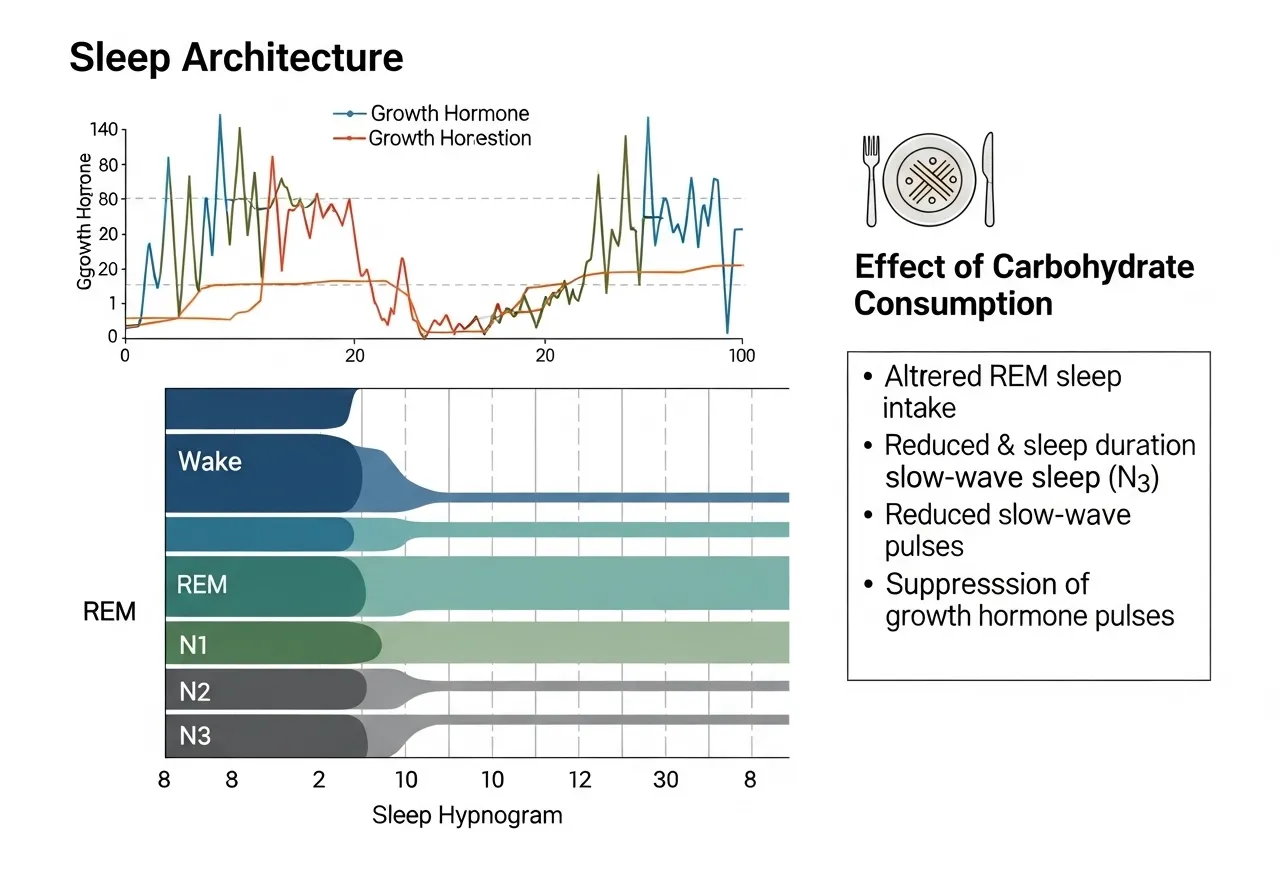
The claim that metabolic rate drops dramatically during sleep — producing a period where carbohydrates consumed before bed are processed at a fraction of the efficiency of daytime metabolism — is the foundational premise of the nighttime carbohydrate restriction rule and is substantially inaccurate. Basal metabolic rate during sleep remains approximately 85–90% of resting daytime metabolic rate during light sleep stages, declining somewhat more during deep slow-wave sleep when metabolic activity is most suppressed. The processes that maintain this metabolic activity during sleep are specifically relevant to athletes: growth hormone secretion (driving protein synthesis and fat mobilization), immune function (producing the cytokines that repair training-induced tissue damage), cardiovascular maintenance (maintaining heart rate and blood pressure regulation), neural consolidation (the active memory and skill consolidation of REM sleep), and thermoregulation (maintaining core body temperature against the sleeping environment). These metabolic processes consume energy — and the carbohydrates consumed at dinner provide substrate for the glucose-dependent processes among them. Sleep is not a metabolic standby period; it is the most anabolically important period of the 24-hour cycle, and the metabolic rate that persists through it is doing the specific work of athletic recovery.
Myth 2: Carbs Eaten at Night Are Always Stored as Fat
This myth is a specific application of the general spot-reduction and fat storage misconception: that carbohydrates consumed at a particular time are specifically and necessarily converted to fat rather than used for immediate metabolic needs. The physiological reality is that carbohydrates are stored as fat only when muscle and liver glycogen stores are already fully replenished and caloric intake is in surplus — conditions that do not apply to an athlete who has trained in the afternoon and consumed appropriate but not excessive calories throughout the day. For an athlete with partially depleted glycogen from an afternoon training session consuming a moderate dinner carbohydrate serving within their daily caloric target, the consumed carbohydrates are utilized for glycogen resynthesis — not converted to fat. The fat conversion of dietary carbohydrates (de novo lipogenesis) occurs only under specific conditions of chronic caloric excess and glycogen saturation that an athlete managing their diet appropriately does not create at dinner.
Myth 3: The Body Cannot Use Carbs While You Sleep
Related to the metabolism myth, this claim asserts that because physical activity is absent during sleep, carbohydrate utilization is minimal and ingested carbohydrates are therefore poorly utilized. This misunderstands the distinction between exercise-driven carbohydrate metabolism (rapid glucose utilization through glycolysis) and rest-state carbohydrate metabolism (ongoing glycogen resynthesis, brain glucose supply, and cellular energy maintenance that continues during sleep). The brain consumes approximately 120g of glucose per day regardless of physical activity — and this consumption continues throughout sleep, utilizing the blood glucose and liver glycogen that the previous evening’s carbohydrate intake replenished. Muscle glycogen resynthesis — particularly active in the hours following training — continues during sleep, utilizing the dietary carbohydrates from the post-workout and evening meals. The body’s carbohydrate utilization during sleep is lower than during exercise but meaningfully higher than zero, and the specific processes it serves during sleep are critical to athletic recovery.
Myth 4: Eating Carbs at Night Will Cause You to Wake Up Feeling Bloated
The bloating and discomfort associated with evening carbohydrate eating by some people is real but is not caused by carbohydrate consumption per se — it is caused by specific types of carbohydrates (high-FODMAP foods including certain legumes, onions, and wheat-based products that ferment in the large intestine), consumption volume (very large portions that cause gastric distension), and individual digestive sensitivities (lactose intolerance, gluten sensitivity, irritable bowel syndrome) that determine which foods cause digestive discomfort rather than the carbohydrate content itself. An athlete who experiences bloating from a large pasta and legume dinner is experiencing fermentation of specific FODMAPs and the large food volume — not a carbohydrate-specific problem that would occur from a sweet potato and rice dinner of appropriate volume. Identifying the specific trigger foods and portions, rather than eliminating all evening carbohydrates, resolves the digestive comfort issue while preserving the recovery nutrition benefits of evening carbohydrate consumption.
Special Situation: Diabetes and Nighttime Carbohydrates
The exception to the general active-person guidance in this article is type 2 diabetes and insulin resistance, where the circadian decline in glucose tolerance is clinically magnified and the implications for blood glucose management are meaningfully more significant than in metabolically healthy individuals. People with type 2 diabetes or significant insulin resistance experience larger and more sustained blood glucose elevations from equivalent carbohydrate loads in the evening compared to the morning, and the overnight blood glucose management implications of late carbohydrate consumption are clinically relevant to diabetes management. This population generally benefits from consuming more carbohydrates in the morning and fewer in the evening — the opposite of what the research suggests may be advantageous for metabolically healthy athletes. However, even for this population, physical activity in the afternoon or evening substantially improves post-meal glucose management, and the individual response to carbohydrate timing should be assessed through blood glucose monitoring rather than assumed from the general type 2 diabetes guideline. Any specific carbohydrate timing recommendations for individuals with diabetes should be made in collaboration with their healthcare provider, who can integrate the research evidence with the individual’s medication regimen, glucose management goals, and personal response data.
Frequently Asked Questions About Nighttime Carbohydrates
Will eating carbs at night stop me from losing weight? No — weight loss is determined by total caloric deficit, not by when carbohydrates are consumed. Carbohydrates at night within a caloric deficit produce fat loss at the same rate as carbohydrates consumed at other times of day. The only way evening carbohydrates impair fat loss is if they contribute to total caloric excess that eliminates the deficit — a problem of quantity, not timing.
How many carbs should I eat at dinner? The appropriate dinner carbohydrate amount depends on total daily carbohydrate targets (3–5g/kg body weight for most active people) minus the carbohydrates consumed at earlier meals. For a 75kg athlete targeting 4g/kg (300g total), consuming 80g at breakfast and 60g at lunch leaves 160g for post-workout and dinner meals. A 60–80g dinner carbohydrate serving plus a 30g post-workout snack fills this appropriately.
Is it better to eat a high-carb or high-protein dinner? For athletes, a dinner that includes both adequate protein (35–50g) and appropriate carbohydrates (40–80g on training days) outperforms either a high-carb/low-protein or high-protein/low-carb dinner for recovery purposes. The protein drives overnight muscle protein synthesis; the carbohydrates support glycogen replenishment and tryptophan-mediated sleep quality. Both are needed; neither should dominate to the exclusion of the other.
Can I eat carbs at night and still build muscle? Yes — evening carbohydrates support muscle building by providing the insulin response that enhances muscle protein synthesis from the protein consumed at dinner, and by replenishing glycogen for the following day’s training quality. Athletes in muscle-building phases who avoid evening carbohydrates are compromising both the anabolic environment of the evening meal and the training quality that drives the muscle-building stimulus.
What if I get hungry late at night after dinner? Late evening hunger after an adequate dinner typically reflects either insufficient protein at dinner (protein is the most satiating macronutrient; increasing dinner protein to 40–50g often resolves post-dinner hunger), insufficient total daily caloric intake (if the hunger is persistent and significant, the overall caloric target may be too low), or habitual late-night eating patterns that have conditioned hunger at specific times. A small, protein-rich snack at the appropriate pre-sleep time (cottage cheese, Greek yogurt — 150–200 calories with 20–30g protein) satisfies late hunger while serving the pre-sleep protein synthesis function, making it a productive response rather than a dietary failure.
Does the answer change as I get older? Modestly. Age-related reductions in insulin sensitivity (particularly in sedentary older adults) increase the practical relevance of the circadian glucose tolerance pattern, making the morning-carbohydrate advantage somewhat more pronounced in older, less active individuals. However, regular physical activity substantially maintains insulin sensitivity across aging, and active older adults who exercise regularly show circadian glucose tolerance patterns much more similar to younger adults than to sedentary age-matched controls. The fundamental evidence — that caloric deficit and protein adequacy matter more than carbohydrate timing — remains the primary principle across age groups, with somewhat more attention to carbohydrate quality and glycemic index in older adults than in younger athletes.
The Bottom Line: A Rational Framework for Nighttime Carbohydrates
After reviewing the research, examining the scenarios, debunking the myths, and addressing the practical questions, the rational framework for nighttime carbohydrate decisions emerges clearly. Eat carbohydrates at night when: you trained in the afternoon or evening and need post-workout glycogen replenishment; your total daily carbohydrate target has not been met through earlier meals; you find that evening carbohydrates reduce morning hunger and improve next-day dietary adherence; and you need the tryptophan facilitation of moderate evening carbohydrates for sleep quality support. Reduce or eliminate evening carbohydrates when: you have already met your total daily carbohydrate target through earlier meals; you are managing type 2 diabetes or insulin resistance where the circadian glucose tolerance pattern has clinical significance; or you have identified through individual self-monitoring that evening carbohydrates impair your sleep quality or appetite control the following morning. In all cases, prioritize protein adequacy at dinner regardless of the carbohydrate decision — the overnight muscle protein synthesis function of the evening protein serving is the non-negotiable dietary variable at dinner, and carbohydrate management within appropriate total daily targets is the secondary optimization around it. The evidence-based approach replaces the arbitrary rule with a physiologically informed decision that is responsive to individual circumstances, training schedules, and measurable outcomes — the standard by which all nutritional guidelines should be evaluated.
Long-Term Perspective: Building Sustainable Evening Nutrition Habits
The most important nutritional virtue for long-term body composition and athletic performance outcomes is consistency — and consistent nutrition requires a dietary framework that is sustainable across the full range of life circumstances. The nighttime carbohydrate restriction rule fails the sustainability test because it conflicts with normal social eating patterns (dinner is typically the social meal of the day, and restricting carbohydrates at dinner creates social friction and dietary anxiety that impairs overall dietary adherence), creates unnecessary dietary complexity that increases the cognitive burden of meal planning, and is not supported by the research evidence it claims as justification. Replacing this rule with the evidence-based framework — eat carbohydrates when they support training and adherence, in amounts that fit within total daily caloric targets, from quality whole food sources — produces a dietary approach that is compatible with normal life, sustainable over years, and supported by controlled research on meal timing and body composition outcomes. The athlete who eats dinner without carbohydrate anxiety, makes quality food choices within appropriate caloric targets, and maintains consistent dietary adherence across social situations and training schedule variations will consistently outperform the athlete who follows rigid timing rules that impair adherence and create psychological stress around normal eating — because consistency, sustained over months and years, is the primary determinant of long-term body composition and performance outcomes.