Healthy Meal Prep for Beginners: How to Save Time and Eat Better Every Week
This article is for general educational purposes only and does not constitute medical or professional fitness advice.
Consult a licensed healthcare provider or certified fitness professional before starting any new program.
Meal prepping — preparing food in advance to use throughout the week — is one of the most practical tools for improving diet quality, saving time, and reducing the reliance on convenience foods.
This guide provides a realistic, beginner-friendly approach to getting started with meal prep: what to prepare, how to structure it, and how to make it sustainable long-term.
Why Meal Prep Supports Better Nutrition
The Decision Fatigue Factor
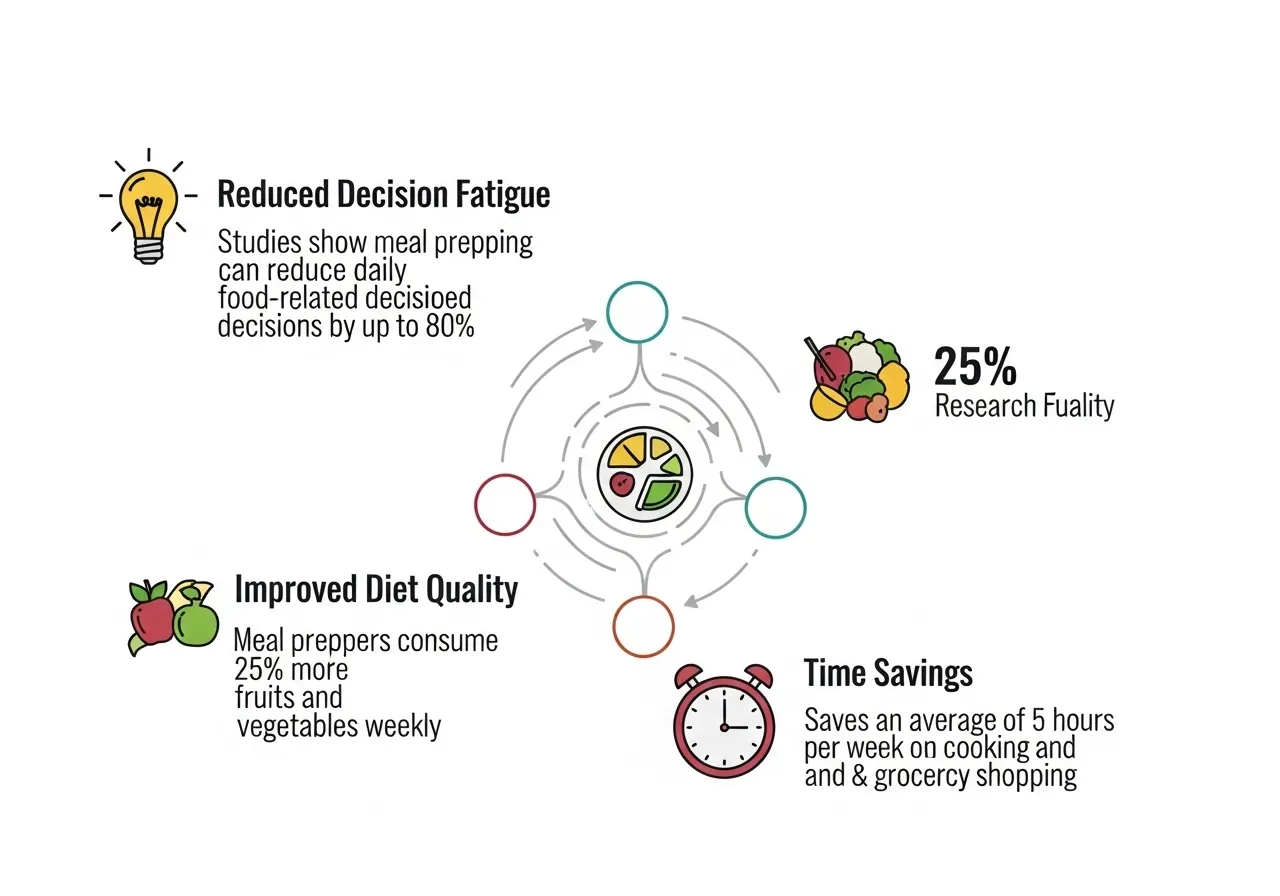
Research in behavioral economics suggests that decision fatigue (the declining quality of decisions made after a long period of decision-making) affects food choices significantly.
After a long workday, the easiest available option tends to win — whether that is ordering takeout, reaching for convenience foods, or skipping meals entirely.
Meal prepping removes the decision by pre-determining what is available — turning “what should I eat?” into “which prepped option do I heat up?”
Evidence on Meal Prepping and Diet Quality
A 2017 study in the International Journal of Behavioral Nutrition and Physical Activity found that individuals who spent more time on home food preparation had significantly better overall diet quality scores compared to those who relied more heavily on outside food sources.
Home-prepared meals tend to be lower in sodium, saturated fat, and total calories compared to restaurant and convenience food equivalents — even when caloric intake is not being tracked.
What Meal Prep Does Not Have to Look Like
The most common barrier to starting is the image of elaborate 20-container Tupperware setups requiring 4-hour Sundays.
Effective meal prep for most people requires 60–90 minutes per week and focuses on preparing components rather than complete meals.
The Component-Based Approach: What to Actually Prepare
Why Components Beat Complete Meals
Preparing identical complete meals for every lunch and dinner works — but leads to food fatigue and boredom within a week or two for most people.
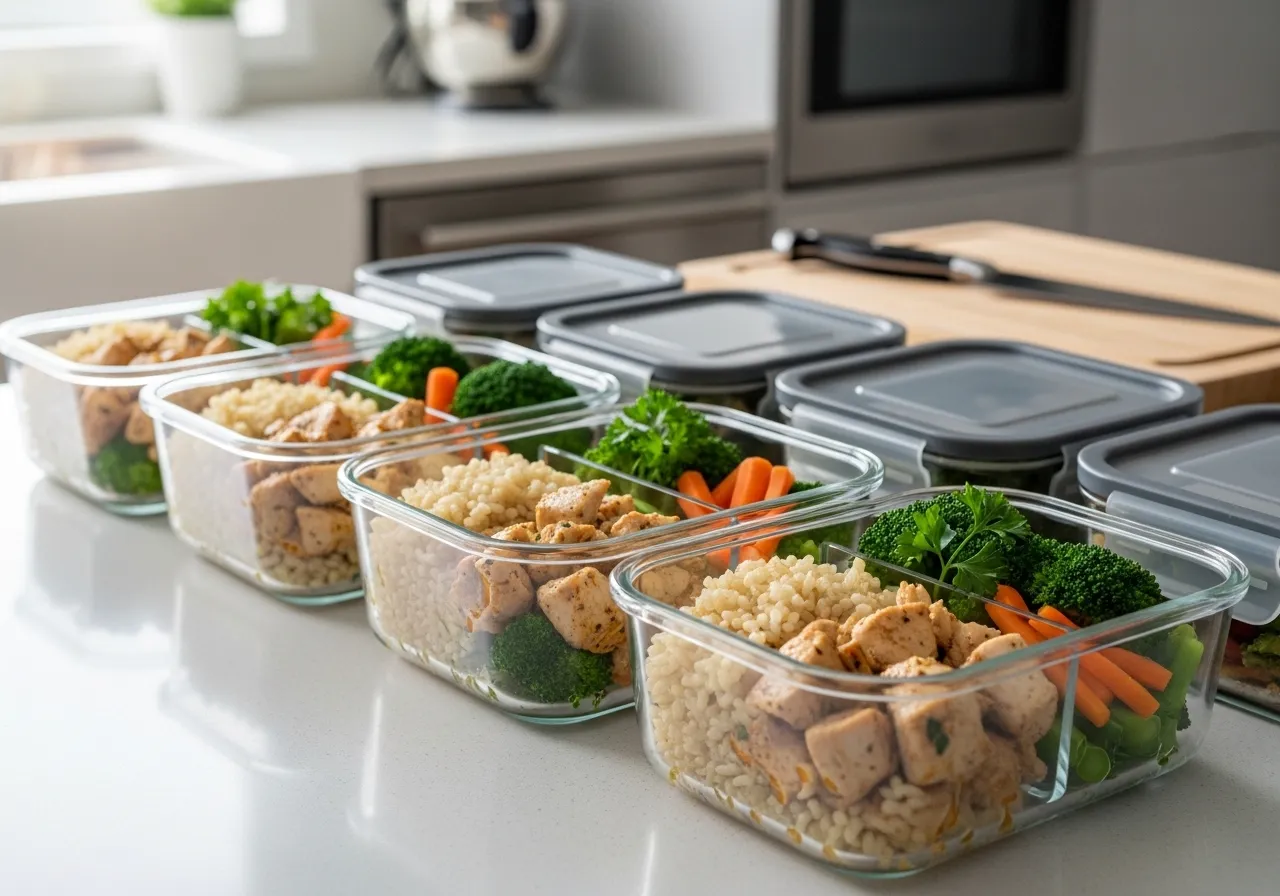
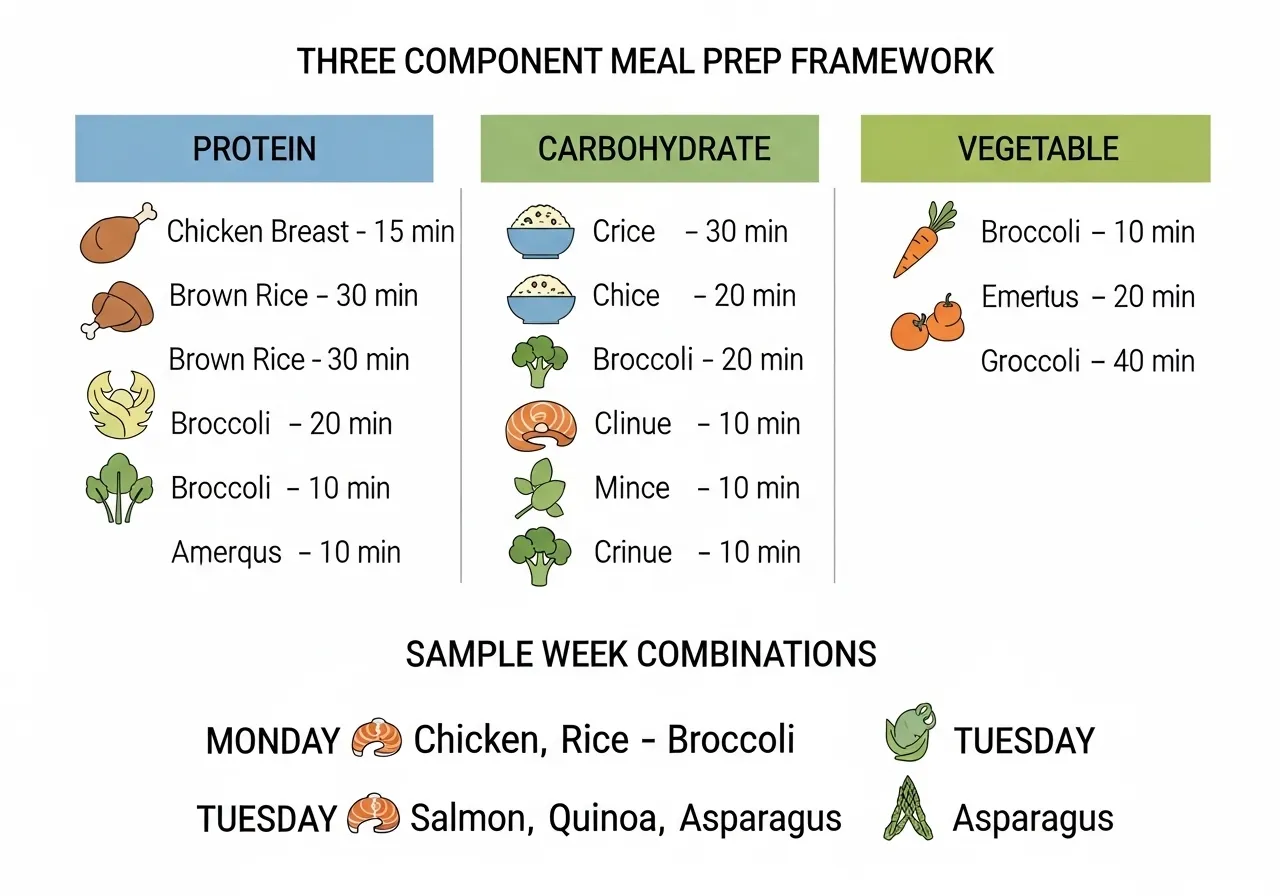
Preparing components — a protein source, a carbohydrate source, and a vegetable — that can be combined in different ways maintains variety while still capturing all the time and convenience benefits of batch cooking.
The 3-Component Framework
| Component | Examples | Prep Time |
|---|---|---|
| Protein | Baked chicken breast, hard-boiled eggs, cooked lentils, canned tuna | 20–35 min |
| Carbohydrate | Cooked rice, quinoa, sweet potato, whole grain pasta | 15–25 min |
| Vegetables | Roasted broccoli/carrots/zucchini, washed salad greens, steamed spinach | 15–25 min (often overlap with above) |
Sample Week Using 3 Components
Monday lunch: Chicken rice bowl with roasted vegetables + soy dressing
Tuesday lunch: Chicken salad wrap using prepped chicken + salad greens
Wednesday lunch: Rice bowl with reheated chicken + different sauce
Thursday dinner: Stir-fry using prepped chicken, rice, and fresh vegetables
Friday: Flex day — use any remaining components or a fresh alternative
Step-by-Step: How to Run a 90-Minute Prep Session
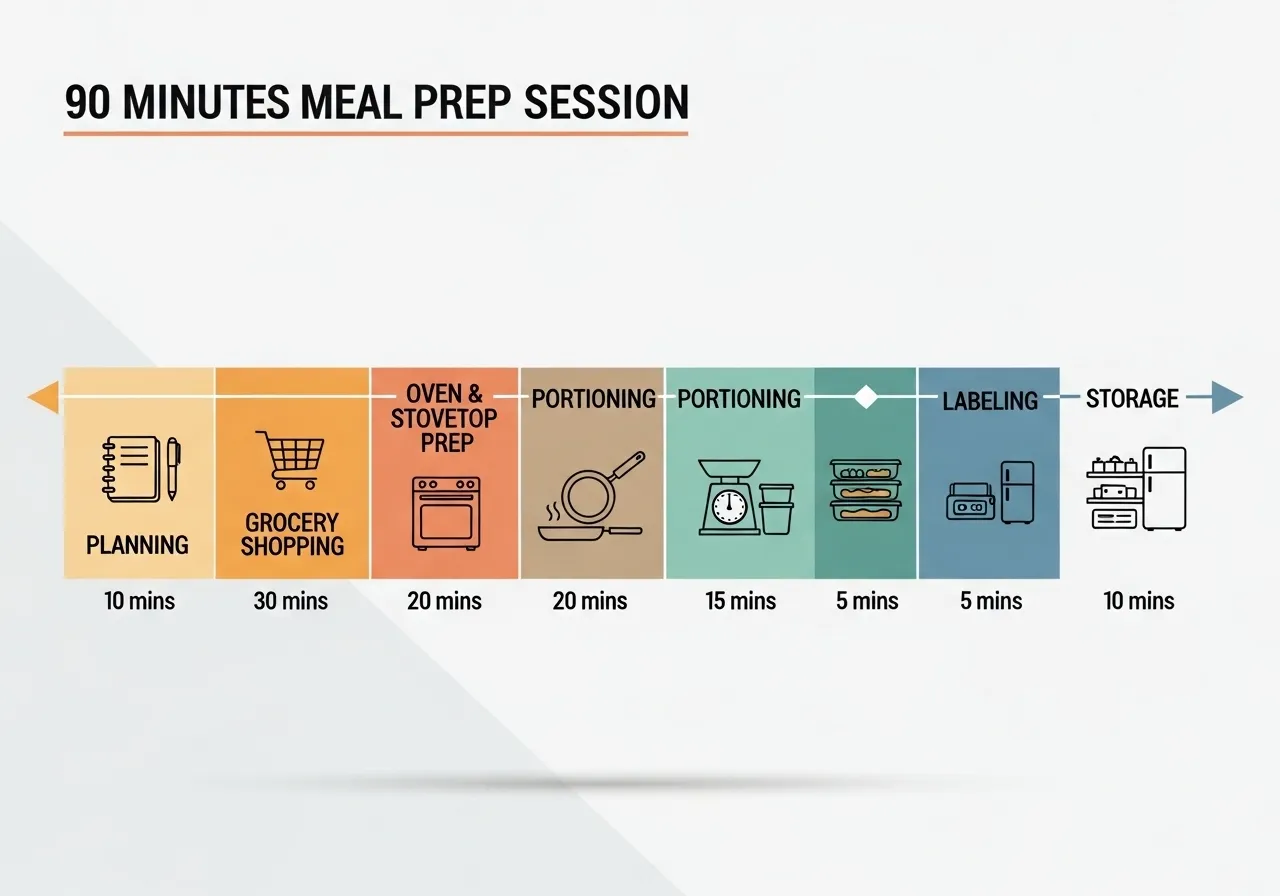
Before You Start: The Planning Step (10 minutes)
The most common reason meal preps fail: buying ingredients without a plan and hoping inspiration strikes in the kitchen.
A simple 10-minute planning session before grocery shopping significantly improves efficiency and reduces food waste.
✅ Write a simple grocery list based on these components (not individual recipes)
✅ Check what is already in the fridge/pantry before buying
The Prep Session Structure
10–25 min: Place protein and vegetables in oven; start grain cooking on stovetop
25–55 min: While oven and stove run, portion snacks (nuts, yogurt, fruit), wash salad greens
55–75 min: Remove food from oven, let cool, portion into containers
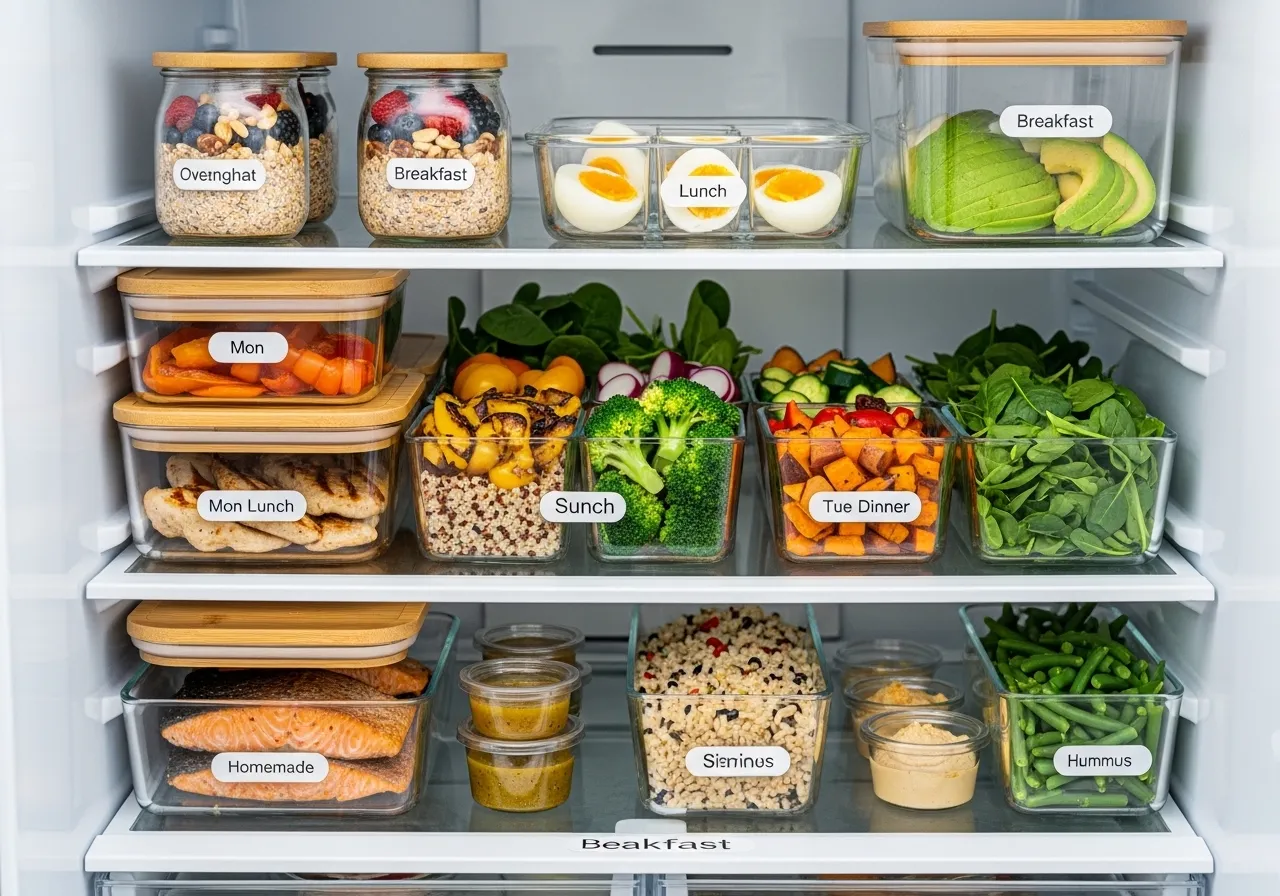
75–90 min: Label containers with day/contents, store in fridge (3–4 day rule) or freeze longer-term portions
Food Storage Guidelines
| Food Type | Fridge (safe duration) | Freezer |
|---|---|---|
| Cooked chicken/turkey | 3–4 days | 2–6 months |
| Cooked grains (rice, quinoa) | 3–5 days | 1–2 months |
| Roasted vegetables | 3–5 days | 2–3 months |
| Hard-boiled eggs | Up to 1 week | Not recommended |
Storage times are general food safety guidelines. When in doubt, use sensory cues (smell, appearance) and discard anything that seems off. Consult local food safety guidelines for region-specific recommendations.

Making Meal Prep Sustainable Long-Term
Start Smaller Than You Think Is Necessary
The biggest mistake beginners make is trying to prep everything at once — 7 days of full meals across multiple containers.
Starting with just 3 days of lunches requires less time, less shopping, and less risk of food going to waste if the approach needs to be adjusted.
Once 3-day prep becomes a comfortable habit (typically 3–4 weeks in), extending to a full week is straightforward.
Batch Cooking vs Daily Cooking: Finding Your Balance
Full batch cooking (prepping everything once per week) works well for people with predictable schedules.
Mini-prep (a shorter 20–30 minute session 2–3 times per week) works better for people with irregular schedules, those who prefer fresher food, or those whose weekly plans change frequently.
Neither approach is inherently superior — the best system is the one that gets used consistently.
Budget Considerations
Meal prepping from whole food ingredients typically costs significantly less per serving than restaurant or takeout equivalents — but it requires upfront investment in containers and potentially some pantry staples.
A set of 10 glass or BPA-free plastic containers (roughly $20–40 USD) is the primary equipment investment and typically pays back within a few weeks of consistent use.
Frequently Asked Questions About Meal Prep
Q: How do I prevent food from getting boring?
The primary tool is sauce and seasoning variation — the same chicken and rice tastes completely different with a teriyaki sauce, a lemon-herb dressing, or a mild curry base.
Keeping a selection of 4–6 sauces or spice blends in the fridge or pantry allows the same prepped components to create meaningfully different meals throughout the week.
Q: Is meal prepping safe from a food safety perspective?
Yes — when following standard food safety practices:
- Cool cooked food to room temperature within 2 hours before refrigerating (do not place hot food directly into sealed containers in the fridge)
- Reheat to a minimum internal temperature of 74°C (165°F) before consuming
- Follow the storage duration guidelines above — when in doubt, discard
Q: Do I need special containers or equipment?
No special equipment is required beyond:
- A set of airtight containers (glass preferred for reheating; BPA-free plastic is acceptable)
- A basic kitchen scale (helpful but optional)
- Standard pots, pans, and a sheet pan for roasting
Specialized meal prep containers, portioning scales, and vacuum sealers can be useful additions over time — but none are necessary to start.
- Preparing components (protein, carbohydrate, vegetables) rather than full meals offers flexibility and reduces food boredom
- A 90-minute weekly prep session can provide most weekday meals
- Starting with just 3 days of lunches is a sustainable entry point before scaling up
- Sauce and seasoning variation prevents monotony with the same base ingredients
- Follow standard food safety storage durations — 3–4 days for most cooked proteins and grains in the fridge