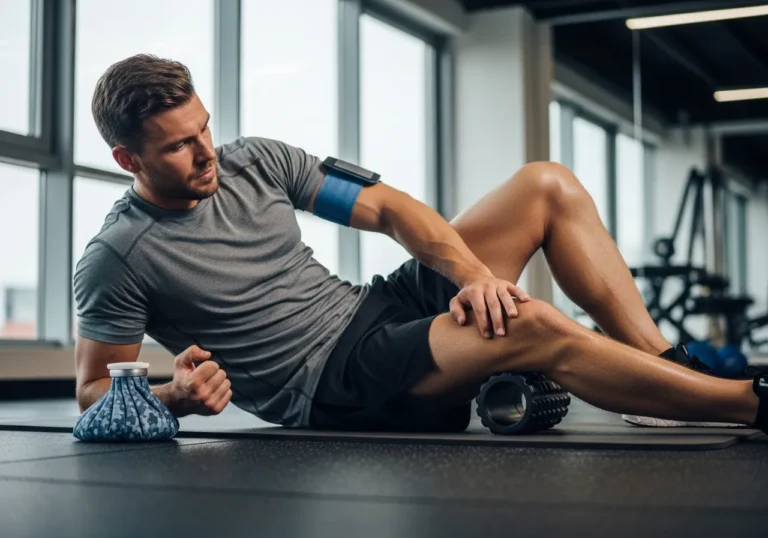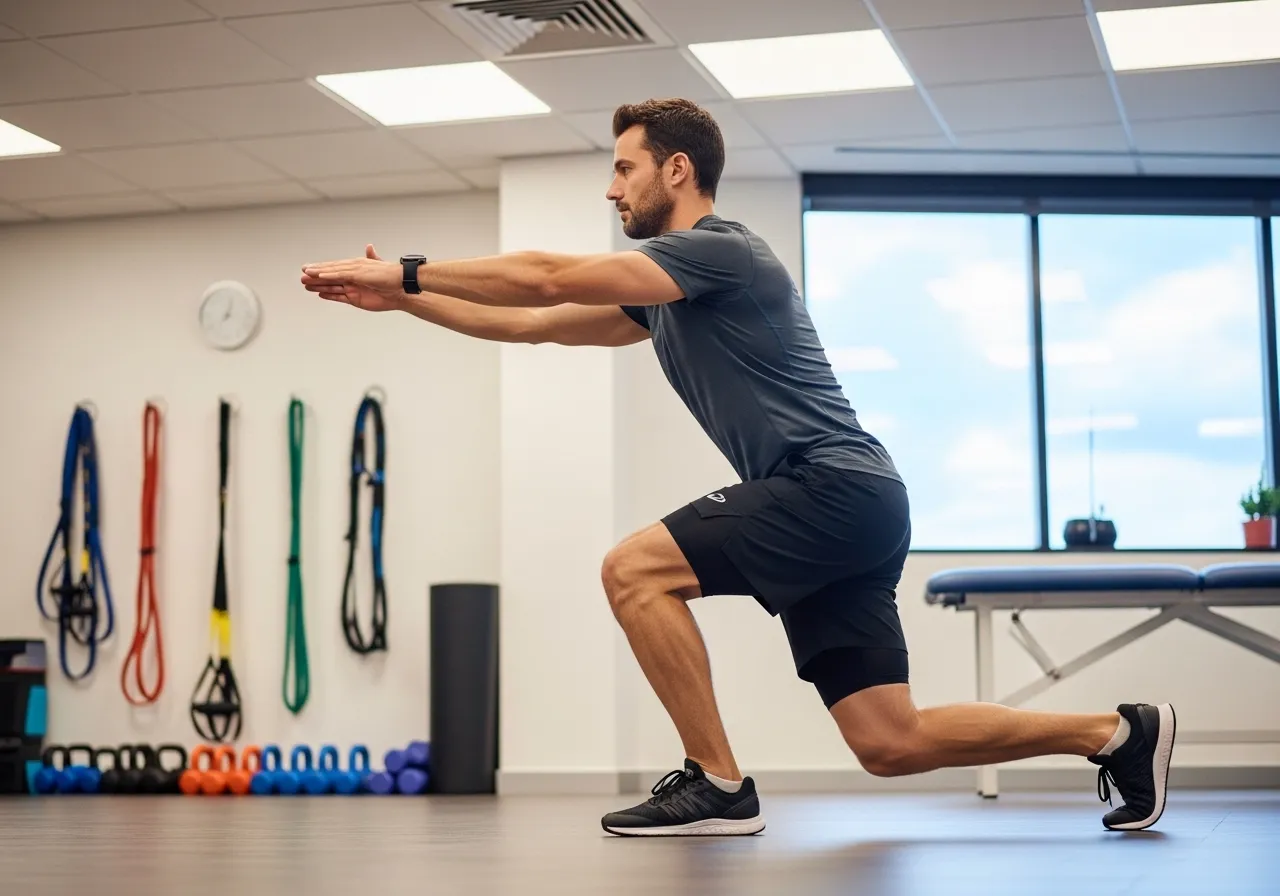
The Best Exercises for Knee Strengthening
Disclaimer: This article is for general educational purposes only and is not intended to replace medical, nutritional, or professional fitness advice. Individual results may vary. If you experience pain, discomfort, swelling, or unusual symptoms during exercise, stop immediately and consult a qualified professional.
Why Knee Strength Matters More Than You Think: Anatomy and Injury Prevention
The knee is one of the most heavily loaded joints in the body, and it is also one of the most commonly affected by injury in active people. For that reason, building and maintaining knee strength can play an important role in long-term joint health and movement quality.
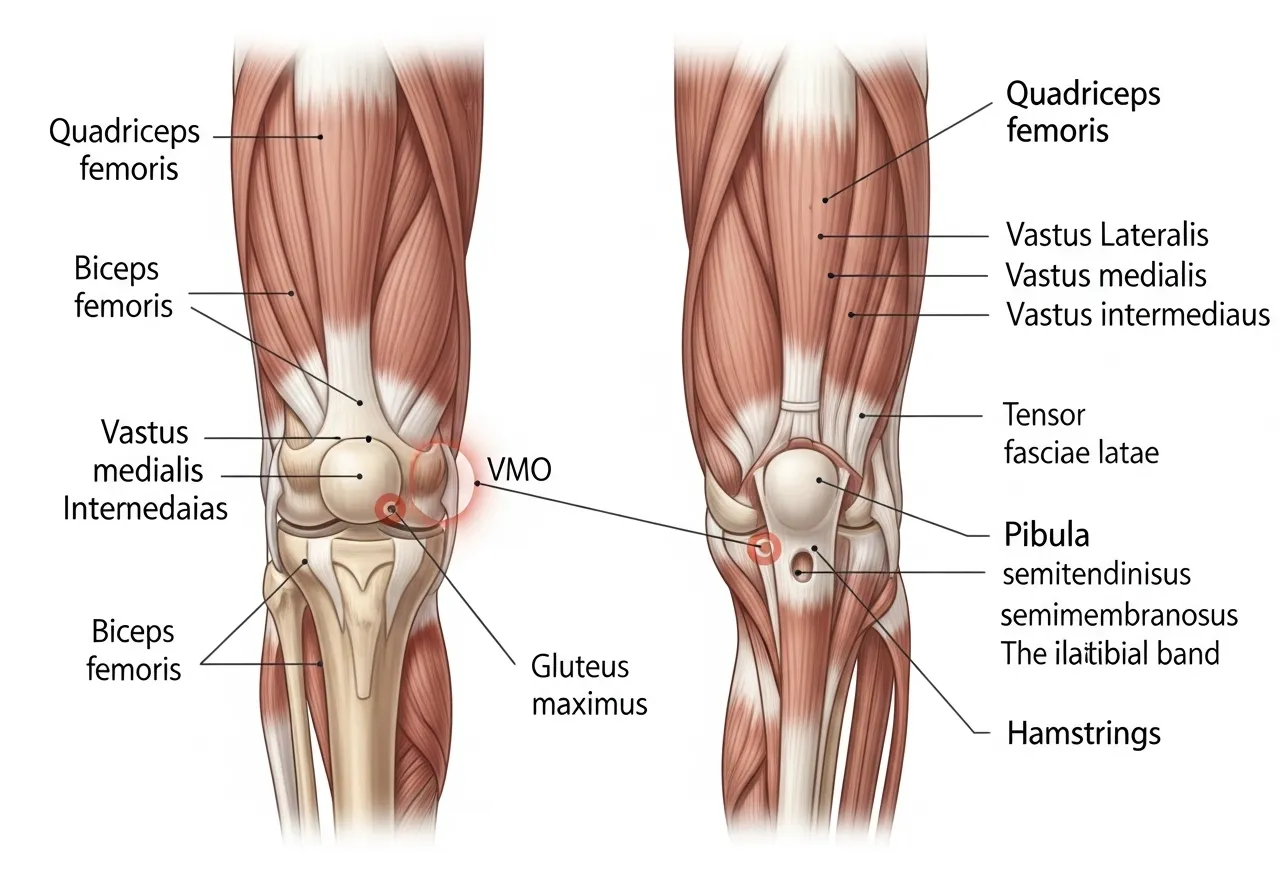
Knee health depends not only on the joint itself, but also on the muscles that support it. When the surrounding muscles are strong and well coordinated, the knee is better able to handle daily movement, exercise, and sport.
The Four Muscle Groups That Protect the Knee
Several major muscle groups help support and protect the knee. The quadriceps help extend the knee, the hamstrings help control forward motion of the lower leg, and the glutes and hip muscles help maintain proper alignment during movement.
When these muscles work together efficiently, the knee is less likely to collapse inward or absorb excessive stress during walking, running, squatting, and jumping.
Common Knee Conditions and Their Muscular Causes
Many common knee problems are influenced by weakness, imbalance, or poor movement control in the muscles around the hip and thigh. Front-of-knee pain, for example, is often linked to how the quadriceps and hip muscles function together.
This is why strengthening the muscles around the knee is often more useful than focusing on the knee alone.
The Research Case for Knee Strengthening Programs
Exercise-based programs are widely used to improve knee function and reduce injury risk. Research supports the use of structured strengthening and movement training for both prevention and rehabilitation.
In many cases, a well-designed exercise routine can help improve pain, stability, and overall function when it is performed consistently over time.
Assessment: Identifying Your Knee Strength Deficits
Before starting a knee strengthening routine, it helps to notice which movements feel weak, unstable, or painful. Simple tests such as squats, step-downs, and single-leg balance can reveal useful information about movement control.
These observations can help you choose exercises that match your current level and avoid unnecessary strain.
Pain vs. Soreness: When to Push Through and When to Stop
It is important to understand the difference between normal muscle soreness and warning signs of injury. Mild soreness after exercise is common, but sharp pain, swelling, or a feeling that the knee is giving way should not be ignored.
If symptoms worsen during exercise or do not settle afterward, the load should be reduced and professional advice should be considered.
Neuromuscular Control: The Missing Dimension of Knee Strength
Strong muscles are important, but timing and coordination matter too. Neuromuscular control refers to the body’s ability to recruit the right muscles at the right time during movement.
This is especially important in sports and fast movements, where the knee must respond quickly to changing demands.
Footwear, Surfaces, and Biomechanical Factors Beyond Muscle Strength
Knee stress is affected by more than muscle strength alone. Shoes, training surfaces, running mechanics, and lifting technique can all influence how much load reaches the knee.
A complete approach to knee health should include both strengthening and attention to movement habits.
The 8 Best Exercises for Knee Strengthening: Complete Guide With Progressions
The exercises below were chosen because they target the major muscle groups that support the knee and can usually be performed with minimal equipment. They are arranged from simpler movements to more demanding ones, so you can progress gradually as your strength improves.
Exercise 1: Terminal Knee Extension (TKE)
Terminal knee extension is a simple band exercise that helps activate the quadriceps, especially near the end of the knee extension range. It is often used in early strengthening and rehabilitation programs.
Start with light resistance and focus on smooth control rather than speed or heavy load.
Exercise 2: Wall Slide (Partial Squat)
Wall slides are a controlled way to train the quadriceps while keeping the movement stable and easy to manage. They are a useful option when full squats feel too uncomfortable at first.
Keep the movement shallow at the beginning and increase the range only as comfort and control improve.
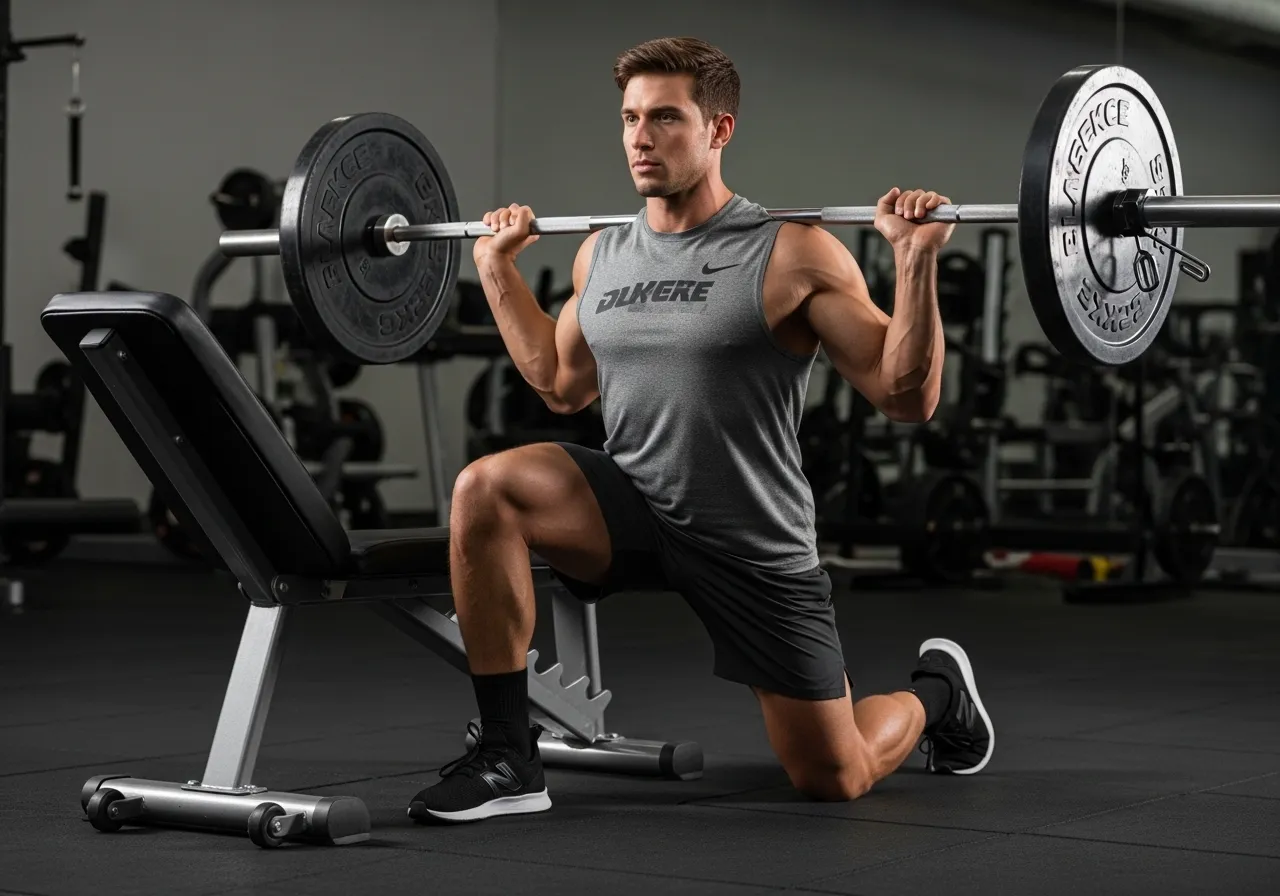
Exercise 3: Bulgarian Split Squat
The Bulgarian split squat is a strong lower-body exercise that trains one leg at a time. It helps build strength, balance, and control in a functional position.
Begin without added weight if needed, and make sure the knee stays aligned during both the lowering and rising phases.
Exercise 4: Romanian Deadlift (RDL)
The Romanian deadlift mainly targets the hamstrings and glutes. It is one of the most useful exercises for improving posterior-chain strength and supporting better knee mechanics.
Keep the spine neutral and move from the hips rather than bending through the lower back.
Exercise 5: Nordic Hamstring Curl
The Nordic hamstring curl is a challenging hamstring exercise that places a strong emphasis on control during the lowering phase. Because of its difficulty, it is best introduced gradually.
Use assistance when needed and build up slowly over time.
Exercise 6: Clamshell
Clamshells are a simple exercise for the hip muscles that help keep the knee aligned during movement. They are often useful for people who tend to let the knee drift inward.
This exercise is easy to adjust by adding a light resistance band as strength improves.
Exercise 7: Step-Up With Knee Drive
Step-ups are a practical exercise that closely reflects everyday movement such as climbing stairs. They also help improve balance and control on one leg.
Use a low step at first and move in a slow, controlled way.
Exercise 8: Lateral Band Walk
Lateral band walks target the hip muscles that help stabilize the knee during side-to-side movement. They are especially helpful for improving control in walking, running, and athletic movement.
Keep the feet pointed forward and avoid letting the knees collapse inward.
How to Progress These Exercises Over 12 Weeks
Progress should be gradual. Start with the easiest version of each exercise, and only increase resistance or range of motion when your form stays consistent and the movement feels manageable.
A good rule is to avoid pushing into pain that gets worse during the session or lingers afterward.
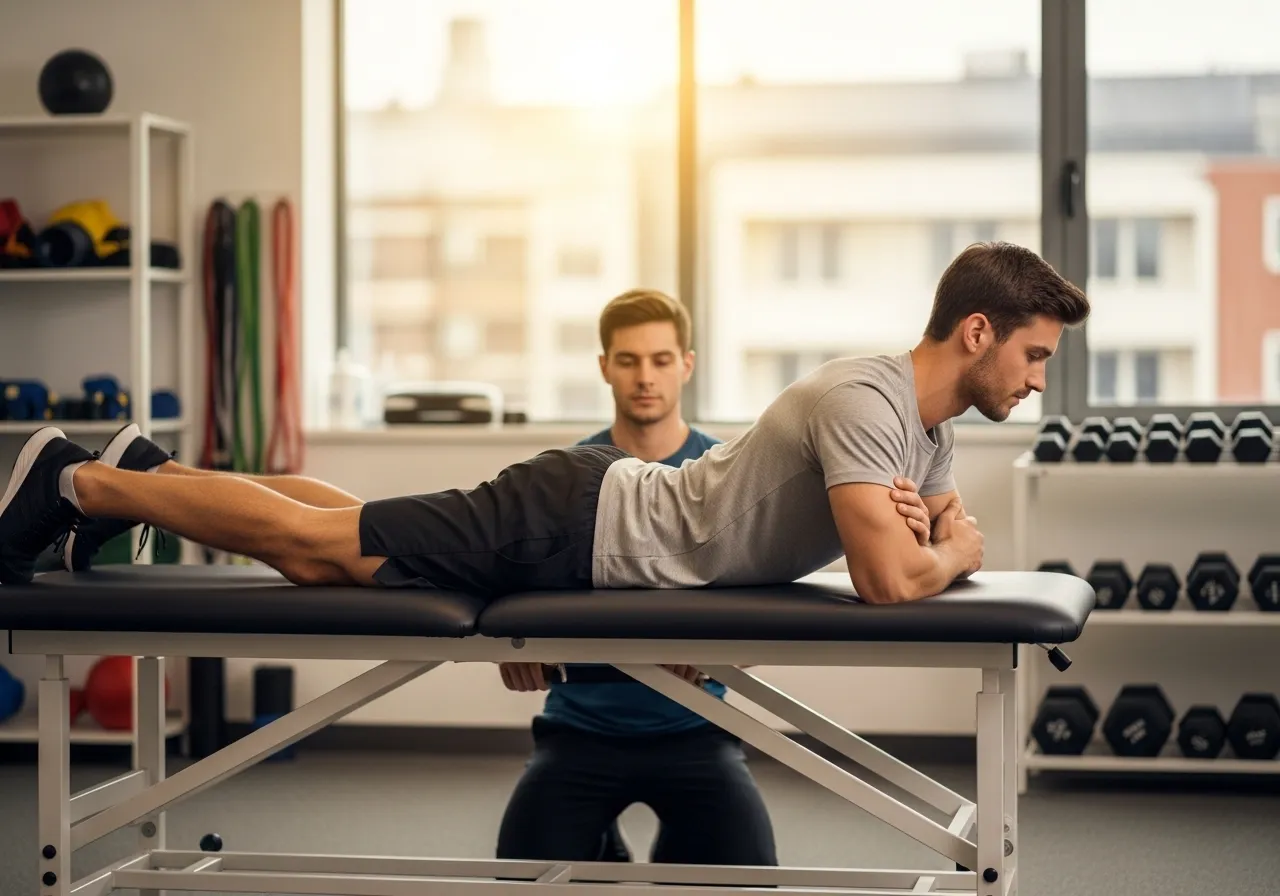
Knee Strengthening Programs: Beginner, Intermediate, and Injury Rehabilitation
A structured plan is often more effective than doing random exercises. By following a clear progression, you can train safely while giving the muscles around the knee enough stimulus to adapt.
Beginner Knee Strengthening Program (Weeks 1–8)
The beginner phase should focus on simple movements such as TKE, wall slides, clamshells, and step-ups. These exercises help build a basic foundation of strength and movement control.
Training two to three times per week is usually enough to begin, as long as recovery is adequate.
Intermediate Knee Strengthening Program (Weeks 9–20)
Once the basic movements feel controlled, more demanding exercises such as the Bulgarian split squat, Romanian deadlift, and Nordic hamstring curl can be added. These movements help develop greater strength and stability.
At this stage, consistency matters more than heavy loading. Controlled progress is the goal.
Rehabilitation Protocol for Active Knee Pain
If knee pain is already present, the program should start conservatively. Isometric holds, shorter ranges of motion, and lighter resistance are often better tolerated in the beginning.
When pain increases or function gets worse, the load should be reduced and the situation reassessed.
Incorporating Knee Exercises Into a Complete Training Program
Knee exercises can be used as part of a warm-up, as accessory work, or as the main focus of a lower-body session. The best choice depends on your current training schedule and goals.
If you already train lower body regularly, smaller activation exercises can be added before the main workout.
Children and Adolescents: Knee Strengthening Considerations
For children and adolescents, the main priority should be safe movement quality and age-appropriate progression. Bodyweight exercises and simple control drills are usually the best starting point.
Heavy loading should be introduced only when the athlete is ready and movement quality is stable.
Tracking Progress in Knee Strengthening: Key Performance Indicators
Progress can be tracked through pain levels, movement quality, balance, and strength improvements. For example, smoother squats, better step-down control, and less discomfort during stairs are all useful signs of progress.
Recording these changes over time can help you understand whether the program is working.
When to Work With a Physical Therapist vs. Self-Manage
Mild discomfort and general weakness can often be managed with a home exercise plan, but sudden swelling, instability, or severe pain should be evaluated by a professional.
If you are unsure whether your symptoms are safe to train through, it is better to get checked first.
Common Knee Problems and How Targeted Strengthening Addresses Each One
Different knee problems may look similar at first, but the best exercise approach depends on the location and cause of the symptoms. A targeted plan is usually more effective than a one-size-fits-all routine.
Patellofemoral Pain Syndrome: Runner’s Knee
Front-of-knee pain is often linked to weakness or poor control in the quadriceps and hip muscles. Strengthening these areas can help improve tracking and reduce stress on the joint.
Exercises that improve alignment are often especially helpful here.
Patellar Tendinopathy: Jumper’s Knee
Patellar tendon pain often shows up in jumping, landing, or repeated loading sports. In many cases, the tendon benefits from gradual strengthening rather than complete rest alone.
The key is to increase load slowly and stay within a tolerable range.
IT Band Syndrome: Lateral Knee Pain
Pain on the outside of the knee can be related to hip weakness and movement patterns that place extra stress on the outer side of the leg. Hip strengthening is often part of the solution.
In these cases, improving control at the hip can reduce repeated irritation around the knee.
Knee Osteoarthritis: Strengthening for Pain Reduction and Function
For knee osteoarthritis, strength training is commonly used to improve function and support joint health. A well-paced exercise plan can help people move more comfortably in daily life. [web:2]
The best results usually come from consistent training and careful load management.
Post-ACL Reconstruction: Return to Sport Strengthening
After ACL reconstruction, rebuilding strength and control is an important part of recovery. The goal is not only to restore muscle force, but also to improve movement quality and confidence.
Return to sport should be based on readiness, not only on time passed since surgery.
Medial Knee Pain: MCL, Medial Meniscus, and Pes Anserine
Pain on the inside of the knee may come from several possible structures, so it should not be assumed to be a simple muscle issue. If symptoms are persistent or sharp, evaluation is important.
Once serious problems are ruled out, strengthening and movement correction may support recovery.
Osgood-Schlatter Disease: Adolescent Knee Strengthening
In growing adolescents, knee pain can be linked to activity level and growth-related stress. In these cases, exercise should be adjusted to match tolerance rather than forced through discomfort.
Lower-impact strengthening is usually a safer starting point.
Bilateral vs. Unilateral Knee Conditions: Addressing Asymmetry
Even when both knees feel uncomfortable, one side is often weaker or less stable than the other. Single-leg exercises can help identify and address these differences.
Working on asymmetry can improve overall control and reduce stress during daily movement.

Programming Knee Exercises Into Your Training and Frequently Asked Questions
The way you organize knee exercises matters just as much as the exercises themselves. A simple, sustainable structure is usually easier to follow and more effective over time.
When in the Training Session to Perform Knee Exercises
Light activation drills can be placed at the start of a workout, while more demanding strengthening exercises are often better suited to the main training portion. This helps you use your energy efficiently.
A clear order makes the plan easier to repeat consistently.
Frequency: How Often Is Enough Without Overdoing It
Most people benefit from training the same muscle group two to three times per week with enough recovery between sessions. That balance helps the body adapt without excessive irritation.
More is not always better if the knee does not recover well.
Balancing Knee Strengthening With Main Sport Training
If you already do sports or lower-body training, knee exercises can be used to support your main program rather than replace it completely. The goal is to complement your existing work, not overload it.
A small number of useful exercises done well is often better than a long list performed inconsistently.
Managing Flare-Ups: Adjusting Training When Knee Pain Increases
If symptoms flare up, reduce the load, shorten the range, and give the knee time to settle. Temporary discomfort does not always mean the program should stop completely, but the intensity should match your current tolerance.
If pain becomes sharp, swelling appears, or the knee feels unstable, stop and get it checked.
Knee Supports, Braces, and Sleeves: What Actually Helps
Supports and sleeves may provide comfort or a sense of stability, but they do not replace strength training. Their role is usually supportive rather than corrective.
Long-term improvement usually depends on better movement, stronger muscles, and sensible load management.
Frequently Asked Questions About Knee Strengthening
Can I do knee exercises every day?
Light mobility or activation work may be done often, but stronger exercises usually need rest between sessions.
Are squats bad for the knees?
Not necessarily. When performed with good form and appropriate load, squats can be part of a healthy knee-strengthening routine.
Should I train through knee pain?
Mild muscle soreness is different from sharp or worsening joint pain. If the pain increases during exercise or stays after the session, reduce the load.
How long does it take to see improvement?
It varies, but many people notice gradual changes over several weeks when they train consistently.
Knee strengthening works best as a long-term habit rather than a short-term fix. Start with simple movements, progress slowly, and keep the focus on form, recovery, and consistency.