What to Wear to the Gym: A Practical Guide
Why What You Wear to the Gym Actually Matters for Performance
When I first started training seriously I wore whatever old cotton t-shirt and tracksuit bottoms were clean, assuming gym clothing was purely an aesthetic choice. Then a friend convinced me to try a proper moisture-wicking base layer during a particularly heavy summer training week, and the difference in comfort — and honestly in confidence — was immediate enough to shift my thinking entirely. Gym clothing is not vanity. It is functional equipment that affects range of motion, thermoregulation, injury risk, and the psychological state that training performance depends on. This guide cuts through the marketing noise to explain what actually matters in gym clothing from a functional and practical perspective, with clear guidance on what to prioritize at each budget level.
The Performance Science of Athletic Clothing
The functional impact of clothing on physical performance operates through three primary mechanisms: thermoregulation, freedom of movement, and proprioceptive feedback. Thermoregulation is the most immediately measurable clothing variable — the difference between a cotton shirt that absorbs sweat and retains moisture against the skin versus a polyester or nylon moisture-wicking fabric that pulls sweat away from the skin and facilitates evaporative cooling is a skin temperature difference of 1-3°C during sustained exercise, which corresponds to measurable differences in perceived exertion, cardiovascular strain, and time to fatigue in warm training environments. Freedom of movement is the biomechanical dimension: clothing that restricts hip flexion (poorly designed shorts with inadequate gusset depth), limits shoulder elevation (tight-fitting shirts with restricted armhole structure), or creates chafing at high-movement areas (inner thigh seam placement in cycling shorts) directly constrains the movement quality that exercise technique requires. Proprioceptive feedback from compression garments — a more controversial performance claim but with some experimental support — provides sensory input that improves movement accuracy and may reduce perceived exertion at equivalent absolute intensities through the enhanced body position awareness that gentle compression produces. From ACSM exercise physiology and athletic performance factors overview, environmental conditions and appropriate clothing for the training context produce measurable differences in exercise performance, thermoregulation efficiency, and exercise adherence — confirming the functional rather than purely aesthetic relevance of athletic clothing selection.
Psychological Effects of Workout Clothing: Enclothed Cognition
The psychological dimension of workout clothing has been formally studied under the concept of enclothed cognition — the influence that wearing symbolic clothing has on the wearer’s psychological state and performance. The foundational research on enclothed cognition (Adam and Galinsky, 2012) demonstrated that wearing a white coat described as a doctor’s coat improved attention and error detection performance compared to the same coat described as a painter’s coat — establishing that the symbolic meaning of clothing activates the associated psychological states in the wearer. Applied to gym clothing, the enclothed cognition research suggests that wearing clothing specifically associated with athletic identity and performance activates the psychological states — focus, effort tolerance, physical confidence — that those associations carry. Athletes who dress intentionally for training — wearing technical athletic clothing rather than casual wear repurposed as gym clothing — report higher motivation, greater training intensity, and stronger athletic identity engagement than those who train in casual clothing across multiple self-report studies. The practical implication is not that expensive branded gym wear is required for performance, but that the deliberate act of changing into training-specific clothing before a session provides the psychological ritual that signals the transition from daily-life mode to training mode — the mental switching cost that affects the quality of the first sets in every session where the psychological transition is not completed before training begins.
How Clothing Fit Affects Training Quality
The fit of athletic clothing — the relationship between garment dimensions and the wearer’s body — is as important as fabric selection for functional performance, and the specific fit requirements differ between clothing categories in ways that most generic “athletic fit” descriptions fail to specify adequately. For upper body garments, the critical fit dimensions are shoulder seam placement (seam should sit at the natural shoulder point, not dropped below it — a dropped shoulder seam restricts upward arm movement and pulls the fabric across the upper back during overhead exercises) and body width through the chest and back (enough room to take a deep breath and perform a full shoulder rotation without fabric pulling across the shoulders, but not so loose that the fabric drapes into the area between the body and a barbell during pressing movements). For lower body garments, the waistband position and security during dynamic movement is the primary fit concern — a waistband that slides or requires frequent readjustment during squatting, lunging, or sprinting interrupts training focus and produces the midset adjustment habit that distracts from the session quality that uninterrupted focus produces. The rise height of training shorts and leggings is a biomechanical fit variable: mid-rise (sitting at or slightly below the natural waist) provides adequate hip flexion freedom for most training; high-rise (above the natural waist) provides greater core compression and often superior hip hinge support for heavy deadlift training; and low-rise introduces the gap between waistband and lower back that forward hinge position creates — potentially exposing the lower back in movements where the top of the garment should remain in contact with the skin throughout the movement range. Trying on athletic clothing through its training-specific range of motion — the deep squat test, the overhead reach, the forward bend — before purchasing eliminates the common experience of garments that feel fine standing at the changing room mirror but restrict or shift during the actual movement patterns that training requires.
Gym Bag Essentials Beyond Clothing
The complete functional gym kit extends beyond the clothing items to the support items that training sessions regularly require and whose absence produces the interruption and substitution that advance preparation prevents. The gym bag essentials for any serious training athlete: a water bottle with a minimum 750ml capacity that the training session’s hydration needs can be met from without refill dependency; a microfiber towel for equipment wiping and personal use (gym courtesy in shared equipment environments and hygiene practice regardless of facility provision); wireless earphones or headphones for the training playlist that the enclothed cognition section’s psychological preparation principle includes audio as a component of; a resistance band for pre-activation warm-up exercises that require no additional equipment; and the training log or phone app that every session’s progressive overload tracking requires. The supplementary gym bag additions that experience identifies as valuable: chalk in a small container for grip-limited pulling sessions; the lifting belt for heavy compound work sessions where intra-abdominal pressure support is appropriate; extra hair ties or a sweat headband for athletes whose hair management during training affects movement quality and comfort; and the post-workout recovery snack that prevents the appetite-suppression-driven nutrition gap that many athletes experience in the 30-45 minutes immediately post-training before appetite returns. The well-packed gym bag is the physical instantiation of the preparation mindset that underlies every other training efficiency — the athlete who arrives with everything they need for the session is the athlete who trains from the session’s first minute without the distraction and delay that missing equipment creates.
Seasonal Wardrobe Adjustments: Dressing for Year-Round Training
The fixed gym wardrobe that serves summer training well requires seasonal adjustment for the cold months when outdoor training transitions, gym temperature varies, and the layering needs that climate change across the year creates. The winter gym wardrobe additions that justify their cost: a midweight training hoodie or sweatshirt in the moisture-wicking polyester-cotton blend (not pure cotton) that allows warm-up layering removal as body temperature rises without the discomfort of a wet cotton layer against the skin; thermal running tights or training leggings with a slightly heavier fabric weight than the summer equivalents that provide leg warmth for outdoor training in the 5-15°C range without restricting the movement that cold-stiff joints are already compromised in before the warm-up restores their normal range; and thin liner gloves for outdoor cold-weather training that prevent the grip impairment that cold-numbed hands produce during resistance-based outdoor circuits. The indoor gym cold-weather consideration: many commercial gyms maintain 18-21°C year-round, making seasonal clothing adjustment unnecessary for exclusively indoor training — the standard year-round training wardrobe serves these controlled environments regardless of outside temperature. For athletes who alternate between indoor gym training and outdoor conditioning sessions, a single additional layer (the training hoodie and thermal tights) provides the outdoor training capability without requiring a complete seasonal wardrobe overhaul.
Athletic Wear for Different Body Types: Finding What Works
The standardized sizing of most athletic clothing brands creates fit challenges for athletes whose body proportions differ from the idealized model measurements that clothing design uses — the broad-shouldered athlete whose chest size requires a shirt that is baggy at the waist; the long-torso athlete whose standard rise leggings sit below the natural waist; and the athlete whose quad development strains the thigh circumference of training shorts designed for lower body activity without resistance training’s hypertrophy consequence. The practical solutions for common fit challenges: tall athletes benefit from brands that offer specific tall-size ranges (Old Navy Active, Under Armour Tall, and most major brands’ extended sizing programs now address this) or separate-purchase top and bottom sizing that allows mixing a larger chest size with a smaller waist in brands that break from single-size construction; powerlifter and bodybuilder proportions are best served by brands that include athletic cut or “big and tall” specifications that account for the shoulder-to-waist ratio that strength training builds; and petite athletes whose standard sizes pool and bunch in the torso and inseam benefit from brands with specific petite ranges that maintain proportional garment construction rather than simply scaling down the standard pattern. The body-type consideration is ultimately a fit-first shopping principle: regardless of brand, price, or aesthetic appeal, a garment that fits the individual athlete’s specific proportions well will outperform a poorly fitting premium alternative in every functional category that fit affects — movement freedom, moisture management efficiency, and the confidence-related psychological effect that clothing fitting correctly produces.
Performance Accessories: Heart Rate Monitors, GPS Watches, and Wearable Tech
The wearable technology category bridges gym clothing and training equipment in ways that make it worth addressing in the clothing guide: the items worn on the body during training that affect training quality, data collection, and the progressive overload tracking that results require. The heart rate monitor chest strap remains the gold standard for accuracy in cardiovascular training zones — the optical wrist-based HR monitoring of fitness watches provides reasonable average accuracy but higher beat-to-beat variability, particularly during resistance training’s isometric and near-maximal effort phases where wrist movement artifacts reduce optical sensor accuracy. For athletes whose training zone management, HRV monitoring, or calorie expenditure estimation depends on accurate heart rate data, the chest strap’s superior accuracy justifies its addition to the training accessory kit alongside the wrist-based watch that most athletes already own for time-keeping. GPS running watches (Garmin, Polar, COROS) provide the distance, pace, and elevation data that outdoor running and cycling training depends on for progressive load management — the training without GPS data for outdoor cardio athletes is the equivalent of resistance training without a log, losing the precise progressive overload information that results require. The fitness tracker and smartwatch category (Apple Watch, Fitbit, Samsung Galaxy Watch) provides adequate training data for general fitness purposes without the GPS precision and advanced training metrics that dedicated running watches offer for performance-focused training.
Keep it simple, keep it functional, keep showing up.
Fabrics and Materials: What to Look for and What to Avoid
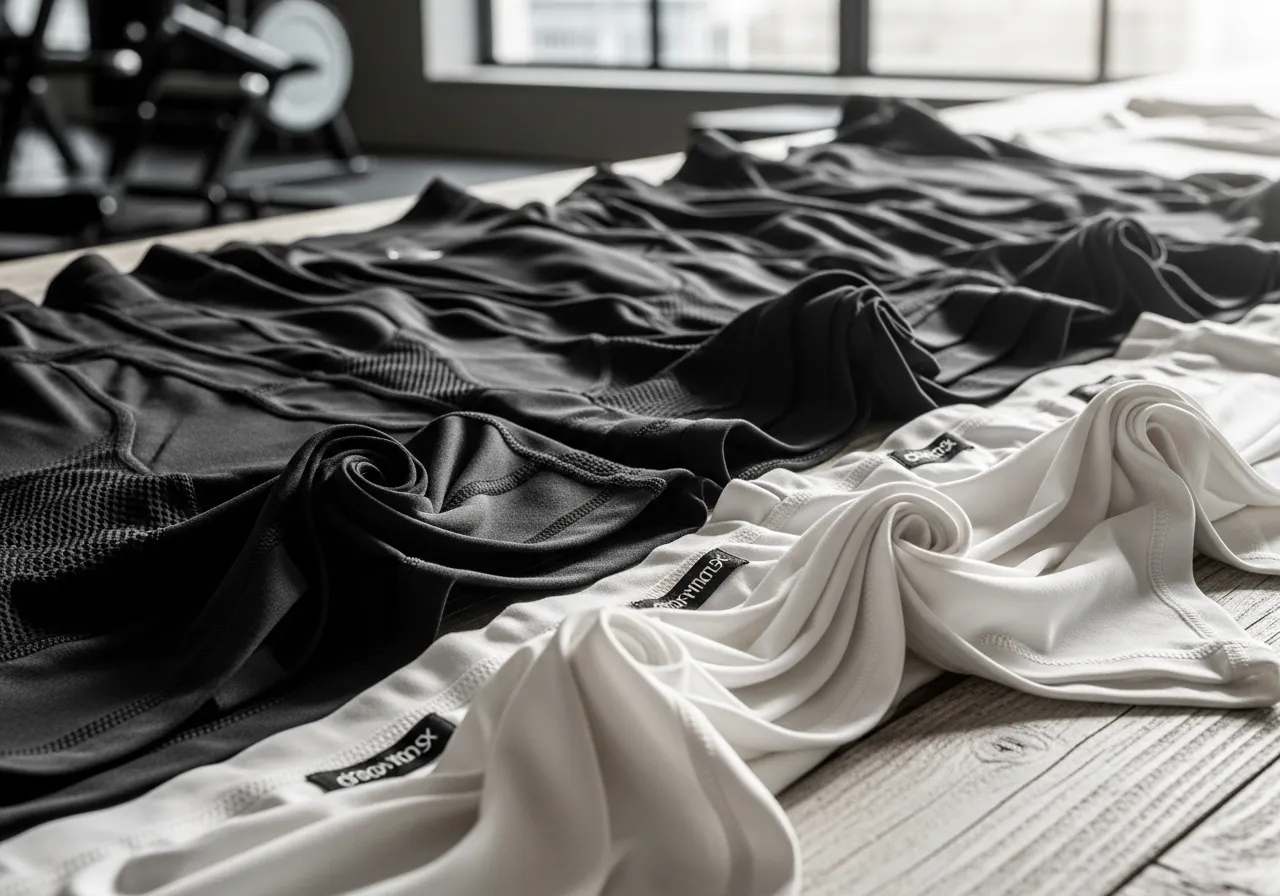
The fabric choice is the single most important variable in gym clothing performance — more important than brand, price, or aesthetic design — because the fiber content determines the thermoregulation, moisture management, durability, and odor resistance characteristics that functional athletic clothing requires.
Moisture-Wicking Synthetics: The Workhorse of Athletic Wear
Polyester and nylon are the foundation fabrics of virtually all high-performance athletic clothing for one straightforward reason: their hydrophobic fiber structure does not absorb water, meaning sweat moves from the skin surface through capillary action in the tightly woven fabric structure to the fabric’s outer surface, where evaporation carries the heat away from the body. This moisture transport mechanism — described as “wicking” in marketing terms — is not a fabric treatment but a structural property of synthetic hydrophobic fibers that does not wash out or degrade with use as water-resistant surface treatments do. Polyester is the dominant athletic fabric for its combination of low cost, excellent durability, good moisture management, and easy care — the 100% polyester construction of most budget athletic wear provides genuine functional performance advantages over cotton at minimal price premium. Nylon offers superior softness and abrasion resistance compared to polyester at slightly higher cost, making it the preferred choice for running leggings and shorts where skin contact comfort is paramount. Elastane (Lycra/Spandex) added at 10-25% provides the four-way stretch that movement-unrestricted training requires — the combination of 75-85% polyester with 15-25% elastane that most quality athletic garments use balances moisture management with the unrestricted range of motion that resistance and mobility training demands. The blend percentages that indicate functional performance clothing: any garment above 85% synthetic fiber (polyester, nylon, or their blends) with elastane added for stretch provides the moisture management and movement freedom that athletic training requires. From Textile Research Journal athletic fabric performance and thermoregulation, synthetic moisture-wicking fabrics maintain skin temperature 1.5-2.5°C lower than cotton during equivalent exercise intensity in warm conditions — confirming the measurable thermoregulatory advantage of fabric selection over the common assumption that all athletic clothing performs equivalently.
Why Cotton Is Suboptimal for Most Gym Training
Cotton’s hydrophilic fiber structure — the characteristic that makes it comfortable for casual wear — makes it a poor choice for sustained athletic training: cotton absorbs sweat into the fiber itself rather than transporting it to the surface, becoming progressively heavier and wetter as the session continues, maintaining sweat against the skin rather than facilitating evaporative cooling, and creating the chafing friction at skin contact areas that wet fabric against moving skin produces. The practical consequence: a 60-minute resistance training session in a cotton t-shirt typically produces a garment weighing 200-400g more than at session start, clinging to the body at approximately 35% moisture saturation, and requiring significantly longer drying time than a synthetic equivalent that has deposited most of its sweat load at the outer surface available for evaporation throughout the session. The specific contexts where cotton remains acceptable: very low-intensity or short-duration activity in cool environments where sweat production is minimal; outdoor cold-weather training where cotton’s insulating properties when dry provide warmth advantage; and the individual whose training environment’s climate control maintains ambient temperature below 18°C regardless of training intensity. For all other contexts — moderate to high intensity training, warm environments, or sessions exceeding 30 minutes — synthetic alternatives provide genuinely superior functional performance at equivalent or lower cost points that have made cotton athletic wear increasingly rare in serious training contexts.
Compression Garments: Evidence, Benefits, and When to Use Them
Compression garments — shorts, leggings, calf sleeves, and upper body tops that apply graduated pressure to muscle groups — have accumulated a research literature with consistent findings across three outcomes: reduced perceived muscle soreness at 24-48 hours post-training; improved proprioception and movement accuracy during exercise; and enhanced venous return and metabolic waste clearance during recovery when worn post-exercise. The performance-during-exercise benefit is more modest: the research on compression during training shows small improvements in time trial performance and jump height in some studies, but the effect sizes are generally not significant enough to constitute a meaningful performance intervention for recreational and intermediate athletes. The primary practical value of compression for gym training: reduced next-day soreness that allows higher training frequency and more consistent training quality across the training week; the proprioceptive support that hip flexion-focused compression shorts provide for squatting athletes who report improved movement feedback at depth; and the psychological component of feeling “supported and ready” that many athletes describe independently of any measurable physiological effect. The reasonable evidence-based approach: compression leggings or shorts as a training choice for athletes who find them comfortable and report subjective performance and recovery benefits; post-exercise compression (worn for 1-3 hours after training) as the highest-evidence-of-benefit application where the venous return and inflammation reduction support is most consistently demonstrated in the research.
Gym Clothing Care: Maximizing Longevity of Athletic Wear
Athletic clothing represents a meaningful investment — even at budget price points, the accumulated cost of a functional gym wardrobe is worth protecting through the care practices that extend garment lifespan well beyond the 6-12 months that poor care reduces it to. The specific care practices that extend athletic wear longevity: washing inside-out in cold water (30°C maximum) reduces the friction between the outer fabric surface and the drum that degrades moisture-wicking fabric treatments and causes pilling; using sports-specific detergents (Nikwax Base Fresh, Grangers Performance Wash, or similar) removes the skin oil and bacterial residue that conventional detergents leave in hydrophobic synthetic fibers, preserving moisture-wicking performance and preventing the permanent odor retention that petroleum-based skin oils create in untreated synthetic garments; air-drying rather than tumble-drying eliminates the heat damage to elastic fibers (elastane degrades at temperatures above 40°C, losing the stretch recovery that trained-in garments rely on) and the heat damage to any performance-enhancing fabric treatments; and separate athletic clothing washing from cotton and towel items, whose lint transfer to synthetic fabrics creates the pilling and lint accumulation that degrades both the appearance and the moisture transport pathways of athletic wear. The care investment that prevents premature garment replacement: 5 minutes of attention to washing settings and care labels when new athletic clothing enters the wardrobe establishes the care habits that extend garment life by 50-100% beyond what thermal and detergent-abusive care produces — effectively halving the long-term cost of maintaining the functional athletic wardrobe that consistent training requires.
Gym Etiquette and Clothing Considerations in Shared Environments
The shared equipment environment of commercial gyms creates specific clothing-related etiquette considerations that consideration for fellow gym members and basic hygiene practice both address. The universal gym clothing etiquette standards: wearing a clean training garment to every session (the single-use launder rule described in the FAQ section) ensures that the bacterial and sweat residue that clothing accumulates during training does not transfer to the shared benches, mats, and equipment surfaces that following users’ clothing will contact; avoiding perfume or strongly scented products applied directly before training, which mix with sweat to produce the intensified scents in shared enclosed spaces that many gym members find distracting or irritating; and bringing a personal towel for both equipment wiping and the sweat absorption that minimizes the moisture transfer to shared equipment surfaces that other users encounter. The clothing-specific gym policies that most commercial facilities post but many members do not read: closed-toe shoes are required on the gym floor in virtually all commercial facilities for safety reasons; some facilities prohibit sleeveless shirts or require the coverage that upper body hygiene with shared equipment contact requires; and the equipment touching hygiene standard that wearing clothing which covers all equipment-contact body surfaces (rather than direct bare-skin contact with benches and platforms) produces the hygiene baseline that shared training environments require for both individual and collective benefit.
Gym Wear Trends Worth Adopting and Trends to Skip
The fitness fashion industry produces constant trend cycles that can either represent genuine functional innovations or aesthetic novelty without performance foundation. Identifying which trends merit adoption versus which represent marketing investment without functional return requires the functional analysis that this article has built the framework for. Worth adopting: the seamless construction technology that major athletic brands have invested in over the past five years — moving from conventional sewn seam construction to bonded or knitted-in-place construction that eliminates the chafing seam lines at high-movement areas (inner thigh, underarm, shoulder blade) that conventional construction creates. The seamless legging and sports bra category now available at accessible price points from value athletic brands represents a genuine comfort improvement over seamed alternatives at equivalent fabric quality. The four-way stretch fabric improvements that fabric technology development has delivered — the 2023-2025 generation of athletic fabrics provides greater stretch recovery and longer retention of elasticity than equivalent fabrics from five years prior at comparable cost, meaning that value-brand athletic wear now performs comparably to the premium fabrics that only high-end brands offered a decade ago. Skip: the thermal or electrical “metabolism-boosting” workout clothing marketed by various brands — the thermoregulation impairment of any clothing designed to increase sweat rate produces the performance and safety compromise without any fat-loss mechanism beyond temporary water weight change. The “magnetic therapy” or “far-infrared” garments marketed for recovery improvement similarly lack mechanistic plausibility and consistent research support. The copper-infused or silver-infused odor-resistant fabrics that some premium brands market — the antimicrobial benefit of embedded metallic particles washes out within 20-30 laundry cycles, producing an expensive garment whose differentiating feature disappears with the first month of normal use.
Building a Capsule Athletic Wardrobe: The Minimalist Approach
The capsule wardrobe concept — a minimal set of high-quality, interchangeable items that covers all functional requirements — applies to athletic wear as effectively as it does to everyday fashion. The capsule gym wardrobe for a training athlete attending 4-5 sessions per week: three to four pairs of training bottoms (two shorts for summer/warm-gym training, two leggings for cooler conditions and lower-body training days); four to five training tops (two tank tops for warm conditions, two fitted t-shirts, one midlayer for outdoor or cold gym sessions); two pairs of athletic shoes (cross-trainers for resistance and general training, running shoes for sustained cardio); and the essential accessories (socks, sports bra if applicable, training belt and chalk for strength sessions). This 15-item capsule covers every training context without redundancy or wardrobe management overhead — the deliberate minimal approach that prevents the closet accumulation of athletic wear that neither gets used nor gets discarded, cluttering the decision space that the intentional capsule eliminates. The capsule approach also naturally enforces the quality-over-quantity purchasing discipline that produces better long-term value — fewer items purchased with more consideration produces garments that serve longer and with better daily function than the impulse accumulation that sale pricing and athletic wear marketing encourages.
The Ultimate Gym Clothing Checklist: Everything You Need to Know Before You Shop
Consolidating this guide’s practical guidance into a pre-purchase checklist: Check fabric content — above 85% synthetic (polyester, nylon) with 10-20% elastane indicates adequate moisture management and stretch. Test range of motion in the fitting room — squat deep, reach overhead, touch your toes, and make sure nothing restricts, pulls, or shifts out of position during each movement. Check seam placement at the inner thigh and underarm — these are the highest-chafe-risk areas and the locations where seam placement differences between garments are most consequential for comfort during high-movement exercise. Verify the waistband stays in position through a simulated squat — sit down, stand up, and confirm the waistband has not shifted or gapped at the lower back. For shoes, confirm the outsole is flat and firm for resistance training, or appropriately cushioned for running — the physical press-test of the midsole tells you more than the marketing description. Set a realistic budget across the priority hierarchy: shoes first (highest functional impact), then two pairs of training bottoms and three tops as the core wardrobe, then accessories as specific training needs identify them. And remember that the most important gym clothing decision you make is wearing it consistently to every session — the best-equipped gym bag belongs to the person who shows up and trains, and the training habit matters infinitely more than the garment quality that supports it.
That is the complete picture.
What to Wear for Different Types of Training
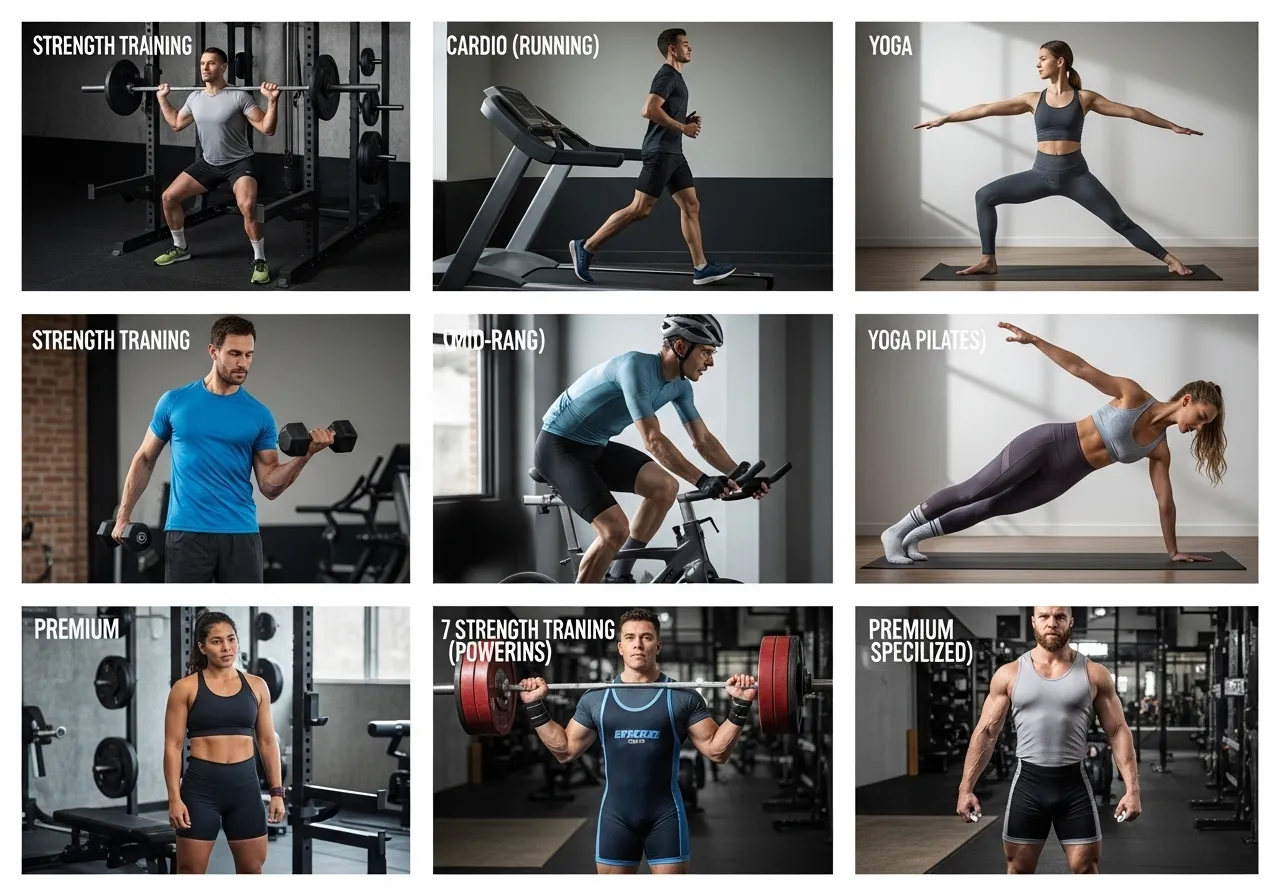
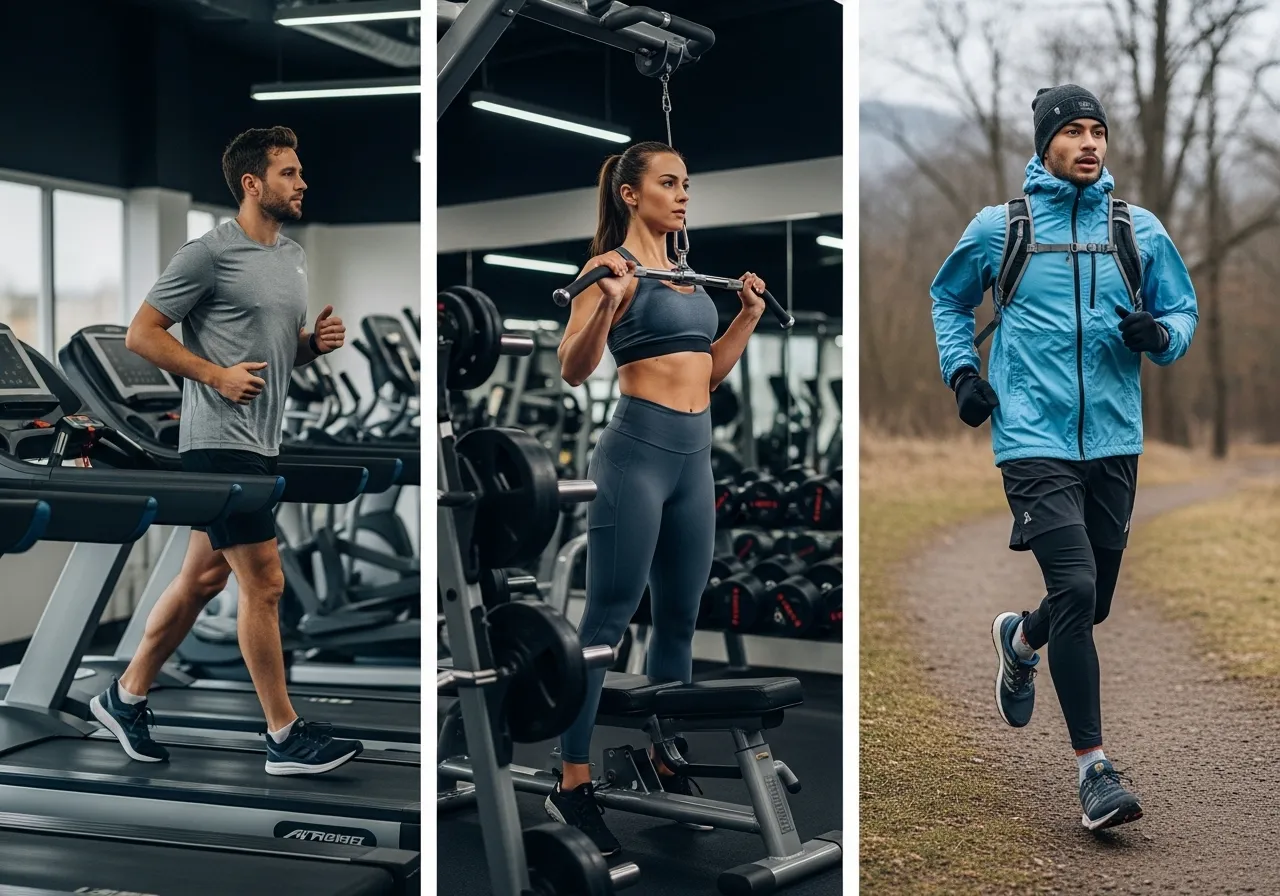
The optimal gym clothing varies significantly by training type — the requirements of powerlifting are different from those of yoga, which differ from HIIT cardio, which differ from cycling or swimming. Understanding what each training modality specifically demands from clothing allows informed selection beyond the generic “athletic wear” category.
Resistance Training and Weightlifting Clothing
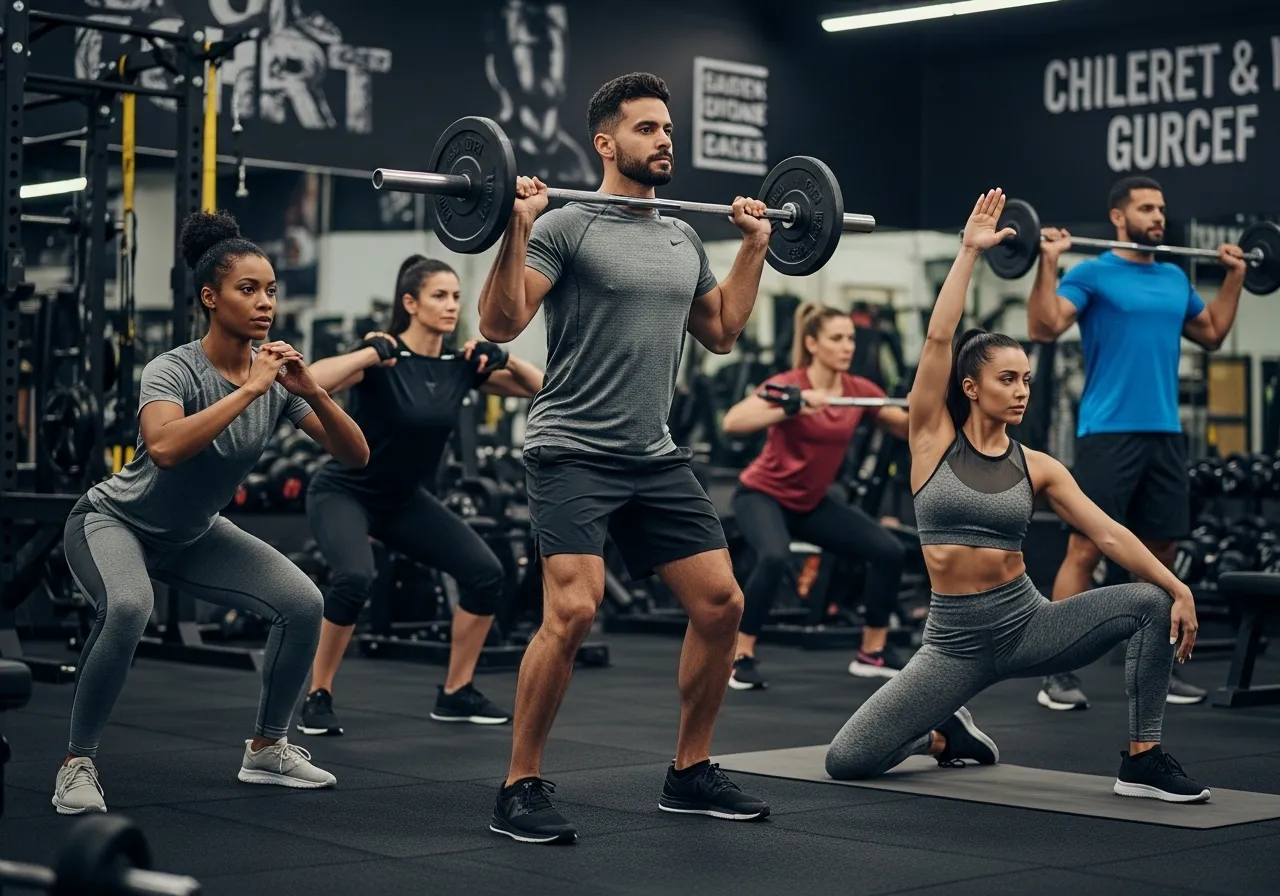
Resistance training clothing requirements center on movement freedom for the squat, deadlift, bench press, and overhead press movements that form the core of most programs — and the specific points of restriction that inadequate athletic clothing creates. The squat specifically requires: shorts or leggings that permit full hip flexion to parallel depth or below without the seam tension or fabric bunching that restricts the bottom position; the waistband height that does not dig into the hip flexor crease at depth; and the length that avoids riding up during the upward phase. The deadlift requires clothing that does not bunch against the bar during the conventional or sumo stance’s forward hip hinge — long shirts that tuck into pants reduce the bar path friction that loose fabric creates. Overhead pressing requires shirts with adequate armhole circumference to allow full shoulder elevation without the seam pulling that restrictive cut armholes produce under the lateral-to-overhead arm travel. Practically, the best resistance training garment combination for most athletes: fitted (not loose) moisture-wicking shorts or training leggings at 7-10 inch inseam, a fitted polyester or poly-cotton blend t-shirt with adequate body width for unrestricted torso movement, and flat-soled shoes (discussed in the footwear section). The powerlifting-specific addition: a lifting belt for heavy compound work is not a clothing item per se but a training tool that belongs in the gym bag of any intermediate-to-advanced resistance trainer — the intra-abdominal pressure support that a properly used 10mm lever belt provides during maximal effort compound lifts reduces injury risk and improves performance at the heavy loading that serious resistance training eventually reaches.
Cardio, HIIT, and Group Fitness Clothing
High-intensity cardio and HIIT training generates the highest sweat rates of any gym modality — placing maximum demand on the moisture management, ventilation, and anti-chafe properties that clothing must provide during 30-60 minutes of sustained elevated heart rate. Running-specific shorts with built-in liner provide the moisture management and freedom of movement that free-weights training shorts also provide, with the additional liner benefit of eliminating the need for separate compression underwear. The 5-inch inseam is the standard for most HIIT training shorts, providing movement freedom without the bunching that shorter inseams and the leg lift demands of box jumps, burpees, and lateral movement create. Sports bras for female athletes warrant specific selection attention during high-intensity training: the encapsulation-style sports bra that individually supports each breast independently provides superior high-impact support compared to the compression-only style that works adequately for yoga and pilates but insufficiently for running and HIIT. Medium-to-high impact sports bra support rating (a standardized scale that most major athletic brands now include on product labeling) is the minimum for any training above low-intensity steady-state. Group fitness and studio training — yoga, Pilates, and barre — prioritizes the four-way stretch fabrics and the close fit that alignment assessment and body awareness require, making the high-stretch yoga-specific leggings with squat-proof opaque fabric (the specific concern of yoga practitioners performing inversions) the appropriate specialty garment category rather than the general athletic training wear that serves other modalities.
Cold Weather and Outdoor Training Clothing
Outdoor training in cold, wet, or variable weather requires the layering system that manages the dual challenge of initial cold discomfort and mid-session overheating through the moisture generation that sustained exercise produces in any ambient temperature. The three-layer outdoor training approach: a moisture-wicking base layer (synthetic, not cotton, to keep sweat off the skin even in cold conditions — the “cotton kills” outdoor training rule applies because wet cotton dramatically accelerates heat loss through evaporative cooling that benefits warm environments but dangerously exacerbates hypothermia risk in cold ones); an insulating mid-layer (lightweight fleece or synthetic fill jacket for temperatures below 10°C) that can be removed and tied around the waist or stuffed in a running pack as body temperature rises through the session; and a wind or rain-resistant outer layer for wet weather training that blocks the windchill and rain penetration that degrades outdoor training comfort without the full waterproofing weight that recreational hiking gear carries. The reflective element for dawn and dusk outdoor training: a single high-visibility reflective element on the outermost layer — a reflective vest or reflective-accented jacket — is the safety item most commonly absent from recreational athletes’ outdoor training wardrobes and most consequential for the visibility that vehicle traffic requires for safe urban running and cycling in low-light conditions. From Runner’s World cold weather training clothing guide, the base layer moisture management is the most critical element of cold weather athletic clothing — a wet base layer that retains sweat against the skin in cold conditions produces rapid chilling that proper moisture-wicking synthetic base layers specifically prevent.
Sustainable and Ethical Athletic Wear: Growing Options for Conscious Consumers
The athletic clothing industry’s environmental impact — the plastic microfiber pollution that synthetic garment washing releases into waterways, the labor practices of fast-fashion athletic wear production, and the planned obsolescence that trend-cycle marketing encourages — is an increasingly relevant consideration for athletes whose environmental values extend to their purchasing decisions. The growing sustainable athletic wear category offers genuine performance alternatives to conventional synthetic athletic wear: recycled polyester (rPET) produced from post-consumer plastic bottles provides identical moisture management and durability to virgin polyester while reducing the virgin petroleum input and waste that conventional polyester production requires. Brands like Patagonia, Girlfriend Collective, Adidas with Parley Ocean Plastic, and Outdoor Voices have built sustainable material use into their product lines at price points that range from competitive to premium — with the recycled polyester performance matching conventional polyester in the standardized fabric testing that confirms functional equivalence rather than sustainability compromise. Merino wool athletic wear deserves specific mention for the gym-specific contexts where it provides genuine performance advantages alongside its natural and renewable fiber credentials: merino’s natural odor resistance (the lanolin and fiber structure that inhibits bacterial growth responsible for synthetic fiber odor) allows more wash cycles between uses than synthetic equivalents, and its temperature regulation in the 10-20°C range where cool gym environments often sit provides the thermoregulation nuance that synthetic fabrics’ binary wicking function does not. The sustainable athletic wear purchase represents the intersection of performance function and values alignment that a growing portion of the athletic community finds worth the modest price premium that responsibly produced garments typically carry over their conventional equivalents.
My Personal Gym Wardrobe: What I Actually Use After Years of Testing
After years of trying different brands, fabrics, and price points, my personal training wardrobe has settled into a deliberately minimal but highly functional selection: two pairs of polyester-elastane training shorts (7-inch inseam, mid-rise, with a zippered pocket for my key and phone) that I alternate between sessions and wash after every use; four training t-shirts in the fitted-but-not-compressive cut that neither restricts movement nor creates loose fabric problems with barbells; a pair of cross-training shoes that serves both my resistance training and the occasional conditioning circuit without compromising either; and the basic accessories — chalk in a small reusable container, wrist wraps for heavy pressing days, and a lifting belt for heavy squat and deadlift sessions. The total wardrobe cost was under $200 and has lasted three years of consistent three-to-four-days-per-week training with proper care. I have owned more expensive garments that did not perform meaningfully better and cheaper garments that deteriorated within six months of poor care — confirming my personal experience of what this article’s functional guidance argues from the research: fit, fabric content, and care determine gym clothing performance, not brand name or price tag. Start with function. Build from there as specific needs emerge. And invest the real performance dollars in the training, the nutrition, and the recovery infrastructure that the clothing merely supports.
Dressing for Confidence: The Psychology Connection to Workout Clothing
The psychological dimension of gym clothing circles back to the opening principle: what you wear affects how you feel, and how you feel affects how you perform. The research on athletic identity and performance consistency confirms that athletes with stronger athletic self-concept — the internal experience of being a person who trains, who values physical development, and who takes the practice seriously — produce more consistent training behavior, higher training intensities, and better long-term adherence than athletes with weaker athletic identity, at equivalent levels of initial motivation. Dressing in clothing that aligns with and reinforces the athletic identity is one of the most accessible daily behaviors that strengthens this self-concept — not through the brand status of expensive gear, but through the simple ritual of intentional athletic preparation that changing into training-specific clothing represents. The pre-training clothing ritual — the deliberate putting on of training shoes, the specific shorts and shirt associated with training activity, the chalk application that signals the session’s serious intent — creates the psychological state that the first set of the session benefits from, and that the unintentional, casual-wear-unchanged approach to gym attendance consistently delays or prevents. Invest in clothing that makes you feel like the athlete you are training to become. Not at the premium price point that marketing requires for this feeling, but at the functional and intentional level that deliberate athletic preparation deserves — and allow that preparation psychology to be part of the performance infrastructure that every other element of the training system that you have so carefully built benefits from.
A Note on Body Image and Gym Clothing
One dimension of gym clothing that guides rarely address honestly: for many people, particularly those beginning gym training or returning after a period away, the clothing choices available in standard athletic wear sizing do not accommodate their current body well — and the resulting discomfort and self-consciousness can be a genuine barrier to training initiation or consistency that deserves acknowledgment rather than assumption away. The extended sizing and inclusive design movement in athletic wear — Athleta, ThirdLove Active, Savage X Fenty, and an increasing number of mainstream brands now offering extended size ranges with the same design intent and fabric quality as standard ranges — has significantly improved the available options for athletes outside the historical standard sizing range. The practical guidance for athletes navigating body image and clothing: find clothing that fits your current body comfortably and allows the movement that training requires, regardless of the size label; prioritize function and comfort over the idealized athletic aesthetic that activewear marketing photographs — the training itself is the instrument of change, and the clothing that supports consistent, comfortable training at the present body is more valuable than the aspirational clothing that fits uncomfortably and reduces training enjoyment. Training is a practice for every body at every stage — and the clothing that makes that practice accessible, comfortable, and confident is exactly the right clothing, at whatever size and style that combination produces for the individual athlete.
Whatever you choose, prioritize fit, function, and care — the three variables that this guide has established as the true determinants of gym clothing performance at every price point. Done.
Footwear: The Most Performance-Critical Item in Your Gym Bag
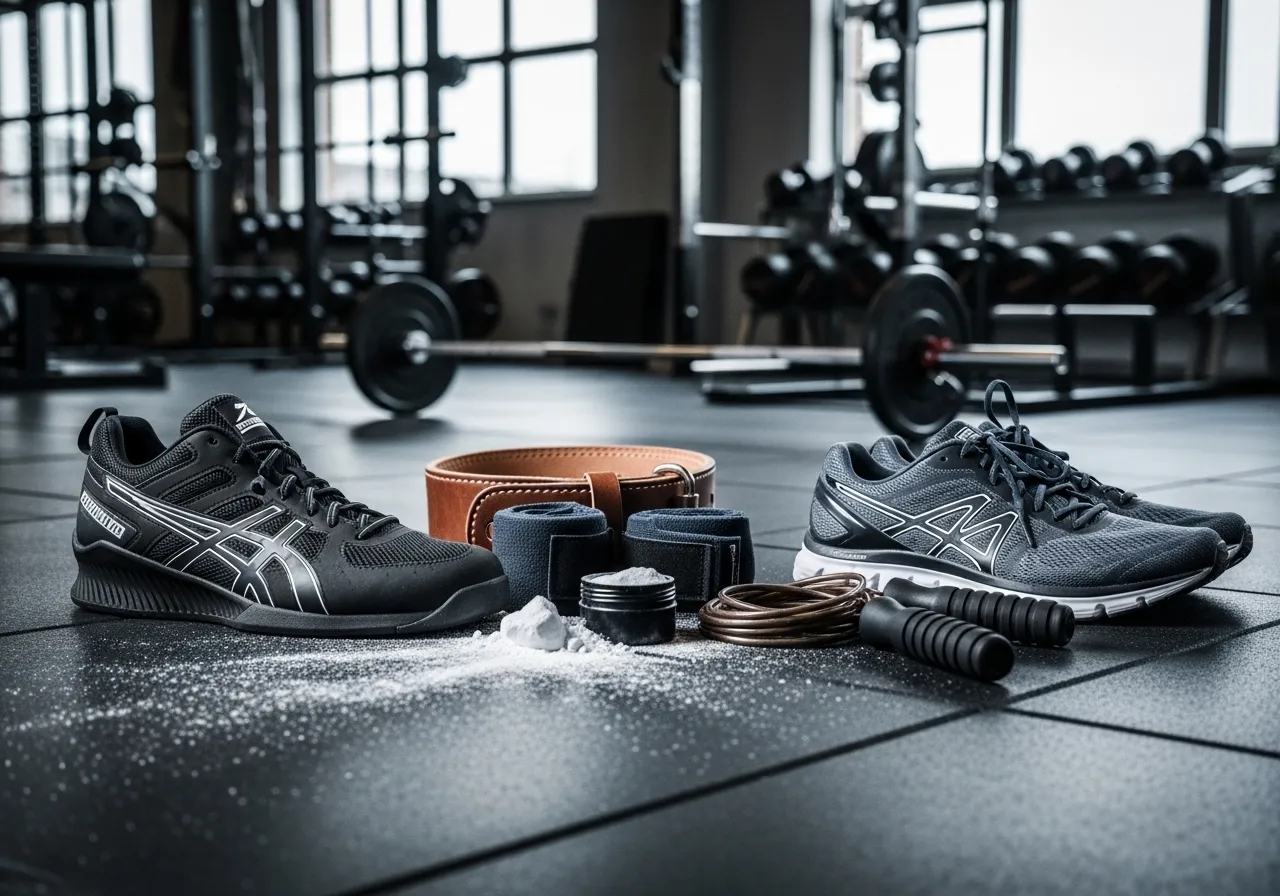
Gym footwear has a larger impact on training performance, injury risk, and movement mechanics than any other clothing item — yet it receives less attention and more inappropriate selection decisions than any other piece of athletic equipment. The shoe selection that is correct for running is actively counterproductive for powerlifting; the flat minimalist shoe that optimizes deadlift performance impairs the cushioning and energy return that running requires.
Lifting Shoes vs Running Shoes: Why You Cannot Use One for Both
The foundational footwear distinction for gym training: running shoes are optimized for forward propulsion in a heel-to-toe motion pattern, with thick cushioned heels (12-25mm stack height), forward heel-to-toe drop (8-14mm), and flexible forefoot construction that allows the foot’s natural push-off mechanics. Applied to resistance training, these design elements become functional liabilities: the cushioned heel compresses under heavy load, creating an unstable base that lateral force vector instability during squatting can translate into, and eliminating the ground-force transmission that maximal effort lifting requires. The research on footwear and lifting performance consistently shows that lifting in flat, stiff-soled shoes (zero or minimal heel-to-toe drop, minimal foam compression) produces greater force transmission and lower energy dissipation than cushioned running shoes — with meaningful differences in bar path consistency, ankle joint mechanics, and maximum load capability at equivalent relative intensities. The specific shoe types for different training categories: flat-soled training shoes (Nike Metcon, Reebok Nano, NoBull Trainer) provide the stable base that resistance training requires while maintaining enough cushioning and flexibility for the running and HIIT components of circuit training; dedicated lifting shoes with 0.6-0.75 inch raised heel (Adidas Powerlift, Nike Romaleos, Reebok Legacy Lifter) improve squat depth and ankle-range-of-motion-limited athletes’ ability to maintain upright torso position in the squat — valuable for athletes whose ankle dorsiflexion restricts squat mechanics; and minimalist flat-soled shoes (Converse Chuck Taylor, Vans Sk8-Hi, barefoot training shoes) provide the ground contact and proprioceptive feedback that conventional deadlifts specifically benefit from. For the athlete whose budget allows only one pair of gym shoes, the cross-training shoe category (Metcon, Nano, NoBull) provides the most functional compromise across resistance training, HIIT, and light cardio contexts.
Grip Socks, Lifting Straps, and Wrist Wraps as Functional Accessories
The accessories that genuine functional performance value justifies for the serious gym athlete: lifting straps (cotton or nylon loop straps that wrap around the barbell and the wrist, transferring the grip load to the forearm structure for heavy pulls) allow the athlete to train back and hamstrings with loads that would otherwise be limited by grip fatigue rather than the target muscle groups — a legitimate training tool for advanced pulling movements where grip is the limiting factor rather than an appropriate training stimulus; wrist wraps (elastic supportive wraps for the wrist joint during heavy pressing and clean-receiving movements) provide the proprioceptive and mechanical support during maximal pressing efforts that reduces wrist extension injury risk; knee sleeves (neoprene sleeves for knee joint warmth and proprioceptive support) are supported by consistent self-report evidence for pain reduction in knee-symptomatic athletes without the hypertrophy-attenuating concern that cold therapy carries; and chalk (magnesium carbonate applied to hands) is the single most effective grip enhancement available — reducing the moisture at the palm-barbell interface by 80-90% and enabling grip-limited athletes to train at loads that sweat-limited grip would prevent without straps. The gym accessories that are primarily aesthetic or minimally functional for most athletes: resistance band sets for warm-up activation serve a genuine pre-training function; the various posture correctors and lumbar support products lack the movement-specific training value that a proper warm-up and core strengthening program provides; and the excessive supplementary accessory accumulation that social media gymwear culture promotes is largely noise that experienced athletes and coaches do not use in their own training.
Gifting Athletic Wear: How to Buy Gym Clothing for Someone Else
Gym clothing is one of the most common fitness-related gifts — and one of the most frequently returned, because the sizing, fit preferences, and specific functional requirements that make athletic clothing work for an individual are difficult to guess from the outside without information that the giver often lacks. The practical guide for gifting athletic wear: gift cards from established athletic retailers or brands allow the recipient to select their own size, preferred fit, and functional priorities rather than being constrained by the giver’s assumptions about their needs; if purchasing specific items, training shorts or socks are the most forgiving gift categories because waistband and foot sizing tolerates more variation than the shoulder fit and torso length that shirts and leggings require precise matching for; and asking directly about shoe size and brand preference before gifting training footwear eliminates the return process that gifted shoes most commonly require when preference, width, and specific activity use are not pre-confirmed. The most appreciated athletic wear gifts in practice: high-quality resistance bands that add versatility to any home training setup regardless of specific body dimensions; a chalk ball or chalk bag for the lifter whose gym allows its use; and the training journal that the progressive overload section of this very guide identifies as the single most impactful non-clothing item the serious training athlete can own. These accessories avoid the fit and preference uncertainty that clothing gifts carry while providing genuine training utility that any serious athlete will use and appreciate.
Always.
Building Your Gym Wardrobe at Every Budget and FAQ
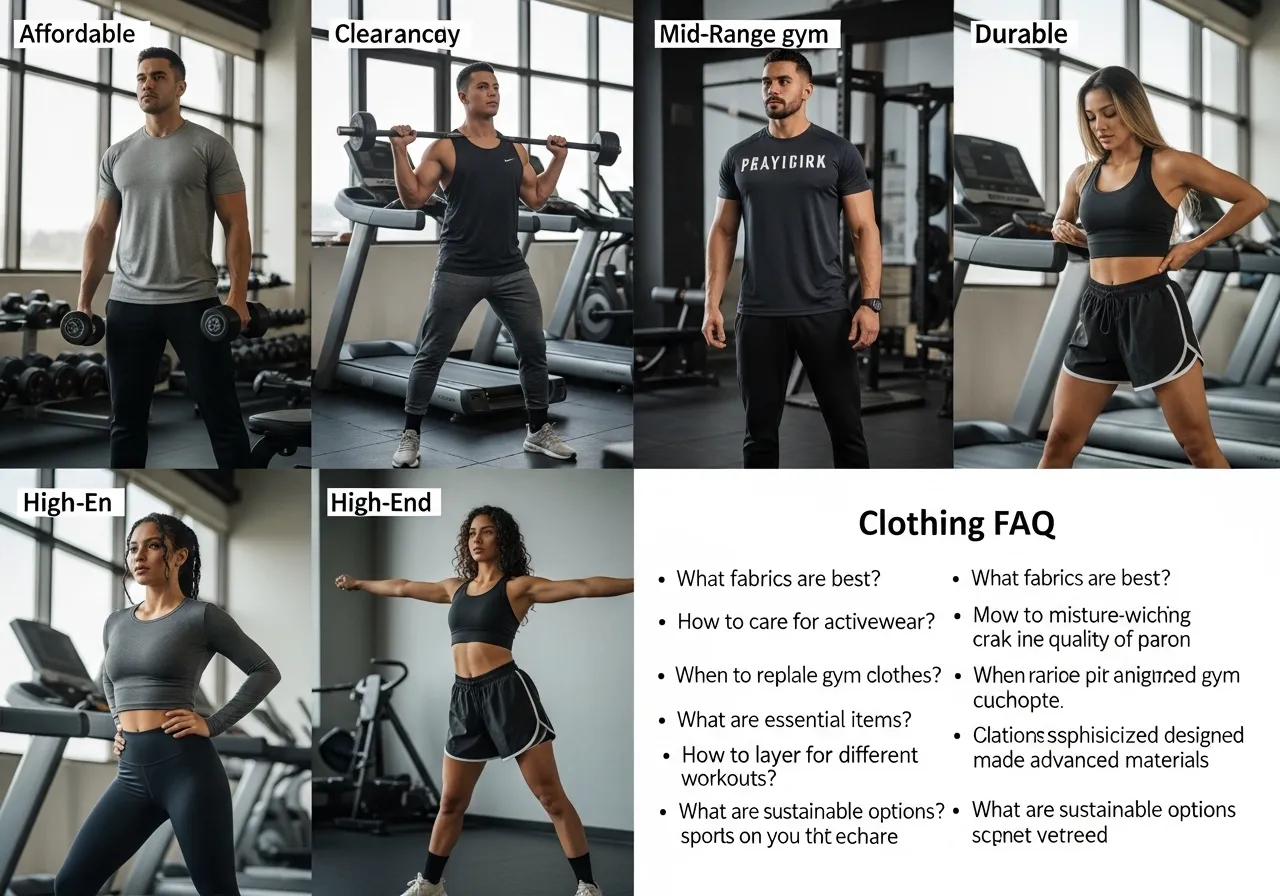
Quality gym clothing does not require premium pricing — the functional performance gap between a $120 branded athletic set and a $35 equivalent from a value brand is smaller than marketing suggests, and the specific quality indicators that separate genuinely better-performing athletic wear from equivalent-cost alternatives are identifiable without brand reliance.
Budget Gym Wardrobe: Maximum Function at Minimum Cost
The budget gym wardrobe that covers all functional training requirements for under $100 USD total: two pairs of training shorts or leggings (alternating between sessions allows adequate drying time) from value athletic brands or retailers (ASDA George Sport, Decathlon’s own brand, Amazon Essentials Athletic) at $12-18 each; three to four training t-shirts or tank tops from the same value athletic brands at $8-12 each; one pair of cross-training shoes (often available from brands like Reebok, Under Armour, or New Balance at $45-65 in the specific models that provide genuine lifting-compatible flat sole construction without the premium of brand-flagship pricing); and basic cotton crew socks in packs of 7 (the one context where cotton’s comfort advantage over synthetics is genuine and appropriate, as foot moisture management in shoes is primarily accomplished by the shoe’s construction rather than the sock’s fiber). This under-$100 wardrobe covers every functional training requirement that a beginner to intermediate athlete has and differs from a $400-600 premium wardrobe primarily in the premium fit construction, material softness, and brand identity that additional expenditure delivers — not in the fundamental functional performance that appropriate fabric selection, adequate range of motion, and proper shoe type provide at any price point. From Consumer Reports athletic wear testing and value analysis, mid-range and value athletic wear brands consistently perform within 10-15% of premium brands on moisture management and durability metrics in standardized testing — confirming that the functional performance gap between price tiers is significantly smaller than the price difference suggests for well-constructed value alternatives.
When to Invest: Items Worth the Premium Price
While budget options cover most functional requirements, specific gym wardrobe investments return value proportional to their premium in ways that justify selective spending. The items where premium quality produces genuinely different performance or longevity: training shoes — the mechanical support, outsole durability, and fit construction of quality cross-training or lifting shoes from established athletic footwear brands genuinely differs from value alternatives in ways that lower injury risk and maintain performance across years of use, making shoes the highest-priority premium investment in the gym wardrobe; sports bras for high-impact female training — the structural support engineering of higher-quality sports bras maintains effectiveness across the washing cycles and sustained usage that cheaper alternatives lose support from more quickly; and lifting belts — the 10mm lever belt that provides intra-abdominal pressure support during heavy compound lifts is a training tool rather than a clothing item, but the construction quality of a quality leather or suede belt versus a cheap foam alternative determines whether the belt actually provides the mechanical support that the premium product is designed to deliver. The items where premium is primarily aesthetic rather than functional: t-shirts and shorts above $30-35 — the moisture management and stretch properties that their functional equivalents provide are achieved at this price point, with additional expenditure primarily purchasing brand identity, fit precision, and aesthetic design rather than measurable performance difference.
Gym Clothing FAQ: The Most Common Questions Answered
Q: Do I need different shoes for lifting and cardio? A: Ideally yes — if budget allows two pairs, dedicated cross-training shoes for resistance work and running shoes for treadmill and outdoor running. If budget limits to one pair, cross-training shoes provide the more critical stable base for lifting while being adequate for light cardio, whereas running shoes are adequate for cardio but genuinely counterproductive for heavy lifting. Q: Should I wear compression tights or shorts? A: Personal preference primarily, with modest evidence for reduced post-training soreness. If you find compression comfortable and tolerate the fit, the marginal recovery benefit justifies the choice. If compression feels restrictive or uncomfortable, the evidence does not support overriding comfort preference for performance benefit. Q: How often should I wash gym clothing? A: After every use — athletic clothing’s moisture and temperature history creates ideal bacterial proliferation conditions between uses, and repeated-use laundering intervals consistently produce the odor retention that synthetic fabrics are prone to when bacterial colonization is allowed to establish between washes. Washing inside-out in cold water with sports-specific detergent preserves moisture-wicking properties better than hot water conventional laundry. Q: Is there any benefit to wearing a hoodie or long sleeves to “sweat more”? A: No — the additional sweat produced by overheating through clothing is water weight loss, not fat loss, and the impaired thermoregulation that overheating creates raises cardiovascular strain and perceived exertion without producing any training benefit. The weight lost through excessive sweating is replaced within hours of rehydration. Wearing appropriate temperature-matched clothing and training at higher intensities from the improved comfort produces better outcomes than thermal restriction clothing. Q: What should I avoid wearing to the gym? A: Jeans (no stretch, seam abrasion); heavy cotton sweatshirts for intense training; shoes with elevated heels for squatting and deadlifting; open-toed sandals or flip-flops (safety and weight-drop risk); and overly loose clothing around weight machines where fabric can catch on equipment or restrict visibility during loaded movements. From NASM exercise attire guidelines for safe and effective training, appropriate footwear with non-slip soles and clothing that allows full range of motion without restriction are the two primary attire factors that certified trainers assess for training safety — confirming that the practical guidance on shoes and movement-freedom fabrics in this article aligns with professional training standards.
The Minimal Effective Gym Wardrobe: What You Actually Need to Start
The barrier to beginning gym training should never be the wardrobe. The minimal effective starting kit: one pair of training shorts or leggings that allow full hip flexion; two training t-shirts in moisture-wicking synthetic fabric; one pair of cross-training or flat-soled shoes; and adequate athletic socks. Everything else — compression garments, specialized footwear, lifting accessories — adds at the margin as training advances and specific needs become apparent. The psychological and motivational case for dressing intentionally even at the minimal kit level: the act of changing into training-specific clothing, even from a minimal wardrobe, activates the psychological training state that the enclothed cognition research describes and that experienced athletes recognize as part of the pre-training ritual. Start with the minimal functional kit, build toward the full functional wardrobe as experience identifies specific needs, and let the training itself — rather than the clothing — carry the primary responsibility for the adaptation that consistent, progressive effort produces.
The training partner who gets the right gear and shows up consistently will always outperform the one with a wardrobe full of premium items who never quite makes it to the gym. Dress for the training. Show up for the training. Let the training take care of the rest — which, in the end, is exactly the right priority for every decision in the athlete’s toolkit.
In the end, the gym is not a fashion show — it is a practice space for the physical development that consistent, focused training produces. The clothing that supports that practice by staying out of its way, managing temperature efficiently, and making the athlete feel prepared and capable is doing exactly what good athletic wear should do.
That is the standard. That is enough.