How to Lose Weight Without Losing Muscle: A Beginner’s Guide
This article is for general educational purposes only and does not constitute medical or professional fitness advice.
Consult a licensed healthcare provider or certified fitness professional before starting any new exercise or nutrition program.
Losing fat while preserving — or even building — muscle is one of the most commonly pursued goals in fitness. It is also one of the most misunderstood.
Many traditional weight loss approaches (very low calorie diets, excessive cardio, avoiding resistance training) are poorly aligned with this goal and may actually accelerate muscle loss.
This guide covers the key principles that may help you lose fat more selectively, based on current exercise and nutrition research.
Why Muscle Is Often Lost During a Caloric Deficit
The Basic Mechanism
A caloric deficit (consuming fewer calories than the body expends over time) is generally considered necessary for fat loss.
The challenge: the body does not neatly separate fat from muscle when reducing caloric intake. Under energy restriction, muscle protein breakdown rates can increase — particularly when:
- The deficit is very large (more than 500–750 kcal/day below maintenance)
- Protein intake is insufficient to counteract breakdown
- Resistance training is absent or minimal
The Role of Muscle Protein Turnover
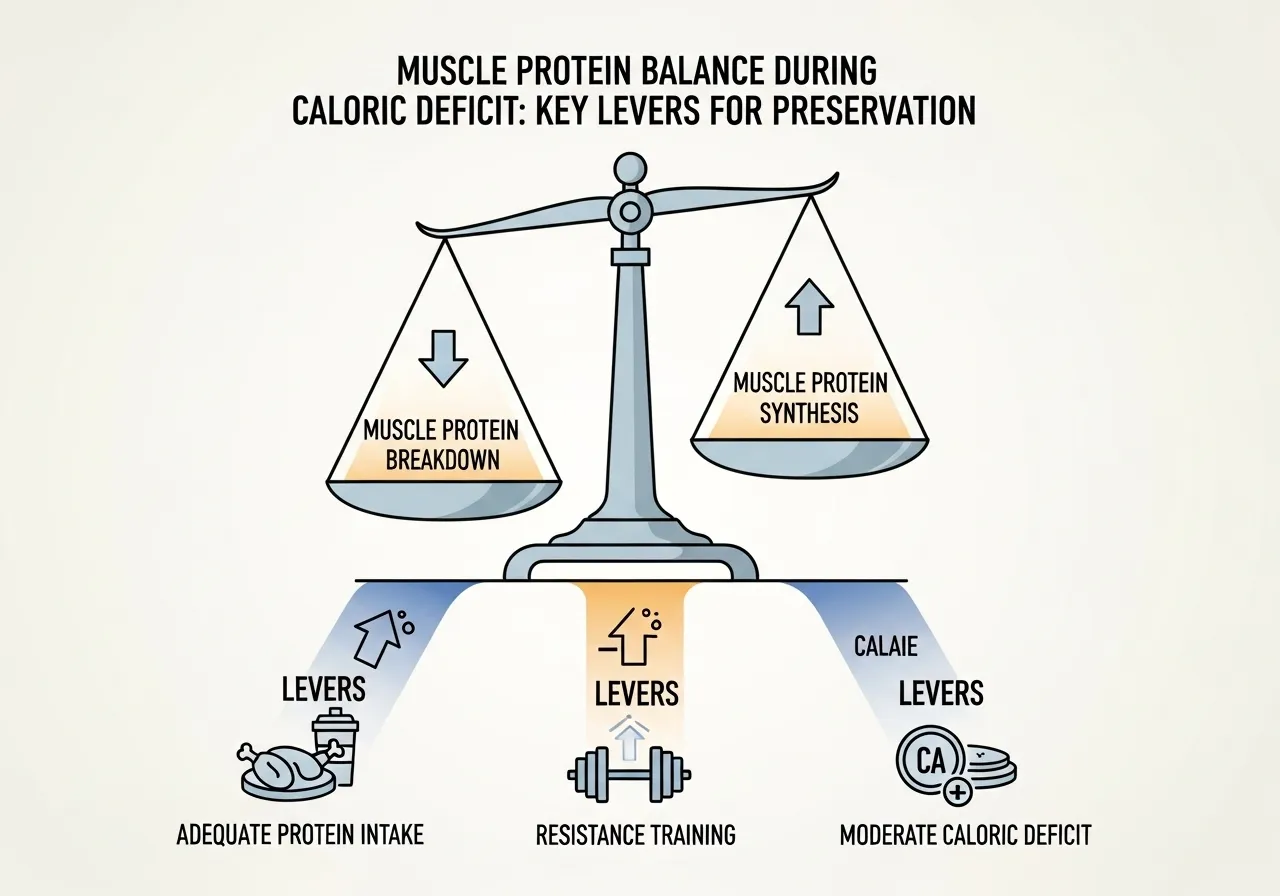
Muscle tissue is in a constant state of turnover — protein is simultaneously broken down (muscle protein breakdown, MPB) and synthesized (muscle protein synthesis, MPS).
Net muscle gain or loss is determined by which rate is higher over time. The goal during a fat loss phase is to keep MPS elevated (through training and protein intake) while keeping MPB as low as possible.
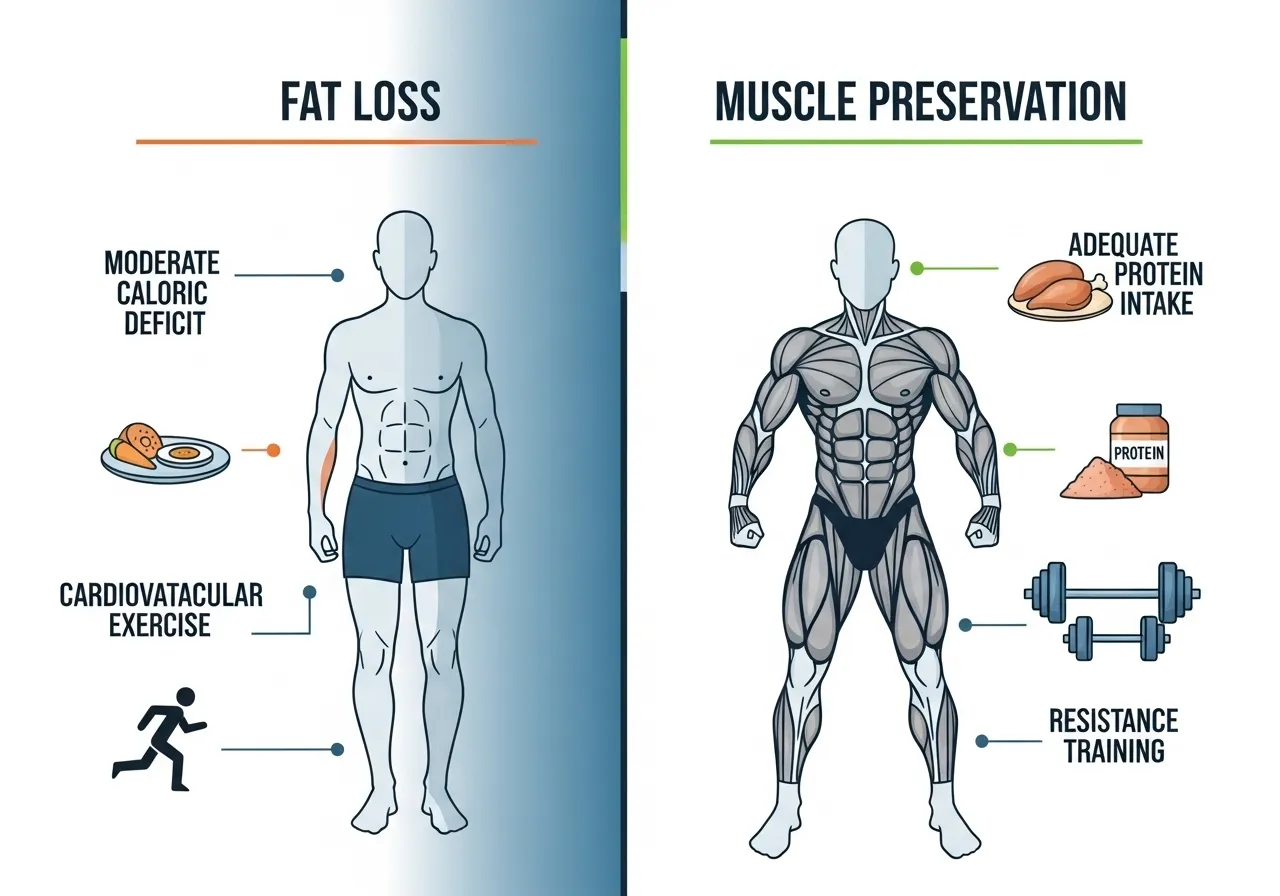
🔹 Adequate protein intake — provides amino acids for MPS
🔹 Resistance training — sends a muscle-preserving anabolic signal
🔹 Moderate (not aggressive) caloric deficit — reduces fat without overwhelming the body’s repair capacity
Protein: The Most Important Dietary Variable for Muscle Preservation
Why Protein Needs Increase During a Deficit
During a caloric deficit, the body may use dietary protein for energy (gluconeogenesis — the conversion of amino acids into glucose for fuel) rather than exclusively for muscle repair.
This means protein requirements during fat loss phases may be higher than during maintenance — not lower.
Research-Based Protein Targets During Fat Loss
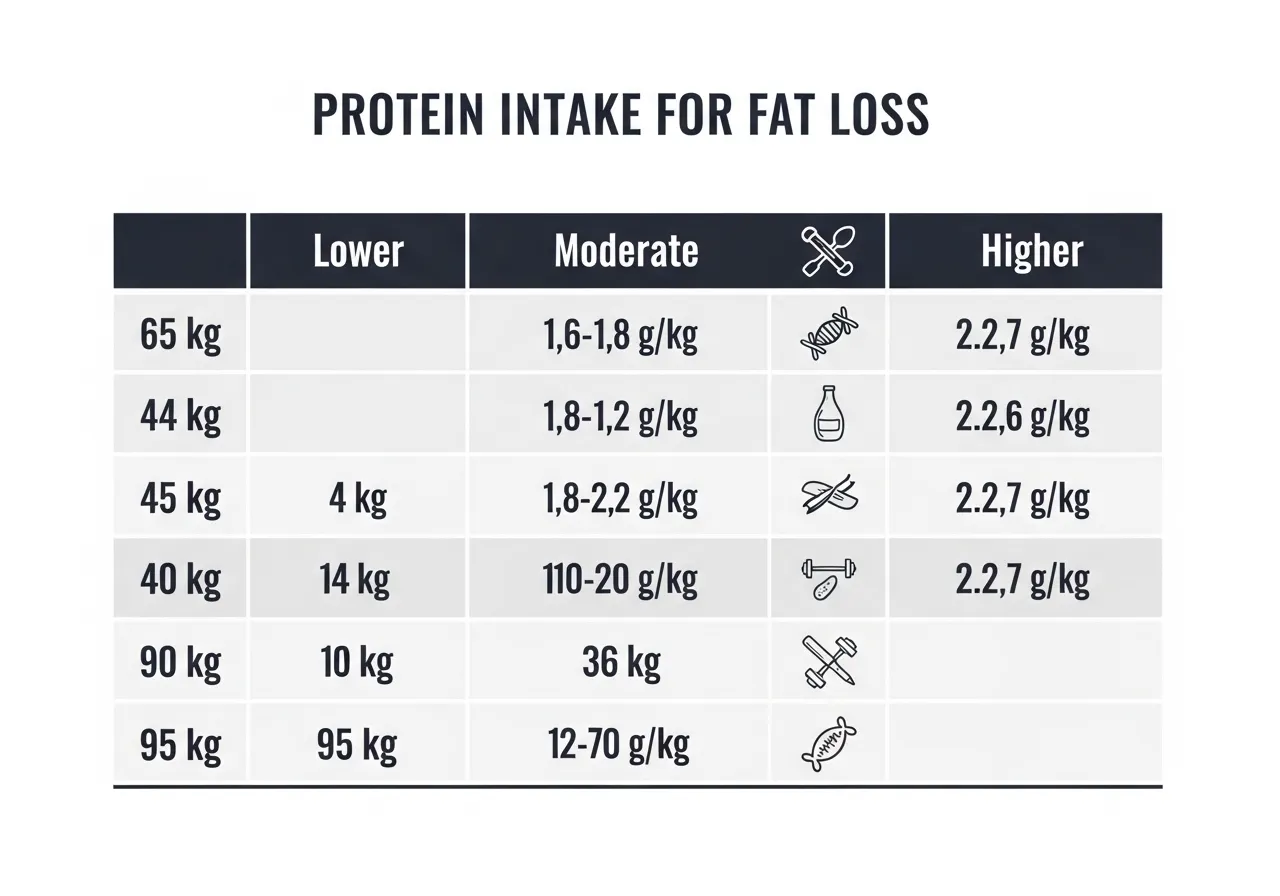
A 2014 meta-analysis in the American Journal of Clinical Nutrition found that protein intakes of 1.8–2.7 g/kg of body weight per day were associated with greater lean mass retention during energy restriction compared to lower intakes.
| Body Weight | 1.8 g/kg (Lower) | 2.2 g/kg (Moderate) | 2.7 g/kg (Higher) |
|---|---|---|---|
| 65 kg | 117 g | 143 g | 176 g |
| 75 kg | 135 g | 165 g | 203 g |
| 85 kg | 153 g | 187 g | 230 g |
| 95 kg | 171 g | 209 g | 257 g |
These are general starting estimates. Individuals with certain medical conditions affecting protein metabolism should consult a registered dietitian before targeting higher protein intakes.
Caloric Deficit: How Much Is Appropriate?
The Rate of Loss Tradeoff
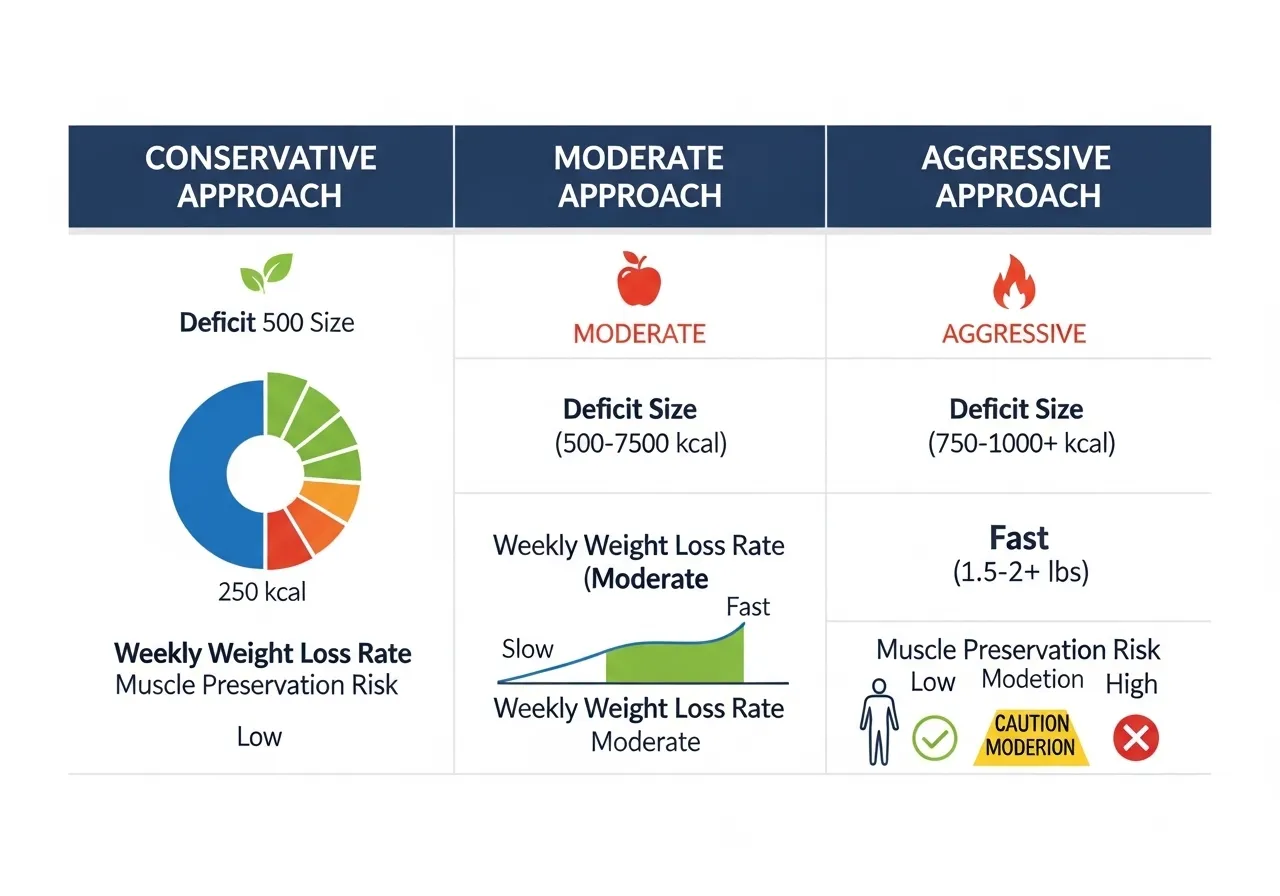
A larger caloric deficit produces faster weight loss on the scale — but may also accelerate muscle loss, increase hunger, reduce training performance, and prove harder to sustain.
| Deficit Size | Approx. Weekly Loss | Muscle Preservation Risk |
|---|---|---|
| 250–350 kcal/day | ~0.2–0.3 kg/week | Low — generally well tolerated |
| 400–500 kcal/day | ~0.3–0.5 kg/week | Moderate — manageable with adequate protein |
| 750–1000 kcal/day | ~0.7–1.0 kg/week | Higher — significant lean mass risk |
A deficit of 300–500 kcal/day is a commonly cited starting range for individuals prioritizing body composition over speed of weight loss.
Why “Crash Dieting” Often Backfires
Very low calorie approaches (<1,000–1,200 kcal/day for most adults) tend to produce rapid initial weight loss — but a significant portion of this loss comes from lean mass and water.
This can lower basal metabolic rate (the calories the body burns at rest, largely determined by lean mass), making sustained fat loss progressively more difficult and weight regain more likely once the deficit ends.
The Role of Resistance Training in Preserving Muscle
Why Cardio Alone Is Not Enough
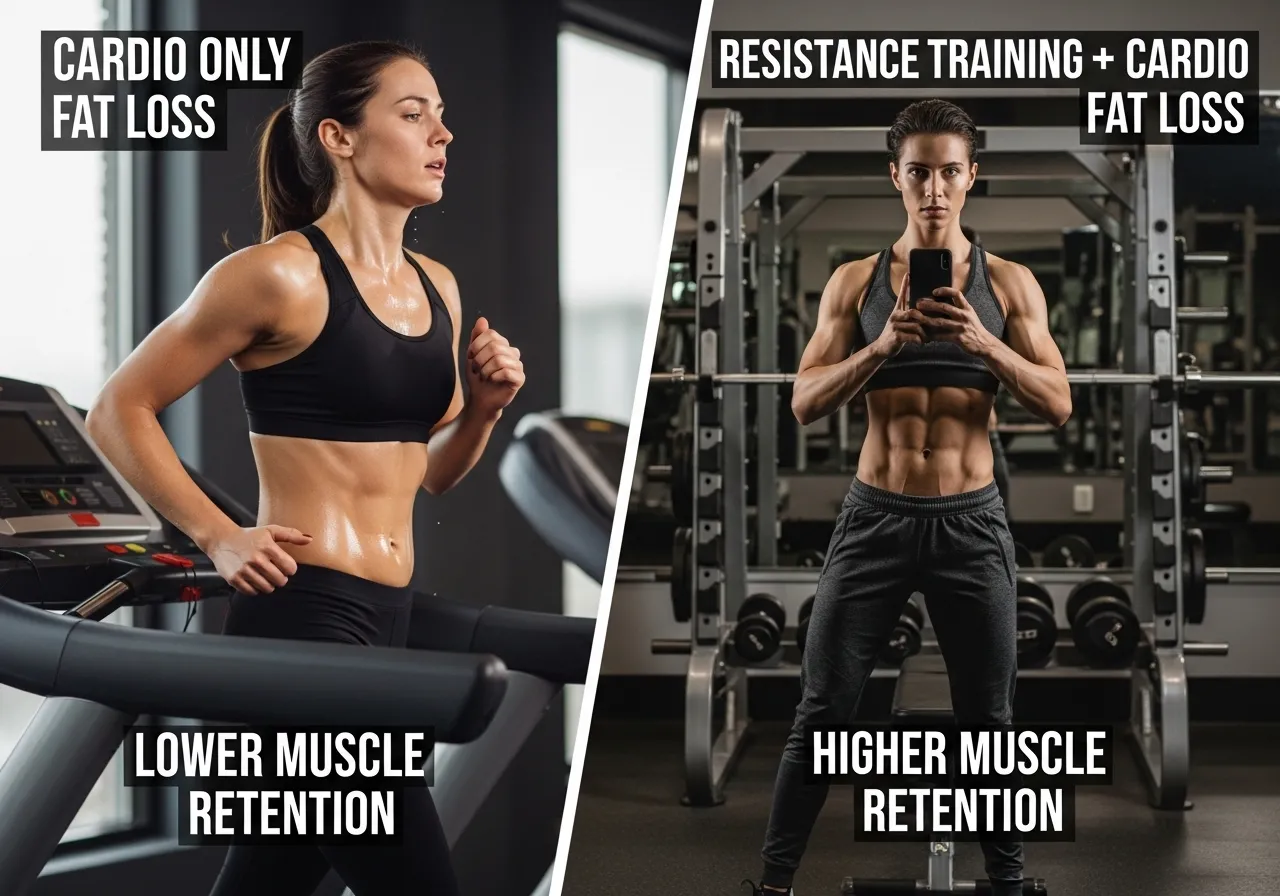
Cardiovascular exercise burns calories and supports cardiovascular health — but it does not send the same muscle-preserving signal to the body as resistance training.
During a caloric deficit, the body needs a reason to maintain muscle tissue. Progressive resistance training provides that signal by creating a mechanical demand on the muscle that essentially “justifies” its preservation from an energy allocation standpoint.
Research on Resistance Training During Fat Loss
A 2012 meta-analysis in the Obesity Reviews journal found that combining resistance training with a caloric deficit resulted in significantly greater lean mass retention compared to caloric restriction alone — even when total weight loss was similar between groups.
Practical Recommendations
✅ Keep intensity relatively high — this is not the time to switch entirely to light, high-rep “toning” work
✅ Progressive overload still applies — continue attempting small increases in load or reps where possible
✅ Prioritize compound movements (squats, deadlifts, rows, presses) for maximum muscle stimulus per session

Frequently Asked Questions
Q: How do I know if I’m losing fat vs. muscle?
Scale weight alone cannot distinguish fat loss from muscle loss. More useful indicators include:
- Body fat percentage measurements (DEXA scan, hydrostatic weighing, or skinfold calipers — each with varying precision levels)
- Training performance — if strength is maintained or improving, lean mass is likely being preserved
- Progress photos every 2–4 weeks — visual changes can reveal body composition shifts that the scale misses
A registered dietitian or sports science professional can provide the most accurate individual assessment.
Q: Should I do cardio when trying to preserve muscle?
Moderate cardio can support fat loss without significantly compromising muscle preservation when protein intake is adequate and resistance training is maintained.
Extremely high cardio volumes (daily long-duration sessions) combined with a large caloric deficit and insufficient protein may increase muscle loss risk — particularly if resistance training volume is reduced in the process.
Q: Is it possible to gain muscle while losing fat at the same time?
This is possible — particularly for individuals who are new to resistance training, returning after a long break, or carrying significant excess body fat. It becomes increasingly difficult (though not impossible) as training experience and leanness increase.
For most intermediate trainees, the more practical approach is to alternate between phases of modest muscle building (slight caloric surplus) and fat loss (modest deficit), rather than attempting to do both simultaneously.
- A moderate deficit of 300–500 kcal/day reduces fat loss risk to lean mass compared to aggressive restriction
- Protein intake of 1.8–2.7 g/kg/day is a commonly recommended range during fat loss phases
- Resistance training 2–3×/week is the most important tool for muscle preservation during a deficit
- Scale weight alone does not reflect body composition changes accurately
- Consult a registered dietitian for personalized guidance, particularly if managing any medical conditions