
The Best Back Workout to Fix Poor Posture
⚠️ Disclaimer: The information in this article is for general educational purposes only and does not constitute medical, nutritional, or professional fitness advice. Individual results may vary. Always consult a qualified healthcare professional or certified fitness trainer before starting any new exercise program, changing your diet, or making decisions about injury treatment or recovery. If you experience pain, discomfort, or any unusual symptoms during exercise, stop immediately and seek professional guidance.

Understanding Poor Posture: Causes, Consequences, and the Training Solution
Why Modern Life Creates Postural Problems
Poor posture is not a character flaw or a sign of laziness — it is the predictable physiological adaptation to the environmental demands of modern sedentary life. The human body is extraordinarily adaptive: it continuously remodels muscle length, joint mechanics, and movement patterns to match the positions it spends the most time in. For the majority of modern adults who spend 8 to 12 hours per day in seated positions with rounded shoulders, forward head, and hip flexors compressed — the body adapts by shortening the structures in these compressed positions and lengthening and weakening the structures in the stretched positions. The result is the characteristic postural profile of modern sedentary life: forward head position, rounded thoracic spine, protracted shoulder blades, anterior pelvic tilt, and tight hip flexors.
The consequences of this postural adaptation extend well beyond aesthetics. Forward head posture increases the effective weight of the head on the cervical spine — for every centimeter of forward head displacement, the compressive force on the cervical spine increases by approximately 10 times body weight according to a study published in the journal Surgical Technology International. Rounded thoracic spine reduces lung capacity by compressing the thoracic cavity. Protracted shoulders create the anterior shoulder dominance that leads to rotator cuff impingement and chronic shoulder pain. Anterior pelvic tilt creates chronic hip flexor tension and compensatory lower back compression that contributes to the lower back pain epidemic affecting over 80 percent of adults at some point in their lives.
The Muscle Imbalances Behind Poor Posture
Poor posture is maintained by specific muscle imbalances that are both the cause and the consequence of the postural deviation. The upper crossed syndrome — the most common postural pattern in sedentary adults — involves tightness in the pectorals, anterior deltoids, and cervical extensors combined with weakness in the deep cervical flexors, lower trapezius, rhomboids, and serratus anterior. This imbalance creates the forward head and rounded shoulder pattern visible in virtually every office worker. The lower crossed syndrome involves tightness in the hip flexors and lumbar extensors combined with weakness in the glutes and deep core stabilizers — creating the anterior pelvic tilt and lower back compression characteristic of the seated lifestyle.
Why Back Training Is the Most Effective Postural Correction
While stretching the tight structures (pectorals, hip flexors) and mobility work address the symptom side of posture, strengthening the weak muscles — particularly the rhomboids, lower trapezius, posterior deltoids, and deep spinal extensors — addresses the cause. Weak posterior chain muscles cannot hold the skeleton in correct postural alignment against the chronic pulling force of the tight anterior structures. Strengthening them creates the muscular foundation that makes correct posture effortless rather than requiring constant conscious effort. Research published in the Journal of Strength and Conditioning Research found that a 12-week progressive back strengthening program produced statistically significant improvements in thoracic kyphosis angle, forward head distance, and shoulder protraction — confirming that targeted strengthening, not just stretching, is the evidence-based approach to postural correction.
The Best Back Exercises for Postural Correction
Face Pull: The Posture Corrector
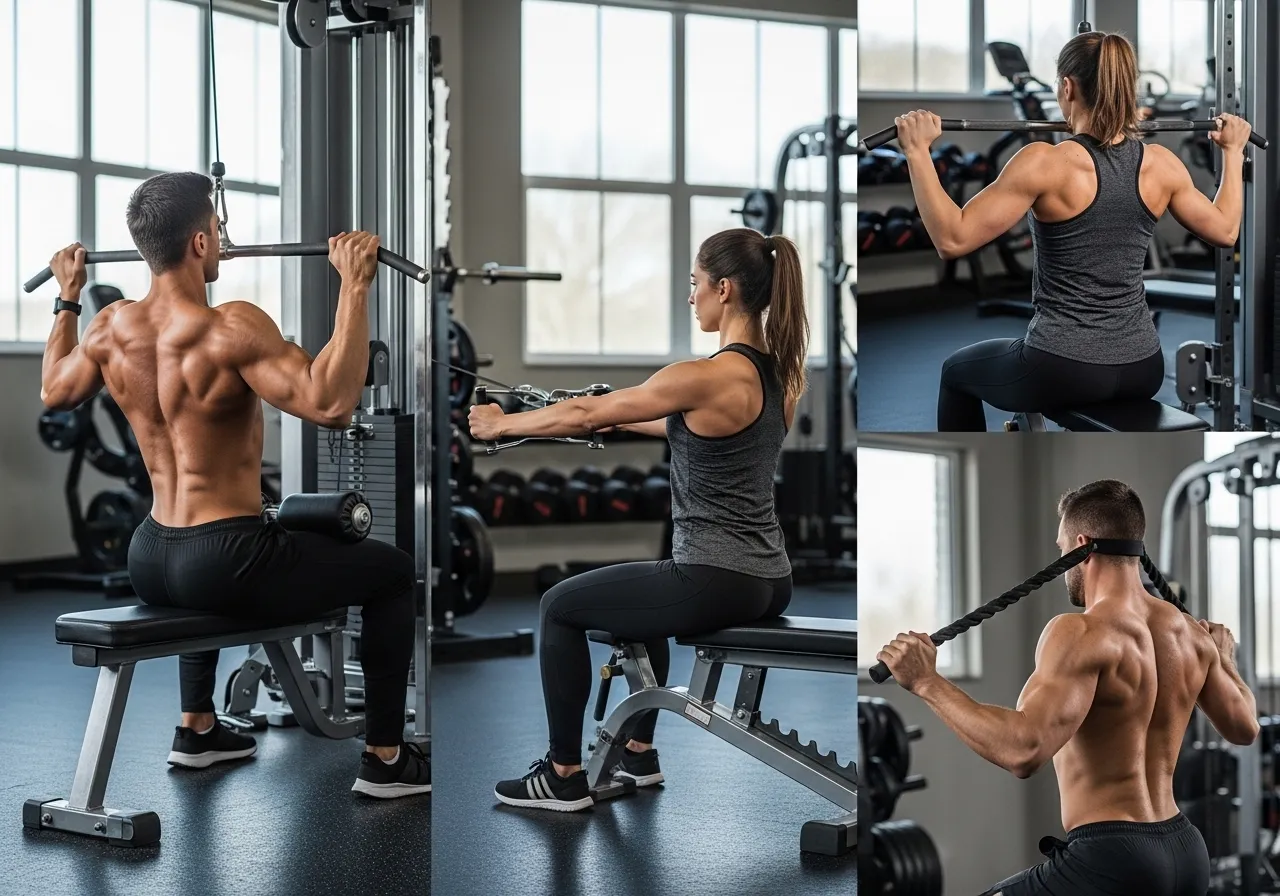
The face pull is the single most important exercise for correcting the forward shoulder posture that most adults develop through sedentary lifestyle and pressing-dominant training. Performed on a cable machine with a rope attachment at nose height, the face pull trains the posterior deltoid, external rotators (infraspinatus and teres minor), and lower trapezius — precisely the muscles that are weakened and elongated in forward shoulder posture. The external rotation component of the face pull directly counteracts the internal rotation dominance that rounds the shoulders forward, making it a genuinely therapeutic exercise rather than merely a cosmetic one.
I perform face pulls in every upper body training session — not just back days — treating them as a movement health maintenance investment. 3 to 4 sets of 15 to 20 reps at light to moderate weight, focusing on the quality of the external rotation at the end of the movement rather than on loading. The key technique point: pull the rope toward your face with elbows high and flared, finishing with the hands beside the ears and the shoulder blades squeezed together. This end position — full shoulder external rotation with scapular retraction — is the postural position the exercise trains the body to maintain.
Band Pull-Apart: The Daily Postural Exercise
The band pull-apart — holding a resistance band with arms extended forward at shoulder height, pulling the band apart to a “T” position — is the most accessible postural correction exercise available. It requires only a resistance band (available for $5 to $15), takes 2 to 3 minutes, and can be performed anywhere — at a desk, during commercial breaks, or as a daily movement practice. Research shows that the band pull-apart activates the posterior deltoid, rhomboids, and lower trapezius at levels sufficient to produce strength and endurance adaptations with regular practice, making it a legitimate alternative to cable exercises for posterior shoulder development. According to the American College of Sports Medicine, incorporating posterior shoulder strengthening into daily routines — even in brief, frequent bouts — produces meaningful improvements in shoulder mechanics and postural alignment over 8 to 12 weeks.
Barbell Row: The Mass and Posture Builder
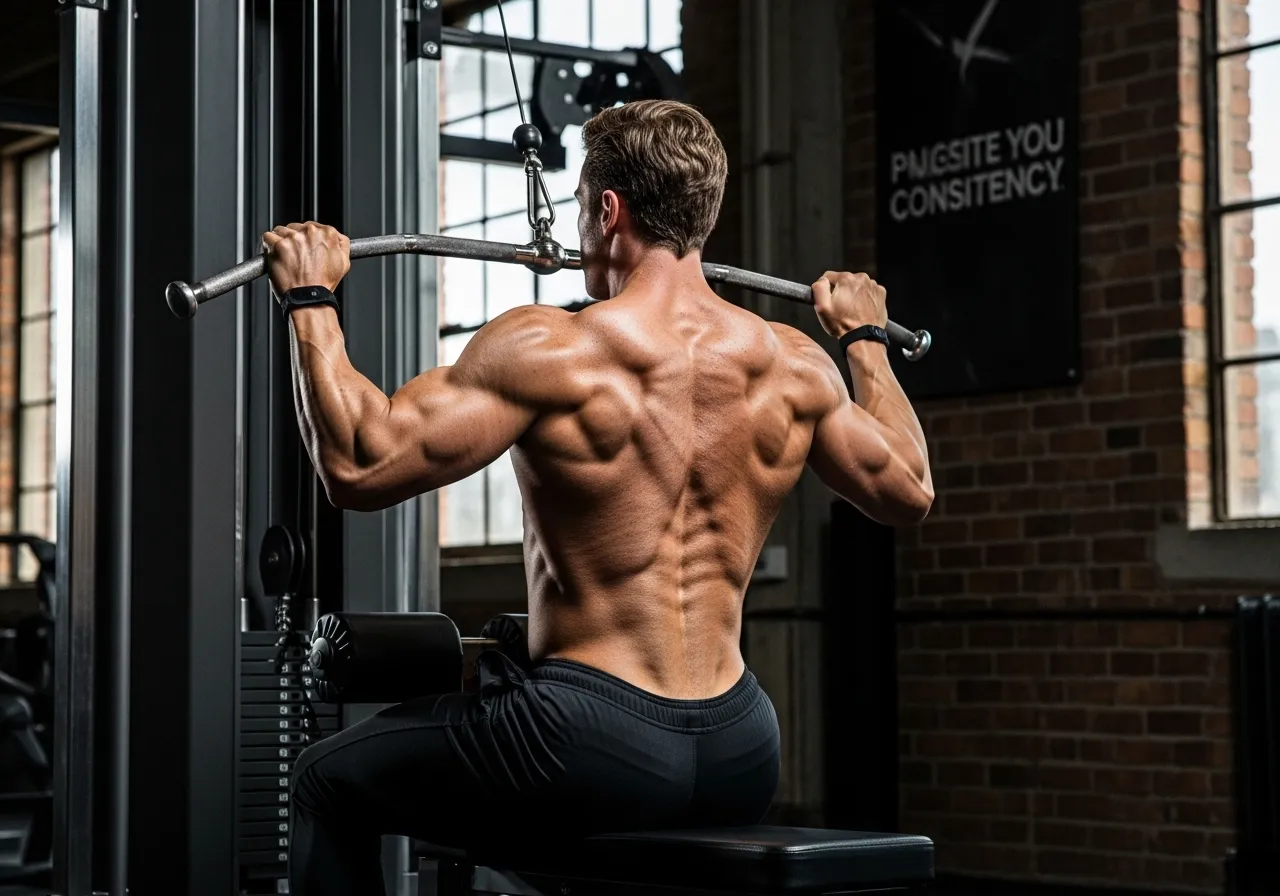
The barbell row — performed bent over at approximately 45 degrees, pulling the bar to the lower chest — is the most effective compound exercise for the entire posterior chain of the upper back. It trains the latissimus dorsi, rhomboids, rear deltoids, and biceps through a loaded pulling movement that produces both the hypertrophy and strength that prevents postural muscles from fatiguing under the demands of sustained correct posture. A strong upper back can maintain postural alignment for hours; a weak upper back fatigues within minutes and collapses into the default rounded position.
Cable Row: Constant Tension Pulling
The seated cable row provides constant tension throughout the full range of the pulling motion — unlike the barbell row where the load decreases as the bar approaches the body. This constant tension makes the cable row particularly effective for the rhomboids and middle trapezius at the peak contraction position — the end range of the row where the shoulder blades are fully retracted — which is the position most directly associated with improved postural alignment. I program cable rows as the main mid-back exercise in posture-focused training programs, emphasizing the pause and squeeze at full contraction to develop the scapular retraction strength needed for postural endurance.
Deadlift: The Posterior Chain Foundation
The deadlift trains the entire posterior chain — spinal erectors, glutes, hamstrings, lats, and traps — with the heaviest loading possible, producing the comprehensive posterior chain strength that provides the muscular foundation for correct posture throughout the day. The spinal extensor strength developed through regular deadlifting is the primary defense against the lumbar rounding that characterizes poor sitting and standing posture in sedentary adults. Research confirms that deadlift training produces significant improvements in lumbar extensor strength and endurance — the specific qualities most directly associated with the ability to maintain neutral spinal posture under sustained load.
The Complete Back Workout for Postural Correction
The Postural Correction Workout
This workout is designed specifically to address the muscle imbalances behind poor posture — prioritizing the posterior deltoids, rhomboids, lower trapezius, and spinal extensors that are chronically weak in sedentary adults with rounding posture. It can be performed as a standalone back session or added to an existing training program.
Warm-Up (5 minutes): Band pull-apart × 20. Face pull × 15 at light weight. Cat-cow stretch × 10 reps. Thoracic extension over foam roller × 60 seconds. This warm-up directly activates and mobilizes the structures targeted in the main workout.
Main Workout:
1. Barbell deadlift: 4 × 6 at 75 to 80 percent 1RM. Rest 2 to 3 minutes. Primary posterior chain strength exercise.
2. Barbell row: 4 × 10. Rest 90 seconds. Mid and upper back mass builder.
3. Seated cable row: 3 × 12 with 2-second pause at peak contraction. Rest 75 seconds. Rhomboid and mid-trap developer.
4. Face pull: 4 × 15 at light-moderate weight. Rest 60 seconds. Posterior deltoid and external rotator.
5. Band pull-apart: 3 × 20. Rest 45 seconds. Lower trap and rhomboid endurance.
6. Prone Y-T-W raises: 3 × 10 each position. Rest 60 seconds. Comprehensive lower trap and rotator cuff activation.
7. Chin-up: 3 × max reps. Rest 90 seconds. Lat and bicep complement to all the rowing work.
The Prone Y-T-W: The Most Underused Postural Exercise
The prone Y-T-W — lying face down on a flat surface and performing sequential raises in Y, T, and W arm positions — directly targets the lower trapezius, which is the muscle most consistently weak in people with poor posture and the most directly responsible for maintaining correct scapular position. The Y raise (arms overhead in a Y shape) trains the lower trapezius in its lengthened position. The T raise (arms out to the side) trains the middle trapezius. The W raise (elbows bent, performing external rotation from the T position) trains the external rotators and posterior deltoids. Together these three positions provide comprehensive lower and middle trapezius development that no cable or rowing exercise replicates as specifically.
Daily Habits That Reinforce Back Training Results
Sitting Position and Workspace Ergonomics
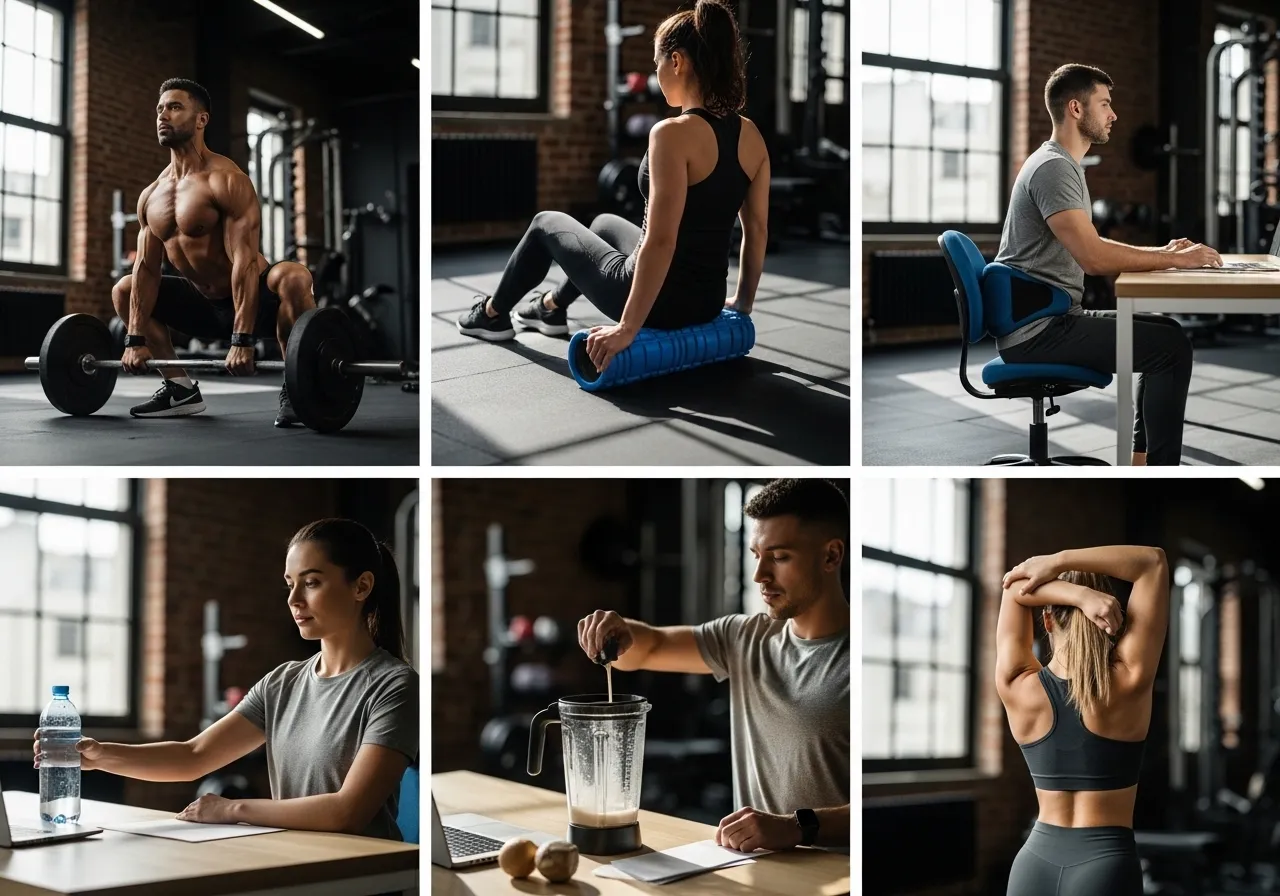
Even the most diligent back training program is undermined by poor sitting posture maintained for 8 to 12 hours per day. Training 3 hours per week cannot fully compensate for the postural stress of 50+ hours of poor sitting posture weekly. Addressing sitting position through ergonomic workspace setup is the necessary complement to training: monitor at eye level (preventing forward head), chair height allowing 90-degree hip angle, lumbar support maintaining natural spine curve, keyboard and mouse positioned to prevent shoulder rounding. Additionally, the 20-minute movement break rule — standing, walking, or performing brief movement every 20 to 30 minutes of sustained sitting — prevents the static posture loading that accelerates postural adaptation more than any other single environmental factor.
Thoracic Mobility: The Missing Link
The thoracic spine — the mid-back, from the base of the neck to the lower ribs — is the primary site of the rounding posture that affects most people. Unlike the cervical and lumbar spine, which retain some mobility even in sedentary individuals, the thoracic spine stiffens rapidly with inactivity into a fixed flexion posture that requires dedicated mobility work to restore. Daily thoracic extension over a foam roller (rolling slowly over the thoracic region with arms crossed or overhead) and thoracic rotation stretches (seated or kneeling, rotating the torso to maximum range in each direction) maintain and improve the thoracic mobility needed for upright posture and overhead movement. Research from the Journal of Orthopaedic and Sports Physical Therapy found that daily thoracic mobility work produces significant improvements in thoracic kyphosis and forward head posture within 4 to 6 weeks when performed consistently.
Ergonomic Adjustments That Amplify Training Results
Back training for postural correction produces its greatest results when combined with ergonomic adjustments that reduce the daily structural load causing the postural problem. The most impactful ergonomic intervention for most people is workstation positioning: monitor at eye level (eliminating the forward head tilt of looking down at a low screen), chair height adjusted so feet are flat on the floor and hips are at 90 degrees, keyboard positioned so elbows are at 90 degrees without shoulder elevation. These adjustments reduce the hours of daily anterior load that resistance training is working against, allowing the postural muscles developed through training to express themselves in everyday posture rather than being constantly overcome by structural forces.
Taking a 2-minute movement break every 30 to 60 minutes of sitting — standing up, performing 10 thoracic extensions over a chair back, 10 shoulder retractions, and 30 seconds of walking — counteracts the cumulative effects of sustained sitting on spinal compression, hip flexor shortening, and upper back rounding. Research published in the British Journal of Sports Medicine found that regular movement breaks during prolonged sitting reduce lower back pain by 40 percent and improve self-reported energy levels significantly compared to continuous sitting — benefits achievable with minimal time investment that significantly amplify the postural improvements produced by back training.
Sleep Position and Postural Health
Sleep position is an often-overlooked contributor to postural problems and an area where simple changes produce meaningful improvements. Sleeping on your stomach — the most common cause of cervical spine stress and anterior shoulder tightening — places the neck in sustained rotation and the shoulder in internal rotation for hours nightly, directly counteracting the external rotation and cervical alignment work produced by back training. Side sleeping with a pillow supporting the head at neutral cervical alignment and a pillow between the knees maintaining hip alignment is the evidence-based recommendation for most people with postural issues. Back sleeping with a supportive pillow maintaining the natural cervical curve is equally appropriate and eliminates the lateral cervical loading of side sleeping.
Chest Stretching and Opening Exercises
Why Tight Pectorals Pull Shoulders Forward
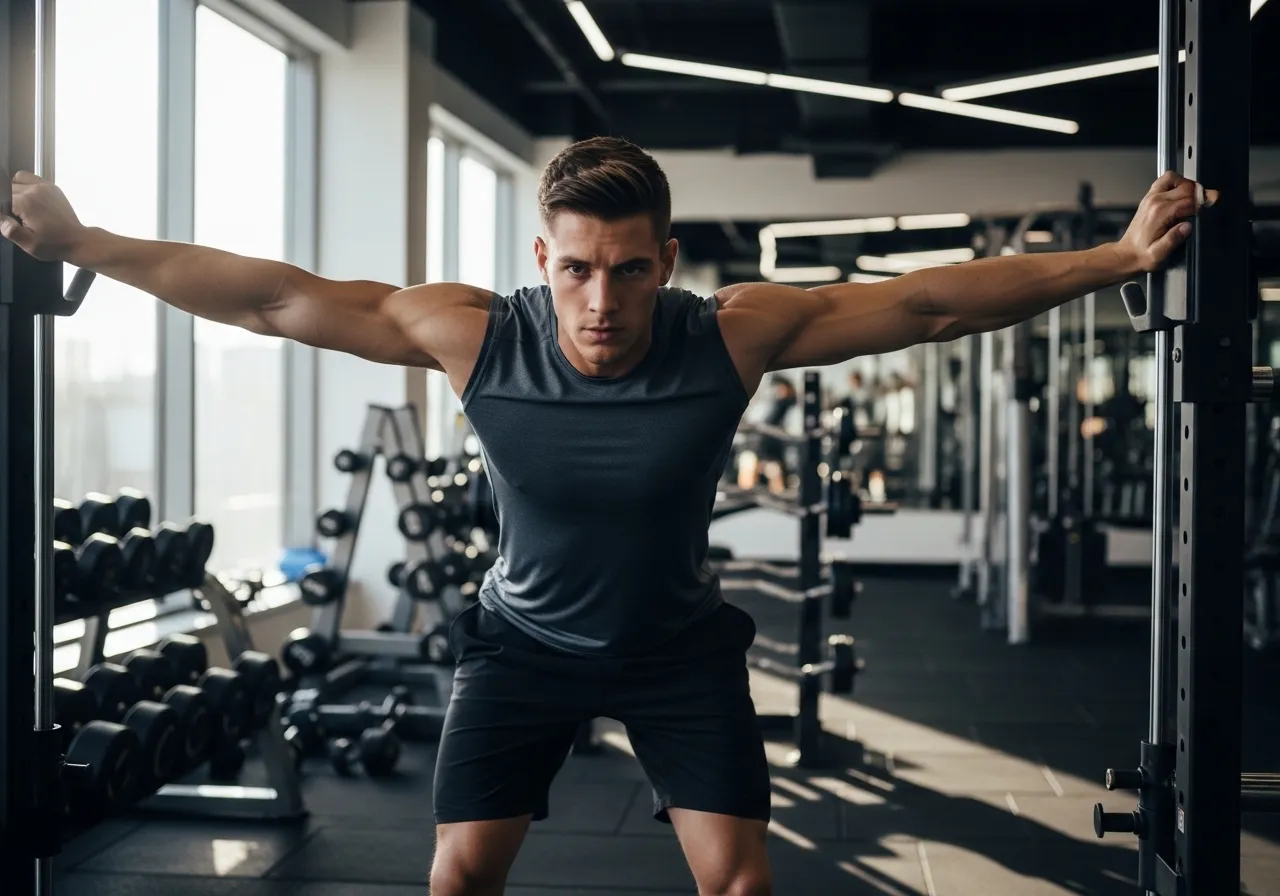
The pectoralis major and minor — the chest muscles — attach to the front of the shoulder. When chronically shortened through a combination of pressing-dominant training and the sustained pectoral contraction of the rounded sitting position, these muscles apply a continuous forward-pulling force on the shoulder that no amount of back strengthening can overcome if the tightness is not also addressed. Stretching the pectorals — particularly the pectoralis minor and the clavicular head of the pectoralis major — is essential for releasing the forward shoulder posture and allowing the strengthened posterior muscles to hold the shoulder in its correct position.
Pectoral Stretching Protocol
Doorway chest stretch: stand in a doorway with forearms on the frame at 90 degrees, step forward until a stretch is felt across the chest. Hold 30 to 45 seconds. Repeat 3 times. Foam roller chest opening: lie lengthwise on a foam roller aligned with the spine, arms extended to the sides with elbows bent. Allow gravity to open the chest passively for 60 to 90 seconds. Bench pec stretch: lie face down with one arm extended to the side, roll onto the extended arm until a stretch is felt in the pec. Hold 30 seconds. These stretches, performed daily, release the anterior tension that opposes the postural correction work of the back training program.
Dynamic Chest Opening Exercises
Dynamic chest opening exercises — movements that actively take the anterior shoulder and chest through their full range of motion against resistance — produce faster and more durable flexibility improvements than passive static stretching alone by developing the neuromuscular control needed to actively maintain the opened position. Effective dynamic chest openers: wall slides (standing with back against wall, sliding arms from shoulder height to overhead while maintaining contact — trains active overhead mobility), doorway chest stretch (static hold followed by active resisted contraction against the doorframe), and PVC pipe or broomstick passthroughs (holding a stick wider than shoulder-width and rotating it from in front to behind the body through the fullest comfortable range of motion).
The pectoral minor — the smaller pectoral muscle running from the ribs to the coracoid process of the shoulder blade — is frequently overlooked in chest stretching protocols but is one of the primary contributors to forward shoulder rounding when chronically shortened. The pec minor stretch differs from the pec major stretch: position the forearm against a doorframe at 90 degrees to the body (not extended backward like a standard chest stretch) and turn the body away while maintaining contact. This specific position targets the pec minor’s line of pull and is essential for achieving the full shoulder retraction that defines good posture.
Cervical Spine Exercises for Head Position
Forward head posture — where the head sits forward of the shoulders rather than stacked over them — is one of the most visible and biomechanically significant postural deviations, placing up to 27 kilograms of effective load on the cervical spine for every inch of forward displacement. Correcting forward head posture requires both lengthening the shortened structures (suboccipital muscles, upper cervical extensors, anterior scalenes) and strengthening the weakened structures (deep cervical flexors, lower cervical extensors). The chin tuck exercise — drawing the chin directly backward without tilting the head, activating the deep cervical flexors — is the single most effective exercise for forward head posture correction and should be performed for 3 sets of 15 repetitions daily as part of any postural correction program.

Recovery and Nutrition for Postural Muscle Development
Why Postural Muscles Need Specific Recovery Attention
The rhomboids, lower trapezius, and posterior deltoids — the muscles most targeted in postural correction training — are predominantly slow-twitch muscles designed for sustained low-intensity work rather than brief high-intensity effort. This fiber composition means they have excellent endurance recovery but respond best to higher-rep training at moderate loads rather than the heavy, lower-rep training that maximizes hypertrophy in fast-twitch dominant muscles. Programming postural correction exercises at 15 to 25 reps per set — producing muscular endurance as much as hypertrophy — better matches the functional demand of these muscles and produces more durable postural improvement than low-rep heavy training approaches. Research confirms that postural muscles trained in their functional rep range (15 to 25 reps) show greater improvements in postural endurance tests compared to the same muscles trained at hypertrophy rep ranges. Research in British Journal of Sports Medicine confirms that targeted endurance training of postural muscles produces greater postural improvement over time compared to strength-focused training of the same muscles.
Supplementation for Connective Tissue Recovery
The back muscles trained for postural correction attach through tendons and operate across joints that are under chronic stress from the loading patterns of modern life. Supporting connective tissue health through nutrition can meaningfully accelerate the structural improvements that back training initiates. Research in the American Journal of Clinical Nutrition found that collagen supplementation (15 grams with vitamin C, 60 minutes before loading) increases collagen synthesis in tendons and ligaments, with the greatest benefit observed in people with pre-existing connective tissue stress or injury history. Omega-3 fatty acids (EPA and DHA from fish oil, 2 to 3 grams daily) reduce the systemic and joint-specific inflammation associated with chronic postural loading, supporting the repair process and reducing the pain that can otherwise limit training intensity and frequency.
Magnesium — depleted by physical training and chronic stress — is involved in muscle relaxation and plays a role in the resolution of muscle tension. Many people with chronic back tightness associated with postural issues find that magnesium supplementation (300 to 400mg of magnesium glycinate or citrate before sleep) reduces muscle tension and improves sleep quality, both of which contribute to the recovery environment needed for postural improvement.
When to Seek Professional Help
Back training for postural correction is appropriate and beneficial for the vast majority of people with common postural deviations — forward head posture, rounded shoulders, anterior pelvic tilt — that are the result of habitual positioning and muscle imbalances rather than structural pathology. However, some presentations warrant professional evaluation before beginning or continuing a back training program: persistent pain that does not improve with 2 to 4 weeks of appropriate training and mobility work, pain that radiates into the arms or legs suggesting nerve involvement, pain that significantly worsens with exercise rather than improving, or any history of spinal fracture, disc pathology, or surgical intervention. A qualified physiotherapist or sports medicine physician can provide individualized assessment that identifies the specific postural imbalances present and the most effective corrective exercises for the individual’s particular pattern.
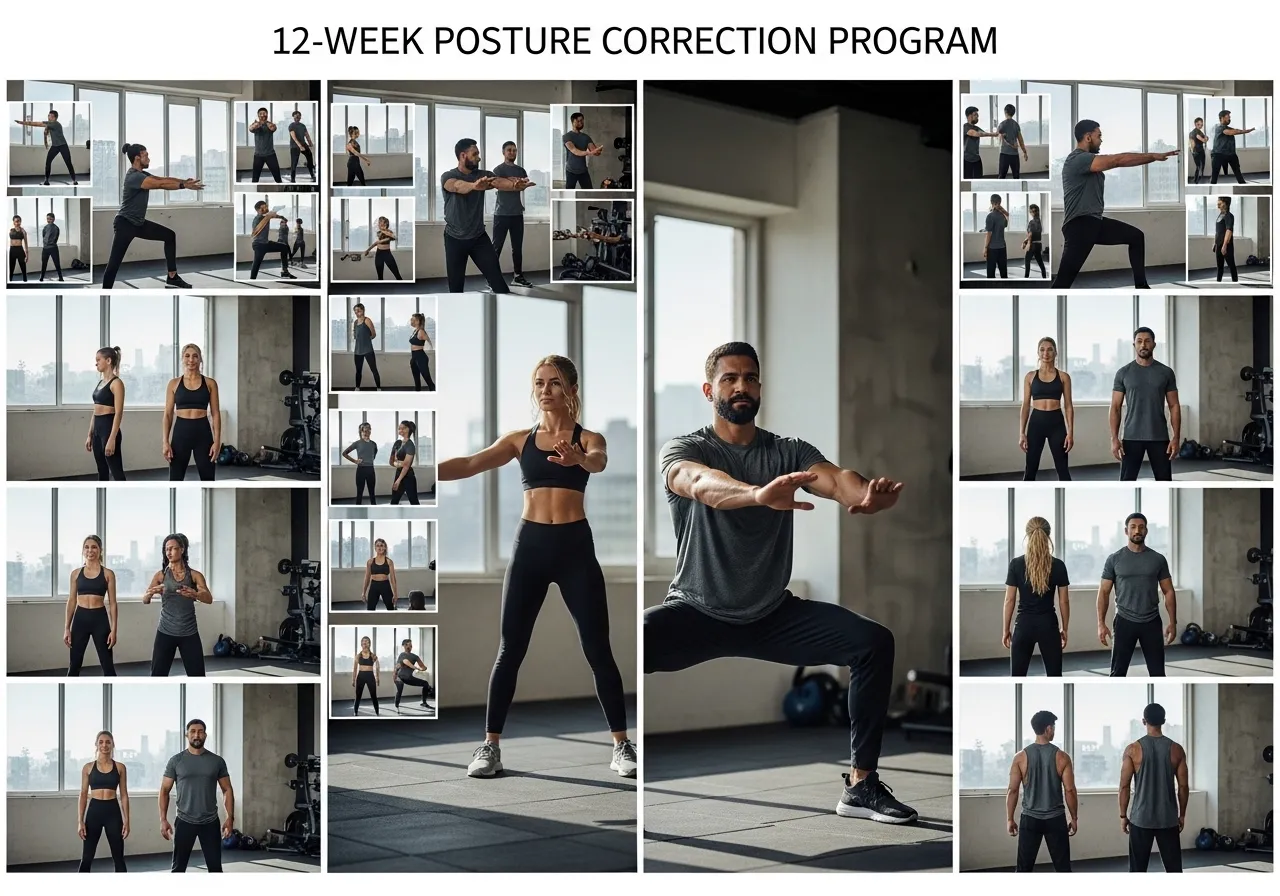
12-Week Posture Correction Program
Phase 1: Weeks 1 to 4 — Activation and Awareness
The first phase focuses on activating the chronically inhibited postural muscles and developing the proprioceptive awareness of correct posture that most people with chronic postural problems have lost. Daily: band pull-aparts × 50 reps (split into 2 to 3 brief sessions), thoracic extension over foam roller × 2 minutes, doorway chest stretch × 3 × 45 seconds. Training sessions (3 per week): face pull 4×15, prone Y-T-W 3×10 each, cable row 3×15 with 2-second hold, chin-up 3×max. The daily band work is non-negotiable — it is the high-frequency stimulus that begins reversing the chronic inhibition of these muscles that develops over years of poor posture.
Phase 2: Weeks 5 to 8 — Loading and Strengthening
Add compound loading: barbell row 4×10, deadlift 3×8. Continue daily band pull-aparts and thoracic mobility. Add scapular stability work: push-up plus (standard push-up with additional serratus activation at the top), wall slides (back against wall, sliding arms overhead maintaining contact). Progress all exercises through double progression. The goal of this phase is building the strength foundation in the major posterior chain muscles that provides the postural support capacity needed for long-duration sustained correct posture.
Phase 3: Weeks 9 to 12 — Consolidation and Habits
Maximum training phase: all exercises progress to their highest loads. Begin assessing postural improvement through comparison photos from week 1. Introduce postural holds — deliberately practicing correct posture for 5-minute periods throughout the day, building toward automatic correct posture. By week 12, the combination of strengthened posterior chain muscles, improved thoracic mobility, lengthened pectorals, and developed postural awareness should produce visible and felt improvements in resting posture that are self-sustaining rather than requiring constant conscious effort.
Frequently Asked Questions
How long does it take to correct poor posture?
Noticeable improvements in posture typically appear within 4 to 6 weeks of consistent targeted training and mobility work. Significant structural correction — meaningful changes in thoracic kyphosis angle, forward head distance, or shoulder protraction — requires 3 to 6 months of consistent training. The timeline depends significantly on the severity of the initial postural deviation and the consistency of both the training and the daily habit modifications (sitting posture, workstation ergonomics).
Should I stop training chest to fix my posture?
No — stopping chest training is unnecessary and counterproductive. The issue is not chest training itself but the ratio of pushing to pulling work. Most people with poor posture perform significantly more pushing (bench press, push-ups, overhead press) than pulling (rows, pull-ups, face pulls). Equalizing this ratio — matching sets of pushing with equal or greater sets of pulling — corrects the imbalance without abandoning any exercise. Aim for a pulling-to-pushing ratio of at least 1:1, and ideally 2:1 during active postural correction phases.