10 Best Exercises for Men Over 40

1. Why Men Over 40 Need a Different Approach to Exercise
Turning 40 is not a fitness death sentence — but it is a physiological pivot point that requires honest acknowledgment and strategic adaptation if training is to remain effective, sustainable, and injury-free. I trained through my late 30s essentially the same way I trained at 25 — high-volume, high-frequency, aggressive loading with minimal attention to recovery — and the results in my early 40s were predictable in retrospect: a persistent shoulder impingement that wouldn’t resolve, a lower back that complained through every deadlift session, and training progress that had plateaued despite consistent effort. The changes that transformed both my performance and my physical health were not about doing less — they were about doing the right things differently. Training smarter, not just harder, is not a concession to aging; it is the evidence-based adaptation that allows men over 40 to be stronger, more athletic, and physically more capable than they were in their 20s — if they train intelligently for the physiological environment their bodies actually inhabit.
The Physiology of Training After 40: What Actually Changes
Understanding what genuinely changes after 40 — versus what fitness culture mythology claims changes — allows for targeted adaptation rather than wholesale training reduction. The real changes: testosterone levels decline gradually from peak levels at 20–25, with average declines of 1–2% per year after 30 — producing the reduced anabolic hormonal environment that slows muscle development rates and increases the recovery time that training demands. Growth hormone secretion follows a similar decline trajectory, reducing the overnight tissue repair capacity that younger athletes take for granted. Muscle protein synthesis rates decline with age — the same training stimulus that produces 24-hour elevated synthesis rates in a 25-year-old may produce only 18–20 hours of elevated synthesis in a 45-year-old, requiring higher protein intake and modified training approaches to achieve equivalent muscle maintenance. Connective tissue (tendons, ligaments, and joint cartilage) loses progressive amounts of collagen cross-linking density and water content, becoming less resilient to repetitive loading and requiring longer recovery between sessions targeting the same joints. Sleep quality and duration typically decline after 40, reducing the growth hormone secretion and tissue repair that deep sleep enables. The misconceptions: the fundamental principles of progressive overload, compound movements, adequate protein, and consistent training still apply completely — the adaptations required are in volume management, recovery investment, and exercise selection rather than in abandoning the training approaches that produce genuine fitness results.
The Sarcopenia Imperative: Why Muscle Maintenance Is Critical After 40
Sarcopenia — the progressive loss of muscle mass and strength that aging produces without active countermeasures — is the most important fitness concern for men over 40, both for athletic performance and for long-term health. The sarcopenia timeline without resistance training: men lose approximately 3–5% of muscle mass per decade from age 30, with the rate of loss accelerating after 60 — producing the functional decline that makes stairs difficult, falls more frequent, and metabolic disease more likely in the later decades of life. The consequence for metabolism: each kilogram of muscle tissue burns approximately 13–22 calories per day at rest; the muscle loss that sarcopenia produces reduces resting metabolic rate progressively, contributing to the body fat gain that sedentary aging characteristically produces even without caloric increases. The good news: progressive resistance training is the most powerful intervention available for sarcopenia prevention and reversal — men over 40 who train with challenging loads maintain and build muscle mass, preserve metabolic rate, maintain bone density (resistance training provides the mechanical loading that prevents osteoporosis), and preserve the functional strength that physical independence across decades requires. From Sports Medicine Journal sarcopenia research, men who engage in regular progressive resistance training maintain skeletal muscle mass significantly better than sedentary peers, with masters athletes in their 60s and 70s demonstrating muscle mass profiles comparable to sedentary men 20–30 years younger — confirming that the sarcopenia that aging produces is largely a lifestyle consequence rather than an inevitable physiological fate.
Recovery: The Variable That Changes Most After 40
If there is a single training variable that most clearly distinguishes effective training for men over 40 from younger training approaches, it is recovery — the investment in post-training restoration that the reduced anabolic hormonal environment and connective tissue resilience of aging make more critical and more time-consuming. The practical recovery implications: rest days between training sessions targeting the same muscle groups should extend from 48 hours (appropriate for 25-year-olds) to 72 hours or longer for men over 45 training with high intensity; sleep becomes more rather than less important, with 7–9 hours non-negotiable for the reduced growth hormone secretion of aging to accomplish the tissue repair that training produces; protein intake should increase (to 1.8–2.4g per kg versus the 1.4–1.6g adequate for younger athletes) to compensate for the anabolic resistance that aging muscle exhibits; and the deload weeks that younger athletes treat as optional should become mandatory every 4–6 weeks — the accumulated connective tissue stress that heavy training produces requires periodic recovery periods to prevent the overuse injuries that male over-40 athletes disproportionately experience. The recovery investment is not a concession to aging limitations — it is the intelligent application of physiological knowledge that allows training intensity and volume to be maintained at levels that produce continued adaptation without the injury risk that under-recovered training in aging bodies creates.
Hormonal Optimization Through Exercise and Lifestyle
Exercise is one of the most potent non-pharmaceutical tools for maintaining the hormonal environment that training adaptation requires — with specific training approaches producing significantly better hormonal outcomes than others. The exercise approaches that best support testosterone and growth hormone production after 40: compound resistance training with challenging loads (squats, deadlifts, rows, and presses at 75–85% of maximum) produces the largest acute testosterone and growth hormone responses of any exercise type — far exceeding the response from isolation exercises or low-intensity cardio; high-intensity interval training produces significant growth hormone responses (with intensities above 80% of maximum heart rate being particularly potent stimulators); and strength training with short rest periods (60–90 seconds) produces greater metabolic stress and hormonal response than longer rest period training. The lifestyle factors that support hormonal health: adequate sleep (testosterone is produced primarily during sleep, with sleep deprivation producing testosterone reductions of 10–15% within days); stress management (chronic cortisol elevation suppresses testosterone production through hypothalamic-pituitary-adrenal axis mechanisms); body fat management (adipose tissue converts testosterone to estradiol through aromatization — maintaining body fat below 20% prevents the hormonal imbalance that excess adiposity produces); and adequate dietary fat (testosterone synthesis requires cholesterol as a precursor — extremely low-fat diets impair testosterone production). The combination of appropriate training, adequate sleep, stress management, and appropriate body composition produces the best attainable hormonal environment within the aging male physiology — not through pharmaceutical supplementation but through the lifestyle optimization that exercise and nutrition provide.
The Testosterone-Training Connection: Maximizing Hormonal Response After 40
The relationship between specific training approaches and the hormonal response they produce becomes more strategically important after 40 — when the baseline testosterone and growth hormone levels that training stimulates are lower, the training-induced spike represents a proportionally larger contribution to the total hormonal environment that adaptation requires. The training variables that maximize the acute hormonal response in men over 40: exercise selection (multi-joint compound movements involving the largest muscle masses produce the greatest hormonal response — squats and deadlifts produce significantly larger testosterone and growth hormone responses than isolation exercises); intensity (training at 70–85% of maximum load produces greater hormonal response than very light or maximal-effort training); volume (sufficient volume to create metabolic stress — 3–5 sets per exercise rather than single sets — amplifies the hormonal response); rest periods (shorter rest periods of 60–90 seconds between sets produce greater growth hormone responses than longer rest periods, though this comes at the cost of load that can be used); and training to near failure (stopping 1–2 repetitions before failure maximizes the motor unit recruitment and metabolic stress that hormonal response requires). The practical application: structure training sessions around the big compound movements at challenging loads with moderate rest periods — the program in this article already reflects these principles. Avoid the high-repetition, low-weight, long-rest approach that many men over 40 adopt out of injury caution — it produces the weakest hormonal response of any resistance training approach and the poorest long-term outcomes for body composition and strength.
Bone Density: Why Resistance Training After 40 Is Literally Life-Saving
Osteoporosis — the progressive loss of bone mineral density that aging produces — is not exclusively a female health concern. Men experience significant bone density loss after 40, with the fracture risk that severe osteoporosis produces carrying mortality rates of 20–30% within one year of hip fracture in the elderly. The most effective intervention for bone density maintenance and improvement is progressive resistance training — the mechanical loading that exercise imposes on bone stimulates the osteoblast activity that builds bone density, following Wolff’s Law (bone remodels in response to the mechanical demands placed on it). The bone density benefits of the training program in this article: the trap bar deadlift and squat provide compressive loading through the spine and hip that specifically stimulates lumbar vertebral and femoral neck bone density — the sites where osteoporotic fractures most commonly occur. Impact activities (rucking, which has a moderate ground impact component) provide additional osteogenic stimulus through the brief mechanical loading that each footstrike produces. Resistance training programs for men over 40 that emphasize these high-load compound movements produce bone mineral density improvements within 12 months of consistent training — a direct, quantifiable investment in fracture prevention that the alternative of inactivity cannot provide. The man who consistently performs heavy compound resistance training through his 40s and 50s is building the bone density reserve that protects him against the osteoporosis-related fractures that immobility and aging otherwise ensure.
Train smarter after 40.

2. Exercises 1–4: Strength and Power Foundations for Men Over 40
The four foundational strength exercises for men over 40 are selected based on their compound muscle recruitment, functional movement patterns, and the balance of training stimulus with joint stress that the aging connective tissue system requires.
Exercise 1: The Trap Bar Deadlift — Power and Posterior Chain Without Spine Risk
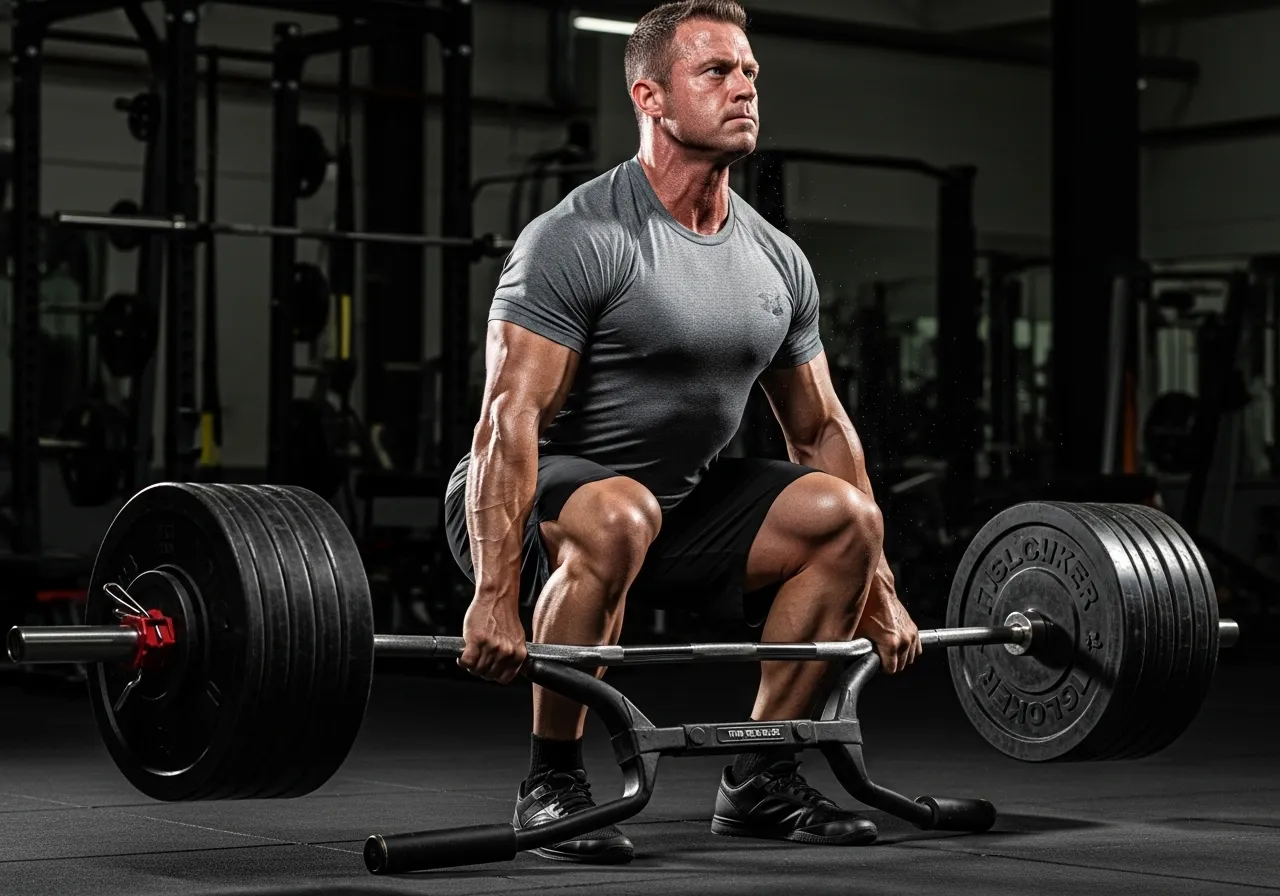
The trap bar deadlift is the single most valuable strength exercise for men over 40 — delivering the posterior chain development, total body strength, and hormonal training stimulus of the conventional deadlift while significantly reducing the spinal loading and lumbar flexion demands that make conventional deadlifting problematic for the degenerative disc changes that many men over 40 carry. The trap bar’s offset handle geometry allows a more upright torso position during the pull, reducing the lever arm at the lumbar spine and the shear forces that conventional deadlift positions create. For men with a history of lower back pain or disc issues — a substantial proportion of the over-40 male population — the trap bar deadlift provides the heavy compound posterior chain training that conventional deadlifting increasingly cannot. The muscles trained: hamstrings, glutes, quadriceps, erector spinae, upper back, and grip — the largest muscle mass available for compound movement in the human body. The loading approach for men over 40: 3–4 sets of 5–8 repetitions at 75–85% of maximum, with 90–120 seconds rest between sets to allow the complete recovery that heavy compound exercise requires. Progressive overload through adding 2.5–5kg when all sets are completed with excellent technique. The technique cues: hip hinge initiation before knee bend, braced neutral spine throughout the pull, push the floor away rather than pull the bar up, and controlled eccentric descent to maintain the muscle tension that makes the exercise productive and safe. From JSCR research on trap bar deadlift biomechanics, the trap bar deadlift produces equivalent or greater muscle activation in the quadriceps, hamstrings, and glutes compared to conventional deadlift, while producing significantly lower lumbar spine compressive forces — confirming its status as the superior deadlift variant for men whose spinal tolerance for conventional loading has declined with age.
Exercise 2: The Goblet Squat and Barbell Back Squat Progression
Squatting is non-negotiable for men over 40 — the lower body strength, hip mobility, and hormonal training stimulus that squatting provides are among the most important physical investments available to aging males. The specific squat variation appropriate for each individual depends on mobility, previous injury history, and current strength level. The goblet squat: the front-loaded position of the goblet squat (holding a dumbbell or kettlebell at chest height) provides a counterbalance that facilitates deeper, more upright squatting than most men over 40 can achieve with a back bar — making it the ideal starting or mobility-limited squatting option. The front load also reduces the spinal compression of barbell back squatting, making it appropriate for men with lumbar sensitivity. The barbell back squat: for men without significant hip or spinal limitations, the barbell back squat remains the gold standard lower body strength exercise — the loading capacity that a barbell allows exceeds any dumbbell alternative, producing the greatest quadriceps, glute, and hamstring development stimulus available. The high-bar squat position (bar resting on the upper trapezius rather than the low-bar position on the rear deltoids) is generally more appropriate for men over 40 due to the reduced spinal forward lean that high-bar squat mechanics produce. The squat loading approach for over 40: 3–4 sets of 6–10 repetitions with 90–120 seconds rest, prioritizing movement quality and full range of motion over maximum load. Knee tracking over the toes, adequate depth (at minimum parallel, ideally below parallel for full glute activation), and the neutral spine that prevents the lower back loading that shallow, forward-leaning squats produce.
Exercise 3: The Dumbbell Row — Upper Back Development and Posture Correction
The dumbbell row is the most important upper body exercise for men over 40 — not because it produces the most impressive physique (though it develops the width and thickness of a strong back impressively), but because the posterior chain strengthening it provides directly counteracts the anterior chain dominance and thoracic kyphosis that desk work and anterior-dominant training produce in middle-aged men. The rounded shoulders, forward head posture, and thoracic rounding that characterize the posture of many men over 40 create the shoulder impingement, neck pain, and upper back tightness that impair both athletic performance and daily quality of life — and the dumbbell row, performed with strict scapular retraction and thoracic extension, is the most accessible corrective and strengthening exercise available. The technique that maximizes both strength and postural benefit: brace the non-rowing hand on a bench, maintain a flat back with a proud chest (thoracic extension rather than flexion), initiate the row with scapular retraction before elbow drive, and complete the row to the hip rather than the shoulder — the full range that maximizes lat and mid-back activation. 3–4 sets of 10–12 repetitions per side, using a weight that makes the final 2–3 repetitions genuinely challenging. The dumbbell row should be present in every training week for every man over 40 — the postural and structural benefits compound with every session across the training years that upper back health requires.
Exercise 4: The Push-Up and Its Progressions — Pressing Without Shoulder Risk
The push-up — and its many progressions from beginner to advanced — is the pressing exercise most forgiving for the shoulder health concerns that many men over 40 carry from years of bench pressing with poor technique or inadequate warm-up. Unlike the barbell bench press, the push-up allows the scapula to move freely throughout the pressing movement — the serratus anterior engagement and scapular protraction at the top of the push-up develop the anterior serratus strength that stabilizes the shoulder blade against the rib cage, preventing the shoulder impingement that restricted scapular movement during pressing produces. For men over 40 with shoulder histories, the push-up may be a permanent alternative to barbell pressing or a rehabilitation bridge back to loaded pressing; for those without shoulder issues, the push-up progression provides the bodyweight pressing strength that complements barbell work. The progression sequence: standard push-up (with perfect form — neutral spine, full range of motion, no hip sag); archer push-up (one arm provides more resistance, developing the unilateral pressing strength that advances beyond standard push-up); weighted push-up (weight plate on the back or weighted vest extending the loading range); and ring push-up (the instability of gymnastic rings increases shoulder stabilizer activation and range of motion beyond any floor-based variant). For men who can perform 20+ perfect push-ups, adding the dumbbell bench press or incline dumbbell press alongside push-up variations provides the loading range that chest development requires while maintaining the scapular freedom that shoulder health depends on.
The Warm-Up Protocol for Men Over 40: Longer, More Deliberate, More Essential
The warm-up that men over 40 require before training is categorically more important and more time-consuming than the warm-up appropriate for younger athletes — and the investment is directly proportional to both training quality and injury prevention. Cold connective tissue (tendons, ligaments, and the cartilage lining joint surfaces) is less extensible, less resilient, and more susceptible to strain than warm, well-hydrated tissue — the difference between well-prepared and inadequately prepared tissue at 45 is significantly larger than at 25. The over-40 warm-up protocol: 10 minutes of general cardiovascular warm-up (compared to 5 minutes for younger athletes) to elevate tissue temperature to the range where the connective tissue properties that injury prevention requires are achieved; 8–10 minutes of dynamic stretching and joint mobility work targeting the hip, thoracic spine, shoulder, and ankle — the areas that over-40 males most commonly restrict; 5 minutes of movement-specific activation including the target muscles and movement patterns of the session’s main exercises with light loads; and specific joint preparation for any previously injured or acutely sensitive areas before loading. This 20–25 minute warm-up investment produces the training quality and injury prevention return that makes the time cost negligible compared to the injury time cost it prevents. The man who skips the warm-up to “save time” at 45 is making the calculation that will eventually cost him weeks or months of training to an injury that adequate preparation would have prevented.
Supplement Strategies for Men Over 40: Evidence-Based Choices
The supplement landscape for men over 40 is dominated by products claiming to restore youthful testosterone, reverse aging, and produce rapid body transformation — the majority of which are either ineffective, insufficiently evidenced, or both. The genuinely evidence-supported supplements for men over 40 training for strength and health: creatine monohydrate (3–5g daily) — the most comprehensively researched performance supplement, with specific evidence for greater benefits in older adults than younger ones due to the age-related decline in muscle creatine stores that supplementation corrects; vitamin D (1,000–2,000 IU daily, adjusted based on blood test results) — deficiency is widespread in men over 40, particularly in northern climates or desk-based lifestyles, and supplementation supports testosterone production, muscle function, immune health, and bone density; omega-3 fatty acids (2–3g EPA+DHA daily from fish oil or algae) — reduces exercise-induced inflammation and supports cardiovascular health, joint lubrication, and the recovery quality that over-40 training requires; magnesium glycinate (300–400mg before sleep) — supports sleep quality, muscle relaxation, and testosterone production; and protein supplementation (whey or plant-based) as a practical tool for meeting the 1.8–2.4g per kg protein target when whole food sources are insufficient. Testosterone boosters marketed to men over 40 are among the least evidence-supported supplements available — the herbs and compounds in these products produce at best marginal and transient testosterone changes that do not translate to meaningful training outcomes.
Every rep counts.

3. Exercises 5–7: Cardiovascular and Metabolic Fitness After 40
Cardiovascular fitness becomes more rather than less important for men over 40 — the cardiovascular disease risk that increases with age makes aerobic capacity a primary health investment, while the metabolic fitness benefits of cardiovascular training address the insulin resistance and fat accumulation that aging and reduced activity tend to produce.
Exercise 5: HIIT Rowing — Full-Body Cardio That Builds Rather Than Breaks Down
High-intensity interval training on the rowing machine is the cardiovascular exercise most appropriate for men over 40 seeking the fitness benefits of high-intensity training without the joint stress of running-based HIIT. The rowing stroke — 60% legs, 30% back, 10% arms — recruits the large muscle mass of the lower body and posterior chain that produces the cardiovascular demand and caloric expenditure of running without the repetitive ground impact that running imposes on knees, hips, and the lumbar spine. For men with knee pain, hip osteoarthritis, or lower back sensitivity that makes running problematic, rowing provides an equivalent or superior cardiovascular stimulus without the skeletal loading that impact sports produce. The HIIT rowing protocol for men over 40: 5-minute easy rowing warm-up; 8–10 rounds of 20 seconds maximum effort rowing followed by 40 seconds easy recovery; 5-minute cool-down. Total session time: 20–25 minutes. The cardiovascular demand of this protocol is extremely high — heart rates of 85–95% of maximum during work intervals are typical — and the recovery between intervals allows the intensity to be maintained across all rounds. The adaptation: VO2max improvements of 5–15% within 6–8 weeks of twice-weekly HIIT rowing, alongside the upper back, core, and leg strength benefits that the rowing movement pattern provides. From ACSM cardiovascular exercise guidelines for adults over 40, the cardiovascular adaptations of HIIT training for middle-aged adults include improvements in cardiac output, stroke volume, and oxygen extraction that reduce all-cause mortality risk significantly — confirming that the time investment in HIIT rowing is among the highest-return health investments available to men over 40.
Exercise 6: Swimming — The Joint-Sparing Endurance Foundation
Swimming occupies a unique position in the over-40 exercise arsenal — it provides genuine cardiovascular endurance training with zero compressive joint loading, the upper body pulling strength that most men’s training underemphasizes, and the thoracic spine mobility that desk workers and resistance trainers characteristically restrict. The buoyancy of water eliminates the gravitational compressive loading that all land-based exercise produces, making swimming the only cardiovascular exercise that actively decompresses the spine and joints rather than loading them. For men with degenerative joint changes, chronic knee pain, spinal stenosis, or disc issues that limit most exercise options, swimming may be the only cardiovascular exercise that can be performed without pain or symptom exacerbation. The swimming approach for men over 40 who are not competitive swimmers: continuous lap swimming at a comfortable pace for 20–40 minutes, focusing on technique quality over speed — the four-beat freestyle kick, high-elbow catch, and body rotation that efficient swimming requires are valuable movement skills independent of their cardiovascular benefits. For those with the swimming background to support higher intensity, interval swimming (10 × 50m at 85% effort with 30 seconds rest) produces the HIIT adaptations in a low-impact format. The practical limitation of swimming — requiring pool access, appropriate swimwear, and shower facilities — makes it less accessible than gym-based alternatives for many men; those with pool access should consider it among the most valuable weekly training additions available after 40.
Exercise 7: Walking with Loaded Vest or Rucking — Functional Cardio for the Long Game
Rucking — walking with a weighted backpack or vest — is having a well-deserved renaissance among men over 40 as the cardiovascular and strength training hybrid that combines the joint-friendliness of walking with the metabolic and musculoskeletal demands of weighted exercise. A 45-minute ruck with 10–20% of body weight produces cardiovascular demand equivalent to easy jogging, caloric expenditure 2–3 times higher than unloaded walking, and postural and loaded carrying strength development that neither conventional cardio nor resistance training specifically trains. The military and tactical fitness communities have long recognized rucking as among the most effective training methods for the functional strength and endurance that real-world physical demands require; its application to recreational fitness for men over 40 reflects this functional fitness philosophy. The rucking protocol: start with body weight × 10% as load (approximately 8–10kg for most men); walk at a brisk 5–6 km/hour pace; sessions of 30–60 minutes, 2–3 times per week. Progress by adding 2–3kg every 2–3 weeks or extending session duration. The postural benefit of rucking is particularly valuable for men over 40: the posterior load of a weighted pack naturally encourages the thoracic extension and shoulder retraction that desk posture compresses — making rucking a posture correction and cardiovascular training activity simultaneously. The progressive nature of rucking — increasing load as fitness improves — provides the training progression that casual walking cannot sustain, making it a genuinely progressive fitness activity across months and years of consistent practice.
The Mind-Muscle Connection: Training Quality Over Training Quantity
One of the most practically valuable adaptations that men over 40 can make to their training is shifting the performance metric from quantity (total weight lifted, total volume completed, training frequency) to quality — the deliberate muscle activation, controlled movement execution, and technical precision that produce superior training outcomes with lower injury risk. The mind-muscle connection — the deliberate focus on feeling the target muscle working during each repetition — produces greater muscle activation in the targeted area and reduces the compensatory recruitment of secondary muscles that poor technique or inadequate focus allows. Research on trained lifters demonstrates that EMG activity in the target muscle increases measurably when subjects are instructed to focus their attention on that muscle during exercise — an effect that inexperienced lifters do not demonstrate but that trained athletes can access through deliberate practice. For men over 40 whose joints and connective tissues benefit from reduced total training volume, the mind-muscle connection is a partial compensation strategy — achieving similar muscle stimulation with lower total load by maximizing the quality of each repetition. The slow, controlled repetition approach (2–3 seconds eccentric, 1-second pause, 1–2 seconds concentric) that emphasizes this quality also protects joints by reducing the ballistic loading of faster repetition tempos — another compound benefit of the quality-over-quantity approach that aging athletes should embrace as strategy rather than limitation.
Cardiovascular Health After 40: Why VO2max Matters More Than You Think
VO2max — the maximum rate at which the body can consume oxygen during exercise — is the single strongest predictor of all-cause mortality available to clinicians, surpassing blood pressure, cholesterol, blood glucose, and smoking status in its predictive power for premature death. After 40, VO2max declines at approximately 1% per year in sedentary adults — a decline that translates directly into reduced functional capacity, earlier fatigue during daily activities, and compounding cardiovascular disease risk. The good news: regular aerobic training at appropriate intensities preserves VO2max far better than inactivity, with fit middle-aged adults demonstrating VO2max values 20–30% higher than sedentary peers of the same age — a physiological age advantage that compounds over decades. For men over 40, the cardiovascular training in this program — rowing HIIT, swimming, and rucking — specifically targets the VO2max improvements that health and performance require. The HIIT rowing sessions in particular are among the most potent VO2max stimulants available: the near-maximal cardiac output demands of HIIT intervals push the cardiovascular system to adaptations that moderate intensity training cannot achieve in equivalent time. From ACSM cardiovascular fitness research, men over 40 who maintain VO2max above age-matched median values through regular aerobic training have cardiovascular disease mortality rates comparable to men 10–15 years younger — a literal lifespan extension available through the consistent cardiovascular training that the program in this article provides.
The Deload Week: Non-Negotiable Recovery for Men Over 40
Every 4–6 weeks of progressive training, men over 40 should implement a deliberate deload week — a period of reduced training volume and intensity that allows the connective tissue stress, neural fatigue, and accumulated micro-damage of training to resolve before the next progressive loading phase begins. The deload week is not a rest week — it is a reduced-intensity training week where all exercises are performed at 50–60% of normal training load for 2–3 sessions, maintaining movement patterns and muscle activation while dramatically reducing the mechanical stress that joints and connective tissues accumulate during progressive loading. The physiological rationale for mandatory deloads in over-40 athletes: tendons and ligaments adapt more slowly than muscles — the strength that muscles develop in 4–6 weeks of progressive training may outpace the connective tissue adaptations that safely support that strength, creating an injury risk that deloads address by allowing connective tissue recovery to catch up with muscle development. The training outcomes of athletes who implement mandatory deloads are superior to those who train continuously without scheduled recovery — the post-deload performance typically exceeds pre-deload levels, confirming that the apparent “lost week” of reduced training produces a net positive for the training cycle it concludes. Program deload weeks into the training calendar before beginning any progressive program — treating them as a scheduled component of the training plan rather than a grudging concession to fatigue ensures they actually occur rather than being skipped when training motivation is high.
The athlete who plans recovery into the training calendar — rather than reacting to accumulated fatigue — trains more consistently, progresses more steadily, and stays injury-free across the long seasons of athletic life that intelligent programming enables.

4. Exercises 8–10: Mobility, Stability, and Injury Prevention
The final three exercises address the mobility, stability, and movement quality needs that men over 40 increasingly require to train consistently without the injury interruptions that declining tissue resilience and accumulated dysfunction produce.
Exercise 8: The Turkish Get-Up — Total Body Integration and Shoulder Stability
The Turkish get-up is the most technically demanding exercise in this list and the one with the most comprehensive training benefit — developing shoulder stability, hip mobility, thoracic rotation, core anti-rotation strength, and the fundamental movement competency that athletic performance and injury prevention require, all within a single continuous movement pattern. The get-up involves moving from lying on the floor to standing while keeping a weight extended overhead — a sequence of floor-to-standing transitions that demand cooperation between every joint and muscle in the body. For men over 40, the Turkish get-up provides several specific benefits beyond its general training value: the shoulder stability it develops specifically counteracts the rotator cuff weakness that aging and anterior-dominant training produce; the hip mobility demands of the get-up address the hip flexor and hip joint restrictions that desk work imposes; and the deliberate, slow execution that the get-up requires develops the body awareness that injury prevention depends on — the athlete who can perform a get-up with excellent technique demonstrates the movement quality that protects them during all other training. The appropriate loading for beginners: start with no weight (the bodyweight get-up reveals mobility and stability restrictions before loading amplifies them); progress to a light kettlebell (8–12kg); eventually work toward bodyweight × 50% for the truly accomplished practitioner. 2–3 sets of 3–5 repetitions per side, performed early in the session when focus and technique quality are at their highest. The investment in learning the Turkish get-up is repaid in improved shoulder health, hip mobility, and full-body stability for every other exercise in the program.
Exercise 9: The Pallof Press and Core Anti-Rotation Training
The Pallof press — a cable or band exercise that challenges the core’s ability to resist rotation rather than produce it — is the core exercise most aligned with the functional demands of athletic movement and the injury prevention needs of men over 40. Traditional core training emphasizes flexion (crunches, sit-ups) and extension (back extensions) — but the primary function of the core musculature in athletic movement is to prevent unwanted motion (anti-flexion, anti-extension, anti-rotation) rather than to produce it. The lumbar spine’s most important protective function is maintaining neutral position under load — the anti-rotation and anti-flexion strength that resists the forces that loaded movement imposes. The Pallof press develops this anti-rotation capacity specifically: with a cable or band at chest height, the athlete holds the handle against their sternum and presses it straight out while resisting the rotational pull of the cable — the core musculature works isometrically to prevent the rotation that the cable’s lateral force would otherwise produce. For men over 40 with lower back histories, the Pallof press provides core training that improves lumbar stability without the spinal flexion that crunches and sit-ups impose. 3 sets of 10–12 repetitions per side, progressing through increased band resistance or cable weight, increased hold time at full arm extension, or transitioning from standing to half-kneeling for greater instability demand. From PubMed research on core stability and injury prevention, anti-rotation core training produces superior outcomes for lumbar stability and athletic performance compared to flexion-dominant core training — confirming the Pallof press as the intelligent core training choice for men over 40.
Exercise 10: Hip Flexor and Thoracic Spine Mobility Superset
The tenth exercise is actually a mobility superset that addresses the two restriction patterns most universally present in men over 40 who sit during their working lives: hip flexor shortening and thoracic spine stiffness. These two restrictions are not merely flexibility limitations — they are the underlying causes of the lower back pain, shoulder impingement, and movement quality deterioration that middle-aged male athletes most commonly experience, and addressing them directly produces improvements in every other exercise in this list. The hip flexor mobility sequence: the kneeling hip flexor lunge with posterior pelvic tilt (30 seconds per side), the 90/90 hip stretch (30 seconds per side), and the couch stretch for rectus femoris specifically (30 seconds per side). The thoracic mobility sequence: thoracic foam roller extension (5 extensions at each vertebral level from T6 to T12), thoracic rotation in quadruped (10 per side), and the open book stretch in side-lying (10 per side). Performing this superset before every training session — as part of the activation phase of the warm-up — produces cumulative improvement in both hip and thoracic mobility that transfers to every training exercise the session includes. The squat depth improves as hip flexor length allows greater hip extension at the bottom; the deadlift maintains better thoracic extension under load as thoracic mobility improves; the overhead press achieves full range without compensatory lumbar hyperextension as thoracic mobility allows genuine shoulder elevation. The 8–10 minutes that this mobility superset requires before each session is the highest-return investment in both training quality and injury prevention available to men over 40 — and the cumulative flexibility gains that consistent mobility work produces over months transform the movement quality that aging and desk work have restricted.
The Farmer’s Carry: The Overlooked Strength and Stability Exercise
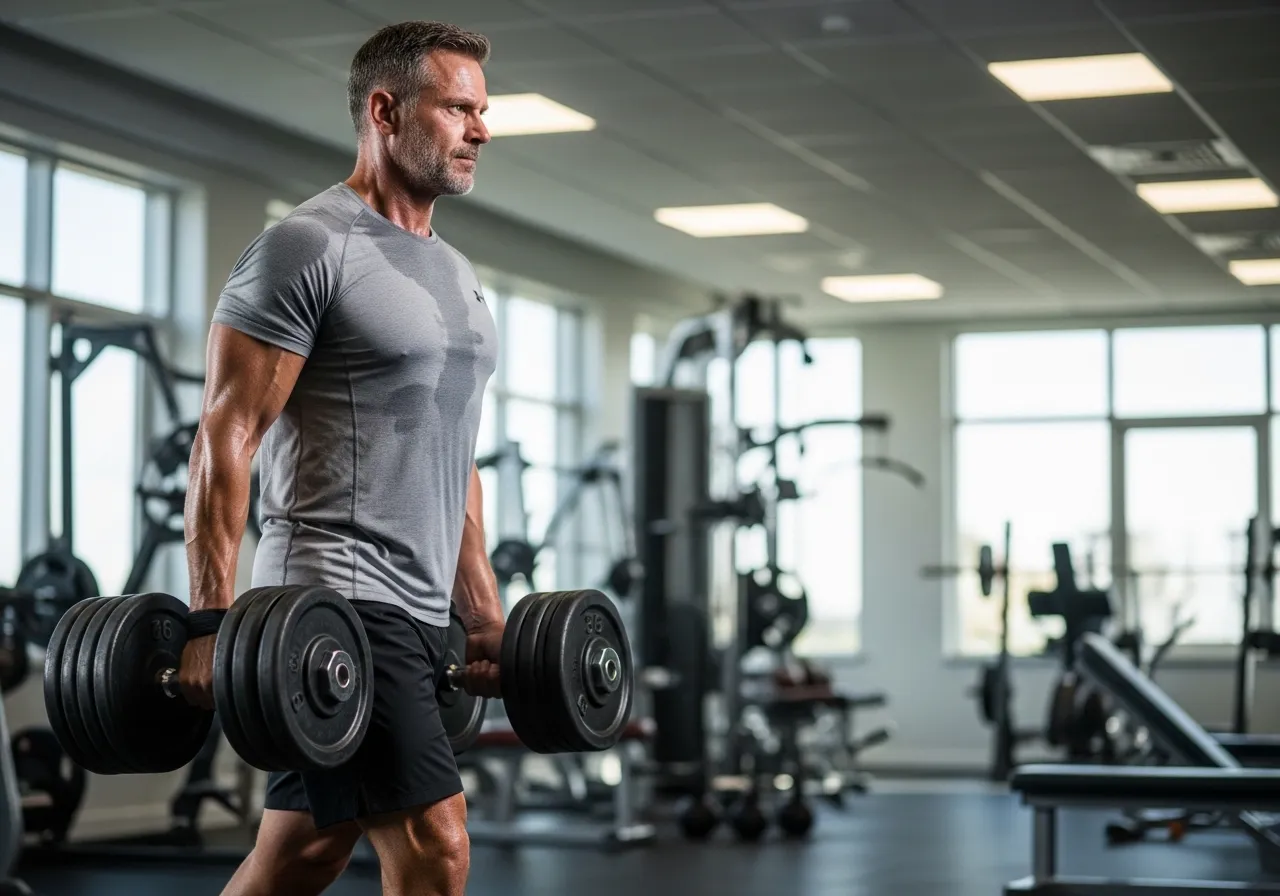
Deserving honorable mention alongside the top 10 is the farmer’s carry — walking while holding heavy dumbbells, kettlebells, or specialized carry handles — the exercise that strength and conditioning research consistently identifies as having the greatest transfer to functional daily life demands of any resistance training movement. The farmer’s carry develops: grip strength (the most age-related strength indicator that predicts falls, health outcomes, and longevity in aging populations); shoulder stability (the overhead stabilization demand of carrying heavy loads requires rotator cuff and scapular stabilizer activation that most exercises do not produce); core stability and anti-lateral flexion strength (carrying heavy loads unilaterally — the suitcase carry — creates the lateral core demand that walking with grocery bags and carrying children and luggage requires); and cardiovascular demand from the walking combined with the isometric loading that carrying imposes. For men over 40, the farmer’s carry provides a unique combination of strength, stability, and cardiovascular benefits that no other single exercise replicates — and it requires only a pair of heavy dumbbells and floor space. The loaded carry protocol: walk 20–40 meters per repetition with the heaviest load that allows excellent posture and gait — shoulders back and down, core engaged, gait smooth rather than waddling. 3–4 sets per session. Progress by increasing the load when posture and gait quality are maintained throughout the full carrying distance.
Sleep Optimization: The Most Impactful Recovery Tool After 40
Sleep quality and quantity decline with age — the deep, restorative sleep stages that produce maximum growth hormone secretion and tissue repair are shorter in duration and less efficiently produced after 40 than in youth. The training-related consequence: men over 40 who sleep 6 hours or less have measurably lower testosterone levels, higher cortisol, and significantly impaired muscle protein synthesis rates compared to those sleeping 7–9 hours — the recovery deficit of inadequate sleep directly undermines the training investment that otherwise consistent athletes make. The sleep optimization strategies specific to the over-40 male athlete: consistent sleep and wake times (even on weekends) to anchor the circadian rhythm that sleep quality depends on; evening exercise timing consideration — high-intensity training within 3 hours of sleep elevates cortisol and sympathetic nervous system activity that delays sleep onset for many men over 40; pre-sleep nutrition (30g casein protein from cottage cheese or Greek yogurt, taken 30 minutes before sleep) extends overnight muscle protein synthesis; and addressing sleep disordered breathing if present — sleep apnea, which increases in prevalence with age and male sex, severely impairs sleep quality and the hormonal recovery that training requires, and is both diagnosable and treatable. The man who trains hard, eats well, and sleeps poorly is achieving perhaps 60–70% of the training outcome that the same training and nutrition with adequate sleep would produce. Treating sleep as a training priority — not merely a lifestyle variable — produces the recovery quality that over-40 training adaptation requires.
Tracking Progress After 40: The Metrics That Matter Most
Men over 40 who track the right progress metrics stay motivated through the slower progress that mature physiology produces and avoid the discouragement of comparing current progress rates to the rapid gains of their 20s. The progress metrics most meaningful for over-40 male athletes: strength benchmarks (can you trap bar deadlift 1.5× your body weight for 5 repetitions? Can you perform 20 consecutive push-ups with excellent form? These functional strength standards reflect genuine fitness development regardless of absolute load); resting heart rate trend (declining resting heart rate across months of consistent cardiovascular training is a reliable fitness indicator that age and load do not distort); waist circumference (the most practical body composition indicator for men over 40 — reductions in waist circumference reflect visceral fat loss that both health outcomes and athletic performance are sensitive to); energy and wellbeing ratings (self-reported daily energy, sleep quality, and general wellbeing consistently improve with consistent training — evidence of benefit that appears before any measurement changes); and the physical capability tests that matter personally (can you carry heavy bags up stairs without fatigue? Can you keep up with younger people hiking? Can you play physical activities with your children without exhaustion?). Track at least two of these metrics monthly and allow the evidence of steady, consistent progress to sustain the motivation that slower-than-youthful progress rates occasionally challenge. The man who trains consistently for 5 years after 40 and measures his progress honestly will find capabilities that surprise him — the investment compounds in ways that short-term discouragement cannot predict.
5. The Complete Over-40 Training Program: Sample Plans and FAQs
Assembling the 10 exercises into complete weekly training programs provides the implementation framework that transforms exercise selection into consistent, progressive training.
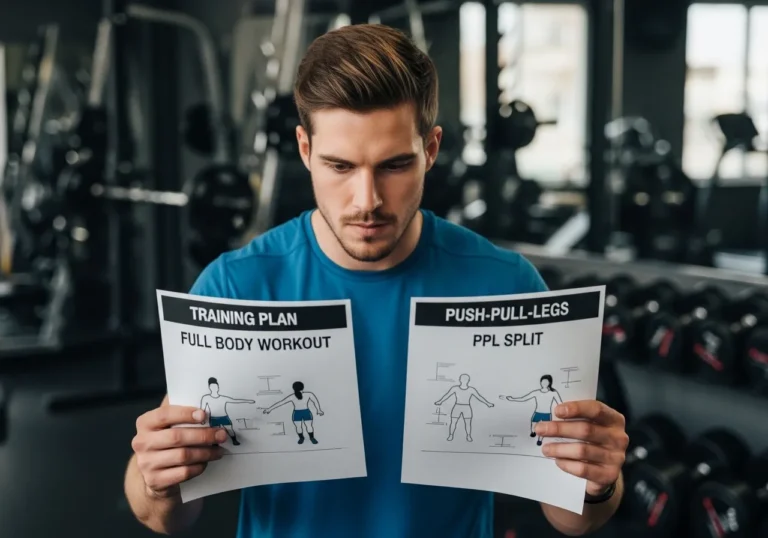
The 3-Day Full-Body Over-40 Program
For men over 40 who can commit three days per week to training — the minimum frequency for meaningful strength and fitness development — the full-body program trains every major movement pattern in each session at reduced volume per session, relying on the twice-weekly frequency for each muscle group to drive adaptation. Monday: trap bar deadlift (3×6), push-up progression (3×max), dumbbell row (3×10 per side), Pallof press (3×10 per side), hip flexor and thoracic mobility superset. Wednesday: goblet squat (3×10), overhead dumbbell press (3×10), farmer’s carry (3×30m per side), rowing HIIT or rucking (20–30 minutes), core stability work. Friday: trap bar deadlift variation or Romanian deadlift (3×8), push-up progression (3×max), dumbbell row (3×12 per side), Turkish get-up (2×3 per side), hip flexor and thoracic mobility superset. This program trains each major movement pattern approximately twice weekly — the frequency that research identifies as optimal for muscle development and strength gains — while allowing 48–72 hours between sessions targeting the same muscles. The mobility superset on Monday and Friday addresses the hip and thoracic restrictions that accumulate across the week’s desk time, while the Wednesday session’s cardiovascular component maintains the aerobic fitness that health and athletic performance require.
The 4-Day Upper-Lower Split for More Advanced Over-40 Athletes
For men over 40 with greater training availability and experience, the 4-day upper-lower split allows higher volume per session and more focused training of each body region. Monday (lower body): trap bar deadlift (4×5), goblet squat (3×8), Romanian deadlift (3×10), hip flexor and thoracic mobility superset, farmer’s carry (3×30m). Tuesday (upper body): dumbbell row (4×10 per side), push-up progression (4×max), overhead press (3×10), Pallof press (3×12 per side), Turkish get-up (2×3 per side). Thursday (lower body + cardio): goblet squat or barbell squat (4×8), single-leg Romanian deadlift (3×10 per side), hip mobility sequence, rowing HIIT (20 minutes). Friday (upper body + mobility): incline dumbbell press or ring push-up (3×max), cable row or TRX row (3×12), face pull (3×15), farmer’s carry (3×30m per side), full thoracic and hip mobility session. This split allows Monday’s lower body session to be followed by 72+ hours before the next lower body session on Thursday — the recovery window that men over 40 require for the heavier compound movements that the lower body sessions feature. From British Journal of Sports Medicine masters athlete training research, men over 40 who train 4 days per week with appropriate recovery between sessions demonstrate superior strength and body composition outcomes compared to either 3-day or 5-day programs — confirming the 4-day split as the optimal training frequency for the recovery-sensitive physiology of middle-aged male athletes.
Nutrition Priorities for Men Over 40 Training for Strength and Health
Training over 40 requires nutritional adjustments that support both the reduced anabolic environment and the body composition goals that middle-aged male physiology demands. The priority nutritional principles: protein intake of 1.8–2.4g per kg of body weight (higher than the general adult recommendation, reflecting the anabolic resistance that aging muscle exhibits and the need for greater amino acid stimulus to achieve equivalent muscle protein synthesis rates); caloric management for body composition — men over 40 who train seriously rarely need to eat more to gain muscle; the testosterone-supported rapid muscle gain of youth is replaced by the slower, more precise body recomposition that adequate protein and progressive training produce; anti-inflammatory dietary pattern — the chronic low-grade inflammation that aging and training both produce is modulated by the dietary polyphenols, omega-3 fatty acids, and antioxidants that a vegetable-rich, fatty fish-including dietary pattern provides; and creatine supplementation (3–5g daily) — the age-related decline in muscle creatine stores makes supplementation more impactful for men over 40 than for younger athletes, with research showing greater strength and lean mass benefits from creatine supplementation in older adults than in young adults. The nutritional approach that best supports over-40 training is not dramatically different from general fitness nutrition — it is the consistent application of adequate protein, appropriate calories, and high dietary quality that any well-nourished athlete maintains.
Managing Common Over-40 Injuries and Training Through Them
The injuries that most commonly interrupt training for men over 40 — rotator cuff issues, lower back pain, knee osteoarthritis, and elbow tendinopathy — require specific training modifications rather than complete rest. The training-through-injury principle: unless a medical professional has advised against exercise (which is rare for all but the most acute injuries), maintaining training around the injury through exercise selection modifications maintains the cardiovascular fitness, muscle mass, and psychological benefits of training while allowing the injured area to heal. Lower back pain management: replace conventional deadlifts with trap bar deadlifts or cable pull-throughs (reduced spinal loading); reduce squat depth to the pain-free range while maintaining the movement; add thoracic mobility and hip flexibility work that reduces the compensatory lumbar loading that restriction elsewhere in the kinetic chain produces. Rotator cuff issues: eliminate overhead pressing that provokes symptoms; maintain horizontal pressing (push-ups and dumbbell chest press) and pulling (rows); add rotator cuff strengthening (external rotation with band) that addresses the underlying weakness. Knee osteoarthritis: replace squats with Bulgarian split squats or step-ups (reduced knee compressive forces); maintain swimming or cycling for cardiovascular training; consider the evidence-supported benefit of glucosamine and chondroitin supplementation for cartilage health. The general principle for all over-40 injuries: seek appropriate medical assessment, implement the exercise modifications that allow training to continue, and view the modification period as an opportunity to address underlying dysfunction rather than merely as a limitation to endure.
Frequently Asked Questions About Training for Men Over 40
Can men over 40 still build significant muscle? Yes — while the rate of muscle development is slower than in youth due to reduced testosterone and growth hormone, meaningful muscle hypertrophy continues to be achievable at any age with progressive resistance training and adequate protein. Men in their 50s and 60s consistently demonstrate muscle development from training programs that would have been considered too conservative for younger athletes — the rate is lower but the capacity is real. How heavy should men over 40 train? Heavy enough to challenge the muscle — 75–85% of maximum for compound movements. The myth that older adults should use only light weights is contradicted by research showing that heavy compound training produces superior outcomes for both muscle development and bone density compared to lighter training, provided adequate warm-up and technique are prioritized. How important is flexibility for men over 40? Very important — the hip flexor shortening, thoracic stiffness, and hamstring restriction that accumulate through middle age directly impair training technique and increase injury risk. The mobility work in this program should be treated as equal in priority to the strength and cardiovascular training. Should I see a doctor before starting this program? If you have been sedentary for more than a year, have a cardiovascular risk history, or have joint or musculoskeletal conditions, a pre-exercise medical screening is appropriate. For men without specific health concerns, beginning with the bodyweight and lighter loaded versions of these exercises and progressing gradually is safe without requiring medical clearance. How does this program change as I approach 50 and 60? The principles remain constant; the implementation adjustments continue — recovery windows extend further, the mobility work becomes more critical, and the exercise selection may shift toward lower-impact variants. The fundamental commitment to progressive resistance training, cardiovascular fitness, and mobility work remains the most evidence-based approach to healthy, high-performance aging at any decade.
Building a Sustainable Long-Term Training Identity After 40
The most important single factor in the health and fitness outcomes of men over 40 is not the specific program they follow but whether they maintain consistent training across the decades of life that follow. The athlete who trains consistently for 20 years — even with imperfect programming — achieves outcomes that the athlete with a perfect program applied inconsistently for 2-year periods can never match. Building the sustainable training identity that sustains consistency through career demands, family responsibilities, health challenges, and the inevitable life disruptions that four decades of adult life produces requires the systems, habits, and values integration that this article has touched on throughout. The long-term athletic identity: exercise is not something you do — it is something you are. The man whose identity includes “I am someone who trains” does not decide each week whether training will happen; it happens because it is part of who he is. Building this identity requires the consistent training that this program provides, the small victories of progressive strength development that reinforce the identity over time, and the community and social connection that training with others — a partner, a group, or a team — provides. Men over 40 who train consistently for the next 20 years will be physically capable in their 60s in ways that their sedentary peers cannot imagine — able to hike mountains, play with grandchildren at full energy, and maintain the functional independence that physical capability provides. Every training session in the current decade is an investment in the physical life that the next decade inherits. Begin the program, follow the principles, and train intelligently for the decades of high-quality physical life that consistent, age-appropriate exercise enables.
Social and Community Dimensions of Training After 40
Training alongside others — whether a training partner, a group fitness class, a masters sports team, or an online community — provides accountability, motivation, and the social connection that sustains exercise habits through the decades when career and family demands create the most friction for individual training. Men over 40 who train with partners or in communities consistently demonstrate higher training frequency, greater session quality, and longer-term adherence than solo trainers — the social commitment that shared training creates is one of the most powerful behavioral tools for sustained exercise. The masters athletics community deserves special mention: masters competitions in weightlifting, powerlifting, running, swimming, and many other sports provide the performance goals and competitive environment that sustain serious training motivation beyond midlife. Knowing that a masters powerlifting competition is scheduled in 16 weeks produces a training focus and consistency that general fitness goals rarely sustain. The camaraderie of competing alongside other men in the same age group — who share the training challenges and life context of middle age — provides community that younger competitive environments do not offer. Seek the training community that fits your sport preferences and schedule, and allow the social dimensions of training to amplify the physical benefits that the program provides.