The Best Carbs to Eat Before a Workout
⚠️ Disclaimer: The information in this article is for general educational purposes only and does not constitute medical, nutritional, or professional fitness advice. Individual results may vary. Always consult a qualified healthcare professional or certified fitness trainer before starting any new exercise program, changing your diet, or making decisions about injury treatment or recovery. If you experience pain, discomfort, or any unusual symptoms during exercise, stop immediately and seek professional guidance.

Why Carbohydrates Are the Superior Pre-Workout Fuel Source
Walk through the nutrition section of any gym and you’ll encounter an overwhelming number of products claiming to be the optimal pre-workout fuel — protein bars, amino acid supplements, ketone drinks, and fat bombs marketed to fat-adapted athletes. Despite this complexity, the exercise physiology research has a clear and consistent answer to the question of what fuels high-intensity exercise most effectively: carbohydrates. Specifically, muscle glycogen — the form in which carbohydrates are stored in muscle tissue — is the primary fuel source for any exercise intensity above approximately 65% of maximum effort, which encompasses most of what people actually do in the gym.
I trained fasted for six months thinking it was helping with fat loss, then compared performance metrics side by side with carb-fueled sessions — the difference was significant enough to change my approach completely.
My own experience with pre-workout nutrition took years to optimize. Early in my training I made the classic mistake of avoiding carbs before sessions based on the prevailing low-carb fitness ideology, then wondering why the final sets of every session felt impossibly hard compared to the first. The “hitting a wall” phenomenon I experienced at the end of heavy training sessions was textbook glycogen depletion — a completely preventable performance limitation that better pre-workout carbohydrate intake eliminated. Once I started consistently fueling with the right carbs at the right times, the quality of late-session performance transformed, progressive overload became easier to achieve consistently, and recovery between sessions improved noticeably.
The Biochemistry of Glycogen and Exercise Performance
Muscles store glucose in the form of glycogen — a branched polymer of glucose molecules that can be rapidly broken down to fuel muscular contraction. During high-intensity exercise, the muscle relies almost exclusively on glycolysis — the breakdown of glycogen — to produce the ATP that powers contraction. This is because glycolysis can produce ATP far faster than fat oxidation, which requires oxygen delivery and a longer metabolic process that cannot keep pace with the energy demands of maximal or near-maximal effort.
Research published in the Journal of Applied Physiology has documented that beginning high-intensity exercise in a glycogen-depleted state reduces time to exhaustion, reduces maximum power output, impairs the quality of repetitions at a given weight, and reduces total training volume achievable in a session compared to beginning the same session with full glycogen stores. These are not marginal effects — glycogen status has a substantial, measurable impact on the training quality that drives adaptation.
Carbs vs. Fat and Protein as Pre-Workout Fuel
Dietary fat can fuel exercise through fat oxidation — but only at low to moderate intensities. As exercise intensity increases above approximately 65% of VO2 max (which is moderate effort — most people hit this during a brisk run or moderately heavy lifting sets), the contribution of fat to energy production decreases and glycolysis increasingly dominates. At maximal effort sprints, heavy compound lifting, and HIIT intervals, fat oxidation contributes essentially no energy — glycolysis is the exclusive pathway. Pre-workout fat consumption thus provides no direct performance benefit for moderate-to-high intensity training and, by slowing gastric emptying, can actually impair the availability of carbohydrates consumed in the same pre-workout meal.
Protein provides minimal direct fuel for exercise — its contribution to ATP production during training is negligible. Pre-workout protein is valuable for different reasons: it reduces muscle protein breakdown during the session and contributes to the anabolic signaling environment. But as a performance-enhancing pre-workout fuel, protein does not substitute for carbohydrates. The optimal pre-workout nutritional strategy combines carbohydrates as the primary fuel with moderate protein, and limits fat in the immediate pre-workout meal to avoid slowing digestion.
The Role of Blood Glucose vs. Muscle Glycogen
An important distinction that affects pre-workout carbohydrate strategy is the difference between blood glucose (circulating carbohydrate available immediately) and muscle glycogen (stored carbohydrate built up from days of adequate carbohydrate intake). For sessions longer than approximately 45–60 minutes, the primary determinant of late-session performance is muscle glycogen status — which reflects the cumulative carbohydrate intake of the previous 24–48 hours, not just the pre-workout meal. A single pre-workout meal cannot rescue glycogen that was depleted by inadequate carbohydrate intake over the preceding days.
This is why overall dietary carbohydrate sufficiency is foundational, and the pre-workout meal is the finishing touch rather than the complete solution. Athletes with chronically low dietary carbohydrate intake — even if they have a perfect pre-workout meal — are training on partially depleted glycogen stores that limit performance in ways no single meal can compensate for. The research of Gatorade Sports Science Institute and others shows that carbohydrate loading strategies for endurance events must begin 24–48 hours before competition for this reason — the glycogen-filling process takes time and requires sustained dietary carbohydrate provision.
The Individual Factor: Carbohydrate Tolerance and Digestion
Individual carbohydrate tolerance varies significantly and affects both the optimal type and timing of pre-workout carbs. Some athletes tolerate solid food within 30–60 minutes of training; others experience gastrointestinal distress from anything but liquid nutrition immediately pre-workout. Sensitive digestive systems benefit from lower-fiber, lower-fat carbohydrate sources close to training (white rice, white bread, sports drinks) that empty quickly from the stomach. Athletes who can eat 2–3 hours before training have broader options including higher-fiber whole grain sources. Experimenting with different sources and timing within the framework provided in this article is necessary to identify the personal optimal strategy.
Understanding the Glycemic Index in the Pre-Workout Context
The glycemic index (GI) — a measure of how quickly a carbohydrate food raises blood glucose — is relevant to pre-workout nutrition but is frequently misapplied. The common nutrition advice to always prefer low-GI foods applies to overall dietary patterns but should be modified in the pre-workout context, where the timing relationship between carbohydrate consumption and exercise determines which GI range is optimal. Low-GI foods (GI below 55) — oats, sweet potatoes, most legumes — release glucose slowly over 2–4 hours, making them excellent choices for the 2–3 hour pre-training window but potentially suboptimal for the 30–60 minute window where faster carbohydrate availability is needed. High-GI foods (GI above 70) — white bread, sports drinks, ripe bananas, white rice — release glucose rapidly within 30–60 minutes, making them ideal for the immediate pre-training window but less appropriate as a 3-hour pre-training choice where the rapid glucose spike and subsequent insulin response may leave blood glucose declining just as training begins.
The practical application is to match GI range to timing: moderate-to-low GI for 2–3 hours pre-training, moderate-to-high GI for 30–90 minutes pre-training. This dynamic GI approach — which considers timing as the primary variable rather than treating all pre-workout carbohydrates identically — produces better blood glucose management and fueling outcomes than either always-low-GI or always-high-GI approaches. Research on glycemic index and exercise performance, reviewed in comprehensive sports nutrition texts, supports this timing-based approach as the most effective framework for carbohydrate selection relative to training.
One nuance worth noting: the glycemic index of individual foods changes substantially when consumed in mixed meals. Adding fat, protein, or fiber to a high-GI food reduces its effective glycemic response significantly. A banana alone has a relatively high GI; a banana eaten with Greek yogurt (protein and fat) has a meaningfully lower effective glycemic response. This food combination effect is why real-world pre-workout meals often perform better than GI tables of individual foods would suggest — the combinations naturally moderate glucose delivery in useful ways.
Glycemic load (GL) — which accounts for both GI and portion size — is a more practically useful metric than GI alone for pre-workout planning. A food can have a high GI but a low glycemic load if the typical serving size is small (watermelon is an example: high GI, but a normal serving contains relatively little carbohydrate). Pre-workout meal planning using glycemic load allows more accurate prediction of the actual blood glucose response to the planned meal than GI alone provides.
The Best Carbs to Eat Before a Workout: Ranked and Explained
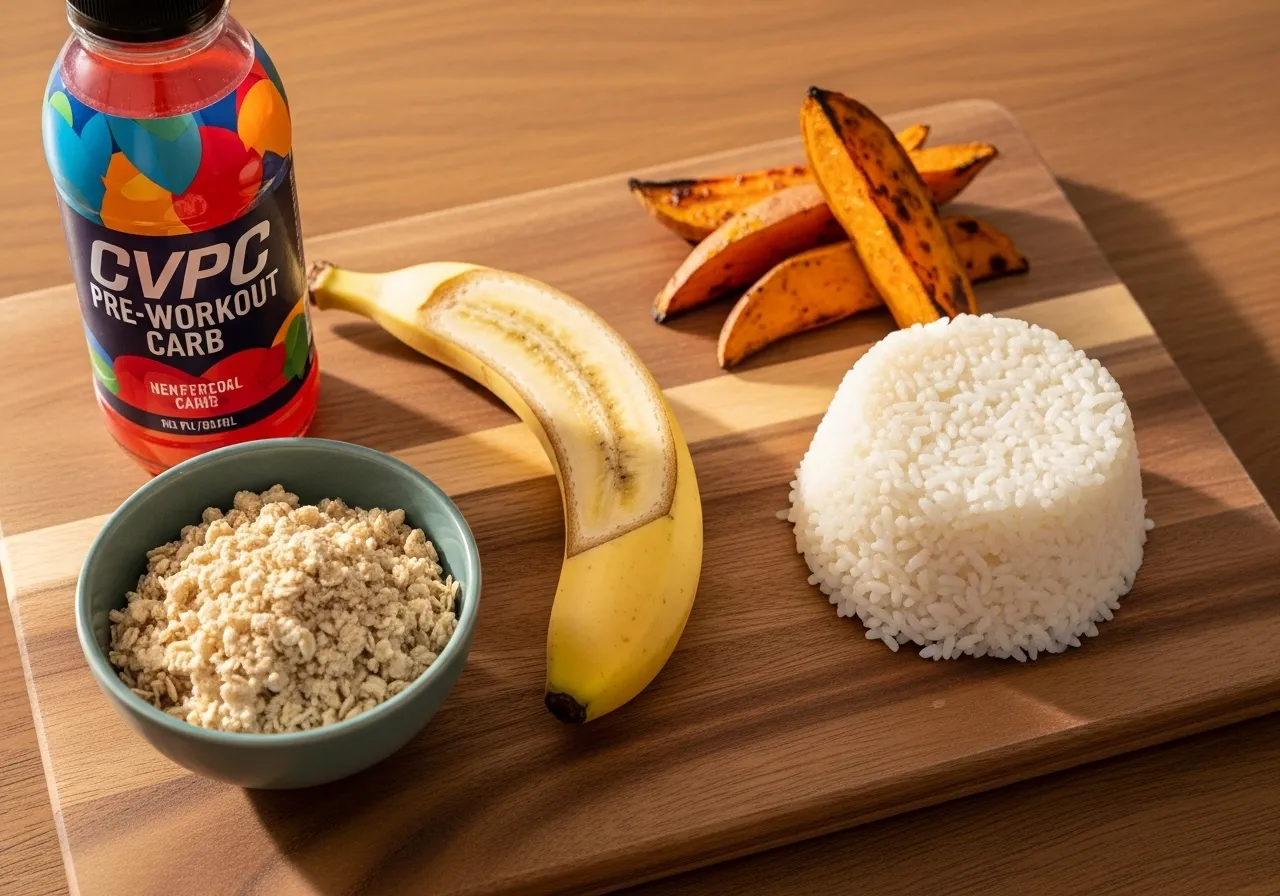
Not all carbohydrate sources are equally effective as pre-workout fuel. The key variables are glycemic index (the speed at which blood glucose rises after consumption), fiber content (which slows digestion and can cause gastrointestinal distress during intense training), fat content (which slows gastric emptying and delays carbohydrate availability), and palatability under pre-training conditions when appetite may be reduced. The following ranking considers all of these factors to identify the most effective pre-workout carbohydrate choices for different timing windows and athlete types.
White rice became my standard pre-workout carb after testing several options — the lack of digestive disturbance during high-intensity training made it the clear winner for me.
2–3 Hours Before Training: The Best Choices
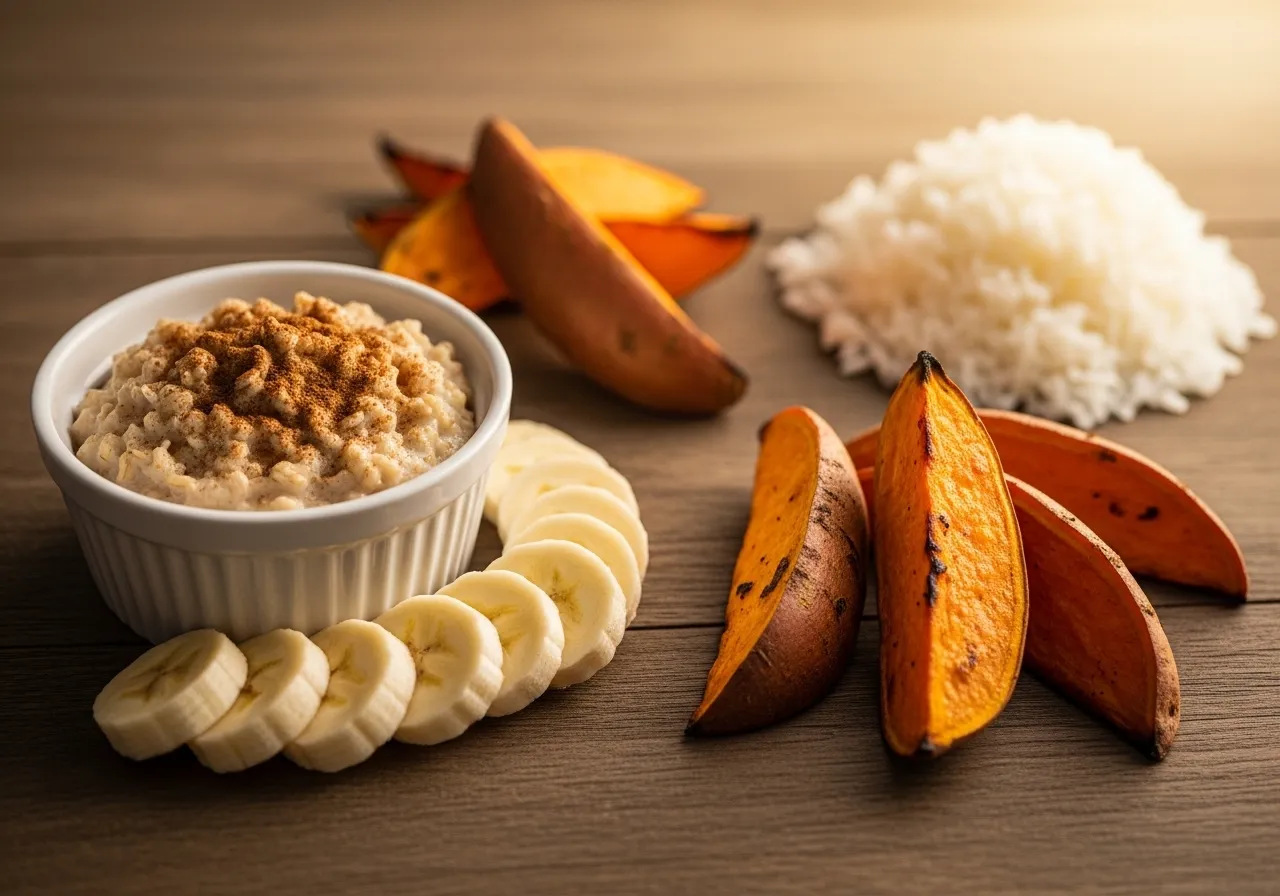
Oatmeal ranks among the best pre-workout carbohydrate sources for the 2–3 hour window. Its moderate glycemic index ensures steady, sustained blood glucose rather than a rapid spike and crash. Its beta-glucan fiber slows digestion slightly — not a problem 2–3 hours pre-training, and beneficial for sustained energy availability. A cup of dry oats provides approximately 54 grams of carbohydrates alongside 10 grams of protein and meaningful amounts of magnesium and B vitamins. Adding a banana or a tablespoon of honey increases the carbohydrate content for athletes with higher fuel needs. Oatmeal’s high palatability in the morning makes it particularly practical as a pre-training breakfast for morning exercisers.
Sweet potatoes provide a dense, nutrient-rich carbohydrate source with a moderate glycemic index and a favorable micronutrient profile. A medium sweet potato contains approximately 25 grams of carbohydrates, significant potassium (important for muscle contraction and hydration), and vitamin A and C. Their mild flavor makes them versatile in pre-workout meal contexts — as a side dish with protein at a pre-workout lunch, or in a pre-training meal bowl. The fiber content is appropriate for the 2–3 hour timing window but makes sweet potatoes suboptimal for 30–60 minute pre-training consumption.
Brown rice is a staple pre-workout carbohydrate for athletes worldwide for good reason: it provides a substantial carbohydrate load (45 grams per cooked cup) at a moderate glycemic index, is highly digestible for most people, is inexpensive, and pairs easily with protein sources for a complete pre-workout meal. The classic pre-workout meal of brown rice, chicken breast, and a vegetable is one of the most evidence-consistent pre-training nutrition strategies available — simple, effective, and scalable to any athlete’s caloric needs.
Whole grain pasta provides a high carbohydrate density (approximately 43 grams per cup cooked) with a relatively low glycemic index due to the dense starch matrix that slows digestion. It is particularly valuable for athletes who need to carbohydrate-load for longer training sessions or competitions. The combination of pasta with a lean tomato-based sauce provides both carbohydrates and the antioxidants from tomatoes that support the recovery environment.
30–90 Minutes Before Training: The Best Choices
Bananas are arguably the most practical pre-workout carbohydrate available. A medium banana provides 25–30 grams of carbohydrates in a convenient, portable package that requires no preparation. The carbohydrate composition — approximately 50% fructose, 50% glucose — provides both immediate and slightly sustained blood glucose availability. Bananas are low in fiber and fat relative to their carbohydrate content, meaning they empty quickly from the stomach and are available as fuel within 30–60 minutes of consumption. Their potassium content supports muscle contraction. Their ease of consumption makes them the go-to pre-workout snack for athletes training 45–90 minutes after eating.
White rice and white bread — often maligned in the general nutrition context as “refined carbohydrates” — are actually advantageous in the 30–60 minute pre-workout window specifically because of their high glycemic index and rapid gastric emptying. When training begins soon after eating, you need carbohydrates in circulation quickly, and the fiber and nutrient density of whole grain alternatives actually become liabilities in this context by slowing digestion. Japanese athletes and serious powerlifters have long used white rice as a pre-training staple for exactly this reason. Two rice cakes with a small amount of honey or jam is a classic 30-minute pre-workout carbohydrate snack that provides 25–35 grams of fast carbohydrates with minimal digestive burden.
Sports drinks and gels are purpose-designed for rapid carbohydrate delivery and are appropriate for athletes who cannot tolerate solid food before training or who train within 30 minutes of eating. They typically provide 20–30 grams of simple carbohydrates per serving in a form that is absorbed within 15–20 minutes. Their limitation is that they provide carbohydrates without protein or meaningful micronutrients — appropriate as a supplementary fast fuel source but not as a replacement for a complete pre-training meal when timing allows.
Pre-Workout Carbs to Use Cautiously
High-fiber legumes (chickpeas, lentils, beans) are excellent foods for overall dietary carbohydrate intake but are poorly suited as immediate pre-workout fuel due to their high fiber content and the fermentation-related gas production they cause in many people. Consuming them in a meal 3+ hours pre-training is fine; eating them 1–2 hours before heavy training is a reliable way to experience digestive distress during the session.
Fruits with high fructose content — apples, pears, mangoes — provide valuable carbohydrates but metabolize primarily through the liver rather than directly to muscle glycogen. They are less effective than glucose-dominant carbohydrates as immediate pre-workout fuel, though they contribute to overall glycogen stores when consumed regularly as part of a carbohydrate-sufficient diet. The exception is bananas, whose roughly equal fructose-glucose split provides both direct and liver-mediated glucose availability.
Carbohydrate Sources for Specific Dietary Patterns
The best pre-workout carbohydrate sources look slightly different for athletes following specific dietary patterns. For gluten-free athletes, excellent options include white or brown rice, corn tortillas, rice cakes, potatoes, sweet potatoes, oats (certified gluten-free), bananas, and most fruits. The gluten-free athlete has no shortage of high-quality pre-workout carbohydrate options — the main consideration is avoiding cross-contamination in oats and grain-based products if celiac disease or significant gluten sensitivity is present.
For plant-based (vegan) athletes, pre-workout carbohydrate choices are naturally abundant since most carbohydrate-dense foods are plant-derived. The specific consideration for vegan athletes is ensuring adequate overall energy intake — vegan diets can be lower in caloric density than omnivorous diets, and pre-workout carbohydrate needs must be met within a dietary framework that also provides sufficient protein from plant sources. Higher-volume carbohydrate choices (oats, potatoes, rice, fruits) work well for vegan athletes provided the overall diet meets caloric and protein targets.
For athletes who prefer lower-carbohydrate approaches during fat loss phases, cycling carbohydrate intake — higher on training days, lower on rest days — is a practical compromise that provides pre-workout carbohydrate fuel on training days while managing overall caloric intake through reduced carbohydrates on non-training days. This approach is not as extreme as maintaining low carbohydrate intake on all days and produces better training performance than uniform low-carbohydrate intake, while still creating a weekly caloric structure that supports fat loss. The critical point is to not reduce training-day carbohydrates as the primary lever for creating caloric deficit — training sessions require their fuel, and the deficit is better created through rest-day caloric management.
For athletes with irritable bowel syndrome (IBS) or other gastrointestinal sensitivities, pre-workout carbohydrate selection requires extra attention to the FODMAP content of foods — a category of fermentable carbohydrates that cause gastrointestinal symptoms in sensitive individuals. Low-FODMAP pre-workout carbohydrate choices include white rice, white potato, unripe bananas, oats (in moderate portions), and most sports gels and drinks. High-FODMAP options to avoid include dried fruit, apple juice, honey (high fructose), wheat-based foods, and many processed snack bars. A registered dietitian with sports nutrition training can provide individualized FODMAP-aware pre-workout nutrition guidance for athletes with significant gastrointestinal sensitivities.
Timing Your Pre-Workout Carbs: How Long Before You Train
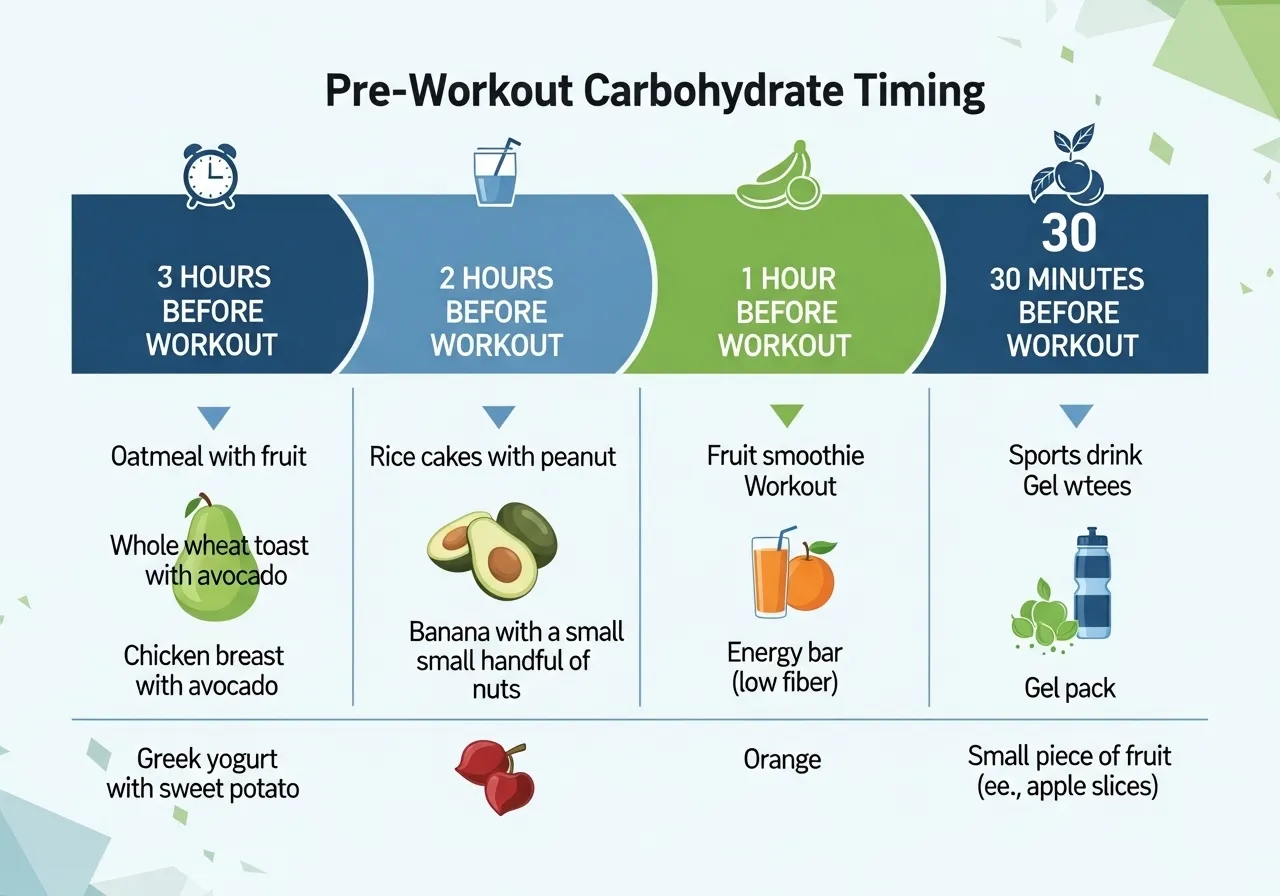
The timing of pre-workout carbohydrate consumption is as important as the source. Consuming the right carbohydrates at the wrong time — too soon or too late relative to training — reduces their effectiveness and can in some cases actively impair performance. Understanding the physiological timeline of carbohydrate digestion, absorption, and glycogen synthesis allows you to optimize timing for your training schedule.
Getting the timing right took some experimentation — eating too close made me feel heavy, too early left me flat; I landed on 90 minutes and have stayed there for over a year.
The 3-Hour Window: A Full Pre-Training Meal
Three to four hours before training is the ideal window for a full pre-workout meal containing carbohydrates, protein, and modest fat. At this interval, there is sufficient time for complete gastric emptying, full intestinal absorption of nutrients, blood glucose normalization after any post-meal insulin response, and partial replenishment of muscle glycogen from the carbohydrate load. A complete meal at this timing allows the highest carbohydrate quantity — 60–100 grams for larger athletes or those preparing for long, high-intensity sessions — without risk of gastrointestinal distress during training.
The recommended composition: 1–2 grams of carbohydrate per kilogram of bodyweight from moderate glycemic sources (oats, rice, sweet potato, pasta), 20–40 grams of lean protein, and minimal fat (under 10–15 grams) to avoid slowing gastric emptying. A 200-pound athlete would target 90–180 grams of carbohydrates from this meal, depending on training duration and intensity.
The 1–2 Hour Window: A Moderate Pre-Training Snack
When a full meal 3 hours pre-training isn’t feasible — common for early morning exercisers, lunch-break gym-goers, or those with busy schedules — a moderate snack in the 1–2 hour window provides meaningful fuel without digestive burden. Target 30–60 grams of moderate-to-high glycemic carbohydrates with minimal fat and 10–20 grams of protein. Examples: a banana and a Greek yogurt, oatmeal made with milk and fruit, 2–3 rice cakes with peanut butter and honey (modest fat but acceptable at this window), or a sports nutrition bar with a favorable carbohydrate-to-fat ratio.
At this timing, choose carbohydrate sources with lower to moderate fiber content — the 1–2 hour window doesn’t allow enough time for complete digestion of high-fiber sources without some residual digestive content during training. White or lightly processed whole grain sources work well here.
The 30-Minute Window: Fast Fuel Only
Within 30 minutes of training, the gastrointestinal system doesn’t have time to process substantial food without diverting blood flow from working muscles during exercise. At this window, limit carbohydrate intake to 15–30 grams of fast-digesting, low-fiber, low-fat sources: a banana, 2 rice cakes with honey, half a sports drink, or an energy gel. These provide a blood glucose boost that helps prevent the rapid decline in blood glucose that some athletes experience in the first 20–30 minutes of intense exercise when starting in a fasted state.
The 30-minute pre-workout snack is most important for athletes training first thing in the morning without time for a full meal, those who have had a long gap (4+ hours) since their last meal, or those preparing for particularly long or intense sessions. For well-nourished athletes with adequate glycogen from the previous day’s eating, the 30-minute snack may not meaningfully affect performance and can be skipped if it causes gastrointestinal discomfort.
The Fasted Training Question
Fasted training — exercising without carbohydrate intake before the session — has become popular partly from intermittent fasting trends and partly from research suggesting enhanced fat oxidation during fasted exercise. The fat oxidation benefit is real: fasted training does increase the proportion of energy derived from fat during low-intensity exercise. However, this metabolic shift comes at a cost for moderate-to-high intensity training, where glycogen is the required fuel regardless of fasting status.
Research published in the British Journal of Nutrition comparing fed and fasted resistance training found that fasted training produced significantly lower total training volume (fewer reps, fewer sets completed at target weight) compared to fed training over a 10-week period, despite equivalent effort. The practical implication is that fasted training is appropriate for low-intensity cardio where fat oxidation is the performance-relevant fuel, but it represents a meaningful performance disadvantage for any training intended to produce strength or hypertrophy gains — where glycogen availability limits the training volume that drives adaptation.
Post-Workout Carbs: Completing the Nutritional Picture
Carbohydrate timing does not end with the pre-workout window. Post-workout carbohydrate consumption initiates glycogen resynthesis — the process of replenishing the glycogen burned during training. Research on post-exercise glycogen resynthesis shows that consuming carbohydrates within 30–60 minutes after training, combined with protein, maximizes the rate of glycogen resynthesis and supports muscle protein synthesis simultaneously. The quantity depends on training duration and intensity: 30–60 grams of carbohydrates with 20–40 grams of protein is the evidence-based post-workout nutrition target for most training sessions of 45–90 minutes. This creates the complete carbohydrate timing picture: fuel before, replenish after, maintain throughout the day with a carbohydrate-sufficient overall diet.
Hydration and Carbohydrates: An Inseparable Pre-Workout Pair
Carbohydrate and fluid intake before exercise are functionally linked in ways that affect both nutrient delivery and performance. Glycogen, the stored form of carbohydrates in muscle, is stored with approximately 3 grams of water per gram of glycogen — meaning that carbohydrate loading is simultaneously a hydration loading process. Athletes who begin exercise well-hydrated and with full glycogen stores are doubly prepared compared to those who are glycogen-loaded but dehydrated, or hydrated but glycogen-depleted.
The practical pre-workout hydration protocol: drink 16–20 oz (500–600 mL) of water or a low-concentration electrolyte drink in the 2 hours before training, and another 8 oz in the 15–20 minutes immediately pre-workout. Urine color is a reliable hydration indicator — pale yellow (not clear, which can indicate overhydration) is the target. The carbohydrates in the pre-workout meal are best absorbed when accompanied by adequate fluid, and the electrolytes (particularly sodium) in the meal or drink help retain the ingested fluid rather than excreting it rapidly through urination.
For morning exercisers specifically, rehydration after the overnight fast is as important as carbohydrate intake. An 8-hour sleep period produces approximately 500–700 mL of fluid loss through respiration and perspiration. Beginning training in this mildly dehydrated state reduces performance independently of glycogen status — research shows that just 2% body weight loss from fluid deficit produces measurable reductions in strength, power, and endurance. Drinking 16 oz of water upon waking, before eating the pre-workout snack, addresses overnight dehydration and enables better carbohydrate absorption in the brief window before early morning training.
Sports drinks — which provide both carbohydrates (typically 14–20 grams per 8 oz) and electrolytes (sodium, potassium) — simultaneously address carbohydrate and hydration needs in the 30–60 minute pre-workout window. For athletes who find solid food difficult to consume shortly before training, a 12–16 oz sports drink provides 20–30 grams of fast carbohydrates alongside fluid and electrolytes in a format that is typically well-tolerated even close to training. The carbohydrate concentration in sports drinks (typically 6–8%) is specifically formulated to optimize gastric emptying rate and intestinal absorption — more concentrated solutions empty more slowly and can cause gastrointestinal distress during exercise.
Pre-Workout Carb Strategies for Different Training Types and Goals
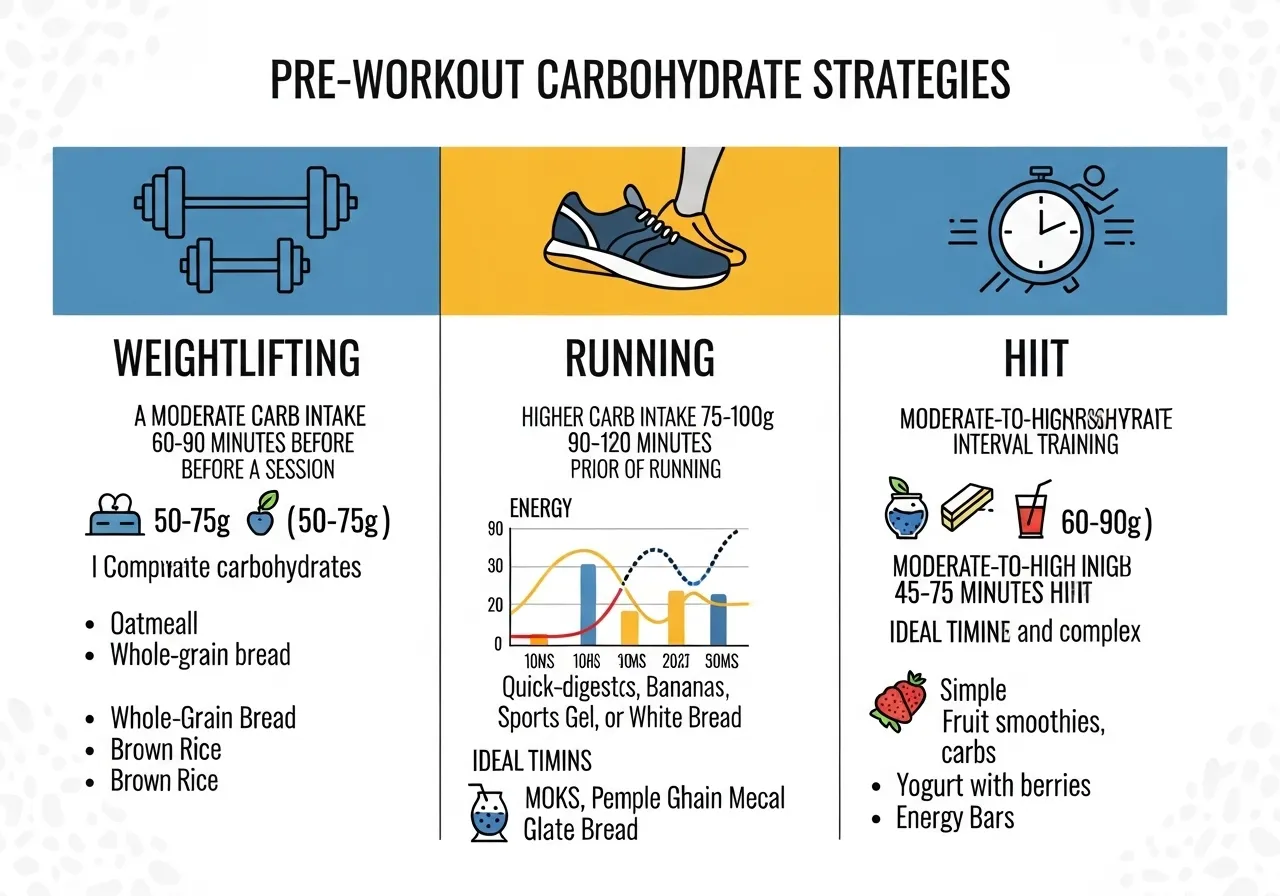
Pre-workout carbohydrate needs are not uniform across training types. A marathon training run, a powerlifting session, a HIIT class, and a recreational yoga session have dramatically different fuel requirements. Calibrating pre-workout carbohydrate intake to the specific demands of the upcoming session produces better performance outcomes than applying a single strategy to all training types.
Carb-loading before a long endurance session felt like overeating until I saw the performance difference in the final third of the workout — the fuel was doing exactly what it was supposed to.
Heavy Resistance Training and Strength Work
Heavy barbell training — compound movements like squats, deadlifts, and presses in the 1–8 rep range — has high glycolytic demand per set due to the explosive, near-maximal effort of each repetition, even though the total duration of muscular effort per session is lower than endurance work. For powerlifters and strength-focused athletes, pre-workout carbohydrate intake is critical for maintaining power output across multiple heavy sets. Research on carbohydrate supplementation during resistance training, reviewed in the Journal of the International Society of Sports Nutrition, shows that adequate pre-workout carbohydrate intake maintains power output in later working sets compared to fasted conditions — which is the difference between progressive overload and training stagnation over time.
Target: 1–1.5 grams of carbohydrate per kilogram of bodyweight in the 2–3 hours before a heavy strength session, from moderate glycemic sources. A 180-pound (82 kg) lifter targets 82–123 grams of carbohydrates — approximately 1–1.5 cups of cooked rice, or 1 cup of oats with a banana and a glass of juice.
Hypertrophy-Focused Training (Moderate Weight, Higher Volume)
Hypertrophy training — multiple sets of 8–15 reps with moderate weight and relatively short rest periods — creates higher total glycolytic demand than pure strength work because the total time under tension and number of sets is greater. This training style benefits most from adequate pre-workout carbohydrates and from intra-workout carbohydrate consumption during sessions longer than 60–75 minutes. For sessions under 60 minutes, a pre-workout meal 2–3 hours prior is sufficient. For longer hypertrophy sessions of 75–90 minutes, a small carbohydrate intake during the session (20–30 grams of fast carbs — a sports drink, banana, or energy gel) can maintain performance in the final portion of the workout when glycogen is beginning to deplete.
High-Intensity Interval Training (HIIT)
HIIT places the highest acute glycolytic demand of any training format — the maximal or near-maximal effort intervals rely entirely on glycolysis for ATP production, making glycogen status the primary performance determinant. Pre-HIIT carbohydrate intake should prioritize speed of digestion: within 1–2 hours before a HIIT session, favor higher glycemic sources that are available quickly. Banana and white rice are ideal. Low-fiber, low-fat carbohydrates are particularly important before HIIT because the high intensity generates intra-abdominal pressure that exacerbates gastrointestinal distress from incompletely digested food. Many HIIT athletes do best with liquid or semi-liquid carbohydrate sources (sports drink, smoothie with simple fruit) immediately before sessions for this reason.
Endurance Training (Running, Cycling, Swimming)
Long-duration endurance work places unique carbohydrate demands because glycogen depletion is a progressive process over the course of a 60–120+ minute session. For training sessions over 90 minutes, pre-workout carbohydrate loading (60–100+ grams in the 2–3 hours before) combined with intra-workout carbohydrate consumption (30–60 grams per hour after the first hour) is the evidence-based fueling strategy. For sessions under 60 minutes, pre-workout carbohydrates are less critical, and some well-trained endurance athletes can maintain adequate performance at low-to-moderate intensity in a fed-overnight fasted state. Longer and higher-intensity endurance sessions have progressively less tolerance for suboptimal pre-workout carbohydrate preparation.
Fat Loss Goals: Carbs Before Working Out or Not?
The most common question I receive about pre-workout carbohydrates is from people trying to lose fat: should you eat carbs before training if fat loss is the goal? The evidence-based answer is yes — avoiding pre-workout carbohydrates during fat loss phases to “burn more fat” during the session is a false economy. The primary driver of fat loss is total caloric deficit, not the fuel source used during a specific training session. Fasting before training burns more fat during the session, but this doesn’t translate to greater fat loss over time because the body compensates by oxidizing less fat during the rest of the day.
More importantly, training in a fasted or glycogen-depleted state during a fat loss phase compromises training quality, reduces the volume of work achievable in each session, and accelerates muscle protein breakdown — all of which undermine the muscle retention that is critical for maintaining metabolic rate during fat loss. Pre-workout carbohydrates during a fat loss phase should be maintained (though total daily carbohydrate intake is reduced through other meals), and the overall caloric deficit is managed through the rest of the day’s diet rather than through pre-workout fasting.
Intra-Workout Carbohydrate Supplementation for Long Sessions
For training sessions exceeding 75–90 minutes of moderate-to-high intensity work, pre-workout carbohydrate intake alone may be insufficient to prevent meaningful glycogen depletion in the later portions of the session. Intra-workout carbohydrate consumption — consuming carbohydrates during the training session — is an evidence-based strategy for maintaining performance throughout long, demanding workouts.
The research on intra-workout carbohydrate supplementation, extensively reviewed for endurance sports and increasingly studied for resistance training, shows that consuming 30–60 grams of carbohydrates per hour during exercise beyond the first 60 minutes maintains blood glucose, preserves glycogen, and extends the duration at which maximal performance can be maintained. For resistance training sessions specifically, a study published in the Journal of Strength and Conditioning Research found that intra-workout carbohydrate consumption during a 90-minute hypertrophy-focused session preserved more total training volume in the final 30 minutes compared to placebo conditions, suggesting meaningful benefit for long bodybuilding-style workouts.
Practical intra-workout carbohydrate choices for the gym: a sports drink sipped between sets or exercises provides carbohydrates without requiring solid food consumption during training. Energy gels (20–25 grams of fast carbohydrates each) can be consumed between exercises in long sessions. For athletes with iron stomachs, ripe banana halves or a few gummy bears (simple glucose/sucrose) provide inexpensive fast carbohydrates. The intra-workout fueling strategy matters most for the final portions of long sessions — the first 60 minutes of most training sessions can proceed well on pre-workout carbohydrates alone; it’s the 60–90+ minute range where glycogen conservation from intra-workout supplementation produces performance preservation benefits.
The carbohydrate type in intra-workout supplementation has been studied for endurance contexts more extensively than for resistance training. For endurance events, combining multiple carbohydrate types (glucose + fructose) allows higher intestinal absorption rates than glucose alone because they use different intestinal transport mechanisms. For shorter resistance training sessions where total intra-workout carbohydrate needs are modest (20–45 grams), the distinction between carbohydrate types is less important than it is for multi-hour endurance events requiring 60+ grams per hour.
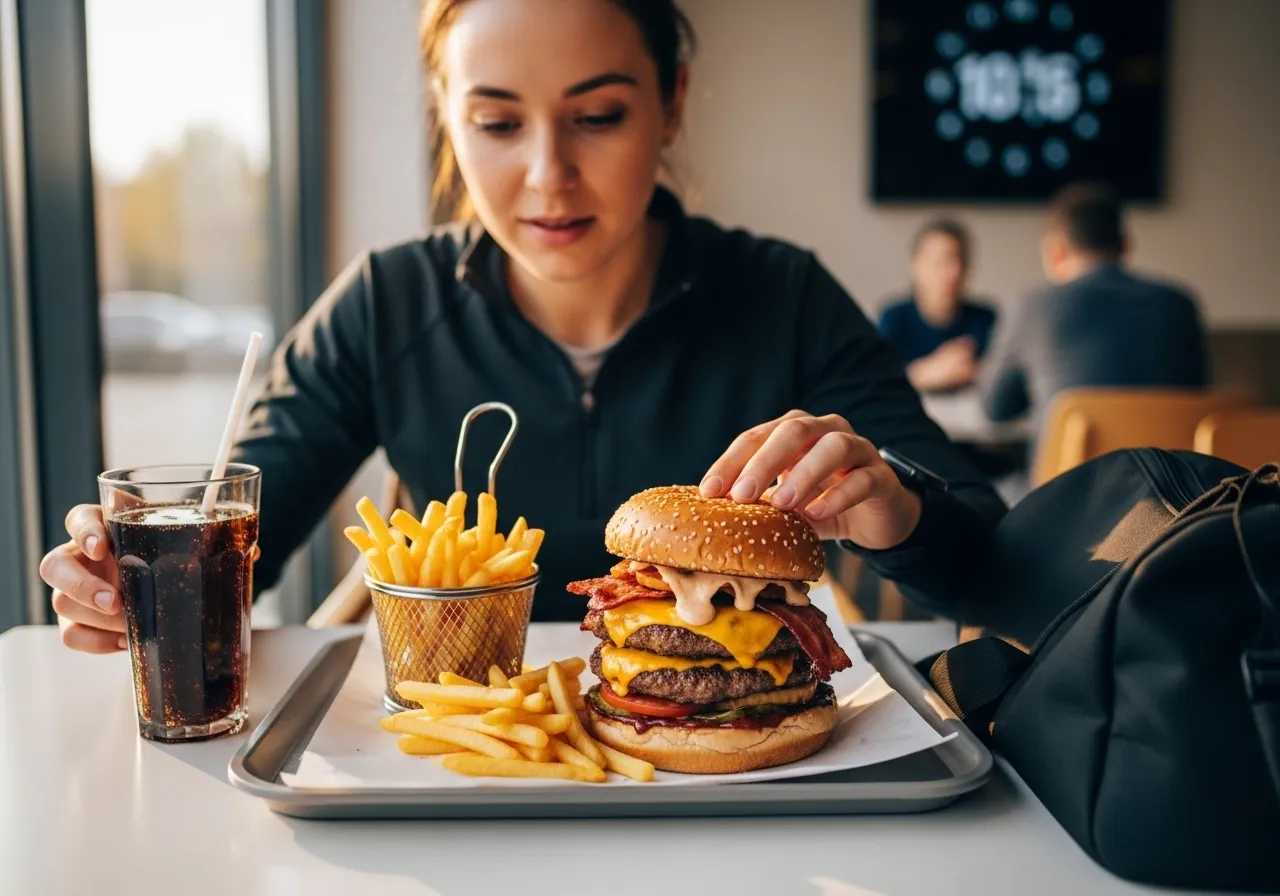
Common Pre-Workout Nutrition Mistakes and How to Fix Them
Even athletes who understand the importance of pre-workout carbohydrates frequently make specific mistakes in their implementation that reduce the effectiveness of their nutrition strategy. The following mistakes are among the most common and consequential — and each has a straightforward correction.
I made the mistake of eating a high-fat meal before training for months, then wondered why I felt sluggish — eliminating fat from the pre-workout window solved the problem immediately.
Mistake 1: Eating Too Much Fat in the Pre-Workout Meal
Dietary fat slows gastric emptying substantially — even modest amounts of fat (15–20 grams) in a pre-workout meal can delay the delivery of carbohydrates to the small intestine for absorption by 30–60 minutes beyond what a low-fat meal would produce. This means that the pre-workout meal eaten 90 minutes before training may still be largely in the stomach when training begins, resulting in both reduced carbohydrate availability for fuel and increased risk of gastrointestinal discomfort from exercising with a partially digested meal. The fix: limit fat in the pre-workout meal to under 10–15 grams, regardless of how far in advance the meal is eaten. Reserve higher-fat foods (avocado, nuts, fatty fish, full-fat dairy) for meals that are not within 3 hours of training.
Mistake 2: Relying on the Pre-Workout Meal Alone When Daily Carbs Are Low
Muscle glycogen is synthesized over hours from dietary carbohydrates — a single pre-workout meal cannot fill glycogen stores that have been partially depleted by insufficient carbohydrate intake across the previous day or two. Athletes who chronically undereat carbohydrates — either through intentional low-carb dietary approaches or through insufficient overall food intake — will train on partially depleted glycogen regardless of how well-designed their pre-workout meal is. The fix: ensure adequate total daily carbohydrate intake throughout the day, not just around training. For most active individuals pursuing strength or body composition goals, 3–5 grams of carbohydrate per kilogram of bodyweight daily is the range that maintains full muscle glycogen stores for consistent high-quality training.
Mistake 3: Choosing High-Fiber Carbs Too Close to Training
Whole grain bread, beans, lentils, broccoli, and other high-fiber foods are excellent dietary choices that should absolutely be part of a healthy overall diet. But consumed within 60–90 minutes of intense training, their high fiber content creates digestive activity during the session — gas, bloating, and in some cases significant gastrointestinal distress that impairs both performance and the training experience. The fix: choose lower-fiber carbohydrate sources (white rice, banana, white bread, sports drink) in the 30–90 minute window before training, and save high-fiber whole foods for meals that are at least 2–3 hours from exercise.
Mistake 4: Skipping Pre-Workout Carbs in the Name of Fat Loss
This is the most consequential and most common mistake among people training for body composition. The logic — “if I don’t eat carbs before training, I’ll burn more fat” — contains a grain of biochemical truth but misses the larger picture. Yes, fasted training increases fat oxidation during the session. No, this does not translate to greater total fat loss over time. And it does translate to reduced training volume, increased muscle breakdown, and compromised progressive overload — all of which undermine the body composition goals the strategy was intended to serve. The fix: maintain pre-workout carbohydrates during fat loss phases, reducing total daily carbohydrate intake through other meals if caloric deficit is needed, not by starving training sessions of their required fuel.
Mistake 5: Not Experimenting to Find Personal Optimal Timing
Individual variation in gastric emptying rate, carbohydrate tolerance, and training schedule means that the specific timing and food choices that work best vary meaningfully between athletes. The research-based framework in this article provides the starting point, but finding the personal optimal strategy requires deliberate experimentation. Track training performance — reps completed, weights moved, energy level, gastrointestinal comfort — across different pre-workout eating strategies over several weeks. This data reveals your personal optimal pre-workout carbohydrate approach more reliably than any generic recommendation, including the ones in this article.
The American College of Sports Medicine’s position stand on nutrition and athletic performance emphasizes individual variation as a fundamental principle: no single pre-exercise nutrition strategy is optimal for all athletes in all conditions, and personal experimentation within evidence-based parameters is the most reliable path to individual optimization. Use the framework here as the experimental starting point, track your results, and refine based on what your body tells you.
Frequently Asked Questions About Pre-Workout Carbohydrates
Can I train effectively without any carbs before a workout? For low-to-moderate intensity training under 45 minutes, adequately nourished athletes can typically maintain reasonable performance without specific pre-workout carbohydrate intake if overnight glycogen stores are sufficient. For high-intensity training, long sessions, or any training where maximum performance is the goal, pre-workout carbohydrates produce measurably better outcomes. The body can exercise without carbs — it just can’t exercise at its best.
How many grams of carbs should I eat before training? General guidelines: 1–4 grams per kilogram of bodyweight in the 1–4 hours before exercise, scaled to session intensity and duration. A 150-pound (68 kg) athlete doing a 60-minute moderate-intensity session targets approximately 68–136 grams of carbohydrates in the 2–3 hours prior. Adjust based on digestive tolerance and performance response.
Are simple or complex carbs better before a workout? It depends on timing. Complex carbs (oats, sweet potato, brown rice) are better 2–3 hours before training due to sustained glucose delivery. Simple carbs (banana, white rice, sports drink) are better within 60–90 minutes because they digest and enter circulation more quickly. The distinction matters primarily for timing — both provide equivalent glucose once digested.
What if I train early in the morning and can’t eat a full meal first? Options: consume a small, fast-digesting carbohydrate snack 20–30 minutes before training (banana, rice cakes, sports drink), or train in a partially fasted state if the session is moderate intensity and under 60 minutes, then prioritize a full meal immediately after. Evening pre-workout carbohydrate intake the night before also helps — going to bed with full glycogen stores reduces the impact of morning fasted training on session quality.
Building Your Personal Pre-Workout Nutrition System
Translating the research and principles in this article into a consistent personal pre-workout nutrition habit requires three things: a decision structure that covers different schedule scenarios, a short list of go-to foods and amounts that you’ve confirmed work for you, and a tracking practice that allows you to identify what’s working and what needs adjustment. Building this system once and executing it consistently produces far better long-term outcomes than attempting to make optimal pre-workout nutrition decisions from scratch before each training session.
The decision structure covers your primary training scenarios: “I’m training in 3 hours — full meal” (e.g., 1 cup oats with banana and Greek yogurt, or rice with chicken and vegetables), “I’m training in 90 minutes — moderate snack” (e.g., banana and a small bowl of Greek yogurt, or 2 rice cakes with peanut butter and honey), “I’m training in 30 minutes — fast fuel only” (e.g., half a banana or a small sports drink), and “I’m training first thing in the morning — mini snack if tolerated” (e.g., 2 rice cakes with honey consumed 20 minutes before). Having these scenarios pre-decided eliminates decision fatigue and ensures the pre-workout nutrition habit is executed even on busy days when deliberate planning isn’t feasible.
Tracking performance across different pre-workout nutrition conditions is the only reliable way to identify your personal optimal approach. Note training performance metrics — reps completed at target weights, energy level (1–10), any digestive issues — alongside your pre-workout nutrition choice for that session. After 4–6 weeks, patterns emerge: which foods and timing combinations produce your best sessions, and which produce sub-par ones. This personal performance data is more valuable than any generic guideline, including the ones in this article — your individual digestive system, training timing, and glycogen dynamics are unique, and personal experimentation within the evidence-based framework is the path to finding your optimal individual protocol.

Meal Prep Strategies for Consistent Pre-Workout Fueling
The most meticulously designed pre-workout nutrition strategy is worthless if it isn’t executed consistently. The most common reason pre-workout nutrition is skipped or compromised isn’t lack of knowledge — it’s lack of preparation. When the right foods aren’t readily available, the path of least resistance (skipping the pre-workout meal, grabbing whatever processed food is nearest, or training on empty) wins. Systematic meal preparation solves this problem by ensuring that appropriate pre-workout carbohydrate options are always available with minimal preparation time required.
Batch cooking a week of rice and sweet potatoes on Sunday removed every barrier to pre-workout nutrition on busy training days.
The Weekly Meal Prep Framework
Dedicate 45–90 minutes once per week to batch preparing the foundation components of your pre-workout meals. The most time-efficient components to batch prepare are: cooked grains (brown or white rice, quinoa, oats prepared in bulk), roasted starchy vegetables (sweet potatoes, regular potatoes, squash), and lean proteins that pair with carbohydrate sources for the 2–3 hour pre-workout meal. Store these components in separate containers in the refrigerator, where they keep well for 4–5 days, and assemble meals from the components in 3–5 minutes rather than cooking from scratch before each training session.
For oatmeal specifically, overnight oats — rolled oats soaked overnight in milk or water — are a zero-morning-preparation option that provides a complete pre-workout carbohydrate base ready to eat immediately upon waking. Preparing 3–5 jars of overnight oats on Sunday evening covers the pre-workout breakfast needs for a full week of morning training sessions. Adding banana slices, honey, or fruit compote before eating provides additional carbohydrates and micronutrients without any preparation time.
Portable Pre-Workout Carbohydrate Kits
For athletes with unpredictable schedules or those who train directly from work, preparing portable pre-workout nutrition kits removes the last barrier to consistent fueling. A kit for the gym bag might include: 2 rice cakes in a small bag, a small jar of honey or individual honey packets, a banana, and a small carton of chocolate milk (providing both carbohydrates and protein). This kit requires approximately 2 minutes to assemble at the start of the week and covers the 30–90 minute pre-training window for multiple sessions without refrigeration. Having this kit ready and packed means that regardless of what happens during the day, appropriate pre-workout fuel is immediately available when training time arrives.
Pre-Workout Nutrition for Travel and Schedule Disruptions
Travel, time zone changes, and schedule disruptions are among the most common causes of pre-workout nutrition breakdown. Identifying airport, hotel, and convenience store options for each timing window in advance makes consistent pre-workout nutrition achievable even in disrupted circumstances. Airports universally have bananas, oatmeal options at breakfast shops, and sandwiches that can be adapted. Most hotels have oatmeal as a breakfast option or can provide rice as a pre-training meal with advance notice. Convenience stores provide rice balls (a staple in Asian convenience stores and increasingly available elsewhere), bananas, and sports drinks for the immediate pre-training window. Knowing what to look for in unfamiliar environments eliminates the scramble that causes pre-workout nutrition to break down during travel periods.
Adjusting Pre-Workout Carbs During High Stress Periods
During periods of high psychological stress — intense work periods, travel, major life events — the physiological response (elevated cortisol, impaired digestion, reduced appetite) often competes with pre-workout nutrition needs. Cortisol slows gastric emptying and can cause nausea with the normal pre-workout meal volumes that work well under lower-stress conditions. During these periods, reducing the volume of pre-workout carbohydrates to more easily tolerated levels while increasing the glycemic index (choosing faster, lighter options like sports drinks and bananas over larger whole food meals) maintains the essential fuel provision without the digestive distress that a normal-volume meal may cause during a stress-elevated state.
Cost-Effective Pre-Workout Carbohydrate Shopping
Pre-workout carbohydrate optimization does not require expensive specialty foods or sports nutrition products. The most effective pre-workout carbohydrates are among the least expensive foods in any grocery store. White rice, one of the most effective 30–60 minute pre-workout carbohydrates, costs approximately $0.25–0.50 per serving. Oats, ideal for the 2–3 hour window, cost $0.20–0.40 per serving. Bananas, universally available and perfectly portable, cost $0.25–0.50 each. Sweet potatoes are $0.30–0.60 per serving. A month of pre-workout carbohydrate nutrition built around these staples costs $15–25 — dramatically less than any commercial pre-workout product that claims to provide the same fueling benefit.
The only pre-workout carbohydrate category where cost investment may be justified is intra-workout nutrition for long sessions: sports gels ($1.50–3.00 each) or sports drinks ($1–3 per bottle) provide rapidly absorbed carbohydrates in convenient packaging during exercise. Even here, a sports drink can be replicated cheaply: 16 oz of water with 1–2 tablespoons of maple syrup or honey and a small pinch of salt provides approximately 25–30 grams of fast carbohydrates with sodium for hydration support at a fraction of the cost of commercial sports drinks. For athletes on tight budgets, homemade sports drink options are both cost-effective and nutritionally equivalent to commercial alternatives.

Long-Term Carbohydrate Periodization for Peak Performance
Beyond individual session pre-workout carbohydrate management, a more sophisticated level of nutritional periodization involves deliberately varying carbohydrate intake across training blocks in alignment with the varying demands of different training phases. This approach — carbohydrate periodization — is well-established in elite endurance sports and is increasingly being applied to strength and body composition-focused training programs with meaningful performance and body composition benefits.
Cycling carbohydrate intake around training volume was an advanced concept I resisted for a long time, then adopted and found it managed both energy and body composition far better than a fixed approach.
Training Blocks and Carbohydrate Matching
Different training phases have different carbohydrate requirements. High-volume hypertrophy phases, where training sessions are long and recovery demands are high, benefit from higher overall carbohydrate intake — both pre-workout and throughout the day. Strength-focused phases, with shorter sessions, heavier loads, and longer rest periods between sets, have slightly lower total glycolytic demand and can be supported by moderate carbohydrate intake. Deload weeks — planned recovery phases of reduced training volume — require less carbohydrate to fuel reduced training demands and represent a natural opportunity to reduce overall carbohydrate intake temporarily, which can support body composition goals without compromising training quality during a period when training demands are deliberately low.
Aligning carbohydrate intake with training phase demands — higher during high-volume phases, moderate during strength phases, lower during deloads — is a form of nutritional periodization that improves body composition outcomes over a full training year compared to maintaining uniform carbohydrate intake regardless of training phase. Research on this approach, reviewed in British Journal of Sports Medicine nutrition reviews, shows that periodized carbohydrate intake produces better long-term body composition outcomes than non-periodized approaches, even at equivalent total annual caloric intake.
Carbohydrate Loading for Competition or Peak Training Events
For athletes preparing for a competition, a personal record attempt, or a particularly demanding training event (a long run, a max-effort testing day, a sports tournament), carbohydrate loading — systematically increasing carbohydrate intake in the 24–72 hours before the event — maximizes muscle glycogen stores above their typical resting level. Full muscle glycogen loading can increase glycogen stores by 30–50% above typical trained levels, providing a larger fuel reserve that delays fatigue onset during prolonged high-intensity effort.
The classical carbohydrate loading protocol: maintain training intensity but reduce volume in the 3 days before a major performance event, while increasing carbohydrate intake to 8–12 grams per kilogram of bodyweight per day (roughly double typical intake). Emphasize high-GI, low-fiber, low-fat carbohydrates to maximize glycogen synthesis rate and minimize gastrointestinal bulk that can cause discomfort during competition. The day before competition, eat a higher-carbohydrate diet with familiar foods, drink plenty of fluid, and avoid new foods that might cause unexpected gastrointestinal responses.
The “Train Low, Compete High” Approach
A more sophisticated periodization strategy used by elite endurance athletes involves deliberately performing some training sessions in a low-glycogen state to enhance training adaptations, while ensuring full glycogen availability for competition and high-quality training sessions. “Train low” sessions — typically performed in the fasted morning state or after a session that has depleted glycogen — produce enhanced cellular signaling for mitochondrial development and fat oxidation capacity. “Compete high” sessions — performed with full carbohydrate availability — produce better performance outcomes and higher quality training stimulus. The combination enhances both the physiological adaptations from low-glycogen training and the performance quality from well-fueled sessions, achieving benefits that a uniformly fueled approach cannot provide.
This strategy is primarily relevant for dedicated endurance athletes. For strength and body composition-focused athletes, the practical application is simpler: ensure full glycogen availability for the highest-priority training sessions (heavy compound work, max-effort days, competitions), and allow lower-glycogen conditions for lower-priority sessions (active recovery, light accessory work, low-intensity cardio). This practical version of the “train low, compete high” principle improves overall training quality-to-volume ratio without requiring the complex scheduling of formal periodized carbohydrate loading protocols.
Frequently Asked Questions About Pre-Workout Carbohydrates
Will eating carbs before training cause fat gain? No. Pre-workout carbohydrates are used as fuel during the subsequent training session — they are metabolized rather than stored as fat. Fat gain occurs from sustained caloric surplus over time, not from any individual meal or nutrient timing choice. Pre-workout carbohydrates that are burned during the session contribute to neither weight gain nor fat gain; they are simply the fuel that powers the training that creates the body composition changes you’re working toward.
What is the best pre-workout carbohydrate for muscle gain specifically? Any carbohydrate source that is well-tolerated, provides 1–2 grams per kg of bodyweight 2–3 hours before training, and is consumed as part of a meal that also includes adequate protein. The specific carbohydrate source matters less than total carbohydrate quantity, timing, and overall daily protein and caloric adequacy. Rice, oats, and potatoes are all equally effective as the carbohydrate foundation of a muscle-building pre-workout meal when consumed in appropriate quantities.
Is it okay to eat sugar before a workout? Simple sugars — including table sugar, honey, and the sugars in fruit and sports drinks — are effective pre-workout carbohydrates in the 30–90 minute window before training. The concern about sugar causing an “insulin crash” that impairs training is largely a myth when timing is appropriate and training is the subsequent activity — the exercise itself maintains blood glucose and stimulates glucose uptake through insulin-independent mechanisms. In the 2–3 hour window, complex carbohydrates produce more stable blood glucose than simple sugars, but in the immediate pre-workout window, simple sugars’ rapid absorption is an advantage rather than a liability.
Integrating Pre-Workout Carbs with Your Overall Nutrition Plan
Pre-workout carbohydrate timing is one component of an overall dietary pattern — its effectiveness depends on the nutritional context surrounding it. Athletes who eat adequate total carbohydrates throughout the day arrive at each pre-workout meal with a foundation of partially replenished glycogen stores that the pre-workout meal tops off. Athletes who chronically undereat carbohydrates arrive at each pre-workout meal trying to fill an empty tank with a small amount of fuel — the pre-workout meal helps, but it cannot overcome the structural deficiency of the overall dietary pattern. Ensuring that the pre-workout carbohydrate strategy exists within a daily eating pattern that provides 3–5 grams of carbohydrate per kilogram of bodyweight (for most active individuals) — distributed across all meals, not just around training — maximizes both the effectiveness of the pre-workout meal specifically and the quality of every training session over time.