How to Keep Training Around an Injury Without Making It


The Right Mindset for Training Around an Injury
The moment an injury occurs — whether it is the sharp pop of a ligament, the grinding onset of a tendinopathy, or the insidious accumulation of repetitive stress — the athlete faces a decision that will determine whether the next several weeks or months represent productive adaptation or wasted time followed by re-injury. The default responses are two equally counterproductive extremes: complete rest and avoidance of all training (which produces deconditioning, depression, and the extended recovery timeline that evidence-based management consistently outperforms), or denial and continuation of the exact training that caused or aggravated the injury (which converts a manageable Grade 1 problem into a Grade 2 or Grade 3 catastrophe). The intelligent middle path — strategic training modification that maintains fitness, supports healing, and respects the biological constraints of the injury — is what this article is about. I have navigated multiple training interruptions from injury over years of high-volume training, and the ones I handled well produced recovery timelines two to three times faster than the ones I handled with either extreme. The difference was always the same: early acknowledgment, creative problem-solving about what could continue, and discipline about what genuinely could not.
The First 48-72 Hours: Assessment Before Action
The most important training decision after an injury occurs is not which exercises to substitute — it is whether you have accurately assessed the injury severity before making any training continuation decisions. The common error of “walking it off” or continuing training through the acute inflammatory phase of a fresh injury because it initially feels manageable routinely converts what was a Grade 1 strain into Grade 2 damage — because the first training loads applied to acutely injured tissue occur before the protective guarding muscle spasm and full swelling have developed, creating a false sense of capacity that later collapses dramatically when the true inflammatory response is complete. The practical 48-72 hour protocol after any acute injury: apply the PEACE principles (Protect from further aggravating loads, Elevate to reduce swelling, Avoid harmful anti-inflammatory interventions in the first 24-48 hours that may impair healing, Compress if appropriate for the injury location, and Educate yourself about expected recovery timeline); accurately assess which movements provoke symptoms and to what degree; and determine whether professional assessment is needed before training resumes. For any injury involving significant swelling, inability to bear weight, joint instability, or pain above 7/10, professional evaluation before return to training is the appropriate standard — not because training cannot eventually resume, but because knowing the accurate injury grade determines the training modifications that are appropriate versus those that risk worsening the damage. From British Journal of Sports Medicine PEACE and LOVE injury management protocol, early active management of musculoskeletal injuries — replacing the outdated RICE approach with evidence-based progressive loading principles — produces significantly better long-term outcomes than rest-dominant approaches across soft tissue injury types.
The Pain-Guided Training Principle
The pain-guided training principle — the clinical framework that distinguishes productive training loading from counterproductive injury aggravation — provides the decision rule that every injured athlete needs to apply to every training session during recovery. The principle: any training activity that produces pain above 3/10 on a 0-10 pain scale during execution, or that produces increased baseline symptoms in the 24 hours following the session, is exceeding the healing tissue’s current load tolerance and requires modification or elimination. Training that produces 0-2/10 mild discomfort during execution with complete symptom resolution within 24 hours is acceptable and typically beneficial. This threshold is not absolute — some clinical contexts, particularly tendinopathy rehabilitation, involve the deliberate use of exercises that produce mild discomfort as the therapeutic stimulus — but as a general decision rule for training modification during injury recovery, the 3/10 pain ceiling provides a reliable, conservative, and clinically supported boundary that prevents the inadvertent worsening that training continuation without a clear stopping criterion regularly produces. The critical implementation: assess pain during exercise, not only before and after — the movement that feels manageable in the warm-up may become provocative under fatigue as the set progresses, and recognizing this progression as the stopping criterion rather than waiting for the session to be completed before acknowledging the signal produces better tissue management than the post-session assessment that comes too late to prevent the damage.
Communication With Medical Professionals: Getting the Right Guidance
The relationship between the injured athlete and their medical care team is a two-way communication process that produces better outcomes when the athlete actively participates rather than passively receiving prescriptions. The most important communication practices for the injured athlete seeking medical guidance: be specific about your training goals and the activities you need to return to — a general practitioner who does not know you train competitively may give rest recommendations appropriate for a sedentary patient that are unnecessarily conservative for an athlete whose cardiovascular fitness and psychological health depend on maintaining training; ask explicitly about what you can do rather than only what you cannot do — the conversation naturally gravitates toward restrictions unless you redirect it toward modifications and alternatives; and provide the cross-training plan you have developed based on the principles in this article for the physiotherapist or sports medicine physician to review — demonstrating that you have already thought through injury-compatible training options and seeking their input on specific safety questions rather than asking them to design your entire modified program produces a more collaborative and practically useful clinical relationship. The sports medicine physician or physiotherapist who understands that the patient will continue training in some form and wants their guidance in making it safe provides far more actionable advice than one who assumes rest compliance and focuses exclusively on restriction — and this consultation dynamic is the athlete’s responsibility to create through how they frame the conversation.
Tracking Injury Recovery Progress: Objective Measures That Guide Decisions
The same evidence-based progress monitoring principles that guide training tracking apply to injury recovery tracking — and establishing the specific objective measures that indicate whether recovery is proceeding appropriately prevents both the under-management that allows injuries to become chronic and the premature return that re-injury risk creates. The practical injury tracking tools: range of motion measurement with a goniometer or app-based angle measurement tool (available free on smartphones) tracks the progressive improvement in joint mobility that indicates tissue healing and inflammation resolution; pain rating on the 0-10 numerical rating scale, recorded daily during the rehabilitation exercises, creates the quantitative record that distinguishes normal healing progression from the plateau or regression that requires treatment modification; strength comparison between injured and uninjured sides through the informal manual muscle testing or single-leg functional tests that require no equipment provides the bilateral symmetry assessment that return-to-activity decisions depend on; and functional performance milestones (the specific movement tests described in the return-to-activity criteria for the injury type) provide the concrete benchmarks that replace the subjective “feeling ready” criterion that premature return commonly relies on. Recording these tracking metrics in the same training log that the modified training sessions are documented in creates a unified record of both the fitness maintenance and the injury rehabilitation components of the recovery period — making the clinical progress as visible and motivating as the training progress that the tracking captures.
Building a Modified Training Plan: Step by Step
The practical task of constructing a modified training plan after an injury requires a systematic approach that first inventories what remains available, then builds the highest-value training program from those available resources. Step one: create a clear list of what is restricted — specific movements, loading levels, ranges of motion, and cardiovascular activities that either provoke symptoms above the 3/10 threshold or that professional assessment has specifically restricted. Step two: create the available training resource inventory — the movements, positions, and modalities that the pain-guided assessment confirms are currently tolerable. Step three: map the available movements to the fitness qualities they train — this prevents the common error of maintaining only the training that naturally comes to mind without systematically checking whether all major fitness components (cardiovascular, strength, mobility, sport-specific) have available alternatives. Step four: build the modified weekly schedule with the same structural discipline as the pre-injury program — specific sessions, specific exercises, progressive loading within the pain-guided constraints, and rest days that honor the tissue recovery requirements of both the injured area and the uninjured areas that are now carrying additional training load. Step five: establish the reassessment schedule — checking the pain-guided criteria weekly and progressively reintroducing restricted movements as the injury heals toward the clearance benchmarks that full training restoration requires. This systematic approach converts the chaotic improvisation that most athletes apply to injury-modified training into a structured program that maintains fitness progression while accurately respecting the healing constraints that injury recovery genuinely requires.

Training Upper Body Around Lower Body Injuries (and Vice Versa)
The most universally applicable principle for training around injury is the regional division: injuries that affect one part of the body rarely prevent training of the unaffected region, and maintaining the uninjured region’s training intensity while the injured region recovers preserves the majority of total fitness investment against the partial injury setback.
Lower Body Injury: Maintaining Upper Body Training
A lower body injury — whether a knee sprain, ankle strain, hamstring tear, hip flexor strain, plantar fasciitis, or shin splints — typically does not prevent upper body resistance training from continuing at full intensity. The exercises and equipment that allow complete upper body training without lower body loading: seated cable and machine exercises (seated cable rows, machine chest press, lat pulldown, machine shoulder press) eliminate the leg drive and lower body stabilization that standing free weight alternatives require; seated dumbbell exercises (seated overhead press, incline dumbbell press, seated bicep and tricep work) provide the upper body stimulus with minimal lower body demand; pull-up and chin-up variations on a bar or with assistance provide the vertical pulling that machines complement; and the dip exercise on parallel bars eliminates lower body loading entirely when the athlete keeps the legs hanging rather than using them for momentum. The cardiovascular training available for lower body injuries: upper body ergometer (hand cycle) provides aerobic conditioning at training heart rate zones without any lower body loading; swimming (primarily with pull buoy, eliminating kick-dependent lower body stress) maintains cardiovascular fitness while allowing the injured lower extremity to rest; and seated rowing machines, where the injured lower extremity is positioned non-weight-bearing while the upper body performs the pulling work, provide a partial alternative for certain lower extremity injuries where the seated position eliminates the problematic loading. For the athlete with a significant lower body injury who maintains full upper body training throughout the recovery period, the total fitness loss of the injury period is limited to the lower body-specific adaptations that cannot be trained — cardiovascular fitness, upper body strength, and the training habit itself are fully preserved. From PubMed cross-education research, maintaining training of the uninjured contralateral limb during injury rehabilitation of the injured side reduces the strength loss in the injured limb through the neural cross-education effect — where training signals from the uninjured limb’s training propagate through the central nervous system to partially maintain neural drive to the injured limb’s musculature, even without direct loading.
Upper Body Injury: Maintaining Lower Body and Cardiovascular Training
Upper body injuries — shoulder impingement, rotator cuff strain, tennis or golfer’s elbow, wrist injuries, and chest or pectoral muscle strains — create significant constraints on the pushing and pulling exercises that dominate upper body training programs, but leave the entire lower body and cardiovascular training capacity unaffected. The lower body training modifications that avoid upper body load: goblet squats holding a dumbbell against the chest can be replaced by the belt squat (if available), leg press, or bodyweight Bulgarian split squat during shoulder or arm injuries that prevent holding loading at the chest or sides; Romanian deadlifts that require gripping a barbell or dumbbells may be replaced by the hip thrust variation (barbell across hips) for shoulder injuries where the upper body holding position is the limitation; and the Nordic hamstring curl, performed with the ankles anchored and the athlete lowering their torso with upper body control using their hands for assistance, can be modified to eliminate the arm component during wrist or elbow injuries. The cardiovascular training fully available during most upper body injuries: running, cycling, elliptical, stair climbing, and rowing (for injuries that permit the rowing arm motion) all maintain cardiovascular capacity without the upper body pushing or pulling load that most upper body injuries restrict. The specific insight that upper body injuries often don’t capture: this is an exceptional period to address lower body weaknesses, imbalances, and the areas of conditioning that the upper-body-dominant training schedule of many athletes chronically undertrains. The athlete who uses a shoulder injury period to develop serious single-leg strength, hip mobility, and cardiovascular conditioning frequently returns from the upper body injury with a more complete athletic profile than they entered it with — turning a frustrating constraint into a genuine developmental opportunity.
The Long-Term Perspective: How Athletes Build Resilient, Injury-Resistant Bodies
The athletes who experience fewer injuries and recover from the ones they do experience more quickly are not simply lucky — they have built the physical resilience and management infrastructure that reduce injury frequency and severity across years of consistent training. The key elements of long-term physical resilience: structural balance in strength (the anterior-posterior balance between pressing and pulling in the upper body; the quad-hamstring balance in the lower body; the hip-knee interaction balance that lateral stability requires) that prevents the overuse accumulation that unbalanced training creates; tissue tolerance built through progressive loading that follows the adaptation timeline rather than the impatience timeline; the mobility and flexibility that joint health across decades requires and that dedicated mobility work maintains; and the recovery infrastructure of adequate sleep, hydration, electrolyte management, and protein intake that tissue repair and regeneration depend on. The athlete who builds this resilience architecture is not merely injury-resistant in the short term but is building the physical durability that competitive training into the 40s, 50s, and beyond requires — the compounding benefit of decades of well-managed training that the impatiently trained, structurally imbalanced athlete is sacrificing for short-term training intensity. Every injury managed intelligently through the training-around framework rather than through complete rest or premature return is an injury that contributes to rather than detracts from this long-term resilience — because the rehabilitation work that injury management requires, when completed fully, addresses the structural weakness that the injury identified and prevents it from being the vulnerability it was before the injury occurred. The injury, paradoxically, becomes the catalyst for building the physical foundation that future training produces on — making the intelligent injury management approach not just a short-term fitness preservation strategy but a long-term athletic development investment.
Resources and Next Steps for Injured Athletes
The framework in this article provides the principles and strategies for training around injuries effectively, but the individualization that specific injuries require for safe implementation benefits from professional guidance that general principles cannot replace. The recommended next steps for the injured athlete applying these principles: obtain a professional assessment of any injury that significantly limits function for more than one week, that involves nerve symptoms, or that represents a recurrence — the specific diagnosis and tissue status that professional assessment provides determines the safe modification boundaries more accurately than general principles can. Identify a physiotherapist with sports medicine experience (CSCS credential or sports physiotherapy specialization) rather than a general clinical physiotherapist for the sports-specific rehabilitation guidance that the training-around approach requires. Use the resources of sports medicine organizations and evidence-based fitness communities (the Barbell Medicine injury management content, the Renaissance Periodization injury guides, the physiotherapy literature accessible through PubMed for specific condition research) to supplement the professional guidance with the self-education that the intelligent athlete’s injury management benefits from. And approach the recovery period with the combination of patience and intentionality that its biology requires — protecting the injured tissue from aggravation, loading it progressively as healing permits, maintaining the unaffected areas at full training quality, and building the structural resilience that makes the next training phase more durable than the one that preceded the injury. The training-around-injury approach is not a consolation prize for the athlete who cannot train normally — it is the sophisticated, evidence-based management strategy that distinguishes the athlete who maintains fitness, rehabilitates completely, and builds long-term resilience from the athlete who passively waits for nature to take its time, returning to training less fit, less resilient, and no better prepared for the next injury than they were for this one.
The Cross-Education Effect: Training Your Uninjured Side for Bilateral Benefit
One of the most practically valuable but least commonly applied principles in injury management is the cross-education effect — the well-documented neural phenomenon where intensive training of an uninjured limb produces measurable strength maintenance in the immobilized or restricted contralateral injured limb. The mechanism involves the ipsilateral corticospinal projections and transcallosal neural pathways that transmit the motor drive generated during training of the healthy limb across to the brain regions controlling the injured limb — effectively providing partial motor stimulation to the injured side’s musculature without requiring direct loading that the injury cannot tolerate. The clinical research on cross-education: studies consistently demonstrate 15-30% reductions in strength loss in injured or immobilized limbs when the contralateral uninjured limb is trained at high intensity during the immobilization period, compared to complete bilateral rest. This effect is amplified by the electrical muscle stimulation of the injured limb performed simultaneously, but the cross-education benefit is achievable through training of the healthy limb alone. The practical application: an athlete with a right ankle sprain who performs aggressive single-leg resistance training of the left leg at high intensity throughout the ankle injury period returns from immobilization with measurably better right leg strength than an athlete who rested both limbs — a real difference that shortens the rehabilitation required to restore bilateral functional equivalence. Knowing this effect exists transforms the injury management approach from “protect the injured area and wait” to “aggressively train everything that can be trained, including the uninjured side’s equivalent movements, because the neural benefit carries to the injury site.” This is both a physiologically sound and psychologically empowering reframe of the injury management period.
Special Considerations: Chronic vs. Acute Injuries
The training modification approach differs meaningfully between acute injuries (sudden-onset tissue damage from a specific incident — a sprain, a strain, a fall) and chronic overuse injuries (progressive tissue breakdown from repetitive loading that exceeds the tissue’s repair capacity — tendinopathies, stress reactions, bursitis). Acute injuries require the phase-based protection and progressive reloading described throughout this article, with a defined beginning (the injury event), a predictable healing timeline, and clear clinical benchmarks for progressive return. Chronic overuse injuries require a fundamentally different approach: the primary intervention is identifying and removing the specific loading stimulus that is exceeding tissue repair capacity — which means that continuing the same training with minor modifications is often insufficient to allow healing if the underlying training pattern that caused the overuse is maintained at any significant volume. For chronic injuries, the training modification must be dramatic enough to reduce the tissue loading below the threshold that the current state of the tissue can manage — often requiring 60-80% volume reduction in the problematic activity for 2-4 weeks before even modest reintroduction of that activity is appropriate. The athlete with Achilles tendinopathy who reduces running by 30% and adds heel drops is applying the correct treatment but may be applying an insufficient stimulus reduction — if the injury is genuinely chronic and the tendon is loaded beyond repair capacity, 70% volume reduction may be required before the treatment exercises can produce their therapeutic effect. Distinguishing where your injury falls on the acute-chronic spectrum — and adjusting the aggressiveness of the load reduction accordingly — is the most clinically important differentiation that injury-specific management requires. When in doubt, erring toward the greater load reduction produces faster total recovery time than the gradual management of a tendinopathy that a borderline reduction allows to persist at a level that is simultaneously too loaded to heal and not painful enough to demand the complete reset that would actually allow recovery.

How to Modify Specific Exercises Around Common Injuries
The practical exercise modification skill — knowing which variations replace a restricted exercise with an appropriate alternative that provides similar training stimulus without the problematic loading — is the core competency that training around injury requires.
Knee Injuries: Squat and Lunge Modifications
Knee injuries (patellar tendinopathy, ACL sprains, meniscus irritation, IT band syndrome) typically restrict deep knee flexion under load, the impact forces of jumping and running, and sometimes even body weight bearing in full knee flexion range. The squat modifications for knee injuries: the box squat (sitting to a box at or above the problematic range of motion) allows quadricep and hip training at restricted depth; the leg press at reduced range (stopping before the knee angle that produces symptoms) provides progressive quad loading without the balance and stabilization demands of free standing squats; the step-up exercise (stepping onto a box with the loaded leg driving the movement) provides single-leg strength stimulus at adjustable range through box height selection; and isometric leg press holds at the pain-free range provide the neural and muscle stimulus of loaded knee extension without dynamic movement through the problematic range. The lunge modifications: reverse lunges reduce the knee-forward travel that forward lunges produce, decreasing patellar tendon stress; stationary lunges with the foot positioned to limit knee travel over the toe reduce patellar loading; and the hip hinge Romanian deadlift pattern is usually fully available with knee injuries and provides the posterior chain training that balanced leg development requires throughout the injury period. The running modification for knee injuries: pool running and cycling replace ground-impact running for athletes with stress-reactive knee injuries, maintaining running-specific cardiovascular fitness without the impact forces that aggravate knee conditions — with cycling seat height adjusted to keep knee flexion above the symptomatic threshold and pool running using the buoyancy to eliminate impact while preserving the running movement pattern.
Shoulder Injuries: Push and Pull Modifications
Shoulder injuries (rotator cuff irritation, shoulder impingement syndrome, AC joint sprains, biceps tendinopathy) create the most complex training modification challenge because the shoulder is involved in virtually all upper body exercises and in the overhead stability demands of many lower body exercises as well. The pushing modifications for shoulder injuries: machine chest press with neutral grip (palms facing each other) reduces the shoulder external rotation and retraction demands that the standard barbell bench press requires — frequently tolerated when the barbell version is not; floor press with dumbbells eliminates the end-range shoulder extension that the bench’s support surface prevents from being constrained; and the close-grip push-up with hands at shoulder width or narrower reduces the shoulder abduction stress that wide-grip push-up variations create. The pulling modifications: neutral grip lat pulldown (palms facing each other) reduces the rotator cuff demand of the pronated grip standard pulldown; single-arm dumbbell row supported against a bench eliminates the bilateral shoulder positioning that aggravates certain shoulder conditions; and band pull-aparts and face pulls, performed at pain-free resistance levels, specifically strengthen the rotator cuff and rear deltoid in positions that most shoulder injury management programs prioritize. The overhead pressing modification: the landmine press (pressing a barbell anchored at the floor in a landmine attachment, at approximately 45° of shoulder flexion rather than 90°) provides shoulder pressing stimulus at an angle that most shoulder impingement conditions tolerate significantly better than true overhead pressing — a modification that many athletes find allows productive shoulder training even during periods of significant shoulder injury restriction.
Back Injuries: The Most Complex Modification Challenge
Lower back injuries (disc herniation, facet joint irritation, muscular strain, sacroiliac joint dysfunction) create the broadest training modification challenge because lumbar involvement is required for stabilization in virtually every standing and heavy loaded exercise. The core principle for back injury training modification: distinguish between exercises that load the spine in compression or shear (the primary injury mechanisms for most back pathologies) and those that can be performed in positions that minimize spinal load. Exercises that can generally continue during most back injuries: upper body pulling in the supported horizontal position (seated cable row, chest-supported row); upper body pushing in positions that don’t require lumbar stabilization against significant load (machine chest press, cable chest press at standing or seated); single-leg exercises with light loads that don’t create the bilateral hip loading that compresses the lumbar spine; and cardiovascular exercise in low-spinal-load positions (stationary bike with upright posture, pool swimming in horizontal position, upper body ergometer). The critical back injury assessment: pain with sitting versus pain with standing versus pain with movement determines which position-specific loading is tolerable — the athlete with discogenic back pain (often worse in flexion and sitting) may find standing exercises more comfortable than seated alternatives; the athlete with facet-mediated pain (often worse in extension and standing) may find seated or supported positions more comfortable. Working within the position-specific loading tolerance rather than applying a generalized back injury avoidance list that treats all back injuries as equivalent allows significantly more productive training throughout recovery than the blanket “no loading while the back recovers” approach that is commonly recommended without position-specific assessment.
Sleep as a Recovery Accelerator During Injury
The role of sleep in injury recovery extends significantly beyond the general health benefits that standard sleep recommendations capture. During deep sleep stages 3 and 4, growth hormone secretion peaks — and growth hormone is the primary anabolic signal driving collagen synthesis, muscle fiber repair, and the tissue remodeling that injury recovery depends on at the cellular level. The athlete who reduces sleep duration or quality during an injury period — whether through the schedule disruption of injury-related stress, the pain that disrupts sleep continuity, or the loss of the physical fatigue that exercise-induced sleep pressure provides — is removing one of the most potent physiological drivers of their own recovery. The sleep quality strategies that specifically apply to injury recovery contexts: managing the pain that disrupts sleep through appropriate timing of any prescribed or over-the-counter pain management (taking it specifically to protect sleep quality rather than waiting for pain to become severe before addressing it); maintaining the sleep schedule regularity that circadian rhythm depends on even when injury modifies the daily activity patterns that normally synchronize the biological clock; creating the sleep environment conditions (cool room, dark, no screens) that maximize the deep sleep proportion where recovery-relevant growth hormone secretion occurs; and addressing the anxiety about the injury’s impact that many athletes experience at night when activity distractions are absent and the implications of the injury become the cognitive focus. The athlete who treats sleep during injury recovery with the same strategic priority they give to their modified training program — deliberately optimizing it rather than accepting whatever happens — consistently reports faster return to full training capacity and better subjective wellbeing throughout the recovery period.
Specific Modifications for Common Gym Exercises During Injury
The general principles of training around injury become most useful when translated into the specific exercise modifications that the most common training injuries require. The following modifications cover the most frequently encountered injury-exercise conflicts: Shoulder impingement modifications — replace barbell overhead press with lateral and posterior deltoid band work; substitute neutral grip floor press for barbell bench press if impingement is severe; use cable fly with arms below shoulder height for chest work; and replace upright rows with cable external rotation and face pulls. Hip flexor strain modifications — replace squats with leg press at a hip-friendly angle; substitute Romanian deadlift for conventional if hip flexion in the start position aggravates; use lying hamstring curl for posterior chain work that avoids hip flexor loading; continue upper body training at full intensity and replace running with pool running and cycling. Lumbar disc irritation modifications — replace all barbell work with supported machine alternatives (leg press, seated cable row, chest supported row); swim for cardiovascular training; practice McGill Big Three rehabilitation exercises (curl-up, side plank, bird dog) as the core stabilization foundation; avoid all loaded spinal flexion. Plantar fasciitis modifications — replace running with cycling and swimming entirely during the symptomatic phase; continue all upper body and non-weight-bearing lower body training; perform calf stretching and plantar fascia rolling as the primary rehabilitation work; and use the progressive loading protocol of calf raises and foot intrinsic strengthening that the current plantar fasciitis research supports as the most effective conservative management approach. These specific modifications for common injuries provide the immediate, actionable guidance that the general principles prepare the athlete to apply — confirming that the training-around-injury approach has the specific practical content that general injury management advice often lacks.
Maintaining Training Identity and Athletic Confidence Through Injury
The athletic identity — the self-concept built around being a person who trains consistently and takes their physical development seriously — is disrupted by injury in ways that go beyond the physical limitation of the injury itself. Maintaining this identity during an injury period is both psychologically important for wellbeing and practically important for the training consistency that returns to full speed as soon as injury clearance is obtained. The practices that preserve athletic identity during injury: continuing to show up for training sessions even when the session is dramatically modified — the consistency of the habit, independent of the specific content, maintains the behavioral identity of someone who trains; using the vocabulary of training management rather than training suspension (“I’m in my rehabilitation phase” rather than “I can’t train right now”); staying connected to the training community through social media engagement, podcast consumption, and conversations with training partners that maintain the social and informational dimension of athletic identity even when physical participation is limited; and setting rehabilitation milestones that provide the forward-looking goal orientation that training goals normally provide — the progressive achievement of rehabilitation benchmarks replacing the performance milestones that full training produces. The athlete who maintains training identity through injury returns to full training with the motivational infrastructure intact — not rebuilding enthusiasm from zero but channeling the preserved motivation through the physical capability that recovery has restored. This psychological dimension of injury management is the difference between the athlete who hits the ground running at return-to-training and the athlete who takes months to rediscover the consistency and intensity that preceded the injury — making identity preservation as important as physical preservation in the comprehensive injury management that long-term athletic development requires.

Cardiovascular Training Options for Common Injury Restrictions
Cardiovascular fitness is the component of athletic conditioning that declines most rapidly during injury-imposed training restriction — VO2max begins to decrease measurably within 10-14 days of complete cardiorespiratory detraining — making its maintenance during injury recovery one of the highest-priority training continuity tasks for athletes with any aerobic component to their sport or fitness goals.
Swimming and Pool Training: The Universal Injury-Proof Cardio
Swimming is the most universally applicable cardiovascular training modality for injury management because the buoyancy of water substantially or completely eliminates the impact forces and joint loading that the majority of injury restrictions are trying to avoid. The weight-bearing reduction that water immersion provides — approximately 90% at chest-depth immersion — allows cardiovascular training at heart rates comparable to intense land exercise while the joints experience a fraction of the loading forces. For lower extremity injuries: freestyle swimming with a pull buoy (a flotation device between the thighs that keeps the hips up without kicking) completely eliminates lower extremity loading while maintaining upper body and cardiovascular training of significant intensity. For upper extremity injuries: flutter-kick-only swimming with a kickboard eliminates upper extremity pulling entirely while providing meaningful cardiovascular and lower extremity conditioning. For back injuries: the horizontal body position of swimming eliminates the axial compression that standing and sitting exercises impose on the lumbar spine — floating in a position that unloads the spine while exercising the musculature is a rehabilitation advantage that few other training modalities can replicate. The practical limitation: not all athletes have consistent swimming pool access, and the technique requirements of efficient swimming mean that athletes unfamiliar with freestyle technique find it difficult to sustain the heart rate elevations that effective cardiovascular training requires. For these athletes, deep water running (aqua jogging) provides the impact elimination of swimming with the movement pattern of running that non-swimming athletes can execute immediately without technique development. From Sports Injury Bulletin aquatic therapy and rehabilitation research, aquatic exercise programs during musculoskeletal injury recovery maintain cardiovascular fitness within 5-10% of pre-injury levels compared to complete rest, which produces VO2max decreases of 5-15% within 3-4 weeks — confirming aquatic exercise as a genuine cardiorespiratory maintenance tool rather than merely a therapeutic modality.
Cycling and Low-Impact Cardio Alternatives
Stationary cycling is the most widely available and most consistently injury-compatible cardiovascular training modality after swimming, providing high-intensity cardiovascular output at minimal joint loading for most injury contexts. The specific modifications that make cycling compatible with different injuries: seat height adjustment that keeps knee flexion above the symptomatic threshold for knee injuries (typically above 90°); upright versus recumbent positioning for back injuries (recumbent bikes support lumbar extension that some back conditions require); and the absence of upper body loading that makes cycling appropriate for most upper extremity injuries at full cardiovascular intensity. The high-intensity cycling protocols available during injury: Tabata intervals (20 seconds maximum effort, 10 seconds recovery × 8 rounds) on a stationary bike produce significant cardiovascular and metabolic conditioning in 4 minutes of working time; the 30-on-30-off protocol (30 seconds high resistance, 30 seconds recovery × 20 rounds) produces an effective 20-minute interval session; and steady-state aerobic cycling at 65-75% of maximum heart rate for 30-60 minutes maintains the aerobic base that endurance athletes specifically need to preserve during injury restrictions. The elliptical trainer provides a similar low-impact cardiovascular option to cycling for athletes without cycling access or preference, with the additional upper body motion component that total body cardiovascular conditioning includes — and the adjustable stride length and incline that allows modification for specific injury sensitivities. The rowing machine provides both upper and lower body cardiovascular conditioning in a non-impact form, appropriate for many lower extremity injuries when the seated position and the specific stroke mechanics are tolerated by the injury type.
Returning to Full Training: The Gradual Reintegration Protocol
The return to full training after injury requires the same progressive structure as returning from any extended detraining period, with the additional constraint that the injured tissue must be incrementally loaded through the full range of motion and at the full training intensities that the pre-injury program required — not immediately restored to pre-injury volumes and intensities in the first return session. The reintegration protocol that consistently produces the lowest re-injury rates: return to the restricted movement at 50-60% of pre-injury volume and intensity in the first week of return, assessing the 24-hour response after each session to confirm tolerance; progress to 70-80% in week two if the previous week’s response confirmed complete symptom resolution; reach 90% in week three; and resume full training volume and intensity in week four only if weeks one through three produced no symptom recurrence. This four-week reintegration timeline feels unnecessarily cautious to the athlete who has been managing a frustrating injury restriction for weeks and desperately wants to return to normal training — but the re-injury rates of athletes who return too quickly to full volume and intensity (12-33% in sprint sports, comparable figures in impact and throwing sports) dramatically justify the patience that the gradual reintegration requires. The most common re-injury timing is exactly the period of returning enthusiasm and restoring capacity — when the injury has healed enough to eliminate protective guarding but the tissue has not yet reached the full tensile strength and neuromuscular coordination that maximal training demands. Respecting this specific vulnerability window with the graduated reintegration protocol is the final, and most important, training modification that keeping training through injury requires.

Nutrition and Recovery Strategies While Training Around an Injury
Training around an injury creates a specific nutritional challenge: the reduced training volume and intensity of the injury period changes the caloric and macronutrient requirements, while simultaneously the tissue repair process increases the demand for specific nutrients that healing depends on. Managing both simultaneously requires deliberate nutritional adjustments rather than simply continuing the pre-injury dietary pattern.
Adjusting Caloric Intake During Injury
The appropriate caloric adjustment during injury-modified training depends on the degree of training volume reduction. For athletes who maintain significant training volume through the modification strategies in this article — maintaining full upper body training during a lower body injury, for example — the caloric reduction should be modest: approximately 200-300 calories below the pre-injury intake to account for the reduced lower body training volume, while maintaining the protein and micronutrient density that tissue repair requires. For athletes whose injury requires a more dramatic training volume reduction — where 60-70% of normal training is eliminated — a caloric reduction of 400-600 calories avoids the fat accumulation that maintaining training-level intake at dramatically reduced training output would produce. The critical caution against aggressive caloric restriction during injury recovery: the energy required for tissue repair, immune function, and the metabolic processes of healing adds 200-400 daily calories to the body’s energy requirements compared to a healthy resting state at the same activity level — meaning that significant caloric restriction during injury recovery simultaneously reduces healing energy availability and the protein synthesis that tissue repair requires. The practical balance: maintain protein intake at or above pre-injury levels regardless of total caloric adjustments (protein is the primary tissue repair substrate and should not be reduced proportionally to total caloric reduction); reduce carbohydrate intake proportionally to the cardiovascular and resistance training volume reduction (less training volume requires less glycogen replenishment); and maintain dietary fat intake for hormone production and fat-soluble vitamin absorption that healing depends on. From NCAA Sport Science Institute injury nutrition guidelines, maintaining adequate protein intake during injury recovery — specifically 1.8-2.2 g/kg daily — is independently associated with reduced muscle atrophy rates in the injured and immobilized limb, making protein preservation during caloric restriction the highest-priority nutritional consideration of the injury period.
Specific Nutrients That Support Injury Recovery
Beyond the macronutrient adjustments that training volume reduction requires, several specific micronutrients play directly documented roles in the tissue repair processes that injury recovery depends on, and ensuring their adequacy provides a genuinely evidence-supported nutritional contribution to faster and more complete healing. Vitamin C (500-1,000 mg daily from food and supplementation during the recovery period): required for the proline and lysine hydroxylation that collagen cross-linking depends on — without adequate vitamin C, the collagen fibers that replace damaged tissue are structurally weaker and more prone to re-injury than those synthesized with adequate vitamin C availability. Zinc (15-25 mg daily): required for the metalloproteinase enzymes that remove damaged collagen and for the protein synthesis machinery that builds its replacement; zinc deficiency delays wound healing measurably, and the athlete population commonly shows marginal zinc status from the combination of dietary insufficiency and increased urinary zinc losses from heavy training. Omega-3 fatty acids (2-3 grams EPA+DHA daily from fish oil or algae oil): support the resolution of the inflammatory phase through specialized pro-resolving mediators that omega-3 fatty acids generate — not suppressing inflammation but actively promoting its resolution, which distinguishes omega-3 supplementation from NSAID use that bluntly reduces the inflammatory signaling that healing initiation requires. Vitamin D (ensuring serum 25-OH vitamin D above 40 ng/mL): multiple injury recovery outcomes are improved in vitamin D-replete athletes versus deficient athletes across tissue types — the specific mechanism involves vitamin D’s direct signaling role in muscle cell protein synthesis and its indirect effect on calcium and phosphate availability for bone repair when the injury involves osseous components. Collagen peptides with vitamin C (15 grams of collagen protein taken 30-60 minutes before the rehabilitation exercises that load the injured tissue): the specific protocol tested in research for tendon and ligament injury recovery — the combination of collagen substrate and vitamin C cofactor timed to the post-absorption peak that coincides with the loaded rehabilitation exercises appears to increase collagen synthesis at the specific repair site compared to either component alone or taken at different times.
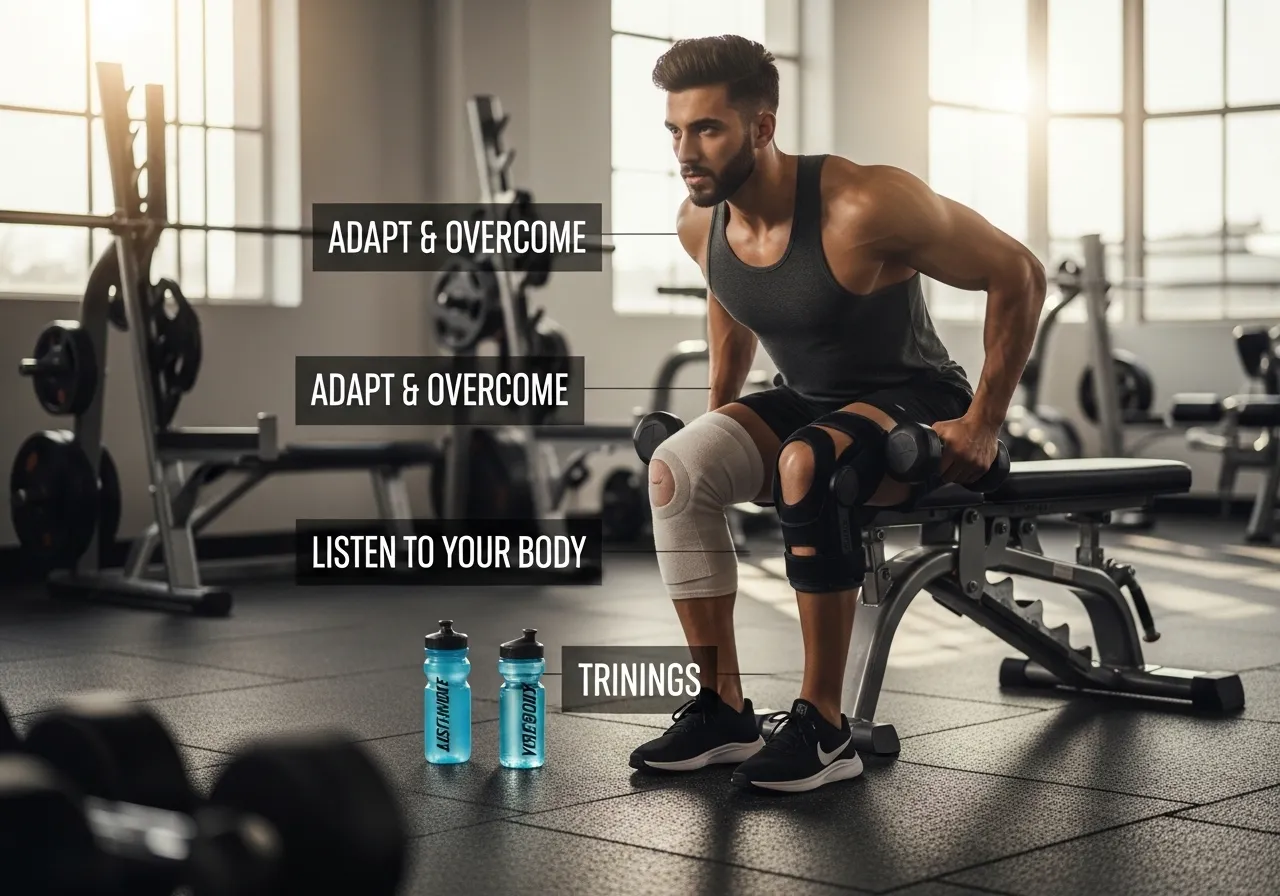
The Psychological Challenge of Training While Injured
The mental dimension of injury management is as critical as the physical, and often less systematically addressed — despite the robust evidence that psychological factors significantly influence both the rate of recovery and the quality of return to sport after injury.
Managing Frustration and Maintaining Motivation
Injury creates a psychological disruption of athletic identity that is qualitatively different from the ordinary frustrations of training — it is an involuntary loss of capacity that challenges the self-concept of athletes who identify strongly with their physical performance capabilities. The frustration, fear, and grief-like responses that significant injuries commonly trigger are psychologically normal responses to a genuine loss, and suppressing them through false positivity or dismissing them through stoic self-talk produces the emotional processing failure that surfaces as either depression during the recovery period or the performance anxiety that impairs return-to-sport quality. The healthier psychological approach: acknowledge the genuine difficulty of the injury setback without amplifying it beyond its actual impact; separate the athletic identity from the specific physical capacity that the injury has temporarily restricted (I am still an athlete who trains; I am currently managing a specific physical limitation); and direct the training motivation that the injury has displaced into the aspects of athletic development that the injury has created space for — the technique refinement, the complementary fitness work, the strategic planning, and the mental training that full health typically leaves insufficient time for. The athletes who report the most positive injury recovery experiences — who emerge from the injury period with improved overall athletic development relative to a comparable period of healthy training — are consistently those who adopted the “injury as unexpected training camp” reframe rather than the “injury as interruption” framework: using the forced modification as an opportunity to address training weaknesses, develop patience and strategic thinking, and build the mental resilience that physical challenges always eventually require.
Knowing When to Rest Completely vs. Push Through
The most difficult clinical judgment in injury management — for both athletes and the clinicians who advise them — is distinguishing the pain that is acceptable and productive to train through from the pain that signals tissue damage that training will worsen. The general principles that guide this judgment: nociceptive pain (the sharp, immediate, intense pain of acute tissue injury that is clearly located and clearly worsened by specific loading) should not be trained through; neuropathic pain (the radiating, burning, or electric quality that nerve involvement produces) is a red flag that requires professional assessment before training continuation decisions are made; and the delayed-onset soreness and general fatigue discomfort of normal training adaptation can be trained through with appropriate load management. The specific assessment to perform during recovery training: the baseline symptoms before the session (rating pain or discomfort 0-10), the peak symptoms during the session (stopping any activity that drives this above 3/10), and the 24-hour post-session response (returning to or below baseline symptoms confirms the session was within tissue tolerance; worsening baseline symptoms confirms the load exceeded healing capacity). The athlete who performs this three-point assessment honestly and consistently for every injury-modified session converts the ambiguous “push through or rest?” judgment into a structured data collection process that objectively reveals the boundary between productive and counterproductive loading — making the ongoing training-around-injury decision systematic rather than intuitive and therefore both more consistent and more reliably protective of healing progress. From Journal of Orthopaedic and Sports Physical Therapy pain monitoring in exercise rehabilitation, athlete-reported pain monitoring using the 0-10 numeric rating scale combined with 24-hour response assessment provides reliable clinical guidance for exercise load management during musculoskeletal injury rehabilitation — outperforming either complete rest or pain-ignoring training approaches in both tissue protection and functional recovery outcomes.

Preventing Re-Injury and Frequently Asked Questions About Training Through Injury
The most important training decision about any injury is what you do after the acute recovery period to prevent the recurrence that makes the original injury seem minor in retrospect. Re-injury is consistently more damaging, more prolonged, and more psychologically discouraging than the initial injury — and it is largely preventable with the structural changes to training that addressing the root causes requires.
Addressing the Root Causes of Injury to Prevent Recurrence
Every training injury has a root cause that the immediate management of symptoms does not address unless specifically identified and corrected. The most common root causes of training injuries: load management errors (too much volume, intensity, or frequency increase too quickly — the fundamental cause of most overuse injuries and many acute injuries that occur in states of accumulated fatigue); technique dysfunction (movement patterns that consistently place tissue under stress beyond its structural tolerance, often through joint positioning errors, asymmetrical loading, or compensation for mobility restrictions); training imbalances (strength or flexibility asymmetries between agonist and antagonist muscle groups, between bilateral limbs, or between the major movement patterns that create the relative overloading that injury-prone tissue experiences); inadequate recovery infrastructure (insufficient sleep, poor nutrition, excessive non-training stressors that reduce the recovery capacity available between training sessions); and equipment problems (footwear that fails to support the biomechanical requirements of training activities, lifting equipment that produces asymmetrical loading). Identifying the specific root cause in your injury requires honest self-assessment that many athletes resist because it implicates their training practices in the outcome — but this honesty is the only path to the structural correction that prevents recurrence. A physiotherapist’s biomechanical assessment, a strength and conditioning coach’s load monitoring review, and a gait analysis for running-related injuries all provide the external objective perspective that honest self-assessment sometimes cannot replicate. The investment in root cause identification after an injury is the highest-return prevention expenditure available — far more cost-effective than treating the same injury repeatedly without addressing its structural origin.
Building Injury Resilience Into Long-Term Training
The athlete who emerges from an injury with both a healed tissue and an improved understanding of their training vulnerabilities has achieved something more valuable than a return to the status quo — they have developed the injury resilience knowledge and practices that make the next several years of training substantially safer. The structural practices that build injury resilience into the long-term training program: progressive load management using the 10% weekly volume increase rule as the ceiling for training load escalation in running and in resistance training volume; regular technique assessment through video review or periodic coaching check-ins that identify the compensation patterns and movement quality decline that increasing loads progressively produce; balanced programming that ensures antagonist muscles receive proportional training stimulus to the agonist groups that most programs overemphasize; adequate deload periods every 4-6 weeks that allow the connective tissue recovery that muscle fibers achieve within days but tendons and ligaments require weeks to complete; and the sleep and nutrition foundations that the body’s structural maintenance and repair processes require continuously rather than only during explicit injury recovery periods. The athlete who implements these resilience-building practices systematically — not reactively after each injury, but proactively as permanent training infrastructure — converts the injury-prone training history that pushes-past-limits athletic ambition commonly produces into the sustainable high-performance training that remains productive and largely injury-free across a full athletic career. Training hard and training intelligently are not opposites; the intelligent practices described throughout this article are what allow the hardest training to remain productive rather than self-defeating.
Frequently Asked Questions About Training Around Injuries
Q: How do I know when I can return to full training after an injury? A: The clinical benchmarks vary by injury type and location, but the general framework: return to full training when the injured area demonstrates symmetric strength (within 10% of the uninjured side on manual muscle testing or functional strength tests); when the full range of motion required for training is pain-free; and when the sport-specific movement pattern that represents the highest demand on the injury site can be performed 10 repetitions at 90-100% intensity without pain during or within 24 hours after. Q: Should I use anti-inflammatory medication while training around an injury? A: The current guidance is nuanced: NSAIDs in the first 24-72 hours of acute injury may reduce the inflammatory signaling that initiates tissue repair, potentially impairing healing quality; beyond the acute phase, occasional use for symptom management that allows appropriate rehabilitation exercise is reasonable, but continuous NSAID use during tendon or ligament healing may impair the remodeling that connective tissue strength restoration requires. Consult a sports medicine professional for specific guidance relevant to your injury. Q: What is the biggest mistake athletes make when training around an injury? A: Ignoring the 24-hour response signal. The session that felt fine during execution frequently produces increased baseline symptoms the following morning that accurately indicate tissue overload — but athletes who evaluate only the intra-session experience miss this feedback and repeat the loading that worsened the injury until the accumulating damage becomes impossible to ignore. Q: Is it ever appropriate to stop training completely during an injury? A: Yes — Grade 3 injuries (complete ruptures, fractures requiring immobilization, post-surgical recovery periods where specific activities are medically restricted) require complete rest from the affected tissue regardless of what the athletic motivation suggests. The distinction is between injuries where rest is medically required and injuries where rest is the default because modification was not creatively enough applied. Most injuries fall in the latter category. Q: Can training the uninjured limb help the injured one? A: Yes — the cross-education effect described in research shows that training the healthy contralateral limb during injury rehabilitation of the injured limb reduces strength loss in the injured limb through neural pathways that maintain motor drive to the recovering muscles. This is a clinically validated reason to train the healthy limb at full intensity rather than reducing its training load in misguided sympathy with the injured side.


