How to Use a Foam Roller Correctly (Full Body Routine)


The Science Behind Foam Rolling: What It Does and What It Doesn’t
I added foam rolling to my pre- and post-training routine three years ago and the impact on next-day training readiness was noticeable enough within the first two weeks that it became a permanent fixture of every session. What surprised me when I later looked into the research was how different the actual physiological mechanisms of foam rolling’s effects were from what I had assumed — and how much the practical technique I had been using intuitively aligned with what the science supports, despite my having developed it through trial and error rather than research reading. This article provides both the science and the technique — the complete practical guide that makes foam rolling a genuinely productive recovery tool rather than the vague rolling-around that most gym-goers perform without the specific technique cues that produce the outcomes the research demonstrates.
What Foam Rolling Actually Does Physiologically
The physiological mechanisms through which foam rolling produces its documented effects involve several distinct pathways that the research has progressively clarified over the past decade. The primary mechanism is fascial manipulation — the mechanical pressure of the foam roller on the fascial connective tissue that surrounds and connects muscle groups creates the tissue deformation that temporarily disrupts the cross-link formations and adhesions within fascia that restrict movement and maintain the “tight” sensation that athletes associate with the need for soft tissue work. The secondary mechanism is neurological desensitization — the mechanical stimulation of cutaneous and subcutaneous mechanoreceptors (the Golgi tendon organs, Ruffini corpuscles, and Meissner’s corpuscles embedded in connective tissue) produces a neurological inhibitory signal that temporarily reduces the muscle’s resting tone and the pain sensitivity that trained-in or injury-related hyperalgesia maintains in target areas. The blood flow enhancement mechanism: the rhythmic compression and release of tissue during foam rolling produces a pumping effect on the local vasculature, temporarily increasing blood flow to the compressed area and facilitating metabolic waste product clearance from the exercise-damaged tissue that recovery depends on. What foam rolling does not do, contrary to popular belief: it does not break up scar tissue in the clinical sense (the pressures achievable with a foam roller are insufficient for actual structural scar tissue disruption); it does not permanently lengthen muscle fibers (the flexibility improvements foam rolling produces are acute and neurologically mediated, not structural); and it does not directly rebuild or regenerate damaged muscle (it facilitates the environment for repair without performing the repair itself). From PubMed systematic review on foam rolling mechanisms and effects, foam rolling consistently produces acute improvements in range of motion, reductions in delayed onset muscle soreness, and improvements in subsequent exercise performance — with neurological inhibition and fascial manipulation the most supported mechanistic explanations for these outcomes.
The Research Evidence: What Foam Rolling Consistently Improves
The foam rolling research has accumulated sufficiently to allow confident claims about what it reliably produces and what outcomes remain uncertain or unsupported. The consistently demonstrated outcomes across multiple randomized controlled trials: range of motion improvements of 5-15% in the muscles rolled, measured immediately post-rolling and persisting for 10-20 minutes (the acute nature of this benefit supports pre-activity rolling for movements where restricted range of motion limits technique or performance); delayed onset muscle soreness reduction of 20-40% at 24-48 hours post-training, measured by both visual analog scale pain ratings and pressure algometer pain threshold testing (the post-training recovery application); and performance maintenance in subsequent high-intensity sessions at 24-hour intervals — athletes who foam roll between sessions maintain sprint speed, jump height, and strength output at higher levels than those who do not, suggesting that the DOMS reduction translates into real next-session quality improvement. The outcomes that remain less consistently supported: direct increase in blood lactate clearance speed (some studies support it, others find no significant effect); improvements in injury prevention rates (plausible mechanistically but difficult to study prospectively); and long-term chronic flexibility improvement (the acute neurological mechanism does not persist long enough without repeated application to produce the structural adaptation that sustained stretching over months can produce). The practical application: foam rolling is a reliable pre-training and post-training recovery tool for range of motion preparation and DOMS management — not a therapeutic treatment for structural injury, but a legitimate and evidence-supported recovery modality within its specific evidence base.
Combining Foam Rolling With Dynamic Warm-Up for Maximum Pre-Training Preparation
The optimal pre-training preparation sequence integrates foam rolling as the first phase of a two-phase warm-up that moves from passive soft tissue preparation to active movement preparation — the two-phase approach that produces superior training session quality compared to either foam rolling alone or dynamic warm-up alone at matched time investments. Phase 1 (foam rolling, 5-8 minutes): the targeted muscle group rolling described above, prioritizing the specific mobility restrictions that the session’s movements require resolution of. This phase addresses the neurological and fascial contributors to restricted range of motion without the cardiovascular and neuromuscular activation that the second phase provides. Phase 2 (dynamic warm-up, 8-10 minutes): the progressive movement preparation that takes the improved range of motion from rolling into the movement-specific patterns the training session will demand — leg swings and hip circles after hip flexor rolling, shoulder CARs (controlled articular rotations) after thoracic and lat rolling, and the bar warm-up sets that progressively load the trained pattern before working weight. The sequence matters: rolling before dynamic warm-up allows the improved range of motion to be immediately reinforced through movement, converting the acute neurological gain into the movement-rehearsed tissue exposure that the training session then loads. Rolling after dynamic warm-up — the reverse sequence — applies soft tissue work to already-warmed and vasodilated tissue, which some practitioners prefer for the increased tissue pliability that elevated temperature produces, but misses the pre-warm-up mobility improvement window that the standard sequence capitalizes on. Either approach is productive; the standard rolling-then-dynamic sequence is more commonly supported in the research protocols that demonstrate pre-training foam rolling benefit.
Foam Rolling the Neck and Shoulders: Technique and Caution
The neck and cervical spine require particularly careful foam rolling technique because of the proximity of the cervical vertebrae and the neurovascular structures they protect to the muscles being targeted. Direct roller contact perpendicular to the cervical spine — rolling the neck with a foam roller as one would the thoracic spine — is contraindicated for most people due to the instability risk that high-amplitude pressure creates at the cervical level. The appropriate soft tissue work for the neck and upper trapezius: a hard massage ball or lacrosse ball placed on the floor, with the athlete lying supine and positioning the ball at the sub-occipital base of the skull (just below the skull’s base where the trapezius and suboccipital muscles attach), allows targeted point pressure with the gravity-appropriate weight of the head rather than added body weight — the precise pressure that the upper cervical region’s structural sensitivity requires. The upper trapezius, levator scapulae, and cervical rotators that desk work and phone use chronically load can be rolled with a foam roller or ball in a side-lying or seated position where body weight is controlled and the pressure is applied to the muscle belly lateral to the cervical spine rather than directly over it. The thoracic spine rolling described earlier in the full-body routine produces indirect benefit for the cervical spine’s mobility by addressing the thoracic extension restriction that cervical overextension often compensates for — making thoracic rolling the more productive intervention for most athletes experiencing neck stiffness than direct cervical manipulation that requires more caution than a general guide can appropriately specify for every individual’s anatomical variation.
Foam Rolling and Stretching: The Optimal Sequence for Maximum Flexibility Gains
The research on the foam rolling and static stretching combination consistently demonstrates greater range of motion improvements from the sequential combination than from either intervention alone — with the specific sequence of rolling first, then stretching, producing the greatest synergistic benefit. The mechanistic explanation: foam rolling’s neurological inhibition of the muscle’s resting tone reduces the stretch reflex response that static stretching activates, allowing a greater stretch intensity at the same sensation level — the muscle that has been rolled allows a deeper stretch at the same discomfort level as an unrolled muscle at a shallower stretch position. The practical implementation: immediately following the foam rolling session for a specific muscle group (quads, hamstrings, hip flexors), perform a 30-60 second static stretch for the same muscle while the neurological inhibition is still active. The hip flexor rolling followed by the kneeling hip flexor lunge stretch; the hamstring rolling followed by the seated or supine hamstring stretch; and the thoracic spine rolling followed by the thoracic extension stretch with arms overhead — these immediate roll-then-stretch sequences produce the compound flexibility improvement that the rolling preparation enables and the stretching capitalizes on. The alternative PNF (proprioceptive neuromuscular facilitation) stretch following rolling: the 6-second contract, 2-second relax, then deepen-the-stretch PNF technique applied after rolling produces even greater range of motion gains than the static stretch follow-up, at the cost of the additional complexity that the contraction phase requires. For athletes who have established the basic rolling-then-static-stretch practice and want the next level of flexibility improvement, the PNF addition is the most evidence-supported advancement beyond the basic combination.
The Long-Term Tissue Quality Dividend of Consistent Foam Rolling
The most compelling argument for making foam rolling a permanent feature of athletic practice is the long-term tissue quality that consistent daily soft tissue work accumulates — the progressive improvement in tissue pliability, movement restriction frequency, and injury-site recurrence that distinguishes the athlete who maintains consistent rolling practice from the one who rolls occasionally after noticing tightness. After six months of daily foam rolling, the areas that initially presented intense tender spots at every session begin to present fewer restrictions — the tissue quality has improved to the point where the baseline tightness that poor mobility and training load previously established has been progressively reduced by the consistent maintenance that rolling provides. After a year, the pre-training rolling that was necessary for adequate hip flexor and thoracic mobility becomes maintenance of already-good tissue quality rather than rehabilitation of chronically restricted tissue — a qualitative shift in the practice’s purpose that the compounding benefit of daily attention to soft tissue health produces. The injury prevention implication: the athlete whose tissue is consistently well-maintained through daily foam rolling, adequate sleep, anti-inflammatory nutrition, and hydration is the athlete who trains more years without the overuse injuries that progressive restriction accumulation eventually causes. The foam roller’s daily 15-20 minutes is an insurance premium against the weeks of training interruption that overuse injuries produce — a return on time investment that compounds silently, evidenced more by training continuity than by any specific dramatic improvement, but ultimately one of the most valuable investments in the serious athlete’s long-term practice.

Foam Roller Types, Densities, and Tools: Choosing What Works for You
The foam roller market offers a bewildering variety of products at price points from $10 to $200+ — understanding the functional differences between roller types allows informed selection based on actual use requirements rather than marketing appeal.
Smooth vs Textured, Soft vs Firm: The Practical Differences
The two primary foam roller variables — surface texture and foam density — affect the intensity and specificity of the pressure that rolling produces. Smooth-surface rollers distribute pressure evenly across the contact area, producing a broader, more diffuse compression that is appropriate for full muscle belly rolling and for individuals new to foam rolling whose tissue sensitivity makes the intense point pressure of textured rollers uncomfortable or counterproductive. Textured rollers — with grid patterns, knobs, or raised ridges — concentrate pressure into smaller areas, creating the more localized deep tissue pressure that targets adhesions and trigger points within the muscle belly more specifically than smooth surface rolling achieves. For beginners and individuals with high tissue sensitivity or acute muscle soreness, smooth medium-density rollers provide the appropriate introduction to foam rolling pressure. For experienced rollers or individuals with areas of chronic tightness that smooth rolling does not adequately address, high-density textured rollers (the EVA foam “grid” rollers from brands like Trigger Point, Rumble Roller, or similar) provide the specific deep pressure that produces the neurological desensitization and fascial manipulation that high-density contact produces. Foam density ranges from soft (low-density white foam that compresses significantly under body weight — good for very sensitive tissue, deteriorates within months of regular use) through medium (standard black or colored EVA foam — the best balance of appropriate pressure and durability for most athletes) to firm (high-density black or rigid-core rollers that maintain shape under full body weight and provide the consistent pressure depth that heavy athletes or highly trained tissue requires). The practical recommendation for most athletes: a medium-to-high density smooth roller as the primary rolling tool, supplemented by a harder textured tool (lacrosse ball, hard massage ball, or textured roller) for the specific tight spots that benefit from concentrated point pressure beyond what the standard roller provides.
Vibrating Foam Rollers and Massage Tools: Worth It?
Vibrating foam rollers (Hyperice Vyper, Theragun Wave, and similar) add mechanical vibration (typically 20-40 Hz) to the standard compression mechanism, with research showing modestly enhanced range of motion improvements and greater perceived pain relief compared to standard foam rolling at equivalent pressure and duration. The mechanistic rationale for vibration’s added benefit: the vibration frequency in the 20-40 Hz range activates muscle spindle mechanoreceptors that produce additional neurological inhibition of resting muscle tone, supplementing the pressure-mediated inhibition that standard rolling achieves. The practical value assessment: for most recreational athletes, the additional benefit of vibrating rollers over quality standard rollers does not justify the 3-5x price difference — the standard roller’s documented benefits are achieved without vibration, and the marginal enhancement from vibration at the price differential represents one of the lower returns-on-investment in the recovery tools market. For competitive athletes or individuals with specific chronic tightness that standard rolling has not adequately addressed after 6-8 weeks of consistent practice, the vibrating roller represents a reasonable upgrade. Percussive massage tools (Theragun, Hyperice Hypervolt) — handheld devices that deliver rapid percussive impacts to muscle tissue — are functionally distinct from foam rolling despite overlapping applications: the higher intensity and precision of percussive therapy makes it more effective for specific trigger point work and pre-event neural activation, with research showing superior acute range of motion improvements and pain threshold increases compared to static foam rolling for the specific applications where its intensity is appropriate. From PubMed review on vibration and foam rolling for recovery outcomes, vibrating foam rollers produce greater acute range of motion improvements than non-vibrating equivalents in direct comparison studies — confirming the mechanistic addition but not necessarily the value-for-cost conclusion that consumer purchasing decisions require.
Foam Rolling for Common Athletic Injuries and Recovery Contexts
The application of foam rolling in injury management contexts requires the careful distinction between the appropriate use of soft tissue work adjacent to an injury versus the contraindicated direct rolling of acutely injured tissue. For the specific injury contexts that athletic populations most frequently encounter: runner’s knee (patellofemoral syndrome) — foam rolling the quadriceps, IT band origin area (TFL and lateral glute), and calves addresses the upstream tissue tightness that alters patellar tracking without applying pressure directly to the inflamed patellar tendon or retinaculum; Achilles tendinopathy — rolling the gastrocnemius and soleus (avoiding direct pressure on the Achilles tendon itself, which is contraindicated in acute tendinopathy) reduces the calf tissue tension that loads the Achilles insertion and is supported in Achilles rehabilitation protocols as a complementary intervention alongside progressive calf loading; lower back pain from muscle strain — rolling the thoracic spine (above the lumbar) and hip flexors reduces the compensatory lumbar overload that restricted thoracic mobility and shortened hip flexors contribute to, addressing the contributing factors without the contraindicated direct lumbar pressure; and shoulder impingement — rolling the lats, pectoralis major, and thoracic spine addresses the anterior shoulder positioning and internal rotation restriction that most shoulder impingement produces and maintains, with the soft tissue preparation facilitating the shoulder rehabilitation exercises that direct impingement management requires. In all injury-adjacent rolling contexts, the principle of “never directly over the inflamed or acutely painful tissue” is the absolute guideline, with the rolling providing supportive value through adjacent and contributing tissue work rather than therapeutic intervention on the injury site itself.
Foam Rolling Progressions: Advancing Your Practice Over Time
The foam rolling practice that produces continued benefit over months and years evolves as the tissue quality improves and the basic technique is mastered. The progression structure that keeps foam rolling effective as the initial benefits plateau: increasing specificity by transitioning from large-diameter foam rollers to smaller, harder tools (lacrosse balls and hard massage balls provide a smaller contact area and deeper pressure concentration that targets the specific adhesion sites that general rolling identifies but cannot precisely address); reducing body weight support to increase pressure as tissue sensitivity decreases and tolerance improves (the athlete who initially needed 50% body weight support over the roller to manage intensity can progressively add body weight as the tender spots reduce in intensity with consistent rolling); adding the active movement technique — slowly moving a joint through its range while holding the foam roller pressure on the adjacent muscle belly — to the standard static-pressure approach (rolling the calf while slowly dorsiflexing and plantarflexing the ankle produces greater range of motion improvement than static pressure alone, through the movement-loading of the mechanoreceptors that rolling pressure activates). The practice that has graduated to the most advanced technique of consistent soft tissue work — combining foam rolling, targeted ball work, and active mobilization in the structured sequence that pre- and post-training sessions increasingly accommodate — produces the tissue quality that distinguishes the athlete who invests in recovery infrastructure from the one who simply trains hard and hopes the body manages the accumulated wear without deliberate facilitation.
Using a Foam Roller for Core and Hip Mobility Work
Beyond its primary soft tissue applications, the foam roller can serve as a balance and proprioception challenge tool for core and stability training — extending the equipment’s utility beyond its recovery function into the training preparation and supplementary movement work that athletic development benefits from. Foam roller balance challenges: performing single-leg balance, shallow squat holds, or upper body stability exercises while standing on a foam roller creates the destabilized surface that the proprioceptive challenge of unstable surface training activates — useful as part of the movement preparation sequence or as supplementary stability training for ankle and knee rehabilitation contexts. Core rolling work: the foam roller placed lengthwise under the thoracic spine during thoracic mobility exercises (such as arm reaches from the thoracic roll position or the open book rotation performed with the roller for thoracic support) combines soft tissue release with active mobility work in the integrated approach that the active movement rolling progression describes. The plank-to-rollout sequence using the foam roller as a resistance tool provides a core anti-extension challenge that builds on the plank foundation — placing the forearms on the roller and rolling it forward and back from the plank position creates the eccentric and concentric core demand of the ab rollout exercise without the wrist flexion that the ab wheel requires. These secondary foam roller applications are not essential additions to the basic rolling practice but useful extensions for the athlete who wants to maximize the equipment’s value across the full session structure rather than limiting it to the soft tissue applications that its primary evidence base supports.
Your Foam Rolling Starting Point: Begin Tonight
The best foam rolling routine is the one that begins with the equipment you have, in the time available tonight, on the muscle groups that feel tightest right now. Place a foam roller or a rolled towel on the floor, lie across it at the thoracic spine, breathe slowly for sixty seconds, and notice the extension that the sustained pressure produces. That is foam rolling. Everything this article has described builds on that single first experience of applying sustained, breathing-accompanied pressure to tight tissue and feeling it release. Start there. Build the rest incrementally. And let the consistent practice of meeting your tissue where it is — systematically, patiently, and with the technique that the research supports — produce the long-term tissue quality that rewards every session of invested attention.

Foam Rolling Technique: The Principles That Make It Work
The specific technique applied during foam rolling determines whether the session produces the physiological outcomes the research demonstrates or the ineffective mechanical pressure that does little more than make the athlete feel like they are doing something productive. The key technique principles apply across all muscle groups and body areas.
The Slow Roll, Pause, and Breathe Method
The most common foam rolling error is moving too quickly — the 10-second full-leg roll that many athletes perform before training applies mechanical pressure so briefly and rapidly that the neurological inhibition mechanism does not have sufficient time to activate. The neurologically effective foam rolling technique: move slowly (approximately 2-3 cm per second) along the length of the muscle being rolled, pausing for 30-90 seconds on any area that produces the characteristic “tender spot” sensation (the distinctive discomfort of trigger point or adhesion contact that differs from the general discomfort of pressure on already sore muscle belly), and breathing slowly and deliberately through the pause to facilitate the neurological relaxation response that conscious parasympathetic activation amplifies. The pause-on-the-tender-spot technique is the single most impactful foam rolling refinement for athletes who have been performing the rapid roll without addressing specific tight areas — the 30-90 second sustained pressure on the identified tightness allows the neurological inhibition mechanism to reduce the tissue’s resting tone in that specific area, producing the perceptible “release” that experienced rollers describe and that correlates with the myofascial pressure threshold increase that research measures. The breathing during rolling: slow, deep diaphragmatic breaths (inhale 4 seconds, exhale 6 seconds) during the sustained tender-spot pressure activate the parasympathetic nervous system, reducing the defensive guarding that the tissue’s pain response would otherwise maintain — the breath is not incidental to technique but a functional tool that improves the neurological release that pressure alone produces.
Targeting vs General Rolling: When to Do Each
Two distinct foam rolling approaches serve different purposes and should be used in different contexts: general rolling and targeted trigger point work. General rolling — slow, systematic coverage of the full muscle length from origin to insertion — is appropriate for pre-training preparation and as the initial pass in post-training recovery rolling, producing the broad range of motion improvements and tissue warming that the pre-training context requires. Targeted trigger point work — sustained pressure on the specific tight spots identified during general rolling — is the follow-up technique that addresses the specific restrictions that general rolling identifies but does not fully resolve. The practical session structure: begin with 30-60 seconds of slow general rolling across the full muscle length; identify any areas that produce significantly more tenderness than the surrounding tissue (these are the trigger points or adhesion areas that the research consistently identifies as the most productive rolling targets); pause on each identified area for 45-90 seconds with deliberate breathing until a perceptible reduction in the tender spot’s intensity occurs; and finish with another 20-30 seconds of general rolling to integrate the specific work into broader tissue mobility. This structured approach — general, target, general — produces more complete soft tissue preparation and recovery than either approach alone and represents the technique used in the best-performing foam rolling research protocols rather than the simplified “roll for X minutes” approach that most instructional content prescribes without the technique specificity that outcomes depend on.
Pressure, Duration, and Frequency: The Dosing Variables
Like any training stimulus, foam rolling has optimal dosing parameters — the duration, pressure, and frequency that produce the intended outcomes without the excessive tissue irritation that over-rolling produces. The research-supported dosing recommendations: 60-120 seconds of total rolling time per muscle group per session is sufficient for the acute range of motion and DOMS-reduction benefits that foam rolling research demonstrates — more time per muscle group produces diminishing returns rather than proportionally greater benefit. Pressure management: body weight fully through the roller onto the target muscle is the standard pressure for large muscle groups (quadriceps, hamstrings, calves); partial body weight support through the arms or opposite leg reduces pressure for sensitive areas or for smaller muscle groups (IT band, peroneals, forearms) where the full body weight intensity is uncomfortably high. The “7 out of 10 discomfort” guideline that many practitioners use — a pain intensity that feels productive tension rather than the sharp, breath-holding pain that indicates excessive pressure on neural or inflammatory tissue — is the subjective intensity guide that prevents the excessive pressure that produces bruising or exacerbates acute inflammation rather than facilitating the neurological relaxation that appropriate pressure achieves. Frequency: daily foam rolling for the major muscle groups trained most frequently (quadriceps, hamstrings, calves, thoracic spine, and the hip flexors that sitting and training both shorten) maintains the cumulative benefits of consistent soft tissue work; rolling every training day as a pre- and post-session practice produces the compounding soft tissue quality improvement that occasional rolling cannot deliver. From Physiopedia self-myofascial release clinical guidelines, sustained pressure application of 30-90 seconds at appropriate intensity consistently produces greater improvements in pressure pain threshold and range of motion than shorter or longer durations in direct comparison studies.
Foam Rolling vs Professional Massage: When to Upgrade
Foam rolling is a cost-effective daily self-maintenance tool that approximates some benefits of professional massage at zero per-session cost — but the comparison reveals specific contexts where the investment in professional massage therapy produces outcomes that foam rolling cannot replicate. The capabilities that foam rolling provides adequately for most athletes: daily tissue maintenance, DOMS management, acute range of motion preparation, and the regular soft tissue attention that prevents restriction accumulation. The capabilities where professional massage therapy’s manual pressure, precision, and trained clinical assessment add value that foam rolling cannot match: the identification and treatment of specific adhesion patterns and tissue restrictions that require trained hands to accurately locate and treat; the treatment of deeper tissue layers (iliacus, subscapularis, piriformis) that foam rollers cannot access without an anatomically guided application pressure that requires the practitioner’s positioning knowledge; the neurological down-regulation effects of a 60-90 minute therapeutic massage session that far exceed the brief neurological inhibition of the foam rolling session in the systemic parasympathetic activation and cortisol reduction that a full massage produces. The practical recommendation: foam roll daily for self-maintenance; schedule professional sports massage monthly or every 4-6 weeks during high training volume periods for the deeper therapeutic intervention that the daily self-maintenance practice supplements rather than replaces. The athlete who maintains both — daily foam rolling and monthly professional massage — arrives at each massage session with better tissue baseline quality that allows the therapist to work on deeper specific issues rather than spending the session addressing the surface restrictions that daily rolling has already resolved.
Teaching Others: Key Points for Introducing Foam Rolling to New Athletes
For coaches, trainers, and experienced athletes introducing foam rolling to beginners, the key points that most efficiently establish correct technique are: start with a medium-density smooth roller (not a firm textured roller whose intensity discourages beginners before technique is established); demonstrate the slow pace explicitly — most beginners intuitively roll too fast, and seeing the correct pace modeled once is more effective than verbal instruction about speed without visual reference; teach the “find the tender spot and breathe through it” cue as the central technique principle rather than the timing-based instruction that mechanical repetition without quality focus produces; and distinguish the productive 6-7/10 discomfort from the stop-immediately signals (sharp pain, radiating pain, loss of sensation, or cardiovascular symptoms) that tissue contraindication or medical concern indicates. The beginner’s first foam rolling session should cover only the three highest-impact, lowest-complexity areas — quadriceps, thoracic spine, and calves — in a 10-minute session that demonstrates the technique principles and the immediate post-rolling range of motion improvement that provides the motivating feedback that the invested time produces tangible results. The full-body routine develops over weeks as technique competency and tissue tolerance build to the level that the comprehensive approach requires — the graduated introduction that prioritizes technique quality over routine completeness produces better long-term foam rolling practitioners than the overwhelming first-session comprehensive coverage that many introductory guide attempts produce.
A 4-Week Foam Rolling Plan for Beginners
Structured progression for athletes new to foam rolling who want a specific weekly plan to develop the habit and technique over a manageable four-week introduction: Week 1 — two rolling sessions per week, 8-10 minutes each, covering only quadriceps, calves, and thoracic spine with the basic slow-roll technique. Goal: establish the pace, pressure, and breathing habits without technique overwhelm. Week 2 — three sessions per week, 10-12 minutes each, adding hamstrings and glutes to the routine while refining the tender-spot pause technique on the highest-discomfort areas identified in week one. Week 3 — four sessions per week including at least one rest-day session, 12-15 minutes each, adding IT band and hip flexors to the routine and beginning the general-then-targeted sequence that the complete technique uses. Week 4 — daily rolling practice, 15-20 minutes for comprehensive sessions on training days and 10-minute maintenance for rest days, covering the full-body routine with the complete technique. The four-week structure introduces one to two new muscle groups per week and one technique element per week, producing the progressive skill development that each session builds on rather than the overwhelming comprehensive approach that the full guide represents applied to the first session. The athlete who completes this four-week plan arrives at the daily full-body routine with the technique confidence and tissue tolerance that makes the comprehensive practice sustainable — having built the foam rolling habit through the same graduated progression that every other fitness practice benefits from when the learning curve is respected rather than compressed into a single overwhelming initiation.

The Complete Full-Body Foam Rolling Routine
The following full-body foam rolling routine covers every major muscle group in the sequence that most efficiently transitions between body positions, minimizing the setup time that awkward position transitions add to a session performed without an organized order. Total session time: 15-20 minutes for the complete routine, or 8-10 minutes for the targeted post-training version that focuses only on the muscles trained in that session.
Lower Body: Quads, Hamstrings, Calves, and IT Band
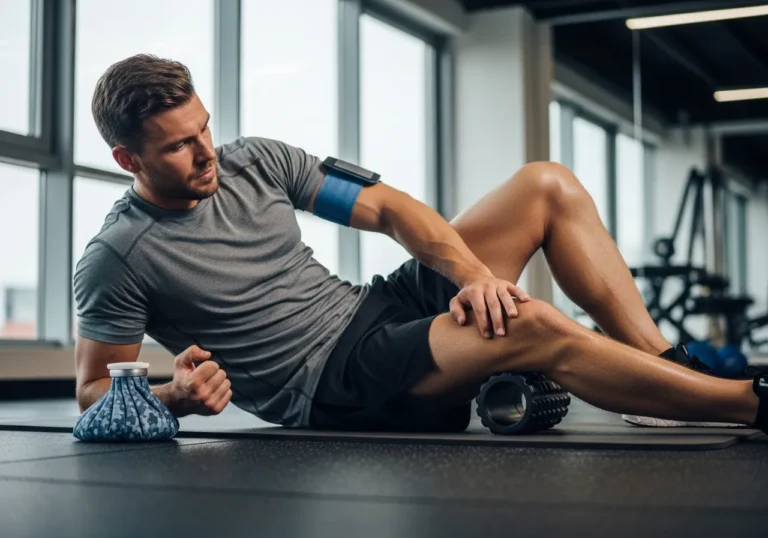
Begin the lower body sequence in the prone position (face down): Quadriceps (front of thigh) — position the roller under the front of one thigh, support body weight on forearms, and slowly roll from the hip crease to just above the knee (approximately 30 cm range) at the slow 2-3 cm/second pace. Target both the central quad muscle belly and the inner and outer edges by rotating the thigh slightly in each direction. 60-90 seconds per leg. Identify and pause on tender spots for 30-45 seconds each. The IT band (outer thigh from hip to knee) — roll from the lateral hip to the outer knee in the same prone-ish side position. The IT band has the highest innervation density of any lower limb structure and produces the most intense foam rolling sensation for most athletes — adjust body weight support to manage intensity, as the IT band benefits from consistent work over weeks more than from aggressive single sessions that tissue irritation-provokes. 45-60 seconds per side. Transition to seated position: Hamstrings (back of thigh) — seated on the floor with roller under one thigh, support body weight on hands behind the body, and slowly roll from the sit bone to just above the knee. Cross the opposite ankle over the working leg to increase pressure specificity for athletes who find bilateral hamstring rolling insufficiently intense. 60 seconds per leg. Calves (gastrocnemius and soleus) — roller under one calf just above the ankle, opposite leg either crossed over for increased pressure or on the floor for reduced intensity. Roll from the ankle to just below the knee, targeting the full gastrocnemius belly and rotating slightly to access the soleus medially. 45-60 seconds per leg.
Glutes, Hip Flexors, and Adductors
Glutes and piriformis — seated on the roller with one ankle crossed over the opposite knee (figure-4 position), lean toward the crossed-ankle hip to concentrate pressure on the glute and piriformis of that side. Slow circular movements and back-and-forth rolling across the glute tissue, pausing on tender areas. The piriformis — the deep external rotator that running, sitting, and hip-dominant training overloads — typically produces the most concentrated tender spots of the lower body rolling sequence and benefits most from the sustained pause technique. 60-90 seconds per side. Hip flexors (iliopsoas and rectus femoris) — prone position with roller positioned just below the front of the hip bone at the groin-thigh junction; this area requires careful pressure management as the femoral nerve and artery pass through the region, making the “avoid sharp or shooting pain” guideline particularly important here. Slow gentle rolling with partial body weight is appropriate for the hip flexor area. 30-45 seconds per side. Adductors (inner thigh) — prone position with one leg externally rotated and the roller positioned parallel to the inner thigh; this requires positioning the roller along the groin-to-knee inner thigh length with the body supported on forearms. The adductor group is frequently undertreated in foam rolling routines despite being a common source of hip and groin restriction in athletes who run, squat, and perform lateral movement patterns. 45-60 seconds per side.
Upper Body, Thoracic Spine, and Lats
Thoracic spine (mid-back) — the most universally productive upper body foam rolling target for athletes who sit, bench press, and perform any overhead movement: position the roller perpendicular to the spine at the lower rib level, support the head with interlaced hands, and gently extend over the roller while keeping the glutes on the floor. Move the roller in small increments upward toward the upper thoracic spine (T1-T4 region), spending 20-30 seconds at each level. The thoracic extension over the roller produces a traction effect on the thoracic facet joints that simultaneously addresses the thoracic kyphosis that sitting and pressing develops and improves the overhead mobility that clean and snatch movements require. 90-120 seconds total thoracic coverage. Avoid placing the roller under the lumbar spine — the lumbar’s natural lordosis and the absence of rib cage support at this level makes extension over the roller at lumbar level potentially harmful rather than beneficial; foam rolling benefits the thoracic region specifically. Latissimus dorsi (outer back from armpit to lower ribs) — side-lying with roller positioned at the outer edge of the upper back under the armpit, arm extended overhead. Slowly roll from the armpit to the lower rib cage along the lat’s full length. The lat rolling position requires slightly awkward body positioning that many athletes skip for this reason — but the lat’s role in shoulder internal rotation and the overhead mobility restriction that chronically shortened lats create makes it a high-value rolling target for overhead athletes and bench pressers alike. 45-60 seconds per side. Thoracic rotation and rhomboids — seated with roller vertical between the shoulder blades (parallel to the spine), lean back and rotate the thorax side to side across the roller; this targeting the rhomboids and middle trapezius that horizontal pulling and postural demands load. From NSCA foam rolling clinical application guidelines for fitness professionals, thoracic spine foam rolling combined with thoracic extension mobilization produces significant improvements in thoracic extension range of motion and overhead reach distance — confirming the clinical value of the thoracic rolling sequence for athletes whose training and lifestyle restrict thoracic mobility.

Pre-Training vs Post-Training Rolling: When to Roll for Best Results
The timing of foam rolling relative to training sessions affects which specific outcomes are prioritized — and the optimal use of foam rolling around training differs between the pre-training and post-training contexts in ways that many athletes do not account for when establishing their rolling practice.
Pre-Training Foam Rolling: Preparation and Activation
Pre-training foam rolling serves the range of motion preparation and neural activation functions that the training session’s movement quality depends on. The acute range of motion improvements that 60-90 seconds per muscle group rolling produces persist for 10-20 minutes — timing the pre-training rolling to immediately precede the warm-up ensures that the improved mobility is available during the training session’s most demanding movements rather than dissipating before training begins. The pre-training rolling priority areas are the movement-limiting muscles specific to the session’s training demands: hip flexors, quadriceps, and thoracic spine before lower body and squat sessions (addressing the anterior hip tightness and thoracic extension restriction that sitting produces and that squat mechanics require resolution of); shoulder capsule, lats, and thoracic spine before upper body pressing and overhead sessions; and calves, Achilles, and plantar fascia before running or plyometric sessions. Pre-training rolling duration should be kept to 5-8 minutes total — targeting the specific mobility restrictions that the session’s movements require rather than the comprehensive full-body sequence that better serves the post-training context. The pre-training rolling should be followed immediately by the dynamic warm-up that reinforces the improved range of motion under movement load — the passive soft tissue preparation of rolling sets up the movement-specific warm-up rather than replacing it.
Post-Training Foam Rolling: Recovery and DOMS Reduction
Post-training rolling serves the recovery function — the DOMS reduction, metabolic waste clearance facilitation, and tissue condition maintenance that prevents the progressive accumulation of restriction that repeated training without recovery intervention produces. Post-training rolling is most effective in the 15-30 minutes immediately following training, before the inflammatory response to training has fully developed and while the tissue temperature elevation from exercise makes the connective tissue more responsive to mechanical manipulation. The post-training rolling priority: cover every major muscle group trained in the session, spending 60-90 seconds per muscle group in the slow general-then-targeted rolling technique described earlier. The comprehensive full-body rolling sequence detailed in this article is most appropriate for the post-training context — the 15-20 minutes required for full-body coverage fits within the post-training cool-down window before the post-workout meal, and the recovery benefits compound when the rolling covers the complete musculature rather than only the most obviously sore areas. The specific post-training application for heavy lower body training: quadriceps, hamstrings, glutes, and calves will typically present the most tender spots in the 30-60 minutes after heavy squat and deadlift sessions — spending the additional time that these acute tender spots benefit from produces the most significant next-day soreness reduction that the recovery window provides. For upper body training days, the pectorals, anterior deltoid, biceps, and thoracic spine deserve the equivalent post-training rolling attention that the lower body-centric rolling routine in this article has provided most detail on. From PubMed foam rolling and delayed onset muscle soreness meta-analysis, post-exercise foam rolling significantly reduces muscle soreness at 24, 48, and 72 hours post-training compared to no rolling — with effect sizes consistent across multiple study populations and training types, confirming the post-training recovery application as the foam rolling context with the most robust and consistent evidence base.
Rest Day Rolling and Maintenance Practice
Foam rolling on rest days — the 5-10 minute maintenance session that addresses the areas that training and daily posture continuously tighten rather than waiting for training-day rolling to address them — produces the cumulative tissue quality improvement that transforms occasional relief rolling into the consistent soft tissue practice that prevents the chronic restrictions from developing in the first place. The rest-day rolling priority areas differ from the training-day post-session priorities: focus on the areas that daily life activities chronically restrict regardless of training — hip flexors from sitting, thoracic spine from computer use, calves from footwear, and neck and upper trapezius from phone use and screen positioning. Ten minutes of targeted rest-day rolling for these lifestyle-activity-restricted areas produces the tissue condition maintenance that prevents the gradual accumulation of restriction that sedentary periods between training sessions create, ensuring that the training session’s movement demands are met by tissue in optimal condition rather than the progressively restricted tissue that rest-day inactivity without soft tissue maintenance produces over months and years of training.

Specific Problem Areas, Common Mistakes, and FAQ
Beyond the full-body routine framework, several specific problem areas and technique refinements address the most common foam rolling challenges that athletes encounter — and the FAQ section addresses the questions that the research and practical guidance most frequently leaves unanswered.
Problem Areas: IT Band, Plantar Fascia, and Lower Back
The IT band is the foam rolling area that generates the most confusion and discomfort among beginner and intermediate practitioners. The iliotibial band itself — the dense fibrous connective tissue tract that runs from the hip to the knee along the outer thigh — is not meaningfully elastic or stretchable; the “tightness” that IT band syndrome produces is better understood as tension from the tensor fascia latae and gluteus maximus that feed into it rather than the band itself shortening. The foam rolling approach that addresses IT band tightness most effectively therefore targets the TFL (the hip muscle at the top of the outer hip) and glute max at their insertion into the IT band, rather than the band’s mid-section that most athletes roll. Rolling the outer glute, the TFL area just below the hip crest, and the lateral quad adjacent to the IT band produces the tissue tension reduction that the band’s connected musculature generates — a more effective approach than the direct band rolling that merely compresses an inelastic structure. Plantar fascia rolling — using a hard ball (golf ball, lacrosse ball, or dedicated foot roller) rather than a standard foam roller — addresses the plantar fascia restriction that standing occupations, barefoot running transitions, and inadequate calf flexibility produce. Rolling the arch and heel of the foot with moderate downward pressure for 60-90 seconds per foot, targeting the area of maximum tenderness at the medial calcaneal insertion where plantar fasciitis typically originates, provides the pressure pain threshold improvement and tissue mobility that morning plantar fascia stiffness is managed through. The lower back foam rolling contraindication: as noted in the full-body routine section, the lumbar spine should not be rolled with a foam roller placed perpendicular to the spine in extension — the lumbar facet joints and paraspinal musculature that rolling would address are better served by the gentle lumbar rotation mobilizations that yoga and mobility work provides and by the hip and thoracic mobility improvements that reduce lumbar compensation rather than the direct pressure that the lumbar region’s anatomical vulnerability makes contraindicated.
Common Foam Rolling Mistakes That Reduce Effectiveness
Mistake 1: Rolling too fast — the 30-second full-leg roll that achieves no neurological dwell time on any specific area produces only mechanical skin-level friction without the deep tissue inhibition that the slow technique achieves. Spend 60-90 seconds per muscle group minimum. Mistake 2: Rolling directly on a joint — knee, ankle, elbow, and wrist joints are contraindicated rolling targets; the roller should always be positioned over the muscle belly rather than the bony joint that surrounds it. Mistake 3: Holding breath during tender spots — the breath-holding that pain instinctively produces prevents the parasympathetic relaxation that slow breathing facilitates and that the neurological release mechanism requires. Deliberately maintain slow nasal breathing throughout, especially during tender spot pauses. Mistake 4: Rolling acute injuries — inflammation, bruising, acute sprains, and recent muscle tears are contraindications for direct foam rolling over the affected area; these conditions require the medical management that local pressure exacerbation would worsen. Rolling adjacent areas that refer into the injury site may be appropriate, but direct pressure on acutely inflamed tissue is not. Mistake 5: Skipping the tender spot work — rolling without pausing on the areas of highest discomfort is the most common technique error that prevents foam rolling from producing its full potential, as the tender spots are precisely the areas where the neurological inhibition and fascial manipulation provide the greatest benefit. Leaning into the tender spot — figuratively and literally — is where the technique’s value concentrates.
Frequently Asked Questions About Foam Rolling
Q: Should foam rolling hurt? A: A productive 6-7/10 on the pain scale — distinctly uncomfortable but breathable and manageable — is appropriate. Sharp, radiating, or breath-stopping pain indicates excessive pressure, incorrect placement over neural tissue, or an area that requires medical assessment rather than foam rolling. Q: How long should I foam roll each day? A: 10-15 minutes covering the most relevant muscle groups for the day’s context (pre-training: 5-8 minutes targeting session-specific mobility restrictions; post-training: 15-20 minutes comprehensive coverage; rest day: 10 minutes maintenance targeting lifestyle-restricted areas). Q: Can foam rolling replace stretching? A: They serve complementary rather than interchangeable functions — foam rolling addresses the neural and fascial components of tissue restriction while stretching addresses the length component. The optimal soft tissue practice combines both: roll the target muscle to reduce neural tone, then immediately follow with static or PNF stretching of the same muscle to extend the range of motion improvement into the length gain that stretching produces more effectively than rolling alone. Q: Is it safe to foam roll every day? A: Yes — daily foam rolling for healthy tissue is safe and produces the cumulative benefits that infrequent rolling cannot. The one exception is acutely injured or inflamed tissue that requires medical management rather than mechanical intervention. Q: Which foam roller should I buy? A: A medium-to-high density smooth roller in the 90cm length (full-back coverage) at $20-35 USD covers every use case this article describes. The expensive specialist options add marginal benefits above this functional baseline. From ACE Fitness foam rolling evidence and application guide, daily foam rolling as part of a comprehensive recovery strategy significantly reduces exercise-induced muscle soreness and maintains tissue quality that supports consistent training quality — confirming the practical evidence base for the routine integration that this article’s full-body framework provides.
Building Foam Rolling Into Your Permanent Training Routine
The athletes who gain the most from foam rolling are those who treat it as an unglamorous but essential component of every session’s structure rather than an optional extra that time pressure regularly eliminates. The habit-building approach that makes foam rolling permanent rather than sporadic: place the foam roller visibly in the training space rather than in a closet — the out-of-sight-out-of-mind problem that training accessories consistently suffer from is solved by environmental placement that makes the roller the unavoidable first thing seen when entering the training area. Set a non-negotiable pre- and post-training rolling commitment that is treated with the same respect as the training session itself — the athlete who begins every session with 5 minutes of rolling and ends every session with 10 minutes of rolling has added 15 minutes of meaningful recovery work to every session with the compounding benefit that months of daily practice produces. Track the subjective improvement: note which areas presented the highest tender spot intensity at the start of a focused rolling period and periodically reassess the same areas after 4-6 weeks of consistent work — the reduction in resting tender spot intensity that the soft tissue quality improvement produces is one of the most tangible feedback mechanisms that confirms the investment is producing the tissue quality change that consistent rolling is designed to build toward. The foam roller is the cheapest and most accessible recovery tool in the serious athlete’s kit — and the consistent technique-guided practice that transforms it from an obligation into an anticipated part of every training session takes the same weeks of habit formation that any other performance practice requires before its benefits become the self-evident justification for its permanence.