5 Best Exercises for a Wider Back

1. Back Anatomy and the Science of Building a Wider Back
The wide, V-tapered back that defines elite physiques — the visual signature of a powerful athletic build — is primarily the product of well-developed latissimus dorsi muscles rather than overall back thickness. Understanding the specific anatomy of the muscles that create width versus those that create thickness is the foundational knowledge that separates effective back width training from generic “back day” programming that builds mass without the specific proportions that width requires. I spent two years doing heavy rows and deadlifts wondering why my back was getting thicker but not wider — the answer was that I was primarily developing my mid-back musculature while undertrained my lats, the wide, wing-like muscles that create the V-taper.
Latissimus Dorsi: The Primary Width Builder
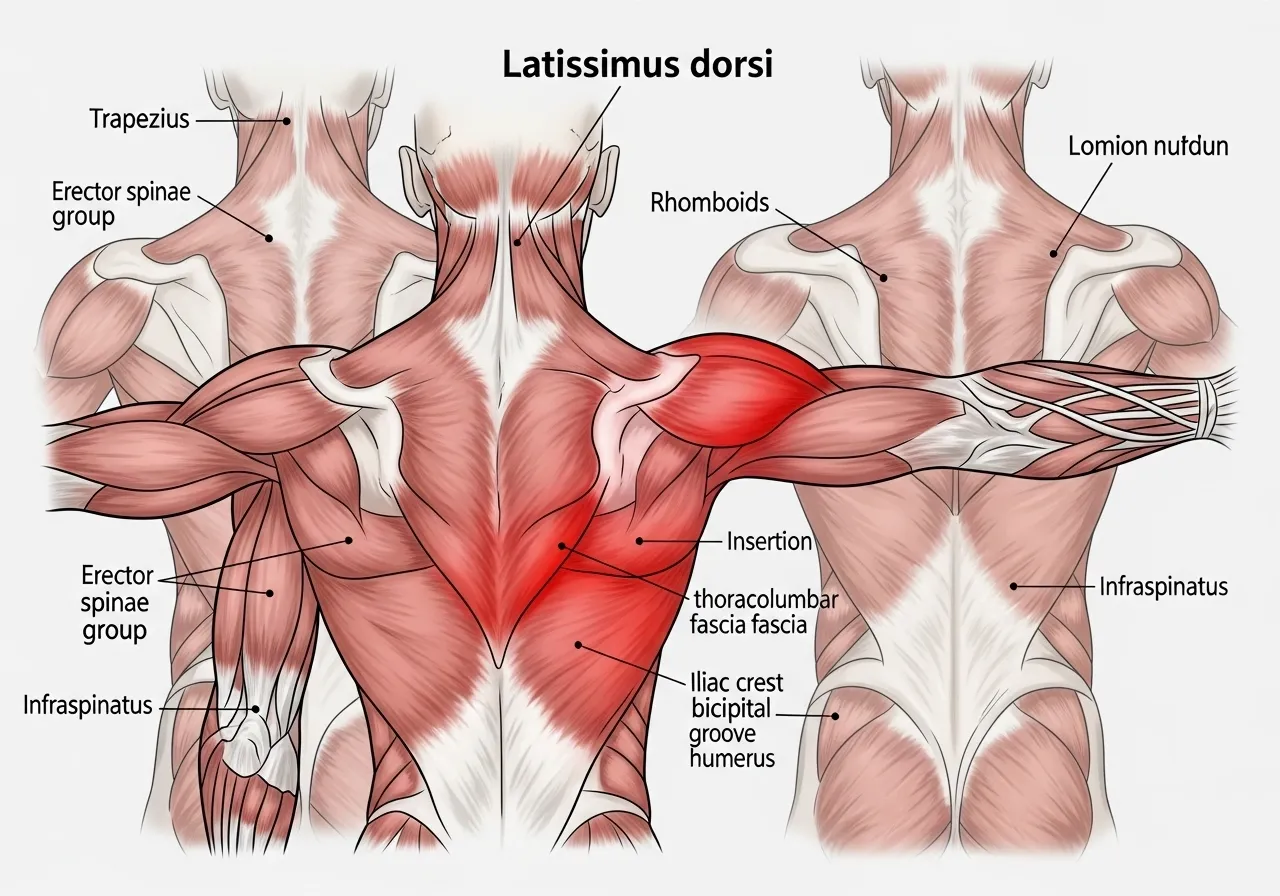
The latissimus dorsi — the largest muscle of the back and one of the largest in the entire body — originates from the lower 6 thoracic vertebrae, the thoracolumbar fascia (covering the lumbar and sacral vertebrae), the posterior iliac crest, and the lower 3–4 ribs, converging to a narrow tendon that inserts on the intertubercular groove of the humerus. This broad origin and narrow insertion creates the fan-shaped muscle belly that, when developed, produces the flaring width that extends the visual silhouette from the armpits downward to the waist. The primary actions of the latissimus dorsi: shoulder adduction (bringing the arm toward the body from an elevated position — the pull-up motion), shoulder extension (bringing the arm from in front of the body to behind it — the rowing motion), and shoulder internal rotation. Both vertical pulling (pull-ups, lat pulldowns) and horizontal pulling (rows) train the lat through different portions of its function — vertical pulling emphasizes the adduction component most responsible for lat width, while horizontal pulling trains the extension component that contributes to lat thickness and overall back development. Research from the PubMed database on latissimus dorsi EMG research consistently identifies wide-grip pulling movements with full shoulder girdle depression as producing the highest lat activation — confirming that the specific technique of pulling movements, not just the movement category, determines how effectively they target the lat for width development.
Supporting Width Muscles: Teres Major and Infraspinatus
The latissimus dorsi does not work in isolation — the teres major (a smaller muscle running from the inferior scapular border to the humerus, immediately adjacent to the lat’s insertion) and infraspinatus (the large rotator cuff muscle covering the posterior scapula) contribute to the overall visual width of the upper back when fully developed. The teres major — sometimes called the “little lat” because of its similar function and attachment — produces shoulder adduction and internal rotation alongside the lat and hypertrophies in response to the same pulling movements, amplifying the lat width effect when it reaches full development. The posterior deltoid (rear deltoid) also contributes to the visual width of the upper back when viewed from behind or at a three-quarter angle — rear deltoid development fills the visual space between the lateral deltoid and the upper lat, creating the continuous sweep from shoulder to lat that characterizes an aesthetically impressive back.
Scapular Mechanics: The Foundation of Effective Back Training
Effective lat and back width training requires not just the correct exercises but the correct scapular mechanics during those exercises — the shoulder blade positioning that ensures the lat is producing the majority of the pulling force rather than the biceps, rhomboids, and trapezius compensating for incorrect technique. The key scapular cue for lat-dominant pulling: depress the scapulae (pull the shoulder blades down toward the back pockets) before initiating any pull, and maintain this depression throughout the movement. Allowing the shoulders to shrug toward the ears during pulling movements shifts the loading from the lats to the upper trapezius and removes the lat from its most mechanically advantaged position. The “pinch and pull” sequence — scapular depression first, then elbow drive — ensures the lat initiates the movement and produces the majority of the force rather than being carried along by the other pulling muscles. Athletes who feel their biceps or upper traps dominate their back training rather than feeling the lat stretch and contract are experiencing the scapular mechanics failure that technique correction addresses before exercise selection becomes the relevant optimization.
The Width vs. Thickness Distinction in Back Training
Back development can be broadly divided into two visual dimensions: width (the lateral flare of the lats producing the V-taper) and thickness (the depth and density of the mid-back musculature producing the 3D appearance of a muscular back). These two dimensions are produced by different muscle groups and to some degree by different exercise categories: vertical pulling movements (pull-ups, lat pulldowns, straight-arm pulldowns) most effectively train the lat for width through shoulder adduction, while horizontal pulling movements (barbell rows, dumbbell rows, cable rows) most effectively train the mid-back rhomboids, middle and lower trapezius, and rear deltoids for thickness. A comprehensive back development program includes both movement categories — but athletes whose primary goal is back width should ensure that vertical pulling volume equals or exceeds horizontal pulling volume, rather than the thickness-biased programming that emphasizes rows over pull-up variations. The research from the Journal of Strength and Conditioning Research on back muscle activation confirms that exercise selection and grip width meaningfully influence the relative activation of lat versus mid-back musculature — wider grips on pulling movements increase the lat’s mechanical advantage and preferentially activate it over closer grips that increase bicep and mid-back contribution.
Why Some Athletes Struggle to Build Back Width
Several specific factors explain why many athletes train their backs consistently without developing the width that their training volume should produce. Mind-muscle connection deficit: the back is a muscle group that is difficult to feel during training because it is behind the body and less familiar neurologically than the chest or biceps — athletes who cannot feel their lats working during pulling movements are not effectively recruiting them, producing sessions that load the biceps and rhomboids disproportionately. Progressive overload avoidance: back pulling movements are demanding and intimidating to progress on — many athletes stall at the same pull-up count or row weight for months because adding reps or load requires genuine effort beyond their comfort level, eliminating the progressive overload that drives ongoing hypertrophy. Insufficient frequency: training the back once per week limits the weekly lat stimulus to a single protein synthesis peak, while twice-weekly training doubles the lat development stimulus with equivalent total volume. Poor exercise selection: programs that include only horizontal rows and neglect vertical pulling specifically limit lat adduction training — the movement pattern most responsible for lat width.
Genetic Factors in Back Width: What You Can Control
Lat width is influenced by genetics through two primary anatomical variables: lat insertion point (how far down the humerus the lat inserts — a lower insertion creates a longer muscle belly that fills more visual space) and clavicle width (wider clavicles create a broader shoulder base that amplifies the visual width effect of even moderately developed lats). These genetic factors are fixed — they cannot be changed through training. However, the genetic baseline is rarely the limiting factor for athletes who are dissatisfied with their back width, because the overwhelming majority have not come close to the development their genetics allow. Even athletes with “short” lat insertions and narrow clavicles can build visually impressive lat width through consistent, appropriate training — the genetic ceiling is high enough for most people that genetics becomes the relevant constraint only after years of optimal training have approached it. The controllable factors — training volume, exercise selection, progressive overload, frequency, and nutrition — are responsible for 90%+ of the outcome difference between athletes who successfully develop back width and those who do not, making the fixation on genetic limitations both inaccurate and counterproductive for the vast majority of athletes at typical training stages.
How to Feel Your Lats: Developing the Mind-Muscle Connection
The mind-muscle connection — the ability to consciously direct muscular activation toward the target muscle during exercise — is particularly important for back training because the lats are less intuitively felt than the muscles on the front of the body. Developing lat awareness before adding load: hanging from a pull-up bar and actively depressing the scapulae (pulling the shoulder blades down without bending the elbows) produces isolated lat activation that most people can feel for the first time — use this as a daily 30-second drill before back training sessions to establish the neural pathway before loading. The lat spread pose used in bodybuilding competition provides another lat activation drill: standing upright with arms slightly away from the body, attempt to make the waist look narrower by “spreading” the lats outward — the lat contraction required for this pose is the same activation pattern that effective pull-ups and pulldowns produce. Practicing this spread for 10–15 repetitions before lat training sessions improves lat recruitment during subsequent loaded exercises. Research on pre-activation and mind-muscle connection consistently finds that brief muscle-specific warm-up activities that establish neural connection to the target muscle improve its activation during subsequent loaded exercise — making these pre-training lat activation drills a meaningful addition to back width training preparation.
Nutritional Foundation for Back Width Development
Building the lat mass that produces visible back width requires the nutritional substrate — protein and caloric surplus — that makes hypertrophy biologically possible. The same protein targets that apply to all muscle groups apply to the lats: 1.6–2.2g of protein per kilogram of body weight provides the amino acid availability that maximizes muscle protein synthesis from the training stimulus. For athletes specifically targeting back width development, ensuring a modest caloric surplus (200–400 calories above total daily energy expenditure) provides the energy environment that prioritizes anabolic processes over caloric management — though this surplus should be confirmed through 2–4 weeks of tracked intake rather than estimated. Athletes who train their backs consistently with progressive overload but remain in a significant caloric deficit will develop some back width from neural adaptation and body recomposition, but will not approach the lat hypertrophy potential that adequate nutrition with a surplus supports over the 6–18 months that meaningful lat width development requires.
The anatomical understanding of the latissimus dorsi — its origin, insertion, actions, and the scapular mechanics that maximize its recruitment — provides the technical foundation that separates back training that specifically develops width from generic back training that builds mass without the specific proportions that V-taper aesthetics and athletic back strength require. With this foundation established, the five best exercises for building that width become clear and their programming rationale becomes obvious rather than arbitrary. The V-taper begins with understanding what creates it — and the lat, as the primary width builder, deserves the targeted, technique-precise training that this anatomical understanding supports. Every pull-up, every perfectly controlled lat pulldown rep, every session of honest progressive overload is a deposit into the back width account that pays out in the form of a wider, stronger, more athletically capable back — the compound interest of consistent, intelligent training applied month after month toward the specific goal of V-taper development that this article’s principles make achievable.

2. The 5 Best Exercises for a Wider Back: Technique and Programming
The five exercises in this section were selected based on their demonstrated effectiveness in EMG activation research, their mechanical alignment with the lat’s primary function (shoulder adduction and extension through full range of motion), and their trackable progressive overload potential — the variable most responsible for ongoing lat hypertrophy across months and years of training.
Exercise 1: Wide-Grip Pull-Up (The King of Back Width)
The wide-grip pull-up is the single most effective exercise for lat width development — producing among the highest lat EMG activation of any back exercise while training the lat through the full shoulder adduction range of motion that builds the visual width that other exercises cannot match. The technique: hang from a bar with hands placed 4–6 inches wider than shoulder width (a grip wider than this reduces range of motion without increasing lat activation), fully extend the arms in the starting position to achieve the full lat stretch that maximizes the hypertrophic stimulus. Initiate the movement by depressing the scapulae (pulling the shoulder blades down toward the back pockets) before bending the elbows — this ensures the lat initiates the movement rather than the upper trapezius. Drive the elbows down and back toward the hips (not straight down) throughout the pull, imagining “bending the bar” to create the external rotation that keeps the lats mechanically engaged throughout the range. Pull until the chin clears the bar or the chest touches it — the higher the pull, the more complete the lat contraction at the top. Lower under control through the full eccentric range (3–4 seconds), allowing full arm extension at the bottom before each rep. Progressive overload: beginners use assisted pull-up machines or resistance bands to build toward bodyweight reps; intermediate athletes add external load via a weight belt or dumbbell held between the feet. Target 3–4 sets of 6–12 reps with 2–3 minutes rest between sets for hypertrophy.
Exercise 2: Lat Pulldown (Volume Workhorse for Width)
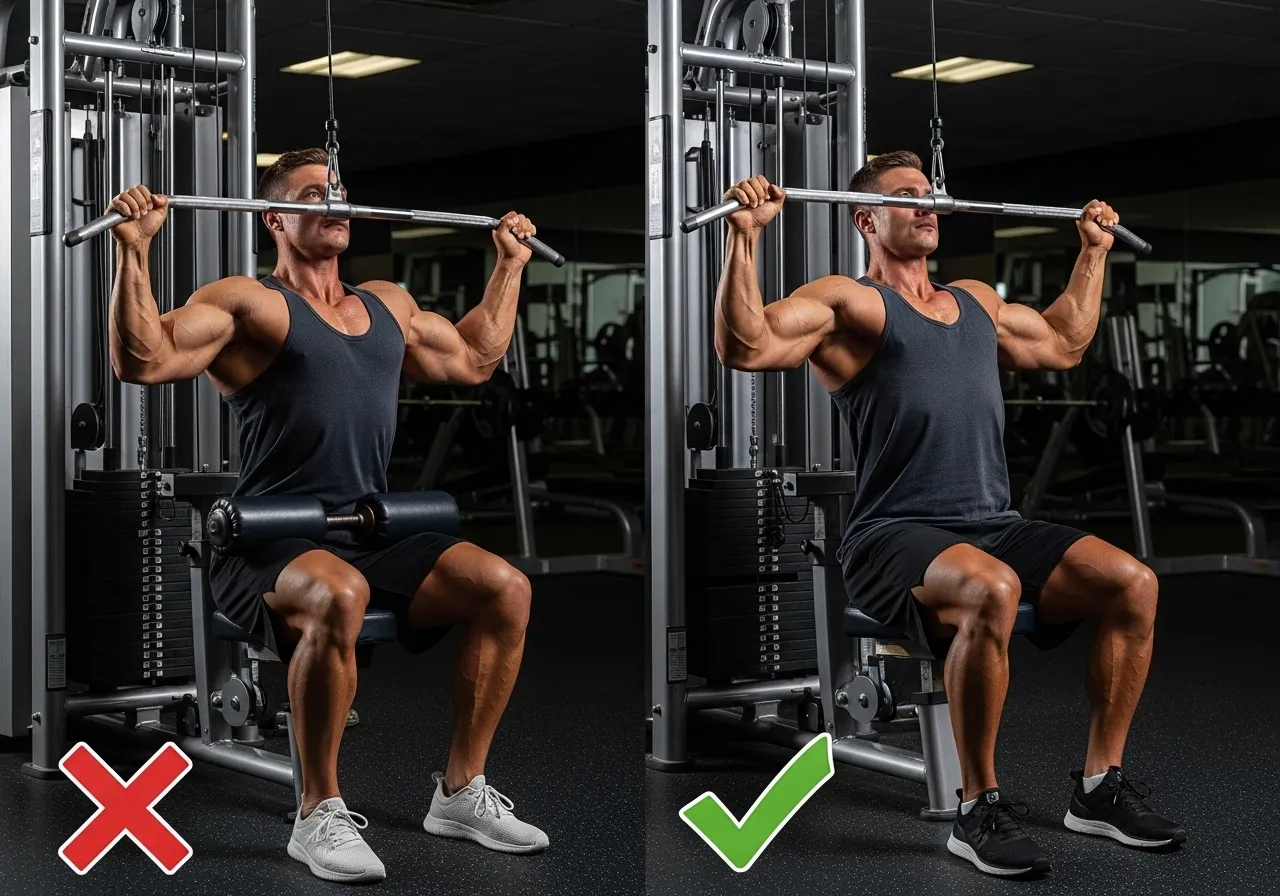
The lat pulldown — the cable machine equivalent of the pull-up — provides all of the lat width development benefits of the pull-up with adjustable resistance that makes progressive overload more accessible and volume accumulation more practical. The technique: sit with thighs secured under the pad, grip the bar at the wide-grip position (matching the pull-up grip width), and begin each rep with arms fully extended overhead (full lat stretch). Lean back slightly (15–20 degrees) to create the angle that allows full lat adduction through the movement rather than the purely vertical path that upright position limits. Initiate with scapular depression, then drive the elbows down and back toward the hips — the identical lat-dominant cue as the pull-up. Pull until the bar touches the upper chest, holding for 1 second at the full contraction before controlling the bar back to the start. The behind-the-neck lat pulldown variant (pulling the bar behind the head) is not recommended — research finds no lat activation advantage over the standard front pulldown while the behind-the-neck position creates significant cervical spine stress that increases neck injury risk. Grip variations: the wide pronated (overhand) grip produces the highest lat activation; the neutral (parallel) grip provides a moderate lat stimulus with greater bicep contribution; the supinated (underhand) close-grip pulldown shifts loading toward the lower lat and biceps and is not the optimal choice for width development specifically. Programming: 3–4 sets of 8–15 reps — the higher rep range than pull-ups is appropriate because the consistent cable resistance allows better lat isolation through the full range.
Exercise 3: Straight-Arm Pulldown (Pure Lat Isolation)
The straight-arm pulldown — performed at a cable machine with arms kept straight throughout the movement — is the most isolation-focused of the five exercises, eliminating the bicep contribution entirely and requiring the lat to produce all the pulling force through its primary function of shoulder adduction with the arm extended. This exercise is unique among lat training exercises because the straight-arm position completely removes the elbow flexion that allows the biceps to assist — any pulling movement where the elbow bends allows bicep assistance, but with the elbow locked in slight flexion throughout the straight-arm pulldown, the lat must do all the work. The technique: stand facing a cable stack with a rope attachment at the top. Hold the rope with arms extended overhead (mimicking the lat stretch of a pull-up start position), then pull the rope down toward the thighs in a sweeping arc — keeping the arms straight (or with minimal elbow bend) throughout, feeling the lats stretch at the top and fully contract at the bottom where the hands reach the upper thighs. The movement path should feel like “putting something in your back pockets” — the elbows driving down and back toward the hips. Hold the fully contracted position for 1–2 seconds before slowly returning to the start. Programming: 2–3 sets of 12–20 reps — higher rep ranges are appropriate for isolation exercises that train neural connection and muscular endurance alongside hypertrophy. The straight-arm pulldown is particularly valuable as either a finisher (last exercise in a back session, fully fatiguing the lat after compound pulling) or as a pre-exhaustion exercise (first exercise, establishing lat connection before compound movements).
Exercise 4: Single-Arm Dumbbell Row (Width and Thickness)
The single-arm dumbbell row — performed with one hand and knee on a bench, pulling a dumbbell from the floor to the hip — provides a unique combination of horizontal pulling mechanics (training the mid-back) with a significant lat extension component (the lat’s secondary function) that makes it effective for both width and thickness development simultaneously. The technique for maximum lat involvement: use a neutral grip (palm facing the body), allow the shoulder to fully protract (reach down and forward) at the bottom of each rep to achieve full lat stretch — this full protraction at the bottom distinguishes a lat-biased row from a rhomboid-biased row that restricts range of motion. Pull the dumbbell toward the hip rather than toward the armpit — the hip-directed path emphasizes the lat’s extension function, while the armpit-directed path emphasizes the mid-back’s retraction function. Drive the elbow close to the body rather than flaring it wide — the close-elbow path maintains lat mechanical advantage through the pulling motion. Use a controlled 2–3 second eccentric (lowering) to maximize the time under tension that drives hypertrophy. Load: use the heaviest dumbbell that allows full range of motion and lat-dominant mechanics — this is typically heavier than most athletes expect when they first correct their technique. Progressive overload: add 2–4 kg when able to complete 3 sets of 12 reps with controlled technique. Research identifies the single-arm row with full protraction as one of the highest lat-activation rowing movements available, making technique precision the most important variable for maximizing its effectiveness.
Exercise 5: Incline Dumbbell Row (Stretch-Focused Width Builder)
The incline dumbbell row — performed face-down on a bench set at 30–45 degrees incline, with dumbbells hanging toward the floor — creates the largest lat stretch of any rowing movement by allowing the shoulder to fully protract and the arm to hang well below the shoulder plane at the bottom. This extreme starting stretch maximizes the eccentric loading of the lat and the subsequent range of motion through contraction — producing a training stimulus that flat and cable rows cannot replicate because they cannot achieve the same degree of lat elongation at the movement’s start. The technique: set an adjustable bench to 30–45 degrees incline, lie face-down with chest and stomach resting on the bench, feet on the floor for stability. Hold dumbbells with neutral grip, allowing them to hang toward the floor — feel the full lat stretch in this starting position. Pull both dumbbells simultaneously toward the hips (not toward the armpits), driving elbows close to the sides and squeezing the lats at the full contraction point. Lower slowly through the full range, allowing maximum stretch at the bottom of each rep. The bilateral version (both arms simultaneously) allows the bench to stabilize the trunk entirely, enabling complete focus on lat recruitment without the stabilization demands of single-arm rows. Load selection: start lighter than expected — the extreme range of motion and stretch loading feels more intense than the weight suggests, and the goal is quality lat recruitment through the full range rather than maximum load. Programming: 3 sets of 10–15 reps, with 2-second pause at full stretch and 1-second squeeze at contraction.
Combining the Five Exercises: Session Structure
The five exercises work most effectively when organized within a session structure that sequences them from most to least neurologically demanding — prioritizing the compound, heavy exercises when neural resources are fresh and reserving the isolation exercises for the end of the session when compound movement quality would otherwise decline. Recommended sequence: wide-grip pull-ups (most technically demanding, highest lat recruitment when fresh) → lat pulldown (moderate technical demand, excellent volume accumulation) → single-arm dumbbell row (unilateral stability demand, full stretch) → incline dumbbell row (bilateral, stretch-focused finish) → straight-arm pulldown (pure isolation finisher, no technical failure risk when fatigued). This sequence ensures that the exercises with the highest injury risk from fatigued technique are performed first, while the isolation exercises that are inherently lower-risk are performed at the end of the session when fatigue is highest. The total session volume from this sequence: 14–18 working sets — within the optimal 10–20 set range for lat hypertrophy in most trained individuals. Athletes who cannot complete the full sequence with adequate intensity should reduce to 3 exercises per session and distribute the remaining exercises across a second weekly back session — frequency increases that maintain per-session quality produce superior results to volume accumulation at the cost of technique quality.
The Role of Grip Width and Variations
Grip width on pulling movements significantly influences which portions of the lat and which synergist muscles are preferentially activated — and understanding these relationships allows informed grip selection for specific training goals. Wide pronated grip (hands wider than shoulder width, overhand): highest lat upper fiber activation, most direct V-taper development stimulus, limited range of motion at very wide grips. Shoulder-width neutral grip (parallel bars or neutral attachment): excellent lat activation across all fibers with greater range of motion than very wide grips, increased bicep contribution. Close supinated grip (underhand, hands inside shoulder width): greatest range of motion but shifts loading toward lower lat, biceps, and lower trapezius — less effective for pure width development but useful for targeting the lower lat that contributes to the V-taper’s lower portion. For width development specifically, the research supports wide pronated grip as the primary option with neutral grip as an effective secondary variation — and rotating between these grips across sessions or blocks prevents the adaptation stagnation that results from exclusive use of any single grip variation.
These five exercises — the wide-grip pull-up, lat pulldown, straight-arm pulldown, single-arm dumbbell row, and incline dumbbell row — represent the most effective and evidence-supported tools available for building back width, each contributing a distinct training stimulus that collectively produces the comprehensive lat development that V-taper aesthetics and athletic pulling strength require. Mastering these five exercises with proper technique, progressive overload, and appropriate volume is the complete back width prescription that no additional exercise complexity can replace. Every pull-up, every perfectly controlled lat pulldown rep, every session of honest progressive overload is a deposit into the back width account that pays out in the form of a wider, stronger, more athletically capable back — the compound interest of consistent, intelligent training applied month after month toward the specific goal of V-taper development that this article’s principles make achievable.
3. Training Variables: Sets, Reps, and Progressive Overload for Back Width
Understanding the specific training variables — volume, intensity, frequency, and progressive overload application — that maximize lat hypertrophy converts the five exercises into a systematically applied program rather than an ad hoc collection of good movements. The research on these variables for back width specifically provides more precise programming guidance than generic hypertrophy recommendations.
Optimal Volume for Lat Hypertrophy
Training volume — the total number of hard sets per muscle group per week — is the primary driver of hypertrophy within the range that recovery supports. For the latissimus dorsi specifically: 10–20 hard sets per week represents the research-supported optimal range for most trained individuals. Below 10 sets weekly, the lat stimulus is insufficient for meaningful ongoing hypertrophy in intermediate and advanced trainees. Above 20–25 sets weekly, recovery capacity is typically exceeded, producing the diminishing returns and potential overreaching that prevents the adaptation the volume is designed to drive. The minimum effective volume for beginners (0–1 years training): 6–10 sets per week — beginners’ higher sensitivity to training stimulus means lower volumes produce equivalent or greater adaptation than higher volumes in this population. The practical volume target: start at 10–12 hard sets per week split across 2 sessions (5–6 sets per session), and increase by 2 sets per week every 4–6 weeks until performance or recovery indicators suggest approaching the recovery ceiling. Research from the NSCA guidelines on resistance training volume confirms this progressive volume increase approach as more effective than starting at maximum volume, because it identifies the individual’s optimal volume range through systematic observation rather than assuming universal high-volume tolerance.
Rep Ranges for Lat Width: The Hypertrophy Spectrum
The research on rep ranges and hypertrophy has evolved significantly — the traditional distinction between “strength reps” (1–5) and “hypertrophy reps” (8–12) and “endurance reps” (15+) has been refined by research showing that muscle hypertrophy occurs across a broad rep range when sets are taken close to failure. For practical lat programming: primary exercises (pull-ups, lat pulldowns) benefit from the moderate rep range of 6–12 reps where progressive overload through load addition is practical; isolation exercises (straight-arm pulldowns, incline rows) benefit from higher rep ranges of 12–20 where the mind-muscle connection and metabolic stress components of hypertrophy are maximized. The key variable across all rep ranges: proximity to failure — sets must be performed within 1–3 reps of muscular failure to provide meaningful hypertrophic stimulus regardless of the rep range chosen. A set of 20 lat pulldown reps taken to 1 rep from failure produces similar hypertrophy to a set of 8 reps taken to 1 rep from failure — the rep number is secondary to the effort level that determines the mechanical tension and metabolic stress of the set.
Training Frequency: Once vs. Twice Weekly Back Training
Training frequency — how many times per week the lats are directly trained — influences the total weekly training stimulus and the rate of lat hypertrophy development. Once-weekly back training (the traditional “back day” approach) concentrates all weekly lat volume in a single session, producing a single protein synthesis peak that subsides before the next training stimulus arrives. Twice-weekly back training distributes the same weekly volume across two sessions, producing two protein synthesis peaks per week and maintaining muscle-building processes for a greater proportion of the training week. Research consistently finds that twice-weekly training produces superior hypertrophy compared to once-weekly training at equivalent total volumes — confirming that frequency (not just volume) independently influences the rate of muscle development. Practical twice-weekly back training: split weekly volume across two sessions separated by 48–72 hours minimum — for example, Monday back day (vertical pulling focus: pull-ups and lat pulldowns) and Thursday back day (horizontal pulling focus with lat isolation: rows and straight-arm pulldowns). This frequency approach doubles the lat development rate at equivalent effort investment — one of the highest-return programming adjustments available for athletes whose current once-weekly back training has produced a plateau.
Progressive Overload Methods for Pulling Exercises
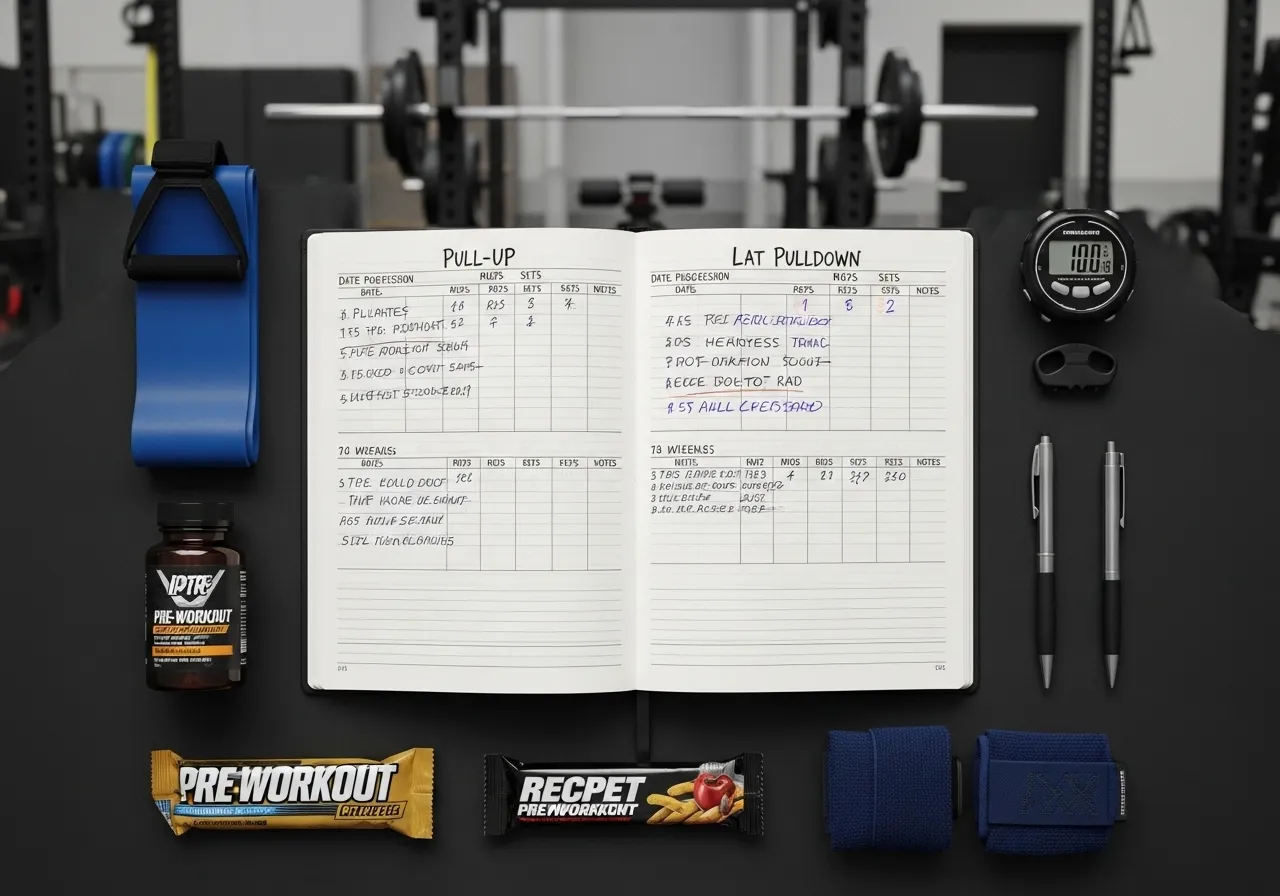
Progressive overload — the systematic increase in training stimulus over time — is the non-negotiable mechanism of ongoing lat hypertrophy. For back width specifically, four progressive overload methods apply to the five exercises: load progression (adding weight when rep targets are met — the primary method for pull-ups with added weight, lat pulldowns, and rows); rep progression (adding reps within the target range before increasing load — the primary method for bodyweight pull-ups); set progression (adding a working set to increase weekly volume when individual set quality plateaus); and technique progression (improving range of motion, control, and lat recruitment quality — particularly important in the early stages when technique improvement itself constitutes progressive overload). The training log is the essential tool for applying progressive overload — tracking the exact weight, reps, and sets of every working set in every session provides the objective record that identifies when progression is occurring and when stagnation requires attention. Athletes who train without a log cannot apply systematic progressive overload because they have no reference for their previous performance — making the training log as important as any exercise selection or programming decision.
Deload Weeks for Sustained Back Development
Deload weeks — planned reductions in training volume (50–60% of normal sets) and/or intensity (10–15% load reduction) every 4–8 weeks — allow accumulated fatigue to dissipate and the full adaptation from the preceding training block to express itself. Without deloads, accumulated fatigue masks the true fitness improvement that training has produced — athletes often feel stronger and perform better in the week following a deload than they did during the preceding high-volume training week, not because the deload itself built strength but because the fatigue that was concealing the true strength level has resolved. For back width development specifically: the stretch-loaded pulling exercises (incline rows, full-range pull-ups) create significant connective tissue stress that accumulated over 4–6 weeks requires a deload to resolve — tendons and ligaments recover more slowly than muscles, and the shoulder joint structures stressed by heavy pulling benefit from the reduced load of deload weeks. Recommended deload structure: maintain all five exercises with 50% of normal sets at 80% of normal load — enough stimulus to maintain neural connection and lat activation patterns while allowing tissue-level recovery from the accumulated volume of the preceding training block.
Periodization for Long-Term Back Width Development
Periodization — planned variation in training variables across multi-week cycles — prevents the adaptation plateau that constant training produces and allows systematic manipulation of volume and intensity to drive ongoing lat development across the training year. A practical periodization model for back width: 4-week accumulation phase (high volume: 15–20 weekly sets, moderate intensity: 65–75% 1RM equivalent, rep range 10–15), followed by 3-week intensification phase (lower volume: 10–12 weekly sets, higher intensity: 75–85% 1RM equivalent, rep range 6–10), followed by 1-week deload, then repeat. This cycle allows the high-volume phase to build the metabolic stress and volume-driven hypertrophy, while the intensification phase consolidates the strength gains that support the next accumulation phase at higher loads. Athletes who have been performing the same back workout for 6+ months without periodization are experiencing the expected plateau from a static training stimulus — implementing a periodization structure that cycles volume and intensity every 4–8 weeks reliably restores progressive lat development even in athletes who have been training for years without it.
Rest Periods Between Sets: Impact on Lat Development
Rest period length between back training sets influences both the metabolic stimulus and the performance quality of subsequent sets — two factors that together determine the hypertrophic effectiveness of the training session. For compound pulling exercises (pull-ups, lat pulldowns, rows): 2–3 minutes of rest allows sufficient phosphocreatine resynthesis and neural recovery to maintain performance quality across sets — shorter rest produces progressive performance decline that reduces the training stimulus of later sets without proportionally increasing the metabolic stress stimulus. For isolation exercises (straight-arm pulldowns, incline rows): 60–90 seconds of rest between sets is sufficient given the lower neurological demand and allows the metabolic stress component of hypertrophy to remain elevated across sets. Using a timer to enforce rest periods rather than estimating them subjectively is recommended — subjective rest estimation is typically inaccurate by 30–50%, either under-resting (reducing next-set performance) or over-resting (extending session duration without additional benefit). For athletes whose back sessions feel productive but whose pull-up and row performance declines dramatically from set 1 to set 3, insufficient rest is the most likely cause — increasing rest periods for these compound exercises to 2–3 minutes typically produces immediate set-to-set performance improvement.
Eccentric Training for Accelerated Lat Development
The eccentric phase of pulling movements — the lowering portion where the lat is lengthening under load — is the primary driver of the muscle damage that stimulates the protein synthesis response underlying muscle growth. Research on eccentric training and hypertrophy consistently finds that muscles exposed to greater eccentric loading develop more rapidly than muscles trained primarily through concentric movements — confirming that the controlled lowering of every rep in pulling exercises is as important as (or more important than) the pulling itself. Practically, this means: controlling the lowering phase of every pull-up and lat pulldown rep for 3–4 seconds rather than dropping quickly; using the full lat stretch available at the bottom of each rep rather than truncating range of motion; and for athletes who cannot yet perform full pull-ups, performing negative-only pull-ups (jumping to the top position and controlling the eccentric lowering) provides the eccentric stimulus that builds the lat strength required for full concentric pull-up performance. Nordic-style lat training (tempo-emphasized eccentric with minimal rest at the bottom stretch) as an occasional training variation introduces the extreme eccentric stimulus that produces the pronounced muscle soreness and subsequent growth response associated with novel mechanical loading.
Tracking and Measuring Back Width Progress
Measuring lat width progress requires different assessment tools than scale weight or overall body circumference — specific metrics that capture the V-taper development that training is designed to produce. The primary back width measurement: the axillary chest circumference (measured at the widest point of the lat flare, approximately at the armpit level) — comparing this measurement monthly provides a direct assessment of lat width development. Photography: standardized back photos (same lighting, same distance, same bodyweight hydration level, same time of day relative to meals) taken monthly provide the visual record that captures the gradual width development that day-to-day observation misses. Performance metrics: pull-up rep counts and lat pulldown load are the primary performance indicators that confirm the strength development underlying lat hypertrophy — monthly assessments of maximum bodyweight pull-up reps and 8-rep max lat pulldown load track the progressive overload that drives ongoing development. Combining these three measurement approaches — circumference, photography, and performance — provides the comprehensive progress picture that any single metric misses, ensuring that genuine lat development is captured even when scale weight, mirror assessment, or training log changes individually suggest ambiguous progress.
The systematic application of volume, frequency, progressive overload, and periodization — tracked through objective measurement tools that capture the specific width development being targeted — converts the five exercises from isolated good choices into a coherent, results-producing training system for back width that compounds across months and years into the V-taper development that motivated starting. The training variables — volume, frequency, progressive overload, and periodization — are the programming levers that determine whether the five exercises produce their full hypertrophic potential or deliver a fraction of it through unoptimized application. Every pull-up, every perfectly controlled lat pulldown rep, every session of honest progressive overload is a deposit into the back width account that pays out in the form of a wider, stronger, more athletically capable back — the compound interest of consistent, intelligent training applied month after month toward the specific goal of V-taper development that this article’s principles make achievable.
4. Common Mistakes That Limit Back Width and How to Fix Them
The most valuable training information is often not “what to do” but “what you’re doing wrong” — the specific errors that are preventing the results that correct execution would produce. These back width mistakes are the most common and most impactful errors seen in gym environments, each with a specific correction that immediately improves training effectiveness.
Mistake 1: Using Too Much Bicep and Not Enough Lat
The most common and most consequential back training error: allowing the biceps to do the majority of pulling work while the lats contribute minimally — producing bicep fatigue and pump while the lats receive inadequate stimulus for hypertrophy. This error manifests as feeling the pull-up or lat pulldown primarily in the biceps rather than the lats, and typically results from initiating pulling movements by bending the elbows before establishing scapular depression and lat engagement. The fix: before every set of any pulling exercise, perform 5–10 scapular depression reps (hanging from the bar and actively pulling the shoulder blades down without bending the elbows) to establish lat neuromuscular activation. During each rep, lead with the elbows rather than the hands — thinking “drive the elbows down toward the hips” rather than “pull the hands toward the shoulders” changes the recruitment pattern from bicep-dominant to lat-dominant. A tactile cue: imagine squeezing a tennis ball in each armpit throughout the pulling motion — this internal rotation and adduction cue activates the lat throughout the range rather than allowing it to disengage in the mid-range where bicep mechanics are most efficient.
Mistake 2: Not Achieving Full Range of Motion
Partial range of motion — not fully extending the arms at the bottom of pull-ups and lat pulldowns, or not pulling to full contraction at the top — significantly reduces the hypertrophic stimulus by eliminating the stretch loading at the bottom (where peak mechanical tension on the lat occurs during the eccentric phase) and the full contraction at the top (where peak lat activation occurs at the shortened position). Many athletes unconsciously truncate the range of motion as fatigue increases during a set — a protective mechanism that makes the exercise easier but undermines its effectiveness. The fix: use a weight or rep count that allows full range of motion maintenance throughout all reps of a set — if range of motion is compromising at rep 7 of a planned 10-rep set, the load is too heavy or the rep target too high. End the set when full range of motion cannot be maintained rather than completing reps with compromised technique. For pull-ups specifically: start from a dead hang (arms fully extended, shoulders slightly elevated from passive hanging) before each rep — not from the shortened position that truncates the lat stretch. The dead hang starting position is uncomfortable and challenging, which is precisely why it is the position most athletes skip — and precisely why maintaining it produces superior lat development compared to the partial-range alternative.
Mistake 3: Neglecting Vertical Pulling in Favor of Rows
Rows are excellent back exercises — but they primarily develop back thickness through mid-back musculature rather than the lat width that vertical pulling specifically targets. Athletes who perform 4 sets of rows for every 1 set of vertical pulling have a back training program biased toward thickness at the expense of width — regardless of how many total back sets they perform. The fix: balance vertical and horizontal pulling volume — target at least 1:1 ratio of vertical pull sets to horizontal pull sets for width-focused programming, or even a 2:1 vertical-to-horizontal ratio during dedicated width-development phases. The practical rebalancing for athletes currently performing 4 sets of rows and 2 sets of pull-ups/pulldowns: reduce rows to 3 sets and increase vertical pulling to 3–4 sets — a shift that meaningfully increases the lat-specific width stimulus without requiring more total training time. Rows are not eliminated — they provide the mid-back thickness that completes the visually impressive back — but they are appropriately prioritized alongside rather than instead of the vertical pulling that specifically builds the width.
Mistake 4: Training to Failure Too Rarely or Too Often
Training proximity to failure — how close each set comes to the point where the next rep cannot be completed — is the primary determinant of the hypertrophic stimulus that back training produces. Too far from failure (5+ reps in reserve): the mechanical tension and metabolic stress are insufficient to drive meaningful lat hypertrophy — the training is physically present but physiologically inadequate. Too frequently at complete failure (0 reps in reserve on every set): excessive fatigue accumulation, elevated injury risk from failed reps and technique breakdown, and recovery demands that prevent adequate training frequency. The optimal back training proximity to failure: 1–3 reps in reserve on most working sets (leaving 1–3 reps “in the tank”), with occasional sets taken to true failure for maximal stimulus — particularly on the final set of each exercise where subsequent set quality is not a concern. The practical self-assessment: after each set, estimate honestly how many more reps could have been completed with the same technique — if the answer is 4 or more, the set was insufficiently intense for hypertrophy; if the answer is 0 and technique broke down significantly, the set was too intense for sustainable training. Calibrating toward 1–3 reps in reserve on most sets produces the optimal hypertrophic stimulus while maintaining the technique and recovery that sustains weekly training consistency.
Mistake 5: Ignoring Scapular Position and Shoulder Health
Shoulder injuries from back training — most commonly anterior shoulder impingement, bicipital tendinopathy, and rotator cuff irritation — result primarily from poor scapular positioning during pulling movements rather than from the movements themselves. When the scapulae are not properly depressed and retracted during the pulling phase, the humerus moves in a suboptimal relationship to the acromion and glenoid fossa — creating the mechanical impingement of the subacromial space that produces the shoulder irritation athletes experience. The fix: shoulder health cues before and during every pulling set — “depress the shoulder blades before pulling,” “retract and depress throughout the movement,” “avoid shrugging at any point in the pull.” Athletes who experience anterior shoulder pain during back training should immediately reduce load to the level that allows pain-free scapular mechanics, correct the mechanics, and gradually rebuild load — attempting to train through impingement pain with heavy loads accelerates the tissue damage that eventually forces a training hiatus much longer than the technique correction period would have required.
Mistake 6: Insufficient Recovery Time Between Back Sessions
Training the lats with high intensity (near-failure sets with heavy loads) requires 48–72 hours of recovery before the next high-intensity back session can be performed without compromising either session quality or long-term adaptation. Athletes who train their backs on consecutive days at high intensity are accumulating fatigue faster than recovery can resolve it — producing the chronic soreness, declining performance, and absence of progress that characterize under-recovery. The fix: separate intense back training sessions by at least 48 hours; for athletes performing twice-weekly back training, Monday-Thursday or Tuesday-Friday splits provide the minimum recovery window. Low-intensity back movement on rest days (light cable rows, band pull-aparts, thoracic mobility work) does not impair recovery and may enhance it by increasing blood flow without generating significant additional fatigue. Monitoring performance trends across sessions is the primary way to confirm adequate recovery — if performance (weight, reps, set quality) is not maintaining or improving across consecutive training weeks, recovery insufficiency is among the first variables to investigate.
Mistake 7: Relying on Momentum and Kipping
Momentum — the use of swinging, kipping, or body English to assist pulling movements — reduces the mechanical tension on the lat by replacing muscle force with kinetic energy, producing what appears to be a successful rep with significantly less lat stimulus than a strict rep would generate. Kipping pull-ups (the CrossFit-style swing-and-pull movement) are appropriate for competitive CrossFit where the goal is maximizing rep counts for performance — they are counterproductive for lat hypertrophy because the kip reduces lat tension precisely in the portion of the movement where lat tension is highest. Strict technique: every rep of every back exercise should be performed with controlled intent — the concentric (pulling) phase should take 1–2 seconds, and the eccentric (lowering) phase should take 2–4 seconds — no swinging, shrugging, or momentum assistance. Athletes who can perform 15 strict reps without momentum are stronger and have better lat development than athletes who can perform 25 kipping reps — the strict version is the superior training stimulus despite the lower apparent rep count.
Mistake 8: Neglecting the Lower Lats
The lower portion of the latissimus dorsi — the fibers originating from the lower thoracic vertebrae, lumbar fascia, and iliac crest — contributes significantly to the width and sweep of the lat’s lower portion that creates the dramatic visual transition from wide back to narrow waist. Standard lat pulldowns and pull-ups with the elbows driving toward the sides train the upper and mid-lat preferentially, while the lower lat requires specific attention through exercise selection and body positioning. Lower lat emphasis exercises: close-grip pulldowns with a slight lean back (allowing a longer range of motion toward the hips); straight-arm pulldowns where the hands finish low toward the upper thighs; and single-arm cable pulldowns from overhead with a slight hip flexion lean that allows the lat to pull toward the hip rather than the shoulder. Incorporating 1–2 lower-lat emphasis exercises per back session fills the portion of the V-taper that standard programming leaves undertrained — producing the complete lat sweep that makes the wide-to-narrow transition at the waist particularly pronounced.
Fixing Multiple Mistakes Simultaneously: A Practical Approach
Athletes who identify multiple technique and programming errors simultaneously should prioritize correction in order of impact rather than attempting to fix everything at once — which typically results in no errors being fully corrected. Priority order: (1) Scapular depression and lat engagement (the technique foundation without which all other corrections are built on an unstable base); (2) Full range of motion (the variable with the highest impact on lat stimulus per rep after technique); (3) Training proximity to failure (ensuring each set provides adequate intensity for hypertrophic stimulus); (4) Vertical/horizontal pulling balance (rebalancing volume toward width-producing movements); (5) Progressive overload application (ensuring the training log is used to drive systematic improvement). Addressing techniques in this order — over 4–6 weeks of focused attention on each — allows each correction to fully integrate before the next is added, producing sustainable technical improvement rather than the temporary attention to multiple issues simultaneously that reverts when conscious focus is directed elsewhere.
Correcting these eight mistakes — from bicep dominance and partial range of motion to momentum reliance and lower lat neglect — transforms back training from effort without result into systematically effective stimulus that produces the lat hypertrophy and back width that consistent training deserves to produce. Correcting these mistakes consistently is as important as exercise selection — and the athlete who executes basic exercises with excellent technique will always outperform the athlete who performs advanced exercises poorly. Every pull-up, every perfectly controlled lat pulldown rep, every session of honest progressive overload is a deposit into the back width account that pays out in the form of a wider, stronger, more athletically capable back — the compound interest of consistent, intelligent training applied month after month toward the specific goal of V-taper development that this article’s principles make achievable.

5. Sample Back Width Programs, FAQs, and Expert Tips
Theory and exercise knowledge become results through structured programming — organized training plans that integrate the five exercises, optimal training variables, and progressive overload into a week-by-week approach that produces measurable back width improvement. This section provides ready-to-implement programs for different training levels alongside the expert tips and FAQ answers that fill the gaps between exercise knowledge and training execution.
Beginner Back Width Program (Weeks 1–12)
The beginner program prioritizes lat engagement technique, basic movement pattern establishment, and initial progressive overload development — building the neural foundation that intermediate and advanced training builds upon. Session frequency: 2 times per week, with 48–72 hours between sessions. Session structure (perform in this order): Exercise 1 — Assisted Pull-Up or Lat Pulldown: 3 sets × 8–12 reps, 2.5 kg progression when 3 × 12 achieved. Exercise 2 — Single-Arm Dumbbell Row: 3 sets × 10–12 reps each side, 2 kg progression when 3 × 12 achieved. Exercise 3 — Straight-Arm Pulldown: 2 sets × 15–20 reps, focus on lat connection rather than load. Total: 8 weekly sets across 2 sessions. Beginner progression expectation: pull-up progression from assisted to bodyweight within 6–8 weeks with consistent training; lat pulldown load increase of 20–30 kg over 12 weeks; visible lat development beginning at weeks 8–12 as neural adaptation gives way to early hypertrophy. The beginner program is intentionally simple — the exercise selection is limited to allow complete focus on technique quality rather than exercise variety that distracts from the fundamental movement patterns that all subsequent back training builds upon.
Intermediate Back Width Program (Weeks 1–12)
The intermediate program introduces full five-exercise implementation, higher weekly volume, and structured periodization — appropriate for athletes who can perform 5+ strict bodyweight pull-ups and have 1+ years of consistent back training. Session frequency: 2 times per week. Session A (vertical pulling emphasis): Wide-Grip Pull-Up: 4 sets × 6–10 reps (add weight when 4 × 10 achieved); Lat Pulldown: 3 sets × 10–15 reps (alternate grip variation each session); Straight-Arm Pulldown: 3 sets × 15–20 reps. Session B (horizontal pulling emphasis with lat isolation): Single-Arm Dumbbell Row: 4 sets × 10–12 reps each side; Incline Dumbbell Row: 3 sets × 12–15 reps; Straight-Arm Pulldown: 2 sets × 15–20 reps (lat finisher). Total: 19 weekly sets across 2 sessions — within the optimal 15–20 set range for intermediate trainees. Periodization: apply 4-week accumulation (add 1 set per session every 2 weeks) → 1-week deload (50% volume) → repeat. Intermediate progression expectation: 5–10 kg lat pulldown progression per training block, visible back width development noticeable to others at the 3–4 month mark with consistent progressive overload application.
Advanced Back Width Specialization Block (8 Weeks)
The advanced specialization block is a dedicated 8-week phase that temporarily increases back width training frequency and volume beyond the standard program, producing an accelerated lat development stimulus for athletes who have exhausted their normal program’s progress potential. Session frequency: 3 times per week back training (high frequency specialization). Session A (heavy vertical pulling): Wide-Grip Pull-Up: 5 sets × 5–8 reps with added weight; Lat Pulldown: 4 sets × 8–12 reps. Session B (horizontal pulling and isolation): Single-Arm Dumbbell Row: 4 sets × 8–12 reps; Incline Dumbbell Row: 4 sets × 12–15 reps; Straight-Arm Pulldown: 3 sets × 15–20 reps. Session C (moderate intensity, technique focus): Lat Pulldown (different grip): 3 sets × 12–15 reps; Straight-Arm Pulldown: 4 sets × 15–20 reps; Incline Row: 2 sets × 15 reps. Total: 29 weekly sets — the high end of recoverable volume for advanced athletes during a dedicated specialization phase. Important: reduce volume for all other muscle groups during the specialization block to maintain total training volume within recovery capacity. After 8 weeks, return to standard volume before considering another specialization block.
Nutrition Timing for Back Training Days
While total daily protein and caloric intake are the primary nutritional variables for back width development, strategic meal timing around training sessions optimizes the acute hormonal and muscle protein synthesis environment for the lat stimulus that training produces. Pre-training meal (60–90 minutes before session): 30–40g protein and 40–60g carbohydrates — providing muscle glycogen for training performance and amino acid availability for the training-induced protein synthesis response. Post-training meal (within 2 hours after session): 40–50g protein with adequate carbohydrates for glycogen resynthesis — the post-training period is characterized by elevated muscle protein synthesis rates that are maximized by amino acid availability during this window. Hydration: even mild dehydration (1–2% body weight loss) reduces strength and endurance performance in pulling exercises — entering training sessions fully hydrated and maintaining hydration through the session (500–750 ml water per hour of training) ensures that dehydration does not artificially limit the training performance that drives lat development.
Supplementation for Back Width Development
Specific supplements have research support for improving the training performance or recovery that accelerates lat development. Creatine monohydrate (3–5g daily): the most well-evidenced performance supplement, improving strength and power in pulling exercises by increasing phosphocreatine availability for the short, high-intensity sets of pull-ups and heavy rows. Protein powder: not a unique supplement but a convenient source of the protein that lat hypertrophy requires — whey protein’s high leucine content makes it the most effective protein source for maximizing the post-training muscle protein synthesis response. Caffeine (200–400mg, 45–60 minutes pre-training): consistently improves upper body strength and endurance performance in pulling exercises, allowing more reps per set at a given load. These three supplements have the highest evidence-to-cost ratio for back width training — the many other supplements marketed for muscle building lack the research support to justify their cost relative to these fundamentals.
Frequently Asked Questions About Building Back Width
How long does it take to see a noticeable wider back? Beginners with genuine progressive overload and adequate protein can see early lat development at 8–12 weeks; noticeable width visible in photos at 3–6 months; dramatically wider back recognizable to others at 12–18 months. Intermediate athletes: 6–12 months of dedicated width-focused training for meaningful visual change. Are pull-ups or lat pulldowns better for width? Both produce equivalent lat development when performed with correct technique and progressive overload — pull-ups provide the additional core and stability challenge; lat pulldowns allow easier load management and progression, particularly for beginners. Include both for comprehensive lat development. What if I can’t do a single pull-up? Use assisted pull-up machines (counterweight assistance), resistance band assistance, or lat pulldowns as your primary vertical pulling exercise — and perform negative-only pull-ups (eccentric phase only) to build the lat strength for full pull-ups within 4–8 weeks of consistent training. Should I train my back before or after chest? Train the muscle group you prioritize first in the session — for athletes specifically targeting back width, train back before chest to ensure maximum performance quality for the back training that is the primary development goal. How wide can my back get? Genetic ceiling varies by lat insertion, clavicle width, and overall body proportionality — but most athletes are far from their genetic ceiling and would benefit from years of appropriate training before genetics becomes the relevant limiting factor. Focus on maximizing the width your genetics allow through consistent, progressive training rather than estimating an artificial ceiling.
Expert Tips: What Top Coaches Say About Building Back Width
The most consistent advice from elite strength coaches and bodybuilding experts on building back width reflects the same principles the research supports — but expressed through the practitioner wisdom that comes from working with thousands of athletes. Tip 1 — “Feel the stretch, own the stretch”: the lat stretch at the bottom of every pull-up and pulldown rep is where the majority of the hypertrophic stimulus is generated — athletes who rush through the bottom of pulling movements to minimize discomfort are avoiding the most productive portion of the exercise. Deliberately pausing for 1 second at the fully extended bottom position of every rep maximizes the eccentric stretch stimulus that drives lat hypertrophy. Tip 2 — “Pull the bar to your belly button, not your chin”: directing the focus of the lat pulldown pull toward the naval rather than the chin changes the elbow path from vertical (bicep-dominant) to angled-back (lat-dominant) — a simple mental cue that significantly changes which muscles do the work without changing the exercise. Tip 3 — “Get strong at pull-ups before adding fancy exercises”: athletes who can perform 3 × 10 wide-grip pull-ups with full range of motion and controlled tempo have better lat development than athletes who perform 8 different back exercises without being strong at any — pull-up performance is the single best predictor of lat development level, making pull-up strength the primary training priority.
Incorporating Back Width Training Into a Full Program
Back width training exists within a complete training program that must also address chest, shoulders, arms, legs, and core — and the scheduling of back sessions within the full week should minimize interference with other pressing and pulling movements that create competing recovery demands. Optimal scheduling: back training sessions separated from pressing sessions (chest, shoulder) by 24–48 hours minimum, as the shoulder joint structures are stressed by both pressing and pulling and require recovery time between sessions that tax them from different directions. The upper-lower split (alternating upper and lower body days) naturally provides back-pressing separation: upper day 1 (chest, front delts, triceps) → lower day → upper day 2 (back, rear delts, biceps) → lower day → repeat. The push-pull-legs split provides inherent back-pressing separation by dedicating entire sessions to one movement pattern: push day (chest, shoulders, triceps) → pull day (back, biceps) → legs → repeat. Either split organization ensures that back training receives its own dedicated session where the lat width exercises can be performed with full energy and focus rather than as afterthoughts following exhausting pressing work.
Maintaining Back Width During Injury or Detraining Periods
Shoulder injuries, illness, or life circumstances occasionally require temporary training reduction or complete training pauses — and understanding how to maintain lat development during these periods and rebuild efficiently after them reduces the long-term impact on back width progress. During temporary shoulder injury: many back exercises can be continued with modified technique that avoids the painful range — for anterior shoulder impingement (pain at the front of the shoulder during pulling), the neutral-grip pulldown at reduced load typically allows pain-free training; for posterior shoulder pain, straight-arm pulldowns may be tolerable when overhead exercises are not. Consult with a sports medicine professional or physical therapist before training through any shoulder injury. During complete training pauses: lat hypertrophy is preserved for 2–3 weeks without training, with measurable size reduction beginning at 3–4 weeks and accelerating beyond 4 weeks of complete inactivity. Return to training after a 2-week pause can resume at 80% of previous training loads; after 4 weeks, beginning at 60–70% and progressing back over 2–3 weeks prevents the excessive soreness and injury risk of returning to full load immediately. The muscle memory effect — faster strength and size rebuilding after detraining than during original development — means that prior lat development is not permanently lost during training pauses, and dedicated return-to-training programming efficiently restores the width that the pause temporarily reduced.
Building a Complete Back: Width Plus Thickness
A complete back development program produces both the width (lat flare) and the thickness (mid-back density) that together create the visually impressive, athletically powerful back that single-dimension training cannot achieve. After establishing the lat width foundation through the five exercises and programming in this article, complementing with dedicated mid-back thickness work completes the development: barbell rows (the most effective mid-back thickness exercise, training the rhomboids, middle trapezius, and rear deltoids through horizontal pulling with heavy loads), face pulls (targeting the rear deltoids and external rotators that fill the upper back between the lats and deltoids), and cable rows with full scapular retraction (isolating the rhomboids and mid-trapezius through the horizontal pulling pattern that lat-focused exercises deprioritize). The complete back training approach: prioritize vertical pulling for width development (the foundation); add horizontal pulling for thickness (the complement); and include rear deltoid and rotator cuff isolation (the finishing detail) — a three-layer approach that produces the complete back that any single exercise category alone cannot build. Apply the progressive overload and periodization principles of this article to all three layers, and the result across 12–24 months of consistent training is a back that is both impressively wide and impressively thick — the combination that defines elite physique and athletic back development.
Back width development is a long-term project measured in years rather than weeks — the compound effect of consistent, progressive, technically correct training across 12–24 months produces the V-taper that motivates starting the journey, and the principles in this article provide the map for completing it successfully. Every pull-up, every perfectly controlled lat pulldown rep, every session of honest progressive overload is a deposit into the back width account that pays out in the form of a wider, stronger, more athletically capable back — the compound interest of consistent, intelligent training applied month after month toward the specific goal of V-taper development that this article’s principles make achievable.