How to Recover Faster After a Workout: Evidence-Based Strategies

This article is for general educational purposes only and does not constitute medical or professional fitness advice.
Consult a licensed healthcare provider or certified fitness professional before starting any new program.
Training hard is only half of the fitness equation. What happens between sessions — sleep, nutrition, movement, and stress management — determines how much of the training stimulus is converted into actual adaptation.
This guide covers the evidence-based recovery strategies that may meaningfully support recovery between training sessions, and the ones that are more likely hype than help.
What Actually Happens During Recovery
The Adaptation Process
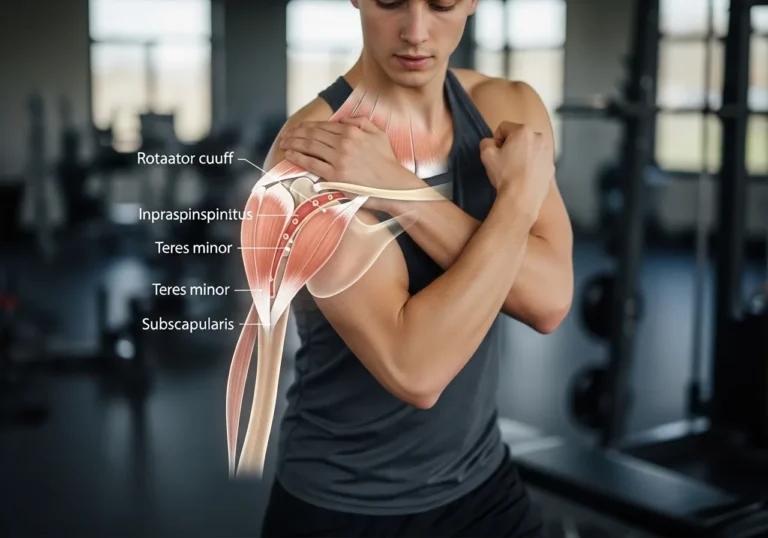
During resistance training, muscle fibers sustain microscopic damage at the Z-disc level (the structural protein scaffold within each muscle fiber that anchors the contractile proteins). This damage triggers an inflammatory response that initiates repair — and the repair process is what produces the strength and size improvements training aims for.
This process occurs between sessions, not during them. Training creates the stimulus; recovery delivers the result.
The Two Primary Recovery Systems
| System | What It Restores | Primary Time Frame |
|---|---|---|
| Metabolic recovery | Glycogen stores, phosphocreatine, pH balance | 2–24 hours |
| Structural recovery | Muscle protein repair and synthesis | 24–72 hours |
Most people focus primarily on metabolic recovery (feeling “un-tired”) — but structural recovery is what ultimately determines whether training produces the intended adaptation. Returning to training before structural recovery is complete may reduce the quality of the subsequent session and increase overuse injury risk over time.

The 5 Evidence-Based Recovery Strategies
Strategy 1 — Sleep: The Most Powerful Recovery Tool Available
Sleep is when the majority of muscle protein synthesis, growth hormone secretion (a hormone that stimulates tissue repair and growth), and neural consolidation occur.
Research consistently identifies sleep as the single most impactful recovery variable — ahead of any supplement, modality, or protocol.
Practical targets: 7–9 hours per night for most adults (National Sleep Foundation), with sleep quality (uninterrupted, dark, cool environment) mattering as much as quantity.
A 2011 study in Sleep found that extending sleep duration to 10 hours per night in collegiate athletes produced significant improvements in reaction time, sprint speed, and mood — suggesting that many athletes are chronically under-slept relative to their recovery needs.
Strategy 2 — Protein Within the Recovery Window
Consuming 20–40 g of protein in the hours following training provides the amino acid substrate that muscle protein synthesis requires.
As discussed in the pre/post-workout nutrition article, the window for this is 3–5 hours post-training for most people — not the narrow 30-minute window that older literature suggested.
Strategy 3 — Active Recovery on Rest Days
Low-intensity movement (20–30 minutes of walking, cycling, or swimming at very easy effort) on rest days may accelerate recovery by increasing blood flow to recovering muscles without adding training stress.
The mechanism: increased circulation facilitates nutrient delivery to repairing tissue and metabolite clearance from previously trained muscles.
This is preferable to complete inactivity for most people — though high-intensity cardio on rest days between heavy strength sessions is generally not recommended, as it adds a training load without the specific benefit of targeted active recovery.
Strategy 4 — Carbohydrate for Glycogen Replenishment
Glycogen (the primary fuel store for moderate-to-high intensity exercise) is substantially depleted during intense training sessions and requires dietary carbohydrate to replenish.
For athletes training once per day, adequate daily carbohydrate intake (3–7 g/kg body weight depending on volume and intensity) is generally sufficient — targeted post-workout carbohydrate becomes more important when training twice per day or when glycogen recovery needs to occur within 8 hours.
Strategy 5 — Stress Management and Parasympathetic Recovery
Psychological stress activates the same sympathetic nervous system response (the “fight or flight” system) as physical training — and the body cannot fully distinguish between the two sources of stress when allocating recovery resources.
High life stress during an intensive training phase may impair recovery beyond what training load alone would produce. Practices that support parasympathetic nervous system activity (the “rest and digest” state that allows recovery processes to operate optimally) — including diaphragmatic breathing, meditation, and deliberate low-stimulation rest periods — may support recovery indirectly by reducing the total allostatic load (the cumulative burden of all stressors on the body).

Recovery Tools: What Has Evidence and What Doesn’t
Cold Water Immersion (Ice Baths)
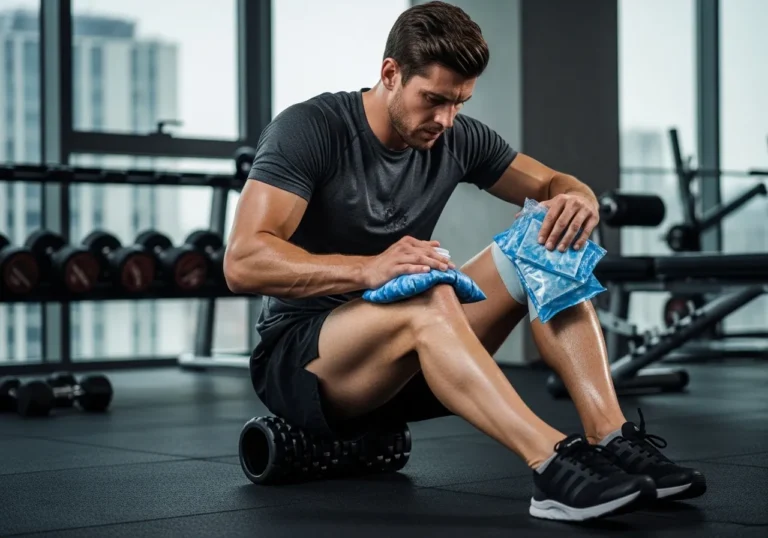
Some evidence supports reduced perceived soreness and faster return of perceived readiness in the 24–48 hours after intense training.
Important caveat: more recent research suggests cold water immersion may blunt the anabolic signaling that makes training produce muscle and strength gains — particularly when used regularly after resistance training. It may be most appropriate after competition performance when rapid recovery is the priority, rather than as a routine post-training practice during a muscle-building phase.
Foam Rolling and Massage
Meta-analyses suggest foam rolling may modestly reduce DOMS (delayed onset muscle soreness) and improve short-term range of motion. The effect sizes are generally small but the risk is minimal.
It appears to work primarily through neurological mechanisms (reducing the brain’s protective tension response) rather than by physically breaking up tissue as commonly believed.
Compression Garments
Some evidence supports modest reduction in DOMS and swelling from wearing compression garments after intense training. Effect sizes are small and individual responses vary.
What Has Limited Evidence
- Many commercial recovery supplements (BCAAs beyond adequate protein intake, most “recovery formulas”)
- Infrared saunas — interesting but limited high-quality evidence specifically for exercise recovery
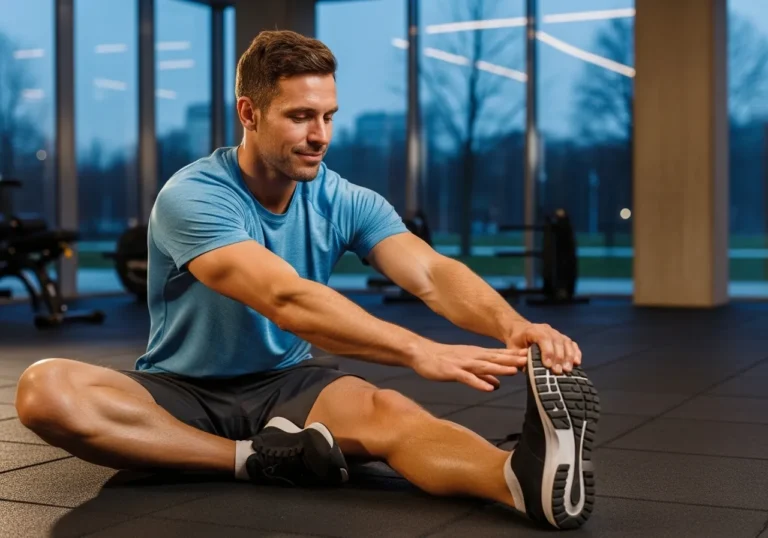
- Static stretching for DOMS prevention — research does not consistently support this popular belief

Frequently Asked Questions About Post-Workout Recovery
Q: Why am I still sore 3 days after a workout?
DOMS (delayed onset muscle soreness) typically peaks 24–72 hours after unaccustomed exercise and usually resolves within 3–5 days.
Soreness lasting beyond 5–7 days, or soreness accompanied by significant swelling, loss of strength, or difficulty with normal movement, may warrant rest and potentially medical evaluation — particularly if extremely intense exercise was performed (e.g., very heavy eccentric loading for the first time).
Rhabdomyolysis (a severe form of muscle breakdown that can release muscle proteins into the bloodstream and stress the kidneys) is rare but can occur after extreme exercise — symptoms include dark brown urine alongside intense muscle pain and require immediate medical attention.
Q: Is it better to train through soreness or rest?
Mild to moderate soreness does not prevent productive training in most cases — and some research suggests training a sore muscle at reduced intensity may actually accelerate recovery.
Training a muscle that is severely sore — particularly to the point of movement compensation — may increase injury risk and tends to produce lower quality training stimulus. Light active recovery or training different muscle groups is generally preferred over complete rest in most situations.
Q: Do I need recovery supplements?
For most recreational trainees, adequate sleep, protein intake, and carbohydrate provide the recovery substrate that supplements aim to supplement.
The supplement industry heavily markets recovery products — but the evidence base for most of them is significantly weaker than the marketing suggests. Prioritizing the foundational variables (sleep, nutrition, stress management) typically provides more return than any supplement stack.
- Sleep is the single most impactful recovery variable — 7–9 hours per night is the general target
- Active recovery (light movement on rest days) may support recovery more than complete inactivity
- Cold water immersion may reduce soreness but could blunt muscle-building adaptations if used routinely
- Most recovery supplements have limited evidence compared to foundational nutrition and sleep
- Consult a healthcare provider for soreness lasting beyond 5–7 days or accompanied by unusual symptoms