10 Fitness YouTubers Worth Following in 2025
Why Fitness YouTube Has Become Essential Learning for Serious Athletes
When I started training seriously, the information available to a beginner without a personal coach was limited to whatever was printed in the muscle magazines stacked near the gym entrance. The quality of that information was mixed at best. Today, the situation is reversed: some of the most scientifically rigorous, practically tested, and clearly communicated fitness education available anywhere is delivered for free on YouTube by researchers, coaches, and athletes who have collectively changed what evidence-based fitness education looks like. The challenge is no longer access to information — it is knowing which creators are providing genuinely accurate, evidence-supported content versus the impressive-looking misinformation that fitness YouTube also contains in abundance. This article profiles ten channels that have consistently earned their reputation for quality, accuracy, and practical applicability across the full range of fitness goals and knowledge levels that a diverse training audience brings.
How to Evaluate Fitness YouTube Content Quality
Before introducing the ten recommended channels, the criteria used to evaluate fitness YouTube content quality are worth establishing — because applying these criteria to any fitness content, YouTube or otherwise, protects the viewer from the confident misinformation that persuasive presentation can make indistinguishable from accurate information. The evaluation criteria: primary literature citation — does the creator cite specific peer-reviewed research studies rather than vague reference to “science” or “studies show”? The researchers and coaches who produce the highest-quality content can be traced to specific journals and research groups, and their claims verified against the papers they reference. Appropriate uncertainty — does the creator accurately represent the limitations of the evidence, the conditions under which findings apply, and the areas where research is insufficient for confident recommendations? The creator who represents every claim with equal certainty regardless of evidence quality is a red flag; the one who distinguishes well-established from tentative findings demonstrates genuine scientific literacy. Commercial transparency — does the creator clearly disclose the supplement sponsorships, paid partnerships, and financial interests that could influence their content? The fitness YouTube space has significant commercial pressure, and the creator who transparently distinguishes their honest recommendations from their sponsorship obligations is more trustworthy than the one who seamlessly integrates product promotion into “objective” content. Practical applicability — does the content translate research findings into actionable guidance that real-world athletes can implement without graduate-level scientific background? The best fitness educators bridge the gap between scientific evidence and practical application without compromising the accuracy of either. These criteria form the filter through which all ten channels described in this article were selected.
The Landscape of Fitness YouTube in 2025
The fitness YouTube ecosystem in 2025 has matured significantly from the early days of simple workout demonstration and supplement promotion into a diverse media landscape with channels spanning exercise science, nutrition research, sport psychology, injury prevention, and the practical coaching wisdom of elite-level competitive athletes. The notable shift has been toward evidence-based content: the audience demand for accurate information backed by research has grown substantially, and the channels that prioritize accuracy over sensationalism have consistently grown their audiences while channels that rely on misinformation and hype have faced increasing community pushback and fact-checking from scientifically literate viewers. The emergence of researcher-practitioners — PhDs and doctors who also train seriously and can translate research into athlete-relevant guidance — has been the most significant development in fitness YouTube’s quality evolution. These creators occupy the unique position of being credible scientific communicators who also understand the practical realities of training that pure researchers sometimes miss and that pure athletes sometimes rationalize away from the evidence. The ten channels profiled in this article represent a range of content focuses, target audiences, and creator backgrounds that collectively cover the major domains of evidence-based fitness education — the viewer who follows all ten consistently will encounter the breadth of high-quality fitness information that a decade ago would have required academic library access and expert coach mentorship to access.
Omar Isuf: Training Culture and Accessible Science
Omar Isuf occupies a unique position in the fitness YouTube landscape as a creator who has evolved alongside the evidence-based movement since its early YouTube days — his channel’s trajectory from early broscience-adjacent content toward the research-informed approach he now consistently applies reflects the same education journey that his audience of long-term followers has collectively undergone. What makes Isuf’s 2025 content specifically valuable is the practical culture perspective he provides on evidence-based training: the honest discussion of how training culture expectations, gym social dynamics, and the emotional components of fitness motivation interact with the evidence base that more purely academic channels address — the human dimension of training that biomechanics research does not cover. His interviews with researchers, coaches, and elite athletes provide the accessible bridge between academic content and the lived athletic experience that his large audience of recreational-to-competitive athletes most directly identifies with. The “natural lifting” perspective that Isuf has maintained throughout his career — honest discussion of the realistic expectations and results of drug-free training — provides the grounding in natural athlete realities that the bodybuilding YouTube space, with its frequent ambiguity about pharmaceutical enhancement, often fails to adequately establish for beginners who form unrealistic expectations from enhanced athlete results. For the intermediate athlete who wants evidence-based content delivered with the relatable personality and community-embedded perspective that academic channels sacrifice for information density, Isuf provides the human dimension of quality fitness education.
Candito Training HD: Powerlifting Education for Intermediate Athletes
Jonnie Candito’s channel represents the powerlifting-specific educational space for the intermediate strength athlete — the lifter who has completed novice linear progression and needs the more sophisticated periodization, technique refinement, and competition preparation guidance that beginner content does not address. Candito’s specific contribution to the YouTube powerlifting education space: the free programming (his 6-week powerlifting program has been downloaded millions of times and represents one of the most widely used intermediate powerlifting programs available at no cost) combined with the educational content that explains the programming rationale at a level that develops self-coaching capability rather than just providing a schedule to follow. His technique content for the squat and deadlift specifically addresses the intermediate issues — the strength-plateau causes, the technique inefficiencies that advanced loading reveals, and the mobility limitations that beginner loads tolerate but that near-maximal weights expose — that the beginner technique content that dominates YouTube does not address. The production quality is modest compared to the bigger budget channels, but the content quality-per-video-minute metric is among the highest in the powerlifting YouTube space — the 15-minute Candito technique video consistently provides more actionable intermediate-specific guidance than the 30-minute highly produced equivalents from larger channels. For the 6-18 month experience lifter transitioning from beginner programs and wanting powerlifting-specific development guidance from a credible competitive source, Candito’s channel is the most directly applicable free resource in the space.
Social Media Versus Long-Form YouTube: The Educational Format Tradeoff
The fitness content ecosystem extends beyond YouTube to Instagram, TikTok, Twitter/X, and podcasts — each format with specific strengths and limitations that the athlete who consumes fitness content across multiple platforms benefits from understanding. Instagram and TikTok short-form content: the format constraint of 15-90 second clips fundamentally limits the nuance that evidence-based fitness communication requires — the meta-analyses and systematic reviews that underpin the most confident training recommendations cannot be adequately represented in a short-form format, and the most confidence-generating short-form content is frequently the most oversimplified and potentially misleading. The short-form fitness creators worth following are those who use their brief content as introductions to long-form YouTube explanations or podcast discussions, rather than those who present definitive training recommendations in a format whose length prevents the evidence presentation that the confidence level would require. Twitter/X fitness content: the platform hosts some of the most sophisticated real-time fitness research discussions available anywhere — the researchers and coaches who debate specific study findings, methodological critiques, and practical implications in threaded discussions provide the intellectual peer-review culture that makes following these accounts valuable for the research-literate athlete. The specific limitation: the character limit and the engagement algorithm that rewards provocative statements over nuanced ones creates the same distortion toward confident oversimplification that other short-form platforms produce. The optimal multi-platform approach: use long-form YouTube for the foundational education that complex topics require; follow Twitter/X accounts from the credible researchers and coaches as a real-time research commentary feed; treat Instagram and TikTok as discovery tools for topics and creators to subsequently investigate through long-form content rather than as independent information sources. This layered approach uses each platform for what its format best supports rather than treating all formats as equivalent information delivery systems whose quality depends only on who is using them.
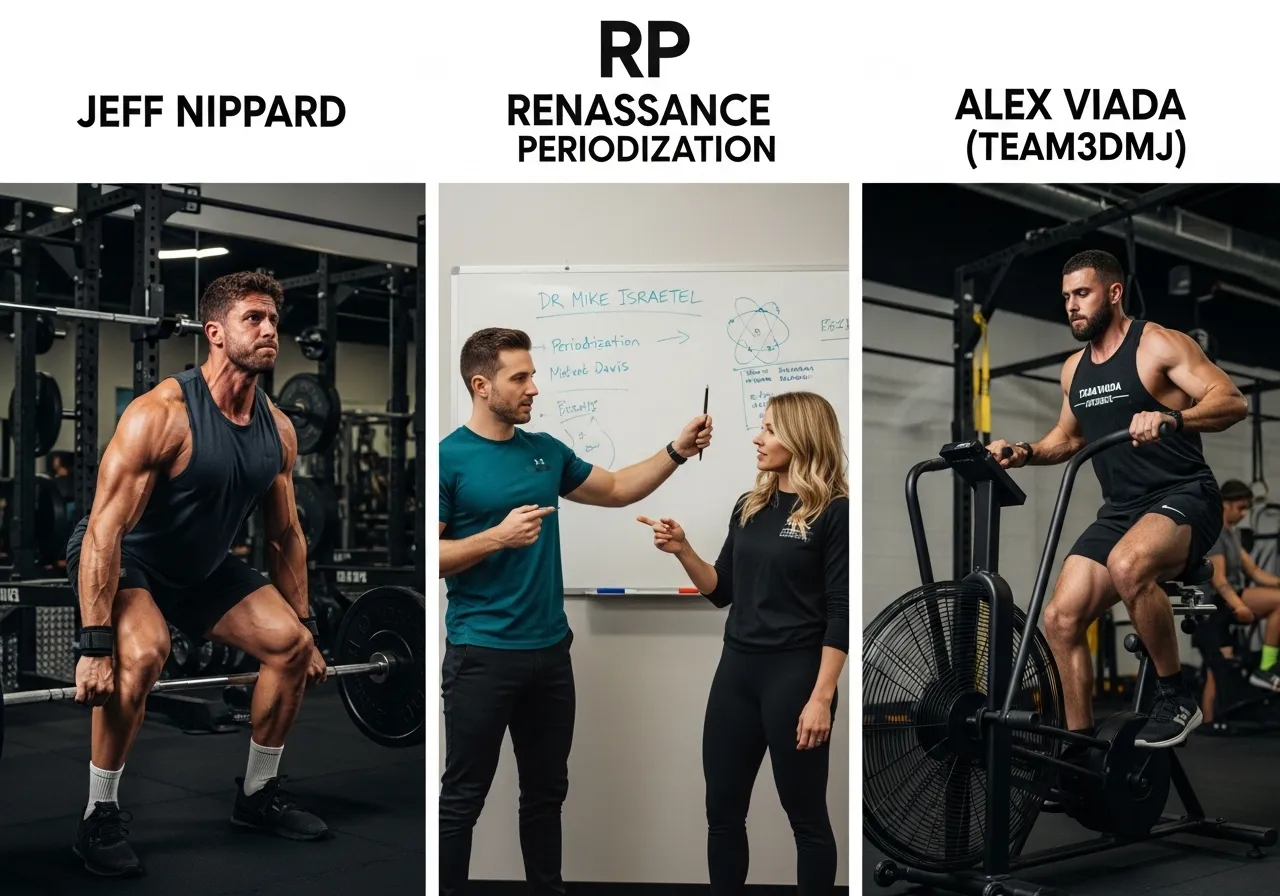
Channels for Evidence-Based Training Science
The training science channels that have most consistently applied rigorous research interpretation to practical strength, hypertrophy, and performance training guidance represent the highest intellectual standard in fitness YouTube — and their content has directly improved training outcomes for millions of athletes who have applied their research-based programming recommendations.
Jeff Nippard: Hypertrophy Research Made Practical
Jeff Nippard is one of the most consistently cited fitness YouTubers in any discussion of evidence-based training content, and his reputation for research rigor is well-earned — every program and training recommendation he publishes is backed by specific peer-reviewed citations, presented with appropriate uncertainty about the evidence quality, and tested against the practical realities of competitive natural bodybuilding that he participates in personally. His “Science Explained” series systematically reviews the research literature on specific training variables — training frequency, volume landmarks, exercise selection for hypertrophy, the rep range debate — and presents the evidence in a format that intermediate to advanced athletes can directly apply without needing to read primary research independently. What distinguishes Nippard from many research-citing fitness creators: he genuinely reads and accurately interprets primary literature rather than relying on secondary summaries, and he revises his recommendations when new research updates the evidence base rather than maintaining positions that outdated research no longer supports. His program content (which is sold separately from the free YouTube content) is among the most evidence-supported commercial program offerings in the natural bodybuilding space. Content focus areas for 2025: hypertrophy research updates, natural bodybuilding competition preparation, evidence-based program design, and technique tutorials for the major compound movements with specific attention to the research on each technique variable’s impact on muscle activation and injury risk.
Renaissance Periodization (Mike Israetel): Volume, Frequency, and Periodization
Dr. Mike Israetel — co-founder of Renaissance Periodization and a sport physiology PhD with competitive bodybuilding experience — represents the most academically credentialed corner of evidence-based fitness YouTube. His content specifically addresses the programming variables that hypertrophy and strength research has produced the most actionable guidance on: training volume (the minimum effective dose, maximum adaptive volume, and maximum recoverable volume framework that RP uses to structure programs), training frequency (the per-muscle-group frequency research that optimal weekly stimulus distribution requires), and periodization (the mesocycle and macrocycle structures that long-term training progress management applies). Dr. Israetel’s communication style is distinctive — direct, high-density information delivery that rewards close attention with practical programming insight that intermediate and advanced athletes consistently report improving their training outcomes. The RP YouTube channel covers both free educational content and promotional content for their paid programs, with clear delineation between the two that the creator transparency criteria this article values explicitly. Particularly valuable content: the “How to Train X Muscle” series that reviews muscle-specific anatomy, biomechanics, and the research on exercise selection, volume, and frequency for each major muscle group; and the periodization explanations that translate the complex programming variables of volume and intensity management into the practical week-by-week decisions that athletes implementing their training blocks must navigate.
Stronger by Science (Greg Nuckols and Eric Trexler): Powerlifting and Research Translation
Greg Nuckols and the Stronger by Science platform — primarily delivered through the website but with growing YouTube content — represent the powerlifting-specific corner of evidence-based training education with a statistical and methodological literacy that distinguishes their research interpretation from more superficial science communication. Nuckols’s specific contribution is the statistical and research design literacy he brings to fitness research interpretation — his analyses of research methodology, effect size interpretation, and the conditions under which research findings generalize (or fail to generalize) to real-world training contexts set a standard for research communication that most fitness content does not approach. The SBS YouTube content covers: strength training research reviews with specific attention to effect sizes and practical significance rather than just statistical significance; powerlifting technique breakdowns informed by the biomechanics research; and the training load management and peaking protocols that competitive powerlifters apply. The MASS (Monthly Applications in Strength Sport) research review that Nuckols and Eric Trexler co-produce is the most comprehensive monthly primary literature review for strength athletes available, distilling the most relevant new research into athlete-applicable summaries — the paid subscription service that their free YouTube content previews with the same rigorous approach. For intermediate and advanced strength athletes who want the highest standard of research translation available in the strength sport content space, the SBS platform represents the gold standard.
The Growth League and Emerging Evidence-Based Creators
The fitness YouTube landscape in 2025 includes a growing number of emerging creators who apply the evidence-based framework with equal or greater rigor than the established names — the next generation of fitness education who are often less well-known but whose research quality and communication effectiveness sometimes exceeds the established names. The Growth League, founded by researchers and coaches who apply academic research methods to training optimization, represents the type of emerging platform that applies systematic review methodology and meta-analytic thinking to training recommendations with greater methodological rigor than most established channels. For the athlete who wants to stay current with the research rather than relying on established creators’ existing knowledge base, following emerging evidence-based creators whose publications and research backgrounds can be verified provides the freshest synthesis of the most recent research. The practical approach to discovering quality emerging creators: search for creators who have published in peer-reviewed journals (verifiable through Google Scholar), who cite primary literature with specific study details, who present findings with appropriate statistical and methodological context, and who engage constructively with corrections and evidence updates. The evidence-based fitness YouTube community is relatively small and well-connected — the creators who the established quality channels recommend, interview, and cross-reference are generally applying the same intellectual standards that made the established channels worth following, and these recommendations serve as a reliable quality signal for the growing field.
International Fitness YouTube: Beyond English-Language Content
The evidence-based fitness YouTube space extends well beyond English-language content — and for the Korean-speaking athlete (the audience this blog serves), the Korean-language evidence-based fitness content ecosystem has developed significantly over the past five years with creators who apply the same research citation standards and practical training rigor as the English-language channels above. The categories of Korean-language fitness YouTube that most closely parallel the English-language quality standards: university-affiliated sports scientists who translate Korean-language exercise science research for athlete audiences; competitive powerlifters and bodybuilders who combine competitive credentials with research literacy; and physical therapists who address the injury prevention and rehabilitation content that Korean athletes need in their primary language. The cross-language fitness education strategy for bilingual or language-learning athletes: using both Korean and English quality content provides the redundancy of multiple high-quality sources for core training decisions, the cultural fitness context that Korean-language content specifically addresses (the training culture, supplement market, and competitive environment in South Korea), and the language learning benefit that consuming technical content in the target language produces for the Korean athlete developing English fitness literacy. The global convergence of evidence-based fitness content — the same primary research available in English through PubMed is the shared citation basis for quality content in every language — means that the quality indicators described in this article (primary literature citation, appropriate uncertainty, commercial transparency) apply equally to content in any language, and the Korean-speaking athlete can apply the same content quality evaluation framework to Korean-language fitness YouTube as the English-language criteria this article describes.
Using Fitness YouTube Safely: Avoiding Comparison, Unrealistic Expectations, and Motivation Traps
The psychological dimensions of fitness content consumption deserve the same critical attention as the information quality dimensions — because the motivational and body image effects of consuming fitness content consistently are as significant for training outcomes as the accuracy of the information the content delivers. Social comparison and body image: the continuous exposure to elite physiques, exceptional strength performances, and the carefully curated presentation of athletic achievement that fitness YouTube (even quality content) delivers can produce the upward social comparison that research consistently associates with reduced self-efficacy, increased body dissatisfaction, and the perfectionist standards that training dropout under realistic progress rates predictably follows when expectations are calibrated to highlight reels rather than typical athlete trajectories. The protective factors against social comparison harm from fitness content: explicit awareness that the physiques and performance levels displayed are at the far right tail of the achievement distribution for natural athletes, often reflecting years or decades of dedicated practice, genetic advantages, and sometimes pharmaceutical enhancement that is not disclosed; focusing engagement on the educational content rather than the physical display by actively seeking channels (several on this list) where the creator’s physique is not the primary content; and maintaining training journals that track personal progress against personal baseline rather than against creator display, recalibrating the comparison reference point to the individual’s own development trajectory. Motivation dependency: the motivational content category of fitness YouTube — the aggressive training montages, the pre-contest documentary formats, the transformation reveals — produces short-term motivational spikes that are not stable substitutes for the intrinsic motivation and identity-level training values that research identifies as the drivers of long-term exercise adherence. Using motivational content deliberately for the specific low-motivation periods it helps rather than as the daily training driver replaces the motivational content dependency that some athletes develop when they mistake the spike for the sustained fuel that consistent training identity provides.
Channels for Evidence-Based Nutrition
The nutrition information landscape on YouTube is even more myth-dense than training content — and the channels that apply genuine scientific rigor to nutrition research are proportionally more valuable for the correction they provide to the widespread misinformation that nutrition YouTube amplifies.
Alan Thrall and Barbell Medicine: Lifting and Health
Barbell Medicine — the content platform produced by a team of physician-lifters led by Jordan Feigenbaum and Austin Baraki — represents a unique intersection of medical education, strength coaching, and evidence-based fitness communication that no other major fitness YouTube channel occupies. As practicing physicians with competitive powerlifting backgrounds, Feigenbaum and Baraki communicate the clinical research on training, nutrition, and injury management with the medical literacy and the athletic experience that makes their guidance both accurate and athlete-relevant. Their specific value proposition: the evidence-based approach to training-related pain and injury management that most fitness content gets dramatically wrong — the “you have to rest completely” advice for every pain presentation, the structure-based diagnosis of pain that ignores the complex biopsychosocial factors that pain science has established, and the excessive caution about training through managed discomfort that clinical orthopedic conservatism sometimes unjustifiably produces. Barbell Medicine’s YouTube content covers free programming, injury and pain management, training science, and the specific medical-athletic intersection topics that their dual expertise makes them uniquely qualified to address. Their “Barbell Medicine Podcast” is among the most rigorous evidence-based fitness podcasts available, regularly reviewing primary literature and interviewing researchers whose work directly applies to athletic training contexts. Alan Thrall’s associated channel provides the more accessible, personality-driven complement to Barbell Medicine’s denser clinical content — covering beginner-friendly training education with the same commitment to accuracy that the parent platform maintains.
Layne Norton (BioLayne): The Research-Practice Bridge in Nutrition
Dr. Layne Norton — a nutrition PhD and natural competitive powerlifter and bodybuilder — is among the most credentialed nutrition communicators in fitness YouTube, with the unusual combination of a doctoral-level understanding of metabolic research and the competitive athletic experience that makes practical application a personal daily reality. His content specifically addresses the nutrition research debates that fitness culture misrepresents most frequently: flexible dieting and IIFYM (If It Fits Your Macros) as the research-supported approach to nutrition that dietary restriction and food labeling research validates; the carbohydrate-insulin model of obesity and why the evidence does not support the claims that low-carbohydrate diets produce metabolic advantages beyond caloric restriction; the supplement research reviewed with the commercial skepticism that Norton applies to even the supplements his own company produces; and the body recomposition research on simultaneous fat loss and muscle gain and the conditions under which each is possible. Norton’s intellectual honesty about areas of uncertainty — including areas where his own previous confident positions were not fully supported by subsequent research — is a model of the scientific communication quality that distinguishes the best fitness educators from the confident misinformers. For nutrition content specifically, the ability to evaluate the nutrition research space with the methodological literacy that a research doctorate provides is as valuable as the credentialed coaching experience that his competitive career supplies — the combination makes him the nutrition research translator that the evidence-based fitness community most consistently turns to for complex nutrition questions.
Examine.com YouTube and Brad Schoenfeld: The Hypertrophy Research Expert
Dr. Brad Schoenfeld — arguably the world’s leading researcher on the mechanisms of skeletal muscle hypertrophy — publishes accessible YouTube content that translates his prolific research output (including the textbook “Science and Development of Muscle Hypertrophy” that is the most cited academic work on the subject) into practical training guidance. Schoenfeld’s research on the mechanisms of hypertrophy — mechanical tension, metabolic stress, and muscle damage as the three primary pathways — is the theoretical framework that most evidence-based hypertrophy programming now uses, and his training recommendations carry the authority of the researcher who produced the primary literature that informs them. His content covers: the rep range research that established the 6-35 rep range as approximately equivalent for hypertrophy at matched volumes; the training volume research on the dose-response relationship between weekly sets and muscle growth; and the exercise selection considerations for targeting specific muscle heads and portions. Examine.com’s associated YouTube content provides the supplement and nutrition research summaries that their database covers, offering the systematic evidence review approach that distinguishes their summaries from the manufacturer-influenced supplement reviews that dominate the space. The combination of Schoenfeld’s hypertrophy research translation and Examine.com’s nutrition and supplement evidence database covers the two most frequently research-misrepresented domains in fitness content with sources whose credentials and research literacy are verifiable against their primary publications.
Creating Your Personal Fitness YouTube Curriculum
The practical implementation of the channel list above for maximum learning impact requires a structured approach to content consumption that treats fitness YouTube as a curriculum rather than a passive media feed. The personal fitness YouTube curriculum framework: identify your current training phase (beginner, intermediate, or advanced) and the primary goal (strength, hypertrophy, fat loss, athletic performance, or general health) that determines which creator content is most immediately relevant. Beginners should prioritize technique mastery content (Thrall, Rippetoe, Athlean-X) over advanced programming and research content whose application requires the foundational movement quality that technique education develops first. Intermediate athletes benefit most from the programming and periodization content (Nippard, RP, Candito) that optimizes training structure beyond the linear progression that beginner programming provides. Advanced athletes need the specialized content (Thibaudeau, Juggernaut, Schoenfeld) that addresses the diminishing marginal returns and technique refinements that high training ages expose. The monthly learning rotation: rather than following all ten channels daily, a rotation that dedicates each month to deepening knowledge in one specific area — one month on nutrition (Norton, Examine.com), one month on technique (Thrall, Rippetoe), one month on programming (RP, SBS), one month on recovery and health (Attia, Barbell Medicine) — produces the focused depth that the breadth of total curriculum otherwise dilutes. The application journal: maintaining a training journal that captures both the training data (loads, volumes, performance trends) and the knowledge updates from content consumption (new research, technique corrections, programming changes) in the same document builds the evidence-to-application bridge that converts passive learning into active implementation — the journal that reviews both what you learned and whether it changed your training produces the feedback loop that self-education requires to translate into training results.
The Future of Fitness YouTube: Where Evidence-Based Content Is Heading
The trajectory of evidence-based fitness YouTube over the next 5-10 years can be anticipated from the current trends that are already shaping the content landscape. The AI-assisted research synthesis trend: creators who can synthesize large bodies of primary literature more efficiently through AI-assisted research tools will produce increasingly comprehensive evidence reviews faster than the manual synthesis that currently paces content production — the educational value density of top-tier content will increase as production efficiency improves. The personalization trend: the emerging wearable and at-home testing technology (continuous glucose monitors, HRV tracking, genetic testing) is creating audience demand for fitness content that addresses individual physiological variation rather than population-average recommendations — creators who can help individuals interpret their personal physiological data in the context of training decisions will occupy a growing content niche. The community and accountability dimension: the social fitness content trend (accountability groups, shared training logs, community challenges) that short-form social media has accelerated is creating demand for educational content embedded in community contexts rather than the one-to-many lecture format that current YouTube primarily uses — the fitness educator who can combine research-based content with genuine community engagement will serve the evidence-based audience’s social fitness needs alongside its educational needs. For the athlete in 2025, the current quality floor of evidence-based fitness YouTube is high enough that the consistent consumption of the ten channels in this article provides the most comprehensive, accurate, and practically useful fitness education that has ever been accessible to the non-specialist general athletic population. Use it.

Channels for Practical Technique and Real-World Training
The research-heavy channels described above provide the intellectual framework for evidence-based training decisions; the practical technique and real-world training channels provide the visual, demonstration-based coaching that translates principles into specific movement patterns and program execution. The best practical technique channels combine research literacy with the coaching experience and self-experimentation that makes the gap between theory and execution visible and navigable.
Alan Thrall: The Beginner’s Most Reliable Strength Coach
Alan Thrall’s YouTube channel occupies a specific and valuable niche: the highest-quality, most accessible, and most practically useful content for the beginner to intermediate strength athlete learning the foundational barbell movements without a coach. His technique tutorials for the squat, bench press, deadlift, and overhead press are among the most viewed and most consistently praised technique videos on YouTube — for good reason. The qualities that make Thrall’s technique content exceptional: the cues he uses are specific, memorable, and actionable rather than the vague corrections that many technique videos offer; the common errors he identifies are drawn from coaching hundreds of real athletes rather than from academic biomechanics alone; and the progressive learning sequence he presents (beginner setup, intermediate refinement, advanced optimization) allows the viewer to identify exactly where in the learning progression they are and what the next specific improvement target is. His “Untamed Strength” platform content (both free and paid programming) applies the same practical clarity to program design that his technique content applies to movement quality — the beginner who follows Thrall’s program recommendations and technique guidance for 12-18 months will develop the lifting foundation that more specialized advanced programming subsequently builds on. The entertainment dimension of his content — the genuine personality and humor that makes extended training education watchable — ensures that the information sticks through engagement rather than requiring the deliberate study that denser content demands.
Mark Rippetoe and Starting Strength: The Foundation That Launched a Generation
Mark Rippetoe’s Starting Strength channel and associated content represent the most influential single contribution to beginner barbell training education in the YouTube era — the five-lift framework (squat, deadlift, bench, press, power clean) and the linear progression model that the Starting Strength novice program applies have introduced more beginners to productive barbell training than any other single program or educator. Rippetoe’s communication style is abrasive, opinionated, and unwilling to accommodate the misinformation he perceives in mainstream fitness culture — which produces both the sharply accurate corrections that make his coaching valuable and the occasionally cantankerous dismissal of legitimate alternatives that critics point to. The aspects of Starting Strength content that remain as valuable in 2025 as they were at the channel’s origin: the technique standards for the foundational barbell movements are among the most extensively thought-through and consistently applied in the industry; the linear progression framework for novice programming is validated by the most extensive practical application record of any beginner program; and the emphasis on the squat as the foundational movement for athletic development is supported by the biomechanics and strength research literature that has increasingly confirmed the hip-dominant movement’s central importance. The limitations that a balanced evaluation must acknowledge: the Starting Strength model’s resistance to accommodating the hypertrophy and aesthetic programming that a large segment of the training population wants, and the occasional dismissal of research findings that conflict with the model’s established recommendations, represent the intellectual inflexibility that the program’s genuine strengths should be understood alongside rather than despite.
Athlean-X (Jeff Cavaliere): Applied Exercise Science for General Population
Jeff Cavaliere’s Athlean-X channel occupies the largest audience in evidence-referencing fitness YouTube — and represents both the scale of what quality fitness education can achieve and the specific content format that general population fitness seekers find most accessible. Cavaliere’s physical therapy background informs a content focus on injury prevention, pain management, and the exercise selection considerations that musculoskeletal health requires — a dimension of fitness education that distinguishes his content from pure performance-focused channels. The content areas where Athlean-X provides genuinely high-value information: exercise selection for muscle targeting with anatomical basis (his explanations of which exercises best activate specific muscle portions are grounded in the kinesiology and exercise science education that his clinical background provides); injury prevention programming with specific attention to the imbalance and overuse patterns that common training approaches create; and the accessible, entertaining communication format that makes complex exercise science approachable for the beginner-to-intermediate audience that constitutes the majority of his viewership. The limitations that more research-literate viewers note: some content overstates the evidence certainty on topics where research is more ambiguous than the definitive presentation suggests, and the commercial relationship with the Athlean-X supplement line creates the conflict of interest that attentive viewers should factor into content evaluation. Overall, for general population fitness education with genuine exercise science basis and excellent production quality, Athlean-X provides accessible, useful content that substantially exceeds the evidence quality of most popular fitness YouTube despite the legitimate specific criticisms that exist.
My Personal Experience: How Fitness YouTube Changed My Training
Before discovering the evidence-based corner of fitness YouTube, my training was guided by the combination of gym-floor broscience, magazine programming, and the confident misinformation that the most entertaining creators delivered with the authority that presentation confidence substitutes for when the actual evidence is absent. The changes that specific channels produced in my training approach are traceable to individual pieces of content: Jeff Nippard’s video on training volume research corrected my belief that more sets always meant more progress, and the subsequent shift from 25+ sets per muscle group to 12-16 optimized sets per week improved recovery quality while maintaining hypertrophic stimulus. Dr. Mike Israetel’s explanation of rate of perceived effort (RPE) training transformed how I managed proximity to failure — the structured approach to leaving 2-3 reps in the tank on working sets while pushing to failure on final sets produced the training quality improvement that the exhaustion-as-badge-of-honor approach my previous training used was actively preventing. Layne Norton’s content on flexible dieting eliminated the dietary restriction and guilt cycle that clean eating orthodoxy had produced in my eating behavior — replacing the binary good-food-bad-food thinking with the macronutrient-and-caloric-literacy approach that has made my relationship with food simultaneously more flexible and more effective for body composition management. These are not small changes in my training life — they represent the fundamental recalibration of training and nutrition philosophy that the evidence-based content provided through patient, research-supported argument rather than the charismatic assertion that had previously shaped my practice. The ten channels in this article are the ones I return to most consistently and trust most reliably. Their work has genuinely made me a better athlete and a better self-coach. I recommend them without reservation.
Comparing YouTube to Books, Courses, and In-Person Coaching
Fitness YouTube occupies a specific position in the hierarchy of fitness education resources — superior to most popular books and mainstream media for up-to-date research synthesis, inferior to in-person expert coaching for individual technique correction, and complementary to formal certification courses that provide systematic framework without the currency of recent research that YouTube delivers faster. The optimal combination for the serious self-coached athlete: YouTube from the channels above provides the ongoing research education and technique reference that keeps training current with evolving evidence; one or two foundational books (Schoenfeld’s hypertrophy text, McGill’s low back book) provide the depth that any single YouTube video cannot achieve on complex topics; periodic in-person assessments with a qualified coach (even infrequently — once or twice per year) provide the external technique feedback that video self-assessment cannot reliably substitute for; and a NSCA-CSCS certification or equivalent formal course provides the systematic foundational framework that the selective topic coverage of YouTube content may not cover comprehensively. This integrated approach treats fitness YouTube as the most valuable and accessible component of a broader educational ecosystem rather than the complete educational solution that its breadth and quality can make it superficially appear to be. The athlete who uses it this way — as the ongoing current-research feed and accessible technique reference within a broader learning framework — extracts maximum value from what is genuinely an extraordinary free educational resource while maintaining the critical evaluation and broader context that accurate self-application requires.

Channels for Recovery, Women’s Fitness, and Specialized Training
The evidence-based fitness YouTube space has historically been dominated by male creators addressing male-pattern strength and hypertrophy goals — but the 2020s have seen the emergence of high-quality channels specifically addressing women’s training physiology, injury recovery, and specialized athletic populations that the mainstream training content underserves.
Stephanie Buttermore: Women’s Research and Body Recomposition
Dr. Stephanie Buttermore — a neuroscience PhD and competitive bikini athlete — represents the women’s evidence-based fitness space with the research literacy and personal athletic experimentation that makes her content both academically credible and practically relatable. Her most significant content contribution was the “All In” experiment — her public documentation of a substantial caloric surplus period to address what she identified as subclinical energy deficiency symptoms — which generated the most substantive public discussion of Relative Energy Deficiency in Sport (RED-S) in women’s fitness YouTube and produced the first-person data that her audience found more compelling than research paper abstracts. Her 2025 content covers women’s hormonal health and its interaction with training, research on women-specific training and nutrition considerations (the areas where applying male-population research directly to female athletes produces the largest inaccuracy), and the body composition and performance research that her own training journey continues to test and document. For female athletes seeking evidence-based guidance from a creator who combines research literacy with the personal training experience and female physiology that male-dominated fitness YouTube cannot provide, Buttermore’s channel fills a gap that remains underserved relative to the female athletic population’s size and information needs. From PubMed women’s sports science and training research overview, sex-specific considerations in training load management, recovery, and nutritional requirements are increasingly recognized as clinically meaningful — confirming the value of content creators who specifically address the female training population’s distinct needs rather than applying male-research generalizations.
Peter Attia (The Drive): Longevity, Performance, and Healthspan
Dr. Peter Attia occupies the intellectually demanding intersection of longevity medicine, performance optimization, and the clinical research that underpins both — a content space that most fitness YouTubers do not possess the medical background to credibly inhabit. His YouTube content (primarily clips from the Drive podcast) covers the exercise science topics of strength, cardiovascular fitness, and mobility with a specific longevity and healthspan framing that distinguishes his perspective from the appearance-focused orientation of most fitness content. Attia’s specific contributions to fitness content include: the “centenarian decathlon” framing of fitness goals — identifying the physical performance benchmarks (VO2 max, grip strength, leg press capacity, balance) that the research on longevity associates with reduced all-cause mortality and functional independence in older age — that reorients athletic development toward long-term physical capacity rather than short-term aesthetic goals; the cardiovascular fitness research on Zone 2 (low-intensity aerobic training) and Zone 5 (high-intensity VO2 max training) that his platform has made arguably the most widely discussed framework in evidence-based endurance training; and the muscle quality and strength standards research that has made grip strength and leg extension force the longevity biomarkers that his audience now tracks alongside the traditional health markers of blood pressure and cholesterol. The complexity and depth of Attia’s content requires more prior knowledge than beginner-oriented fitness channels — it is most valuable for the intermediate to advanced athlete who wants the longevity medicine perspective on the training and nutrition decisions they are already making from a purely performance or aesthetic motivation.

Channels for Programming, Mindset, and Athletic Development
Beyond the information-heavy research translation and technique education channels, a category of fitness YouTube provides the programming knowledge, mindset development, and athletic context that turns fitness information into training practice — the channels that bridge the gap between knowing what to do and consistently doing it well over years of training.
Christian Thibaudeau: Advanced Programming and Neural Drive
Christian Thibaudeau’s content occupies the advanced end of strength and performance programming — the Olympic lifting derivatives, neural drive optimization, and specialized hypertrophy programming that experienced athletes need but that the mainstream fitness YouTube audience’s beginner-to-intermediate focus underserves. Thibaudeau’s specific expertise in the neurological dimension of athletic performance — the neural efficiency, motor unit recruitment patterns, and CNS fatigue management that performance training must optimize alongside the more commonly discussed mechanical and metabolic variables — provides a perspective on training prescription that exercise science research increasingly validates but that few other YouTube creators address with equivalent depth. His content on the Olympic weightlifting derivative movements (hang cleans, power snatches, and the complex variations that combine Olympic and strength movements) is among the most practically useful advanced technique education available for the strength-focused athlete who wants to incorporate the explosive power development that these movements uniquely provide. The T-Nation platform associated with Thibaudeau’s content provides the longer-form article format that his complex programming topics require beyond the YouTube format’s natural length limitations — the most valuable content experience from his work combines the YouTube presentations with the extended T-Nation articles that develop the same concepts with greater depth and specific program examples. For the intermediate-to-advanced athlete who has mastered the foundational training science and is looking for the neural, programming, and periodization depth that distinguishes good training from exceptional training, Thibaudeau’s content provides the advanced coaching perspective that most YouTube fitness education does not reach.
Juggernaut Training Systems (Chad Wesley Smith): Powerlifting and Strength Sport
Chad Wesley Smith’s Juggernaut Training Systems channel represents the competitive powerlifting coaching perspective — the high-performance strength sport content that applies the evidence-based training science to elite athletic preparation in ways that purely academic content cannot. Smith’s coaching credentials are among the strongest in the YouTube fitness space: his athletes have competed at international levels in powerlifting, and his own competitive record in powerlifting and shot put provides the athletic context that separates experienced coaching from theoretical application. The Juggernaut content covers: competition powerlifting technique with the detailed attention to the competition rules and commands that recreational training technique guides miss; the periodization and programming approaches used with elite athletes that differ meaningfully from the general population programming that dominates fitness content; and the physical preparation content for contact and power sports that Smith’s NFL combine preparation work and strength-power sport background makes uniquely credible. The production quality of Juggernaut’s content — professional documentary-style training coverage and interview-format education segments — produces the immersive athletic training environment that motivates as much as it educates, making it both an information resource and the kind of aspirational athletic content that keeps experienced athletes engaged with their training culture.
James Fitzgerald (OPEX Fitness): Individualized Programming Philosophy
James Fitzgerald’s OPEX Fitness platform addresses the individualized coaching philosophy that evidence-based fitness content rarely focuses on — the assessment, program design, and athlete-coach relationship principles that distinguish personalized coaching from generic program application. His content is most relevant for coaches and advanced self-coached athletes who want the program design framework that moves beyond periodization templates into the individualized assessment and prescription that each athlete’s unique physiological and psychological profile requires. The specific OPEX contributions to fitness YouTube: the “assessment before prescription” philosophy that evaluates the individual’s current capacity before applying training protocols, rather than the template-first approach that fitness programs generally use; the energy system development framework that addresses all three metabolic pathways (phosphocreatine, glycolytic, and oxidative) in balanced proportion rather than the sport-specific dominance that performance programming often narrows to; and the coach education content that develops the critical thinking and individualized assessment skills that coaching certification courses rarely adequately cover. For the athlete who is their own coach and who is sophisticated enough to recognize that the individual variables of their training history, recovery capacity, lifestyle stressors, and physiological response to training require a personalized rather than templated approach, Fitzgerald’s content provides the intellectual framework that sophisticated self-coaching requires.

How to Watch Fitness YouTube Critically and Get Maximum Value
Identifying the right channels is only the first step — developing the critical viewing habits that extract maximum value from high-quality fitness content while developing the resistance to misinformation that the broader YouTube ecosystem requires is the ongoing skill that separates the educated fitness consumer from the perpetually confused one.
Building a Fitness YouTube Learning System
The most effective approach to using fitness YouTube as an educational resource treats it as a structured learning environment rather than an entertainment consumption experience — applying the active engagement that learning requires rather than the passive consumption that YouTube’s autoplay interface naturally produces. The structured fitness YouTube learning system: establish a specific learning goal for each viewing session (today I am learning about training frequency; today I am studying deadlift technique; today I am reviewing the research on protein timing) rather than open-ended browsing that produces exposure without retention. Apply note-taking: the research citations that the highest-quality channels provide are worth capturing for personal verification and subsequent access — the viewer who can cite the specific PubMed paper behind a training recommendation they apply is positioned to evaluate new conflicting information against the original evidence rather than accepting the latest confident claim. Create a personal training evidence file: a simple document or spreadsheet that captures the key training principles you have learned from high-quality sources, the evidence level behind each principle (well-established versus preliminary versus expert opinion), and any subsequent updates from new research or creator revisions — the living document that represents the current state of your evidence-based training understanding. Cross-reference between creators: when a specific training claim is covered by multiple channels on the list, comparing their presentations of the same research reveals both the consensus findings (where all credible sources agree) and the legitimate ongoing debates (where credible sources disagree based on different research interpretations) — the most valuable distinction for understanding which training decisions are well-settled and which deserve personal experimentation. From PubMed evidence quality in online fitness education research, active information processing and source verification significantly improve the accuracy of fitness knowledge and the quality of training decisions compared to passive online content consumption — confirming the structured learning approach over passive browsing for the athlete who wants to use digital fitness education effectively.
Red Flags in Fitness YouTube: What to Avoid
The ability to identify low-quality and actively misleading fitness YouTube content is as valuable as knowing the best channels — protecting the training time and health investment that bad information risks wasting or damaging. The specific red flags that consistently predict poor content quality: claims that a single food, exercise, or supplement will dramatically and quickly transform body composition without broader lifestyle change; the “7 foods you should NEVER eat” framing that conflates any evidence of harm at high doses or in specific clinical populations with universal avoidance advice for all foods; before-and-after transformation content that attributes dramatic results to a single protocol without the nutritional, pharmaceutical, and lighting/photography context that most dramatic transformations involve; research citation that references a single study rather than meta-analyses and systematic reviews, especially when that study is in mice, in vitro, or in clinical populations whose results may not generalize to healthy exercising adults; credentials misrepresentation — the “Doctor” or “PhD” suffix used by individuals whose credentials are in fields unrelated to the content area (a PhD in education advising on biochemistry, for example); and the dismissal of mainstream evidence-based guidelines as “industry-controlled misinformation” without specific evidence critique — the conspiracy-adjacent framing that positions the content creator as the holder of suppressed truth that experts won’t tell you. Developing this recognition takes time, but the critical evaluation skills that the highest-quality channels themselves model — the transparent evidence citation, the acknowledgment of uncertainty, the willingness to revise positions based on new evidence — provide the standard against which all fitness content can be measured.
Frequently Asked Questions About Fitness YouTube
Q: Is it possible to learn fitness effectively from YouTube alone without a coach? A: For most recreational fitness goals, yes — the combination of high-quality technique tutorials, evidence-based programming education, and nutrition guidance available on the channels in this article provides sufficient educational foundation for effective self-coaching. Complex goals (competitive powerlifting, Olympic weightlifting, high-level sport-specific training) benefit from in-person coaching that video cannot fully replace, but the educational foundation that YouTube provides makes that coaching far more efficient when it occurs. Q: How do I know if a YouTuber’s credentials are real? A: Research their name and claimed credentials through LinkedIn, university staff pages, and academic publication databases (Google Scholar, PubMed author search). Creators with legitimate academic credentials have verifiable publication records, university affiliations, and professional society memberships that independent verification confirms. Q: Do I need to follow all ten channels? A: No — select the 2-3 channels most relevant to your current training focus and goals. The full list covers more specialized areas than any individual athlete needs simultaneously; use the list as a reference for when your goals evolve or when you want to deepen knowledge in a specific area. Q: Are paid programs from these YouTubers worth buying? A: The paid programs from the creators on this list (Nippard, RP, Barbell Medicine, Juggernaut) are among the most evidence-supported commercial programs available and offer genuine value for athletes who want structured programming beyond the free content. The decision depends on whether the specific program’s goals align with your current training phase and whether the structured format adds value over self-programming. Q: How has fitness YouTube changed in recent years? A: The most significant trends: increased research citation and evidence-based framing (partly driven by audience sophistication and partly by the fact-checking culture that high-profile misinformation has generated); greater representation of women’s fitness science and female creator perspectives; and the emergence of long-form podcast and deep-dive content that compensates for the entertainment format’s limitations for complex topic education. The overall quality trajectory of fitness YouTube has been positive — the best content in 2025 is substantially better than the best content of 2015, even as the total volume of poor content has also grown. Q: Should I prioritize entertainment or information when choosing fitness channels? A: Both matter — the most engaging content is more effective as education because engagement sustains attention through complex information that the disengaged viewer abandons. The channels on this list generally manage the entertainment-information balance well; choosing the creator whose presentation style you personally find most engaging among the high-quality options maximizes both the learning and the consistency of engagement that long-term education requires.
Supplementing YouTube with Books, Podcasts, and Primary Research
Fitness YouTube at its best is an accessible entry point into evidence-based training education — but the format’s inherent limitations (video length constraints, entertainment format pressure, the absence of the citation index and cross-reference apparatus of written work) mean that the most educated athletes supplement their YouTube education with the longer-form resources that deepen what videos introduce. The books that complement the YouTube creators above: Brad Schoenfeld’s “Science and Development of Muscle Hypertrophy” is the most research-comprehensive text on hypertrophy available; Stuart McGill’s “Low Back Disorders” is the definitive evidence-based text on lumbar spine function and rehabilitation; and the NSCA’s “Essentials of Strength Training and Conditioning” is the textbook standard for the coaching certifications that the strength and conditioning field uses as its educational foundation. Podcasts that extend the YouTube content: the Drive podcast (Peter Attia), RP Strength Podcast (Mike Israetel), and MASS Monthly Applications in Strength Sport (Greg Nuckols and Eric Trexler) provide the long-form discussion format that the complex topics these creators cover require beyond YouTube’s 20-30 minute optimal length. The PubMed and Google Scholar databases: the athlete who occasionally reads the primary research papers behind the training recommendations they apply develops the evidence evaluation skills that YouTube cannot fully substitute for — even 30 minutes per week of reading one or two relevant papers from channels’ cited sources builds the research literacy that distinguishes the sophisticated self-coached athlete from the consumer of others’ interpretations. The combination of YouTube education, book-depth on core topics, podcast long-form discussion, and occasional primary research exposure creates the multi-modal learning environment that produces the most comprehensively educated self-coached athlete — the one whose training decisions are informed by the best available evidence rather than the most confidently delivered recommendation they encountered most recently.


