
Active Recovery vs. Complete Rest: Which Is Better?
⚠️ Disclaimer: The information in this article is for general educational purposes only and does not constitute medical, nutritional, or professional fitness advice. Individual results may vary. Always consult a qualified healthcare professional or certified fitness trainer before starting any new exercise program, changing your diet, or making decisions about injury treatment or recovery. If you experience pain, discomfort, or any unusual symptoms during exercise, stop immediately and seek professional guidance.

The Science Behind Recovery: What Actually Happens After Training
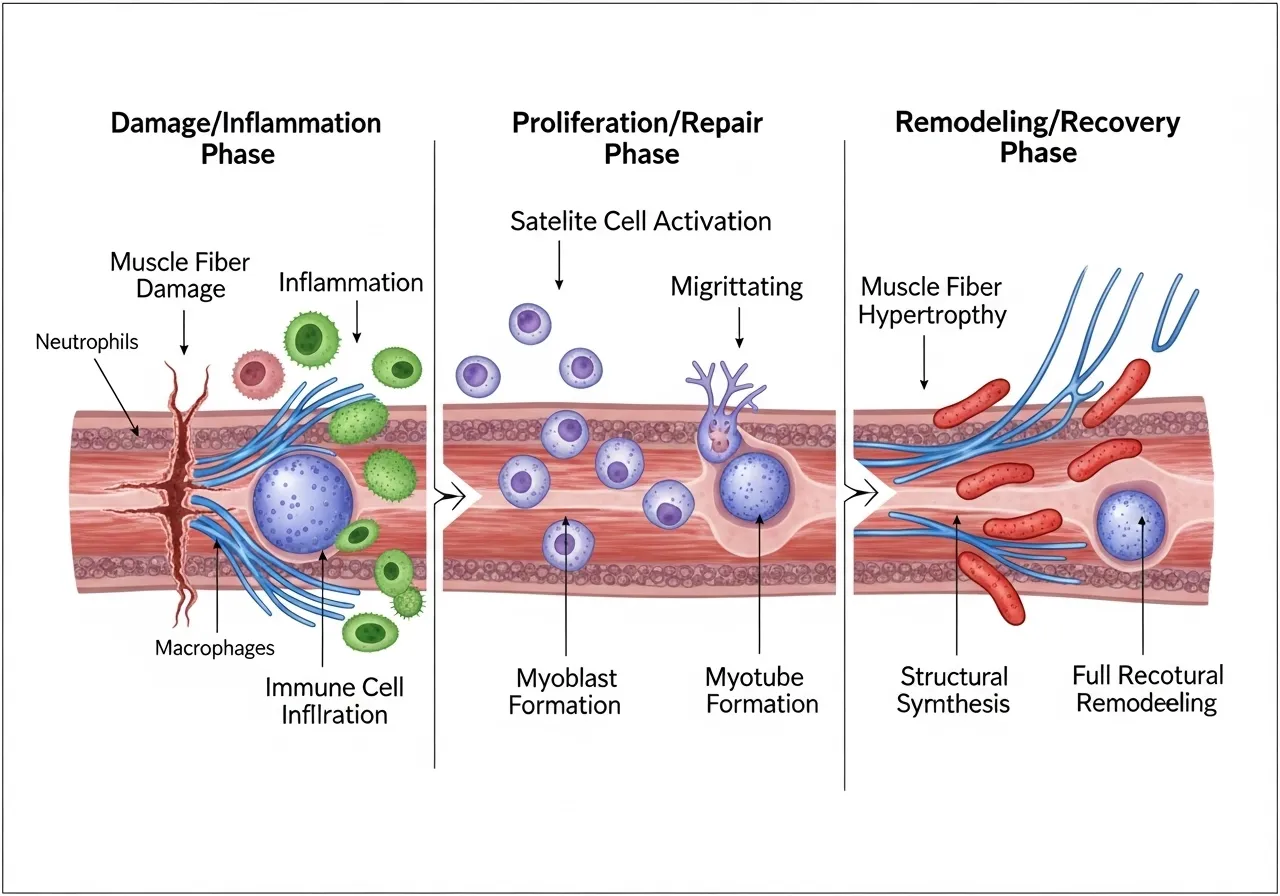
Recovery is not the passive absence of training — it is an active, complex physiological process during which the body repairs the damage created by exercise, synthesizes new structural proteins, replenishes depleted energy stores, and consolidates the neural adaptations that produce strength and skill. The training session is the stimulus; recovery is when the adaptation actually occurs. Without adequate recovery, the stimulus of training accumulates as residual damage without producing the compensatory adaptation that makes training productive.
Understanding the biology of recovery changes the way you think about rest days. They are not lazy days or wasted opportunities — they are essential components of the training process without which the hard work of training sessions cannot produce the intended results. The question of whether active recovery or complete rest is “better” can only be answered in this physiological context: which approach more effectively supports the recovery processes that training demands?
I spent the first three years of serious training treating rest days as wasted days — feeling guilty for not training, occasionally doubling up sessions to “make up” for days off, and rarely taking scheduled deloads. The chronic fatigue and performance stagnation that resulted were entirely predictable in retrospect. When I eventually committed to systematic recovery — both active recovery and deliberate complete rest at appropriate times — my training performance improved, injuries decreased, and the long-term progression that had been stalling resumed consistently. Recovery is not the enemy of progress; inadequate recovery is.
The Three Phases of Post-Training Recovery
Phase 1: Acute Recovery (0–2 hours post-training). Immediately after training, the body initiates repair of the mechanical and metabolic disruption created by exercise. Blood lactate is cleared, phosphocreatine stores begin replenishing, and the acute inflammatory response to training-induced micro-damage begins. Nutrition in this window — carbohydrates for glycogen resynthesis, protein for muscle protein synthesis initiation — directly supports Phase 1 recovery quality. Heart rate, blood pressure, and core temperature return to baseline over this period.
Phase 2: Short-Term Recovery (2–72 hours post-training). The primary adaptation window. Muscle protein synthesis is elevated for 24–48 hours following resistance training, during which dietary protein is incorporated into new structural proteins. Glycogen stores are progressively refilled from dietary carbohydrates. The inflammatory response peaks at approximately 24–48 hours (accounting for the delayed onset muscle soreness that peaks on day 2), then begins resolving. Sleep during this period drives growth hormone release that accelerates structural repair. The majority of strength and hypertrophy adaptation from a training session occurs in this window.
Phase 3: Long-Term Recovery and Supercompensation (2–7+ days post-training). As the short-term repair process completes, the body undergoes supercompensation — an above-baseline increase in the capacity that was stressed during training. This is the mechanism that makes the next training session possible at higher performance than the previous one. Supercompensation timing varies by training intensity, volume, and individual recovery capacity. Heavy compound training may require 72+ hours for full supercompensation; lighter isolation work may require only 24–48 hours. Scheduling the next session of the same movement pattern to coincide with the supercompensation peak — rather than before it (residual fatigue dominates) or long after it (supercompensation has decayed) — is the fundamental timing principle of effective training frequency.
What Limits Recovery Speed
Recovery speed is determined by multiple factors, each of which is modifiable to some degree: sleep quality and duration (the primary recovery modality), nutrition adequacy (protein and carbohydrate provision for synthesis and replenishment), training volume and intensity in the preceding sessions (higher demands require longer recovery), stress (psychological stress elevates cortisol, which suppresses the anabolic signaling that drives adaptation), age (recovery speed decreases meaningfully after approximately 35–40), and individual genetic variation in recovery enzyme activity, protein synthesis rate, and inflammatory response regulation. The Journal of Strength and Conditioning Research review on recovery identifies sleep and nutrition as the two most modifiable and highest-impact determinants of recovery rate for most athletes.
Measuring Recovery Status
Objective recovery measurement allows data-driven training and rest decisions rather than relying on subjective feel alone. Useful recovery metrics include: resting heart rate (elevated by 5+ beats per minute above baseline suggests inadequate recovery); heart rate variability (HRV) — the variation between heartbeats, which decreases under fatigue and recovers with rest; performance testing (a simple baseline test of push-up or squat performance at set intensity provides objective performance data); and subjective readiness ratings on a 1–10 scale for energy, motivation, and muscle soreness. Apps like HRV4Training, Whoop, or Garmin’s Body Battery provide continuous HRV-based recovery monitoring that removes subjectivity from daily training decisions. For most recreational athletes, a simple daily morning readiness rating alongside resting heart rate provides sufficient recovery data for intelligent training decisions without specialized equipment.
The Recovery-Adaptation Continuum
Recovery is not binary — fully recovered or not recovered. It exists on a continuum, and training decisions should reflect where an athlete sits on that continuum rather than making binary “train hard” or “rest completely” choices. A workout session performed at 70% recovery produces meaningful training stimulus while not creating the accumulated damage that comes from training at 40% recovery with the same intensity. Recognizing the continuum — and adjusting training intensity, volume, and exercise selection to match recovery status — is the sophisticated approach to recovery management that distinguishes experienced athletes from those who simply alternate between maximum training and complete rest without intermediate options.
The Supercompensation Model and Optimal Training Frequency
The supercompensation model is the foundational framework for understanding the relationship between training stress and adaptation. After a training session, performance capacity initially decreases below baseline as fatigue accumulates — this is the period of acute fatigue and impaired performance. As recovery proceeds, performance returns to baseline and then, if training frequency and recovery are well-calibrated, exceeds baseline in a supercompensation peak that represents genuine adaptation — the organism is now more capable than before the training stress. If the next training session is timed to occur during the supercompensation peak, it builds on an elevated baseline, producing progressive improvements over repeated training cycles. If the next session occurs too early (before recovery is complete, during the below-baseline phase), performance at that session is impaired and training on a fatigued system creates compounding damage rather than building on adaptation. If it occurs too late (after the supercompensation peak has decayed back to baseline), an opportunity for progressive building is missed, though no harm is done.
The optimal training frequency — how often to train a given muscle group or movement pattern — is the frequency that consistently captures supercompensation peaks. This varies by: training intensity (heavier sessions require longer recovery and thus lower frequency); training volume (higher volume sessions require more recovery time); individual recovery capacity (which varies substantially between people); and training experience (advanced athletes generally need lower frequency per muscle group as their recovery demands increase). For most intermediate athletes, 2–3 times per week per major muscle group captures supercompensation peaks while allowing adequate inter-session recovery — which is why most effective training programs for this population fall in this frequency range regardless of the specific exercises or volume prescribed. Understanding the supercompensation model transforms rest day planning from passive absence of training into strategic timing of recovery to maximize the training investment made in each session.
The model also explains why both under-training and over-training are ineffective: too infrequent training means supercompensation peaks pass unused, producing stable but non-progressive fitness; too frequent training means each session begins in a fatigued below-baseline state, producing accumulated damage without the above-baseline supercompensation that drives improvement. The recovery strategies in this article — both active and complete rest — are tools for navigating this timing relationship intelligently across a full training week and training year.
Inflammation as Signal vs. Problem: Why You Shouldn’t Always Suppress It
The post-exercise inflammatory response is frequently mischaracterized as something to minimize or eliminate as quickly as possible. This mischaracterization has led to widespread use of NSAIDs (ibuprofen, aspirin) immediately after training — a practice that research now shows may blunt the very adaptations that training is designed to produce. Inflammation after training is a necessary signaling event: the pro-inflammatory cytokines released by damaged muscle cells initiate the satellite cell activation and muscle protein synthesis cascade that produces hypertrophy. Blocking this inflammatory signal with anti-inflammatory drugs in the acute post-training period blocks the adaptation signal along with the discomfort.
The distinction that matters: acute post-training inflammation (24–48 hours, localized to trained muscles, resolving progressively) is healthy and should not be suppressed with NSAIDs during the adaptation window. Chronic inflammation (persistent, systemic, not resolving) is pathological and counterproductive to recovery and health. Active recovery and anti-inflammatory nutrition support the resolution of the acute inflammatory response on its natural timeline — they support the transition from acute to resolving inflammation — rather than blocking the inflammatory signal entirely. This is physiologically appropriate because it allows the signaling cascade to complete while supporting the clearance phase. The distinction between supporting natural inflammation resolution and suppressing the inflammatory signal is the key to using recovery tools intelligently rather than working against the biology of adaptation.
Practically: avoid NSAIDs in the 24–48 hours immediately after resistance training unless pain is genuinely severe. Use ice for acute injury management but avoid full-body cold immersion immediately after hypertrophy-focused training. Use anti-inflammatory foods and omega-3s as part of the overall dietary pattern rather than as acute post-workout interventions. These practices work with the inflammatory signaling that drives adaptation rather than against it.
Individual Variation in Recovery Requirements
Recovery requirements are not uniform across individuals — they vary substantially based on genetics, training history, age, life stress, sleep quality, and nutrition status. Two athletes following identical training programs may require meaningfully different recovery volumes to achieve the same adaptive outcomes. The athlete with a highly efficient recovery physiology — rapid creatine phosphate resynthesis, fast inflammatory resolution, efficient protein synthesis — can handle higher training frequency with less inter-session rest than the athlete with slower recovery physiology. Neither is superior; they simply require different training structures to optimize the training-to-recovery balance.
Identifying your individual recovery requirements is an empirical process: systematically vary training frequency and inter-session rest while monitoring performance outcomes and subjective recovery metrics, then identify the combination that produces the best performance results with acceptable fatigue levels. Athletes who assume their recovery requirements match those described in generic programming guidelines — and who never test whether their individual response differs — leave significant optimization potential on the table. Some people genuinely recover faster than standard recommendations and can train more frequently with benefit; others need more recovery than standard recommendations and underperform when following generic frequency prescriptions. Personal experimentation within the physiological framework provided by research is the path to individual optimization.
The recovery framework in this article — understanding the three phases of recovery, recognizing the physiological signals of adequate and inadequate rest, and building the decision habits that make optimal recovery choices systematic rather than mood-dependent — provides the foundation for this shift. Apply it consistently, monitor results objectively, and adjust based on what your individual physiology tells you. The investment in recovery quality compounds across months and years into training results that the maximize-training-minimize-rest approach cannot approach.
Active Recovery Explained: What It Is and What It Isn’t
Active recovery is low-intensity physical activity performed on rest days or between training sessions, designed to support the recovery process rather than add training stress. The critical element is intensity: active recovery must be gentle enough to avoid creating additional training demand while still producing the physiological benefits that distinguish it from complete rest. The most common misunderstanding of active recovery is treating it as light training — a modified workout rather than a recovery modality. When intensity is too high, “active recovery” becomes an additional training session that competes with rather than supports recovery from previous sessions.
The Physiological Benefits of Active Recovery
Enhanced blood flow and metabolite clearance. Low-intensity movement increases circulation to recovering muscles without creating the metabolic demands that would require additional glycogen or protein resources. This enhanced blood flow accelerates the clearance of lactate, hydrogen ions, and other metabolic byproducts that accumulate during intense training. Research on lactate clearance after maximal exercise shows that low-intensity active recovery (at approximately 30–40% of VO2 max) clears blood lactate significantly faster than passive rest — a benefit primarily relevant to recovery between training sessions on the same day or consecutive days.
Reduced muscle soreness. The light movement of active recovery reduces the severity and duration of delayed onset muscle soreness (DOMS) through several mechanisms: increased blood flow delivers oxygen and nutrients to repairing tissue, the gentle mechanical stimulation promotes the clearance of inflammatory mediators, and movement maintains muscle extensibility that reduces the stiffness component of soreness. Multiple studies have documented that low-intensity active recovery reduces self-reported DOMS compared to complete rest, though it does not eliminate soreness entirely — DOMS is a normal response to novel exercise stimulus that diminishes as adaptation occurs.
Maintained cardiovascular conditioning. Complete rest produces measurable cardiovascular deconditioning within 10–14 days, affecting markers like stroke volume, plasma volume, and mitochondrial density. Light activity on recovery days maintains cardiovascular conditioning at maintenance levels without creating additional training demand. For endurance athletes whose cardiovascular fitness is a primary performance determinant, this maintenance function of active recovery is particularly valuable during periodized recovery phases.
Psychological benefits. Complete inactivity can produce psychological restlessness, particularly in athletes who have habituated to regular movement. Low-intensity active recovery satisfies the habitual movement need without the training stress, supporting mood and reducing the anxiety that some athletes experience during extended rest periods. The psychological benefit of “doing something” on rest days — the sense of maintaining the fitness habit — also supports the identity and habit continuity discussed in the previous section.
What Counts as Active Recovery
Active recovery activities share three characteristics: low intensity (heart rate under 60–65% of maximum), low mechanical stress (minimal eccentric loading of the same muscles trained the previous session), and short to moderate duration (20–45 minutes is typically appropriate). Suitable active recovery modalities include: walking at a comfortable pace, light cycling (stationary or outdoors) at easy effort, swimming at easy pace, yoga or gentle mobility work, light foam rolling, easy hiking, or any movement that feels genuinely easy rather than tiring.
What does NOT qualify as active recovery: the same exercises at reduced weight (the eccentric component still creates muscle damage regardless of load), high-intensity intervals “just at lower intensity” that drift above the 60% heart rate threshold, sports participation that involves sprinting or maximal effort, and any activity that produces significant muscle soreness the following day. These are light training sessions, not recovery sessions — and while they may be appropriate training choices, they should not be programmed under the assumption that they are recovery work that accelerates readiness for the next serious session.
Active Recovery Protocols for Different Training Types
The optimal active recovery modality is partly determined by the training that preceded it. After heavy lower body resistance training, low-impact upper-body-biased activity (light swimming, rowing ergometer at easy pace, upper body mobility work) avoids loading the recovering lower body muscles while still providing blood flow and movement benefits. After heavy upper body training, light walking, easy cycling, or lower body mobility work serves the same function. After high-volume cardiovascular training, light mobility work, gentle yoga, or easy walking at well below training pace allows movement without cardiovascular system fatigue. The recovery modality that provides the least overlap with the training it follows provides the most targeted recovery support.
Timing Active Recovery Within the Training Week
Active recovery is most valuable in the 24–48 hours following a hard training session, when the inflammatory response and metabolite accumulation from training are at their peak. Scheduling an active recovery session the day after a hard session — and treating it as a distinct category from training with different physiological goals — is the optimal timing. Research on active versus passive recovery in strength athletes, reviewed in the Journal of the International Society of Sports Nutrition, shows that strategically timed active recovery produces better performance at the next training session compared to both complete rest and additional training at the same or higher intensity.
The Parasympathetic Recovery State and How to Reach It
The autonomic nervous system operates in two primary modes: sympathetic (the “fight or flight” state of activation, effort, and stress response) and parasympathetic (the “rest and digest” state of recovery, repair, and restoration). Training is a sympathetic-dominant activity — heart rate elevates, stress hormones are released, and the body mobilizes energy. Recovery, particularly sleep and deep rest, is parasympathetic-dominant — heart rate and breathing slow, growth hormone is released, and the physiological repair processes operate most effectively.
Chronic sympathetic dominance — maintained by overtraining, high life stress, insufficient sleep, and constant stimulation — impairs recovery by maintaining an elevated cortisol environment and suppressing the parasympathetic processes that drive repair. Active recovery can support the transition from sympathetic to parasympathetic dominance through its modest endorphin-releasing effects, rhythmic low-intensity movement (which has been shown to activate vagal tone — a marker of parasympathetic activity), and reduced mental stimulation compared to high-intensity training. Complete rest supports parasympathetic dominance even more fully through the absence of any exercise stress and the opportunity for sleep and deep rest that allows growth hormone and anabolic hormone secretion to proceed unimpeded.
Practical strategies for shifting toward parasympathetic dominance during recovery periods: box breathing (4 counts inhale, 4 hold, 4 exhale, 4 hold) activates the vagus nerve and shifts autonomic balance toward parasympathetic; cold-to-warm shower progression activates the dive reflex response that is parasympathetically mediated; meditation and mindfulness practices measurably shift HRV toward parasympathetic-dominant patterns; and light yoga or gentle stretching — the most common active recovery recommendation from sports medicine practitioners — produces vagal activation through slow diaphragmatic breathing and proprioceptive feedback from stretched tissues. These approaches are not alternatives to sleep and nutrition — they are complementary practices that support the physiological state in which recovery proceeds most efficiently.
HRV (heart rate variability) is a direct measure of autonomic nervous system balance, with higher HRV indicating parasympathetic dominance and better recovery readiness, and lower HRV indicating sympathetic dominance and impaired recovery. The consistent finding in research on HRV-guided training is that athletes who use daily HRV to distinguish between “train hard today” and “recover today” states produce better performance outcomes than those following fixed programs — precisely because they are timing high-intensity effort to coincide with genuine recovery and high HRV, and replacing planned hard sessions with recovery when HRV indicates the parasympathetic system has not yet restored adequate recovery readiness.
Recovery Tools: Evidence Ranking from Strong to Weak
The recovery tool marketplace is saturated with products and protocols making performance claims that range from well-supported to completely unsupported. An honest evidence ranking helps prioritize recovery investment in time and money toward interventions with the strongest research support.
Strong evidence: Sleep (the most impactful single recovery intervention available, with large effect sizes documented across dozens of studies); post-workout protein and carbohydrate nutrition (direct substrate provision for synthesis and replenishment); progressive training program design (appropriate frequency and volume that allows supercompensation); stress management (cortisol reduction supports anabolic environment).
Moderate evidence: Active recovery (consistent documentation of DOMS reduction and performance maintenance between sessions); cold water immersion (effective for acute performance recovery and DOMS reduction, with the caveat about blunted hypertrophy); foam rolling and soft tissue work (moderate DOMS reduction and range of motion benefits); massage (good DOMS reduction evidence, limited by accessibility).
Weak to no evidence: Most commercially sold recovery supplements (branched-chain amino acids beyond adequate total protein provide negligible additional benefit; glutamine supplementation for recovery has minimal support in well-nourished athletes; “recovery drinks” beyond adequate protein and carbohydrates add little); infrared sauna (promising early research, insufficient human exercise recovery data); compression boots and pneumatic compression devices (user satisfaction high, performance evidence modest); and most proprietary recovery technology products marketed at premium prices. The consistent finding across recovery research is that the interventions with the strongest evidence are the cheapest and most accessible (sleep, whole food nutrition, structured rest), while the interventions with the weakest evidence tend to be the most expensive and most heavily marketed.
The Relationship Between Stress, Cortisol, and Recovery
Psychological stress and physiological training stress share a common hormonal pathway: both elevate cortisol, the primary catabolic stress hormone that, in chronic excess, suppresses testosterone and growth hormone production, promotes muscle breakdown, impairs sleep quality, and reduces the anabolic environment that training adaptation requires. This means that an athlete under significant life stress — a demanding work period, a relationship difficulty, a health challenge — is effectively operating with a reduced recovery budget even without changing their training load. The same training volume that was recoverable under low-stress conditions may produce accumulated fatigue under high-stress conditions because the cortisol load from both sources competes for the same hormonal recovery resources.
The intelligent response to high life stress periods is to reduce training volume and intensity rather than maintaining the usual training load and wondering why recovery is impaired. This is not a concession to weakness — it is accurate accounting of total physiological stress load that respects the cortisol-recovery relationship. Reducing training by 30–40% during genuinely high-stress life periods maintains the training habit while working with rather than against the biology of stress and recovery. The training volume can be restored when life stress normalizes. Attempting to maintain maximum training through maximum life stress produces worse outcomes than the adapted-volume approach across both training performance and life stress management domains.
The parasympathetic frame is also practically useful for explaining rest days to people in your life who may view them as laziness: rest days are when the nervous system recovers its capacity to generate the effort that training requires. An athlete who never enters parasympathetic-dominant states is an athlete whose training quality progressively deteriorates — not because of physical failure but because the neural substrate that generates and coordinates high-quality movement effort never fully restores. Rest days are nervous system maintenance, not physical laziness.
The practical synthesis: use HRV data as the primary objective recovery indicator, cross-reference with subjective readiness and recent sleep quality, and make training intensity decisions that reflect the actual recovery state rather than the planned state. The planned program is a template; recovery data is the feedback that adjusts the template to reality. Athletes who learn to read and respond to recovery signals — making training decisions that are informed by physiology rather than driven by schedule adherence or motivation — consistently achieve better long-term outcomes than those following fixed programs regardless of recovery status. This is the difference between training hard and training smart, and it is the skill that recovery science, properly applied, makes accessible to every athlete willing to pay attention to what their body is telling them.

Complete Rest Explained: When Doing Nothing Is the Right Choice
Complete rest — a full day without structured physical activity — is frequently undervalued in fitness culture, which tends to treat any rest as laziness and any training as progress. This is a physiologically incorrect framework. There are specific circumstances where complete rest is not just acceptable but optimal: where it produces faster and more complete recovery than active recovery would, where the physiological or psychological state of the athlete makes any additional physical demand counterproductive, and where accumulated fatigue requires the extended parasympathetic dominance that complete rest provides more effectively than low-intensity activity.
When Complete Rest Outperforms Active Recovery
After maximal effort sessions. After true maximal effort — a one-rep max attempt, a competition, a marathon, a maximum-intensity HIIT session — the degree of physiological disruption is high enough that even low-intensity active recovery may interfere with optimal repair. The inflammatory response, neural fatigue, hormonal disruption, and glycogen depletion following true maximal effort are best addressed by prioritizing sleep, nutrition, and complete physiological rest rather than additional movement, however gentle. Research on recovery from maximal resistance training efforts shows that complete rest produces superior 48-hour strength recovery compared to active recovery in the immediate post-maximal-session period.
During illness. Physical activity during illness — even low-intensity active recovery — diverts resources toward exercise metabolism that the immune system requires for effective infection resolution. The general guideline for exercising while sick: symptoms above the neck (runny nose, mild sore throat, minor congestion) are generally compatible with very light activity at reduced intensity; symptoms below the neck (chest congestion, fever, muscle aches, fatigue) require complete rest and avoidance of all training until symptoms resolve. Attempting to maintain training consistency during significant illness delays recovery from the illness and risks complications that extend the total training disruption far beyond what complete rest would have caused.
During deload weeks. Planned deload weeks are intentional periods of recovery where training volume and intensity are reduced. Some athletes use active recovery sessions as their deload week activity — light movement rather than nothing. This is appropriate if intensity is genuinely low and volume is genuinely reduced. However, for athletes who have significant accumulated fatigue — who have been training without a deload for 8–12+ weeks, or who have been in a phase of particularly high volume or intensity — a true deload week with complete rest on non-training days produces more complete fatigue clearance than active recovery sessions that maintain low-level stress on a fatigued system.
When sleep is severely compromised. Sleep deprivation impairs virtually every aspect of recovery — growth hormone secretion, muscle protein synthesis rate, inflammatory resolution, glycogen resynthesis, and neural recovery. An athlete operating on significantly compromised sleep (under 5–6 hours consistently) faces a situation where the recovery capacity is already severely limited. Adding active recovery sessions that create additional physiological demands — even low-intensity ones — on a system already operating at reduced recovery capacity can produce a net negative balance. Prioritizing sleep above active recovery in sleep-deprived states is physiologically justified.
The Psychological Case for Complete Rest
Beyond the physiological rationale, complete rest serves important psychological functions. Athletes who never fully rest — who maintain some form of structured physical activity every day without exception — sometimes develop a compulsive relationship with exercise that manifests as anxiety when rest is unavoidable, excessive guilt about rest days, and an inability to distinguish between genuinely needed rest and avoidable laziness. These are signs that the psychological relationship with training has become unhealthy in ways that undermine both wellbeing and long-term training sustainability.
Deliberately scheduling complete rest days — not as a failure to train but as an intentional recovery investment — normalizes rest within the training practice and prevents the all-activity default that can shade into exercise compulsion. Research from Sports Medicine on overtraining and exercise dependence identifies the inability to rest as an early marker of problematic training behavior that predicts overtraining syndrome and burnout. Comfort with complete rest days is a marker of psychological training maturity rather than insufficient dedication.
How Many Complete Rest Days Are Appropriate?
The appropriate number of complete rest days per week depends on training volume, intensity, and individual recovery capacity. Research on strength training programming suggests: beginners typically need 2–3 complete rest days per week; intermediates training 3–4 days per week need 1–2 complete rest days; advanced athletes training 5–6 days per week need at least 1 complete rest day weekly and likely benefit from active recovery sessions rather than additional training on the remaining days. These are minimum recommendations — individual recovery capacity means some athletes need more complete rest than these minimums, and forcing training without adequate rest produces the diminishing returns of accumulated fatigue rather than the intended progressive adaptation.
Recovery Across Different Exercise Modalities
The specific recovery requirements — and therefore the optimal balance between active and complete rest — differ meaningfully between different types of training. Understanding these differences allows more precise recovery planning than generic “listen to your body” advice provides.
Heavy resistance training, particularly with large compound movements (squat, deadlift, bench press, row), creates high mechanical damage and significant neural fatigue. The mechanical damage — micro-tears in muscle fibers and connective tissue — drives the inflammatory response and DOMS. The neural fatigue — depletion of the neuromuscular junction’s ability to generate maximal force — can persist for 48–96 hours after a maximal or near-maximal session and is the primary reason that heavy strength training sessions require longer inter-session recovery than moderate resistance training. Active recovery is appropriate 24 hours after a moderate resistance session but should be genuinely light — nothing that stresses the CNS — in the first 24 hours after a near-maximal effort.
High-intensity interval training (HIIT) creates primarily metabolic and cardiovascular stress with less mechanical damage than heavy resistance training. The acute lactate clearance function of active recovery is most relevant in the hours after HIIT, and light movement the following day has good evidence for supporting performance at the next HIIT session compared to complete rest. However, HIIT also creates significant neural fatigue, particularly in the lower body from jump-based or sprint-based protocols, and active recovery that stresses the same neuromuscular systems should be avoided in the first 24 hours.
Long endurance training (runs or rides over 90 minutes) depletes glycogen significantly and creates mechanical stress in load-bearing muscles. Active recovery the following day (light swimming, easy cycling at very low resistance) that is non-impact avoids adding mechanical stress to already-loaded connective tissue while supporting the cardiovascular and glycogen replenishment processes. Complete rest is appropriate the day after very long efforts (3+ hours) or the day before a competition or key performance effort.
Mental Recovery: The Psychological Dimension of Rest Days
Physical recovery addresses the physiological demands of training. Mental recovery addresses the psychological demands — the motivational depletion, decision fatigue, and emotional wear that sustained training commitment creates alongside its physical demands. For many athletes, mental fatigue is the limiting factor in training consistency before physical fatigue becomes a problem, yet mental recovery receives a fraction of the attention given to physical recovery strategies.
Mental recovery involves creating deliberate space from the cognitive and motivational demands of training: not thinking about programming, not tracking nutrition, not monitoring performance metrics, and allowing the psychological bandwidth consumed by training to restore. Rest days that are spent anxiety-ridden about missing training, planning the next week’s workouts, or feeling guilty about physical inactivity provide incomplete mental recovery even when they provide physical rest. True mental recovery requires some degree of psychological disengagement from training — which is why athletes who treat rest days as training days with a different activity are often more mentally burned out than those who genuinely allow themselves to rest.
Strategies for mental recovery: engage in genuinely absorbing activities that provide flow experiences unrelated to training (reading, creative pursuits, social activities, time in nature); practice deliberate “non-monitoring” of fitness metrics on rest days; and reframe rest days psychologically from “days when I’m not training” (loss framing) to “days when my body is building the adaptations my training requested” (investment framing). This reframing, supported by the physiological understanding of supercompensation, allows genuine psychological relaxation on rest days rather than the restless guilt that undermines mental recovery for many athletes.
Nutrition Timing on Rest Days
Rest day nutrition is frequently mismanaged in two opposite directions: some athletes dramatically undereat on rest days, reasoning that reduced caloric output justifies reduced caloric input; others eat identically to training days, ignoring the meaningfully lower energy expenditure. Neither extreme is optimal. The evidence-based approach: maintain protein intake at full training-day levels (muscle protein synthesis remains elevated for 24–48 hours after training and requires continuous amino acid provision), slightly reduce carbohydrate intake relative to training days (glycogen replenishment demands are lower without training stimulus), and adjust total calories modestly downward if overall caloric balance is a management priority — but never by reducing protein.
The protein maintenance point deserves emphasis: the 24–48 hour post-training window when muscle protein synthesis is most elevated is largely a rest day phenomenon for athletes training on alternating days. Reducing protein intake on the rest days that follow training sessions — when the adaptation window is most active — is a common error that limits the returns from training by depriving the synthesis process of its required substrates at the moment they’re most needed. Full protein intake on rest days is not optional for athletes seeking to maximize training adaptation; it is foundational to capturing the full adaptive response that training sessions stimulate.
Practical Weekly Recovery Scheduling Templates
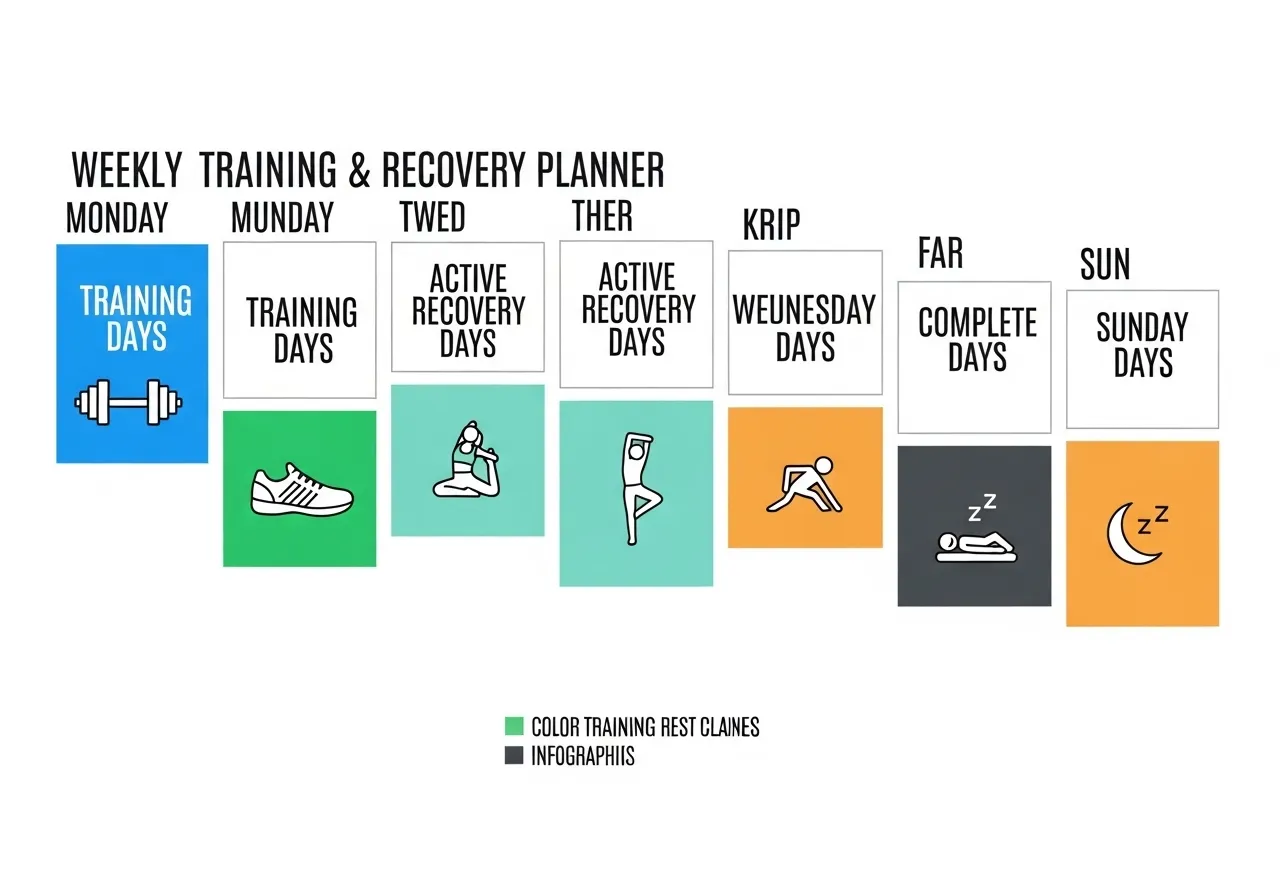
Translating recovery principles into a practical weekly schedule requires balancing training goals, life constraints, and individual recovery needs. Template A (3 training days): Monday training, Tuesday active recovery, Wednesday training, Thursday complete rest, Friday training, Saturday active recovery, Sunday complete rest. This provides 48-hour minimum inter-session rest, 2 active recovery days for blood flow and DOMS management, and 2 complete rest days for full restoration. Template B (4 training days): Monday training, Tuesday active recovery, Wednesday training, Thursday training, Friday complete rest, Saturday training, Sunday active recovery. This reduces inter-session rest on the Wednesday-Thursday pairing, appropriate for body-part split training but less so for full-body sessions. Template C (5 training days): Monday through Friday alternating training and active recovery with one complete rest day weekly, appropriate only when individual recovery capacity has been confirmed through performance monitoring. The appropriate template depends on training experience, program design, and individual recovery capacity — not on motivation level at the time of planning.
The weekly template you choose is less important than the consistency with which you apply it and the willingness to modify it based on performance and recovery data. Start with Template A if you’re unsure, monitor performance over 4 weeks, and adjust frequency or rest day placement based on what the data shows about your individual recovery needs. The template is a framework, not a constraint — intelligent adaptation of the framework to individual response is the final step from general recovery knowledge to personal recovery mastery.

Active vs. Complete Rest: The Research-Based Decision Framework
The question is not which approach is universally superior — the research shows both have genuine value in appropriate contexts. The more useful question is: given my current training state, recent training load, life stress, sleep quality, and recovery metrics, which recovery approach best serves my next training session? A simple decision framework, applied consistently, makes this choice systematic rather than mood-dependent.
The Recovery Decision Matrix
Choose active recovery when: Training load in the past 24–48 hours was moderate (not maximal), muscle soreness is present but not severe, sleep quality was adequate (7+ hours), general energy is reasonable, and the training type in the next 24–48 hours doesn’t involve the same muscle groups as the active recovery activity. Active recovery in these conditions accelerates metabolite clearance, reduces soreness, and maintains cardiovascular maintenance without interfering with the primary recovery processes that the next session depends on.
Choose complete rest when: Training load in the past 24–48 hours was near-maximal, significant fatigue or soreness is present, sleep has been compromised (under 6 hours consistently), illness symptoms are present below the neck, life stress is severe enough that cortisol is elevated and recovery capacity is reduced, or HRV readings are more than 10% below personal baseline. Complete rest in these conditions gives priority to the most demanding recovery processes rather than adding low-level demands that compete for limited recovery resources.
The Role of Objective Recovery Metrics
Subjective feel is an unreliable guide to recovery status — experienced athletes frequently underestimate their recovery needs, while anxiety about training leads others to feel less recovered than they are. Objective metrics provide a more reliable foundation for recovery decisions. Heart rate variability (HRV) is the gold standard accessible metric: morning HRV consistently above personal baseline indicates good recovery and supports active training or active recovery; HRV below baseline by 10%+ suggests incomplete recovery and argues for either complete rest or significantly reduced training intensity.
Research validating HRV-guided training in the British Journal of Sports Medicine shows that athletes whose training intensity was guided by daily HRV readings over a 4-week period produced significantly greater performance improvements than those following a fixed, non-adaptive training program — despite training fewer high-intensity sessions. The adaptive approach, guided by objective recovery data, produced more supercompensation peaks by timing high-intensity training to coincide with genuine recovery rather than forcing it on schedule regardless of recovery status.
Week Structure: Combining Active and Complete Rest Optimally
A practical weekly recovery structure for most intermediate athletes training 3–4 days per week: 1 complete rest day following the most demanding session of the week (typically after a heavy full-body session or a long endurance session), 1–2 active recovery days with light movement (walking, yoga, easy cycling), and the remaining days as training sessions. This structure provides both the complete rest that maximal recovery demands and the movement maintenance that active recovery benefits without overdoing either. For athletes training 5–6 days per week, 1 complete rest day and 1–2 active recovery days is a minimum, with the balance being genuine training sessions rather than pseudo-training labeled as recovery.
Seasonal Recovery Periodization
Beyond weekly recovery structure, intelligent recovery planning extends to seasonal or phase-based periodization. High-volume training phases (building phases, in-season peaks) require more strategic use of active recovery and scheduled complete rest to manage accumulating fatigue. Deload phases between training blocks are best structured with complete rest on days that previously contained training, allowing accumulated fatigue from the preceding block to fully clear before the next building phase begins. Extended recovery phases — one or two weeks of significantly reduced training every 3–4 months — produce supercompensation effects that reinvigorate both performance and psychological engagement with training in ways that weekly active and passive recovery cannot fully replicate.
Nutrition’s Interaction With Recovery Type
Nutritional strategy during recovery days should match the recovery approach chosen. During complete rest days, total caloric intake can be slightly reduced (particularly carbohydrate intake, since glycogen replenishment demands are lower without training), while protein intake should remain constant or slightly elevated to support ongoing muscle protein synthesis. During active recovery days, carbohydrate intake should be sufficient to fuel the low-intensity activity and maintain glycogen stores, with protein intake supporting the ongoing repair processes from previous training. Avoiding the common mistake of dramatically reducing all food intake on rest days — particularly protein — prevents the nutritional recovery support from being undermined by the intuitive “I’m not training today, I shouldn’t eat much” response that reduces muscle protein synthesis during the recovery window when it’s most needed.
The Elite Athlete Recovery Model: What You Can Learn and Adapt
Elite athletes — those whose training represents their primary professional focus with full recovery infrastructure — provide useful models for recovery strategy, though direct application of their protocols to recreational athletes requires significant scaling. Elite recovery practices that transfer well to recreational contexts: prioritizing sleep above all other recovery modalities; using HRV-guided training intensity decisions; scheduling active recovery sessions with genuine intensity control; and treating nutrition as a recovery tool with the same attention given to training nutrition.
Elite recovery practices that don’t transfer directly: cold water immersion multiple times per week (the blunted hypertrophy effect is more relevant to recreational athletes who train less frequently); recovery massage 3–5 times per week (time and cost prohibitive for most); and sophisticated supplementation stacks designed around training schedules that recreational athletes don’t have the training volume to justify. The principle is that elite athlete recovery budgets are commensurate with elite athlete training loads — a recreational athlete training 4 hours per week doesn’t need the recovery infrastructure of an athlete training 20+ hours per week. Scale recovery investment to training load, not to the most sophisticated possible protocol.
The most transferable insight from elite athlete recovery practices is the cultural normalization of rest. Elite athletes — the people most motivated to train more — are consistently coached to protect rest and recovery as non-negotiable training components. Their coaches and sports scientists understand that the athlete who recovers best competes best, that rest is not wasted time but earned performance, and that the training program is incomplete without its recovery counterpart. Applying this cultural frame to recreational training — treating rest days with the same intentionality and structure given to training days — produces recovery behavior that supports better long-term outcomes than the common recreational athlete approach of training as much as possible and resting only when forced to by fatigue or injury.
Technology and Recovery: Wearables, Apps, and Data-Driven Decisions
Recovery-focused wearable technology has made sophisticated recovery monitoring accessible to recreational athletes at consumer price points. The most useful recovery metrics tracked by current wearables: heart rate variability (HRV) via Whoop, Garmin, Polar, or Apple Watch; sleep staging data (deep sleep, REM, and light sleep proportions); resting heart rate trends; respiratory rate; and skin temperature variation (elevated skin temperature at night indicates immune or inflammatory activity). Each of these metrics provides a different window into recovery status, and their combination provides a more complete picture than any single metric alone.
The practical use of wearable recovery data: establish a personal baseline over 2–4 weeks of normal training and rest, then use deviations from that baseline as decision inputs rather than absolute thresholds. A single low HRV day in an otherwise high-HRV week is less concerning than 3–4 consecutive below-baseline days. Trends matter more than individual data points in recovery monitoring. When multiple metrics simultaneously indicate impaired recovery — low HRV, elevated resting heart rate, poor sleep quality scores — that convergent signal argues strongly for recovery prioritization over planned training intensity. When metrics indicate good recovery, the data provides confidence to train at planned intensity even when motivation is subjectively low.
The limitation of wearable recovery technology: the algorithms that convert raw sensor data into “recovery scores” or “readiness percentages” are proprietary, vary between devices, and have varying degrees of validation in independent research. The absolute numbers should be interpreted with appropriate skepticism; the trends and relative comparisons to personal baseline are more reliable than any single recovery score. Using wearable data as one input among several — alongside subjective feel, performance at recent sessions, and life stress context — produces better decisions than treating any single metric as definitive.
Recovery and Injury Prevention: The Evidence Connection
Inadequate recovery is one of the most consistent risk factors for overuse injuries across all sports and training disciplines. The mechanism is straightforward: connective tissues — tendons, ligaments, and cartilage — have lower vascularity than muscle tissue and therefore recover more slowly from training stress. When training sessions are spaced without allowing adequate connective tissue recovery, microscopic damage accumulates in tendons and joints faster than it is repaired. This accumulation is clinically invisible until it becomes symptomatic — the overuse injury that “came out of nowhere” typically represents weeks or months of accumulated micro-damage that finally exceeded the tissue’s tolerance threshold.
Active and complete rest both contribute to injury prevention through different mechanisms. Active recovery maintains blood flow to recovering connective tissues, which supports the slower repair processes of tendons and ligaments despite their relatively poor vascularization. Complete rest provides the uninterrupted repair window that tendons particularly need — tendon collagen synthesis has a longer biological timeline than muscle protein synthesis, requiring periods of true mechanical unloading to complete effectively. The combination of active recovery (enhanced blood flow delivery to repair processes) and complete rest (unloaded repair window for connective tissues) provides better injury prevention than either alone across a training week. Athletes who develop chronic tendinopathies often show the pattern of insufficient complete rest days combined with activities that maintain tendon loading without the recovery benefit of true rest — a pattern that the recovery decision framework in this article is specifically designed to prevent.
Travel and Recovery: Maintaining Quality Rest When Routines Break
Travel disrupts both training and recovery quality in compounding ways — jet lag impairs sleep and circadian alignment, hotel environments are rarely optimized for sleep, dietary routines break down, and travel stress elevates cortisol that further reduces recovery capacity. Travel recovery protocols: prioritize sleep timing alignment with destination time zone quickly through morning light exposure and avoiding evening screens; maintain protein intake through travel-friendly sources; use hotel gym or room bodyweight work at reduced intensity to maintain movement without taxing recovery; treat travel days as complete rest days physiologically. The stress of travel itself represents a meaningful cortisol load that competes with recovery resources and must be accounted for in training planning around travel. Athletes who ignore travel stress in their recovery accounting consistently arrive at post-travel sessions underrecovered despite nominally adequate training schedules.
Building Your Personalized Recovery Protocol for Long-Term Performance
The most effective recovery protocol is not the one with the most tools, the most modalities, or the most sophisticated monitoring — it’s the one that is consistently executed, accurately calibrated to individual needs, and built around the two most impactful recovery levers available: sleep and nutrition. Everything else — active recovery, foam rolling, cold exposure, compression — is a marginal addition that produces small benefits when the foundations are solid and is largely irrelevant when they aren’t.
Building the Foundation: Sleep First
Sleep is not one recovery tool among many — it is the primary recovery modality, producing effects on muscle protein synthesis, growth hormone secretion, neural recovery, inflammatory resolution, and hormonal balance that no other recovery intervention approaches in magnitude. The research on sleep and athletic performance is unambiguous: chronic sleep restriction below 7 hours per night produces consistent performance decrements, impairs injury resistance, and reduces the adaptation from training. Sleep extension — increasing sleep toward 9 hours for athletes — has been shown to improve performance across multiple sports and training contexts, independent of any other change.
Building recovery around sleep means: treating sleep duration as a training variable that deserves the same priority as programming and nutrition decisions; maintaining a consistent sleep schedule that reinforces circadian rhythm alignment; optimizing sleep environment (darkness, cool temperature, minimal noise) for sleep quality; and avoiding sleep-disrupting behaviors (alcohol, late-night screen exposure, intense exercise within 2–3 hours of bedtime). For most people, improving sleep from 6 hours to 8 hours per night will produce more significant performance and recovery improvements than any combination of active recovery protocols, recovery tools, or supplementation.
Nutrition as a Recovery Tool
Muscle protein synthesis — the biological process that rebuilds and strengthens muscle tissue after training — requires a continuous supply of dietary amino acids. Post-workout protein provides the substrates for synthesis initiation; but the protein consumed at meals throughout the day, distributed across 4–5 feedings, maintains elevated muscle protein synthesis rates across the full 24–48 hour recovery window. Total daily protein adequacy (1.6–2.2 g/kg) is the most important nutritional recovery variable. Carbohydrate intake determines glycogen resynthesis speed — high carbohydrate intake in the 4–6 hours after training accelerates glycogen replenishment that determines readiness for the next session. The classic recovery meal of protein plus carbohydrates within 2 hours post-training addresses both synthesis and replenishment simultaneously.
Anti-inflammatory foods — omega-3-rich fatty fish, berries, turmeric, olive oil, dark leafy greens — support recovery by modulating the post-exercise inflammatory response. While the research on specific anti-inflammatory food timing around exercise is less well-developed than that on protein and carbohydrates, the overall dietary pattern that minimizes chronic inflammation (Mediterranean or similar whole-food-based patterns) consistently shows better recovery and adaptation outcomes than the processed, omega-6-heavy Western dietary pattern that promotes chronic systemic inflammation.
Practical Recovery Modalities Worth Using
Foam rolling and soft tissue work: Research on foam rolling shows moderate benefits for DOMS reduction and short-term range of motion improvement. It is best used in the post-workout period and before active recovery sessions, not as a substitute for warm-up before training. Effect sizes are modest but accessible — 5–10 minutes of foam rolling on key areas adds meaningful recovery support without significant time investment.
Cold water immersion: Cold exposure (ice baths, cold showers, cold water immersion) has evidence supporting DOMS reduction and perceived recovery improvement. The mechanism involves peripheral vasoconstriction that reduces inflammatory mediator accumulation in recovering tissues. The important caveat from recent research: cold immersion immediately post-training may blunt hypertrophy adaptations by dampening the inflammatory signaling that contributes to muscle protein synthesis. Cold exposure is most appropriate for competition recovery (where performance at the next event is prioritized over long-term adaptation) and less appropriate for regular use during training phases focused on building muscle.
Compression garments: Compression tights, sleeves, and socks show modest evidence for DOMS reduction and perceived fatigue recovery, primarily through enhanced venous return and reduced fluid accumulation in recovering tissues. The effect sizes are small but the practicality is high — wearing compression during post-training daily activities or sleep is accessible without any additional time investment.
Massage: Professional sports massage provides genuine recovery benefits through increased blood flow, reduced muscle tension, and decreased inflammatory markers. Research in the Journal of Strength and Conditioning Research documents significant DOMS reduction following post-exercise massage compared to control conditions. The primary limitation is accessibility — professional massage requires time and financial investment that makes it impractical for regular use by most recreational athletes. Self-massage tools (foam rollers, massage guns) provide partial substitutes at much lower cost and time requirements.
Recovery Monitoring and Protocol Adjustment
The recovery protocol that works best for an individual can only be identified through systematic monitoring and adjustment. Tracking resting heart rate and subjective readiness daily, performance at training sessions, and recovery tool usage provides the data to correlate specific recovery behaviors with subsequent performance outcomes. If 8 hours of sleep plus active recovery produces better performance at the next training session than 6 hours of sleep plus a massage gun session, that’s your individual data showing where to prioritize limited recovery resources. These individual calibrations matter because recovery response varies significantly — what accelerates recovery in one person may have minimal effect in another.
Frequently Asked Questions About Recovery
Is active recovery or rest better for losing fat? Neither rest type directly determines fat loss — total caloric balance over time is the determinant of fat loss. Active recovery burns marginally more calories than complete rest, but the difference over a single day is small (typically 100–200 calories for 30 minutes of light walking). The fat loss implication of choosing active versus complete rest is negligible compared to the nutritional choices made throughout the day.
Can I do active recovery every day? Light walking, gentle yoga, and easy mobility work can be performed daily without meaningful recovery cost. Swimming, light cycling, and other somewhat more demanding active recovery modalities are appropriate 3–4 times per week for most training schedules without interfering with primary training. The key is genuine intensity control — if an activity is producing fatigue or soreness the following day, it is training, not recovery, regardless of how it was intended.
How do I know if I’m doing too much active recovery? Signs of excessive active recovery accumulation: progressive fatigue that isn’t resolving, performance at training sessions is declining, you feel more tired on active recovery days than on complete rest days, and injury risk feels elevated. If your “recovery” activities are generating fatigue rather than resolving it, the intensity or volume of those activities exceeds what qualifies as recovery and should be reduced or replaced with complete rest.
Does active recovery help with next-day soreness? Yes — light movement on the day after a training session that produced soreness consistently reduces the severity and duration of DOMS compared to complete rest. The mechanism is primarily enhanced blood flow and mechanical stimulation that supports inflammatory resolution. This is the most well-supported practical application of active recovery for recreational athletes: a 20–30 minute easy walk or light yoga session the morning after a hard leg day genuinely reduces the soreness experienced over the next 24 hours.
Special Populations: Recovery Considerations for Older Athletes
Aging produces physiological changes that directly affect recovery requirements and therefore alter the optimal balance between active recovery, complete rest, and training frequency. After approximately age 35–40, the rate of muscle protein synthesis in response to a given training stimulus begins to decline, meaning more protein and more time are required to produce the same adaptive response that younger athletes achieve more quickly. Growth hormone secretion during sleep — a primary driver of soft tissue repair — decreases substantially from the 20s onward, reducing one of the most potent recovery signals. Testosterone and other anabolic hormones that support recovery and adaptation also decline with age, further extending the time required for full recovery from any given training stress.
The practical implications for older athletes: increase recovery emphasis relative to training volume; extend inter-session rest for the same muscle groups from 48 to 72+ hours; increase deload frequency (every 3–4 weeks rather than every 6–8); prioritize sleep even more stringently than younger athletes; ensure protein intake is at the higher end of recommendations (closer to 2.2 g/kg than 1.6 g/kg) to compensate for the age-related reduction in muscle protein synthesis efficiency per gram of protein consumed. Active recovery becomes more rather than less valuable for older athletes — the enhanced blood flow, reduced DOMS, and maintained movement quality of light activity on rest days supports the connective tissue health that is a primary limiting factor in older athlete performance and injury resistance. The overall training-to-recovery ratio for older athletes should shift toward more recovery relative to the same training goals, not because they should do less, but because the same physiological adaptation requires more recovery investment to achieve.
Injury prevention through intelligent recovery also becomes proportionally more important with age. Connective tissue — tendons, ligaments, and cartilage — recovers more slowly with age and sustains damage more easily under chronic loading without adequate rest. The older athlete who pushes through warning signs of connective tissue fatigue that a younger athlete might recover from quickly risks injuries that require 3–6 months of rehabilitation — a recovery cost that is far higher than the recovery investment that would have prevented the injury. Conservative recovery planning is not timidity in older athletes — it is intelligent management of a physiological reality that determines long-term training sustainability.
Integrating Recovery Into Your Annual Training Plan
Truly systematic recovery planning extends beyond the weekly active-versus-complete-rest decisions discussed throughout this article to encompass the full training year. Annual training periodization — the deliberate variation of training volume, intensity, and recovery emphasis across the calendar year — is how serious athletes maintain health, prevent burnout, and peak performance at the right times. Even for recreational athletes without competitive goals, applying annual periodization principles produces better long-term outcomes than year-round training at similar intensity without structured recovery phases.
A practical annual periodization framework for recreational athletes: 3–4 months of base-building (moderate volume, moderate intensity, emphasizing movement quality and aerobic foundation), followed by 2–3 months of progressive overload (increasing intensity and specificity), followed by a 1–2 week peak or test period (maximum effort relative to goals), followed by a deliberate transition phase of 2–4 weeks with significantly reduced training and more complete rest before the next base-building cycle begins. This structure provides built-in recovery phases that prevent cumulative fatigue from compounding into overtraining, and the transition periods allow physiological and psychological restoration that makes each subsequent training cycle more productive than continuous training without structural recovery breaks.
Within this annual framework, weekly and daily recovery decisions operate as described throughout this article — but with awareness of which annual phase is current. During base-building phases, active recovery is appropriate and complete rest days are relatively rare. During peak phases, complete rest becomes more frequent and active recovery more deliberate. During transition phases, the balance shifts strongly toward complete rest and light enjoyable movement with no training pressure. This phase awareness prevents the common mistake of applying the same recovery approach regardless of training phase — which either over-recovers during phases that can handle more training stress, or under-recovers during phases that demand more recovery investment.
Frequently Asked Questions About Active Recovery vs. Complete Rest
Should I do active recovery or rest the day after leg day? Light active recovery — walking, easy cycling, gentle yoga focused on hip flexors and hamstrings — is beneficial the day after a hard leg session. It reduces DOMS severity and maintains blood flow to recovering leg muscles without adding training stress. Avoid activities that require significant lower body eccentric loading (stairs, running, jumping) in the first 24–48 hours after heavy leg training.
Is it okay to do yoga as active recovery every day? Gentle yoga — focusing on mobility, breathing, and relaxation rather than intense poses held at range-of-motion limits — is appropriate as daily active recovery without meaningful negative effects on training. More demanding yoga styles (power yoga, hot yoga, intense vinyasa) should be treated as training rather than recovery and programmed accordingly.
How do I know if I’m recovered enough to train hard? Indicators of adequate recovery: resting heart rate at or below personal baseline, HRV at or above personal average, no significant residual soreness in the muscle groups to be trained, motivation to train is present (or at least normal ambivalence rather than dread), and sleep quality has been adequate in the preceding nights. When multiple indicators align positively, proceed with planned training intensity. When multiple indicators are negative, adjust intensity downward or take a complete rest day.
What’s the minimum recovery between two hard sessions? For the same muscle groups or movement patterns, the minimum recommended inter-session recovery for most intermediate athletes is 48 hours for moderate-intensity sessions and 72+ hours for near-maximal sessions. Training the same pattern with less recovery produces progressively diminishing performance and increasing injury risk. Different muscle groups can train with shorter inter-session intervals, which is why alternating upper and lower body on consecutive days is a common programming strategy.
Building a Recovery-First Training Culture
The most lasting change that comes from understanding the science of recovery is a shift in training culture — from the “more is always better” mentality that characterizes most gym culture toward a performance-oriented view that treats recovery as the purpose of training rather than its obstacle. This shift doesn’t reduce training volume or intensity; it makes the training that does occur more productive by ensuring it happens in a recovered state that allows maximum adaptation. The athlete who trains 4 days per week fully recovered and then fully recovers before the next session will outperform the athlete who trains 6 days per week in a chronically fatigued state — both in short-term performance and in long-term adaptation accumulation.
Building this culture starts with changing the internal narrative around rest days: from “I should be training today” to “today my body is building what yesterday’s training requested.” It continues with the behavioral practices described throughout this article — HRV monitoring, deliberate active recovery scheduling, nutrition support on rest days, and complete rest when physiology demands it. And it matures into the long-term perspective of decades of productive training, made possible by the sustainable pace that recovery-first training enables. The athletes who are still training well in their 50s and 60s are almost never the ones who trained hardest without regard for recovery in their 30s — they are the ones who learned to manage training and recovery as complementary tools for long-term performance, not competing priorities where more of one means less of the other.
Every rest day invested wisely — whether as active recovery that supports the next session or complete rest that allows full supercompensation — is a contribution to the long-term training trajectory that maximizes the return on every hard session you’ve ever completed. Recovery is not the opposite of training. It is training’s completion.
Recovery is not the enemy of progress — it is the mechanism through which progress is made. Every session trained on a fully recovered system compounds the investment of previous sessions into genuine long-term adaptation.