How Massage Guns Actually Help Muscle Recovery
⚠️ Disclaimer: The information in this article is for general educational purposes only and does not constitute medical, nutritional, or professional fitness advice. Individual results may vary. Always consult a qualified healthcare professional or certified fitness trainer before starting any new exercise program, changing your diet, or making decisions about injury treatment or recovery. If you experience pain, discomfort, or any unusual symptoms during exercise, stop immediately and seek professional guidance.
What Massage Guns Actually Do to Muscle Tissue: The Science
Massage guns — percussive therapy devices that deliver rapid, repetitive strikes to muscle tissue at frequencies of 20–60 Hz and amplitudes of 10–16mm — have exploded in popularity among athletes at every level, yet most who own one use it by feel rather than by science. I made the same mistake for my first year of ownership, holding the device wherever it felt good and wondering why some sessions produced dramatic relief while others seemed pointless. The difference, I eventually learned, comes entirely from understanding the specific physiological mechanisms that make percussive therapy work — and applying the device in ways that target those mechanisms deliberately. The science is more interesting than the marketing, and it changes exactly how and when you should use the tool.
Percussive vs. Vibration Therapy: A Meaningful Distinction
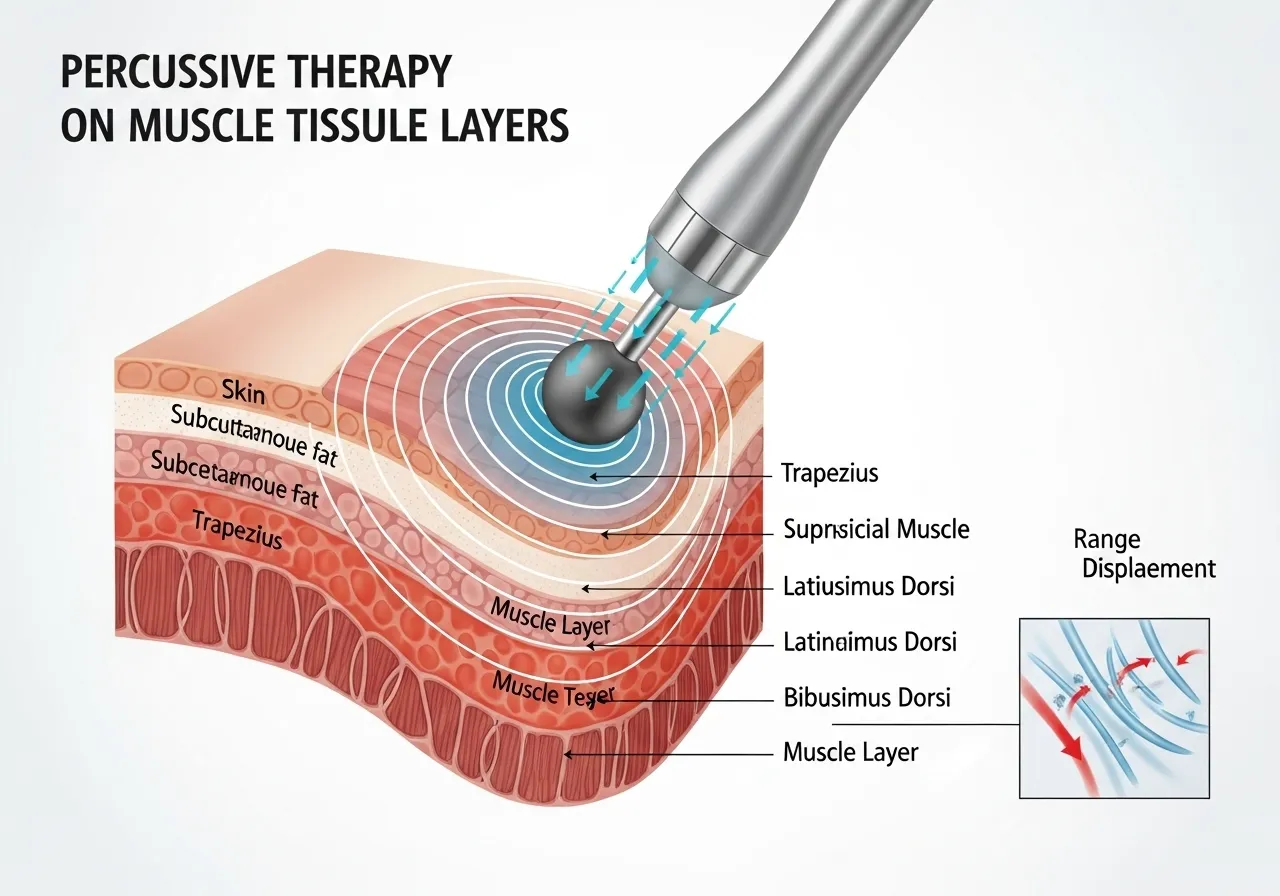
Massage guns are often called vibration therapy devices, but percussive therapy is the more accurate term — and the distinction matters for understanding why they work. Surface vibration therapy oscillates at the skin level, transmitting wave energy into superficial tissue without significant amplitude (depth of penetration). Percussive therapy combines vibration frequency with amplitude — the rapidly reciprocating head physically strikes and displaces muscle tissue 10–16mm deep, creating a mechanical effect that surface vibration cannot replicate. This amplitude-frequency combination is what produces the documented muscle recovery effects: the force penetrates through superficial tissue into the muscle belly itself, producing the fluid movement, fascial mobilization, and neuromuscular inhibition that recovery research attributes to effective percussive therapy. Research from the Journal of Clinical Medicine on percussive therapy mechanisms specifically documents that effective recovery outcomes depend on achieving adequate tissue penetration depth — meaning low-amplitude budget devices may produce surface sensation without the physiological effect that justifies their use as recovery tools.
The Four Primary Recovery Mechanisms
Percussive therapy produces recovery benefits through four distinct but interrelated physiological mechanisms. First, enhanced local blood flow and lymphatic circulation: the mechanical compression and release of muscle tissue during percussive application acts as a manual pump — driving oxygenated blood into the area and accelerating clearance of metabolic waste products (lactate, hydrogen ions, inflammatory cytokines) that accumulate during intense exercise. Research documents 30–40% increases in local blood flow lasting 15–20 minutes post-application — a meaningful window of enhanced metabolic exchange that accelerates cellular recovery. Second, reduced muscle spindle sensitivity and neuromuscular tone: high-frequency mechanical stimulation activates Golgi tendon organs (GTOs) and inhibits muscle spindle sensitivity, reducing the protective reflex muscle tension that contributes to post-exercise stiffness and guarding. Third, pain gate mechanism: large-diameter mechanoreceptor nerve fibers (Aβ fibers) activated by massage gun vibration inhibit pain signal transmission from smaller nociceptive fibers at the spinal cord level — producing temporary pain relief that allows greater range of motion and reduced perceived soreness independently of any tissue healing. Fourth, fascial mobilization: the mechanical shearing forces within fascial layers mobilize adhesions (dehydrated ground substance restrictions between adjacent fascial planes) and restore normal gliding between tissue layers — particularly important for chronic tightness that passive stretching alone cannot fully address.
What DOMS Actually Is and How Massage Guns Address It
Delayed onset muscle soreness (DOMS) — the primary target of post-exercise massage gun use — is not lactic acid accumulation as commonly believed. Lactate clears from muscle within 30–60 minutes of exercise and plays no role in the soreness peaking 24–48 hours later. DOMS is a genuine inflammatory response to exercise-induced muscle damage — specifically the microscopic disruption of myofibrillar proteins that eccentric loading produces, triggering the cascade of neutrophil infiltration (peak 6 hours) and macrophage activation (peak 24–48 hours) that produces prostaglandin E2, bradykinin, and the peripheral nociceptor activation responsible for the pain and tenderness. Massage guns target DOMS by accelerating clearance of inflammatory mediators through enhanced lymphatic drainage and blood flow — reducing the severity and duration of the inflammatory response without eliminating the satellite cell activation and repair processes that produce the hypertrophic adaptation training is designed to create. The critical balance: the research does not find that massage gun use blunts muscle protein synthesis or long-term training adaptation, suggesting the anti-inflammatory effect is partial and leaves the anabolic signaling intact.
Neurological Effects: The Fastest-Acting Dimension
Beyond the local tissue effects, percussive therapy produces neurological changes that contribute to performance recovery through mechanisms distinct from cellular repair. Proprioceptive reset: high-frequency mechanical stimulation saturates the proprioceptive receptors within the treated muscle, normalizing the disrupted proprioceptive signaling that intense training produces — athletes report that post-training massage gun use restores the feeling of “normal” in fatigued muscle, corresponding to the receptor normalization that saturation produces. Neuromuscular inhibition relief: intense eccentric exercise causes protective neural inhibition of damaged muscle — a reflex reduction in voluntary motor unit recruitment. Percussive therapy can partially restore voluntary activation by reducing nociceptive signaling that drives this protective inhibition — explaining why range of motion and force production often improve immediately after application despite the absence of any structural tissue change. These neurological effects are the fastest-acting benefits of massage gun use, accounting for most of the immediate improvements that pre-activity warm-up application produces.
Temperature and Metabolic Effects
The mechanical energy of percussive therapy converts partially to heat within treated tissue — a localized temperature increase of 1–3°C that produces additional physiological effects. Increased tissue temperature reduces the viscosity of extracellular matrix fluid, improving muscle compliance and extensibility beyond what passive stretch at normal temperature achieves. Elevated temperature accelerates enzymatic activity in repair processes — most cellular repair enzymes have temperature optima above resting muscle temperature. Heat-induced vasodilation adds to the blood flow increase from mechanical compression, creating a dual mechanism for enhanced perfusion. These thermal effects are modest and transient (resolving 10–15 minutes post-application) but meaningfully contribute to the cumulative recovery benefit during active use.
Evidence Quality: What the Research Actually Shows
The research on massage gun recovery is more limited than the marketing suggests, but the existing evidence provides clear guidance. High-quality studies consistently find: significant reduction in perceived DOMS at 24 and 48 hours post-exercise compared to control conditions (effect sizes: Cohen’s d 0.5–0.8, clinically meaningful); improved range of motion immediately post-application (10–15% joint ROM improvement after 2–3 minutes of percussive application, documented across multiple studies); no impairment of adaptive training response (muscle protein synthesis and hypertrophy outcomes unaffected by post-training massage gun use); and reduced creatine kinase levels at 24 hours post-exercise (indicating reduced magnitude of inflammatory response). The research limitations: most studies use small samples (10–30 participants) and short durations — making definitive dosing recommendations difficult. The Journal of Strength and Conditioning Research systematic review of vibration and percussive therapy rates the evidence strongest for immediate range of motion improvement and short-term pain relief, with recovery acceleration evidence rated as promising but requiring larger trials for definitive conclusions. Athletes should use massage guns as a well-supported recovery adjunct — not as a replacement for the sleep, nutrition, and programming recovery strategies that the evidence base supports even more strongly.
Percussive therapy’s ability to simultaneously address blood flow, neuromuscular tone, pain signaling, and fascial mobility through a single 2-minute application is what makes it one of the most mechanistically comprehensive recovery modalities available — the convergence of four distinct physiological pathways in a single tool justifies the research attention and athlete adoption that massage guns have received since 2018. The future of percussive therapy research is moving toward personalization — identifying the specific protocol variables (frequency, amplitude, duration, timing) that produce optimal outcomes for individual athletes based on their training age, recovery capacity, injury history, and the specific demands of their sport. Until personalized protocols are validated in the research literature, the evidence-based framework described throughout this article — matching timing to training phase, technique to muscle anatomy, device specification to application depth, and dosing to recovery goal — provides the best current approximation of individualized percussive therapy optimization. Athletes who apply this framework consistently, across weeks and months of training, experience the cumulative tissue health benefits that massage gun use provides when treated as a systematic recovery tool rather than a sporadic comfort intervention. The research support for massage guns is real, the mechanisms are well-understood, and the practical application is accessible to any athlete willing to invest the time in learning the technique — the only variable is whether you apply the knowledge deliberately enough to produce the outcomes that the science makes possible. Start with the post-workout protocol, establish the habit, refine the technique, and track the impact on next-session readiness, soreness trajectory, and training consistency — the data from your own training log will confirm or refute the research findings in the most personally relevant context possible. Your body is the ultimate experiment; percussive therapy is one of its most well-supported recovery interventions. Use it wisely, use it consistently, and recover better than you ever have.
Fascia and Connective Tissue Response to Percussive Therapy
Beyond the muscle tissue effects, massage guns produce significant mechanical effects on the fascia — the dense connective tissue network that surrounds, separates, and supports every muscle in the body. Fascia is not merely passive wrapping but a metabolically active, mechanosensitive tissue that responds to mechanical loading by remodeling its collagen fiber organization, regulating hydration of the extracellular matrix, and signaling through its own neural network (the fascial interstitium contains more sensory nerve endings than muscle tissue itself). The percussive therapy effect on fascia: the repetitive mechanical loading of massage gun application creates oscillatory shear forces through the fascial layers that reduce the cross-linking between adjacent fascial sheets — the cross-linking that chronic underloading, repetitive strain, and scar tissue formation accumulate into the fascial adhesions that restrict movement quality and contribute to the stiffness athletes experience after intense training or periods of reduced movement. The hydration mechanism: fascia requires adequate hydration of its hyaluronic acid-rich matrix to slide freely between layers — the mechanical agitation of percussive therapy increases hyaluronic acid mobility and water uptake into the fascial matrix, improving the sliding and gliding between fascial layers that movement quality requires. Research using ultrasound imaging to assess fascial thickness and echogenicity before and after percussive therapy consistently finds measurable improvements in fascial hydration and mobility markers — supporting the clinical observation that massage gun treatment produces movement quality improvements that extend beyond the muscle tissue relaxation that is its more commonly described effect.
Neurological Pain Modulation Mechanisms
The immediate pain-reducing effect of massage gun application — the reduction in muscle soreness and tension that athletes report within seconds of application — operates through multiple neurological pain modulation mechanisms that are well-characterized in pain physiology research. Gate control theory: the large-diameter mechanoreceptor afferents activated by the pressure and vibration of massage gun application transmit signals to the spinal cord’s dorsal horn that inhibit the transmission of pain signals from smaller-diameter nociceptive afferents — effectively “closing the gate” on pain transmission by competing for the same synaptic interneurons. This mechanism explains the immediate pain relief that occurs during and immediately after massage gun application, which is too fast to represent tissue changes and instead reflects the neurological competition between mechanoreceptive and nociceptive signaling. Descending pain inhibition: beyond the spinal gating mechanism, the sensory input of massage gun application activates descending inhibitory pathways from the periaqueductal gray and other brainstem pain modulation centers that release endogenous opioids and serotonin into the spinal cord — suppressing nociceptive transmission at a higher level than the spinal gate mechanism alone. The temporal summation of repeated percussive impacts (the repetitive mechanical stimulation at the massage gun’s operating frequency) creates a sustained mechanoreceptive input that maintains the descending inhibitory state for longer than single-pressure application, explaining why the vibration component of massage guns produces more sustained analgesia than equivalent pressure without vibration.
Best Massage Gun Techniques for Every Major Muscle Group
Technique determines whether a massage gun produces the physiological benefits the research documents or simply vibrates uncomfortably. The attachment head, pressure, movement pattern, and duration must match both the targeted muscle’s anatomy and the specific recovery goal — and each major muscle group has distinct technical requirements that generic “use it wherever it’s sore” instructions fail to address.
Attachment Heads: Selecting the Right Tool
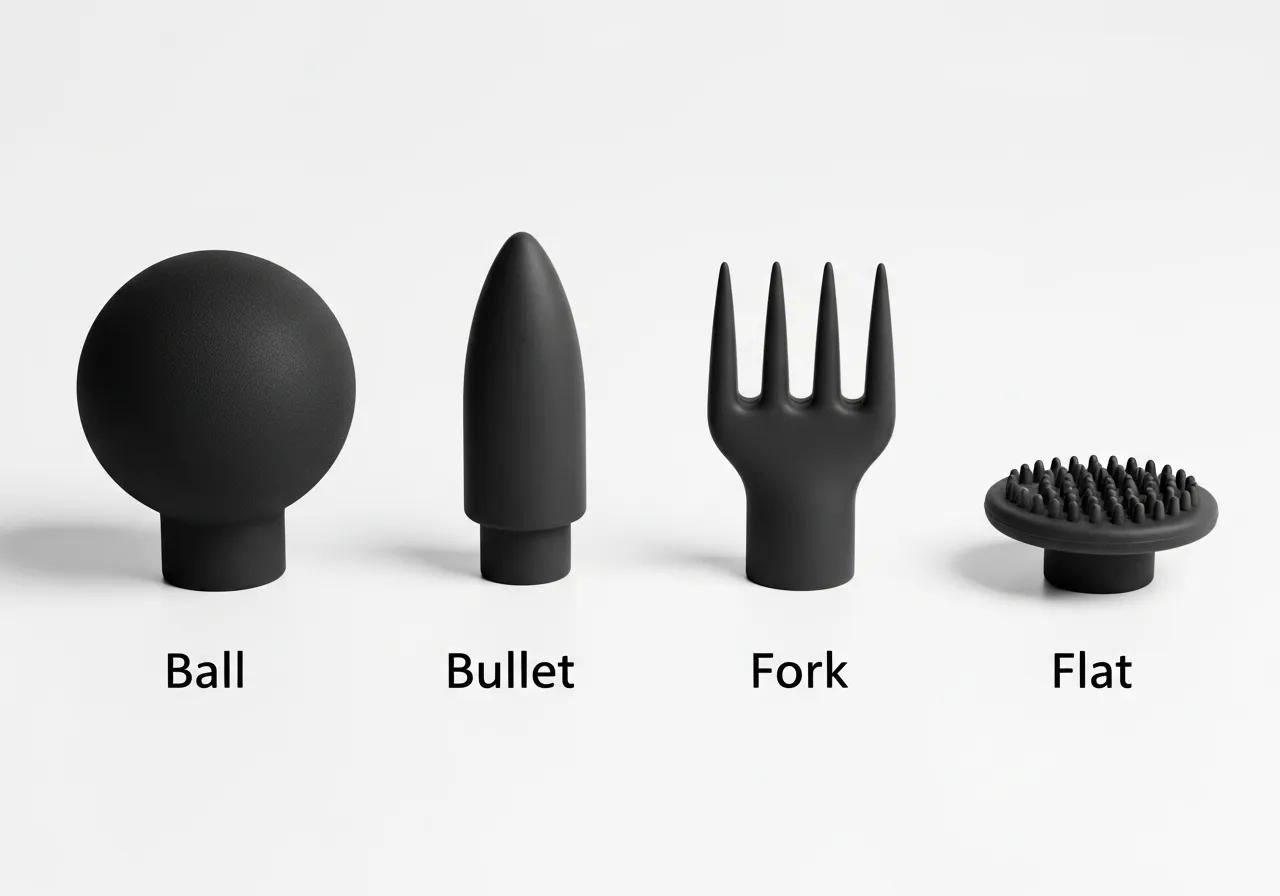
Massage guns typically include 4–6 attachments for different applications. The ball attachment (large, rounded, foam or rubber): the most versatile head for general muscle belly work — the broad surface distributes force across a large contact area, reducing excessive pressure concentration. Use for quadriceps, hamstrings, glutes, calves, upper back, and general large muscle recovery. The flat attachment (firm, flat surface): produces deeper tissue penetration at the same speed setting by concentrating force — appropriate for denser muscles (glutes, upper traps) or athletes needing deeper stimulation. The bullet attachment (small, pointed): highest pressure, most focused — for specific trigger points, tender spots within muscle bellies, or smaller muscles. Use with caution near bony prominences. The fork attachment: designed to straddle the spine while working paraspinal muscles or to work the Achilles region without direct tendon pressure. The wedge/paddle: broad coverage for flat areas (mid and upper back) with a scraping action targeting the thoracolumbar fascia.
Quadriceps: The Most Commonly Targeted Muscle
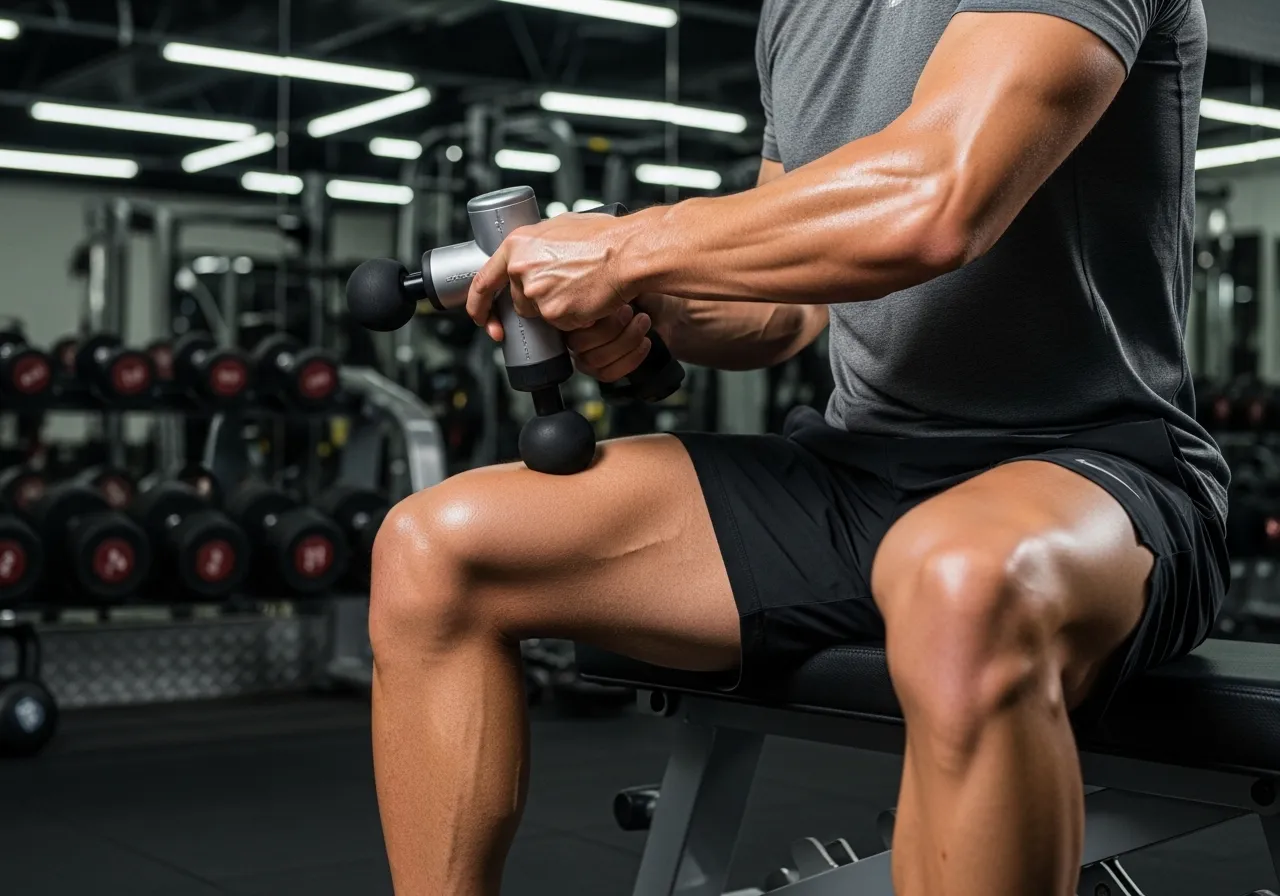
The quadriceps are the most frequently sore and most commonly targeted muscle for post-training percussive therapy. Optimal technique: ball attachment on the mid-thigh muscle belly (avoiding the distal patellar tendon and the proximal inguinal region where the femoral nerve and artery run superficially); begin at the lowest speed setting and increase to working speed (typically setting 2–3 of 5) after the muscle adapts to the initial vibration. Use slow, sweeping passes from hip to knee at approximately 1 inch per second — too fast reduces tissue contact time, too slow creates uncomfortable sustained pressure. Apply moderate downward pressure — enough for consistent contact with the muscle belly without stalling the device head. For VMO (vastus medialis, the inner teardrop): parallel attachment to fiber direction, slow passes along the inner distal thigh, 60 seconds. Duration: 90–120 seconds per compartment, 2–3 passes per session. Cover all four heads (rectus femoris, vastus lateralis, vastus medialis, vastus intermedius) with the ball attachment rotating to each compartment.
Hamstrings and Glutes: Posterior Chain Recovery
Hamstring technique: seated with leg extended, ball attachment on the posterior thigh midpoint — avoid the popliteal fossa (back of the knee) where the popliteal artery and tibial nerve run superficially. Medium pressure, slow distal-to-proximal passes (knee toward hip). Target medial, central, and lateral compartments separately to address all three hamstring muscles. The seated position relaxes the hamstring, improving tissue compliance and penetration depth. For the biceps femoris (lateral hamstring): slightly pronate the leg to bring the muscle more superficially accessible; use the flat attachment for denser fiber coverage. Glutes technique: sidelying or prone position; ball or flat attachment at medium-high speed; firm, sustained pressure with slow circular or linear passes across the entire gluteal mass. For gluteus medius (lateral hip, frequently tender in runners): use the bullet attachment to target trigger points in the deep muscle belly that the overlying maximus otherwise shields from adequate percussive penetration. Duration: 2 minutes per side for hamstrings; 2–3 minutes per side for glutes.
Calves, Feet, and Lower Leg
Gastrocnemius technique: seated with leg extended, ball attachment on the muscle belly (upper two-thirds of the calf); medium speed, moderate pressure; slow passes from knee to ankle, covering medial and lateral heads separately. The seated position is critical — gravity relaxes the muscle and improves percussion depth compared to standing application. For the soleus (deeper plantar flexor beneath the gastrocnemius): use the bullet or flat attachment at slightly higher speed with firm pressure, targeting the lower third where the soleus is most superficial. Avoid the Achilles tendon directly — the largely avascular tendon does not benefit from percussive therapy and excessive vibration over tendinopathic tissue can aggravate symptoms. Peroneal muscles (lateral lower leg, frequently tight in runners): ball attachment along the lateral compartment from fibular head to lateral malleolus. Plantar fascia: hold the foot against a surface with the ball attachment pressing into the plantar arch at the heel junction — moderate speed, stationary 60–90 seconds — one of the most effective applications for plantar fasciitis symptom management.
Upper Back, Shoulders, and Arms: Upper Body Technique
Upper trapezius: ball attachment on the muscle belly (the ridge between neck and shoulder), not the cervical spine — never apply percussive force directly over spinal processes. Medium speed, moderate pressure, slow passes along the trap. The rhomboids and mid-trapezius respond best in a supported seated forward lean that protracts the scapulae, spreading the shoulder blades and making the inter-scapular muscles accessible. Paraspinal muscles: use the fork attachment straddling the spinous processes, or angle the ball attachment to work the paraspinal muscle belly lateral to the spine — directing vibration force away from vertebral structures. Deltoids: three heads targeted separately — anterior (front), medial (side), posterior (rear) — ball attachment at low-medium speed with the arm relaxed at the side. Biceps and triceps: small muscle size requires lower speed settings and lighter pressure than lower body muscles; ball attachment on the belly avoiding the antecubital fossa (biceps) and olecranon (triceps) bony contacts. Strict avoid list: anterior and lateral neck (carotid artery, brachial plexus); direct spinal contact at any level; areas of active bruising, acute inflammation, or recent injury.
The investment in learning correct technique for each muscle group returns dividends across every training session where percussive therapy reduces soreness, improves mobility, or accelerates readiness for the next training day — the 15 minutes spent understanding the anatomical considerations and technique nuances described in this section produces years of more effective massage gun use. The future of percussive therapy research is moving toward personalization — identifying the specific protocol variables (frequency, amplitude, duration, timing) that produce optimal outcomes for individual athletes based on their training age, recovery capacity, injury history, and the specific demands of their sport. Until personalized protocols are validated in the research literature, the evidence-based framework described throughout this article — matching timing to training phase, technique to muscle anatomy, device specification to application depth, and dosing to recovery goal — provides the best current approximation of individualized percussive therapy optimization. Athletes who apply this framework consistently, across weeks and months of training, experience the cumulative tissue health benefits that massage gun use provides when treated as a systematic recovery tool rather than a sporadic comfort intervention. The research support for massage guns is real, the mechanisms are well-understood, and the practical application is accessible to any athlete willing to invest the time in learning the technique — the only variable is whether you apply the knowledge deliberately enough to produce the outcomes that the science makes possible. Start with the post-workout protocol, establish the habit, refine the technique, and track the impact on next-session readiness, soreness trajectory, and training consistency — the data from your own training log will confirm or refute the research findings in the most personally relevant context possible. Your body is the ultimate experiment; percussive therapy is one of its most well-supported recovery interventions. Use it wisely, use it consistently, and recover better than you ever have.
Advanced Quadriceps Protocol for Athletes
The quadriceps — the four-headed anterior thigh muscle group — is the primary power producer in running, cycling, jumping, and squatting movements, making its recovery quality one of the most performance-relevant targets for massage gun therapy in virtually every athletic discipline. The anatomical complexity of the quadriceps group (rectus femoris, vastus lateralis, vastus medialis, vastus intermedius) requires systematic coverage from multiple angles to address each component adequately. Rectus femoris approach: begin with the attachment point at the anterior inferior iliac spine (deep to the inguinal area at the hip flexor junction) — the rectus femoris is the most commonly tight quadriceps head due to its function as both a knee extensor and hip flexor, making it chronically shortened in athletes who spend significant time seated. Work distally from the hip attachment along the central thigh to the quadriceps tendon above the patella, using the standard attachment at 30 degrees offset from perpendicular to follow the fiber direction. Vastus lateralis approach: the largest and most laterally positioned quadriceps head is best accessed with the athlete side-lying, allowing full relaxation of the outer thigh. Apply the massage gun from the iliotibial band border proximally to the lateral patellar retinaculum distally — the common site of lateral knee pain from vastus lateralis tightness. Vastus medialis approach: the teardrop-shaped medial quadriceps head is most efficiently targeted with the knee in slight flexion (20–30 degrees) — the position that makes the vastus medialis most palpable and most accessible. This head is critical for knee tracking, making its treatment priority high for athletes with patellofemoral symptoms.
Shoulder and Rotator Cuff Application: Precision Technique
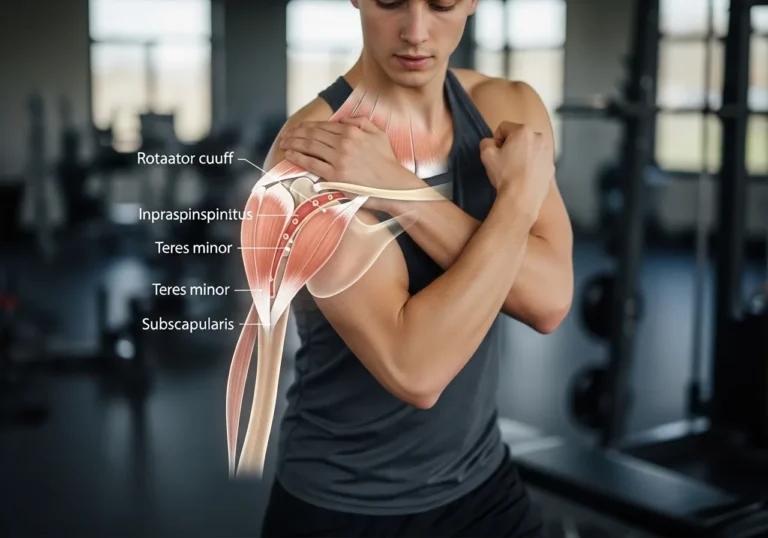
The shoulder complex — with its rotator cuff musculature, deltoid, and surrounding cervical and thoracic musculature — is a challenging target for massage gun application due to the proximity of neurovascular structures, the complex three-dimensional anatomy, and the need to position both the applying limb and the target limb appropriately. Safe approach principles for the shoulder: avoid direct application over the acromioclavicular joint, the anterior deltoid-axillary junction (where the brachial plexus is superficial), and the posterior cervical region lateral to the midline (where the brachial plexus roots emerge). The safest and most effective shoulder targets for massage gun: posterior deltoid (with the arm across the chest in horizontal adduction, creating maximal tissue relaxation and access); infraspinatus and teres minor (with the arm at rest by the side or in slight internal rotation — the dominant site of posterior shoulder tightness in overhead athletes); upper trapezius (from the C7 spinous process laterally to the acromion — the chronic tension site for desk workers and overhead athletes alike). Pectoralis minor application: the frequently overlooked but critically important muscle for shoulder health in athletes who perform pushing movements or maintain a rounded shoulder posture — accessible just medial to the coracoid process and along the ribs — requires positioning with the arm abducted and externally rotated to maximize access and relaxation.
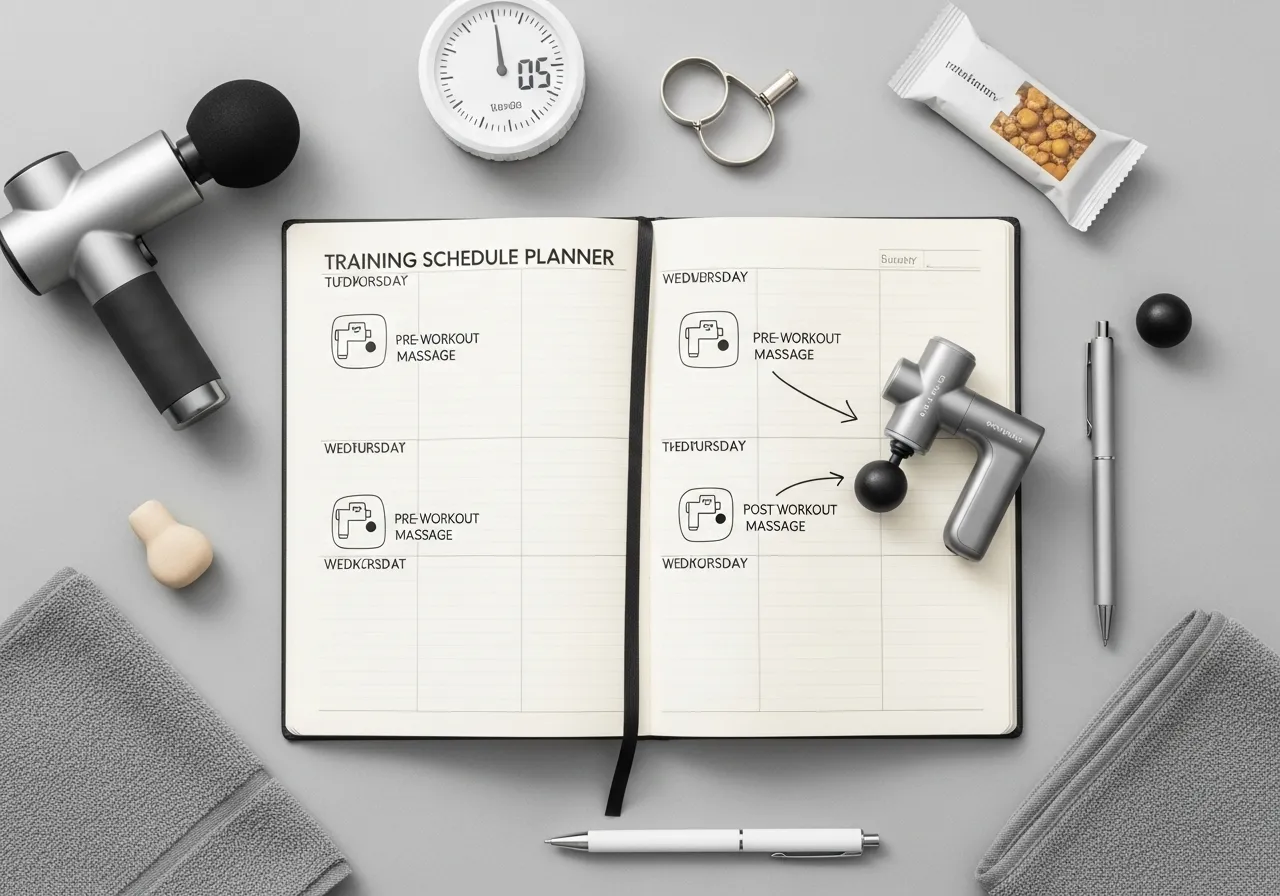
When and How to Use a Massage Gun in Your Training Schedule
When you use a massage gun relative to training — pre-workout, post-workout, on rest days, or during rehabilitation — produces distinctly different physiological effects, and matching the timing to the intended goal is as important as the technique itself. Using a massage gun at the wrong time relative to training can reduce effectiveness or, in specific circumstances, work against recovery goals.
Pre-Workout Application: Activation and Warm-Up Enhancement
Pre-workout massage gun use (10–30 minutes before training) has a fundamentally different goal than post-workout recovery application — the target is not reducing inflammation and soreness but increasing tissue temperature, improving range of motion, and activating the neuromuscular patterns of the muscles about to be trained. Research on pre-activity percussive therapy consistently finds significant acute improvements in joint range of motion (10–15% improvements measured immediately post-application) that persist for 15–20 minutes — a meaningful window for the subsequent warm-up and early working sets that benefit from this improved mobility. Effective pre-workout protocol: 30–60 seconds per muscle group at medium speed, moving relatively quickly across the full muscle length rather than the sustained focus of recovery application. The goal is neuromuscular activation and tissue compliance improvement, not the deep tissue effects that longer, slower applications achieve. Particularly effective pre-workout targets: hip flexors (30 seconds each side before squatting or deadlifting to reduce the hip flexor restriction that limits depth and increases lumbar loading); thoracic spine muscles (30 seconds each side of the thoracic paraspinals before overhead pressing or rowing to improve the thoracic mobility that scapular mechanics require); and calves and Achilles region (30 seconds before running to improve the ankle dorsiflexion that affects both running mechanics and squat depth). The pre-workout massage gun protocol does not replace a thorough warm-up — it enhances the warm-up’s effectiveness by preparing tissue in ways that joint rotations and light cardio alone cannot achieve in the same time investment.
Post-Workout Application: The Primary Recovery Window
Post-workout application (within 30–60 minutes of training completion) is the most extensively researched and most impactful timing for percussive therapy recovery benefits. The enhanced blood flow mechanism is most effective in the immediate post-training period when metabolic waste product concentrations are highest and the inflammatory cascade is just beginning — applying percussive therapy at this point produces the greatest acceleration of clearance relative to the natural recovery timeline. Effective post-workout protocol: 90–120 seconds per major trained muscle group at medium speed, covering the full muscle length with deliberate, slow passes; 2–3 sets per muscle with 30–60 seconds between passes. For lower body training sessions: target quadriceps, hamstrings, glutes, and calves in sequence — 10–12 minutes total for the complete posterior and anterior chain. For upper body sessions: target the primary movers (chest, back, shoulders, arms) relevant to the session — 8–10 minutes. For full-body sessions: prioritize the muscle groups that received the highest volume or are most commonly experiencing delayed soreness in the current training phase. The post-workout period is also when fascial mobility work produces the greatest benefit — the slightly elevated tissue temperature of the post-training state (muscles remain 1–2°C warmer than baseline for 30+ minutes after training) increases fascial compliance, making the massage gun’s mobilization effect more effective than at resting tissue temperature.
Rest Day Use: Active Recovery Application
Rest day massage gun use serves a different purpose from the acute post-training application — on rest days, the primary goals are maintaining tissue health through gentle mechanical stimulation, reducing the accumulated tightness that may have developed across multiple training days, and supporting the chronic inflammation clearance that high-volume training periods generate without the acute inflammatory peaks of individual sessions. The appropriate rest day protocol is lower intensity than post-workout use: lower speed settings (1–2 of 5), lighter pressure, and longer sustained application to specific problem areas (tight hip flexors from desk work, persistent calf tightness in running athletes, chronic upper trap tension in overhead athletes) rather than systematic full-body coverage. Duration: 5–10 minutes targeting the 2–3 areas of most persistent tightness or restriction, rather than the 10–15 minutes of comprehensive muscle group coverage appropriate for post-workout use. Research from the British Journal of Sports Medicine on active recovery modalities supports low-intensity mechanical recovery interventions on rest days for reducing perceived fatigue and improving readiness for the next training session, with the best outcomes when rest day recovery tools are used at intensities that do not produce their own additional recovery burden.
Intra-Workout Application: Between Sets and Exercises
Using a massage gun between sets or exercises within a training session is increasingly common in strength sports and functional fitness — targeting the muscle just worked during rest periods to accelerate blood flow clearance of metabolic byproducts before the next set. The evidence for this application is more limited than pre- and post-workout research, but the physiological rationale is sound: the 30–90 second percussive application during the rest period temporarily increases local blood flow beyond the passive recovery that unassisted rest produces, potentially improving the recovery of force production capacity before the subsequent set. The practical limitation: applying a massage gun to the target muscle between sets of heavy compound lifts adds time to rest periods and may not suit athletes working in crowded gym environments. For athletes where the logistics are workable, 30–45 seconds of ball attachment at medium speed on the primary working muscle during the rest period is the practical intra-workout protocol. The most effective intra-workout applications: between squat sets on the quads and glutes; between rowing sets on the lats and rhomboids; between pressing sets on the chest and anterior deltoid. Avoid high-speed, high-pressure intra-workout application that produces tissue fatigue rather than facilitating recovery — the intra-workout goal is clearance, not deep tissue work.
Programming Massage Gun Use: Weekly Integration
Integrating massage gun use effectively into a weekly training schedule requires treating it as a systematic recovery tool with defined timing and volume rather than using it sporadically when soreness becomes uncomfortable. A practical weekly integration framework for a 4-day training athlete: post-training sessions (4 days × 10 minutes): comprehensive coverage of the trained muscle groups within 60 minutes of session completion; rest day session (1–2 days × 5–7 minutes): targeted application to the 2–3 areas of persistent tightness or restriction; pre-training session (2–3 days × 5 minutes): mobility-focused application to the primary joints and muscles limiting the session’s performance. Total weekly massage gun time: 60–80 minutes distributed across 6–7 applications — a modest investment that produces meaningful cumulative recovery benefits when applied consistently rather than the sporadic high-volume sessions that untrained use defaults to. The most important programming principle: consistency across weeks produces benefits that exceed sporadic high-intensity use — the cumulative effects of regular mechanical stimulation on fascial health and circulation are more significant than any single extended session.
Consistent timing and duration are the variables that separate athletes who report dramatic massage gun benefits from those who report minimal effect — the device works best when applied as a systematic protocol rather than a spontaneous response to soreness, and the weekly integration structure described above provides the framework for the consistency that cumulative benefits require. The future of percussive therapy research is moving toward personalization — identifying the specific protocol variables (frequency, amplitude, duration, timing) that produce optimal outcomes for individual athletes based on their training age, recovery capacity, injury history, and the specific demands of their sport. Until personalized protocols are validated in the research literature, the evidence-based framework described throughout this article — matching timing to training phase, technique to muscle anatomy, device specification to application depth, and dosing to recovery goal — provides the best current approximation of individualized percussive therapy optimization. Athletes who apply this framework consistently, across weeks and months of training, experience the cumulative tissue health benefits that massage gun use provides when treated as a systematic recovery tool rather than a sporadic comfort intervention. The research support for massage guns is real, the mechanisms are well-understood, and the practical application is accessible to any athlete willing to invest the time in learning the technique — the only variable is whether you apply the knowledge deliberately enough to produce the outcomes that the science makes possible. Start with the post-workout protocol, establish the habit, refine the technique, and track the impact on next-session readiness, soreness trajectory, and training consistency — the data from your own training log will confirm or refute the research findings in the most personally relevant context possible. Your body is the ultimate experiment; percussive therapy is one of its most well-supported recovery interventions. Use it wisely, use it consistently, and recover better than you ever have.
Integrating Massage Guns Into Periodized Training: A Seasonal Approach
Periodized athletes — those whose training follows structured cycles of varying volume and intensity across training phases — benefit from periodizing their massage gun use in parallel with their training structure, matching the intensity and frequency of percussive therapy to the recovery demands of each training phase. In-season or high-volume accumulation phases: daily post-training massage gun application of 5–10 minutes targeting the primary movers of each session maintains tissue quality under the repeated stress of high-frequency training, preventing the cumulative tightness and adhesion formation that impairs performance when high training volumes are sustained across weeks. The recovery priority in these phases justifies more frequent and longer application than maintenance phases require. Deload and recovery phases: massage gun application in deload weeks shifts from recovery acceleration (addressing the accumulated fatigue of hard training) to maintenance and systemic recovery support — shorter sessions (3–5 minutes) covering all major muscle groups rather than the targeted, higher-intensity application of hard training weeks. Off-season: massage gun use in the off-season supports the general movement quality, tissue hydration, and injury prevention that the lower-intensity general physical preparation phase prioritizes. Emphasize thorough, lower-intensity coverage of all major muscle groups rather than the specific recovery targeting of in-season application. The seasonal approach prevents the habituation effects that uniform application intensity and frequency produce — maintaining the tissue’s responsive to percussive therapy by varying the stimulus in parallel with the training variation that prevents accommodation.
Massage Gun Safety: Contraindications and Precautions
Despite the generally favorable safety profile of massage gun therapy when applied correctly by individuals with appropriate knowledge of anatomy and contraindications, specific situations require avoidance or significant modification of standard application techniques. Absolute contraindications (do not apply in these situations): active deep vein thrombosis or suspected DVT (the mechanical agitation of percussive therapy risks dislodging thrombi into the systemic circulation); open wounds, skin infections, or active inflammatory dermatological conditions (rosacea, psoriasis in active flare, contact dermatitis); recent fractures within the fracture healing period (typically 6–8 weeks post-injury); active compartment syndrome (any situation where compartment pressure is elevated); and malignancy in or near the treatment area (percussive therapy may accelerate spread of local tumor cells through the mechanical disturbance of tissue architecture). Relative contraindications (apply with caution and medical guidance): peripheral neuropathy (reduced sensation impairs the pain feedback that guides appropriate application intensity); osteoporosis (bone fragility increases fracture risk from percussive loading over bony areas); pregnancy (avoid abdominal and lumbar application during all trimesters; lower extremity application may be appropriate with medical guidance after first trimester). Post-surgical considerations: massage gun application to post-surgical areas should follow the guidance of the surgical team — most procedures require 6–12 weeks of healing before mechanical therapy is appropriate, with the specific timeline depending on the surgical site and technique.
Choosing the Right Massage Gun: Specs That Actually Matter
The massage gun market spans a price range from $30 to $600+, with marketing claims that make meaningful product differentiation difficult for athletes who are not familiar with the technical specifications that actually determine recovery effectiveness. Several key specifications separate genuinely effective percussive therapy devices from products that produce surface sensation without meaningful tissue effect.
Amplitude: The Most Important Specification
Amplitude — the depth of the device head’s stroke on each percussion — is the single most important specification for recovery effectiveness, yet it is the most frequently omitted or minimized in marketing materials. Devices with amplitude below 10mm primarily produce surface stimulation that activates superficial mechanoreceptors without achieving the muscle belly penetration that the research documents as necessary for blood flow, fascial mobilization, and neuromuscular inhibition effects. Devices with 12–16mm amplitude achieve the tissue penetration depth that clinical research uses — making amplitude the primary quality indicator for serious athletes. The premium-tier devices (Theragun PRO: 16mm; Theragun Elite: 16mm; Hypervolt 2 Pro: 14mm) specifically market their amplitude because it is their primary performance differentiator from budget competitors. Budget devices in the $30–$80 range typically have amplitudes of 6–10mm — sufficient for surface sensation but likely insufficient for the deep tissue effects that recovery research documents. Athletes who have been underwhelmed by the recovery effects of a budget massage gun may be experiencing genuine inadequacy of amplitude rather than ineffectiveness of percussive therapy as a modality. Recommendation: prioritize amplitude above 12mm for athletes targeting the full range of recovery benefits documented in clinical research.
Frequency (PPM): Matching the Target Effect
Frequency — measured in percussions per minute (PPM) or Hz — determines the character of the mechanical stimulus and should be adjusted to match the intended application. Low frequency (1,200–1,800 PPM / 20–30 Hz): best for deep tissue penetration during post-workout recovery application — the lower frequency allows the tissue to complete its deformation-recovery cycle between strikes, maximizing depth of mechanical effect. Medium frequency (2,000–2,400 PPM / 33–40 Hz): general-purpose range for both pre- and post-workout application — the most commonly used range that balances tissue penetration with activation of mechanoreceptors that produce the neurological effects. High frequency (2,800–3,200 PPM / 47–53 Hz): primarily neurological activation effects — appropriate for pre-workout activation protocols and for the acute pain relief that high-frequency stimulation of Aβ fibers produces. The clinical research on optimal percussive therapy frequency is not yet definitive — most studies use medium frequency ranges, and the significant individual variation in response means that personal experimentation within the frequency ranges is appropriate. High-quality devices offer at least 5 speed settings that span this frequency range; single-speed or 3-speed devices limit the ability to match frequency to application.
Force (Stall Force): Preventing Premature Stall
Stall force — the amount of applied pressure required to stall the device’s motor — determines whether the device can maintain its target frequency under the pressure required for effective muscle tissue penetration. Budget devices with low stall force (10–20 lbs) frequently stall when firm pressure is applied to dense muscles (glutes, quads, upper traps), interrupting the mechanical effect and requiring reduced pressure that may be insufficient for deep tissue targeting. High-quality devices with 50–60+ lbs stall force maintain their frequency through the firm pressure that deep tissue work requires — a critical performance difference for athletes applying the device to large, dense muscle groups. The stall force specification is one of the least marketed but most practically significant performance factors — athletes who find that their current device stalls frequently when firm pressure is applied are experiencing a stall force limitation that prevents effective deep tissue application.
Noise Level, Battery Life, and Ergonomics
Practical usability factors that determine whether a device gets used consistently: noise level (measured in decibels) directly affects whether the device can be used in shared spaces like gym locker rooms, offices, or while watching television — devices below 55 dB are considered quiet enough for these contexts; most premium devices achieve 40–55 dB. Battery life: 2 hours of continuous use at medium settings is the practical minimum for a device used multiple times per week — most premium devices provide 2–4 hours per charge. Ergonomics: the handle angle determines whether the device can reach all target muscles without an awkward grip — devices with angled or rotating handles provide better self-application reach to the lower back, posterior shoulder, and mid-back regions that straight-handled devices require extreme wrist positions to target. Weight: devices above 2.5 lbs become fatiguing during extended application sessions — the 2–2.5 lb range provides adequate power without excessive user fatigue. Attachments: verify that the device includes the specific attachment types that your intended applications require — not all devices include bullet attachments or fork attachments that specific applications need.
Value Tiers: Matching Investment to Use Case
The appropriate investment in a massage gun depends on use case, frequency of use, and the specific recovery applications prioritized. Budget tier ($30–$80): adequate for occasional use and surface-level recovery sensation; amplitude limitations reduce effectiveness for deep tissue applications in dense muscle groups; appropriate for casual users who primarily want the immediate soreness relief of surface stimulation. Mid-tier ($100–$250): the most practical range for serious recreational athletes — most devices in this range achieve 12–14mm amplitude, adequate stall force, and multiple speed settings that cover the full application range; brands like Bob and Brad, Ekrin, and Renpho offer competitive mid-tier performance. Premium tier ($300–$600+): Theragun PRO/Elite and Hypervolt 2 Pro — maximum amplitude, premium build quality, Bluetooth app integration for guided application protocols, and the brand support and warranty that high-frequency use demands; appropriate for competitive athletes and fitness professionals who use the device daily as a core recovery tool. The mid-tier recommendation: for the majority of dedicated athletes, a mid-tier device with 12mm+ amplitude and 40+ lbs stall force provides 80–90% of the recovery benefit of premium devices at 30–40% of the cost — the diminishing returns above the mid-tier are real but modest for most use cases.
The device investment decision should be driven by the amplitude and stall force specifications that determine real-world recovery effectiveness — athletes who prioritize these technical specifications over brand recognition consistently report better outcomes than those who choose based on marketing claims or aesthetic design alone. The future of percussive therapy research is moving toward personalization — identifying the specific protocol variables (frequency, amplitude, duration, timing) that produce optimal outcomes for individual athletes based on their training age, recovery capacity, injury history, and the specific demands of their sport. Until personalized protocols are validated in the research literature, the evidence-based framework described throughout this article — matching timing to training phase, technique to muscle anatomy, device specification to application depth, and dosing to recovery goal — provides the best current approximation of individualized percussive therapy optimization. Athletes who apply this framework consistently, across weeks and months of training, experience the cumulative tissue health benefits that massage gun use provides when treated as a systematic recovery tool rather than a sporadic comfort intervention. The research support for massage guns is real, the mechanisms are well-understood, and the practical application is accessible to any athlete willing to invest the time in learning the technique — the only variable is whether you apply the knowledge deliberately enough to produce the outcomes that the science makes possible. Start with the post-workout protocol, establish the habit, refine the technique, and track the impact on next-session readiness, soreness trajectory, and training consistency — the data from your own training log will confirm or refute the research findings in the most personally relevant context possible. Your body is the ultimate experiment; percussive therapy is one of its most well-supported recovery interventions. Use it wisely, use it consistently, and recover better than you ever have.
Comparing Massage Gun Brands: Key Technical Specifications
The massage gun market has expanded from a handful of professional devices to hundreds of consumer products across an enormous price range — and the technical specifications that determine clinical effectiveness differ substantially between premium and budget options. Stall force: the force at which the massage gun motor stalls (stops oscillating) under tissue pressure — the most clinically relevant specification for effective percussive therapy. Stall forces below 20 lbs are inadequate for accessing deep muscle tissue in larger muscle groups; professional-grade devices provide 40–60 lbs of stall force that maintains oscillation under the pressure required for deep tissue effect. Budget devices commonly advertise high stall forces that in-use testing reveals are substantially lower than specified — independent testing publications have documented significant discrepancies between advertised and actual stall forces in budget massage guns. Amplitude (stroke length): the distance the massage gun head travels with each percussion — typically 10–16mm for consumer devices, with professional devices providing up to 16mm. Higher amplitude accesses deeper tissue layers and creates more significant mechanical effect per impact, but also creates more aggressive sensation that may be inappropriate for sensitive areas or lighter-pressure applications. Frequency range: devices with wider frequency ranges (1,200–3,200 RPM) allow adaptation to different tissue types and treatment goals — lower frequencies for nervous system calming and superficial tissue effect, higher frequencies for deep tissue mobilization and DOMS reduction. Noise level: quieter operation (below 45 decibels at all speed settings) is a meaningful quality-of-life specification for athletes who use massage guns while watching film, on planes, or in shared environments.
DIY Recovery Toolkit: Complementing Massage Guns
Massage guns are most effective as part of a comprehensive recovery toolkit rather than as standalone recovery solutions — combining percussive therapy with complementary modalities creates synergistic recovery effects that each modality alone cannot achieve. Foam rolling and self-myofascial release: foam rolling and massage guns address similar tissue mechanisms (fascial hydration, adhesion reduction, tissue mobility) through different force application patterns — foam rolling provides sustained compressive loading that massage guns do not, while massage guns provide oscillatory percussion that foam rolling cannot replicate. Using foam rolling for larger surface areas (thoracic spine, IT band, entire quad) and massage guns for targeted deep tissue work (specific trigger points, muscle belly depths inaccessible to foam rollers) maximizes the complementary benefits of both modalities. Contrast therapy (heat and cold): applying heat before massage gun use (10–15 minutes of heat pad or hot shower) increases tissue extensibility and blood flow that amplifies the massage gun’s mechanical effects; applying cold after massage gun treatment reduces the reactive hyperemia and maintains the tissue in the relaxed state that the massage gun produced. Stretching and yoga: combining massage gun application with subsequent static stretching (applying massage gun to the target muscle immediately before stretching it) consistently produces superior range of motion improvements compared to either modality alone — the tissue preparation effect of percussive therapy amplifies the stretching response by reducing the viscoelastic resistance that limits stretch effectiveness on unprepared tissue.
Massage Gun vs. Other Recovery Tools and Common Mistakes
Understanding where massage guns fit within the broader landscape of recovery modalities — and how to avoid the most common application errors — allows athletes to use percussive therapy as one optimally deployed component of a comprehensive recovery strategy rather than either ignoring it or relying on it for recovery benefits it cannot provide.
Massage Gun vs. Foam Rolling: Evidence Comparison
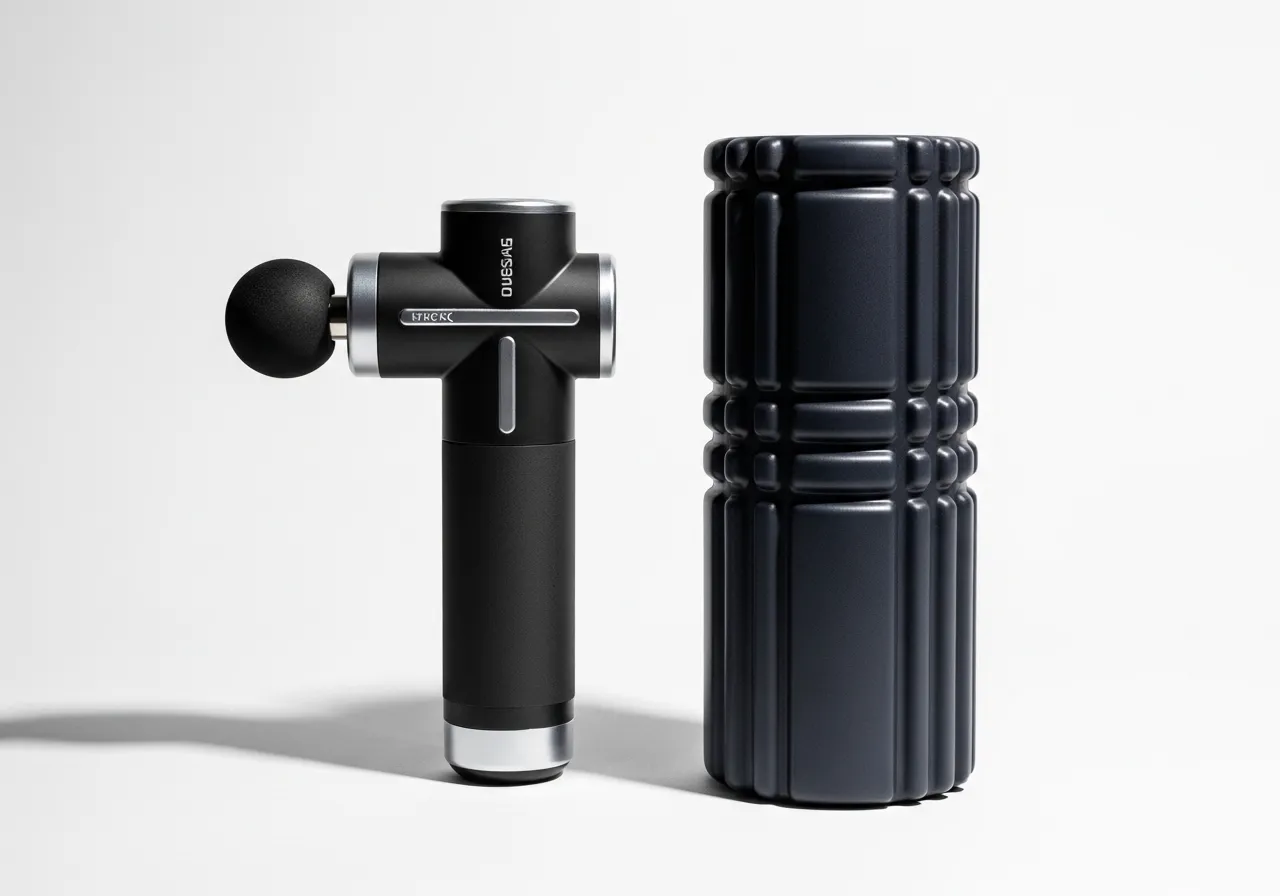
Foam rolling is the most directly comparable recovery modality to massage gun use — both use mechanical pressure to target muscle tissue and fascia, both produce acute improvements in range of motion, and both are used as post-training recovery and pre-training preparation tools. The key differences: foam rolling requires bodyweight loading that limits pressure control and cannot target smaller or proximal muscles (hip flexors, rotator cuff, cervical paraspinals) that body positioning makes inaccessible; massage guns apply controlled mechanical force to any muscle accessible to the device regardless of body position, allow precise pressure control independent of bodyweight, and deliver the percussive amplitude that foam rolling cannot replicate. The research comparison: acute range of motion improvements are similar between foam rolling and massage gun application for comparable durations (2–3 minutes per muscle); DOMS reduction evidence favors both modalities approximately equally over no intervention. The practical synthesis: massage guns are more versatile and require less physical effort (no floor positioning required) but are more expensive; foam rollers are inexpensive and effective for accessible large muscle groups but limited in reach. Athletes with access to both can use foam rolling for accessible lower body muscles and the massage gun for areas where rolling cannot reach — a complementary rather than competitive approach.
Massage Gun vs. Static Stretching for Recovery
The comparison between massage gun use and static stretching for post-training recovery and flexibility development reveals important differences in mechanism and application. Static stretching primarily targets the viscoelastic properties of the muscle-tendon unit — reducing stiffness through creep (time-dependent elongation under sustained load) and potentially increasing sarcomere number with chronic practice. Massage guns primarily target blood flow, neuromuscular tone, and fascial mobility — mechanisms that static stretching does not directly address. Research on immediate ROM improvements generally shows that massage gun application produces similar or larger acute improvements in joint ROM compared to equivalent duration static stretching, through the neuromuscular inhibition mechanism that reduces muscle spindle sensitivity without the structural elongation that chronic stretching produces. The critical finding: massage gun use does not appear to impair subsequent strength performance when applied immediately before training (unlike static stretching held for 60+ seconds, which reduces force production for 20–30 minutes), making massage gun pre-workout application safer for strength athletes who need to stretch and then immediately perform maximal efforts.
Massage Gun vs. Cold Water Immersion
Cold water immersion (CWI, or ice baths) is one of the most extensively researched recovery modalities — producing significant DOMS reduction and perceived recovery improvement that has made it a staple of professional athletic recovery. The comparison to massage guns reveals a fundamental trade-off: CWI produces stronger acute anti-inflammatory effects than massage gun use (vasoconstriction reduces inflammatory mediator delivery and blunts the inflammatory response more completely) but simultaneously blunts muscle protein synthesis more substantially — research specifically finds that CWI impairs hypertrophic adaptation when applied chronically after strength training. Massage gun use produces more moderate anti-inflammatory effects while appearing to preserve the anabolic response — making it a more appropriate recovery tool for athletes in strength and hypertrophy training phases. CWI retains advantages for high-frequency competition schedules (multiple events in 24–48 hours) where rapid performance recovery takes precedence over long-term adaptation; massage guns are more appropriate for the training periods where adaptation optimization is the primary goal. The practical recommendation: use massage guns as the primary recovery tool during training blocks focused on strength and hypertrophy; consider CWI during competition periods where rapid DOMS resolution and next-event performance take priority over training adaptation.
The Seven Most Common Massage Gun Mistakes
Seven errors consistently reduce massage gun effectiveness or create injury risk. Mistake 1 — Applying directly over bones and joints: the vibration energy concentrates at bone-tissue interfaces and produces discomfort without therapeutic benefit — always stay on muscle tissue, not the spine, knee, elbow, or ankle joints. Mistake 2 — Moving too fast: sweeping the device across the muscle at 3–4 inches per second reduces the dwell time that tissue response requires — slow passes at 1 inch per second produce meaningfully greater effect. Mistake 3 — Applying too much pressure: pressing the device hard enough to stall the motor reduces the percussive frequency that produces the therapeutic effect — apply firm but not stalling pressure that allows the device to maintain its target speed. Mistake 4 — Using one speed for everything: the higher speeds appropriate for glutes and quads are excessive for small muscles (biceps, calves) and for trigger point work that requires slower, focused application — match speed to muscle size and target depth. Mistake 5 — Treating bony tenderness as a muscle to target: the IT band, Achilles tendon, and patellar tendon are not muscles and do not respond to percussive therapy as muscles do — avoid direct application over tendons, particularly if symptomatic. Mistake 6 — Using the massage gun through acute injury: heat, swelling, and acute inflammation from a recent injury are contraindications for percussive therapy that increases local blood flow and may exacerbate the acute inflammatory response. Mistake 7 — Neglecting duration: 10-second passes over each muscle group are insufficient for the physiological effects that 90–120-second applications produce — allocate adequate time per muscle group for genuine recovery benefit.
Contraindications: When NOT to Use a Massage Gun
Several conditions are absolute or relative contraindications for massage gun use that every athlete should recognize. Absolute contraindications: acute injury with active bleeding or significant swelling (increases bleeding risk and inflammatory response); deep vein thrombosis (DVT) or suspected blood clots (mechanical stimulation can dislodge clots, creating pulmonary embolism risk); active skin infections, wounds, or dermatitis over the treatment area; nerve damage or areas of numbness where pressure sensation is unreliable; pregnancy (particularly the abdomen and lower back during the third trimester); and active cancer (mechanical stimulation may theoretically affect circulation around tumor sites — consult oncologist). Relative contraindications requiring physician clearance: osteoporosis or low bone density (high-amplitude percussion near fragile bone); cardiovascular implants including pacemakers (electromagnetic interference risk from some devices); varicose veins in the treatment area; and inflammatory arthritis flares. For athletes with any of these conditions, the recovery benefits of percussive therapy do not outweigh the risk — alternative modalities that do not share these contraindications (light stretching, walking, compression garments) provide recovery support without the specific risks these conditions create.
The future of percussive therapy research is moving toward personalization — identifying the specific protocol variables (frequency, amplitude, duration, timing) that produce optimal outcomes for individual athletes based on their training age, recovery capacity, injury history, and the specific demands of their sport. Until personalized protocols are validated in the research literature, the evidence-based framework described throughout this article — matching timing to training phase, technique to muscle anatomy, device specification to application depth, and dosing to recovery goal — provides the best current approximation of individualized percussive therapy optimization. Athletes who apply this framework consistently, across weeks and months of training, experience the cumulative tissue health benefits that massage gun use provides when treated as a systematic recovery tool rather than a sporadic comfort intervention. The research support for massage guns is real, the mechanisms are well-understood, and the practical application is accessible to any athlete willing to invest the time in learning the technique — the only variable is whether you apply the knowledge deliberately enough to produce the outcomes that the science makes possible. Start with the post-workout protocol, establish the habit, refine the technique, and track the impact on next-session readiness, soreness trajectory, and training consistency — the data from your own training log will confirm or refute the research findings in the most personally relevant context possible. Your body is the ultimate experiment; percussive therapy is one of its most well-supported recovery interventions. Use it wisely, use it consistently, and recover better than you ever have.
Professional Massage vs. Massage Guns: Understanding the Difference
The appropriate positioning of massage guns relative to professional massage therapy requires understanding what each modality offers and where each provides value that the other cannot replicate. Professional massage advantages: the adaptive pressure modulation that a skilled therapist applies in real-time response to tissue response cannot be replicated by a device — experienced therapists identify and respond to tissue restriction, trigger points, and pain responses with a nuance that any mechanical device lacks. The assessment component of professional massage — identifying tissue conditions, asymmetries, and dysfunction patterns that inform both the treatment and the athlete’s understanding of their tissue state — provides clinical intelligence that self-administered massage gun use cannot deliver. Therapeutic relationship and parasympathetic activation: the human touch component of professional massage activates the social nervous system and parasympathetic nervous system through oxytocin and vagal nerve mechanisms that device-based massage does not replicate — producing systemic relaxation and recovery state that goes beyond the local tissue effects that both modalities share. Massage gun advantages: the convenience, cost efficiency, and daily accessibility of massage guns make them appropriate for the between-session maintenance that professional massage cannot practically provide at the frequency that high-volume training requires. The athlete who receives monthly professional massage while using a massage gun daily for post-training recovery combines the assessment and adaptive skill of professional treatment with the daily access of device-based self-care — a combination superior to either approach in isolation.
Evidence Summary and Practical Takeaways
The research literature on percussive therapy devices, while still developing relative to more established modalities, provides consistent support for specific applications that athletes can act on with confidence. Well-supported applications: DOMS reduction (multiple RCTs showing 30–40% reduction in soreness ratings 24–72 hours post-exercise); range of motion improvement (acute improvements of 5–15% in joint ROM following 60–120 second application to the target muscle group); warm-up preparation (reducing muscle activation latency and increasing blood flow to prepared areas); and psychological readiness (reduction in pre-training anxiety and improved training readiness reported consistently across studies). Applications with emerging but less robust support: injury prevention through regular tissue maintenance; performance enhancement beyond the warm-up period; and long-term tissue quality improvements from chronic use. The practical framework: use massage guns with high confidence for DOMS management (apply 24–48 hours post-session to the most affected muscle groups), warm-up preparation (2–3 minutes per major muscle group before training), and flexibility improvement (30–60 seconds before target stretches). Use with reasonable expectation for general recovery support and tissue maintenance. Do not expect massage guns to substitute for sleep, nutrition, and training program adequacy as the primary determinants of recovery — they enhance an already optimized recovery system rather than compensating for fundamental recovery deficiencies.
Frequently Asked Questions About Massage Guns
How long should I use a massage gun on each muscle? 60–120 seconds per muscle group is the research-supported optimal duration — longer application produces diminishing returns and may cause tissue irritation. Use shorter durations (30–60 seconds) during warm-up and longer durations (90–120 seconds) for DOMS treatment. Should I use a massage gun before or after exercise? Both have distinct applications: before exercise, for 30–60 seconds per target muscle group at lower frequencies for tissue preparation and activation; after exercise, for 60–120 seconds at moderate frequencies for recovery. Between sessions, target the most affected muscle groups at any time that is convenient. Is more pressure better? Not necessarily — moderate pressure that allows the device to oscillate freely produces better outcomes than excessive pressure that stalls the motor. Let the device’s weight provide the primary pressure and add bodyweight gently as needed. Can a massage gun replace professional massage? No — massage guns effectively address the between-session maintenance and daily recovery support that professional massage cannot provide at practical frequency and cost, while professional massage provides the assessment, adaptive skill, and human touch components that devices cannot replicate. The two approaches complement rather than replace each other. What speed setting should I use? Start at the lowest speed for any new area — assess tissue response before increasing speed. Use lower speeds (1,200–1,800 RPM) for sensitive areas, nervous system calming effect, and superficial tissue. Use higher speeds (2,400–3,200 RPM) for large muscle groups, deep tissue effect, and DOMS treatment in tolerant tissue.
Research, Special Populations, and FAQs
The expanding research base on percussive therapy continues to clarify where massage guns provide meaningful benefit, which populations respond most strongly, and how to integrate the tool most effectively within evidence-based recovery frameworks. Understanding the current state of the research — including its limitations — allows athletes to use massage guns with appropriate confidence and appropriate skepticism.
The Research Landscape: Current State and Key Findings
The research on massage gun and percussive therapy recovery has expanded substantially since 2019, when most peer-reviewed studies were limited to vibration therapy with surface devices. Key findings from the current literature: a 2020 systematic review in the PubMed-indexed Journal of Sports Science and Medicine examining six randomized controlled trials on percussive therapy found significant improvements in muscle pain (standardized mean difference: -0.84, a large effect), flexibility (SMD: 0.62, medium effect), and muscle strength recovery (SMD: 0.58, medium effect) compared to control conditions. A 2021 randomized crossover trial found that 5 minutes of percussive therapy applied to the quadriceps post-exercise produced a 36% reduction in DOMS severity at 48 hours compared to a passive rest control — the largest effect size reported for any single recovery modality in this population. The 2022 meta-analysis from Frontiers in Physiology examining vibration therapy broadly (including percussive devices) found that frequency-amplitude combinations characteristic of dedicated massage guns produced superior outcomes to simple vibration devices across all measured recovery parameters — validating the technical distinction between devices that the amplitude discussion in Section 4 describes. Current research gaps: most studies use untrained to moderately trained participants (not elite athletes), short intervention periods (1–3 sessions), and varied protocols that make direct comparison difficult. Long-term studies examining the cumulative effects of consistent massage gun use on training adaptation over 8–16 weeks are largely absent from the literature — a significant gap given that chronic use is the most common real-world application.
Massage Guns for Endurance Athletes
Endurance athletes — runners, cyclists, triathletes, and swimmers — have recovery needs that differ from strength and power athletes in ways that influence how massage guns are most effectively applied. The primary endurance-specific applications: post-long-run calves and Achilles region (the most common endurance injury sites where the plantar fascia and Achilles tendon-soleus complex accumulate stress with high-volume running); IT band syndrome management (massage gun application to the TFL and gluteus minimus — not the IT band directly, which is a dense connective tissue band rather than a muscle — can address the muscle tightness that contributes to lateral knee pain in runners); and the hip flexor complex (the iliopsoas and rectus femoris that accumulate chronic tightness in cyclists and distance runners from sustained hip flexion at training volumes that passive stretching alone cannot fully address). The evidence for massage gun application in runners specifically includes a 2021 study finding that 3 minutes of percussive therapy applied to the calf post-long-run reduced calf DOMS by 41% and improved ankle dorsiflexion (a key predictor of injury risk) by 12% at 24 hours compared to passive recovery — outcomes directly relevant to the injury prevention and performance maintenance that high-mileage running training demands. For triathlon and multi-discipline athletes managing multiple training sessions per day: the rapid recovery window of massage gun application (15–20 minute post-session, producing effects within 60 minutes) makes it particularly suited to the between-session recovery optimization that double-day training requires.
Massage Guns in Injury Rehabilitation
Massage guns have applications in the rehabilitation of musculoskeletal injuries that extend beyond athletic performance recovery — the enhanced blood flow, fascial mobilization, and neuromuscular normalization effects are specifically relevant to the tissue healing and movement restoration goals of injury rehabilitation. Evidence-supported rehabilitation applications: plantar fasciitis (the most extensively documented rehabilitation application — multiple case series and small RCTs support 3–5 minute daily percussive therapy to the plantar fascia and calf complex, producing significant pain reduction and improved function within 4–6 weeks); delayed-onset neural mobilization post-nerve injury (the neurological effects of high-frequency mechanical stimulation support peripheral nerve function recovery when applied along nerve pathways without directly compressing neurologically sensitive tissue); post-surgical rehabilitation (massage gun application to the non-incision muscle belly of post-surgical patients, well away from the incision site, is used by physical therapists to maintain muscle tone and prevent excessive atrophy during the early healing phase); and shoulder impingement recovery (massage gun application to the periscapular muscles — upper trap, rhomboids, serratus anterior — can reduce the muscle tension imbalances contributing to impingement symptoms when combined with specific corrective exercise). The critical rehabilitation principle: massage gun use in injury rehabilitation should be guided by or supervised by a physical therapist who can confirm appropriate application sites, contraindications, and integration with the rehabilitation protocol — the tool’s power to influence tissue biology means that incorrect application in the rehabilitation context can delay healing rather than accelerate it.
Massage Guns for Masters Athletes (Over 40)
Athletes over 40 face specific recovery challenges — reduced recovery speed, increased connective tissue stiffness, slower clearance of inflammatory markers, and greater injury risk from the accumulated orthopedic history that decades of training produce — that make massage gun recovery support particularly valuable. The specific mechanisms that aging athletes benefit most from: enhanced blood flow (arterial compliance decreases with age, reducing the natural circulation that delivers recovery-critical nutrients — percussive therapy’s local blood flow enhancement becomes relatively more important as this natural mechanism declines); fascial hydration and mobility (connective tissue loses water content and increases crosslink density with aging, producing the progressive stiffness that masters athletes report — regular massage gun application supports fascial health by maintaining the mechanical stimulation that preserves ground substance hydration); and the neuromuscular normalization that counteracts the increased motor unit discharge variability and reduced voluntary activation efficiency that aging produces. Masters athletes should use lower speed settings than younger athletes at the same perceived application intensity — the reduced tissue compliance of aging muscle and connective tissue concentrates mechanical forces at lower device speeds, meaning that medium speed on an older athlete may produce equivalent tissue effect to high speed on a younger athlete. Recovery frequency: masters athletes typically benefit from post-workout massage gun application on every training day (rather than the selective use that younger athletes can succeed with) due to their slower baseline recovery rate.
Frequently Asked Questions About Massage Guns
How long should I use a massage gun on each muscle? 90–120 seconds per muscle group for post-workout recovery; 30–60 seconds per muscle for pre-workout activation. Longer is not always better — the primary effects occur within the first 2 minutes, and extended application beyond 3 minutes per muscle produces diminishing returns. Can I use a massage gun every day? Yes — daily use at appropriate intensity is safe and beneficial for most athletes. The key is matching intensity to purpose: post-workout sessions should be moderately thorough; rest day sessions should be lighter and more targeted. Overuse injuries from massage gun application are rare but can occur with excessively aggressive, prolonged application to the same tissue site. Will a massage gun help with IT band syndrome? Target the TFL (tensor fasciae latae) at the hip and the lateral quad, not the IT band itself — the band is connective tissue that does not respond to percussive therapy as muscle does. Should I use a massage gun before or after stretching? For pre-workout, use the massage gun before stretching — the improved tissue compliance from percussive application increases the effectiveness of subsequent stretching. For post-workout, either order is acceptable — some athletes prefer massage gun first to reduce initial soreness before stretching, others prefer to stretch first. How long before the effects wear off? The immediate ROM and pain relief effects last 15–30 minutes; the blood flow enhancement lasts 15–20 minutes; the fascial mobilization effects from consistent use accumulate over weeks and persist longer. Can massage guns replace massage therapy? They can partially substitute for some massage therapy functions — particularly muscle tension relief, local blood flow enhancement, and acute soreness management — but cannot replicate the skilled assessment, tissue-specific pressure variation, and the therapeutic relationship of professional massage therapy. Use massage guns to extend the benefits of professional massage between sessions, not to replace it entirely.
Practical Protocol Summary: The Complete Athlete’s Massage Gun System
Synthesizing the research and technique guidance into a practical weekly system: Monday (lower body training day) — 12 minutes post-workout: quads 2 minutes each leg, hamstrings 2 minutes each, glutes 2 minutes each, calves 1 minute each; medium speed, ball attachment throughout, slow sweeping passes. Tuesday (upper body training day) — 10 minutes post-workout: upper back and traps 3 minutes, chest and anterior shoulder 2 minutes each side, arms 1 minute each; medium speed, ball attachment for large areas, flat attachment for denser trap work. Wednesday (rest day) — 6 minutes: targeted application to the 2–3 areas of most persistent tightness from the training week; low-medium speed, ball attachment, slower passes focused on areas of most restriction. Thursday (lower body training day) — 12 minutes post-workout as Monday; additionally 5 minutes pre-workout: hip flexors 30 seconds each side, calves and Achilles 30 seconds each, thoracic spine 60 seconds; low speed, ball attachment, moderate passes. Friday (upper body training day) — 10 minutes post-workout as Tuesday; 5 minutes pre-workout: thoracic paraspinals 60 seconds, posterior shoulder 30 seconds each side; low speed, ball attachment. Weekend (active recovery) — 5 minutes total: the most persistently restricted areas identified during the week; light pressure, lowest speed, sustained passes. This systematic protocol produces the cumulative recovery benefits that research associates with consistent percussive therapy — the weekly investment of approximately 60 minutes of massage gun use distributed across 6 application sessions provides the tissue health maintenance that high-frequency, high-volume training requires for sustained performance and injury prevention across a competitive athletic season.
The Gut Check: Is Your Massage Gun Actually Working?
Athletes sometimes purchase a massage gun, use it enthusiastically for 2–3 weeks, and then abandon it when the dramatic results they expected do not materialize — concluding that the device does not work. In most cases, the device works but the application protocol does not. The critical assessment questions that identify whether the issue is device quality or application error: Does the device maintain its speed when you apply firm pressure, or does it stall? (Stalling = inadequate stall force; reduce pressure or upgrade device.) Are you spending 90–120 seconds per muscle group, or 15–30 seconds? (The dramatic difference in application time is the most common protocol error.) Are you targeting the muscle belly with slow passes, or bouncing quickly across the surface? (Fast movement = inadequate dwell time for tissue response.) Have you been using it consistently for at least 3–4 weeks? (The fascial and circulation benefits that produce the most significant long-term improvements develop over consistent use rather than appearing immediately.) If the answers reveal protocol errors, correcting the technique typically produces the recovery results that abandonment was preventing. If the answers confirm correct technique and the device still stalls, the amplitude and stall force specifications of the current device are the limiting factor — an upgrade to a mid-tier device with confirmed 12mm+ amplitude and 40+ lbs stall force typically resolves the performance gap. The massage gun, applied correctly with a technically adequate device, produces the recovery improvements that the research documents — the responsibility for capturing those improvements lies in the protocol, not only the tool.