How to Find a Workout You Actually Enjoy
⚠️ Disclaimer: The information in this article is for general educational purposes only and does not constitute medical, nutritional, or professional fitness advice. Individual results may vary. Always consult a qualified healthcare professional or certified fitness trainer before starting any new exercise program, changing your diet, or making decisions about injury treatment or recovery. If you experience pain, discomfort, or any unusual symptoms during exercise, stop immediately and seek professional guidance.
Why Enjoyment Is the Most Underrated Factor in Fitness Success
Ask most fitness professionals what the most important variable in long-term exercise success is, and they’ll tell you programming, progressive overload, nutrition timing, or recovery protocols. They’re wrong — or at least, they’re answering a different question. Those variables matter when someone is already exercising consistently. The question of how to get someone exercising consistently in the first place has a different answer: enjoyment.
This isn’t a soft, feel-good insight. It’s backed by decades of behavioral research. The single most reliable predictor of whether someone will still be exercising twelve months from now is whether they find their current exercise routine enjoyable. Not effective. Not scientifically optimal. Enjoyable.
A major study published in Psychology of Sport and Exercise followed exercise adherence over 12 months and found that enjoyment predicted long-term adherence more strongly than any other measured variable — more than social support, more than perceived health benefits, more than goal-setting. People who enjoyed their workouts were four times more likely to still be exercising at the 12-month mark.
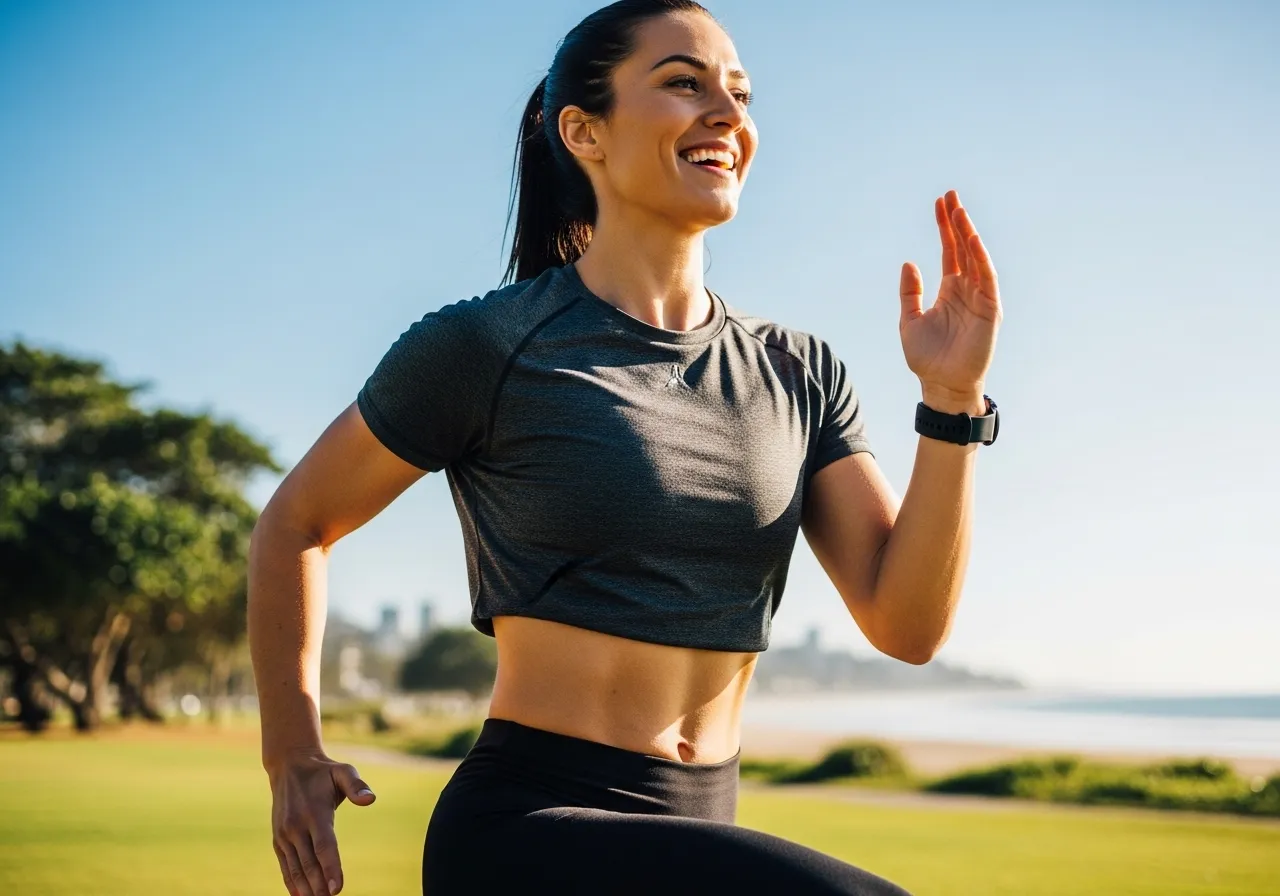
I spent three years doing workouts I tolerated but didn’t enjoy. I knew they were effective. I could see the results. But every session required willpower to initiate, and my adherence was inconsistent because I was always fighting resistance. The moment I discovered I genuinely loved training outdoors — trail running, outdoor calisthenics, hiking with a weighted pack — everything changed. I stopped having to motivate myself to exercise because I was simply doing things I wanted to do.
The fitness industry has a vested interest in convincing you that only certain types of exercise are legitimate. Weight training at a gym. Running. Structured classes. But the research is unambiguous: any physical activity that elevates your heart rate, builds strength, or develops mobility produces fitness benefits. Rock climbing, dancing, martial arts, recreational sports, gardening, swimming — all of these count, all of these produce real physiological adaptations, and all of them beat the objectively superior but completely abandoned gym program you bought in January.
The practical implication is that your first job is not to find the most effective workout. Your first job is to find the workout you’ll actually do. Effectiveness is irrelevant if you quit. A slightly less optimal workout done consistently for years will produce better results than the perfect program done for six weeks.
This reframing should feel liberating. You don’t have to love burpees. You don’t have to enjoy the gym. You don’t have to run if running makes you miserable. Your obligation is to find movement you genuinely want to do and do it consistently. Everything else is detail.
The Different Types of Exercise and What They Actually Feel Like
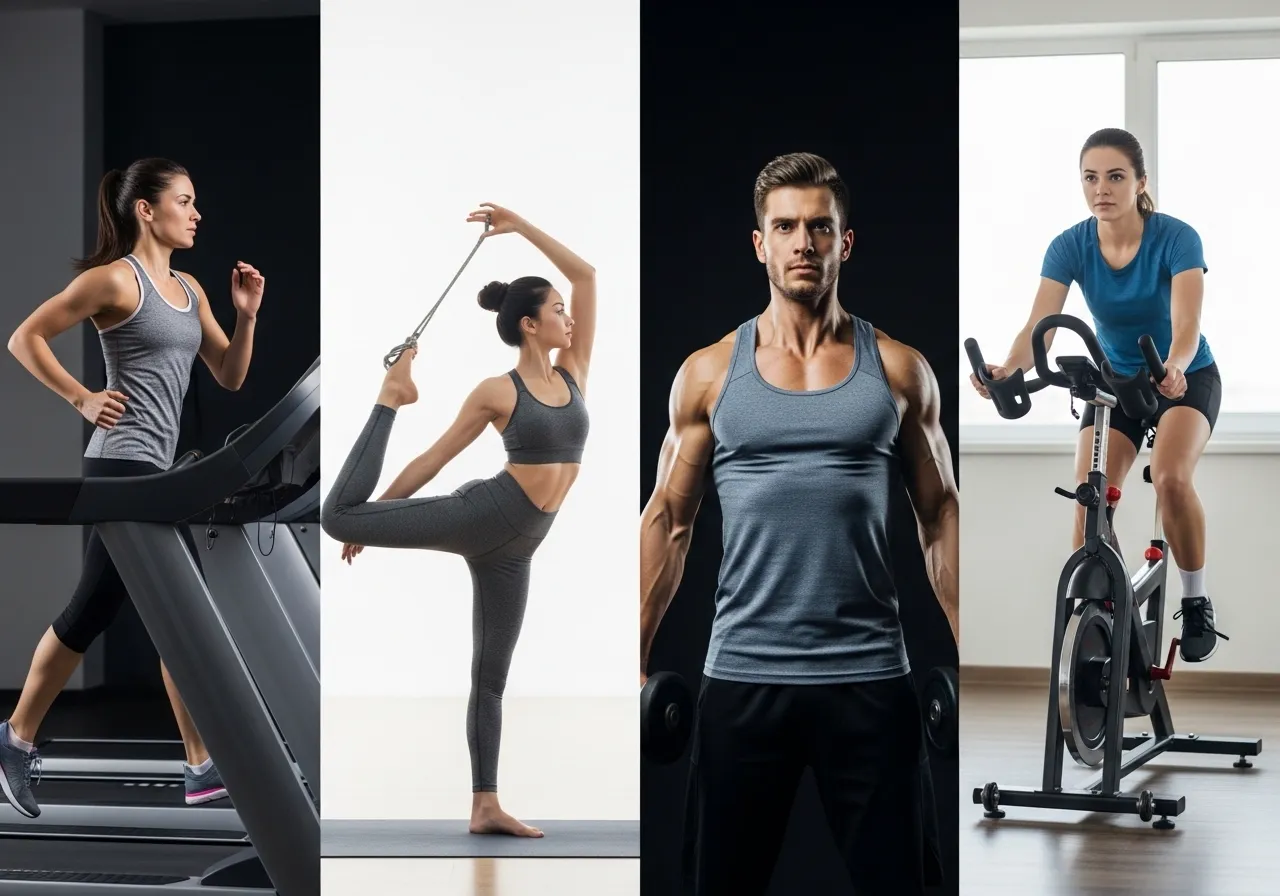
Most people who say they hate exercise have actually only tried one or two types and drawn conclusions from an unrepresentative sample. The universe of physical activity is enormous, and different modalities feel radically different — physically, emotionally, and socially. Understanding this landscape is the first step to finding your place in it.
Resistance training — weightlifting, bodyweight training, resistance bands — has a particular character. Early sessions feel awkward, the muscle soreness is real, but over time it produces a uniquely satisfying sense of physical capability. The feeling of lifting something heavier than you could a month ago is concrete, measurable, and deeply satisfying in a way that’s hard to replicate in other domains. Many people who thought they’d hate lifting discover they love the sense of progressive accomplishment it provides.
Running and other steady-state cardio have their own distinct experience. The first weeks are typically unpleasant — breathing hard, legs heavy, watching the clock. But trained runners describe a completely different experience: the rhythmic, meditative flow state that kicks in around 20 minutes, the sensation of covering distance under your own power, the clarity of thought that comes with sustained aerobic effort. The problem is that most people quit before they ever experience this second stage.
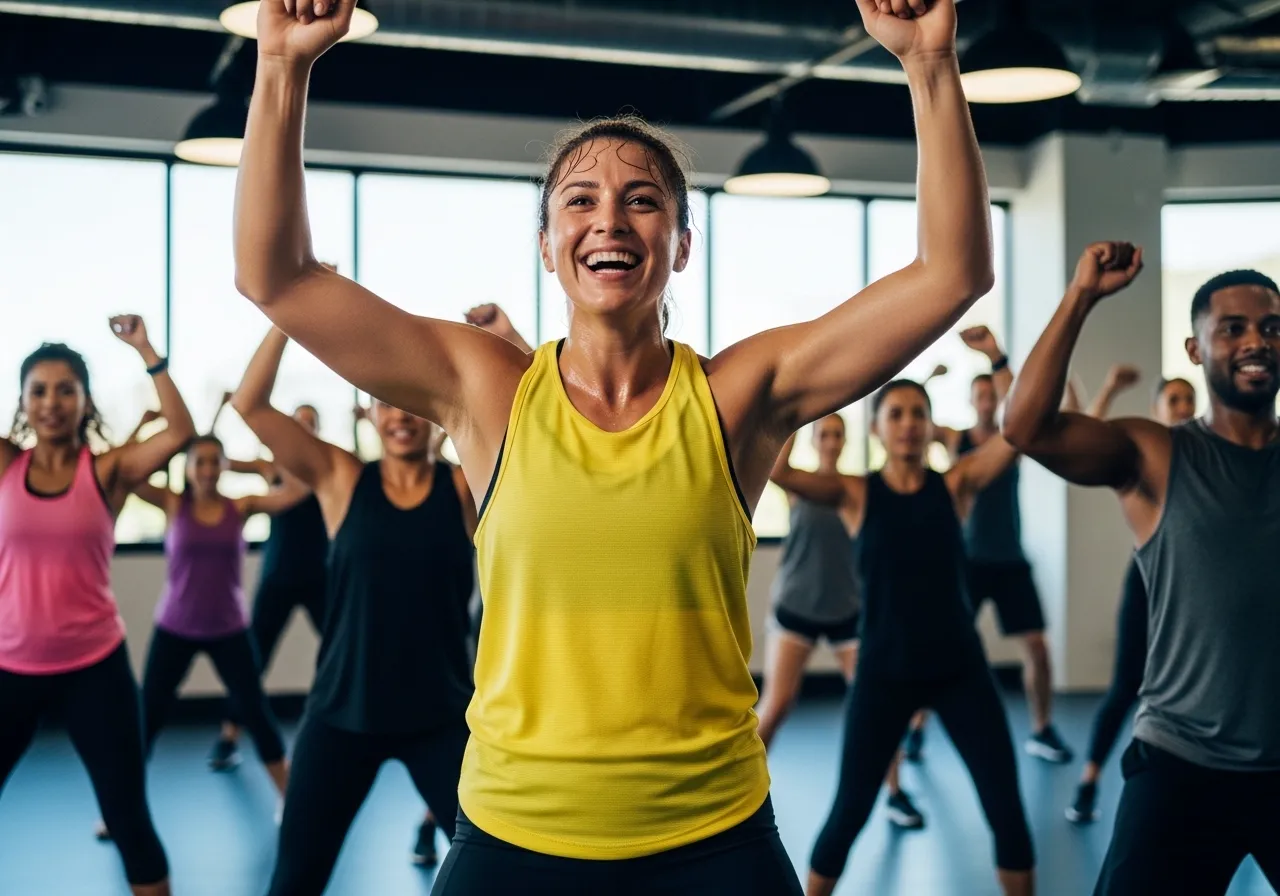
Group fitness classes — whether cycling, HIIT, dance, boxing, or yoga — offer something qualitatively different from solo training: social energy. Research on the social facilitation effect, documented in Social Psychology Quarterly, shows that people work harder and report higher enjoyment when exercising alongside others, even without explicit competition. The music, the instructor’s energy, the shared effort — these create an experience that many people find far more motivating than solo training.
Outdoor activities — hiking, cycling, kayaking, team sports — combine physical challenge with environmental stimulation and often social connection. Studies consistently show that outdoor exercise produces greater mood benefits than identical exercise performed indoors, likely due to exposure to natural environments reducing cortisol and improving affect.
Skill-based movement — martial arts, dance, gymnastics, rock climbing — provides cognitive engagement alongside physical challenge. Learning is inherently rewarding, and sports that require skill acquisition tap into intrinsic motivation in ways that repetitive exercise often doesn’t. Many people who fail at conventional fitness programs thrive in martial arts or dance because the focus on skill development keeps them engaged beyond the initial novelty period.
The honest answer is that you won’t know what you enjoy until you try it. But you can make educated guesses based on what you know about yourself — and the next section helps with exactly that.
How to Experiment Systematically Without Wasting Time or Money
Finding a workout you enjoy requires experimentation, but experimentation doesn’t have to be expensive or time-consuming. With a systematic approach, you can meaningfully evaluate a wide range of exercise modalities within a few months at minimal cost.
The key principle is minimum viable trial. Most people either try something once and decide they hate it (insufficient data — first sessions of anything feel awkward and uncomfortable) or commit to months of classes before evaluating (too expensive and too slow). The right duration for a genuine trial is four to six sessions. This is long enough to get past initial awkwardness and experience the activity in a more normal state, but short enough to move on quickly if it genuinely isn’t for you.
Start with free or low-cost options. YouTube has thousands of workout programs across every modality — yoga, HIIT, strength training, dance, boxing, pilates. A two-week trial of any style costs nothing. Many gyms offer free trial periods or day passes. ClassPass and similar services allow you to try multiple studios at a fraction of the individual class price. Many martial arts schools offer a free first week. Running costs essentially nothing.
Keep a simple exercise journal — even just a few sentences after each session. Rate your energy, mood, and enjoyment on a 1–10 scale. After a few months of sampling, patterns become obvious. You’ll notice that certain modalities reliably produce positive ratings and others don’t, regardless of how hard the session was. This data is far more reliable than impressions formed in the moment, which are heavily influenced by extraneous factors like whether you slept well the night before.
Be honest about the difference between “this is hard and I’m not good at it yet” and “I genuinely don’t enjoy this.” The former is true of literally everything at the beginning and is not a useful signal. The latter — the persistent feeling that a particular activity is unpleasant even when you’ve given it a fair chance — is meaningful information that you should act on without guilt.
Also consider logistics honestly. An activity you enjoy but can only access by driving 45 minutes each way will have worse adherence than an activity you merely like that’s five minutes from your house. Convenience is a legitimate variable in workout selection, not a compromise. The research on exercise adherence factors consistently identifies proximity to exercise facilities as a significant predictor of behavior.
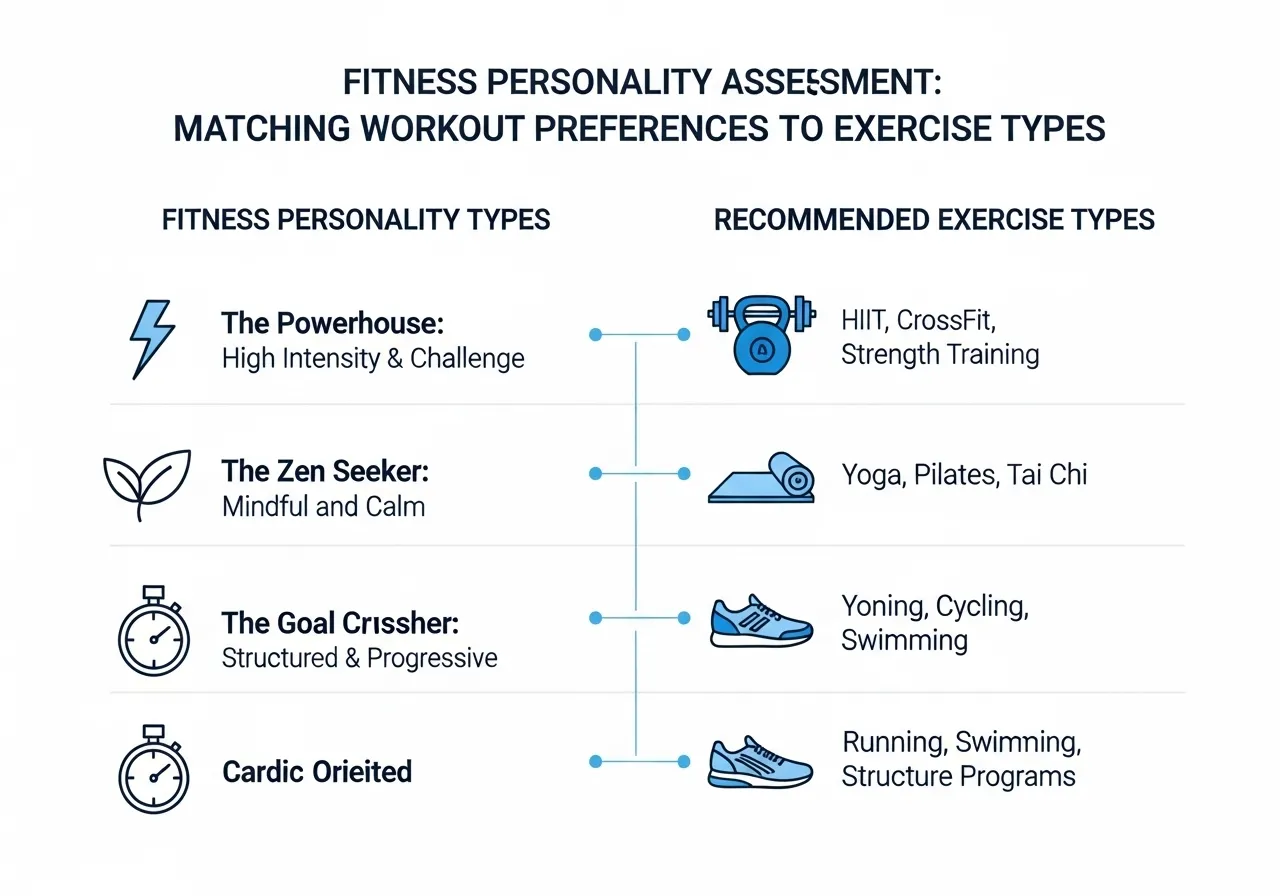
What Your Personality Type Says About Which Workouts Suit You
While no personality framework perfectly predicts exercise preferences, certain patterns are reliable enough to be genuinely useful starting points for your experimentation.
People who are highly competitive — who are energized by comparison, measurement, and winning — tend to thrive in environments that provide clear metrics. Weightlifting, where you can track precise weight and rep improvements, is often a natural fit. Competitive sports, running races, cycling events, and fitness challenges that involve objective performance measurement tap into this motivation style effectively. The CrossFit model, which explicitly incorporates competition and leaderboards, was designed for this personality type.
People who are strongly introverted often struggle with group fitness classes, not because they’re antisocial, but because the social energy expenditure of a class environment adds to the overall effort cost of exercise. Solo training — running, home workouts, individual gym sessions with headphones — allows full concentration on the physical experience without social processing demands. Many introverts discover they love exercise once they find formats that don’t require sustained social engagement.
People who are highly extroverted typically draw energy from social situations and often struggle to maintain motivation when exercising alone. Group fitness, team sports, training partners, and fitness communities solve this directly. The workout becomes a social occasion, and the social reward reinforces the behavior more reliably than purely intrinsic motivation.
People who are strongly novelty-seeking often fail at repetitive exercise programs that do the same thing session after session. Varied programming, cross-training across multiple modalities, and skill-based activities that involve continuous learning tend to work better. The CrossFit model again, or triathlon training, or combined martial arts — these provide enough variety to stay engaging for novelty-seeking personalities.
Highly conscientious, systematic thinkers often excel at structured programming with clear periodization. They appreciate knowing exactly what’s planned, tracking progress methodically, and following a logical progression. This personality type often does well with powerlifting or structured bodybuilding programs that have defined phases and measurable progression schemes.
People driven primarily by aesthetics — who are motivated by how exercise makes them look — often find that modalities with visible results provide the most sustainable motivation. Resistance training tends to produce more visible body composition changes than cardio-only approaches, which matters for this motivation type.
Use these patterns as hypotheses to test, not as definitive prescriptions. You may surprise yourself.
How to Modify Any Workout to Make It More Enjoyable
Finding the right exercise modality is important, but within any modality there’s enormous room to customize the experience in ways that significantly affect enjoyment. The following modifications apply broadly and can transform a workout you tolerate into one you genuinely look forward to.
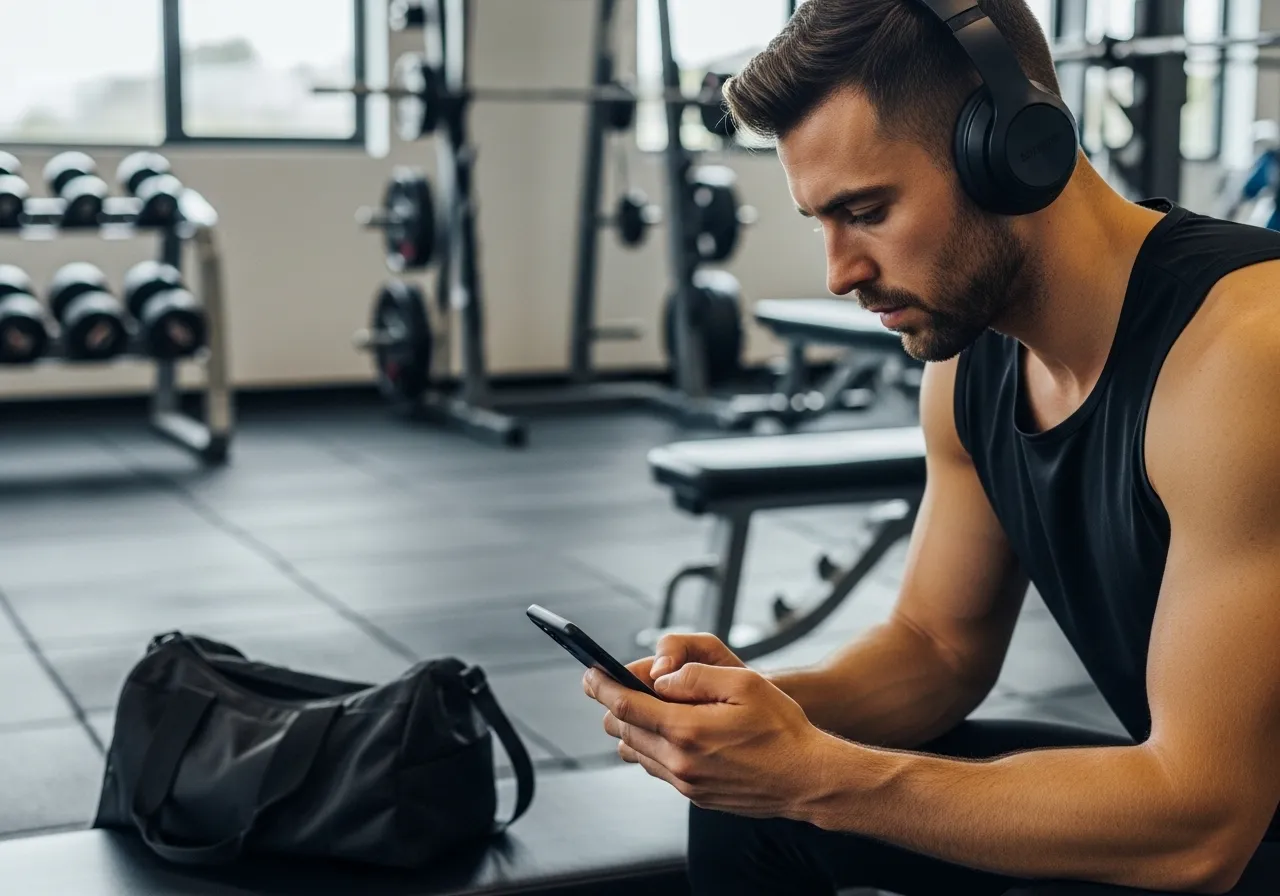
Music is perhaps the most powerful legal performance enhancer available. Research published in the Journal of Sports and Exercise Psychology shows that music with tempo between 120–145 BPM during exercise reduces perceived effort by up to 10% and increases endurance performance. More importantly for our purposes, the right music dramatically improves mood during exercise and can shift the entire emotional valence of a workout from neutral to genuinely enjoyable. Spend real time curating your workout playlist. It matters more than most people credit.
Training partner selection is another powerful modifier. Training with someone at a similar fitness level who takes it seriously but keeps the atmosphere light creates conditions for both better performance and more enjoyment. The worst training partner is someone who is either so serious that sessions feel joyless or so casual that you never push yourself. The best is someone who makes you laugh but also makes you work.
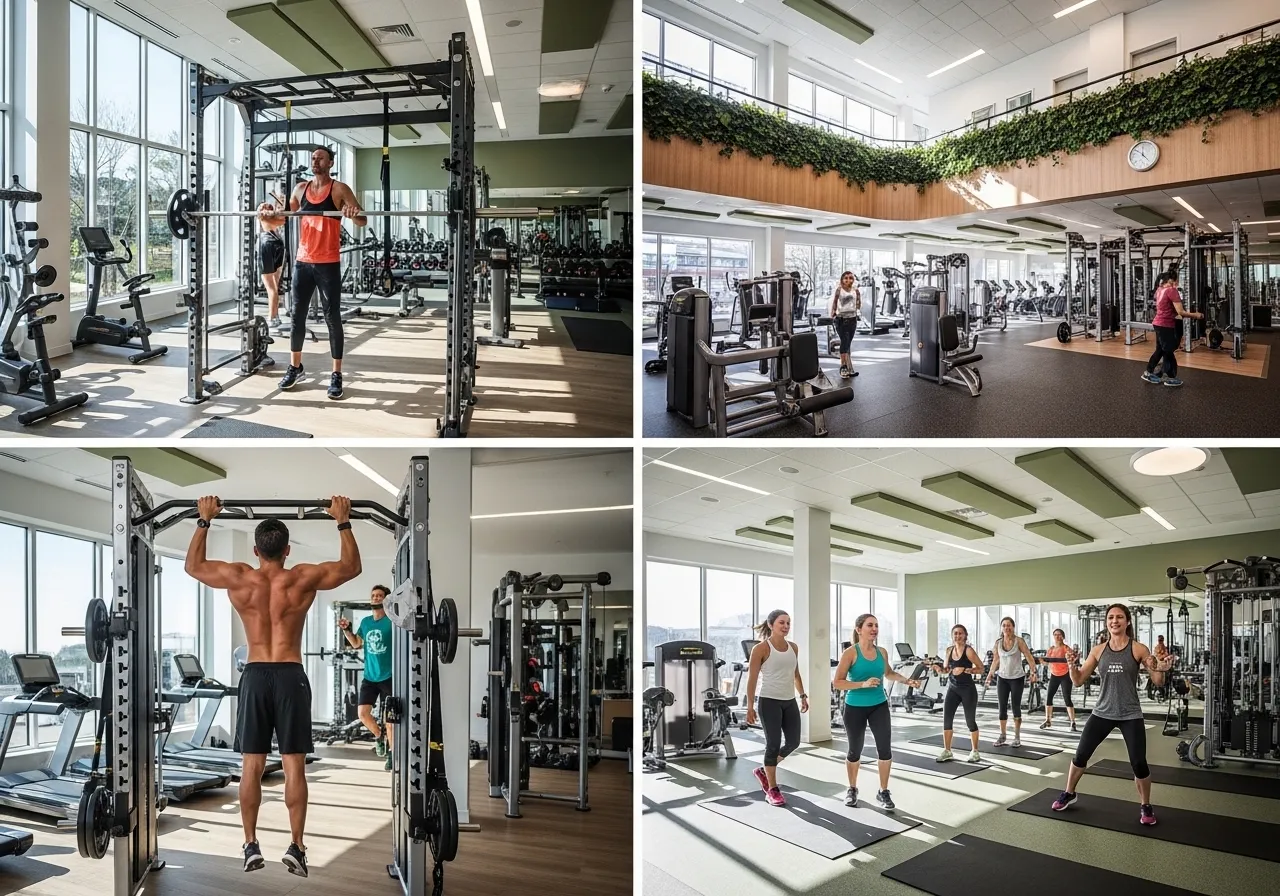
Environment matters enormously. Training in a bright, organized, aesthetically pleasing space — whether that’s a well-designed gym, an outdoor park, or a carefully set up home gym corner — produces better workout experiences than training in dark, cluttered, or unpleasant environments. This isn’t shallow: your sensory environment affects your neurological state, which affects your mood and motivation. Investing in your training environment is a legitimate performance and enjoyment strategy.
Novelty injection prevents boredom in established routines. Even if you love your workout program, doing the exact same thing every session eventually becomes monotonous. Periodically introducing new exercises, new equipment, new environments (outdoor workouts, different gyms), or new challenges (personal records, timed circuits) reactivates engagement without requiring you to abandon a program that’s working.
Time of day optimization is underrated. Some people are genuinely morning people whose energy and mood are highest before 9am — morning workouts feel natural and even enjoyable. Others are physiologically optimized for afternoon or evening performance. Training at a time that doesn’t align with your chronotype means fighting your biology for every session. Experiment with training at different times and pay attention to which produces the best combination of performance and enjoyment.
Building the Environment That Makes Exercise Feel Good
Behavioral psychology has established clearly that environment shapes behavior more powerfully than motivation or willpower. The friction between you and exercise — how many steps, decisions, and obstacles stand between you and starting a workout — is one of the most reliable predictors of whether you’ll do it. Reducing that friction is one of the highest-leverage changes you can make.
The concept of “temptation bundling,” developed by behavioral economist Katherine Milkman at Wharton, involves pairing activities you want to do with activities you need to do. Applied to exercise: only listen to your favorite podcast or audiobook while working out. Only watch that show you love on the stationary bike. This creates a positive incentive to exercise beyond the workout itself and builds genuine anticipation rather than dread.
Physical environment cues dramatically affect behavior. Research on habit formation consistently shows that keeping exercise equipment visible and accessible increases the likelihood of using it. A yoga mat rolled out in your living room gets used more than one stored in a closet. Gym clothes laid out the night before increase morning workout completion rates. A pull-up bar in a doorway you walk through regularly produces opportunistic use that accumulates into meaningful training volume over time.
Social environment is equally important. Gym-going friends, fitness-oriented family members, and online communities that celebrate movement create an ambient pressure toward exercise that makes it feel normal and expected rather than exceptional and effortful. If everyone around you exercises regularly, not exercising starts to feel unusual. This social normalization is one of the most powerful environmental levers available.
Digital environment matters too. Filling your social media feeds with accounts that normalize and celebrate the kind of movement you want to do creates constant low-level inspiration and keeps fitness visible in your attention. This sounds superficial, but attention precedes action — what you think about shapes what you do.
Finally, design your schedule to make exercise the default rather than the exception. If working out requires finding time amid an unstructured week, it will consistently lose to everything else competing for that time. If it’s a scheduled, recurring appointment with a specific time, location, and activity — treated with the same seriousness as a work meeting — it will happen with far greater reliability.

What to Do When You’ve Tried Everything and Still Hate Working Out
Genuine exercise aversion — the persistent feeling that all forms of physical activity are unpleasant — is real but relatively rare. More commonly, what people describe as hating exercise is actually hating specific types of exercise under specific conditions. The following diagnostic questions can help identify whether you’re in the rare genuine category or the more common specific-conditions category.
Have you ever played a sport and genuinely enjoyed it? Many people who say they hate exercise have fond memories of recreational sports in childhood or adolescence. If so, the issue isn’t exercise aversion — it’s that adult fitness culture has moved you away from playful, social, skill-based movement toward isolated, repetitive training that has none of the qualities you actually enjoyed. The solution is to return to sport: join a recreational adult league, find a martial arts gym, take up racquet sports. These are legitimate forms of fitness and may be the only forms that ever work for you.
Have you tried movement that involves skill acquisition? Many people who fail at conventional fitness programs thrive when physical activity is framed as learning rather than exercise. Learning to rock climb, dance, practice yoga, box, or play tennis engages cognitive systems that make the activity intrinsically interesting in ways that “do 3 sets of 12 squats” never will. If you’re someone who is energized by learning, skill-based movement may be the key.
Have you exercised in ways that align with your life rather than requiring a separate life category? Walking meetings instead of seated ones. Cycling to places you need to go anyway. Standing desks. Active hobbies that involve physical effort. Many people accumulate significant daily movement through these life-integrated approaches that feel completely natural rather than like “exercise,” and the health benefits of accumulated moderate activity are well-established in research from institutions like the Centers for Disease Control.
If you’ve genuinely tried a wide range of activities under favorable conditions and found all of them unpleasant, it’s worth discussing with a doctor. In some cases, exercise intolerance is a symptom of underlying conditions — thyroid disorders, iron deficiency anemia, depression, or cardiovascular issues — that can make exercise feel genuinely terrible when it shouldn’t. Treating the underlying condition often transforms exercise from aversive to manageable.
Finally: start smaller than you think necessary. Many people who “hate exercise” have only ever tried programs designed for people who already like exercise — intense, demanding, time-consuming programs that make perfect sense for someone already motivated. A ten-minute daily walk is legitimate exercise. Five minutes of morning movement counts. Starting so small that it’s genuinely impossible to talk yourself out of it often breaks the pattern of avoidance more effectively than ambitious programs that quickly become burdensome.
The goal is sustainable movement, not a perfect program. Any movement practiced consistently across years beats the optimal program practiced inconsistently across months.