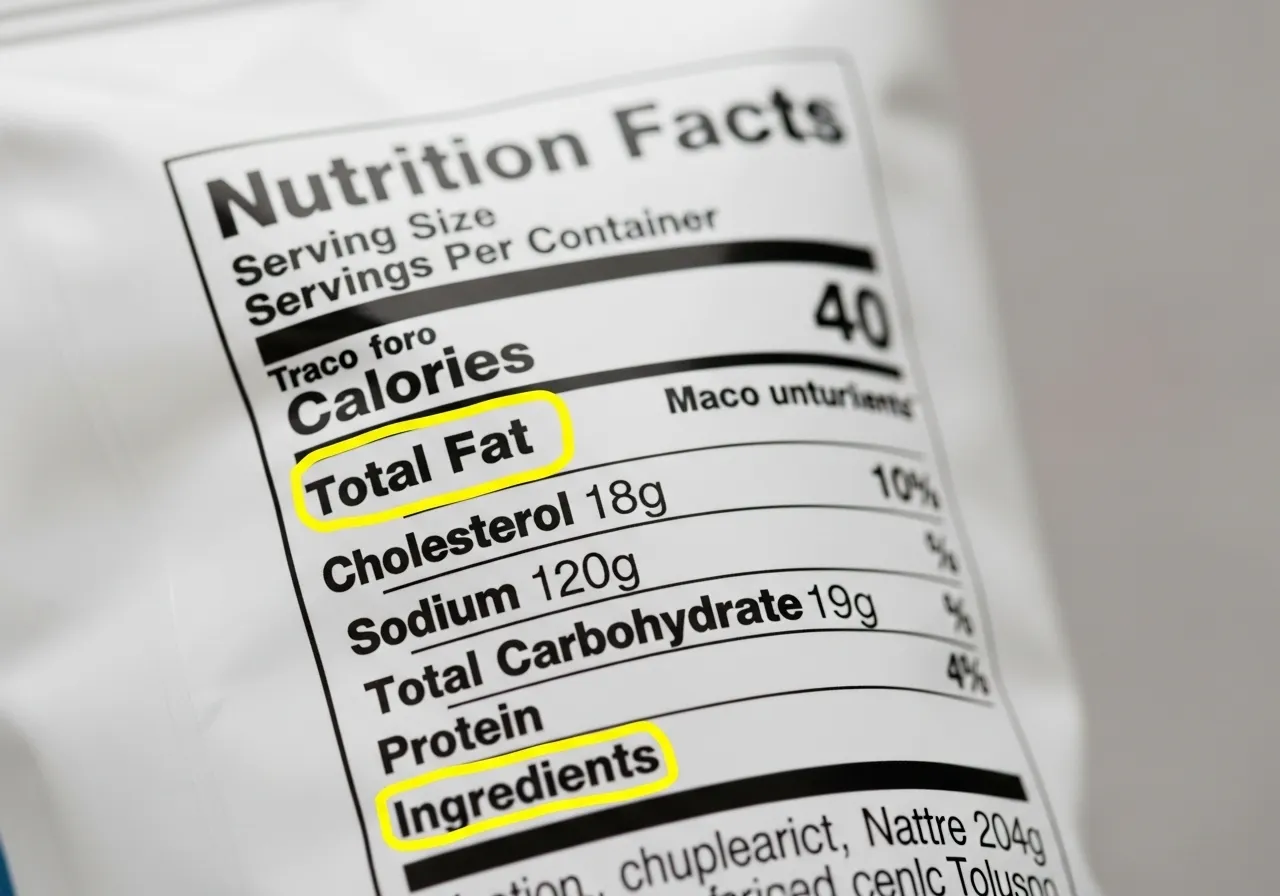
How to Read Nutrition Labels: A Beginner’s Guide to Making Smarter Food Choices
This article is for general educational purposes only and does not constitute medical or professional fitness advice.
Consult a licensed healthcare provider or registered dietitian before making significant changes to your diet, especially if you have a health condition.
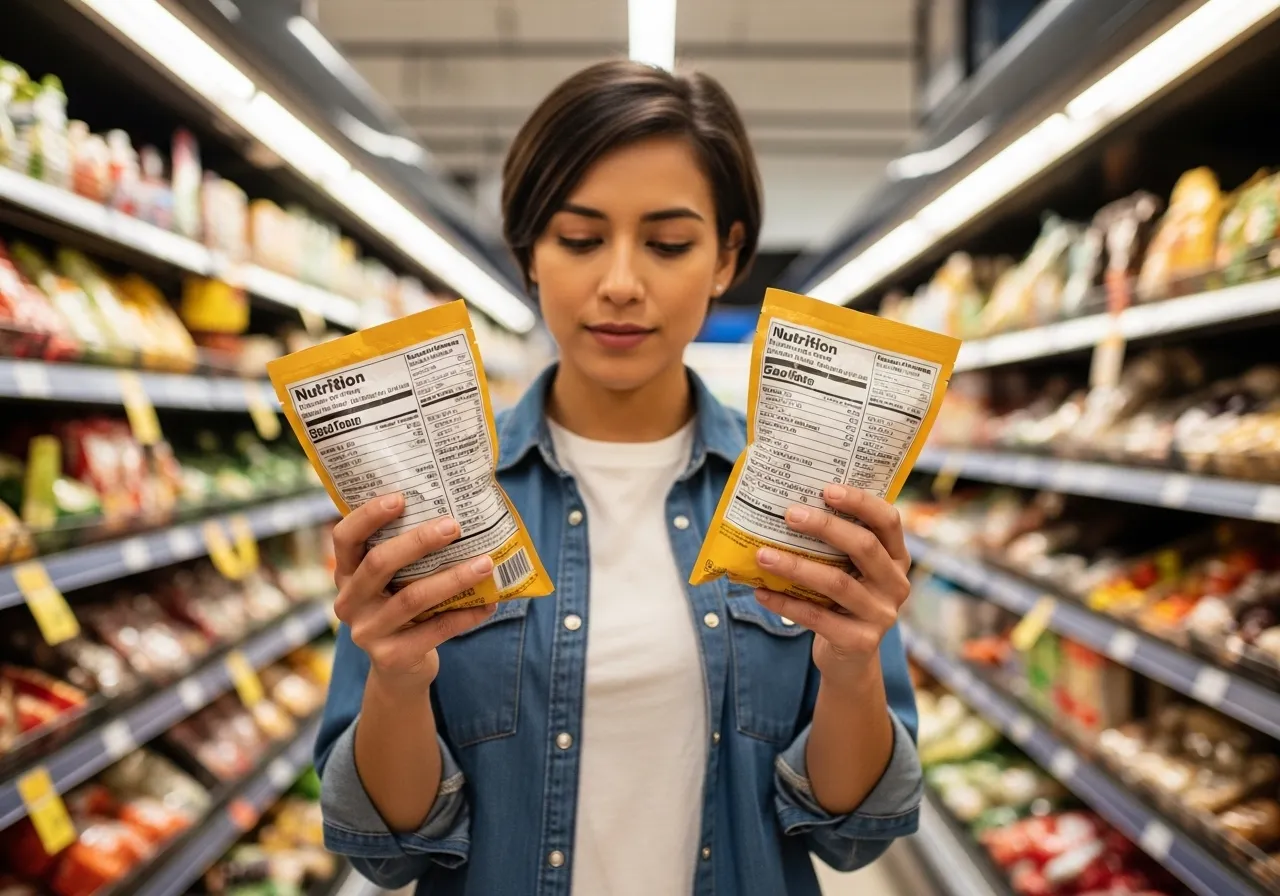
Nutrition labels are on virtually every packaged food product — yet most people only glance at the calorie count, if they look at all.
Understanding how to read labels more completely can meaningfully improve your ability to make informed food choices, without requiring a background in nutrition science.
This guide walks through each section of a standard nutrition label and explains what actually matters for most health and fitness goals.
The Serving Size: Why It’s the Most Important Line on the Label
Everything Else Is Relative to This Number
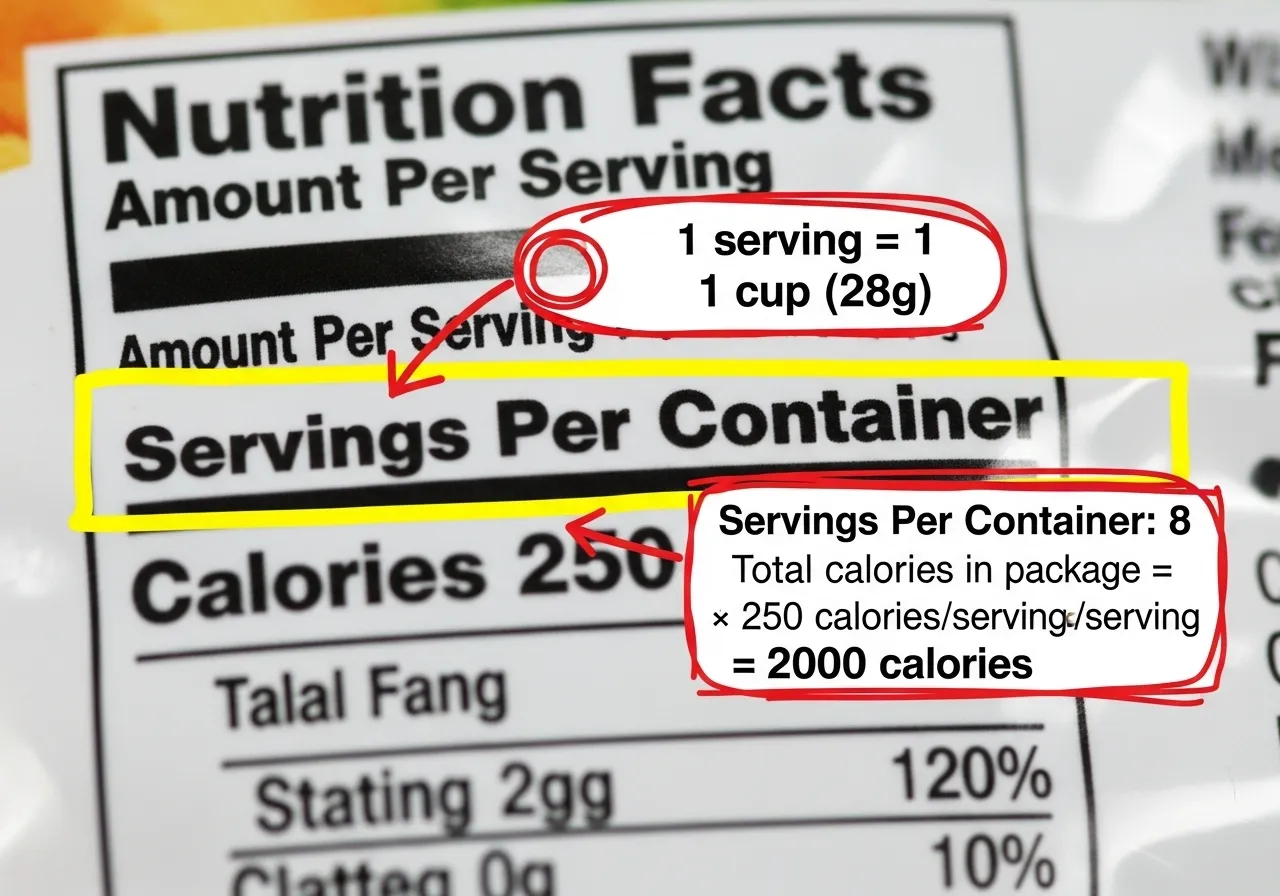
Every figure on a nutrition label — calories, fat, protein, sodium — refers to one serving, not necessarily the whole package.
Many products contain 2, 2.5, or even 4 servings per container, despite appearing to be a single-serving package.
How to Use Serving Size Practically
- Check “servings per container” before evaluating any other figure
- If you’ll consume more or less than one serving, scale the nutritional figures accordingly
- Weighing food in grams (using a kitchen scale) rather than using volume measures (cups, tablespoons) tends to be more accurate — volume is affected by packing density, which varies
Calories, Macronutrients, and What They Mean
Calories
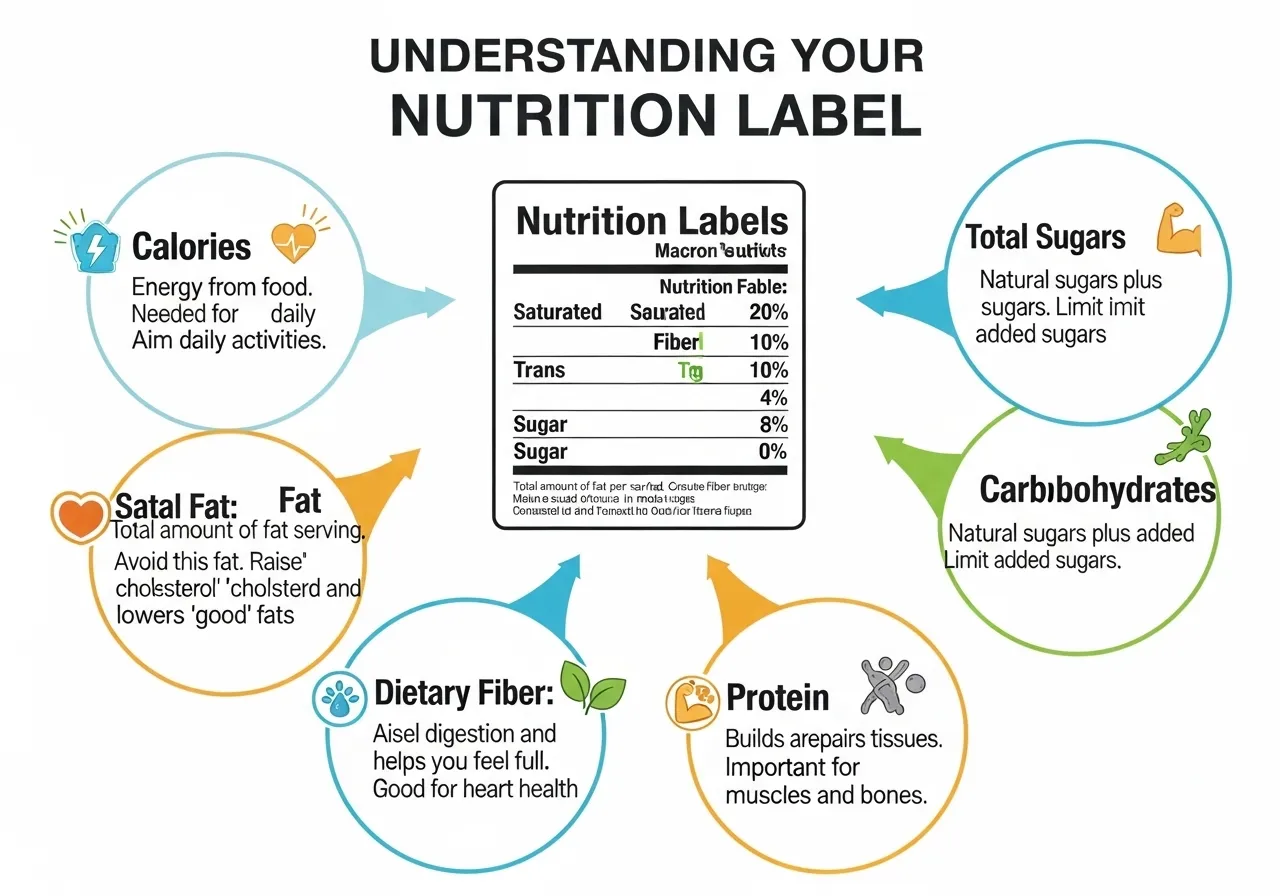
A calorie (technically a kilocalorie, kcal) is a unit of energy. The calorie figure on a label represents the total energy the food provides from all macronutrient sources.
For context: 1 gram of carbohydrate provides ~4 kcal; 1 gram of protein provides ~4 kcal; 1 gram of fat provides ~9 kcal; 1 gram of alcohol provides ~7 kcal.
Fat
The label typically shows total fat, with breakdowns for saturated fat and trans fat. Some labels also show monounsaturated and polyunsaturated fat.
- Saturated fat: Current dietary guidelines generally recommend limiting saturated fat — most major health organizations suggest keeping it below 10% of total calories
- Trans fat: Partially hydrogenated oil-derived trans fats are associated with adverse cardiovascular outcomes in research — most regulatory bodies recommend keeping them as low as possible
- Unsaturated fats: Associated with more favorable health outcomes in most research; found in olive oil, nuts, avocado, and fatty fish
Carbohydrates
Total carbohydrate includes sugars and dietary fiber (the indigestible plant material that supports digestive health and helps regulate blood glucose).
- Dietary fiber: Aim for adequate intake — most adults consume well below recommended amounts. High-fiber foods tend to increase satiety (the feeling of fullness)
- Total sugars vs added sugars: Added sugars are those added during processing, distinct from naturally occurring sugars in fruit or dairy. Most guidelines recommend limiting added sugars
Protein
Protein content is listed in grams. No further breakdown is typically required on standard labels — but for those tracking protein intake for muscle building or specific dietary goals, comparing per-serving protein across products can be a useful practice.
Micronutrients and the % Daily Value
What Is % Daily Value (%DV)?
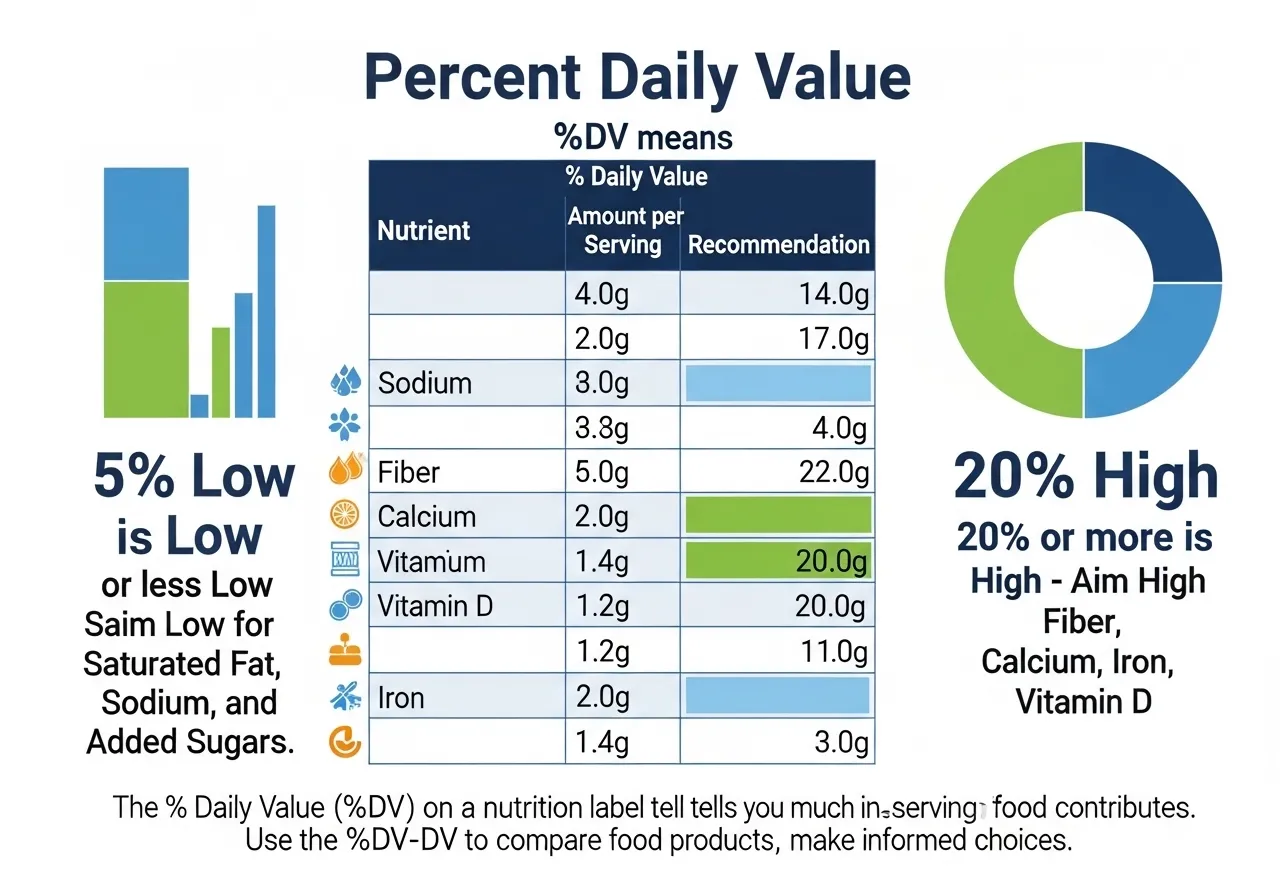
The % Daily Value shows how much of a specific nutrient one serving provides relative to a 2,000 calorie daily diet — the reference point used on standard food labels.
A general interpretation guide:
| %DV | Interpretation |
|---|---|
| 5% or less | Low in this nutrient |
| 20% or more | High in this nutrient |
The %DV is based on a 2,000 kcal reference — if your actual caloric needs differ significantly (higher for active individuals, lower for sedentary smaller adults), the %DV figures will be proportionally different for you.
Key Micronutrients to Watch
| Nutrient | General Goal | Why It Matters |
|---|---|---|
| Sodium | Limit (ideally <20%DV per serving for most foods) | High intake associated with blood pressure elevation in some individuals |
| Dietary Fiber | Seek higher %DV | Supports digestive health, satiety, blood glucose regulation |
| Calcium & Vitamin D | Seek higher %DV | Bone health; many adults are insufficient in vitamin D |
| Iron | Seek higher %DV (especially women) | Oxygen transport; deficiency is common in some populations |

The Ingredients List: What’s Actually in the Product
How Ingredients Are Listed
Ingredients are listed in descending order by weight — the ingredient present in the greatest amount appears first.
This means the first 3–5 ingredients typically tell you the most about what a product primarily consists of.
Practical Reading Tips
- Short ingredient lists often (though not always) indicate less processing — compare a plain oat product (oats, salt) to a flavored variant with 20+ ingredients
- Sugar appears under many names: high-fructose corn syrup, cane juice, maltose, dextrose, sucrose — products with multiple sugar aliases near the top of the list may contain more added sugar than the label initially suggests
- Hydrogenated oils in the ingredients indicate trans fats may be present, even if the label shows 0g — amounts below 0.5g per serving can be rounded to zero on the label
- Allergen declarations (contains: milk, soy, tree nuts, etc.) appear at the end of the ingredients list
Frequently Asked Questions About Nutrition Labels
Q: Should I count calories from nutrition labels?
Calorie counting from labels can be a useful tool for awareness — but it comes with important caveats.
Calorie figures on labels are allowed a margin of error of up to ±20% in many regulatory systems. Cooking methods also affect calorie content (e.g., cooked rice absorbs water and changes weight). Labels provide estimates, not precise measurements.
For most people, developing a general awareness of caloric density in common foods tends to be more sustainable than precise daily calorie counting from labels. Consulting a registered dietitian may be helpful for those with specific therapeutic dietary goals.
Q: Are “low fat” or “sugar free” labels always healthier?
Not necessarily. “Low fat” products often contain more added sugar or refined carbohydrates to compensate for the reduction in fat — which affects satiety and caloric density differently.
“Sugar free” products may use non-nutritive sweeteners (calorie-free compounds used to mimic sweetness) — the health implications of which vary by individual, amount consumed, and the specific sweetener used.
Reading the ingredients and full nutrition facts of “healthier” labeled products, rather than relying on front-of-pack marketing claims, tends to provide a more accurate picture.
Q: What is the difference between “use by” and “best before” dates?
These are safety and quality designations, not nutrition label elements — but frequently confused:
- “Use by”: Safety date — products may pose food safety risk after this date
- “Best before”: Quality date — food is typically still safe to eat after this date but quality (taste, texture) may have declined
- Serving size is the most important line — all other figures are relative to it
- %DV of 5% or less = low; 20% or more = high in that nutrient
- Ingredients are listed by weight — the first few tell you the most
- Front-of-pack claims (“low fat,” “natural”) require verification against the full label
- A registered dietitian can provide personalized guidance for specific dietary goals or conditions


