The Best Leg Day Workout for Bigger, Stronger Legs
⚠️ Disclaimer: The information in this article is for general educational purposes only and does not constitute medical, nutritional, or professional fitness advice. Individual results may vary. Always consult a qualified healthcare professional or certified fitness trainer before starting any new exercise program, changing your diet, or making decisions about injury treatment or recovery. If you experience pain, discomfort, or any unusual symptoms during exercise, stop immediately and seek professional guidance.

Why Leg Day Is the Most Important Training Day
The Systemic Benefits of Lower Body Training
If you could only train one body part for the rest of your life, the evidence strongly suggests it should be your legs. Not because aesthetics demand it — though well-developed legs do complete a physique in a way that nothing else can — but because the lower body is home to the largest muscle groups in the human body, and training these muscles produces systemic hormonal, metabolic, and cardiovascular benefits that dwarf what upper body training alone can achieve.
The quadriceps, hamstrings, glutes, and calves collectively account for approximately 60 percent of total muscle mass. Training these muscles with compound exercises — squats, deadlifts, lunges — produces the highest anabolic hormone response of any training activity: research published in the Journal of Strength and Conditioning Research found that lower body compound exercises produce testosterone and growth hormone responses 2 to 3 times greater than equivalent upper body exercises, creating a systemic anabolic environment that benefits muscle development across the entire body — not just the legs. This is why dedicated leg training improves upper body development even when upper body training volume remains constant.
The cardiovascular demand of leg training is also unmatched. A set of heavy squats or Romanian deadlifts elevates heart rate to near-maximal levels, produces significant EPOC (excess post-exercise oxygen consumption), and creates a metabolic demand that single-joint exercises simply cannot match. People who consistently train legs in addition to upper body are fitter, have better body composition, and demonstrate superior long-term health markers compared to those who skip lower body work — a difference documented in multiple longitudinal studies on exercise patterns and health outcomes.
Why People Skip Leg Day and Why That Is a Mistake
The cultural phenomenon of skipping leg day is real — and its consequences are visible on the physiques of many recreational gym-goers who invest heavily in chest, arms, and shoulders while neglecting the lower body that should anchor those upper body muscles. The reasons people skip leg day cluster around three themes: legs are out of sight in daily life (you don’t see them in the mirror while brushing teeth), leg training is genuinely harder and more uncomfortable than most upper body training, and the delayed onset muscle soreness from leg day is disproportionately limiting (difficulty walking after a heavy squat session has genuinely deterred many people from returning).
The performance and aesthetic costs of chronic leg neglect are significant and cumulative. Proportionally underdeveloped legs create a visual imbalance that no amount of upper body work can compensate for. Undertrained glutes and hamstrings are a primary risk factor for lower back injury — the most common training injury — because these muscles stabilize and protect the lumbar spine during virtually all loaded movements. And the systemic hormonal benefits of lower body training are simply not available from upper body work alone, limiting total body development potential regardless of upper body training quality. According to the American College of Sports Medicine, balanced programming including regular lower body compound training is associated with significantly better long-term injury prevention, metabolic health, and overall functional fitness compared to upper-body-dominant training.
The Muscles of the Lower Body and Their Functions
Understanding what you’re training makes training it more effective. The primary lower body muscles and their functional roles: Quadriceps (rectus femoris, vastus lateralis, vastus medialis, vastus intermedius) — extend the knee, decelerate descent, generate force from the bottom of squats and lunges. Hamstrings (biceps femoris, semitendinosus, semimembranosus) — flex the knee, extend the hip, decelerate knee extension, critical for running and jumping. Glutes (gluteus maximus, gluteus medius, gluteus minimus) — extend and externally rotate the hip, stabilize the pelvis, generate power in all lower body athletic movements. Calves (gastrocnemius, soleus) — plantarflex the ankle, absorb impact during running and jumping. Hip flexors (iliopsoas) — flex the hip, critical for knee drive in running and athletic movement.
A complete leg day program trains all of these muscle groups across their full ranges of motion — not just the quads through squatting patterns, but the hamstrings through hip hinge patterns, the glutes through hip extension patterns, and the calves through plantarflexion. Neglecting any of these movement patterns creates muscular imbalances that impair athletic performance and elevate injury risk.
The Hormonal Case for Heavy Leg Training
Heavy leg training produces the largest systemic hormonal response of any training modality, and this hormonal response extends benefits beyond the legs themselves to every other muscle group in the body. Squats, deadlifts, and leg press performed at high intensity produce acute elevations in testosterone, growth hormone, and insulin-like growth factor 1 (IGF-1) that are 2 to 3 times greater than equivalent efforts applied to upper body muscles alone — a consequence of the greater total muscle mass, metabolic demand, and mechanical load involved in compound lower body exercises. This hormonal environment, sustained for 30 to 60 minutes post-training, creates anabolic conditions that benefit muscle development throughout the entire body — including the upper body muscles trained on subsequent days.
The practical implication for program design is that including heavy leg training in a weekly program benefits upper body development beyond the legs themselves. Research published in the Journal of Strength and Conditioning Research found that trainees who included heavy lower body training in their weekly programs showed significantly greater upper body muscle development compared to trainees who performed upper body training only at equivalent upper body volume — the hormonal spillover effect of lower body training producing measurable upper body benefit.
Why Most People Train Legs Wrong
Despite the widespread recognition that leg training is important, the majority of gym-goers perform leg day in ways that significantly undermine its effectiveness. The most common leg training errors: insufficient loading (using weights that are too light to provide meaningful hypertrophic or strength stimulus), excessive machine reliance (leg press and leg extension without the neurological and stability demands of squats and lunges), inadequate posterior chain work (heavy quad emphasis through leg press and front squats without balancing hip hinge and hamstring exercises), insufficient depth in squats (partial squats that reduce glute and hamstring recruitment), and inconsistent frequency (training legs intensely once per week with excessive soreness, then missing the second weekly session due to residual fatigue).
Correcting these errors — loading legs to genuine effort, prioritizing compound free-weight movements, balancing anterior and posterior chain work, squatting to appropriate depth, and distributing leg volume across 2 weekly sessions — produces dramatically better results from the same time investment. The leg training that produces elite lower body development is not more complicated than what most people do, but it is more demanding and more balanced than the common approach of a few sets of leg press and some machine work.
Programming Leg Day Frequency
The optimal leg training frequency for most trainees is twice per week — a frequency supported by research showing greater hypertrophy and strength gains from twice-weekly muscle group training compared to once-weekly, without the recovery costs that 3 or more weekly leg sessions produce for most people. The twice-weekly structure distributes the high training volume needed for leg development across two sessions, allowing each session to be performed at high quality without the accumulated fatigue that limits the second half of very long single leg sessions. A practical twice-weekly structure: Day 1 (quadricep dominant — squats, leg press, lunges) and Day 2 (posterior chain dominant — Romanian deadlift, leg curl, hip thrust), separated by at least 48 hours, trains all lower body muscle groups with sufficient frequency and volume for meaningful development while respecting the recovery demands of heavy lower body training.
The Core Leg Day Exercises You Need
The Squat: King of Leg Exercises
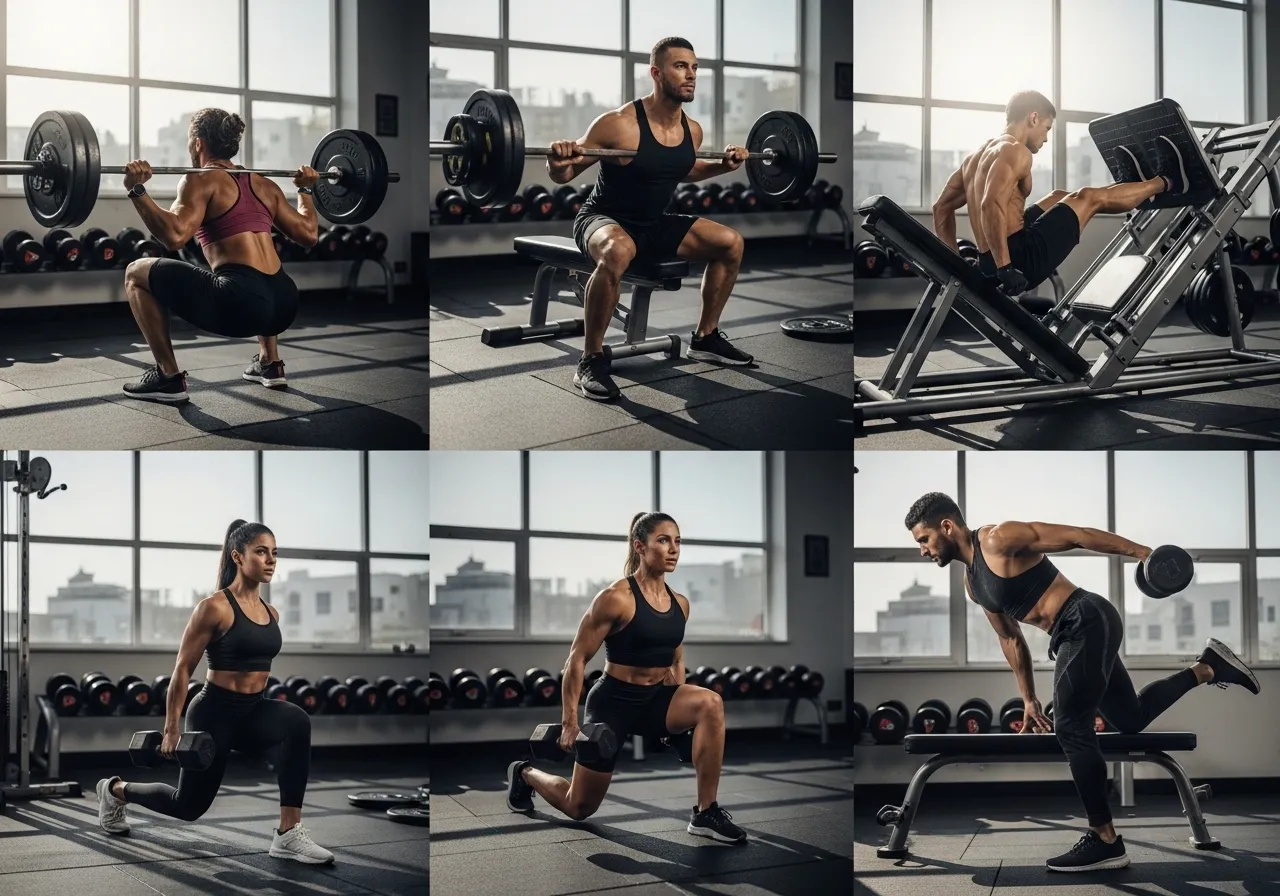
The barbell back squat is the most effective single exercise for overall lower body development and deserves the central position in any serious leg day program. It trains the quadriceps, hamstrings, glutes, hip flexors, adductors, and core simultaneously through a full range of motion under heavy load — a combination of muscle recruitment breadth and loading capacity that no other exercise approaches. Research published in the Journal of Strength and Conditioning Research found that the back squat produces greater quadriceps activation than leg press, leg extension, or any other quad exercise at equivalent relative intensities, confirming its primacy for lower body development.
For those training at home or without a barbell, the goblet squat (holding a dumbbell or kettlebell at chest height) and front squat provide excellent alternatives that maintain the upright torso position and quad emphasis of the back squat with lighter loads. Bulgarian split squats — one foot elevated behind on a bench, performing a single-leg squat — are the most effective single-leg exercise and produce quad and glute development comparable to bilateral squatting with significantly lighter absolute loads.
Squat depth matters enormously for muscular development. Research consistently shows that full-depth squats (thighs parallel to or below the floor) produce significantly greater quadriceps and glute development than partial-range squats, and pose no greater knee injury risk for healthy individuals with proper technique. I spent two years squatting to just above parallel before understanding this — correcting my depth produced visible quad development changes within 8 weeks without any change to programming or load.
Romanian Deadlift: The Hamstring and Glute Builder
The Romanian deadlift (RDL) is the primary exercise for posterior chain development — the hamstrings and glutes that most people dramatically underdev elop by focusing on quad-dominant movements. Starting standing with the barbell at hip height, hinge at the hips while maintaining a neutral spine, lowering the bar along the front of the legs until a strong hamstring stretch is felt, then driving through the glutes to return to standing. The key technique point is maintaining the hip hinge pattern throughout — the spine does not flex, the knees bend slightly but are not the primary movement driver, and the hamstrings are the primary loaded structure.
Research from the British Journal of Sports Medicine found that the Romanian deadlift produces the greatest hamstring activation of any exercise tested, including leg curl variations, and is the most effective preventive exercise for hamstring strain injury — the most common muscle injury in athletes. Including RDLs in every leg day session is both an aesthetic choice (developed hamstrings dramatically improve the posterior leg appearance) and an injury prevention investment.
Lunges and Split Squats: Unilateral Lower Body Work
Unilateral lower body exercises — lunges, split squats, step-ups, Bulgarian split squats — deserve a place in every leg day program for three reasons: they correct bilateral strength imbalances that develop through exclusive bilateral training, they train hip stability under load in single-leg stance (the position of all locomotion), and they produce significant glute medius and hip abductor activation that bilateral squatting under-targets. According to the Journal of Orthopaedic and Sports Physical Therapy, correcting unilateral lower body strength imbalances through split squat training reduces knee and hip injury risk significantly in both recreational and competitive athletes.
The Bulgarian split squat deserves special mention as potentially the most productive single-leg exercise available. With the rear foot elevated to increase front leg range of motion and loading, it produces quad activation comparable to back squat while generating glute and hamstring activation superior to standard split squat variations. Three sets of 8 to 12 Bulgarian split squats per leg, performed with a 3-second eccentric, constitute a complete posterior chain and quad training stimulus in a single exercise.
Leg Press: Quad Isolation Under Load
The leg press provides a squat-pattern movement that isolates the lower body from the stabilization demands of the free-weight squat — allowing higher absolute loading on the quads and allowing trainees to train to failure safely without the spinal loading of a barbell. While it does not replace the squat as a primary leg exercise, the leg press is a valuable supplementary exercise for additional quad volume and for training around lower back limitations. Foot placement variations on the leg press — high and wide (greater glute and hamstring emphasis), low and narrow (greater quad emphasis), shoulder-width (balanced) — allow targeted emphasis on specific lower body muscle groups.
Calf Raises: The Most Neglected Leg Exercise
Calves are among the most neglected muscle groups in recreational training despite their significant contribution to lower body aesthetics, running performance, and ankle stability. The gastrocnemius (the two-headed muscle visible as the calf) responds best to heavier loads and lower rep ranges (8 to 12 reps), while the soleus (the deeper calf muscle, trained most effectively with the knee bent) responds better to higher rep ranges (15 to 20 reps). A complete calf training protocol includes both straight-leg calf raises (gastrocnemius primary) and seated or bent-knee raises (soleus primary) in each leg session. Research in Sports Medicine found that calves respond to training with slower hypertrophic rates than most other muscle groups, requiring consistent training over months to produce visible development — confirming the importance of including them in every leg session rather than treating them as an optional add-on.
The Hip Hinge Pattern: Deadlifts and Their Variations
The hip hinge — the fundamental movement of bending forward by pushing the hips backward while maintaining a neutral spine — is the second major lower body movement pattern alongside the squat, and training it through deadlift variations develops the posterior chain (hamstrings, glutes, lower back) that the squat undertrains. Neglecting hip hinge work in a leg day program creates an anterior-dominant lower body with overdeveloped quadriceps relative to hamstrings and glutes — a muscle balance that is associated with increased ACL injury risk, reduced athletic performance, and the characteristic quad-dominant movement patterns that cause knee problems over time.
The Romanian deadlift is the most accessible hip hinge exercise for most trainees — it trains the hamstrings through their full range of motion (from hip extension to maximum hip flexion) and develops the posterior pelvic tilt that is the foundation of all athletic hip extension. The conventional deadlift adds lower back and grip development to the hamstring and glute stimulus of the RDL, making it the most comprehensive single exercise in strength training. For leg day programming, including at least one hip hinge exercise at meaningful volume (3 to 5 sets) ensures the posterior chain development that squats alone cannot provide.
Calf Training: The Most Neglected Leg Muscle
The calves — gastrocnemius and soleus — are among the most commonly undertrained muscle groups in lower body programming, despite their significant contribution to athletic appearance and lower extremity function. The gastrocnemius (the visible calf muscle) is a powerful plantarflexor and secondary knee flexor that responds to high-rep, full-range training — standing calf raises for 15 to 25 reps through the complete range of motion from full stretch to peak contraction. The soleus (the deeper calf muscle, more visible from the side) is predominantly slow-twitch and responds to seated calf raises and high-volume training at moderate intensity. Both need to be trained for complete calf development.
The most common calf training error is performing partial-range reps — rising only halfway and never achieving the full dorsiflexion stretch at the bottom or the complete plantarflexion contraction at the top. The stretch at the bottom of the calf raise is the most hypertrophically stimulating part of the movement, producing the peak mechanical tension and muscle damage that drives calf development. Always use a step or platform elevation that allows the heel to drop below the level of the toes at the bottom of each rep, and hold the stretched position for 1 to 2 seconds before rising to the top. This range-of-motion emphasis transforms mediocre calf training into highly effective calf development.
Leg Day Workout Structures for Different Goals
For Maximum Hypertrophy: The High Volume Protocol
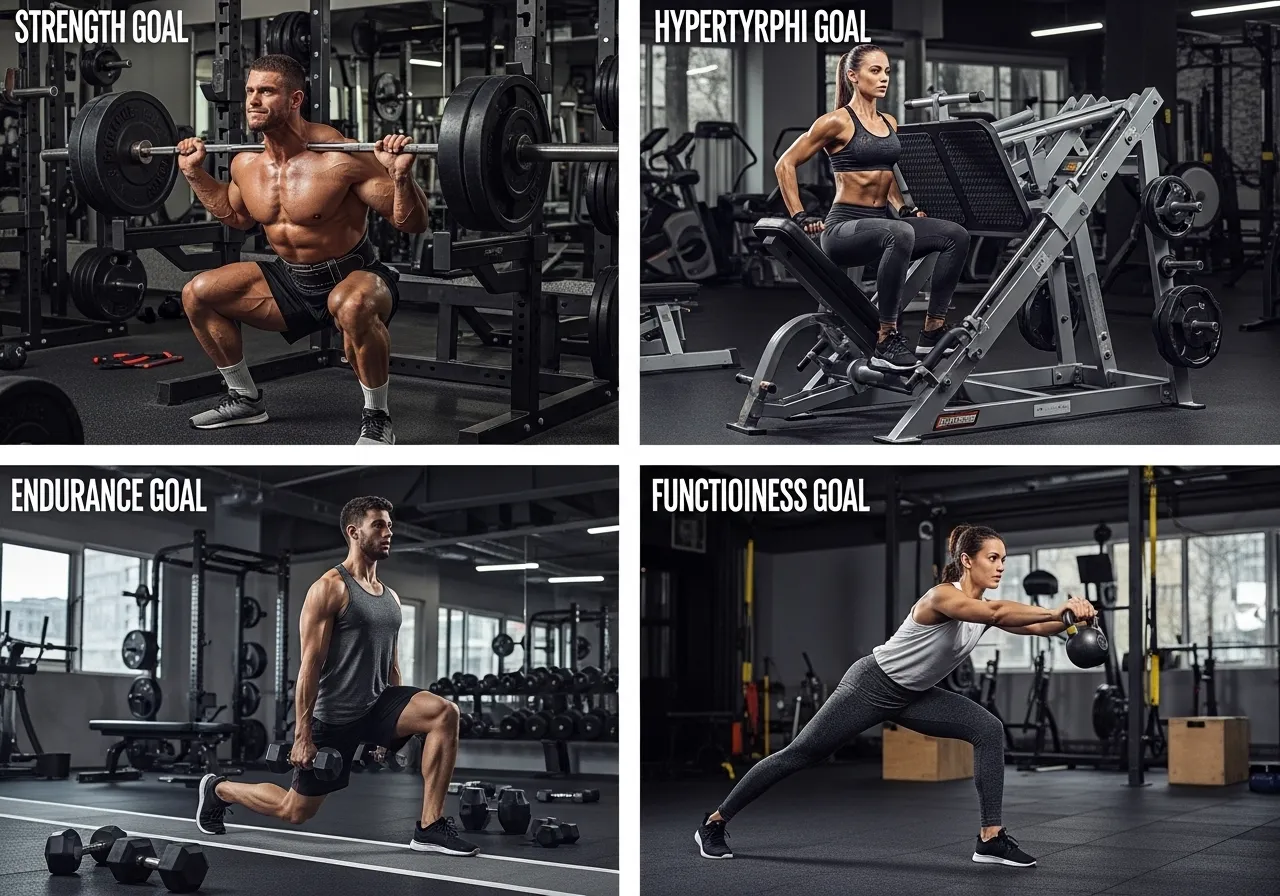
For maximum leg muscle development, the optimal leg day structure prioritizes high weekly volume (16 to 20 working sets per major muscle group), moderate-to-heavy loads (65 to 85 percent of one-rep max), and a variety of exercises that train all lower body muscles through their full ranges of motion. This approach produces the greatest hypertrophic stimulus but requires longer sessions (60 to 75 minutes) and adequate recovery (3 to 4 days) before the next leg session.
| Exercise | Sets × Reps | Load | Rest |
|---|---|---|---|
| Back squat | 4×8 | 75–80% 1RM | 3 min |
| Romanian deadlift | 4×10 | 70–75% 1RM | 2.5 min |
| Bulgarian split squat | 3×10/leg | Moderate | 2 min |
| Leg press | 3×12 | Heavy | 2 min |
| Leg curl | 3×12 | Moderate-heavy | 90s |
| Standing calf raise | 4×12 | Heavy | 90s |
| Seated calf raise | 3×15 | Moderate | 60s |
For Strength: The Low Rep, High Load Protocol
For maximum strength development — improving squat and deadlift one-rep max and overall lower body power output — the optimal structure prioritizes heavier loads (80 to 92 percent of one-rep max), lower rep ranges (3 to 6 reps), and longer rest periods that allow complete phosphocreatine regeneration between sets. Research from the American College of Sports Medicine confirms that loads above 80 percent of one-rep max are necessary for maximum strength adaptation, with the neural efficiency improvements at these loads producing strength gains that lighter, higher-rep training cannot fully replicate.
Strength-focused leg days are typically shorter in total volume but more taxing on the central nervous system and connective tissue — requiring 4 to 5 days of recovery before the next lower body strength session. They are best programmed as 1 to 2 sessions per week within a broader training program rather than as the sole form of leg training.
For Fat Loss: The Metabolic Circuit Protocol
For fat loss, the optimal leg day structure maximizes caloric expenditure and metabolic stress through higher rep ranges (12 to 20), shorter rest periods (30 to 60 seconds), and compound exercise circuits that keep heart rate elevated throughout the session. A 45-minute metabolic leg circuit burns significantly more calories during and after (EPOC effect) compared to a traditional straight-set strength session at lower intensity. According to research published in the Journal of Strength and Conditioning Research, metabolic resistance training circuits produce EPOC effects lasting 14 to 36 hours — meaning the fat-burning benefits of a metabolic leg session extend well into the next day.
For Athletic Performance: The Power-Focused Protocol
Athletes requiring explosive lower body power — sprinters, basketball players, soccer players, martial artists — benefit most from leg day programming that includes both heavy compound loading and plyometric power development. Jump squats, box jumps, broad jumps, and single-leg bounding exercises train the stretch-shortening cycle and rate of force development — the neural and mechanical properties that determine explosive performance — in ways that traditional strength training cannot replicate.
Sample Leg Day Workouts for Different Goals
Hypertrophy-Focused Leg Day (70 minutes): Barbell back squat 4×8 (3-second eccentric). Romanian deadlift 4×10. Leg press 3×12. Walking lunges 3×12 each leg. Leg curl 4×12. Leg extension 3×15. Calf raise 4×20. Rest 90 seconds between sets of compound exercises, 60 seconds for isolation exercises. This sequence prioritizes the major compound movements when energy is highest, then adds isolation volume for targeted muscle development.
Strength-Focused Leg Day (60 minutes): Barbell back squat 5×5 (working sets at 80-85% of one-rep max). Romanian deadlift 4×6. Bulgarian split squat 3×6 each leg. Leg press 3×8. Calf raise 3×12. Rest 3 to 5 minutes between heavy compound sets, 2 minutes for accessory work. This structure prioritizes maximal strength development through high-intensity, lower-rep training with extensive rest periods that allow full recovery between maximum effort sets.
Fat-Loss Focused Leg Day (45 minutes): Jump squat 3×15 (explosive). Superset: Romanian deadlift 3×12 + Walking lunge 3×12 each leg (30 seconds rest between supersets). Superset: Leg press 3×15 + Leg curl 3×15. Calf raise 3×20. 10-minute metabolic finisher: 40 seconds jump squats / 20 seconds rest × 10 rounds. This structure maximizes caloric expenditure through metabolic supersets and a HIIT finisher while maintaining the resistance stimulus needed to preserve muscle during fat loss.
Lower Body Unilateral Training
Unilateral lower body exercises — movements performed one leg at a time — address the strength and muscle imbalances between legs that bilateral exercises mask and are particularly important for athletic performance and injury prevention. The Bulgarian split squat, single-leg Romanian deadlift, step-up, and pistol squat progression each load one leg at a time, forcing each limb to develop independently rather than relying on the stronger leg to compensate during bilateral movements. Research consistently shows that individuals who include unilateral lower body work alongside bilateral movements develop more balanced strength, greater hip stability, and lower rates of overuse injuries in the knees and hips compared to those who train exclusively with bilateral exercises.
The Bulgarian split squat — performed with the rear foot elevated on a bench, creating a deep single-leg squat to near floor level — is the single most demanding unilateral leg exercise accessible to most trainees and produces exceptional glute and quadricep development that bilateral squatting cannot fully replicate. The 20 to 30 percent body weight asymmetry inherent in the movement (the front leg bears greater load than its bilateral squat equivalent) creates a strength stimulus that drives lower body development even at relatively modest absolute loads.
Programming Leg Day Deload Protocols
Knowing when and how to deload from intense leg training prevents the overuse injuries that interrupt training progress and require weeks or months of reduced training to resolve. The signs that a leg day deload is needed: consistent performance decline across 2 or more consecutive leg sessions, persistent joint pain (as opposed to muscle soreness) in the knees, hips, or lower back that does not resolve between sessions, significantly elevated resting heart rate indicating systemic fatigue, and disrupted sleep despite physical exhaustion. Any of these signs individually warrants a 3 to 5 day reduced-intensity period; multiple signs simultaneously warrant a full deload week. The deload week protocol: maintain training frequency but reduce squat and deadlift loads by 40 percent and volume by 50 percent, replace HIIT with steady-state cardio, and prioritize mobility and stretching work that restores the range of motion compressed by weeks of heavy loading.
Programming Leg Day Into Your Weekly Schedule
How Many Days Per Week Should You Train Legs
Research consistently supports training legs 2 times per week for optimal hypertrophy and strength development in most populations. Once per week provides insufficient frequency to maximize muscle protein synthesis, while 3 times per week is appropriate for advanced trainees and athletes with high recovery capacity. A 2019 meta-analysis published in the Journal of Strength and Conditioning Research found that twice-weekly leg training produced 19 percent greater quad hypertrophy over 12 weeks compared to once-weekly training at equivalent weekly volume — a meaningful difference that justifies the scheduling investment of a second leg session per week.
The practical scheduling challenge for twice-weekly leg training is ensuring adequate recovery between sessions. At minimum, 72 hours between leg sessions is needed when both sessions are high-intensity — meaning a Monday/Thursday or Tuesday/Friday split works well, while Monday/Wednesday creates insufficient recovery for most people training at meaningful intensity.
Where Leg Day Fits in Different Training Splits
Common training splits and how leg day fits within each:
3-Day Full Body Split (Mon/Wed/Fri): Include squat, RDL, and one unilateral exercise in each session. Lower intensity and volume per session than dedicated leg days, but three weekly lower body training stimuli that produce excellent results for beginners and intermediates.
4-Day Upper/Lower Split (Mon/Tue/Thu/Fri): Two dedicated lower body days per week. This is the optimal structure for most intermediate trainees seeking balanced upper and lower body development — it provides twice-weekly leg training frequency with adequate recovery between lower body sessions.
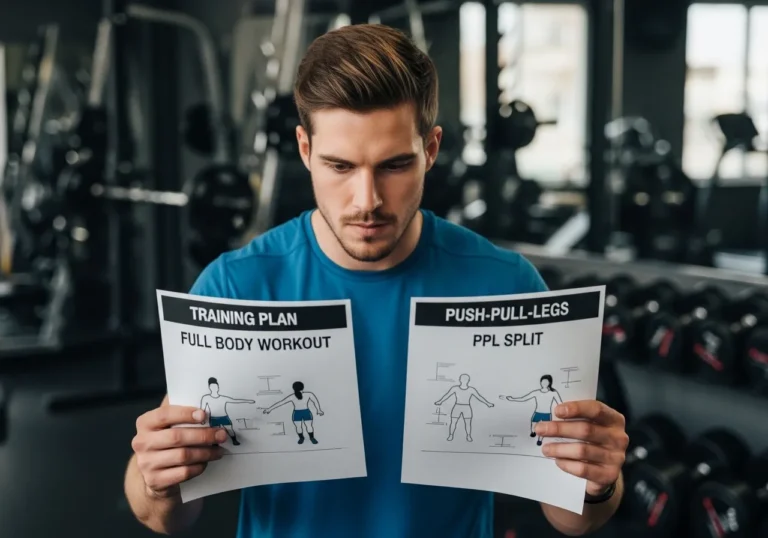
5-Day Push/Pull/Legs (PPL): One dedicated leg day per week with push and pull days for upper body. Provides full session dedication to legs but only once-weekly frequency. Appropriate for those whose primary goal is upper body development with leg maintenance.
6-Day PPL × 2: Two leg days per week within a PPL framework. The optimal structure for advanced trainees or bodybuilders whose primary goal includes significant lower body development alongside upper body work.
Managing Leg Day Soreness
Delayed-onset muscle soreness (DOMS) from leg training is notoriously more limiting than soreness from other muscle groups — heavy squats and Romanian deadlifts produce soreness that can significantly impair mobility for 48 to 72 hours. Managing this soreness to allow consistent training requires specific strategies: adequate warm-up (reducing initial DOMS onset), progressive load introduction for new exercises (never jumping to maximum effort in a new movement), post-session protein and carbohydrate consumption within 2 hours, and active recovery modalities on off days. Research published in the Journal of Athletic Training confirmed that active recovery — light cycling or walking at 40 to 60 percent max heart rate — reduces DOMS severity by up to 40 percent compared to complete rest on recovery days.
Managing Leg Day Soreness
Delayed-onset muscle soreness from leg training is typically more severe than from upper body training due to the greater muscle mass involved, the eccentric loading demands of squats and lunges, and the impact of impaired leg function on everyday activities like walking, climbing stairs, and sitting. Managing this soreness effectively — neither ignoring it completely nor allowing it to derail subsequent training sessions — is an essential practical skill for anyone with a serious leg day in their program.
The most effective post-leg-day soreness management protocol: 24 to 48 hours of active recovery (light walking, cycling, or swimming at conversational pace) rather than complete rest, which research consistently shows reduces DOMS severity and duration by 25 to 40 percent compared to passive rest. Adequate protein intake (2.0 to 2.2g/kg daily) provides the amino acids for rapid muscle fiber repair. Cold water immersion or contrast showers reduce acute inflammatory pain. Foam rolling for 60 to 90 seconds per muscle group improves blood flow and tissue extensibility. Anti-inflammatory foods (tart cherry juice, turmeric, fatty fish) support the resolution of the inflammatory process underlying soreness without completely suppressing it — inflammation is a necessary part of the repair and adaptation process, and complete anti-inflammatory suppression would impair adaptation.
Programming Leg Day in a Full Training Week
Placing leg day sessions strategically within the full training week prevents the interference between leg training recovery and upper body training performance that occurs when heavy squats and deadlifts are scheduled adjacent to upper body sessions without adequate recovery time. The most effective full-week structure for combined upper and lower body training: Monday upper body, Tuesday lower body (quad dominant), Wednesday rest or cardio, Thursday upper body, Friday lower body (posterior chain dominant), Saturday active recovery, Sunday rest. This structure provides 48 hours between any two sessions that stress overlapping muscle groups, maintains daily training frequency for people who prefer not to take complete rest days, and distributes training stress evenly across the week rather than clustering intense sessions that require extended recovery.
Deloading After Intense Leg Cycles
The leg muscles and their supporting connective tissue — particularly the patellar tendon, Achilles tendon, and hip flexor attachments — accumulate stress over weeks of intense lower body training that requires periodic planned reduction to prevent the overuse conditions that develop slowly and invisibly before manifesting as pain that forces extended training interruption. A deload week every 6 to 8 weeks of intense leg training — reducing volume by 40 to 50 percent and intensity by 20 to 25 percent — allows the connective tissue of the lower body to complete its adaptive response and reduces the accumulated micro-damage that would otherwise progress to frank injury.
The deload week for leg training should not eliminate lower body training entirely — maintaining movement patterns and low-intensity stimulus preserves the neural adaptations while allowing structural recovery. Replace heavy squats with bodyweight or goblet squats, reduce deadlift sets from 4 to 5 down to 2, eliminate HIIT and high-impact cardiovascular work, and focus on mobility and flexibility work that addresses the range-of-motion limitations that accumulate under heavy loading. Return to full training in the week following the deload, typically experiencing performance improvements from the recovered state that was previously masked by accumulated fatigue.
Leg Day Technique Deep Dives
Squat Technique: The Complete Breakdown
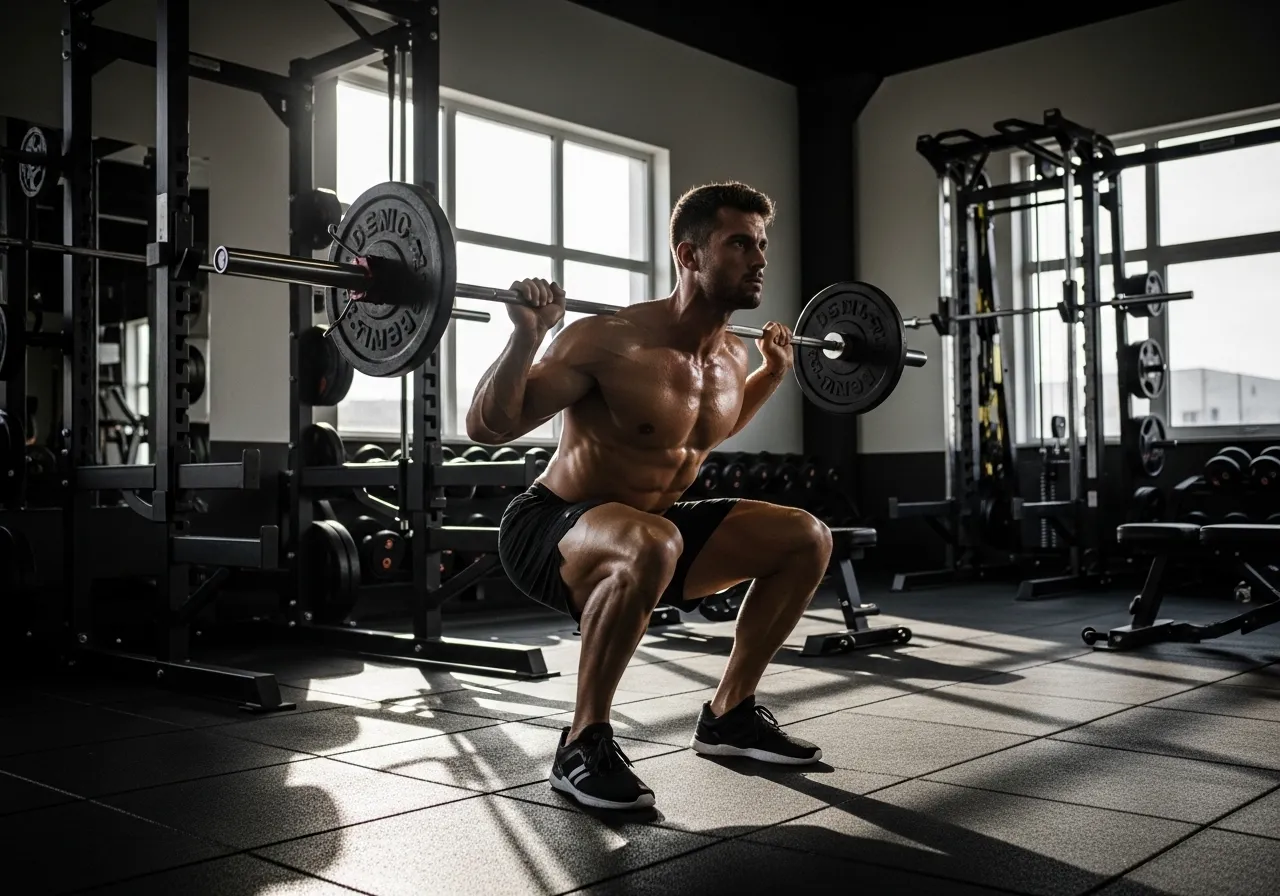
Perfect squat mechanics are the single most important technical skill in leg training. Errors in squat technique don’t just reduce effectiveness — they accumulate stress on the knees, hips, and lower back that eventually manifests as injury. The following technical checklist covers the most critical elements:
Stance: Shoulder-width or slightly wider, toes pointing outward 15 to 30 degrees. The exact angle varies by individual hip anatomy — find the position where you can reach depth comfortably without knee cave or lower back rounding.
Bracing: Before initiating descent, take a deep breath into the belly (not the chest), brace the core as if expecting a punch, and maintain this intra-abdominal pressure throughout the rep. This creates spinal stability that protects the lower back and allows maximum force transfer through the movement.
Descent: Initiate by breaking at the hips and knees simultaneously. Keep the chest tall and the torso as upright as mobility allows. Knees track over the toes throughout — no cave inward or push outward beyond the feet. Reach depth with thighs at or below parallel to the floor.
Ascent: Drive through the full foot (not just the heel or toes), keeping knees tracking the same path as descent. Maintain brace until standing. Complete the rep with full hip extension and glute squeeze at the top. Research from the American College of Sports Medicine confirms that this full hip extension at the top of each squat rep is critical for complete glute activation — stopping short of full extension leaves significant glute development potential unrealized.
Romanian Deadlift Technique
The most common RDL technique error is treating it as a squatting movement — bending the knees significantly and lowering the bar away from the legs. The RDL is a hip hinge: the knees bend only slightly (20 to 30 degrees) to allow the bar to pass the kneecap, the hips drive backward as the torso lowers, and the bar stays in contact with or very close to the front of the legs throughout the movement. This hinge pattern maximally loads the hamstrings in the lengthened position — the key stimulus for hamstring hypertrophy — while minimizing spinal compression.
The depth of the RDL should be determined by hamstring flexibility, not by how far the bar can physically travel. The correct stopping point is when a strong hamstring stretch is felt and the neutral lumbar curve can no longer be maintained — typically with the bar at mid-shin to ankle height for people with normal hamstring flexibility. Rounding the lower back to reach greater depth places dangerous compressive load on the lumbar discs and should be avoided regardless of the load being used.
Lunge Technique for Maximum Glute and Quad Development
Lunges are deceptively technical — they look simple but the technique variables that determine whether they primarily train the quads or the glutes are specific and important. Shorter stride length and more upright torso: greater quad emphasis. Longer stride length and slight forward lean: greater glute emphasis. For balanced development, alternate between these variations across sessions. According to the Journal of Orthopaedic and Sports Physical Therapy, the forward lunge with a longer stride length produces superior glute activation compared to the squat for people with anterior pelvic tilt — a common postural pattern that reduces glute activation during bilateral squatting.
Carbohydrate Loading for Leg Day
Leg day is the highest-glycogen-demand training session in most programs — the large muscle mass involved, the intensity required for productive squatting and deadlifting, and the volume of effective leg training all draw heavily on glycogen stores. Strategically increasing carbohydrate intake on leg day — consuming an additional 50 to 100 grams of carbohydrates in the 2 to 3 hours before training compared to non-training days — ensures glycogen saturation that maintains training quality through the final sets of a demanding leg session. Research on carbohydrate timing consistently shows that leg-specific exercises are among the most sensitive to glycogen availability, with glycogen-depleted trainees showing 15 to 25 percent reductions in strength output and training volume compared to glycogen-replete trainees at equivalent effort levels.
Intra-Workout Nutrition for Long Leg Sessions
Leg sessions exceeding 60 minutes — the standard for comprehensive leg day programming — deplete glycogen stores substantially in the final sets, reducing training quality precisely when fatigue resistance and strength endurance are most tested. For sessions exceeding 60 minutes, consuming 20 to 30 grams of fast-digesting carbohydrates midway through the session (30 to 35 minutes in) maintains blood glucose and glycogen availability for the final half of the workout. Simple, fast-digesting options: a banana, 400ml of sports drink, or 3 to 4 medjool dates. This intra-workout fueling strategy is supported by research showing 8 to 12 percent improvements in training volume and strength endurance in the second half of long training sessions compared to fasted or water-only conditions.
Electrolyte Management for Intense Leg Training
Heavy lower body training produces significant sweat losses of sodium, potassium, and magnesium — electrolytes essential for muscle contraction, nerve transmission, and cellular hydration. Electrolyte deficiency during a demanding leg session manifests as premature cramping, reduced strength output, and impaired recovery between sets. For training sessions in warm environments or for heavy sweaters, adding electrolytes to the intra-workout water (a pinch of sea salt, a sodium-potassium electrolyte tablet, or coconut water) maintains electrolyte balance and sustains performance through the full session. Post-workout electrolyte replenishment through whole foods — bananas (potassium), dairy (calcium and potassium), nuts and seeds (magnesium) — supports the rapid recovery and glycogen replenishment needed for the next leg session.
Nutrition for Leg Day and Lower Body Development
Pre-Leg Day Nutrition: Fueling the Hardest Sessions
Leg day is the most metabolically demanding training session for most people, requiring more total energy expenditure than any other workout type. Failing to fuel leg day adequately — particularly skimping on carbohydrates — directly impairs performance on the heavy compound lifts that drive lower body development. Research published in the Journal of the International Society of Sports Nutrition found that carbohydrate availability directly limits performance in sessions involving heavy compound lower body exercises, with underfueled trainees performing 15 to 20 percent fewer reps at equivalent loads compared to adequately fueled trainees on identical squat and deadlift protocols.
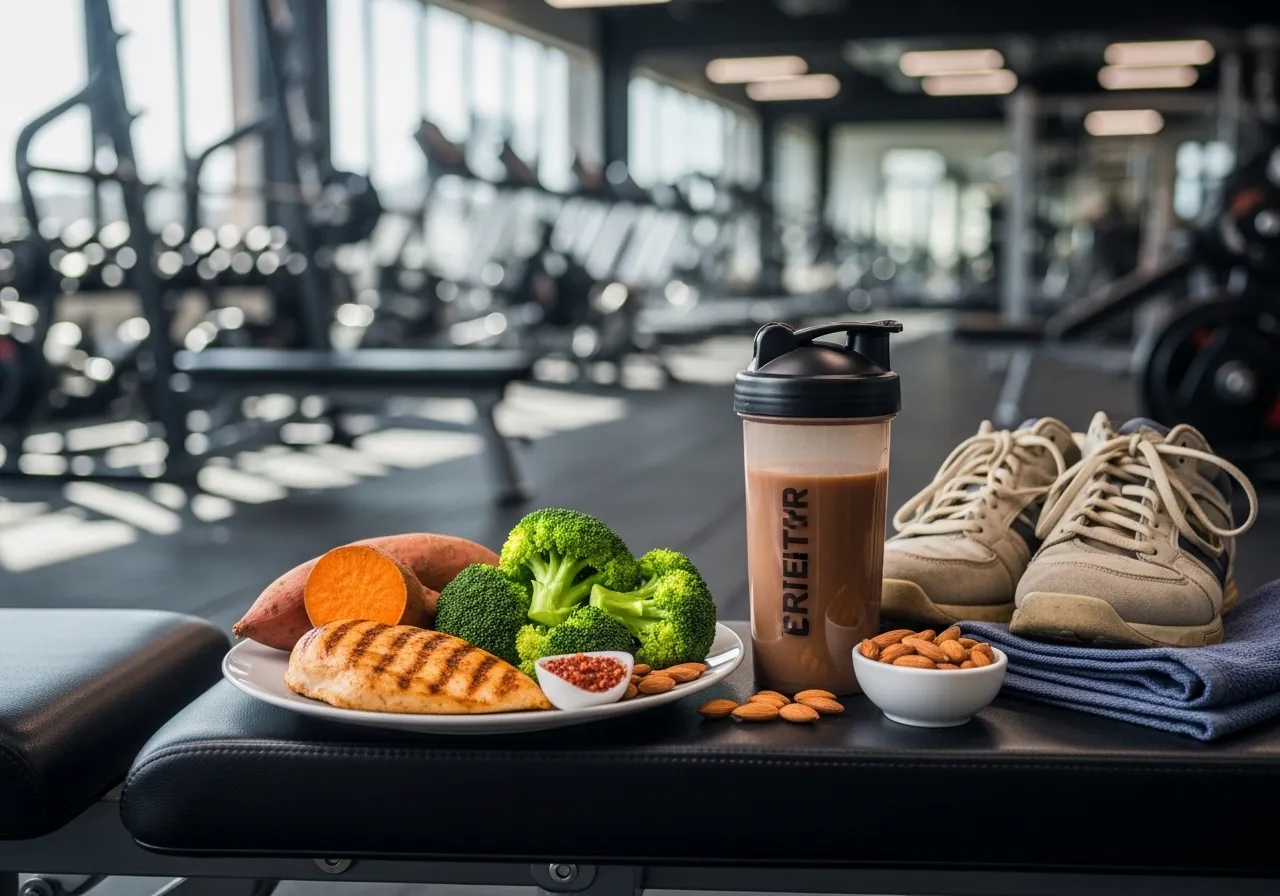
Practical pre-leg day nutrition: a balanced meal 2 to 3 hours before training containing 40 to 60 grams of carbohydrates and 25 to 35 grams of protein. Good options include chicken with rice and vegetables, oatmeal with eggs, or a protein shake with a banana and some oat crackers. If training within 60 to 90 minutes of eating, keep the meal smaller and more easily digestible — a banana with peanut butter or Greek yogurt with fruit provides adequate fuel without the digestive discomfort that heavier pre-workout meals can produce during intense squat and deadlift work.
Post-Leg Day Nutrition: Maximizing Recovery
The post-leg day recovery window is arguably more important than after any other session type, because the muscle damage and glycogen depletion from heavy leg training are greater than from upper body work. Research published in Nutrients found that consuming 1.0 to 1.2 grams of carbohydrates per kilogram of bodyweight alongside 20 to 40 grams of protein within 2 hours post-exercise maximizes glycogen resynthesis and muscle protein synthesis simultaneously — the dual priority of post-leg day recovery nutrition. For a 75kg person, this means approximately 75 to 90 grams of carbohydrates and 30 grams of protein within 2 hours of finishing the session — a meal that a standard dinner of rice, chicken, and vegetables easily provides.
Hydration During Leg Day
Heavy lower body training produces significantly greater sweat output than upper body work due to the greater total muscle mass involved and the higher cardiovascular demand. Arriving dehydrated at a leg session impairs strength performance, increases perceived exertion, and elevates injury risk. The practical hydration protocol: 500ml of water 2 hours before training, 250ml every 15 to 20 minutes during the session, and adequate rehydration after (500 to 750ml per kilogram of bodyweight lost, roughly estimated from perceived sweat output). Adding electrolytes — sodium, potassium, magnesium — to training fluid becomes increasingly important for sessions lasting 60 or more minutes, particularly in warm training environments.
Supplements Worth Considering for Leg Development
Three supplements have meaningful evidence specifically relevant to lower body development and leg day performance. Creatine monohydrate (3 to 5 grams daily): increases phosphocreatine availability for high-intensity efforts, allowing 1 to 3 additional reps per heavy compound set — a meaningful volume increase that compounds into significant additional hypertrophic stimulus over months. Caffeine (3 to 6 mg per kilogram bodyweight, 30 to 60 minutes pre-workout): improves squat and deadlift performance by 3 to 7 percent and significantly reduces perceived exertion during high-intensity leg training. Beta-alanine (3.2 to 6.4 grams daily): buffers lactic acid accumulation, extending the ability to sustain effort in the higher-rep ranges (12 to 20 reps) that produce maximum metabolic stress and hypertrophic stimulus. Each of these supplements is supported by systematic reviews published in Sports Medicine and the Journal of the International Society of Sports Nutrition as genuinely effective performance and body composition tools.
Flexibility and Mobility for Leg Day Performance
Lower body mobility — hip flexor length, hamstring flexibility, ankle dorsiflexion range, hip internal and external rotation — directly determines the quality and safety of every compound leg exercise. Tight hip flexors limit squat depth and force anterior pelvic tilt under load. Restricted ankle dorsiflexion causes heel rise and forward lean in squats. Limited hip mobility impairs the range of motion available for hip hinge exercises. Addressing these mobility limitations through a consistent daily mobility practice of 5 to 10 minutes produces measurable improvements in exercise mechanics and training safety within 4 to 6 weeks.
The three highest-priority mobility exercises for leg day performance: the couch stretch (kneeling with rear foot against a wall, stretching the hip flexor of the rear leg — 60 seconds each side daily). The ankle dorsiflexion stretch (knee to wall while keeping heel flat — 30 repetitions each ankle daily). The pigeon pose or figure-4 stretch (targeting hip external rotation — 60 seconds each side). These three exercises, taking a combined 6 to 8 minutes daily, address the mobility limitations that most commonly restrict leg training quality and produce the progressive range of motion improvements that allow deeper, safer, more effective squats and hip hinge exercises over time.
Advanced Leg Day Techniques
For intermediate and advanced trainees who have adapted to standard leg training and need additional stimulus to continue progressing, several advanced techniques provide meaningfully greater training stimulus within the same session duration. Pause squats — adding a 2 to 3 second pause at the bottom of each squat rep — eliminate the stretch reflex that allows heavier loads to be handled in standard squats, forcing the quadriceps and glutes to produce force from a dead-stop position that increases muscular demand and identifies the sticking point that standard squats mask. Blood flow restriction training on isolation exercises (leg curl and leg extension with BFR cuffs at 40 to 50 percent arterial occlusion) produces hypertrophic stimulus at 20 to 30 percent of one-rep maximum loads, allowing additional volume to be accumulated at the end of a session without the recovery cost of additional heavy loading.
Leg Day and Athletic Performance
For people who participate in sports — running, cycling, team sports, racquet sports, or any activity requiring lower body power — leg day training has direct performance transfer that extends its value far beyond aesthetics. Squat strength correlates strongly with sprinting speed, vertical jump height, and change-of-direction performance — the foundational athletic qualities that determine performance in virtually every sport. A systematic review of resistance training and athletic performance found that athletes who added structured lower body strength training to their sport training improved sprint times by an average of 3 to 5 percent and vertical jump height by 8 to 12 percent over 8 to 12 weeks — meaningful improvements in competitive sports contexts where margins of 1 to 2 percent determine winning and losing.
The specific leg exercises with greatest athletic transfer are those that train explosive force production: power squats (performing the concentric phase as rapidly as possible), jump variations, and Olympic lifting derivatives that train the rate of force development in the hip extension pattern used in virtually all athletic movements. Including 2 to 3 sets of explosive leg work at the beginning of leg day sessions — when the nervous system is fresh — develops athletic performance qualities that heavy slow lifting alone cannot produce.
Complete Leg Day Programming for 12 Weeks
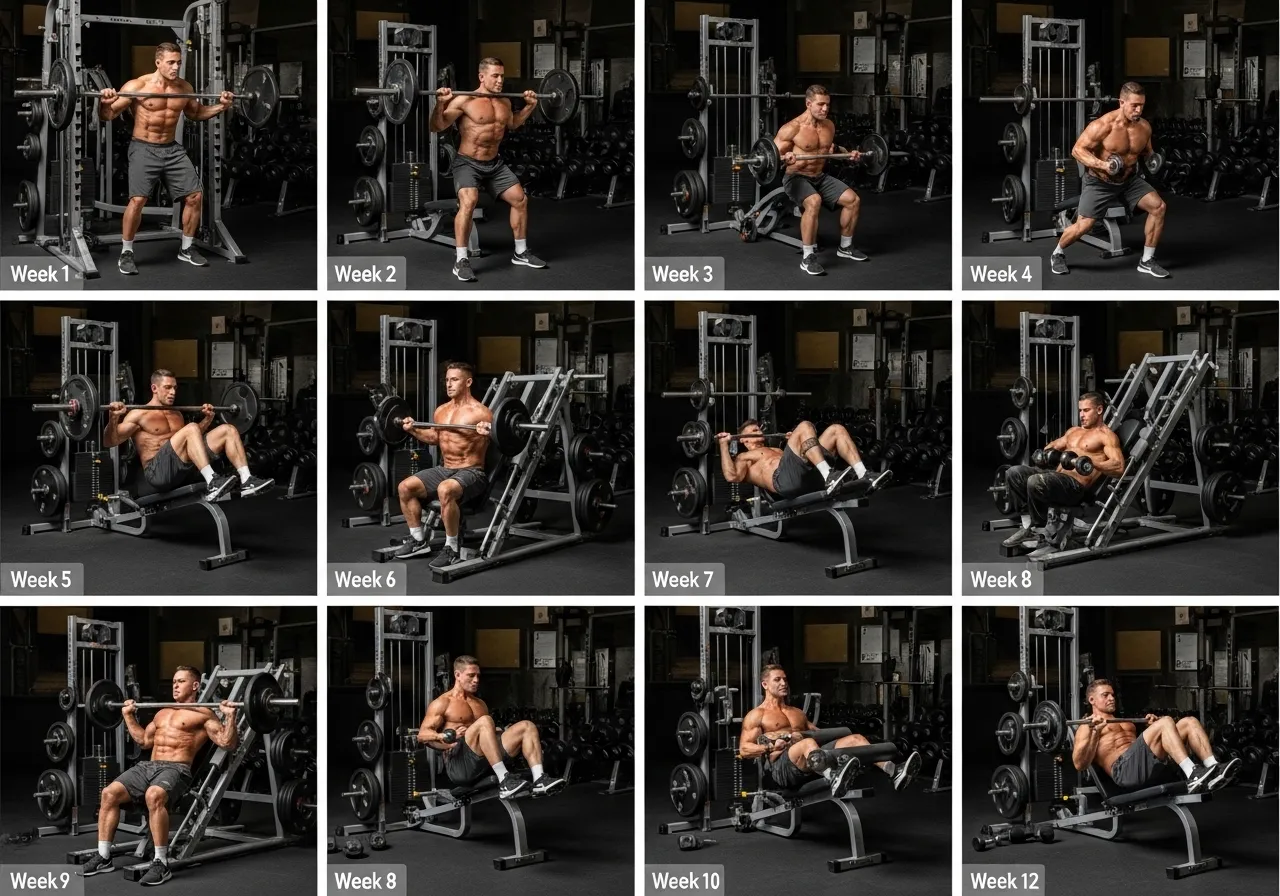
Phase 1 (Weeks 1–4): Foundation and Movement Quality
The first phase prioritizes movement quality over loading — establishing perfect squat and hinge mechanics, developing the mobility and stability needed for heavier loading in subsequent phases, and building the connective tissue resilience (tendons and ligaments adapt more slowly than muscle) that makes heavier training safe. Research published in the British Journal of Sports Medicine found that progressive load introduction over the first 4 to 6 weeks of a new training program reduces the risk of training-related injury by 50 percent compared to starting at maximum load immediately — confirming the value of this conservative initial approach even for experienced trainees beginning a new leg program.
| Exercise | Wk 1-2 Volume | Wk 3-4 Volume | Intensity |
|---|---|---|---|
| Back squat | 3×8 | 4×8 | 65–70% 1RM |
| Romanian deadlift | 3×10 | 4×10 | 60–65% 1RM |
| Walking lunge | 2×12/leg | 3×12/leg | Bodyweight or light DB |
| Leg curl | 3×12 | 3×12 | Moderate |
| Standing calf raise | 3×15 | 4×15 | Moderate-heavy |
Phase 2 (Weeks 5–8): Progressive Overload and Volume
Phase 2 introduces systematic progressive overload — increasing load by 2.5 to 5kg on compound movements every 1 to 2 weeks, and increasing rep ranges on accessory movements to maximize hypertrophic volume. Weekly training volume increases to 16 to 18 working sets per major muscle group. Bulgarian split squats replace walking lunges as the primary unilateral exercise, adding significantly greater loading potential and range of motion. The leg press is added as a quad supplementary exercise to allow additional quad volume without proportionally increasing spinal loading from additional squat sets.
Phase 3 (Weeks 9–12): Intensification and Peak Volume
Phase 3 reaches the program’s highest training intensity and volume. Squat and Romanian deadlift loads should have progressed meaningfully from Phase 1 baseline — a well-executed 12-week lower body program typically produces squat strength gains of 20 to 40 percent for intermediate trainees, according to meta-analytic data published in the Journal of Strength and Conditioning Research. Intensity techniques are introduced: drop sets on leg press, rest-pause sets on Bulgarian split squats, and supersets pairing squat-pattern and hip hinge exercises to increase training density while maintaining adequate volume for both muscle groups.
Deload Week (Week 13) and Reassessment
Following 12 weeks of progressive loading, a planned deload of 40 to 50 percent volume reduction and 20 to 30 percent intensity reduction for one week allows the adaptations accumulated throughout the program to consolidate. Most trainees find that their 1-rep max estimates improve measurably during and after the deload — the supercompensation effect of the body recovering from accumulated fatigue and temporarily exceeding its pre-fatigue performance baseline. This deload week is also the ideal time for reassessment: testing squat and RDL performance to quantify strength gains, taking progress photos to document visual changes, and planning the next training cycle based on the lessons and limitations identified across the first 12 weeks.
Frequently Asked Questions
How often should I do leg day?
Two times per week is the evidence-based optimum for most people seeking leg development. Twice-weekly leg training produces significantly greater quad and hamstring hypertrophy than once-weekly training at equivalent total volume, justifying the scheduling investment. Advanced trainees with high recovery capacity can benefit from 3 times per week; beginners doing full body training train legs 3 times weekly at lower per-session volume with excellent results.
Why are my legs always sore after leg day?
The large muscle mass involved in compound leg exercises produces more metabolic byproducts and microscopic muscle damage per session than most other workout types, resulting in more pronounced DOMS. This soreness peaks at 24 to 48 hours and typically resolves within 72 hours with adequate nutrition, hydration, and light activity. As fitness develops over weeks and months of consistent training, DOMS from identical sessions diminishes significantly as the muscles adapt — persistent severe DOMS is a sign of excessive volume progression rather than an indication of effective training.
Should I squat below parallel?
Yes, for most people and most goals. Full depth squats (thighs at or below parallel) produce greater quad and glute activation than partial squats and pose no greater knee injury risk for healthy individuals using appropriate technique and progressive loading. The only common exception is people with structural hip anatomy that creates impingement at depth — in these cases, squatting to just above the impingement point (typically just above parallel) is appropriate while working on hip mobility to improve depth over time.
Can I build big legs without a barbell?
Yes, particularly in the first 2 to 3 years of training. Bulgarian split squats, goblet squats, single-leg Romanian deadlifts, and high-rep lunge circuits produce significant leg development with minimal equipment. As strength increases beyond what bodyweight and light dumbbell loading can challenge, a barbell or access to heavier loads becomes progressively more valuable for continuing leg development. A trap bar or set of heavy dumbbells (40 to 60kg adjustable) can extend the useful loading range of home leg training considerably.
Testing and Tracking Leg Day Progress
Leg strength is the most measurable aspect of lower body training, and tracking squat and deadlift progression provides the clearest objective evidence of leg day effectiveness. The one-rep maximum (1RM) — the maximum weight you can lift for a single repetition with correct form — is the gold standard of strength measurement, tested every 6 to 8 weeks to assess the effectiveness of the current program. For practical day-to-day tracking, the calculated 1RM from a set of multiple reps (using the formula: weight × reps × 0.0333 + weight) provides a useful proxy that can be tracked every session without the fatigue and injury risk of actual maximum-effort singles.
Body measurements provide the hypertrophy tracking that strength numbers don’t capture: quadricep circumference at mid-thigh, hamstring circumference, and calf circumference measured monthly at consistent landmarks reveal whether leg training is producing the structural muscle development that translates to the size and definition improvements most trainees are pursuing. Progress photos taken monthly in consistent lighting and posture — front, back, and side views — capture the visual changes that circumference measurements alone don’t fully represent and provide the most motivationally powerful progress documentation available.
Incorporating Olympic Lifting Derivatives into Leg Day
Olympic lifting derivatives — power cleans, hang cleans, and power snatches — add an explosive, high-velocity component to leg training that standard strength exercises cannot replicate. These movements develop rate of force development (how quickly maximal force can be applied), which is one of the primary determinants of athletic performance across virtually all sports. Including one Olympic derivative at the beginning of a leg day session (before fatigue accumulates), performed for 3 to 5 sets of 3 to 5 reps with near-maximum power intent, develops the explosive strength qualities that heavy squats and deadlifts at moderate velocity cannot produce. The technique learning curve for these movements is significant — 4 to 8 weeks of focused practice is needed before they can be trained productively — but the athletic performance benefits justify the investment for trainees who value functional fitness alongside aesthetic goals.
For trainees without Olympic lifting technical coaching, kettlebell swings provide a similar explosive hip extension stimulus with a more accessible learning curve. The hip hinge pattern is the same as the Romanian deadlift already in the program — the swing adds the explosive ballistic component that trains rate of force development while remaining accessible to self-taught trainees without the technical complexity of the barbell Olympic lifts.