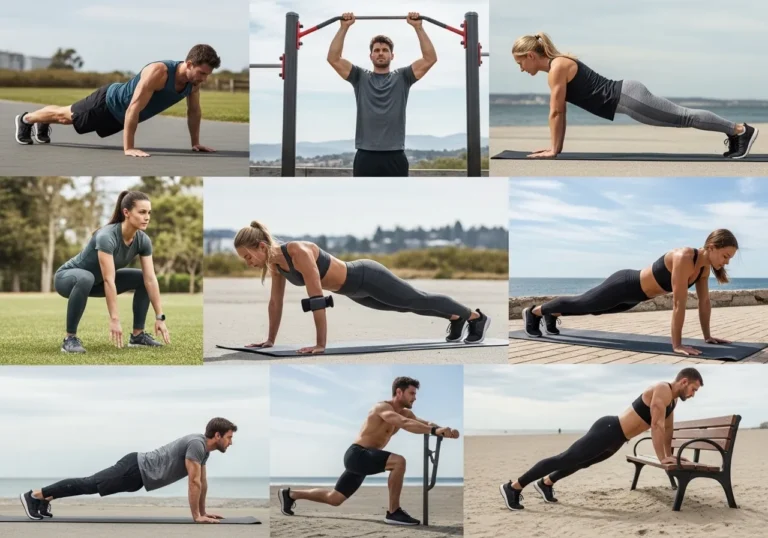
How to Get Bigger Arms in 4 Weeks
⚠️ Disclaimer: The information in this article is for general educational purposes only and does not constitute medical, nutritional, or professional fitness advice. Individual results may vary. Always consult a qualified healthcare professional or certified fitness trainer before starting any new exercise program, changing your diet, or making decisions about injury treatment or recovery. If you experience pain, discomfort, or any unusual symptoms during exercise, stop immediately and seek professional guidance.

The Science of Arm Growth: What Actually Makes Arms Bigger
Anatomy of the Arms: What You’re Actually Training
Building bigger arms requires understanding exactly what structures you are training — and most people significantly underestimate the complexity and the opportunity this creates. The upper arm consists of two primary muscle groups: the biceps brachii on the front (comprising a long head and a short head that together create the classic bicep peak and width) and the triceps brachii on the back (comprising three heads — long, lateral, and medial — that account for approximately 60 to 65 percent of total upper arm mass). The forearm adds the brachialis and brachioradialis — muscles that contribute substantially to arm thickness but are almost completely neglected in standard arm training programs.
The most important implication of this anatomy is that the triceps, not the biceps, represent the majority of upper arm size. Most people focus their arm training almost exclusively on bicep curls — the most visually iconic arm exercise — while underdeveloping the triceps that represent two-thirds of the arm’s mass. Achieving genuinely impressive arm size requires prioritizing tricep development at least equally with bicep work, a rebalancing that produces immediate and dramatic improvements in arm circumference for anyone who has previously trained arms with a bicep-heavy approach.
The brachialis — a flat, broad muscle that lies beneath the biceps and pushes the bicep upward when developed — is the hidden key to bicep peak development. A well-developed brachialis creates the visual impression of a higher bicep peak and greater arm thickness from the side that no amount of standard bicep curl work can replicate, because curls with the palm facing up (supinated) emphasize the biceps while largely bypassing the brachialis. Hammer curls and reverse curls — performed with a neutral or pronated grip — specifically target the brachialis and are essential inclusions in any serious arm development program.
The Hypertrophy Principles That Drive Arm Growth
Arm muscles respond to the same hypertrophy principles that govern all skeletal muscle growth: mechanical tension (the load placed on the muscle fibers), metabolic stress (the metabolite accumulation from high-rep, short-rest training that produces the pump), and muscle damage (the microscopic fiber disruption that initiates repair and growth). Research published in the Journal of Strength and Conditioning Research confirmed that all three mechanisms contribute to hypertrophy and that the most effective programs for arm development combine heavy compound pressing and pulling (mechanical tension) with dedicated isolation work at moderate to high rep ranges (metabolic stress and muscle damage).
The arms present a specific training consideration that differs from larger muscle groups: they are trained indirectly during virtually all compound upper body exercises. The biceps receive significant training stimulus during all rowing and pulling movements. The triceps are trained heavily during all pressing movements. This indirect training contributes meaningfully to arm development and means that total weekly arm training volume should be calculated to include the indirect sets from compound exercises — not just the dedicated isolation work. Someone performing 4 sets of rows and 4 sets of bench press is already providing 8 indirect sets for their biceps and triceps respectively before a single curl or tricep extension is performed.
What Is Realistically Achievable in 4 Weeks
Setting accurate expectations for 4 weeks of dedicated arm training prevents the disappointment that causes people to abandon programs before the real results arrive. Four weeks is sufficient to produce measurable improvements in arm circumference — typically 0.5 to 1.5cm of actual muscle growth — along with significantly improved muscle definition, enhanced vascularity (visible veins), and the neurological adaptations that improve mind-muscle connection and training efficiency for all future arm work. These are genuine, measurable changes that will be noticeable in clothes and photographs, but they are not the dramatic transformations that clickbait fitness content promises.
The people who achieve the most dramatic 4-week arm improvements are those who have been under-training their arms relative to their training experience — either by using insufficient volume, neglecting tricep work, or failing to apply progressive overload. For these individuals, correcting the training approach produces rapid catch-up growth that can exceed the typical rate. For people who have been training arms consistently with appropriate volume and progressive overload, 4 weeks produces more modest but still meaningful progress.
| Muscle | Primary Function | Key Exercises | % of Upper Arm Mass |
|—|—|—|—|
| Triceps brachii | Elbow extension | Dips, close-grip press, pushdowns | 60–65% |
| Biceps brachii | Elbow flexion, supination | Curls, chin-ups | 25–30% |
| Brachialis | Elbow flexion | Hammer curls, reverse curls | 10–15% |
Why Arms Are Actually Easy to Develop (If You Train Smart)
The arms — biceps and triceps — are among the most responsive muscle groups in the body for several reasons that make them genuinely easier to develop than larger, more complex muscle groups like the back or legs. They are relatively small muscles that fatigue rapidly but also recover quickly, allowing higher training frequency (3 to 4 sessions per week) than the large compound muscle groups. They respond dramatically to metabolic stress — the pump-inducing, blood-volume-concentrating training stimulus that high-rep isolation exercises produce — which is the specific training stimulus that produces rapid early visual changes in arm size and definition. And they are highly innervated with dense neuromuscular connections that allow precise isolation training that concentrates the stimulus on the target muscle more completely than most other muscle groups allow.
The training principle that most effectively accelerates arm development is also the simplest: add arm-specific training volume on top of the compound upper body work that already trains the arms secondarily. Compound pressing (bench press, overhead press, push-ups) trains the triceps through their primary extension function; compound pulling (rows, pull-ups, lat pulldowns) trains the biceps through their primary flexion and supination function. This compound arm training already provides 50 to 70 percent of the stimulus needed for arm development — the dedicated arm isolation training adds the concentrated final volume that pushes development beyond what compound training alone achieves. People who complain that their arms never grow usually haven’t maximized compound pressing and pulling volume before adding isolation work; those who have built a strong compound base find that adding even modest isolation volume produces rapid arm development.
Setting Realistic Expectations for 4-Week Arm Development
The “bigger arms in 4 weeks” promise requires honest context to be useful rather than misleading. In 4 weeks of dedicated arm training with appropriate nutrition, realistic outcomes include: 1 to 2cm increase in arm circumference from both muscle development and improved muscle glycogen and water content, noticeably improved arm definition from the combination of muscle development and any accompanying fat loss, measurable strength improvements in both bicep and tricep exercises, and the training foundation for the continued arm development that builds impressive arms over months of consistent training. These outcomes are genuine, meaningful, and achievable — not the dramatic transformations implied by before-and-after social media posts, but real changes that produce noticeable visual improvement.
Arm circumference measurements taken in a consistent, relaxed, unpumped state before and after the 4-week program provide the most objective progress assessment. The pump experienced during and immediately after training can temporarily add 1 to 2cm to arm measurements — which is why consistent measurement conditions (same time of day, unpumped, same anatomical landmark) are essential for meaningful tracking. Growth that persists between sessions — the structural hypertrophy rather than transient pump — is the genuine progress being measured.
The Arm Pump: Training Tool or Distraction?
The “pump” — the temporary increase in muscle size and vascularity produced by high-rep, high-volume arm training — is simultaneously a genuine training signal and a potential distraction from the metrics that actually determine long-term arm development. The pump is produced by increased blood flow to the working muscles, metabolite accumulation that draws water into muscle cells, and mild cellular swelling — a transient state that disappears within 30 to 60 minutes of finishing training. Research suggests the pump produces some additional hypertrophic stimulus through cellular swelling that creates mechanical tension on the muscle membrane, but this contribution is secondary to the mechanical tension and progressive overload that are the primary drivers of long-term arm development.
The distraction risk: chasing the pump by training at high reps with light weights produces impressive temporary arm size but insufficient mechanical tension for meaningful long-term hypertrophy. Training programs that prioritize the pump feeling over progressive overload in heavier rep ranges produce well-pumped arms during sessions but poorly developed arms over months of training. The optimal approach trains in multiple rep ranges — heavy sets for mechanical tension (6 to 8 reps), moderate sets for combined tension and metabolic stress (10 to 12 reps), and high-rep sets for pump and endurance (15 to 20 reps) — capturing the hypertrophic stimulus of all three mechanisms.
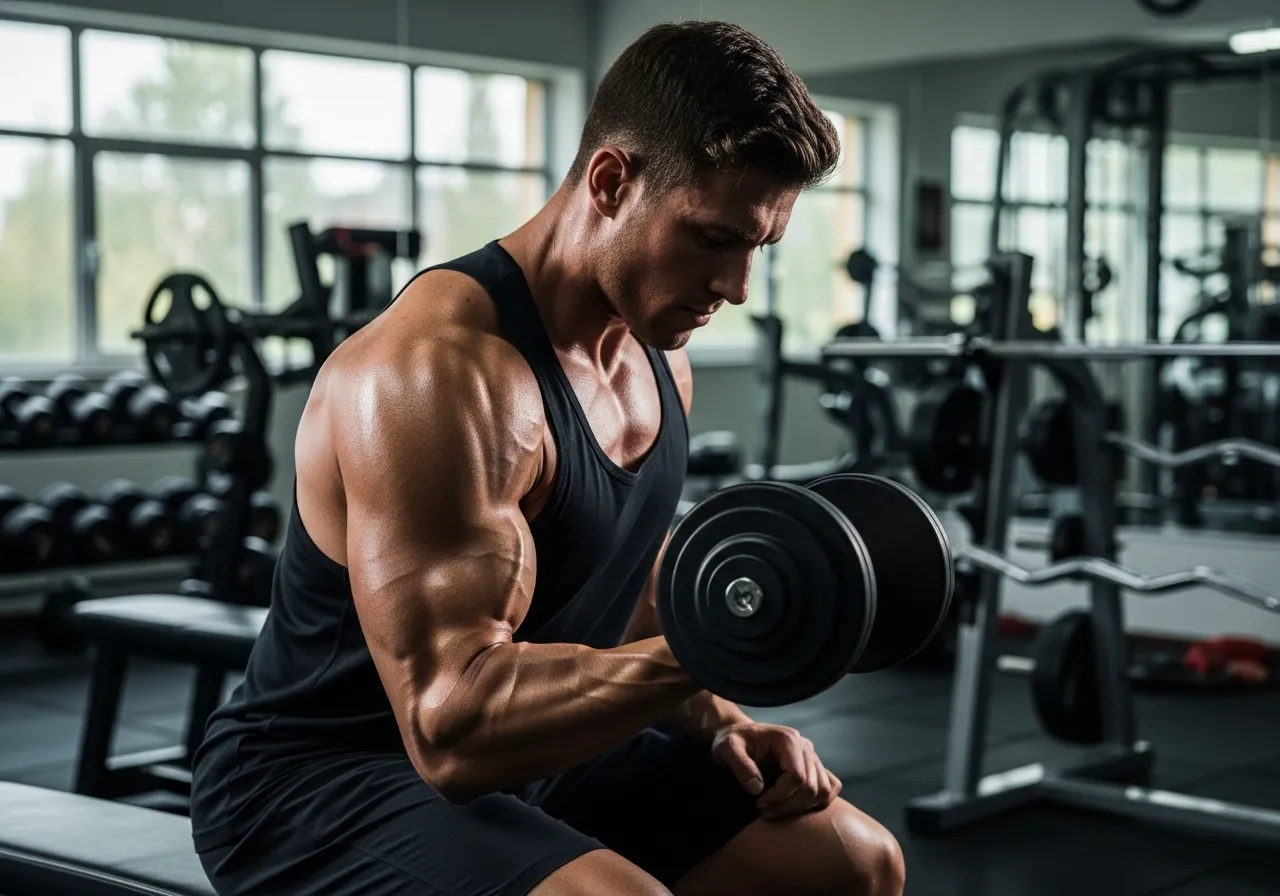
The Best Bicep Exercises for Maximum Growth
Barbell Curl: The Mass Builder
The barbell curl allows heavier loading than any dumbbell variation, producing the mechanical tension stimulus that drives the greatest structural hypertrophy in the biceps. Standing with a shoulder-width underhand grip, the barbell curl trains the biceps through a full range of motion under continuous tension — from full extension at the bottom where the biceps are maximally stretched and loaded, to full flexion at the top where peak contraction is achieved. The full range of motion is critical: research consistently shows that training muscles through their complete range, particularly at long muscle lengths, produces significantly greater hypertrophy than partial-range training. Curl to the bottom position completely — do not stop the descent short — to maximize the stretch-mediated hypertrophy that occurs at the elongated position.
The most common barbell curl error is using momentum — rocking the torso backward to swing the bar up rather than isolating the bicep through muscular effort. This momentum not only reduces the training stimulus to the biceps but increases lower back stress. Performing barbell curls with the back against a wall eliminates the ability to use momentum and forces pure bicep work — a technique I use when I notice my form deteriorating under fatigue.
Incline Dumbbell Curl: The Peak Developer
The incline dumbbell curl — performed lying back on a bench inclined at 45 to 60 degrees, arms hanging straight down — trains the biceps in a position of maximum stretch at the start of each rep, creating stretch-mediated tension that specifically develops the long head of the biceps responsible for the bicep peak. Research published in Sports Medicine on muscle length and hypertrophy found that exercises training muscles in their stretched position produce superior hypertrophy responses compared to exercises training muscles in shortened or mid-range positions — which is the mechanistic explanation for why incline curls consistently outperform standing curls for peak development despite the lighter weights used.
The incline curl requires strict technique to produce its unique benefits. The upper arm must remain perpendicular to the floor throughout — allowing it to travel forward reduces the stretch at the bottom and converts the movement to a standard curl. Supinate the wrist fully at the top of each rep — rotating the palm toward the ceiling as you approach peak contraction — to maximally engage the bicep’s supination function and ensure complete muscle activation.
Hammer Curl: The Brachialis and Forearm Builder
The hammer curl — performed with a neutral grip (palms facing each other throughout) — shifts emphasis from the biceps brachii to the brachialis and brachioradialis, developing the arm thickness and forearm mass that standard supinated curls cannot produce. I consider the hammer curl one of the most undervalued arm exercises because its benefits are not immediately obvious from the anatomy — it looks similar to a standard curl — but the visual impact of developed brachialis (pushing the bicep higher) and thick forearms is dramatic and distinguishes genuinely impressive arms from merely muscular ones.
Hammer curls can be performed simultaneously with both arms or alternating — I prefer alternating for better focus on each arm individually and greater range of torso stabilization. They can also be performed in a cross-body variation where the dumbbell crosses toward the opposite shoulder, increasing brachialis activation further by changing the angle of elbow flexion.
Chin-Up: The Compound Bicep Mass Builder
The chin-up — performed with an underhand (supinated) grip — is the most effective compound exercise for bicep development and the exercise that produces the greatest per-set stimulus for the biceps of any movement available. Unlike curls, which isolate the bicep at a single joint, the chin-up trains the bicep as part of a multi-joint pulling movement involving the lats, rhomboids, rear deltoids, and core — producing a systemic hormonal response that amplifies the hypertrophy stimulus beyond what isolation exercises alone generate. Adding weighted chin-ups — using a belt or holding a dumbbell between the feet — to the arm training program provides the heavy loading that drives maximal bicep mechanical tension.
The Overlooked Brachialis: The Arm Muscle That Makes Arms Look Bigger
The brachialis — a muscle that lies beneath the biceps, running from the humerus to the ulna — is one of the most underappreciated arm muscles and one that, when well-developed, dramatically increases the apparent size of the upper arm from all viewing angles. Unlike the biceps, which contributes primarily to arm size from the front view, the brachialis pushes the biceps upward and adds to the width and thickness visible from the side view — creating the “shelf” effect that distinguishes truly impressive arms from merely defined ones. Hammer curls (performed with the wrist in neutral grip, thumb up) are the most effective brachialis exercise, training it through its primary range of motion in a position that removes the supination component that primarily targets the biceps head. Including 3 to 4 sets of hammer curls per arm session produces brachialis development that enhances arm appearance from angles that standard bicep curls cannot address.
Cable Exercises for Arm Development: Why They’re Superior for Isolation
Cable exercises maintain constant tension throughout the full range of motion — a mechanical advantage over free weights, which provide variable resistance as the joint angle changes and gravitational load fluctuates. For arm isolation specifically, cable curls maintain peak bicep tension in both the lengthened and shortened positions of the curl, while free weight curls provide maximum tension only at 90 degrees of elbow flexion (where the resistance arm is longest). Research published in the Journal of Strength and Conditioning Research found that constant-tension cable exercises produce greater hypertrophic stimulus per set than equivalent free weight exercises for isolation movements — making cable curls, cable pushdowns, and cable crossovers valuable complements to free weight arm training when cable access is available.
For home trainers without cable access, resistance bands replicate the constant-tension benefit of cables: a band maintains increasing resistance through the full range of motion, providing peak tension at the shortened position (peak contraction) rather than the 90-degree midpoint that dumbbells do. Band curls and band pushdowns are genuinely superior to dumbbell curls and kickbacks for maintaining constant tension, making them excellent arm training tools for home environments.
Programming Bicep Curl Variations for Complete Development
Using a variety of curl angles and grip positions across a training week ensures all three regions of bicep function are trained: the long head (outer bicep peak — best trained with hammer curls and incline dumbbell curls that stretch the long head at the shoulder), the short head (inner bicep fullness — best trained with preacher curls and concentration curls that emphasize the shortened position), and the brachialis (arm width from the side — best trained with hammer curls and reverse curls). A well-designed bicep program rotates between these exercise variations across sessions rather than performing the same curl variation every session, providing comprehensive stimulus across all portions of the muscle complex. This variation-based approach to exercise selection is one of the key differentiators between arm training that produces complete, well-rounded development and arm training that develops only certain aspects of the bicep while leaving others underdeveloped.

The Best Tricep Exercises for Maximum Size
Close-Grip Bench Press: The Tricep Mass Builder
The close-grip bench press — performed with hands approximately shoulder-width on the bar, shifting the primary loading from the pectorals to the triceps — is the most effective compound exercise for tricep development. The heavy loading possible with a barbell produces the mechanical tension stimulus that drives structural hypertrophy in all three tricep heads, particularly the long head (the largest of the three) that is underactivated in many isolation exercises. Performing the close-grip bench press before isolation work ensures that the triceps receive maximal loading when fresh — the principle of prioritizing the compound movement that I apply consistently in arm training programming.
The technique distinction that maximizes tricep activation: keep the elbows closer to the body than in standard bench press — approximately 30 to 45 degrees from the torso — and focus on pushing through the triceps rather than the chest. The bar path is slightly different from standard bench press, with the bar traveling slightly toward the lower chest/upper abdomen rather than straight down to the mid-chest. This path change reflects the different muscle geometry of the tricep-dominant pressing pattern.
Overhead Tricep Extension: The Long Head Specialist
The overhead tricep extension — whether performed with a dumbbell, EZ-bar, or cable — trains the tricep long head in its most lengthened position, exploiting the stretch-mediated hypertrophy mechanism that produces the greatest long head development. The long head of the triceps — the largest and most visually prominent of the three heads — crosses the shoulder joint in addition to the elbow joint, meaning it is only fully stretched when the arm is elevated overhead. Exercises that do not position the arm overhead (pushdowns, kickbacks) fail to fully load the long head in its stretched position and therefore underutilize the largest portion of the triceps. According to research in the Journal of Strength and Conditioning Research, the overhead tricep extension produces approximately 40 percent greater long head activation compared to pushdowns at equivalent loading.
Tricep Dips: The Bodyweight Mass Builder
Tricep dips — performed on parallel bars with the torso upright and elbows close to the body — allow progressive loading through bodyweight plus added weight and train all three tricep heads through a significant range of motion. The upright torso position (as opposed to the forward lean used in chest dips) shifts the loading emphasis to the triceps rather than the pectorals. Tricep dips are one of the few upper body exercises where body weight alone is insufficient for advanced trainees — adding weight via a dip belt or weighted vest is essential for continued progressive overload once bodyweight dips become manageable for 12 to 15 reps.
Cable Pushdown: The Pump and Definition Finisher
The cable pushdown — using a rope, straight bar, or V-bar attachment on a cable machine — provides constant tension throughout the full range of motion that free weight exercises cannot replicate. At the fully extended position of a dumbbell tricep extension, the load approaches zero as the weight stack descends; at the fully extended position of a cable pushdown, the cable maintains full tension throughout. This constant tension characteristic makes the cable pushdown an excellent metabolic stress tool that produces the muscle pump and metabolite accumulation associated with sarcoplasmic hypertrophy. I use cable pushdowns as the final exercise in tricep sessions — after the heavy compound and overhead work — to exhaust the muscle with high-rep, constant-tension work that maximizes metabolic stress and the pump that signals substantial muscle damage and growth.
Tricep Training: The Neglected Key to Bigger Arms
The triceps brachii comprises approximately 60 to 65 percent of the upper arm’s cross-sectional area — making it the larger and more volume-determining arm muscle despite receiving significantly less training attention than the biceps in most gym-goers’ programs. The three-headed anatomy of the triceps (long head, medial head, lateral head) requires exercise selection that targets each head for complete development: overhead extensions (long head emphasis, the head most responsible for arm size from the side view), pushdowns (lateral and medial head emphasis, the heads visible from the front and side), and close-grip pressing (all three heads under heavy load, the most powerful mass-building tricep movement). A well-designed arm training program devotes at least as much volume to triceps as biceps — and ideally slightly more, given the triceps’ greater size contribution to overall arm mass.
The long head of the triceps — the largest of the three and the one that crosses the shoulder joint — can only be fully stretched (and therefore maximally stimulated) in exercises that position the elbow overhead, lengthening the muscle from both the elbow and shoulder ends. Overhead dumbbell or cable extensions, in which the arm is fully extended overhead before flexing at the elbow, are the most important tricep exercise for developing the long head that contributes most to arm size. Neglecting overhead positions by training exclusively with pushdowns and kickbacks underdevelops the largest portion of the triceps in the movement pattern that most effectively stimulates it.

The Complete 4-Week Arm Training Program
Program Design and Structure
This 4-week program is built around two dedicated arm training sessions per week — an approach supported by the research showing superior hypertrophy outcomes from training each muscle group twice per week versus once. Each session runs 45 to 55 minutes and targets the biceps, triceps, and brachialis through a combination of compound and isolation exercises. The two sessions are intentionally different in their exercise selection, rep ranges, and training emphasis, ensuring each muscle head receives varied stimuli across the week while the total weekly volume remains within the range the muscles can recover from productively.
The program is designed to be added to an existing training routine — not to replace it. The arm sessions are performed on days that do not immediately follow heavy compound pressing or pulling work, ensuring the arm muscles are sufficiently recovered to train with the intensity needed for growth. Performing dedicated arm work when the biceps are already fatigued from rowing or the triceps are depleted from pressing dramatically reduces the training quality and growth stimulus.
Session A: Heavy Compound Focus
Session A emphasizes mechanical tension through heavier loading and compound movements, training in the 6 to 10 rep range that maximizes motor unit recruitment and structural hypertrophy stimulus.
A1. Close-grip bench press: 4 sets × 8 reps. Rest 90 seconds. Focus on tricep activation throughout — elbows close, controlled eccentric over 3 seconds.
A2. Barbell curl: 4 sets × 8 reps. Rest 90 seconds. Full range, no momentum, supinate fully at top.
A3. Overhead EZ-bar extension: 3 sets × 10 reps. Rest 75 seconds. Long head emphasis — feel the stretch at the bottom.
A4. Incline dumbbell curl: 3 sets × 10 reps. Rest 75 seconds. Arms perpendicular to floor throughout.
A5. Weighted dip (tricep style): 3 sets × 8 reps. Rest 90 seconds. Upright torso, elbows close.
A6. Hammer curl: 3 sets × 10 reps each arm. Rest 60 seconds. Neutral grip, controlled tempo.
Session B: Metabolic Stress Focus
Session B emphasizes metabolic stress and muscle damage through moderate loading, higher rep ranges (12 to 20), shorter rest periods, and the pump-inducing techniques that drive sarcoplasmic hypertrophy.
B1. Cable pushdown (rope): 4 sets × 15 reps. Rest 45 seconds. Spread rope at bottom, full extension, squeeze hard.
B2. Cable curl: 4 sets × 15 reps. Rest 45 seconds. Constant tension, slow eccentric.
B3. Skull crushers (EZ-bar): 3 sets × 12 reps. Rest 60 seconds. Lower to forehead, extend to full lockout.
B4. Concentration curl: 3 sets × 12 reps each arm. Rest 45 seconds. Elbow braced on inner thigh, maximum squeeze at top.
B5. Tricep dip to failure: 3 sets × bodyweight to near failure. Rest 60 seconds.
B6. Reverse curl (brachialis finisher): 3 sets × 15 reps. Rest 45 seconds. Pronated grip throughout.
Weekly Schedule
| Day | Training |
|—|—|
| Monday | Session A (heavy compound) |
| Tuesday | Lower body or rest |
| Wednesday | Upper body push/pull (no direct arm isolation) |
| Thursday | Session B (metabolic stress) |
| Friday | Lower body or conditioning |
| Saturday | Optional active recovery |
| Sunday | Rest |
Progressive Overload Week by Week
Week 1: Establish working weights. Focus on form and full range of motion. All sets should end with 2 reps in reserve — do not train to failure in week 1 while technique is being established. Week 2: Add 1 to 2 reps to each set or increase weight by the smallest available increment. Begin training Session A sets to 1 rep from failure. Week 3: Increase load or reps further. Introduce drop sets on the final set of cable pushdowns and cable curls (immediately reduce weight 20 percent and continue to failure after reaching the target reps). Week 4: Maximum intensity week — train Session A compound exercises to technical failure. Add a rest-pause set on the final exercise of each session: rest 15 seconds after reaching failure, perform additional reps to failure, rest 15 seconds, perform final reps to failure.
Intensity Techniques for Arm Training
Advanced intensity techniques produce additional arm development stimulus that standard progressive overload cannot replicate after the initial training adaptations have been established. Drop sets — immediately reducing the weight by 20 to 30 percent upon reaching failure and continuing for additional reps — extend the training stimulus of a set beyond the point where regular training would have stopped, recruiting additional motor units and producing greater metabolic stress than standard straight sets. Research published in the British Journal of Sports Medicine found that drop sets produce equivalent or superior hypertrophy to conventional training in significantly less time — a particularly valuable quality for arm training where time efficiency is often a constraint. Using one drop set per arm exercise per session — performed on the final set only — adds meaningful training stimulus without the excessive fatigue that overusing drop sets produces.
Supersets of opposing muscle groups — bicep exercise paired with tricep exercise with minimal rest — allow training both muscle groups in the time typically required for one, while the opposing-muscle rest provides sufficient recovery for each group to perform at near-full capacity in the subsequent set. Bicep curl supersetted with tricep extension produces almost identical performance in each exercise compared to straight set training while nearly halving the session time — making it the most time-efficient arm training structure available for people with 20 to 30 minutes for arm work.
Sleep and Arm Recovery
Arm muscles, despite their small size, require the same sleep-dependent recovery mechanisms as larger muscle groups. The growth hormone surge that occurs during deep sleep stages — particularly in the first 2 to 4 hours of sleep — drives protein synthesis and the structural muscle repairs that translate training stimulus into actual muscle development. Shortchanging sleep reduces this growth hormone response and impairs the arm development that training and nutrition are attempting to produce, regardless of how well the training sessions themselves are executed. For a 4-week intensive arm training period where maximizing development in a short window is the specific goal, sleep becomes a training variable that deserves as much attention as the training program itself. Targeting 8 hours per night during the 4-week program optimizes the growth hormone environment for maximum arm development from the training investment.

The Technique Mistakes That Are Limiting Your Arm Growth
Using Too Much Weight
The most universally common arm training mistake — and the one with the greatest negative impact on results — is using weights that are too heavy to control through a full range of motion with isolated muscle activation. I spent two years performing barbell curls with weights that required hip swinging and torso rocking to complete each rep, wondering why my biceps were not growing despite hours of training. The bicep was being partially bypassed by the momentum-assisted movement pattern, receiving far less tension than a lighter weight performed with strict form would have provided.
A definitive test for whether you are using too much weight in your curl work: stand with your back flat against a wall and perform the exercise. If you cannot complete the movement with your back maintaining contact with the wall throughout, the weight is too heavy for strict isolation work. Reducing the weight by 20 to 30 percent and performing the movement with complete control through the full range of motion will feel humbling initially but will produce dramatically better results within 4 to 6 weeks. The American College of Sports Medicine consistently emphasizes that muscle hypertrophy is determined by the tension experienced by the muscle fibers — not by the weight on the bar — and that technique breakdown that reduces tension to the target muscle defeats the purpose of adding weight.
Neglecting the Eccentric Phase
The eccentric phase — the lowering portion of the movement — produces the greatest mechanical tension and muscle damage of any phase of a repetition, yet most people perform it as quickly as possible, effectively halving the productive portion of each rep. Research consistently shows that training with deliberate 3 to 4-second eccentric phases produces significantly greater hypertrophy than equivalent training with rapid, uncontrolled eccentrics. For arm training specifically, the stretched position at the bottom of a curl — the position of maximum eccentric load — is where the bicep receives its highest-tension stimulus and where the muscle damage that drives growth is primarily created.
Deliberately slowing your eccentric phase to 3 seconds on every rep of every arm exercise is one of the highest-return technique modifications available. It makes every set significantly more challenging — often requiring a 15 to 20 percent weight reduction to maintain form — while simultaneously increasing the hypertrophic stimulus of each rep. This one change, applied consistently for 4 weeks, produces arm development improvements that exceed what most people achieve from adding more exercises or more sets.
Inadequate Range of Motion
Partial-range curls and extensions — stopping short of full extension at the bottom and full flexion at the top — reduce the total tension experienced by the muscle across the rep and specifically miss the stretched position that is most valuable for hypertrophy. Many people unconsciously adopt a partial range as weights increase — the reduced range feels like a reasonable accommodation for the heavier load, but it removes the high-tension positions that justify using the heavier weight in the first place. Full range of motion should be non-negotiable in arm training, even if it requires reducing the weight to maintain it.
Training Arms When Pre-Fatigued from Compound Work
Performing dedicated arm work after an hour of heavy rows, pull-ups, bench press, and overhead press leaves the biceps and triceps significantly pre-fatigued — reducing the training quality and maximum loading achievable in the isolation work to a fraction of their rested capacity. People who train arms at the end of a long full-body or upper body session consistently underperform compared to those who train arms when fresh, either in dedicated arm sessions or early in a session before compound work.
The Role of Training Volume in Arm Development
Arm training volume — the total number of sets per week — has a well-characterized dose-response relationship with hypertrophy. Research identifies the minimum effective volume for arm hypertrophy at 6 to 8 sets per week per muscle (biceps and triceps separately), the optimal range at 12 to 20 sets per week, and the maximum productive volume at approximately 25 to 30 sets per week before additional volume produces diminishing returns or overuse. Most beginners and intermediate trainees are below the minimum effective volume for arms — training each arm muscle with only 4 to 6 sets per week — which is why adding targeted arm volume produces rapid visible improvements. Advanced trainees who have already reached 12 to 15 sets per week may be close to their individual optimal volume, and continuing to add sets beyond this point may produce fatigue without proportional hypertrophic benefit.
The practical recommendation for the 4-week arm focus program: begin at 10 to 12 sets per arm muscle per week (5 to 6 sets per session × 2 sessions), assess response at 2 weeks, and increase to 14 to 16 sets per week in weeks 3 to 4 if recovery and performance allow. This progressive volume increase within the 4-week period mirrors the periodization principles used by competitive athletes and produces superior results to maintaining fixed volume throughout.
Managing Elbow and Wrist Health During Intensive Arm Training
Intensive arm training — the volume required for the 4-week specialization program — places repeated stress on the elbow joint and the tendons of the biceps and triceps that can produce overuse conditions if training load increases too rapidly without adequate adaptation time. The most common arm training overuse conditions are medial epicondylitis (golfer’s elbow, producing pain on the inner elbow from repetitive wrist flexion under load) and lateral epicondylitis (tennis elbow, producing pain on the outer elbow from repetitive wrist extension). Both conditions develop gradually from accumulated overuse rather than acute injury and are almost entirely preventable through appropriate volume progression and technique.
Prevention protocol for intensive arm training: increase arm training volume by no more than 20 percent per week (from 10 sets to 12 sets to 14 sets, not from 10 to 16 in one jump). Always include wrist flexor and extensor stretches in the warm-up. Avoid extreme wrist positions during arm exercises — keep wrists neutral or slightly extended during curls, slightly flexed during pushdowns. Use wrist wraps if elbow discomfort begins to develop, which reduces stress on the medial epicondyle. Any pain that persists for more than 48 hours or worsens with training rather than improving with rest warrants rest and medical evaluation rather than training through it.

Nutrition Strategies That Accelerate Arm Growth
Protein: The Non-Negotiable Foundation
Muscle growth in any body part — arms included — is fundamentally limited by protein availability. The stimulus for growth comes from training, but the raw materials for building new muscle tissue come from dietary protein. Without sufficient protein intake, the muscle protein synthesis response to training cannot be fully expressed regardless of training quality, volume, or intensity. Research published in the Journal of the International Society of Sports Nutrition established 1.6 to 2.2 grams of protein per kilogram of bodyweight as the evidence-based range for maximizing muscle protein synthesis in resistance-trained individuals — with the higher end of this range producing marginally better outcomes during aggressive muscle building phases.
For arm-specific growth, the protein distribution throughout the day matters as much as total intake. Consuming protein in approximately equal portions across 4 to 5 daily meals maintains elevated muscle protein synthesis rates throughout the day, while consuming the same total protein in 1 to 2 large meals produces episodic MPS elevation with extended periods of low synthesis between meals. Practical targets: 30 to 40 grams of protein per meal, consumed at approximately 3 to 4-hour intervals, ensures continuous availability of amino acids for the repair and growth process that continues for 24 to 48 hours after each training session.
Caloric Surplus: The Growth Amplifier
Building arm muscle, like all muscle growth, is most efficient in a moderate caloric surplus — consuming more calories than the body expends daily. This surplus provides the energy needed for the anabolic processes of muscle protein synthesis and the hormonal environment (elevated insulin and growth factor signaling) that maximizes the response to training stimulus. A surplus of 200 to 350 calories per day above total daily energy expenditure represents the evidence-based “lean bulk” approach that maximizes muscle gain while minimizing concurrent fat accumulation — allowing the arm development to be visible rather than covered by additional body fat.
People attempting to build arm muscle in a caloric deficit — which is the physiological state during fat loss — will see significantly slower arm development, as the body prioritizes the energy conservation demands of the deficit over the energetically expensive process of building new muscle tissue. This does not mean arm training during fat loss is futile — muscle can be maintained and modestly developed during a conservative deficit, particularly for beginners — but it does mean that the period dedicated to arm size development should, ideally, be accompanied by adequate caloric intake to support the growth process.
Pre and Post-Training Nutrition for Sessions
The nutritional environment surrounding arm training sessions directly affects both the quality of the session and the recovery and growth that follow. Pre-training: consuming 20 to 30 grams of protein and 30 to 50 grams of carbohydrates 60 to 90 minutes before the session ensures amino acid availability during training (reducing muscle protein breakdown) and glycogen availability for high-intensity muscular effort. Post-training: consuming 30 to 40 grams of protein and 40 to 60 grams of carbohydrates within 90 minutes post-session maximizes the muscle protein synthesis response and begins glycogen replenishment for recovery.
Mind-Muscle Connection in Arm Training
The mind-muscle connection — consciously directing attention to the contracting muscle during each repetition — is more valuable in arm isolation training than in compound movements because the isolation context allows greater specificity of neural focus without the competing attentional demands of balancing, stabilizing, and coordinating multiple large muscle groups simultaneously. Research using EMG has confirmed that deliberately focusing attention on the bicep during curls increases bicep activation by 12 to 15 percent compared to performing the same movement without focused attention — a meaningful difference that accumulates into substantially greater arm development over months of training with versus without deliberate muscle focus.
Developing the mind-muscle connection for arm training: begin each session with 2 sets of very light flexion (for biceps) or extension (for triceps) at a weight that allows complete focus on feeling the target muscle contract without any concern about completing the reps. The goal of these activation sets is not training stimulus but neural priming — establishing the connection between neural intent and muscle contraction before loading the exercise. Once this connection is established in the activation sets, maintaining it through the heavier working sets produces the enhanced motor unit recruitment that maximizes the training stimulus of each subsequent set.
The Role of Genetics in Arm Development
Arm development, like all muscle development, is influenced by genetic factors that affect both the rate of response to training and the ultimate aesthetic outcome of arm training. Muscle insertion points — where the bicep or tricep tendons attach to the bone — determine the shape and peak development potential of each muscle. A high bicep insertion (where the muscle attaches higher on the forearm, creating a larger gap between the muscle belly and the elbow when flexed) produces a higher, rounder bicep peak but smaller apparent size when the arm is straight. A low bicep insertion produces a longer, fuller muscle belly that appears impressive in both flexed and unflexed positions but without the dramatic peak of higher insertions. These insertion points are genetically fixed and cannot be changed by training — only maximally developed within their structural constraints.
The practical response to genetic variation in arm development: focus on maximally developing the arms you have rather than comparing their aesthetic to arms shaped by different genetics. The training principles in this article produce the maximum development achievable for any individual’s genetic template — some people will develop impressive peaks, others will develop impressive overall thickness, and both outcomes represent success when they represent the maximum development of that individual’s genetic potential.
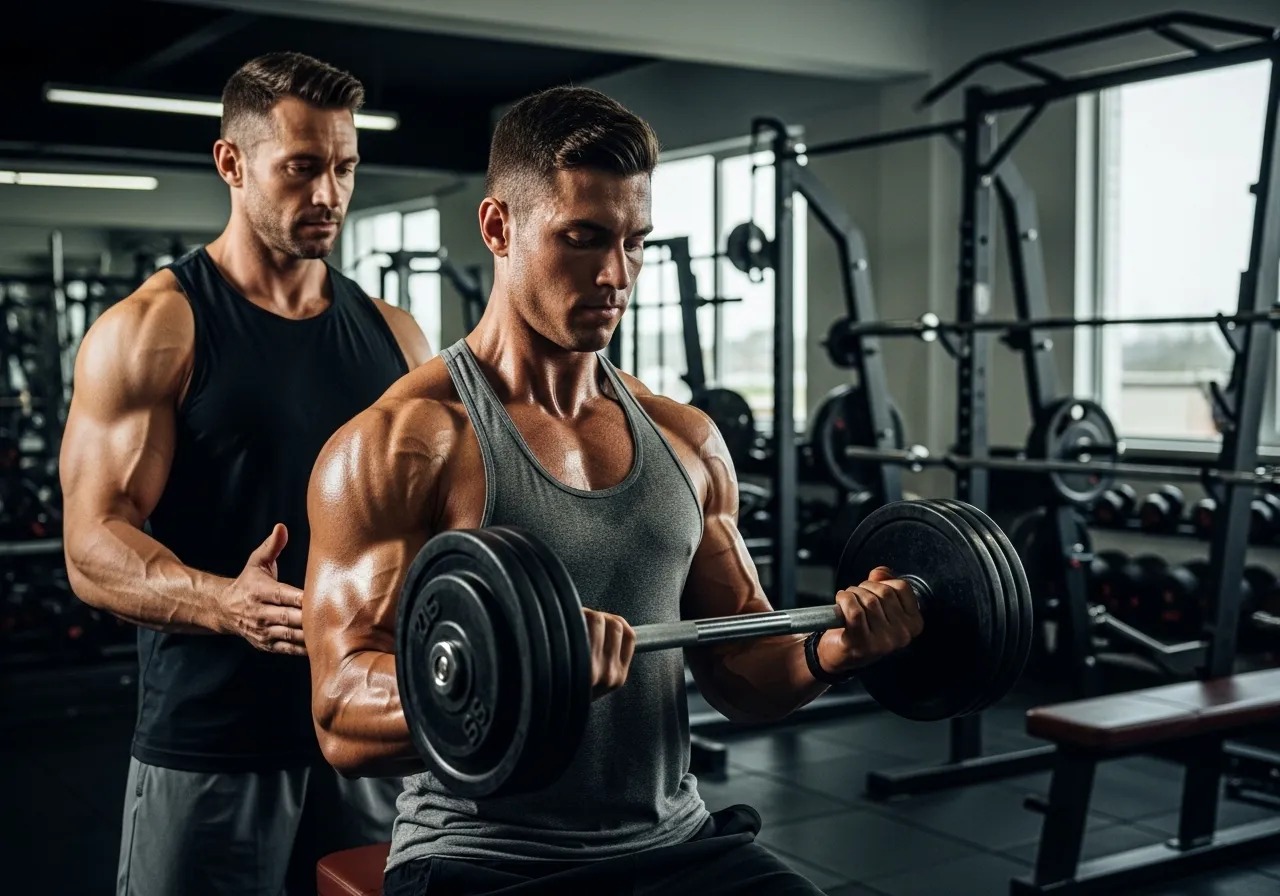
Advanced Techniques to Break Through Arm Growth Plateaus
Superset Antagonist Muscles
Supersetting bicep and tricep exercises — performing a bicep exercise immediately followed by a tricep exercise with minimal rest — exploits a neurological phenomenon where training an antagonist muscle enhances subsequent performance in the agonist. Research shows that bicep performance in the set following a tricep set is marginally improved compared to standard rest, due to reciprocal inhibition effects and the enhanced blood flow to the upper arm from the previous exercise. More practically, antagonist supersets allow near-full volume for both muscles in significantly less training time, making them highly efficient for arm specialization phases.
Blood Flow Restriction Training
Blood flow restriction (BFR) training — using a cuff or band to partially restrict venous blood flow out of the working limb while training at low loads (20 to 30 percent of maximum) — produces hypertrophy responses comparable to heavy training despite the light loads used. The mechanism involves the metabolite accumulation (lactate, inorganic phosphate, hydrogen ions) that occurs when venous outflow is restricted, creating the cellular swelling and hypoxic stress that stimulate growth factor release and muscle protein synthesis. For arm training specifically, BFR is particularly valuable because the arms can be trained at very low loads with minimal joint stress — important for people with elbow or wrist sensitivity that limits heavy loading.
Mechanical Drop Sets
A mechanical drop set changes the exercise to a mechanically easier variation at the point of failure rather than reducing weight — allowing additional reps to be performed at the same load. For bicep training: perform incline curls to failure (hardest variation), immediately transition to standing curls (moderate), and continue to preacher curls (easiest). For tricep training: overhead extension to failure, transition to pushdowns, continue to close-grip push-ups. This technique extends the time under tension and total volume of each set beyond what a single variation allows, dramatically increasing metabolic stress and muscle damage with a single working set.
The Arm Specialization Phase
An arm specialization phase — a 4 to 8-week period where arm training volume is increased to 16 to 20 sets per week while other muscle groups are maintained at minimum volume — can accelerate arm development for people who have been unable to prioritize arm growth within a balanced program. During a specialization phase, arm training is performed 3 times per week (rather than 2), with the additional session focusing on the weakest muscle head (long head biceps, long head triceps, or brachialis) identified from individual assessment. After the specialization phase, return to balanced programming — allowing the gained arm size to integrate into the full physique while avoiding the imbalances that accumulate from prolonged prioritization of a single body part.
Tracking Progress: How to Know If Your Arms Are Actually Growing
Objectively tracking arm growth prevents the common experience of training hard for months without being able to determine whether real progress is occurring. The measurement protocol I use: measure arm circumference with a tape measure at the largest point of the relaxed bicep, taken at the same time of day (morning, before training, after waking) under consistent hydration conditions. Record measurements weekly. Take photos under consistent lighting, from the same angle, with the same pump level (either relaxed or flexed). Track training performance — the weights and reps achieved in key exercises — as the most reliable proxy for muscle growth when circumference changes are small.
Expected progression rate with this program: 0.1 to 0.3cm per week of arm circumference increase during active growth phases in a caloric surplus. Over 4 weeks, this produces 0.4 to 1.2cm of measurable arm growth — modest by numbers but clearly visible in photos and significantly noticeable in how clothing fits the arm.
Frequently Asked Questions
How often should I train arms per week?
Research supports 2 to 3 dedicated arm sessions per week for optimal growth, with each session spaced at least 48 hours apart to allow adequate recovery. Training arms once per week (the classic “arm day”) produces inferior results to twice-weekly training when total weekly volume is equated — the more frequent stimulus maintains elevated muscle protein synthesis rates across more days of the week.
Should I do biceps or triceps first?
Prioritize the weaker or less-developed muscle group first in each session when you are fresher and can train at higher intensity. For most people, this means triceps first — they represent 60 to 65 percent of arm mass and are typically undertrained relative to biceps in recreational training programs. Tricep priority in arm sessions produces faster overall arm size development for the majority of trainees.
Can I build bigger arms without weights?
Yes, though the options are more limited. Chin-ups and pull-ups build substantial bicep mass through bodyweight. Diamond push-ups and bench dips develop the triceps effectively. Resistance bands can replicate curl and extension patterns with variable resistance. These options can produce meaningful arm development, particularly for beginners, but the limited load variability makes progressive overload more challenging than with free weights over the long term.
Maintaining Arm Development After the 4-Week Program
After completing the 4-week arm focus program, the arm development achieved requires appropriate maintenance volume to be preserved and continued growth requires continued progressive overload. The maintenance volume for arms — the weekly sets needed to preserve existing development without growth — is 4 to 6 sets per muscle per week, significantly less than the 12 to 16 sets of the focus program. This means that after the intensive 4-week phase, arms can be maintained with a single weekly arm session while training focus shifts to other muscle groups — allowing the whole-body attention that produces balanced physical development over time.
For continued arm growth beyond the 4-week program, the most effective approach is cycling between arm focus phases (higher arm volume, 12 to 16 sets per week, 6 to 8 weeks) and maintenance phases (4 to 6 sets per week, 4 to 6 weeks). This cycling approach produces long-term arm development that significantly exceeds what either continuous high volume or continuous low volume would produce — the focus phases drive growth, the maintenance phases consolidate it and allow recovery, and the alternation prevents the accommodation that halts progress when the same stimulus is maintained indefinitely.
Combining Arm Training With Overall Body Development
The arms, developed in isolation, look best in the context of proportional overall body development. Oversized arms on a narrow torso or underdeveloped shoulders create an aesthetic imbalance that makes the arms look smaller, not larger, by visual contrast. The most visually impressive arm development occurs in the context of wide shoulders, a developed back that creates the V-taper silhouette, and adequate chest development that frames the upper arm. Treating the 4-week arm program as a specialization phase within a comprehensive training approach — returning to balanced full-body training after the focus period — produces the proportional development that maximizes the visual impact of improved arm size.
Tracking Arm Development: Measurements and Benchmarks
Objective arm development tracking requires consistent measurement methodology that accounts for the day-to-day variation in arm size produced by hydration, glycogen status, and time since last training. The standard arm circumference measurement is taken at the midpoint of the upper arm (halfway between the acromion process of the shoulder and the olecranon of the elbow), with the arm relaxed and hanging naturally at the side. This measurement should be taken at the same time of day, in the same hydration state, and at the same time post-training (at least 24 hours after the previous arm training session) to allow meaningful comparison across weeks.
Performance benchmarks provide additional objective tracking that size measurements alone don’t capture: maximum weight for 10 reps on barbell or dumbbell curl (weekly), maximum reps of close-grip push-ups or dips (weekly), and maximum weight for 10 reps on cable or dumbbell tricep extension (weekly). Tracking both size and performance provides the comprehensive picture of arm development that reveals whether the program is producing structural muscle growth (increasing size measurements), neural adaptation (increasing performance without size changes), or both simultaneously (the optimal outcome indicating effective training across all adaptation mechanisms).