7 Best Bodyweight Exercises That Replace the Gym
⚠️ Disclaimer: The information in this article is for general educational purposes only and does not constitute medical, nutritional, or professional fitness advice. Individual results may vary. Always consult a qualified healthcare professional or certified fitness trainer before starting any new exercise program, changing your diet, or making decisions about injury treatment or recovery. If you experience pain, discomfort, or any unusual symptoms during exercise, stop immediately and seek professional guidance.

Why Bodyweight Training Is a Complete Fitness Solution
The Science Behind Bodyweight Muscle Building
Bodyweight training has a legitimacy problem — not a science problem. The fitness industry profits enormously from equipment sales, gym memberships, and the perception that effective training requires expensive tools. The research tells a different story. A systematic review published in Sports Medicine comparing home-based bodyweight training to gym-based resistance training found no statistically significant difference in muscle hypertrophy or strength gains over 12 weeks when progressive overload was applied in both conditions. The muscle cannot distinguish between a dumbbell and gravity as the source of mechanical tension — it responds to the stimulus of being challenged through its range of motion under load, regardless of what creates that load.
The critical factor that determines whether bodyweight training produces results is progression. A person performing 3 sets of 10 push-ups every day for a year will make virtually no progress after the first month — the stimulus has been fully absorbed and the body has adapted. A person who starts with 3 sets of 10 and progressively advances through hand-release push-ups, diamond push-ups, decline push-ups, one-arm push-up negatives, and eventually one-arm push-ups will be building chest, shoulder, and tricep strength for years. The exercise is the vehicle; progressive overload is the engine.
The Practical Advantages That Actually Matter
Beyond the physiological equivalence, bodyweight training offers practical advantages that translate directly into greater long-term training consistency — the most important predictor of results. Zero equipment cost eliminates the financial barrier to training. Zero commute time eliminates the scheduling barrier. Zero weather dependence eliminates the environmental barrier. The ability to train anywhere — at home, in a hotel room, in a park, while traveling — eliminates the “I can’t make it to the gym” excuse that accounts for a significant proportion of missed training sessions for most people. According to the American College of Sports Medicine, convenience is one of the strongest predictors of exercise adherence, making the anywhere, anytime accessibility of bodyweight training a genuine performance advantage over gym-dependent programs.
What Bodyweight Training Cannot Replace
Honest assessment of bodyweight training’s limitations prevents unrealistic expectations. Pure bodyweight training — without resistance bands, weighted vests, or loaded carries — has a progressive overload ceiling that eventually limits further strength and muscle development, particularly for large muscle groups like the back and hamstrings where loading the muscle adequately through bodyweight is challenging. Advanced trainees at or near their bodyweight exercise maximums will eventually need external loading to continue progressing. Additionally, maximal strength development — the ability to move very heavy absolute loads — requires progressive external loading that bodyweight alone cannot provide. For general fitness, health, and impressive functional strength, pure bodyweight training is entirely sufficient; for advanced strength sport performance, supplementation with external loading becomes necessary.
Mental Health and Bodyweight Training
One underappreciated benefit of bodyweight training is its accessibility during periods of high stress, poor mental health, or low motivation — precisely the times when gym-going becomes most difficult. The ability to perform 10 push-ups in a living room at any time of day, in any clothes, without any preparation or commute, means that the minimum viable workout is always available regardless of circumstances. Research published in the Journal of the American Medical Association found that even brief bouts of physical activity — as short as 10 minutes — produce significant improvements in mood, anxiety, and cognitive function that persist for 2 to 4 hours post-exercise. The always-accessible nature of bodyweight training makes these mental health benefits available at the moments they are most needed.

The 7 Best Bodyweight Exercises That Replace the Gym
Push-Up: Replacing Bench Press and Chest Machines
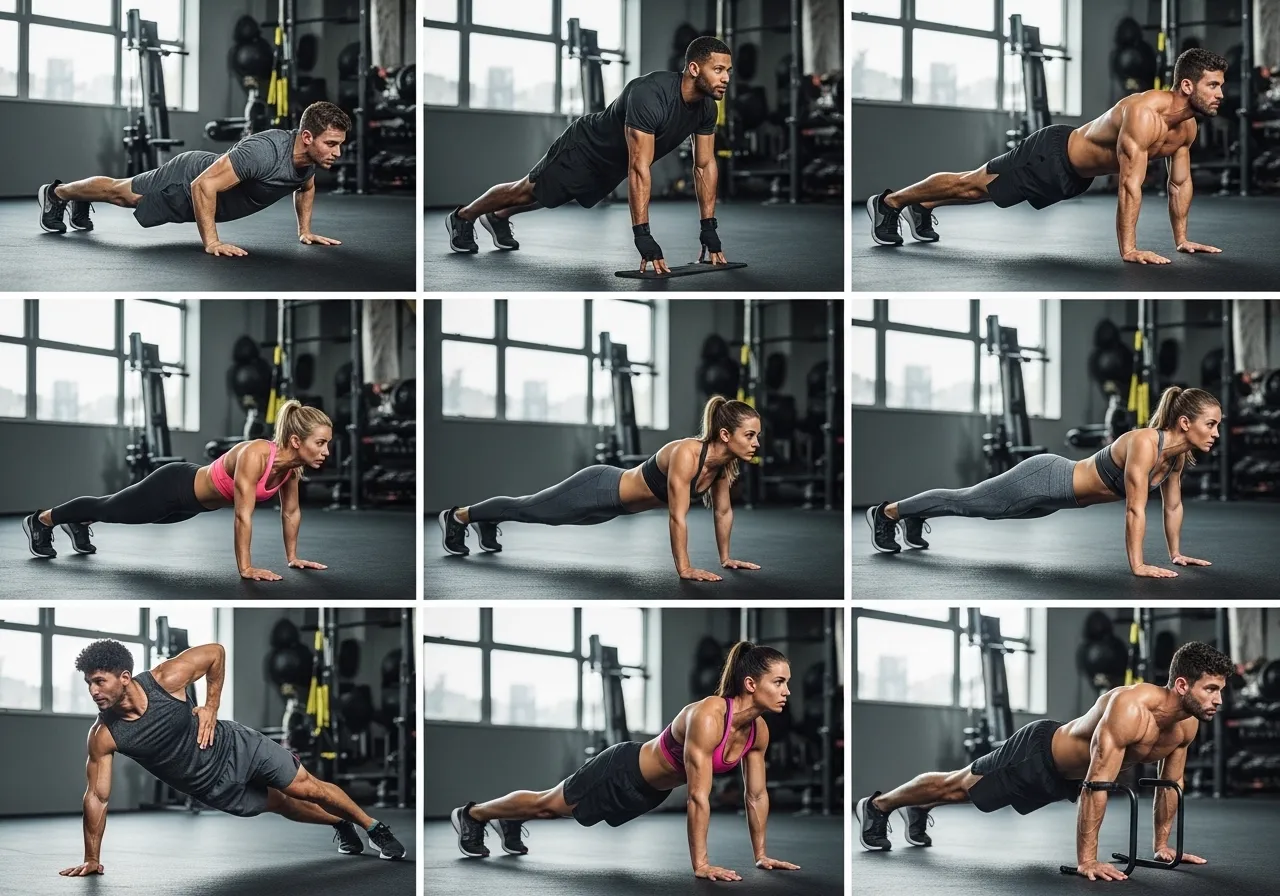
The push-up family of exercises — encompassing 15 to 20 meaningful variations from wall push-ups to one-arm push-ups — effectively replaces the horizontal pressing work performed on a bench press, chest press machine, and cable crossover at any gym. The standard push-up trains the pectoralis major, anterior deltoid, and triceps through a compound pressing movement that activates stabilizing muscles of the rotator cuff and serratus anterior that machine pressing entirely bypasses. A 2019 study in JAMA Network Open found that push-up performance — the ability to perform 40 or more push-ups — was associated with a 96 percent lower cardiovascular event risk over 10 years, establishing the push-up as both a fitness exercise and a genuine health biomarker.
The push-up progression ladder provides months and years of continuous challenge: wall push-up → incline push-up → knee push-up → standard push-up → close-grip push-up → wide-grip push-up → decline push-up → pike push-up → diamond push-up → archer push-up → one-arm push-up negatives → full one-arm push-up. At any stage of this progression, when the current variation becomes achievable for 3 sets of 12 with good form, advance to the next level. This progression architecture ensures the push-up remains a productive strength and hypertrophy stimulus regardless of current fitness level.
Pull-Up and Chin-Up: Replacing Lat Pulldown and Cable Row
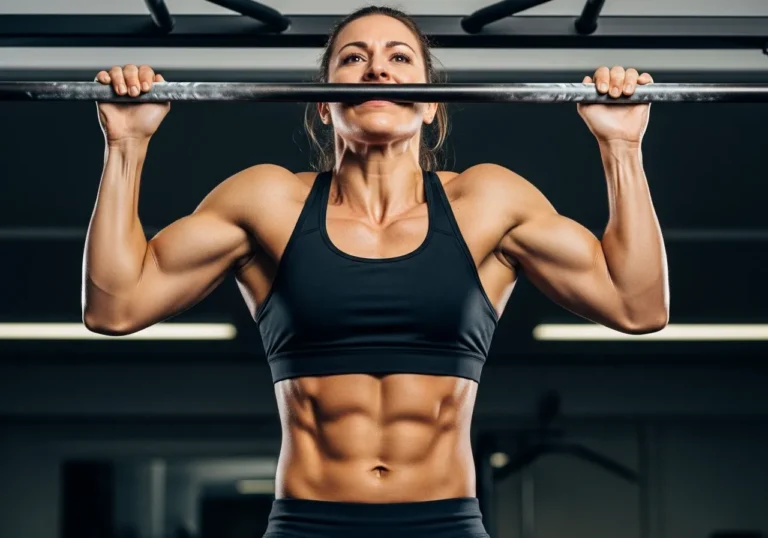
The pull-up and chin-up are, without qualification, the most valuable bodyweight exercises for upper body development — training the latissimus dorsi, biceps, rhomboids, and rear deltoids with bodyweight loading that can be progressively increased through added weight. No lat pulldown machine, cable row, or dumbbell row produces the compound pulling stimulus and real-world functional strength that pull-ups deliver. The progression from assisted pull-ups (resistance band or jumping pull-ups) through bodyweight pull-ups to weighted pull-ups provides a progression range that accommodates complete beginners through advanced athletes. If you can install a $20 to $40 pull-up bar in a doorframe, you have acquired the single most effective upper body training tool available at any price point.
Bodyweight Squat and Pistol Squat: Replacing Leg Press and Squat Rack
The bodyweight squat trains the quadriceps, hamstrings, glutes, and calves through the full range of lower body pressing movement. For beginners, the standard bodyweight squat provides meaningful training stimulus. For intermediate and advanced trainees, the pistol squat — a single-leg squat to full depth — provides extreme loading through unilateral mechanics that challenges even highly trained lower body athletes. The pistol squat requires both strength and mobility, making it one of the most comprehensive lower body exercises available through bodyweight alone. The progression: bodyweight squat → jump squat → Bulgarian split squat → shrimp squat → pistol squat to box → full pistol squat → weighted pistol squat.
Hip Hinge and Nordic Curl: Replacing Deadlift and Leg Curl
The hip hinge pattern — loading the hamstrings and glutes through posterior chain extension — is the most difficult movement pattern to load adequately through bodyweight alone. The good morning (bending forward at the hips with arms crossed or behind the head) provides some hamstring and lower back stimulus. The single-leg deadlift builds balance and moderate posterior chain strength. The Nordic curl — anchoring the feet and lowering the body from kneeling position using eccentric hamstring strength — is one of the most effective hamstring strengthening exercises available and requires only a surface to anchor the feet. Research published in the British Journal of Sports Medicine found that Nordic curls reduce hamstring injury risk by 51 percent in athletes, confirming their exceptional value for both strength development and injury prevention.
Dip: Replacing Tricep Machine and Decline Press
Parallel bar dips — or chair/bench dips as a regression — train the triceps, pectorals, and anterior deltoids through a compound pressing movement that allows bodyweight loading and, for advanced trainees, additional external loading. The upright torso position (rather than forward lean) emphasizes the triceps and converts dips into one of the most effective bodyweight tricep exercises available. Tricep dips performed to full range of motion — from full elbow extension at the top to 90 degrees of elbow flexion at the bottom — train the triceps through their complete range of motion with bodyweight loading that progressively increases as bodyweight increases or as added weight is incorporated.
Plank and Hollow Body Hold: Replacing Cable Core Exercises
The plank and hollow body hold — two fundamental anti-extension core exercises — develop the deep spinal stabilizers and rectus abdominis more effectively than the majority of cable and machine core exercises at any gym. The hollow body hold — lying on your back, pressing the lower back flat to the floor, extending arms overhead and legs forward while maintaining the hollow position — is the foundational gymnastics core exercise that develops the total body tension and core stability that transfers to every athletic movement. Progressing from the hollow body hold to the L-sit (supporting bodyweight on hands with legs extended horizontally) represents months of dedicated core development work that rivals any cable core exercise program.
Burpee: Replacing Cardio Machines
The burpee — a compound movement combining a squat thrust, push-up, jump squat, and overhead clap — is the most efficient single exercise for cardiovascular conditioning and total-body caloric expenditure available without equipment. A single minute of all-out burpees burns approximately 10 to 15 calories — comparable to sprinting — while simultaneously training upper body pressing, lower body power, and core stability. Performing burpee intervals (30 seconds maximum effort, 30 seconds rest, repeated 8 to 10 times) replaces a treadmill HIIT session with equivalent or greater caloric expenditure and cardiovascular adaptation while building functional strength simultaneously.
A Complete Bodyweight Training Program Using These 7 Exercises
The 3-Day Full Body Bodyweight Program
Session A (Monday/Thursday): Push-up variation 4×10–15. Pull-up or chin-up 4×max. Bodyweight squat or pistol squat progression 4×10–15. Hip hinge (single-leg deadlift or Nordic curl) 3×8–10. Plank 3×45 seconds. Session B (Wednesday/Saturday): Dip or bench dip 4×10–15. Inverted row (under a table or low bar) 4×10–15. Bulgarian split squat 3×10 each leg. Hollow body hold 3×30 seconds. Burpee intervals 5×30 seconds on/30 seconds off.
Progressive Overload Without Weights
Progressive overload in bodyweight training is achieved through a systematic progression of six variables applied in order: more reps (build to 3×15 before advancing), more sets (add sets up to 5 per exercise), harder variations (advance the exercise ladder), slower tempo (add 3-second eccentric phases), reduced rest (from 90 seconds to 30 seconds), and unilateral movements (one limb doing the work of two). Applying these variables systematically ensures that bodyweight training remains progressively challenging and continues driving adaptation for years rather than months.
Week 1 to 4: Foundation Phase
The foundation phase builds the movement competency and baseline strength needed for the advanced variations that follow. Three sessions per week, each covering all seven fundamental bodyweight movements at beginner difficulty: wall push-up or incline push-up (horizontal push), assisted squat or bodyweight squat (lower body), inverted row using a table (horizontal pull), glute bridge (hip hinge), plank (core anti-extension), standing balance work (unilateral stability), and jump rope or jumping jacks (cardiovascular conditioning). Each exercise performed for 3 sets of 10 to 15 reps with 60 seconds rest. The goal: complete each session with correct form and manageable fatigue, establishing the movement patterns that progressive variations will build upon.
Week 5 to 8: Progression Phase
The progression phase advances each exercise to intermediate difficulty and increases training volume by adding a fourth set to each exercise. Push-up (standard or close grip), pistol squat progression (assisted), decline push-up, single-leg glute bridge, plank with reach, step-up variations, and interval cardiovascular training replace the foundation phase exercises. Rest periods reduce from 60 to 45 seconds, increasing metabolic demand. The combination of exercise progression and rest reduction produces a significant increase in training difficulty that drives continued adaptation beyond the initial beginner response.
Week 9 to 12: Intensification Phase
The intensification phase introduces the most demanding bodyweight variations: archer push-ups or pike push-ups, single-leg squat progressions, inverted rows at more horizontal angles, Nordic hamstring curls, hollow body holds, and high-intensity interval protocols. Volume peaks at 4 to 5 sets per exercise. Training frequency increases to 4 days per week for trainees who have adapted to the 3-day schedule. By week 12, the program produces a level of bodyweight strength, endurance, and body composition that rivals or exceeds many gym-based programs — achieved with zero equipment and minimal space.
Overcoming the Limitations of Bodyweight Training
Adding Resistance Without Equipment
When bodyweight exercises become insufficient for continued progressive overload, several approaches add resistance without traditional gym equipment. A loaded backpack — filled with books, water bottles, or sand bags — adds external loading to push-ups, squats, and rows. A resistance band — one of the highest value-per-dollar training investments at $15 to $25 — adds variable resistance to almost every bodyweight exercise and specifically solves the posterior chain loading problem by enabling band deadlifts, good mornings, and hip thrusts with meaningful resistance. A weight vest adds uniform loading to all bodyweight movements without changing the exercise mechanics. These additions extend the productive training range of bodyweight training significantly for people who have reached the limits of pure bodyweight progression.
The Pull Problem and Its Solutions
The most commonly cited limitation of pure bodyweight training is the difficulty of performing pulling movements without a pull-up bar or other anchor point. Solutions accessible in most home environments: a sturdy table used for inverted rows (lie under the table, grip the edge, pull chest to table), a doorframe pull-up bar installed in seconds for under $30, a tree branch or playground equipment for outdoor training, or resistance bands anchored to a door for cable-row alternatives. The inverted row — one of the most underrated back exercises available — trains the rhomboids, rear deltoids, and biceps through a horizontal pulling motion accessible in virtually any environment and scalable from very easy (feet on floor, body more upright) to very challenging (feet elevated, body horizontal, weighted vest).
Tracking Progress in Bodyweight Training
Tracking bodyweight training progress requires different metrics than traditional weight training. Performance benchmarks — maximum push-ups in one set, maximum pull-ups, plank duration, time to complete a standard circuit — provide objective progress measures that directly reflect training adaptation. Photographing the current maximum of key exercises periodically documents form improvement and movement quality progress. Body measurements and weekly weigh-ins track physical composition changes. These metrics together provide a comprehensive picture of bodyweight training progress that prevents the discouragement of not having weight increases to report and reveals the genuine, meaningful improvements that consistent bodyweight training produces.

Technique Deep-Dives for Maximum Results
Pull-Up Technique for Beginners
The pull-up intimidates beginners partly because the standard version is inaccessible until a minimum strength level is developed. The effective progression strategy: begin with jumping pull-ups (jump to the top position, lower yourself as slowly as possible — 5 to 8 seconds), building the eccentric strength that is the foundation for full pull-ups. Resistance band-assisted pull-ups (loop band around the bar, kneel in the band) reduce the effective load while maintaining the movement pattern. Inverted rows under a table or bar build the pulling muscle mass needed to eventually perform pull-ups. Most people with zero pull-up ability can develop their first clean pull-up within 4 to 8 weeks of consistent practice with these progressions.
Nordic Curl Technique
The Nordic curl is extraordinarily effective for hamstring development and injury prevention but requires a specific technique approach to avoid lower back compensation. Kneel on a padded surface with feet anchored (under a couch, heavy furniture, or held by a training partner). Keeping the hips fully extended throughout — do not allow the hips to flex as you descend — lower your body forward as slowly as possible using eccentric hamstring strength. When you can no longer control the descent, allow yourself to fall and catch on your hands, then use your hands to push back to the starting position. Progress by controlling more of the descent range before each assisted return. Research from American College of Sports Medicine confirms that eccentric hamstring training through Nordic curls produces greater hamstring strength gains than concentric-focused machine training.
The Push-Up: Mastering Every Variation
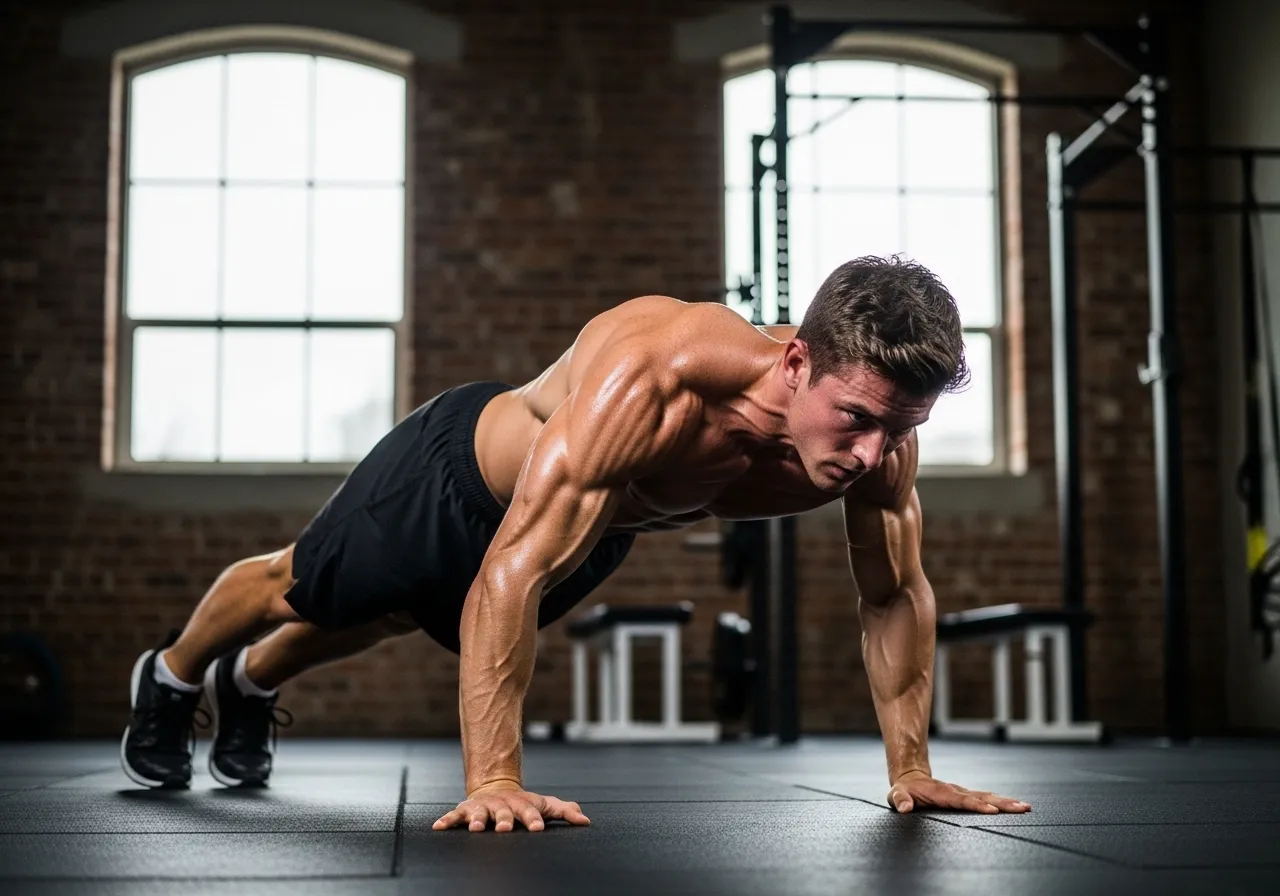
The push-up is the most versatile upper body exercise available without equipment, and mastering its full progression ladder provides years of progressive challenge. Standard push-up technique mastery comes first — hands slightly wider than shoulder-width, elbows at 45 degrees, body rigid from head to heels, full range from chest near floor to full elbow extension. Once 3 sets of 20 clean reps are achievable, progress to: close-grip push-ups (inner chest and tricep emphasis), wide-grip push-ups (greater chest stretch), decline push-ups with feet elevated (upper chest and shoulder emphasis), pike push-ups (shoulder emphasis), and archer push-ups (heavy unilateral loading preparing for one-arm). Each variation extends the challenge of the standard push-up significantly, making equipment-free upper body training continuously progressive for years.
The one-arm push-up — the pinnacle of pushing strength in bodyweight training — requires a full body tension and core stability that makes it more demanding than its single-limb nature suggests. Approaching it through the archer push-up progression, gradually shifting more weight onto the working arm over 8 to 12 weeks, is the safest and most effective pathway to this challenging movement.
The Squat: Bodyweight to Pistol
The bodyweight squat progression from assisted squat to full pistol squat represents one of the most impressive demonstrations of lower body strength and mobility available in training. The pistol squat — a single-leg squat to full depth with the non-working leg extended forward — requires a combination of quad strength, hip flexor flexibility, ankle dorsiflexion mobility, and balance that takes most people 3 to 6 months of progressive training to develop. The progression: bodyweight squat → box squat → assisted pistol (holding a support) → counterbalanced pistol (arms extended forward for balance) → full pistol. Each stage builds the specific strength and mobility prerequisites for the next level.

Cardio and Conditioning Without Equipment
Building Cardiovascular Fitness Through Bodyweight
Cardiovascular conditioning through bodyweight training requires exercise selection and programming that elevates heart rate into the aerobic and anaerobic zones without the passive cardiovascular loading of steady-state cardio machines. High-rep bodyweight circuits, HIIT protocols using burpees and mountain climbers, and tempo runs or jumps provide cardiovascular stimulus equivalent to gym cardio equipment when effort is appropriately high. A 20-minute bodyweight HIIT session — alternating 40 seconds of maximum effort (burpees, jump squats, mountain climbers, high knees) with 20 seconds of rest for 20 rounds — produces cardiovascular adaptations comparable to machine-based interval training and burns equivalent or greater calories.
The Tabata Protocol for Maximum Efficiency
The Tabata protocol — 20 seconds maximum effort, 10 seconds rest, 8 rounds totaling 4 minutes per exercise — is the most time-efficient cardiovascular conditioning protocol with bodyweight exercises. Performing Tabata rounds of burpees, jump squats, mountain climbers, and high knees in sequence produces 16 minutes of extremely high-intensity cardiovascular work that elevates metabolic rate for hours afterward. Research on the Tabata protocol found that it produces equivalent or superior VO2 max improvements to 60-minute moderate-intensity continuous training — making it the definitive time-efficiency argument for bodyweight HIIT as a cardio replacement.
Cardiovascular Training Without Equipment: Options and Protocols
The simplest and most accessible cardiovascular training without equipment is running — requiring nothing but space and a pair of shoes. A progressive running program that begins with walk-run intervals (1 minute running, 2 minutes walking × 10 rounds) and progresses to continuous running over 8 to 12 weeks develops robust cardiovascular fitness and burns significant calories without any equipment investment. For people who prefer non-impact options, jump rope (if available), shadow boxing, stair climbing, and swimming provide equivalent cardiovascular benefits with different injury profiles and activity experiences.
High-intensity bodyweight circuits — performing exercises like burpees, jumping squats, mountain climbers, and high knees in timed intervals — provide cardiovascular conditioning that rivals steady-state cardio in metabolic benefit while simultaneously developing muscular endurance and body composition. A 20-minute bodyweight circuit at high effort produces caloric expenditure comparable to a 35 to 40-minute moderate jog, and the muscle-building stimulus of the resistance components provides benefits that pure cardiovascular exercise cannot replicate. Research published in the Journal of Strength and Conditioning Research confirmed that bodyweight HIIT circuits produce significant improvements in both VO2 max and muscular endurance over 8 weeks — making them the most time-efficient conditioning modality available without equipment.
Stretching and Mobility Without Equipment
A comprehensive flexibility and mobility practice requires no equipment at all — and is one of the most commonly neglected components of bodyweight training programs. The combination of dynamic warm-up movements before training sessions and static stretching after sessions produces measurable improvements in range of motion over 4 to 8 weeks, reduces injury risk, improves movement quality in training exercises, and contributes to the daily sense of physical wellbeing that makes training a sustainable long-term practice. Key areas to prioritize: hip flexors (chronically tight in most people who sit for work), thoracic spine mobility (restricted by forward-flexed posture), hamstring flexibility (limiting squat depth and hip hinge quality), and shoulder external rotation (restricted by pressing-dominant training and internal rotation habits).

12-Week No-Equipment Transformation Program
Program Design and Philosophy
This 12-week program requires absolutely no equipment — not even a pull-up bar. Every exercise is performable in a standard living room with 2 meters of clear floor space. The program follows 3 training days per week with full body sessions, using all 7 of the foundational bodyweight exercises in structured progressions that advance every 2 to 4 weeks. The philosophy is simple: get better at the exercises through deliberate practice and progressive challenge, and the physical results follow automatically from the training quality.
Weeks 1 to 4: Foundation
Day A: Incline push-up 3×12. Table inverted row 3×10. Bodyweight squat 3×15. Single-leg deadlift 3×10 each side. Plank 3×30 seconds. Burpee 3×8. Day B: Knee push-up 3×15. Chair-assisted pull-up negatives 3×5 (10-second descent). Bulgarian split squat 3×10 each leg. Hollow body hold 3×20 seconds. Mountain climber 3×20 each leg. Focus on form over intensity throughout weeks 1 and 2. Begin progressive overload in weeks 3 and 4 by adding reps or advancing variations.
Weeks 5 to 8: Progression
Advance push-up to standard or decline variation. Advance rows to feet-elevated inverted rows. Introduce jump squats. Begin Nordic curl negatives. Progress plank to plank with reaches. Add Tabata finisher (1 exercise, 4 minutes) at the end of each session. Rest periods reduce from 90 seconds to 60 seconds between sets. All sets should end with 1 to 2 reps remaining in reserve.
Weeks 9 to 12: Intensification
Advance push-ups to diamond or archer variation. Attempt first full pull-up if a bar is available; continue with maximally challenging inverted row variation if not. Introduce single-leg squat progressions (shrimp squat). Full Nordic curl attempts. Hollow body hold with arm and leg extensions. Add second Tabata finisher per session (2 exercises, 8 minutes total). Train all sets to 1 rep from failure. By week 12, performance benchmarks should show 20+ standard push-ups, 5+ pull-ups (if bar available), 10+ pistol squat attempts, and 2 to 3-minute plank hold.
Frequently Asked Questions
Can I build a muscular physique with only bodyweight exercises?
Yes — to a significant degree. Gymnasts demonstrate the upper limit of what dedicated bodyweight training produces, and it is impressive by any standard. For recreational fitness goals — a lean, strong, athletic physique — bodyweight training is entirely sufficient. For competitive bodybuilding or powerlifting, external loading eventually becomes necessary, but these represent specialized goals far beyond what most people are pursuing.
How many times per week should I do bodyweight training?
3 to 5 times per week is the optimal range, with full body sessions 3 times per week being ideal for most people. The lower recovery demands of bodyweight training compared to heavy barbell work allow slightly higher frequency, but full recovery between sessions targeting the same muscle groups (48 hours) remains important for quality adaptation.