The Best Mobility Exercises for Better Range of Motion
⚠️ Disclaimer: The information in this article is for general educational purposes only and does not constitute medical, nutritional, or professional fitness advice. Individual results may vary. Always consult a qualified healthcare professional or certified fitness trainer before starting any new exercise program, changing your diet, or making decisions about injury treatment or recovery. If you experience pain, discomfort, or any unusual symptoms during exercise, stop immediately and seek professional guidance.

What Is Mobility and Why It Matters More Than Flexibility
Mobility and flexibility are frequently used interchangeably in fitness contexts, but they describe fundamentally different physical qualities — and the distinction has important practical implications for how each should be trained, assessed, and applied. Flexibility is a passive property: the maximum range of motion achievable at a joint when an external force (gravity, a partner, a strap) moves the limb through its range without muscular effort. Mobility is an active property: the range of motion that can be actively controlled — produced and maintained by the athlete’s own muscular effort. A gymnast who can achieve extreme hip flexibility through passive stretching but cannot actively control the hip through that range during athletic movement has flexibility without mobility. The practically useful quality for athletic performance, injury prevention, and functional movement is mobility — and training that produces passive flexibility without active control creates the dangerous combination of joint range that exceeds the athlete’s ability to stabilize.
The Mobility-Flexibility Distinction: Clinical and Practical Implications
The clinical distinction between mobility and flexibility is captured in the functional movement screen (FMS) and similar movement assessment tools that evaluate not whether a joint can achieve a range of motion passively, but whether the athlete can actively control movement through that range under load and in functional patterns. Research from Journal of Strength and Conditioning Research on mobility and injury risk identifies restricted active mobility — particularly at the hip, thoracic spine, and ankle — as significant predictors of lower extremity injury in athletes, even when passive flexibility at these joints appears adequate. The reason: athletic movement produces active muscular control demands across the full range of joint motion — the squat requires the athlete to actively control the hip and ankle through full flexion ranges under load, and insufficient active mobility at these joints produces the compensatory movement patterns (knee valgus, lumbar flexion, forward trunk lean) that increase injury risk and reduce performance efficiency. The training implication: effective mobility training must develop both the passive range of motion that allows the joint to achieve the desired position and the neuromuscular control that allows the athlete to actively produce and stabilize that position under the functional loads that athletic movement imposes.
Why Mobility Declines and What Happens When It Does
Mobility declines through two primary mechanisms: structural restrictions (actual shortening of contractile and connective tissue from chronic shortened positioning) and neuromuscular restrictions (motor inhibition that prevents full activation through available range due to pain avoidance, injury history, or insufficient neural drive to end-range positions). Contemporary sedentary lifestyles — prolonged sitting at desks, in cars, and on couches — chronically position the hip flexors, hamstrings, thoracic spine, and ankle in shortened positions for hours daily, progressively reducing the resting length of these tissues and the comfortable range at which the nervous system permits movement. The consequences of mobility restriction are both performance-limiting and injury-predisposing. Performance limitations: restricted hip mobility reduces squat depth and running stride length; restricted thoracic mobility limits overhead press range and rotational sport performance; restricted ankle mobility produces the compensatory knee and hip mechanics that reduce power output and movement efficiency. Injury predisposition: mobility restrictions force the body to achieve the required range of motion at adjacent joints (the joint distal or proximal to the restricted one) that are not designed to provide that range — producing the overloading of non-target structures that drives overuse injury. The research on injury prevention from British Journal of Sports Medicine consistently identifies mobility restrictions as significant contributors to overuse injury rates in both recreational and competitive athletes.
Active vs. Passive Mobility Training
The distinction between active and passive mobility training determines the type of mobility improvement each produces — and the selection of appropriate training type depends on the specific mobility limitation being addressed. Passive mobility training (static stretching, PNF stretching, massage, foam rolling) improves the structural flexibility component — reducing the passive tissue resistance to range of motion by lengthening contractile elements and connective tissue. These improvements are the starting point for mobility work: if the passive tissue won’t allow a range of motion, no active control training can produce it. Active mobility training (controlled articular rotations, end-range activation exercises, loaded mobility exercises) develops the neuromuscular control that converts passive range into functional active mobility. These active methods teach the nervous system to produce muscular force throughout the full available range — building the strength and motor control at end-range positions that athletic performance requires. The evidence-based approach combines both: passive mobility work to expand available range followed immediately by active mobility work that neurologically claims the newly created range through muscular activation — the sequence that both the passive range and the neural control that makes it functionally available require to compound into genuine mobility improvement.
The Movement Screen: Identifying Your Mobility Restrictions
Before selecting mobility exercises to prioritize, identifying the specific joint and movement pattern restrictions that currently limit performance or create injury risk allows targeted intervention rather than generic mobility work that may not address the individual’s limiting factors. The self-assessment framework: perform the overhead squat (feet shoulder-width, arms overhead, squat to depth) and observe the compensations — knee cave indicates hip external rotation or ankle dorsiflexion restriction; forward trunk lean indicates hip flexor tightness or thoracic mobility restriction; arm drop indicates shoulder mobility limitation. The active straight leg raise (lying supine, actively raise one straight leg as high as possible while keeping the other leg flat on the floor) assesses hamstring and hip flexor mobility independently of lumbar spine compensation. The seated rotation test (sitting cross-legged, rotate the thoracic spine maximally left and right) assesses thoracic rotational mobility that spinal and shoulder health depend on. The Thomas test (lying supine at the edge of a table, pull one knee to chest and observe whether the opposite thigh remains flat on the table) assesses hip flexor and quadriceps length. These four screens identify the primary mobility restrictions for approximately 80% of athletes with movement limitations — allowing the selection of mobility exercises that specifically address the identified restrictions rather than generic mobility work that may not target the actual limiting factors.
The Nervous System’s Role in Mobility
Many athletes experience dramatic immediate improvements in range of motion from techniques that cannot possibly have changed tissue length in minutes (foam rolling, specific activation drills, joint mobilization) — and understanding the neurological mechanism behind these improvements explains both why these techniques work and how to design mobility training that produces lasting neurological changes rather than temporary range improvements that disappear the next day. The nervous system continuously monitors joint position, tissue tension, and mechanical stress through mechanoreceptors (Golgi tendon organs, muscle spindles, Pacinian corpuscles) and regulates muscle tone and permitted range of motion based on the safety and control signals these receptors provide. When a muscle spindle detects rapid lengthening, it triggers the stretch reflex — an involuntary contraction that resists the lengthening and reduces the available range of motion. Chronic shortened positioning (from prolonged sitting) teaches the nervous system that shorter ranges are “normal,” and it defends this shortened range with increased resting muscle tone that restricts motion beyond it. The practical implication for mobility training: techniques that reduce the nervous system’s protective tone (slow stretching, breathing into resistance, progressive end-range strengthening) produce lasting mobility improvements by teaching the nervous system that greater ranges are safe and controllable — while techniques that trigger the stretch reflex (rapid forced stretching) produce temporary reductions in muscle tone but do not change the nervous system’s fundamental assessment of safe range, explaining why forced stretching produces range improvements that disappear within hours.
Breathing and Relaxation in Mobility Practice
The integration of controlled breathing with mobility exercises is not merely a meditative addition — it is a physiological intervention that directly influences the autonomic nervous system regulation that controls muscle tone and permitted range of motion. Slow, controlled exhalation activates the parasympathetic nervous system through vagal tone, reducing the overall sympathetic arousal that elevates resting muscle tone and restricts range of motion. Athletes who combine deep exhalation with the deepest point of each mobility exercise consistently achieve 15–25% greater range of motion than those performing the same exercise while holding their breath or breathing shallowly — the parasympathetic activation of the controlled exhale reduces the protective muscular tension that the sympathetic state maintains. The 4-count inhale followed by 8-count exhale pattern (extending the exhale to twice the inhale duration) maximizes the vagal activation that produces the greatest parasympathetic effect during mobility practice. Box breathing (4-count inhale, 4-count hold, 4-count exhale, 4-count hold) reduces overall sympathetic arousal before and during mobility practice — particularly useful for athletes who approach stretching with tension and resistance (common in athletes who associate stretching discomfort with injury risk). The breathing-mobility integration also produces the mindfulness effect of bringing full attention to the physical sensations of the practice — converting what might otherwise be mindless passive stretching into the attentive movement practice that the nervous system responds to with the genuine motor learning that lasting mobility improvement requires.
Differentiating Mobility Restrictions by Origin
The appropriate mobility intervention differs based on whether the restriction originates from muscular tightness (shortened contractile tissue), connective tissue restriction (shortened ligaments, capsule, or fascia), bony impingement (anatomical restriction from bone contact limiting range), or neurological protection (muscle tone maintained by nervous system as protective response to injury history or instability). Muscular tightness responds to stretching and the progressive neuromuscular approaches that change resting muscle tone. Connective tissue restriction responds more slowly to sustained load (extended stretching held 2+ minutes) that produces the viscoelastic creep and collagen remodeling that longer holds drive. Bony impingement does not respond to stretching — the range limitation is anatomically determined and attempting to force past it produces pain and tissue damage rather than range improvement. Neurological protection may respond to pain-free progressive loading into the restricted range that builds the nervous system’s confidence in the range’s safety rather than stretching approaches that trigger protective tone increases. Most athletes with mobility restrictions have combinations of these origins — and the failure to improve from sustained stretching is frequently attributable to attempting to stretch a neurologically protected or anatomically restricted range rather than a true tissue flexibility restriction. Working with a physical therapist or sports medicine professional for persistent mobility restrictions provides the clinical assessment that distinguishes these origins and guides the appropriate intervention selection that resolves the restriction rather than reinforcing the protection pattern that stretching approaches may activate.
The mobility exercises in the following section represent the evidence-based hierarchy of exercises with the highest impact across the most prevalent restriction patterns — selected for their joint coverage, functional relevance to athletic performance, and the neurological and structural mechanisms through which they produce lasting mobility improvement rather than temporary flexibility changes that disappear between sessions. Performing these exercises with the breathing, attention, and active control emphasis described in this section maximizes the neurological adaptation that converts passive range into the functional mobility that performance and injury prevention require. The investment in daily mobility training — however small the initial commitment — compounds into the movement freedom, athletic performance, and injury resilience that distinguishes athletes who maintain mobility as a training priority from those who neglect it until restriction becomes pain or performance limitation demands attention. Begin today with the 10-minute morning sequence, perform it consistently for 8 weeks, and measure the specific mobility improvements that the compound effect of daily practice produces in the joints most relevant to your athletic performance. The body that moves freely is the body that performs optimally, recovers efficiently, and sustains athletic participation across the decades that consistent mobility training enables. Every minute invested in mobility work is a minute invested in the athletic longevity that the body’s structural health ultimately determines — treat it accordingly and the returns will exceed every expectation that beginning a 10-minute daily practice creates. The evidence-based mobility approach in this article — combining passive flexibility work with active neuromuscular control development, breathing integration, and sport-specific targeting — produces the functional mobility improvements that athletic performance requires, not just the passive flexibility that standard stretching alone delivers. Apply the assessment framework to identify your primary restrictions, select the exercises that most directly address those restrictions, implement the daily minimum viable practice with the habit stacking approach, and allow the consistent daily stimulus to produce the neural and structural adaptations that convert restricted movement into the athletic freedom that optimal mobility enables. Mobility is not a static property that some athletes have and others lack — it is a trainable quality that responds to consistent, appropriately designed practice with the progressive improvements that make the investment worthwhile at every stage of the athletic journey.

The 8 Best Mobility Exercises: Technique, Benefits, and Programming
The following 8 exercises represent the highest-impact mobility interventions for the joint restrictions most prevalent in athletes and active individuals — selected based on the research evidence for their effectiveness, the functional relevance of the movement patterns they address, and their applicability to the broadest range of athletic disciplines.
Exercise 1: 90-90 Hip Stretch
The 90-90 hip stretch is the single most effective exercise for simultaneously addressing hip internal rotation (typically the most restricted hip movement in athletes) and hip external rotation — positioning both legs at 90-degree angles in different planes to load the hip capsule through both rotation directions with adjustable intensity. Technique: sit on the floor with the front leg positioned at 90 degrees at the hip and knee (knee directly in front of the hip), and the back leg positioned at 90 degrees behind and to the side (knee directly to the side of the hip). Keep the spine tall and torso upright — the restriction is in the hip, and allowing the spine to compensate defeats the purpose. Lean gently forward over the front leg to intensify the external rotation stretch on the front hip; shift upright and toward the back leg to intensify the internal rotation stretch of the rear hip. Hold each position for 30–60 seconds with controlled breathing, performing 2–3 sets per side. The active component: from each end-range position, attempt to press the knee into the floor (activate the hip rotators against the floor resistance) for 5 seconds, then relax and attempt to gain additional range — the contract-relax technique that PNF stretching uses to improve range beyond what passive stretching alone achieves. Research from PubMed mobility research identifies hip internal rotation restriction as among the most common and performance-limiting mobility restrictions in both recreational and competitive athletes — the 90-90 provides the most targeted intervention for this specific restriction.
Exercise 2: World’s Greatest Stretch
The world’s greatest stretch earns its name through its comprehensive coverage of the hip flexor, thoracic spine, and hip external rotator in a single flowing movement — the highest mobility-impact-per-minute exercise in the standard mobility toolkit. Technique: begin in a deep lunge with the right foot forward, left knee on the ground. Place the right hand on the ground inside the right foot for support. Reach the left hand toward the ceiling, rotating the thoracic spine open toward the right — feel the stretch through the left hip flexor (kneeling leg), the right hip external rotators, and the thoracic spine simultaneously. Return the left hand to the ground, then reach the right arm toward the ceiling on the same side (thoracic rotation to the right). Repeat for 5–8 repetitions on each side, then switch legs. The progressive version: as hip flexor range improves, remove the back knee from the floor and maintain the deep lunge position, increasing the hip flexor load while adding the balance challenge that neuromuscular control requires. Total time: 3–4 minutes for a complete set on both sides. The functional relevance: the combined hip flexor, thoracic rotation, and hip stability demands of the world’s greatest stretch directly address the mobility requirements of running, throwing, and all rotational sports — making it the ideal primer before training sessions that involve these movement patterns.
Exercise 3: Ankle Dorsiflexion Mobility
Ankle dorsiflexion — the ability of the ankle to flex (toes toward shin) with the heel remaining on the ground — is one of the most commonly restricted and most functionally important mobility requirements for lower body training and sport. Restricted ankle dorsiflexion directly impairs squat depth (producing the heel-raise compensation that redistributes load to the lower back), running economy (limiting the energy return from the ankle’s spring mechanism), and change-of-direction efficiency. The most effective ankle dorsiflexion exercises: kneeling ankle dorsiflexion stretch (kneel with one foot forward, drive the knee forward over the little toe while keeping the heel down — the most specific stretch for the posterior capsule and Achilles restriction that limits dorsiflexion), and banded ankle mobilization (loop a resistance band around the front of the ankle and step away from the anchor point, then drive the knee forward over the toe while the band distracts the talar joint — the joint mobilization that addresses the capsular restriction more specifically than stretching alone). Hold each position for 30 seconds, perform 15 repetitions of the active knee-drive, and perform 3 sets per side. The self-assessment: with the foot flat on the ground, can the knee reach 5 inches forward of the toes while the heel remains on the ground? This is the minimum dorsiflexion range that deep squatting requires — athletes who cannot achieve this target benefit most from prioritizing ankle mobility in their daily routine.
Exercise 4: Thoracic Spine Extension and Rotation
The thoracic spine (the middle 12 vertebrae of the spine, from the neck to the lower back) is designed for rotation and extension — the movement patterns that it performs in throwing, overhead pressing, and swimming. Contemporary postures (forward-head, rounded-shoulder sitting) systematically restrict thoracic extension and rotation, producing the stiffness that forces the lumbar spine and cervical spine to compensate for the thoracic restriction — the primary biomechanical mechanism of the lower back and neck pain that sedentary lifestyles produce. The most effective thoracic mobility exercises: foam roller thoracic extension (place the foam roller perpendicular to the spine at mid-back, support the head with hands, gently extend over the roller for 30–45 seconds at each vertebral level from T4 to T9), and seated or kneeling thoracic rotation (with hands behind head, elbows pointing forward, rotate the thoracic spine maximally to each side while keeping the lumbar spine still — 10 rotations per side, 3 sets). The active component: after achieving the passive extension or rotation range, actively contract the thoracic extensors and rotators to hold the position for 5 seconds — building the active strength through the new range that passive mobility work alone cannot develop. Research from the NSCA on thoracic mobility and athletic performance identifies thoracic restriction as a primary contributor to shoulder impingement, lower back pain, and the reduced throwing and swimming performance that inadequate thoracic rotation produces in rotational sport athletes.
Exercises 5–8: Hip Hinge, Couch Stretch, Shoulder CARs, and Deep Squat Hold
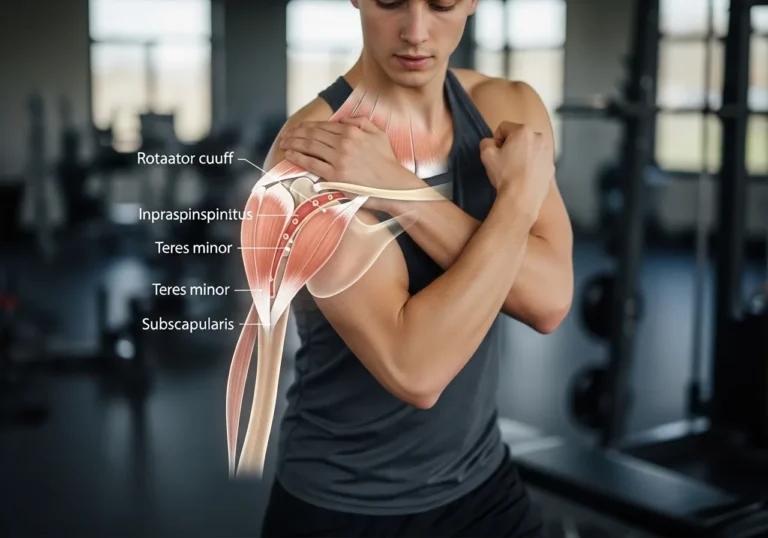
The hip hinge patterning exercise (standing, hinging at the hip with minimal knee bend while maintaining a neutral spine) develops the hamstring length and posterior chain mobility that the deadlift, Romanian deadlift, and all hip-dominant athletic movements require — performed for 10 controlled repetitions with a pause at the end range, actively lengthening the hamstrings without lumbar flexion compensation. The couch stretch (kneeling with one foot elevated on a wall or couch behind the body, creating a deep hip flexor stretch with simultaneous quadriceps load) is the most effective single exercise for hip flexor mobility — addressing the iliopsoas and rectus femoris shortening that prolonged sitting produces and that restricts running stride length, squat mechanics, and anterior pelvic tilt posture. Shoulder controlled articular rotations (CARs — slowly rotating the shoulder through its complete range of motion in both directions, actively producing maximum range at every point in the circle) develop the scapular control and rotator cuff strength through full range that overhead sport and pressing movement health requires — the active component distinguishing CARs from passive shoulder rotation stretches. The deep squat hold (bodyweight squat to maximum depth, holding the deepest achievable position for 30–60 seconds while actively trying to improve depth through controlled breathing) develops the combined hip flexion, ankle dorsiflexion, and thoracic extension that the full squat requires, and the sustained hold produces the hip capsule distraction that passive squatting cannot provide — performing 2–3 sets daily as a mobility diagnostic (depth improving weekly confirms that the restriction is yielding to the consistent practice).
Controlled Articular Rotations (CARs): The Active Mobility Method
Controlled Articular Rotations — the systematic practice of moving each joint through its complete range of motion under active muscular control — represent the active mobility training method with the strongest evidence for developing genuine neuromuscular mobility rather than passive flexibility. Developed by Dr. Andreo Spina’s Functional Range Conditioning (FRC) system, CARs address both the passive range (by moving through the complete available range) and the active control (by requiring the athlete to maintain maximum tension and control throughout the entire rotation) that functional mobility requires. The hip CAR technique: standing on one leg, bring the opposite knee toward the chest as high as possible, rotate the hip outward so the knee points to the side at maximum height, extend the hip behind the body reaching maximum extension, rotate the leg inward, and return to the starting position — completing a full orbital circuit of the hip joint under controlled muscular tension throughout. Perform 3–5 slow, maximally controlled rotations per direction per joint daily. The shoulder CAR: standing tall, raise the arm in the sagittal plane to maximum overhead reach, rotate the shoulder externally until the thumb points backward, continue the circle by reaching behind and down, rotating internally at the bottom of the circle, and returning to the starting position. The daily CAR practice: dedicating 5–10 minutes to hip, shoulder, spine, and ankle CARs builds the active neuromuscular control through full joint range that distinguishes genuine mobility from the passive flexibility that standard stretching produces. Research on CARs and joint health confirms their effectiveness for both improving range and maintaining joint health by providing the nutrition (synovial fluid circulation through movement) that articular cartilage requires for maintenance.
Resistance Band-Assisted Mobility: Joint Distraction Techniques
Resistance band joint distraction — applying a distracting force to the joint being mobilized through a looped band — addresses the joint capsule restrictions that soft tissue stretching cannot access, by creating space in the joint cavity that allows fuller range of motion with less compressive restriction. The mechanism: loop a heavy resistance band around the joint (proximal to the joint being mobilized), step or anchor away from the band attachment point to create the distracting tension, then perform the mobility exercise while the band maintains the joint distraction. Hip distraction for deep squat: loop the band around the upper thigh (as close to the hip joint as possible), step away from the anchor to create lateral tension, then perform the deep squat — the band’s lateral traction on the femoral head creates space in the posterior hip capsule that allows deeper, more comfortable hip flexion. Ankle distraction for dorsiflexion: loop the band around the front of the ankle, step away to create a posterior-directed traction on the talus, then drive the knee forward over the toes — the posterior talar traction creates the joint space that allows greater dorsiflexion range than tissue stretching alone provides. Shoulder distraction: with the arm at shoulder height and the band looped around the upper arm, step away to create inferior traction, then perform shoulder circles or overhead reach — the inferior distraction addresses the capsular tightness that limits overhead range. Band-assisted joint mobilization is particularly effective for athletes whose mobility restriction persists despite consistent soft tissue stretching — indicating a joint capsule or bone-on-bone restriction that requires the joint-specific distraction that bands provide.
The investment in daily mobility training — however small the initial commitment — compounds into the movement freedom, athletic performance, and injury resilience that distinguishes athletes who maintain mobility as a training priority from those who neglect it until restriction becomes pain or performance limitation demands attention. Begin today with the 10-minute morning sequence, perform it consistently for 8 weeks, and measure the specific mobility improvements that the compound effect of daily practice produces in the joints most relevant to your athletic performance. The body that moves freely is the body that performs optimally, recovers efficiently, and sustains athletic participation across the decades that consistent mobility training enables. Every minute invested in mobility work is a minute invested in the athletic longevity that the body’s structural health ultimately determines — treat it accordingly and the returns will exceed every expectation that beginning a 10-minute daily practice creates. The evidence-based mobility approach in this article — combining passive flexibility work with active neuromuscular control development, breathing integration, and sport-specific targeting — produces the functional mobility improvements that athletic performance requires, not just the passive flexibility that standard stretching alone delivers. Apply the assessment framework to identify your primary restrictions, select the exercises that most directly address those restrictions, implement the daily minimum viable practice with the habit stacking approach, and allow the consistent daily stimulus to produce the neural and structural adaptations that convert restricted movement into the athletic freedom that optimal mobility enables. Mobility is not a static property that some athletes have and others lack — it is a trainable quality that responds to consistent, appropriately designed practice with the progressive improvements that make the investment worthwhile at every stage of the athletic journey.
Building a Daily Mobility Routine: Sequences for Every Goal
A structured daily mobility routine — sequenced to address restrictions systematically rather than randomly selecting exercises — produces more consistent and faster mobility improvements than unsystematic mobility work. The following sequences are designed for specific goals and time constraints, providing complete mobility programs that address the most common restriction patterns.
The 10-Minute Morning Mobility Sequence
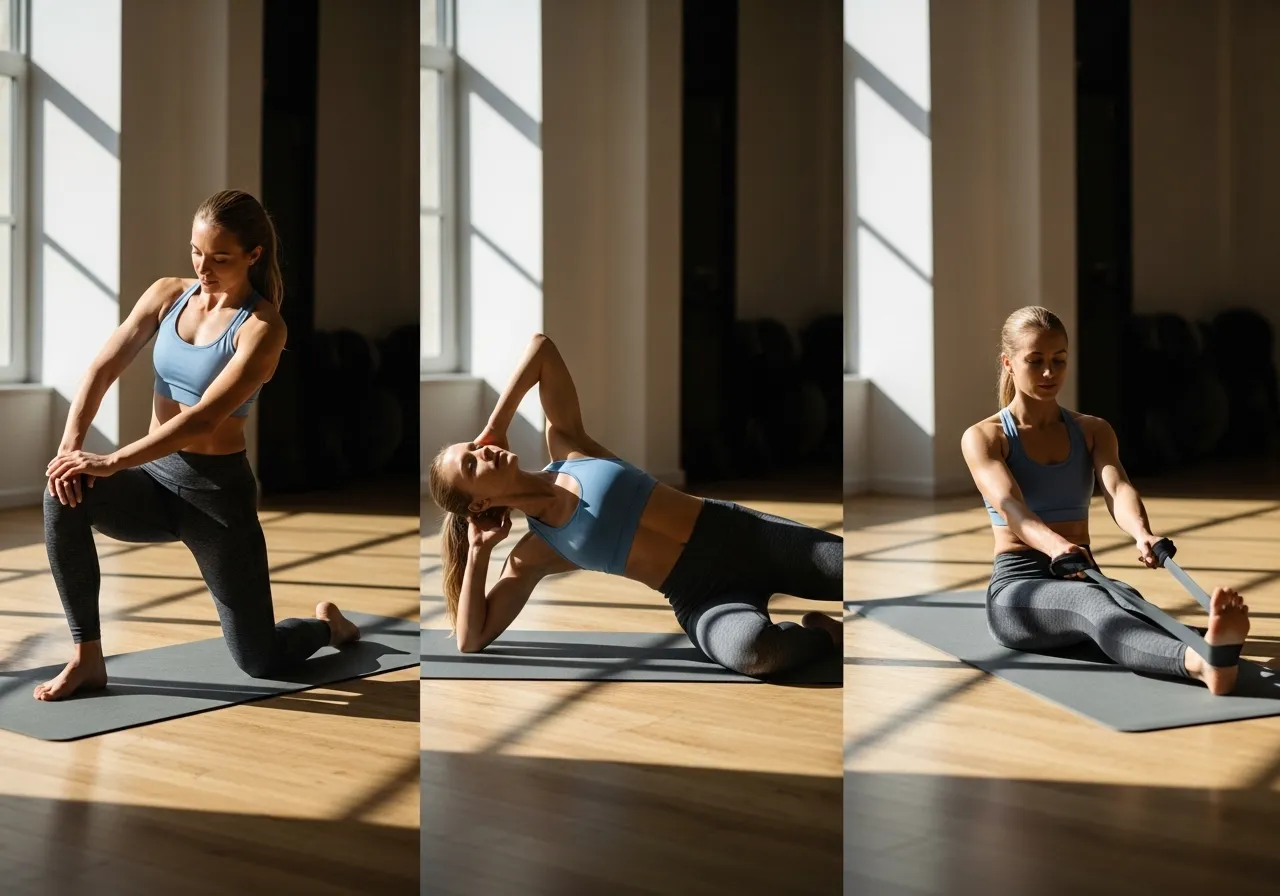
The minimum effective daily mobility practice — 10 minutes performed first thing in the morning to address post-sleep stiffness and set the movement quality for the day. Sequence: 90-90 hip stretch (2 minutes per side with active contract-relax technique), cat-cow spinal mobilization (2 minutes, 10 repetitions coordinated with breath), ankle dorsiflexion stretch in half-kneeling position (1 minute per side), and thoracic rotation seated (1 minute, 10 rotations per side). This 10-minute sequence addresses the hip, spine, and ankle — the three joints with the highest prevalence of mobility restriction in office workers and athletes — with sufficient time at each position to produce both the passive tissue change and the beginning of active range development. The morning timing is strategically optimal: post-sleep muscle stiffness is at its maximum, and addressing it first thing prevents the stiffness from persisting throughout the day’s activity. The sequence requires no equipment beyond a yoga mat and can be performed in the bedroom before showering, reducing the implementation friction that derails habits requiring travel to a separate exercise space.
The Pre-Training Mobility Warm-Up (15 Minutes)
The pre-training mobility sequence serves a different purpose than the morning routine — it prepares the specific joints and movement patterns that the training session will demand, using dynamic mobility exercises that elevate tissue temperature and activate the neuromuscular patterns of the upcoming training rather than the static stretching appropriate for the morning session. The evidence-based pre-training sequence: 5 minutes of light cardiovascular activity to elevate tissue temperature (the prerequisite for effective mobility work — cold tissue is less extensible and more injury-vulnerable); world’s greatest stretch (3 minutes, 5 repetitions per side); band pull-aparts and face pulls for shoulder mobility (2 minutes, 15 repetitions each); bodyweight squats with pause at depth (2 minutes, 10 repetitions with 2-second hold at bottom); and leg swings — anterior-posterior and lateral — for hip dynamic mobility (3 minutes, 15 swings per direction per leg). This dynamic approach maintains the muscle activation and neuromuscular readiness that static stretching temporarily reduces — using the end-range positions of each exercise as loading opportunities that activate the muscles through the ranges that training will demand rather than passively relaxing them. Research consistently finds that a dynamic mobility warm-up improves training performance (measured by squat depth, overhead press range, and sprint mechanics) compared to no warm-up, and is superior to static stretching for acute performance across most athletic movement patterns.
The Post-Training Mobility Cool-Down (10 Minutes)
Post-training mobility work takes advantage of the elevated muscle temperature from training (which enhances the effectiveness of static stretching) and addresses the specific restriction patterns that the training session’s movements may have reinforced. The post-training mobility sequence focuses on the muscles trained and the positions opposite to the dominant training postures: after squatting and deadlifting — hip flexor couch stretch (2 minutes per side), hamstring static hold (2 minutes per side), and thoracic extension over foam roller (3 minutes). After pressing and rowing — pectoral doorway stretch (2 minutes per side), shoulder external rotation stretch (2 minutes per side), and lat stretch (1 minute per side). After running — hip flexor static stretch (2 minutes per side), calf static stretch (2 minutes per side), and thoracic mobility (1 minute). The temperature advantage: post-training muscle temperature of 38–39°C produces 15–20% greater range improvement from the same stretching stimulus than the same stretching at resting temperature — making post-training the highest-quality time for static stretching and the appropriate window for targeting the mobility restrictions that limit performance most significantly.
The Dedicated Mobility Session (30–45 Minutes)
For athletes with significant mobility restrictions, a dedicated weekly mobility session — 30–45 minutes focused specifically on mobility training without training session overlap — provides the volume and intensity of mobility work that the supplementary warm-up and cool-down sessions cannot accumulate. The dedicated session structure: 5 minutes light cardiovascular warm-up, then systematic joint-by-joint mobility work from the ground up (ankles, hips, thoracic spine, shoulders, cervical spine) using the combination of passive hold (30–60 seconds), active contraction (5–10 seconds), and end-range strengthening (5–10 repetitions) that produces the most durable mobility improvements per session. The frequency recommendation: one dedicated mobility session per week is sufficient for athletes with mild to moderate restrictions; athletes with significant restriction patterns or rehabilitation needs benefit from 2–3 dedicated sessions weekly until restrictions resolve. Yoga classes provide an effective alternative to self-directed dedicated mobility sessions — the instructor guidance, structured sequence, and group accountability produce consistent mobility practice with the technique correction and progression management that self-directed practice often lacks.
Mobility for Injury Recovery: Special Considerations
Athletes recovering from musculoskeletal injuries require specific modifications to standard mobility programming — the same exercises that develop mobility in healthy joints may be contraindicated or require significant modification during injury recovery. The guiding principle for injured-joint mobility work: pain-free range only, beginning at ranges that are well within the pain-free zone and expanding only as the tissue healing process and clinical assessment confirm readiness for greater loads. Specific injury-stage considerations: acute injury (0–3 days) — gentle active range of motion within pain-free range only (no passive stretching, no end-range loading); subacute injury (4–14 days) — progress to pain-free range with light active control exercises; early rehabilitation (2–8 weeks) — guided mobility work prescribed by a physical therapist that specifically matches the tissue healing stage and the specific injury’s mobility requirements. Athletes who self-direct aggressive mobility work during injury recovery — attempting to “stretch out” an acutely injured structure — risk the reinjury of partially healed tissue that aggressive stretching of healing structures can produce. Professional guidance from a physical therapist for injury-period mobility programming is the appropriate approach for all but the most minor musculoskeletal complaints.
Progressive Overload for Mobility: How to Continuously Improve
Like strength training, mobility training requires progressive overload — systematically increasing the demand placed on the tissues and the nervous system to drive continued adaptation beyond the initial improvements that basic mobility work produces. The progression methods for mobility training differ from strength training but follow the same principle: if the current practice no longer challenges the system, it no longer drives adaptation. Passive stretching progression: increase hold duration (from 30 seconds to 60 to 90 to 120 seconds per position), increase frequency (from once to twice to three times daily), and increase the number of positions addressed (from 3 to 5 to 8 to the full joint system). Active mobility progression: add load to end-range positions (begin with bodyweight end-range holds, progress to light external resistance at end-range as control improves), increase the range of active motion required (progressively extending the active range over which muscular control is maintained), and add complexity (performing mobility exercises on unstable surfaces, with closed eyes, or under cognitive dual-task conditions as range and control improve). The most important progression principle: never increase the passive range targeted in mobility work without simultaneously developing the active strength and control through that range — the passive range without active control is the hypermobility danger that appropriate progressive overload prevents by coupling each flexibility improvement with the corresponding strength development through the new range.
Mobility Training Frequency: How Much Is Optimal?
The optimal frequency for mobility training depends on the training goal (maintenance vs. improvement), the severity of current restrictions, and the available time within the athlete’s training schedule. For maintaining current mobility levels: 3 sessions per week of 10 minutes each (30 total minutes) is sufficient for most athletes in active training phases where the training movements maintain the joint ranges required for those movements. For improving restricted mobility: daily practice is the evidence-supported frequency — the nervous system’s adaptation to new range requires the consistent daily stimulus that 2–3 times weekly practice does not adequately provide. The frequency-duration trade-off: 10 minutes daily produces greater mobility improvements than 30 minutes three times weekly for the same total weekly time investment — the daily frequency provides the consistent neural stimulus that the 3x weekly frequency’s higher per-session volume cannot replicate. For athletes with severe mobility restrictions requiring urgent improvement (pre-injury, pre-surgery, or functional movement screen failures with high injury risk implications): 2–3 dedicated mobility sessions per week in addition to daily 10-minute practice provides the additional volume that severe restrictions require to produce timely resolution. The frequency recommendation by goal — maintenance: 3× per week; improvement: daily 10+ minutes minimum; urgent correction: daily + 2–3× dedicated sessions.
The investment in daily mobility training — however small the initial commitment — compounds into the movement freedom, athletic performance, and injury resilience that distinguishes athletes who maintain mobility as a training priority from those who neglect it until restriction becomes pain or performance limitation demands attention. Begin today with the 10-minute morning sequence, perform it consistently for 8 weeks, and measure the specific mobility improvements that the compound effect of daily practice produces in the joints most relevant to your athletic performance. The body that moves freely is the body that performs optimally, recovers efficiently, and sustains athletic participation across the decades that consistent mobility training enables. Every minute invested in mobility work is a minute invested in the athletic longevity that the body’s structural health ultimately determines — treat it accordingly and the returns will exceed every expectation that beginning a 10-minute daily practice creates. The evidence-based mobility approach in this article — combining passive flexibility work with active neuromuscular control development, breathing integration, and sport-specific targeting — produces the functional mobility improvements that athletic performance requires, not just the passive flexibility that standard stretching alone delivers. Apply the assessment framework to identify your primary restrictions, select the exercises that most directly address those restrictions, implement the daily minimum viable practice with the habit stacking approach, and allow the consistent daily stimulus to produce the neural and structural adaptations that convert restricted movement into the athletic freedom that optimal mobility enables. Mobility is not a static property that some athletes have and others lack — it is a trainable quality that responds to consistent, appropriately designed practice with the progressive improvements that make the investment worthwhile at every stage of the athletic journey.

Mobility Training for Specific Sports and Training Types
The mobility requirements of different sports and training disciplines vary significantly — reflecting the specific joint demands, dominant movement patterns, and restriction risks of each activity. Targeting mobility work to the specific requirements of the athlete’s primary activity produces faster, more functionally relevant improvements than generic mobility programming that does not address the sport-specific patterns.
Mobility for Strength Training and Powerlifting
The three powerlifting movements (squat, bench press, deadlift) and the foundational strength training patterns place specific mobility demands on the hip, thoracic spine, and shoulder that directly determine performance and injury risk. Squat mobility requirements: ankle dorsiflexion (minimum 15–20 degrees of dorsiflexion for a flat-footed deep squat), hip internal rotation and flexion (for achieving depth with proper hip mechanics), and thoracic extension (for maintaining an upright torso under load). Athletes who squat with heels elevated (using plates or heel-elevating shoes) are compensating for ankle dorsiflexion restriction — which is an appropriate short-term accommodation but not a substitute for the ankle mobility work that reduces this restriction over time. Deadlift mobility requirements: hip hinge flexibility (hamstring length sufficient to reach the bar with a neutral spine), thoracic extension (for the neutral spine position that disc health during heavy loading requires), and hip internal rotation in the starting position. Bench press mobility requirements: thoracic extension (for the arch position that maximizes the lift and protects the shoulder), shoulder external rotation (for placing the shoulder in the packed position that reduces rotator cuff impingement risk), and pectoral flexibility (allowing the shoulder blades to retract and the chest to rise without impingement). The sport-specific mobility priority for strength athletes: ankle dorsiflexion and hip flexion depth for squat, thoracic extension for all three lifts, and shoulder external rotation and pectoral flexibility for bench press.
Mobility for Running and Endurance Sports
Running economy — the metabolic cost of maintaining a given running pace — is significantly influenced by the mobility of the hip, ankle, and thoracic spine that determines running mechanics. Hip flexor mobility is the most impactful single mobility factor for running performance: restricted hip flexors limit hip extension during the push-off phase of running, reducing stride length and forcing compensation through increased lower back extension that produces the lower back pain common in high-mileage runners. The hip flexor mobility requirement for optimal running mechanics: full hip extension (the thigh passing behind the line of the trunk during push-off) requires hip flexor length that prolonged sitting systematically reduces. Ankle dorsiflexion in running: the controlled plantarflexion and dorsiflexion cycle of the running gait requires ankle mobility that restricted calves and Achilles reduce — producing the overstriding mechanics and reduced energy return that restricted ankles cause. Thoracic rotation in running: the arm swing and counter-rotation of the trunk that efficient running requires depends on the thoracic rotational mobility that forward-head sitting posture restricts — runners with thoracic restriction demonstrate reduced trunk rotation and asymmetric arm swing that reduces running efficiency and increases rotational asymmetry injury risk. The endurance athlete’s daily mobility priority: hip flexor work (couch stretch, 90-90 hip stretch), calf and Achilles stretching (straight-leg and bent-knee variations to address both gastrocnemius and soleus), and thoracic rotation — the three restriction patterns with the highest running economy impact.
Mobility for Team Sports and Field Athletes
Team sport athletes — soccer, football, basketball, rugby, lacrosse — require the multi-directional hip mobility, rotational thoracic mobility, and ankle stability that cutting, sprinting, jumping, and contact movements demand. The hip’s ability to move explosively through full range of motion in all directions is the primary mobility requirement for field sport performance — and the direction-specific hip restrictions that sedentary postures produce limit the specific athletic movements that field sports require. The most common field sport mobility restrictions: hip internal rotation (limiting the pushing-off mechanics of lateral movement), hip extension (limiting sprint stride length and acceleration mechanics), and ankle dorsiflexion (limiting the deceleration and change-of-direction mechanics that require ankle bend under load). The field sport athlete’s mobility program prioritizes the dynamic, multi-planar mobility exercises that match the sport’s movement demands: multi-directional leg swings (15 per direction per leg), lateral lunge with thoracic rotation (addressing the lateral movement and rotational demand simultaneously), and single-leg hip hinge with contralateral reach (developing the hip hinge mechanics and hamstring flexibility that sprint deceleration requires). Research consistently finds that field sport athletes with lower-quality mobility screening scores (FMS or similar) sustain significantly higher rates of lower extremity injury than those with better scores — confirming that mobility training is both a performance and injury prevention investment for this population.
Mobility for Overhead Athletes: Swimming, Tennis, and Volleyball
Athletes whose primary sport involves repetitive overhead movements (swimmers, tennis players, volleyball players, throwers) develop sport-specific mobility imbalances from the repetitive overhead loading patterns that produce strength and flexibility adaptations specific to those patterns. Internal rotation dominance: overhead athletes typically develop significant internal rotation strength and flexibility in the dominant arm while developing tightness in the posterior capsule and external rotators — the imbalance that produces the glenohumeral internal rotation deficit (GIRD) associated with shoulder impingement and labral injury in overhead athletes. The mobility correction for overhead athletes: posterior capsule stretching (the sleeper stretch — lying on the affected side with the arm at 90 degrees of shoulder flexion, using the other arm to gently internally rotate the shoulder — specifically addressing the posterior capsule tightness that GIRD represents), external rotation strengthening through full range (band external rotation, 15 repetitions per arm, developing the external rotator strength that prevents the internal rotation dominance), and thoracic extension (improving the thoracic extension that overhead reach requires, reducing the compensation of excessive lumbar extension that thoracic restriction forces). These overhead-specific mobility interventions require daily practice during heavy training periods — the sport-induced adaptations that create GIRD accumulate with training volume and must be consistently countered to prevent the injury cascade that unaddressed shoulder mobility imbalance produces.
Yoga and Pilates as Mobility Training Systems
Yoga and Pilates provide comprehensive, coached mobility training systems that address the flexibility, strength, and neuromuscular control dimensions of mobility through structured, progressive practices with the instructional guidance that self-directed mobility work often lacks. Yoga’s mobility benefits: the combination of static stretching (held poses for 30+ seconds), dynamic stretching (flow transitions between poses), and active range development (poses requiring muscular effort to achieve and maintain) addresses all three components of mobility training — passive flexibility, active control, and neuromuscular strength through range. The evidence base: research consistently finds that yoga practice 2–3 times per week produces significant improvements in hip flexibility, thoracic mobility, hamstring length, and balance within 8–12 weeks — with effect sizes comparable to dedicated stretching programs but with the additional benefits of breath awareness, mindfulness, and the progressive program structure that yoga instruction provides. Pilates’s contribution: the core stability, spinal segmental control, and scapular motor patterns that Pilates emphasizes address the active stability component of mobility — the ability to maintain controlled, neutral joint positions during dynamic movement — that yoga alone does not systematically develop. For athletes with time constraints, a weekly yoga class combined with the daily 10-minute morning mobility sequence provides the frequency and volume of mobility training that significant restriction improvements require, with the instructional guidance that optimizes technique and progression.
Hip Mobility Deep Dive: The Most Critical Athletic Joint
The hip joint is the most functionally important single joint for athletic performance across virtually all sports — it produces the force for running, jumping, throwing, and lifting; provides the stability base for all upper body movements; and transfers force between the lower extremities and the trunk in all athletic movement patterns. Hip mobility restrictions are therefore the highest-impact single target for athletic mobility work, and the specific restriction pattern (which hip movement is most restricted) determines the specific exercises that will produce the greatest performance improvement. The six hip movement directions and their athletic significance: hip flexion (for squatting depth and running high-knee mechanics); hip extension (for sprint stride length and push-off power); hip internal rotation (for the lateral movement push-off and hip hinge mechanics); hip external rotation (for the squat setup and the deep hip position in gymnastics and martial arts); hip abduction (for lateral movement and single-leg stability); hip adduction (for the groin stability that resists valgus collapse). The most common hip restriction pattern in sedentary athletes: hip internal rotation and extension (from prolonged sitting that chronically flexes and externally rotates the hip), followed by hip flexion (for athletes with tight hip flexors from the same sitting position). The assessment and targeted intervention for each specific restriction provides the individualized hip mobility approach that generic “hip stretching” does not.
Thoracic Spine Mobility: The Hidden Foundation of Athletic Performance
Thoracic spine mobility — the rotation, extension, and lateral flexion of the 12 middle vertebrae — is among the most commonly under-addressed and highest-impact mobility targets for athletes across all disciplines. The thoracic spine’s primary athletic functions: providing the rotational foundation for throwing, swimming, and all rotational sports; contributing the extension range that overhead pressing and swimming require; distributing the spinal loading that prevents excessive stress concentration in the lumbar spine; and allowing the thoracic counter-rotation to the pelvis that efficient running gait requires. Contemporary thoracic restriction patterns: the forward head, rounded-shoulder sitting posture that occupational sitting produces chronically restricts thoracic extension and both directions of rotation — producing the functional compensations at the lumbar spine (excessive lumbar extension to compensate for thoracic restriction) and shoulder (shoulder impingement from inadequate thoracic extension for overhead reach) that drive the most common athletic injury complaints. The thoracic mobility investment: 5 minutes daily of thoracic extension over a foam roller and rotational mobility work produces improvements in all upper body performance metrics (overhead press range, throwing distance and accuracy, swimming stroke efficiency) that direct upper extremity mobility work cannot produce when thoracic restriction is the underlying limiting factor. Addressing thoracic restriction before direct shoulder mobility work for athletes with overhead shoulder issues consistently produces better outcomes than shoulder-isolated work — because the thoracic extension and rotation that the shoulder reach requires cannot be produced by a mobility-restricted thoracic spine regardless of how mobile the shoulder joint itself becomes.
The investment in daily mobility training — however small the initial commitment — compounds into the movement freedom, athletic performance, and injury resilience that distinguishes athletes who maintain mobility as a training priority from those who neglect it until restriction becomes pain or performance limitation demands attention. Begin today with the 10-minute morning sequence, perform it consistently for 8 weeks, and measure the specific mobility improvements that the compound effect of daily practice produces in the joints most relevant to your athletic performance. The body that moves freely is the body that performs optimally, recovers efficiently, and sustains athletic participation across the decades that consistent mobility training enables. Every minute invested in mobility work is a minute invested in the athletic longevity that the body’s structural health ultimately determines — treat it accordingly and the returns will exceed every expectation that beginning a 10-minute daily practice creates. The evidence-based mobility approach in this article — combining passive flexibility work with active neuromuscular control development, breathing integration, and sport-specific targeting — produces the functional mobility improvements that athletic performance requires, not just the passive flexibility that standard stretching alone delivers. Apply the assessment framework to identify your primary restrictions, select the exercises that most directly address those restrictions, implement the daily minimum viable practice with the habit stacking approach, and allow the consistent daily stimulus to produce the neural and structural adaptations that convert restricted movement into the athletic freedom that optimal mobility enables. Mobility is not a static property that some athletes have and others lack — it is a trainable quality that responds to consistent, appropriately designed practice with the progressive improvements that make the investment worthwhile at every stage of the athletic journey.

Mobility Myths, Common Mistakes, and FAQs
Mobility training is surrounded by a significant number of misconceptions that lead athletes to either avoid it (believing it to be ineffective or unnecessary) or practice it incorrectly (producing frustration and suboptimal results). Addressing these myths and mistakes directly provides the accurate framework that converts mobility training into the consistent, effective practice that genuine mobility improvements require.
Myth 1: More Flexibility Is Always Better
The belief that maximum flexibility is the mobility goal — that the most flexible athlete performs best and has the lowest injury risk — is directly contradicted by the research on the relationship between flexibility, stability, and injury. Hypermobility (excessive joint laxity from overly flexible ligaments and joint capsules) is associated with increased injury risk, not reduced injury risk — athletes who are already highly flexible (particularly those with Ehlers-Danlos syndrome or benign joint hypermobility syndrome) require stability and strength training rather than flexibility training that further increases the already-excessive joint range their passive structures allow. For the large majority of athletes with normal or restricted flexibility, improving mobility produces performance and injury prevention benefits — but the goal is functional mobility (achieving the ranges required for athletic movement under muscular control) rather than maximum flexibility (achieving the greatest passive range regardless of active control). The evidence-based mobility target is joint-specific: the ankle requires 20+ degrees of dorsiflexion for deep squatting; the hip requires 120+ degrees of flexion for running gait; the thoracic spine requires 40+ degrees of rotation for throwing — these functional targets, not maximum flexibility, are the appropriate mobility goals for athletic performance.
Myth 2: Stretching Before Exercise Prevents Injury
The research on pre-exercise static stretching and injury prevention is more nuanced than the conventional wisdom that stretching before exercise prevents injuries. Evidence from multiple meta-analyses on pre-exercise stretching and acute injury rates finds no significant injury reduction from pre-exercise static stretching — and some evidence that acute static stretching before maximal strength and power activities temporarily reduces performance (power output, sprint speed, maximal strength) by 5–8% in the 60 minutes following the stretch. The appropriate pre-exercise warm-up, supported by strong evidence: dynamic mobility exercises at low to moderate intensity (the exercises described in the pre-training warm-up sequence) improve performance and may reduce injury risk through tissue temperature elevation, neuromuscular activation, and the sport-specific movement pattern priming that dynamic warm-ups provide. Static stretching, by contrast, is most appropriate for the post-training period when performance demands are complete and the mobility improvements from elevated tissue temperature can be targeted without the performance cost that pre-training static stretching produces.
Myth 3: Mobility Training Must Be Painful to Be Effective
The “no pain, no gain” philosophy applied to mobility training is counterproductive and potentially harmful — pain during stretching activates the stretch reflex and triggers the nervous system’s protective response, increasing muscle tone and reducing the available range precisely at the moment that the stretch is attempting to expand it. The appropriate sensation during mobility work is mild, comfortable tension — the sensation of lengthening tissue without the sharpness, burning, or discomfort that indicates excessive load or poor positioning. Athletes who stretch aggressively into pain consistently produce slower mobility improvements than those who work at comfortable tension levels — because the pain response produces the muscle guarding that works against the mobility goal, while comfortable tension allows the nervous system to accept and explore new ranges without triggering the protective response that painful stretching activates. The practical intensity guideline: work at 5–6/10 intensity (mild tension, comfortable breathing, no facial grimacing) rather than 8–9/10 (near-pain intensity that produces the counterproductive nervous system response). Consistent comfortable work at this level produces faster lasting mobility improvements than occasional intense stretching at pain thresholds.
Common Mobility Training Mistakes
The most frequent execution errors in mobility practice reduce effectiveness without the time savings of complete omission. Holding breath: holding the breath during stretching activates the Valsalva maneuver and increases intra-abdominal pressure, maintaining the sympathetic tone that restricts range — breathe continuously throughout every mobility exercise, using the exhale specifically at the deepest point of each stretch. Bouncing (ballistic stretching): rapid repetitive bouncing in a stretch position activates the stretch reflex (the muscle contracts to resist the rapid lengthening), preventing the viscoelastic tissue elongation that held positions produce. Replace bouncing with slow, controlled movement to end range followed by 20–30 second holds. Insufficient hold duration: 5–10 second holds do not provide the sustained load required for viscoelastic tissue creep — holds of 20–60 seconds are required for meaningful static stretching improvements. Only stretching one side: most athletes have significantly greater restriction on one side than the other (the non-dominant side or the side of previous injury), and equal time on both sides underworks the restricted side while overworking the flexible side — spend 50% more time on the more restricted side until bilateral symmetry is achieved. Skipping active components: passive stretching without active end-range strengthening develops flexibility without the active mobility that athletic performance requires — add 5–10 second isometric contractions and end-range strengthening to every passive stretch to develop the active control that converts flexibility into functional mobility.
Frequently Asked Questions About Mobility Training
How long until I see mobility improvements? Early improvements (1–3 weeks) reflect neurological changes — reduced protective muscle tone from consistent practice. Structural improvements (tissue length changes) require 6–12 weeks of consistent daily practice. Significant functional mobility improvements that change athletic performance are typically measurable at 3 months. How often should I do mobility work? Daily practice produces the fastest and most durable results — the nervous system responds to the consistent daily stimulus better than the 2–3 times weekly frequency that structural flexibility training requires. Minimum effective frequency for mobility maintenance: 3–4 times per week. Should I do mobility work when sore? Gentle mobility work through pain-free range is appropriate and beneficial during DOMS — the light movement maintains the joint synovial fluid circulation and reduces the passive stiffness that inactivity during soreness produces. Avoid aggressive stretching of severely sore muscles that may have significant microtrauma. Is foam rolling the same as stretching? Foam rolling (self-myofascial release) addresses myofascial adhesions and reduces neural protective tone through a different mechanism than stretching — it is a complementary tool, not a substitute. Use foam rolling before stretching to reduce the initial tissue resistance that makes stretching more effective. Can I become too flexible from mobility training? Healthy athletes without pre-existing hypermobility conditions cannot become too flexible from appropriate mobility training that simultaneously develops active strength through new ranges. Hypermobility from passive stretching without active strength development is the risk — avoided by including the active components with every mobility exercise. What is the single most important mobility exercise? For most athletes with sedentary occupations, the hip flexor stretch (couch stretch or 90-90) addresses the most prevalent and functionally significant restriction — the hip flexor tightness that prolonged sitting produces affects running mechanics, squat performance, pelvic alignment, and lower back health simultaneously.
Nutrition and Recovery’s Role in Mobility Training
The physiological processes that produce lasting mobility improvements — collagen remodeling, neural adaptation, connective tissue extensibility changes — require specific nutritional support and recovery conditions that are frequently overlooked in mobility-focused discussions. Collagen synthesis for connective tissue remodeling: the type 1 collagen that comprises ligaments, tendons, and fasciae undergoes remodeling in response to the mechanical load of mobility training, and this remodeling requires vitamin C (essential cofactor for collagen synthesis), glycine (the primary amino acid of collagen), and adequate total protein intake. Consuming 10–15g of gelatin or collagen hydrolysate with 50mg of vitamin C 30–60 minutes before mobility sessions has research support for enhancing the collagen synthesis response to the mechanical loading that mobility training provides. Hydration: adequate hydration maintains the viscosity of synovial fluid and the compliance of connective tissue — dehydration increases passive tissue stiffness and reduces the range available for mobility work, making consistent hydration (targeting 35ml/kg daily) a meaningful modifier of mobility training effectiveness. Sleep’s role in mobility: the tissue repair and remodeling processes stimulated by mobility training occur primarily during sleep, making sleep quality a significant determinant of how quickly mobility training produces structural tissue adaptations beyond the immediate neurological changes. Athletes who combine daily mobility practice with adequate sleep (7–9 hours), consistent hydration, and collagen-supporting nutrition produce mobility improvements that the training stimulus alone — without these recovery supports — cannot drive as quickly.
Measuring Mobility Progress: Objective Assessment Methods
Objective measurement of mobility progress provides the feedback that confirms the training approach is producing the intended improvements and identifies areas requiring increased attention. The most practical mobility measurement methods for self-assessment: goniometry (measuring joint angles with an inexpensive plastic goniometer available for $10–20 online) provides accurate degree measurements for hip flexion, hip internal/external rotation, ankle dorsiflexion, and shoulder external rotation — the specific angles that athletic mobility targets require. The Thomas test for hip flexor length can be performed with a tape measure (measuring the height of the knee above the table surface when the other knee is pulled to the chest, with zero indicating neutral hip flexor length). Thoracic rotation can be measured by marking the rotational endpoint on the wall and tracking the progressive increase in marks over weeks of consistent practice. For squat mobility: marking the maximum depth achieved on a wall and tracking upward progression over weeks of consistent ankle and hip mobility work. The measurement frequency: assess every 4 weeks — the time period over which structural tissue adaptations produce measurable range of motion changes above measurement error. Document baseline measurements when beginning mobility training and compare quarterly — the motivation of seeing objective, measurable range improvements across 3-month periods provides the evidence-based confirmation that the mobility investment is producing the results that subjective assessment might underestimate during the slow, gradual improvement process that genuine structural mobility change represents. Mobility training rewards patience and consistency — the athletes who sustain daily practice across months and years develop movement capabilities that their peers who trained hard but neglected mobility will eventually be unable to match.
The investment in daily mobility training — however small the initial commitment — compounds into the movement freedom, athletic performance, and injury resilience that distinguishes athletes who maintain mobility as a training priority from those who neglect it until restriction becomes pain or performance limitation demands attention. Begin today with the 10-minute morning sequence, perform it consistently for 8 weeks, and measure the specific mobility improvements that the compound effect of daily practice produces in the joints most relevant to your athletic performance. The body that moves freely is the body that performs optimally, recovers efficiently, and sustains athletic participation across the decades that consistent mobility training enables. Every minute invested in mobility work is a minute invested in the athletic longevity that the body’s structural health ultimately determines — treat it accordingly and the returns will exceed every expectation that beginning a 10-minute daily practice creates. The evidence-based mobility approach in this article — combining passive flexibility work with active neuromuscular control development, breathing integration, and sport-specific targeting — produces the functional mobility improvements that athletic performance requires, not just the passive flexibility that standard stretching alone delivers. Apply the assessment framework to identify your primary restrictions, select the exercises that most directly address those restrictions, implement the daily minimum viable practice with the habit stacking approach, and allow the consistent daily stimulus to produce the neural and structural adaptations that convert restricted movement into the athletic freedom that optimal mobility enables. Mobility is not a static property that some athletes have and others lack — it is a trainable quality that responds to consistent, appropriately designed practice with the progressive improvements that make the investment worthwhile at every stage of the athletic journey.