The Best Podcasts for Fitness Motivation
⚠️ Disclaimer: The information in this article is for general educational purposes only and does not constitute medical, nutritional, or professional fitness advice. Individual results may vary. Always consult a qualified healthcare professional or certified fitness trainer before starting any new exercise program, changing your diet, or making decisions about injury treatment or recovery. If you experience pain, discomfort, or any unusual symptoms during exercise, stop immediately and seek professional guidance.
Why Fitness Podcasts Work: The Psychology of Audio Motivation
The most common reason people skip workouts is not lack of knowledge about what to do — it is lack of motivation to do it. The barrier is psychological, not informational, and solving a psychological problem with more information (another training program, another nutrition article, another before-and-after transformation photo) addresses the wrong variable. Fitness podcasts work differently: they provide the social connection, narrative engagement, and sustained intellectual stimulation that transforms exercise from an isolated chore into a connected, engaging practice that competes successfully with the social media scrolling, television watching, and other passive entertainments that otherwise win the attention competition during leisure hours. After three years of using fitness podcasts as a primary training motivation tool, I can report that they are the single most impactful addition to my training consistency that costs nothing and takes zero additional time.
The Psychology of Audio Content and Exercise Adherence
Research on music and exercise consistently finds that audio stimulation during workouts reduces perceived exertion, improves performance, and increases exercise duration — people work harder and longer when listening to something engaging than when training in silence. The mechanism: attentional dissociation — directing attention to the audio content reduces the proportion of conscious attention available to monitor the discomfort and effort of exercise, making the same objective workload feel subjectively easier. Podcasts produce stronger attentional dissociation effects than music for many exercisers because the narrative engagement of spoken content — following an argument, tracking a story, absorbing new information — demands more active cognitive processing than music listening, creating deeper absorption in the content and correspondingly less attention available for effort monitoring. Research from sports psychology on “associative” versus “dissociative” attention strategies during exercise finds that dissociative strategies (focusing attention away from physical sensations) are superior for recreational exercisers seeking enjoyment and adherence, while associative strategies (monitoring body sensations) are superior for competitive performance. For the majority of recreational fitness enthusiasts whose primary challenge is consistency rather than peak performance, podcasts provide exactly the dissociative attentional shift that makes training more enjoyable and more consistent.
Knowledge-Based Motivation: Learning While Training
Beyond the attentional dissociation benefit, fitness podcasts create a second motivation mechanism that is unique to educational audio content: the “knowledge dividend” of each training session. Every workout that includes a genuinely informative fitness podcast delivers not only the physical training stimulus but also new knowledge about training, nutrition, recovery, or performance that the listener can apply immediately or in future sessions. This knowledge accumulation across months and years of podcast-enhanced training produces a progressively more sophisticated, evidence-informed training approach that typical gym-only training rarely develops. Listeners who have absorbed hundreds of hours of content from research-based fitness podcasts make better programming decisions, understand the mechanisms behind their training choices, troubleshoot plateaus more effectively, and maintain motivation through the intellectual engagement with their fitness practice as a subject of genuine interest — not just a health obligation. The transformation from “training is something I have to do” to “training is something I’m intellectually engaged with and continuously learning about” is one of the most reliable predictors of long-term fitness adherence, and fitness podcasts are among the most effective catalysts for this transformation.
Social Parasocial Connection: Feeling Part of a Community
Humans are social creatures whose motivation is profoundly influenced by the perceived social context of their behavior — activities experienced in social connection feel more meaningful and are more easily sustained than identical activities experienced in isolation. Fitness podcasts create parasocial relationships — one-sided connections where the listener feels genuine familiarity with and connection to hosts they have never met — that provide the social motivation benefit of training with knowledgeable, enthusiastic fitness companions without requiring schedule coordination or geographic proximity. Regular listeners of podcasts like Huberman Lab, the Tim Ferriss Show, or Mind Pump report feeling a genuine sense of relationship with the hosts — caring about their experiences, adopting their approaches, and feeling part of the implicit community of other listeners who share the content. This parasocial community effect is psychologically real even when it is not reciprocal: the motivation benefit of training “with” a podcast host whose voice has become a familiar training companion is functionally similar to training with a knowledgeable friend, providing the accountability and social engagement that solo training lacks.
Matching Podcast Type to Training Type
Not all podcast content is equally appropriate for all training contexts — the optimal podcast for a 30-minute Zone 2 run is very different from the optimal podcast for a high-intensity strength session requiring focus and technique precision. The matching principle: low-intensity, rhythmically steady cardio (running, cycling, elliptical, walking) is the optimal context for long-form, intellectually demanding podcasts that require sustained attention — the steady-state nature of the exercise allows continuous engagement with complex content without requiring attention redirection to technique or effort management. High-intensity intervals — where effort fluctuates significantly and attention must sometimes focus on the exercise — benefits more from shorter podcast segments or easily followed narrative content that does not require sequential attention for comprehension. Strength training — where technique focus, rest period timing, and exertional output management periodically need full attention — works best with podcast content that can be paused during sets without losing narrative thread. The ideal podcast length for most training sessions: 45–90 minute episodes that span a complete session and allow the narrative engagement to build across the workout, ending with the session rather than requiring awkward pauses or continuations.
Creating a Podcast Training Ritual
The most effective use of fitness podcasts as a motivation tool involves creating a deliberate ritual that pairs specific podcast listening exclusively with training — making the podcast’s availability a reward contingent on training and a cue that reliably initiates the training behavior. Implementation: designate a specific podcast or category of podcasts as “training only” content — never listened to during commuting, housework, or leisure — so that the desire to hear the next episode becomes a consistent motivation to train. Queuing the next episode before the training session removes the activation energy barrier of finding content mid-warm-up. Setting a “new episode” notification for favorite shows creates anticipation for training days that coincide with release schedules. This ritual structure — “new Huberman Lab episode = today is the day I do that long run I’ve been avoiding” — leverages the Premack Principle (using a high-frequency behavior as a reward for a lower-frequency target behavior) to pair the desired training behavior with an immediately rewarding activity that makes the training motivation intrinsic rather than requiring willpower to generate.
Video vs. Audio: Why Podcasts Outperform YouTube for Training Motivation
The proliferation of fitness content on YouTube, Instagram, and TikTok provides abundant video alternatives to podcast listening, but audio-only content has specific advantages for training motivation that visual content cannot replicate. The most obvious: audio content can be consumed while exercising outdoors, in motion, or during any form of cardio without requiring eye contact with a screen — the phone can stay in the pocket while the earbuds deliver the content. More subtly, audio-only content requires the listener’s imagination and active mental engagement in a way that video does not — the absence of visual information means the mind constructs the narrative from audio alone, demanding more active processing and creating deeper cognitive engagement. Research on learning and retention finds that audio-only content produces equivalent or superior information retention to video for content-rich educational material when listeners are actively engaged — the absence of visual distraction may actually improve information processing for serious listeners. The podcast format also encourages longer-form, more substantive content than video platforms algorithmically favor — a two-hour deep dive into training science that would perform poorly as a YouTube video becomes an ideal podcast episode for engaged listeners seeking serious information during a long training session.
The Best Podcast Listening Equipment for Training
Audio quality and comfort during exercise significantly affect the podcast listening experience, and the right equipment makes the difference between an immersive, motivating session and a frustrating one of earbuds falling out and background noise overwhelming the content. Wireless earbuds (true wireless Bluetooth) are the standard for running and gym training — the absence of cables eliminates the constant cable-on-clothing noise that wired earbuds produce during movement. For outdoor running, bone conduction headphones (Shokz/AfterShokz) leave the ear canal open for environmental awareness while still delivering audio, providing a safety-conscious alternative that allows hearing traffic and surroundings without sacrificing audio content. For gym training where noise isolation is desired, closed-cup over-ear headphones provide the best audio quality and noise isolation but are impractical for cardio — the better-isolation earbuds (AirPods Pro, Sony WF-1000XM5) offer active noise cancellation in a workout-appropriate form. Battery life consideration: most training sessions run 45–90 minutes — any earbud with 5+ hours of continuous playback is appropriate; prioritize sweat resistance (IPX4 or higher) and stable fit for workout-specific use. The audio equipment investment — $50–200 for quality workout-appropriate wireless earbuds — is among the highest-return fitness gear purchases available relative to its impact on training consistency and enjoyment.
Podcasts and Mindful Training: Knowing When NOT to Listen
While podcasts are powerful motivation and engagement tools for most training contexts, there are specific training situations where podcast listening actively impairs performance and where the dissociative attention it provides is counterproductive. Maximum effort strength sets — single or low-rep maxes where the entire training session’s output is concentrated into one decisive effort — require full attentional focus on the movement, breath, and force production that listening to content distracts from. Technical skill work — Olympic lifting, gymnastics, sport-specific movement patterns — requires the proprioceptive attention that podcast listening pre-empts. Mindful low-intensity recovery sessions — where the therapeutic value is specifically the intentional attention to body sensations, breath, and movement quality — benefit from silence or ambient sound rather than audio content. The podcast-free training context creates what sports psychologists call “associative attention” — the deliberate monitoring of physical sensations during exercise that competitive athletes train specifically for performance — and incorporating some podcast-free sessions alongside the podcast-enhanced sessions develops the attentional flexibility that serves both training enjoyment and peak performance.
The psychology of podcast-enhanced training — attentional dissociation, knowledge accumulation, parasocial connection, and ritual creation — provides the motivational infrastructure that converts sporadic training into the consistent, engaged practice that produces long-term fitness results. The specific podcasts that follow are the content that best delivers these psychological benefits for fitness-focused listeners. The motivational psychology of fitness podcasts — attentional dissociation, knowledge accumulation, parasocial community connection, and ritual creation — addresses the actual barriers to consistent training more directly than additional training information, making them the highest-leverage motivation investment for athletes whose primary challenge is consistency rather than knowledge.
Podcasts as a Gateway to the Fitness Community
One of the less obvious but genuinely impactful benefits of regular fitness podcast consumption is the community access it provides. The communities that form around popular fitness podcasts — Huberman Lab’s comment sections and associated subreddits, Mind Pump’s Facebook groups, the Twitter and Instagram communities of Stronger by Science listeners — are among the most evidence-focused, supportive, and intellectually engaged fitness communities online. Participating in these communities as a podcast listener provides the social fitness connection that many solo athletes lack — the ability to discuss training approaches, share experimental results, ask questions of more experienced practitioners, and feel part of a broader athletic community that shares the values of evidence-based, progressive, thoughtful training. The podcast is the entry point; the community is the sustaining social infrastructure that makes continued engagement feel meaningful beyond the solo training experience.
The athletes who make fitness podcast consumption a consistent, structured part of their training practice — not just occasional background entertainment but a deliberate educational investment — develop the athletic intelligence, scientific literacy, and community connection that distinguish the athlete who perpetually improves from the one who reaches a plateau and cannot identify why. Start with one episode from any of the shows in this article during tomorrow’s training session; the compound returns of that single first step build into the sustained training transformation that years of consistent podcast-enhanced athletic practice delivers. Fitness podcasts have fundamentally changed how serious recreational athletes learn, develop, and sustain their training practice — converting what was previously an expensive, access-limited privilege of working with elite coaches into a democratically available, continuously updated, world-class education available to anyone with earbuds and 30 minutes of training time. The best fitness podcast habit is the one built deliberately, maintained consistently, and applied systematically to training — the exact combination that makes fitness podcast consumption not just an enjoyable training companion but a genuine competitive advantage in the long-term athletic development project that serious athletes invest years of effort building. This knowledge, consistently applied across the full arc of an athletic training life, compounds into the sustainable, enjoyable, high-performance fitness practice that is the real goal behind every individual workout, recovery protocol, and training decision. Start with one podcast episode today.
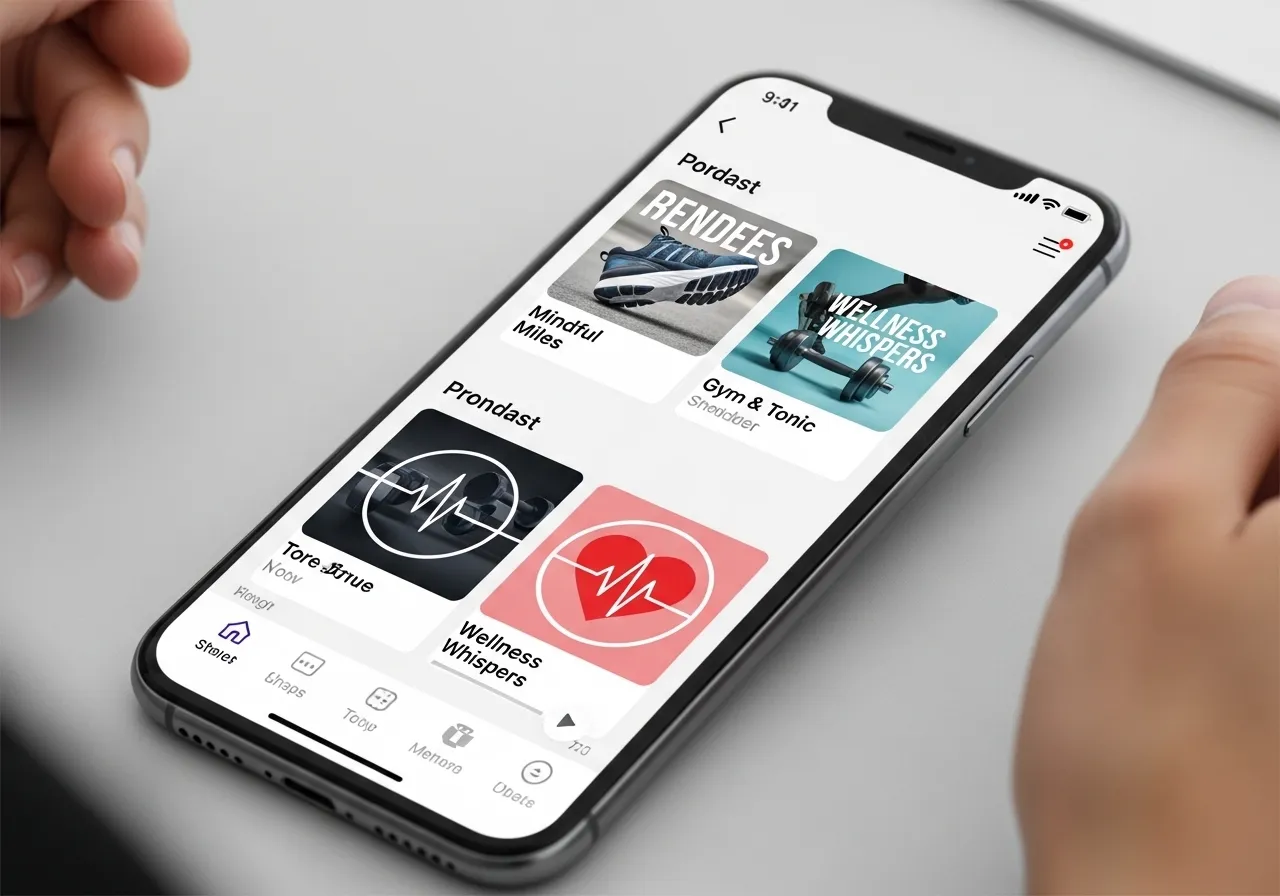
The 10 Best Fitness and Health Podcasts You Should Be Listening To
The fitness podcast landscape is enormous and highly variable in quality — for every evidence-based, expert-hosted show that advances the listener’s understanding, there are dozens of bro-science opinion shows that confidently spread misinformation. This list is curated specifically for intellectual quality, evidence standards, and practical applicability to athletic training and health optimization. The shows here represent the best combination of scientific rigor, engaging presentation, and directly useful training and health information available in the podcast format.
Huberman Lab — Andrew Huberman
The Huberman Lab podcast, hosted by Stanford neuroscience professor Andrew Huberman, has become the most influential science-based health and performance podcast in English, consistently occupying the top position in health podcast charts since its launch in 2021. Each episode presents peer-reviewed research on a specific topic — sleep, stress, vision, strength training, nutrition, mental health — with the depth of a scientific review and the accessibility of engaging conversation. Episode lengths run 2–3 hours, making them ideal for long training sessions or commutes. Topics most directly relevant to fitness training include episodes on resistance training protocols (discussing hypertrophy research, rep ranges, and recovery), sleep optimization for athletic performance, cortisol and stress management for training recovery, and the science of behavior change and habit formation. Huberman consistently cites specific studies, interviews world-leading researchers, and provides actionable protocols at the end of each episode — converting the scientific content into specific, implementable practices. Website: hubermanlab.com. Release schedule: weekly. Best for: athletes seeking deep scientific understanding of the physiology behind their training and health practices.
The Drive — Peter Attia MD
Peter Attia’s The Drive is the preeminent podcast on longevity science, metabolic health, and high-performance medicine — the podcast for athletes who want to understand not just how to perform now but how to maintain healthspan and physical capacity across decades. Attia, a physician with training in oncology, metabolic disease, and performance medicine, brings exceptional intellectual rigor and genuine expertise to topics including Zone 2 training for metabolic health, strength training for longevity (his emphasis on grip strength, VO2max, and muscle mass as longevity predictors has influenced how many athletes think about training goals), nutrition science and continuous glucose monitoring, cancer screening, and the specific medical interventions that optimize healthspan. Episode lengths run 90 minutes to 3 hours and include detailed scientific discussions appropriate for technically minded listeners. Website: peterattiamd.com/podcast. Best for: athletes with high scientific literacy who want to understand the longevity and metabolic science that should inform long-term training programming.
Mind Pump — Sal Di Stefano, Adam Schafer, Justin Andrews, Doug Egge
Mind Pump is the highest-quality general fitness podcast for the recreational lifter — four coaches with combined decades of personal training experience discussing training methodology, nutrition, and fitness culture with the frankness that comes from practitioners rather than academics. Unlike the research-heavy podcasts above, Mind Pump’s value is practical wisdom distilled from thousands of hours of coaching a diverse client population: why most people overtrain and undertrain simultaneously, why fat loss programs fail despite good intentions, how to identify fitness industry misinformation, and how to build training habits that survive the real-world constraints of busy lives. The hosts are unafraid to contradict fitness industry consensus when their experience suggests the consensus is wrong — their discussions of optimal training frequency, the overrating of supplement culture, and the psychological dimensions of body image and fitness motivation are among the most practically useful in the podcast space. Website: mindpumppodcast.com. Release: daily. Best for: recreational lifters who want practical, experienced coaching perspective rather than pure research translation.
Found My Fitness — Rhonda Patrick PhD
Rhonda Patrick’s Found My Fitness is the best podcast for deep dives into specific nutritional and health optimization topics, particularly the biochemistry of micronutrients, sauna and cold exposure, genetic variation in nutrition responses, and longevity biomarkers. Patrick, a biomedical researcher, presents the research-level detail that mainstream health media typically cannot provide — her episodes on vitamin D and immune function, sulforaphane from cruciferous vegetables, omega-3 fatty acids and brain health, and the specific protocols for heat and cold exposure are among the most scientifically rigorous and practically actionable in health media. Episodes are less frequent (monthly to every few weeks) but deeply substantive — ideal for the athlete who wants to understand the biochemistry of their health optimization practices. Website: foundmyfitness.com. Best for: athletes interested in the biochemistry of health optimization and longevity science.
Tim Ferriss Show
The Tim Ferriss Show, while not exclusively fitness-focused, has produced some of the most useful fitness-relevant content in the podcast format through Ferriss’s signature approach of deconstructing the habits, routines, and mental frameworks of world-class performers. Episodes featuring elite athletes, coaches, and health practitioners — including multiple conversations with Peter Attia, Kelly Starrett, Josh Waitzkin, and numerous professional athletes — extract the training and performance optimization principles that world-class performers have developed from thousands of hours of deliberate practice. Ferriss’s own experimentation with training, nutrition, and recovery protocols and his willingness to be transparently wrong in public makes his show both more honest and more practically useful than experts who present only validated approaches. Best for: athletes interested in the mental and strategic dimensions of elite performance alongside the physical protocols.
6–10: Additional Quality Fitness Podcasts
Barbell Shrugged: the premier podcast for strength and Olympic lifting athletes, with deep dives into programming, strength science, and elite performance from coaches who have trained competitive CrossFit, Olympic lifting, and powerlifting athletes. Ideal listening for the competitive strength athlete seeking technical training knowledge beyond what general fitness podcasts provide. Website: barbellshrugged.com. The Rich Roll Podcast: plant-based endurance athlete Rich Roll’s conversations with elite athletes, scientists, and thinkers provide the intersection of performance, nutrition, and lifestyle philosophy that motivates athlete identity beyond pure physical metrics. Particularly strong for endurance athletes and those interested in plant-based performance. Sigma Nutrition Radio: the most research-focused nutrition podcast available, hosted by Danny Lennon with guest researchers discussing nutrition science at a level appropriate for coaches and educated consumers — ideal for athletes who want to engage directly with nutrition research rather than through the filtered lens of practitioner opinion. The Model Health Show: Shawn Stevenson’s accessible, energetic podcast on health optimization covers sleep, nutrition, movement, and mental health with the enthusiasm and approachability that more academic shows sacrifice for precision — best for athletes earlier in their health optimization journey who benefit from motivated, accessible content over deep scientific detail. WHOOP Podcast: focused specifically on recovery, sleep, and the data science of athletic performance, the WHOOP podcast is uniquely useful for athletes using biometric data to guide training decisions and interested in the emerging science of readiness and recovery monitoring.
How to Evaluate Fitness Podcast Quality: Red Flags and Green Flags
With thousands of fitness podcasts available, distinguishing evidence-based, reliable content from confident misinformation requires specific quality evaluation criteria. Green flags for podcast quality: hosts who cite specific studies when making claims (not just “research shows” without reference); acknowledgment of uncertainty and contradictory evidence rather than projecting false confidence; willingness to update or correct previous positions when new evidence emerges; guest selection that includes researchers and clinicians rather than exclusively coaches and athletes with anecdotal experience; and clear distinction between what is established science versus emerging research versus personal opinion. Red flags indicating poor quality: claims with no cited evidence beyond personal anecdote; sales of supplements or programs that the podcast content is designed to promote (conflict of interest); consistent extreme positions that contradict scientific consensus without compelling evidence; dismissal of all pharmaceutical or medical approaches in favor of exclusively “natural” alternatives; and the “insider knowledge” framing that suggests the host has access to suppressed truths that mainstream science ignores. Applying these criteria to the first few episodes of any new podcast quickly reveals whether the content warrants the investment of ongoing listening or whether the confident presentation is concealing a low-quality information foundation.
International Fitness Podcasts Worth Discovering
The English-language podcast market dominates fitness content, but several non-English and internationally focused podcasts provide perspectives and research that the US-centric fitness media overlooks. The Norwegian Institute of Sport Sciences and European research institutions produce fitness science that sometimes leads the American literature — following podcasts and content creators connected to European sports science communities exposes listeners to approaches and evidence that have not yet filtered into the mainstream American fitness podcast space. Additionally, sports-specific podcasts from elite programs (swimming, athletics, cycling) provide performance optimization insights from high-performance sport contexts that recreational fitness training benefits from — the periodization approaches, recovery monitoring, and nutrition strategies developed for Olympic-level competition are increasingly accessible to recreational athletes through the podcast medium.
Podcast Episode Archives: Building a Personal Fitness Education Library
The longevity of the best fitness podcasts — Huberman Lab, The Drive, and others have hundreds of archived episodes — means that new listeners have access to a substantial, systematically organized educational library that covers essentially every aspect of athletic training, nutrition, recovery, and health optimization in depth. Rather than starting with the most recent episodes, new listeners to evidence-based fitness podcasts often benefit from searching the episode archive for topics most immediately relevant to their current training goals: if currently pursuing fat loss, search for episodes on caloric deficit, protein requirements, and body composition; if addressing a specific injury, search for episodes on rehab, tissue loading, and pain science; if optimizing sleep, search for Huberman’s sleep series or Peter Attia’s sleep episodes. The archive approach converts the podcast from a passive entertainment-driven activity into an active educational curriculum — the athlete becomes the curator of their own fitness education, selecting the content that most directly addresses their current needs rather than passively consuming whatever the release schedule provides.
The ten podcasts profiled in this section represent the best available options across the full spectrum of fitness and health podcast styles — from the deep scientific rigor of Huberman Lab and The Drive to the practical coaching wisdom of Mind Pump and the biochemical depth of Found My Fitness. Together they provide a comprehensive audio education in evidence-based fitness that supplements and frequently surpasses the information available through traditional fitness media, books, and even most personal training relationships in terms of depth, recency, and scientific grounding. The podcast quality evaluation framework — green flags, red flags, evidence standards, and conflict of interest assessment — is a permanent skill that serves athletes across the entire fitness information ecosystem, not just in podcast selection. The critical information literacy that distinguishes evidence-based fitness knowledge from confident misinformation applies equally to articles, books, coaches, and social media content. The athletes who make fitness podcast consumption a consistent, structured part of their training practice — not just occasional background entertainment but a deliberate educational investment — develop the athletic intelligence, scientific literacy, and community connection that distinguish the athlete who perpetually improves from the one who reaches a plateau and cannot identify why. Start with one episode from any of the shows in this article during tomorrow’s training session; the compound returns of that single first step build into the sustained training transformation that years of consistent podcast-enhanced athletic practice delivers. The ten podcasts profiled represent a curated starting point — the shows with the most consistent track records of quality, evidence standards, and practical applicability across the widest range of fitness goals. Each episode is an investment that pays returns in the training sessions that follow it.
The Best Strength, Bodybuilding, and Performance Podcasts
General health podcasts serve broad audiences with varied fitness goals, but athletes with specific training orientations — powerlifting, Olympic weightlifting, bodybuilding, endurance sport, CrossFit — benefit from podcasts that address their specific training culture, technical requirements, and competitive context with the depth that general health shows cannot provide. The strength and performance podcasts in this section serve the more specialized needs of athletes who want to go deeper into their specific training modality than Huberman Lab or The Drive typically ventures.
Stronger by Science — Greg Nuckols
Stronger by Science, hosted by Greg Nuckols and Eric Trexler, is the most scientifically rigorous strength training podcast available — a show where two researchers with PhDs in exercise science discuss strength training research with the technical depth and statistical literacy that most fitness podcasters lack. Topics include hypertrophy mechanisms (the specific cellular and molecular mechanisms of muscle growth), programming variables (volume, intensity, frequency, and their interactions in producing strength and size gains), powerlifting-specific periodization, and critical analysis of newly published training research. The hosts’ combination of academic training and competitive powerlifting experience provides both the research quality standards and the practical validity checks that either quality alone cannot — they know what the data actually shows and whether it translates to real-world training outcomes. Best for: serious strength athletes who want to understand the research behind their programming decisions rather than simply following programs designed by others.
Iron Culture — Omar Isuf and Eric Helms
Iron Culture brings together two of the most respected voices in evidence-based bodybuilding and strength training — Omar Isuf, a popular Canadian fitness educator, and Eric Helms, a natural bodybuilder and researcher with a PhD in strength training. The podcast covers bodybuilding science (muscle hypertrophy mechanisms, aesthetic training programming, body composition), powerlifting, and the intersection of sport science research with practical training application. Helms’s research background and competitive bodybuilding experience make him uniquely qualified to translate the academic literature into competition-applicable guidance — his discussions of contest prep, natural bodybuilding drug testing, and the specific physiological demands of competitive bodybuilding are among the most evidence-grounded available. Best for: natural bodybuilders and aesthetic-focused strength athletes seeking both scientific validity and competitive applicability in their training information.
Juggernaut Training Systems — Chad Wesley Smith
Chad Wesley Smith’s Juggernaut Training Systems podcast focuses on high-performance strength sport — powerlifting, weightlifting, and CrossFit — with a particular emphasis on periodization, peaking protocols, and the specific training demands of competitive sport performance. Smith, a world-record holding powerlifter and experienced coach, brings competitive credibility alongside systematic programming methodology to discussions of how to structure training for competition peaks, manage fatigue, and develop the specific strength qualities that competitive lifting demands. Topics include daily undulating periodization, block periodization for strength sport, the specific technical requirements of competitive powerlifting and Olympic weightlifting, and programming for athletes who compete in multiple strength sports simultaneously. Best for: competitive strength athletes seeking advanced programming knowledge from coaches who work with elite-level populations.
Endurance Podcasts: 80/20 Endurance and Fast Talk
For endurance athletes — runners, cyclists, triathletes, swimmers — the polarized training model (spending approximately 80% of training time at low intensity, Zone 2, and 20% at high intensity) has become the evidence-based consensus approach that the 80/20 Endurance podcast explores in exceptional depth. Host Matt Fitzgerald, a veteran endurance athlete and author, discusses the research behind polarized training, periodization for endurance sport, racing nutrition, and the mental aspects of endurance performance with guest researchers and elite coaches. Fast Talk (from VeloNews) provides similar depth specifically for cycling — power-based training, aerodynamics, nutrition for cycling, and professional racing science from coaches who work with WorldTour teams. Both podcasts are essential resources for recreational endurance athletes who want to train with the scientific sophistication that elite coaches bring to professional programs, condensed into accessible episodes for non-professional athletes who need the knowledge without the coaching budget.
CrossFit and Functional Fitness Podcasts: Barbell Shrugged and The Bledsoe Show
The CrossFit and functional fitness podcast space has produced several high-quality shows that bridge the gap between competitive sport performance and recreational fitness. Barbell Shrugged, already mentioned above, provides the deepest technical strength content in the CrossFit-adjacent space. The Bledsoe Show (hosted by former CrossFit Games competitor Mike Bledsoe) covers the intersection of high-performance training with mindset, relationships, and the psychological dimensions of athletic identity — a show for athletes seeking not just training knowledge but personal development frameworks that support long-term athletic commitment. These podcasts collectively provide a comprehensive CrossFit and functional fitness education for athletes who train in this modality, from the technical programming knowledge of Barbell Shrugged to the psychological and lifestyle frameworks of The Bledsoe Show.
Motivation-Focused Fitness Podcasts: The David Goggins Effect
Not all fitness podcast value comes from scientific education — some of the most impactful fitness podcasts are primarily motivational, providing the psychological fuel for the hard training that scientific knowledge alone does not supply. David Goggins’s appearances on Joe Rogan’s and other podcasts, while infrequent, represent the most extreme version of the motivational fitness podcast — the relentless discipline, mental toughness development, and rejection of comfort zone complacency that Goggins embodies in conversation provides a motivational jolt that technical training information cannot replicate. For athletes whose primary barrier is motivation rather than knowledge — who know what to do but struggle to consistently do it — periodic doses of high-intensity motivational content alongside the educational scientific shows provides the emotional fuel that makes the knowledge actionable. The Jocko Podcast (Jocko Willink) provides similar motivational content with a military discipline framework that many athletes find uniquely compelling — the application of special operations discipline principles to civilian athletic training creates a motivational framework that is both demanding and practical for the self-directed athlete.
Nutrition Science Podcasts for Athletes
Nutrition science sits at the intersection of fitness and health that every athlete needs to understand — and the best nutrition-focused podcasts provide depth that general health shows typically cannot. Sigma Nutrition Radio, hosted by Danny Lennon, is the most rigorous nutrition science podcast available, discussing peer-reviewed research on specific nutrition topics with guest researchers in a format that respects the listener’s intelligence and scientific literacy. Topics include protein requirements, dietary fat science, intermittent fasting research, gut microbiome and performance, and critical analysis of nutrition myth versus evidence — exactly the depth that evidence-based athletes need to make informed dietary decisions beyond the noise of mainstream nutrition media. The Examine podcast (from examine.com, the evidence-based supplement and nutrition research database) provides similar depth on specific nutrition interventions, discussing the actual research quality behind popular nutrition claims. For athletes interested in performance nutrition specifically, the Fueling the Pursuit podcast from OSMO Nutrition (co-founded by exercise physiologist Stacy Sims) provides research on sex-specific nutrition differences, hydration science, and female athlete physiology that most nutrition resources address inadequately.
Mental Performance and Athletic Psychology Podcasts
The psychological dimensions of athletic performance — motivation, focus, resilience, identity, and the mental skills that enable consistent training across years — are addressed by a growing category of sports psychology and mental performance podcasts that complement the physical training information of fitness shows. The Performance Psychology Podcast (hosted by Dr. Simon Marshall and Lesley Paterson) applies sports psychology research to endurance and recreational sport with the practical application that academic sports psychology literature rarely provides. The Rich Roll Podcast, while broader in scope, consistently returns to the mental and spiritual dimensions of athletic identity — the “why” of sustained athletic commitment that physical training podcasts rarely address. For competitive athletes, Applied Sports Science (from Precision Hydration) covers the specific mental and physiological performance optimization tools used by professional and elite amateur athletes. The mental performance podcast category is less developed than the physical training space but growing rapidly as the fitness community increasingly recognizes that the psychological infrastructure of athletic commitment determines whether physical training knowledge is ever actually applied consistently enough to produce results.
Injury Prevention and Physical Therapy Podcasts
Every serious athlete eventually encounters injury — and the podcasts that help navigate injury, understand rehabilitation, and prevent future recurrence provide value that becomes critically important precisely when motivation to train is highest but injury prevents it. The PT on Ice Daily Show (from Ice Healthcare) provides daily evidence-based physical therapy guidance specifically targeted at active, athletic populations — treating the musculoskeletal issues that affect recreational and competitive athletes with the same rigor that elite sport clinicians apply. Barbell Medicine (Jordan Feigenbaum and Austin Baraki) applies sports medicine and rehabilitation science to strength sport specifically, discussing how to manage pain and train through injury rather than the reflexive “don’t train if it hurts” advice that reduces fitness while not accelerating recovery. The Squat University podcast (Aaron Horschig) provides deep dives into mobility, movement quality, and the specific joint and tissue issues that barbell athletes commonly encounter. These injury-focused podcasts convert the inevitable setbacks of active athletic training from motivation-destroying interruptions into educational opportunities that develop more sophisticated, injury-resilient athletes over time.
Female Athlete-Specific Podcasts
Female athletes have physiological needs that standard fitness content — predominantly developed from research on male populations — often fails to address. Several podcasts specifically serve female athletes with research-based, sex-specific training and nutrition guidance. The Female Athlete Podcast (hosted by sports dietitian Georgie Bruinvels) addresses RED-S (Relative Energy Deficiency in Sport), menstrual cycle-based training optimization, female athlete triad, and the specific nutrition and training considerations that research on female athletes reveals. Hit Play Not Pause (Selene Yeager) focuses on perimenopause and menopause in active women — a population whose specific fitness needs are dramatically underserved by mainstream content despite representing a large and growing segment of seriously athletic women. Stacy Sims’s work (accessible through her appearances on other podcasts and her own content) on sex-based differences in hydration, nutrition, and training response has become foundational reading and listening for female athletes serious about optimizing their training around their physiology rather than the male-default approach that most training programming assumes.
The strength, performance, nutrition, psychology, injury prevention, and female athlete podcasts catalogued in this section represent the specialized depth that general health shows cannot provide — together they form a comprehensive audio education for the serious athlete who wants to engage with their training as a sophisticated practice rather than a simple exercise habit. The specialized podcasts — strength, endurance, nutrition science, mental performance, injury prevention, and female athlete specific — collectively provide the depth that no general fitness show can supply, making them essential supplements to the broad health shows for athletes whose training goals and physiological needs require the nuanced, population-specific guidance that the research in these areas supports. The athletes who make fitness podcast consumption a consistent, structured part of their training practice — not just occasional background entertainment but a deliberate educational investment — develop the athletic intelligence, scientific literacy, and community connection that distinguish the athlete who perpetually improves from the one who reaches a plateau and cannot identify why. Start with one episode from any of the shows in this article during tomorrow’s training session; the compound returns of that single first step build into the sustained training transformation that years of consistent podcast-enhanced athletic practice delivers. Together the specialized and general fitness podcasts provide a layered educational ecosystem — the broad scientific foundation from the top general shows, deepened by the specialized technical content of sport-specific shows, and sustained by the motivational energy of the best performance mindset content in the podcast format.
Using Podcasts to Build Fitness Knowledge and Sustain Long-Term Motivation
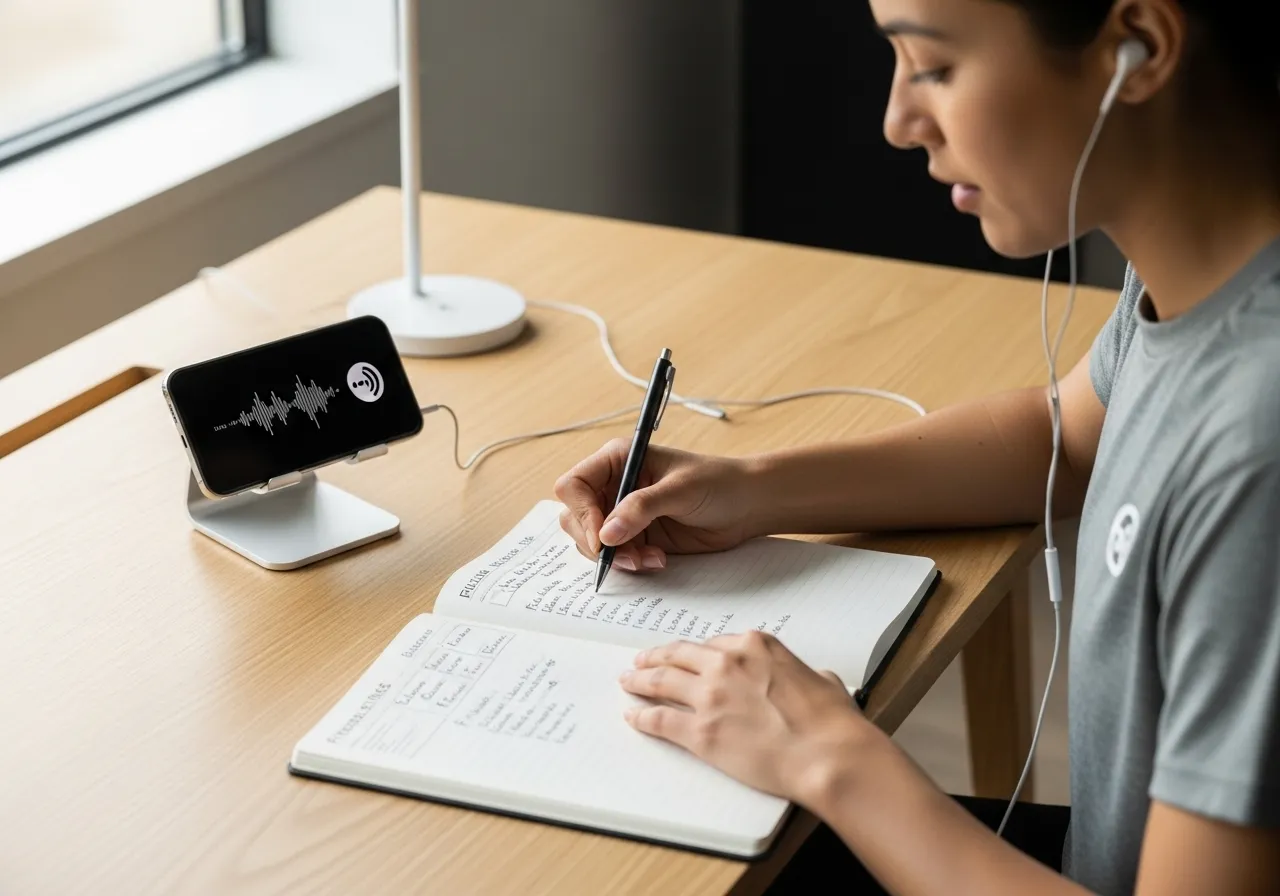
The podcasts in the previous sections provide the raw material — the hours of expert content — but converting that content into lasting training improvement requires deliberate information management practices that most listeners do not apply. Passive podcast consumption during training is valuable for motivation and general knowledge accumulation; active podcast engagement — note-taking, application testing, episode revisiting — converts the content into the practical knowledge that changes training behavior rather than simply entertaining during it.
Active Listening: Getting Maximum Value From Fitness Podcasts
Active podcast listening applies the learning techniques that education research identifies as most effective for retention and application to the fitness podcast context. The core practices: pausing to take notes when actionable information is presented — a 30-second pause to write down “increase protein to 2.2g/kg per Huberman episode 50” converts a passive listening moment into an actionable training decision. Reviewing notes before the next relevant training session connects the podcast information to the training context where it applies, increasing both application rate and retention. Testing specific recommendations in training for 4–8 weeks before adding additional changes — treating podcast-derived adjustments as personal experiments with a defined trial period — produces genuine learning from experience rather than the perpetual information cycling that changes everything constantly based on the most recent episode heard. Subscribing to the newsletters or show notes of frequently listened podcasts provides the cited research links, episode summaries, and resource lists that make podcast content efficiently reviewable without requiring complete re-listens to locate specific information.
Building a Personal Fitness Education Curriculum
Rather than consuming podcasts reactively (whatever is newest in the feed), building a deliberate fitness education curriculum — a planned sequence of episodes and topics that systematically develops knowledge across the most important domains of athletic training — produces a more comprehensive and coherent education than reactive consumption. The curriculum approach: identify the 5–6 domains most relevant to current training goals (strength programming, nutrition, sleep optimization, injury prevention, mental performance, and body composition for a typical recreational athlete), identify the 2–3 best episodes on each domain across the quality podcasts identified above, and work through them systematically over 3–4 months while simultaneously testing their recommendations in training. This approach produces the equivalent of a self-directed sports science education across a full training season — the athlete who completes a systematic curriculum emerges with the foundational knowledge that allows intelligent, evidence-based training decisions independent of ongoing podcast consumption as a required input.
Podcast Study Groups: Turning Solo Listening Into Social Learning
Training partners, gym communities, and online fitness communities can transform individual podcast listening into a shared learning experience that multiplies the social motivation benefit of the content. Discussing a recently heard episode with a training partner before or after a session creates accountability for applying the information, provides a second perspective on its relevance and validity, and generates the social engagement that motivates continued training commitment. Online fitness communities — Reddit fitness subreddits, Discord training servers, social media training communities — regularly discuss specific episodes from popular fitness podcasts, sharing applications, disagreements, and personal experimental results that extend the content beyond what any single listener could extract alone. The social dimension of fitness podcast engagement — becoming part of a community of listeners who share the educational journey — amplifies all of the individual benefits: the knowledge accumulation, the motivational ritual, and the parasocial connection all become richer when shared with a real community of athletes engaged in the same learning process.
How Podcast Listening Evolves With Training Experience
The fitness podcasts that provide maximum value change as training experience develops — the shows and topics that transform a beginner’s training are different from those that serve an intermediate athlete’s needs, which are different again from the specialized content that provides genuine learning for an advanced practitioner. Beginners benefit most from accessible, motivational content that builds the identity and habit infrastructure of regular training — Mind Pump’s practical wisdom, accessible general health shows, and motivational content that makes exercise feel like an attractive, achievable practice. Intermediate athletes who have established training consistency benefit most from the scientific depth of Huberman Lab and The Drive, which provide the research-based understanding of physiology that allows intelligent program modification and optimization. Advanced athletes with well-established training knowledge benefit most from highly specialized shows in their specific training modality — the Stronger by Science depth for strength athletes, Sigma Nutrition Radio’s research rigor for nutrition-focused athletes, or the specialized endurance podcasts for competitive runners and cyclists. This evolution of podcast consumption mirrors the progression of athletic development itself — the needs of each stage are genuinely different, and the podcast library should be curated accordingly rather than following the same show indefinitely as training sophistication grows beyond its level of relevance.
When Podcast Content Conflicts: Navigating Contradictory Information
A challenge that emerges from consuming content from multiple high-quality fitness podcasts is encountering genuinely contradictory recommendations from credible sources — one evidence-based podcaster recommends high-frequency training while another advocates low-frequency; one emphasizes low-carbohydrate approaches while another emphasizes carbohydrate adequacy for performance. These contradictions reflect genuine scientific uncertainty or population-specific differences that the research has not resolved into a single universal recommendation — and navigating them productively requires distinguishing between contradictions that reflect real individual variation (dietary approach, training frequency, exercise selection) versus those that reflect one source being wrong. The resolution framework: when credible sources contradict, examine whether the difference is in population studied (the research supporting one recommendation may have studied a different population than you belong to), training goal (recommendations for hypertrophy versus strength versus endurance often genuinely differ), or evidence quality (one position may be based on stronger research than the other). Defaulting to personal experimentation when credible sources contradict — trying both approaches for 6–8 weeks each and measuring outcomes — converts the contradiction from a source of confusion into a personal research opportunity that produces individualized knowledge more relevant than any general recommendation.
Podcast-Inspired Training Experiments: The N=1 Approach
The most sophisticated approach to fitness podcast consumption treats each actionable recommendation as an hypothesis to test rather than a prescription to follow. The N=1 (single-subject experiment) framework: when a podcast presents a training or nutrition recommendation with compelling evidence — higher training frequency, intermittent fasting, specific pre-workout nutrition timing, cold exposure protocols — design a personal 6–8 week trial that tests the recommendation against your current approach, measuring the outcome variable the recommendation is supposed to improve. Stronger by Science listeners might test a new rep range approach for 8 weeks and compare strength gains to their previous approach; Huberman Lab listeners might implement the specific sleep hygiene protocol and track sleep quality with a wearable device; nutrition podcast listeners might test increased protein intake and compare body composition changes. This experimental approach converts passive podcast learning into active personal research — building the individualized evidence base that no generalized recommendation can provide, because no research study was conducted on your specific physiology, training history, and lifestyle context. The accumulated results of years of self-experimentation informed by podcast content produce a deeply personal training knowledge that is simultaneously evidence-informed (grounded in the research the podcasts present) and personally validated (tested in your own training context where the generic research may or may not apply).
Sharing Podcast Discoveries: The Community Multiplier Effect
The value of fitness podcast knowledge compounds when shared with training communities — gym partners, online groups, coaching clients, or family members who share fitness goals. Sharing a compelling episode from Huberman Lab about sleep and athletic recovery with a training partner creates a shared framework for discussing recovery practices, comparing sleep optimization approaches, and holding each other accountable for the practices the episode recommends. Posting about a podcast discovery in a fitness community generates discussion that surfaces different interpretations, additional context, and personal experimental results that extend the learning beyond what any single listener extracts. Coaches who share podcast discoveries with clients enable more informed training conversations — clients who understand the mechanism behind their programming respond more intelligently to adjustments and maintain commitment through plateaus more effectively when the rationale is scientifically grounded. The social sharing of podcast content multiplies its value across the entire network of people it reaches, creating the community fitness education effect that motivates the ongoing engagement with fitness knowledge that separates the athlete who perpetually improves from the one who reaches a plateau and stagnates.
Balancing Podcast Consumption With Training Action
A subtle risk of high-volume fitness podcast consumption is “information paralysis” — the state where the volume and variety of recommendations consumed exceeds the ability to implement any of them, producing an athlete who is deeply educated about fitness theory but constantly adjusting rather than consistently executing any approach long enough to produce results. The productive balance: limit active experimentation to one podcast-derived recommendation at a time, implement it fully for 6–8 weeks before considering the next change, and maintain the consistency of established practices as the non-negotiable foundation on which experimental additions are built. The core training practices that produce results (progressive overload, adequate protein, consistent sleep, sufficient recovery) should be locked in and consistent regardless of what new information the latest episode presents — new recommendations are adjuncts and refinements to this foundation, not replacements for it. The athlete who listens to 5 hours of fitness podcasts per week and consistently executes a simple, progressive training program outperforms the one who listens to 20 hours per week but perpetually adjusts their program based on the most recent episode, never allowing any approach to run long enough to produce the adaptation it was designed for.
The podcast consumption framework — active listening, curriculum building, social learning, N=1 experimentation, and action balance — transforms audio content from passive entertainment into the systematic knowledge development infrastructure that produces genuinely better athletic outcomes across months and years of engaged fitness practice.
Podcast Content and Coaching: Supplementing Professional Guidance
Athletes who work with coaches benefit from podcast consumption in a specific way that athletes who self-direct do not: podcast-educated athletes become more effective coaching clients. Understanding the mechanisms behind programming decisions allows more intelligent compliance with coach directives — an athlete who understands why periodization works follows their coach’s deload weeks without resistance rather than treating them as wasted training time. Understanding the research on nutrition, recovery, and sleep allows coaches to have higher-level conversations with informed clients rather than spending session time educating basics. The best coaching relationships are collaborative — and podcast consumption, by developing the client’s fitness knowledge to a level that supports genuine collaboration, enables the coach-athlete relationship to operate at a higher level of sophistication and therefore produce better outcomes. Recommend your coach to podcasts that cover their coaching philosophy’s research basis — the shared educational framework deepens the professional relationship and aligns the athlete’s understanding with the coach’s methodology.
The athletes who make fitness podcast consumption a consistent, structured part of their training practice — not just occasional background entertainment but a deliberate educational investment — develop the athletic intelligence, scientific literacy, and community connection that distinguish the athlete who perpetually improves from the one who reaches a plateau and cannot identify why. Start with one episode from any of the shows in this article during tomorrow’s training session; the compound returns of that single first step build into the sustained training transformation that years of consistent podcast-enhanced athletic practice delivers. The knowledge application discipline that distinguishes productive podcast consumers from passive ones — one recommendation at a time, tested for 6–8 weeks, measured and evaluated — is the same systematic approach that distinguishes productive training from aimless exercise, applied to the information management dimension of athletic development.
Listening Strategies, Podcast Recommendations by Goal, and FAQs
The final section provides the practical tools for building a personalized fitness podcast strategy matched to individual goals, training schedule, and information needs — moving from the “which podcasts are good” question to the “how do I build a sustainable, goal-matched podcast practice” question that determines whether the content in the previous sections translates into ongoing training improvement.
Podcast Recommendations by Fitness Goal
Fat loss and body composition: Mind Pump (practical nutrition and training for body recomposition), Huberman Lab episodes on fat loss metabolism and body composition, Sigma Nutrition Radio for evidence-based dietary approaches, and any episodes featuring researchers from the ISSN (International Society of Sports Nutrition). Muscle building and strength: Stronger by Science (the most research-rigorous strength content), Iron Culture (evidence-based bodybuilding depth), Mind Pump (practical hypertrophy programming wisdom), and Huberman Lab episodes on resistance training and testosterone optimization. Endurance performance: 80/20 Endurance (polarized training science), Fast Talk (cycling-specific performance science), Rich Roll (plant-based endurance and mental performance), and The Drive for Peter Attia’s Zone 2 training deep dives. General health and longevity: The Drive (the most comprehensive longevity science podcast), Huberman Lab (broad health science depth), Found My Fitness (biochemistry of health optimization), and any episodes focused on sleep, stress management, and metabolic health. Injury prevention and rehabilitation: Barbell Medicine (training through pain and injury management), Squat University (mobility and movement quality), PT on Ice Daily Show (evidence-based physical therapy for athletes). Mental performance and motivation: The Jocko Podcast (discipline framework for training commitment), The Performance Psychology Podcast (sports psychology for recreational athletes), and the motivational content of Rich Roll and Goggins appearances across multiple shows.
Weekly Podcast Schedule: Matching Content to Training Days
A structured weekly podcast schedule that matches content type to training day context maximizes the motivational and educational value of each session. Monday (strength training day): queue an episode on strength programming, hypertrophy, or performance from Stronger by Science or Iron Culture — the technical depth provides motivation through intellectual engagement with the training being done. Tuesday (cardio day): queue a longer-form episode (2+ hours from Huberman Lab or The Drive) that benefits from the extended attention span of a long cardio session. Wednesday (strength training): motivational content — Jocko Podcast, a David Goggins appearance, or a particularly energizing Mind Pump episode — to counter mid-week motivational dip. Thursday (cardio or active recovery): nutrition or health content that complements the training program without competing with technical training focus. Friday (strength training): practical coaching content from Mind Pump or similar that connects directly to the week’s training sessions. Weekend long session: the most intellectually demanding content — Peter Attia deep dives, specific research discussions from Sigma Nutrition Radio — that benefits from the relaxed pace of a weekend workout with no time pressure.
Podcast Notes System: Building Your Personal Fitness Knowledge Base
A systematic approach to capturing podcast insights — the specific recommendations, research citations, and protocol details that warrant application — prevents the frustrating experience of remembering that you heard a compelling recommendation but being unable to recall the specifics. Simple note-taking system: after each podcast session, spend 2–3 minutes writing down the 1–3 most actionable insights from the episode in a dedicated notes file or app (Apple Notes, Notion, or a physical notebook). Tag each note with the podcast name, episode, and topic for future searchability. Review notes weekly alongside the training log to identify which podcast recommendations have been implemented, which are awaiting testing, and which were informative but not applicable to current training goals. This simple system converts passive listening into an active, searchable knowledge base that accumulates genuine training wisdom across months and years — the athlete who has maintained a podcast notes practice for 2 years has a personalized fitness encyclopedia that no published training resource can replicate.
Common Mistakes in Fitness Podcast Consumption
Mistake 1: Listening passively without application. Consuming hundreds of hours of high-quality fitness podcast content and implementing none of it is entertainment, not education. Set an application intention before each episode: “after this episode, I will implement one specific recommendation.” Mistake 2: Switching shows constantly without depth. Sampling every podcast briefly produces shallow familiarity with many shows rather than the deep engagement with a few that produces genuine learning. Commit to 2–3 primary shows for at least 3 months before adding new ones. Mistake 3: Using podcast listening as a substitute for training. The athlete who listens to fitness podcasts on the couch instead of training has inverted the intended relationship — the content should motivate and educate training, not replace it. Mistake 4: Applying every recommendation simultaneously. Stacking 6 podcast-derived changes into the training program at once makes it impossible to identify which change produced which outcome. Test one recommendation at a time for 4–6 weeks. Mistake 5: Dismissing content that contradicts existing beliefs without investigation. The discomfort of hearing a credible expert contradict a held belief is the most valuable podcast moment — it identifies a potential knowledge gap or incorrect assumption. Investigate rather than dismiss.
Frequently Asked Questions About Fitness Podcasts
How many fitness podcasts should I listen to? 2–3 primary shows that you follow consistently, supplemented by occasional episodes from specialized shows when their topics become relevant, provides the optimal balance of depth and breadth. More than 3–4 regular shows typically produces the information overwhelm that impairs application rather than enhancing it.
Is it okay to listen to podcasts during all workouts? Most workouts — steady-state cardio, moderate-intensity strength training, warm-up and cool-down — are entirely appropriate for podcast listening. Reserve podcast-free training for maximum-effort sets requiring complete attentional focus, technical skill practice, and any session where mindful attention to body sensations is the explicit training goal.
What do I do when a podcast recommendation contradicts what my coach says? Bring the episode to your coach and discuss it — the conversation will either reveal nuance in the recommendation that makes both positions compatible, identify a genuine difference in approach that you and your coach can evaluate together, or surface an outdated or incorrect position that benefits from revision. Good coaches welcome evidence-based questions and discussions; using podcast content to initiate these conversations is one of the most productive ways to develop a more sophisticated coaching relationship.
Are there good fitness podcasts for older adults or beginners? The Model Health Show (accessible, enthusiastic general health content), the beginner-oriented episodes of Mind Pump, and the practical wisdom of well-established coaches discussing long-term athletic development specifically serve athletes who are either beginning their fitness journey or returning to training after extended breaks. The scientific depth of Huberman Lab and The Drive rewards some fitness knowledge to contextualize but rewards beginners willing to engage with the content — starting with their most accessible episodes on sleep, exercise basics, and stress management provides entry points that do not require advanced knowledge to benefit from.
The Future of Fitness Podcasts: AI, Personalization, and Interactive Content
The fitness podcast format is evolving rapidly with technological development — interactive episode formats that allow listeners to ask questions addressed in real-time or through community voting, AI-generated episode summaries and study guides that make long-form content more accessible, and personalized content recommendation systems that surface the most relevant episodes for each listener’s specific training goals and knowledge level. The integration of podcast content with training apps and wearable devices — where a podcast episode about heart rate zone training is automatically linked to the next workout session’s heart rate zone guidance, or where a nutrition episode’s recommendations are reflected in the associated meal planning tool — represents the near-term future of fitness education content delivery. Podcast networks are also developing the supporting infrastructure that makes individual episodes more actionable: comprehensive show notes with cited research links, downloadable protocols summarizing episode recommendations, and community forums where listeners discuss and extend episode content beyond what the episode itself provides. For athletes who have made fitness podcasts a cornerstone of their training lifestyle, these technological developments will progressively deepen the value of the format — making the already-powerful education and motivation function of audio fitness content more accessible, more actionable, and more integrated with the training practices it supports.
Building a Life-Long Fitness Learning Practice Through Podcasts
The athletes who extract the most long-term value from fitness podcasts are those who treat the content as the beginning of a learning journey rather than the destination of an information search. Each compelling episode opens doors to the papers it cites, the researchers it features, the books its guests have written, and the adjacent topics it touches without exploring fully — the podcast episode on Zone 2 training leads to Peter Attia’s blog posts on lactate threshold, which leads to reading the underlying research, which leads to discovering the broader literature on metabolic health and exercise. This expansive approach to fitness education — using podcast content as gateway exploration rather than a self-contained information source — produces an increasingly sophisticated, deeply informed athletic practice that continues to develop new understanding and refine training approaches across years and decades of active training life. The athlete who began with Mind Pump and grew into Huberman Lab, then Stronger by Science, then the underlying research literature, is a fundamentally different and more capable athletic self-director than the one who followed the same fitness influencer’s program for five years without developing independent critical thinking about training. Fitness podcasts, at their best, catalyze exactly this kind of athletic intellectual independence — teaching not just what to do but why, and not just why but how to evaluate the evidence that determines whether any recommendation is worth doing at all.
The fitness podcast ecosystem — from the scientific depth of Huberman Lab and The Drive to the practical coaching wisdom of Mind Pump, the specialized technical content of Stronger by Science and Barbell Shrugged, and the motivational fuel of Jocko and Goggins — provides the comprehensive audio education and motivational infrastructure that transforms exercise from an obligation into an intellectually engaging, community-connected, progressively more sophisticated athletic practice that athletes sustain and enjoy across the entire arc of their training lives. The athletes who make fitness podcast consumption a consistent, structured part of their training practice — not just occasional background entertainment but a deliberate educational investment — develop the athletic intelligence, scientific literacy, and community connection that distinguish the athlete who perpetually improves from the one who reaches a plateau and cannot identify why. Start with one episode from any of the shows in this article during tomorrow’s training session; the compound returns of that single first step build into the sustained training transformation that years of consistent podcast-enhanced athletic practice delivers. The ongoing evolution of the fitness podcast space — more shows, better production quality, more evidence-focused hosts, more interactive formats — ensures that the investment in building a fitness podcast practice today will continue to pay increasing dividends as the format matures and the content quality continues to rise.