What to Eat Before and After a Workout: A Practical Timing Guide
This article is for general educational purposes only and does not constitute medical or professional fitness advice.
Consult a licensed healthcare provider or certified fitness professional before starting any new exercise program, especially if you have a pre-existing condition.
Workout nutrition is one of the most frequently discussed — and most frequently overcomplicated — topics in fitness.
In reality, the fundamentals are straightforward: your body performs and recovers better when it has adequate fuel and building materials available at the right times.
This guide focuses on practical, evidence-informed principles for timing nutrition around training — without unnecessary complexity.
Does Nutrient Timing Actually Matter?
What the Research Suggests
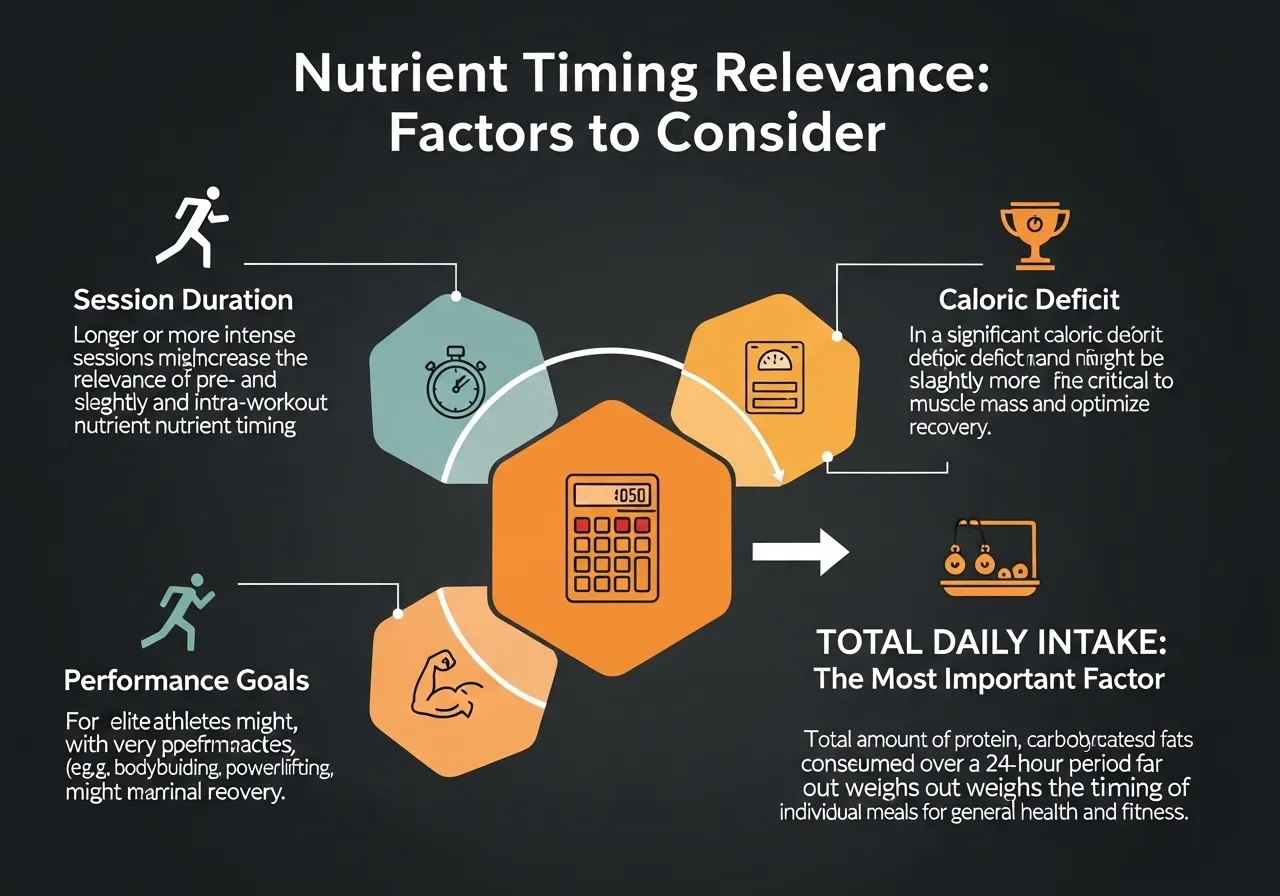
The short answer: for most recreational exercisers, total daily intake matters more than precise timing.
A 2013 meta-analysis published in the Journal of the International Society of Sports Nutrition concluded that the so-called “anabolic window” (the post-exercise period once believed to require immediate protein consumption to maximize muscle synthesis) appears to be wider than previously thought — likely 3–5 hours for most people, not the 30-minute window that was commonly cited in earlier literature.
That said, strategic timing can offer meaningful benefits — particularly for:
- Sessions lasting more than 60–75 minutes
- Multiple training sessions in the same day
- Individuals training in a caloric deficit (consuming fewer calories than the body expends)
- Athletes with specific performance or recovery goals
For most people doing 45–60 minute training sessions 3–4 times per week, focusing on overall diet quality may provide more meaningful returns than optimizing timing down to the minute.
What to Eat Before a Workout
The Goal of Pre-Workout Nutrition
Pre-workout nutrition serves two primary purposes:
- Providing available fuel (primarily carbohydrates) so that glycogen stores (the form of carbohydrate stored in muscles and the liver for use during exercise) are not depleted before the session ends
- Providing amino acids from protein to reduce exercise-induced muscle protein breakdown
Timing Guidelines
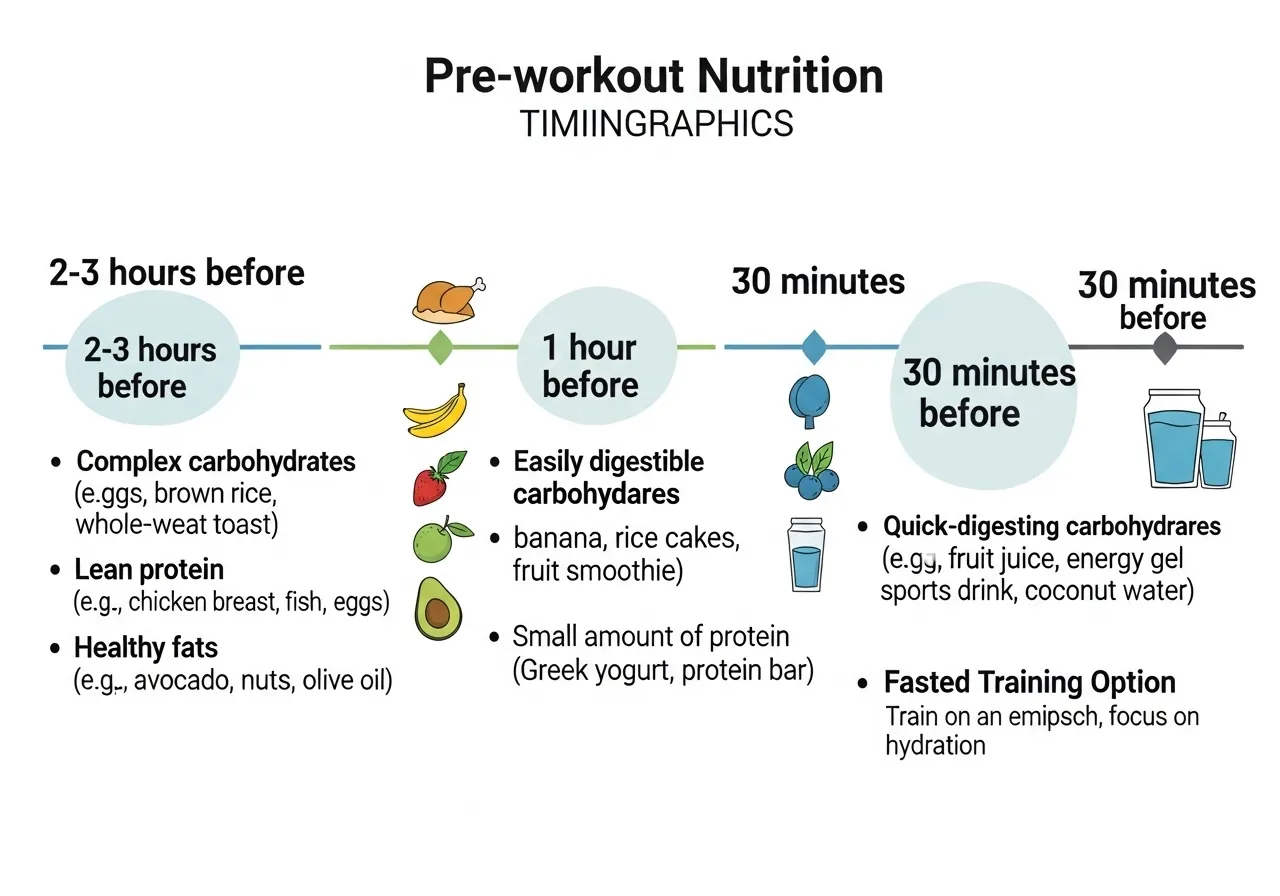
| Time Before Training | Suggested Approach | Example |
|---|---|---|
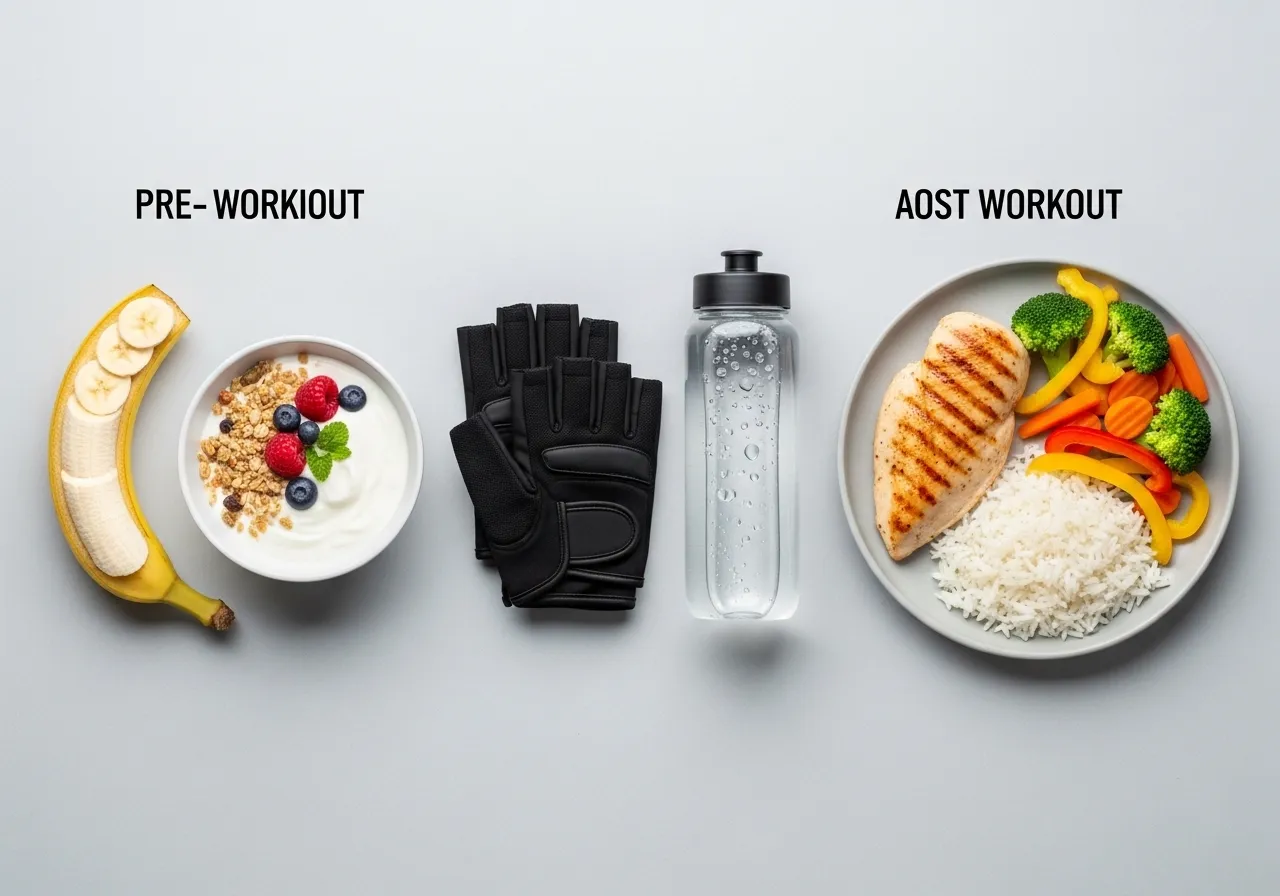
| 2–3 hours before | Full mixed meal — carbs, protein, moderate fat | Rice + chicken + vegetables |
| 60–90 min before | Smaller, easily digestible meal — emphasize carbs + protein, low fat | Greek yogurt + banana |
| 30–45 min before | Small, easily digested carbohydrate source | Banana, dates, or rice cake |
| Training fasted | Generally fine for sessions under 60 min at moderate intensity for most people | Water only |
Why Fat and Fiber Are Worth Limiting Close to Training
High-fat and high-fiber meals slow gastric emptying (the rate at which food leaves the stomach and enters the small intestine).
This can cause discomfort during exercise and may slow the delivery of carbohydrates into circulation when they’re most needed. A meal rich in vegetables and healthy fats is excellent — just not immediately before an intense session.
What to Eat After a Workout
The Goal of Post-Workout Nutrition
Post-exercise nutrition primarily aims to:
- Provide protein to support muscle protein synthesis (MPS) — the repair and rebuilding process
- Replenish muscle glycogen (the primary carbohydrate fuel store depleted during resistance and high-intensity training)
- Support general recovery — hydration, micronutrients, and overall energy balance
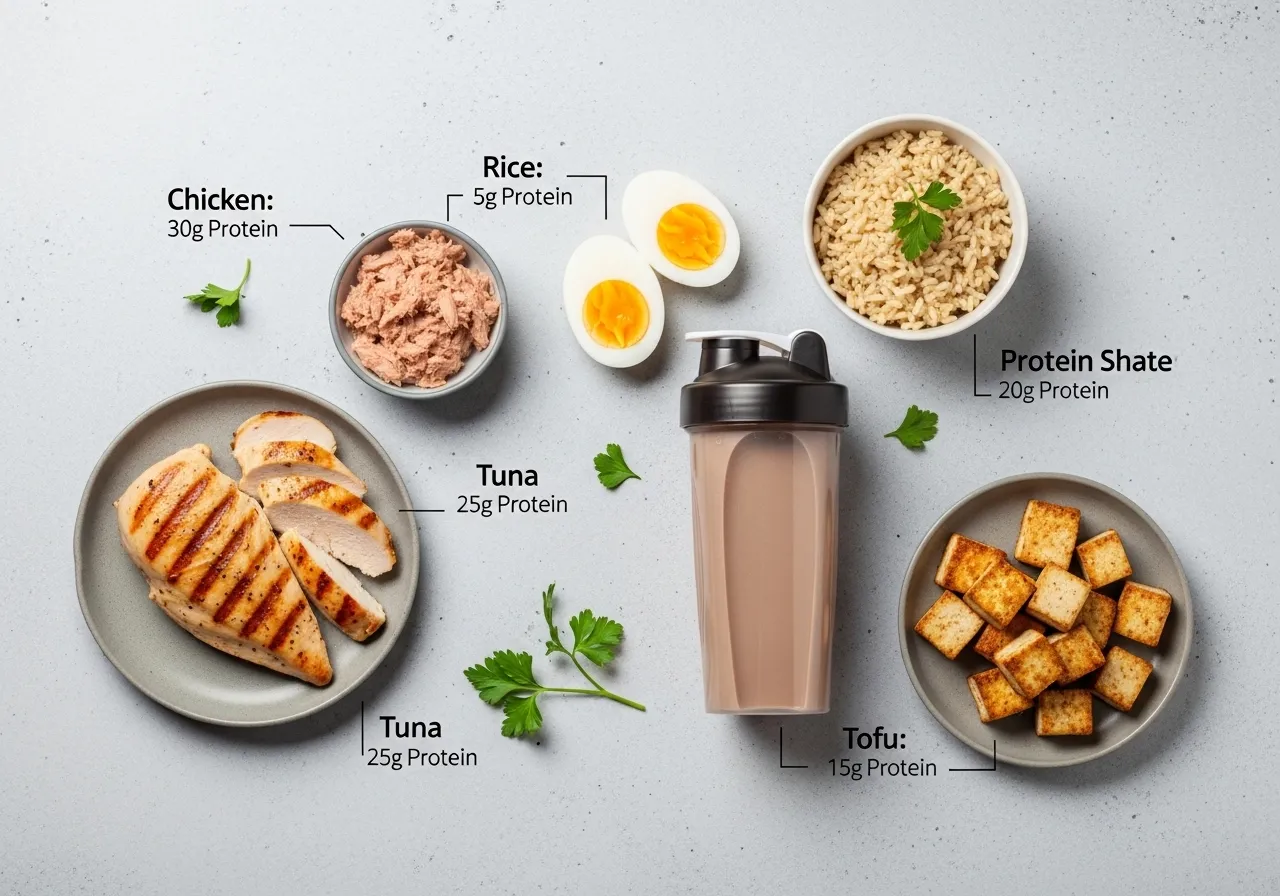
Protein: The Most Important Post-Workout Nutrient
A 2018 meta-analysis in the British Journal of Sports Medicine found that consuming 20–40 grams of protein within a few hours of training may optimize MPS for most individuals.
🔹 Body weight 60–70 kg: ~20–25 g protein
🔹 Body weight 70–85 kg: ~25–35 g protein
🔹 Body weight 85–100+ kg: ~30–40 g protein
These are general starting estimates. Individual needs may vary based on age, training intensity, and overall daily protein intake.
Post-Workout Meal Examples
🐟 Canned tuna (150 g) + whole grain wrap + salad → ~35 g protein
🥚 3 eggs + 2 egg whites + whole grain toast → ~28 g protein
🥤 Whey protein shake (1 scoop) + banana + milk → ~30–35 g protein
🌱 Tofu scramble (200 g) + quinoa + spinach → ~25 g protein
Hydration: The Often-Overlooked Performance Factor
Why Hydration Matters for Exercise Performance
Even mild dehydration — as little as 1–2% of body weight — can measurably reduce exercise performance, according to research published in the Journal of Athletic Training.
Common signs of inadequate hydration during exercise include: decreased endurance, reduced strength output, increased perceived effort (how hard the exercise feels relative to the actual intensity), and impaired concentration.
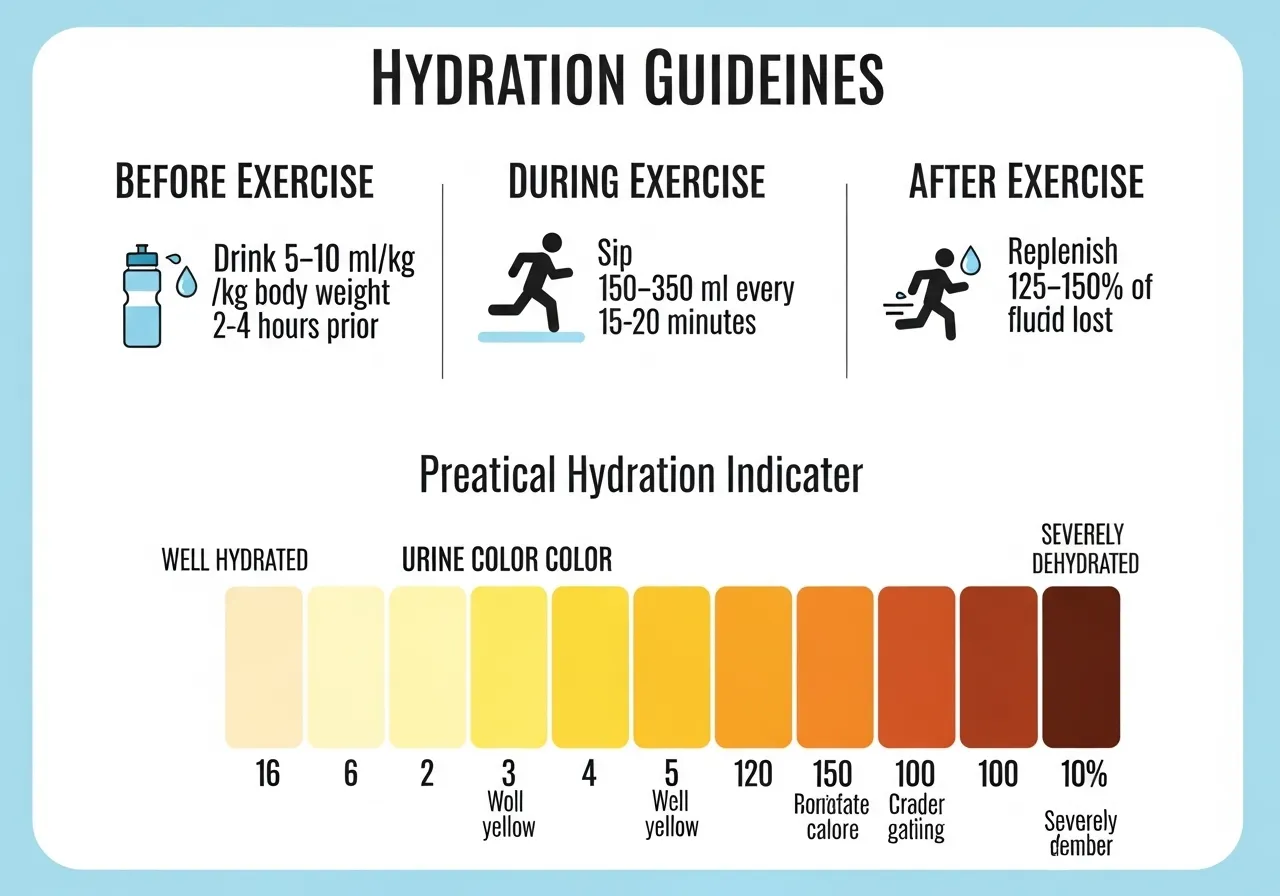
General Hydration Guidelines
| When | Suggested Intake |
|---|---|
| 2 hours before exercise | ~500 ml (17 oz) of water |
| During exercise | ~150–250 ml (5–8 oz) every 15–20 minutes |
| After exercise | ~500 ml per 0.5 kg of body weight lost (if significant sweating occurred) |
Urine color is a practical real-time hydration indicator: pale yellow suggests adequate hydration; dark yellow or amber suggests a need to increase fluid intake.

Frequently Asked Questions About Workout Nutrition
Q: Do I need to eat immediately after training to preserve muscle?
Not necessarily — the post-exercise anabolic window is wider than earlier research suggested.
If you ate a protein-containing meal within 2–3 hours before training, you likely have sufficient amino acid availability during and shortly after your session. A meal within 2–3 hours post-workout is a reasonable approach for most people, rather than rushing to consume protein in the immediate minutes after finishing.
Q: Is training on an empty stomach a problem?
For most people performing moderate-intensity sessions of under 60 minutes, fasted training is generally well-tolerated.
Some research suggests it may slightly increase fat oxidation during the session — though this does not necessarily translate to greater fat loss over time when total daily intake is matched.
If you feel significantly weaker, dizzy, or nauseous when training fasted, a small pre-workout carbohydrate source may be worth experimenting with.
Q: Are sports drinks necessary during a workout?
For most recreational exercisers training for under 60–75 minutes, water is sufficient.
Electrolyte and carbohydrate drinks may become beneficial during:
- Sessions lasting over 75–90 minutes at moderate-to-high intensity
- Exercise in hot or humid environments with significant sweating
- Multiple training sessions within the same day
For everyday recreational training, the extra calories from sports drinks are often unnecessary — water is the most practical and cost-effective hydration strategy.
- Total daily nutrition quality matters more than precise timing for most recreational exercisers
- A mixed meal 2–3 hours before training generally provides adequate fuel
- Post-workout protein (20–40 g) within a few hours of training may support muscle recovery
- Hydration before, during, and after training is a frequently underestimated performance factor
- Consult a registered dietitian for personalized guidance, particularly if managing any health conditions