How to Stop Overeating After a Workout

1. Why You Overeat After Working Out (The Science Behind Post-Workout Hunger)
Post-workout overeating is one of the most frustrating and most common nutrition challenges for athletes pursuing fat loss or body composition goals — the phenomenon where exercise that should be creating a caloric deficit triggers eating behaviors that eliminate or exceed the deficit the workout produced. I experienced this cycle repeatedly during the early years of my training: a 500-calorie run followed by a 700-calorie reward meal, a HIIT session followed by the permission to eat freely “because I worked hard,” and the persistent confusion about why consistent training was producing minimal body composition change. Understanding the physiology behind post-workout hunger — the hormonal, metabolic, and psychological mechanisms that drive eating after exercise — was the first step toward managing it effectively rather than fighting it with willpower that inevitably failed.
The Hormonal Drivers of Post-Workout Hunger
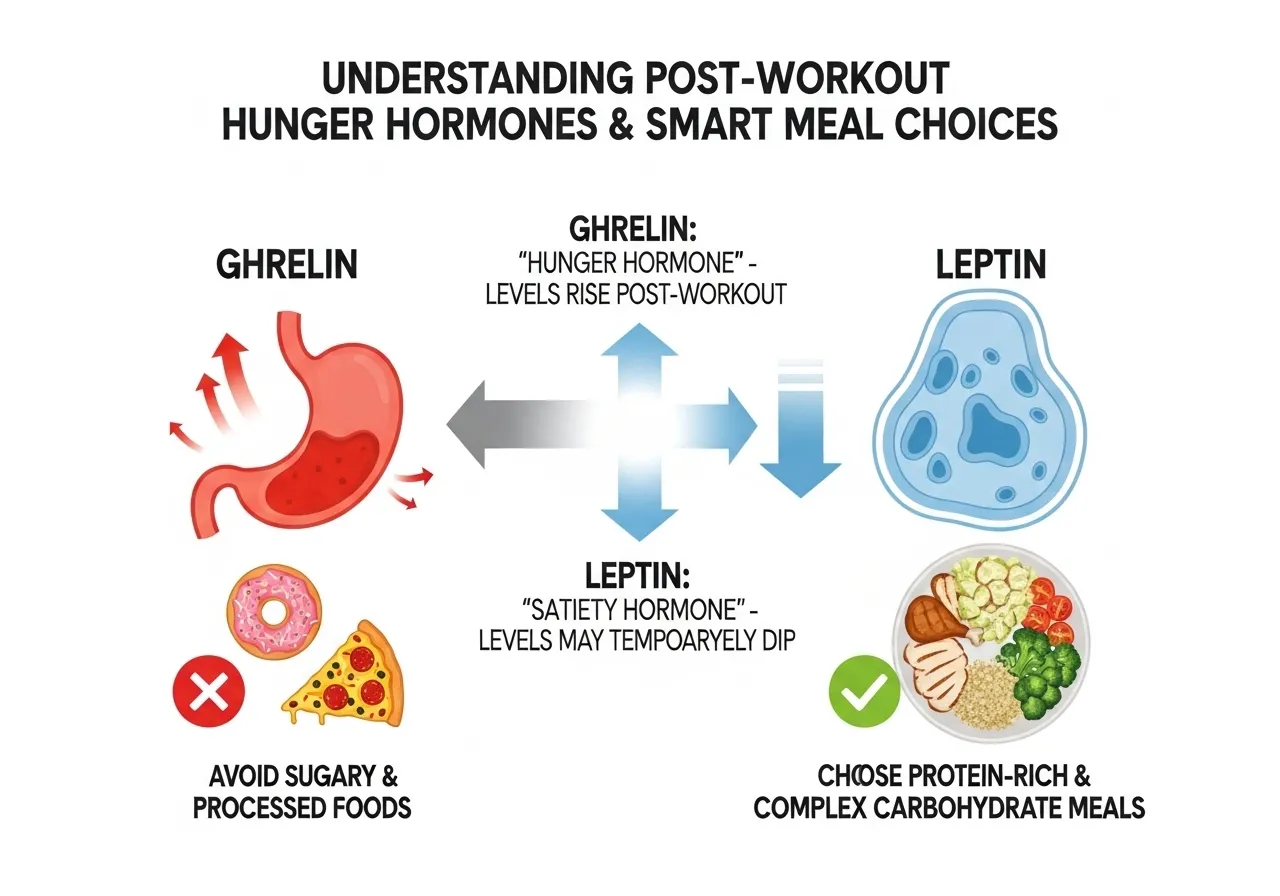
Exercise influences appetite through multiple overlapping hormonal pathways that have evolved to maintain energy balance — and understanding these pathways explains why post-workout hunger is a physiological response rather than a willpower failure. Ghrelin — the primary hunger-stimulating hormone — is suppressed during acute exercise (explaining the reduced appetite that many athletes experience immediately after training) but rebounds above pre-exercise baseline in the hours following moderate-to-vigorous exercise. This post-exercise ghrelin rebound is the hormonal driver of the afternoon hunger spike that follows a morning workout, and the evening appetite surge that follows an afternoon training session. Leptin — the primary satiety hormone — declines in response to the glycogen depletion and caloric expenditure that training produces, reducing the satiety signal strength that would normally curb eating. The combined effect of elevated ghrelin (increased hunger drive) and reduced leptin (reduced satiety signal) creates the hormonal environment that makes post-workout eating feel compellingly necessary rather than merely optional. From PubMed exercise appetite compensation research, the hormonal appetite response to exercise varies significantly between individuals — some athletes show minimal appetite increase after training (compensators) while others show substantial hunger surges (non-compensators) — with the difference partially explained by genetics, fitness level, and training history rather than willpower or discipline.
The Energy Compensation Phenomenon: Why Exercise Doesn’t Always Create Deficits
Exercise-induced energy compensation — the tendency for some individuals to increase caloric intake enough to offset some or all of the caloric expenditure of exercise — is one of the most studied and most misunderstood phenomena in exercise science. Research on the exercise-weight loss relationship consistently finds that the body weight loss from a given exercise program is typically 30–60% of what the caloric expenditure calculation would predict — the remainder being compensated through increased food intake, reduced non-exercise physical activity (moving less throughout the rest of the day), or reduced resting metabolic rate. The compensation magnitude varies substantially between individuals: high compensators may offset 80–90% of exercise calories through increased eating and reduced activity; low compensators may offset 20–30%. This individual variability explains why two people following identical exercise programs show dramatically different body composition outcomes — the genetic and hormonal differences in appetite regulation and energy compensation determine whether the exercise creates the intended deficit. From International Journal of Obesity exercise compensation research, approximately 50–60% of adults show significant caloric compensation in response to structured exercise programs — making post-workout appetite management an essential skill rather than an optional optimization for the majority of athletes with body composition goals.
Exercise Type and Post-Workout Appetite: What the Research Shows
Not all exercise produces equal post-workout appetite stimulation — and understanding which exercise types suppress appetite, which stimulate it, and which have neutral effects allows training programming choices that support appetite management alongside fitness goals. High-intensity exercise (above 75% of maximum heart rate): produces the strongest and most consistent acute appetite suppression — the elevated lactate, adrenaline, and peptide YY that high-intensity training produces suppress ghrelin and reduce subjective hunger for 30–60 minutes post-exercise. However, the appetite rebound following high-intensity exercise is also larger than following moderate-intensity exercise — the greater caloric deficit of high-intensity training triggers a stronger appetite-compensating hormonal response in the hours that follow. Moderate-intensity steady-state cardio (60–70% of maximum heart rate): produces less acute appetite suppression than high-intensity exercise but a more modest subsequent appetite rebound — making it more appetite-neutral over the 3–4 hour post-exercise window. Resistance training: produces less appetite suppression than cardiovascular exercise of equivalent caloric expenditure, with research finding that the anabolic hormonal environment of resistance training may actually increase appetite for protein-containing foods specifically — the selective hunger for protein that heavy resistance training produces is a feature of the muscle repair stimulus rather than a general caloric compensation signal. The practical implication: the exercise type that produces the worst overeating outcomes is typically moderate-intensity cardio at durations that produce meaningful caloric expenditure — the training format that most commonly underlies the “I ran for an hour and then ate everything” experience that appetite-driven compensation produces.
Psychological Drivers: The Permission Effect and Exercise as Reward
Beyond the physiological hormonal drivers of post-workout appetite, psychological mechanisms contribute substantially to post-exercise overeating — and in many athletes, these psychological drivers are more powerful than the hormonal ones. The permission effect — the cognitive license to eat more following exercise (“I earned it” / “I worked hard” / “I can afford it”) — is a well-documented behavioral phenomenon that produces caloric intake increases disproportionate to the actual caloric expenditure of the exercise. Research finds that athletes who are explicitly told the caloric value of their workout before eating consistently consume more calories in the post-workout meal than athletes who are not provided this information — the awareness of having “earned” calories triggers a permission response that increases eating beyond appetite-driven levels. Exercise as emotional reward — the pattern of using post-workout food as a celebration, self-reward, or stress relief from the discomfort of training — creates habitual post-exercise eating patterns that are psychologically driven rather than physiologically necessary. The athlete who routinely rewards a good workout with a large post-workout treat is engaging a behavioral cycle that progressively associates training completion with eating reward — strengthening the caloric compensation pattern that undermines the energy deficit that training is intended to create.
Individual Differences in Post-Workout Appetite: Why the Same Workout Affects People Differently
The science of appetite compensation after exercise reveals significant individual variation that explains why identical exercise programs produce dramatically different appetite responses in different people. The biological factors that determine individual compensation magnitude: fitness level plays a surprisingly strong role — well-trained athletes show smaller appetite compensation responses than untrained individuals at equivalent relative exercise intensities, suggesting that training adaptation extends to appetite regulation systems alongside cardiovascular and metabolic adaptation; sex differences are meaningful but not as large as commonly assumed — women show slightly greater appetite compensation than men on average, but individual variation within each sex exceeds the average difference between sexes; body composition influences appetite regulation through the fat mass-leptin relationship — individuals with higher fat mass produce more leptin, which generally provides stronger appetite suppression signals, but leptin resistance in the obese paradoxically reduces the satiety effect of elevated leptin production; and genetic variants in appetite-regulating genes (particularly the FTO gene and melanocortin pathway variants) produce measurable differences in the magnitude of post-exercise appetite stimulation between individuals. The practical implication: athletes who experience strong post-workout appetite stimulation are not experiencing a willpower failure — they may be genuinely high compensators whose physiology produces greater hunger signals in response to exercise, requiring the structural and behavioral strategies in this article rather than the willpower that insufficient self-awareness prescribes.
Sleep, Stress, and Post-Workout Appetite: The Hidden Variables
Post-workout overeating is not solely a function of the training session itself — the sleep quality and stress levels that surround the training interact with exercise-induced appetite signals to amplify or moderate post-workout eating behaviors. Sleep deprivation produces direct hormonal changes that increase appetite: ghrelin elevation (hunger hormone increased by 15–28% after one night of short sleep), leptin reduction (satiety hormone reduced by 15–20%), and elevated endocannabinoids that specifically increase appetite for sweet and salty foods. The athlete who trained hard but slept poorly arrives at the post-workout eating window in a doubly hungry state — the training-induced appetite rebound compounded by the sleep-deprivation appetite amplification that together produce the strongest caloric overconsumption risk. Chronic psychological stress produces similar hormonal effects — elevated cortisol from ongoing life stressors compounds the cortisol elevation that training produces, driving appetite for calorie-dense comfort foods and reducing the frontal lobe inhibitory control that food choice decision-making requires. The integrated management approach: an athlete experiencing sleep deprivation or high life stress during a training period should apply heightened structural controls to post-workout eating (more rigid meal planning, stricter pre-logging, possibly reduced training intensity to lower the physiological appetite stimulus) rather than expecting willpower to overcome the hormonal appetite amplification that these states produce. Address sleep and stress as appetite management variables alongside the training and nutritional interventions that the post-workout overeating challenge requires.
Integrating All Strategies: The Complete Post-Workout Overeating Management System
The individual strategies in this article — pre-workout nutrition, protein prioritization, meal planning, mindful eating, volume foods, and behavioral management — produce their greatest effect when implemented as an integrated system rather than selectively applied. The complete post-workout overeating management system: begin with pre-workout nutrition that moderates the hunger rebound (strategy 1); design the post-workout meal around high-satiety protein and volume foods within a predetermined caloric structure (strategies 2 and 5); follow the planned meal without modification rather than deciding based on hunger in the moment (strategy 3); manage the specific 2-hour high-risk window with the timing protocol that prevents the peak hunger response from driving overconsumption (strategy 4); and apply mindful eating practices to the recovery meal that allow satiety signals to register before overeating has already occurred. This integrated approach addresses the physiological drivers (strategies 1 and 4), the nutritional composition drivers (strategies 2 and 5), the behavioral drivers (strategy 3), and the psychological drivers (mindful eating and the reward rewiring practice) simultaneously — producing a comprehensive management system that individual strategies cannot replicate. Implement all components, not just the easiest ones, and allow the synergistic effect of the complete system to produce the consistent post-workout caloric management that training and body composition goals require. The work is manageable; the habit formation period is temporary; and the results — consistent body composition progress alongside maintained training quality and recovery — justify every element of the system that consistent implementation delivers.
The Athlete’s Identity and Food: Beyond Calorie Management
Post-workout overeating management ultimately requires addressing how the athlete relates to food in the context of athletic identity — the deeper question of whether food is primarily fuel, reward, social connection, or emotional regulation in the athlete’s life. Athletes who relate to food primarily as fuel — the nutritional substrate that training performance and recovery requires — naturally implement the post-workout eating approaches that management strategies teach, because their default relationship with food already aligns with those approaches. Athletes who relate to food primarily as reward or emotional regulation bring a more complex dynamic to the post-workout eating context — the training session becomes the trigger for the food-reward or food-comfort pattern that chronic overeating is maintaining. This does not make management impossible, but it does suggest that the most durable solution may involve examining the emotional relationship with food alongside the behavioral strategies — working with a sports dietitian, therapist, or mindful eating coach to develop a healthier, more neutral relationship with food that makes the practical strategies more effective and more sustainable. The goal is not perfect caloric discipline enforced by willpower but the development of a genuinely comfortable, appropriately flexible relationship with food in which post-workout eating decisions are made from a place of nutritional understanding and self-compassion rather than from hunger-driven reactivity or guilt-driven restriction. That relationship, built over months and years of consistent practice, is the sustainable foundation that all the practical strategies in this article are ultimately building toward.
Post-workout overeating is not inevitable — it is manageable with the right system, and the system is in this article.

2. The Calorie Compensation Trap: Why Exercise Makes Some People Eat More
The calorie compensation trap — where exercise intended to create a deficit paradoxically produces eating that offsets or exceeds the deficit — is the mechanism behind the frustrating experience of consistent exercise without body composition progress. Understanding the trap in detail is the first step toward escaping it.
The “Halo Effect” of Exercise on Food Choices
The halo effect in post-workout eating describes the tendency to make less healthy food choices after exercise — the psychological permission that “healthy behavior A” (exercise) grants for “unhealthy behavior B” (eating less nutritiously). Research consistently finds that individuals who exercise choose more indulgent foods, larger portions, and higher-calorie options in the meals following a workout than in equivalent meals on non-exercise days — even when the exercise itself produced only modest caloric expenditure. The mechanism: exercise activates the “I’ve been good” cognitive framework that makes the subsequent indulgence feel justified — a mental accounting process that trades health behaviors rather than accumulating them. The halo effect is strongest when the exercise is perceived as intense or virtuous (a particularly hard workout produces greater permission for indulgence than an easy one) and when the post-workout meal is perceived as a “reward” rather than a “fuel” meal. The practical implications: the athlete who uses post-workout hunger as an opportunity to eat freely — treating the workout as permission for dietary relaxation — is engaging the halo effect in its most common and most calorie-impactful form. Reframing the post-workout meal from “reward” to “recovery fuel” — choosing foods based on their recovery contribution rather than their caloric reward value — is the cognitive intervention that the halo effect most requires.
Liquid Calories and Post-Workout Drinks
Post-workout beverages represent one of the most common sources of caloric compensation in athletes who struggle with post-workout overeating — the calories in sports drinks, protein shakes with excessive additions, smoothies, and other post-workout liquids are frequently underestimated and inconsistently counted in the daily caloric tracking that deficit maintenance requires. The caloric content of common post-workout beverages: a commercial protein shake with added nut butter, banana, and full-fat milk easily reaches 600–800 calories — more than many moderate-intensity training sessions expend; a large smoothie at a commercial chain averages 400–700 calories; a sports drink consumed during and after a 45-minute session can add 200–400 calories to the day’s intake. Liquid calories are particularly vulnerable to the compensation trap because they register lower on the satiety response than equivalent solid food calories — the appetite-satisfying effect of food depends partly on mastication, gastric volume, and the sensory experience of eating that beverages largely bypass. The liquid calorie strategy for post-workout overeating management: choose protein shakes with controlled caloric content (protein powder, water or low-fat milk, and fruit — avoiding the calorie-dense additions that transform a 200-calorie recovery shake into a 600-calorie meal equivalent); track liquid calories with the same precision as solid food; and choose whole food protein sources over calorie-dense liquid alternatives when practical.
Social and Environmental Triggers for Post-Workout Overeating
The social and environmental contexts of post-workout eating often override the physiological hunger signals that should govern intake — producing caloric consumption driven by social obligation, environmental cues, and habitual behavior rather than genuine nutritional need. Common social and environmental overeating triggers for post-workout athletes: the post-workout group gathering (coffee and muffins after a running club, post-game meals after team sports, gym café visits after training) that combines social reward with the permission effect of recent exercise; the office kitchen visited post-workout on the way to a desk (the visual cue of available food triggering eating that hunger alone would not have prompted); the habitual post-workout snack that has become automatic regardless of actual hunger; and the home kitchen visited immediately upon post-workout return when food is visible and readily available. Environmental design strategies for managing these triggers: if the post-workout social gathering involves food, eat a planned, appropriately portioned meal before attending rather than eating whatever is available at the gathering; prepare the post-workout meal before training (eliminating the hungry decision-making that leads to calorie-dense choices); and redesign the kitchen environment to make the planned recovery meal the most visible and accessible option upon returning home.
The Role of Exercise Intensity in Post-Workout Eating
Choosing training intensity strategically can meaningfully influence post-workout appetite dynamics — and athletes who struggle with post-workout overeating may benefit from adjusting the intensity distribution of their training to favor the appetite profiles that their individual response supports. The intensity-appetite relationship in practical terms: high-intensity interval training (above 85% max heart rate) produces the strongest acute appetite suppression (the 30–60 minute post-HIIT window of reduced appetite) but also the largest subsequent appetite rebound in the 2–4 hours following the session. For athletes who overeat primarily in the 1–3 hours after training (the hunger peak window), high-intensity training creates the most challenging post-workout eating management context. Moderate-intensity steady-state training (60–70% max heart rate) produces less acute suppression but a more gradual, moderate appetite return that is easier to manage within a structured meal framework. Low-intensity training (walking, easy cycling) produces minimal appetite response in most individuals and is therefore the most appetite-neutral exercise mode — particularly useful as supplementary activity for high compensators who find that moderate and high-intensity training drives disproportionate caloric compensation. The practical recommendation for athletes with significant post-workout overeating: reduce the proportion of high-intensity training if the post-HIIT appetite rebound consistently undermines caloric goals, replacing some high-intensity sessions with moderate-intensity sessions or resistance training that produces less appetite stimulation while maintaining the training volume and adaptation stimulus that fitness goals require.
Long-Term Adaptation: How Consistent Exercise Changes Appetite Regulation
The frustrating reality of post-workout overeating is that it often improves with training consistency — the appetite dysregulation that beginning exercisers experience commonly stabilizes and moderates as fitness improves and the body adapts to regular exercise as a normal physiological state. The mechanism of long-term exercise-appetite adaptation: chronic exercise training improves leptin sensitivity (the adipose tissue response to the satiety signal that leptin provides), enhances the gut hormone responses that exercise produces (regular exercisers show stronger PYY and GLP-1 appetite suppression responses per session than untrained individuals), and reduces the psychological reward associations with food that the novelty of new exercise habits initially amplifies. Athletes who persist through the first 8–12 weeks of a new exercise program with structured dietary management — using the behavioral and nutritional strategies in this article to control the initial strong compensation response — typically find that post-workout appetite management becomes progressively easier as these physiological adaptations develop. This adaptation timeline supports the “ride it out with structure” approach: implement the behavioral strategies immediately, expect improvement over 2–3 months of consistent training, and reduce the stringency of the structural controls as the appetite regulation adaptations that training produces make behavioral management progressively less necessary. The beginning exerciser’s post-workout overeating is not necessarily a permanent condition — it is the initial compensation response of an unadapted appetite system that consistent exercise progressively normalizes.
The Psychology of Food Rewards: Rewiring the Exercise-Eating Association
The association between exercise completion and food reward — built through years of habitual post-workout eating, cultural reinforcement (“treat yourself after a workout”), and the genuine pleasure that food provides — is one of the most durable behavioral patterns that post-workout overeating management must address. Rewiring this association does not require eliminating all post-workout food enjoyment but separating the reward function from the eating function — creating non-food rewards for training completion alongside the nutritional recovery that training requires. The non-food reward approach: designate a specific enjoyable non-food reward for training completion — a 15-minute relaxation period, a favorite podcast episode, a post-workout bath or shower with preferred products, or any other rewarding experience that the training completion earns. This alternative reward satisfies the psychological reward function that exercise completion produces without the caloric consequences of food-based reward. Over 4–8 weeks of consistent alternative reward practice, the habitual “exercise → food reward” association begins to weaken as the alternative reward experience provides the satisfaction that training completion requires. The rewiring process does not eliminate post-workout eating — it separates the physiological recovery function (eating for muscle repair and glycogen resynthesis) from the psychological reward function (experiencing pleasure as acknowledgment of effort) that food has been simultaneously serving.
Build the habit, trust the structure, and let consistent execution do what willpower alone cannot sustain.
3. Practical Strategies to Control Post-Workout Eating Without Suffering
Controlling post-workout eating does not require willpower contests with genuine hunger — it requires the strategic interventions that reduce the physiological and psychological drivers of overconsumption while providing adequate nutritional support for training recovery.
Strategy 1: Pre-Workout Eating to Reduce Post-Workout Hunger
One of the most effective post-workout hunger management strategies is eating before the workout — the pre-workout meal that maintains adequate blood glucose and glycogen during training reduces the post-workout metabolic hunger signal that severe pre-workout depletion amplifies. Athletes who train fasted experience stronger post-workout ghrelin rebounds and greater appetite compensation than those who train in a fed state — the physiological hunger of combined training-induced and fasting-induced depletion is greater than training-induced depletion alone. The pre-workout meal timing and composition for post-workout hunger management: a mixed meal of carbohydrate and protein consumed 2–3 hours before training (banana and Greek yogurt, oatmeal with protein powder, or chicken and rice) maintains the fed state that moderates the post-workout ghrelin rebound. A smaller carbohydrate-protein snack 30–60 minutes before training (fruit with protein shake, or rice cake with peanut butter) serves a similar function for athletes without 2–3 hour pre-workout meal windows. The athlete who arrives at training appropriately fueled trains at higher intensity (producing greater adaptation stimulus) and experiences more modest post-workout hunger than the fasted athlete — making pre-workout nutrition a dual performance and appetite management investment. From ACSM exercise and weight management guidelines, fasted training produces greater post-exercise appetite stimulation than fed training in most individuals — supporting pre-workout nutrition as an appetite management strategy for athletes who struggle with post-workout overconsumption.
Strategy 2: Protein as the Appetite Management Macronutrient
Protein is the macronutrient with the greatest satiety effect per calorie — activating appetite-suppressing gut hormones (GLP-1, PYY), sustaining the satiety response longer than equivalent calories from carbohydrate or fat, and reducing ghrelin levels more effectively than other macronutrients. For post-workout appetite management, prioritizing protein in the recovery meal provides both the muscle protein synthesis support that training recovery requires and the appetite suppression that overeating prevention needs — making protein the single most valuable macronutrient for athletes navigating the post-workout hunger challenge. The post-workout protein strategy: consume 30–40g of protein within 60 minutes of completing training as a priority — this protein-first approach both initiates recovery and triggers the satiety hormonal response that moderates subsequent hunger. Sources with the highest satiety-per-calorie: Greek yogurt (22g protein, 150 calories per 200g serving — extremely high satiety relative to caloric content); cottage cheese (25g protein, 200 calories per cup); grilled chicken breast (31g protein, 165 calories per 100g); eggs (6g protein, 70 calories each); and canned tuna (25g protein, 110 calories per 100g). These high-protein, lower-calorie whole food sources provide the recovery nutrition and satiety that post-workout appetite management requires without the caloric burden of higher-fat protein sources or supplement-based recovery options.
Strategy 3: Structured Meal Planning That Removes Post-Workout Decisions
The post-workout period — characterized by elevated hunger, reduced cognitive control from training fatigue, and the permission psychology of recent exercise — is the worst time to make food decisions. Meal planning that specifies exactly what will be eaten after training eliminates the decision point that fatigue and hunger transform into caloric overconsumption. The pre-planned post-workout meal approach: on Sunday, plan and prepare the post-workout meals for the upcoming week — portioned, calorie-counted, and ready to eat without preparation. The returning athlete who opens the refrigerator to find their pre-prepared chicken and rice bowl eats that; the returning athlete who opens the refrigerator to “figure out what to eat” eats significantly more. Specific implementation: prepare 5 post-workout meals per week on Sunday (appropriate protein, moderate carbohydrate, predetermined caloric content), store in individual containers labeled with the day they should be eaten, and commit to eating only the prepared meal rather than supplementing with additional food after returning from training. The first two weeks of this practice require discipline; after 2–4 weeks the habit of eating the prepared meal becomes automatic and the decision fatigue that previously led to overeating is eliminated. From Journal of the Academy of Nutrition and Dietetics eating behavior research, meal planning and preparation is among the most effective behavioral interventions for reducing caloric overconsumption — producing better weight management outcomes than hunger management, caloric tracking, or dietary restriction strategies without planning support.
Strategy 4: Managing the 2-Hour Post-Workout Window
The 2-hour window following exercise — when hunger hormones are rebounding and appetite is increasing — is the highest-risk period for post-workout overeating. Specific management of this window prevents the caloric compensation that occurs when elevated hunger meets an unstructured food environment. The 2-hour window management protocol: immediately post-workout (within 30 minutes), consume the planned protein-forward recovery snack (Greek yogurt, protein shake, or prepared protein source) that initiates recovery and begins the satiety hormone response; in the 30–90 minute post-workout period, drink 400–600ml of water with a pinch of salt (the osmotic and gastric volume effects of hydration contribute to satiety and reduce the hunger signal strength during this high-risk period); and schedule the main post-workout meal for 60–90 minutes after the immediate snack — allowing the satiety response to the snack to partially regulate appetite before the larger caloric meal. Athletes who eat the main post-workout meal immediately after training (before the satiety response to the first nutritional input has developed) consistently consume more calories than those who split the post-workout nutrition into an immediate smaller snack and a delayed larger meal.
Building Sustainable Post-Workout Eating Habits
The ultimate goal of post-workout eating management is not the ongoing willpower struggle of resisting hunger but the development of sustainable habits that make appropriate post-workout nutrition automatic rather than effortful. The habit formation approach applied to post-workout eating: establish a consistent post-workout eating routine (the same meal composition, timing, and preparation approach after each training session) that becomes automatic through repetition — eliminating the decision fatigue that variable post-workout eating produces. The habit components: immediately post-workout (the trigger — training session completion) always initiates the behavior (consuming the planned immediate recovery snack), followed by the routine (preparing and eating the recovery meal 60–90 minutes later), producing the reward (physical recovery and the satisfaction of having followed the planned approach). When this habit sequence is sufficiently established — typically 6–8 weeks of consistent execution — the post-workout routine becomes as automatic as the training itself, requiring no more willpower than any other established daily habit. The investment period of establishing this routine (the first 6–8 weeks when each post-workout eating decision still requires deliberate adherence to the planned approach) is the necessary cost of the long-term automation that makes sustained post-workout eating management possible across years of training. Build the habit with the consistency it requires, accept the initial friction that habit formation demands, and allow the compounding automaticity of established habits to make post-workout nutrition management the reliable, effortless aspect of athletic life that well-built habits become.
Strategy 5: Volume Eating — Filling Up with Fewer Calories
Volume eating — consuming large quantities of food with low caloric density to achieve gastric fullness at low caloric cost — is one of the most effective strategies for managing post-workout hunger without caloric overconsumption. The volume eating principle for post-workout appetite management: foods with high water and fiber content occupy significant stomach volume per calorie, activating the gastric stretch receptors that contribute to satiety signaling even when total caloric intake is modest. The highest volume-to-calorie foods: cucumbers (95% water, 15 calories per cup), iceberg lettuce (95% water, 10 calories per cup), tomatoes (94% water, 32 calories per cup), watermelon (92% water, 46 calories per cup), strawberries (91% water, 49 calories per cup), and cooked broccoli (89% water, 31 calories per cup). Structuring the post-workout meal around a large base of these volume foods — 3–4 cups of mixed vegetables, fruits, and salad greens — before adding the protein and carbohydrate recovery components produces a physically large, visually satisfying meal at a fraction of the caloric cost of equivalent-feeling calorie-dense meals. The volume eating post-workout meal: 3 cups of mixed salad greens and cucumber (40 calories) + 150g grilled chicken (46g protein, 165 calories) + 150g berries (80 calories) + 100g cooked quinoa (25g carbohydrate, 111 calories) = a large, visually impressive meal providing approximately 400 calories with excellent recovery nutrition — a meal that satisfies the visual and gastric volume appetite while leaving significant caloric room within the daily target.
The athlete who builds this post-workout eating system — pre-workout nutrition, immediate protein recovery, planned meals, volume foods, and mindful eating — eliminates the post-workout overeating cycle that was undermining the body composition progress that consistent training was working to produce. Implement the strategies, build the habits, and allow the 90-day skill development process to transform post-workout eating from the greatest challenge in athletic nutrition management into the reliable, automatic practice that effective long-term athletes make it. Always.

4. What to Eat After a Workout: Fueling Recovery Without Overeating
The post-workout meal serves two simultaneous purposes — initiating the recovery processes that training adaptation requires and managing the caloric intake that body composition goals demand. Designing the meal to serve both purposes requires specific food choices and portioning strategies that neither compromise recovery nor open the door to overconsumption.
The Recovery-Appetite Balance: Designing the Ideal Post-Workout Meal
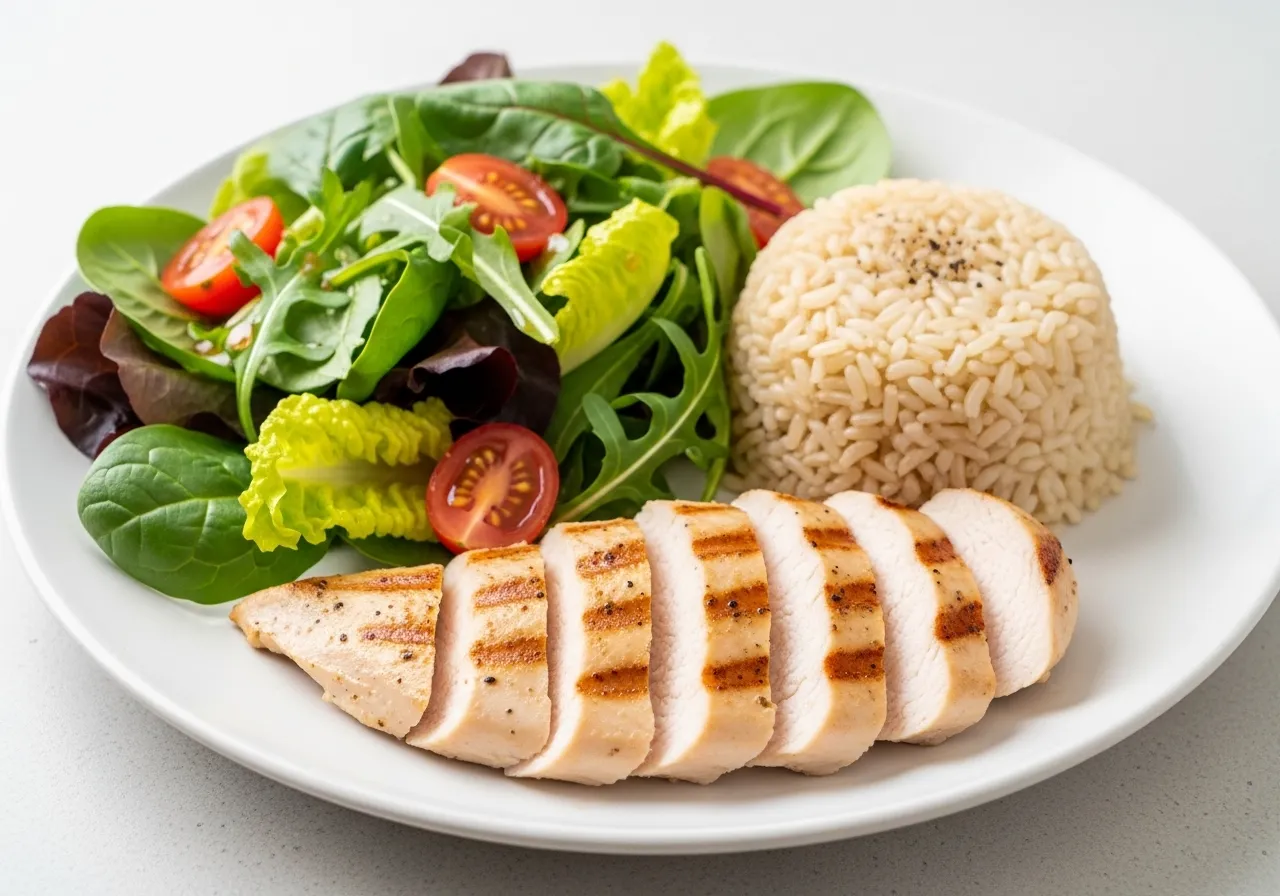
The ideal post-workout meal for athletes managing post-workout appetite provides the protein and carbohydrate that recovery requires within a caloric framework that supports the energy balance goal. The recovery-appetite balance framework: protein first (30–40g of high-satiety protein that initiates muscle protein synthesis and triggers the satiety hormonal response); carbohydrate second and portioned (40–60g of moderate-glycemic carbohydrate for glycogen resynthesis — sufficient for recovery without the excess that fat storage encourages); fat minimized (dietary fat slows gastric emptying and provides satiety, but in the post-workout meal should be moderate — 10–15g — to allow rapid nutrient absorption for recovery while contributing to satiety without excessive calories); and high volume, low calorie vegetables filling the plate (leafy greens, cucumbers, tomatoes, and other high-water-content vegetables that provide gastric volume, visual meal size, and micronutrients without meaningful caloric contribution). The complete post-workout meal template: 150g grilled chicken breast (46g protein, 165 calories) + 150g cooked brown rice (41g carbohydrate, 165 calories) + 2 cups of mixed salad greens with tomato and cucumber + 1 tablespoon of olive oil dressing (10g fat, 90 calories). Total: approximately 49g protein, 48g carbohydrate, 13g fat, 430 calories — a nutritionally complete recovery meal that provides excellent satiety while remaining within a caloric range appropriate for most athletes’ post-workout meal targets.
High-Satiety Post-Workout Food Combinations
Specific food combinations produce greater satiety per calorie than their individual components — and structuring the post-workout meal around these high-satiety combinations allows recovery nutrition within a lower total caloric intake than calorie-dense alternatives require. The highest-satiety post-workout food combinations: protein with fiber (chicken or fish with a large serving of vegetables provides both the protein satiety and the fiber gastric distension that together produce stronger and more prolonged satiety than either alone); protein with water-dense food (Greek yogurt with cucumber slices and berries — the high-water-content foods provide gastric volume and osmotic effects that amplify the protein satiety); eggs with vegetables (scrambled eggs or omelette with a large quantity of sautéed vegetables — the combination of complete protein, dietary fat from the yolk, and fiber and volume from the vegetables produces the most satiating breakfast-style post-workout meal available); and legumes with lean protein (lentil soup with added chicken — the combination of slow-digesting legume carbohydrate with complete protein produces exceptionally sustained satiety that reduces afternoon snacking after a morning workout). From Appetite Journal food satiety research, the combination of protein, fiber, and high water content in the same meal produces significantly greater satiety and lower subsequent caloric intake than meals of equivalent calories that lack one or more of these satiety-promoting components.
Calorie-Counted Post-Workout Meal Plans by Goal
Providing specific calorie-counted meal options for different training goals removes the ambiguity that makes post-workout eating decisions difficult and allows athletes to eat confidently within their target caloric framework. Fat loss post-workout meal (350–450 calories): 150g grilled tilapia or shrimp (35g protein, 155 calories) + 100g cooked quinoa (25g carbohydrate, 111 calories) + 2 cups spinach sautéed with garlic + 1 teaspoon olive oil + lemon. This meal provides complete recovery nutrition within a caloric range that maintains the deficit that fat loss requires. Muscle gain post-workout meal (550–700 calories): 180g chicken thigh (45g protein, 280 calories) + 200g cooked white rice (45g carbohydrate, 220 calories) + 1 cup steamed broccoli + 1 tablespoon olive oil dressing (120 calories). The higher caloric content supports the muscle gain goal while keeping the meal within a structured range. Maintenance post-workout meal (450–550 calories): 150g salmon (30g protein, 300 calories) + 150g sweet potato (30g carbohydrate, 130 calories) + large mixed salad with vinaigrette (80 calories). These templated meals eliminate the decision-making that leads to post-workout overconsumption while providing appropriate recovery nutrition for each goal context.
Managing Post-Workout Cravings for Specific Foods
Post-workout cravings for specific foods — particularly sweet, salty, or high-fat options — are common and reflect both physiological appetite signals and the psychological reward associations that training has developed. Managing these specific cravings without either ignoring recovery needs or opening the door to overconsumption requires targeted strategies. Sweet cravings post-workout: often reflect the blood glucose and glycogen dynamics of training-induced carbohydrate depletion — satisfied by the fruit component of the post-workout snack (banana, berries, or dates provide natural sweetness alongside the carbohydrate that recovery requires) rather than by processed sweet foods that provide the sweetness without the nutritional value. Salty cravings: accurately reflect the sodium losses in sweat that vigorous training produces — satisfied by including adequate sodium in the post-workout meal (lightly salted food, pickles, or an electrolyte drink) rather than by the high-sodium processed snacks that satisfy the craving with excessive calories. High-fat cravings: less commonly a direct physiological signal and more commonly a habitual association — managed by including a small quantity of satisfying fat in the post-workout meal (avocado, olive oil dressing, or nuts as a small condiment) within the planned caloric structure rather than consuming separate high-fat foods that exceed the meal framework. The general principle: satisfy specific cravings within the structure of the planned recovery meal rather than as additions to it — the planned meal can incorporate the flavors and textures that cravings demand without becoming the vehicle for caloric overconsumption that unstructured craving-following produces.
Exercise-Specific Caloric Expenditure: Getting Accurate Numbers
One of the most common sources of post-workout overeating is the caloric expenditure overestimation that inaccurate exercise tracking produces — the athlete who believes they burned 800 calories in a 45-minute workout and eats accordingly, when the actual expenditure was 350–450 calories, creates a systematic positive caloric balance despite genuine training effort. The accuracy problem with common caloric expenditure sources: treadmills and cardio machines overestimate caloric expenditure by 20–40% on average because they use equations that do not account for individual metabolic rate, body composition, or fitness level; fitness trackers (Fitbit, Apple Watch, Garmin) overestimate exercise calories by 10–35% in most studies, with the greatest inaccuracies during resistance training and HIIT; the exercise calorie counts in apps like MyFitnessPal use population-average estimates that may be significantly higher than individual values for fit athletes (who burn fewer calories per minute at equivalent absolute intensities due to improved exercise economy). The practical correction: use 70–75% of the caloric expenditure estimate provided by fitness technology as a more realistic approximation for individual athletes, and avoid eating based on caloric expenditure entirely — eating based on planned recovery nutrition templates rather than estimated calorie replacement eliminates the expenditure estimation error that drives systematic post-workout overconsumption.
Alcohol After Exercise: A Special Case of Post-Workout Caloric Compensation
Post-workout alcohol consumption — the post-race beer, the gym-completed weekend drinks, or the Friday workout followed by evening socializing — deserves specific attention as a particularly impactful form of post-workout caloric compensation. Alcohol provides 7 calories per gram (second only to fat at 9 calories per gram among macronutrients) and is nutritionally empty — providing no protein for recovery, no carbohydrate for glycogen resynthesis, and no beneficial micronutrients. The post-workout alcohol caloric impact: a standard drink (150ml wine, 350ml regular beer, or 45ml spirit) provides 100–200 calories; a post-workout social occasion with 3–4 drinks adds 300–800 calories with zero recovery nutrition value. Additionally, alcohol impairs the protein synthesis and sleep quality that post-workout recovery requires — producing both a caloric addition and a recovery impairment simultaneously. For athletes pursuing body composition goals, post-workout alcohol is the highest caloric-density, lowest recovery value choice available — and managing it requires the same deliberate planning that other post-workout eating decisions require. If social occasions following training involve alcohol, strategies include: consuming the complete recovery meal before the social occasion (arriving not hungry eliminates the food-with-alcohol compulsion); selecting lower-calorie alcohol options (spirits with soda water rather than beer or cocktails); setting a specific drink limit before the occasion begins; and tracking alcohol calories with the same rigor as food calories in the daily intake record.
Post-workout nutrition decisions made from a place of preparation and structure — rather than hunger-driven reactivity and food-reward psychology — produce the consistent caloric management that body composition goals require and that training performance deserves. Design the system, follow the plan, and allow the structured recovery nutrition approach to serve both the recovery and the body composition goals that every serious athlete is simultaneously pursuing.
5. Mindful Eating After Exercise, Common Mistakes, and FAQs
Mindful eating — the practice of paying deliberate attention to the experience of eating rather than eating automatically or while distracted — is one of the most evidence-supported behavioral interventions for reducing caloric overconsumption, and its application to the post-workout eating challenge addresses the psychological drivers of overeating that physiological management strategies cannot fully resolve.
Applying Mindful Eating to the Post-Workout Meal
The post-workout period is typically one of the least mindful eating contexts — athletes often eat quickly while still in training clothes, while checking phones, or while preparing the next activity in a post-workout rush. This distracted eating context impairs the satiety signaling that deliberate attention amplifies: research consistently finds that distracted eating produces 10–25% higher caloric intake per meal than the same foods eaten with full attention, because the cognitive and sensory engagement of mindful eating accelerates the satiety response that automatic eating bypasses. The mindful post-workout eating practice: sit at a table for the post-workout meal (not at a desk or in front of a screen); eat at a pace that allows conscious attention to hunger and satiety signals (put the fork down between bites; chew each bite fully before taking the next); pause at the halfway point of the meal for 30–60 seconds to assess actual hunger level before continuing; and rate hunger and satiety before and after the meal on a 1–10 scale to build the self-awareness that post-workout appetite management requires. Athletes who practice this mindful post-workout eating approach consistently report eating less than habitual patterns without feeling less satisfied — the enhanced satiety signal registration of mindful eating allows earlier recognition of fullness that automatic eating misses until it has already produced overconsumption.
The 5 Most Common Post-Workout Overeating Mistakes
Mistake 1 — Eating based on calories burned rather than recovery needs: calculating the workout’s caloric expenditure and consuming “replacement” calories produces systematic overconsumption because caloric expenditure estimates (from fitness trackers, treadmill displays, and online calculators) overestimate actual expenditure by 20–50% in most cases. Eat for recovery, not for caloric replacement. Mistake 2 — Treating the post-workout period as a “free zone”: the permission psychology of post-workout eating — “I earned it,” “I can afford it,” “I need to refuel” — is the primary psychological driver of the caloric compensation that eliminates exercise-induced deficits. Define specific post-workout meals in advance rather than eating freely based on the permission that training completion grants. Mistake 3 — Skipping the post-workout protein and then overeating at the next meal: failing to consume protein shortly after training allows hunger to build during the recovery window until the next meal, at which point hunger-driven overconsumption produces more calories than a timely post-workout snack would have added. A 150–200 calorie protein snack immediately post-workout prevents the 500+ calorie hunger-driven meal that its absence produces 2–3 hours later. Mistake 4 — Drinking calories without accounting for them: post-workout smoothies, protein shakes with multiple additions, sports drinks, and recovery beverages are commonly excluded from daily caloric tracking while adding 300–700 calories to the day’s intake. Track all post-workout beverages with the same precision as solid food. Mistake 5 — Waiting too long to eat and making poor food choices when extremely hungry: delaying the post-workout meal by 2+ hours allows hunger to reach levels that impair food decision quality — the extremely hungry athlete standing at the kitchen counter makes different choices than the moderately hungry athlete eating a planned meal. Eat within 60 minutes of training, even if the meal is a planned small snack, to prevent the decision-impairing hunger that delayed eating produces.
Tracking Caloric Intake: The Evidence Base for Post-Workout Eating Management
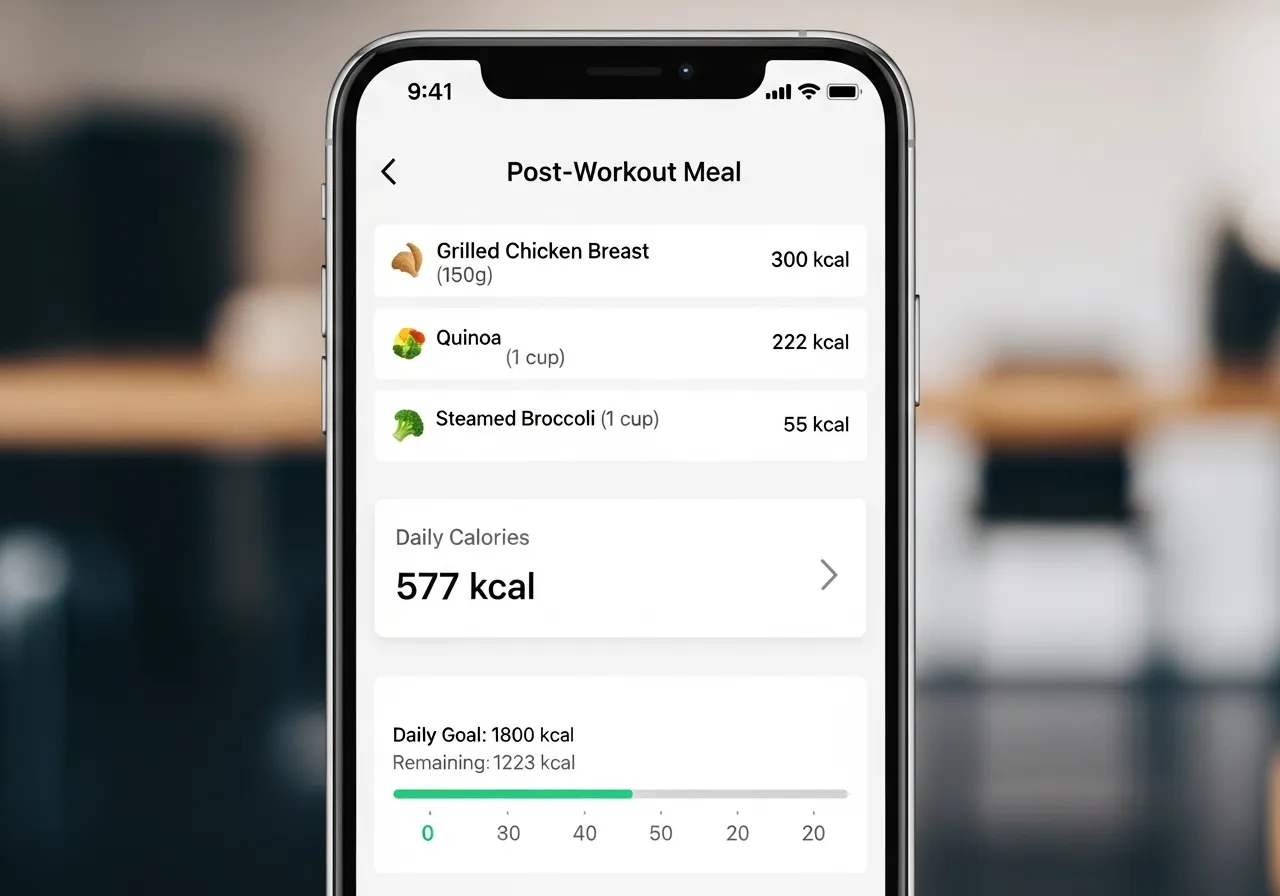
Caloric tracking — recording the specific foods and quantities consumed and calculating total daily intake — is the most direct intervention for post-workout overeating because it makes the caloric reality of compensation visible rather than allowing the underestimation that intuitive eating in the post-workout context produces. Research on caloric tracking and weight management consistently finds that individuals who track food intake lose more weight and maintain losses more successfully than those who rely on intuitive eating — and the most common finding in tracking studies is that actual caloric intake is 30–50% higher than self-estimated intake, revealing the systematic underestimation that post-workout eating produces. The tracking approach for post-workout overeating management: log the post-workout meal before eating it (pre-logging the planned meal rather than logging after the fact prevents the after-the-fact rationalization of overconsumption); include all beverages, condiments, and the small additions that are commonly omitted from informal tracking; and review weekly patterns to identify the specific meals, contexts, or days where systematic overconsumption occurs. Many athletes who track calories for the first time are surprised to discover that their post-workout “light snack” contains more calories than their pre-workout breakfast — the revelation that tracking provides is the foundation for the behavioral adjustment that appetite management requires.
Frequently Asked Questions About Post-Workout Overeating
Is it normal to be very hungry after a workout? Yes — moderate post-workout hunger is a normal physiological response, particularly after high-intensity or long-duration training. The goal is not to eliminate post-workout hunger but to respond to it with appropriate, pre-planned recovery nutrition rather than unstructured eating. What if I’m genuinely starving after training? Genuine intense hunger after training suggests either inadequate pre-workout nutrition (leading to severe glycogen depletion), insufficient overall daily caloric intake, or excessive training volume relative to nutritional support. Address the underlying cause (add pre-workout nutrition, increase daily calories, or reduce training volume) rather than managing the symptom with willpower. How do I know if I’m eating for hunger or for reward? Ask: “Would I eat a plain, healthy meal right now?” If yes, the hunger is physiological; eat the planned recovery meal. If only the specific reward food would satisfy, the drive is psychological; identify the emotional trigger and address it separately from eating. Should I track calories to manage post-workout eating? Caloric tracking is the most reliable method for managing post-workout overconsumption for most athletes, but the burden of daily tracking is not necessary for everyone. A middle approach — tracking 3–4 days per month to check that habitual patterns align with caloric goals — provides the awareness that prevents systematic overeating without the burden of daily logging. Does strength training make you hungrier than cardio? Research suggests that high-intensity cardio produces stronger immediate appetite suppression followed by a larger rebound than resistance training — resistance training produces more consistent, moderate appetite increases without the feast-or-famine pattern that high-intensity cardio appetite dynamics create.
When Post-Workout Hunger Signals a Larger Problem
Persistent, intense post-workout hunger that consistently drives overeating despite behavioral management strategies may indicate a nutritional or training problem that requires addressing at the source rather than management at the symptom level. The conditions that produce legitimately intense, structurally-driven post-workout hunger: chronic overall caloric restriction (athletes eating significantly below their total energy needs experience hunger signals proportional to the deficit — the solution is increasing overall caloric intake to appropriate levels, not managing hunger with behavioral strategies designed for adequate-calorie contexts); excessive training volume relative to the athlete’s current fitness level (training volume that significantly exceeds the athlete’s adaptation capacity produces disproportionate hunger as the body attempts to recover from an excessive load); inadequate carbohydrate intake for the training demands (athletes following low-carbohydrate diets while performing high-intensity training experience the intensified hunger that glycogen deficiency produces during and after sessions that require carbohydrate as the primary fuel). If behavioral strategies for post-workout overeating are failing despite consistent application, the assessment question is not “how do I resist this hunger?” but “why is the hunger this intense?” — addressing the underlying cause (adequate calories, appropriate training volume, sufficient carbohydrates) resolves the problematic hunger signal that behavioral management was attempting to contain. Intense, persistent post-workout hunger is a communication from a physiologically stressed system, not a character flaw to be overcome with greater discipline.
The 90-Day Transformation: Building Post-Workout Eating Mastery
Managing post-workout overeating is a skill that develops over time — the athlete who approaches it as a 90-day skill development project rather than an immediate behavioral change is setting realistic expectations for the learning curve that behavioral modification requires. The 90-day progression: Days 1–30 focus on structure and awareness — implementing the pre-planned meal approach, beginning caloric tracking, and establishing the immediate post-workout protein habit that initiates recovery and begins appetite management. Days 31–60 focus on refinement — adjusting caloric targets based on body composition trends, identifying specific high-risk post-workout eating contexts and designing management strategies for them, and beginning the mindful eating practice that reduces consumption without requiring caloric restriction. Days 61–90 focus on automation — the consistent execution of the planned approach for 60+ days begins producing the habit automaticity that makes post-workout eating management progressively effortless; the appetite adaptations that consistent exercise produces begin reducing the physiological hunger stimulus; and the behavioral patterns established in the first 60 days consolidate into the durable habits that sustain appropriate post-workout eating without the ongoing effort that the initial establishment required. The athlete who reaches day 90 with consistent behavioral execution has built a post-workout eating system that will serve them for years of training rather than requiring repeated re-establishment each time a new training phase begins. Invest the 90 days of structured implementation, and achieve the permanent management capacity that the investment produces.
Every training session deserves both the recovery nutrition that makes it productive and the caloric management that makes it body-composition-positive. With the strategies in this article, both are achievable simultaneously — the false choice between fueling recovery and managing calories is resolved by the structured, protein-first, volume-supported approach that serves both goals at once. Eat smart. Train hard. Recover well.