Best Exercises to Do While Recovering from a Pulled Hams

Understanding a Pulled Hamstring: What Actually Happened and Why It Matters for Recovery
I pulled my hamstring during a sprint interval session two years ago — a sharp, sudden sensation in the back of my right thigh mid-stride that I initially hoped was a cramp but immediately recognized as something more structural. The sound (a subtle but distinct pop), the localized pain on palpation, and the dramatic reduction in hip flexion range that appeared within the hour confirmed what I already suspected: a hamstring strain that was going to require patient, intelligent management before I could sprint again. What followed was a six-week period during which I learned more about hamstring anatomy, strain grading, and the science of active recovery than years of uninjured training had ever motivated me to understand. That education is the foundation of this article — the practical exercise framework I developed through personal experience and clinical research that allowed me to maintain fitness, accelerate healing, and return to full sprint capacity without re-injury.
Hamstring Anatomy and the Mechanics of a Strain
The hamstring muscle group consists of three separate muscles — the biceps femoris (with its long and short heads), the semitendinosus, and the semimembranosus — that collectively cross both the hip joint (producing hip extension) and the knee joint (producing knee flexion). This dual-joint architecture is precisely what makes the hamstring uniquely vulnerable to strain during high-speed running and explosive athletic movements: the eccentric demand on the hamstring at maximum sprint speed requires simultaneous lengthening under load as the hip flexes and the knee extends during the terminal swing phase of the gait cycle, placing the highest mechanical stress at the muscle-tendon junction where fiber disruption occurs most commonly. A hamstring strain — the muscle fiber tearing that causes the pain, swelling, and functional limitation of the injury — is graded on a three-tier scale that determines the appropriate recovery timeline and exercise approach. Grade 1 strains involve minor fiber disruption (less than 10% of fibers) without significant strength loss and typically resolve within 1-3 weeks with appropriate management. Grade 2 strains involve moderate fiber tearing (10-50% of fibers) with measurable strength and range of motion loss, requiring 3-8 weeks for return to unrestricted activity. Grade 3 strains involve complete or near-complete muscle rupture (over 50% of fiber involvement) with severe functional impairment, sometimes requiring surgical intervention and 3-6 months recovery. Most athletes who describe a “pulled hamstring” from running or athletic activity have Grade 1 or Grade 2 strains — the clinical majority that responds well to the progressive exercise protocol described in this article when appropriately graded and consistently applied. From Physiopedia hamstring strain clinical overview, the biceps femoris long head at its proximal myotendinous junction is the most commonly injured site in sprint-related hamstring strains, accounting for approximately 80% of clinically diagnosed hamstring injuries in running and field sport athletes — establishing both the anatomical site and the mechanism that recovery exercises must specifically address.
Why Complete Rest Is the Wrong Approach
The instinctive response to muscle injury — complete rest until pain resolves — is the approach that most athletes take and most sports medicine professionals now know to be suboptimal for hamstring strain recovery. The problem with complete rest is both biological and practical: biologically, immobilized tissue heals with less organized collagen fiber alignment, greater scar tissue formation, and reduced mechanical strength compared to tissue exposed to progressive controlled loading during healing — producing a repaired hamstring that is weaker, less elastic, and more vulnerable to re-injury than properly loaded rehabilitation produces. Practically, complete rest allows the profound deconditioning of surrounding musculature, cardiovascular fitness loss, and the psychological deterioration of athletic confidence that makes the transition back to full training psychologically as well as physically challenging. The current evidence-based framework for hamstring strain recovery is guided by the PEACE and LOVE protocol — Protection and Elevation in the acute phase (24-72 hours), transitioning to Load, Optimism, Vascularization, and Exercise as healing progresses. The key insight of the LOVE component: optimal collagen remodeling and tissue strength restoration requires progressive mechanical loading that signals the healing tissue to organize fibers in the direction of functional mechanical demand, producing a repair that can withstand the sprint forces that caused the original injury rather than a weaker scar that tears again at the first significant loading.
Grading Your Injury at Home: A Practical Self-Assessment
While professional clinical assessment by a physiotherapist or sports medicine physician provides the definitive hamstring strain grade, a practical home self-assessment helps the athlete calibrate the appropriate urgency of professional evaluation and the starting point for their rehabilitation approach. The four self-assessment tests that provide clinically relevant information without requiring equipment: the single-leg standing test — can you stand comfortably on the injured leg for 30 seconds without significant pain or instability? (inability suggests Grade 2 or higher, warranting professional evaluation); the straight leg raise test — lying on your back, can you raise the injured leg to 45° and 60° of hip flexion without sharp hamstring pain? (inability to reach 45° suggests significant fiber involvement); the walking gait test — is your walking pattern symmetrical, or are you adopting a compensatory limp, shortened stride, or reduced hip extension on the injured side? (any walking compensation suggests Grade 2 or higher); and the 24-hour response test — does the injury feel significantly worse the morning after the initial injury? (progressive worsening after 24 hours is unusual with Grade 1 strains and suggests more significant fiber disruption). Athletes who fail multiple components of this self-assessment — particularly those with severe pain immediately after injury, inability to bear weight, or significant swelling and bruising developing within hours — should prioritize professional evaluation before beginning the rehabilitation exercises described in this article. The professional assessment provides imaging confirmation if needed (ultrasound or MRI for Grade 2-3 evaluation), the precise injury grade that determines rehabilitation timeline, and the professional supervision that complex or recurrent injuries benefit from.
The Role of Sleep in Connective Tissue Repair
Sleep is the period of maximum growth hormone secretion, protein synthesis rate, and the cellular repair processes that tissue healing depends on — making sleep quality during recovery as clinically important as the exercise rehabilitation and nutritional strategies that athletes more consciously manage. The specific sleep mechanisms relevant to hamstring healing: growth hormone secretion peaks during slow-wave (deep) sleep stages 3 and 4, which are concentrated in the first half of the night and disproportionately suppressed by alcohol consumption, late-night eating, and sleep deprivation — common patterns in the athlete’s social and lifestyle context that require conscious management during injury recovery. The muscle protein synthesis rate during sleep, while lower than during the post-exercise window of training adaptation, is the only sustained period of anabolism that the non-training injury recovery period provides — making the 7-9 hours of quality sleep that recovery-optimized athletes should target more significant in injury recovery than in normal training contexts. Practical sleep optimization for injury recovery: maintaining a consistent sleep schedule (same bed and wake time, even on rest days); creating a cool, dark sleeping environment that supports the core body temperature drop that sleep onset requires; avoiding screens for 60 minutes before sleep to support the melatonin secretion that blue light suppresses; and consuming casein protein before sleep (30-40 grams from cottage cheese, Greek yogurt, or casein protein powder) to provide the sustained overnight amino acid release that keeps muscle protein synthesis elevated throughout the sleep period rather than allowing the fasted-state catabolism that overnight protein availability reduction otherwise produces.
Stay focused.
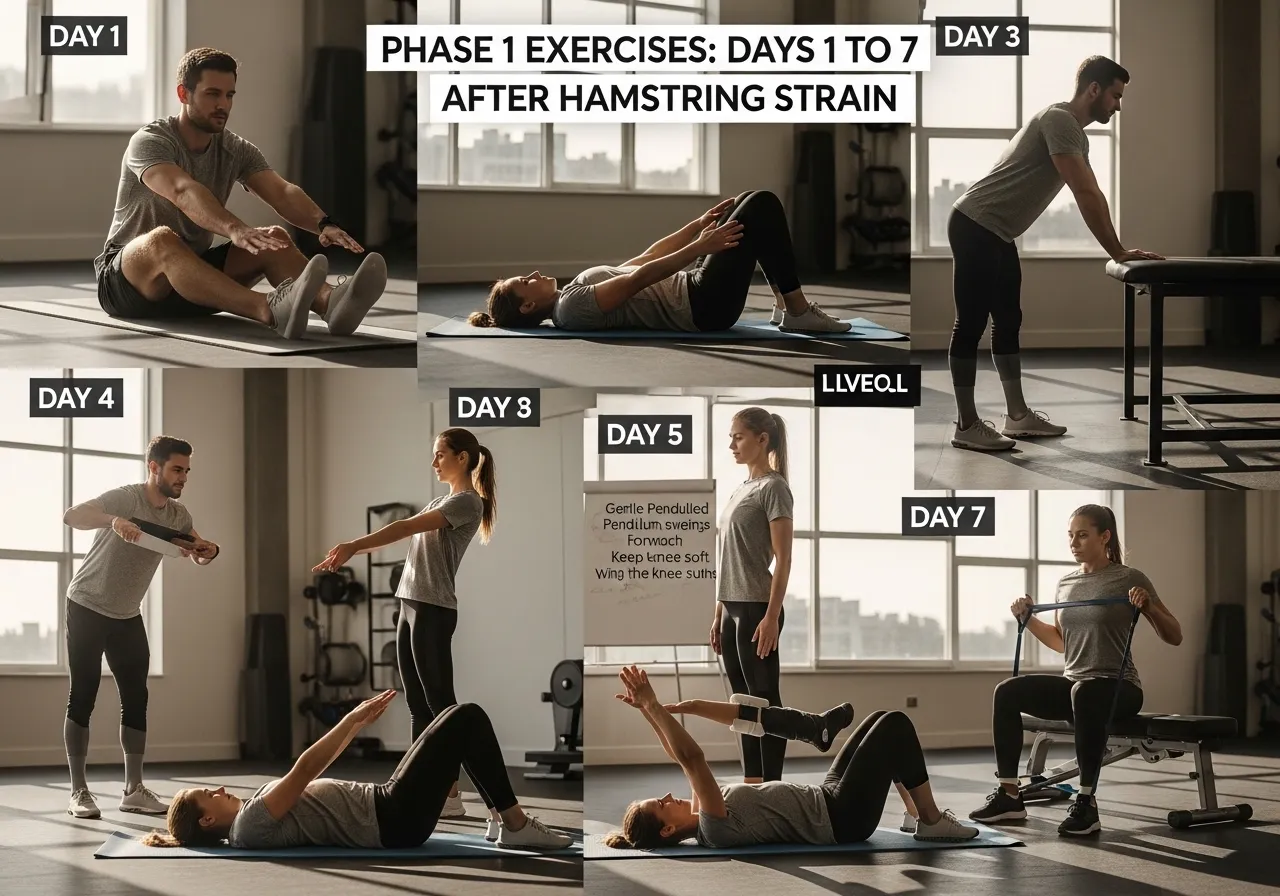
Phase 1 Exercises: Days 1–7 After the Strain
The first week after a hamstring strain is the phase where the instinct toward complete rest must be carefully balanced against the biological imperative for early gentle movement that prevents the excessive scar tissue formation and deconditioning that prolonged immobilization produces. The exercises appropriate in this phase are characterized by minimal mechanical stress on the injured tissue while maintaining blood flow, neural input, and joint range of motion in the structures surrounding the hamstring.
Gentle Range of Motion and Circulation Exercises (Days 1–3)
In the first 24-72 hours, the priority is managing the acute inflammatory response while introducing the minimal movement that tissue healing begins to require. Exercises appropriate at this earliest stage: supine heel slides — lying on your back, slowly sliding the heel of the injured leg toward the buttocks through the available range of motion without pain provocation, 2 sets of 10-15 repetitions every 2-3 hours; seated knee extension — from a seated position, slowly straightening the knee to the available range, holding briefly, and returning, again within the pain-free range; and gentle walking at a pace that produces no pain increase, limited to 5-10 minutes two to three times daily in the first days. The pain threshold guidance for all Phase 1 exercises: movement should produce no pain or mild discomfort of 2/10 or less on a 0-10 pain scale. Any sharp, significant, or lingering pain indicates the exercise is either premature or being performed incorrectly. Ice application (15-20 minutes, 3-4 times daily) remains appropriate in the first 48-72 hours for symptom management, though the 2021 update of the PEACE and LOVE protocol notes that ice beyond this window may actually impair the inflammatory signaling that initiates tissue repair, and recommends transitioning to controlled movement and elevation for ongoing fluid management rather than continued icing. From British Journal of Sports Medicine PEACE and LOVE protocol, early active management of soft tissue injuries — replacing the outdated RICE approach with progressive loading principles — produces superior long-term tissue healing outcomes and reduced re-injury rates compared to rest-dominant approaches.
Isometric Exercises: Loading Without Movement (Days 3–7)
Isometric exercises — muscle contractions that generate force without joint movement — are the first form of resistance loading appropriate after a hamstring strain because they provide the mechanical stimulus that tissue remodeling requires without the dynamic muscle lengthening that risks disrupting healing fibers. The primary isometric hamstring exercise in early recovery: prone isometric hamstring curls — lying face down, placing a pillow under the thigh just above the knee for comfort, and pressing the heel down against the floor or against a partner’s resistance while keeping the knee angle constant. Starting with submaximal contractions (50-60% of perceived maximum effort) held for 5-8 seconds, progressing to 70-80% effort holds over days 5-7 as pain allows. Three to five sets of 5-8 repetitions with 30 seconds rest between sets, twice daily, represents an appropriate loading dose for early-phase hamstring isometrics. The neurological benefit of isometrics beyond tissue loading: isometric contractions at 50-70% of maximum have been shown to produce pain inhibition through the cortical pain modulation mechanisms that sustained muscle activation triggers — a clinically relevant benefit for hamstring strain management where pain-limited movement creates the deconditioning spiral that delays return to sport. Isometric wall sit position held for 30-45 seconds is an appropriate additional isometric exercise that loads the quadriceps and hip extensors without hamstring-specific stretch, maintaining lower extremity neural drive while the hamstring recovers through early-phase protective tissue organization.
Proprioception and Balance Training: The Often-Missed Rehabilitation Component
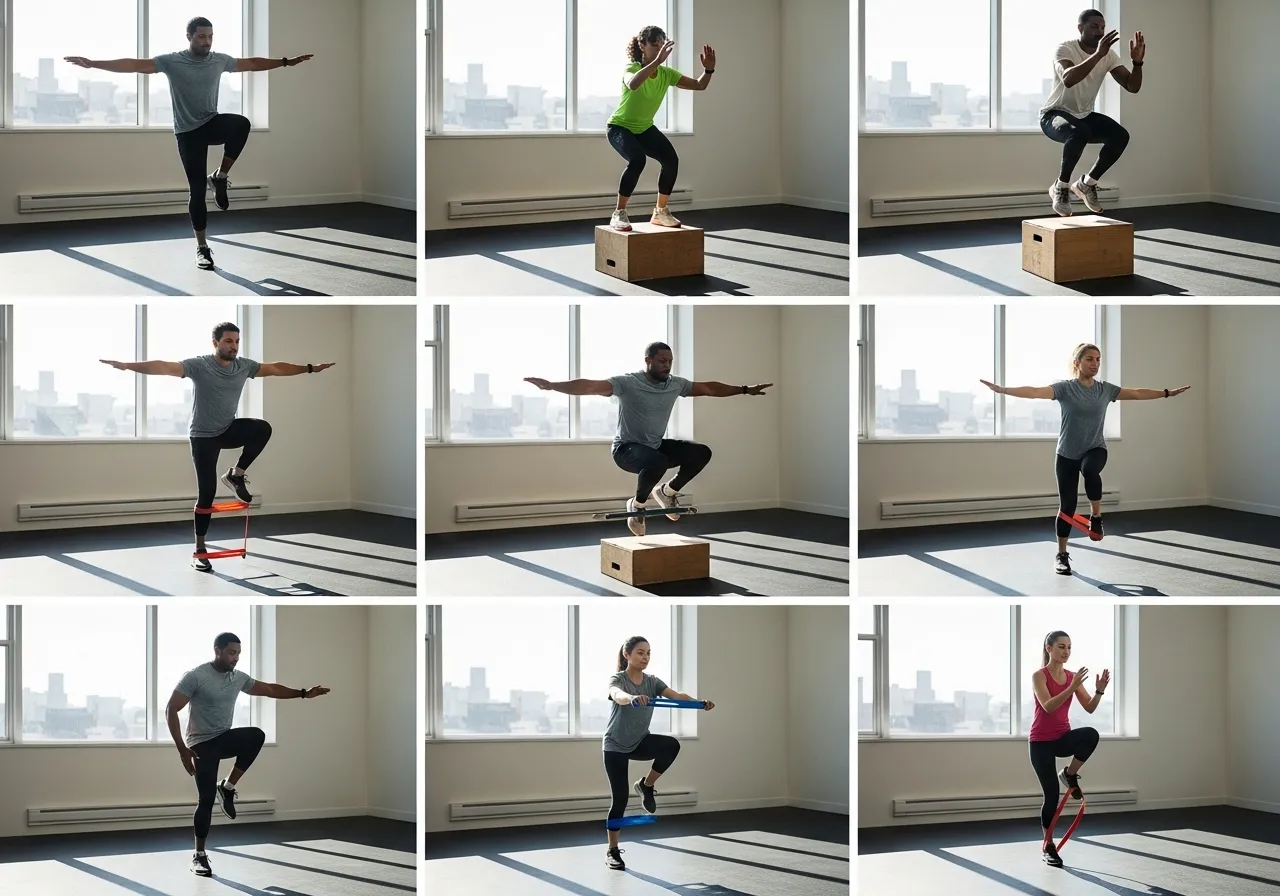
Proprioception — the neural sense of joint position and movement that coordinates the split-second muscle activation timing that sprinting requires — is disrupted by muscle injury in ways that persist after the structural tissue has healed and pain has resolved. The damaged muscle spindle fibers and altered afferent signaling that accompany hamstring strain produce deficits in the neuromuscular coordination that sprint mechanics depend on, and athletes who complete structural rehabilitation without addressing proprioceptive retraining often discover reduced running economy and coordination quality that persists beyond the expected recovery timeline. The proprioception rehabilitation exercises appropriate from Phase 2 onward: single-leg standing balance on firm surface — 30 seconds per leg, progressing to eyes closed when firm-surface eyes-open balance is symmetric; single-leg standing on foam pad or balance disc — the unstable surface increases proprioceptive demand by requiring continuous micro-adjustments in ankle, knee, and hip position; single-leg Romanian deadlift on an unstable surface — combining the hamstring strengthening of the standard RDL with the proprioceptive challenge of unstable surface loading; and perturbation training — a partner provides unexpected pushes and pulls during single-leg standing that requires reactive neuromuscular responses mimicking the unexpected force variations of athletic activity. This proprioceptive rehabilitation component, while unglamorous compared to the strength-focused main rehabilitation exercises, is what research indicates separates athletes who return to sport successfully without neuromuscular compensation from those who carry subtle movement quality deficits that predispose re-injury for months after structural healing is complete.
Hydration and Micronutrients Supporting Muscle Repair
Beyond the macronutrient considerations of protein timing and caloric adequacy, several specific micronutrients have evidence-supported roles in the connective tissue repair process that hamstring strain rehabilitation involves. Zinc is required for the metalloproteinase enzymes that remodel damaged collagen and for the protein synthesis machinery that produces new contractile proteins — deficiency impairs wound healing generally and connective tissue repair specifically, making adequate zinc intake from red meat, shellfish, legumes, or supplementation (15-25 mg daily) appropriate during active recovery. Magnesium, discussed extensively in hydration contexts, also participates directly in protein synthesis and the ATP-dependent processes that muscle repair requires — athletes following the magnesium supplementation practices that their overall electrolyte management already motivates are automatically supporting this recovery mechanism. Vitamin D status has emerged from the injury recovery research as a meaningful determinant of muscle repair rate and muscle strength recovery following injury: athletes with adequate vitamin D status (serum 25-OH vitamin D above 40 ng/mL) demonstrate faster return of muscle function following injury compared to deficient athletes in multiple observational studies, suggesting that the widespread vitamin D insufficiency in athletes training indoors or at northern latitudes is a modifiable factor in injury recovery speed. Checking vitamin D status through a routine blood panel and supplementing to achieve the 40-60 ng/mL range that research associates with optimal muscular outcomes provides a simple, low-cost nutritional support that the injury recovery period specifically motivates investigating. The combined nutritional protocol — adequate protein, vitamin C, zinc, vitamin D, and omega-3 fatty acids alongside appropriate total caloric intake — gives the healing hamstring every biological resource the repair process can use, producing the fastest and most complete tissue restoration that the athlete’s genetics and training status will allow.
Be patient.

Phase 2 Exercises: Weeks 2–3, Building Controlled Strength
By the second week, most Grade 1 strains and well-managed Grade 2 strains are ready for the progressive isotonic loading that stimulates the organized collagen remodeling required for functional strength restoration. The transition from isometrics to controlled isotonic loading is guided by the clinical benchmark of 0-2/10 pain during the Phase 1 exercises and normal or near-normal walking gait without compensatory movement patterns.
Romanian Deadlift Progression: The Foundation of Hamstring Rehabilitation
The Romanian deadlift — a hip hinge movement that loads the hamstring eccentrically as the hip flexes under load — is the single most important exercise in hamstring strain rehabilitation and the movement that research most consistently associates with successful return to sport and reduced re-injury risk. The progression in Phase 2 begins conservatively: bilateral bodyweight Romanian deadlift — standing with feet hip-width apart, hinging at the hip with a neutral spine to lower the torso until a mild hamstring stretch is felt (well within comfortable range), and returning to standing through hip extension. This bodyweight-only version allows the athlete to calibrate the exact range of motion that produces mild stretch sensation without pain provocation, establishing the baseline from which range and load are progressively added. Starting prescription: 3 sets of 10 repetitions, stopping 30° short of maximum comfortable range, twice daily in the first days of Phase 2. The progression over weeks 2-3: advancing range of motion by 5-10° every 2-3 sessions as comfort allows; adding light resistance (a 5-10 kg dumbbell or kettlebell held in both hands) when the full comfortable range is achieved without pain; transitioning to single-leg Romanian deadlift (the more challenging unilateral version that more closely mimics the single-leg mechanics of sprint running) once bilateral loading at moderate weight is comfortable. The research support for this specific exercise: a landmark randomized controlled trial published in 2015 found that hamstring rehabilitation programs centered on the Nordic hamstring curl (an eccentric-dominant exercise similar in mechanism to the Romanian deadlift) reduced re-injury rates by 51% compared to conventional rehabilitation protocols in football players — establishing eccentric hamstring loading as the gold standard recovery intervention. From PubMed Nordic hamstring exercise and injury prevention research, programs combining progressive eccentric loading with hip extension strengthening produce significantly better return-to-sport outcomes than stretching-dominant or rest-dominant rehabilitation approaches across multiple athletic populations.
Nordic Hamstring Curl Introduction: The Evidence Gold Standard
The Nordic hamstring curl — kneeling with ankles anchored, lowering the torso toward the floor using the hamstrings to control the descent — is the most evidence-supported exercise for hamstring rehabilitation and injury prevention in the sports medicine literature. In Phase 2, the Nordic curl is introduced in its most regressed form: the assisted Nordic curl negative, where the athlete uses their hands to control the descent and pushes through the hands to assist the return rather than completing an unassisted curl. Starting prescription for Phase 2 Nordic curl introduction: 3 sets of 5 repetitions with maximum hand assistance during descent, focusing on controlling the eccentric phase over 3-4 seconds rather than dropping freely. The assisted version allows the eccentric loading that stimulates tendon and muscle remodeling to occur at the appropriate biological stimulus level without the full load that a complete Nordic curl demands — which would be excessive in early Phase 2 and would provoke pain and potential re-injury in tissue that has not yet achieved sufficient tensile strength. The progression marker for advancing Nordic curl difficulty: when 3 sets of 5 assisted eccentric Nordics produces no pain above 2/10 during or after the session, the athlete is ready to reduce hand assistance progressively, working toward the unassisted Nordic curl that Phase 3 rehabilitative training targets.
Hip Extension and Glute Strengthening
The hamstring does not function in isolation — it works synergistically with the gluteus maximus for hip extension, and a common contributor to hamstring overload and injury is inadequate glute strength that forces the hamstring to compensate beyond its optimal loading range. Phase 2 is the ideal time to address this contributor by incorporating specific glute strengthening exercises alongside the hamstring-targeted rehabilitation. Hip thrusts on the floor (supine bridge progressions) — lying on the back with knees bent and feet flat, driving the hips to full extension and holding for 2 seconds — provide hip extension loading with minimal hamstring stress, appropriate from the earliest Phase 2 days. Single-leg glute bridges (same movement performed with one leg elevated) progress the hip thrust stimulus appropriately as bilateral tolerance develops. Clamshell exercises with resistance band — lying on the side with hips at 45°, opening the top knee against band resistance — address the hip abductor and external rotator function that running mechanics require alongside the hip extension capacity that the main rehabilitation exercises develop. The combined hamstring-glute-hip complex strengthening that Phase 2 introduces is not merely supplementary rehabilitation — it is the physiological foundation for the running gait quality that prevents recurrence of the overloading pattern that caused the original strain.
Heat Therapy and Soft Tissue Techniques in the Sub-Acute Phase
From approximately week 2 of recovery (the sub-acute phase when acute inflammation has resolved and controlled loading rehabilitation is underway), several passive recovery techniques complement the active rehabilitation exercises in ways that improve tissue extensibility, reduce protective muscle guarding, and support the blood flow that sustained collagen remodeling requires. Heat therapy — applied for 15-20 minutes before rehabilitation exercises in the sub-acute phase — increases muscle temperature, reduces tissue viscosity, and improves the extensibility that range-of-motion exercises and gentle stretching require for effective execution. The heat mechanism: increased local blood flow and reduced collagen fiber stiffness at elevated tissue temperatures allows the hamstring to be loaded through a greater range of motion without the pain-limiting guarding response that cooler, stiffer tissue produces. Foam rolling of the hamstring region — with careful technique that applies moderate pressure along the hamstring belly while avoiding direct pressure over the injury site in the first two weeks — improves fascial mobility and reduces the neural inhibition that protective muscle tension creates in the muscles surrounding an injury. Sports massage by a qualified therapist in the sub-acute and remodeling phases addresses the specific tissue restrictions, trigger points, and mechanical adhesions that developing scar tissue creates — distinguishing the precisely targeted manual therapy that professional soft tissue work provides from the non-specific compression of self-massage tools. Contrast therapy (alternating warm and cool water application) in the sub-acute phase supports the vascular flush that removes inflammatory byproducts and delivers oxygen and nutrients to the healing zone, though the research support for contrast therapy specifically in muscle strain is less robust than for the active loading rehabilitation exercises that it is designed to complement rather than replace.
When to Escalate to Professional Care
Home rehabilitation using the evidence-based progressive loading protocol described throughout this article is appropriate and effective for the majority of Grade 1 and Grade 2 hamstring strains in athletes who can accurately self-assess their injury severity and who do not have complicating factors. However, several clinical presentations require professional evaluation and management that home rehabilitation cannot adequately provide. Escalate to a physiotherapist or sports medicine physician for: pain at the sit bone (ischial tuberosity) rather than in the muscle belly — this location suggests proximal hamstring avulsion or high-grade myotendinous junction injury that imaging and possibly surgical consultation should assess; significant bruising appearing on the posterior thigh within 24-48 hours of injury — this indicates hemorrhage consistent with Grade 2-3 strain; inability to walk without significant pain or compensatory limp at 48-72 hours — Grade 1 strains should allow modified normal walking within 48 hours of injury; pain that is not improving or is worsening after 2 weeks of appropriate Phase 1-2 exercises — plateau or regression suggests the injury grade may be higher than estimated or a contributing factor (referred pain from lumbar pathology, proximal nerve involvement) may be present; and recurrent hamstring strain at the same site — recurrence indicates that the previous rehabilitation was incomplete and a professional assessment of the specific mechanical or strength deficit contributing to the pattern is warranted before the next training cycle proceeds without structural rehabilitation completion. The investment in one to three physiotherapy sessions for professional assessment, imaging interpretation, and personalized rehabilitation programming guidance provides a return on investment in faster recovery and reduced recurrence risk that most athletes, on reflection, wish they had made rather than discovering the clinical gap through extended self-managed recovery or re-injury.
Progress daily.
Phase 3 Exercises: Weeks 3–6, Returning to Athletic Function
Phase 3 marks the transition from rehabilitation to athletic preparation — the exercises shift from injury management toward the movement patterns and loading parameters that running and sport-specific activity require. The clinical benchmark for entering Phase 3: less than 2/10 pain with all Phase 2 exercises performed at moderate load, and symmetric hamstring strength on informal manual muscle testing (comparing bilateral push-against-resistance force production).
Progressive Running Reintroduction
The return to running after hamstring strain follows a structured progressive protocol that introduces sprint speed incrementally rather than jumping directly to full-speed running once pain is absent. Pain absence is a necessary but insufficient criterion for sprint return — the repaired hamstring tissue requires progressive speed loading to restore the elastic energy storage capacity and high-speed eccentric tolerance that sprinting demands before full sprint capacity is safely available. The progressive running protocol used successfully in my own hamstring strain recovery: Week 3 — brisk walking at 5-6 km/h for 20-30 minutes with no pain provocation; Week 4 — easy jogging at 8-10 km/h for 15-20 minutes, focusing on relaxed mechanics and monitoring for any hamstring tightness; Week 4-5 — gradual pace progression to 70-80% of normal easy run pace, with 10×30-second acceleration runs at 60% sprint speed incorporated into the final 10 minutes of one session per week; Week 5-6 — interval runs at 80-90% sprint speed for 20-30 meters with full recovery between efforts, progressively building to 10-12 repetitions at 90% intensity without pain. The criterion for full sprint clearance: 10 repetitions of maximum sprint effort over 30-40 meters with no pain during or after the session, combined with confirmed symmetric strength on the hamstring strength test. From Sports Injury Bulletin hamstring rehabilitation guide, graduated sprint reintroduction protocols using the 60-70-80-90-100% speed progression reduce sprint-associated re-injury rates compared to return-to-sport based solely on pain absence — confirming the speed-graded approach as clinically superior to the purely subjective criterion most athletes use without professional guidance.
Plyometric and Power Reintroduction
Sprinting is inherently a plyometric activity — the elastic energy storage and release in the hamstring’s tendon-muscle unit during the spring phase of the gait cycle requires the reactive strength capability that only plyometric training develops. Phase 3 therefore includes progressive plyometric exercises that restore this reactive capacity before full sprint return. The plyometric progression appropriate for Phase 3 hamstring recovery: bilateral squat jumps (landing with controlled deceleration, no sprint mechanics yet) introduced at weeks 3-4; bounding in place (low-amplitude, bilateral contact plyometrics) at week 4; forward bounds with emphasis on soft landing mechanics at weeks 4-5; and A-skip and B-skip running drills (sprint mechanics at sub-maximum speed) at weeks 5-6. The A-skip drill is particularly valuable in hamstring rehabilitation because it mimics the terminal swing phase mechanics — hip flexion with knee extension — that caused the original injury, allowing the athlete to practice these mechanics at controlled speed before full sprint loading exposes the repaired tissue to its ultimate demand. The landing mechanics focus throughout Phase 3 plyometrics: landings should be soft and controlled, with the knee tracking over the toes and the hip loading absorption occurring through the glute and hamstring complex rather than the knee-dominant pattern that increases hamstring relative loading.
Returning to Sport After a Hamstring Strain: The Clearance Criteria
The return-to-sport decision after hamstring strain should be guided by objective functional criteria rather than the subjective combination of pain absence and the athlete’s impatience that most self-managed recoveries rely on. The functional clearance criteria that sports medicine physiotherapists use to guide return-to-sprint clearance: hamstring peak torque ratio — the injured leg’s isokinetic strength at 60°/second should be at least 90% of the uninjured leg (tested with dynamometry in clinical settings or estimated through manual muscle testing bilateral comparison); the single-leg bridge endurance test — lying on the back with one leg straight and the other knee bent at 90°, performing single-leg glute bridges for maximum repetitions; the healthy leg result should be matched within 5 repetitions by the injured leg before sprint clearance is appropriate; the askling H-test — performing a slow, controlled single-leg straight-leg hip flexion while standing, comparable to a slow high kick movement, reaching at least 70° of hip flexion without pain on both sides; and the sprint test protocol described in Phase 3 — 10 repetitions of 30-40 meter maximum effort sprints with no pain during or within 24 hours after the session. Meeting all four criteria before returning to unrestricted sport provides a substantially higher confidence level of full rehabilitation than pain absence alone, and reduces the recurrence risk that premature return based on subjective criteria produces. Athletes who meet the clearance criteria consistently report that the return to full training feels smooth and confident, rather than tentative — a qualitative indicator that the objective benchmarks align with the subjective readiness that the athlete’s proprioceptive sense of the injury site also reflects when rehabilitation is genuinely complete.
Building Hamstring Resilience for Life: The Ongoing Prevention Practice
The athlete who has experienced a hamstring strain and recovered from it with the intelligence this article describes has an opportunity that the uninjured athlete rarely takes: to build the specific tissue resilience that prevents the hamstring from ever being the limiting factor in training again. The ongoing prevention practice that creates this resilience: a weekly Nordic hamstring curl session (2-3 sets, 4-6 reps, controlled eccentric focus) maintained as a non-negotiable lower body training component regardless of how well the hamstring feels — the eccentric strength that Nordic curls build is the structural protection that sprint sports depend on, and maintaining it requires the same consistency that maintaining any other critical fitness quality requires. Monthly assessment of hamstring-to-quadricep strength ratio through informal bilateral testing — the manual push-against-resistance comparison that an experienced training partner can perform — confirms that the bilateral strength balance that injury prevention depends on is maintained through the training blocks that sometimes emphasize quad-dominant movements and inadvertently allow hamstring relative strength to decline. Annual progressive overload review of the Romanian deadlift loads being used in training — if the loads have not increased in 12 months, the progressive stimulus for hamstring strength development has plateaued and the adaptation that injury prevention requires is no longer occurring. The athlete who builds these three practices into their permanent training infrastructure — weekly Nordic curls, monthly bilateral strength assessment, annual progressive overload review — is building the kind of proactive physical management that turns an injury history into a competitive advantage: the deep understanding of a specific physiological vulnerability, the targeted training practices that address it continuously, and the confidence of having rehabilitated fully and trained preventively that allows maximum athletic output without the injury anxiety that incompletely rehabilitated athletes carry indefinitely.

Maintaining Overall Fitness During Hamstring Recovery
One of the most frustrating aspects of a hamstring strain for the active athlete is the apparent requirement to suspend all training while recovery proceeds — a misperception that prevents many athletes from maintaining the cardiovascular fitness and upper body strength that their training program had developed. The reality is that a significant portion of the training program can continue throughout hamstring recovery with appropriate modifications that avoid hamstring stress while maintaining fitness in every other physical domain.
Upper Body Training: Full Continuation
There is no physiological reason to reduce upper body training during hamstring strain recovery. The push and pull movement patterns of bench press, shoulder press, rowing, and pull-up variations impose no mechanical stress on the hamstring and can be performed at full intensity throughout the recovery period. Maintaining upper body training serves multiple recovery purposes beyond simply preserving the upper body development already built: it maintains the training habit and routine that psychological wellbeing and fitness identity depend on; it preserves the cardiovascular fitness component of upper body circuit training; and it provides the productive outlet for training energy that prevents the frustration and deconditioning that complete rest would produce. The upper body training adjustment during hamstring recovery: exercises that require significant lower body stabilization (standing barbell overhead press, standing cable exercises) may need to be performed seated to avoid loading the hamstring in stabilization demand; and the overall training session volume can be maintained at normal levels for upper body without concern for the hamstring recovery impact.
Swimming and Pool Running: The Ideal Cardio Substitutes
Swimming is the cardiovascular training modality most recommended during hamstring strain recovery for the combination of advantages it provides: the buoyancy of water eliminates the ground reaction forces and eccentric loading that land-based exercise imposes on the hamstring; the horizontal body position of freestyle and backstroke reduces the hip flexion demand that cycling’s seated position can create; and the cardiovascular intensity available in swimming — which can reach and sustain the same heart rate ranges as running at equivalent perceived exertion — preserves aerobic fitness at levels comparable to pre-injury maintenance. Deep water running (aqua jogging) using a flotation belt is an even more specific cardiovascular maintenance tool during hamstring recovery because it replicates the neuromuscular patterns of running without the ground impact forces that sprint mechanics would require on land. Athletes who have used deep water running during hamstring recovery consistently report maintaining running-specific cardiovascular fitness more effectively than swimming alone provides — the running mechanics preservation that water running offers makes the transition back to land running faster and more mechanically natural than a pure swimming maintenance period does. The aqua jogging protocol for cardiovascular maintenance: 20-30 minute sessions at a cadence and effort level that produces the same heart rate as a moderate intensity land run, performed 3-4 times weekly to maintain aerobic base throughout the land running restriction period.
Cycling and Upper Body Cardio Options
Stationary cycling at low resistance with an upright posture is generally appropriate for hamstring recovery from Grade 1 strains within the first 1-2 weeks, with the important caveat that seat height should be high enough that hip flexion at the bottom of the pedal stroke remains above the angle that provokes hamstring discomfort. The low-load, repetitive hip flexion-extension of gentle cycling provides the vascularization that healing tissue requires while maintaining cardiovascular capacity at a fraction of the running-specific load. Road cycling at high cadence and low resistance follows the same principle with the added advantage of outdoor training variety. Upper body ergometer (hand cycle) training provides an even more hamstring-sparing cardiovascular option for athletes with access to this equipment — commonly available in rehabilitation facilities and increasingly found in commercial gyms with well-stocked cardio sections. For athletes without pool or cycling access, upper body circuit training — combining push-ups, pull-ups, band exercises, and rowing movements — at sufficient intensity and circuit structure to elevate heart rate to the moderate-to-high training zone provides a meaningful cardiovascular stimulus from a purely upper-body-driven approach that fully avoids the hamstring loading restriction of the recovery period. From NCAA Sport Science Institute return-to-sport guidelines, cross-training during recovery from lower extremity injury maintains cardiovascular fitness at 80-90% of pre-injury levels when performed at equivalent intensity — establishing the cross-training period as a genuine fitness maintenance strategy rather than a consolation activity.
Specific Hamstring Exercises Ranked by Phase Appropriateness
A condensed reference guide of the most commonly recommended hamstring exercises, ranked by the recovery phase in which they are appropriate, provides the practical clarity that navigating conflicting internet advice about hamstring rehabilitation often obscures. Phase 1 (Days 1-7) appropriate: heel slides, prone isometric hamstring curls at 50-70% effort, gentle walking, isometric wall sits, supine hip abduction and adduction. Phase 1 inappropriate: any dynamic hamstring loading, running, cycling at resistance, stretching at end-range, Nordic curls. Phase 2 (Weeks 2-3) appropriate: bilateral Romanian deadlift at bodyweight progressing to light load, assisted Nordic curl eccentrics, single-leg glute bridges, clamshells, stationary cycling at low resistance, swimming, balance and proprioception work. Phase 2 inappropriate: sprinting, jumping, maximal effort loading, aggressive stretching. Phase 3 (Weeks 3-6) appropriate: single-leg Romanian deadlift with progressive loading, Nordic hamstring curl progressing toward unassisted, progressive running reintroduction at the speed percentages described above, A-skip and B-skip mechanics drills, bilateral squat jumps, and forward bounds with controlled landing. Phase 3 inappropriate: maximum intensity sprinting, sport-specific cutting and change of direction at maximum speed, before all clearance criteria are met. Post-clearance (Week 6+) maintenance: Nordic hamstring curls once weekly as permanent prevention; Romanian deadlifts as part of the regular lower body training program; and hamstring-specific warm-up before every sprint session as the structural protection that training history confirms is protective across the full athletic career. This phase-specific exercise matrix converts the detailed rehabilitation science described throughout this article into the simple practical reference that athletes can apply session by session without requiring expert supervision at every step — while knowing when professional guidance is appropriate for the grade or complexity of their specific injury.
Train smart. Heal right.

Nutrition and Sleep Strategies That Accelerate Hamstring Healing
The rate of tissue healing after a hamstring strain is not fixed — it is a biologically modifiable process that adequate nutrition and sleep quality can meaningfully accelerate or, when deficient, significantly slow. The athlete who addresses both the nutritional and sleep components of recovery alongside the exercise rehabilitation gives their biology the resources that healing tissue requires to rebuild faster and with better structural quality.
Protein Intake During Connective Tissue Recovery
Muscle and connective tissue repair requires amino acid availability — the raw material from which the collagen and contractile proteins that repaired tissue is composed are synthesized. The protein requirements during active tissue recovery are at the higher end of the athletic range: 1.8-2.4 grams per kilogram of body weight daily, with particular attention to leucine-rich protein sources that maximally stimulate muscle protein synthesis signaling (whey protein, eggs, chicken breast, and fish all provide the leucine threshold of approximately 2.5-3 grams per meal that muscle protein synthesis signaling requires). The timing of protein intake has relevance during injury recovery that goes beyond its normal importance for training adaptation: consuming 30-40 grams of protein every 3-4 hours throughout the day — rather than concentrating protein in fewer, larger meals — maintains a consistently elevated rate of muscle protein synthesis throughout the 24-hour period, maximizing the total amino acid availability that healing tissue can utilize during the phase of most rapid collagen deposition. Vitamin C is the specific micronutrient most directly involved in collagen synthesis — it is required for the hydroxylation of proline and lysine residues that cross-link collagen fibers into the mechanically strong structure that functional connective tissue requires. Ensuring 500-1,000 mg of vitamin C daily during the first 2-4 weeks of hamstring recovery (from whole food sources or supplementation) specifically supports the collagen synthesis that both the muscle fiber and the tendon components of the injury require for structural restoration.
Anti-Inflammatory Nutrition: Supporting Recovery Without Suppressing It
The relationship between inflammation and tissue healing is more nuanced than the anti-inflammatory supplement marketing suggests: the acute inflammatory phase of tissue healing (first 24-72 hours) is a biologically necessary process that clears debris and initiates the repair cascade — aggressively suppressing it with high-dose NSAIDs or anti-inflammatory supplements at this stage may actually impair healing quality. Beyond the acute phase, supporting the resolution of inflammation (the return to normal tissue biology after the repair initiation phase) through nutritional means provides a recovery benefit without the inhibitory risk. Omega-3 fatty acids (fish oil providing 2-3 grams of combined EPA and DHA daily) support the lipid mediator production that drives inflammation resolution; curcumin from turmeric (400-600 mg bioavailable curcumin preparation) modulates the inflammatory signaling that excessive chronic inflammation sustains; and tart cherry juice has accumulated a meaningful evidence base for reducing exercise-induced inflammatory markers and accelerating recovery in multiple sports contexts. The dietary pattern most supportive of recovery nutrition overall: a whole food Mediterranean-style eating pattern rich in omega-3 fatty acids, antioxidants, and anti-inflammatory polyphenols, with adequate total caloric intake to prevent the tissue catabolism that caloric deficit produces during active healing — avoiding the common mistake of using the reduced training volume of injury recovery as justification for significant caloric restriction that actually impairs the energy availability that tissue synthesis requires.
Psychological Recovery: Managing the Mental Side of a Hamstring Injury
The psychological dimension of hamstring strain recovery is frequently the aspect that athletes manage least well and that clinicians are least consistently addressing — yet the fear of re-injury, the performance anxiety around sprinting, and the identity disruption of being an injured athlete are real experiences that affect both recovery quality and return-to-sport success. The kinesiophobia — the specific fear of movement or re-injury that hamstring strains commonly produce — that many athletes experience when approaching full sprint speed after injury is a documented clinical phenomenon that predicts delayed return to sport and increased re-injury risk independently of the structural healing status. Addressing it requires both the objective evidence of progressive loading success (each completed phase provides confirming experience that the injury is healed and the tissue is responding to progressive challenge) and, for athletes with significant fear-based avoidance, the brief psychological support that cognitive-behavioral approaches or sport psychology consultation can provide for reframing the injury experience. The self-directed psychological recovery practices that support the transition back to confident athletic performance: keeping a recovery log that documents the progressive improvements in load tolerance, range of motion, and sprint speed tolerance as objective evidence of healing progress; setting specific, graduated performance milestones (first pain-free jog; first 70% sprint; first full sprint) that create the sequential confidence building that recovery requires; and sharing the recovery experience with training partners or a coach who can provide the external perspective that counteracts the athlete’s tendency to either over-catastrophize the injury’s significance or dismiss the residual caution that appropriate respect for the healing process requires. The athlete who manages the psychological dimension of hamstring recovery alongside the physical rehabilitation emerges from the injury experience not just healed but more self-aware, more technically knowledgeable about their body, and more strategically prepared for the training and prevention practices that make the next hamstring strain significantly less likely.
Recovery done right is not just about getting back to where you were — it is about building the foundation to go further, safely and confidently, than you were before the injury occurred.

Prevention, Common Mistakes, and Frequently Asked Questions About Pulled Hamstring Recovery
The questions that athletes most commonly ask about pulled hamstring recovery reflect both genuine uncertainty about the evidence and the persistence of outdated advice that still circulates in athletic communities. Addressing them directly provides the clarity that better recovery decisions require.
The Most Common Hamstring Recovery Mistakes
Mistake 1: Returning to sprinting based on pain absence alone. Pain absence at rest and pain absence during walking are inadequate criteria for sprint return — the hamstring must be loaded progressively to the speed and intensity of sprinting before full return is safe, and this requires the structured progressive running protocol described in Phase 3 rather than an immediate jump to full training. The 12-33% re-injury rate reported in sprint sport athletes represents athletes who returned too early, based on pain absence rather than progressive loading criteria, and sustains the clinical urgency of proper return-to-sport graduation. Mistake 2: Aggressive static stretching in the first two weeks. The instinct to stretch a tight-feeling hamstring after injury is understandable but counterproductive in the early healing phase — the collagen fibers organizing into the repair matrix require stability and progressive loading, not the elongation stress of aggressive stretching that can disrupt fiber alignment and delay healing. Gentle range of motion exercises within pain-free range are appropriate; yoga-style hamstring stretches at end range are not appropriate until Phase 3. Mistake 3: Using heat in the first 72 hours. Heat application increases blood flow to the area and amplifies the acute inflammatory response that the first 72 hours represents — potentially increasing swelling and pain when cooling and elevation are what the acute phase requires. Reserve heat therapy for the sub-acute phase (week 2 onward) when it genuinely supports tissue extensibility and blood flow improvement. Mistake 4: Neglecting the eccentric strengthening that prevents recurrence. Athletes who complete enough rehabilitation to resume running but never implement the Nordic curl and progressive eccentric loading program have the same hamstring vulnerability they did before the original strain — the structural adaptation that eccentric loading produces is the only evidence-based prevention strategy that meaningfully reduces recurrence risk.
Frequently Asked Questions About Pulled Hamstring Recovery
Q: How long does a pulled hamstring take to heal? A: Grade 1 strains typically resolve in 1-3 weeks with appropriate management. Grade 2 strains require 3-8 weeks for return to full activity. Grade 3 strains may require 3-6 months and occasionally surgical intervention. The most important variable is whether the athlete follows progressive loading rehabilitation or attempts to rush return — properly managed recoveries are consistently shorter than rest-dominant approaches, counterintuitively. Q: Should I see a doctor for a pulled hamstring? A: For any injury where sharp localized pain prevents normal walking, where visible bruising or swelling appears promptly after the injury, or where the pain is at or near the sit bone (ischial tuberosity) rather than in the belly of the muscle, professional assessment is strongly recommended — these features suggest Grade 2-3 strains or proximal hamstring avulsion injuries that require imaging confirmation and may need more intensive management than home rehabilitation provides. Q: Can I strength train the injured leg during recovery? A: Yes — with the specific exercise progressions described in this article, beginning with isometrics and progressing through the phase-appropriate exercises. The key is staying within the pain threshold guidelines (0-2/10 during exercise, no increase in baseline symptoms after exercise) that distinguish productive loading from counterproductive overload. Q: Why does my hamstring keep re-injuring? A: Recurrent hamstring strains almost universally reflect incomplete rehabilitation — specifically, the failure to restore full eccentric strength through the progressive Nordic curl and Romanian deadlift loading that returns the hamstring to pre-injury structural capacity. Completing symptomatic recovery without completing strength restoration is the most common and most costly hamstring rehabilitation error. Q: Is massage helpful for hamstring strain recovery? A: Gentle massage is appropriate from the sub-acute phase (approximately week 2) onward for improving local blood flow, reducing the muscle guarding that surrounding muscles develop in response to the injury, and improving tissue extensibility before stretching and loading exercises. Deep tissue massage directly over the injury site in the first week is not appropriate and risks disrupting the early healing tissue organization. From Journal of Orthopaedic and Sports Physical Therapy hamstring rehabilitation guidelines, progressive loading rehabilitation programs combining Nordic hamstring exercises, Romanian deadlifts, and structured sprint reintroduction protocols produce return-to-sport rates significantly superior to stretching-dominant or rest-dominant rehabilitation approaches, with lower recurrence rates at 12-month follow-up — establishing the loading-progressive approach as the clinical standard for hamstring strain management.
Long-Term Prevention: Building a Hamstring That Resists Re-Injury
The injury that brought you to this article can be the last hamstring strain you experience if the prevention principles are built into ongoing training rather than abandoned when the acute recovery is complete. The prevention strategy that the research most strongly supports: maintain Nordic hamstring curls as a permanent component of the lower body training program — 2-3 sets of 4-6 repetitions once per week provides the eccentric strength maintenance that reduces re-injury risk in every subsequent sprint and athletic activity. Maintain the hip extension strength through regular Romanian deadlifts and hip thrust variations that ensure the gluteal force production is adequate to share the hip extension load that the hamstring otherwise bears disproportionately. Include dedicated hamstring eccentric loading in the warm-up before sprinting sessions — a 5-10 minute active warm-up including dynamic hamstring stretches, leg swings, A-skip mechanics, and 3-4 progressive acceleration runs at 60-80% speed prepares the hamstring for the sprint-specific loading that a cold, static warm-up does not adequately prepare. Monitor training load increases and resist the urge to dramatically increase sprint volume or intensity after periods of reduced training — the majority of hamstring re-injuries occur in the first 4-8 weeks after return to full training, during the period when fitness is returning and training load is increasing faster than structural tissue adaptation is occurring. The athlete who understands why they got injured, rehabilitates completely using the progressive loading approach, and implements the preventive training habits consistently is the athlete who trains uninterrupted for years — turning a frustrating setback into the informed foundation for a more resilient and better-prepared athletic career.
The pulled hamstring that brought you here does not have to define your athletic trajectory. Managed intelligently — with progressive loading, evidence-based rehabilitation, adequate nutritional support, and the permanent prevention habits that protect the tissue going forward — it becomes the catalyst for the most informed, most resilient, and most durable version of your athletic self. Heal well. Rehabilitate completely. And build the hamstring strength that makes re-injury an increasingly remote possibility with every week of consistent, well-directed training that follows.