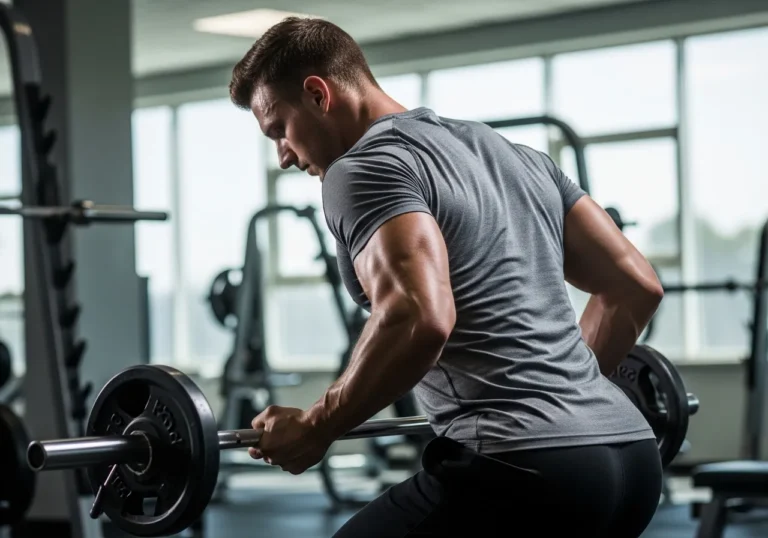
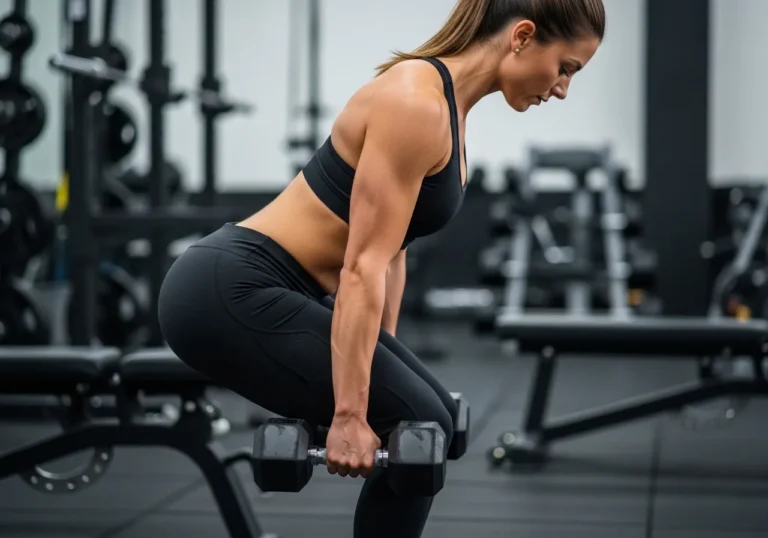
The Best Calisthenics Workout for Building Muscle

1. Can Calisthenics Really Build Muscle? The Science Behind Bodyweight Training
The most common skepticism about calisthenics as a muscle-building tool comes from gym culture’s equation of muscle growth with external load — the assumption that progressive overload requires adding weight to a barbell or dumbbell, and that bodyweight training is therefore limited to toning, endurance, and maintenance rather than genuine hypertrophy. This assumption is wrong, and the research supporting calisthenics-driven muscle growth is extensive enough that dismissing bodyweight training as insufficient for building muscle reflects ignorance of both the physiology of hypertrophy and the mechanical demands of advanced calisthenic movements. I built my foundational upper body strength entirely through calisthenics before touching a barbell, and the muscle I developed from two years of progressive pull-up, dip, and push-up work was indistinguishable in quality from weight room-built muscle.
The Physiology of Muscle Growth: What Actually Drives Hypertrophy
Muscle hypertrophy — the increase in muscle fiber cross-sectional area that produces visible muscle growth — occurs through three primary mechanisms: mechanical tension (the force placed on muscle fibers during contraction, particularly during lengthened positions), metabolic stress (the accumulation of metabolites like lactate and hydrogen ions that create the cellular signaling environment for growth), and muscle damage (the microstructural disruption from eccentric loading that initiates the repair and remodeling process). None of these mechanisms specifically requires external weight — they require sufficient mechanical stimulus applied to the target muscle through whatever movement produces that stimulus. A set of 8 challenging pull-ups that takes the athlete to near-failure produces equivalent mechanical tension in the biceps and latissimus dorsi to a set of 8 lat pulldowns at a weight that produces equivalent difficulty — the muscle cannot distinguish the source of the mechanical challenge, only its magnitude. Research published in the Journal of Strength and Conditioning Research on resistance training modes consistently confirms that muscle hypertrophy is driven by the relative intensity and volume of the training stimulus rather than the modality through which that stimulus is produced.
Progressive Overload Without Added Weight: The Calisthenics Advantage
The primary challenge of bodyweight training for muscle building is not the absence of external load but the need for a systematic progressive overload strategy that does not default to adding weight plates. Calisthenics resolves this challenge through several progression mechanisms that are unavailable to weight room training: lever arm manipulation (moving the body’s center of mass progressively further from the fulcrum increases mechanical difficulty without adding weight — progressing from two-arm to assisted one-arm push-ups, or from standard pull-ups to wide-grip or ring pull-ups); range of motion increases (progressing from partial to full range progressively increases the mechanical demand); tempo manipulation (slower eccentrics, pauses at difficult positions, and isometric holds increase time under tension and mechanical challenge); and skill/body position progressions (the progression from pike push-up to handstand push-up represents a dramatic increase in mechanical demand from the same basic movement pattern). These progression mechanisms make calisthenics uniquely versatile for continued challenge — the exercise itself evolves rather than merely adding load to a fixed movement.
Research on Calisthenics and Muscle Development
The research specifically examining calisthenics training effects on body composition and muscle development is less extensive than the barbell training literature but consistently supportive of calisthenics as a genuine hypertrophy stimulus. Research published in the PubMed calisthenics hypertrophy literature finds that progressive bodyweight training programs produce significant improvements in muscle mass, strength, and body composition over 8–12 week periods in previously untrained and recreationally trained individuals — comparable to resistance training programs using external loads at equivalent relative intensities. Studies specifically on pull-up training find bicep and latissimus dorsi hypertrophy equivalent to lat pulldown training at matched volumes and intensities. Studies on push-up training find pectoral and tricep hypertrophy comparable to bench press training when the push-up difficulty is appropriately matched to the individual’s capacity. The limiting factor for calisthenics hypertrophy is not the training modality but whether sufficient progressive challenge is maintained as strength develops — the athlete who performs the same push-up variation at the same difficulty indefinitely will plateau, exactly as the weight room athlete who lifts the same weight indefinitely plateaus.
The Calisthenics Muscle-Building Limitation: Upper Body Bias
The primary genuine limitation of calisthenics for balanced muscle development is its relative difficulty in loading the lower body with sufficient intensity for equivalent hypertrophy stimulus. Upper body calisthenics — pull-ups, push-ups, dips, rows — can be progressively loaded to elite difficulty levels through lever progressions, skill variations, and weighted additions (a weight vest adds load to any bodyweight exercise). Lower body calisthenics — squats, lunges, hip hinges — are limited by the relatively lower ratio of bodyweight to lower body strength in most trained individuals: a person who can squat 1.5 times their body weight comfortably will find bodyweight squats insufficient stimulus for continued quadriceps hypertrophy even at high volumes, because the relative intensity (percentage of 1RM) is too low to produce significant hypertrophic stimulus. Single-leg progressions (pistol squats, Bulgarian split squats, shrimp squats) significantly increase lower body loading relative to body weight, and explosive plyometric variations (jump squats, bounds) add power development. However, for athletes specifically targeting lower body hypertrophy, integrating barbell or dumbbell loading is more efficient than pure calisthenics progression. The complete calisthenics practitioner uses progressive upper body bodyweight training as the primary strength stimulus and supplements with single-leg progressions and plyometrics for lower body development.
Who Should Prioritize Calisthenics
Calisthenics is the optimal training modality for several specific populations and contexts. Athletes without gym access — travelers, those in home training environments, anyone whose access to equipment is inconsistent — can build and maintain meaningful muscle mass with calisthenics alone. Athletes seeking relative strength (strength-to-body-weight ratio) rather than absolute strength — gymnasts, martial artists, climbers, sprinters — benefit specifically from the relative strength development that calisthenics uniquely develops. Beginning trainees, for whom the relative intensity of their own body weight is genuinely sufficient overload stimulus, build foundational strength and movement competency through calisthenics that transfers effectively to subsequent weight training. Athletes who want to develop the bodyweight skill movements (handstands, muscle-ups, planche progressions) that are intrinsically rewarding and athletically impressive alongside their muscle development. The calisthenics training approach is not a compromise for those without gym access — it is a legitimate, effective training modality with specific advantages in relative strength development, movement skill, and training location flexibility that weight room training cannot replicate.
Calisthenics vs. Weight Training: A Practical Comparison
The debate between calisthenics and weight training for muscle building is largely a false dichotomy — both modalities produce genuine hypertrophy, both have specific advantages, and the most effective approach for most athletes combines elements of both. However, for athletes choosing between them based on access, preference, or training goals, the practical comparison is informative. For upper body hypertrophy: calisthenics produces equivalent results to weight training through progressive skill and lever arm advancement, with the additional benefit of developing the bodyweight movement competency (handstands, muscle-ups, ring work) that weight training does not develop. For lower body hypertrophy: weight training is more efficient for athletes with the strength to make bodyweight lower body exercises submaximal, particularly for quadriceps and hamstring mass development. For overall athleticism: calisthenics develops superior relative strength, body control, and movement coordination. For maximum absolute strength: weight training allows loading beyond what bodyweight progression can achieve for most athletes. For accessibility and cost: calisthenics requires only a pull-up bar and floor space; weight training requires gym access or significant home equipment investment. The practical recommendation for most athletes: master the fundamental calisthenics patterns (pull-ups, dips, push-ups, rows, single-leg squats) as the foundation of training, add barbell or dumbbell loading for lower body and any upper body movements where bodyweight progression is insufficient, and treat the two modalities as complementary rather than competing approaches to optimal athletic development.
Muscle Groups Developed by Calisthenics: The Complete Picture
A comprehensive calisthenics program develops the following major muscle groups through specific movement patterns: latissimus dorsi and biceps (from vertical pulling — pull-ups and chin-ups, progressively advanced through wide-grip, close-grip, archer, and ring variations); middle and lower trapezius and rhomboids (from horizontal pulling — inverted rows, ring rows, and their advanced progressions); pectoralis major and triceps (from pushing — push-up progressions from incline to standard to pike to handstand push-up); anterior deltoid and upper chest (from overhead pushing — pike push-ups, wall handstand push-ups, freestanding handstand push-ups); core anti-extension and anti-rotation (from planks, ab wheel rollouts, hollow body holds, and L-sits); and lower body through single-leg progressions (pistol squats, shrimp squats, Nordic curls for hamstring eccentric development). The muscle group coverage of a complete calisthenics program is comprehensive — every major muscle group can be effectively targeted through appropriate movement selection and progression, addressing the false notion that calisthenics can only develop the “beach muscles” visible from the front while neglecting posterior chain development.
The Rep Range Question: Sets and Reps for Calisthenics Hypertrophy
The hypertrophy rep range guidance from weight training research — 6–30 repetitions at sufficient intensity produces muscle growth, with the 8–15 range producing the most consistent hypertrophy stimulus — applies equally to calisthenics training with one critical adaptation: the “sufficient intensity” requirement means the chosen exercise variation must be difficult enough that the target rep range is genuinely challenging. A person who can perform 40 standard push-ups will not build chest muscle from sets of 15 standard push-ups — the intensity is too low for hypertrophic stimulus. The same person performing 8–12 archer push-ups (where one arm bears most of the load) at near-failure will build pectoral muscle from those sets because the intensity is appropriate. The calisthenics hypertrophy rule: choose the exercise variation that makes your target rep range (8–15) genuinely challenging, where the last 2–3 reps require significant effort and failure occurs by the end of the set or shortly after. This requires selecting the appropriate progression level for each movement — neither so easy that the rep range is submaximal nor so difficult that only 2–3 reps are possible before failure. Resting 90–120 seconds between hypertrophy-focused sets (similar to weight training rest periods) allows sufficient recovery for quality subsequent efforts while maintaining the metabolic stress that contributes to the hypertrophic stimulus.
Calisthenics, approached with the scientific understanding of progressive overload and hypertrophy that this article provides, is not a second-tier training alternative to weight room training — it is a primary, evidence-supported muscle-building modality with specific advantages in relative strength, movement skill, and training accessibility that weight room training cannot replicate. The calisthenics training approach — grounded in the same hypertrophy science as weight room training, applied through the unique progressive challenge mechanisms of bodyweight skill development, and sustained by the intrinsic motivation of an endlessly challenging and visually impressive athletic practice — produces the muscle development, relative strength, and athletic capacity that serious athletes seek from any training modality, with the additional benefits of accessibility, skill development, and the distinctive physique quality that distinguishes calisthenics athletes from their weight room counterparts. The science supporting calisthenics as a genuine hypertrophy stimulus — mechanical tension, metabolic stress, and muscle damage produced equivalently by bodyweight and external-load resistance — establishes the physiological foundation that confident, evidence-based calisthenics training requires. Start with one pull-up session today — or a negative pull-up if you cannot yet complete a full rep — and apply the progressive program in this article consistently over the next 12 months. The physique and strength waiting at the end of that year of consistent calisthenics training will confirm that bodyweight training is not a compromise but a complete, effective, and deeply satisfying approach to athletic development. The athlete who begins calisthenics with the understanding in this article has the roadmap to build genuine muscle, develop impressive skills, and maintain an athletically engaged, continually challenging training practice for the rest of their athletic life — requiring nothing more than a pull-up bar, gymnastics rings, and the consistent application of the progressive overload principles that drive adaptation in every evidence-based training modality. Always.
2. The Best Calisthenics Exercises Ranked for Muscle Building
Not all calisthenics exercises produce equivalent muscle-building stimulus — some movements develop multiple major muscle groups through a large range of motion with high mechanical tension, while others are more limited in scope or mechanical demand. This section ranks and explains the highest-return calisthenics exercises for muscle development, with the technique details and progression pathways that distinguish productive practice from ineffective repetition.
Pull-Ups and Chin-Ups: The King of Upper Body Calisthenics
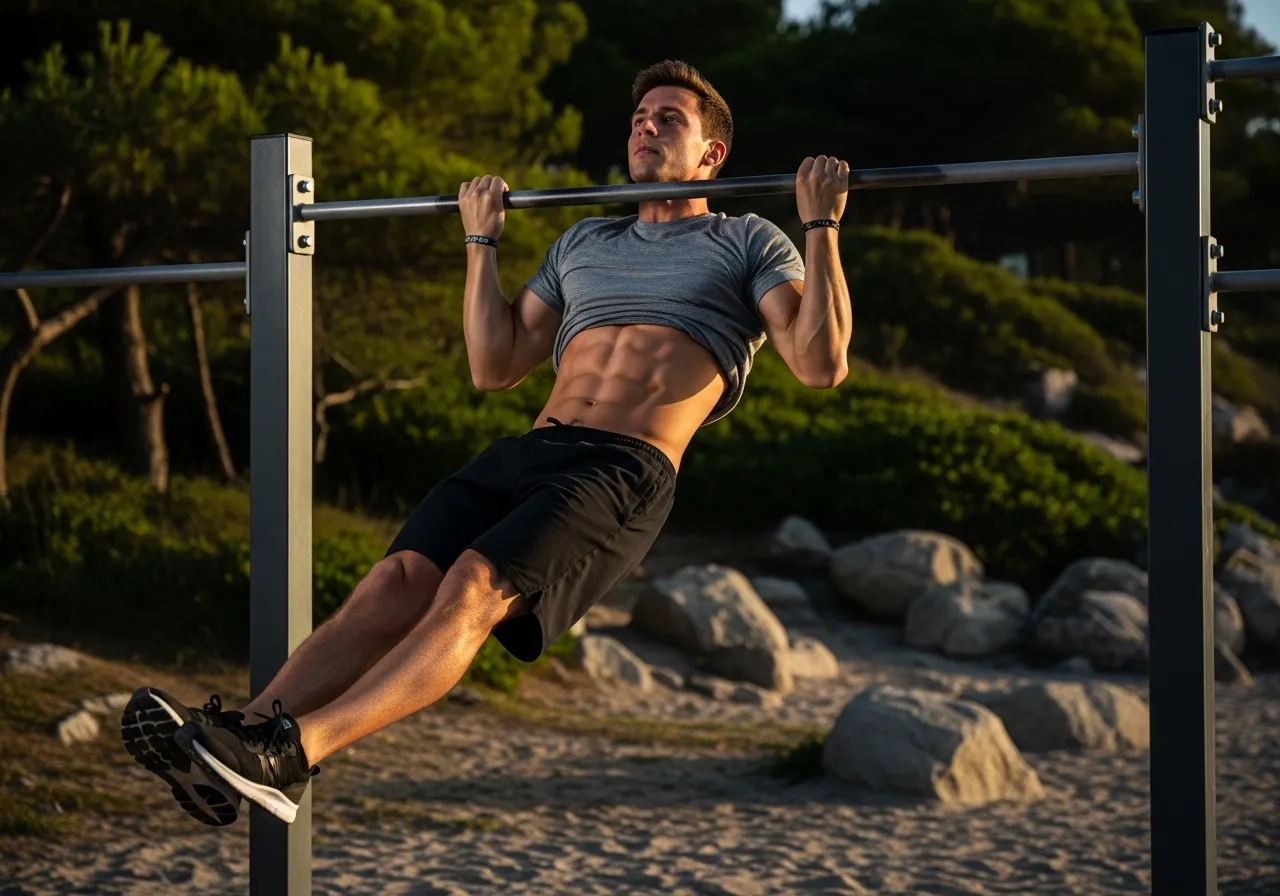
Pull-ups (pronated/overhand grip) and chin-ups (supinated/underhand grip) are the single most valuable upper body calisthenics exercises for muscle development — engaging the latissimus dorsi, biceps, teres major, rhomboids, and middle trapezius through a full range of motion with high mechanical tension in the stretched position that research identifies as most conducive to hypertrophy. Technique for maximal muscle stimulus: start from a dead hang with arms fully extended (maximizes lat stretch in the most advantageous position for hypertrophy), engage the lats by depressing and retracting the scapulae before pulling, drive the elbows down and back to the sides (not flaring outward), and lower completely to the dead hang with each rep. Common error: performing partial reps from a bent-arm starting position — this eliminates the stretched position that provides both the mechanical stimulus and the long-term shoulder health benefit of the full hang. Progressions from easiest to most challenging: band-assisted pull-ups → negative-only pull-ups (jump to top, lower slowly) → full pull-ups → weighted pull-ups → wide-grip pull-ups → archer pull-ups → one-arm assisted pull-ups. Muscle building sets: 3–4 sets of 6–12 reps per session, with 2–3 sessions per week targeting pull-ups.
Dips: Chest and Tricep Mass Builder
Dips — performed on parallel bars, gymnastics rings, or between two chairs — are the most effective bodyweight pressing exercise for developing the lower pectorals and triceps, producing mechanical loading comparable to decline bench press at equivalent difficulty levels. For maximum chest emphasis: lean the torso forward 30–45 degrees throughout the movement, lower to 90 degrees of elbow flexion or below, and feel the pectoral stretch at the bottom of the movement. For maximum tricep emphasis: maintain an upright torso and perform the movement more vertically. Ring dips are significantly more challenging than bar dips due to the stability demand — the rings’ freedom of rotation recruits additional stabilizing musculature and increases the pectoral activation through the movement. Progressions: assisted dips (feet on bench) → full bar dips → ring dips → weighted dips → Korean dips (shoulders behind hands, loading posterior shoulder and tricep). The depth caveat: descending below the point where the shoulder feels significant impingement strain is contraindicated for athletes with shoulder health issues — 90 degrees of elbow flexion is the appropriate depth for most athletes.
Push-Up Progressions: The Most Versatile Upper Body Exercise
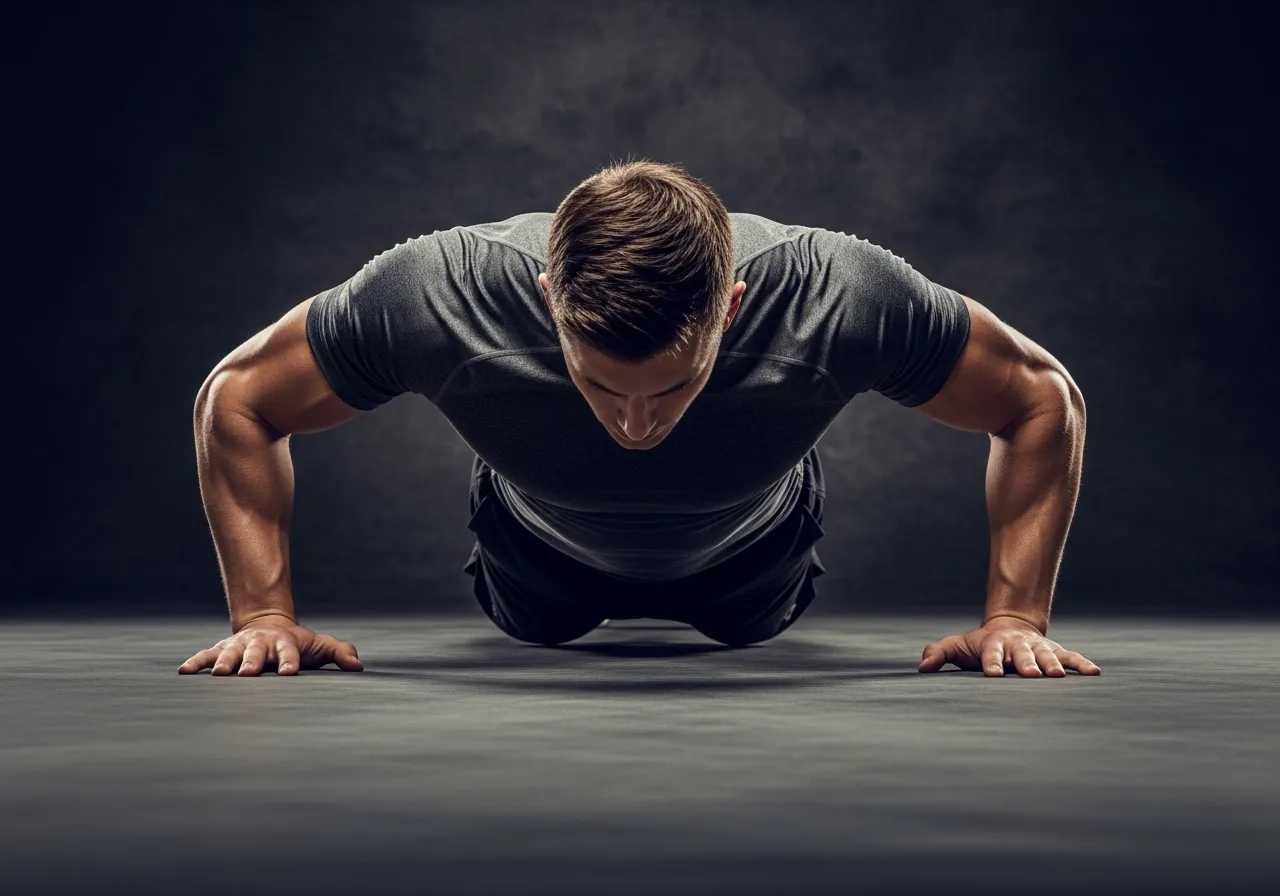
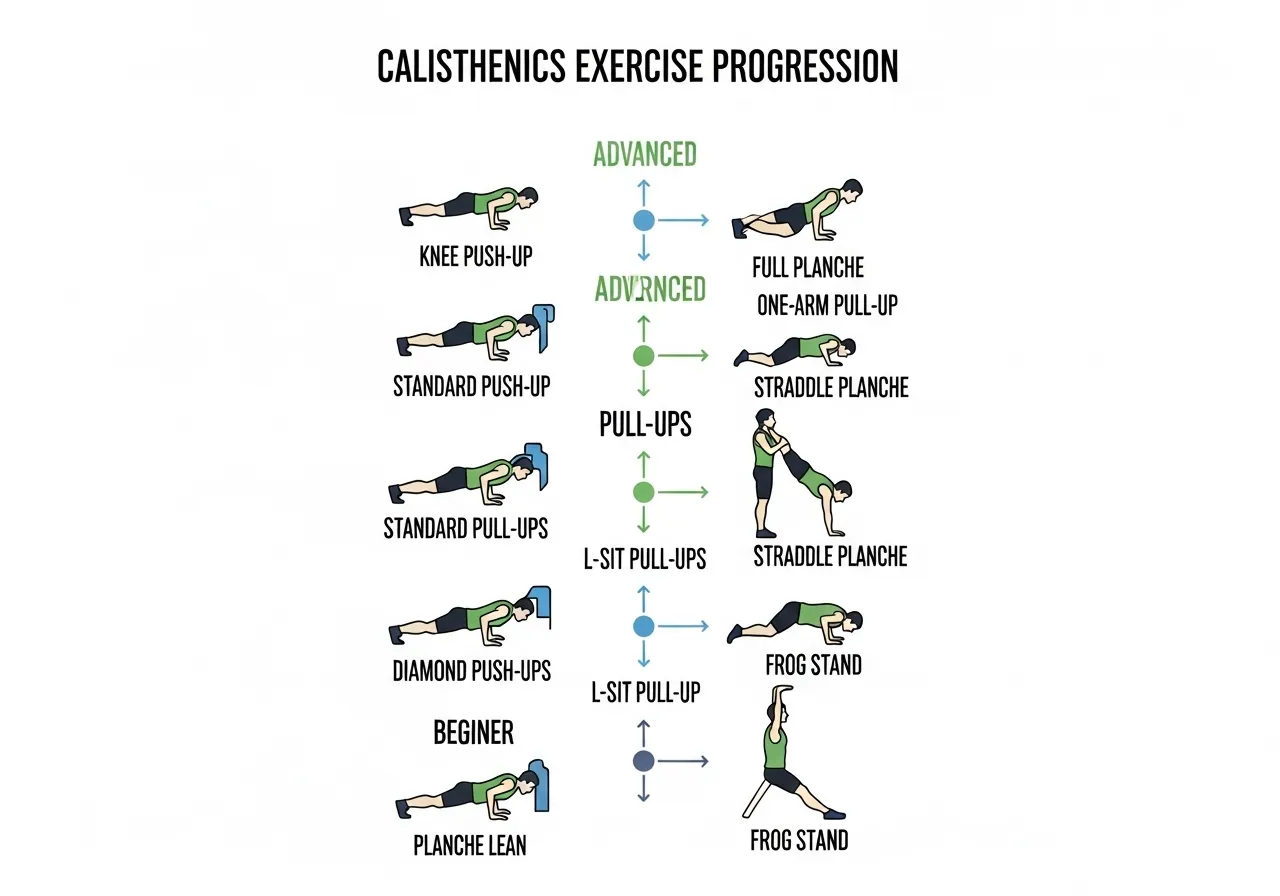
The push-up family includes the most extensive progression range of any calisthenics exercise — from the easiest wall push-up to the impossibly demanding planche push-up — making it uniquely valuable for athletes at every strength level. Standard push-ups develop the pectorals, anterior deltoids, and triceps through a pressing pattern functionally similar to bench press. For maximum hypertrophy: maintain a straight body line from head to heels (no hip sagging or piking), lower the chest to 1–2 inches above the floor in the full range version, and perform with a controlled tempo (2-second descent, pause, 1-second press). Progression sequence for muscle building: incline push-ups → standard push-ups → close-grip push-ups → wide-grip push-ups → archer push-ups (90% of load on one arm) → pseudo-planche push-ups → pike push-ups (for shoulder emphasis) → wall handstand push-ups → freestanding handstand push-ups. Volume guidance: 3–4 sets per session at a difficulty level where 8–12 reps reach near-failure, with 2–3 sessions per week. Research from the American Council on Exercise on push-up muscle activation confirms that push-up variations produce pectoral EMG activation comparable to bench press when difficulty is appropriately matched.
Rows: Essential Horizontal Pull for Back Development
Horizontal pulling exercises — inverted rows under a bar, ring rows, and their progressions — develop the middle and lower trapezius, rhomboids, rear deltoids, and biceps through horizontal pulling that complements the vertical pulling of pull-ups for complete back development. Standard inverted row (feet on floor, body at 45 degrees, pulling chest to bar): an appropriate starting point for those who cannot yet perform pull-ups; too easy for those with pull-up strength. Progression to increase difficulty: lower the body angle (more horizontal position), elevate the feet on a bench, progress to feet-elevated ring rows, then to ring rows with the body fully horizontal, and ultimately to ring rows with added weight vest. Technique for maximum back activation: retract the scapulae at the top of each rep (squeeze shoulder blades together), maintain a rigid body line, and resist the urge to use momentum. The combination of pull-ups and rows ensures both vertical and horizontal pulling patterns are developed — a common calisthenics oversight is overemphasis on pull-ups at the expense of horizontal rows, producing proportional imbalances that both look imbalanced and predispose shoulder impingement from anterior shoulder dominance.
Dips, Pike Push-Ups, and Handstand Work: Shoulder Development
Shoulder development in calisthenics follows the progression from pike push-ups (the easiest overhead pressing pattern) through wall handstand push-ups to freestanding handstand push-ups. Pike push-ups: in a downward dog position with hips elevated, bend the elbows to lower the head toward the floor — this partial overhead pressing pattern develops the anterior and lateral deltoid alongside the upper pectorals, producing the shoulder development that standard push-ups inadequately address. Elevating the feet on a bench (elevated pike push-up) increases the overhead angle and deltoid demand. Wall handstand push-ups: kick up to a wall handstand, then lower and press — the overhead pressing pattern fully loads the deltoids and upper trapezius through the range of motion that produces shoulder width development. The progression to freestanding handstand push-ups adds the balance and body control development that distinguishes advanced calisthenics from weight room training, and is one of the most impressive movements in the calisthenics skill catalog. Training frequency: overhead pressing patterns 2 times per week maximum due to the shoulder joint loading — combined with pull-up and row volume, the shoulder receives sufficient total weekly stimulus without excessive pressing frequency that impairs recovery.
Core Calisthenics: Beyond the Crunch
Calisthenics core development goes dramatically beyond the floor-based ab exercises of conventional fitness training — the hollow body hold, L-sit, front lever, and ab wheel rollout produce core strength and stability that transfers directly to all other calisthenics skills. Hollow body hold: the foundational calisthenics core position — lying on the back with lower back pressed to the floor, arms extended overhead, legs extended 6–12 inches off the floor, maintaining the position through abdominal contraction. The hollow body is the core position that underlies every calisthenics skill from pull-ups to handstands. L-sit: seated with hands on the floor (or parallel bars), legs extended horizontally and held parallel to the ground through hip flexor and core strength — a genuinely demanding static hold that develops core compression strength unavailable from conventional ab exercises. The progression from bent-knee L-sit to full extended L-sit typically takes 2–4 months of dedicated practice. Front lever: a horizontal body position suspended from a bar through extreme lat and core strength — the most demanding calisthenics core exercise, appropriate for intermediate-advanced practitioners after at least 6 months of consistent pull-up and core training.
Lower Body Calisthenics: The Single-Leg Solution
Lower body calisthenics muscle development hinges on single-leg exercises that increase the load per leg to levels sufficient for hypertrophic stimulus. The pistol squat — a full single-leg squat to depth with the non-working leg extended forward — is the most famous lower body calisthenics exercise and requires both strength and mobility that takes most athletes 3–6 months to develop. Progression to pistol squat: assisted pistol (holding a support), box pistol (squatting to a box to control depth), full pistol squat. Bulgarian split squat (rear foot elevated, front leg loaded): produces quadriceps loading close to barbell back squat intensity using only body weight for those with adequate relative lower body strength — one of the most effective lower body exercises regardless of training modality. Nordic hamstring curl (kneeling on a pad, secured at ankles, lowering the body eccentrically using hamstring strength): the highest-loaded hamstring exercise in the calisthenics catalog, producing hamstring eccentric strength that reduces injury risk by up to 51% in research populations while building significant hamstring mass through the most demanding eccentric stimulus available without equipment. Calf raises (single-leg, full range of motion on a stair edge with extended rep ranges): the calf musculature tolerates high volumes and requires the full range — from full plantarflexion to maximum dorsiflexion — that most calf training neglects, and single-leg work provides the loading necessary for continued hypertrophy in athletes with strong calves relative to their body weight.
Muscle-Ups and Advanced Skills: The Calisthenics Strength Skills
The advanced calisthenics skills — muscle-up, planche progressions, human flag — represent the intersection of strength and skill that makes elite calisthenics uniquely demanding and rewarding. The muscle-up (transitioning from a pull-up to a dip in one fluid motion) requires both the pulling strength to elevate the body above the bar and the technique to transition smoothly through the transition point where the hands move from below to above the bar. The muscle-up is not merely a combined pull-up and dip — it requires specific technique practice of the transition phase that may take weeks of dedicated training independent of raw strength. For muscle building, the muscle-up’s pulling and pressing components both produce hypertrophic stimulus across the lats, chest, triceps, and biceps, making it an efficient combined movement for advanced practitioners. The planche — a horizontal body position supported by the hands only, body parallel to the ground through shoulder and core strength — is the most demanding calisthenics upper body skill, requiring months to years of progressive practice through tuck planche, advanced tuck, straddle, and full planche progressions. These advanced skills are not prerequisites for muscle building from calisthenics, but they represent the progressive challenge ceiling that makes calisthenics engaging and continuously challenging for athletes who develop the foundational strength to pursue them.
The exercises in this section — pull-ups, dips, push-up progressions, rows, single-leg lower body work, and advanced skills — collectively provide the complete upper and lower body hypertrophy stimulus that makes calisthenics a fully sufficient muscle-building training system for athletes at every level from beginner to advanced. The exercise ranking in this section — from pull-ups through advanced skill movements — provides the specific exercise selection guidance that makes calisthenics programming as deliberate and evidence-based as the most sophisticated weight room program, removing the guesswork about which movements produce the most return on training investment. The calisthenics training approach — grounded in the same hypertrophy science as weight room training, applied through the unique progressive challenge mechanisms of bodyweight skill development, and sustained by the intrinsic motivation of an endlessly challenging and visually impressive athletic practice — produces the muscle development, relative strength, and athletic capacity that serious athletes seek from any training modality, with the additional benefits of accessibility, skill development, and the distinctive physique quality that distinguishes calisthenics athletes from their weight room counterparts. The six exercise categories — vertical pulling, horizontal pulling, pushing, overhead pressing, core, and lower body — collectively address every major muscle group through the most effective bodyweight movement patterns available, providing complete muscular development without requiring supplementary weight room training for most athletes. Start with one pull-up session today — or a negative pull-up if you cannot yet complete a full rep — and apply the progressive program in this article consistently over the next 12 months. The physique and strength waiting at the end of that year of consistent calisthenics training will confirm that bodyweight training is not a compromise but a complete, effective, and deeply satisfying approach to athletic development. Every rep counts toward the physique and skills that make calisthenics one of the most rewarding athletic pursuits available. No exceptions.
3. Complete Calisthenics Programs: Beginner to Advanced
The following programs provide immediately executable calisthenics training structures from complete beginner through advanced levels. Each program specifies exercises, sets, reps, rest periods, and weekly schedule. The progressions between levels are based on demonstrated ability — move to the next program when the current one feels manageable at the prescribed targets, not on a fixed timeline.
Beginner Calisthenics Program (Weeks 1–8)
Frequency: 3 days per week (Monday/Wednesday/Friday or equivalent). Rest 60–90 seconds between sets. Target: build the foundational strength for pull-ups, dips, and standard push-ups. Session A (Pull/Leg focus): Negative pull-ups 3×3 (jump to top, lower in 5 seconds) — if unable, do band-assisted pull-ups 3×8; Push-ups 3×10 (incline if standard is too difficult); Inverted rows 3×10; Bulgarian split squats 3×8 each leg; Hollow body hold 3×20 seconds. Session B (Push/Pull focus): Pike push-ups 3×8; Chin-ups or band-assisted chin-ups 3×6–8; Dips or bench dips 3×8; Romanian single-leg deadlift (bodyweight) 3×10 each leg; L-sit attempt (bent knee) 3×10 seconds. Alternate A and B sessions each training day. By week 8, most beginners can perform 5+ clean pull-ups, 15+ push-ups, and 10+ dips — the strength foundation for the intermediate program.
Intermediate Calisthenics Program (Weeks 9–20)
Frequency: 4 days per week (Upper/Lower split). Rest 90–120 seconds between sets. Target: build to 10+ pull-ups, weighted dips, archer push-ups, and pistol squat progressions. Upper A (Pull emphasis): Pull-ups 4×8–10; Archer push-ups 3×6 each side; Ring rows 3×10; Pike push-ups or wall handstand push-up attempts 3×5–8; Hollow body 3×30 seconds. Upper B (Push emphasis): Dips 4×10–12; Wide-grip pull-ups 3×6–8; Standard push-ups (high volume) 3×15–20 or close-grip 3×10; Ring rows 3×10; L-sit progression 3×15 seconds. Lower A: Pistol squat progressions 4×5 each leg; Nordic hamstring curl 3×5 eccentric; Calf raises (single-leg) 3×15–20. Lower B: Bulgarian split squat 4×10 each leg; Glute bridge single-leg 3×15; Jump squats 3×10. The four-day upper/lower split allows adequate recovery between sessions while providing sufficient weekly volume for continued hypertrophy — each muscle group is trained twice per week with 48–72 hours between sessions.
Advanced Calisthenics Program (Weeks 21+)
Frequency: 5 days per week with one active recovery day and one full rest day. This program introduces skill training alongside strength work — incorporating muscle-up practice, handstand work, and planche progressions as the primary training goals supported by supplementary strength and hypertrophy work. Skill sessions (2×/week, 30 minutes): dedicated practice of the highest-priority current skill (muscle-up transition practice, wall handstand balance, tuck planche holds) when the neuromuscular system is freshest, before strength work. Strength sessions following skill work: weighted pull-ups 4×5–6; ring dips 4×8–10; handstand push-ups 3×5–8; single-arm row progressions 3×6 each side; L-sit or front lever progression holds 3×10–15 seconds. Lower body sessions (2×/week): full pistol squats 4×5 each leg; Nordic hamstring curls 3×8 full range; explosive jump training 3×8 (broad jumps, box jumps) for power development alongside strength. The advanced program trains at high intensity on all sessions — the skill work requires genuine cognitive and physical effort, and the strength work uses the most difficult exercise variations that the progression sequence offers.
The Push-Pull-Legs Calisthenics Split
Athletes who prefer the push-pull-legs organization common in weight room programming can apply the same structure to calisthenics with excellent results. Push day: all pushing movements (push-up progressions, dips, pike push-ups/handstand push-up work) targeting chest, shoulders, and triceps. Pull day: all pulling movements (pull-up and chin-up variations, row variations) targeting back and biceps. Legs day: lower body work (pistol squat progressions, Nordic curls, Bulgarian split squats, plyometrics). In a 6-day training week (PPL repeated twice), each muscle group is trained twice per week with adequate recovery between sessions. The PPL structure’s advantage for calisthenics practitioners: it allows maximum volume and focus for each movement pattern without the fatigue accumulation that full-body sessions produce at high volumes — the push exercises can be trained to near-failure without worrying about impairing subsequent pull-up performance in the same session.
Calisthenics for Athletes: Sport-Specific Applications
Calisthenics training transfers particularly well to athletic performance because it develops the relative strength, body control, and force production patterns that underlie most athletic movement. Martial arts athletes use pull-up, push-up, and core calisthenics as primary conditioning — the relative strength developed from bodyweight training transfers directly to grappling, striking, and the rapid position changes that combat sports require. Rock climbers use pull-up, finger hang, and core calisthenics as the primary strength training mode — the grip strength, pulling power, and body tension developed from calisthenics are the primary physical determinants of climbing performance. Gymnasts are the elite examples of calisthenics muscle development — the muscle mass visible on competitive gymnasts, developed entirely through bodyweight training with minimal external loading, demonstrates conclusively that calisthenics produces elite-level upper body muscle development when applied systematically at high skill levels. Sprinters and team sport athletes use calisthenics for injury prevention and relative strength maintenance alongside their sport-specific training — the unilateral strength, core stability, and explosive lower body power from calisthenics address the athletic quality gaps that barbell training alone does not fill.
Weekly Volume Targets for Calisthenics Hypertrophy
The volume research from weight training — 10–20 sets per muscle group per week for hypertrophy — applies to calisthenics with the same intensity qualification that applies to rep ranges: the sets must be at sufficient difficulty to produce the hypertrophic stimulus. For calisthenics practitioners, tracking weekly volume in sets per movement pattern (rather than per specific exercise) is most practical: target 10–15 working sets per week of vertical pulling (pull-up variations), 8–12 sets of horizontal pulling (row variations), 10–15 sets of pushing (push-up and dip variations), 6–10 sets of overhead pressing (pike push-up to handstand work), and 6–10 sets of lower body (single-leg progressions). These volume targets are achieved across the week’s training sessions, not in single sessions — distributing the volume across 3–5 sessions allows quality to be maintained on each set rather than accumulating fatigue-compromised reps that produce minimal hypertrophic stimulus at high session volumes.
Home Calisthenics Setup: What You Actually Need
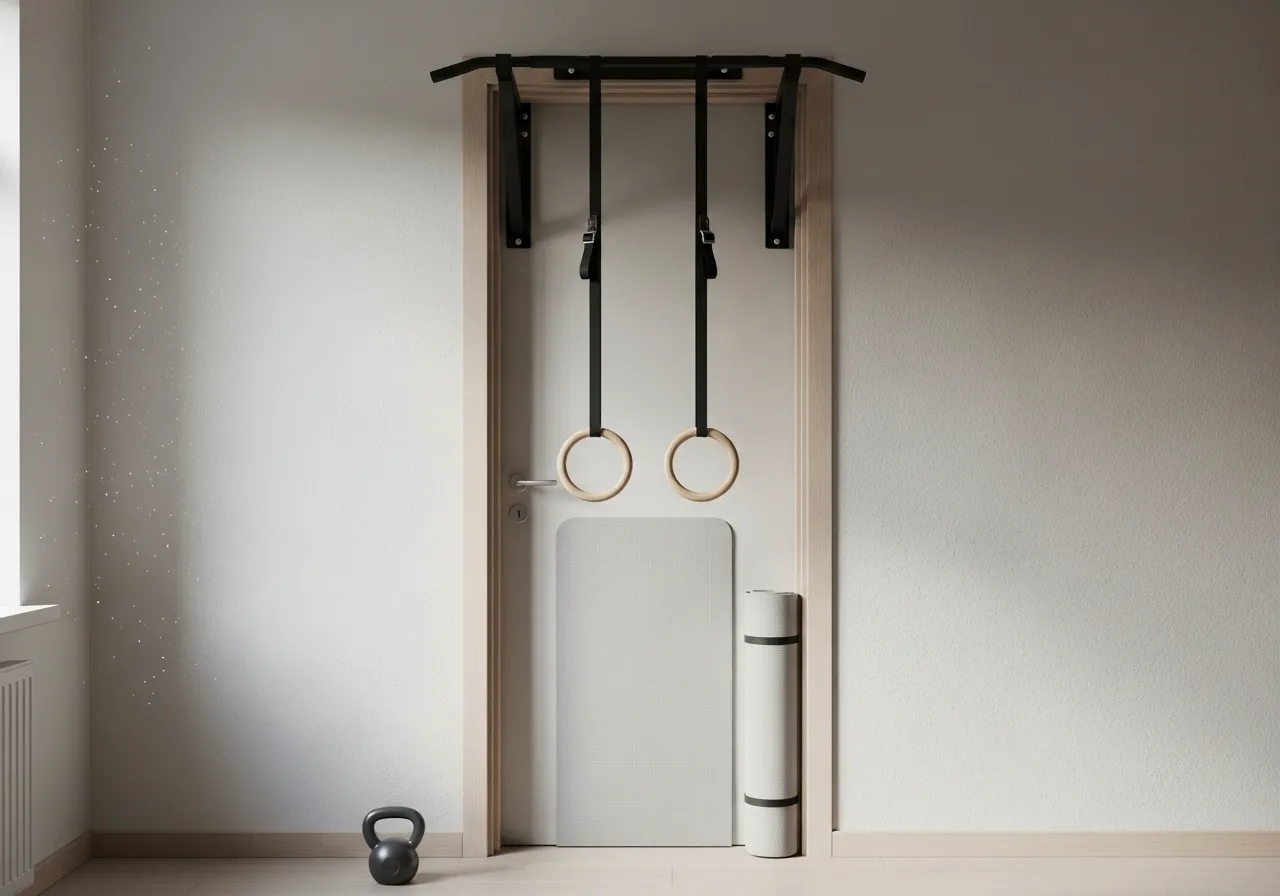
One of calisthenics’ greatest practical advantages is its equipment minimalism — but the minimal equipment that dramatically expands the exercise variety and progression range is worth the modest investment. The essential home calisthenics setup: a pull-up bar (doorframe pull-up bar at $20–40, or wall-mounted pull-up station at $60–120) is the single most important piece of equipment, unlocking pull-ups, chin-ups, dead hangs, muscle-up progressions, and hanging core work that floor exercises cannot replicate. Gymnastics rings ($25–50) are the second-highest-value investment — rings enable ring dips, ring rows, ring push-ups, and ring-based muscle-up practice that provide the instability training that develops the joint stabilization strength no fixed-surface exercise develops. Parallettes ($30–70) allow L-sits, planche work, and parallel bar dips at appropriate wrist angles that floor push-ups cannot provide. Beyond these three equipment items, a complete calisthenics program requires nothing — the pull-up bar, rings, parallettes, and adequate floor space provide the infrastructure for a world-class upper and lower body training program that requires no gym membership, no barbells, and no significant financial commitment beyond the initial equipment purchase. Total investment: $75–200 for a complete home calisthenics setup that supports training from beginner to elite level.
Training to Failure vs. Training Near Failure in Calisthenics
The question of whether to train to complete muscular failure or stop 2–3 reps before failure (referred to as Reps in Reserve, or RIR) applies to calisthenics exactly as it applies to weight room training. Research on training to failure versus near-failure finds equivalent hypertrophy outcomes across a range of proximity to failure, with some evidence that training at 1–3 RIR (stopping 1–3 reps before failure) produces equivalent or superior hypertrophy to complete failure while producing less systemic fatigue and shorter recovery requirements. For calisthenics, the additional consideration is injury risk from training to complete failure on balance-dependent exercises — training to failure on a handstand push-up attempt or a ring-based exercise poses a different safety profile than training to failure on a machine or cable exercise where the movement is externally guided. The recommended approach: train to 1–2 RIR on exercises where failure poses balance or fall risk (ring work, handstand work, any balance-dependent movement); training to complete failure is safer on floor exercises (push-ups, inverted rows with feet on floor) and assisted bar work. The 1–2 RIR approach accumulates sufficient proximity to failure to drive hypertrophy while managing the practical safety risks that calisthenics-specific training contexts involve.
Deload Weeks in Calisthenics: Managing Accumulated Fatigue
Progressive calisthenics training accumulates fatigue across training weeks that periodically requires strategic reduction — a deload week where volume is reduced to 40–60% of normal and difficulty is maintained or slightly reduced allows the physical and psychological recovery that prevents overtraining and allows super-compensation. The deload schedule in calisthenics follows the same principle as weight room training: every 4–6 weeks of progressive training, perform one week at reduced volume. The deload week in calisthenics: perform the same exercises at the same difficulty levels, but reduce sets by 40–50% and stop well short of failure — 3–4 RIR rather than 1–2. This maintains the neuromuscular patterns and skill practice while allowing accumulated connective tissue and muscular fatigue to resolve. The week following a deload typically produces the best performance of the preceding training block as the fatigue accumulated from progressive training resolves and the underlying adaptation is revealed — this phenomenon, called super-compensation, confirms that the deload was necessary and productive rather than a wasteful reduction in training stimulus.
The beginner-to-advanced program structure in this section provides the complete progression arc from first pull-up attempt to advanced skill training — a systematic roadmap that makes the otherwise overwhelming calisthenics skill catalog navigable as a series of achievable, sequentially ordered milestones that build on each other rather than requiring simultaneous mastery of everything at once. The structured programs from beginner to advanced provide the immediately executable training templates that remove the most common barrier to calisthenics progress — not lack of effort, but lack of a systematic approach that ensures progressive challenge across months of consistent training. The calisthenics training approach — grounded in the same hypertrophy science as weight room training, applied through the unique progressive challenge mechanisms of bodyweight skill development, and sustained by the intrinsic motivation of an endlessly challenging and visually impressive athletic practice — produces the muscle development, relative strength, and athletic capacity that serious athletes seek from any training modality, with the additional benefits of accessibility, skill development, and the distinctive physique quality that distinguishes calisthenics athletes from their weight room counterparts. Athletes who follow the structured progression — beginner foundations through intermediate development through advanced skill training — build not just the muscle and strength that are the obvious outcomes of the programs, but the training intelligence and physical self-knowledge that makes every subsequent training period more productive than the last. Every calisthenics session — from the beginner’s first negative pull-up to the advanced practitioner’s planche training — contributes to the compound athletic development that makes calisthenics one of the most rewarding long-term training investments available to any athlete at any fitness level or equipment access situation. Train consistently. Now go.

4. Progressive Overload in Calisthenics: How to Keep Building Without Weights
Progressive overload — the systematic increase in training stimulus over time that drives continuous adaptation — is the non-negotiable principle of muscle building regardless of training modality. In weight training, progressive overload is simply adding weight to the bar. In calisthenics, progressive overload requires a more creative and systematic approach across multiple dimensions that together produce the continuous stimulus increase that drives ongoing hypertrophy without adding external load.
The Seven Calisthenics Progressive Overload Methods
Method 1 — Volume increases: add one additional set per session for the target movement per week until reaching the upper volume limit (4–5 working sets), then progress through other methods. The simplest form of progressive overload and the first to apply when adding reps or difficulty is not yet possible. Method 2 — Rep increases: within the same exercise variation and difficulty level, increase the reps per set over weeks until reaching the upper end of the hypertrophy rep range (12–15), then advance to a harder exercise variation that brings reps back down to the lower end (6–8). Method 3 — Exercise progression (lever advancement): advance to a harder exercise variation within the same movement pattern — from standard pull-up to wide-grip pull-up to archer pull-up, or from standard push-up to archer push-up to pseudo-planche push-up. This is the primary long-term overload strategy in calisthenics, and the comprehensive progression sequences in section 2 provide the specific advancement pathways. Method 4 — Tempo manipulation: increase the time under tension without changing the exercise variation or rep count — progressing from a standard tempo (2 seconds down, 1 second up) to a slow tempo (4 seconds down, 2 second pause, 2 seconds up) increases mechanical tension and metabolic stress at the same exercise difficulty. Method 5 — Range of motion increases: perform the same exercise through a greater range — descending deeper into the dip, achieving a more complete dead hang in the pull-up bottom position — increases the mechanical demand, particularly the hypertrophically advantageous stretch-position loading. Method 6 — Density increases: performing the same total work in less time (more sets in the same session time) increases training density, which produces adaptations in work capacity alongside strength and hypertrophy. Method 7 — Weight vest addition: adding 5–20% body weight via a weight vest to any bodyweight exercise — pull-ups, push-ups, dips, squats — provides the most straightforward progression when exercise variation advancement is impractical or undesired.
Tracking Calisthenics Progress: The Progression Log
Tracking calisthenics progress requires recording more information than weight room training because the overload variables are more diverse. The calisthenics training log should record: exercise name and current progression level (e.g., “archer push-up, right arm dominant”), sets and reps completed, tempo used, rest periods, any technique notes, and the next progression target. Reviewing the log before each session confirms the target for the day’s session, and reviewing it weekly identifies which exercises are stagnating (suggesting it is time to advance the progression, add volume, or apply a different overload method) and which are advancing on schedule. Photographic and video records of skill development — documenting handstand hold durations, muscle-up attempts, and planche progression positions — provide the visual progress evidence that motivates continued training investment in skill development alongside the strength log that tracks workout performance.
Plateau Breaking: What to Do When Progress Stalls
Calisthenics plateaus — periods where performance stops improving despite consistent training — typically result from one of four causes: insufficient progressive overload (not applying any of the seven methods systematically), excessive volume (training so frequently or with so much volume that recovery is impaired), insufficient recovery (inadequate sleep, nutrition, or rest days), or movement pattern staleness (the same exercises and progressions repeated without sufficient variation to drive new adaptation). Diagnosis and solution: if volume has not increased in 4+ weeks, apply a volume increase or exercise progression. If fatigue is consistently high and performance is declining rather than stagnating, add a deload week and reduce frequency. If nutrition is suboptimal — particularly inadequate protein — address the dietary substrate deficit before adding more training volume. If the training program has been identical for 3+ months without modification, introduce new exercise progressions or different training structures (PPL instead of full-body, or vice versa) to provide the novel stimulus that restarts adaptation. Most calisthenics plateaus resolve within 2–3 weeks of correctly diagnosing and addressing the specific cause.
Combining Calisthenics With Weights for Hybrid Training
Many athletes find that a hybrid approach — using calisthenics for specific movement patterns and weight room training for others — produces the optimal combination of the advantages of both modalities. Common hybrid approaches: calisthenics for upper body (pull-ups instead of lat pulldowns, dips instead of tricep pushdowns, handstand push-ups instead of overhead press) combined with barbell training for lower body (squat, deadlift, Romanian deadlift for the lower body loading that calisthenics cannot efficiently provide at advanced strength levels). Alternatively: barbell training for compound movements (bench press, squat, deadlift) with calisthenics for bodyweight skill development (handstands, muscle-up practice, front lever work) as supplementary training that develops athleticism beyond what barbell training produces. The hybrid approach allows athletes to benefit from the absolute strength development of barbell training and the relative strength, skill, and body control development of calisthenics simultaneously — producing a more complete athletic profile than either modality alone.
Isometric Training in Calisthenics: Holds and Their Role
Isometric training — static holds at specific joint angles — plays a larger role in calisthenics than in weight room training because many advanced calisthenics skills (planche, front lever, human flag, L-sit) are isometric positions held for time rather than dynamic movements performed for reps. Isometric holds develop strength at the specific joint angle of the hold, with some transfer to adjacent angles (approximately ±15 degrees). For muscle building: research on isometric training and hypertrophy finds that isometrics produce hypertrophy comparable to dynamic training when performed at sufficient intensity (70% of maximal voluntary contraction) and volume — isometric protocols of 3–4 sets of 30–45 second holds produce meaningful hypertrophic stimulus in the target muscles. For skill development: progressing through timed isometric holds (tuck planche for 10 seconds → 15 seconds → 20 seconds) is the specific progression mechanism for advanced skill positions — each hold duration milestone confirms that strength has sufficiently developed for the next skill level. Combining dynamic exercises (pull-ups, push-ups) with isometric progressions (front lever holds, L-sit holds) in training sessions develops both the dynamic strength and isometric skill-specific strength that complete calisthenics development requires.
Tempo Training for Calisthenics Hypertrophy
Tempo manipulation — deliberately controlling the speed of each phase of an exercise — is one of the most underutilized progressive overload tools in calisthenics, allowing significant increases in training difficulty and hypertrophic stimulus from the same exercise variation without requiring a harder skill progression. The tempo prescription is typically written as four numbers representing eccentric/pause at bottom/concentric/pause at top seconds: a 3-0-1-0 tempo means 3 seconds eccentric, no pause, 1 second concentric, no pause. For hypertrophy, the most effective tempo manipulations: extended eccentric phases (4–6 seconds) increase time under tension during the lengthened position most conducive to hypertrophy; pause reps at the bottom position (2–3 second isometric hold in the lengthened position of a pull-up or dip) increase the time under mechanical tension at the most challenging point of the movement; and slow concentric phases (3–4 seconds) extend the total time under tension per rep beyond what normal tempo allows. Research from the European Journal of Applied Physiology on training tempo and hypertrophy finds that extended time under tension (achieved through slower tempos) produces equivalent hypertrophy to faster tempo training at equivalent volumes and proximity to failure — confirming tempo manipulation as a genuine progressive overload method rather than merely a training variation technique. Practical application: when a progression level can be performed for 12+ reps at standard tempo, shift to a 4-0-2-0 tempo before advancing to the next progression level — this typically reduces the achievable reps to 6–8, reestablishing the hypertrophy rep range at the current skill level.
Building a Long-Term Calisthenics Journey: 1–3 Year Perspective
The calisthenics strength and skill progression from beginner to advanced level follows a predictable but demanding timeline that rewards patience and consistent application over short-term intensity. First 3–6 months: develop the foundational strength of 10+ pull-ups, 20+ push-ups, and 8+ dips; visible improvement in physique as upper body and core muscle development accelerates from the novel training stimulus. Months 6–12: intermediate strength development, first muscle-ups, beginning handstand practice, development of L-sit and basic ring work; the physique improvements slow as the rate of muscular adaptation decreases from beginner levels but continue meaningfully with consistent training. Year 1–2: advanced strength development, working toward freestanding handstand push-ups, planche progressions, and weighted calisthenics; the physique represents the genuine long-term outcome of consistent calisthenics training — typically characterized by excellent upper body proportion, low body fat from the high metabolic demand of skill training, and the functional strength that distinguishes calisthenics athletes. Year 2–3+: refinement of advanced skills, development of the elite movements (front lever, planche push-ups, one-arm pull-up progressions) that represent the ceiling of calisthenics strength; at this level, the training produces an athletic physique and functional strength that is genuinely impressive by any measurement standard and that weight room training of equivalent duration rarely matches in proportionality and athletic quality.
Calisthenics Community and Resources
The calisthenics community — online and in person — is one of the most supportive and technically sophisticated fitness communities available, with extensive free resources that significantly accelerate the learning curve for practitioners at every level. The r/bodyweightfitness subreddit’s recommended routine (available through the subreddit’s wiki) is the most well-designed, evidence-informed beginner calisthenics program publicly available — developed collaboratively by the community from years of iteration and incorporating the progressive overload principles that produce reliable results. YouTube channels specializing in calisthenics technique (FitnessFAQs, Calisthenics Movement, Chris Heria) provide the visual demonstration of form and progression that text descriptions cannot fully convey. Local calisthenics parks — outdoor training areas with pull-up bars, parallel bars, and rings — exist in most urban areas and provide both the training infrastructure and the community of practitioners that motivates consistent training better than solo home training. Finding and connecting with a local calisthenics community through parks, gym classes, or online groups provides the social accountability and peer learning that accelerates progress beyond what self-directed practice alone achieves.
Progressive overload in calisthenics — applied systematically across volume, reps, exercise progression, tempo, range of motion, density, and weighted additions — provides the continuous training stimulus that drives muscle development from beginner baseline to advanced athletic capacity without ever requiring a gym membership or significant equipment investment. The seven progressive overload methods, applied systematically across the training program, ensure that calisthenics never becomes the stagnant, unchallenging training that its simple appearance might suggest — the challenge advances indefinitely as skills and strength develop, providing the continuous stimulus that drives continuous improvement. The calisthenics training approach — grounded in the same hypertrophy science as weight room training, applied through the unique progressive challenge mechanisms of bodyweight skill development, and sustained by the intrinsic motivation of an endlessly challenging and visually impressive athletic practice — produces the muscle development, relative strength, and athletic capacity that serious athletes seek from any training modality, with the additional benefits of accessibility, skill development, and the distinctive physique quality that distinguishes calisthenics athletes from their weight room counterparts. The community, resources, and long-term perspective that accompany calisthenics training provide the social and motivational infrastructure that sustains the multi-year commitment that building a truly impressive calisthenics physique and skill set requires — converting individual training sessions into a connected, purposeful athletic journey. Every calisthenics session — from the beginner’s first negative pull-up to the advanced practitioner’s planche training — contributes to the compound athletic development that makes calisthenics one of the most rewarding long-term training investments available to any athlete at any fitness level or equipment access situation. The progressive overload principle applied consistently across months and years of calisthenics training produces compound athletic returns that no single training session reveals, but that the cumulative record of consistent practice unmistakably demonstrates. Go.
5. Calisthenics Nutrition, Common Mistakes, and FAQs
Muscle building through calisthenics requires the same nutritional foundation as any resistance training program — the training provides the stimulus, and nutrition provides the substrate for the adaptation that stimulus triggers. The common mistake of treating calisthenics as a primarily skill-based or cardiovascular activity, and therefore underestimating its nutritional requirements, produces the undereating that impairs muscle growth, energy availability, and training quality regardless of how excellent the programming is.
Nutrition Fundamentals for Calisthenics Muscle Building
Protein targets for calisthenics muscle building match the resistance training recommendations: 1.6–2.2g/kg for muscle maintenance and moderate building, 2.0–2.4g/kg for active muscle building phases, and 2.2–2.6g/kg during caloric restriction phases where higher protein preserves lean mass. For a 75kg calisthenics practitioner targeting muscle growth: 150–180g protein daily, distributed across 4 meals of 35–45g each. Total caloric intake for muscle building: 200–500 calories above TDEE (total daily energy expenditure), which for a moderately active 75kg person is approximately 2,400–2,800 calories — a muscle-building intake of 2,600–3,300 calories. Carbohydrates: 4–6g/kg on training days to support the glycolytic and ATP demands of high-intensity calisthenics, particularly skill training sessions that require repeated explosive efforts. Fat: 25–35% of total calories for hormonal health, joint lubrication, and fat-soluble vitamin absorption. Caloric periodization: slightly higher caloric intake on training days (100–200 calories more) and maintenance or slight deficit on rest days allows the training session surplus that supports muscle building while limiting excessive fat accumulation across the building phase.
The 5 Most Common Calisthenics Mistakes
Mistake 1: No progressive overload strategy. The single most common failure mode — performing the same push-ups, pull-ups, and dips at the same difficulty indefinitely and wondering why progress stalls. Solution: apply the seven progressive overload methods systematically, progressing at least one variable every 2–4 weeks. Mistake 2: Neglecting horizontal pulling. Many calisthenics practitioners are obsessed with pull-ups while neglecting inverted rows and ring rows — producing the anterior-posterior imbalance that leads to rounded shoulders and impaired pushing performance from inadequate shoulder stability. Match horizontal pulling volume to vertical pulling volume in every training week. Mistake 3: Ignoring lower body. Calisthenics lower body development is more work than upper body — pistol squats and Nordic curls require months of progression to develop — and the effort is frequently avoided in favor of additional upper body volume. Complete calisthenics includes the single-leg work and hamstring eccentric training that develop the lower body alongside the impressive upper body that the pushing and pulling patterns produce. Mistake 4: Chasing advanced skills before building the foundation. Attempting planche training before achieving 15+ pull-ups and 20+ push-ups, or handstand training before a solid shoulder press foundation, produces slow skill development and high injury risk from insufficient prerequisite strength. Follow the progression sequences in the correct order rather than skipping to the most impressive exercises. Mistake 5: Inadequate protein intake. Treating calisthenics as a “natural” training approach and therefore eating less protein than weight room training requires is a category error — muscle protein synthesis requirements are identical regardless of whether the stimulus came from a pull-up or a lat pulldown. Hit the protein targets regardless of training modality.
Calisthenics Injury Prevention: Joint Health Considerations
Calisthenics places specific demands on the wrist, elbow, and shoulder joints that differ from weight room training and require targeted injury prevention attention. Wrist preparation for push-up and planche work: the wrist dorsiflexion demand of push-ups (and dramatically more so of planche progressions) exceeds what many sedentary individuals comfortably tolerate — beginning with fist push-ups (wrists in neutral) and progressively extending the wrist dorsiflexion range through stretching and gradual loading prevents the wrist pain that commonly derails early calisthenics training. Elbow tendon preparation for high-volume pulling: the bicep tendon at the elbow and the common extensor tendon at the lateral epicondyle are vulnerable to overuse from rapid pull-up volume increases — progressing pull-up volume by no more than 10–20% per week protects these tendons while building the volume tolerance that supports high-level training. Shoulder health for push and pressing: the progressive shoulder loading of handstand push-up training places demands on the rotator cuff and AC joint that require adequate external rotation strength and scapular stability — the face pulls, band pull-aparts, and direct rotator cuff work from section 3 of the rounded shoulder article apply equally here as preventive maintenance. The NSCA’s guidelines for progressive resistance training specifically emphasize progressive loading for connective tissue adaptation as the primary injury prevention strategy for bodyweight training populations.
Tracking Physique Progress in Calisthenics
Measuring calisthenics muscle-building results requires the same body composition tracking approach as any resistance training program — scale weight alone is insufficient because simultaneous muscle gain and fat loss from calisthenics training frequently produces minimal scale weight change despite significant physique improvement. Progress photos taken monthly at consistent lighting and angles, waist circumference at the navel, and performance metrics (maximum pull-up reps, maximum dip reps, push-up reps to failure) collectively provide a comprehensive progress picture. The calisthenics-specific performance metrics are particularly informative — an increase from 5 to 15 pull-ups over 12 weeks represents dramatic strength and muscle development that scale weight would not capture if concurrent body fat reduction occurred. Tracking strength-to-weight ratio (total pull-up volume per kg of body weight) over time is a calisthenics-specific metric that captures relative strength improvement — the athletic quality that calisthenics training uniquely develops relative to weight room training.
Frequently Asked Questions About Calisthenics Muscle Building
Can beginners build muscle with calisthenics? Yes — beginners are actually the population who benefits most from calisthenics because their own body weight provides sufficient overload stimulus across all major muscle groups without requiring exercise progressions beyond the fundamentals. The first 3–6 months of calisthenics training typically produces the most rapid relative strength and muscle gains of any training period. How long until I can do a muscle-up? Most athletes with a baseline of 10–12 clean pull-ups can develop the muscle-up within 2–4 months of specific muscle-up transition practice — the movement requires technique development as much as strength. Athletes with fewer than 8 pull-ups should develop pull-up volume before beginning muscle-up training. Is calisthenics good for fat loss? Yes — the combination of muscle-building stimulus (which increases resting metabolic rate) and the significant cardiovascular demand of high-intensity calisthenics circuits produces excellent fat loss outcomes. Athletes specifically targeting fat loss should maintain caloric deficit while meeting protein targets, allowing the training to drive both fat loss and the muscle preservation that makes fat loss body composition changes visible and lasting. What is the hardest calisthenics exercise? The one-arm pull-up and the full planche push-up are typically cited as the most demanding calisthenics upper body exercises — both require years of progressive development and represent the elite ceiling of upper body relative strength. The freestanding handstand push-up and one-arm handstand are skill-strength combinations that are accessible only to the most dedicated long-term practitioners. Can calisthenics replace the gym entirely? For upper body muscle development, absolutely — elite calisthenics practitioners build upper body physiques that are indistinguishable in quality from weight room training. For lower body development, particularly quadriceps and hamstring mass at advanced strength levels, barbell training provides more efficient loading — making the optimal approach a hybrid that uses calisthenics for upper body and weight room for lower body, or calisthenics supplemented with progressive single-leg work for those committed to equipment-free training.
The Calisthenics Physique: Realistic Expectations and Timelines
Setting realistic expectations for calisthenics-driven physique development prevents the discouragement of comparing early progress to the results of athletes who have trained for years. Month 1–3: visible improvement in upper body muscle tone and definition as the training stimulus produces the earliest body composition changes — increased muscle firmness, reduced body fat from the caloric expenditure of learning and practicing new skills, and the beginning of genuine muscle development. Month 3–6: measurable muscle gain visible in the shoulders, back, and arms as pull-up and push-up strength doubles from beginner baseline; strength improvements feel rapid and motivating. Month 6–12: the physique visible in most “beginner transformation” calisthenics posts emerges — genuinely impressive upper body development with the lean proportionality that calisthenics training produces. Year 1–2: the physique that motivates most beginners to start calisthenics — defined shoulders, well-developed back and arms, visible core musculature, and the athletic leanness that comes from consistent high-intensity bodyweight training. Years 2–5: the advanced calisthenics physique, comparable in upper body development to dedicated weight room training of equivalent duration, with the specific qualities of proportionality, relative strength, and skill-developed movement quality that distinguish long-term calisthenics practitioners from weight room athletes of equivalent training age. These timelines assume consistent training at 3–5 sessions per week with progressive overload applied systematically and nutrition supporting the muscle-building process — the athletes who achieve faster progress do so through superior consistency and attention to both training and nutrition, not through genetic advantages that make their results unachievable by motivated beginners.
Calisthenics for Different Body Types
Body composition and weight meaningfully influence the initial experience and progression rate of calisthenics training — understanding how body type affects the training adjusts expectations and guides appropriate starting points. Heavier individuals: higher body weight increases the absolute resistance of every bodyweight exercise, making calisthenics more challenging at a given skill level. This means heavier beginners often need to start with incline push-ups, band-assisted pull-ups, and partial-range dips while building the foundational strength to perform the standard versions — not because they are less capable, but because the objective load they are moving is greater. As body composition improves from training (increasing muscle and reducing fat), the relative load of bodyweight exercises decreases and progression accelerates. Lighter individuals with lower initial strength: may find that their body weight is insufficient to produce adequate hypertrophic stimulus even for the most difficult calisthenics progressions at advanced skill levels — weight vest addition resolves this by providing the additional load that makes even advanced calisthenics exercises sufficiently challenging. The ideal body weight for calisthenics performance is typically lower than for absolute strength sports — competitive gymnasts and calisthenics athletes typically compete at lean body compositions that minimize the weight-to-strength ratio, and training toward leaner body composition simultaneously improves both calisthenics performance and the visual results of the muscle development the training produces.
The calisthenics training approach — grounded in the same hypertrophy science as weight room training, applied through the unique progressive challenge mechanisms of bodyweight skill development, and sustained by the intrinsic motivation of an endlessly challenging and visually impressive athletic practice — produces the muscle development, relative strength, and athletic capacity that serious athletes seek from any training modality, with the additional benefits of accessibility, skill development, and the distinctive physique quality that distinguishes calisthenics athletes from their weight room counterparts. Start with one pull-up session today — or a negative pull-up if you cannot yet complete a full rep — and apply the progressive program in this article consistently over the next 12 months. The physique and strength waiting at the end of that year of consistent calisthenics training will confirm that bodyweight training is not a compromise but a complete, effective, and deeply satisfying approach to athletic development. Calisthenics is more than a training method — it is an athletic practice that develops the body and the mind simultaneously, producing strength, skill, and the sustained engagement that makes fitness a lifelong pursuit rather than a temporary project. Progress follows.