The Best Anti-Inflammatory Habits for Faster Recovery

Why Anti-Inflammatory Habits Matter as Much as What You Eat
Most athletes who hear “anti-inflammatory” immediately think of food — omega-3s, turmeric, tart cherry juice. And the dietary side absolutely matters. But after years of experimenting with my own recovery, I found that the habits surrounding sleep, movement, stress, and daily routine had at least as much impact on how recovered I felt heading into the next training session as any food choice I made. Chronic inflammation is not purely a dietary problem. It is a lifestyle problem — shaped by the accumulated signals that every daily habit sends to the body’s immune and hormonal systems. This article addresses the full picture: the evidence-based habits beyond food that reduce the background inflammatory burden, accelerate recovery between sessions, and support the consistent high-quality training that performance over time depends on.
Understanding Chronic Low-Grade Inflammation in Athletes
The trained athlete carries a unique inflammatory burden that the general population does not: the repeated mechanical stress of training creates a sustained cycle of muscle damage, repair, and adaptation that keeps inflammatory signaling elevated relative to sedentary individuals — not at harmful levels, but at levels that interact with other lifestyle-driven inflammatory sources to produce the cumulative inflammatory load that recovery quality reflects. When the exercise-driven inflammatory cycle combines with poor sleep, chronic stress, inadequate hydration, environmental toxin exposure, and sedentary behavior between sessions, the combined inflammatory burden exceeds what the body’s anti-inflammatory mechanisms can efficiently resolve — producing the persistent fatigue, elevated resting soreness, impaired immune function, and reduced training quality that athletes often attribute to “overtraining” but is actually inadequately managed systemic inflammation. The anti-inflammatory habits framework addresses each of the non-dietary lifestyle factors that contribute to this combined burden — providing the holistic recovery infrastructure that dietary anti-inflammatory choices alone cannot build. From PubMed lifestyle factors and systemic inflammation in athletic populations review, sleep deprivation, chronic psychological stress, and sedentary behavior between training sessions each independently elevate inflammatory markers by amounts comparable to poor dietary quality — confirming that the non-dietary lifestyle factors are as physiologically significant as dietary ones in determining the inflammatory baseline that recovery operates against.
The Inflammation-Recovery Feedback Loop
Recovery quality and inflammation exist in a bidirectional feedback relationship: poor recovery allows inflammation to remain elevated longer between sessions, which impairs the quality of the next training session, which increases the recovery demand for the subsequent cycle — a downward spiral that accumulates subtly over weeks before becoming obvious in performance and wellbeing. Conversely, the upward spiral of good anti-inflammatory habits produces consistently better recovery between sessions, which allows higher training quality, which drives better adaptation, which compounds into the performance improvements and physical development that the training program is designed to produce. The practical significance of this feedback loop: investing in anti-inflammatory habits is not merely a recovery optimization add-on to an otherwise complete training program. It is part of the training program itself — the input quality that determines the output quality of the adaptation process, as directly as the training stimulus determines the adaptation direction. Every anti-inflammatory habit that reduces the inflammatory baseline by even a modest amount is a habit that improves the fidelity with which the training stimulus translates into adaptation — making the training hours more productive without adding a single additional minute of training.
The Circadian Rhythm and Inflammation: Timing Matters
The immune system operates on a circadian rhythm — inflammatory cytokine production, immune cell trafficking, and the sensitivity of tissues to inflammatory signals all fluctuate predictably across the 24-hour cycle in ways that the timing of training, meals, and sleep either aligns with or disrupts. NF-κB pathway activity peaks in the early morning hours and declines through the day in circadian-aligned individuals, which is part of why joint stiffness and inflammatory symptoms are most pronounced upon waking and improve as the day progresses. The circadian alignment of anti-inflammatory habits means that their timing relative to the body’s internal clock is as important as their presence: the post-training cortisol and inflammatory spike is highest after late-evening workouts, when the circadian decline in inflammatory regulatory capacity is already underway — making morning and early afternoon training timing superior for inflammatory management even at equivalent training volumes. Eating the largest anti-inflammatory food portions (colorful vegetables, fatty fish, olive oil-dressed meals) in the first half of the day, when insulin sensitivity is highest and metabolic processing is most efficient, improves the anti-inflammatory impact of those foods compared to the same meals consumed in the final hours before sleep. And the consistent sleep timing that circadian rhythm maintenance requires is the single habit change that most comprehensively improves the body’s own anti-inflammatory regulation — because the circadian system coordinates the anti-inflammatory cytokine release, immune cell trafficking, and cortisol decline that the body uses to resolve the day’s accumulated inflammatory burden during the overnight recovery period.
Alcohol’s Impact on Recovery Inflammation
Alcohol consumption is the lifestyle factor that most directly and measurably counteracts the anti-inflammatory habit investments described in this article — producing sleep quality degradation, gut barrier disruption, and inflammatory cytokine elevation through mechanisms that are well-documented and dose-dependent across the research literature. Even moderate alcohol consumption (2-3 drinks) in the 4 hours before sleep reduces slow-wave sleep duration by 20-40%, the consequence of which is the GH secretion suppression and cortisol dysregulation that the sleep section described as primary drivers of chronic inflammation. The gut-disrupting effects of alcohol — increased intestinal permeability, altered microbiome composition, and direct inflammatory stimulus from acetaldehyde (alcohol’s primary metabolite) — occur at quantities as low as two drinks, independently of blood alcohol concentration effects. For the athlete who invests in anti-inflammatory eating, consistent sleep, stress management, and active recovery, even infrequent heavy drinking sessions produce the acute inflammatory recovery setback that can require 48-72 hours to resolve at the hormonal and inflammatory marker level — extending the effective recovery timeline by more than the objective training data would suggest when training resumption after the drinking occasion is evaluated honestly against pre-drinking performance baselines. The practical guidance: alcohol is not categorically prohibited by anti-inflammatory living, but its dose-dependent disruption of sleep quality, gut integrity, and the hormonal balance that inflammation regulation requires means that its use requires the same strategic intentionality that cold immersion requires — selective and managed rather than habitual and unconsidered.
The Role of Non-Exercise Physical Activity in Reducing Inflammation
Sedentary behavior between training sessions — the prolonged sitting that office work, commuting, and screen entertainment produce — is an independent risk factor for elevated systemic inflammation regardless of exercise volume. Research from the Maastricht University Exercise and Movement Science group found that breaking up 8 hours of sitting with 2-minute walking breaks every 30 minutes reduced postprandial blood glucose, insulin, and inflammatory markers more effectively than a 30-minute exercise session in the morning followed by continuous sitting for the remainder of the day — establishing that the distribution of physical activity across the waking hours matters independently of total exercise volume. The practical implications for athletes: the athlete who trains intensively for 60-90 minutes and then sits for the remaining 8-10 waking hours is experiencing the sedentary behavior inflammatory burden during those hours that counteracts a portion of the training-derived anti-inflammatory adaptations. Simple non-exercise physical activity habits — standing desks or regular standing breaks, walking during phone calls, taking stairs, brief stretch breaks every 45-60 minutes of desk work — reduce the sedentary behavior inflammatory contribution without adding to the training load that recovery must absorb. The cumulative step count that movement-monitoring wearables track provides the practical feedback: 8,000-10,000 daily steps as the target for the non-training movement that continuous sedentary behavior prevention requires is achievable without structured exercise sessions and provides the anti-inflammatory benefit that movement consistency throughout the day produces independently of the training program’s structured sessions.
Anti-Inflammatory Habits During High-Stress Life Periods
The anti-inflammatory habit stack is most needed precisely when it is most difficult to maintain — during high-stress life periods when work pressure, relationship difficulty, financial stress, or major life transitions pile onto the training load and produce the combined inflammatory burden that recovery genuinely cannot manage without deliberate support. The practical minimum habit set for high-stress periods when the full stack is impossible: sleep timing consistency above everything else — the single habit with the greatest anti-inflammatory impact that requires only the commitment to maintain a fixed bed and wake time regardless of life complexity; the post-training breathing cool-down that takes only 5 minutes and directly dampens the training-driven cortisol spike that high-stress periods amplify; and the anti-inflammatory food defaults that require no cooking (canned sardines, pre-washed berries, raw nuts, plain yogurt) — the dietary fall-back that maintains anti-inflammatory nutrition quality when meal preparation time has been eliminated by life demands. These three minimum-viable anti-inflammatory habits — consistent sleep timing, post-training breathing, and accessible anti-inflammatory food defaults — preserve the core of the inflammatory management infrastructure during the high-stress periods that the full stack cannot survive. The athlete who maintains even this minimum consistently through difficult life periods will recover better than the athlete who abandons all anti-inflammatory practices simultaneously, and will return to the full habit stack more rapidly when the stressful period resolves — having maintained the habit infrastructure that resuming the full practice requires rather than rebuilding from zero after months of complete neglect.
Sleep: The Single Most Powerful Anti-Inflammatory Habit
If there is one habit change that produces the largest anti-inflammatory impact in the shortest time, it is improving sleep quality and duration. The relationship between sleep and systemic inflammation is so robust that sleep deprivation is one of the most reliable experimental methods for acutely elevating inflammatory markers in human subjects — producing the same CRP, IL-6, and TNF-alpha increases in one or two nights of restricted sleep that dietary interventions take weeks to achieve.
How Sleep Deprivation Drives Inflammation
The mechanisms connecting sleep restriction to elevated inflammation are multiple and converging: cortisol dysregulation (normal sleep produces the overnight cortisol decline that allows the adrenal recovery that sustainable cortisol output requires — sleep restriction maintains elevated evening cortisol that progressively sensitizes inflammatory pathways through glucocorticoid receptor desensitization); NF-κB pathway activation (the master inflammatory transcription factor that coordinates pro-inflammatory cytokine production is upregulated within 24 hours of significant sleep restriction, with measurable CRP elevation detectable after as few as two consecutive nights of 6-hour sleep in previously well-rested individuals); growth hormone secretion suppression (70-80% of daily GH production occurs during the deep slow-wave sleep stages that sleep restriction curtails — and GH has direct anti-inflammatory signaling effects through IGF-1 pathways that its absence removes); and the gut barrier disruption that chronic sleep restriction produces through the circadian rhythm disruption that intestinal cell renewal and tight junction maintenance depend on — increasing the gut permeability and endotoxin translocation that drives a portion of sleep-deprived individuals’ elevated inflammatory markers. For the athlete whose training is already maintaining inflammatory signaling at higher baseline levels than a sedentary person, adding the inflammatory insult of sleep deprivation produces the combined burden that recovery simply cannot manage efficiently — and the performance consequences (reduced time to exhaustion, impaired reaction time, increased perceived exertion, slower strength recovery) are measurable within days of sleep restriction onset.
Practical Sleep Optimization for Athletes
The evidence-based sleep optimization practices that consistently produce measurable inflammatory reduction in athletic populations: consistent sleep and wake timing — maintaining the same sleep and wake times within 30 minutes across all seven days of the week (including weekends) anchors the circadian rhythm at the biological level that irregular schedules disrupt, producing the deep sleep architecture that GH secretion requires; sleep duration targeting 8-9 hours for training athletes (the additional recovery demand of regular training extends the optimal sleep duration beyond the 7-8 hours adequate for sedentary individuals — elite athletes in high-volume training phases report optimal recovery at 9-10 hours, and research consistently confirms that athletes sleeping 8+ hours outperform and recover better than those sleeping less); sleep environment optimization — room temperature between 16-19°C (the thermoregulatory drop that sleep onset requires is facilitated by a cool environment), complete darkness (light exposure suppresses melatonin production and delays sleep stage progression), and minimal noise or white noise masking; and pre-sleep routine management — consistent wind-down activities in the 60-90 minutes before sleep (reading, light stretching, meditation, journaling) without screens that emit the short-wavelength blue light that melatonin production’s sensitivity to requires absence of for optimal secretion. The supplementary sleep support that evidence endorses specifically for athletes: magnesium glycinate (200-400mg before bed improves sleep quality and duration through GABA pathway enhancement); tart cherry juice (the melatonin content alongside recovery-supporting anthocyanins makes it the most dual-purpose pre-sleep athlete beverage available); and ashwagandha (300-600mg of KSM-66 extract before bed reduces cortisol and improves sleep quality in multiple RCTs, addressing the stress-driven sleep disruption that training athletes commonly experience). From Sleep Foundation athletic performance and recovery overview, athletes who extend sleep to 8-10 hours per night show significant improvements in reaction time, sprint speed, shooting accuracy, and self-reported recovery quality — confirming that sleep extension in athletes who are currently undersleeping is among the highest-impact performance interventions available without any additional training investment.
The Social Dimension of Stress: Relationships as Anti-Inflammatory Medicine
The social neuroscience research that has accumulated over the past two decades consistently identifies social connection quality as one of the most powerful determinants of systemic inflammatory status — with the magnitude of the social connection-inflammation relationship rivaling the smoking-inflammation relationship in some large prospective cohort studies. The mechanism: the perception of social isolation and loneliness activates the sympathetic nervous system and HPA axis in ways that biological threat detection circuits process social exclusion as survival-relevant danger — producing the same cortisol and NF-κB activation that physical threats drive. Conversely, the experience of positive social connection and felt belonging activates the opioid and oxytocin pathways that reduce sympathetic tone, lower cortisol, and directly suppress NF-κB inflammatory signaling. For athletes, the team training environment, training partnerships, and coach relationships that provide felt social support and belonging during training are part of the anti-inflammatory infrastructure of athletic life — not merely motivational nicieties but genuine physiological contributors to the inflammatory balance that recovery depends on. The athlete who trains in an environment of positive social connection recovers faster at the cellular level than the biochemically identical athlete training in social isolation — the inflammation difference between the two environments is measurable in blood markers within weeks of social environment change. Investing in training relationships, team environments, and training communities is therefore not merely a performance psychology optimization but a direct anti-inflammatory lifestyle choice with the same physiological validity as any of the physical practices described in this article.
Digital Screen Use, Evening Light, and the Inflammation Connection
The habitual screen use that characterizes modern athletic life — post-training social media review, training video analysis, evening entertainment, and the constant availability of smartphone notifications — introduces a specific inflammatory pathway through the circadian rhythm disruption that blue-light exposure in the hours before sleep produces. The blue-wavelength light that LED screens emit suppresses melatonin production at wavelengths that the eye’s retinal ganglion cells are most sensitive to — with screen exposure in the 2-3 hours before sleep delaying melatonin onset by 60-90 minutes, reducing total deep sleep duration, and producing the GH secretion impairment that the sleep section identified as a primary driver of recovery-limiting inflammation. The practical screen management protocol for the anti-inflammatory athlete: blue light filtering glasses (proven effective for melatonin preservation when screen use in the evening is unavoidable); the Night Shift/Warm Color screen mode that shifts the display toward the red wavelengths that melatonin production is less sensitive to; and the firm 60-90 minute screen-free window before sleep that the deepest implementation of this recommendation prescribes. Beyond melatonin, the cognitive activation and stress response that notification-driven social media produces in the pre-sleep period — the comparison stress of performance content, the anxiety of injury news in athletes’ social feeds, and the low-grade arousal of any engaging digital content — directly activates the cortisol and sympathetic pathways that anti-inflammatory recovery practices are working to reduce. The screen management habit is therefore simultaneously a sleep quality habit, a stress management habit, and an anti-inflammatory recovery habit — a rare single behavior change that addresses multiple inflammatory pathways through one daily practice adjustment.
Gut Health Habits Beyond Food: Probiotics, Fiber Timing, and Microbiome Management
The gut microbiome’s role in systemic inflammation regulation is increasingly recognized as one of the most clinically significant determinants of the inflammatory baseline that recovery operates against — and the habits that support gut microbiome diversity and intestinal barrier integrity extend beyond the dietary probiotic and fiber intake that nutrition-focused recommendations cover. The non-dietary gut health habits with the strongest evidence for microbiome and barrier integrity support: consistent meal timing (eating at regular daily intervals allows the migrating motor complex — the wave of intestinal muscular activity that clears bacterial overgrowth between meals — to complete its full cycle between feeding occasions, reducing the small intestinal bacterial dysbiosis that irregular eating disrupts); stress management’s gut effects (the gut-brain axis through which psychological stress directly alters gut motility, microbiome composition, and intestinal permeability makes stress management as important for gut health as the probiotics and fiber that dietary recommendations focus on); and the antibiotic stewardship practice of avoiding unnecessary antibiotic courses that produce the gut microbiome disruption that takes months to resolve and that measurably elevates inflammatory markers during the recovery period. Exercise itself is the most consistently documented gut microbiome diversity promoter in the lifestyle research — regular moderate aerobic exercise is independently associated with greater gut microbiome species diversity and higher butyrate-producing bacterial abundance than sedentary status controls, through mechanisms that likely involve the bile acid changes, gut motility effects, and systemic hormonal changes that regular physical activity produces. The athlete who maintains regular training is therefore already supporting gut microbiome health through the exercise itself — and the dietary and stress management habits described throughout this article compound with training to produce the gut microbiome environment that intestinal barrier integrity, inflammatory regulation, and immune function all depend on.
Monitoring Your Anti-Inflammatory Habit Progress
The habits described in this article produce their benefits gradually and cumulatively — and without tracking the indicators that reflect their impact, the motivation to maintain them through the weeks when effects are not yet perceptible can wane before the physiological benefits become apparent. The practical monitoring framework: morning HRV measurement using any commercially available heart rate variability monitoring device or the HRV4Training app (which uses the smartphone camera for contactless HRV measurement) provides the daily autonomous nervous system balance readout that reflects both sleep quality and cumulative recovery status — improving HRV trend over weeks confirms that the anti-inflammatory habits are producing the parasympathetic recovery shift they target. A weekly subjective recovery rating (simply scoring 1-10 how recovered and ready for training you feel on the morning of a primary session) creates the simple longitudinal tracking that identifies the habit-recovery relationship over time — the weeks where sleep was compromised or stress was high will show lower recovery scores that correlate the specific habit failures with the recovery consequences. Periodic blood testing for hs-CRP every 3-6 months provides the objective clinical confirmation that the sustained anti-inflammatory habit investment is producing the systemic inflammatory reduction that the training-level indicators suggest — closing the feedback loop between daily habit choices and the physiological outcome that those habits exist to support. The athlete who tracks these indicators has the data to understand which specific habit combinations produce the best personal recovery outcomes — because individual variation in response to anti-inflammatory practices is significant, and the personal experiment that systematic tracking enables is ultimately more valuable than the population-level recommendations that research provides as starting points.
Your First Week: Simple Anti-Inflammatory Habits to Start Immediately
The most effective starting point for athletes new to anti-inflammatory habit building is committing to just three specific changes in the first week, building the behavioral momentum that makes adding subsequent habits easier: set a fixed bedtime and wake time and maintain it across all seven days of the week — this single change begins repairing the circadian rhythm disruption that inconsistent sleep timing produces, with measurable HRV improvement appearing within 5-7 days of consistent timing. Add a 5-minute slow breathing session immediately after each training session — inhale for 4 counts, exhale for 6 counts, sitting quietly rather than immediately rushing to the next activity — and notice the difference in post-training mental state and evening sleep quality within the first week. And replace one processed snack daily with a handful of mixed nuts and berries — the anti-inflammatory fat and polyphenol combination that requires zero preparation and produces the dietary shift that the simplest possible food swap delivers. These three starting habits require no equipment, minimal time, and no disruption to existing routines. They are the foundation on which the full anti-inflammatory habit stack builds — and the athlete who masters them consistently before adding complexity has done the hardest part, which is not implementing any individual habit but establishing the identity of someone who consistently invests in the recovery infrastructure that anti-inflammatory living represents.
Stress Management: The Overlooked Anti-Inflammatory Lever
The physiological impact of chronic psychological stress on systemic inflammation is as well-documented as the impact of diet or sleep — yet stress management is the lifestyle factor most frequently acknowledged and least consistently implemented among serious athletes, whose training culture sometimes valorizes the “no excuses, grind through everything” mentality that treats stress management as a weakness rather than a physiological necessity.
How Chronic Stress Elevates Inflammation
The HPA (hypothalamic-pituitary-adrenal) axis activation that psychological stress produces elevates cortisol acutely — and cortisol in the short term is actually anti-inflammatory, which is part of why the stress response evolved. The problem is the chronic stress pattern: sustained HPA activation produces glucocorticoid receptor desensitization in immune cells that progressively impairs their ability to respond to cortisol’s anti-inflammatory signal, creating a paradoxical state where cortisol remains elevated but inflammation is no longer suppressed by it. This glucocorticoid resistance — documented in caregivers, examination-stressed students, and individuals with job strain — produces CRP elevations of 30-50% compared to stress-matched controls without glucocorticoid receptor desensitization, through the sustained NF-κB pathway activation that immune cells’ cortisol insensitivity permits. For the training athlete, the combination of training-driven inflammatory signaling and chronic psychological stress-driven glucocorticoid resistance creates the additive inflammatory burden that explains why athletes going through high-stress life periods (relationship difficulty, financial strain, work pressure, academic pressure) commonly experience training quality degradation and recovery impairment that nutrition and sleep changes alone cannot fully address. The stress, not just the training, is elevating the inflammatory baseline above the level that the individual’s recovery infrastructure can manage.
Evidence-Based Stress Management Practices for Athletes
Mindfulness meditation is the most extensively researched behavioral intervention for reducing psychological stress and its downstream inflammatory effects: a landmark UCLA study by Dr. David Creswell found that 30 minutes of daily mindfulness practice over 8 weeks significantly reduced NF-κB pathway activity and loneliness-driven inflammatory marker elevation in randomly assigned participants — with effect sizes that rival pharmacological anti-inflammatory interventions for the specific mechanism of stress-driven inflammation. For athletes who find formal meditation impractical, the same mindfulness state can be accessed through deliberate breath-focused cool-down periods (5-10 minutes after training of slow nasal breathing at a 4-second inhale, 6-second exhale pacing activates the parasympathetic nervous system and reduces the post-training cortisol spike that intense exercise produces); progressive muscle relaxation (systematic tensing and releasing of muscle groups in sequence, which paradoxically reduces both muscle tension and psychological stress through the somatic-emotional downregulation pathway that body-centered relaxation practices share); and the nature exposure research that consistently demonstrates inflammatory marker reduction from as little as 20 minutes in natural environments compared to equivalent time in urban settings. Heart rate variability biofeedback — using HRV monitoring apps (Elite HRV, Whoop, Garmin HRV4Training) to practice the slow breathing techniques that increase parasympathetic tone and measurably improve HRV — provides the data-driven stress management practice that quantitatively minded athletes respond to more consistently than the subjective experience-based practices that other stress management approaches offer. From American Psychological Association mindfulness and health outcomes research summary, regular mindfulness practice significantly reduces cortisol reactivity, inflammatory marker levels, and perceived stress in diverse populations — confirming its evidence base as a genuine physiological intervention rather than a wellness trend without mechanistic support.
Training Load Management as Stress Management
The psychological stress of training itself — the anticipatory anxiety of challenging sessions, the performance pressure of competition preparation, and the identity threat that injury or plateau creates — is as real and as inflammatory as external life stress. Managing the psychological component of training stress alongside the physiological component requires deliberate practices that most training programs do not explicitly address: the training journal that includes a subjective wellbeing and motivation rating alongside the performance metrics, providing early warning of the motivational decline that overreaching produces before it manifests as performance degradation; the deliberate inclusion of low-stakes, enjoyment-focused training sessions (a fun sport, a social group fitness class, an outdoor recreational activity) that preserve the intrinsic motivation for movement that high-intensity goal-focused training sometimes erodes; and the self-compassion practice that responds to poor performance sessions with the same kind-but-honest internal dialogue that a supportive coach would offer, rather than the harsh self-criticism that athletes frequently direct at themselves and that stress-biology research identifies as a significant cortisol-elevating stressor in its own right. The athlete who manages the psychological dimension of training stress — not by avoiding challenge but by processing it in ways that do not chronically activate the HPA axis — creates the internal environment where physical recovery and adaptation can proceed at their biological maximum rather than being impaired by the stress hormones that unmanaged psychological training stress continuously produces.
Foam Rolling, Massage, and Soft Tissue Work as Anti-Inflammatory Practices
Soft tissue work — foam rolling, massage therapy, percussive therapy (Theragun and similar devices), and static stretching — produces anti-inflammatory effects through the mechanotransduction pathways that physical pressure and movement applied to soft tissue activates. The research on massage therapy’s anti-inflammatory effects has become increasingly mechanistic over the past decade: a 2012 study published in Science Translational Medicine found that post-exercise massage significantly reduced NF-κB pathway activation and IL-6 production in massaged muscle biopsies compared to unmassaged contralateral muscle — providing direct cellular evidence that the subjective recovery benefit of massage reflects genuine molecular anti-inflammatory signaling rather than purely placebo or psychological mechanisms. Foam rolling’s research is less mechanistic but consistently demonstrates reduced DOMS, improved range of motion, and enhanced subsequent exercise performance when applied for 2-3 sets of 30-60 seconds per muscle group — benefits that likely share the same fascia-pressure mechanotransduction mechanisms that massage more powerfully activates. The practical recommendation: 10-15 minutes of foam rolling immediately after training (before the post-training shower and meal) on the primary muscle groups trained that session — quadriceps, hamstrings, glutes, thoracic spine, and calves for lower body sessions; lats, pectorals, posterior shoulders, and forearms for upper body sessions. Professional massage therapy at 1-2 sessions per month during high training volume phases provides the deeper soft tissue intervention that foam rolling approximates but cannot fully replicate — particularly for the connective tissue density and adhesion management that repeated training in the same movement patterns accumulates over months and years.
Putting It All Together: The Anti-Inflammatory Athlete’s Week in Practice
The abstract framework of anti-inflammatory habits becomes most useful when translated into a specific weekly example that shows how the individual practices fit together into a coherent routine that real athletes can actually sustain alongside training demands. A full training week for an athlete applying the complete anti-inflammatory habit stack: Monday (training day) — 8 hours of sleep ending at consistent wake time; morning sunlight walk and 5 minutes of slow breathing; training session followed by 10 minutes of foam rolling and slow breathing cool-down; anti-inflammatory post-workout meal with salmon, sweet potato, and roasted broccoli; hydration maintained throughout the day; evening screen-free wind-down routine beginning 90 minutes before sleep. Tuesday (rest day) — 8+ hours sleep; morning HRV measurement to assess recovery status; 25-minute active recovery walk outdoors; 20-minute sauna session in the evening; anti-inflammatory meals throughout the day; journaling or meditation practice for stress management. Wednesday through Sunday follows the same pattern of training day practices on active days and rest day recovery modalities on non-training days, with 2-3 sauna sessions, consistent active recovery walks, and unbroken sleep timing maintained across all seven days. The specific practices are less important than the consistent implementation of the principles they represent — the athlete who executes 70% of this template consistently across 52 weeks of the year produces better inflammatory management outcomes than the athlete who executes 100% for 4 weeks and then abandons the practices when life complexity makes perfect execution difficult. Sustainability through flexibility, rather than perfection through rigidity, is the behavioral principle that makes the anti-inflammatory habit stack a lifetime practice rather than a temporary intervention that produces short-term benefits and then fades into the behavioral residue of good intentions that life consistently displaces without structural implementation.
The Compounding Return of Consistent Anti-Inflammatory Living
Each individual anti-inflammatory habit produces a modest measurable benefit in isolation — better sleep might reduce CRP by 15%, regular sauna use might add another 10%, consistent stress management contributes further. But the compounding effect of multiple habits implemented together, sustained across months and years, produces an inflammatory baseline that is dramatically lower than any single intervention could achieve — because the overlapping and reinforcing mechanisms of sleep, movement, breathing, temperature exposure, stress management, and environmental inputs address the full breadth of the inflammatory pathways that lifestyle drives. The athlete who has maintained the anti-inflammatory habit stack for three to five years enters each training season with a physiological starting point that younger or newly committed athletes cannot replicate through training effort alone. Joints that have been consistently supported by adequate sleep-driven repair, stress-managed cortisol balance, and regular soft tissue work tolerate higher training volumes with lower injury risk. An immune system trained by regular sauna, nature exposure, and gut-health supporting habits responds to training-induced immune challenges without the suppression that chronic inflammation produces in the poorly recovered athlete. And the nervous system balance that consistent breathing practices, sleep quality, and positive social connection maintains produces the motivation, focus, and effort quality in training that the physiologically inflamed, chronically stressed, and under-recovered athlete simply cannot access regardless of their ambition. Start the anti-inflammatory habit stack today — not because any single habit will transform next week’s training session, but because the compounding physiological investment that years of consistent practice produces is the most durable and health-preserving performance advantage available to the serious athlete.
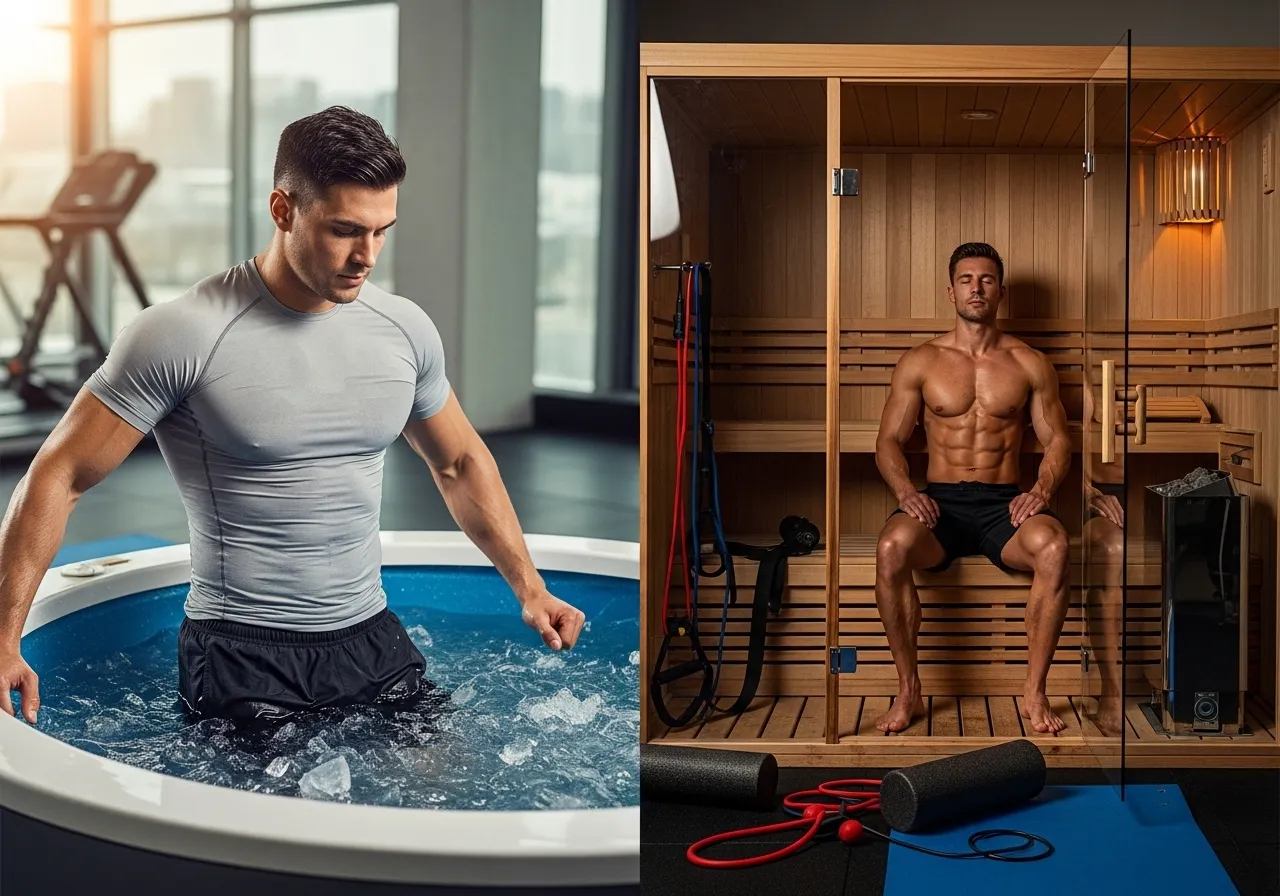
Active Recovery, Cold Therapy, and Heat Therapy as Anti-Inflammatory Habits
The physical recovery modalities — the activities and temperature interventions that athletes use in the hours and days between training sessions — have varying degrees of evidence for anti-inflammatory and recovery-promoting effects, and distinguishing the evidence-supported from the fashionable requires examining what the research actually demonstrates rather than what the athletic performance marketing suggests.
Active Recovery: Low-Intensity Movement Between Sessions
Active recovery — low-intensity movement (20-40 minutes of walking, easy cycling, gentle swimming, or yoga) on rest days or as a training session cool-down — promotes recovery through the increased blood flow that facilitates metabolic waste product clearance from exercised muscle tissue, the lymphatic flow enhancement that the muscle pump of gentle movement provides, and the parasympathetic nervous system activation that low-intensity movement produces in contrast to the sympathetic dominance of high-intensity training. The evidence for active recovery’s superiority over complete rest for next-session performance is consistent across multiple studies: active recovery reduces blood lactate clearance time, reduces perceived muscle soreness at 24-48 hours post-training, and improves time to fatigue in subsequent high-intensity efforts compared to passive rest controls. The anti-inflammatory mechanism of active recovery: moderate aerobic exercise acutely increases the anti-inflammatory cytokine IL-10 and reduces TNF-alpha, producing a temporary shift toward the anti-inflammatory signaling balance that chronic high-intensity training’s sustained pro-inflammatory signal does not. Critically, the intensity must remain low — at or below 60% of maximum heart rate, where the sympathetic drive and cortisol response of higher intensities would counteract the anti-inflammatory benefit that gentle movement produces. The practical active recovery implementation: replace complete rest days with 20-30 minutes of walking, easy cycling, or gentle yoga — the activity feels effortless enough that it does not contribute to training fatigue, provides the blood flow and movement benefits described, and produces the parasympathetic recovery state that passive rest alone does not reliably achieve.
Cold Water Immersion and Contrast Therapy
Cold water immersion (CWI) — full-body or lower-body immersion in water at 10-15°C for 10-15 minutes — is one of the most commonly used post-training recovery modalities in competitive sport, with a research literature that demonstrates consistent benefits for perceived soreness reduction and next-day performance while raising specific mechanistic concerns for long-term adaptation. The anti-inflammatory mechanism of CWI: cold-induced vasoconstriction reduces inflammatory mediator accumulation at the exercise-damaged tissue site; the subsequent rewarming-driven vasodilation improves metabolic waste product clearance; and the cold-induced norepinephrine release (cold exposure increases norepinephrine by 200-300%) has direct anti-inflammatory signaling effects through the adrenergic pathway. The adaptation concern: the same mechanisms that produce CWI’s acute recovery benefit — reduced inflammatory signaling at the exercise-damaged site — are the signaling processes that drive the hypertrophic and strength adaptation that the training session was designed to stimulate. Multiple studies show that regular post-training CWI reduces long-term muscle hypertrophy gains compared to passive recovery, suggesting that the acute recovery benefit of blunting the training-specific inflammatory signal comes at the cost of the adaptation that signal drives. The evidence-based practical application: use CWI selectively for the sessions where rapid next-day performance recovery is the priority (competition periods, back-to-back tournament days, the pre-competition taper) rather than after every training session during adaptation-focused training phases. From PubMed cold water immersion and muscle adaptation meta-analysis, cold water immersion after resistance training significantly attenuates muscle hypertrophy and strength gains over 12 weeks compared to active recovery — directly establishing the trade-off between acute recovery benefit and long-term adaptation cost that should guide selective rather than routine CWI use.
Sauna and Heat Therapy for Recovery
Heat therapy — sauna exposure, warm baths, or infrared sauna — produces anti-inflammatory and recovery benefits through mechanisms distinct from cold therapy: heat shock protein induction (HSP70 and HSP27 are upregulated within hours of heat exposure and directly inhibit NF-κB pathway activation, reducing the inflammatory cytokine transcription that acute heat exposure acutely increases before HSP induction produces the compensatory anti-inflammatory response); growth hormone release (acute sauna exposure of 20 minutes at 80°C has been shown to increase GH concentrations by 2-5 fold, representing the same GH pulse that deep sleep produces and that directly supports tissue repair); and the cardiovascular conditioning effect of passive heat exposure that improves endothelial function, plasma volume expansion, and cardiac output efficiency. The specific sauna research for athletic recovery: Finnish sauna (80-100°C, 15-20 minutes, with 2-3 repetitions separated by cooling periods) used 2-3 times per week produces lower resting CRP, improved cardiovascular recovery markers, and self-reported better recovery quality in athletes compared to non-sauna controls across 8-week observation periods. Infrared sauna (lower air temperature, 45-60°C, with radiant heat penetrating tissue more deeply than conventional convective heating) produces similar inflammatory marker benefits at lower temperatures — relevant for athletes who find conventional sauna temperatures uncomfortable or who have cardiovascular conditions that high-temperature sauna exposure is contraindicated for. The heat therapy timing consideration: unlike cold therapy, heat exposure does not interfere with training adaptation when used 6-8 hours after a session or on rest days — making it a well-tolerated routine recovery modality without the adaptation trade-off that routine CWI carries.
Hydration, Breathing Practices, and Environmental Anti-Inflammatory Habits
Beyond the primary anti-inflammatory habit pillars of sleep, stress management, and physical recovery modalities, several additional habits address specific inflammatory pathways with meaningful cumulative impact on the recovery-supporting inflammatory baseline that daily practice produces.
Hydration as an Anti-Inflammatory Habit
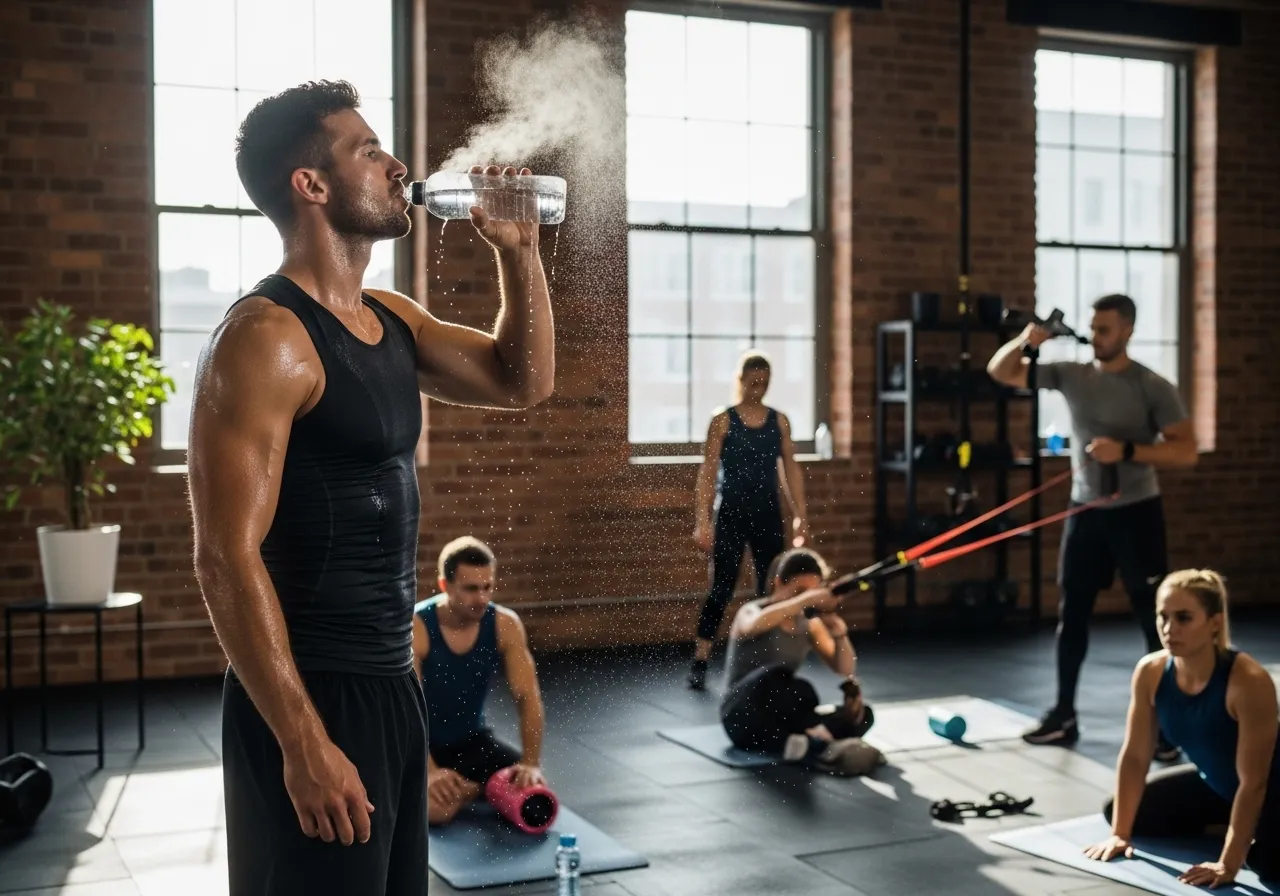
Adequate hydration reduces chronic inflammatory burden through multiple mechanisms: plasma volume maintenance that prevents the concentration of pro-inflammatory cytokines that dehydration allows; renal clearance efficiency that removes inflammatory metabolites from circulation; the gut mucosal hydration that intestinal barrier integrity depends on; and the synovial joint fluid volume that reduces the mechanical friction and cartilage stress that dehydration allows in weight-bearing joints. The athlete-specific hydration target for anti-inflammatory benefit: 35-45 ml per kilogram of body weight daily as the baseline fluid intake before exercise-related losses are added. A 75 kg athlete requires 2.6-3.4 liters of fluid daily at rest, with training sweat losses of 500 ml to 1.5 liters per session adding to this baseline depending on intensity and environmental conditions. The practical implementation: establishing consistent hydration anchor points throughout the day rather than responding to thirst alone (thirst appears after 1-2% body weight dehydration, which is already sufficient to impair cognitive function and mildly elevate inflammatory markers in sensitive tissues). A glass of water with each meal, a water bottle available throughout training, and a deliberate hydration intention in the 90 minutes before sleep — when overnight fluid loss from breathing and sweating begins the next morning from a deficit that pre-sleep hydration can offset — provides the daily hydration habit that anti-inflammatory physiology benefits from without requiring constant tracking.
Breathing Practices and Vagal Tone for Inflammation Reduction
The vagus nerve — the primary parasympathetic nervous system pathway that connects the brain to the heart, lungs, and gut — has a direct anti-inflammatory role through the cholinergic anti-inflammatory pathway: acetylcholine released by the vagus nerve at the spleen and other immune organs directly inhibits macrophage TNF-alpha production, creating a neural anti-inflammatory circuit that vagal tone activation reduces inflammation through. Deliberate breathing practices that increase vagal tone (measured as heart rate variability) activate this cholinergic anti-inflammatory pathway, producing directly measurable inflammatory marker reductions that the purely psychological interpretation of breath work’s benefits does not fully account for. The specific breathing techniques with the strongest evidence for vagal tone improvement and inflammatory reduction: slow diaphragmatic breathing at 4-7 breaths per minute (the resonance frequency breathing that maximally increases HRV through cardiorespiratory synchronization); the 4-7-8 breathing pattern (4-second inhale, 7-second hold, 8-second exhale — the extended exhale that maximally activates the parasympathetic pathway); and box breathing (4-second inhale, 4-second hold, 4-second exhale, 4-second hold — the military-popularized protocol whose equal phase structure produces reliable sympathetic dampening). Implementing 5-10 minutes of deliberate slow breathing twice daily — once immediately upon waking before the day’s sympathetic demands begin, and once immediately after training while the workout-elevated cortisol and inflammatory state is most responsive to parasympathetic intervention — produces the consistent vagal tone improvement that 8-12 weeks of daily practice accumulates into measurably improved resting HRV and reduced resting inflammatory markers. From PubMed vagal tone, HRV, and inflammatory cytokine regulation meta-analysis, higher resting vagal tone (measured by HRV) is significantly associated with lower CRP, IL-6, and TNF-alpha across diverse populations — and deliberate HRV-increasing practices including slow breathing produce the same anti-inflammatory benefits as the naturally high vagal tone they train toward.
Nature Exposure, Sunlight, and Vitamin D as Environmental Anti-Inflammatory Habits
The environmental conditions of daily life — specifically the presence or absence of natural light exposure and time spent in natural settings versus built environments — exert measurable effects on inflammatory biology that most athletes’ indoor gym-dominant training and work-from-home lifestyles fail to provide. Sunlight exposure is the primary determinant of vitamin D status in most people — dietary and supplemental vitamin D addresses the deficiency that indoor lifestyles create, but the full-spectrum photobiological effects of natural sunlight exposure include circadian rhythm entrainment, nitric oxide release from skin (reducing vascular inflammation), and the mood and stress hormone effects that natural light uniquely produces. The recommended sunlight exposure for anti-inflammatory benefit: 20-30 minutes of direct skin exposure (arms and legs, without sunscreen during this brief period) to outdoor sunlight between 10 AM and 3 PM, when UVB intensity is sufficient for vitamin D synthesis, on as many days per week as weather permits — supplementing with 2,000-4,000 IU vitamin D3 daily during winter months and in regions where sunlight intensity is insufficient for adequate cutaneous synthesis. Forest bathing (Shinrin-yoku) — the Japanese practice of slow, mindful walking in woodland environments — has accumulated a surprising body of randomized controlled trial evidence: consistent reduction in cortisol, adrenaline, inflammatory markers, and blood pressure compared to equivalent time in urban settings, attributed to the phytoncide chemicals that trees emit (monoterpenes and sesquiterpenes that human immune cells measurably respond to with increased natural killer cell activity and decreased inflammatory cytokine production). Two to three hours per week of time in natural green spaces — parks, forests, gardens, or any environment with significant tree and plant presence — provides the environmental anti-inflammatory exposure that urban and indoor lifestyles systematically deprive the human immune system of, producing the immune recalibration that nature exposure research consistently documents.
Building Your Personal Anti-Inflammatory Habit Stack: A Practical Plan and FAQ
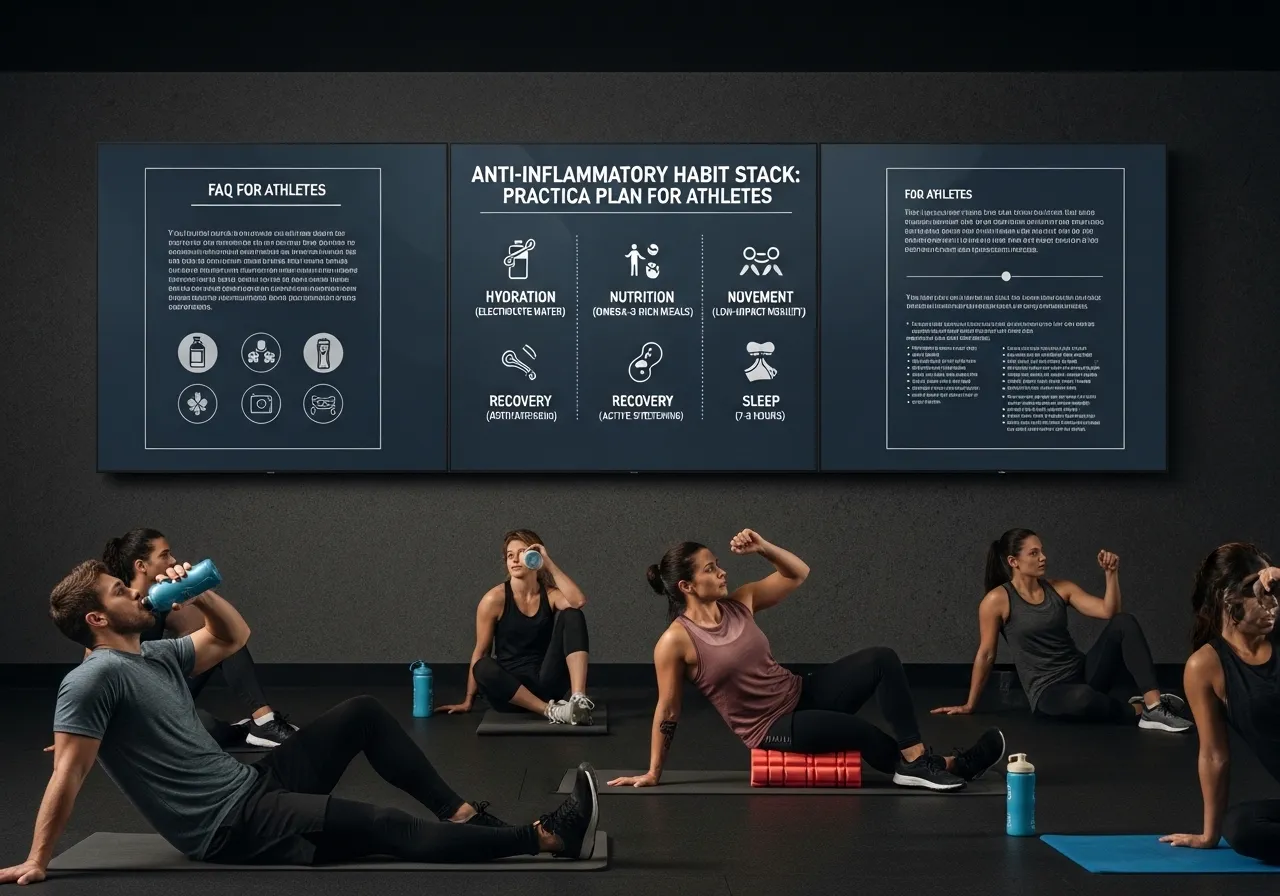
The anti-inflammatory habits presented in this article are most effective when built into a coherent daily routine that addresses multiple inflammatory pathways simultaneously rather than isolated interventions applied sporadically. The cumulative effect of consistent multi-habit implementation exceeds the sum of individual habit contributions — the habits reinforce and amplify each other through the overlapping physiological mechanisms that each addresses.
The Anti-Inflammatory Athlete’s Daily Routine Template
A practical daily habit template that incorporates the most evidence-supported anti-inflammatory practices without requiring a complete lifestyle overhaul: Morning (15-20 minutes before breakfast) — 5 minutes of slow diaphragmatic breathing upon waking (vagal tone activation before the day’s sympathetic demands begin); 20-30 minutes of outdoor sunlight exposure with a brief walk (circadian entrainment, vitamin D synthesis, light physical activity, nature exposure); a glass of water with morning supplements (fish oil, vitamin D, magnesium at appropriate times). Training day (post-session) — 5-10 minutes of slow breathing cool-down immediately after training; the anti-inflammatory post-workout meal with fatty fish or omega-3 eggs, colorful vegetables, and olive oil; deliberate rehydration over the 2 hours following training. Evening — consistent pre-sleep wind-down routine beginning 60-90 minutes before the target sleep time (screens off, dim lighting, low-stimulation activities); the pre-sleep tart cherry juice or magnesium glycinate that supports sleep quality specifically; consistent bed and wake times maintained regardless of weekend social pressures. Weekly additions — 2-3 sauna sessions of 15-20 minutes at 80°C or equivalent infrared sessions on rest days or evenings after training; 2-3 active recovery sessions of 20-30 minutes gentle movement (walking, easy cycling, yoga) on scheduled rest days; and a deliberate stress management practice (mindfulness meditation, journaling, or time in nature) for a minimum of 20 minutes on the highest-stress days of the week. This template requires approximately 45-60 additional minutes per day beyond current routines — an investment that produces the recovery quality improvement that more training volume cannot replicate, and that compounds into the performance and health outcomes that years of consistent anti-inflammatory living delivers.
Prioritizing Habits When You Cannot Do Everything
The full anti-inflammatory habit stack is the ideal; the practical reality is that life constraints limit implementation and require prioritization of the habits with the greatest individual impact. The prioritization hierarchy for the athlete who can implement only 2-3 changes: sleep quality and duration is the highest-priority change for the largest anti-inflammatory impact in the shortest time — extending sleep to 8 hours and fixing sleep timing consistency has the most robust and immediate measurable effect of any single non-dietary anti-inflammatory intervention. If sleep is already adequate, the next highest-impact addition is post-training breathing practice and active recovery — the direct cortisol and sympathetic dampening that post-training breath work provides, combined with gentle movement on rest days, addresses the training-specific inflammatory sources that the post-training and inter-session periods represent. If both sleep and post-training practices are in place, the third priority is stress management — either the mindfulness practice, the nature exposure, or the HRV-guided breathing practice that best fits the individual’s personality, schedule, and the specific stress pattern that their inflammatory burden reflects. The athlete who implements these three priorities consistently will experience recovery quality improvement that is measurable in training performance within 4-6 weeks — and that creates the motivation to add the remaining habits of the full stack as the initial improvements confirm the biological reality that anti-inflammatory living is not wellness aspiration but performance physiology.
Frequently Asked Questions About Anti-Inflammatory Recovery Habits
Q: How quickly will anti-inflammatory habits improve my recovery? A: Sleep improvement produces measurable recovery quality changes within 1-2 weeks. Stress management practices take 4-8 weeks of consistent application to produce measurable HRV and inflammatory marker improvements. Sauna habits produce measurable cardiovascular and inflammatory benefits within 4-6 weeks of 2-3 weekly sessions. Q: Do I need to do all of these habits to see benefit? A: No — any single well-implemented anti-inflammatory habit produces measurable benefit. The full stack amplifies outcomes; individual habits improve baseline inflammatory status meaningfully. Start with the highest-priority habit for your specific situation and build progressively. Q: Is cold water immersion good for recovery or not? A: For acute soreness relief and rapid next-day performance recovery (competition periods), yes. For routine use after adaptation-focused training sessions, no — the evidence shows it attenuates the hypertrophy and strength adaptation that training’s inflammatory signal drives. Use it strategically rather than routinely. Q: Can I track whether these habits are reducing my inflammation? A: Yes — HRV measurement via morning heart rate variability tracking provides the most accessible daily feedback on autonomic and inflammatory status. Improving HRV trends over weeks confirm that the habits are producing the parasympathetic and anti-inflammatory improvement they target. Blood CRP testing every 8-12 weeks provides objective confirmation of the systemic inflammatory trend. Q: How does training volume interact with anti-inflammatory habits? A: Higher training volumes produce greater inflammatory load that requires proportionally more anti-inflammatory habit investment to manage. Athletes in high-volume training phases should implement the full habit stack more consistently — sleep duration extension is the most important during peak volume periods, as the increased recovery demand of high training volume makes sleep inadequacy exponentially more consequential than during lighter training phases. From ACSM recovery and performance guidelines for high-volume athletes, evidence-based recovery habit implementation during high training volume phases significantly reduces overreaching risk and maintains immune function at levels that allow consistent training attendance — confirming the practical performance relevance of the habit-based anti-inflammatory approach alongside the training program itself.
The Long-Term Payoff: Years of Anti-Inflammatory Living
The anti-inflammatory habits described in this article are not short-term interventions that produce acute benefit and then plateau — they are lifestyle practices whose benefits compound over the years and decades that consistent application accumulates. The athlete who sleeps well, manages stress deliberately, moves gently between hard sessions, and maintains the physical and environmental practices that the research supports is building a physiological environment that becomes more inflammation-resistant and recovery-efficient with each year of consistent practice. The connective tissue that years of adequate sleep and reduced stress allows to continuously repair reaches a structural resilience that injury-prone tissue cannot — each year of anti-inflammatory living adds another layer of structural insurance against the overuse injuries that accumulate inflammatory damage without these recovery habits would produce. The cardiovascular system that regular sauna and low-intensity movement maintains reaches the vascular health and endothelial function that aging without these practices would progressively compromise. And the immune competence that adequate sleep, managed stress, and varied polyphenol-rich whole food eating sustains resists the immune senescence that poor lifestyle practices accelerate — keeping the training athlete’s immune system responsive, balanced, and capable of the inflammation resolution that adaptation requires across the decades that serious athletic engagement spans. Anti-inflammatory living is not a recovery strategy. It is an athletic identity — the daily commitment to creating the internal biological environment where training produces its maximum possible adaptation, and where the body’s own powerful anti-inflammatory mechanisms are consistently supported rather than systematically undermined by the habits that surround the training itself.