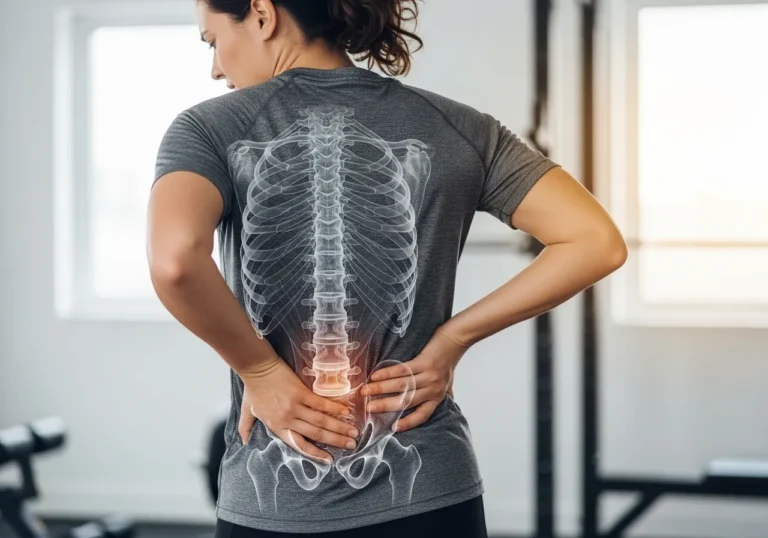
What Causes Shin Splints and How to Get Rid of Them
⚠️ Disclaimer: The information in this article is for general educational purposes only and does not constitute medical, nutritional, or professional fitness advice. Individual results may vary. Always consult a qualified healthcare professional or certified fitness trainer before starting any new exercise program, changing your diet, or making decisions about injury treatment or recovery. If you experience pain, discomfort, or any unusual symptoms during exercise, stop immediately and seek professional guidance.
What Shin Splints Actually Are (And What’s Happening in Your Leg)
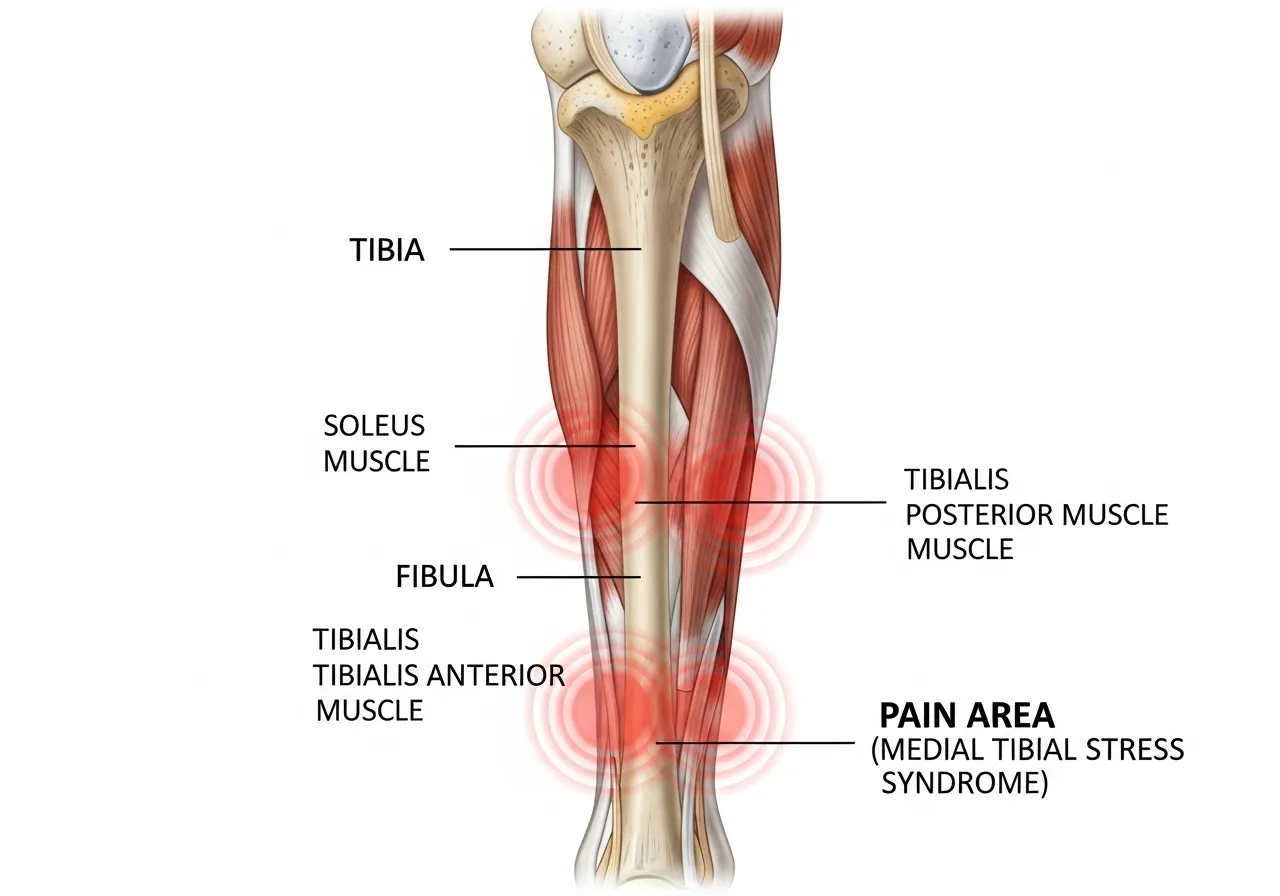
Shin splints is a colloquial term covering what medical professionals call medial tibial stress syndrome (MTSS) — a condition involving pain along the inner edge of the tibia (shinbone) that occurs in runners, military recruits, dancers, and anyone who engages in repetitive high-impact lower limb activity. Understanding what’s actually happening in the tissue helps explain why specific treatments work and why others don’t.
The pain of shin splints originates at the interface between the tibia and the muscles and connective tissues attached to it — primarily the tibialis posterior, flexor digitorum longus, and the periosteum (the fibrous tissue that covers bone). During high-impact activity, these structures experience repetitive mechanical stress. When the accumulated stress exceeds the tissue’s adaptive capacity — when loading outpaces recovery — microtrauma develops in the periosteum and surrounding musculature, producing inflammation and pain.
Shin splints exist on a continuum with tibial stress fractures, which is an important clinical distinction. At one end, periosteal irritation produces the classic diffuse, aching pain along the inner tibia that resolves with rest. Progressing along the continuum, the bone itself can develop stress reactions (edema within bone marrow, visible on MRI) and eventually stress fractures — small breaks in the bone that require more aggressive rest and occasionally medical intervention. Most cases of shin splints are in the periosteal irritation category, but progression to stress fracture is possible if training continues through worsening pain.
The diagnostic distinction between shin splints and tibial stress fractures matters practically. Shin splints typically produce pain over a diffuse 5+ centimeter area along the inner tibia, pain that warms up during exercise before returning afterward, and pain that is reproduced by pressing along the tibia over a broad area. Stress fractures typically produce more focal pain (a specific painful point), pain that worsens progressively during exercise rather than warming up, and point tenderness over a small localized area. If your shin pain has these stress fracture characteristics, seek medical evaluation before continuing to run.
Research published in the British Journal of Sports Medicine estimates that shin splints account for 13–17% of all running injuries and up to 35% of injuries in military training programs — making it one of the most common overuse injuries in the world. This prevalence has driven substantial research into both its causes and its most effective treatments.
I had a significant shin splint episode during my first serious attempt at marathon training. I went from essentially no running to 30 miles per week in about four weeks — a catastrophic ramp-up rate that predictably overloaded the periosteal tissues. The experience taught me more about training load management than any amount of reading, and the recovery protocol I followed forms the basis of what I share in this article.

The Real Causes of Shin Splints: Training Errors and Risk Factors
Shin splints are almost always caused by a mismatch between training load and tissue capacity. However, “training too much too soon” is an oversimplification that misses the specific factors that determine who gets shin splints and why. Understanding these factors allows targeted prevention and more effective treatment.
Training load errors are the primary cause. The most common is rapid mileage increase — the classic “too much, too soon” pattern. The commonly cited 10% rule (don’t increase weekly mileage by more than 10% per week) exists precisely to prevent this. However, the 10% rule is a rough guideline rather than a precise prescription, and its appropriate threshold varies based on fitness level, training history, and individual tissue resilience. More useful is the concept of training load monitoring: track your weekly mileage over months and make increases gradual relative to your established baseline.
Surface hardness significantly affects shin splint risk. Running on concrete and asphalt produces ground reaction forces that are 8–12% higher than running on packed trails, and substantially higher than grass or track surfaces. Runners who transition from softer to harder surfaces without reducing mileage increase their injury risk substantially. Incorporating trail or grass running into a training program reduces cumulative tibial stress.
Foot mechanics are a significant individual risk factor. Excessive foot pronation — the inward rolling of the foot during the stance phase of running — alters the tibial rotation and torsional stress patterns that contribute to shin splints. A study in JOSPT found that runners with greater navicular drop (a measure of foot pronation) had significantly higher shin splint rates than runners with neutral or supinated foot mechanics. Appropriate footwear and, for some runners, orthotic support addresses this risk factor.
Muscle weakness and fatigue contribute directly. The tibialis anterior and posterior, calf muscles, and hip stabilizers all play roles in controlling tibial loading during running. Fatigue in these muscles during long runs alters biomechanics in ways that increase tibial stress. Runners who maintain good form throughout their runs have lower injury rates than those whose form degrades significantly with fatigue — highlighting the importance of running-specific strength work.
Bone density is an important but often overlooked factor, particularly in female athletes. Low bone density — from relative energy deficiency in sport (RED-S), inadequate calcium and vitamin D intake, or hormonal factors — increases susceptibility to stress injuries including shin splints. Female athletes with irregular menstrual cycles should be particularly vigilant about this risk factor and discuss it with a healthcare provider.
Running cadence (steps per minute) affects tibial loading. Lower cadences with longer strides produce greater impact forces per step than higher cadences with shorter strides. Research suggests that increasing running cadence by approximately 5–10% reduces impact loading on the tibia. Many GPS watches now track cadence, making this a practical parameter to monitor and adjust.
How to Treat Shin Splints: The Evidence-Based Recovery Protocol
The good news about shin splints is that they are reliably treatable with a conservative protocol. The bad news is that complete resolution takes longer than most runners want — and the temptation to return to full training before healing is complete is the most common cause of recurrence. Here is the evidence-based approach to treatment.
The first intervention is relative rest. For most cases of shin splints, complete rest is not necessary — and may actually be counterproductive by allowing deconditioning that increases re-injury risk on return. What is needed is relative rest: a significant reduction in the high-impact loading that caused the injury. This means stopping or dramatically reducing running while maintaining fitness through low-impact alternatives (swimming, cycling, pool running, elliptical). The goal is to reduce tibial stress below the threshold that provokes pain while maintaining cardiovascular fitness and lower limb conditioning.
Duration of relative rest depends on symptom severity. Mild shin splints (pain that warms up during exercise and is absent at rest) typically require 1–2 weeks of modified training. Moderate cases (pain that persists during and after exercise but allows some running) may require 3–6 weeks. Severe cases (pain at rest, point tenderness) require medical evaluation to rule out stress fracture and may require 8–12 weeks of restricted loading.
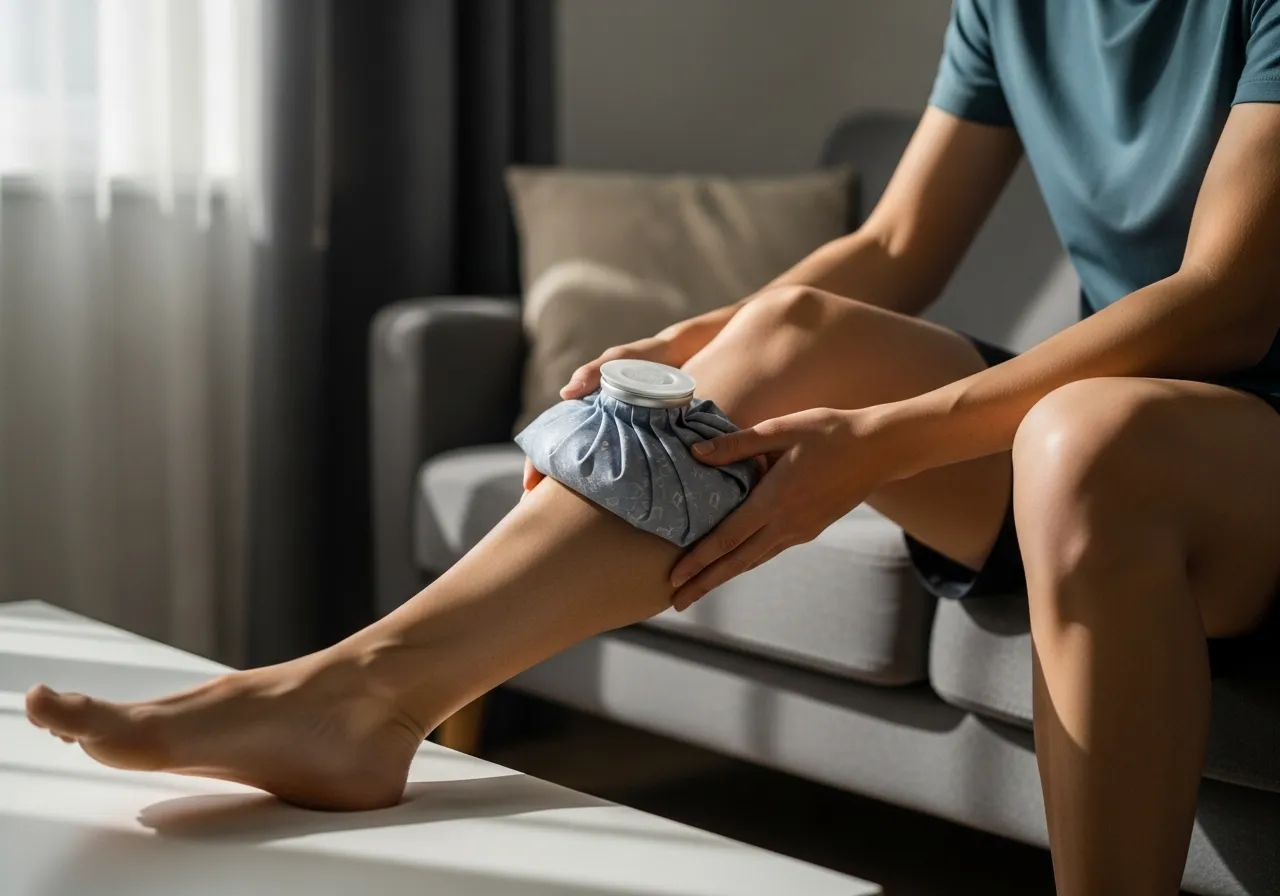
Ice and anti-inflammatory measures provide symptomatic relief but do not accelerate healing. Apply ice for 15–20 minutes after activity, 2–3 times daily during the acute phase. Non-steroidal anti-inflammatory drugs (NSAIDs like ibuprofen) reduce pain and inflammation short-term but should not be used as a tool to allow training through pain — this suppresses the pain signal that indicates damaging loading is occurring.
Compression sleeves and wraps provide pain relief and may reduce swelling. Calf compression sleeves worn during activity and recovery are widely used by runners with shin splints and supported by research published in the Journal of Athletic Training as providing meaningful symptom relief. They do not treat the underlying tissue pathology but make the recovery period more comfortable.
Soft tissue work — foam rolling the calves and tibialis anterior, massage along the length of the tibial muscles — reduces muscle tension that contributes to periosteal stress. Use a foam roller along the outer edge of the calf (not directly on the painful shin area during acute phases) and a lacrosse ball or massage stick along the tibialis anterior. This should produce a manageable discomfort but should never be extremely painful.
Gradual return to running should follow a structured protocol: begin with run-walk intervals (run 1 minute, walk 2 minutes) when symptoms are absent at rest and mild during walking. Progress the running intervals over 2–4 weeks while monitoring symptoms. If pain returns to pre-rest levels, reduce load and reassess. Pain-free training at reduced volume is the only sustainable path back to full training.
The Best Exercises to Heal Shin Splints Faster
Rehabilitation exercises for shin splints serve two purposes: strengthening the muscles that were insufficient for the training load that caused injury, and maintaining fitness during the period of restricted running. Both are important for sustainable recovery.
Calf raises are the foundation of shin splint rehabilitation. The gastrocnemius and soleus — the two main calf muscles — play critical roles in shock absorption and controlling tibial loading during running. Weakness in these muscles transfers excessive stress to the tibia. Begin with double-leg calf raises (both feet), progressing to single-leg as strength improves. Perform slowly — 3 seconds up, 3 seconds down — emphasizing eccentric control. Start with 3 sets of 15–20 reps and progress to single-leg loaded calf raises over several weeks.
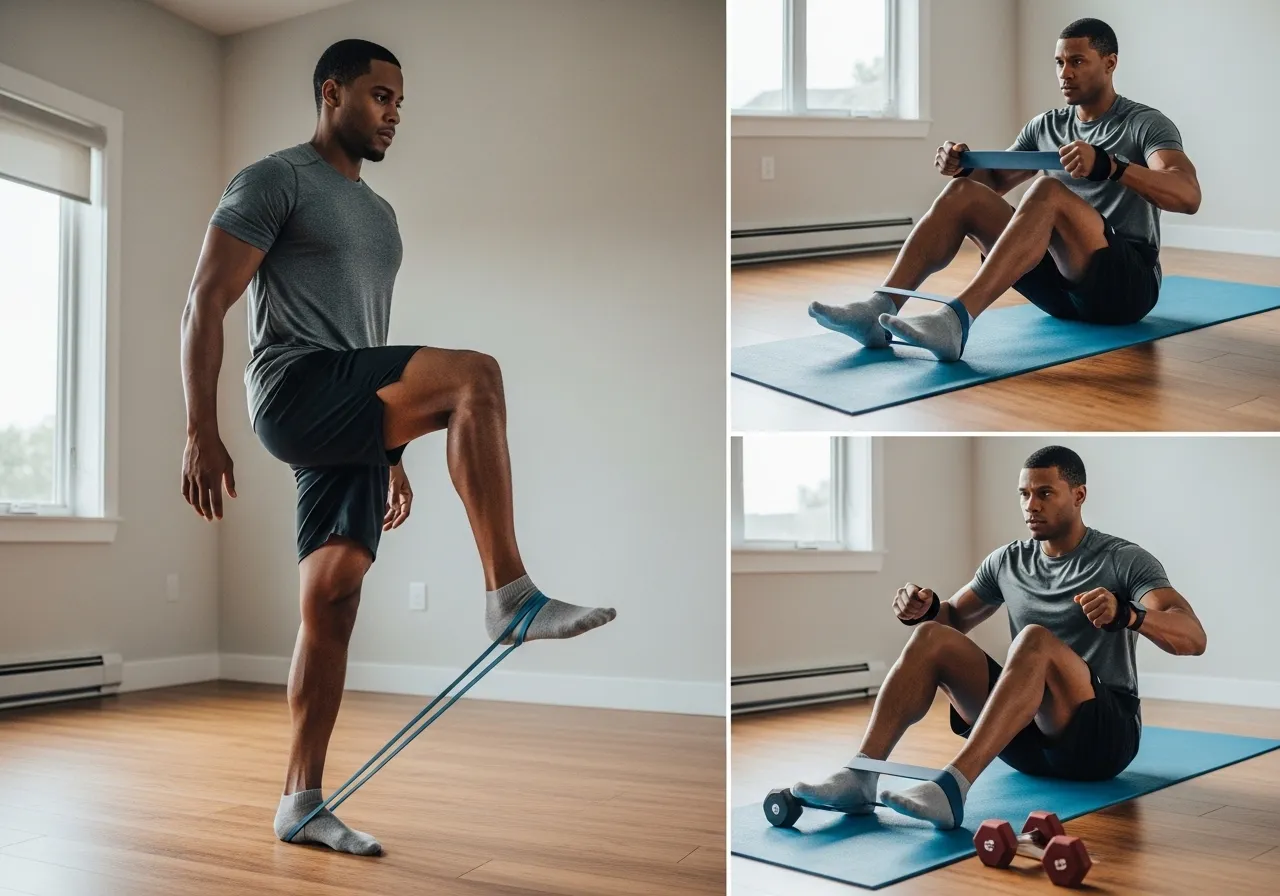
Tibialis anterior strengthening directly rehabilitates the muscle most involved in shin splint pathology. The simplest exercise is seated toe raises: sit in a chair with feet flat, and raise your toes toward your shins repeatedly. Progress to standing toe raises, then to resisted toe raises using a resistance band. This exercise is often neglected because it feels mild, but consistent training of the tibialis anterior meaningfully reduces tibial stress during running.
Hip and glute strengthening is perhaps the most important and most overlooked component of shin splint rehabilitation. Weak hip abductors and external rotators cause increased tibial internal rotation during the stance phase of running — a key contributor to tibial stress. Clamshells, lateral band walks, single-leg glute bridges, and hip thrusts specifically target these muscles. Studies on runners with shin splints consistently find hip weakness as a contributing factor, and programs that include hip strengthening have better outcomes than those focused solely on the lower leg.
Balance and proprioception training (single-leg stands, balance board exercises) trains the neuromuscular control systems that regulate tibial loading during dynamic activity. Stand on one leg for 30–60 seconds, progress to single-leg stands on an unstable surface, then to single-leg deadlifts and single-leg squats. This training reduces the biomechanical variability that contributes to overuse injury.
Foot intrinsic strengthening — the small muscles of the foot that control arch dynamics — addresses the foot pronation component of shin splint risk. Towel scrunches (picking up a towel with your toes), marble pickups, and short-foot exercises (doming the arch without curling the toes) train these often-neglected muscles. For runners with significant pronation, this work is particularly important.
How to Modify Your Training While Recovering from Shin Splints
One of the most demoralizing aspects of shin splints for runners and athletes is the perceived necessity of complete rest — which threatens fitness, mental health, and training momentum. The good news is that well-chosen cross-training alternatives maintain almost all of the cardiovascular fitness and lower limb conditioning developed through running, allowing a seamless return to training once the shin has recovered.
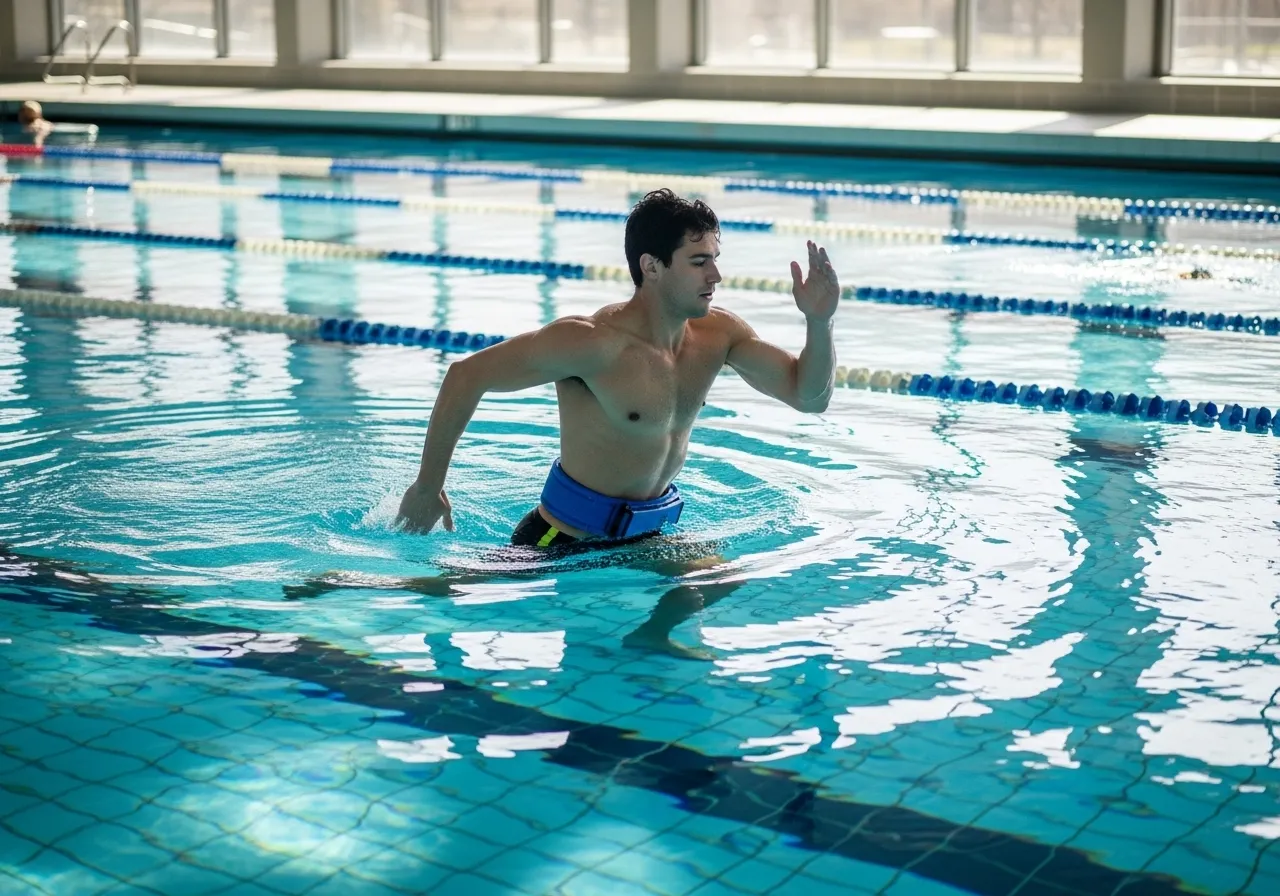
Pool running (aqua jogging) is the gold standard cross-training modality for injured runners. Using a flotation belt, you perform running movements in the deep end of a pool with zero impact on the tibia. The movement pattern closely replicates running mechanics, the cardiovascular demand is nearly identical to land running at equivalent effort, and the lower limb muscles are conditioned through the same movement pattern. Competitive runners use pool running to maintain race fitness through injury cycles and report minimal fitness loss with consistent pool training.
Cycling — both outdoor and stationary — maintains cardiovascular fitness with negligible tibial stress. The tibialis anterior and calf muscles are engaged during cycling, providing some lower limb conditioning, though the stimulus is different from running. Stationary cycling is particularly convenient because session length and intensity can be precisely controlled. Aim for sessions of equivalent duration to your normal runs at matched perceived effort.
Swimming provides total cardiovascular conditioning with zero lower limb impact. If you can swim competently, it’s an excellent option during shin splint recovery. The upper body conditioning benefit is an additional bonus for athletes whose training typically neglects the upper body.
Elliptical trainers provide a closer simulation to running mechanics than cycling and produce less tibial stress than treadmill running. Research from NCBI suggests that tibial stress during elliptical training is approximately 30% lower than equivalent-effort treadmill running. For mild shin splints, the elliptical may allow training continuation with modified load; for more severe cases, it should be reserved for later stages of recovery.
Strength training the upper body and non-affected lower limb structures maintains overall training momentum and prevents the deconditioning that makes return to running more difficult. A structured strength program during the recovery period also addresses the muscle weaknesses — particularly hip and glute strength — that contributed to the injury.
Footwear, Running Form, and Surfaces: How They Affect Shin Splints
Three external factors — footwear, running form, and training surface — have significant, modifiable effects on tibial stress during running. Optimizing all three is part of a complete shin splint prevention strategy.
Running shoe selection matters, though the relationship between shoe type and shin splint risk is more nuanced than shoe marketing suggests. The key variables are cushioning, stability, and fit. Adequate cushioning attenuates impact forces before they reach the tibia. Motion control features can reduce excessive pronation in those who overpronate. But the “best” shoe is highly individual — the most important characteristic is that the shoe fits your specific foot mechanics, gait pattern, and training demands. A gait analysis at a specialty running store, where a trained staff member watches you run and recommends shoes based on your mechanics, is worth the time investment, particularly if you have a history of shin splints.
Worn-out shoes are a common and frequently overlooked shin splint trigger. Most running shoes lose meaningful cushioning after 300–500 miles, at which point they no longer provide the impact attenuation they did when new. Running the same weekly mileage in worn-out shoes is equivalent to increasing impact loading substantially. Track your mileage and replace shoes proactively rather than reactively.
Running form modifications that reduce tibial stress include: increasing cadence (steps per minute) by 5–10%, which reduces stride length and peak impact forces; landing with the foot closer to under the center of mass rather than in front of it (overstriding); and maintaining an upright posture rather than leaning backward. A running form analysis with a coach or sports physical therapist who can provide specific, individualized feedback is the most efficient way to identify and correct form factors contributing to injury.
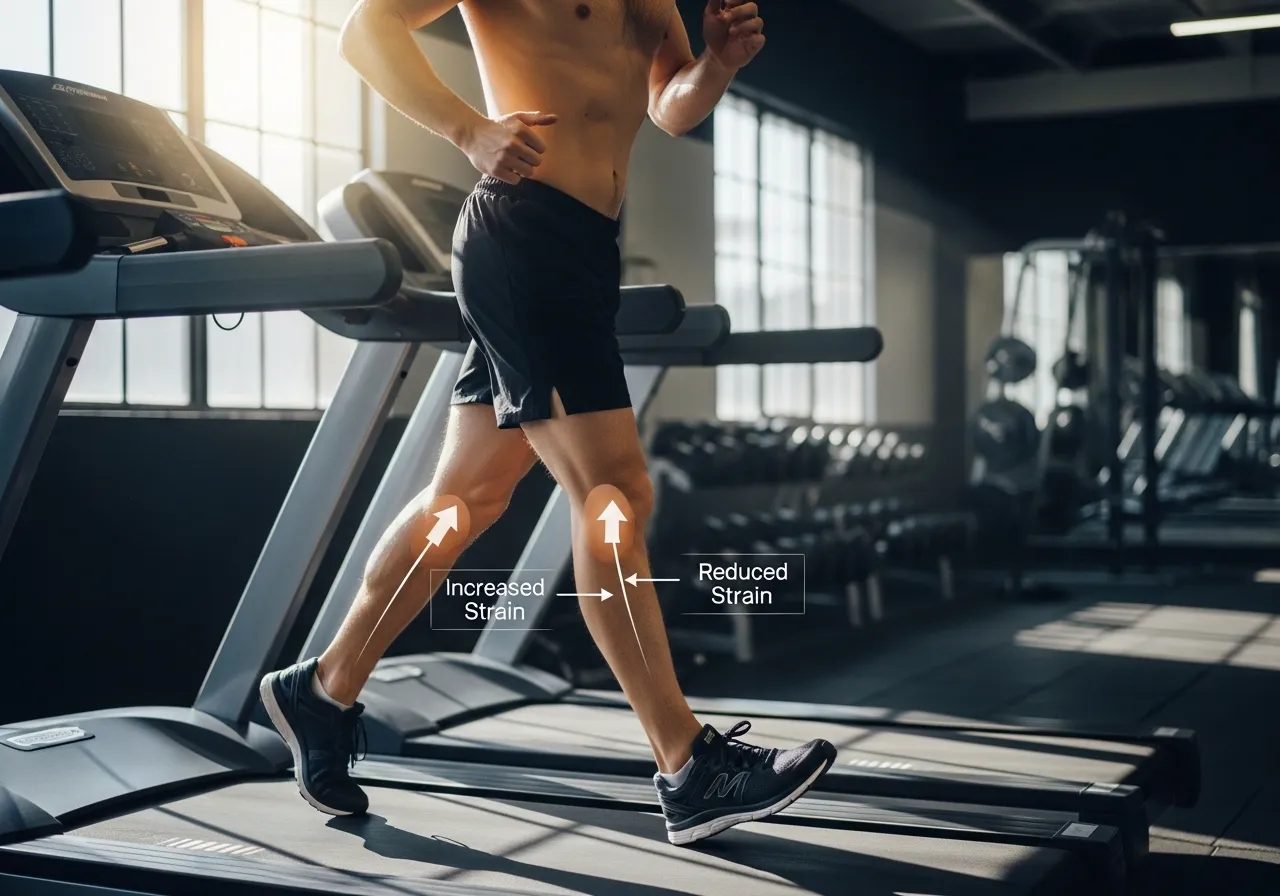
Surface selection is a controllable variable with a meaningful effect on shin splint risk. Grass and packed trails produce lower impact forces than roads and concrete. If you train primarily on hard surfaces, incorporating even 20–30% of mileage on softer surfaces reduces cumulative tibial stress. Indoor tracks are gentler than outdoor concrete but introduce the additional variable of repetitive turning that can stress tibial structures differently. Treadmills produce lower impact forces than outdoor running and are a legitimate training modification during recovery periods.
Research from the American College of Sports Medicine on running injury prevention consistently identifies surface variety as a meaningful risk reduction strategy — not because any single surface is perfect, but because varying surfaces prevents the accumulated stress from repetitive loading in identical mechanical patterns.