Best Meal Timing Strategy for Muscle Gain
⚠️ Disclaimer: The information in this article is for general educational purposes only and does not constitute medical, nutritional, or professional fitness advice. Individual results may vary. Always consult a qualified healthcare professional or certified fitness trainer before starting any new exercise program, changing your diet, or making decisions about injury treatment or recovery. If you experience pain, discomfort, or any unusual symptoms during exercise, stop immediately and seek professional guidance.

Does Meal Timing Actually Matter for Muscle Gain? What the Science Says
Few topics in sports nutrition have generated more debate, more marketing claims, and more confused gym-goers than meal timing. Walk into any supplement store and you’ll be told that the 30-minute anabolic window after training is sacred, that skipping breakfast kills gains, and that eating protein at the wrong time means your workout was wasted. I spent years following these rules religiously — setting alarms to make sure I hit my post-workout shake within 20 minutes, eating five or six meals per day to keep protein synthesis elevated, and anxiously tracking every eating window around my training. The results were good, but I couldn’t tell whether the timing protocols or simply the consistent high protein intake was driving them. When I finally started reading the primary research rather than supplement company summaries, the picture turned out to be far more nuanced — and far more forgiving — than the marketing suggested.
The honest answer to whether meal timing matters for muscle gain is: yes, but far less than total daily protein and caloric intake, and with considerably more flexibility than the fitness industry implies. Understanding what the research actually shows — and separating the meaningful effects from the marketing noise — allows you to build a meal timing strategy that genuinely supports muscle gain without the unnecessary complexity and anxiety that rigid timing protocols often create.
What Research Actually Shows About Nutrient Timing
The most comprehensive scientific review of nutrient timing for muscle gain, published in the Journal of the International Society of Sports Nutrition, examined the totality of evidence and concluded that while nutrient timing can provide additional benefits for certain populations, its effects are modest compared to the foundational variables of total protein intake, total caloric intake, and training quality. When protein intake is adequate (1.6–2.2g/kg/day) and calories are appropriate for the goal, the incremental benefit of optimal timing is real but small — in the range of 5–15% additional benefit on top of what the foundational variables already provide.
For beginners and intermediate trainees, this means that getting timing exactly right is far less important than getting protein and calories right. The beginner who hits 180g of protein per day distributed reasonably across meals will gain muscle at a rate nearly identical to the beginner hitting 180g with perfect timing optimization — the difference between them is dwarfed by the difference between either of them and a beginner eating only 80g of protein per day with perfect timing. This hierarchy — total intake first, timing second — is the foundational principle that should guide how much mental energy you invest in meal timing relative to other nutritional variables.
The Protein Distribution Effect: Why Spreading Matters
While precise timing relative to training has more modest effects than commonly believed, protein distribution across meals has a well-documented and meaningful effect on muscle protein synthesis rates. Research comparing bolus protein intake (consuming most daily protein in one or two large meals) versus distributed intake (spreading protein across 4–5 meals of 30–40g each) consistently shows that distributed intake produces higher 24-hour muscle protein synthesis rates. The mechanism is leucine-dependent: each protein feeding must contain sufficient leucine (approximately 2–3g, found in roughly 25–35g of high-quality protein) to trigger the mTOR signaling pathway that initiates muscle protein synthesis. A single large meal of 100g protein does not produce 3x the synthesis stimulation of a 33g meal — the anabolic response is not linear, it plateaus, and excess protein in a single bolus beyond the saturation point is simply oxidized for energy rather than driving additional synthesis.
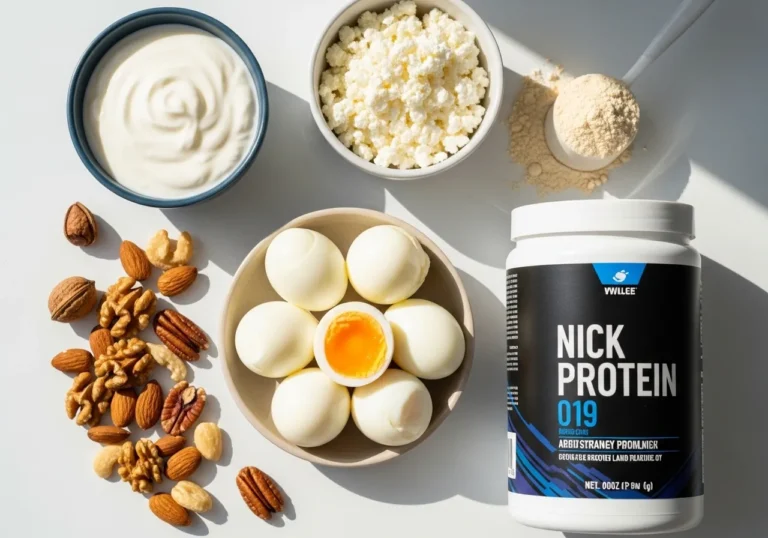
Practically, this means distributing your daily protein across 3–5 meals, each containing 30–45g of protein, produces better muscle gain outcomes than eating the same total protein in fewer, larger meals. Breakfast with eggs and Greek yogurt, a midday meal with chicken or fish, a pre or post-workout protein serving, and dinner with another complete protein source covers this distribution effectively for most eating patterns. The specific timing of these meals relative to training matters less than their consistent presence throughout the day — the goal is maintaining elevated amino acid availability in the bloodstream as continuously as possible during the waking hours when muscle protein synthesis is active.
Total Protein Adequacy vs. Timing: The Priority Hierarchy
The most important practical implication of the research on nutrient timing for muscle gain is a clear priority hierarchy: achieving your total daily protein target is more important than the timing of any individual meal; protein distribution across 3–5 meals is more important than precise pre- or post-workout timing; and pre- and post-workout nutrition is more important than the specific timing of non-peri-workout meals. This hierarchy tells you where to focus your nutritional attention first, and where additional optimization provides diminishing returns.
Many people have the hierarchy inverted — obsessing over the 30-minute post-workout window while routinely falling short of their daily protein target. Someone who consumes 120g of protein per day with perfect timing relative to training will gain less muscle than someone consuming 180g with moderate timing adherence. Fix the total first, then the distribution, then the timing relative to training. This ordering produces the highest return on nutritional investment for muscle-building goals.
Individual Variability in Timing Response
Research on nutrient timing consistently documents meaningful individual variability in response — some people show larger performance and recovery benefits from optimized peri-workout nutrition than others. Variables that predict greater timing sensitivity: training intensity and volume (higher-volume, higher-intensity training creates larger glycogen depletion and muscle protein breakdown that timing optimization addresses more significantly), training frequency (training the same muscle group twice per week or more means the window between sessions is shorter, making post-workout nutrition recovery more time-sensitive), fasted versus fed training status (the anabolic window effect is larger when training fasted than when training in a fed state), and training experience level (advanced athletes with higher absolute training volumes show more sensitivity to timing than beginners at lower volumes).
This individual variability means that blanket rules about timing — “everyone must eat within 30 minutes of training” — are inappropriate. A beginner training 3 days per week at moderate intensity in a fed state has minimal timing sensitivity; an advanced athlete training twice-daily at high volume in a fasted state has significant timing sensitivity. Your specific circumstances determine how much timing optimization matters for your results — and honest assessment of those circumstances prevents both the over-optimization that creates unnecessary complexity and the under-optimization that leaves meaningful gains on the table.
My Personal Approach to Meal Timing for Muscle Gain
After years of experimenting with rigid timing protocols, I’ve settled on an approach that the research supports as near-optimal while requiring far less scheduling complexity than the approaches I used earlier. I eat my first protein-containing meal within 1–2 hours of waking, regardless of whether I train in the morning. I have a pre-workout meal 1.5–2 hours before training containing moderate protein (30–40g) and carbohydrates (50–70g). I eat a post-workout meal within 1–2 hours of training completion — not within 30 minutes — with similar protein content and adequate carbohydrates. And I have a final protein serving (casein-rich cottage cheese or Greek yogurt) in the 1–2 hours before sleep to support overnight muscle protein synthesis. This four-to-five meal structure, hitting 35–45g of protein at each meal, covers the evidence-based timing recommendations without requiring precise scheduling that disrupts normal life.
The Hierarchy of Nutrition Variables: Where Timing Fits
Understanding where meal timing sits in the overall hierarchy of nutrition variables prevents the common mistake of optimizing lower-priority variables before higher-priority ones are addressed. The hierarchy from most to least impactful: total daily caloric intake → total daily protein intake → protein distribution across meals → peri-workout nutrition timing → specific protein source selection → micronutrient optimization. Meal timing belongs at level four — meaningful, but only after levels one through three are consistently addressed. The athlete hitting 180g protein daily with imperfect timing gains more muscle than the one timing every meal perfectly but averaging only 110g protein. Fix the foundation before refining the details.
How to Know If Your Timing Protocol Is Working
A meal timing protocol that isn’t tracked cannot be effectively adjusted. The two most important metrics: daily protein intake (verified by food logging for the first 4–6 weeks) and training performance across sessions (tracked in the training log). If strength is progressing consistently, protein distribution is likely adequate. If strength has plateaued despite consistent training and sleep, examine total protein first. If recovery between sessions feels poor, the post-workout and pre-sleep timing elements deserve attention. If body weight isn’t moving in the intended direction, caloric intake rather than timing is almost certainly the relevant variable. Use tracked outcomes to identify which nutritional variable most needs adjustment — this diagnostic approach is more effective than following a rigid protocol that doesn’t respond to individual results. Adjusting based on evidence rather than theory keeps the nutrition strategy calibrated to your actual physiology rather than an average population response.
Long-Term Perspective: Consistency Over Perfection
The most important attribute of any meal timing strategy is not theoretical optimality but practical sustainability. A protocol that is 90% optimal and executed consistently across 52 weeks produces far better results than one that is 100% optimal when followed but abandoned for weeks at a time due to complexity. The athletes who produce the most impressive long-term muscle gain results hit their protein targets most consistently, rarely miss post-workout meals, and build food preparation habits that make nutritional consistency automatic. Build the timing framework around your actual schedule and food preferences, not an ideal schedule that doesn’t reflect real life. Consistent adequate protein with reasonable timing is the foundation; perfect timing optimization adds value only on top of that foundation, not instead of it.
The Science of Leucine Threshold and Muscle Protein Synthesis Activation
Leucine is the master regulator of muscle protein synthesis — the amino acid that directly activates the mTOR-p70S6K signaling pathway responsible for initiating new muscle protein construction. Research from the NIH on leucine and mTOR signaling has established that each protein feeding requires a minimum of approximately 2–3g of leucine to maximally trigger mTOR activation and produce the full muscle protein synthesis response. Below this threshold, the synthesis response is blunted — a meal with only 1g of leucine (approximately 8–10g of whey protein) produces a smaller anabolic signal than one meeting the 2–3g threshold. This leucine threshold concept has two important practical implications for meal timing. First, small protein feedings of under 20g are insufficient to maximally stimulate synthesis — the popular advice to “eat protein every 2 hours in small amounts” misses this threshold requirement and produces suboptimal stimulation per feeding compared to fewer, larger protein meals that exceed the leucine threshold. Second, distributing adequate protein across 4–5 meals of 30–45g each ensures that every feeding crosses the leucine threshold and produces a maximal synthesis response, maximizing the cumulative daily synthesis stimulation that drives adaptation over time. Whey protein contains approximately 10–11% leucine by weight — a 30g whey serving provides 3–3.3g leucine, crossing the threshold comfortably. Chicken breast contains approximately 7–8% leucine — a 150g serving (30g protein) provides 2.1–2.4g leucine, meeting the threshold. Plant proteins typically contain 6–8% leucine — requiring 35–45g of most plant proteins to meet the threshold, which informs the higher per-meal protein recommendations for plant-based athletes.
Understanding the leucine threshold changes how you think about protein meal construction. Rather than asking “did I eat protein at this meal?” the better question is “did I eat enough protein at this meal to exceed the leucine threshold and produce a maximal synthesis response?” The difference between a 15g protein meal and a 35g protein meal is not just the quantity — it is the difference between a subthreshold response and a maximal response. Over four meals per day across a training year, this difference in per-meal response magnitude produces meaningfully different cumulative adaptation outcomes.
The Anabolic Window: How Long Do You Really Have to Eat After Training
The “anabolic window” — the post-exercise period during which consuming protein and carbohydrates supposedly produces dramatically enhanced muscle growth — is one of the most persistently overclaimed concepts in sports nutrition. It has been used to sell post-workout supplements for decades, and the specifics of the claim have evolved as research has progressively narrowed the actual window of meaningful effect from “within 30 minutes” to “within 2 hours” to the current more nuanced picture. Understanding what the anabolic window actually is, where it genuinely matters, and where it has been overstated allows you to make informed, practical decisions about post-workout nutrition without the anxiety of obsessing over a ticking clock after every training session.
The Original Research and How It Was Misapplied
The anabolic window concept emerged from research on muscle protein synthesis rates in the hours following resistance training. Studies showed that muscle protein synthesis was significantly elevated for 24–48 hours after training, with the greatest elevation in the first 2–4 hours. Researchers also documented that consuming protein during this elevated synthesis period produced greater protein incorporation than protein consumed outside of it. From these valid findings, the fitness industry extrapolated a much stronger claim — that failing to consume protein within 30–60 minutes of training would result in significantly impaired muscle gain — that the original research did not actually support.
The critical context missing from the “30-minute window” marketing: the studies showing the most time-sensitive post-workout anabolic window were typically conducted in fasted subjects who had not eaten for 4–8 hours before training. When you train in a fasted state, your muscle protein synthesis rates are suppressed and amino acid availability is low — in this context, providing protein quickly after training produces a significant benefit because it rapidly elevates amino acid availability in a depleted state. When you eat a pre-workout meal 1–2 hours before training, amino acids from that meal are still circulating in your bloodstream during and after the session — making the urgency of post-workout protein significantly lower. The anabolic window narrows or effectively disappears when pre-workout nutrition is adequate.
Current Research: The 2-Hour Post-Workout Window
The most current and comprehensive evidence on post-workout protein timing, including meta-analyses that aggregate data across multiple studies, supports a post-workout protein window of approximately 2 hours — not 30 minutes — as the meaningful target for people who train in a fed state. Within 2 hours of completing a resistance training session, consuming a complete protein source containing 30–40g of protein and sufficient leucine to trigger mTOR signaling produces the enhanced muscle protein synthesis response that makes post-workout nutrition valuable. Eating 2.5 hours after training produces somewhat smaller benefits; eating 4+ hours after training misses the elevation period more significantly.
Research from PubMed studies on protein timing and muscle protein synthesis confirms that the most critical factor in post-workout protein efficacy is not speed of consumption but adequacy of protein content and amino acid quality. A 40g serving of whey protein consumed 90 minutes after training produces better outcomes than a 15g serving consumed within 10 minutes. Content matters more than speed — a finding that should reorient post-workout nutrition priorities from rushing to consume anything quickly toward ensuring the post-workout meal is nutritionally adequate.
The Role of Pre-Workout Nutrition in Determining Window Urgency
Pre-workout nutrition is the most important determinant of how time-sensitive your post-workout protein consumption needs to be. The pre-workout meal creates a “bracketing” effect — amino acids from the pre-workout protein are still in circulation during training and in the early post-workout period, effectively extending the anabolic environment into the post-workout window and reducing the urgency of rapid post-workout protein consumption. Research comparing the anabolic window sensitivity of fed versus fasted trainees confirms: fasted trainees show a meaningful performance difference between eating protein at 30 minutes versus 2 hours post-training; fed trainees show minimal difference between these timepoints.
This pre-workout nutrition context means that your post-workout protein urgency should be calibrated to your pre-workout eating status. If you trained completely fasted (no eating in the 4+ hours before training), prioritize protein consumption within 45–60 minutes after training. If you ate a protein-containing meal 1–2 hours before training, you have a comfortable 1.5–2 hour post-workout window without meaningfully compromising the anabolic response. This flexibility allows post-workout nutrition to fit naturally into life’s schedule rather than requiring you to carry a shaker bottle into every gym session with a timer running the moment you finish your last set.
What to Eat in the Post-Workout Window
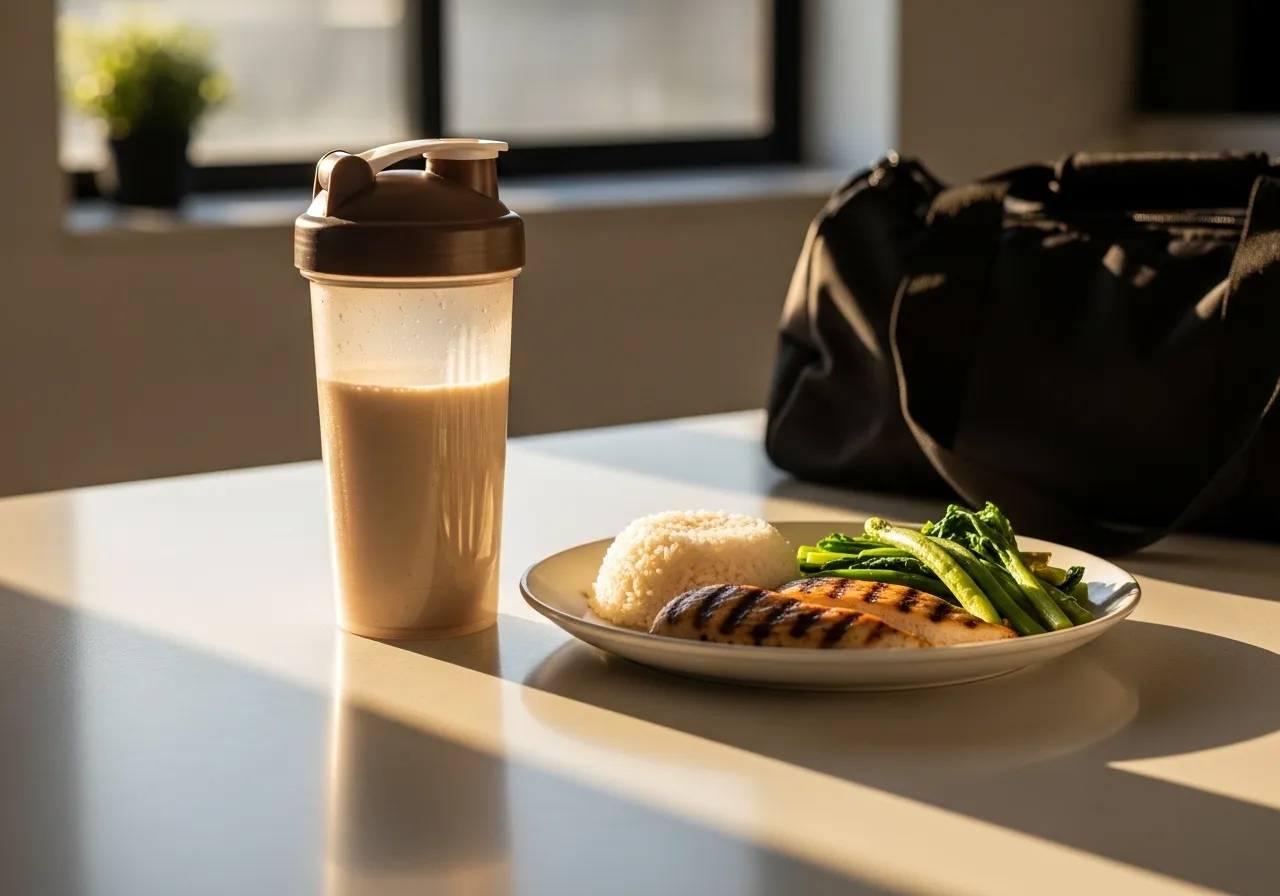
Post-workout nutrition serves two distinct physiological functions: initiating muscle protein synthesis (protein’s role) and replenishing glycogen stores depleted during training (carbohydrates’ role). The optimal post-workout meal addresses both. For muscle protein synthesis: 30–45g of complete protein with high leucine content. Whey protein is the most studied and most effective post-workout protein source due to its rapid digestion rate and high leucine content (approximately 10–11% leucine by amino acid composition). Chicken breast, turkey, eggs, and fish are whole food alternatives that provide complete amino acid profiles for those who prefer food over supplements. For glycogen replenishment: 50–100g of carbohydrates from moderate-to-high glycemic sources accelerates glycogen resynthesis, which is particularly important when the next training session is within 24 hours. White rice, potatoes, fruit, and sports drinks are appropriate post-workout carbohydrate sources.
The classic post-workout combination of lean protein and fast carbohydrates — chicken and white rice, protein shake with banana, Greek yogurt with fruit — serves both functions efficiently. The carbohydrate-protein combination produces a more favorable anabolic hormonal environment (through insulin’s protein-sparing and glycogen-driving effects) than protein alone, and research comparing protein-only versus protein-plus-carbohydrate post-workout feeding consistently favors the combined approach for both glycogen replenishment and muscle protein synthesis outcomes, particularly in higher-volume training contexts.
Post-Workout Nutrition for Late-Night Training
A specific challenge for post-workout nutrition is late-evening training — sessions that finish at 8, 9, or 10pm, where conventional post-workout eating advice conflicts with concerns about eating close to sleep. The evidence is clear: a post-workout meal after evening training should not be skipped in the name of avoiding late-night eating. The muscle protein synthesis stimulus from an evening resistance training session is identical to that of a morning session — it requires amino acid availability to proceed, and denying that amino availability because the training happened to be scheduled in the evening wastes the adaptation potential of the session.
The concern about late-night eating impairing body composition comes primarily from observational research on people who eat late due to boredom or social eating patterns — where the late eating represents additional calories above their daily total rather than necessary post-workout nutrition. Consuming a post-workout meal after evening training is not the same pattern — it is eating within total daily caloric targets, timed to support the session that was just completed. A post-workout meal of protein and moderate carbohydrates after a 9pm training session will not impair fat loss or body composition, and its absence will impair the adaptation from the session. Train, eat, sleep — in that order, regardless of the hour.
Casein Before Sleep: The Overnight Window
The sleep period represents 7–9 hours of the day during which muscle protein synthesis continues but dietary amino acid availability drops to zero unless a slow-digesting protein source is consumed before sleep. Research on pre-sleep protein consumption, particularly a landmark study by Snijders et al. published in Medicine and Science in Sports and Exercise, found that consuming 40g of casein protein 30 minutes before sleep significantly elevated overnight muscle protein synthesis rates compared to a placebo, producing greater morning nitrogen retention (indicating net muscle anabolism) without affecting next-morning appetite or body composition negatively. Casein’s slow digestion rate — providing a sustained 6–8 hour amino acid release compared to whey’s 2-hour absorption window — makes it uniquely suited to the overnight feeding role. Practical casein sources: cottage cheese (rich in casein and a convenient pre-sleep food), Greek yogurt (contains a casein-whey mixture), and casein protein powder. Consuming one of these 30–60 minutes before sleep is a simple, low-cost intervention that extends muscle protein synthesis into the overnight period for meaningful additional adaptation benefit.
The Anabolic Window for Different Training Types
The post-workout anabolic window varies in urgency depending on training type. Resistance training creates primarily mechanical damage and metabolic stress, producing an elevated muscle protein synthesis window of 24–48 hours with greatest elevation in the first 2–4 hours. Endurance training creates primarily glycogen depletion — making post-workout carbohydrate replenishment more time-sensitive than protein for endurance athletes. HIIT creates both metabolic stress and meaningful mechanical loading, requiring both carbohydrates and protein post-workout. For hybrid training sessions combining strength and cardio, neglecting either component is more costly than for pure resistance training. A post-workout meal addressing both protein synthesis (30–40g complete protein) and glycogen replenishment (50–80g moderate-to-high GI carbohydrates) within 1.5–2 hours covers the composite demands of mixed training sessions effectively.
Alcohol and Muscle Gain: The Honest Assessment
Alcohol impairs multiple aspects of the nutritional environment for muscle gain. Research shows that even moderate alcohol consumption (approximately 1.5g/kg) in the post-workout period reduces muscle protein synthesis rates by approximately 37% compared to the same session without alcohol, even when adequate protein is consumed. Alcohol also elevates cortisol, impairs sleep quality, reduces growth hormone secretion during sleep, and provides empty calories that displace nutrient-dense food. There is no dose of alcohol that is anabolically neutral — the question is only how much impairment is acceptable relative to the social and enjoyment value. For serious muscle-building goals, minimizing post-workout and pre-sleep alcohol consumption produces measurably better adaptation outcomes than equivalent training and nutrition with regular alcohol consumption. This is not a call for abstinence but for strategic timing — avoiding alcohol in the critical 4–6 hour post-workout window preserves the anabolic response that training created.
Nutrient Timing for Women: What’s Different
The fundamental mechanisms of nutrient timing — muscle protein synthesis response to protein feeding, glycogen replenishment from carbohydrates, anabolic window after training — operate through the same physiological pathways in women and men, and the evidence-based recommendations in this article apply equally to female trainees. However, hormonal cycle variation in women creates fluctuating anabolic and catabolic environments across the month that can affect training and nutrition responses. The follicular phase (days 1–14) is associated with higher estrogen, better glycogen storage, and a more anabolic environment that supports muscle gain. The luteal phase (days 15–28) is associated with higher progesterone, slightly increased protein breakdown, and modestly higher caloric requirements. Increasing protein intake slightly (by 10–15%) in the luteal phase and maintaining carbohydrate intake despite the common luteal-phase preference for caloric restriction preserves the muscle-building environment across the full hormonal cycle. These are refinements on the foundational timing framework, not replacements for it.
Seasonal and Cyclical Adjustments to Meal Timing
Training goals appropriately shift across the year — building phases, cutting phases, maintenance phases, and competition preparation periods each create different nutritional demands that should inform meal timing adjustments. During building phases (caloric surplus, maximum muscle gain priority): increase meal frequency toward 5 feedings per day to distribute the higher caloric and protein intake across more meals; emphasize pre- and post-workout carbohydrates generously to support the high-intensity training that maximizes the muscle gain stimulus; and use the pre-sleep casein serving as an additional caloric opportunity rather than just a protein timing tool. During cutting phases (caloric deficit, muscle preservation priority): maintain protein meal frequency and per-meal protein content despite the caloric reduction; prioritize distributing the reduced carbohydrates toward peri-workout meals rather than other meal contexts; and increase the pre-sleep protein serving slightly (toward 40–45g) to maximize overnight muscle preservation under the catabolic pressure of the caloric deficit. During maintenance phases: the timing structure remains consistent but the caloric and macronutrient targets adjust to maintenance levels — maintaining the timing habits preserves the automated protein distribution that makes returning to a building or cutting phase straightforward. Cycling through these phases with consistent timing habits allows the structure to serve all three goal states without requiring fundamentally different protocols for each.
Pre-Workout Nutrition Timing: What to Eat and When for Maximum Performance
Pre-workout nutrition has two distinct goals: providing the fuel needed for optimal training performance during the session, and creating the nutritional environment that supports muscle protein synthesis both during and immediately after the session. These goals require different nutritional strategies — carbohydrates primarily address the performance goal, while protein addresses the synthesis goal — and both must be considered when designing the pre-workout meal.
The 2–3 Hour Pre-Workout Window: The Optimal Meal Timing
Consuming a complete pre-workout meal 2–3 hours before training provides the most favorable performance and anabolic environment of any pre-workout feeding strategy. At this timing, food has been partially digested and absorbed — blood glucose is elevated from the carbohydrate content, amino acids from the protein are circulating, and the stomach is sufficiently empty that gastrointestinal discomfort during training is avoided. The 2–3 hour window is the gold standard for competitive athletes who can control their schedule and treat training time as a fixed commitment around which eating is organized.
The composition of the 2–3 hour pre-workout meal: 30–40g of complete protein from whole food sources (chicken, fish, eggs, Greek yogurt), 60–100g of carbohydrates from moderate glycemic sources (oats, rice, sweet potato, pasta), and minimal fat (under 15g) to avoid slowing gastric emptying and reducing the speed at which carbohydrates enter circulation. This meal provides the substrate for both performance (carbohydrates as glycogen and blood glucose) and muscle protein synthesis (protein as amino acid pool), without the digestive burden that would impair training when consumed closer to the session. Research from the ACSM position stand on nutrition and athletic performance identifies pre-exercise carbohydrate feeding as one of the most consistently evidence-supported nutritional performance interventions available.
The 1-Hour Pre-Workout Window: Practical Compromises
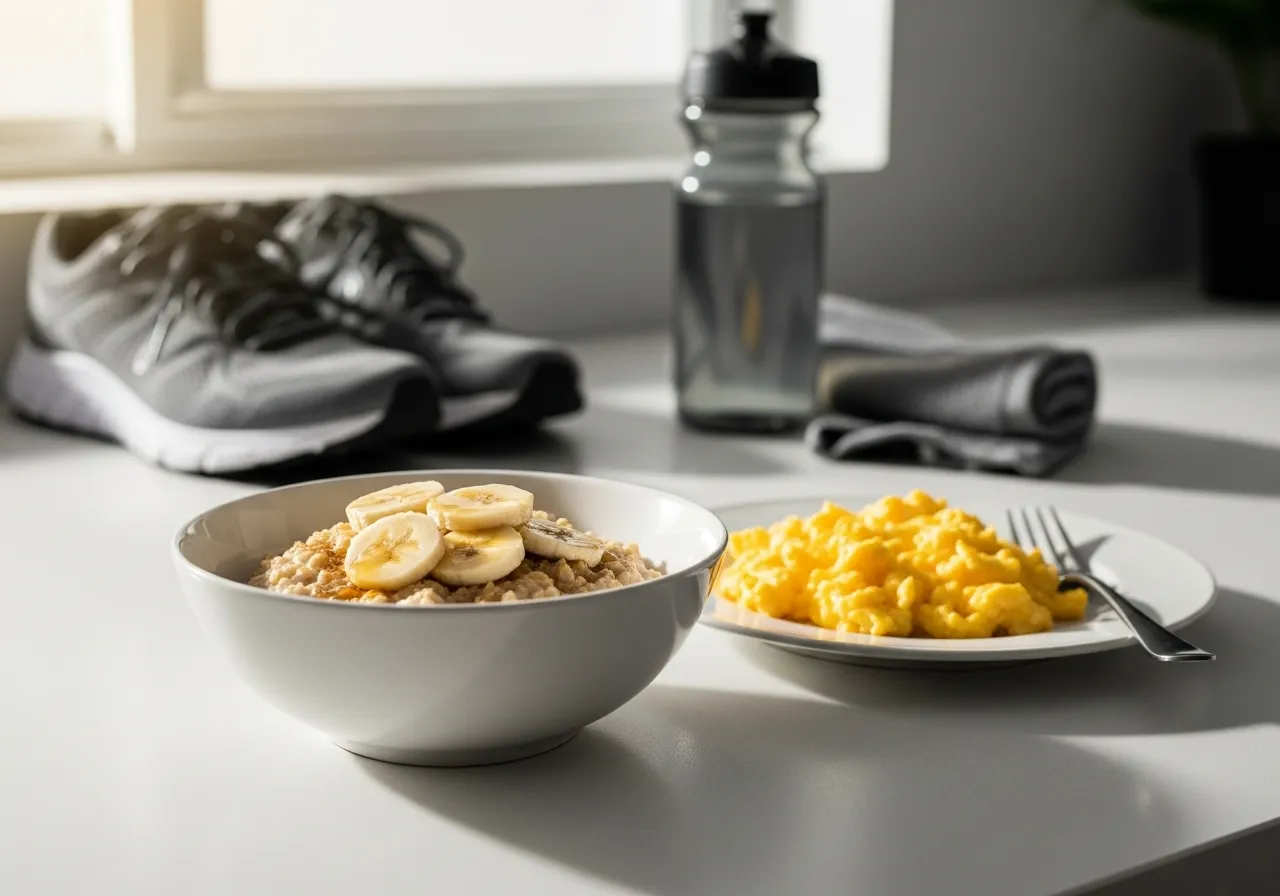
For people who cannot arrange a full meal 2–3 hours before training — morning exercisers, those with inflexible lunch schedules, or anyone whose training time falls when a full meal isn’t possible — the 1-hour pre-workout window requires different nutritional choices. At 60 minutes pre-training, a full mixed meal creates gastric fullness and undigested food in the stomach that can cause discomfort during high-intensity exercise. The appropriate 1-hour pre-workout nutrition: a moderate-sized snack (300–450 calories) emphasizing easily digested carbohydrates and moderate protein with minimal fat and fiber. Examples: banana with protein shake, rice cakes with nut butter and a protein drink, oatmeal with milk and fruit (smaller portion than a full meal). This provides meaningful blood glucose elevation and amino acid availability without the digestive discomfort of a full meal too close to exercise.
The 30-minute pre-workout window should contain only small quantities of fast-digesting carbohydrates — a banana, half a sports drink, a few rice cakes with honey — if anything at all. At 30 minutes pre-training, the stomach does not have time to process meaningful protein or fat without these nutrients being present in the digestive system during training, creating discomfort and diverting blood flow to digestion that should be serving working muscles. Carbohydrates at this timing provide a fast blood glucose boost that helps performance, particularly for morning fasted trainees, without the digestive burden of more complex foods.
Protein in the Pre-Workout Meal: The Often-Missed Piece
Most pre-workout nutrition advice focuses almost exclusively on carbohydrates — the fuel for performance — while underemphasizing protein’s role in the pre-workout meal. Pre-workout protein is important for two reasons: it provides circulating amino acids that reduce muscle protein breakdown during the training session (exercise is a catabolic stimulus that accelerates muscle protein breakdown, and the presence of amino acids in the blood blunts this breakdown response), and it extends the “anabolic window” into the post-workout period by maintaining elevated amino acid availability from digestion of the pre-workout meal into the first hour after training. Athletes who consume protein in both pre- and post-workout meals produce better muscle protein synthesis outcomes than those who rely on post-workout protein alone at the same total daily intake.
Research from NIH studies on leucine and mTOR signaling confirms that the amino acid leucine — the primary trigger for mTOR-mediated muscle protein synthesis — is effective at stimulating synthesis from both pre- and post-workout protein feedings. This means that the pre-workout protein meal does genuine anabolic work, not just anti-catabolic work. Including 25–35g of leucine-rich protein (whey, chicken, eggs) in the pre-workout meal produces a meaningful muscle-building benefit independent of the post-workout meal — making the pre-workout protein equally as important as the post-workout protein that receives far more attention in fitness nutrition discussions.
Carbohydrate Type and Glycemic Index in Pre-Workout Nutrition
The glycemic index (GI) of pre-workout carbohydrates — a measure of how rapidly they raise blood glucose — influences both the performance impact and the insulin response of the pre-workout meal, with different implications depending on meal timing. In the 2–3 hour window, moderate GI carbohydrates (oats, sweet potato, brown rice, most whole grains) are preferred because their slower glucose release produces sustained blood glucose elevation across the full pre-workout period without the sharp spike and subsequent decline that high-GI foods produce at this timing. In the 30–60 minute window, higher GI carbohydrates (white rice, banana, sports drink) are preferred because their rapid glucose release is needed quickly and the sharp spike doesn’t have time to produce a meaningful insulin-driven glucose decline before training begins.
The practical translation: build your 2–3 hour pre-workout meals around oats, sweet potatoes, rice, or whole grain bread. For the 30–60 minute pre-workout snack, use banana, white rice, sports drink, or other fast-digesting carbohydrate sources. Avoid high-fat foods (including nut butters in large quantities) in both windows because fat significantly slows gastric emptying and delays carbohydrate entry into circulation, blunting the performance benefit of the pre-workout carbohydrate meal.
Hydration as Pre-Workout Nutrition
Pre-workout hydration is often omitted from nutrient timing discussions but is as important as macronutrient composition for training performance. Even mild dehydration — 2% of bodyweight, which equates to 3–4 lbs for a 170-pound person — produces measurable reductions in strength, power output, and cardiovascular endurance. Sleeping for 7–9 hours without fluid intake produces approximately 400–600ml of fluid deficit through respiration and perspiration — meaning most people wake up in a mild dehydration state that, if not corrected before training, impairs morning workout performance independently of carbohydrate or protein status.
Pre-workout hydration protocol: drink 500–600ml (16–20oz) of water or a dilute electrolyte drink in the 2 hours before training, and an additional 200–300ml in the 10–15 minutes immediately before the session. Urine color provides a reliable hydration indicator — pale yellow indicates good hydration; dark yellow indicates insufficient fluid intake. For training sessions longer than 60 minutes or in hot, humid conditions, electrolytes (sodium, potassium, magnesium) are as important as fluid volume — electrolyte deficit impairs both cellular hydration and neuromuscular function in ways that water alone cannot address. Including a sodium-containing food in the pre-workout meal (whole grain bread, most protein sources contain meaningful sodium) alongside adequate fluid ensures both volume and electrolyte pre-workout hydration status.
Pre-Workout Supplements: What the Evidence Actually Supports
The pre-workout supplement market is enormous, with products claiming to dramatically enhance energy, focus, pump, and performance. The evidence-based short list of pre-workout supplements with genuine research support: caffeine (3–6mg/kg, consumed 30–60 minutes pre-training, is the best-supported ergogenic aid available — improving strength, endurance, focus, and perceived effort at doses available in coffee or caffeine tablets); creatine monohydrate (3–5g daily, not necessarily pre-workout specifically — consistent daily creatine supplementation saturates muscle creatine stores and improves high-intensity training performance); and beta-alanine (3.2–6.4g daily, reducing muscular fatigue during high-rep sets through carnosine buffering, with the tingling sensation being normal and harmless). Everything else in the pre-workout category — citrulline, arginine, tyrosine, proprietary “focus matrices” — has insufficient, mixed, or context-specific evidence that doesn’t justify the marketing claims made for them. Black coffee 30–45 minutes pre-workout is the most evidence-supported, most cost-effective, and simplest pre-workout nutrition intervention available for most trainees.
The Evidence on Breakfast and Morning Anabolism
Overnight fasting creates a moderate catabolic state by morning — muscle protein breakdown exceeds synthesis during the fasted overnight period. A high-protein breakfast (30–40g protein with moderate carbohydrates) within 1–2 hours of waking rapidly reverses this state by elevating amino acid availability and activating mTOR signaling. Research comparing breakfast eaters versus breakfast skippers in resistance-trained populations finds that breakfast eaters show better nitrogen retention and recovery quality when total daily protein is matched. The composition matters as much as timing — a high-carbohydrate, low-protein breakfast restores glycogen but does nothing to reverse overnight muscle protein breakdown. Scrambled eggs with oats and fruit, Greek yogurt with granola and protein, or smoked salmon with whole grain bread all accomplish the protein-plus-carbohydrate combination that makes morning nutrition genuinely anabolic rather than merely energizing.
Micronutrients That Support Muscle Protein Synthesis
Vitamins and minerals that support muscle protein synthesis deserve inclusion in any comprehensive nutrition discussion for muscle gain. Zinc supports testosterone production and protein synthesis enzyme activity — deficiency impairs anabolism even when protein and calories are adequate. Magnesium is required for over 300 enzymatic reactions including protein synthesis and muscle contraction — and is frequently deficient in athletes due to sweat losses. Vitamin D supports muscle fiber development and testosterone production, with research consistently showing that deficiency is associated with reduced muscle protein synthesis rates and impaired strength development. Including zinc-rich foods (red meat, pumpkin seeds, shellfish), magnesium-rich foods (dark leafy greens, nuts, legumes), and vitamin D sources (fatty fish, eggs, fortified dairy) in the overall dietary pattern ensures the enzymatic and hormonal environment for muscle protein synthesis is supported alongside the macronutrient timing strategy. Achieving micronutrient adequacy through food diversity is preferable to supplementation, though vitamin D supplementation (1,000–4,000 IU daily) is justified for those with limited sun exposure given the difficulty of meeting vitamin D needs from food alone.
Carbohydrate and Protein Interaction: The Insulin Connection
Insulin — the anabolic hormone secreted in response to carbohydrate and protein intake — plays an important supporting role in the nutrient timing framework for muscle gain. Insulin is powerfully anti-catabolic: it suppresses muscle protein breakdown, facilitates amino acid uptake into muscle cells, and drives glucose into muscle for glycogen synthesis. The post-workout combination of protein and carbohydrates produces a larger insulin response than protein alone, and this combined response produces greater muscle protein synthesis and glycogen replenishment than either macronutrient in isolation. The classic finding from sports nutrition research is that the protein-carbohydrate combination post-workout outperforms protein alone for muscle gain outcomes in contexts where glycogen depletion is meaningful — which includes most resistance training sessions of moderate to high volume and intensity. For very short, low-volume sessions where glycogen depletion is minimal, the carbohydrate addition is less important, but it never hurts. Including carbohydrates in the post-workout meal is the default recommendation for all resistance training contexts.
The insulin response to protein alone is often underestimated. Protein — particularly leucine-rich complete proteins like whey — stimulates meaningful insulin secretion independent of carbohydrate intake. The post-workout insulin response from a 40g whey protein serving is sufficient to produce meaningful anti-catabolic effects even without accompanying carbohydrates, which is why protein-only post-workout feeding produces better outcomes than no post-workout feeding even in low-carbohydrate dietary contexts. Carbohydrates amplify this insulin response and add glycogen restoration that protein alone cannot provide — making the combination superior in most contexts, but making protein-only post-workout feeding a valid second-best option when carbohydrate intake is restricted for dietary preference or body composition reasons.

How to Structure Your Daily Meals Around Training for Optimal Muscle Growth
Building a daily meal structure that supports muscle gain requires more than just optimizing the meals immediately surrounding training. The entire day’s nutritional pattern — from the first meal of the morning to the pre-sleep protein serving — determines the cumulative muscle protein synthesis stimulus that drives adaptation over weeks and months. Understanding how to structure this daily pattern provides a practical framework that translates research findings into an actual eating schedule you can follow consistently.
The Four-Meal Framework for Muscle Gain
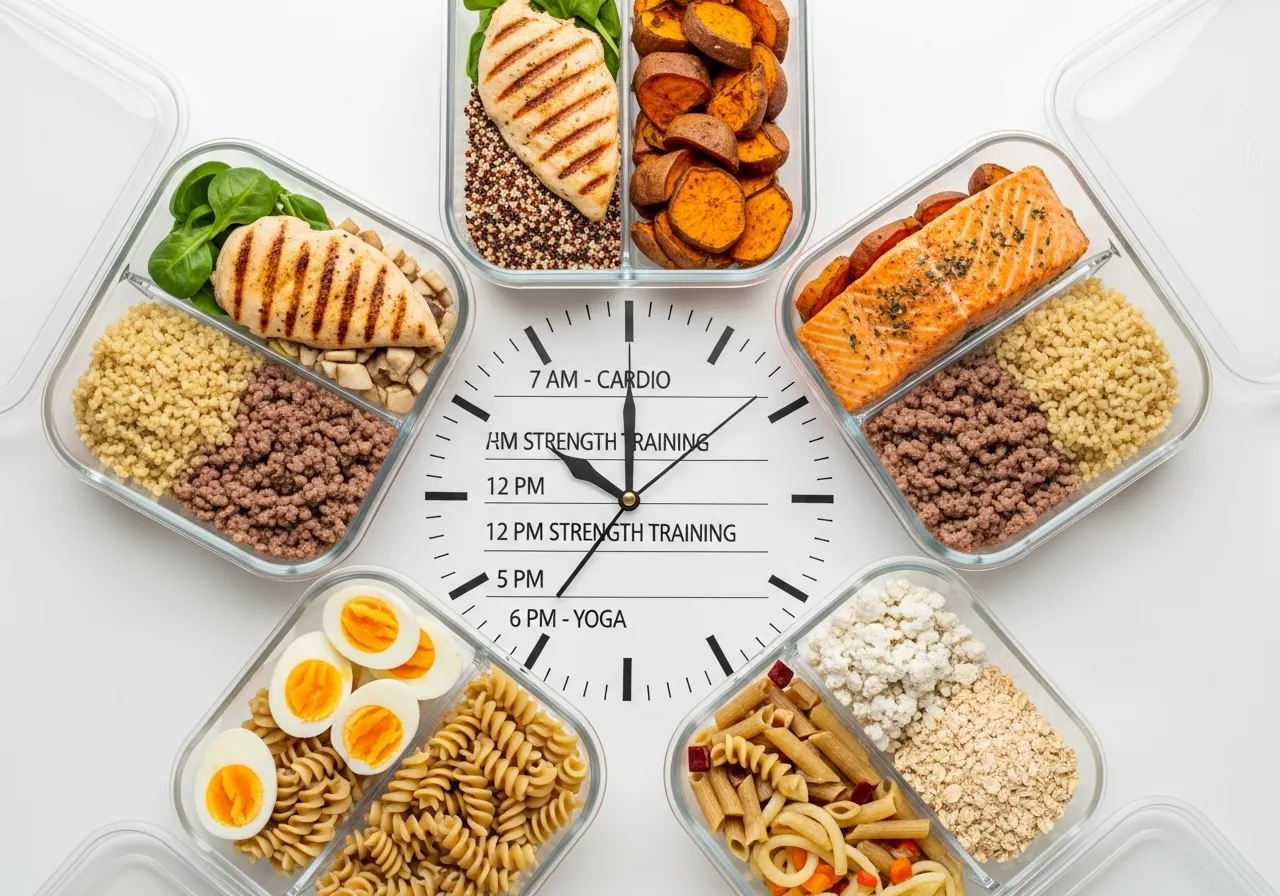
Four protein-containing meals per day, each providing 35–45g of complete protein, covers the evidence-based recommendations for distributed protein intake that maximizes daily muscle protein synthesis stimulation. At a bodyweight of 170–200 lbs, four meals at 40g protein each provides 160g total — within the 1.6–2.2g/kg range for most people in this weight range. The four meals are structured around the training session: a breakfast meal upon waking, a pre-workout meal timed to the training schedule, a post-workout meal within 2 hours of training, and a pre-sleep casein-rich meal 30–60 minutes before bed. This structure ensures amino acid availability throughout the waking day and extends into the overnight recovery period, creating a continuous anabolic environment that maximizes the adaptation from each training session.
For morning trainers: Meal 1 (pre-workout): upon waking, 1–1.5 hours before training — Greek yogurt with granola and fruit, or eggs with oats. Training. Meal 2 (post-workout): within 1.5–2 hours of training completion — chicken with rice and vegetables, or protein shake with banana and milk. Meal 3 (midday/afternoon): 4–5 hours after meal 2 — salmon with sweet potato and salad, or lean beef with quinoa. Meal 4 (pre-sleep): 30–60 minutes before bed — cottage cheese with fruit, or casein protein shake. This schedule produces four protein feedings of approximately 35–45g each, distributed across 12–14 waking hours, with the training session bracketed by protein on both sides.
For evening trainers: Meal 1 (breakfast/morning): upon waking — scrambled eggs with oats and fruit. Meal 2 (midday lunch): chicken or fish with rice and vegetables. Meal 3 (pre-workout, 1.5–2 hours before training): protein-rich snack with carbohydrates — Greek yogurt with granola, or rice cakes with tuna. Training. Meal 4 (post-workout/dinner): within 1.5–2 hours after training — lean protein with starchy carbohydrate and vegetables. Pre-sleep (optional 5th serving): cottage cheese or casein protein shake. This schedule also produces 4–5 protein feedings distributed across the day with the training session bracketed by meals on both sides.
Carbohydrate Periodization Around Training Days
Carbohydrate intake can be strategically varied between training days (when glycogen demand is high) and rest days (when glycogen demand is lower) to optimize both training performance and body composition. On training days, consuming higher carbohydrate amounts (3–5g/kg) ensures full glycogen availability for the session and rapid post-workout glycogen replenishment for the next session. On rest days, moderately reduced carbohydrate intake (2–3g/kg) maintains adequate glycogen stores for the upcoming training session while slightly reducing overall caloric intake, which supports body composition goals without compromising performance. This approach — known as carbohydrate periodization or carbohydrate cycling — is not mandatory for most recreational trainees, but it is a useful tool for those who want to optimize both performance and body composition simultaneously.
The practical implementation: on training days, include generous carbohydrate servings at all meals, particularly in the pre- and post-workout meals. On rest days, reduce the carbohydrate content of meals while maintaining protein intake, and replace some of the carbohydrate calories with additional vegetables and moderate healthy fats. This adjustment is subtle — the difference between a training day and a rest day meal might be 200–300 fewer grams of rice and an additional serving of vegetables — and it does not require precise tracking once the general pattern is understood and habituated.
Managing Hunger and Satiety Alongside Muscle-Building Nutrition
One of the practical challenges of building muscle is that the caloric surplus required for optimal muscle gain often means eating more than hunger naturally drives. Many people trying to build muscle undereat relative to their needs simply because their appetite doesn’t signal for the food their training demands. Strategies for managing caloric intake upward when appetite is insufficient: liquid calories (protein shakes, milk, smoothies) are absorbed without the satiety of solid food and can significantly increase caloric intake without the physical fullness that solid food at the same caloric content produces; energy-dense whole foods (nuts, nut butters, avocado, olive oil, whole eggs) add calories without requiring large food volumes; and caloric beverages (whole milk, fruit juice, sports drinks) add meaningful calories with minimal satiety impact. The inverse challenge — managing appetite when cutting — benefits from high-protein, high-fiber meal structures that produce greater satiety per calorie, using volume of food rather than caloric density to create fullness.
Eating Out, Traveling, and Maintaining Meal Structure
Real-world eating doesn’t always align with ideal meal timing structures. Restaurant meals, travel schedules, social eating, and variable work demands all create deviations from the planned meal structure that can cause anxiety for people who have adopted rigid nutritional protocols. The evidence-based perspective on deviations: single-day deviations from an otherwise consistent meal structure have negligible impact on muscle gain outcomes. Chronic, multi-week patterns of missed protein meals, consistently skipped post-workout nutrition, or persistent inadequacy of total protein intake do impair results. The distinction matters because it allows contextually appropriate flexibility without abandoning the overall structure.
Practical strategies for maintaining adequate protein intake in variable eating situations: protein-rich options exist on virtually every restaurant menu (chicken, fish, eggs, Greek yogurt at breakfast restaurants, lean meat or seafood at dinner restaurants); protein bars and single-serving protein packages provide backup protein options when food environment is uncertain; and ordering a protein-rich appetizer or side at meals where the main course is carbohydrate-dominant ensures the meal meets the minimum protein threshold regardless of what else is consumed. The goal is not perfection in every meal but consistent achievement of daily protein targets — and with a little advance planning, this is achievable in nearly any eating environment.
Alcohol and Muscle Gain: The Honest Assessment
Alcohol deserves specific attention in any discussion of meal timing and muscle gain because it impairs multiple aspects of the nutritional environment required for optimal adaptation. Alcohol suppresses muscle protein synthesis directly — research shows that even moderate alcohol consumption (approximately 1.5g/kg, equivalent to 3–4 drinks for a 70kg person) in the post-workout period reduces muscle protein synthesis rates by approximately 37% compared to the same session without alcohol, even when adequate protein is consumed. Alcohol also elevates cortisol, impairs sleep quality (reducing growth hormone secretion during sleep), provides empty calories that displace nutrient-dense food, and reduces testosterone through liver enzyme effects at regular higher-dose consumption. There is no dose of alcohol that is anabolically neutral — the question is only how much impairment is acceptable relative to the social and enjoyment value the consumption provides. For serious muscle-building goals, minimizing post-workout and pre-sleep alcohol consumption produces measurably better adaptation outcomes than equivalent training and nutrition with regular alcohol consumption.
Building the Habit: Making Meal Timing Automatic
The transition from consciously following a meal timing protocol to automatically executing it requires approximately 8–12 weeks of consistent practice. During this habit formation period: meal prepping protein sources in bulk at the beginning of each week eliminates preparation barriers; setting phone reminders for meal times provides external cuing until internal habits develop; keeping post-workout meals prepared in advance removes the lag that causes people to miss the post-workout window; and tracking protein intake daily for the first month provides feedback that prevents the underestimation that makes it easy to fall short of protein targets without realizing it. Once the habit is established — typically after 8–12 weeks — the protocol runs largely automatically, requiring only periodic review to confirm that patterns haven’t drifted. The investment in habit formation during the first three months pays dividends in years of consistent nutrition that supports the training investment being made in the gym.
Practical Meal Timing for Busy Professionals
The most common barrier to implementing a meal timing protocol is not knowledge or motivation — it is the time pressure of demanding professional schedules that make structured eating feel impossible. The practical solution is not to simplify the timing protocol but to simplify the food preparation that enables it. Five high-protein, time-efficient meals cover the four-meal framework: Greek yogurt with protein powder stirred in (5 minutes, 40g protein) for breakfast; a pre-portioned chicken and rice meal prepped Sunday night (2 minutes to microwave, 45g protein) for lunch or pre-workout; a protein shake with banana (2 minutes, 30g protein) for post-workout; a dinner of any complete protein source with any starchy carbohydrate and vegetables (15–20 minutes, 40g protein); and cottage cheese or casein protein (2 minutes, 25–30g protein) before sleep. This five-meal structure requires approximately 25–30 minutes of active food preparation per day — less time than most people spend on social media — and produces the nutritional environment that makes the training investment in the gym fully productive. Time is rarely the actual barrier; preparation habits are.
Monitoring and Fine-Tuning Your Results Over Time
The meal timing framework described throughout this article represents the evidence-based starting point — the structure that produces good results for most people most of the time. But individual responses to nutritional strategies vary, and the most effective long-term approach is one that is continuously refined based on your own tracked outcomes rather than followed rigidly as a fixed protocol. Monthly check-ins on four metrics provide the data for intelligent refinement: strength performance trends on key exercises (from the training log), body composition direction (from monthly progress photos and weight trend), energy and recovery quality during training sessions (from subjective session ratings), and sleep quality (from subjective morning readiness ratings or HRV if you use a wearable). These four data streams together tell a complete story about whether your current nutrition and timing strategy is producing the intended outcomes. When something isn’t working, these metrics point toward which variable is most likely responsible — making adjustments targeted and evidence-based rather than arbitrary.

Meal Timing for Different Schedules, Goals, and Frequently Asked Questions
The meal timing framework described in this article represents an evidence-based optimal approach, but optimal and practical are not always the same thing. Real people have variable schedules, dietary preferences, cultural food practices, and practical constraints that require adaptation of the framework to actual life. This section addresses the most common scheduling challenges and goal-specific timing modifications, followed by the questions I most frequently receive about meal timing for muscle gain.
Meal Timing for Intermittent Fasting Practitioners
Intermittent fasting (IF) — most commonly practiced as a 16:8 protocol with 8 hours of eating and 16 hours of fasting — has become popular for both fat loss and purported health benefits. The question of whether IF is compatible with optimal muscle gain is nuanced: it can be, with specific adaptations, but requires more careful protein distribution within the eating window than standard meal frequency approaches. The challenge is achieving adequate protein distribution (4–5 meals of 30–40g each) within an 8-hour eating window while also placing meals appropriately relative to training.
For IF practitioners who train within the eating window: the 8-hour window typically runs from noon to 8pm or 1pm to 9pm. Training in the middle of the window (2–5pm) allows a pre-workout meal at 1–2pm and a post-workout meal at 5–7pm, with an additional meal at the window opening (12–1pm) and the casein-rich meal at window closing (7–8pm). This provides 3–4 protein feedings within the window, each needing to be higher protein (40–50g) to compensate for the reduced meal frequency compared to a standard eating pattern. The muscle-building outcomes of this IF approach are comparable to standard meal frequency at the same total protein intake, though achieving the same total protein in fewer meals requires deliberate effort.
For IF practitioners who train outside the eating window (fasted training): the anabolic window sensitivity increases significantly when training fasted. In this scenario, the first meal of the eating window should be consumed as quickly as possible after training — ideally within 30–45 minutes — because the fasted training state has depleted amino acid availability and elevated muscle protein breakdown to a greater degree than fed training. A high-leucine, complete protein source at the first meal of the eating window is essential for fasted training IF practitioners, and this meal should be larger (50–60g protein) to begin rapidly reversing the catabolic state created by fasted exercise.
Meal Timing for Fat Loss While Preserving Muscle
During a fat loss phase, the caloric deficit creates an environment that is inherently less anabolic — reduced energy availability signals the body to conserve resources, including potentially breaking down muscle protein for energy. Meal timing becomes more important during fat loss than during muscle-building phases because the tighter nutritional margins mean that suboptimal timing has larger relative effects. Key timing modifications for fat loss: increase protein intake toward the higher end of the range (2.2g/kg or slightly above) to provide amino acid substrate that resists muscle protein breakdown under caloric restriction; maintain pre- and post-workout carbohydrates even while cutting total carbohydrates elsewhere in the day (training performance and muscle retention during a deficit are better served by keeping peri-workout carbohydrates than by uniformly distributing the reduction across all meals); and prioritize the pre-sleep casein protein serving during cutting phases, as overnight fasting during a caloric deficit creates greater muscle protein breakdown risk than the same overnight fast during a caloric surplus.
Meal Timing for Hardgainers and High Metabolisms
Hardgainers — people who struggle to gain weight and muscle despite consistent training and what feels like substantial eating — typically have one of two underlying issues: they are not actually eating as much as they think they are (food intake is almost universally underestimated without tracking), or they have genuinely high metabolic rates that require caloric intakes that feel uncomfortably large. For both groups, meal timing plays a supporting role in maximizing the caloric and protein intake that their muscle-building goals require. Increasing meal frequency to 5–6 smaller, more frequent meals distributes the caloric challenge across more eating events, each individually more manageable than a few large meals. Adding liquid calories — whole milk, protein shakes, smoothies with nut butter and banana — increases caloric intake without the physical discomfort of equivalent solid food volume. And scheduling a pre-sleep caloric snack (cottage cheese with fruit and nuts) adds meaningful daily calories without disrupting the appetite for morning meals.
Practical Tools for Implementing Meal Timing
Implementing a structured meal timing protocol is significantly easier with a few practical tools and habits. Meal prep — cooking protein sources (chicken breast, hard-boiled eggs, ground turkey) and carbohydrate sources (rice, oats, sweet potato) in bulk once or twice per week — eliminates the decision and preparation time barriers that cause timing protocols to collapse in practice. Protein tracking apps (MyFitnessPal, Cronometer) provide feedback on whether daily protein targets are being consistently met, which is the most important metric to verify. Setting phone reminders for meal times during the first 2–4 weeks of a new timing protocol helps establish the habit before the schedule becomes automatic. And preparing post-workout meals in advance (the rice and chicken can be portioned and refrigerated in the morning) removes the preparation barrier that causes many people to miss the post-workout window not from lack of intention but from food not being ready when hunger strikes after training.
Frequently Asked Questions About Meal Timing for Muscle Gain
Does breakfast timing matter for muscle gain? Consuming a protein-rich breakfast within 1–2 hours of waking starts the daily muscle protein synthesis stimulation earlier than a delayed breakfast, providing a small cumulative advantage over weeks and months. Research on morning protein consumption shows that a breakfast containing 30–40g of high-quality protein produces a muscle protein synthesis response that starts the day’s anabolic activity earlier than a carbohydrate-only breakfast or no breakfast. This doesn’t mean skipping breakfast is catastrophic — daily total protein intake remains the dominant variable — but for those who can tolerate morning eating, a protein-rich breakfast is a worthwhile addition to the meal timing protocol.
Is it true that your body can only absorb 30g of protein at a time? No — this is a persistent myth that originated from misinterpretation of muscle protein synthesis research. The body can digest and absorb any amount of dietary protein; the 30g “limit” refers to the amount of protein that maximally stimulates the acute muscle protein synthesis response in a single feeding, not the amount that can be absorbed. Protein above the synthesis saturation point is simply used for other purposes (energy, gluconeogenesis, other protein synthesis functions) rather than being wasted or excreted. Eating 60g of protein in a single meal does not produce twice the muscle protein synthesis of a 30g meal, but it is fully absorbed and utilized — just not for additional acute synthesis stimulation beyond the 30–40g threshold.
How important is meal timing for beginners versus advanced athletes? Timing sensitivity increases with training advancement. Beginners, who have the highest marginal adaptation rate and whose muscles respond robustly to any consistent progressive training stimulus, show the least sensitivity to timing optimization relative to total intake. Advanced athletes, who have the highest training volumes and whose marginal adaptation rate is lower (making every additional percentage of optimization more valuable), show greater performance and recovery benefits from precise timing. Beginners should prioritize total protein adequacy; advanced athletes should optimize both totals and timing.
What if my schedule doesn’t allow eating before morning training? Morning fasted training is compatible with muscle gain when managed correctly. Consume a high-protein, post-workout meal as quickly as possible after completing fasted training — within 30–45 minutes rather than the 1.5–2 hour window appropriate for fed trainees. If even this is impractical, a small, fast-digesting protein source immediately post-workout (whey protein shake) while preparing the full post-workout meal provides the most time-sensitive amino acid delivery. Pre-sleep casein protein the night before reduces overnight fasting’s catabolic impact on morning training sessions, essentially providing “slow release” amino acids that are still partially available at the time of morning training.
Does the type of protein matter for timing purposes? Yes — protein digestion rate affects the optimal timing of different protein sources. Fast-digesting proteins (whey, white fish) are best suited for post-workout and morning contexts where rapid amino acid elevation is valuable. Slow-digesting proteins (casein, cottage cheese, full-fat Greek yogurt) are best suited for pre-sleep contexts where sustained amino acid release across 6–8 hours is the goal. Whole food proteins (chicken, beef, eggs) have intermediate digestion rates appropriate for most meal contexts. Mixing protein sources within meals — a meal combining eggs, Greek yogurt, and oats, for example — produces a blended digestion profile that provides both immediate and sustained amino acid availability, which is advantageous for most meal contexts outside of the immediate post-workout window where fast-digesting sources are specifically preferable.
Putting It All Together: Your Personalized Timing Action Plan
The research on meal timing for muscle gain points toward a clear, practical action plan that captures the majority of the available benefit without requiring the complexity that makes rigid protocols unsustainable. Step 1: Establish your total daily protein target (1.6–2.2g/kg of bodyweight) and verify through food logging that you are consistently hitting it. Step 2: Distribute this protein across 4–5 meals of 35–45g each, spaced 3–4 hours apart during waking hours. Step 3: Ensure a protein-containing meal exists within 1.5–2 hours before training and within 1.5–2 hours after training. Step 4: Include a casein-rich pre-sleep serving 30–60 minutes before bed. Step 5: Match carbohydrate intake to training demands — more on training days, slightly less on rest days. These five steps implement the most evidence-supported aspects of nutrient timing for muscle gain while preserving the flexibility needed for real-world execution. Execute this framework consistently for 12 weeks before evaluating outcomes and considering refinements. The refinements matter — but only on top of consistent execution of these foundational elements.
Special Considerations for Masters Athletes (40+)
Athletes over 40 face age-related changes in protein metabolism that make meal timing more important than it is for younger trainees. Anabolic resistance — the reduced sensitivity of aging muscle to the protein synthesis stimulus of a given protein meal — means that older athletes require both higher per-meal protein doses (40–50g rather than 30–40g) and more frequent protein feedings to achieve the same cumulative daily muscle protein synthesis stimulation that younger athletes achieve with lower doses. The pre-sleep casein protein serving becomes more important with age as overnight muscle protein breakdown accelerates due to declining growth hormone secretion. Leucine content per meal is especially important for masters athletes — research shows that aging specifically impairs the leucine-sensing mechanism that triggers mTOR activation, requiring higher leucine doses (3–4g per meal rather than 2–3g) to achieve equivalent synthesis stimulation. For masters athletes, the timing framework is the same but the doses within each meal should be adjusted upward, and the discipline of consistent protein distribution throughout the day deserves even greater priority than it does in younger athletes whose more responsive protein metabolism can compensate for occasional distribution lapses.
Summary: The Five Pillars of Effective Meal Timing for Muscle Gain
After examining the research comprehensively, five pillars emerge as the most impactful and practically actionable elements of a meal timing strategy for muscle gain. First, hit your total daily protein target (1.6–2.2g/kg) — this is the non-negotiable foundation that no amount of timing optimization can compensate for. Second, distribute protein across 4–5 meals of 35–45g each, ensuring every feeding crosses the leucine threshold for maximal synthesis stimulation. Third, bracket your training sessions with protein on both sides — a pre-workout meal 1.5–2 hours before training and a post-workout meal within 1.5–2 hours after. Fourth, consume a casein-rich protein source 30–60 minutes before sleep to extend muscle protein synthesis into the overnight recovery period. Fifth, match carbohydrate intake to training demand — generous peri-workout carbohydrates on training days, slightly reduced on rest days, with the post-workout carbohydrate-protein combination as the single most impactful timing-specific intervention available. These five pillars, executed consistently across weeks and months, produce the nutritional environment in which training adaptations are maximized, recovery is optimized, and the cumulative muscle gain from consistent progressive training compounds into the results you are training for.
Consistency in executing these five pillars across 90% of days in a training year is worth more than perfect execution on 60% of days and abandonment for weeks at a time because the protocol felt too complex. Build the habits, track the results, adjust based on evidence, and maintain the perspective that these nutritional strategies are lifelong tools for supporting a lifelong training practice — not short-term interventions to be optimized intensively and then discarded. The athlete who masters these five pillars and executes them reliably across years will achieve muscle gain outcomes that validate the investment in understanding and applying the science of nutrient timing.