How to Meal Prep Like a Pro (Beginner’s Guide)

Why Meal Prep Is the Single Habit That Transforms Nutrition Consistency
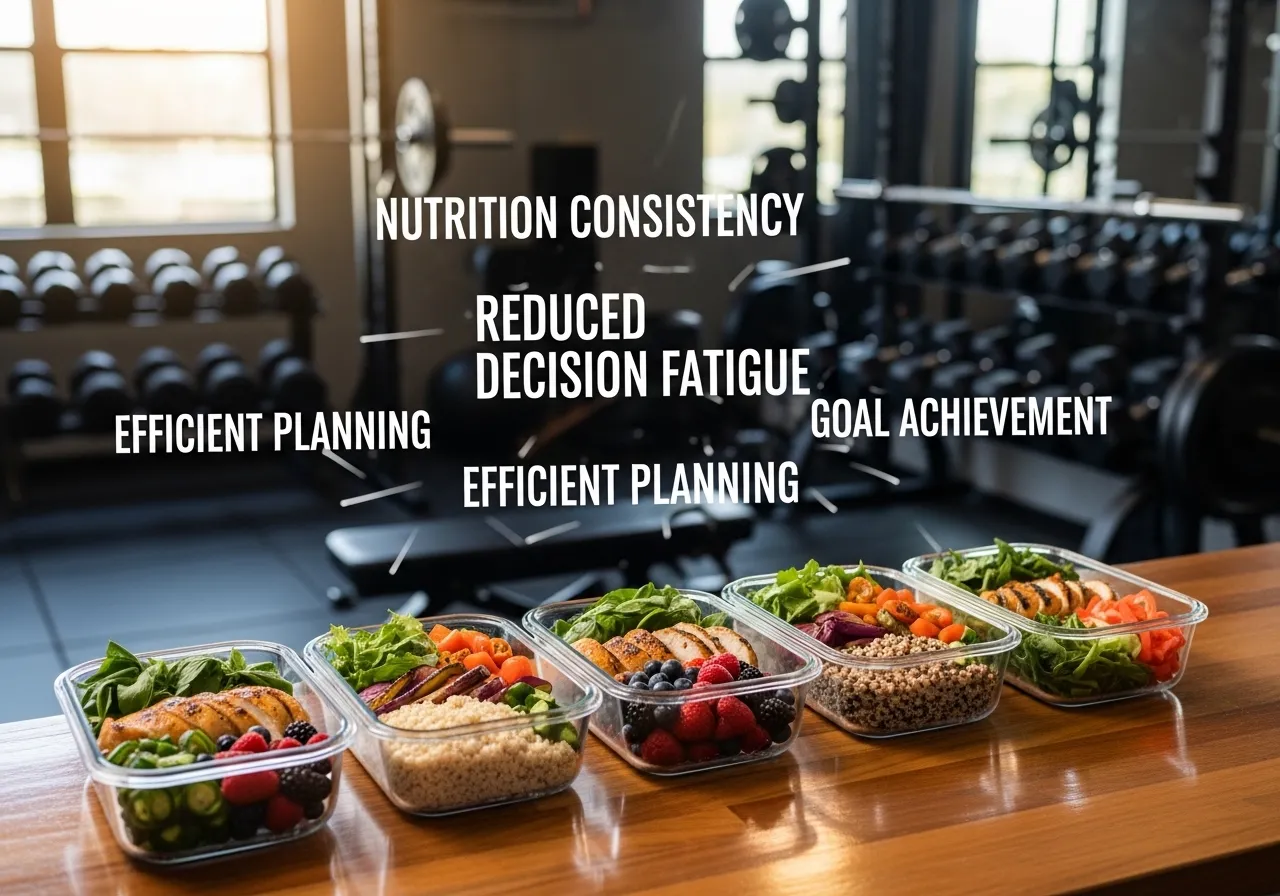
Before I started meal prepping, my nutrition was reactive — I ate whatever was convenient when hunger hit, which meant a lot of takeout, overpriced gym snacks, and the kind of impulsive food choices that undermine even the most disciplined training program. Once I started dedicating two hours on Sunday to preparing the week’s core meals, everything changed: not because the food was dramatically healthier, but because the decision had already been made. The refrigerator full of portioned, ready-to-eat meals removed the daily willpower requirement that consistent nutrition otherwise demands. Meal prep is the nutritional equivalent of progressive overload — a system that removes the variability that undermines results and replaces it with the structured consistency that produces them.
The Science Behind Why Meal Prep Works
The behavioral science of meal prep success is rooted in decision fatigue and implementation intentions — two well-researched psychological phenomena that explain why the same person who has excellent nutritional knowledge consistently makes poor food choices in the absence of prepared options. Decision fatigue is the progressive deterioration of decision quality that occurs after a sequence of choices — the individual who has made dozens of decisions by the time dinner arrives frequently chooses the most convenient and palatable option rather than the nutritionally optimal one, not because they lack knowledge or motivation but because the cognitive resource that deliberate decision-making requires has been depleted by the day’s earlier choices. Meal prep eliminates the dinner decision entirely, replacing it with the simple retrieval action of taking a pre-made container from the refrigerator — converting a decision-fatigue-vulnerable choice into a habit-driven retrieval that depletes no cognitive resources. Implementation intentions — the pre-specified “if-then” behavioral plans that translate goal intentions into specific action triggers — are among the most robustly evidence-based behavior change strategies in psychology, producing effect sizes double those of willpower-dependent intention-only approaches across dozens of meta-analyses. Meal prep is a physical instantiation of the implementation intention: the food preparation has pre-specified the “what will I eat when I am hungry on Tuesday evening” question, eliminating the gap between intention and action that inconsistent nutrition usually falls through. From Academy of Nutrition and Dietetics meal planning and dietary quality research, individuals who regularly plan and prepare meals in advance consume significantly more vegetables, fruits, and lean protein while spending less money on food than those who make daily individual meal decisions — confirming the nutritional quality and economic advantages that the meal prep habit consistently produces.
Caloric and Macronutrient Control: The Hidden Power of Meal Prep
Beyond convenience, meal prep provides the caloric and macronutrient precision that serious fitness goals require. When you prepare food in advance and portion it into containers, you naturally perform the once-per-week nutritional math that daily estimation approaches attempt daily and accomplish far less accurately. A batch of chicken breast, brown rice, and roasted broccoli portioned into five containers represents a one-time calculation that accurately determines each container’s protein, carbohydrate, and fat content — whereas the daily estimation of restaurant and ad-hoc cooking portions produces the tracking errors that accumulate into the unexplained gaps between dietary intention and actual intake. The caloric and macronutrient precision that meal prep enables is particularly important for athletes with specific body composition goals: the individual trying to maintain a 300-calorie deficit for fat loss, the hardgainer trying to sustain a 400-calorie surplus for muscle gain, and the athlete trying to hit the 160 grams of protein daily that their muscle maintenance goal requires all benefit from the consistent, accurate portion control that meal prep makes sustainable over weeks rather than the precise tracking that individual daily preparation attempts and frequently abandons when time pressure reduces the accuracy that careful measurement requires. The portioning infrastructure of meal prep — the food scale used during the weekly preparation session, the measured containers that ensure consistent portion sizes, and the pre-calculated container totals that eliminate daily math — produces the nutritional accuracy that results depend on without the daily effort that accuracy otherwise requires.
Breakfast Meal Prep: The Most Impactful Meal to Prepare in Advance
Breakfast is the meal where the gap between prepared and unprepared is widest — the morning time pressure, grogginess, and commute demands that the first meal of the day competes with make the 15-minute breakfast preparation a regular casualty that becomes the skipped meal, the grab-and-go pastry, or the protein-deficient cereal that undermines the day’s nutritional foundation. Breakfast meal prep addresses the highest-leverage nutritional opportunity in the week with the smallest relative investment of preparation time. Overnight oats are the gold-standard breakfast prep option: 100g of rolled oats combined with 250ml of milk or kefir, a scoop of protein powder (adding 25-30g protein to the 5g from oats), 1 tablespoon of chia seeds, and any combination of berries, nut butter, or fruit in a 500ml jar produces a complete, refrigerator-stable breakfast for 3-4 days that requires zero morning preparation — the lid-off, spoon-in grab from the refrigerator that replaces the entire morning decision and preparation sequence. Egg muffins (mini crustless quiches baked in a 12-cup muffin tin) are the alternative breakfast prep option that provides hot, protein-dense variety: 8-10 eggs whisked with diced vegetables, cheese, and seasoning, portioned into muffin cups and baked at 180°C for 20-25 minutes produces 12 portable egg muffins at approximately 8g protein each — 3 muffins providing a complete 24g protein breakfast that reheats in 45 seconds and travels without any equipment. Both options exemplify the breakfast prep principle: eliminate morning decision and preparation entirely, provide substantial protein to support the muscle protein synthesis window that the post-sleep period represents, and ensure the nutritional foundation of the day is set before the decision fatigue of daily life begins eroding dietary quality.
Hydration Prep: The Forgotten Component of Athletic Meal Preparation
Hydration preparation — a concept most athletes have never considered as part of meal prep — produces some of the most consistent daily benefits of any preparation habit while requiring among the least time and effort. The specific hydration prep practices that support athletic performance and anti-inflammatory recovery throughout the week: preparing a large pitcher of infused water at the beginning of each week (sliced lemon, cucumber, and mint — or any flavor combination that increases voluntary drinking frequency above the plain-water baseline); pre-measuring individual electrolyte supplement portions into small containers or bags for post-training rehydration (eliminating the post-workout logistics barrier that often delays electrolyte replacement); and setting up the morning hydration routine by leaving a full glass of water and the day’s supplements on the kitchen counter the night before — the environmental design that converts the intention to hydrate upon waking into the automatic action that prepared environment triggers without willpower activation. These hydration preparation habits require approximately 5-10 additional minutes of the weekly prep session and produce the consistent hydration quality that supports the anti-inflammatory, performance, and recovery benefits that adequate hydration throughout the training week provides.
Seasoning Strategy: Making Meal Prep Food Taste Like Real Cooking
The most common complaint about meal prep is that the food is bland — the natural consequence of cooking large batches of protein and vegetables without the seasoning attention that individual meal cooking allows. The seasoning strategy that solves this without adding preparation complexity: marinate protein batches before baking rather than seasoning dry, as the liquid penetration of marinade-based seasoning produces flavor depth throughout the protein that surface-applied dry seasoning cannot match. A simple marinade template that works for any protein: olive oil (3 tablespoons), acid (2 tablespoons of lemon juice, vinegar, or soy sauce), aromatics (garlic, ginger, or herbs), and salt and pepper — applied to the protein 30 minutes to several hours before baking and producing the flavor development that distinguishes professionally seasoned prep food from the underseasoned batches that give meal prep its undeserved culinary reputation. The sauce strategy: preparing a batch of sauce separately from the main containers and adding it at mealtime (rather than storing it mixed into the container) allows variety — the same chicken breast container becomes a completely different meal experience with pesto sauce on Monday versus sriracha-honey on Wednesday versus tahini on Friday. These sauce variations require 5 minutes of preparation per batch and are stored in small separate jars that the refrigerator’s door shelf accommodates without disrupting the main container organization.
Meal Prep for Travel and Busy Periods: Maintaining the System When Life Gets Complicated
The test of any behavioral system is how it performs under the conditions that life regularly produces — the business travel, the family visit, the deadline week, and the social weekend that disrupt the weekly routine on which the meal prep session depends. The travel meal prep adaptation: the portable meal prep for travel contexts focuses on the non-perishable and TSA-compliant items that airline travel accommodates (protein bars and shakes as meal prep travel food rather than hot container meals), combined with the restaurant ordering strategy that replicates meal prep macronutrient targets from menu items (grilled protein, a side of rice or potato, a salad or vegetable side — the restaurant deconstructed meal prep that most menus accommodate). For road trips and car travel, properly packed sealed containers in a cooler with ice packs maintain food safety for 4-6 hours — covering the full driving day’s meals from the home prep session that packed the cooler before departure. For the deadline week where Sunday prep time disappears, the emergency meal prep fallback: a 30-minute express session that prepares only protein (boiled eggs and canned tuna requiring no cooking) and overnight oats (no cooking, 10 minutes preparation) covers the most nutritionally critical meals without the full session scope that normal weeks allow. The non-negotiable component that the abbreviated session preserves is protein — the other macronutrients can be covered by easily available whole food sources (fresh fruit, nuts, store-bought whole grain options) during the disrupted week without significant nutritional consequence. This tiered approach to session scope — full session when possible, abbreviated session during busy periods, emergency fallback when even abbreviated prep is impossible — builds the resilience that makes the meal prep system sustainable through life’s consistent unpredictability rather than a fair-weather habit that functions only when conditions are ideal.
Conclusion: Meal Prep as the Foundation of Sustainable Athletic Nutrition
The athlete who establishes a consistent meal prep practice is not just saving time and money — they are building the nutritional infrastructure that converts ambitious dietary intentions into the consistent daily execution that training results depend on. Every prepared container represents a future moment where the nutritionally optimal choice is simultaneously the most convenient choice, eliminating the friction that environment, time pressure, and decision fatigue would otherwise redirect toward less productive alternatives. Start simple, build gradually, track the concrete improvements that consistency produces, and treat the weekly prep session with the same commitment that the training session receives. The food preparation that happens on Sunday determines the nutritional quality of the training that happens Monday through Friday — making meal prep not the supporting cast of the athletic lifestyle but one of its most productive and highest-return leading performances.
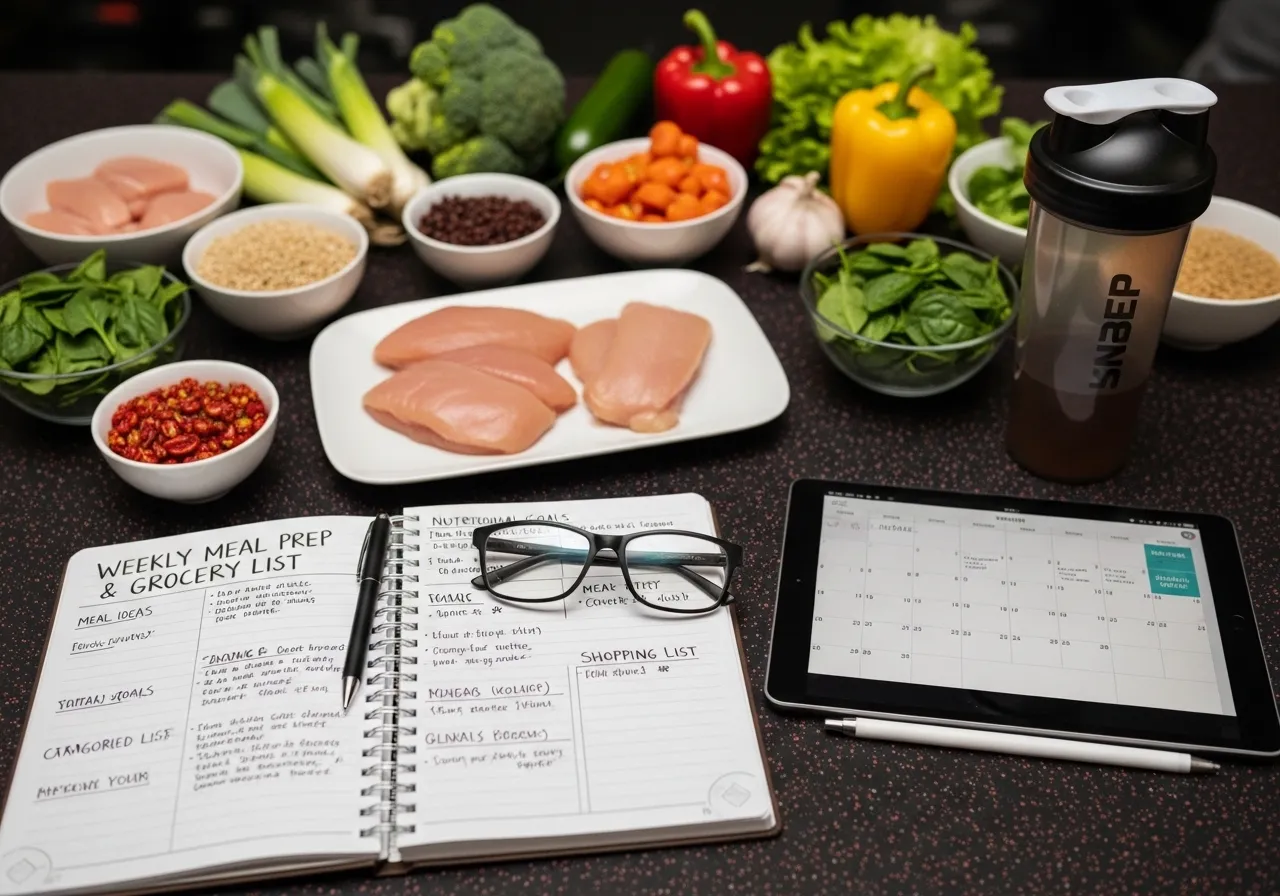
The Planning Phase: Building Your Meal Prep Blueprint
Successful meal prep begins not in the kitchen but in the planning phase — the 15-20 minutes of menu selection, grocery list building, and schedule mapping that determines whether the session runs smoothly or becomes the chaotic experience that leads beginners to conclude meal prep is too complicated to sustain.
Choosing What to Prep: The Beginner’s Menu Selection Framework
The meal prep menu that works for a beginner is fundamentally different from the elaborate multi-course prep sessions that experienced meal preppers post on social media — and attempting to replicate the complex starting point rather than building from the simple one is the most common reason that beginners abandon meal prep after their first session. The beginner framework is built on a simple matrix: one protein source, one carbohydrate source, two vegetable sources, and one sauce or seasoning that makes the combination palatable across multiple meals. This single-combination approach produces 4-5 identical or near-identical meals that require only one cooking method, one set of preparation tools, and one grocery list — eliminating the cognitive and logistical complexity that multi-recipe sessions introduce before the fundamental habits are established. Practical beginner combinations that this matrix produces: baked chicken breast + brown rice + roasted broccoli and cherry tomatoes + olive oil and lemon; ground turkey + sweet potato + sautéed spinach and red pepper + garlic and herbs; salmon fillet + quinoa + roasted asparagus and courgette + lemon and dill. Each of these combinations is nutritionally complete, requires approximately 60-90 minutes of actual cooking time, and produces 4-5 lunch or dinner containers that cover the most nutritionally vulnerable meals of the working week. Once the single-combination approach is a consistent habit — executed without stress across 3-4 consecutive weeks — the intermediate expansion to two protein options, sauce variety, and snack preparation builds naturally on the established infrastructure rather than requiring a complete reinvention of the practice.
Grocery List Building and Shopping Efficiency
The grocery list is the operational document that converts meal prep planning into action — and the quality of the list determines whether the shopping trip takes 20 minutes or 50. The effective meal prep grocery list organizes items by store section (produce, proteins, dry goods, dairy) rather than by recipe, eliminating the backtracking through departments that recipe-organized lists require. Quantity specification is the second essential: noting “1.5 kg chicken breast” rather than “chicken” and “400g brown rice dry weight” rather than “rice” eliminates the in-store estimation that leads to under-purchasing and the mid-week return trip that disrupts the system. Building a base weekly grocery list that covers recurring meal prep staples — the chicken, rice, and vegetable combination that appears every week with only minor variation — reduces weekly planning to updating only the variable items (which vegetables, which seasoning, any recipe variation) rather than rebuilding the complete list from scratch each time. The financial efficiency of the meal prep grocery run: consolidating one week’s food preparation into a single focused shopping trip consistently costs 20-35% less than the equivalent nutritional content purchased as individual meals or via impulse shopping across multiple store visits — the planned quantities, seasonal vegetable selection, and bulk protein purchasing that meal prep shopping enables producing the cost savings that compound into meaningful annual food budget reduction. From USDA MyPlate meal planning and food budget efficiency guidelines, planned meal preparation reduces weekly food costs by an average of 30% compared to unplanned eating while simultaneously improving dietary quality across the major nutrient categories — confirming the dual financial and nutritional advantage of the meal prep approach over reactive daily food purchasing.
Scheduling Your Prep Session: When and How Long
The meal prep session timing that most working adults find sustainable is Sunday afternoon — after the social activities that weekend mornings often involve but before the Monday preparation demands that Sunday evening carries. The 2-3 hour Sunday window produces the full week’s core meals at a time when the week’s schedule is not yet competing for attention. For individuals whose Sunday is consistently unavailable, Wednesday evening or a split Sunday morning and Wednesday evening approach — preparing Monday through Wednesday meals on Sunday and Thursday through Friday meals midweek — provides the same weekly coverage in two smaller sessions that are individually easier to protect from schedule disruption than a single long one. The actual cooking time for a basic beginner meal prep is consistently shorter than anticipated: 15 minutes of active preparation (chopping, seasoning, portioning), 30-40 minutes of oven or stovetop cooking that requires minimal attention, and 15 minutes of portioning and container labeling produces the week’s meals in approximately 60-75 minutes of elapsed time. The perceived time cost of meal prep is systematically overestimated by people who have not yet made it a habit and systematically underestimated by those who have — the experienced meal prepper mentally accounts for 90-120 minutes of productive kitchen time, whereas the beginner imagines a day-consuming process that the efficient 2-zone cooking approach this article describes consistently delivers within the shorter window.
Meal Prep Equipment: What You Actually Need Versus What Gets Marketed
The meal prep equipment industry promotes a wide range of specialized tools, containers, and gadgets that beginning meal preppers often purchase before discovering that 90% of effective meal prep requires only the equipment that most functioning kitchens already contain. The genuine essentials: a large sheet pan (minimum 45×30 cm) with a wire rack insert for roasting protein and vegetables without steaming; a large stockpot or saucepan (minimum 4 liters) for grain cooking; a cutting board and a chef’s knife sharp enough to cut through raw vegetables and protein efficiently; a kitchen scale for accurate portioning; and 8-10 quality airtight containers in the sizes described earlier. The useful additions that improve efficiency but are not required: parchment paper or silicone baking mats that eliminate oven cleaning; a food processor that reduces vegetable chopping time by 50%; and the Instant Pot or slow cooker that provides autonomous bulk cooking of proteins and legumes without oven or stovetop monitoring. The aggressively marketed meal prep systems — specialized divided containers, dedicated meal prep bags with multiple thermal sections, brand-specific prep tools — are convenience refinements that experienced preppers sometimes invest in for portability or aesthetic satisfaction, but that beginners should not consider prerequisites for an effective meal prep practice. The $200 container system does not produce better-prepared food than the $25 set of basic glass containers — and the sunk cost of elaborate equipment purchase without the underlying habit creates the abandonment pressure that most beginners experience when the novelty fades.
Meal Prep for Families and Shared Households
The meal prep framework designed for individual athletes adapts straightforwardly for family use — the scaling of quantities and the accommodation of different household members’ nutritional requirements are the primary modifications that family meal prep requires. The batch cooking approach — preparing the component parts (proteins, grains, vegetables) in large quantities from which family members assemble their own portions — is more practical for households with different caloric needs and preferences than the individual container assembly approach that individual athlete prep optimizes for. A family of four can share a 2 kg chicken batch, a 600g dry grain batch, and three sheet pans of roasted vegetables from a single prep session, with each family member assembling their containers according to their specific portion requirements. The shared component approach also addresses the dietary variety within a household: different seasoning applied to different portions of the same protein batch (half teriyaki, half herb-roasted) accommodates different preferences while maintaining the single-session efficiency that batch cooking provides. For households with children, the meal prep session itself can be structured as a participatory family activity that introduces food preparation skills, nutritional awareness, and the kitchen competency that children’s relationship with food and cooking benefits from establishing early — converting the weekly prep session from an adult solo task into a household ritual with educational and relational value beyond the nutritional efficiency that the adult athlete’s perspective prioritizes.
The First Month: Building the Meal Prep Habit Through Graduated Complexity
The structured progression from beginner to confident meal prepper follows a month-by-month graduated complexity increase that prevents the overwhelming first-session experience that derails beginners before the habit forms. Week 1-2: prepare one protein, one grain, and one vegetable for four meals only. No snack prep, no breakfast prep, no variety ambitions — just the four core lunch or dinner containers that represent the minimal viable meal prep. The goal is demonstrating that the session is manageable and the meals are satisfying — building the confidence and motivation foundation that subsequent complexity additions require. Week 3-4: add breakfast prep (overnight oats or egg muffins) to the session and increase to five meal containers. The two-prep-type session introduces the parallel cooking workflow — oven protein and vegetables while grain cooks on stovetop while breakfast prep is assembled — without the full complexity of a multi-protein, multi-sauce advanced session. Month 2: introduce sauce variety (two seasoning options for the same protein) and snack prep (pre-portioned nuts and Greek yogurt containers). Month 3: introduce a second protein rotation (alternating chicken and salmon weeks), the component-prep approach for variety, and the freezer half-session extension. Month 4 and beyond: the full advanced meal prep session that covers all meals and macronutrient targets with variety, efficiency, and the systematic container organization that the accumulated habit infrastructure makes effortless. This graduated progression converts what seems complex from the outside into the natural capability accumulation that any practiced skill develops — and the athlete who follows it arrives at confident, efficient, variety-rich meal prep through the same progressive overload principle that their physical training follows.
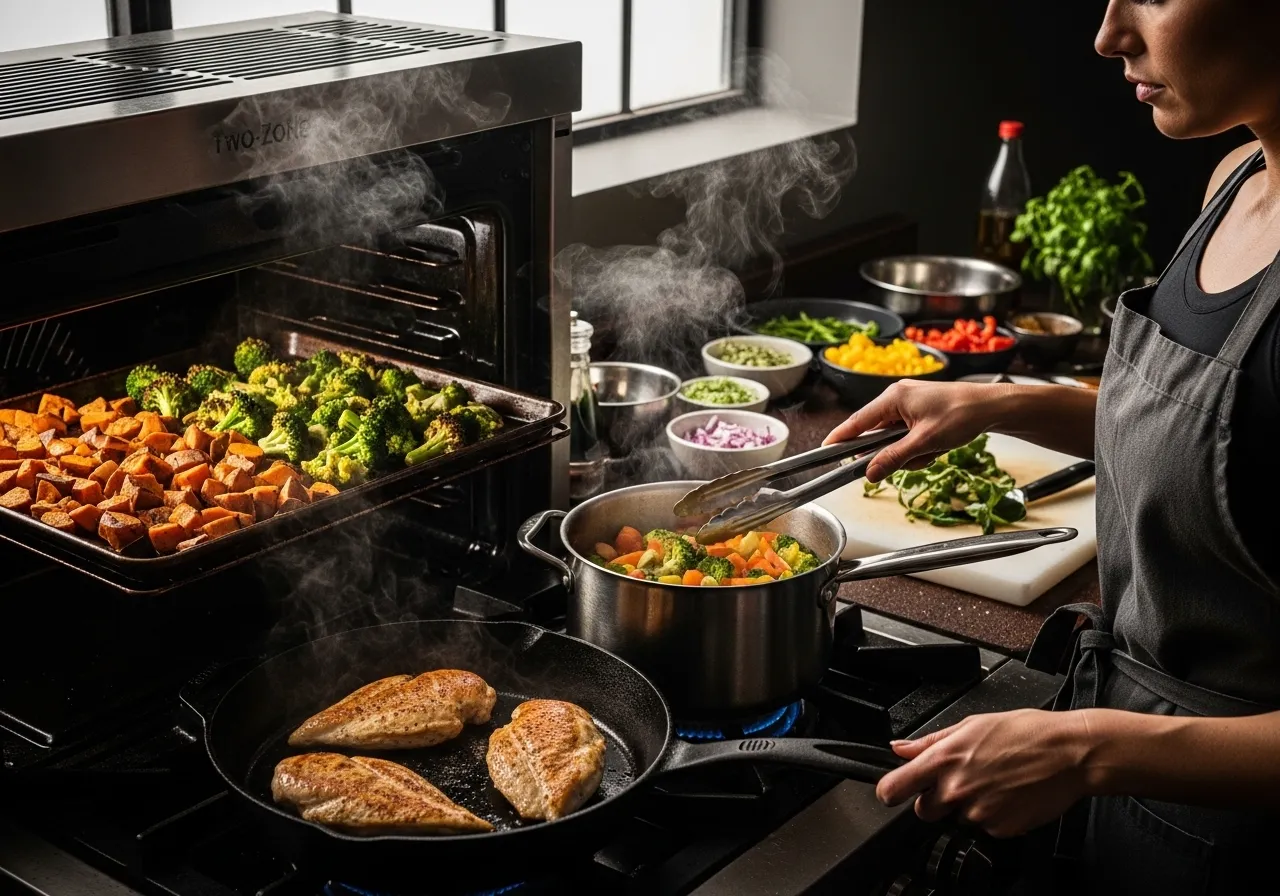
The Execution Phase: Efficient Cooking Techniques for Maximum Output
The difference between a stressful, time-consuming meal prep session and an efficient, almost meditative one comes down to the cooking technique choices and workflow organization that experienced preppers have optimized through iteration. The core principle is parallel cooking — using the oven, stovetop, and passive preparation (marinating, soaking) simultaneously rather than sequentially, which produces the same output in 40-50% of the elapsed time that sequential single-appliance cooking requires.
The Two-Zone Oven Strategy for Bulk Cooking
The oven is the meal prepper’s most powerful tool — it produces large quantities of cooked food with minimal active attention, freeing the cook to simultaneously manage stovetop cooking, chopping, and portioning. The two-zone oven strategy maximizes this advantage: use the oven’s two racks simultaneously for complementary foods that require similar temperatures but different times — typically protein on the upper rack (chicken breast, salmon, ground turkey patties) and vegetables on the lower rack (broccoli, sweet potato, courgette, bell peppers). At 200°C, chicken breast requires 22-25 minutes, broccoli requires 18-20 minutes, and sweet potato wedges require 25-30 minutes — allowing a staggered loading sequence where vegetables are placed in first, protein is added 5-8 minutes later, and both complete at approximately the same time. A standard home oven can roast 1.5 kg of chicken breast and 800g of mixed vegetables simultaneously across two full sheet pans — producing five complete meal portions from a single 30-minute oven cycle that requires only the initial preparation time and the final portioning. Lining sheet pans with parchment paper eliminates post-session cleaning almost entirely — the most time-consuming part of meal prep after the actual cooking — converting the cleanup from 20-30 minutes of scrubbing to a 2-minute parchment disposal that dramatically reduces the total session time and eliminates the deterrent that cleanup represents for many beginners.
Stovetop Bulk Cooking: Rice, Grains, and Protein
While the oven handles protein and roasted vegetables, the stovetop manages the grain cooking and any sautéed vegetable or sauce preparation simultaneously. The large-pot grain method: 400g of dry brown rice (producing approximately 1 kg cooked) in a 4-liter saucepan requires 25-30 minutes of simmering after the initial 5-minute boil — the same timeframe as the oven’s protein and vegetable cycle, allowing the entire cooking process to complete simultaneously. For quinoa, the cook time is even more favorable — 15-18 minutes from boiling water addition — and the protein content (complete protein at 8g per 100g dry) makes it a particularly nutrition-dense carbohydrate prep option. The instant pot or rice cooker alternative: for athletes who want to further reduce active attention during meal prep, the electric pressure cooker or dedicated rice cooker handles grain cooking autonomously, requiring only the initial setup and the end-of-cycle retrieval that allows complete focus on the oven and prep board operations during the cooking window. The stovetop sauté for leafy greens: fresh spinach, kale, and Swiss chard wilt from voluminous raw bunches to compact cooked portions in 3-5 minutes over medium-high heat with garlic and olive oil — the fastest-cooking element of the meal prep session, inserted in the final 5 minutes before portioning to ensure maximum freshness. From Harvard T.H. Chan School of Public Health whole grain nutritional benefits and preparation, whole grains prepared at home in bulk provide superior fiber, micronutrient, and phytochemical profiles compared to processed grain products while being more cost-effective per serving — confirming the nutritional advantage of the home-cooked grain preparation that meal prep enables over processed grain alternatives.
Container Selection and Portioning Best Practices
The container system is the meal prep’s delivery infrastructure — and the container quality determines how appealing the meals remain across the 4-5 days between preparation and consumption. Glass containers with airtight snap-lock lids maintain food freshness better than plastic alternatives, withstand microwave reheating without leaching or flavor transfer, and stack efficiently in refrigerator organization. The standard container sizes for athletic meal prep: 900ml-1100ml containers accommodate the typical meal portion of 150-200g protein, 200-250g cooked grain, and 150-200g vegetables without overfilling; the 600ml size is appropriate for snack portions (fruit, nuts, Greek yogurt combinations); and the 1.5-2 liter size serves the high-volume athletes whose caloric requirements demand larger meal containers. Portioning technique for consistent portions: use a kitchen scale for the initial portions of each container until the visual estimation is reliable — the first 4-6 weeks of consistent meal prep calibrates the eye to container portion sizes well enough that the scale becomes a spot-check verification rather than a mandatory step. Labeling with masking tape and a pen (date and contents) is the simple habit that prevents the refrigerator archaeology that unlabeled containers require and ensures that the oldest meals are consumed first through the FIFO (first in, first out) rotation that food safety good practice prescribes.
Meal Prep and Social Life: Navigating the Practical Challenges
The most frequent concern that athletes considering meal prep raise is the social dimension — the worry that committed meal prepping requires declining restaurant invitations, bringing containers to social events, and the perceived social awkwardness of eating prepared food in environments designed for spontaneous dining. The practical reality is considerably more flexible: meal prep provides the nutritional foundation for the week’s planned meals, not a rigid script that overrides every social eating opportunity. The approach that most experienced meal preppers adopt is the 80/20 framework — prepping the 80% of the week’s meals that occur in predictable, solo or home contexts (weekday lunches, weekday dinners on non-social evenings, all breakfasts) while keeping the remaining 20% (weekend meals, social dinners, the occasional work lunch) as the flexible discretionary meals that social and personal enjoyment determines. This framework eliminates the social friction of “I have to eat my meal prep” thinking and replaces it with “I have already covered 16 of the week’s meals nutritionally — the remaining 5 can be whatever the social context calls for.” The athlete who maintains this 80/20 perspective sustains meal prep through the years of social life that the all-or-nothing approach cannot survive, because the flexibility that social eating requires is preserved within a framework where the nutritional foundation of the week is secure regardless of what the discretionary meals contain.
Tracking the Impact: How to Measure What Meal Prep Is Actually Doing
The concrete benefits of consistent meal prep are measurable across the dimensions that motivated athletes track — and building the feedback loop that confirms the investment is producing its promised results sustains the habit through the weeks when the preparation session feels like effort rather than intuitive routine. The metrics worth tracking across the first 8-12 weeks of consistent meal prep: weekly food spend (the receipt total from the dedicated prep shopping trip, compared to the previous average that individual daily food decisions produced — most athletes find a 25-40% reduction within the first month); daily protein intake average (tracked through the container macronutrient totals rather than individual logging — confirming that the 1.6-2.0 g/kg daily target is being consistently met rather than estimated); training performance trend (strength log and training quality self-assessment, whose improvement following consistent nutrition is one of the most motivating confirmations that the dietary changes are producing the physiological benefits that training depends on); and subjective energy and hunger consistency throughout the day (the reduction in mid-afternoon energy crashes and late-night hunger that regular pre-prepared meals produces confirms that the blood glucose stability of planned nutritious meals is functioning as the meal prep framework predicts). These four metrics — food spend, protein consistency, training performance, and subjective energy — together paint the complete picture of meal prep’s impact and provide the data-driven motivation that sustains the habit through the periods when novelty and initial enthusiasm are no longer sufficient on their own.
Meal Prep Across Training Phases: Adapting Your Prep as Goals Change
The meal prep system’s greatest long-term advantage is its adaptability — the same framework adjusts to every training phase’s nutritional requirements by changing the food selection and portion sizes within the identical structural workflow that preparation efficiency depends on. Bulking phase adaptation: increase the rice and grain portions by 50-75 grams per container; add a daily avocado half to each dinner container; switch from lean chicken breast to chicken thighs for the additional caloric density that the surplus requires; and prepare an additional daily snack container of mixed nuts and dates. Cutting phase adaptation: reduce grain portions by 30-40 grams; increase vegetable portions to maintain volume satiety; switch to the lean protein sources (chicken breast, tuna, egg whites) that reduce the fat content of each container toward the lower-fat macronutrient ratio that caloric deficit phases use; and eliminate the snack containers that maintenance and bulking phases include. Maintenance adaptation: the standard protein-grain-vegetable formula at the portion sizes that the TDEE calculation determines is adequate without modification — the portion sizes trained to the individual’s specific caloric needs represent the maintenance phase meal prep that most athletes spend the largest fraction of their year in. The structural consistency of the preparation workflow across all three phases means that the meal prep session requires no new learning when goals change — only the shopping list and portion size adjustments that the new phase’s nutritional parameters specify, executed within the familiar preparation system that months of consistent practice have made automatic.
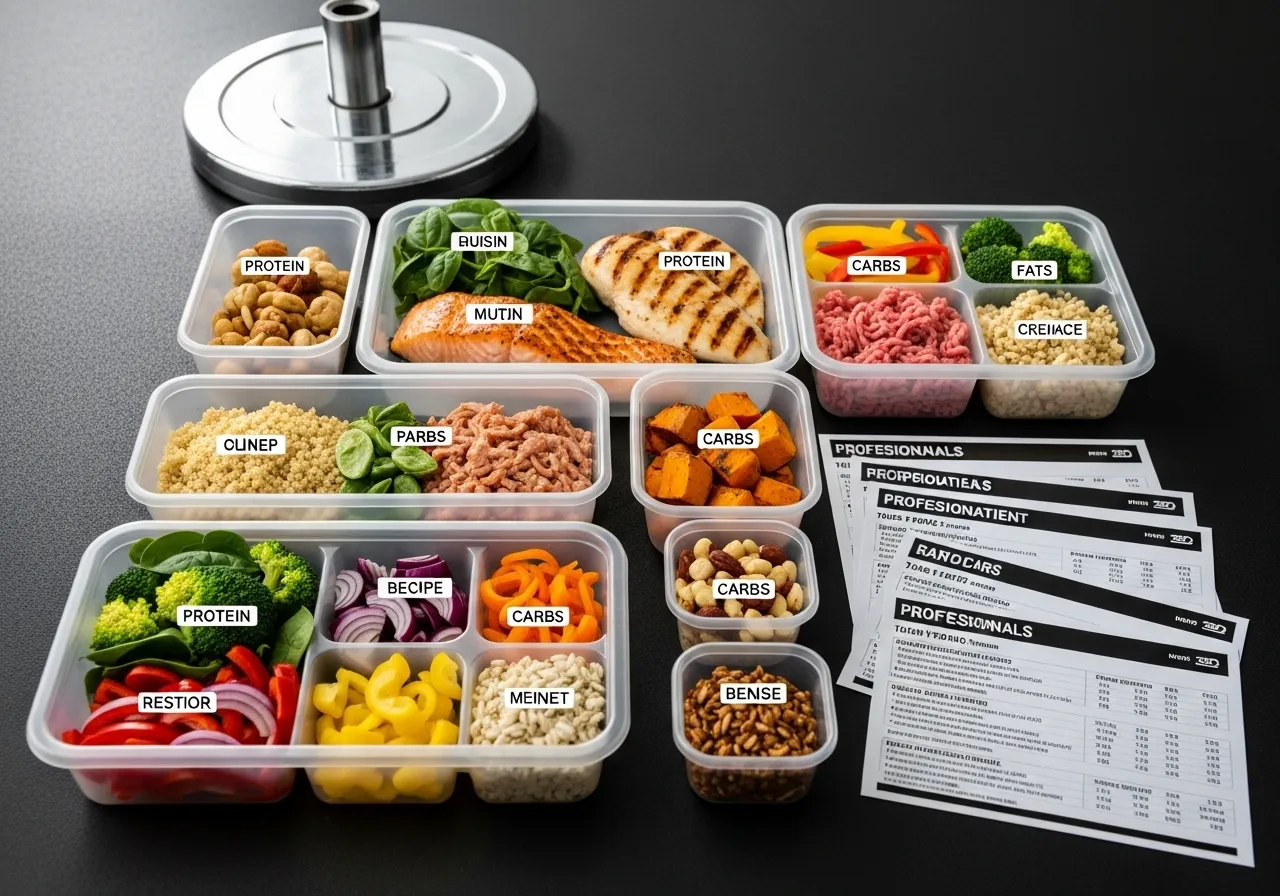
Athlete-Specific Meal Prep Recipes and Macronutrient Templates
The meal prep session produces maximum nutritional value when the specific food combinations are designed around athletic performance requirements — adequate protein at every meal, carbohydrate quantity matched to training intensity, and the micronutrient density that performance nutrition requires alongside the macronutrient targets.
High-Protein Meal Prep Formulas for Muscle Building
The muscle-building meal prep template prioritizes hitting the 1.6-2.2 g/kg daily protein target through 4-5 meals of 30-45 grams of protein each — ensuring that the leucine threshold that maximally activates muscle protein synthesis at each feeding is consistently met. The five highest-protein, meal-prep-friendly food sources and their per-100g cooked protein content: chicken breast (31g), canned tuna (25g, requiring no cooking), lean ground beef or turkey (26g), salmon (25g), and hard-boiled eggs (13g, equally prep-friendly). A muscle-building weekly prep centered on these sources: Day 1-2 protein — 1.5 kg baked chicken breast (7-8 portions at approximately 200g each, 62g protein per portion); Day 3-4 protein — 800g baked salmon (4 portions at 200g each, 50g protein per portion); Day 5 protein — 4 cans of tuna (requiring no prep) and 8 hard-boiled eggs. The carbohydrate component for muscle building requires the caloric density to support the surplus: 400g dry brown rice producing 1 kg cooked rice (approximately 200g per meal container at 250 calories), sweet potato at 250g per portion (225 calories), and the oat-based breakfast prep (overnight oats with 100g dry oats, protein powder, and chia seeds per container) providing the 550-600 calorie breakfast that the muscle-building daily target often begins with. The weekly prep that covers five high-protein lunches, four high-protein dinners, and five overnight oat breakfasts provides 14 of the week’s 21 meals — the critical mass of pre-prepared nutrition that prevents the dietary gaps that unplanned eating fills with lower-quality choices.
Fat Loss Meal Prep: Volume, Satiety, and Caloric Precision
The fat loss meal prep template prioritizes maximum food volume and satiety per calorie — the high-fiber, high-protein, low-caloric-density combination that allows the maintained energy intake feeling on the reduced caloric intake that a deficit requires. The fat loss meal prep principles: protein at every meal and snack (minimum 30g per meal) to maximize diet-induced thermogenesis and lean mass preservation during the deficit; fiber from vegetables and legumes at high volume to provide physical satiety at low caloric cost; and strategic carbohydrate placement around training sessions where glycogen availability matters most for session quality. A fat loss weekly prep: 1.2 kg baked chicken breast or turkey providing 5-6 lean protein portions at 150g each (46g protein, 150 calories — the caloric efficiency that lean protein sources uniquely provide); 800g of varied roasted vegetables (broccoli, courgette, cauliflower, bell peppers — approximately 60-80 calories per 200g serving at high fiber and micronutrient density); 300g dry lentils or chickpeas (cooked to 600g — providing the plant protein and fiber combination that extends post-meal satiety significantly beyond equivalent caloric content from lower-fiber sources); and sweet potato at 200g portions on training days only, with leafy greens replacing the starchy carbohydrate on rest days. The caloric consistency across prepared containers — each container containing approximately 400-500 calories for fat loss phases — is the portion precision that prevents the caloric drift that visual-estimation portioning allows, and that makes the weekly caloric accounting predictable enough for goal-rate fat loss management.
Quick and Practical Snack Prep for Athletes
Snack preparation is the meal prep component that produces the highest return on time invested — the 15 minutes of snack prep that prevents the vending machine, convenience store, and impulse snack decisions that collectively accumulate the most dietary damage per unit of effort expended. The essential athletic snack prep: hard-boiled eggs (12 eggs boiled and refrigerated, providing 6g protein per egg at minimal caloric cost for post-training snacking or bridging gaps between meals); Greek yogurt portioned into 170-200g containers with berries and a tablespoon of ground flaxseed (20g protein, probiotic support, omega-3 contribution, and polyphenols from berries — the most nutritionally complete 5-minute snack prep available); and pre-portioned mixed nuts in 30g portions (approximately 180 calories, 5g protein, healthy fats, and the satiety duration that nut consumption research consistently demonstrates beyond equivalent caloric content from other snack sources). The protein shake preparation option: pre-measuring individual protein powder servings into ziplock bags or dedicated shaker containers loaded with powder eliminates the measuring step entirely for the post-training shake that timing-conscious athletes depend on — reducing the post-training nutrition gap from equipment sourcing to the 60-second water-and-shake action that measured preparation enables.
My Personal Meal Prep Routine: What Actually Works Week After Week
After three years of weekly meal prep, my Sunday session has settled into a 90-minute ritual that is as automatic as any other habit in my week. I start the oven at 200°C and immediately put on the rice — the 30-minute parallel cooking that covers my entire week’s carbohydrate foundation happens without any active attention. While the oven preheats I marinate the chicken in whatever flavor I am rotating to this week, chop two sheet pans of vegetables, and have everything in the oven within 20 minutes of starting. While the oven and stovetop run, I make overnight oats for the week’s five breakfasts in 15 minutes. By the time the first oven cycle finishes, the rice is done and all I need is the 20-minute portioning session that closes the preparation and fills the refrigerator with the week’s meals. The total active effort is perhaps 60 minutes across 90 minutes of elapsed time — a return on investment that no other single habit in my fitness practice matches for the breadth of its daily impact on energy, performance, and the effortless dietary consistency that supporting every other health goal requires.
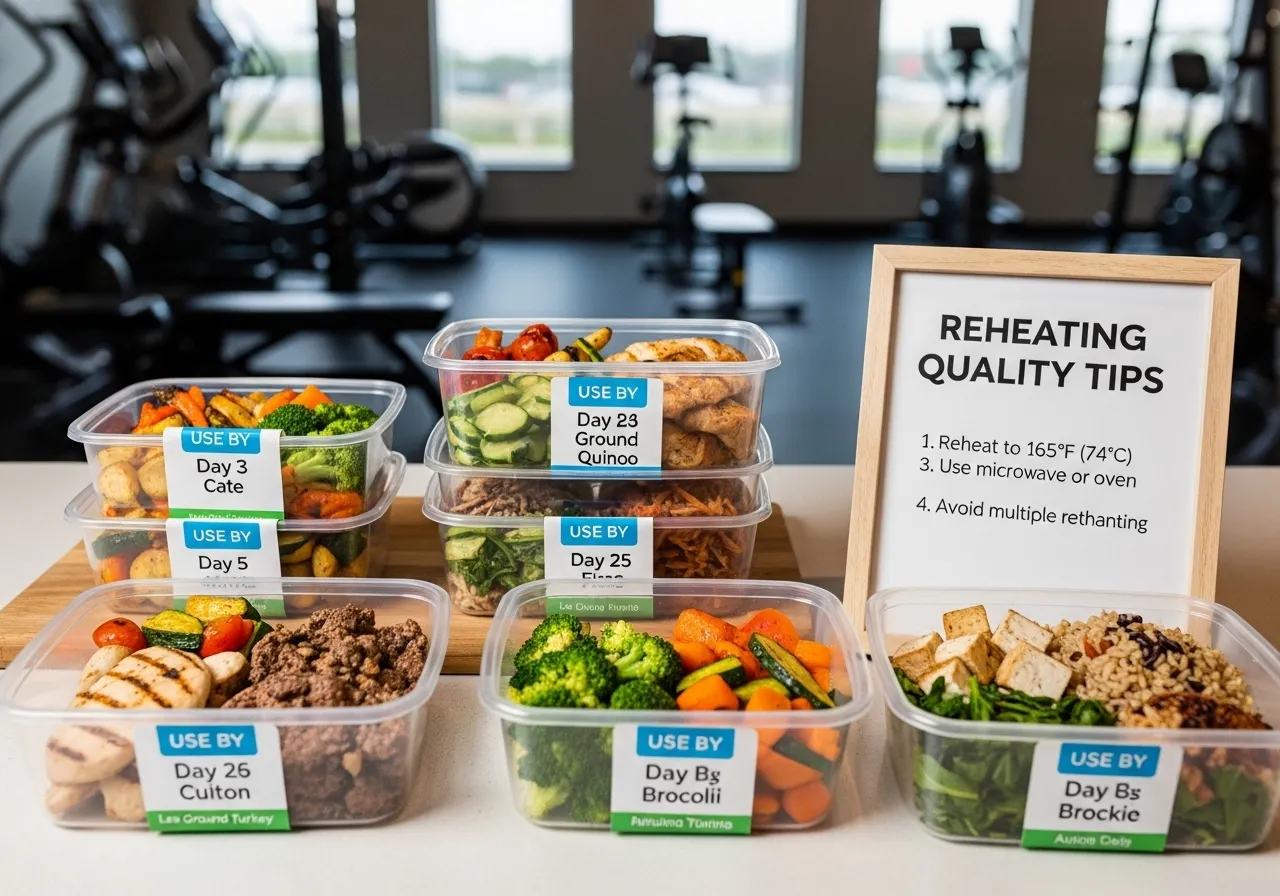
Food Safety, Storage, and Reheating: Keeping Meal Prep Safe and Delicious
The food safety dimension of meal prep is the aspect most commonly under-addressed in meal prep content — yet it is the operational knowledge that prevents the food-borne illness that improperly stored prepared food can cause and that keeps the meals palatable through the storage period rather than deteriorating into the soggy, stale-tasting disappointment that improper container technique or excessive storage duration produces.
Safe Storage Timelines and Temperature Management
The USDA food safety guidelines for prepared food storage establish the outer boundaries that meal prep food safety operates within: cooked protein (chicken, fish, beef, turkey) maintains safe consumption quality for 3-4 days refrigerated at or below 4°C; cooked grains and starchy vegetables (rice, quinoa, sweet potato) maintain quality for 4-5 days; cooked non-starchy vegetables maintain quality for 3-4 days; and hard-boiled eggs (unpeeled) maintain quality for up to 7 days. The practical implication for a Sunday meal prep: preparing Tuesday through Friday meals from a Sunday session is within safe storage limits for all food categories; preparing Friday’s meals for a Sunday session requires ensuring the protein is a lower-risk category (canned tuna, hard-boiled eggs, well-cooked legumes) or adding a freezer component for the meals that exceed the 4-day refrigeration window. The freezer extension strategy: preparing 10 containers instead of 5, freezing half immediately after preparation, and rotating frozen containers into the refrigerator at midweek effectively doubles the prep session’s output without increasing spoilage risk — producing two weeks of meals from a single Sunday session for athletes whose schedule makes weekly prep sessions difficult. Temperature management during the cooling phase: allowing cooked food to cool to room temperature before refrigerating (maximum 2 hours between cooking and refrigeration) prevents the condensation moisture accumulation inside sealed containers that warm food refrigerated immediately produces — preserving the texture quality of prepped food across the storage period rather than the sogginess that trapped steam creates.
Reheating for Maximum Quality
The reheating method determines whether meal prep containers deliver meals that taste freshly made or the distinctly “meal prepped” combination of overcooked protein and steamed-to-mush vegetables that beginners associate with meal prep before discovering the technique adjustments that prevent these outcomes. The optimal reheating approach for protein-grain-vegetable containers: remove the container lid and add 1-2 tablespoons of water before microwave reheating (the added moisture prevents the drying that protein undergoes in the microwave) at 70% power for 2-3 minutes rather than full power for 90 seconds — the lower power and longer time heats more evenly and prevents the rubbery texture that rapid high-power heating produces in pre-cooked chicken and fish. Separating the sauce component from the main container and adding it after reheating prevents the dilution and separation that hot liquid in a sealed container during reheating causes. The stovetop reheating alternative: a small amount of olive oil in a pan over medium heat with 2 tablespoons of water, covered for 3-4 minutes — this method produces the closest approximation to freshly cooked texture of any reheating approach, superior to microwave but requiring the 5 minutes that the microwave approach eliminates. From FDA safe food storage and handling guidelines, cooked protein and grain dishes stored at or below 4°C and reheated to an internal temperature of 74°C are safe for consumption within the 3-4 day refrigerated storage window — providing the official food safety standards that meal prep practice should operate within for both safety and palatability.
Preventing Meal Prep Fatigue: Variety Strategies for Long-Term Adherence
The most common reason that initially motivated meal preppers abandon the habit after 4-8 weeks is not time or cost — it is flavor fatigue from the repetitive meals that a minimal variety approach produces. The variety strategies that maintain meal prep engagement over months and years without adding significant preparation complexity: the rotating protein cycle (week 1: chicken; week 2: salmon; week 3: turkey; week 4: egg-based) that prevents the specific flavor monotony that single-protein weekly prep creates; the sauce and seasoning differentiation that converts the same base protein-grain-vegetable combination into distinctly different meals (the lemon-herb preparation of week 1 becomes the teriyaki-style preparation of week 2 and the curry seasoning of week 3 — same cooking method, dramatically different eating experience); the grain rotation (brown rice, quinoa, sweet potato, wholegrain pasta in rotation) that changes the texture and flavor character of the meal’s carbohydrate component; and the “flexible prep” approach that prepares components separately rather than assembled containers, allowing daily combination variation from the same prep session output. The component prep approach — which produces separate containers of protein, grain, and vegetables rather than assembled meal containers — adds 5-10 minutes of daily combination time in exchange for the meal variety that different combinations of the same components produces: the same chicken breast, brown rice, and roasted vegetables that produce a Mexican-spiced bowl with avocado and salsa on Monday becomes an Asian-style bowl with sesame, edamame, and soy on Wednesday from an identical prep session.
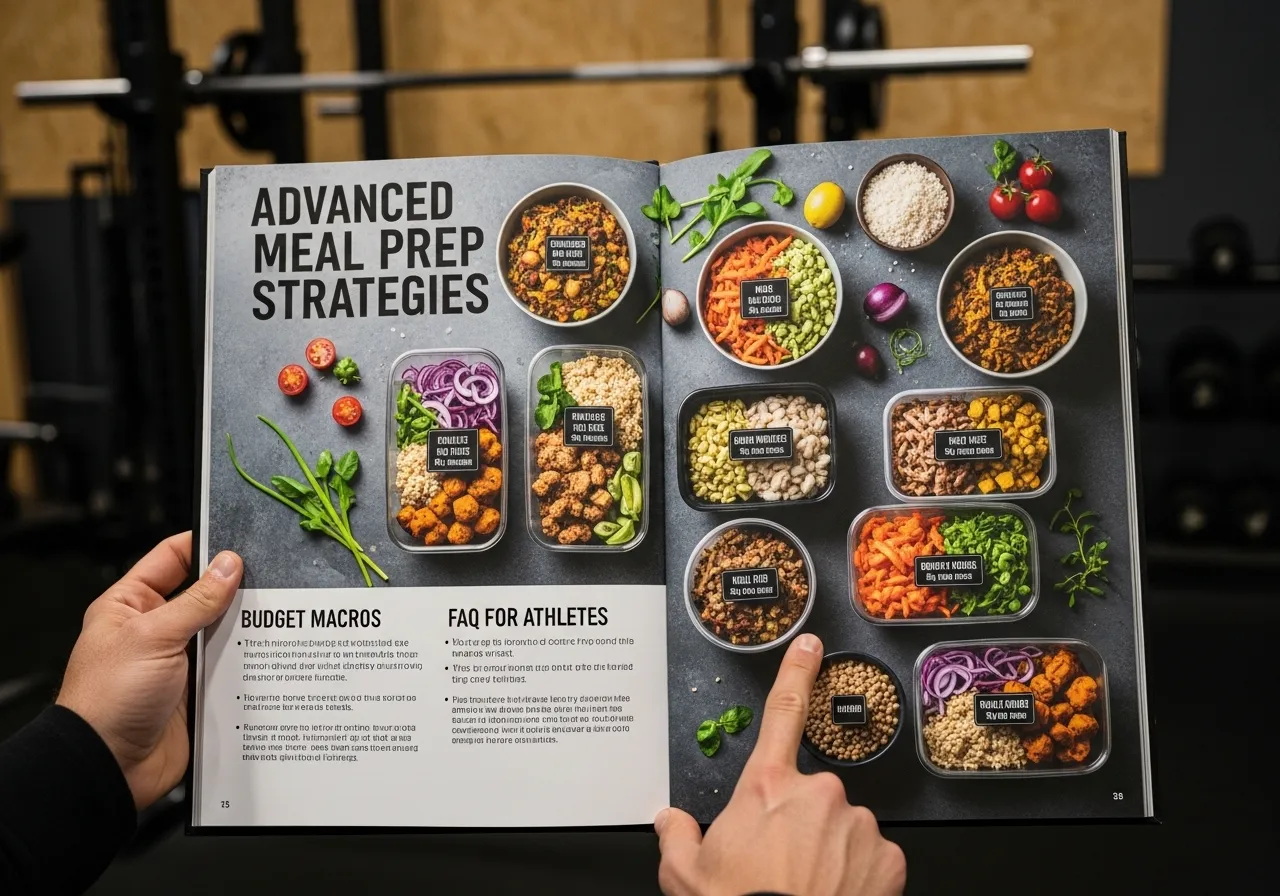
Advanced Meal Prep Strategies and FAQ for Serious Athletes
Once the foundational meal prep habits are established, several advanced strategies optimize the practice for athletes with specific nutritional goals, demanding schedules, or the desire to expand the nutritional sophistication of their prepared meals beyond the basic protein-grain-vegetable formula.
Meal Prep for Specific Macronutrient Goals
Athletes tracking specific macronutrient targets benefit from the meal prep container as a pre-calculated macronutrient unit that simplifies daily tracking to container counting rather than individual ingredient logging. Building containers to specific macronutrient targets: a 40g protein, 50g carbohydrate, 15g fat container (approximately 500 calories) corresponds to a specific weighed combination of chicken breast, brown rice, vegetables, and olive oil that can be calculated once, replicated across 5 containers from the same batch, and tracked in the food log as a single saved meal entry rather than the four-ingredient calculation that individual component logging requires. The batch calculation investment — 10 minutes of nutritional math performed once per meal combination — is repaid across every week that the same combination is prepared, converting the tracking burden from a daily chore into a weekly confirmation that the prepared containers match the macronutrient targets. For athletes using tracking apps (MyFitnessPal, Cronometer, MacroFactor), the saved meal feature that stores the pre-calculated container totals as a single entry allows accurate daily tracking from the meal prep session’s investment rather than requiring individual ingredient scanning for each meal of each day.
Budget Meal Prep: Maximizing Nutrition Per Dollar
The financially optimized meal prep that provides maximum nutritional quality per dollar spent requires the purchasing strategy that takes advantage of the bulk, seasonal, and protein hierarchy advantages that meal prep’s planned quantities enable. The cost hierarchy of high-quality meal prep proteins: eggs are the most cost-effective protein source at approximately $0.15-0.25 per egg and 6g protein per egg (producing protein at $0.25-0.40 per 10g, the benchmark comparison); canned tuna and sardines provide 25g protein per can at $1.50-2.50 per can (equivalent protein cost to eggs with the omega-3 bonus that eggs do not provide); whole chicken thighs (more cost-effective per kilogram than breast while providing equivalent protein with higher fat content suitable for athletes not in caloric deficit) at approximately $4-6 per kilogram provide the bulk protein base at the most cost-effective per-gram-protein rate among fresh meat options; and dried legumes (lentils, black beans, chickpeas) at $2-4 per kilogram dried (producing 2.5 kg cooked) provide the most cost-effective plant protein alongside the fiber and micronutrients that animal proteins do not. A complete week’s athletic nutrition meal prep — 5 lunches, 5 dinners, and 5 snack preparations — can be produced for $35-50 USD using this cost-hierarchy-informed purchasing strategy, compared to the $80-120 that the same nutritional content would cost as restaurant or prepared food purchases and the $60-80 that unplanned grocery shopping typically produces for the same individual.
Frequently Asked Questions About Meal Prep for Athletes
Q: How do I start if I have never meal prepped before? A: Start with the single-combination approach — one protein, one grain, one or two vegetables — for the first 2-3 weeks. Prepare only 3-4 meals rather than a full week’s worth to reduce the first session’s scope to something manageable. The goal of the first session is establishing the habit and workflow, not optimizing output. Q: Can I meal prep fish without it tasting bad after 2-3 days? A: Salmon and tuna hold well for 3 days when properly sealed in airtight containers. Avoid overcooking during preparation (salmon should be slightly underdone in the center, as reheating will complete the cooking) and add the lemon and herb seasoning fresh at mealtime rather than pre-mixing it into the container. Q: Is meal prep suitable for a bulking phase requiring very high calories? A: Yes — the caloric density adjustments that bulking requires (adding more rice, including calorie-dense additions like avocado and nuts, and preparing higher-calorie snack containers) are straightforward applications of the same framework. The caloric precision of portion-controlled containers is actually more valuable for bulking than for maintenance, because the tendency to underestimate caloric intake that most hardgainers experience is directly corrected by accurate portioning. Q: How do I handle meal prep when my schedule changes mid-week? A: The freezer component strategy described in the storage section provides the flexibility buffer for schedule disruptions — pulling a frozen container from the prepared backup the day before it is needed allows same-day thawing and reheating. Keeping 2-3 non-prep contingency options (canned tuna, Greek yogurt, protein shakes) addresses the situations where even the frozen backup is unavailable. Q: What are the best containers for keeping salads fresh? A: The salad container technique that prevents the wilting that moisture produces: store the dressing separately, keep watery components (tomatoes, cucumbers) in a separate small container, and place leafy greens in the largest container with a paper towel on top to absorb moisture. This layered storage produces crisp salads for 3 days that the all-in-one assembled approach cannot maintain past the first day. From PubMed meal planning behavior and dietary quality in adults meta-analysis, regular meal planning is one of the strongest behavioral predictors of diet quality, food budget adherence, and successful weight management outcomes — confirming the nutritional science basis for the practical habit of weekly meal preparation that this article has built the framework for.
Making Meal Prep a Lifelong Habit: The Mindset Shift That Sustains It
The athletes who maintain meal prep as a consistent weekly habit for years rather than months share a specific mindset shift that distinguishes them from those who cycle in and out of the practice: they have stopped experiencing meal prep as a task they perform for nutrition goals and started experiencing it as the baseline operating system for their weekly nutrition — as unquestionable a Sunday activity as sleeping or training. This identity shift — from “I am someone who meal preps when I am being disciplined” to “I am someone who meal preps, period” — is the behavior change equivalent of the progressive overload principle that identifies and corrects what training alone has not consolidated. The practical reinforcement of this identity: create a dedicated meal prep playlist that only plays during the weekly session, converting the preparation time into an anticipated ritual rather than a chore; invest in quality containers and tools that make the session feel professional and pleasurable rather than improvised and effortful; and track the weekly time and money savings that the habit produces — the concrete evidence of meal prep’s value that sustains motivation through the weeks when enthusiasm alone would not. The athlete who has internalized meal prep as an identity-consistent behavior rather than a discipline-dependent task is the athlete whose nutrition consistency holds through competition preparation, life stress, schedule disruption, and the motivation cycles that enthusiasm-dependent nutrition approaches cannot survive. Build the system, protect the session, and let the prepared refrigerator do the nutritional decision-making that willpower was never meant to carry alone.