How to Choose the Right Gym for Your Goals
1. Why Choosing the Wrong Gym Undermines Your Training Goals
The gym decision is one of the most consequential choices an exercising adult makes — and it receives a fraction of the consideration it deserves. Most people choose a gym based on proximity and price, signing up for the nearest or cheapest option without evaluating whether the facility’s equipment, culture, programming, and environment actually support the specific goals they are training to achieve. I made this mistake twice: the first gym I joined in my twenties was convenient and inexpensive but lacked the free weight area and experienced training community I needed for strength development; the second was an impressive-looking facility whose culture rewarded aesthetics and socializing over serious training. The gym that finally worked was neither the closest nor the cheapest — it was the one aligned with my actual goals, compatible with my schedule and personality, and populated by people who trained the way I wanted to train. This article is the evaluation framework I wish I had before signing those first two contracts.
The Goal-Gym Alignment Problem
The fundamental error in most gym selection decisions is the failure to start with goals. Different training goals require different equipment, different environments, different coaching access, and different community cultures — and a gym that is excellent for one goal may be actively counterproductive for another. The powerlifter who joins a cardio-focused commercial gym finds no squat racks, no adequate free weights, and a culture that treats heavy lifting with suspicion; the beginner who joins a hardcore powerlifting gym feels intimidated and unsupported; the group fitness enthusiast who joins a minimalist strength gym finds no classes, no community structure, and no instructor guidance. The goal-gym alignment principle: before evaluating any specific gym, define your primary training goal with specificity — not “get fit” but “develop strength in the squat, deadlift, and bench press,” or “lose 10kg of body fat while maintaining muscle,” or “complete my first 5km run in under 30 minutes,” or “improve flexibility and stress management through yoga-based training.” This specific goal statement then becomes the filter through which every gym evaluation question passes. Does this gym have the equipment my goal requires? Does the programming offered support my goal? Do the other members train in ways that inspire the training my goal requires? Does the staff have expertise relevant to my goal? Goal-alignment is the primary gym selection criterion that proximity and price should not override.
The Hidden Cost of a Misaligned Gym Choice
The financial and time costs of a poor gym choice are more significant than most people calculate before signing a contract. The direct costs: gym membership fees for a facility you stop using (the average gym member attends 1.9 times per week in the first month and declines to 0.8 times by month four, with poor goal alignment being among the top cited reasons for reduced attendance); cancellation fees for contracts that require advance notice or impose penalties for early termination; and the sunk cost psychology that keeps members paying for memberships they are not using rather than finding the better-fit alternative. The indirect costs are larger: the training months spent in a facility that doesn’t support your goal, with equipment that doesn’t match your program, in a culture that doesn’t motivate you, represents lost training time that cannot be recovered. The member who spends six months in the wrong gym before finding the right one has invested six months of fees and training time toward inadequate outcomes — a cost that proper upfront evaluation prevents. From British Journal of Sports Medicine exercise adherence research, the exercise environment — including gym culture, equipment availability, and staff support — is among the top predictors of long-term exercise adherence, with members in goal-aligned environments demonstrating 60–80% higher 12-month retention than those in misaligned environments.
Red Flags: Signs a Gym Is Wrong for You Before You Join
Experienced gym-goers have learned to identify the warning signs of a poor gym fit before committing — and recognizing these red flags saves both money and training time. The red flags that indicate a misaligned gym: high-pressure sales tactics during the initial visit (legitimate gyms with quality offerings do not need to pressure prospective members into same-day decisions — pressure tactics indicate awareness that the facility does not sell itself on merit); unwillingness to offer a trial membership or free pass before commitment (any quality gym is confident that experiencing their facility will sell the membership); equipment that is consistently broken, poorly maintained, or crowded to the point where wait times prevent effective training; staff who cannot answer basic questions about programming, facility policies, or equipment without consulting a script; and a member culture that is visibly unwelcoming to your demographic — whether based on fitness level, age, gender, or training style. The green flags that confirm a good gym fit: members are actively training rather than posturing; staff engage genuinely with members without the transactional quality of commission-based interactions; equipment is clean, functional, and sufficient for peak-hour demand; and the visit leaves you feeling motivated to train rather than intimidated, bored, or pressured.
Online Reviews and Reputation Research Before Your First Visit
Before visiting any gym, the available online information reveals patterns that the carefully managed first impression of a gym tour may not. Google reviews, Yelp reviews, and fitness community forums (Reddit’s various fitness communities have extensive gym review threads for most major cities) provide the unfiltered member experiences that marketing materials cannot: consistent complaints about broken equipment, high staff turnover, aggressive upselling of personal training, and contract cancellation difficulties are warning signs that appear repeatedly in honest reviews of poorly managed facilities. The review research approach: look for patterns rather than individual outliers — a single negative review among 200 positives is less informative than 15 reviews across 150 that mention the same broken equipment or poor cancellation experience. Check the recency of reviews — the gym that received excellent reviews in 2019 but has only mediocre reviews since 2022 may have experienced management or ownership changes that affected quality. Search fitness community forums for the specific gym name alongside your city — the training community discussions provide the candid peer assessment that professional review platforms moderate toward middle-of-road opinions. From IHRSA gym industry research, member satisfaction is most strongly correlated with equipment availability and maintenance quality, staff knowledge and responsiveness, and facility cleanliness — the factors that review research most reliably reveals before your first in-person visit.
The Psychology of Gym Environment: How Physical Space Shapes Training Behavior
The physical design and environmental characteristics of a gym — lighting, ceiling height, equipment layout, color scheme, music, and spatial organization — influence training behavior and performance in ways that most gym-goers do not consciously recognize. Research on environmental design and exercise behavior finds that specific environmental features reliably affect workout intensity, session duration, and perceived effort: bright, high-contrast lighting increases arousal and perceived energy compared to soft, warm lighting; higher ceilings reduce the claustrophobic sensation that some exercises in confined spaces produce; music tempo and volume directly influence training pace and perceived exertion; and equipment layout that creates clear dedicated zones (cardio area, free weight area, stretching area) reduces the decision fatigue that navigating poorly organized facilities produces. The practical gym selection implication: during your trial visit, pay attention to how the space makes you feel — whether you feel energized or flat, focused or distracted, motivated or anxious. These are not merely aesthetic preferences; they are functional training environment assessments that predict whether the space will support your best training over months and years. The gym that makes you feel good when you enter is the gym you will enter consistently — and consistent training in a motivating environment produces better outcomes than sporadic training in a technically superior but psychologically neutral one.
Gym Safety Standards: Equipment, Emergency Protocols, and Staff Training
The safety standards of a gym — rarely evaluated during typical membership selection but directly relevant to member welfare — deserve assessment during the evaluation process. The safety evaluation criteria: AED (automated external defibrillator) presence and staff training in its use (cardiac events during exercise require AED access within minutes for survival — any credible fitness facility should have an AED and trained staff); CPR certification among staff on duty at all times (verified through asking staff members directly, not management); emergency protocol visibility (posted procedures for medical emergencies, fire evacuation routes, and first aid kit locations); equipment inspection schedules (legitimate facilities document regular equipment safety checks); and adequate staffing during all operating hours (the 24-hour facility where the overnight shift is staffed by a single poorly trained attendant provides the access without the safety infrastructure that legitimate 24-hour operation requires). Safety standards failures at a gym are not minor inconveniences — they are the conditions under which a preventable emergency becomes a fatality. From ACSM fitness facility standards for emergency preparedness, all fitness facilities should have emergency response protocols, AED access, and staff with current emergency training as minimum non-negotiable safety standards — facilities lacking any of these should be excluded from consideration regardless of other merits.
Building Your Gym Evaluation Scorecard: A Practical Template
Converting the evaluation criteria in this article into a practical scorecard creates the systematic comparison tool that multi-gym evaluation requires. The 10-criteria gym scorecard, scored 1–5 per criterion: (1) Goal alignment — does the gym’s equipment, programming, and culture specifically support your primary training goal? (2) Equipment quality and quantity — is the equipment you need available, functional, and sufficient during your intended training hours? (3) Location and commute — is the gym genuinely convenient for consistent attendance, not merely accessible in theory? (4) Operating hours — are the gym’s hours compatible with your actual schedule, including your peak-hour access needs? (5) Cleanliness and maintenance — are the training floor, locker rooms, and equipment consistently clean and well-maintained? (6) Staff quality — are staff knowledgeable, accessible, and genuinely supportive rather than transaction-focused? (7) Community and culture — does the training community make you feel welcome, motivated, and part of something? (8) Value — does the full cost (including all fees) represent appropriate value for the benefit the facility provides? (9) Contract terms — are the membership terms fair, flexible, and transparent? (10) Safety standards — does the facility meet minimum safety standards including AED availability and trained staff? Scoring all 10 criteria across 2–3 finalist gyms, multiplying by the importance weight each criterion carries for your specific situation, and comparing the weighted totals produces a data-informed recommendation that accounts for your individual priorities rather than applying a generic ranking. The gym that scores highest on this personalized scorecard is the gym where your training investment will produce the greatest return — and the confidence that systematic evaluation provides makes the commitment that long-term training consistency requires significantly easier.
Your training deserves it.

2. Gym Types Explained: Commercial, Boutique, CrossFit, Home, and Specialty Gyms
Understanding the distinct characteristics, strengths, and limitations of each gym type allows goal-aligned selection before the first visit — saving time and preventing the costly trial-and-error that uninformed gym selection produces.
Commercial Gyms: The Broadest Appeal, the Most Variable Quality
Commercial gyms — large franchise facilities like LA Fitness, Planet Fitness, 24 Hour Fitness, and their international equivalents — are the most accessible, most affordable, and most variable in quality of any gym type. Their strengths: comprehensive equipment selection covering all training modalities (cardio machines, cable stations, free weights, functional training areas); extended or 24-hour access that accommodates variable schedules; multiple locations in most urban areas reducing the friction of gym access; and the low monthly membership fees that economies of scale allow. Their limitations: the broad membership demographic (from serious athletes to very casual attendees) creates culture and equipment competition challenges during peak hours; the business model that relies on inactive members paying fees without using the facility discourages the culture that supports serious training; and the quality variation between franchise locations can be significant even within the same brand. The commercial gym is the best fit for: beginners without strong preferences, athletes who need flexible access across multiple locations, and members whose training goals are general enough to be served by the broad but shallow equipment offerings these facilities provide. It is a poor fit for: serious powerlifters (who need dedicated squat racks and Olympic lifting platforms), CrossFit practitioners (who need open floor space and gymnastics equipment), and athletes whose specialty training requirements exceed the general equipment menu.
Boutique and Studio Gyms: Premium Experience for Specific Goals
Boutique gyms — small, specialized facilities offering a single training modality with high production value — have grown dramatically over the past decade, capturing the market of exercisers who value the community, class structure, and environmental quality that commercial gyms cannot provide. The boutique gym model includes spin studios (SoulCycle, Flywheel), yoga and Pilates studios, barre studios, boxing and kickboxing studios, and functional training studios. Their strengths: the community and accountability that class-based formats create, which research consistently identifies as among the strongest predictors of exercise adherence; instructor quality that exceeds what most commercial gym personal trainers provide, due to specialization in a single modality; the environmental design and production value that makes the workout experience motivating and enjoyable; and the structural programming that eliminates the planning burden that self-directed commercial gym training requires. Their limitations: high cost (typically $25–40 per class or $150–300+ monthly membership); the single-modality focus that makes them poor one-stop solutions for comprehensive fitness; and the class schedule dependency that may not accommodate unpredictable schedules. The boutique gym is the best fit for: people who are motivated primarily by community and class structure, who have the budget for premium pricing, and whose primary training goal aligns with the studio’s specialty. From Journal of Physical Activity and Health exercise environment research, the social cohesion and group accountability of boutique class environments produce significantly higher exercise adherence rates than independent gym training — confirming the community value that premium pricing purchases.
CrossFit Boxes: Community, Coaching, and Competitive Culture
CrossFit affiliates — independently owned facilities operating under the CrossFit methodology of constantly varied functional movements performed at high intensity — occupy a unique position in the gym landscape as the hybrid of strength training, cardiovascular conditioning, and community accountability that no other gym type replicates. CrossFit strengths: the coaching quality that CrossFit’s certification and community culture produces (every workout is coached, form is corrected, and scaling options are provided); the community intensity that the shared suffering of difficult workouts generates (CrossFit communities are consistently among the most cohesive and supportive in fitness); the programming variety that prevents the staleness of repetitive gym routines; and the competitive structure that daily scoreboards and benchmark workouts provide for those motivated by measurable performance. CrossFit limitations: the high-intensity, high-volume approach has genuine injury rate concerns — research suggests CrossFit practitioners experience injury rates comparable to or slightly exceeding other sports, with shoulders and lower backs as the most common sites; the cost is higher than commercial gyms (typically $150–250 monthly); the culture intensity may be overwhelming for beginners or those seeking low-pressure training; and the commitment to the CrossFit methodology may conflict with athletes who have specific strength or sport performance goals that the general fitness approach does not optimize. The CrossFit box is best for: athletes motivated by community and competition, those who benefit from coached daily workouts without programming themselves, and people who thrive in high-energy, high-accountability environments.
Home Gyms, Garage Gyms, and Outdoor Training Spaces
The home gym — equipment purchased for personal use in a garage, basement, spare room, or outdoor space — has grown substantially in adoption since 2020, with the pandemic-era forced adoption revealing that home training can be highly effective for many athletes. Home gym advantages: zero commute time (the single greatest barrier to gym attendance is the travel required — eliminating it dramatically increases training frequency for busy schedules); 24/7 availability without peak hour competition for equipment; privacy for self-conscious beginners or those who prefer to train alone; and long-term cost efficiency (a well-equipped home gym pays for itself within 2–5 years compared to commercial gym membership). Home gym limitations: significant upfront capital investment (a complete strength training setup costs $1,500–10,000+ depending on quality and comprehensiveness); the absence of community and accountability that social gym environments provide; limited equipment variety compared to well-equipped commercial facilities; and the challenge of self-motivation without the environmental cue of a dedicated training space that commercial gyms provide. The minimum effective home gym for strength training: a power rack ($400–800), barbell and weight plates ($300–600), adjustable dumbbells ($200–400), and a training mat — approximately $1,000–1,800 for a complete strength training setup. For cardiovascular training at home: a quality stationary bike ($500–2,000) or rowing machine ($600–3,000) provides genuine cardiovascular training without gym dependence.
Specialty Gyms: Powerlifting, Olympic Lifting, Martial Arts, and Climbing
Specialty gyms — facilities designed specifically for a single demanding sport or discipline — provide the equipment, coaching, and community that the sport requires in ways that general commercial facilities cannot approach. Powerlifting gyms feature calibrated competition plates, specialty bars (safety squat bar, cambered bar, specialty deadlift bars), monolift squat stands, and a culture that treats maximum strength development as the primary goal. Olympic lifting gyms provide the bumper plate platforms, ceiling clearance for overhead lifts, and coaching expertise that the technically demanding snatch and clean and jerk require. Martial arts gyms (boxing, Brazilian jiu-jitsu, Muay Thai, MMA) provide the mats, bags, sparring partners, and coaching that combat sports training requires. Climbing gyms provide the artificial walls, holds, and community that indoor climbing development depends on. The specialty gym is the correct choice when: your goal is serious development in a specific sport or discipline; the coaching and equipment quality of the specialty exceeds what general facilities offer; and the community of like-minded practitioners provides the motivation and knowledge-sharing that solo training cannot. For athletes with specialty sport goals, the specialty gym is often the only appropriate choice — no commercial gym substitutes adequately for the equipment, coaching, and culture that sport-specific training requires.
Digital Integration and Technology Features in Modern Gyms
Modern gym facilities increasingly integrate digital technology into the member experience — from app-based equipment booking and class scheduling to smart equipment that tracks workout data and biometric monitoring. The technology features worth evaluating for goal-relevant value: equipment booking apps that allow advance reservation of in-demand equipment (power racks, cable machines) during peak hours — eliminating the arrival anxiety of uncertainty about equipment availability; class scheduling platforms that integrate with personal calendar systems and send reminders that increase attendance follow-through; smart cardio equipment that connects to fitness tracking apps and stores workout history that progressive overload tracking requires; and on-demand workout programming through gym-branded apps that provides structured guidance for self-directed members who benefit from programming structure without the cost of personal training. The technology features to evaluate critically: digital engagement platforms that gamify gym attendance and social media integration — whether these serve training goals or primarily serve the gym’s marketing objectives. Some members find gamification and social sharing motivating; others find it a distraction from focused training. Assess technology features against your specific goal and motivational style rather than treating them as universally valuable additions that justify premium pricing.
Gym Policies on Chalk, Deadlift Dropping, and Training Behaviors
The specific policies that different gyms enforce regarding training behaviors — chalk use, deadlift plate dropping, collars requirement, footwear, and photography — create meaningful compatibility or incompatibility with specific training styles that should be confirmed before commitment. Chalk policies: magnesium carbonate chalk significantly improves grip on heavy lifts and is standard practice in strength training and Olympic lifting. Many commercial gyms prohibit chalk (citing cleaning concerns and equipment damage) while strength specialty gyms require it. An athlete whose heavy deadlifts and cleans require chalk will find a chalk-prohibiting commercial gym functionally incompatible for their training style. Deadlift dropping policies: controlled eccentric descent of heavy deadlifts is required in most commercial gyms; bumper plates and designated dropping zones are available in Olympic lifting and CrossFit facilities. The athlete training heavy Olympic lifts cannot perform them in a facility that prohibits the plate dropping that missed lift safety requires. Photography and filming policies: content creators who film training sessions for social media or technique analysis need gyms whose photography policies allow personal filming — some facilities prohibit filming entirely (citing privacy concerns) while others accommodate it in designated areas. Confirm any training behavior that is essential to your program against the gym’s specific policies before committing — discovering an incompatible policy after signing a contract creates the friction that either impairs training quality or necessitates an expensive contract exit.
What Your Gym Choice Says About Your Training Identity
The gym you choose is not merely a practical infrastructure decision — it is a statement about your training identity and the kind of athlete you are becoming. The powerlifting gym communicates a commitment to strength as a primary value; the boutique yoga studio communicates a commitment to mindful movement and recovery; the CrossFit box communicates a commitment to community-driven performance; the well-equipped commercial gym communicates a commitment to self-directed, comprehensive training. None of these identities is superior to the others — they are different expressions of the fundamental commitment to physical development that fitness requires. The training identity that your gym choice supports becomes self-reinforcing: training in an environment populated by people who share your training values, use the equipment your goal requires, and model the athletic outcomes you are working toward provides the social proof, inspiration, and environmental cue that habit formation research identifies as among the most powerful behavior supports available. Choose the gym that reflects who you are training to become, not merely who you currently are — the environment shapes the athlete as much as the athlete shapes their training. The right gym is not just where you train; it is where your athletic identity develops and strengthens through every session, every interaction, and every small increment of progress that consistent training in a supportive environment produces. Invest in finding it, invest in attending it, and allow the compounding effect of years of training in the right environment to build the physical life that your fitness investment deserves.
Every visit compounds the investment.

3. Evaluating Equipment, Environment, and Value: What to Look For
The equipment evaluation — what specific pieces are available, in what quantity, and in what condition — is the most objective component of gym assessment and the one most directly predictive of whether your specific training program can be executed as designed.
Equipment Checklist by Training Goal
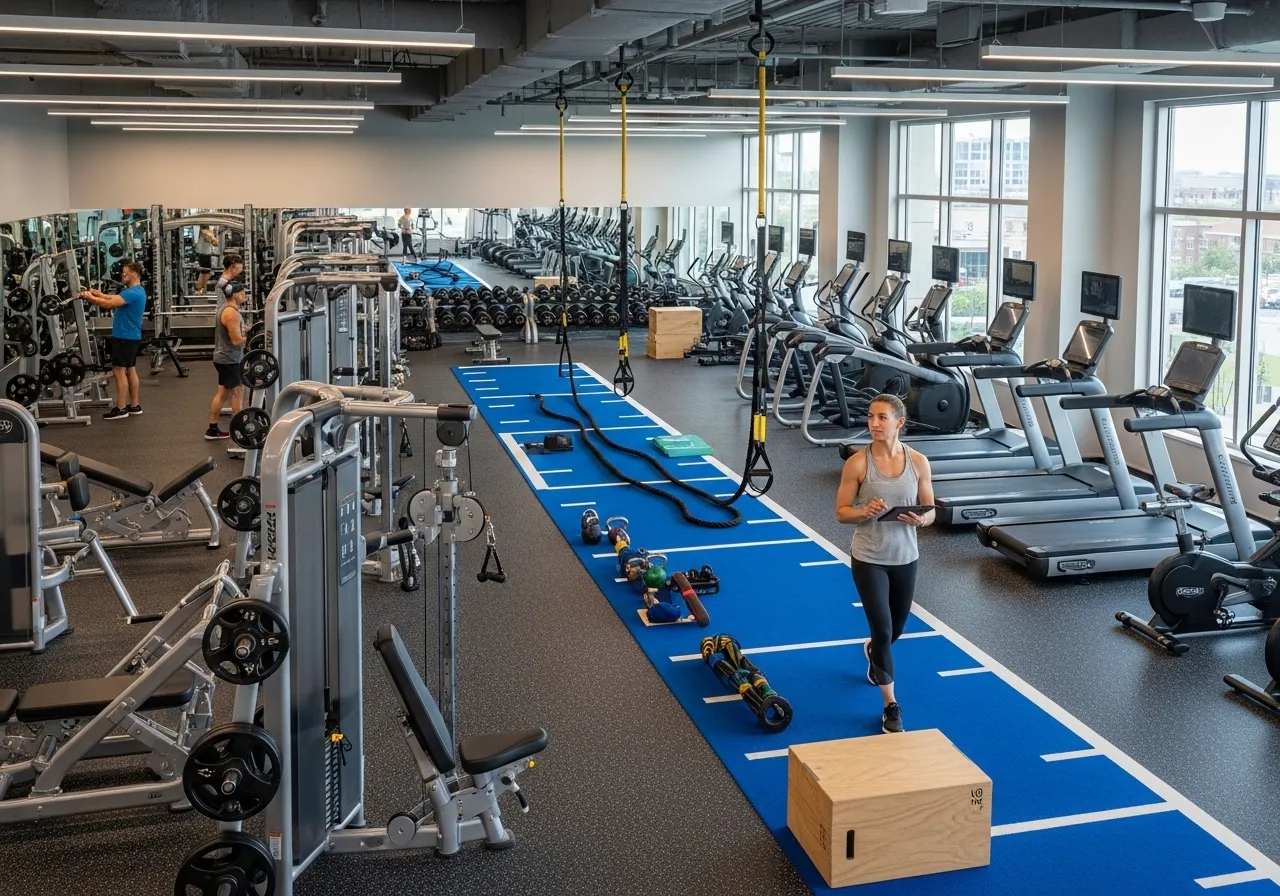
The equipment requirements for different training goals are specific enough to serve as pass/fail criteria during gym evaluation. For strength training and powerlifting: minimum 3–4 power racks or squat stands (sufficient for peak-hour demand); Olympic barbells (20kg) in adequate quantity; a comprehensive free weight dumbbell selection from 5kg to at least 50kg; cable machines with full cable adjustment range; and ideally a deadlift platform. A gym with only 1–2 squat racks serves serious strength athletes poorly during peak hours regardless of its other merits. For bodybuilding and hypertrophy: the full cable machine range (cable crossover, lat pulldown, cable row, cable curl); an extensive machine selection covering all major muscle groups with proper range of motion; and a complete dumbbell selection. For cardiovascular fitness: sufficient treadmill, elliptical, and stationary bike quantity for peak-hour demand without excessive wait times; if running performance is the goal, incline-capable treadmills; if cycling performance is the goal, proper road-geometry stationary bikes rather than upright gym bikes. For functional fitness and athletic training: open floor space (often limited in commercial gyms that maximize machine density); kettlebells in multiple sizes; gymnastics equipment (pull-up bars, rings); and the ceiling height that Olympic lifting and certain functional movements require. Equipment quantity matters as much as equipment variety: a gym with one excellent squat rack and a 60-minute average wait during peak hours is functionally worse for a squatter than a gym with four adequate racks and no waiting.
Cleanliness, Maintenance, and Facility Standards
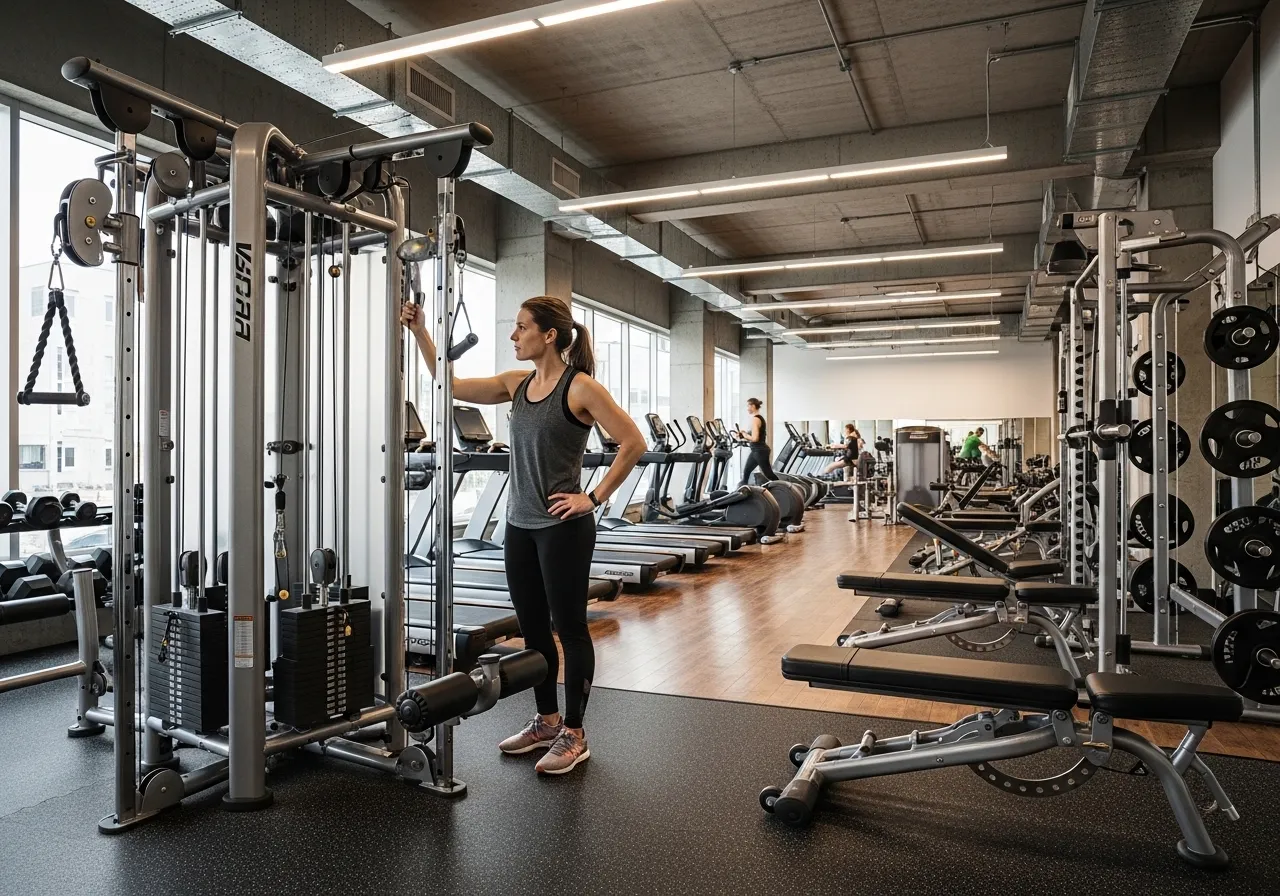
The cleanliness and maintenance standards of a gym reveal the management culture that shapes the entire member experience — and the gym that tolerates broken equipment and inadequate cleaning tolerates the broader operational standards failures that eventually affect every aspect of membership. The cleanliness evaluation during a gym visit: are the locker rooms genuinely clean at the time of a non-prearranged visit (not a scheduled tour when management has prepared the facility)? Is cleaning equipment (wipes, spray bottles) readily available throughout the training floor? Are members actually using the available cleaning equipment, or is the provision performative? The maintenance evaluation: walk through the cardio machine section and note what percentage are operational — any facility with more than 10–15% of cardiovascular machines out of service has maintenance standards that affect training quality. Check the free weight area for bent barbells, cracked dumbbell handles, worn-out grip tape, and missing weight collars — the condition of the free weight equipment reveals both the usage intensity and the maintenance investment. Ask staff about the typical wait time for equipment repairs when something breaks — a 24–48 hour repair response reflects appropriate maintenance standards; “a few weeks” suggests a maintenance culture incompatible with serious training. From ACSM fitness facility standards, equipment maintenance and facility cleanliness are among the criteria that legitimate fitness facility certifications assess — gyms holding industry certifications have demonstrated minimum standards that uncertified facilities may not meet.
Evaluating Personal Training Quality and Coaching Access
The personal training staff quality at a gym matters even for members who do not intend to purchase personal training — the quality of available coaching reflects the facility’s overall commitment to training expertise, and the availability of knowledgeable staff for casual questions affects the training environment for all members. The personal trainer quality evaluation: ask what certifications the training staff hold — NASM, ACE, NSCA-CPT, CSCS, or equivalent nationally recognized certifications indicate foundational competency; ask to observe a personal training session if possible — the quality of cuing, program design, and client attention visible in a session reveals more than credentials alone. The red flag: a personal training staff that aggressively markets to every new member during the join tour is motivated by sales commissions rather than training outcomes — legitimate facilities allow members to approach personal training interest on their own timeline. The semi-private training option: many gyms now offer semi-private training (2–4 clients per trainer) at reduced per-person cost compared to one-on-one training — this format provides coaching access with community accountability at a price point accessible to members who cannot afford dedicated personal training. For beginners especially, the availability of quality small-group coaching at an accessible price point may be among the most valuable gym features available — the technique guidance and programming structure that coaching provides during the critical early training months prevents the bad habits that self-directed beginners develop and maintain for years.
Gym Atmosphere and Training Culture: The Intangible That Matters Most
The hardest gym evaluation factor to quantify and the one with the greatest impact on long-term training consistency is the atmosphere and culture of the training environment. Research on exercise adherence consistently identifies the social environment of exercise settings as among the strongest predictors of whether people maintain their training — the gym where you feel welcome, inspired, and part of a community retains you; the gym where you feel out of place, intimidated, or invisible does not. The culture evaluation during a gym visit: observe how current members interact with each other and with staff — is there genuine community, or is everyone siloed in earbuds without acknowledgment? How do experienced members treat less experienced or clearly newer members — with the indifference of an exclusive community or the inclusion that welcoming culture produces? How do staff engage with the current members they see during your visit — with the familiarity of genuine relationship or the transaction-focused interaction of a customer service role? The music, lighting, layout, and aesthetic design of the training space all contribute to the emotional state that training there produces — some people train better with high-energy music and competitive atmosphere; others train better with a calm, focused environment. Neither is objectively correct, but the gym whose atmosphere aligns with the psychological state you train best in is measurably better for your outcomes than the objectively superior facility in the wrong cultural environment.
Evaluating Group Fitness Offerings: Class Quality, Schedule, and Instructor Expertise
For members whose training includes group fitness classes — and research consistently supports the adherence benefit of group training accountability — the class quality and schedule evaluation is as important as the equipment evaluation. The group fitness assessment: observe a class at your actual intended attendance time rather than reading the schedule and assuming quality — class instruction quality, participant energy, and the class’s pace and structure are only assessable through observation or participation. Instructor qualifications in group fitness vary enormously even within the same facility — some instructors are nationally certified professionals with years of experience; others are certification-minimum staff hired to fill schedule slots. Asking the gym to identify the most qualified instructors for your preferred class types and planning initial attendance around those instructors provides the best group fitness experience and the clearest assessment of the class quality ceiling the facility can provide. The class schedule compatibility with your actual schedule: many boutique studios and commercial gyms have their best-attended, highest-energy classes in time slots that may not align with your availability — the studio with world-class 7 AM Tuesday cycling is less valuable if you can only attend Thursday evenings. Map the specific class times you intend to attend against your schedule before committing, and confirm that the classes at those specific times have good instructor quality and attendance that supports the community energy class training provides.
The Long-Term Gym Relationship: Growing Beyond Your Initial Choice
Training goals evolve over months and years — and the gym that is optimal for your current goals may become inadequate as those goals develop. The beginner who starts with general fitness goals and develops a passion for powerlifting will outgrow the commercial gym’s single squat rack; the recreational runner who decides to train for a triathlon will need pool access that their previous gym lacked; the yoga practitioner who develops interest in strength training will find the studio’s equipment limitations increasingly constraining. Planning for the evolution of training goals — either by choosing a gym with sufficient scope to accommodate goal development, or by accepting that gym changes will occur as goals change — prevents both the under-training that remaining in a too-small facility produces and the over-investment in premium facilities whose scope exceeds current needs. The pragmatic approach: choose the best gym for your current goals at the beginning, invest in the relationship (consistent attendance, community integration, staff relationships) while remaining open to reevaluation as goals develop. The member who has been attending a gym for two years has accumulated community, routine, and environmental familiarity that has real training value — changing gyms is worth the disruption only when the new facility genuinely serves evolved goals better than the existing one, not because novelty produces temporary motivation.
The Virtual and Hybrid Gym Option: Online Training Communities
The rise of online training platforms and virtual fitness communities has created a third option beyond physical gym membership — the digital training environment that provides structured programming, coaching access, and community accountability without a physical facility. Platforms like Peloton, iFIT, Mirror, and the growing ecosystem of subscription-based fitness apps offer programming quality and community features that rival or exceed what many physical gyms provide, at a fraction of the cost when home equipment is already available. The virtual gym strengths: world-class coaching and programming available on-demand at any time; community features including group challenges, leaderboards, and social training that create accountability without schedule coordination; and the privacy and convenience that home training provides without the programming quality sacrifice that self-directed home training typically involves. The virtual gym limitations: the equipment investment that meaningful virtual training requires (a quality stationary bike, smart mirror, or treadmill for platform-dependent systems); the absence of the physical community and in-person social connection that research identifies as among the most powerful exercise adherence tools; and the lack of hands-on technique coaching that certain movements (particularly weightlifting technique) require for safe and effective development. The hybrid model — combining a basic physical gym membership for equipment access with a virtual programming subscription for structured guidance and community — increasingly represents the optimal value proposition for self-directed athletes who want both equipment flexibility and programming quality without the premium cost of boutique physical facilities.
The athlete who has done this analysis thoroughly arrives at their gym with confidence and commitment — knowing that the choice was made deliberately, not by default. That confidence itself contributes to the training consistency that produces the results the gym was chosen to support. Take the time to evaluate properly, make the informed decision, and then commit fully to the training that the right environment enables. The gym is only the container; the training is what fills it with meaning. Always.
4. Location, Schedule, Community, and Contract: The Practical Decision Factors
The practical factors that determine whether a gym choice actually works in real life — location convenience, operating hours, membership terms, and contract obligations — are as important as equipment quality and culture for long-term training consistency.
Location Convenience: The Proximity Principle and Its Limits
Location convenience is the most reliable predictor of gym attendance frequency — research on gym attendance patterns consistently finds that members who live or work within 3–4km of their gym attend significantly more frequently than those with longer commutes, with attendance frequency dropping measurably for each additional kilometer of distance beyond this threshold. The proximity principle is real and should not be dismissed — the gym you will actually attend consistently is better than the superior gym you will not. However, the proximity principle has a critical limit: the nearest gym that fundamentally misaligns with your goals will not be attended consistently regardless of its proximity, because the poor training experience it provides removes the motivation that gym attendance requires. The optimal location decision: identify all gyms within a reasonable commute from both home and work (training from work during lunch or immediately before/after work significantly increases attendance consistency compared to out-of-direction travel); evaluate the goal-aligned candidates within this area; and select the best goal-fit among the conveniently located options rather than the closest gym regardless of fit. The “on the way” gym — located directly between home and work, or adjacent to a route you travel daily for other purposes — eliminates the travel decision that busy schedules otherwise deprioritize. If a gym visit requires a dedicated trip, it will be skipped more often than if it is literally on the route you travel anyway.
Operating Hours and Schedule Compatibility
The gym’s operating hours must genuinely accommodate your training schedule — not the schedule you intend to maintain but the schedule you actually keep. The early morning trainer needs a gym open by 5:30 or 6:00 AM; the late-night worker needs a 24-hour facility or one that remains open until at least 11 PM; the parent whose training window is the 60 minutes between school drop-off and work needs a facility open and adequately staffed during that specific period. The peak-hour crowding assessment: visit the gym at your actual intended training time — not during a midday weekday tour when the facility is minimally populated — and assess whether the equipment you need is available without prohibitive wait times. Most commercial gyms have predictable peak hours (6–8 AM, 12–1 PM, 5–8 PM on weekdays) during which equipment wait times and crowding levels reach their maximum. If your schedule requires training during peak hours, equipment availability during those specific times must be confirmed through a visit or reliable member reports — not assumed based on the spacious facility you toured at 2 PM on a Tuesday.
Membership Contracts, Cancellation Policies, and Hidden Costs
The financial terms of gym membership — contract length, cancellation requirements, initiation fees, and the hidden costs that add to the advertised base rate — require careful reading before commitment. The contract evaluation questions: what is the minimum commitment period, and what are the cancellation terms within and outside of this period? Many gym contracts require 30–60 days advance written notice for cancellation regardless of contract status — the member who assumes month-to-month cancellation without reading the contract may pay 1–2 additional months after deciding to leave. What constitutes the full cost of membership beyond the base monthly fee: initiation fees (often $50–200, sometimes waivable through promotion or negotiation); locker rental fees; towel service fees; guest pass costs; and personal training packages presented as standard components during the signup process. The initiation fee negotiation: gym initiation fees are almost universally negotiable, particularly during promotional periods, at the end of a sales month when staff have quotas to meet, or when a competing gym offer can be referenced. The month-to-month premium: many gyms offer month-to-month membership at a premium above the annual contract rate — the month-to-month option’s flexibility value may be worth the higher cost for anyone uncertain about the gym fit, as it prevents the contract commitment that locks poor fit into a paid obligation. From PubMed research on fitness facility choice and adherence, financial commitment to a gym contract is associated with higher initial attendance but does not sustain attendance when goal alignment, location, and culture factors are poor — confirming that contract terms matter less than the fundamental fit factors.
The Community Factor: Training Partners, Classes, and Social Integration
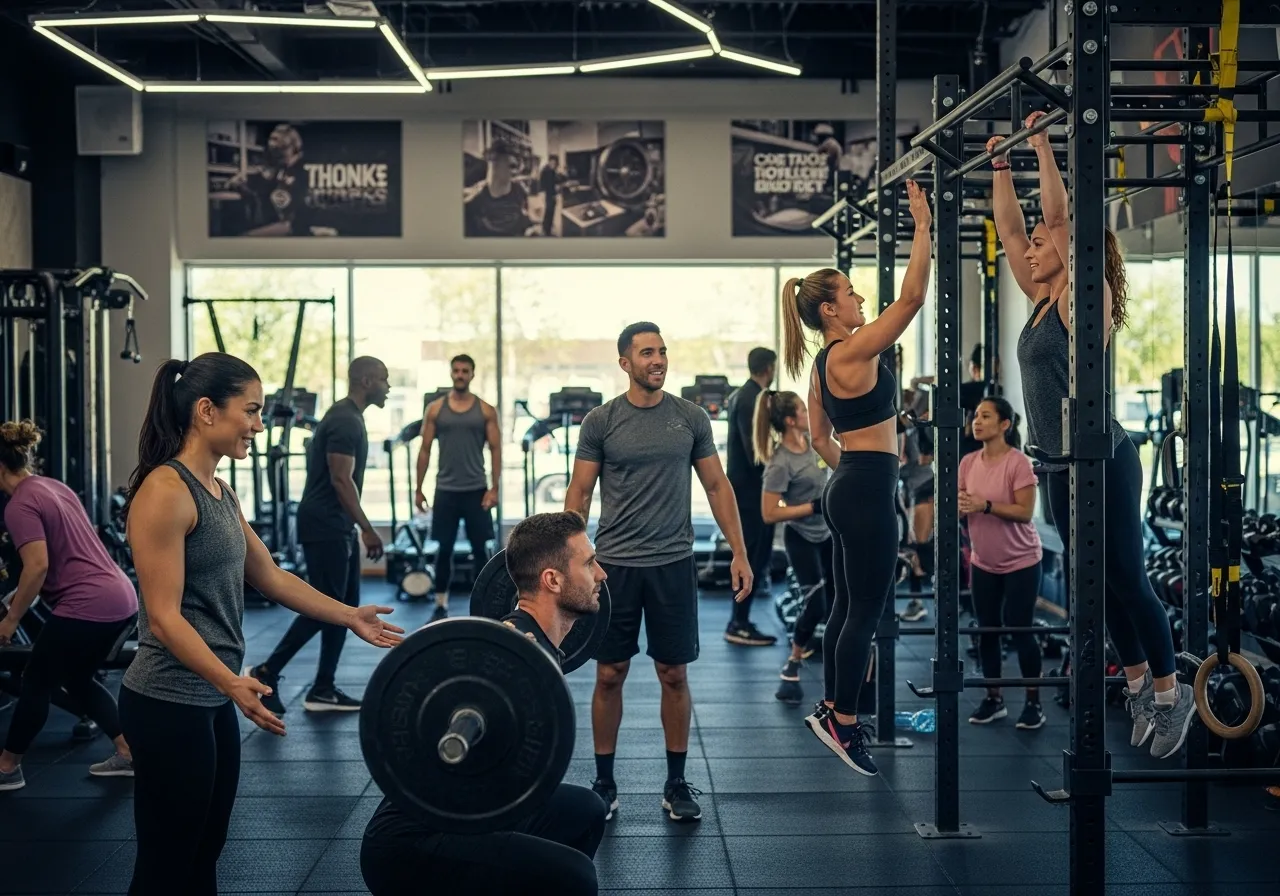
The social dimension of gym choice — whether the facility provides genuine community connection or merely shared space — may be the most underweighted factor in most gym selection decisions and among the most impactful for long-term training consistency. The exercise adherence research is unambiguous: people who exercise with social connection and accountability maintain their training significantly longer than those who train in social isolation. The community evaluation during a gym visit: do members appear to know each other? Is there the easy familiarity of a community that has trained together over time, or the isolation of strangers sharing equipment? Are there structured community elements — group classes, team training programs, member events — that create the connection points that community requires? Does the gym’s social media presence and programming suggest active community building or primarily commercial content? Training partners specifically: the gym that allows you to find and develop training partner relationships — through compatible training schedules, similar goals, and the shared experience of regularly training in the same space — provides the social accountability that the research on exercise adherence identifies as among the most powerful sustainability tools available. If you currently train alone and struggle with consistency, prioritizing a gym where community connection is structurally built in — through classes, group training programs, or a culture that naturally fosters partner training — may produce better long-term outcomes than the technically superior isolated training option.
Corporate Wellness Programs and Gym Reimbursement Benefits
Many employers, health insurance plans, and employee benefit programs offer gym membership reimbursement or subsidized gym access that significantly reduces the out-of-pocket cost of fitness facility membership. These programs are widely underutilized — research suggests that fewer than 30% of eligible employees take advantage of available fitness benefits — primarily because the benefits are not prominently communicated or easily activated. The gym reimbursement landscape: employer wellness programs often reimburse $20–100 monthly toward gym membership costs upon submission of membership receipts; major health insurance providers including many national carriers offer fitness benefit programs (Aetna’s Active&Fit, BCBS’s Blue365, and similar programs) that provide discounted or reimbursed access to national gym networks; and some employers have corporate membership arrangements with specific facilities that provide reduced rates below individual membership pricing. Activating these benefits before gym selection may change which facility is optimal — a gym in a corporate membership network becomes substantially more affordable than an equivalent facility without the arrangement. Contact your HR department and health insurance provider before finalizing any gym commitment to identify available fitness benefits; the financial impact can reduce effective monthly gym costs by 30–100% and should inform the gym selection and budget calculation that the decision requires.
Making the Final Decision: A Decision Framework
After completing the evaluation process — visiting multiple gyms, rating each against goal alignment and practical criteria, reviewing contracts, and investigating community and safety standards — the final decision benefits from a structured comparison rather than an overall impression assessment. The weighted decision framework: assign importance weights to each evaluation criterion based on their relevance to your specific goals and lifestyle (goal alignment and equipment adequacy: 30%; location and schedule: 25%; culture and community: 20%; value and contract terms: 15%; cleanliness, safety, and staff: 10%); score each gym on each criterion from 1–5; multiply each score by its weight; and sum the weighted scores. The gym with the highest weighted score is the analytically superior choice given your specific priorities. This framework prevents the common errors of over-weighting impressive aesthetics, proximity alone, or price — ensuring that the criteria most predictive of training success receive the most influence in the final decision. After completing the quantitative assessment, honor any strong intuitive reaction in either direction — the gym that scores well analytically but that you dread visiting will not sustain attendance; the gym with a slightly lower score that makes you genuinely excited to train may outperform the analysis through the attendance consistency that excitement produces. Trust the analysis, check it against intuition, and commit to the gym where both point in the same direction. Then attend consistently, build the habit, and allow the investment in the right training environment to compound its returns across the training years that dedicated gym membership enables.
Gym Density and Urban vs. Suburban vs. Rural Gym Access
The gym selection challenge differs significantly based on geographic context — the urban athlete has abundant gym options within walking distance while the rural athlete may have limited access that constrains the choice below the ideal. Urban gym selection: the abundance of options requires the structured evaluation framework this article provides to avoid choice paralysis and the tendency to default to the nearest or most heavily marketed facility rather than the most goal-aligned one. Urban athletes should leverage the competition between facilities to negotiate pricing, seek trial memberships at multiple facilities before committing, and take advantage of the specialty gym access that urban density enables. Suburban gym selection: the typical suburban landscape offers commercial chain gyms, big-box retailers’ fitness centers, and possibly boutique studios — rarely the specialty facilities that serious sport-specific training requires. Suburban athletes with specialty training needs may commute to urban areas for specialty gym access while maintaining a convenient local membership for routine training sessions. Rural gym selection: the rural athlete with limited local options faces a different optimization problem — maximizing training quality from the available options, supplementing with home equipment for needs the local facility cannot meet, and potentially investing in remote coaching that provides programming quality that limited local expertise cannot supply. The rural athlete who cannot access a quality gym is the clearest case for home gym investment — the upfront equipment cost is justified by the ongoing access it provides that no nearby commercial alternative can match.
Every gym has a personality — and finding the one that matches yours is as important as any other fitness decision you make. The member who trains in a gym that feels right attends more, trains harder, and achieves more over the years that compound the investment. Take the decision seriously, apply the framework, and choose the gym that genuinely serves the athlete you are working to become. Then show up, do the work, and let the environment that supports your training identity carry you forward across the months and years of consistent effort that athletic development requires.
5. How to Test a Gym Before You Commit and FAQs
The free trial visit and structured evaluation process convert the gym selection from an intuition-based decision into a data-informed choice — and the specific questions to ask and observations to make during a trial visit reveal information that no amount of online research provides.
The Free Trial Visit: What to Do, Observe, and Ask
Every reputable gym offers a free trial visit or multi-day guest pass — and any gym that refuses to allow a trial before commitment is signaling a lack of confidence in their facility’s ability to sell itself through direct experience. The structured free trial protocol: visit at your actual intended training time (not the quietest period management suggests); perform your actual planned workout rather than a modified showcase workout — the experience of performing your real training in the facility reveals equipment adequacy, crowding, and culture fit in ways that a casual walk-through cannot; note the specific equipment availability and wait times for the pieces your program requires; interact with at least two staff members — the quality and character of these interactions reveal the support culture you will experience as a member; use the locker room, showers, and any amenities you intend to use regularly; and spend time in the post-workout area observing member culture and community. After the trial, rate each of the evaluation criteria (equipment, location, culture, cleanliness, value, hours, and community) on a simple 1–5 scale. This structured rating converts an emotional impression into comparable data that facilitates objective multi-gym comparison. Request a second visit before committing if the first raised unresolved questions — legitimate gyms accommodate multiple trial visits for genuinely interested prospects, and any gym that pressures you to commit after a single visit is using the sales tactic that replaces quality with urgency.
Questions to Ask Before Signing Any Gym Contract
The specific questions that responsible gym selection requires asking — and the red flags hidden in common answers: “What are the complete cancellation terms, including notice period and any fees?” (red flag: vague answers, multiple conditions, or reference to reading the contract for details that cannot be summarized verbally); “What is the full monthly cost including all fees beyond the base membership?” (red flag: additional fees for lockers, towels, equipment, or access that were not disclosed upfront); “What is the policy for broken or out-of-service equipment?” (red flag: no clear policy or a response suggesting long repair wait times are normal); “Is there a freeze option if I’m traveling or injured?” (legitimate gyms offer paid freeze options that suspend fees without requiring cancellation — the absence of this option signals inflexible contract terms); “Can I try the gym for a week before committing to a contract?” (the answer reveals the gym’s confidence in their product and their member-focused versus sales-focused orientation); and “What is your member-to-equipment ratio during peak hours?” (this question is unusual enough that honest staff will provide useful information while evasive answers reveal awareness of crowding problems). The contract itself requires reading before signing — particular attention to automatic renewal clauses, the notice requirements for cancellation, and any provisions that modify the terms unilaterally. A gym contract that cannot be reviewed at home before signing is a contract that contains terms the gym prefers you not read carefully.
The Multi-Gym Strategy: When One Gym Is Not Enough
Some athletes’ training goals and lifestyle requirements are best served by combinations of gym memberships rather than a single comprehensive facility. The multi-gym approach makes sense when: one facility provides excellent strength training equipment but lacks the group fitness or yoga programming that recovery and flexibility training requires; the primary training facility has no pool and swimming is an important cross-training or recovery modality; or the training schedule includes both early morning workouts (requiring a 24-hour facility) and specialty class attendance at a studio with limited hours. The financial management of multi-gym memberships: the combination of a commercial gym base membership ($30–50 monthly) with a drop-in or unlimited studio membership ($80–150 monthly) may total less than a premium all-inclusive facility, while providing better goal alignment for each specific training modality. The practical consideration: managing multiple gym memberships requires organizational discipline and the deliberate scheduling that prevents each facility from becoming an underused expense. Establish which facility covers which training modality, schedule each modality’s sessions explicitly, and review the value of each membership quarterly against actual attendance frequency.
Budget Gym vs. Premium Gym: When Price Matters and When It Doesn’t
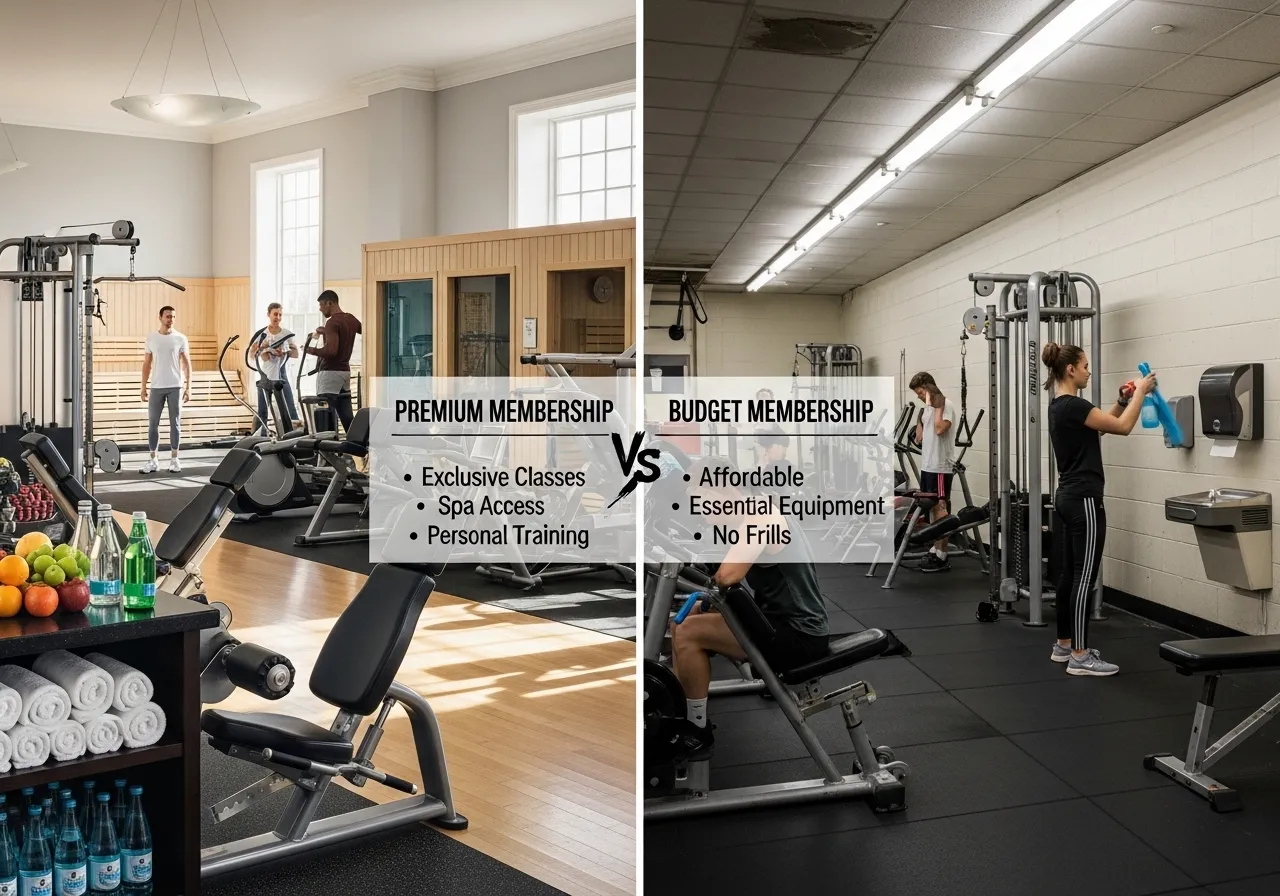
The price difference between budget commercial gyms ($10–30 monthly) and premium facilities ($80–200+ monthly) is real and significant — but the value question is whether the premium genuinely supports training outcomes that the budget option cannot provide, or whether it primarily buys aesthetic upgrades and amenities that training quality does not require. The cases where premium pricing is justified: when the premium facility provides coaching, programming, or community access that genuinely changes training outcomes (boutique studios with world-class instructors, specialty gyms with elite coaches, facilities with unique equipment that specific sport training requires); when the premium environment produces materially higher attendance consistency than the budget alternative (the person who trains 4 times per week in a premium facility they love gains dramatically more than the person who trains once a week in a budget facility they tolerate); and when the amenities offset other costs (a premium gym with convenient, quality showers and changing facilities saves time and may substitute for travel to separate shower facilities). The cases where budget facilities serve equally well: when the training program requires only standard free weights and basic machines that budget commercial gyms adequately provide; when the member is self-motivated enough that facility aesthetics and amenities do not affect attendance frequency; and when the premium pricing would create financial strain that generates anxiety reducing the psychological benefit of exercise. Train at the most affordable facility that genuinely serves your goals — and recognize that for many training goals, that is a $20/month gym with adequate free weights and a motivated training culture.
Gym Selection for Special Populations and Specific Needs
Certain populations have gym selection considerations beyond the general evaluation framework. Beginners: the gym whose staff provide genuine onboarding support — introductory sessions, equipment orientation, and ongoing accessibility for technique questions — is more valuable for beginners than the facility with superior equipment but no guidance. The intimidating atmosphere of some commercial gyms and most specialty gyms creates the barrier to entry that genuine beginner support eliminates. Older adults: the gym that specifically accommodates older adult training needs — adequate seating rest areas, equipment suitable for reduced mobility ranges, group fitness programming at appropriate intensity levels, and staff trained in older adult fitness needs — may not be the most comprehensive facility but is the most appropriate choice for maintaining the consistency that aging training requires. Athletes with disabilities: accessibility standards vary significantly between facilities — power wheelchairs, mobility aids, and adaptive equipment availability should be confirmed before visiting, and the staff’s genuine familiarity with adaptive training (rather than token accessibility compliance) determines the practical training environment. Parents with children: the gym that provides quality childcare during training hours is not merely a convenience but an attendance enabler that the gym without childcare cannot substitute for — for parents whose training schedule requires simultaneous child supervision, this facility feature is non-negotiable regardless of other facility quality.
Frequently Asked Questions About Choosing the Right Gym
How many gyms should I visit before choosing? Visit at least 2–3 gyms that appear goal-aligned before making a final decision — the comparison between facilities clarifies evaluation criteria and prevents the anchoring to the first gym visited that single-option evaluation produces. Is a more expensive gym always better? No — the right gym for your goals at a price you can sustain consistently is better than the objectively superior facility that strains your budget or requires excessive travel. What if the best gym for my goals is too far away? Consider whether your training program can be adapted to a more conveniently located alternative, or whether the commitment required for the further option is genuinely sustainable for your lifestyle. A 40-minute commute to an ideal gym may be maintained for months but rarely for years. Can I negotiate gym membership prices? Often yes — initiation fees are widely negotiable, and the base monthly rate may be discounted during promotional periods, at the end of sales months, or when competing offers can be referenced. Student, military, corporate, and health insurance discounts are available at many facilities and worth asking about regardless of whether they are advertised. What should I do if the gym I joined turns out to be wrong for me? Review your cancellation terms, determine the cost of exiting, and evaluate whether the exit cost is worth the training improvement that a better-fit gym would provide. The sunk cost of a membership already paid should not prevent you from finding a better-fit facility — the opportunity cost of continued training in a poor-fit gym is typically larger than the exit cost of leaving it. How often should I reevaluate my gym choice? Annually at minimum — training goals evolve, facilities change under new management, and new gym options emerge. The gym that was optimal at the beginning of a training journey may not remain optimal as goals develop and training sophistication increases.
Gym Selection for Travelers: Managing Training While on the Road
Frequent travelers face a unique gym selection challenge — the primary training facility must be complemented by a strategy for maintaining training quality during travel periods that remove access to the home gym. The travel training strategy starts with gym selection at home: choosing a gym affiliated with a national or international network (many commercial gym chains offer reciprocal access across locations) provides maintained access at familiar facilities during travel; alternatively, hotel gym quality assessment becomes a secondary fitness infrastructure consideration. The hotel gym reality: most hotel gyms are inadequate for serious training — a few treadmills, a cable machine, and dumbbells up to 30kg at best. Athletes who travel frequently and whose training requires heavier or more specialized equipment should research day pass options at local commercial or specialty gyms in their destination cities before traveling. Day pass costs of $10–20 at quality commercial facilities are a worthwhile investment in training consistency compared to the compromised hotel gym alternative. The apps and databases that locate quality gyms in unfamiliar cities — including GymPass, ClassPass, and local gym-finding apps — allow advance trip planning that identifies training options before arrival and prevents the last-minute scramble for training access that disrupts the training consistency that frequent travelers are most vulnerable to losing.
Transitioning Between Gyms: How to Switch Without Losing Momentum
The decision to leave a gym — even a clearly wrong-fit gym — produces the psychological resistance and behavioral disruption that habit change always involves. Managing the gym transition effectively maintains the training consistency that new gym establishment requires. The transition protocol: begin visiting the new gym for trial sessions before formally cancelling the existing membership, allowing the habit of attending the new location to develop before the routine of the old facility is eliminated; if possible, overlap the memberships for one month to allow the new gym habit to stabilize before the old option disappears; establish a regular training schedule at the new facility within the first two weeks — the specific days and times that training will occur — before the novelty of the new environment fades and the friction of an undefined schedule allows inconsistency; and connect with at least one other member at the new facility within the first month, creating the social anchor that sustains attendance through the early period when the new gym feels less comfortable than the previous familiar environment. The sunk cost of the previous membership, the cancellation notice period, and the effort of recontracting are genuine friction points — but the training investment in months of consistent attendance at an optimally chosen gym consistently exceeds the transition cost within 2–3 months of the new membership’s positive training effect compounding.
Seasonal Gym Considerations: January Rush, Summer Slowdown, and Timing Your Join
The timing of gym membership initiation affects both the price available and the crowding conditions during the critical early months when attendance habits are forming. The January rush — the influx of new members that the new year’s resolution season produces — creates the crowded conditions that make early January one of the worst times to evaluate a gym or establish a new training routine. Equipment wait times double or triple in January at most commercial facilities; the culture temporarily shifts as large numbers of motivated but inconsistent new members fill the floor; and the staff attention that new members benefit from is diluted across a dramatically larger new member population. The strategic joining timing: late February through April (when resolution members have largely dropped off, facilities return to normal crowding, and staff have more time for new member support); September through October (the back-to-school season motivation period with moderate crowding); or June through August (summer slowdowns at many urban commercial gyms when members reduce attendance for outdoor activities — creating low-crowding conditions ideal for new habit formation and potentially promotional pricing as gyms seek to fill revenue gaps). Price negotiation timing: the end of any calendar month (when sales staff have monthly quotas to meet), during competitor-referenced pricing conversations, and specifically in January when gyms offer promotional rates to attract the resolution crowd — though the January crowding tradeoff should be considered. The athlete who joins during a low-traffic period builds their gym habit in a less competitive environment and establishes the attendance patterns that January’s crowding tests but rarely breaks.
Choose well. Train consistently. The right gym makes both easier.


