How to Do Squats Properly (Avoid These Common Mistakes)
Disclaimer: This article is for general educational purposes only and is not intended to replace medical, nutritional, or professional fitness advice. Individual results may vary. If you experience pain, swelling, discomfort, or unusual symptoms during exercise, stop and consult a qualified professional.

Why Squat Form Matters: Why Squat Form Is the Foundation of Lower Body Training
Squats are one of the most useful lower-body exercises because they train the legs, hips, and core in a coordinated way. When performed with good technique, they can improve strength, balance, and movement quality at the same time.
Squat form matters because small technique errors can reduce training quality and increase stress on the knees, hips, or lower back. For that reason, learning proper mechanics is often more valuable than simply adding more weight.
The Squat as the King of Lower Body Exercises
The squat is often considered a foundational lower-body movement because it uses multiple large muscle groups together. A well-executed squat can be a practical way to build strength, improve function, and support athletic performance.
However, the benefits of squatting depend heavily on technique. Poor positioning can reduce the effectiveness of the movement and make it less comfortable to perform consistently.
Squat Anatomy: What Moves and Why
A squat involves the ankles, knees, hips, and spine working together. Each joint contributes in a slightly different way, and the movement becomes less efficient when one area is too stiff or unstable.
The goal is to keep the movement coordinated so the body can share the load instead of forcing one area to compensate too much.
Individual Anatomy Affects Ideal Squat Form
No two people squat in exactly the same way. Differences in femur length, hip structure, ankle mobility, and torso proportions all affect stance width, depth, and torso angle.
This is why a squat that looks perfect for one person may not be the best version for someone else. The best squat is the one that fits your body while still keeping control and alignment.
Perfect Squat Technique: Step-by-Step Perfect Squat Technique
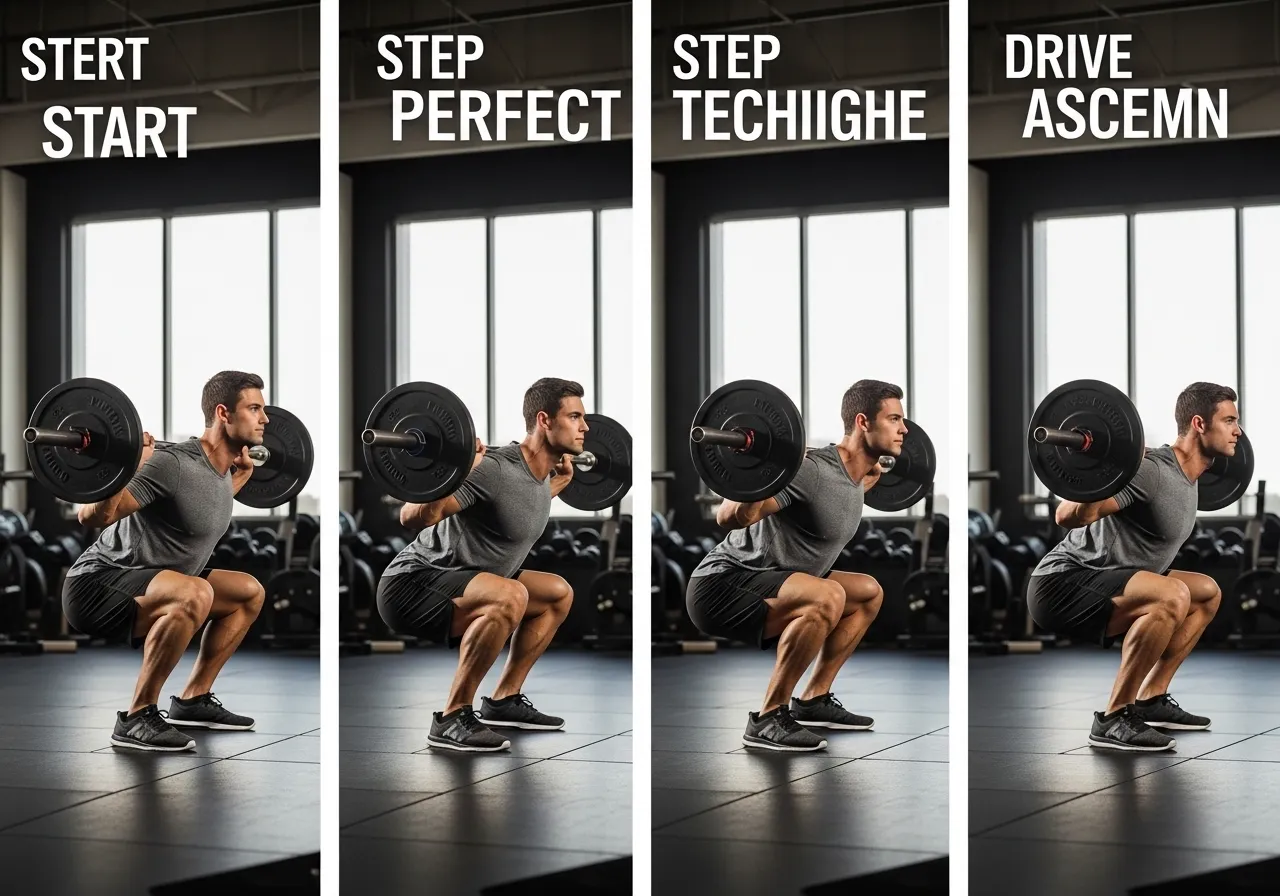
Good squat technique starts before you even begin lowering into the movement. Foot placement, core control, and body positioning all affect how stable and comfortable the squat feels.
The Setup: Foot Position and Stance Width
Start with a stance that is slightly wider than shoulder width and point the toes slightly outward. This gives many people enough space to descend comfortably while keeping the body balanced.
The best stance is the one that lets you squat deeply with control, without forcing the knees or lower back into poor positions.
The Brace: Creating Intra-Abdominal Pressure
Before descending, brace your core and take a controlled breath to create stability through the trunk. This helps the torso stay firm and improves force transfer during the squat.
A strong brace does not mean stiffness everywhere; it means the torso stays controlled while the legs do the work.
The Descent: What Should Move and When
As you lower into the squat, the hips and knees should bend together in a smooth motion. The chest should stay as upright as your body allows while the feet remain grounded.
The descent should feel controlled, not rushed. If one part of the body collapses or shifts suddenly, the squat is usually too heavy or too deep for your current mobility.
The Ascent: Drive From the Floor
On the way up, push evenly through the whole foot and stand up with control. The movement should feel powerful but still coordinated.
Keep the knees tracking in line with the toes and finish the rep by extending the hips fully at the top.
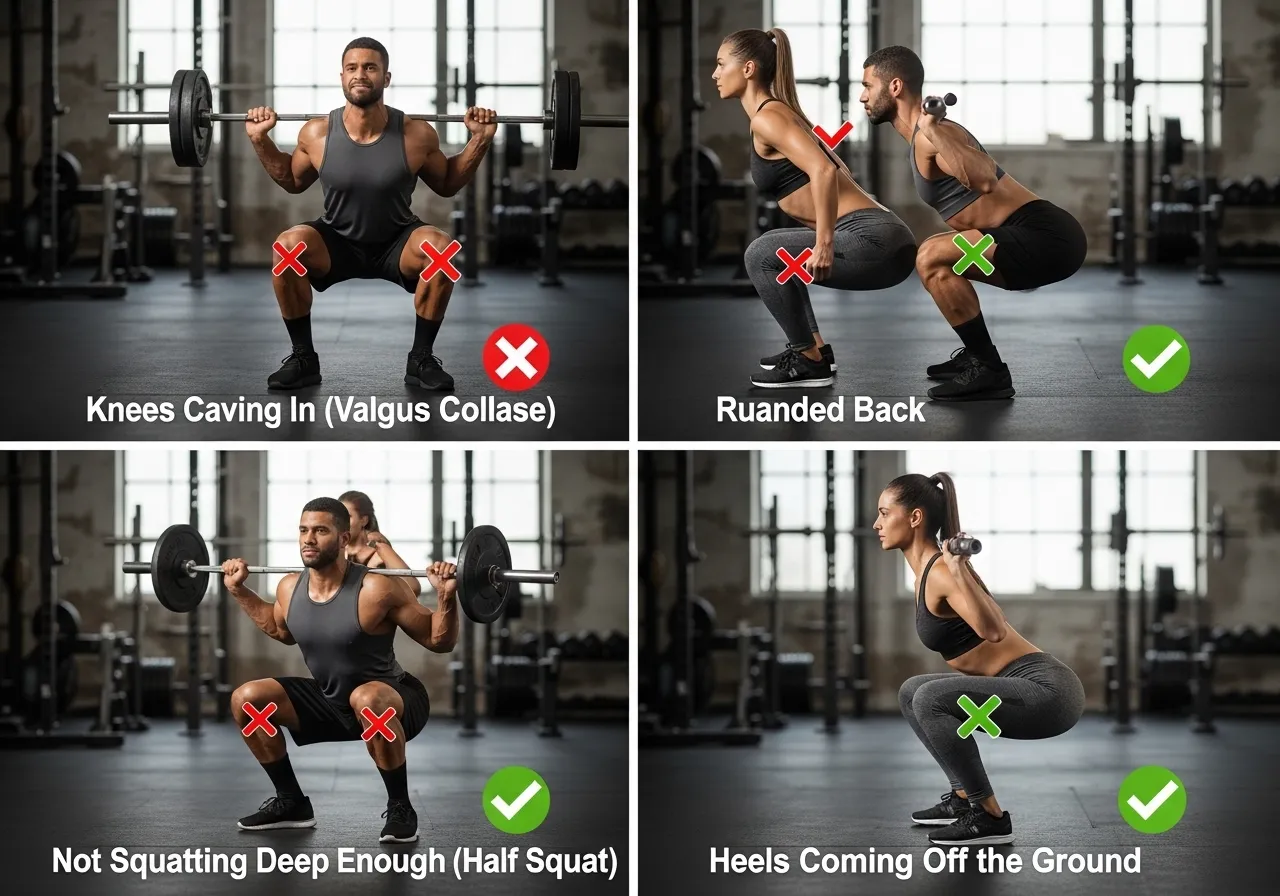
Common Squat Mistakes: The Most Common Squat Mistakes and How to Fix Them
Most squat problems come from a small number of common issues. The good news is that these problems can often be improved with better cues, mobility work, and targeted strengthening.
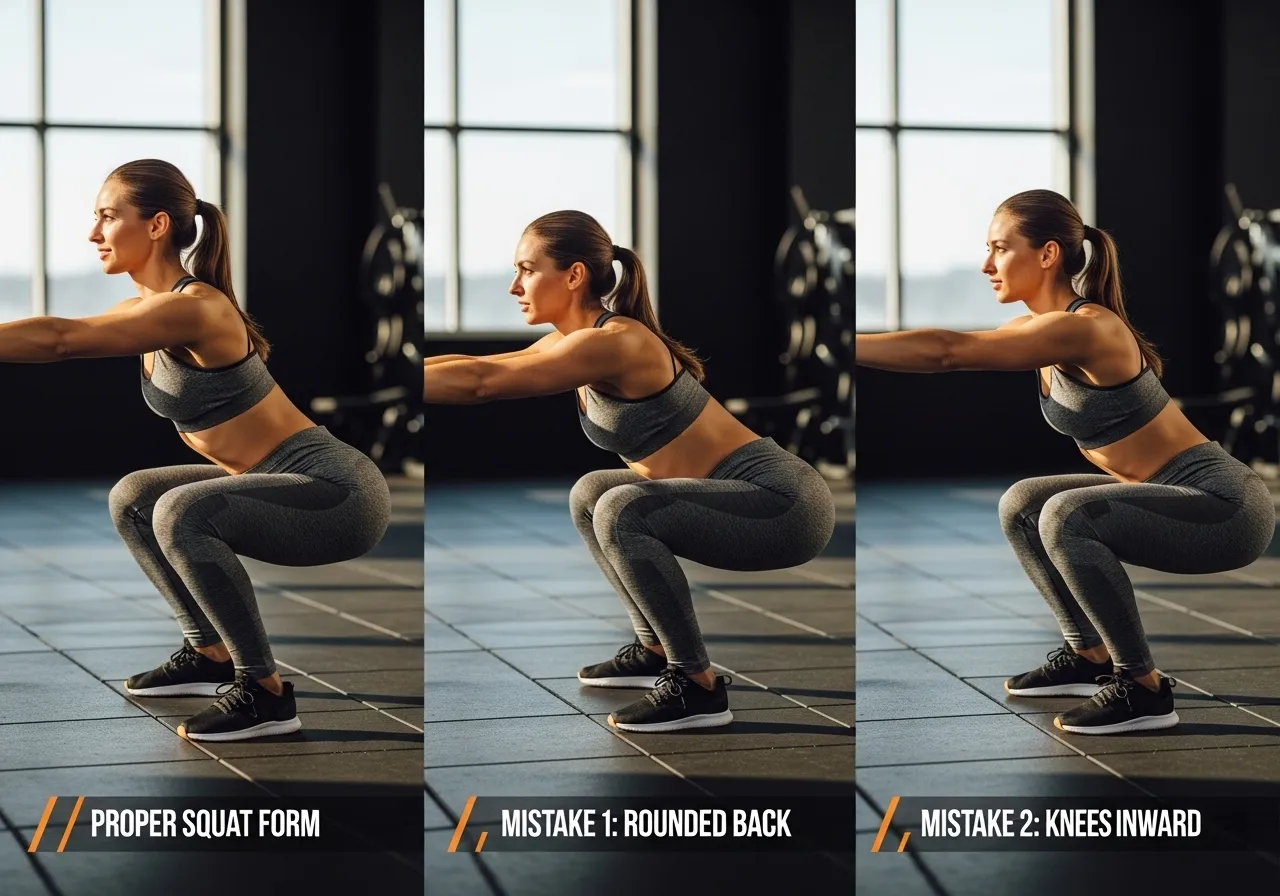
Knee Cave: Valgus Collapse
When the knees collapse inward during the squat, the movement becomes less stable and may place extra stress on the lower body. This is often related to weak hip muscles or poor movement control.
A useful correction is to keep the knees tracking over the toes and work on hip strengthening exercises that improve control.
Heel Rise
If the heels come up during the squat, ankle mobility may be limited. This can force the body to lean forward too much and reduce squat depth.
Improving ankle mobility and, when needed, using a small heel lift can help the squat feel more stable.
Butt Wink
Butt wink happens when the pelvis tucks under at the bottom of the squat. This often means the squat is going deeper than the body can currently control with good posture.
Reducing depth slightly and improving hip mobility may help the movement feel cleaner.
Forward Lean Excess
Some forward lean is normal, but too much can shift the load away from the legs and into the lower back. This often happens when ankle or hip mobility is limited.
A better squat usually comes from finding a depth and stance that allow the torso to stay controlled.
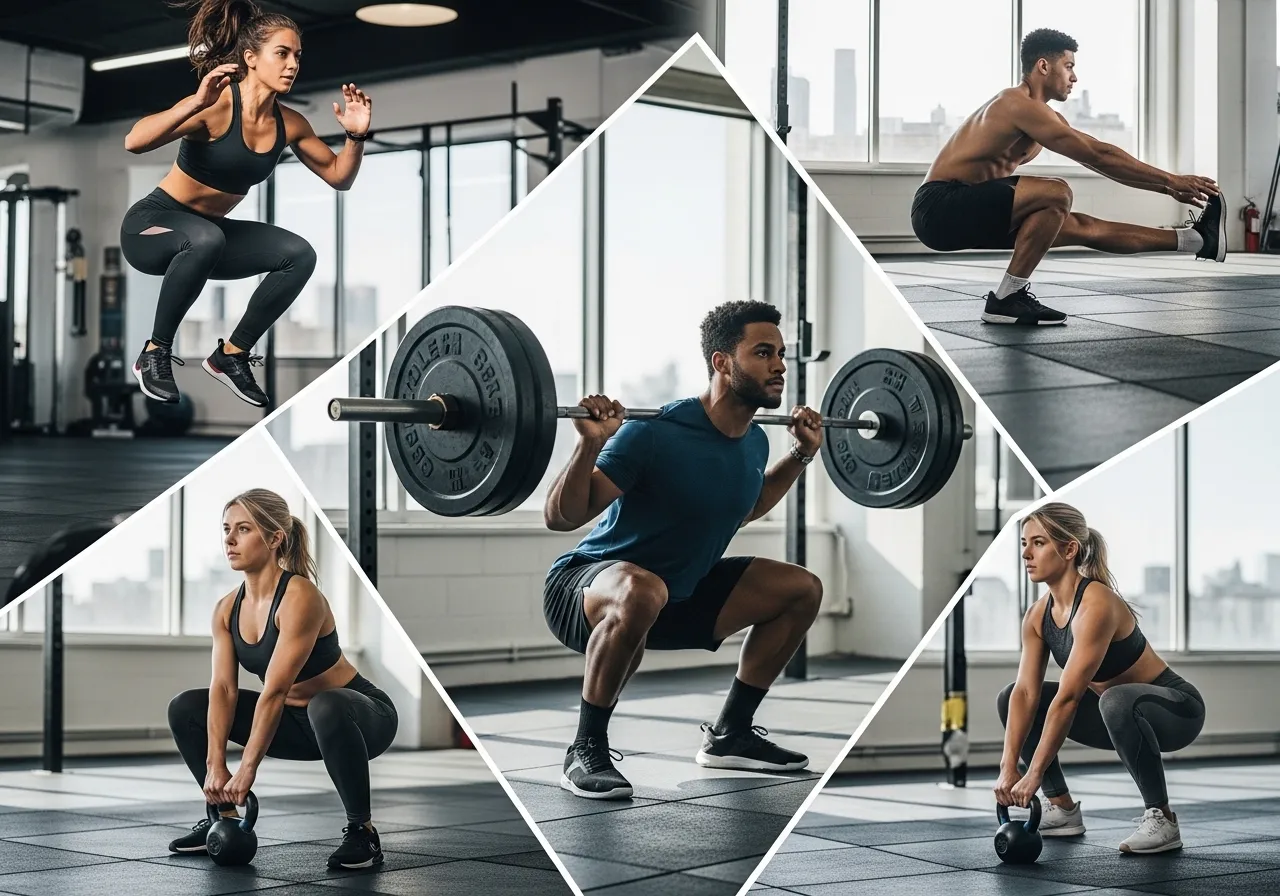
Squat Variations: Squat Variations for Different Goals and Situations
Not every squat variation serves the same purpose. Some are better for learning technique, while others are more useful for strength, muscle growth, or unilateral control.
Goblet Squat: The Teaching Tool and Warm-Up Essential
The goblet squat is one of the easiest squat variations to learn. Holding a weight in front of the body helps many people stay more upright and balanced.
It is a good starting point for beginners and a useful warm-up exercise for more advanced lifters.
Front Squat: The Quad-Dominant Variation
The front squat keeps the torso more upright and places more emphasis on the front of the thighs. It also highlights mobility limitations more quickly than some other squat styles.
For that reason, it can be useful both as a strength exercise and as a movement assessment tool.
Bulgarian Split Squat: The Unilateral Lower Body King
The Bulgarian split squat trains one leg at a time and helps correct side-to-side strength differences. It is also useful for people who want strong legs without loading the spine as heavily as in some bilateral squat variations.
This exercise works well for building both strength and balance, especially when performed with control.
Box Squat: The Depth Control Tool
Box squats can help you learn consistent depth and improve control at the bottom of the movement. They are also useful when returning to squatting after a break or injury.
The box should guide the movement, not replace good technique.
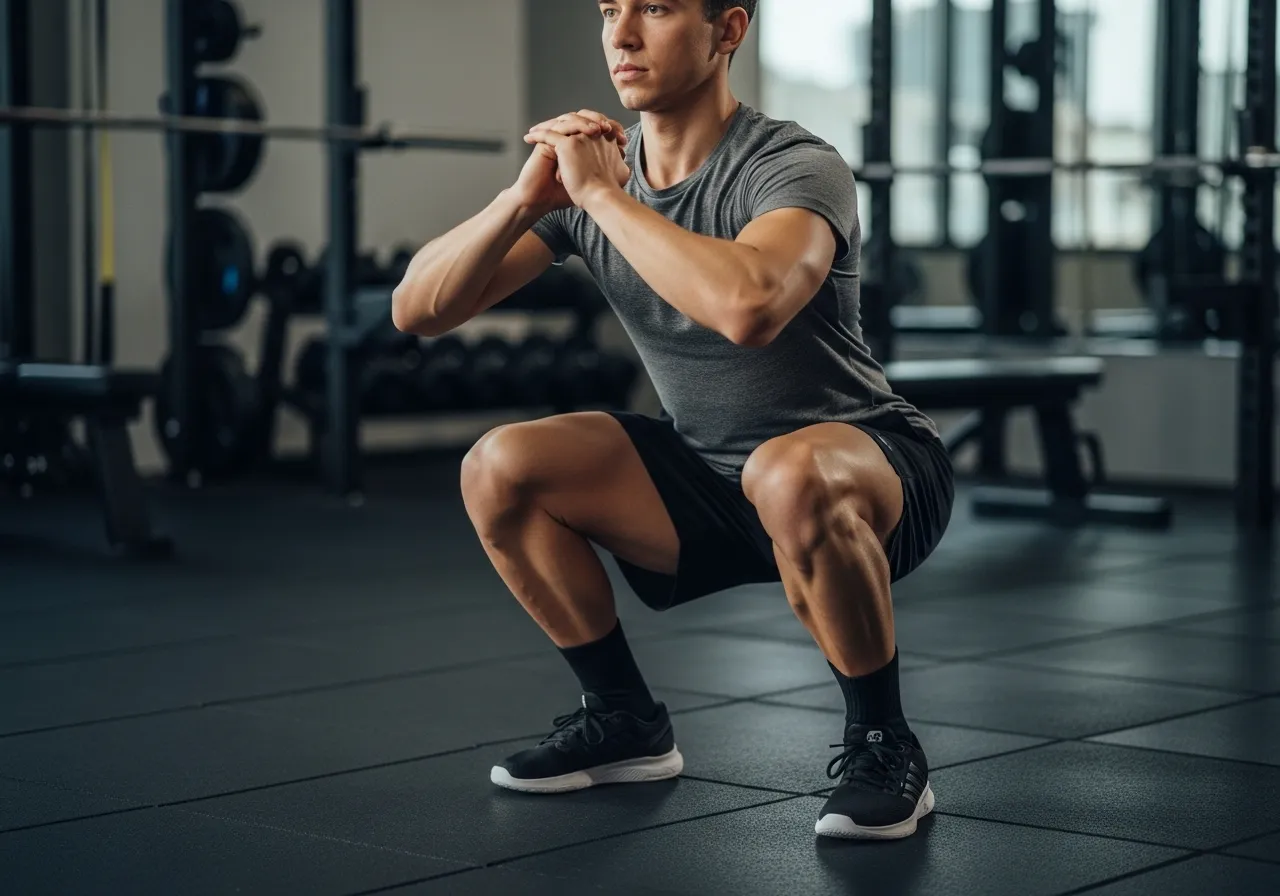
Squat Mobility Work: The Mobility Work That Transforms Your Squat
Mobility work can make squatting more comfortable and more efficient. When the ankles, hips, and thoracic spine move well, the squat usually feels smoother and more stable.
Ankle Dorsiflexion: The Foundation
Limited ankle mobility often shows up as heel rise or excessive forward lean during squats. Improving ankle dorsiflexion can make it easier to keep the feet flat and maintain better positioning.
Simple drills such as the knee-to-wall movement or calf stretching can be helpful when practiced consistently.
Hip Flexor and Hip Capsule Mobility
Tight hip flexors and limited hip mobility can make the bottom of the squat feel restricted. In many people, this shows up as rounding or tucking at the pelvis when depth increases.
Gentle daily mobility work may improve comfort and make deeper squatting easier over time.
The Hip Flexor Release Protocol
People who sit for long periods often benefit from regular hip flexor stretching. A short daily routine is usually more useful than occasional long sessions.
The goal is not to force extreme flexibility, but to reduce stiffness enough to improve movement quality.
Thoracic Spine Mobility for Upright Squatting
Thoracic spine mobility affects how upright the torso can stay during a squat. If the upper back is stiff, the lower back may compensate and the squat can feel less controlled.
Warm-up drills for the mid-back may help you maintain better posture under load.
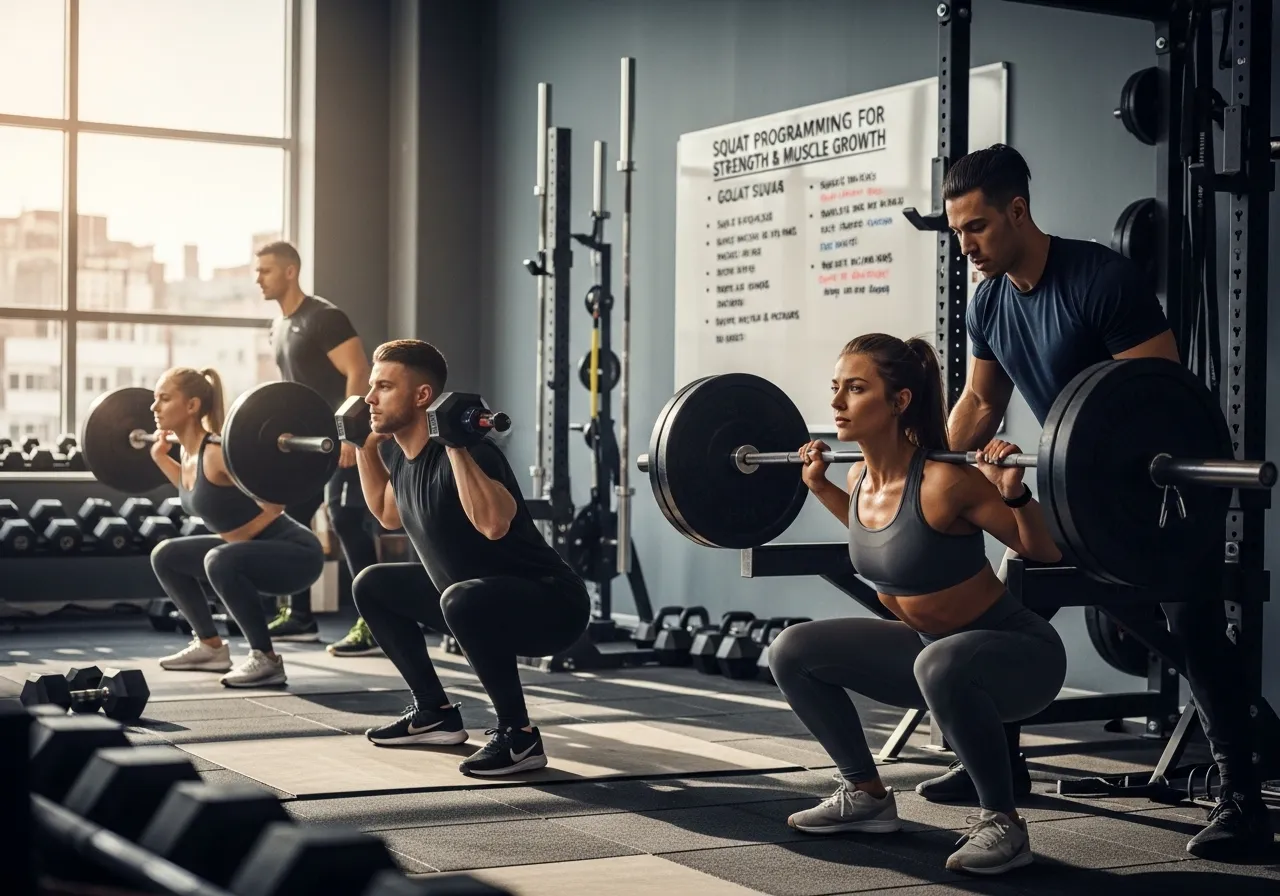
Squat Programming: How to Program Squats for Strength and Muscle Growth
Squat training can be adjusted depending on whether your goal is strength, muscle growth, or endurance. The key is to match the rep range and load to the goal you want to prioritize.
Rep Ranges for Different Goals
Heavier sets with lower reps are usually used for strength, while moderate loads and moderate reps are often used for muscle growth. Higher-rep work can help build endurance and tolerance.
A balanced program may use more than one rep range over time.
Squat Frequency
Many people benefit from squatting more than once per week, especially when technique and recovery are managed well. Spreading the work across the week often makes the sessions easier to recover from.
Beginners may improve quickly with frequent practice using lighter loads and careful progression.
Periodizing Squat Training for Continuous Progress
Progress is usually better when training is planned in phases rather than pushed at the same intensity all the time. Changing the load, volume, and rep range over time can help prevent stagnation.
Recovery phases are also important because they help reduce accumulated fatigue and support long-term consistency.
Bar Position and Equipment Considerations
High-bar and low-bar squats both have value, but they place emphasis on slightly different positions and muscle demands. The best option is often the one that fits your body and training goals most comfortably.
Beginners often do well with simpler variations before moving into more advanced barbell work.
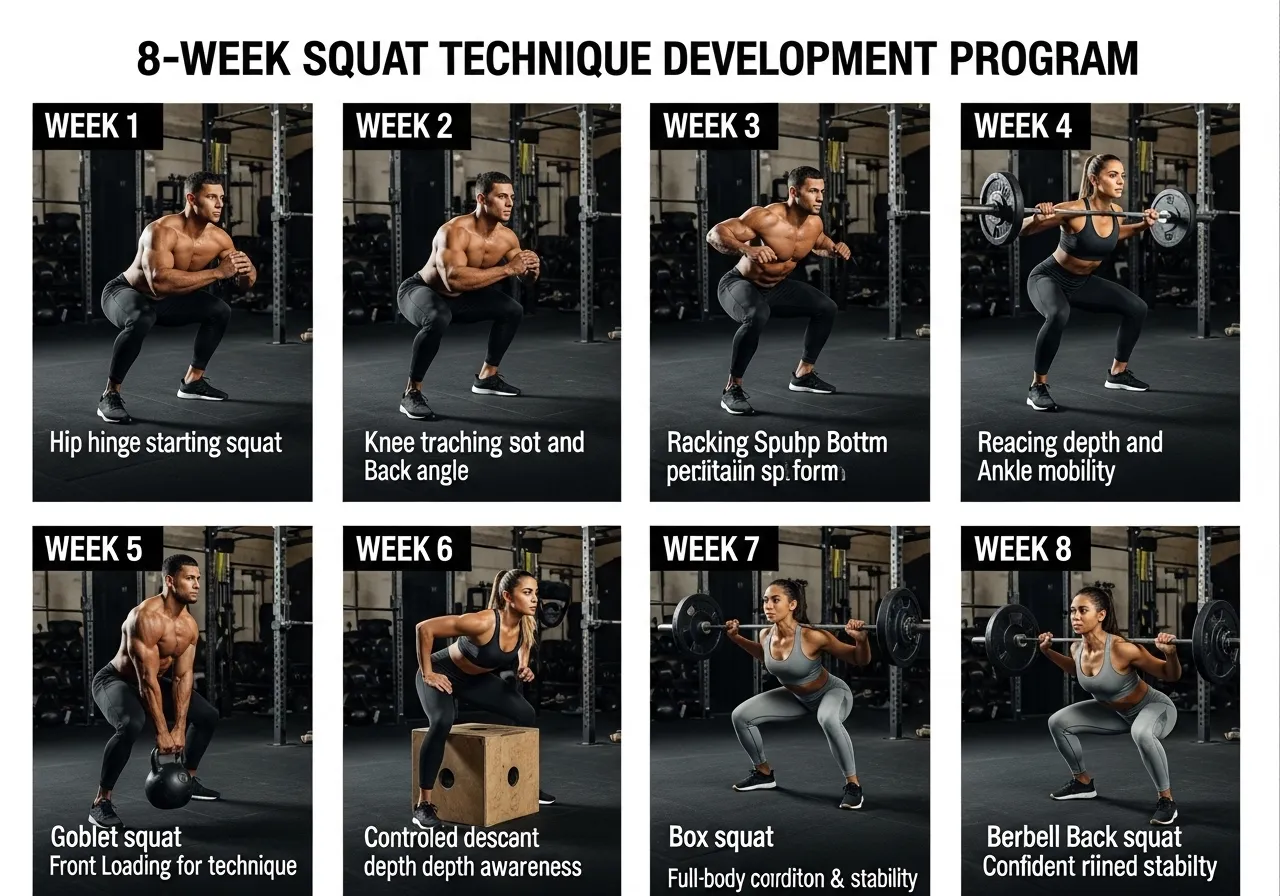
Squat Progressions: 8-Week Squat Technique Development Program
A short progression plan can help you build better squat mechanics without rushing the process. The first priority is control, not load.
Weeks 1 to 2: Bodyweight Mastery
Start with bodyweight or light goblet squats and focus on form. Keep the stance consistent, the knees controlled, and the spine neutral.
Use video if possible so you can see what your squat looks like from the side and front.
Weeks 3 to 4: Load Introduction
Once your form feels stable, introduce light external load. Keep the movement smooth and avoid increasing weight faster than your technique can handle.
Add only as much load as you can control with good posture and consistent depth.
Weeks 5 to 8: Progressive Loading
During this phase, increase weight gradually when your reps remain clean and consistent. If technique breaks down, keep the load the same until the movement is reliable again.
Small improvements repeated over time are usually more effective than large jumps in load.
Frequently Asked Questions
Should my knees go past my toes when squatting?
A small amount of forward knee travel is normal in many squat patterns. What matters most is that the knees stay aligned and do not collapse inward.
Why do my knees hurt when I squat?
Common reasons include poor alignment, limited ankle mobility, restricted hip mobility, or using too much load too soon. If pain continues even after adjusting technique, it is a good idea to get assessed by a professional.
Good squat training is built on control, consistency, and gradual progression. When those pieces are in place, squats can become one of the most useful movements in your training routine.