
How to Overcome a Fitness Plateau in 3 Simple Steps
⚠️ Disclaimer: The information in this article is for general educational purposes only and does not constitute medical, nutritional, or professional fitness advice. Individual results may vary. Always consult a qualified healthcare professional or certified fitness trainer before starting any new exercise program, changing your diet, or making decisions about injury treatment or recovery. If you experience pain, discomfort, or any unusual symptoms during exercise, stop immediately and seek professional guidance.

Understanding Fitness Plateaus: Why Progress Stalls and What’s Actually Happening
The fitness plateau — the point at which previously productive training stops producing measurable results — is one of the most demoralizing and misunderstood experiences in athletic development. I hit my first significant plateau at the 14-month mark of serious training: the scale stopped moving, my bench press stuck at the same weight for six consecutive sessions, and the muscular definition I had been steadily building seemed to stall completely. What followed was three months of increasingly desperate program changes, supplement purchases, and dietary experimentation before I understood the actual physiology of plateaus well enough to address the specific cause rather than blindly changing everything simultaneously.
The Biology of Plateau: Why Your Body Stops Adapting
The fitness plateau is a biological inevitability rather than a program or motivation failure — the adaptive mechanisms that produce fitness improvements are specifically designed to reach a new equilibrium at each training stimulus level, and once that equilibrium is achieved, the same stimulus produces no further adaptation. The principle of diminishing returns in biological systems: the body adapts most rapidly to the largest departures from its current state (explaining why beginners see rapid initial progress) and progressively less rapidly as it approaches the functional limit that the current training stimulus can drive. Each adaptation that training produces — increased muscle fiber cross-sectional area, improved motor unit recruitment efficiency, enhanced mitochondrial density, upregulated anabolic hormone sensitivity — reduces the gap between the current state and the maximum adaptation the training stimulus can produce. When the adaptation gap reaches zero (the current training stimulus has driven all the adaptation it can produce), a true plateau occurs: the same training produces maintenance rather than improvement. The resolution: the training stimulus must increase or change substantially enough to create a new adaptation gap that drives the next round of progress.
Distinguishing True Plateaus from False Plateaus
Not all apparent fitness plateaus represent true physiological stagnation — several common situations produce the appearance of stalled progress while actual adaptation continues but is being measured incorrectly. Body recomposition plateau: when fat loss and muscle gain occur simultaneously at equivalent rates, scale weight remains constant while body composition improves meaningfully — the “plateau” is an artifact of the wrong measurement tool (scale weight) rather than a true stagnation of adaptation. Athletes in body recomposition phases must use body composition measurements (circumferences, progress photos, DEXA if available) rather than scale weight to detect the progress that is occurring. Strength adaptation without scale progress: during dedicated muscle building phases, bodyweight gains of 0.25–0.5 lbs per week represent lean mass accrual — but the gradual nature of this gain makes it difficult to detect week-to-week without careful data tracking. The training log performance metrics (strength improvements across key exercises) are more sensitive indicators of ongoing muscle building progress than scale weight during these phases. The research from the Journal of Strength and Conditioning Research on training adaptation monitoring emphasizes multivariate progress tracking — monitoring multiple outcome variables simultaneously rather than relying on any single metric to detect the complex, multi-dimensional adaptation that training produces.
The Plateau Timeline: When to Act and When to Wait
Defining the time threshold at which training stagnation constitutes a true plateau requiring intervention versus normal week-to-week variation requiring patience is critical for avoiding the premature program changes that interrupt effective training before adaptation has fully occurred. Week-to-week variation is normal: strength, body weight, and performance fluctuate by 2–5% between sessions based on sleep, hydration, stress, menstrual cycle phase, and accumulated fatigue — a single session of reduced performance or a week of unchanged scale weight is not a plateau. The minimum plateau definition: three or more consecutive weeks with no measurable improvement in either performance metrics (key exercise weights and reps) or body composition metrics (appropriate to the goal) — this timeframe filters out normal variation while identifying the genuine stagnation that requires investigation and intervention. The appropriate response sequence: before changing the training program, first audit the recovery and nutrition variables (sleep, protein intake, calories, hydration, stress) that may have changed and be producing the stagnation despite an otherwise effective program. If recovery and nutrition are appropriate and unchanged, the training stimulus itself is the variable requiring modification.
Identifying Your Plateau Type: The Diagnostic Framework
Different plateau types have different causes and different solutions — applying the correct intervention requires identifying which type of plateau is present before implementing changes. Strength plateau (weights not increasing despite adequate recovery): caused by insufficient progressive overload, neural adaptation saturation at the current intensity range, or technique inefficiency limiting mechanical output — typically responds to intensity manipulation (working at higher percentages of 1RM with longer rest periods), technique refinement, or deload and reset. Hypertrophy plateau (muscle development stalled despite strength gains continuing): caused by insufficient training volume, inadequate protein synthesis stimulus from sets performed too far from failure, or insufficient metabolic stress from excessive rest periods — responds to volume increases, intensity increases (sets closer to failure), or rest period reduction for accessory work. Fat loss plateau (scale weight stalled despite dietary compliance): almost always caused by metabolic adaptation (TDEE reduction in response to caloric restriction), inadvertent caloric intake creep, or both — responds to dietary recalculation, diet break or refeed implementation, or increase in NEAT and planned activity. The diagnostic question: which specific metric has stopped improving? The answer identifies the plateau type and points directly to the intervention category most likely to address it.
The Psychological Impact of Plateaus and Motivation Management
Beyond the physiological stagnation that defines a fitness plateau, the psychological impact of prolonged absence of progress creates motivational challenges that can terminate training commitment before the biological solution has been implemented and had time to produce results. Research on goal pursuit and motivation finds that progress perception — the feeling of meaningful forward movement toward a goal — is the primary driver of sustained motivational engagement, and that the absence of progress (not the absolute level of performance) produces the motivational collapse that leads to training abandonment. Athletes who intellectually understand plateau physiology and have realistic expectations for the plateau-to-progress cycle maintain higher training consistency during plateaus than those who interpret stagnation as evidence that training is not working or is not worth continuing. The motivational reframe for plateaus: the absence of progress is not the absence of benefit — maintaining current fitness, muscle mass, and metabolic health during a plateau period represents genuine physiological value that supports the subsequent progress phase. Training consistently through a plateau, even without progress, prevents the fitness regression that training cessation produces and maintains the training habit that progress phases build on.
Hormonal Factors in Plateau: Testosterone, Cortisol, and Leptin
The hormonal environment that either supports or suppresses fitness adaptation is as important as the training stimulus itself — and several hormonal disruptions produce training plateau that training program changes cannot resolve because the limiting factor is biochemical rather than mechanical. Testosterone suppression: chronic sleep restriction (below 7 hours), excessive training volume beyond recovery capacity, very low dietary fat intake (below 20% of calories from fat), and severe caloric restriction all suppress testosterone production significantly — reducing the primary anabolic hormone that drives both muscle protein synthesis and fat oxidation. Athletes experiencing plateau in both muscle building and fat loss simultaneously, with symptoms of fatigue, reduced libido, and mood disturbance, should consider testosterone assessment through blood testing before attributing the plateau to training or nutrition variables. Leptin resistance: leptin — the satiety hormone produced by fat cells that also regulates metabolic rate — declines rapidly during caloric restriction (by 50% within 7 days of significant deficit) and produces the metabolic rate suppression, increased appetite, and impaired fat oxidation that characterize fat loss plateau in extended diet phases. Leptin’s response to refeeds (increasing within 12–24 hours of caloric normalization) makes diet breaks the most direct intervention for leptin-driven fat loss plateau. The thyroid connection: hypothyroidism — both clinical and subclinical — reduces metabolic rate, impairs fat oxidation, and reduces training performance in ways that mimic and produce fitness plateau. Athletes with persistent plateau despite optimized training, nutrition, sleep, and stress management should consider thyroid assessment as part of the medical investigation of plateau causes.
Age-Related Plateau Considerations
Athletes over 35 experience progressively changing physiology that modifies the timeline, magnitude, and most effective treatment of fitness plateaus. The anabolic resistance of aging — the reduced sensitivity of muscle protein synthesis to both protein ingestion and mechanical loading that begins in the mid-30s and accelerates after 50 — means that the protein doses and training intensities that produced optimal adaptation at younger ages become progressively insufficient. Older athletes experiencing muscle building plateau benefit from: increasing protein intake toward the higher end of the evidence-based range (2.0–2.4g/kg versus the 1.6g/kg minimum), emphasizing leucine-rich protein sources (animal proteins, leucine-enriched plant protein combinations) that stimulate the attenuated anabolic signaling more effectively than lower-leucine options, and increasing training frequency for muscle groups (twice per week minimum, three times per week when recovery allows) to compensate for the slower protein synthesis rate that aging produces. Recovery time extension: athletes over 40 typically require longer inter-session recovery to produce the same adaptation that younger athletes achieve with standard 48-hour recovery periods — extending recovery between sessions for the same muscle group from 48 to 72 hours, while maintaining weekly volume by adjusting training split, accommodates the aging recovery capacity without sacrificing total adaptive stimulus.
The fitness plateau is not the enemy of progress — it is the signal that the current approach has maximized its potential and that a more sophisticated stimulus is required to drive the next adaptation phase. Athletes who develop the plateau diagnostic literacy to identify the specific limiting variable and apply the targeted correction produce continuous long-term progress across years and decades of training, while those who lack this diagnostic framework cycle repeatedly through plateau and frustration without understanding the solvable cause of their stagnation. The biological capacity for adaptation never fully exhausts — it only requires the appropriate stimulus variation to continue expressing itself at every stage of athletic development.
Environmental Factors That Create Plateau
The training environment — the gym, equipment, and physical conditions in which training occurs — influences performance in ways that athletes frequently overlook when diagnosing plateau. Gym temperature: training in very hot environments (above 30°C) produces cardiovascular strain that competes with muscular demand — the heart must work harder to maintain thermoregulation, reducing the output available for muscle force production and creating apparent performance decline that is environmental rather than adaptation-related. Training in air-conditioned environments, training at cooler times of day, or reducing training volume in extreme heat maintains performance quality during temperature extremes. Equipment variation: switching between training facilities (gym travel, hotel gyms during travel periods, home gym versus commercial gym) introduces equipment differences (different bar weights, different machine resistance curves, different flooring types) that create performance variation mistaken for plateau. Accounting for equipment variation in the training log — noting the specific equipment used alongside the weight and reps — provides the context that prevents misinterpreting equipment-driven performance variation as adaptation plateau. Social environment: training alone versus with a training partner versus in a group fitness environment influences effort level in measurable ways. Athletes who consistently train alone and have plateaued often experience immediate performance improvements when introducing a training partner — the social facilitation of effort in the presence of others provides the motivational boost that restarts progress that solo training’s motivational deficit was suppressing.
The periodization principle — systematically varying training stress across weeks and months — is the physiological foundation that prevents the neurological and muscular adaptation that produces plateaus. Athletes who understand periodization internalize the expectation that progress is not linear: training phases that feel harder without immediate visible results are accumulating the fatigue and stimulus that the subsequent deload phase converts into measurable performance gains. The practical periodization cycle: 3–4 weeks of progressive loading followed by 1 week of reduced volume (50–60% of peak volume) allows the accumulated adaptation stimulus to express itself as performance improvement rather than being masked by ongoing fatigue accumulation. Tracking both training load and performance within each periodization cycle provides the data that confirms whether the current approach is driving the intended adaptation or whether programming adjustments are required. Every plateau is temporary when the underlying cause is identified and corrected — the body’s capacity for adaptation is not fixed, and the systematic application of progressive overload, adequate nutrition, and optimal recovery produces ongoing progress across months and years of consistent training. The athletes who ultimately achieve their fitness goals are those who treat stagnation as diagnostic information rather than failure, apply the evidence-based corrections that the diagnosis indicates, and maintain the consistency and patience that genuine biological adaptation requires.
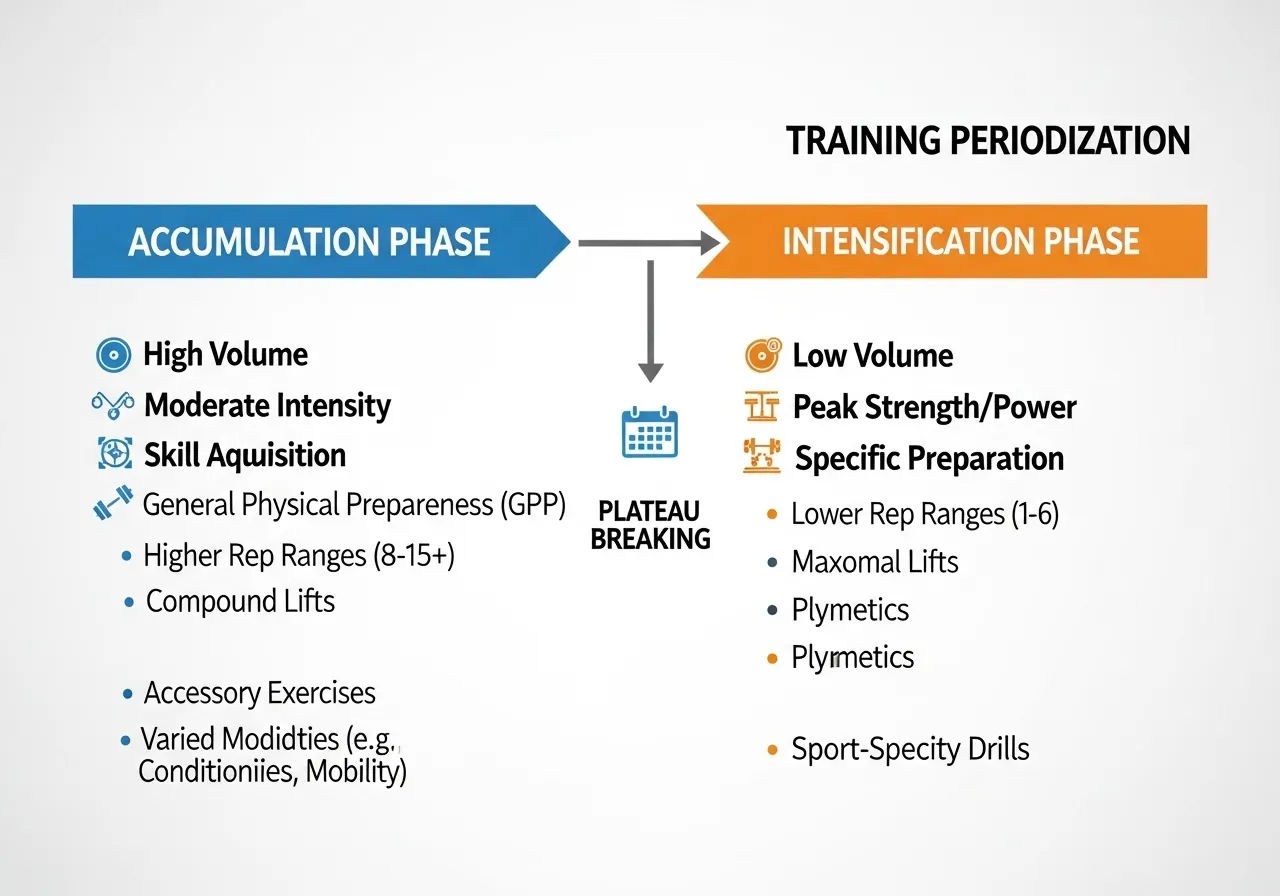
Three Science-Backed Strategies to Break Through a Fitness Plateau
The three most effective plateau-breaking strategies — progressive overload recalibration, training variable manipulation, and deload-then-reset — address the different mechanisms that produce training stagnation through distinct physiological pathways. Understanding which mechanism is responsible for your specific plateau determines which strategy provides the most direct solution.
Strategy 1: Progressive Overload Recalibration
The most common cause of training plateau is not the exhaustion of the body’s adaptive capacity but the unconscious cessation of progressive overload — performing the same weights, reps, and sets for so long that the training log shows months of identical numbers while the athlete interprets this as “maintaining” rather than the stagnation it represents. Progressive overload recalibration addresses this by systematically identifying the training minimum that can be exceeded and implementing a structured overload plan from that baseline. The double progression model: establish a rep range target (e.g., 3 sets of 8–12 reps) and commit to the following rule — when the top end of the rep range is achieved on all sets (3 sets of 12), increase the weight by the smallest available increment (2.5–5 lbs) and begin working back up to 3 sets of 12 with the new weight. This simple structure makes progressive overload explicit and automatic, preventing the weeks of identical performance that create plateaus. The research evidence from PubMed’s literature on progressive overload and plateau prevention consistently identifies the absence of systematic overload application as the primary driver of training plateau in intermediate and advanced athletes — and the restoration of structured overload as the most reliable plateau-breaking intervention.
Strategy 2: Training Variable Manipulation (Variation Without Program Hopping)
When progressive overload has been consistently applied but results have still stalled, the training stimulus has produced the maximum adaptation it can drive at the current combination of volume, intensity, exercise selection, and frequency — requiring strategic variation of one or more of these variables to create the novel adaptive stimulus that drives the next progress phase. The critical distinction between productive variation (changing one variable at a time in a structured direction) and counterproductive program hopping (changing everything simultaneously, preventing identification of what worked): effective variation manipulates the minimum necessary variables to create novel adaptive stimulus while preserving the training foundation that has been built. Exercise variation for strength plateau: substitute a close kinematic equivalent for a plateaued exercise (pause squat for regular squat, close-grip bench for standard bench, deficit deadlift for conventional deadlift) — the subtle mechanical differences create novel stimulus that restarts adaptation while maintaining the motor pattern transfer that preserves strength carryover. Rep range variation for hypertrophy plateau: shift from the current rep range to an adjacent range for 4–6 weeks (from 8–12 rep hypertrophy work to 4–6 rep strength work, or from 8–12 to 15–20 metabolic stress work) — the different mechanical tension and metabolic stress profiles of different rep ranges activate different hypertrophy mechanisms and restart adaptation when the current range has been exhausted. Frequency manipulation for plateau: increase training frequency for lagging muscle groups (from once per week to twice per week) while reducing volume per session proportionally, maintaining total weekly volume but distributing it across more protein synthesis spikes.
Strategy 3: Structured Deload and Reset Protocol
The deload — a planned period of reduced training volume and/or intensity — is counterintuitively one of the most powerful plateau-breaking tools because plateaus are frequently driven by accumulated fatigue that suppresses performance below the athlete’s true capacity. An athlete performing their fifth consecutive week of high-volume, high-intensity training has accumulated neural fatigue, inflammatory markers, and mechanical stress that reduce performance across all training domains — the plateau they experience may not reflect the exhaustion of their adaptive capacity but the inability to express that capacity against the backdrop of accumulated fatigue. The structured deload protocol: reduce training volume by 50% (perform the same exercises but half the sets) and reduce load by 10–15% for one full week. This reduction allows the clearance of accumulated fatigue — neural, inflammatory, and mechanical — without complete detraining. The post-deload supercompensation effect: the body’s adaptive response to the training stimulus before the deload, which was suppressed by accumulated fatigue, fully expresses upon fatigue clearance — producing the “deload bounce” of improved performance in the first post-deload session that athletes consistently report as one of the most motivating training experiences. Research from the NSCA’s guidelines on periodization and recovery recommends deload weeks every 4–6 weeks of high-intensity training as standard practice — making structured deloads not just a plateau-breaking tool but a plateau-prevention strategy in well-designed programs.
Combining Strategies: The Sequential Approach
When a single strategy fails to break a plateau within 3–4 weeks, the sequential combination approach applies strategies in a planned sequence that builds each intervention on the recovery from the previous one. The recommended sequence: begin with a deload week (clearing accumulated fatigue and establishing the true performance baseline without the suppression of chronic fatigue); immediately following the deload, implement progressive overload recalibration (applying the first load increase to the exercises that stalled, using the fresh post-deload performance as the new baseline); if plateau persists after 4 weeks of recalibrated overload, implement training variable manipulation (changing the lowest-performing variables while maintaining the program foundation). This sequential approach identifies whether the plateau is fatigue-driven (resolved by deload alone), overload-driven (resolved by recalibration), or stimulus-driven (requiring variable manipulation) — providing the diagnostic information that prevents applying a more aggressive intervention than the specific plateau type requires.
The Volume Landmark System: Minimum, Maximum, and Optimal Volume Targets
The volume landmark framework — developed from the research literature on dose-response relationships between training volume and hypertrophy — provides specific weekly set count targets for each muscle group that replace the vague “do more volume” recommendation with actionable numbers. The landmarks: Minimum Effective Volume (MEV) — the minimum weekly sets per muscle group that produce ongoing adaptation (approximately 6–8 hard sets per week for most muscle groups in trained individuals); Maximum Adaptive Volume (MAV) — the volume range that produces the best adaptation without exceeding recovery capacity (10–20 sets per week for most muscle groups); Maximum Recoverable Volume (MRV) — the maximum volume that can be recovered from before the next training stimulus (above this point, volume produces diminishing adaptation and increasing injury/overtraining risk). Plateau diagnosis using volume landmarks: if current weekly volume is below MEV for a muscle group, increasing to MEV will restart adaptation that under-voluming was preventing. If current volume is between MEV and MAV and plateau persists, the issue is likely progressive overload absence or nutrition rather than volume. If current volume is near or above MRV, reducing to MAV during a deload and then gradually rebuilding toward the MAV ceiling will produce better adaptation than continuing at above-MRV volume. Applying the volume landmark framework requires knowing approximate set counts per muscle group — the training log audit that plateau investigation requires provides exactly this information.
Mind-Muscle Connection and Technique Refinement
Beyond the gross structural elements of program design (volume, intensity, frequency), the quality of muscular activation during each repetition — the mind-muscle connection that determines what percentage of a muscle’s fibers are recruited during each set — significantly influences the hypertrophic stimulus that a given volume produces. Research on attentional focus and muscle activation consistently finds that internal focus (consciously attending to the feeling of the target muscle contracting) increases electromyographic activity of the target muscle by 10–30% compared to external focus (attending to the movement outcome) — meaning that the same exercise at the same load produces substantially different muscular stimulus depending on the quality of attentional focus during performance. For athletes who have plateaued in specific muscle development despite adequate volume and intensity, improving mind-muscle connection quality through dedicated technique work (reducing load temporarily to focus on activation quality rather than load completion) frequently restarts the hypertrophy stall by improving the muscle’s actual activation during the volume that was already present. The practical implementation: spend 2 sessions per week on lighter technique work specifically emphasizing the lagging muscle (isometric pauses at peak contraction, slow eccentric phases that maximize time under tension in the lengthened position) before returning to heavier progressive overload work. The improved activation quality transfers to the heavier work and produces superior stimulus from the same load and volume.
The three core plateau-breaking strategies — progressive overload recalibration, strategic training variable manipulation, and structured deload-and-reset — address the specific mechanisms that drive the majority of fitness plateaus through targeted interventions that require minimal program disruption while producing maximal adaptive response. Apply the diagnostic framework to identify which mechanism is responsible for your specific plateau, implement the corresponding strategy with the precision and commitment that the research evidence supports, and maintain the progressive overload structure that sustains progress through the post-plateau phase and into the next adaptation cycle.
Specialization Programs for Stubborn Muscle Groups
When a specific muscle group has plateaued while others continue developing — the lagging muscle group that creates proportional imbalance in an otherwise developing physique — specialization programs provide the targeted overemphasis that restores proportional development. The specialization approach: temporarily increase training volume and frequency for the lagging muscle group to 2–3 times their normal levels (from 10 sets per week to 20–25 sets per week), while reducing volume for all other muscle groups to maintenance levels (6–8 sets per week minimum) — freeing recovery resources for the specialized group without total training volume overwhelming recovery capacity. Duration: 4–6 weeks of specialization produces the concentrated adaptive stimulus that decades of underdeveloped muscle groups require to catch up — followed by return to standard proportional programming to consolidate the gains while other muscle groups resume their normal development priority. The most common lagging muscle groups requiring specialization: biceps in athletes whose back training dominates pulling volume without isolating the elbow flexors; rear deltoids in athletes whose front-dominant pressing volume develops anterior deltoids disproportionately; vastus medialis in athletes with quad-dominant leg training that under-develops the teardrop portion that creates knee stability and aesthetic definition; and calves in athletes with high training volumes for upper body and quad-dominant lower body without proportional calf investment.
The deload week — often skipped by athletes who interpret reduced volume as lost progress — is where much of the adaptation from the preceding loading weeks actually expresses itself. Research on supercompensation confirms that the body’s positive adaptation to training stress peaks 5–14 days after the stress that produced it, meaning that the performance improvements from weeks of hard training become most measurable during and after the deload that follows rather than during the loading phase itself. Athletes who skip deloads and train through accumulated fatigue consistently see slower long-term progress than those who follow structured loading and recovery cycles — because the supercompensation that produces fitness gains requires the recovery period that the deload provides. Schedule deloads proactively every 4–6 weeks rather than reactively in response to overtraining symptoms. Every plateau is temporary when the underlying cause is identified and corrected — the body’s capacity for adaptation is not fixed, and the systematic application of progressive overload, adequate nutrition, and optimal recovery produces ongoing progress across months and years of consistent training. The athletes who ultimately achieve their fitness goals are those who treat stagnation as diagnostic information rather than failure, apply the evidence-based corrections that the diagnosis indicates, and maintain the consistency and patience that genuine biological adaptation requires.

Nutrition Adjustments That Restart Progress When Training Changes Don’t Work
Training plateau interventions address only half of the equation — the stimulus side. When training modifications fail to restart progress, the substrate side (nutrition) requires investigation. Nutritional causes of plateau are frequently overlooked because dietary habits feel consistent even when they have drifted significantly from the targets that were producing results.
Identifying Nutritional Plateau Causes
The first step in nutritional plateau investigation is returning to tracked eating for two weeks — establishing the current actual intake rather than the intended intake that subjective recall provides. Research on dietary adherence and weight plateau consistently finds that self-reported caloric intake underestimates actual intake by 20–40% in individuals experiencing fat loss plateau, and that protein intake is almost always lower than target when tracked objectively versus estimated subjectively. The specific nutritional patterns that produce plateau: caloric intake creep (gradually increasing portion sizes and caloric density over months without conscious awareness), protein intake decline (as dietary variety and convenience increase, protein-dense foods are displaced by more processed options), and meal timing drift (pre and post-training nutrition becomes inconsistent, reducing the training response to each session). Two weeks of food scale-based tracking with an app provides the objective audit that identifies which specific nutritional variables have drifted from the targets that were producing progress — and the correction of these specific variables, without dramatic dietary change, frequently restarts progress that training modifications alone could not produce.
Caloric Recalculation: Adapting to Your New Body
The TDEE (total daily energy expenditure) that determined the appropriate caloric intake at the start of a program changes as the program progresses — and failing to recalculate and adjust caloric targets as body composition changes is a primary driver of fat loss plateau. The metabolic adaptation problem: during sustained caloric restriction for fat loss, the body reduces TDEE through multiple mechanisms — reduced resting metabolic rate (from lower body mass and hormonal adaptation), reduced exercise efficiency (less metabolic cost per unit of exercise as muscles become more efficient), and automatic reduction of NEAT (unconscious reduction of spontaneous movement that reduces caloric expenditure outside formal exercise). This adaptive response means that the caloric deficit that produced 1 lb per week of fat loss at program initiation may produce zero deficit 12 weeks later as TDEE has decreased to match the reduced intake. Recalculating TDEE every 4–6 weeks of fat loss — using current body weight rather than initial body weight in the Mifflin-St Jeor equation — and adjusting the caloric target accordingly maintains the deficit that fat loss requires. Research from the American College of Sports Medicine’s position stand on weight management recommends regular recalculation of energy needs during weight loss programs to account for the metabolic adaptation that makes initial caloric targets progressively inadequate.
Diet Breaks and Refeeds: Reversing Metabolic Adaptation
The most targeted nutritional intervention for fat loss plateau driven by metabolic adaptation is the diet break or refeed — a structured period of increased caloric intake that reverses the hormonal downregulation and metabolic suppression that sustained restriction produces. Refeed days: 1–2 days per week of maintenance caloric intake (returning to TDEE without a deficit), concentrated in carbohydrate intake to replenish glycogen and restore leptin levels — the hormone most directly responsible for the metabolic rate suppression that caloric restriction produces. Research on refeed implementation consistently finds that weekly refeeds reduce the rate of metabolic adaptation without significantly impairing total fat loss outcomes — the maintenance days preserve metabolic rate and training performance while the remaining deficit days produce the weekly fat loss. Diet breaks: a full 1–2 week return to maintenance calories after 6–12 weeks of sustained deficit — producing more complete metabolic restoration than weekly refeeds, improving training performance, and reducing the psychological fatigue of sustained restriction. The evidence base from Examine.com’s research synthesis on diet breaks and fat loss supports diet breaks as a legitimate strategy for improving long-term adherence and reducing the metabolic adaptation that produces fat loss plateau in extended cutting phases.
Protein Adjustment for Muscle Building Plateau
When muscle building has plateaued despite adequate training, protein intake is the nutritional variable most likely to be the limiting factor — and the research-based optimal range is wider than the single target that most athletes use. The protein intake spectrum for muscle building: 1.6g/kg body weight represents the minimum effective dose for maximizing muscle protein synthesis in most trained individuals; 2.0–2.2g/kg is the range associated with optimal muscle development in research; and 2.2–3.0g/kg may provide additional benefit for athletes in caloric restriction, athletes with very high training volumes, or athletes over 40 where anabolic resistance increases protein requirements. Athletes who have been targeting 1.6g/kg and plateaued may benefit from increasing to 2.2g/kg — the additional protein providing the substrate for muscle protein synthesis that the training stimulus may have been capable of driving but that previous protein availability was limiting. The leucine threshold: muscle protein synthesis initiation requires a minimum leucine dose of approximately 2.5–3g per meal — ensuring that each protein-containing meal includes at least this leucine quantity (present in approximately 30g of high-quality complete protein from animal or complete plant sources) maximizes the per-meal MPS stimulus that total daily protein intake alone does not guarantee.
Water and Hydration’s Role in Plateau
Dehydration — even in the mild chronic form that many athletes maintain without recognizing its impact — impairs both training performance and the recovery processes that convert training stimulus into adaptation. The dehydration-performance relationship: performance in strength tasks begins declining at 2% dehydration (1.5 lbs water loss for a 75kg athlete), with force production, neural drive, and sustained power output all measurably reduced. Athletes who train in a slightly dehydrated state consistently produce lower training outputs than their hydrated capacity — and the reduced quality of each session compounds into plateau over weeks and months. The recovery hydration requirement: protein synthesis requires adequate cellular hydration to maintain the osmotic environment that ribosomes function in — chronic mild dehydration impairs muscle protein synthesis rates even when protein intake is adequate, through a mechanism independent of the training stimulus. Daily hydration target: 35–45ml per kg of body weight as a baseline (increasing with sweat losses from training, hot environments, and altitude), consumed consistently throughout the day rather than in large boluses that exceed the kidney’s processing capacity. The simplest assessment of hydration adequacy: first morning urine should be pale yellow to near-clear — consistent dark yellow or amber morning urine indicates chronic under-hydration that dietary habit adjustment can correct.
Micronutrient Deficiencies and Plateau
Several micronutrient deficiencies produce fitness-relevant physiological impairments specific enough to explain training plateau in otherwise well-structured programs. Vitamin D: deficiency (serum 25-OH-D below 50 nmol/L, affecting an estimated 40–60% of the general population) reduces testosterone synthesis, impairs muscle protein synthesis signaling through the VDR (vitamin D receptor) that is expressed in muscle tissue, and reduces the strength adaptation from resistance training. Supplementation to sufficiency (2,000–4,000 IU D3 daily for most deficient individuals) produces measurable strength and body composition improvements within 8–12 weeks. Magnesium: essential for over 300 enzymatic reactions including ATP synthesis, protein synthesis, and calcium handling in muscle contraction — deficiency (common in athletes with high sweat losses) impairs energy production, sleep quality, and muscle relaxation between contractions. Zinc: critical for testosterone synthesis, growth hormone release, and immune function — depletion common in endurance athletes through sweat loss and in athletes consuming high-phytate plant-based diets that reduce zinc absorption. Athletes with persistent plateau despite optimized training and macronutrition should request a comprehensive micronutrient blood panel — identifying and correcting specific deficiencies through targeted supplementation frequently produces the performance improvements that no training or macronutrient adjustment was able to generate.
The nutritional precision that plateau resolution requires is not permanent obsession with gram-level tracking but the temporary, targeted measurement that identifies the specific gap between intended and actual intake — a 2-week tracking audit that provides the diagnostic clarity that converts nutritional guesswork into the systematic, evidence-based dietary management that body composition goals require. Fix the specific nutritional variable that the audit identifies, maintain the correction, and watch the training investment that was already present begin producing the results that nutritional precision enables.
The Role of Gut Health in Nutritional Plateau
The efficiency of nutrient absorption — how much of the protein, carbohydrates, and fats consumed actually reaches the tissues where they drive adaptation — is determined by gut health, and gut dysfunction produces fitness plateau through reduced nutritional delivery despite adequate dietary intake. Intestinal permeability (leaky gut): the disruption of the tight junction proteins that normally restrict absorption to the controlled mucosal pathway allows bacterial endotoxins (lipopolysaccharides) to enter systemic circulation — producing the chronic low-grade inflammation that impairs insulin sensitivity, increases cortisol, and suppresses anabolic signaling in muscle tissue. Symptoms that suggest gut health as a plateau contributor: persistent bloating and digestive discomfort after meals, particularly protein-dense meals; food sensitivities that have developed or worsened over the training period; and widespread inflammation symptoms (joint stiffness, skin issues, brain fog) alongside the performance plateau. Gut health restoration strategies: increasing prebiotic fiber from vegetables and legumes (feeding the beneficial bacteria that maintain gut barrier integrity); incorporating fermented foods (yogurt, kefir, kimchi, sauerkraut) for probiotic benefit; reducing the ultra-processed food that disrupts the gut microbiome through its emulsifier and preservative content; and addressing any stress-driven gut motility disruption through the stress management strategies in section 4. Athletes whose plateau persists despite optimized training and dietary macronutrients, particularly if accompanied by digestive symptoms, benefit from a functional medicine assessment of gut health as a potential upstream cause of the fitness stagnation.
Caloric periodization — varying caloric intake in alignment with training phases — optimizes body composition change across the training year by matching energy availability to the metabolic demands of different training periods. During high-volume accumulation phases: caloric surplus of 200–300 calories above TDEE supports the anabolic processes that the high training volume drives. During lower-volume intensification phases: maintenance calories allow performance to peak without the fat accumulation that prolonged surplus produces. During the deload phase: slight caloric reduction (200–300 below maintenance) allows body composition refinement while reduced training demands make the small deficit physiologically manageable. This periodized nutrition approach produces the simultaneous lean mass accumulation and body fat management that static caloric approaches cannot achieve — matching the periodized training approach with the periodized nutrition that supports each phase’s specific adaptation goals. Every plateau is temporary when the underlying cause is identified and corrected — the body’s capacity for adaptation is not fixed, and the systematic application of progressive overload, adequate nutrition, and optimal recovery produces ongoing progress across months and years of consistent training. The athletes who ultimately achieve their fitness goals are those who treat stagnation as diagnostic information rather than failure, apply the evidence-based corrections that the diagnosis indicates, and maintain the consistency and patience that genuine biological adaptation requires.

Advanced Plateau-Breaking Techniques: Periodization, Deloads, and Training Variables
Athletes who have addressed the foundational variables (progressive overload, nutrition, recovery) without breaking their plateau benefit from advanced periodization strategies that manipulate training variables in more sophisticated patterns than simple linear progression provides.
Undulating Periodization: Daily and Weekly Variation
Daily undulating periodization (DUP) — varying the training emphasis (strength, hypertrophy, endurance) across different sessions within the same week — produces superior long-term strength and hypertrophy outcomes compared to linear periodization in intermediate and advanced athletes whose progress has stalled under linear approaches. The DUP approach for a thrice-weekly training schedule: Monday (heavy strength focus — 4–6 reps at 85–90% 1RM with 3–5 minute rest periods); Wednesday (moderate hypertrophy focus — 8–12 reps at 70–75% 1RM with 90 second rest periods); Friday (metabolic/pump focus — 15–20 reps at 60–65% 1RM with 45–60 second rest periods). This approach exposes the muscle to three distinct mechanical and metabolic stimuli within each week, preventing the adaptation to a single stimulus that linear progression produces after the intermediate stage. Research comparing DUP to linear periodization in athletes who have plateaued on linear programs consistently finds superior performance outcomes from DUP — the daily variation creating the novel adaptive stimuli that the same-stimulus-repeated approach can no longer produce at the intermediate training age where adaptation rates have slowed substantially.
The Mechanical Drop Set: Advanced Volume Without Additional Time
Mechanical drop sets — a progression from a more mechanically disadvantaged to a more mechanically advantaged version of the same movement at the same weight, using technique modification rather than weight reduction to extend the set beyond initial failure — provide a high-intensity volume technique that produces significant hypertrophic stimulus in a compact time format suited to plateau-breaking. The technique: perform an exercise to failure in its most demanding form (wide-grip pull-up to failure), then immediately transition to a mechanically easier variant (neutral-grip pull-up) at the same bodyweight without rest, continuing to failure, then again transitioning to the easiest variant (assisted pull-up or ring row) to extend the set further. This technique produces a much higher total volume of near-failure reps than traditional single-variant sets and creates the mechanical tension and metabolic stress combination that standard sets producing 3–5 near-failure reps cannot match. Implementation: use mechanical drop sets for 1–2 exercises per session on the muscle group representing the primary plateau, performing 2–3 mechanical drop set series rather than the standard 4–5 traditional sets — the fatigue accumulation of extended near-failure work justifies the reduced set count.
Blood Flow Restriction Training for Plateau Breaking
Blood flow restriction (BFR) training — the application of vascular occlusion cuffs or wraps to restrict venous blood return from working muscles while allowing arterial inflow — produces hypertrophic and strength adaptation at very low external loads (20–30% of 1RM) that closely approximates the adaptation produced by high-load training. For athletes whose plateau involves joints or connective tissue that limit the high loads required for progressive overload, BFR training provides the metabolic stress mechanism of high-load training at loads that compromised joints can tolerate. Research on BFR and hypertrophy from multiple meta-analyses confirms that BFR training at 20–40% 1RM with moderate cuff pressure (50–80% arterial occlusion pressure) produces hypertrophy equivalent to traditional high-load training at 70–85% 1RM — providing an alternative path to muscle building stimulus when the standard path (progressive load increase) is blocked by joint limitations. The metabolic stress mechanism: blood flow restriction causes rapid accumulation of metabolic byproducts (lactate, hydrogen ions, inorganic phosphate) in the restricted muscle, creating a powerful local anabolic signal through muscle swelling, growth factor release, and mTOR pathway activation that does not require the mechanical tension of high external loads to produce equivalent hypertrophic response.
Sleep Optimization as a Plateau-Breaking Tool
Sleep deprivation is one of the most overlooked causes of training plateau — and sleep optimization is one of the most potent plateau-breaking interventions available for athletes who have been chronically under-sleeping without fully recognizing the magnitude of its effect on adaptation. The specific sleep quality improvements most directly relevant to training adaptation: slow-wave sleep duration (the phase of highest growth hormone release — extending slow-wave sleep through consistent sleep timing, cool bedroom temperature, and darkness maximizes GH release during each sleep period); sleep timing consistency (consistent sleep and wake times stabilize circadian rhythm, optimizing the hormonal timing of testosterone, cortisol, and GH secretion around training); and total sleep duration (each additional hour of sleep above the minimum 7 hours adds proportional increases in muscle protein synthesis, testosterone, and training performance capacity for the following day). Athletes who increase sleep from 6–7 hours to 8–9 hours consistently report performance improvements in the first week that exceed the performance changes from the training modifications they had been implementing — the magnitude of the sleep deprivation suppression of adaptation is frequently underestimated relative to the training and nutrition variables that receive more attention in the plateau-breaking search.
The Role of Training History in Plateau Duration
The rate and ease of plateau resolution depends significantly on training age — the cumulative years of consistent, progressive resistance training that determines both the biological capacity for rapid adaptation and the practical toolkit of periodization strategies available. Beginner plateau (0–1 year): the rarest category of true plateau, since the untrained state provides enormous adaptation headroom across all training dimensions — apparent beginner plateaus are almost always training program errors (insufficient frequency or volume) or nutritional inadequacy rather than genuine adaptation exhaustion. Correction is typically simple: ensure 3+ progressive training sessions per week, confirm protein at 1.6g/kg minimum, and verify that weights are increasing most sessions. Intermediate plateau (1–3 years): the most common and most practically manageable plateau category — linear progression has been exhausted, and the transition to periodized training is the primary solution. DUP, block periodization, and systematic volume cycling all provide the stimulus variation that intermediate athletes require to continue adapting past the beginner linear progression phase. Advanced plateau (3+ years): the most complex and most persistent category — advanced athletes’ physiology has approached a higher percentage of genetic potential, making each additional unit of progress require more sophisticated stimulus variation and longer time to materialize. Advanced athletes experiencing plateau benefit most from the combination of periodization sophistication (auto-regulation, competition peaking cycles, specific energy system targeting) and recovery optimization (sleep, nutrition precision, stress management) that beginners and intermediates can progress without.
Technology Tools for Plateau Detection and Resolution
The growing ecosystem of training technology provides tools for early plateau detection and objective assessment of training variables that manual tracking cannot provide with equivalent precision or convenience. Training load monitoring apps: applications that calculate acute:chronic workload ratio (the ratio of recent training load to the training load the body is accustomed to) provide early warning signals for both under-loading (plateau risk from insufficient stimulus) and overloading (injury and performance decline risk from excessive load increase). Velocity-based training (VBT) devices: bar-mounted sensors that measure movement velocity during strength exercises provide the objective intensity data that percentage-based programming estimates — when velocity at a given load declines over consecutive sessions (without the load changing), this is an early warning of accumulated fatigue or technique breakdown that precedes the performance plateau that the training log would reveal only weeks later. Recovery monitoring wearables: heart rate variability (HRV) measurement through morning measurement apps (HRV4Training, Whoop, Oura) provides the daily readiness assessment that allows auto-regulation of training intensity — training harder on high-HRV days and reducing intensity on low-HRV days produces better long-term adaptation than the fixed-schedule approach that ignores day-to-day recovery state variation.
The advanced plateau-breaking techniques in this section — DUP, mechanical drop sets, BFR training, and sleep optimization — provide the sophisticated toolkit that simple program adjustments cannot access, addressing the specific adaptation mechanisms that standard periodization approaches exhaust in intermediate and advanced athletes. Apply these techniques in sequence, beginning with the least complex intervention (sleep optimization and structured deload) before progressing to the more sophisticated periodization approaches, and maintain each intervention for sufficient time (4–6 weeks minimum) to assess its effectiveness before concluding that it has not worked.
Implementing Auto-Regulation for Plateau Prevention
Auto-regulation — the practice of adjusting training loads based on daily readiness and performance indicators rather than following a fixed predetermined schedule — prevents the accumulated fatigue-driven plateaus that rigid percentage-based programming produces when recovery varies but the training load does not. The RPE-based auto-regulation framework: instead of “perform 5 sets of 5 at 80% 1RM,” the auto-regulated equivalent is “perform 5 sets of 5 at RPE 8” — the load that produces an 8/10 difficulty (2 reps in reserve) rather than a specific fixed percentage. On days of high readiness (after excellent sleep, low stress, adequate nutrition), RPE 8 corresponds to higher loads than on days of reduced readiness — the auto-regulated approach automatically increases training intensity on high-readiness days and reduces it on low-readiness days, tracking the daily variation in recovery state without requiring the rigid adherence to fixed loads that ignores recovery variation. The cumulative effect of auto-regulation: athletes who auto-regulate their training accumulate more high-quality near-failure work on their best days (when adaptation potential is highest) and avoid the overreach of forcing fixed loads on their worst days (when forcing heavy loads produces poor quality work that increases injury risk without proportional adaptation benefit). Research comparing auto-regulated to fixed-load periodization consistently finds superior long-term strength and hypertrophy outcomes from auto-regulated approaches in intermediate and advanced athletes — the individualization that RPE-based loading provides outperforming the population-average optimal that fixed percentage programs approximate.
Sleep quality optimization goes beyond simply allocating sufficient time in bed — the specific sleep architecture (the distribution of sleep stages across the night) determines the recovery quality that the total sleep duration delivers. Slow-wave sleep (SWS, also called deep sleep or N3) — occurring primarily in the first half of the night — is the stage during which growth hormone is released at the highest rates, tissue repair is most active, and the muscular recovery from training proceeds most effectively. Strategies that specifically enhance SWS quality: maintaining a consistent bedtime (the circadian rhythm that optimizes SWS distribution requires the regularity that inconsistent sleep schedules disrupt); avoiding alcohol within 4 hours of sleep (alcohol suppresses SWS specifically, even while appearing to aid sleep onset); and sleeping in a cool room (18–19°C / 64–66°F) where thermoregulatory changes that naturally accompany SWS progression are supported rather than disrupted. Every plateau is temporary when the underlying cause is identified and corrected — the body’s capacity for adaptation is not fixed, and the systematic application of progressive overload, adequate nutrition, and optimal recovery produces ongoing progress across months and years of consistent training. The athletes who ultimately achieve their fitness goals are those who treat stagnation as diagnostic information rather than failure, apply the evidence-based corrections that the diagnosis indicates, and maintain the consistency and patience that genuine biological adaptation requires.

Plateau Prevention, Recovery Optimization, and FAQs for Breaking Fitness Stalls
The most efficient approach to fitness plateaus is preventing them through structural program design that continuously introduces the progressive overload, variation, and recovery management that prevent adaptation stagnation before it occurs. Prevention is substantially less disruptive than plateau resolution — maintaining progress through intelligent programming is more time-efficient than breaking plateaus after they develop.
Building a Plateau-Proof Training Program
A plateau-resistant program has three structural features that conventional beginner and intermediate programs frequently lack: built-in progressive overload mechanisms that automatically advance the training stimulus, planned variation that prevents adaptation to any single stimulus, and scheduled deloads that prevent the fatigue accumulation that suppresses performance and creates false plateaus. Progressive overload automation: program the specific overload trigger (when to add weight, reps, or sets) into the program structure rather than leaving it to session-by-session improvisation — the double progression model, percentage-based overload cycles, and rep-max testing protocols all provide automatic overload triggers that prevent the stagnation of undefined progression. Planned variation: schedule exercise rotation (primary movements maintained, secondary exercises rotated every 4–6 weeks), rep range cycling (alternating between strength, hypertrophy, and metabolic phases), and training split adjustments (modifying the distribution of muscle groups across training days) in advance rather than implementing these changes reactively when plateau appears. Scheduled deloads: plan a deload week every 4–6 weeks of hard training as a standard program feature rather than an emergency intervention — athletes who deload on schedule prevent the fatigue accumulation that produces false plateaus and arrive at each training block fresh enough to drive maximal progressive overload.
Stress Management and Cortisol’s Role in Plateau
Chronic psychological stress produces the cortisol elevation that directly impairs the anabolic processes that training is designed to stimulate — and athletes experiencing life stressors (work pressure, relationship difficulties, financial strain) alongside high training volumes frequently plateau not from inadequate training but from cortisol-driven suppression of the recovery and adaptation processes that convert training stimulus into physical improvement. The HPA axis stress response does not distinguish between physical training stress and psychological life stress — both activate the same hormonal cascade, and the total cortisol load from combined training and life stress may exceed the recovery capacity that either source alone would not challenge. The practical implication: during periods of unusually high life stress, reducing training volume by 30–40% (while maintaining consistency and intensity in the reduced volume) preserves recovery capacity for the demands that the life situation places on the stress response system — producing better adaptation outcomes than attempting full training volume against the cortisol-elevated physiological background. Stress management tools (meditation, breathwork, nature exposure, social connection) that reduce baseline cortisol complement the training volume adjustment — combining both approaches produces more complete cortisol normalization than either alone.
Tracking and Data Analysis for Plateau Prevention
The athletes who most consistently prevent and resolve plateaus are those who track enough data to identify stagnation early — before it becomes entrenched — and who analyze that data to identify the specific variable causing the stall. The minimum tracking system for plateau prevention: a training log recording exercise, sets, reps, and loads for every session (the performance data that identifies strength and hypertrophy plateaus); weekly body weight averages (7-day average filtering daily variation noise); and a monthly assessment of 2–3 key body measurements (waist, hip, chest, arm) that provide the body composition trend data that scale weight alone cannot provide. Optional but valuable additions: daily sleep duration and quality rating (correlating sleep quality with subsequent training performance); daily subjective recovery rating (1–10 scale assessing fatigue, motivation, and readiness before each training session); and monthly progress photos (same angle, lighting, time of day) that provide the visual reference that numeric data cannot fully replace. Analyzing this data monthly — identifying which metrics are trending in the right direction, which are stagnant, and whether any recovery or lifestyle variables correlate with the performance trends — provides the early warning system that allows corrective action before plateau is fully established.
Supplementation for Plateau Breaking: What Actually Works
The supplement industry’s plateau-breaking claims vastly exceed the research evidence for most products — but several supplements have genuine, research-supported mechanisms for addressing specific plateau causes. Creatine monohydrate (if not already using): the most research-supported performance supplement, creatine increases phosphocreatine availability that supports ATP resynthesis during high-intensity exercise — athletes who begin creatine supplementation during a plateau phase reliably see 5–10% strength improvements within 2–4 weeks as intramuscular phosphocreatine stores increase. Athletes already using creatine should ensure they are taking the full 3–5g daily dose consistently, as inconsistent supplementation reduces the benefit. Caffeine for training performance: caffeine at 3–6mg/kg body weight (200–400mg for most athletes) taken 45–60 minutes before training produces consistent performance improvements of 5–15% in strength and endurance tasks — athletes who have habituated to daily caffeine consumption and lost the performance benefit can restore it by cycling off caffeine for 1–2 weeks before reintroducing. Creatine and caffeine are the two supplements with consistent, robust evidence for performance improvement that may contribute to plateau breaking through their training quality enhancement.
Frequently Asked Questions About Fitness Plateaus
How long does a fitness plateau last? With appropriate intervention (identifying the cause and applying the correct correction), most plateaus resolve within 2–6 weeks of implementing the targeted change. Without intervention, plateaus can persist indefinitely — the plateau-maintaining stimulus will continue producing the plateau state until changed. Is a plateau a sign of overtraining? Sometimes — but more often it represents the cessation of progressive overload, nutritional inadequacy, or under-recovery rather than true overtraining. Assess recovery variables (sleep, nutrition, stress) before concluding overtraining, and test with a deload week to distinguish fatigue-driven plateau from genuine overtraining. Should I change my entire program when I plateau? No — change the minimum necessary variables to address the identified cause. Complete program changes reset the adaptation that the existing program has built and delay rather than accelerate progress. Can women plateau faster than men? Women tend to plateau faster in strength-focused metrics due to lower absolute testosterone levels that limit the rate of strength adaptation — but hypertrophy adaptation rates are equivalent between sexes when training volume is matched. Women may need different periodization strategies (particularly around the menstrual cycle) than men for optimal plateau prevention. What is the fastest way to break a plateau? The deload-and-reset protocol produces the fastest plateau resolution for athletes whose plateau is fatigue-driven — which represents the majority of short-term plateaus. A one-week deload followed by recalibrated progressive overload produces visible performance improvements in the first post-deload session for most athletes.
Case Study: A Real Plateau Breaking Journey
The theoretical framework of plateau breaking becomes more practical through a concrete example of how the diagnostic and correction process plays out in real training. The situation: a 28-year-old male, 18 months of training, plateaued on bench press at 100kg for 8 weeks, no scale weight change in 6 weeks despite eating “in a surplus.” The diagnostic investigation: two weeks of food tracking revealed actual protein at 1.3g/kg (below the 1.6g/kg target) and actual calories at 200 below maintenance (a caloric deficit mistaken for a surplus). The training log audit revealed bench press sets performed with 3–4 reps in reserve consistently, significantly below the 0–2 RIR threshold for productive hypertrophy stimulus. The corrections implemented: increased protein to 2.0g/kg through additional chicken, eggs, and Greek yogurt; increased calories by 400 above the corrected maintenance calculation; increased training intensity by adding 5kg to bench press and working to genuine 1 RIR on all sets. The outcome: within 3 weeks, bench press broke through the 100kg stall to 105kg, and scale weight began increasing at 0.3 lbs per week. The conclusion: the plateau was not caused by genetic limitation, wrong program, or inadequate effort — it was caused by two specific, correctable nutritional errors and one specific, correctable intensity error. The diagnostic framework identified them; targeted correction resolved them without program overhaul or supplement intervention.
Building Long-Term Momentum After Breaking a Plateau
Breaking a plateau is not the end point — it is the beginning of a new progress phase that, without structural changes, will eventually reach the next plateau. The plateau-breaking intervention creates a new training and nutritional baseline that requires its own progressive overload plan to drive ongoing improvement beyond the initial breakthrough. The post-plateau momentum system: document the specific changes that broke the plateau in the training log (which variable changed, when, and what the response was); maintain these changes as the new baseline for the subsequent training phase; and immediately implement the progressive overload structure from the new baseline rather than resting at the plateau-breaking level. Athletes who break plateaus and then relax their progressive overload application quickly return to the plateau state — the physiology requires continuous overload to prevent re-equilibration at the current stimulus level. The long-term view: plateaus are periodic and inevitable features of athletic development rather than exceptional failures — every advanced athlete experiences multiple plateaus across a multi-year training career, and the ability to diagnose and resolve them efficiently is a trainable skill that improves with each plateau cycle. Athletes who develop the diagnostic literacy and intervention toolkit from this article become progressively better at breaking plateaus faster and preventing them longer — converting the plateau experience from demoralization into the systematic problem-solving process that it actually represents.
The plateau-prevention system that this section describes — built-in overload mechanisms, planned variation, scheduled deloads, and comprehensive tracking — converts the reactive, post-plateau problem-solving process into the proactive program architecture that prevents stagnation before it occurs. Athletes who build these structural features into every training program from the start experience shorter, milder plateaus when they do occur and resolve them faster through the diagnostic skills and intervention toolkit that this article provides.
The Complete Plateau-Breaking Checklist
For athletes experiencing plateau and looking for the systematic approach to diagnosis and resolution, the following checklist provides the step-by-step process that identifies the specific cause and applies the targeted correction in the most efficient sequence. Step 1 — Define the plateau precisely: which specific metric has stopped improving, for how many consecutive weeks? (Plateau = 3+ weeks of no measurable improvement in the relevant metric.) Step 2 — Rule out measurement error: are you measuring with the right tool for the goal? (Body composition goal requires circumferences and progress photos, not just scale weight.) Step 3 — Audit recovery: current sleep duration (below 7 hours is likely a primary cause), life stress level (high stress = cortisol-driven plateau), inter-session recovery (adequate days between same-muscle training sessions). Step 4 — Audit nutrition: two weeks of food scale tracking — is protein at 1.6g/kg minimum? Is caloric intake at the level appropriate for the goal (surplus for building, deficit for cutting)? Step 5 — Audit training intensity: are the final sets of each exercise ending within 2 reps of failure? If not, increase intensity. Step 6 — Audit progressive overload: is the training log showing improvement every 1–2 sessions? If not, implement the double progression model. Step 7 — If steps 3–6 are all appropriate and plateau persists: implement a structured 1-week deload, then return to step 6 with a fresh post-deload baseline. Step 8 — If plateau persists after deload: implement training variable manipulation (exercise substitution, rep range cycle, frequency increase for lagging muscles). This eight-step process, followed in sequence, resolves virtually every fitness plateau that is not caused by a medical condition requiring professional assessment.
The psychological skill of progress patience — the trained ability to continue executing the process when immediate results are absent — is as important as any physical training variable for long-term fitness outcomes. Research on exercise psychology identifies goal orientation (process goals versus outcome goals) as a primary predictor of long-term adherence: athletes who define success as consistent execution of the evidence-based process (progressive overload, adequate protein, sufficient sleep) maintain motivation through the inevitable result-absent periods that biological adaptation timelines produce. Outcome-focused athletes who define success only by scale weight or mirror appearance frequently abandon effective programs during the 4–6 week lag between optimal implementation and visible results — missing the inflection point where accumulated adaptation begins producing the visible changes that sustained execution eventually delivers. Shift the primary success metric from outcome (what the body looks like today) to process (whether today’s training, nutrition, and sleep met the evidence-based targets) — and results follow the process with the biological reliability that consistent execution produces. Every plateau is temporary when the underlying cause is identified and corrected — the body’s capacity for adaptation is not fixed, and the systematic application of progressive overload, adequate nutrition, and optimal recovery produces ongoing progress across months and years of consistent training. The athletes who ultimately achieve their fitness goals are those who treat stagnation as diagnostic information rather than failure, apply the evidence-based corrections that the diagnosis indicates, and maintain the consistency and patience that genuine biological adaptation requires.