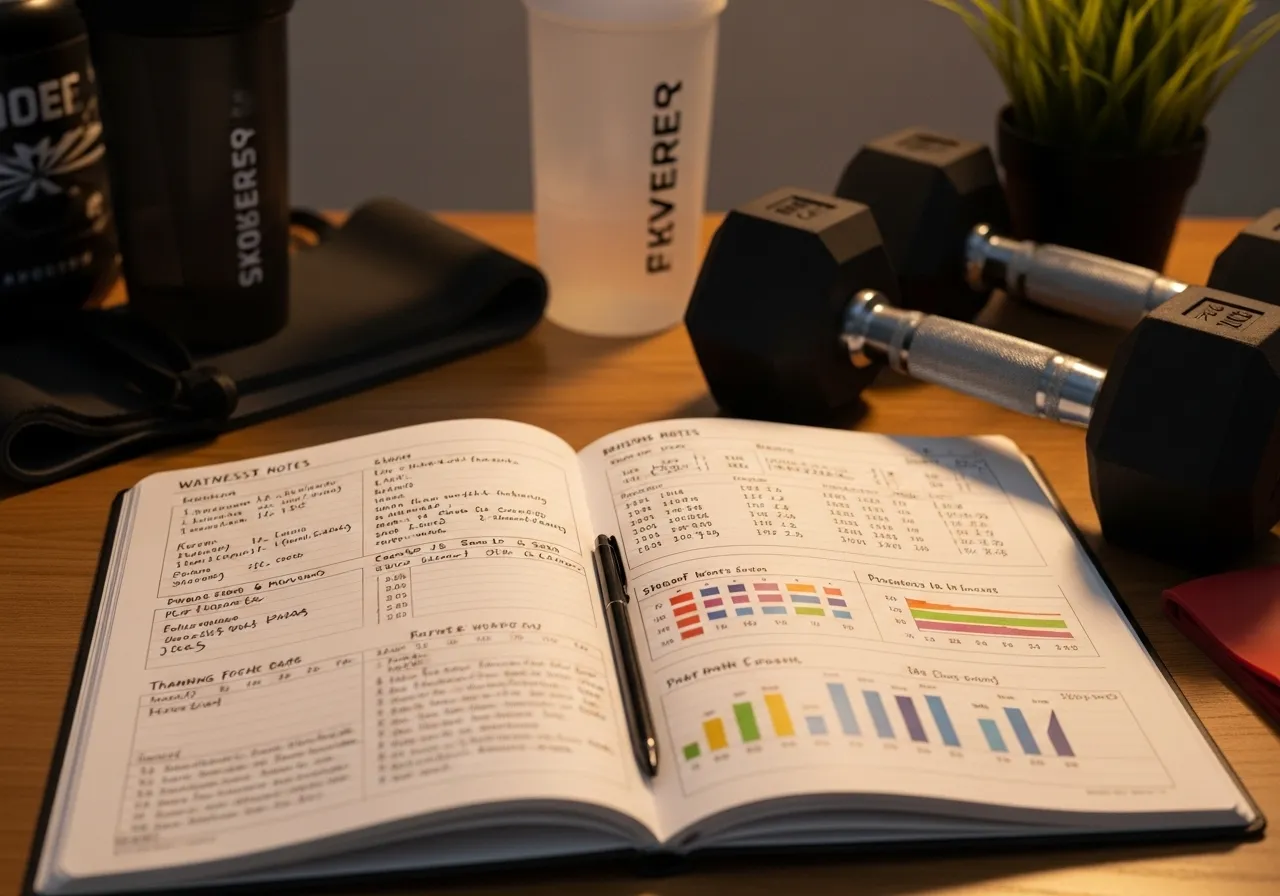
How to Use a Fitness Journal to Hit Your Goals Faster
⚠️ Disclaimer: The information in this article is for general educational purposes only and does not constitute medical, nutritional, or professional fitness advice. Individual results may vary. Always consult a qualified healthcare professional or certified fitness trainer before starting any new exercise program, changing your diet, or making decisions about injury treatment or recovery. If you experience pain, discomfort, or any unusual symptoms during exercise, stop immediately and seek professional guidance.

Why Most People Never Hit Their Fitness Goals (And How a Journal Changes That)
After years of training and interacting with hundreds of people at various stages of their fitness journey, I’ve identified a pattern that almost universally separates those who consistently progress from those who plateau, cycle through the same levels repeatedly, or eventually stop training altogether: the ones who progress keep records. Not elaborate, time-consuming records — often just a few lines per session in a notebook or an app. But the consistent habit of recording what was done, what the outcome was, and what should happen next creates a feedback loop that gradually builds the informed, adaptive training approach that produces sustained progress. The ones who plateau train with equal dedication but carry their training data only in memory, making decisions based on impression and habit rather than measurement and evidence.
The fitness journal is not a tool for obsessive data collectors or elite athletes with coaches reviewing their logs — it is the most practical available instrument for the fundamental requirement of progressive training: knowing what you did last time so you can do slightly more this time. Without this knowledge, training defaults to the comfort zone of familiar weights, familiar routines, and familiar effort levels that feel productive but produce no progressive stimulus. The progressive overload that drives adaptation — adding weight, reps, sets, or reducing rest between sessions systematically over time — requires knowing the current training state with sufficient precision to know what “more” looks like for each exercise. The fitness journal provides this knowledge reliably in a way that memory cannot, because memory systematically biases toward impressions (the workout felt hard) rather than measurements (the weight was 75kg for 3 sets of 8).
The Research on Self-Monitoring and Goal Achievement
The research on self-monitoring as a behavior change tool consistently supports its effectiveness across health domains, including exercise adherence and performance improvement. Research published on PubMed examining self-monitoring and health behavior change finds that individuals who monitor their exercise behavior — recording frequency, duration, and intensity — achieve significantly higher rates of goal attainment and maintain exercise habits more durably than non-monitoring controls in comparable goal-setting conditions. The mechanism is well-understood: self-monitoring increases the salience of the gap between current behavior and target behavior, provides immediate feedback that makes course corrections possible before long deviations accumulate, and creates the accountability that sustains effort through low-motivation periods. Applied to fitness training, these monitoring effects translate directly to more consistent progressive overload application, faster identification and correction of training plateaus, and higher long-term training adherence rates.
Common Training Without a Journal: The Problems That Accumulate
The specific problems that develop in training programs without adequate record-keeping are predictable and consistent. Exercise selection drift — the gradual unconscious migration toward exercises that feel comfortable rather than those that produce the best stimulus — occurs because without records, the exercises that are underperforming relative to potential are invisible. Weight selection stagnation — using the same weights on the same exercises for months because the improvement that would justify adding weight is not clearly tracked — produces the flat adaptation curve that characterizes the intermediate plateau. Recovery mismanagement — adding volume or intensity without recognizing that the recent accumulation of training stress has exceeded recovery capacity — produces the overreaching that impairs performance and increases injury risk. And goal drift — the gradual disconnection between current training and the original objectives that the training was designed to serve — occurs because without a written record of the goals and the plan to achieve them, the training evolves according to habit and momentum rather than deliberate direction. The fitness journal addresses each of these problems simultaneously: exercise selection is made deliberately from a documented history, weight progression follows a recorded progression plan, recovery is managed with data from training logs and readiness tracking, and goals remain visible and connected to the training that serves them.
What Counts as a Fitness Journal
A fitness journal is any consistent system for recording training-relevant information that allows review and analysis for decision-making. This definition encompasses a wide range of implementations: a spiral-bound notebook with hand-written workout logs; a notes app on a phone with typed session summaries; a dedicated training app like Strong, TrainHeroic, or Hevy that automatically organizes exercise data; a spreadsheet with columns for date, exercise, sets, reps, and weight; or a structured journal template downloaded from a fitness resource. What matters is not the format but the consistent capture of the information that makes subsequent sessions better informed. The minimum viable fitness journal captures, for each training session: date and session type, exercises performed, sets and reps completed, weights used, and a brief qualitative note about how the session felt. This information, reviewed before each subsequent session, provides the decision support that prevents stagnation and makes progressive overload systematic rather than ad hoc.
The Identity Shift That Fitness Journaling Creates
Beyond its practical information management function, consistent fitness journaling creates an identity-level shift that behavioral researchers find is one of the most powerful drivers of sustained behavior change. The athlete who has a fitness journal — who records their sessions, reviews their progress, and plans their next steps — has adopted the identity of someone who takes their training seriously enough to document it. This identity adoption influences training behavior across the full range of circumstances: the journal-keeper who faces a low-motivation day has a concrete, visible record of previous commitment that reinforces continuation; the journal-keeper who considers skipping a session has a training log that makes the skip visible as a gap in an otherwise consistent record; and the journal-keeper who reaches a plateau has a database of previous training to analyze for the variable that changed and produced the stagnation. The journal creates the evidence of the person you are becoming through consistent training — and that evidence reinforces the identity that sustains the training through the inevitable periods when motivation alone is insufficient.
The First Week: Starting Your Fitness Journal Without Overthinking It
The most common reason people don’t start a fitness journal is overthinking the format — spending more time designing the perfect journal system than actually using any system to record training. The perfect fitness journal is the one that is consistently used; the imperfect journal used every session is infinitely more valuable than the perfect journal designed but never opened. The practical first-week approach: choose whatever format is most convenient for your training environment (phone app if you always have your phone during training, small notebook if you prefer paper, whatever is already available), and record the following for each session: date, exercises, sets × reps × weight, and one sentence about how the session went. Do this for one week without modifying the format. After one week of actual use, identify what information is missing or unnecessary and adjust accordingly. The journal evolves through use — starting simple and adding structure as patterns in what you need to know emerge from actual training experience is more effective than designing an elaborate template before knowing what information is most valuable for your specific training context.
Goal Setting and the Journal: Connecting Daily Training to Long-Term Outcomes
The fitness journal’s most underutilized function is as a goal documentation and tracking system that maintains the connection between daily training decisions and the long-term outcomes those decisions are designed to produce. Most athletes have vague fitness goals — lose weight, get stronger, run faster — that lack the specificity and measurement criteria needed to guide daily decisions or recognize progress. Writing specific, measurable, time-bound goals in the journal — “increase deadlift from 120kg to 140kg in 12 weeks,” “reduce body fat from 22% to 18% by week 16,” “run 5km in under 25 minutes by month 3” — transforms the journal from a pure data capture tool into a planning and accountability system. The written goal creates three things that vague intention does not: a clear endpoint that makes progress toward it recognizable, an implicit plan requirement (to reach this goal by this date, what weekly steps are needed?), and a accountability record that makes progress visible and stagnation identifiable. Research on goal setting and athletic performance, reviewed in the British Journal of Sports Medicine’s systematic review of goal-setting interventions, consistently finds that specific, challenging goals with measurement and feedback produce significantly better performance outcomes than vague goals or no goals — and the fitness journal is the practical instrument that implements the measurement and feedback components that make specific goals effective rather than merely ambitious.
The Compounding Value of Training Data Over Time
A fitness journal maintained consistently for 6–12 months accumulates a dataset that provides insights impossible to obtain from shorter records — the long-term patterns in training response, seasonal variation in performance, and the specific variables that most consistently precede plateaus or breakthroughs in your training. Reviewing 12 months of training records reveals patterns that 4-week data cannot: which muscle groups recover slowest (requiring more days between sessions than others), which training protocols produce the best strength response for your individual physiology, which life stress periods (high work demands, travel, poor sleep) most consistently impair training performance and by how much, and which nutrition patterns — identified by cross-referencing nutrition notes with training performance data — most strongly correlate with your best and worst training sessions. This longitudinal data is more individually specific and therefore more actionable than any general training advice, because it is derived from your actual physiological response rather than population averages. The athlete with 12 months of detailed training records has a personalized training knowledge base that most coaches cannot provide — the experiential data of their own adaptive physiology accumulated through consistent systematic observation.
Building the Journaling Habit: The Minimum Viable Practice
Building any new habit requires reducing the behavioral friction of the habit to its minimum, and fitness journaling is no exception. The minimum viable journaling practice that produces the core benefits of progressive overload support and training review: spend 2 minutes before each session reviewing the previous session for the same exercises, and 2 minutes after the session recording today’s results. Four minutes per session — the minimum time investment for the maximum core benefit of the journal. This 4-minute daily practice, maintained consistently across 3–4 training sessions per week, accumulates into 48–64 minutes per month of training data review and capture that produces the progressive overload, plateau identification, and training adaptation that separates consistent progressors from perpetual beginners. The 4-minute minimum practice does not require a sophisticated journal format — a phone note, a text message to yourself, or three lines in a spiral notebook captures the essential information. Start with this minimum and expand the practice to include more sophisticated tracking (nutrition, recovery, goal milestones, body composition) as the core habit becomes automatic and the value of more comprehensive tracking becomes apparent from experience.
The fitness journal is not a sophisticated tool requiring significant time or expertise — it is the simple, consistent practice of writing down what you did and using that record to do slightly better next time. This practice, maintained across months and years of training, produces the compounding improvement that separates lifelong athletic progressors from those who cycle through perpetual beginner status despite years of effort. The fitness journal’s value compounds exponentially with time — a one-month journal provides a snapshot, a six-month journal reveals trends, and a multi-year journal provides the longitudinal performance data that allows truly informed training decisions based on how your specific body has responded to specific training variables over the full arc of your development as an athlete. Start the journal today; the most valuable entry is the first one.

How to Set Up Your Fitness Journal: Structure, Templates, and What to Track
The structure of a fitness journal determines how efficiently it serves its core function — providing decision-relevant information before each training session and capturing accurate data after. Different training goals and training types require somewhat different journal structures, but certain elements are universal: they appear in the journals of strength athletes, endurance athletes, and general fitness trainees because they capture the information that drives progressive training decisions regardless of the specific discipline. This section provides the universal template, the discipline-specific additions, and the implementation guidance that makes the journal setup phase quick and practical rather than a source of overthinking paralysis.
The Universal Fitness Journal Template
Every training session entry should capture five core categories of information that together provide the decision-relevant data for subsequent sessions. Category 1: Session header — date, time of day, training phase or week number in the current program. Category 2: Pre-session state — brief note on sleep quality (1–5 scale), energy level (1–5 scale), and any significant life stress or soreness from previous sessions. Category 3: Exercise log — for each exercise: exercise name, sets × reps × weight (e.g., “Bench Press: 80kg × 8, 80kg × 8, 80kg × 7”), rest periods if tracked, and any significant technique notes. Category 4: Post-session notes — overall session quality (1–5 scale), which exercises felt strong versus weak, and any pain or discomfort. Category 5: Next session targets — based on today’s performance, what adjustments are planned for the next session of the same type. This fifth category is the most overlooked and most valuable: writing the next session’s planned progression immediately after the current session, while the data is fresh and performance is accurately remembered, prevents the delay and potential data loss of making this decision days later with faded recollection.
Resistance Training Journal: What to Track for Strength Gains
Resistance training journals benefit from additional detail that captures the variables most relevant to strength and muscle gain progression. Beyond the universal template: track the specific reps achieved on each set rather than just total volume (8, 8, 7 reps tells a different story about readiness to progress than 8, 8, 8 does); note the RPE (rate of perceived exertion, 1–10 scale, where 10 is maximum effort) for the last working set of each primary lift (RPE 7 on the last set suggests significant reserve and readiness to add weight next session; RPE 9–10 suggests the current load is close to maximum and progression requires additional working sets before load increase); record rest periods for primary lifts if targeting hypertrophy (rest period progression from 90 to 120 to 180 seconds across mesocycles is a legitimate loading variable that journals enable tracking); and note exercise substitutions and the reason for them (injury, equipment unavailability, or deliberate variation) to maintain training context. For programs using percentage-based programming (percentage of 1RM), record new maxes when tested and the corresponding working weights to maintain the percentage accuracy that makes the program effective.
Endurance Training Journal: Pace, Distance, Heart Rate, and Perceived Effort
Endurance training journals capture different primary variables: distance (km or miles), time, average pace per km or mile, heart rate data (average and peak from a GPS watch or heart rate monitor), perceived effort (RPE 1–10), and terrain or environmental conditions (heat, humidity, elevation) that influence pace interpretation. The core endurance training journal entries: for easy runs, record distance, time, average heart rate, and RPE — the heart rate and RPE relationship on easy runs tracks aerobic development over time, with improving fitness appearing as progressively lower heart rate at the same pace and RPE; for interval sessions, record each interval’s time/pace and heart rate response separately to track performance consistency within sessions and improvement across sessions; for long runs, note distance, overall time, pacing strategy (negative split, even, or positive split), nutrition and hydration consumed, and how the final miles felt relative to the first. The endurance journal’s primary analytical function is tracking the relationship between pace, heart rate, and RPE — the improving fitness signature that appears as this relationship shifting favorably over weeks of training.
Body Composition and Physical Measurement Tracking
Alongside training performance data, body composition measurements provide the feedback that connects training and nutrition choices to body composition outcomes. Measurements to track in the fitness journal: body weight (weekly average from 5–7 daily morning measurements — weekly averages eliminate the day-to-day water weight fluctuation that makes single daily measurements misleading), waist circumference at the navel (monthly measurement that captures abdominal fat change more directly than scale weight), progress photos (monthly at consistent lighting, time of day, and camera distance — provide visual evidence of body composition change that measurements alone may miss). These measurements should be recorded in the journal alongside training data to enable cross-referencing: does training volume changes correlate with weight changes? Does the nutrition data in weekly entries correlate with the body composition trajectory? The ability to answer these questions through journal data is what elevates the fitness journal from a simple workout log to a comprehensive performance management system.
Weekly and Monthly Review: The High-Leverage Journal Practice
The most high-leverage journal practice beyond daily session logging is the weekly and monthly review — a deliberate looking-back at the accumulated data to identify patterns, assess goal progress, and make program adjustments. The weekly review (5–10 minutes at the end of each training week): total sessions completed versus planned, overall training volume compared to the previous week, any exercises where performance declined or plateau appears, consistency of pre-session state ratings (if sleep and energy are consistently low, this is actionable information), and one thing to adjust in the following week based on this week’s data. The monthly review (20–30 minutes at the end of each training month): compare key lift performances to the previous month and to the starting point of the current program, assess body composition measurement trends, review whether training is aligned with stated goals or has drifted toward different priorities, and plan the following month’s training with specific targets based on the data trends. These reviews are the mechanism by which journal data becomes training intelligence — without deliberate review, the data sits in the journal unused, producing the same outcome as not keeping records. With deliberate review, the data drives the program adjustments that produce continuous progressive improvement across training phases.
The Pre-Training Review Ritual: Using Yesterday’s Data Today
The specific daily practice that immediately translates journal data into training improvement is the pre-training review ritual — the 2-minute habit of reading the previous session’s entry before beginning training. This ritual accomplishes several things simultaneously: it confirms the weights, reps, and sets from the last session of the same type, preventing the reliance on potentially inaccurate memory; it reviews the next session targets written at the end of the previous session, providing the specific progressive targets for today’s session; it recalls the pre-session state notes from last time, allowing comparison to today’s readiness to identify whether any adjustment is warranted; and it activates training intent — the act of reviewing what was done and what is planned creates specific, concrete performance goals that improve training quality compared to entering the session without clear performance targets. Research on implementation intentions — specific plans for how a behavior will be executed (what, when, where, how) — consistently finds that forming specific implementation intentions before a performance task significantly improves task completion and performance quality compared to vague motivational goals alone. The pre-training review ritual creates exactly these specific implementation intentions: “today I will attempt 82.5kg on the bench press for 3 sets of 8” is an implementation intention that outperforms “today I will work hard on bench” in producing better training performance.
Training Volume and Frequency Tracking: Why Accumulation Matters
Beyond individual session data, the fitness journal enables tracking of cumulative training variables that influence adaptation at a program level rather than a session level. Weekly training volume per muscle group — the total number of sets for each muscle group across all sessions of the week — is among the most important variables for muscle hypertrophy programming, with research establishing that 10–20 sets per muscle group per week (in the 5–30 rep range) is the effective hypertrophy stimulus range for most trained individuals, with the specific optimal volume being individually variable and best identified through systematic adjustment guided by journal data. Tracking sets per muscle group weekly reveals whether the program is appropriately distributed across muscle groups or chronically under-stimulating specific muscles (which explains stagnation in those specific muscles) or over-stimulating others (which produces recovery failure and potential overuse injury). Progressive overload applied to weekly volume — adding 1–2 sets per muscle group per week across a 4–6 week accumulation phase before a deload — requires knowing the current volume to know what addition is appropriate. The journal makes this tracking automatic: tallying sets per muscle group at the end of each training week requires less than 3 minutes and provides the volume management data that sophisticated periodization requires.
Injury and Pain Tracking: The Early Warning System
One of the most practically valuable functions of detailed fitness journaling is as an early injury warning system. Pain and discomfort that are noted in the journal across consecutive sessions reveal the progressive irritation patterns that precede many training injuries — the “slight shoulder twinge on the last set of overhead press” that appears in three consecutive session notes is a reliable early warning that the tissue is accumulating stress beyond its recovery capacity, before it has progressed to the sharp pain that forces session cancellation. Without journal records, this progressive irritation pattern is difficult to detect — memory of minor discomfort fades quickly, and the connection between a week-old mild discomfort and today’s more significant pain is difficult to establish without written records of the intermediate steps. With journal records, the pattern becomes visible in a weekly review, enabling early intervention (load reduction, exercise substitution, additional recovery) that prevents the full training injury. Recording not just pain intensity but pain location, specific exercises that provoked it, and whether it improved or worsened through warm-up provides the diagnostic information that guides intelligent training modification and, when necessary, professional assessment timing.
Customizing the Journal to Your Training Type
The universal template provides a foundation that should be customized to reflect the specific variables most relevant to your training type. Powerlifters should add competition lift performance tracking (squat, bench, deadlift PRs across all rep ranges), attempt selection notes for competition preparation, and bar speed observations that indicate fatigue or technical breakdown. Bodybuilders should add pump quality ratings, mind-muscle connection quality for isolation exercises, and photos at regular intervals. CrossFit athletes should track WOD times and scores, benchmark workout comparisons, and skill development milestones (handstand hold duration, pull-up volume, double-under consistency). Cyclists and runners should integrate heart rate variability data (from Garmin, Whoop, or similar devices) as a readiness modifier that influences daily training intensity decisions. The journal that most precisely captures the variables relevant to your specific training produces the most actionable data — customizing beyond the universal template to include your specific discipline’s key performance indicators is the refinement that makes the journal genuinely intelligent rather than merely comprehensive.
The best journal is always the one that captures the variables you most need to see clearly to make better training decisions — start with the universal template and expand toward your specific discipline’s requirements as experience reveals what information most powerfully guides your training choices. The athlete who journals consistently for a full year possesses something genuinely rare in recreational fitness: an objective record of everything that worked, everything that didn’t, and the specific conditions under which each outcome occurred. This record is more valuable than any training program or coaching advice available — it is the individualized performance data that allows truly personalized training optimization based on how your specific physiology has responded to specific stimuli across hundreds of training sessions.
Using Your Fitness Journal to Drive Progressive Overload and Break Plateaus
Progressive overload — the systematic increase of training stress over time — is the fundamental mechanism of all training adaptation. Muscles, cardiovascular systems, and athletic skills improve in response to demands that exceed what was previously handled; they stagnate when training maintains the same demands session after session. The fitness journal is the instrument that makes progressive overload systematic rather than sporadic — it provides the data that determines when an increase is appropriate, what type of increase is most suitable for the current training context, and whether a planned increase is supported by the readiness data from recent sessions. Without journal data, progressive overload decisions are guesses; with journal data, they are informed decisions based on actual performance evidence.
The Five Methods of Progressive Overload Your Journal Should Track
Progressive overload is not limited to adding weight to the bar — it encompasses five distinct variables that can be systematically increased to create progressive training demand. Understanding all five and tracking them explicitly in the journal allows overload strategies appropriate to the current training phase and individual response. Method 1: Load progression — increasing the weight used for the same sets and reps (the most straightforward and most familiar form of progressive overload; add 2.5–5kg when the current weight is achieved at all target sets with good technique and 1–2 reps in reserve). Method 2: Volume progression — adding sets to existing exercises while maintaining weight and reps (appropriate when load progression has stalled, as adding sets increases total work without increasing peak intensity). Method 3: Rep progression — completing more reps with the same weight (e.g., from 3×8 to 3×10 before increasing load); rep range targets in the journal define when progression to the next method is appropriate. Method 4: Density progression — completing the same total work in less time by reducing rest periods (relevant for metabolic conditioning and hypertrophy phases). Method 5: Technique progression — completing the same weight with better range of motion or improved movement quality (particularly relevant for technique-dependent exercises and novice progressors who can improve technique significantly before load increases are appropriate). Tracking which method is being applied and the specific progress toward the next threshold in each method keeps progressive overload deliberate and multi-dimensional.
Identifying Plateaus Early: The Journal as a Diagnostic Tool
A performance plateau — defined as 3 or more consecutive sessions without meaningful performance improvement on the same exercise — is detectable in the journal data before the athlete subjectively recognizes it from memory alone. The journal pattern that indicates a plateau: the same weight and reps appearing in 3 or more consecutive entries for the same exercise, without any of the progress indicators (additional reps on the final set, reduced RPE at the same load, improved technique notes) that indicate adaptation is occurring. Early plateau detection — at the 3-session mark rather than after weeks of stagnation — enables early intervention through program adjustment, which produces faster resolution than late-stage intervention after the plateau has been accepted as normal. The three most common plateau causes identifiable from journal data: insufficient progressive overload application (sessions showing no systematic load, volume, or rep increases despite performance suggesting readiness), inadequate recovery between sessions (pre-session state notes showing consistently low sleep, energy, or high soreness that impairs performance), and exercise selection mismatch (an exercise that doesn’t suit the individual’s mechanics, showing consistently inconsistent progress compared to similar exercises for the same muscle group). Each cause has a specific solution, and the journal data identifies which cause is most likely — directing the solution toward the actual problem rather than generic advice.
Programming Deload Weeks Using Journal Data
Deload weeks — planned training reductions of 40–60% in volume and/or intensity designed to allow accumulated fatigue to dissipate before the next training accumulation phase — are most effectively timed based on journal data rather than arbitrary fixed intervals. The journal signals that indicate deload timing: consistently declining performance across multiple exercises despite normal pre-session readiness (central nervous system fatigue that reduces neuromuscular recruitment); RPE increasing at the same loads across consecutive sessions (a reliable indicator of accumulated fatigue exceeding recovery); consistent pre-session state ratings of 2–3 (poor sleep, low energy, elevated soreness) across multiple days; and training volume accumulation reaching 20+ sets per major muscle group per week for multiple consecutive weeks without recovery adjustment. These objective data signals from journal tracking replace the subjective and unreliable “I feel tired” assessment of deload need with specific performance-derived criteria that are both earlier (detecting accumulated fatigue before it becomes performance-impairing overreaching) and more precise (identifying which specific recovery signal has been crossed rather than providing a vague readiness rating).
Breaking Strength Plateaus: Journal-Informed Strategies
When a strength plateau is identified through journal data, specific strategies are available that the journal data helps select. Plateau on compound lifts (bench press, squat, deadlift): review the last 8–12 sessions’ RPE data for the stuck exercise. If RPE has been consistently 9–10 (training to failure or near-failure on every session), the recovery-side intervention — reducing frequency, adding deload, or reducing intensity while maintaining volume — is most likely to break the plateau. If RPE has been consistently 6–7 (significant training reserve left on every set) without load increases, the application of progressive overload has been insufficient and simply adding weight is the solution. Review whether accessory exercises supporting the stuck lift have been progressed alongside it — a bench press plateau may reflect a triceps or anterior shoulder weakness that accessory exercise records reveal has not been adequately developed. Review body composition and nutrition data: plateaus occurring alongside body weight reduction suggest insufficient caloric intake for the training demands, requiring either dietary adjustment or plateau acceptance as an appropriate outcome of the current deficit phase. Each of these diagnostic pathways requires journal data — the RPE records, accessory exercise logs, nutrition notes, and body weight trends that together identify the cause of the stall and the most targeted solution.
Personal Records and Milestone Tracking
The fitness journal should maintain a dedicated section for personal records (PRs) and milestone achievements — the highest performance achieved for each exercise across all rep ranges, and the significant non-lifting milestones (fastest 5km time, most consecutive pull-ups, longest plank hold) that provide motivation and progress context. The PR record serves a specific motivational function: on low-motivation training days, reviewing the PR section of the journal provides evidence of accumulated achievement that counters the demoralization of current performance that may be below the athlete’s best. Knowing that 18 months ago a 60kg squat was the maximum, and that the current working weight is 100kg, provides a long-term progress perspective that any single session’s relative underperformance cannot diminish. The PR record also guides goal setting: the gap between current PR and next milestone goal (e.g., from 100kg to 120kg squat) provides the specific, measurable target that makes the next training phase purposeful. Update the PR section every time a new personal record is achieved — the act of recording a new PR is a positive reinforcement of the training investment that produced it, and the growing list of PRs is one of the most motivating elements of a well-maintained long-term fitness journal.
Using the AMRAP Test to Set Accurate Progressive Overload Targets
One of the most practical journal-supported techniques for setting accurate progressive overload targets is the AMRAP (as many reps as possible) test — performing the final set of a primary exercise to technical failure at the current working weight and using the rep count to determine the appropriate load for the next session. The AMRAP protocol: on the final set of the primary exercise for the session, instead of stopping at the target rep count, continue with perfect technique until failure or significant technique breakdown, recording the actual reps achieved. If the final-set AMRAP produces reps significantly above the target (e.g., target was 8, achieved 12), increase the working weight by 2.5–5kg for the next session. If AMRAP produces reps at or within 1–2 of target (target 8, achieved 8–10), maintain the current weight and target 1 additional rep on the first set next session before loading. If AMRAP produces reps below target (target 8, achieved 6–7), reduce the weight by 5% and rebuild — the current weight is beyond the athlete’s current capacity for the intended number of sets. This AMRAP-guided progression system requires the journal to record both the target and the achieved rep count on every final set, creating the accurate load management data that removes guesswork from progressive overload decisions entirely.
Tracking Training Age and Long-Term Development
Training age — the number of years of consistent, progressive resistance training — is one of the most important variables in setting realistic expectations for training progress rates and the appropriate complexity of periodization. Journals that have been maintained for multiple years provide objective training age evidence — the date of the first entry establishes training age, and the performance trajectory across the full journal duration illustrates how progress rate has changed from novice (weekly PR potential) to intermediate (monthly PR potential) to advanced (quarterly PR potential). This long-term perspective calibrates expectations appropriately: an advanced athlete who has been training for 5 years should not expect monthly strength PRs and should not interpret their absence as program failure — it is the normal progression rate for their training age. Conversely, a relative beginner who is not progressing monthly is likely under-applying progressive overload or mismanaging recovery — both of which journal data can identify and address. The fitness journal maintained across years of training becomes an objective record of personal athletic development that no amount of retrospective self-assessment can replicate with equivalent accuracy.
Periodization Planning Through the Journal
Advanced journal users can leverage their accumulated training data to implement periodization — the deliberate cycling of training variables (volume, intensity, exercise selection) across mesocycles (3–6 week training blocks) that produces superior long-term progress compared to continuously linear approaches. The journal enables periodization by providing the data that defines each mesocycle’s starting point and the specific overload targets for its duration. A hypertrophy mesocycle (higher volume, moderate intensity, 8–12 rep ranges) is planned from the journal data showing the previous mesocycle’s final performance — the working weights from the last strength block’s final week become the starting loads for the hypertrophy block at higher rep targets. After 4–6 weeks of hypertrophy work, the journal data shows the new muscle mass development through body weight and body composition measurements, and the next strength block starts from the strength performance baseline that the additional muscle enables. This data-driven periodization loop — using each mesocycle’s end-point data as the next mesocycle’s starting point — produces the systematic long-term progress that makes the advanced athlete progressively more capable across years of training, rather than oscillating around a plateau.
The fitness journal used for periodization planning is not just a workout log but a full training management system — one that allows the athlete to manage their own training with the sophistication of a coached program, guided by their own performance data rather than generic programming that cannot account for individual response patterns, recovery capacity, and training history. The goal-setting framework in the fitness journal works because it creates the explicit connection between daily training decisions and long-term outcome intentions that intuitive training lacks. Every session recorded is a data point in the trajectory toward the goal; every goal review reveals whether the trajectory is on course or requires adjustment. The journal is the instrument that makes athletic goal pursuit a navigable journey rather than a hopeful drift toward an uncertain destination.

Nutrition Journaling, Recovery Tracking, and Reading Your Data Patterns
The most powerful version of a fitness journal integrates training performance data with the nutrition and recovery variables that most directly influence that performance — creating a multi-dimensional dataset that allows the identification of cause-and-effect relationships between lifestyle inputs and training outputs. The athlete who journals training performance alongside nutrition quality, sleep duration, stress levels, and recovery markers can answer questions that pure training logs cannot: Does my training perform better on higher-carbohydrate days? Does 8 hours of sleep produce meaningfully better performance than 6 hours for me specifically? Does high work stress impair my next-day strength performance measurably? These answers, derived from personal data rather than population averages, produce individualized training and lifestyle optimization that no generic advice can replicate.
Nutrition Journaling: What to Track and How Detailed to Get
Nutrition journaling ranges from precise macronutrient tracking (weighing and logging every food item in a calorie tracking app) to qualitative daily summaries (noting the quality and general composition of each day’s eating without precise measurement). The appropriate level of detail depends on the athlete’s goals and the role of nutrition in their current training phase. For athletes pursuing precise body composition change (cutting to a specific body fat percentage, or bulking with controlled surplus), precise macronutrient tracking for at least the first 4–8 weeks calibrates dietary habits against actual intake data and is worth the additional effort. For athletes in maintenance or general performance phases, a simpler qualitative approach captures the information most relevant to performance correlation without the daily friction of precise measurement. The minimum nutrition journal entry that provides useful performance correlation data: a 1–5 quality rating for each day’s nutrition (where 1 is poor dietary quality or inadequate intake and 5 is excellent dietary quality and appropriate intake), a note on protein adequacy (did the day’s protein hit the target range?), a note on carbohydrate timing relative to training (was there adequate pre- and post-workout carbohydrate intake?), and any specific foods or meal patterns that felt unusual. This 5-minute nutrition log, maintained alongside training data, allows the cross-referencing of nutrition quality with training performance that identifies your individual nutrition-performance relationship.
Sleep Tracking: The Recovery Variable With the Biggest Performance Impact
Sleep is the most impactful single recovery variable for training performance, and tracking sleep data in the fitness journal allows the quantification of its effect on individual training performance. The minimum sleep tracking entry: total sleep hours (from sleep onset to final waking) and a subjective quality rating (1–5, where 1 is fragmented, unrestorative sleep and 5 is deep, fully restorative sleep). More sophisticated sleep tracking uses data from consumer wearables (Oura Ring, Garmin, Apple Watch) to provide objective sleep stage estimates, heart rate variability, and readiness scores that can be directly entered in the journal. The performance correlation analysis: after 4–6 weeks of parallel sleep and training data, calculate average training performance scores (a simple 1–5 session quality rating or actual performance metrics) separated by sleep categories (5 hours or less, 6–7 hours, 8+ hours). Most athletes find a clear performance-sleep relationship in their individual data that precisely quantifies what is lost in terms of training quality from different levels of sleep deprivation — data that is far more motivating for sleep prioritization than generic advice about the importance of sleep.
Stress Tracking: The Hidden Training Variable
Psychological stress from work, relationships, finances, and life events impairs training performance through the physiological mechanisms detailed in the sleep article (elevated cortisol, impaired recovery, reduced neuromuscular function) — but its impact is rarely tracked in fitness journals, making it an invisible variable in training performance analysis. Adding a simple daily stress rating (1–5, where 1 is very low life stress and 5 is extremely high) to the journal alongside training and sleep data allows the identification of stress-performance relationships that training logs alone cannot reveal. Athletes who analyze 3–4 months of data with stress ratings alongside performance data consistently find that high-stress periods are associated with measurably reduced training performance — even when sleep quality and nutrition are maintained — confirming that psychological stress is a genuine training load variable that requires management alongside physical training volume. This data supports making actual training adjustments during high-stress life periods (reducing volume, reducing intensity, maintaining frequency) rather than attempting to maintain normal training load that the elevated cortisol environment cannot support effectively.
Heart Rate Variability: The Objective Readiness Metric
Heart rate variability (HRV) — the measure of millisecond variation between consecutive heartbeats that reflects autonomic nervous system balance — is the most validated objective recovery readiness metric available to consumer-level athletes. Low HRV relative to an individual’s baseline reliably predicts reduced high-intensity exercise tolerance and is associated with accumulated training fatigue, insufficient recovery, illness onset, and elevated stress — making it a highly informative daily readiness input for training intensity decisions. Recording morning HRV data (from Oura Ring, Whoop, Garmin, or compatible Apple Watch) in the fitness journal alongside training performance data allows the identification of HRV-performance correlations that guide training intensity decisions: days with HRV at or above baseline support high-intensity training; days with HRV significantly below baseline warrant reduced intensity or recovery sessions. Research on HRV-guided training intensity in endurance athletes finds that athletes who adjust training intensity based on HRV achieve better performance improvements than those who follow a fixed intensity schedule, confirming that the HRV-guided training adjustment is physiologically appropriate and not merely training conservation.
Reading Your Data: Pattern Identification Across Months
The analytical value of the comprehensive fitness journal emerges from identifying patterns across months of data that no single session or week can reveal. Common valuable patterns athletes identify through long-term journal analysis: the “Thursday effect” — consistently lower training performance on Thursdays despite adequate sleep, often revealing that the accumulated week’s training stress peaks on day 4–5 of a consecutive training block; the “travel impairment” — consistently reduced performance in sessions following travel days, quantifying the actual performance cost of disrupted sleep, altered nutrition, and circadian disruption from travel; the “carbohydrate correlation” — specific exercises (particularly high-rep work and metabolic conditioning) showing consistently better performance on days following higher-carbohydrate intake, while maximum strength work shows less clear carbohydrate sensitivity; and the “RPE inflation cycle” — the pattern of rising RPE at constant loads across a 4–5 week accumulation that reliably precedes performance plateaus and indicates deload need. None of these patterns are identifiable without the data accumulation that consistent journaling provides. Each pattern identified translates directly into training or lifestyle adjustments that eliminate an avoidable performance impairment — making the data-reading phase of fitness journaling as practically valuable as the data capture phase.
Building a Monthly Lifestyle and Training Dashboard
For athletes who want to maximize the analytical value of their journal data, creating a simple monthly dashboard — a single page summary of the month’s key metrics — provides the high-level view that daily entries’ detail can obscure. The monthly dashboard: average weekly training volume per muscle group, total sessions completed versus planned (adherence rate), average sleep hours and quality ratings, average daily stress ratings, body weight trend (monthly average versus previous month), key lifts’ performance change from month start to month end, and one paragraph of qualitative observations about the month’s training. This single-page summary, maintained monthly, creates a longitudinal record of the athlete’s entire training career development that allows the comparison of any current month to any previous month — identifying the specific lifestyle and training combinations that historically produced the best results, and the combinations that most reliably produced poor periods. The monthly dashboard is the highest-level tool in the fitness journal ecosystem, providing the bird’s-eye view of the training career trajectory that daily entries cannot provide from within the detail of individual sessions.
Correlating Nutrition and Training Performance: A Practical Method
The specific method for identifying individual nutrition-performance correlations from journal data: after 8–12 weeks of parallel nutrition quality ratings and session performance ratings, create a simple comparison table. Group all sessions by the previous day’s nutrition quality rating (1–5) and calculate the average session performance rating for each nutrition group. If sessions preceded by nutrition quality 4–5 consistently produce higher performance ratings than sessions preceded by nutrition quality 1–2, you have individual evidence of the nutrition-performance relationship that confirms the value of dietary adherence for your training specifically. This individual evidence is often more motivating for dietary adherence than abstract nutritional principles — knowing specifically that your training quality drops 1.5 points on a 5-point scale when you eat poorly the day before provides a concrete cost-benefit calculation that makes good dietary choices before important training sessions obviously worthwhile. The same correlation method can be applied to pre-workout nutrition (was a pre-workout meal consumed or not?), protein intake adequacy (days above versus below protein target), and carbohydrate intake level — each cross-referenced against session performance to identify the specific nutritional variables most impactful for your individual training performance.
Accountability Partners and Shared Journals
The motivational benefit of fitness journaling is further enhanced by sharing selected data with an accountability partner — a training partner, coach, or trusted friend who reviews the journal summaries and provides external accountability for the goals and commitments documented in the journal. Accountability partners need not review detailed session logs — a weekly summary of sessions completed, key performance metrics, and goal progress shared via text, email, or dedicated app is sufficient to create the social accountability that research on behavior change consistently identifies as one of the most powerful drivers of sustained effort. The fitness journal becomes the evidence base for accountability conversations: instead of vague “how’s training going?” exchanges, the accountability partner and athlete can discuss specific trends (“I see your squat has been stuck at 100kg for three weeks — what adjustments are you planning?”), creating the specific, actionable accountability that vague check-ins cannot provide. Some athletes share their journals publicly through fitness communities, social media training logs, or dedicated logging platforms — the public accountability of a visible record is among the most powerful adherence motivators available, particularly for athletes who respond strongly to social commitment and external expectation.
The Psychological Benefits of Documented Progress
Beyond its analytical and decision-support functions, the fitness journal provides psychological benefits that influence training adherence through mechanisms distinct from the data analysis value. The act of writing creates a stronger memory trace than mental note-taking — sessions that are written about are better remembered, and the accumulation of written records creates a more vivid subjective sense of training history than undocumented memory alone. The journal as a physical or digital artifact of training history provides intrinsic motivation through the accumulated evidence of past commitment: an athlete who picks up a journal filled with 200 sessions of training records has tangible evidence of sustained dedication that produces a sense of identity and investment incompatible with giving up. The journal also provides a safe space for the honest qualitative notes — the sessions that went poorly, the periods of low motivation, the doubts about progress — that athletes often suppress rather than acknowledge. Acknowledging these experiences in writing rather than suppressing them processes them more effectively, and reading back through past low periods to see that they were followed by return and progress provides the experiential evidence that current difficulties are temporary rather than permanent. These psychological functions of the journal are as practically valuable for long-term training adherence as its analytical functions — together they make the fitness journal the most complete tool available for supporting the sustained, consistent effort that fitness goals require.
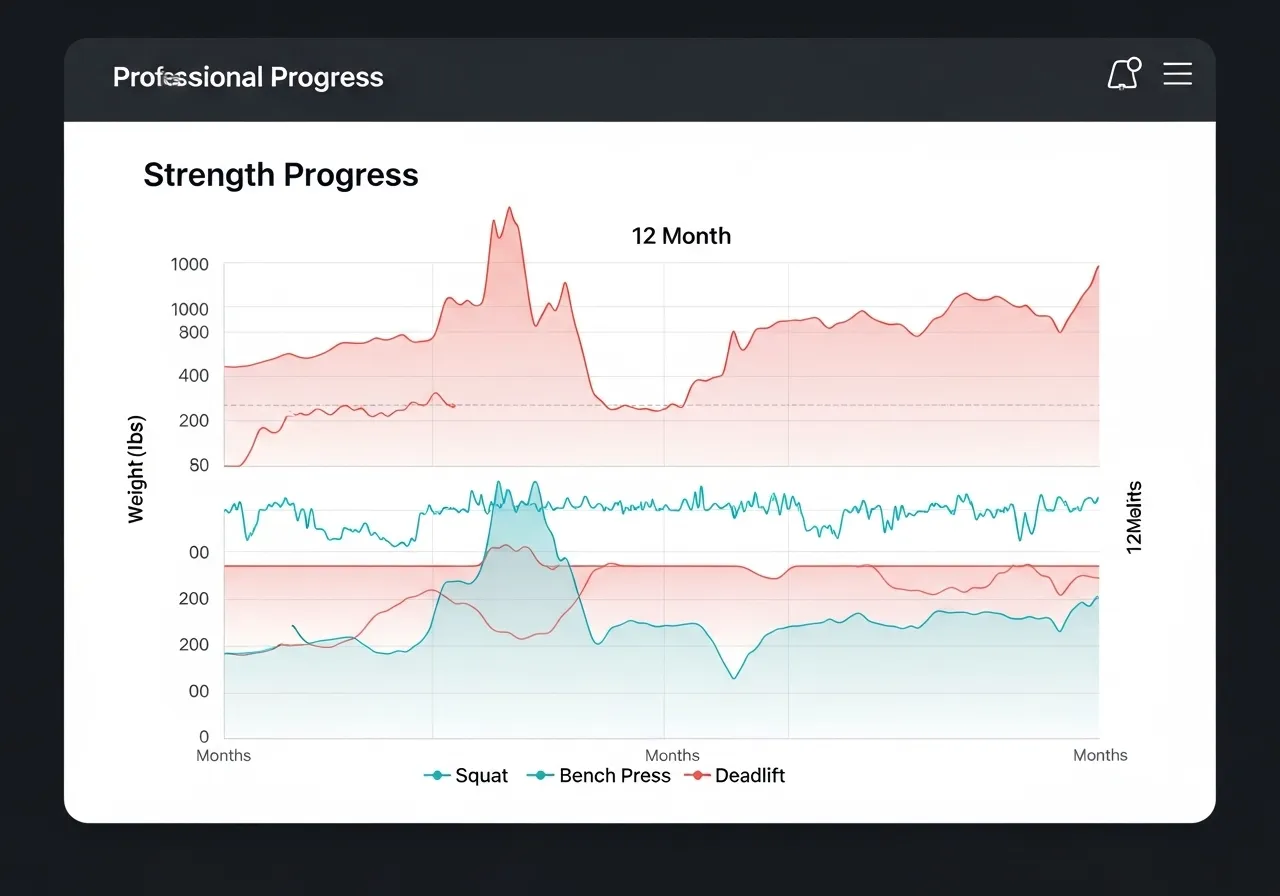
Progress visualization — the chart of PRs over time, the consistent improvement in workout density, the reliable reduction in recovery time between sessions — is the most motivating evidence available that the training process is working. The fitness journal provides this visualization automatically when maintained consistently, converting the abstract effort of daily training into the concrete, visible trajectory of athletic development that sustains commitment through the periods when subjective motivation is insufficient.
Digital vs. Paper Journals, Common Mistakes, and Frequently Asked Questions
The practical implementation questions of fitness journaling — which format to use, what mistakes to avoid, how to maintain the habit through life disruptions, and how to use technology effectively without letting it complicate what should be a simple practice — determine whether a well-intentioned journaling system is actually used consistently or gradually abandoned. This final section addresses the implementation questions that arise after the principles of effective journaling are understood but before the habit is fully established.
Digital vs. Paper: The Honest Comparison
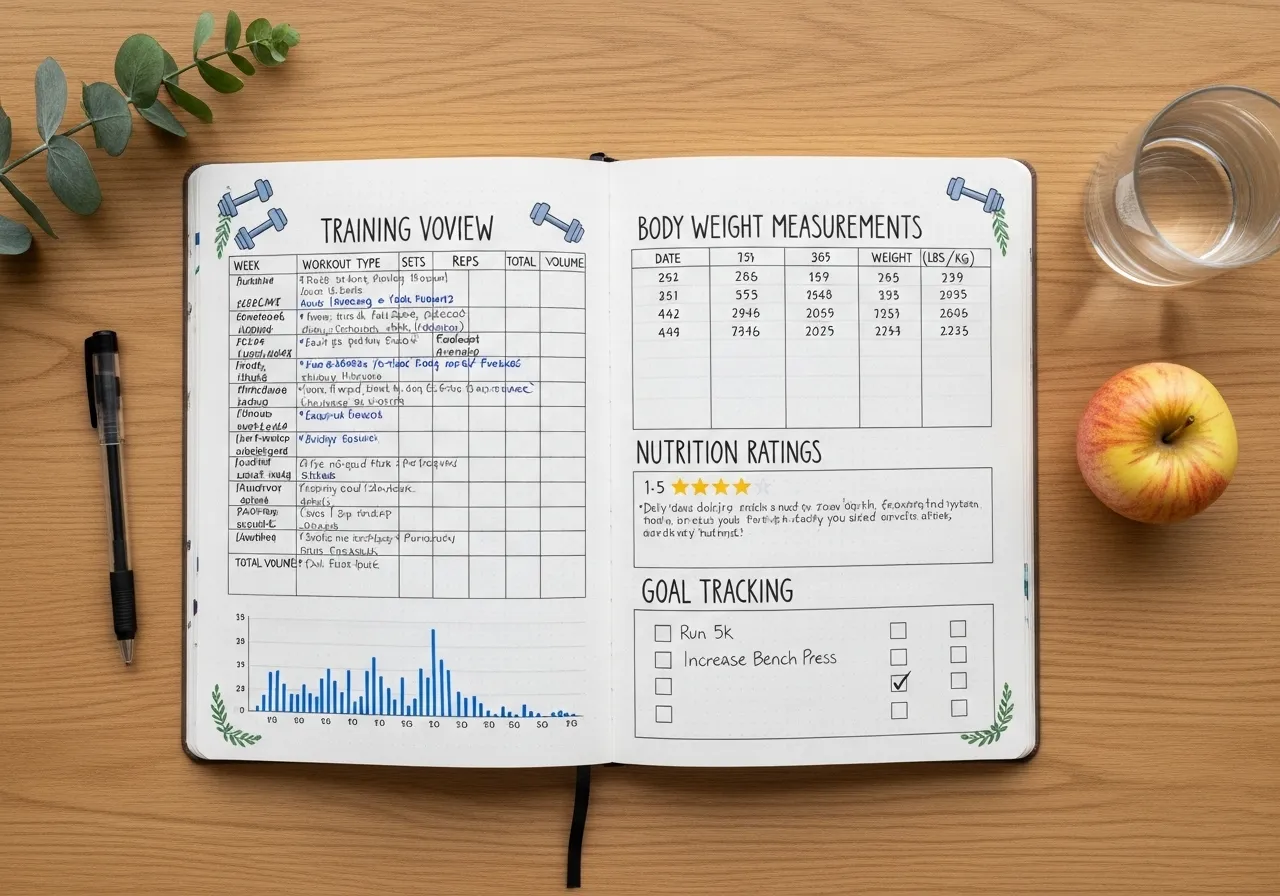
The digital versus paper journal debate has strong advocates on both sides, and the research on which format is superior for behavior change and information retention is mixed — the honest answer is that neither is universally better, and the format that is most consistently used is the superior choice for any individual athlete. Paper journals offer specific advantages: writing by hand produces better memory encoding and deeper processing of recorded information than typing; paper requires no battery, connectivity, or platform compatibility; and the physical artifact of a filled notebook is a more tangible and emotionally resonant record of training history than a database entry. Digital journals offer different advantages: automatic calculation and graphing of tracked metrics (apps like Strong, Hevy, and Garmin Connect automatically generate strength progress graphs and volume trends without manual analysis); searchability (finding all sessions where a specific exercise was performed takes seconds rather than page-flipping); cloud backup (eliminating the data loss risk of a lost or destroyed physical notebook); and integration with wearable devices (automatic import of heart rate, HRV, and GPS data from compatible devices). The practical recommendation: start with whichever format has lower friction in your training environment (phone app if you always have your phone during training, small notebook if you consistently train without a phone or prefer paper), and switch formats only if significant usability problems emerge from experience rather than theoretical preference.
Best Fitness Tracking Apps in 2024
For athletes choosing a digital approach, the available apps vary significantly in functionality, user experience, and the specific tracking variables they support. Strong — the most popular dedicated strength training log app — provides clean workout logging, automatic progression suggestions, and 1RM calculation across all exercises; its simple interface prioritizes actual logging speed over analytical features. Hevy — a free alternative to Strong — provides similar core logging functionality with better sharing and social features; appropriate for athletes who want accountability partner access to their data. TrainHeroic — oriented toward coached athletes and teams — provides the most sophisticated programming and analytics features at a premium price appropriate for athletes working with coaches who use the platform. Garmin Connect, Strava, and Apple Fitness — the major wearable companion apps — provide excellent endurance training tracking with GPS, heart rate, and HRV data but limited resistance training functionality; appropriate for endurance athletes but insufficient standalone for strength athletes. Cronometer and MyFitnessPal — the leading nutrition tracking apps — are not training journals but complement them by providing the precise nutrition data that enhances training journal analytics when cross-referenced. The best digital fitness journal is ultimately the one whose data entry interface is fast enough not to interrupt training flow — if the app is slower to use than a notebook, the digital advantages are offset by the usability cost that reduces consistent use.
Common Fitness Journaling Mistakes and How to Avoid Them
The mistakes most commonly made by athletes starting fitness journals produce the discouragement and inconsistency that lead to journal abandonment rather than the compounding benefit of consistent practice. Mistake 1: Designing an overly complex system before using any system. The perfectionist who designs a 10-field training log template, a separate nutrition tracking spreadsheet, a weekly review template, and a monthly progress dashboard before recording a single session has created a system too complex to maintain during real training and too intimidating to start. Solution: begin with the minimum viable log (date, exercise, sets × reps × weight) and add elements only as their value becomes clear from experience. Mistake 2: Treating the journal as a public performance document. Athletes who record only impressive sessions and skip recording poor ones, who report planned weights rather than actual achieved weights, or who omit technical failures and adjustments are creating a aspirational fiction rather than a useful training record. The journal’s value comes from accurate data — the honest record of what actually happened is more useful than a polished version that looks better on review. Mistake 3: Reviewing data obsessively without taking action. Some athletes become highly sophisticated data collectors who analyze their journal data extensively but rarely change their training based on the analysis — the data review becomes an end in itself rather than a means to training improvement. The ACSM’s guidance on progressive overload documentation emphasizes that the value of tracking is in the decisions it informs, not in the sophistication of the data itself. Mistake 4: Abandoning the journal entirely after missed sessions. The all-or-nothing thinking that treats a few missed journal entries as grounds for starting over or abandoning the system altogether produces the periodic restart cycle that never accumulates the long-term data value. A gap in the journal is just a gap — resume recording from the next session without treating the gap as a failure.
Maintaining the Journaling Habit Through Life Disruptions
Travel, illness, high work demands, and life events that disrupt training routines also disrupt journaling habits — and the sessions recorded during these periods are often the most informative about individual resilience, adaptive capacity, and the performance cost of specific disruptions. The minimal journaling practice that survives any disruption: record the session in a phone notes app immediately after completing it, in whatever abbreviated format is possible (even just “hotel gym — push session — DB press 30kg × 3×8, felt weak, poor sleep last night”). This minimum viable record, however brief, preserves the continuity of the training record through disruption and provides the data point that ultimately reveals the cost of the disruption in training performance terms. Athletes who maintain abbreviated journaling through disruptions rather than abandoning records entirely emerge from the disruption with a clearer understanding of what the disruption actually cost them — and therefore a clearer motivation to minimize future disruptions or manage their effects more effectively.
Frequently Asked Questions About Fitness Journaling
How long should I keep my old fitness journals? Indefinitely, if possible. Training journals from years past provide the longitudinal perspective on development that no current data can replace. The athlete who reads a journal entry from 3 years ago and compares their current performance to their then-current performance has the most motivating evidence of progress available — the objective, documented record of how far they have come. Digital records are easily archived; physical notebooks should be stored rather than discarded. The old journals are the autobiography of your athletic development.
Do I need to journal every single session? Yes, for the core training data that drives progressive overload decisions. Missing session logs creates gaps in the progressive overload record that impair subsequent training decisions — you cannot know the appropriate next weight if you do not know what weight was used last time. The pre-session review and post-session log are the non-negotiable elements; the additional recovery and nutrition tracking can be done less frequently during adaptation periods without significantly compromising the journal’s core function.
How do I know if my fitness journal is working? The fitness journal is working if it consistently produces two outcomes: you know the exact weights, reps, and sets to target at the start of each session without relying on memory, and your training performance is trending progressively upward across months. If either condition is absent, the journal data is not being effectively used for its primary purpose and the capture or review process needs adjustment.
Can I use my fitness journal to work with a coach? Yes — a detailed fitness journal is one of the most valuable tools you can bring to a coaching relationship. It provides the coach with accurate training history data that dramatically improves the precision of their programming recommendations, eliminates the inaccuracy of athlete-reported training history from memory, and allows the coach to identify patterns and trends that would require months of direct observation to discover without records. Athletes with detailed journals are among the most effectively coached clients because the data quality supporting the coaching decisions is highest.
What is the single most important thing to record in a fitness journal? The performance on your primary compound lifts — squat, deadlift, bench press, overhead press, row, or the equivalent primary movement patterns in your specific training — recorded with sufficient detail to determine the appropriate load and volume for the next session. Everything else in the journal supports and contextualizes this core training performance data. If you can only record one thing consistently, make it the exercise, sets, reps, and weight for the exercises that most directly drive your primary training goal.
Digital vs. Physical Fitness Journals: Which Format Works Better
The fitness journal format debate — paper notebook versus app or spreadsheet — resolves differently for different athletes based on how they train, where they train, and what information they most need at a glance. Physical paper journals offer zero battery dependency, zero app loading time, and the cognitive advantage of handwriting (research on note-taking finds that handwritten notes produce better information retention and reflection than typed notes, likely from the greater cognitive engagement required by slower writing). The limitation is searchability — finding a specific workout from six months ago requires manual flipping. Digital journals (apps like Strong, Hevy, or custom spreadsheets) offer instant searchability, automatic volume calculations, easy visualization of progress trends across months, and cloud backup that preserves years of training data across device changes. The hybrid approach that many experienced athletes converge on: a simple paper log at the gym for real-time session recording (faster and more reliable during active training), with periodic transfer of key data to a digital spreadsheet for trend analysis and long-term progress visualization. The most important principle is that the format is secondary to the consistency of use — a paper journal used at every session beats a sophisticated app opened occasionally, and vice versa. Choose the format that reduces friction to the point that recording feels automatic rather than burdensome.
Sharing and Accountability: Using Your Journal With a Coach or Training Partner
The fitness journal functions most powerfully not just as a personal record but as a communication and accountability tool when shared with a coach, training partner, or online community. Sharing workout logs with a coach provides the objective performance data that transforms coaching conversations from subjective impressions to evidence-based program adjustments — a coach who can see that the athlete’s squat volume increased 40% in the 3 weeks before an injury complaint can identify the overload pattern that subjective reporting alone might not reveal. Training partners who share journals create mutual accountability that sustains effort through the low-motivation periods that every long training career includes. Online fitness communities where journal entries are regularly shared provide external feedback, encouragement, and the social element that converts solitary training records into connected community participation. The commitment of sharing the journal publicly — through a training log thread on a fitness forum, Instagram story updates, or regular check-ins with a coach — adds a layer of accountability that significantly reduces the training skipping and dietary deviation that are less likely when someone else will see the record. The journal, in this context, is not just a record of what was done but a commitment device that makes following through on the training plan the path of least social resistance.