The Best Stress-Relieving Workouts After a Long Day

The Science of Exercise as Stress Relief: Why Working Out After a Hard Day Actually Works
There is a particular kind of mental exhaustion that a difficult workday produces — the kind that makes the sofa seem infinitely more appealing than the gym, and that tempts you to skip the session you had planned. I have made both choices many times, and the pattern I have noticed is consistent: the evenings I drag myself to the gym despite the mental resistance almost always end with a better mood, lower tension, and genuinely improved capacity to handle whatever was stressing me than the evenings I skip. The research on this experience is unambiguous — exercise is one of the most reliable acute mood-improvement and stress-reduction interventions available, and the specific physiological mechanisms it operates through explain not only why it works but why certain types of exercise work better than others depending on the nature of the stress you are trying to relieve.
The Neurochemistry of Exercise-Induced Stress Relief
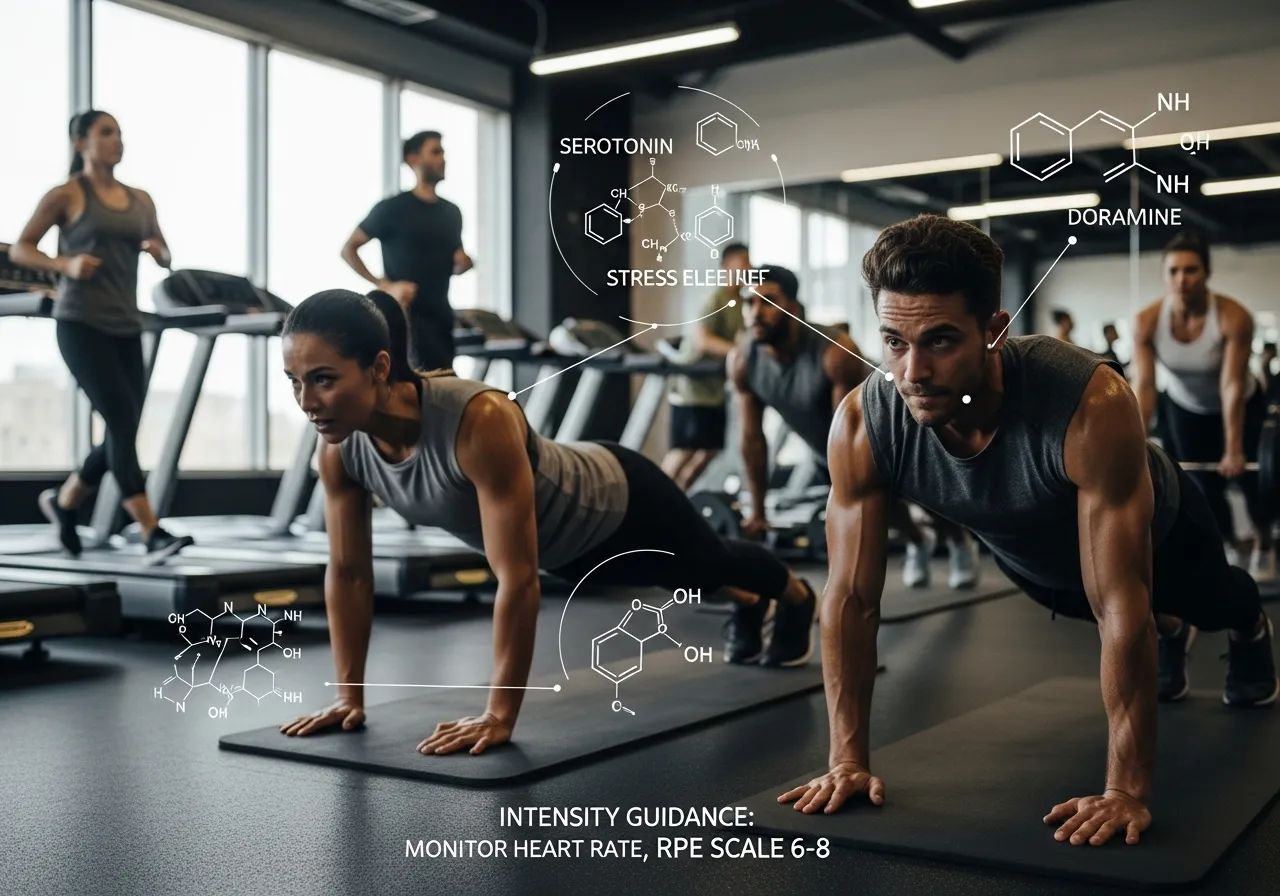
The mood and stress improvements that exercise produces involve multiple neurochemical pathways operating simultaneously — a complexity that explains both the reliability and the multi-dimensional nature of the benefit. The endorphin hypothesis — the simplest and most widely circulated explanation — is real but incomplete: the beta-endorphin release that intense exercise produces provides the pain-dampening and mood-elevating effect that the “runner’s high” phenomenology describes, but the endorphin release requires intensities and durations (sustained moderate-to-intense exercise for 30+ minutes) that not all stress-relief workouts achieve. The more broadly applicable neurochemical mechanisms: norepinephrine reduction during rhythmic exercise is the principal mechanism for the anxiety-reducing effects that even moderate exercise intensity produces — the brain’s locus coeruleus, which produces the norepinephrine that anxiety and stress responses amplify, decreases its firing rate during sustained physical activity, producing the “quieting” of the stress-anxiety arousal system that most people experience as the psychological benefit of any regular physical activity. Serotonin elevation from aerobic exercise — occurring through tryptophan metabolism changes and the increased serotonin synthesis that exercise-stimulated tryptophan availability enables — produces the mood improvement and the specific reduction in the ruminative thinking that stress and depression characteristically generate. BDNF (Brain-Derived Neurotrophic Factor) elevation from exercise produces the neural plasticity and stress resilience effects that the longer-term psychological benefits of regular exercise reflect — the exercise-trained brain literally develops greater structural and functional resilience to psychological stress through the BDNF-mediated neurogenesis and synaptic strengthening that regular exercise produces. From PubMed comprehensive review on exercise and stress reduction neurochemistry, multiple converging neurochemical mechanisms including endorphin release, norepinephrine reduction, serotonin elevation, and BDNF production collectively mediate exercise’s reliable acute and chronic stress and anxiety reduction effects.
Psychological Stress vs Physical Fatigue: Choosing the Right Workout Intensity
The most important decision that determines whether post-work exercise relieves stress or compounds it is the intensity match between the workout and the current combination of psychological stress and physical fatigue that the day has produced. The distinction matters because psychological stress (cognitive load, emotional pressure, interpersonal conflict) and physical fatigue (insufficient sleep, prior physical exertion, illness recovery) have different implications for what exercise intensity will produce the intended stress-relief benefit versus the additional stress overload that mismatch creates. Psychological stress without significant physical fatigue — the most common post-work state for the knowledge worker with a demanding but physically undemanding job — is the state that tolerates and benefits from moderate-to-high intensity exercise most directly: the physical engagement that moderate-to-vigorous intensity provides converts the psychological energy of unresolved stress into physical action, providing the neurochemical stress-relief mechanisms described above at the full intensity where they operate most powerfully. Psychological stress combined with physical fatigue — the state of the overtrained athlete, the sleep-deprived parent, or the person in the second week of an illness — requires a different intensity prescription: low-intensity, parasympathetic-activating exercise (walking, gentle yoga, swimming at easy pace) that reduces the stress arousal without adding to the allostatic load that the already-depleted system cannot afford. The athlete who mistakenly applies high-intensity stress-relief exercise to a state of combined psychological stress and physical fatigue produces the hormonal overreach that training intensity without recovery capacity creates — elevating already-high cortisol, impairing the sleep quality that the overtaxed system needs, and worsening rather than improving the recovery state that the exercise was intended to support.
Team Sports and Group Exercise: Social Stress Relief
The social dimension of exercise adds a stress-relief component that solo exercise cannot provide — the oxytocin and social connection benefit that human social interaction produces, the shared experience that group exercise creates, and the accountability and belonging that team membership provides against the social isolation that stress frequently creates. Team sport participation — recreational football leagues, basketball pickup games, volleyball clubs, tennis ladders — combines the physical exercise benefit with the social engagement that research consistently identifies as the second most powerful acute stress buffer after physical activity. The enjoyment component of team sport participation is specifically relevant: the intrinsic motivation of playing a game rather than performing a workout produces lower perceived exertion at equivalent intensity — recreational sport participants consistently work harder in terms of heart rate and metabolic output than they intend because the game’s engagement obscures the effort that solitary exercise makes more consciously present. Group fitness classes — yoga, spin, boxing, CrossFit — provide the social version of the solo exercise modalities described throughout this article, with the instructor-guided structure removing the decision fatigue that self-programmed workouts add to the already-depleted post-work decision-making capacity, and the class atmosphere providing the social motivation and energy that the tired individual’s solo motivation cannot reliably generate. The finding training community application: for athletes who find that post-work motivation for solo training is chronically difficult to sustain, the structured accountability of a community — a CrossFit box with named classes, a running club with scheduled group runs, a martial arts school with class schedules — provides the external structure that converts the individually motivated exercise intention into the socially facilitated regular practice that consistency requires.
Outdoor Exercise and Nature Exposure: The Environment Multiplier
The natural outdoor environment provides a stress-relief multiplier that adds meaningful benefit to any exercise modality performed in it — the research on “green exercise” and “blue exercise” (exercise near water) consistently demonstrates greater mood improvement, stress reduction, and restoration of directed attention compared to equivalent exercise in indoor or urban environments. The attention restoration theory mechanism: natural environments contain the “fascination” stimuli (clouds, foliage movement, water flow) that capture involuntary attention without demanding the cognitive effort that voluntary directed attention requires — the restorative effect occurs because natural environments allow the directed attention system to recover while the involuntary attention system is gently engaged by the environment’s low-effort stimuli. For the post-work exerciser whose stress is substantially driven by cognitive overload and directed attention fatigue, the outdoor natural environment provides the specific attentional restoration that the office environment has depleted and that indoor gym exercise does not recover. The practical outdoor exercise options for urban and suburban athletes: running or walking in a park, cycling along a waterfront route, outdoor yoga or tai chi in a garden, and recreational sport on outdoor courts and fields all provide the nature-exposure benefit alongside the exercise benefit — the combined effect being meaningfully greater than either alone for the stress-relief outcome that the post-work exercise is specifically serving. Even brief nature exposure between exercise segments — sitting in a park for 10 minutes after an outdoor run before returning indoors — provides the attentional restoration benefit that extends the exercise’s stress-relief effect beyond the immediate post-session window into the evening’s recovery quality.
Gender Differences in Stress-Relief Exercise: What the Research Shows
The stress-relief response to different exercise modalities shows meaningful gender differences in the research that inform the personalized exercise prescription more accurately than the gender-neutral guidance that most stress-relief exercise recommendations provide. Female athletes and women in general show stronger cortisol responses to combined psychological and physical stress than male counterparts at equivalent absolute exercise intensities — a biological reality that has implications for the intensity prescription in high-stress periods. The “tend-and-befriend” stress response that research identifies as more common in women (versus the “fight-or-flight” response that’s more prevalent in men) suggests that social exercise environments and cooperative physical activities — group fitness classes, partner sports, team recreation — may produce superior stress relief through the social-bonding neurochemical pathway that oxytocin mediates, whereas the solo competitive intensity of individual athletic pursuit may be a more effective stress-relief tool for the neurological stress response pattern it specifically addresses. These are tendencies in population-level data rather than prescriptions for individual women or men — the individual’s stress response pattern and personal exercise preference remain the primary determinants of what works. But the awareness that the standard stress-relief exercise research has historically been conducted primarily on male subjects, and that the female stress response biology produces meaningfully different exercise-prescription implications, supports the recommendation that all athletes attend to their personal experience of which exercise types produce the most complete post-session stress relief rather than applying the population-average finding uncritically to their individual situation.
Cardio for Stress Relief: The Most Reliable Mood-Lifting Exercise
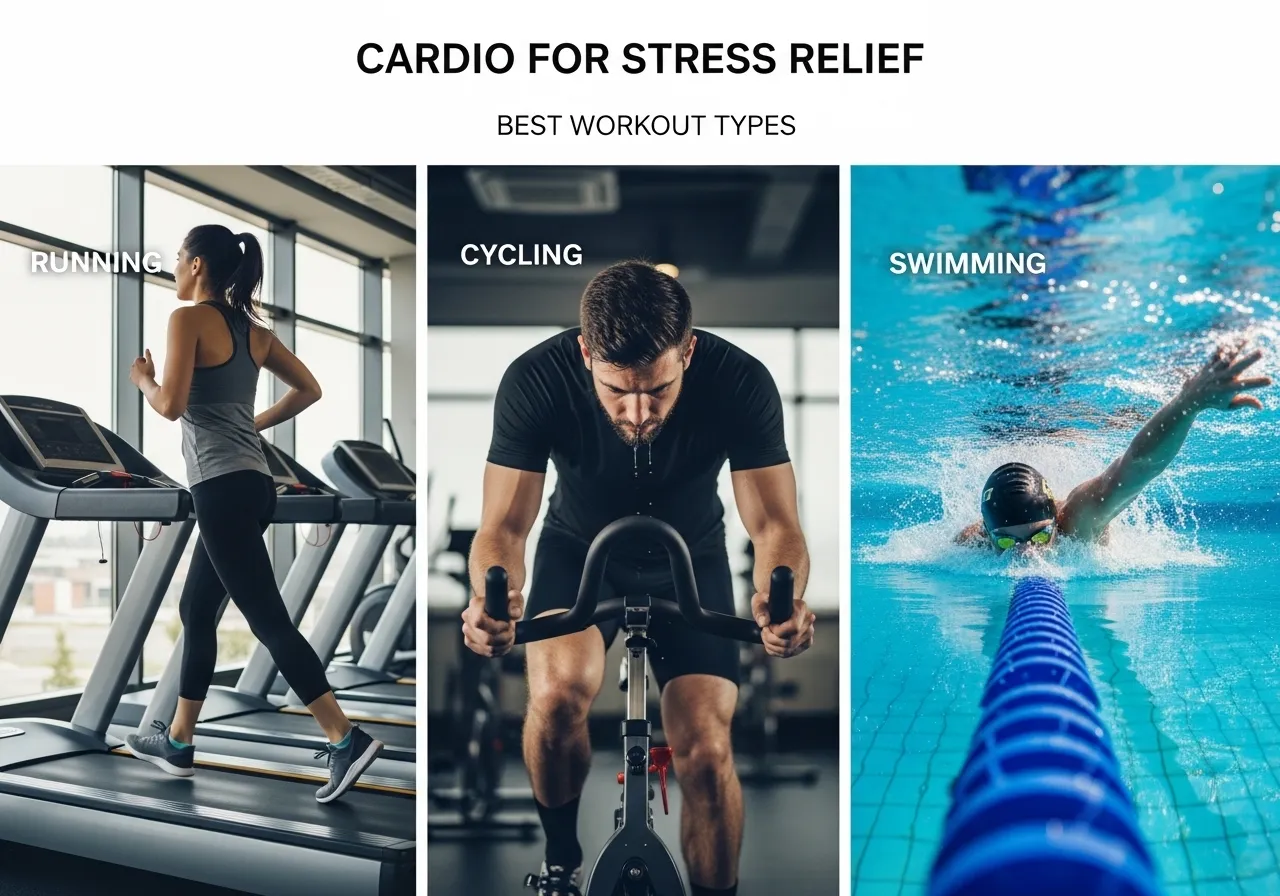
Aerobic exercise has the strongest and most consistent evidence base for acute stress and anxiety reduction among all exercise modalities — the combination of neurochemical mechanisms described above and the rhythmic, meditative quality of sustained aerobic movement produces the mental state shift that stress-relief exercise seeks more reliably than any other workout type.
Running: The Most Accessible and Effective Stress Reliever
Running earns its reputation as the stress-reliever of choice for millions of people because it uniquely combines the full intensity range (from gentle jog to near-maximal sprint), the near-zero equipment requirement, the outdoor environment access that adds the nature exposure bonus to the exercise benefit, and the individual control over pace, duration, and route that group exercise cannot match. The specific neurochemical profile of running for stress relief: the bilateral rhythmic limb movement of running specifically activates the eye movement desensitization and reprocessing (EMDR)-adjacent bilateral stimulation that therapists use for trauma processing — the alternating left-right neural activation that rhythmic bilateral movement produces has been demonstrated to reduce the emotional intensity of stressful memories and reduce the rumination that psychological stress maintains, explaining why the contemplative processing that a 30-minute run often facilitates is not coincidental but mechanistically grounded. The run intensity that produces optimal stress relief: moderate conversational pace — the pace at which a full sentence can be spoken without gasping — produces the sustained aerobic state that the stress-relief neurochemical cascade requires without the sympathetic-dominant intensity that very high heart rates produce and that can maintain or amplify the stress arousal rather than reducing it. A 20-30 minute run at 60-70% of maximum heart rate is the evidence-supported stress-relief prescription that combines adequate endorphin, norepinephrine reduction, and serotonin elevation without the excessive physiological arousal that higher intensities introduce. For athletes with active performance training programs: the stress-relief run is appropriately scheduled on rest days or as an easy active recovery session between training days rather than replacing quality training sessions — the mental health benefit justifies the additional mild physical loading that easy running produces on otherwise rest days for most athletes.
Cycling, Swimming, and Rowing for Stress Relief
The cardio modalities that provide running-equivalent stress-relief benefits with lower impact loading or greater injury-accommodation for athletes managing musculoskeletal complaints: cycling (outdoor or stationary) provides the same rhythmic bilateral movement and sustained aerobic intensity that running produces, with the seated position and circular pedaling motion offering the additional option for the post-work practitioner to combine the workout with the outdoor commute that bike-commuting enables. Outdoor cycling adds the visual variety and environmental stimulation of changing scenery that treadmill and stationary cycling substitutes cannot fully replicate — the attentional engagement of navigating outdoor cycling routes provides the mindfulness-adjacent full present-moment awareness that stress-relief research identifies as a key mechanism of outdoor exercise’s superiority to indoor equivalents for stress reduction. Swimming provides the most complete physical isolation from daily life stressors: the underwater environment removes phone access, eliminates visual contact with the office world, and the proprioceptive immersion in water creates the sensory environment shift that stress relief requires. The meditative quality of lap swimming — the repetitive stroke rhythm, the sound dampening of submersion, and the full-body engagement that maintains enough physical presence to redirect from mental rumination — makes swimming uniquely effective for the individual whose stress is primarily cognitive and ruminative rather than physical-tension based. Rowing (ergometer or water rowing) provides the highest full-body muscular engagement of the common cardio options while maintaining the bilateral rhythmic movement that stress-relief cardio requires — the 85-95% muscle mass engagement of rowing at moderate intensity produces the comprehensive physical stress outlet that appeals to athletes whose strength training is the primary training mode and who want stress-relief exercise that more fully engages the muscular system than running provides. From PubMed meta-analysis on aerobic exercise and anxiety reduction, moderate-intensity aerobic exercise across modalities (running, cycling, swimming) consistently produces clinically meaningful reductions in state anxiety — the acute stress-and-tension measure that post-work exercise specifically targets — with effect sizes equivalent to or greater than pharmacological anxiolytic interventions at matched duration comparisons.
Dance, Recreational Sports, and Enjoyment-Based Exercise
The enjoyment dimension of exercise is a stress-relief amplifier that research increasingly recognizes as a primary rather than secondary outcome measure — exercises that the individual finds intrinsically enjoyable produce greater stress reduction, better mood outcomes, and superior adherence compared to exercises that are performed purely for health obligation without enjoyment engagement. Dance — whether in a formal dance class, a Latin dance social event, or a dance fitness format like Zumba — provides the unique combination of music engagement, rhythmic movement, social interaction, and creative expression that few other exercise forms match. The music component specifically adds to the stress-relief benefit: music activates the brain’s reward circuitry through dopamine release, reduces perceived exertion at equivalent physical intensities, and produces the rhythmic entrainment that the bilateral movement of dance provides through musical time rather than the self-generated rhythmic focus that running requires. The social dance context adds the romantic and playful social engagement that contrasts with the serious, outcome-focused atmosphere of performance training — a contrast that stressed individuals whose work is characterized by seriousness and high stakes find particularly restorative. Recreational sport — the casual version of any competitive sport played for enjoyment rather than performance outcome — provides the flow state engagement that intrinsic motivation and appropriate challenge level together produce, and flow is among the most complete stress-suspension states that human experience provides. The non-performance athlete who plays recreational tennis, padel, rock climbing, or beach volleyball once a week is not necessarily getting the most physiologically optimal stress-relief exercise but is getting the most enjoyable and therefore most sustainably maintained stress-relief exercise — and the most enjoyable exercise that is actually performed consistently beats the physiologically optimal exercise that motivational barriers prevent from happening. Protect one activity that you do primarily because you find it fun. The mental health return from that enjoyment-anchored practice may exceed the stress-relief return from any other single exercise decision you make.
Work-Break Exercise: Stress Relief During the Day Rather Than After
The post-work exercise framing of this article addresses the most common timing context for stress-relief exercise, but the research increasingly supports the value of brief exercise breaks distributed throughout the workday as an alternative or supplement to the single post-work session. The 10-minute walking break every 90 minutes of desk work — the recommendation emerging from the prolonged sitting research that identifies sedentary interruption as both a metabolic and psychological health intervention — produces meaningful accumulation of both physical activity and stress-relief benefit across the workday that a single post-work session cannot replicate for the benefits specifically associated with breaking up sedentary time. Desk-side exercise practices that work in office environments: the standing desk that enables the gentle lower limb movement that standing naturally involves; brief sequences of air squats, push-ups, or wall sit holds in a private office or gym during lunch; and the staircase walks between floors that replace elevator use — these micro-exercise practices maintain the physical activity distribution and stress interrupt function that the continuous sedentary workday prevents. The lunchtime exercise option: a 20-30 minute noon workout (run, gym session, or yoga class) provides the midday cortisol disruption that improves the afternoon’s cognitive performance and emotional regulation more than a desk-based lunch break — and the strategic athlete who uses their lunch break for exercise reduces the post-work exercise burden to a shorter recovery-focused session rather than the full stress-relief workout that the unadulterated post-work cortisol load requires.
Stress-Relief Exercise for Different Age Groups
The stress-relief exercise toolkit requires modification for the physiological and social realities of different life stages — the exercise that optimally relieves stress in a 25-year-old fitness enthusiast may not be the most appropriate stress management tool for the 50-year-old executive or the 70-year-old retiree, and the specific adaptations that age-appropriate stress-relief exercise requires are worth addressing for the comprehensive guide that this article aims to be. For younger adults (20-35): the high-intensity and vigorous exercise options described throughout this article are generally appropriate and well-tolerated, with the primary consideration being the overtraining risk that combining high training loads with high life stress creates — the intensity regulation and recovery monitoring that this article addresses applies in this age group’s context of typically high training motivation and high life stressor exposure simultaneously. For middle-aged adults (40-55): the recovery time from high-intensity exercise increases and the cumulative musculoskeletal load management that injury prevention requires becomes more prominent — the stress-relief exercise prescription increasingly favors moderate-intensity steady-state cardio, yoga, and recreational sport over the maximal-intensity options that the younger athlete’s faster recovery allows more liberally. From 55 onwards: the parasympathetic-activating and joint-friendly exercise modalities — walking, swimming, yoga, Tai Chi, and recreational activities with social engagement — provide the stress-relief benefit with the lowest injury risk and the highest compatibility with the musculoskeletal management that aging tissue requires, while maintaining the cardiovascular health and muscle quality that the long-term exercise adherence that these modalities support produces across the decades of consistent practice that healthy aging demands.
Strength Training for Stress Relief: Using the Iron to Process the Day
Resistance training’s stress-relief mechanism is phenomenologically different from cardio’s — the focused attention that heavy lifting requires provides the cognitive engagement that prevents rumination, the physical empowerment experience that stressful days erode, and the concrete measurable accomplishment that the weight successfully moved provides against the diffuse, ambiguous stressors that modern work creates.
Why Heavy Lifting Clears the Mind
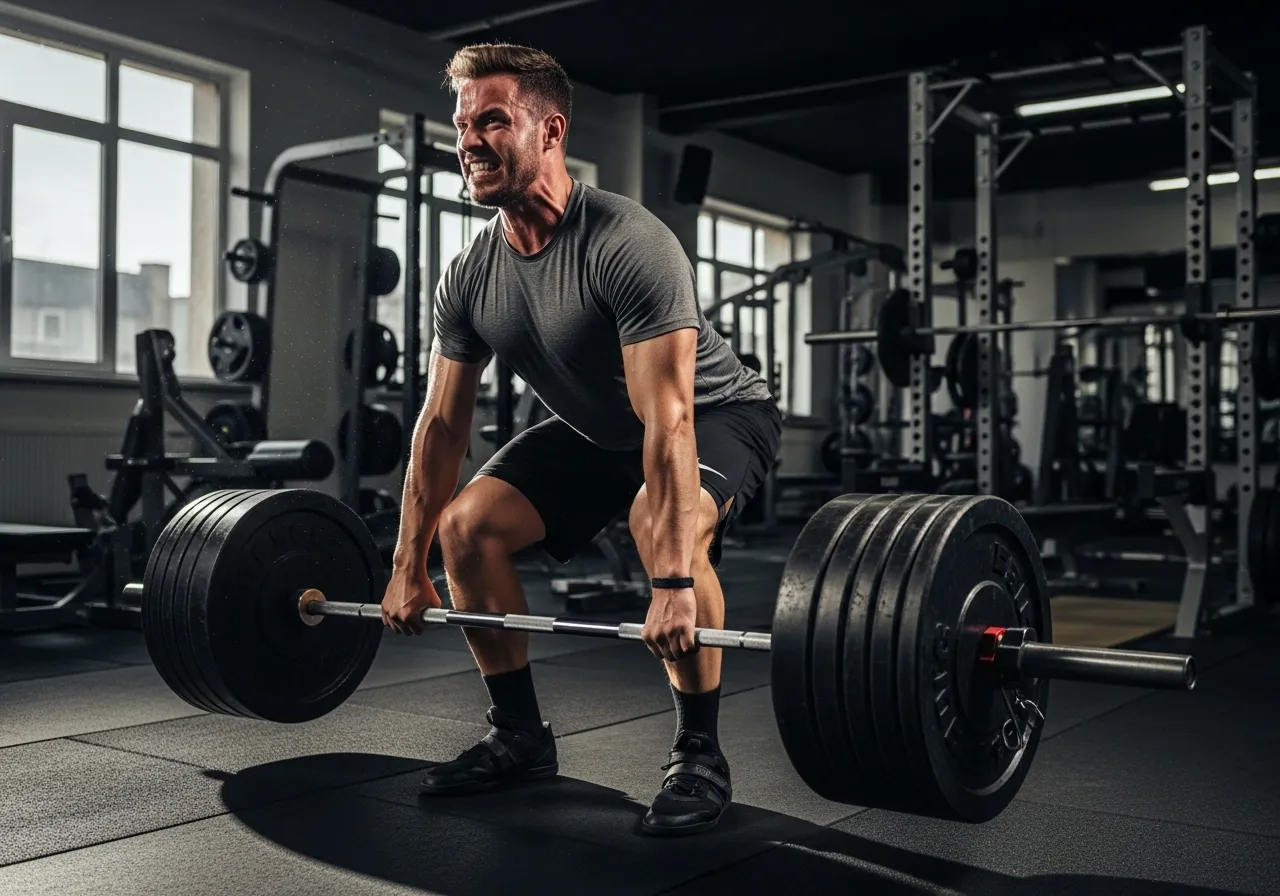
The psychological mechanism through which heavy resistance training clears mental stress is distinctly different from the neurochemical relaxation that moderate cardio produces — and recognizing this difference explains why some stressed people find cardio therapeutic while others need the gym’s iron to truly decompress. Heavy resistance training demands complete present-moment cognitive focus: a working set at 85% of one-rep maximum requires the full attentional resources that execution safety and performance quality consume, leaving no cognitive space for the workplace problem-solving, social replay, or deadline anxiety that occupies the unengaged mind during lower-focus exercise. This cognitive displacement — the complete temporary replacement of stressful mental content with the immediate physical demand — is the mechanism behind the “my brain goes completely quiet when I lift heavy” experience that many athletes describe, and it is the reason that the intensity of the exercise rather than the modality primarily determines the cognitive stress-relief that the session provides for this mechanism. The empowerment and control experience that successful heavy lifting provides is the second psychological mechanism uniquely available in strength training: the experience of setting a weight goal and achieving it — regardless of how modest the absolute load — provides the concrete success experience and the evidence of physical agency that stressful days that produce the opposite emotional experience particularly require as an antidote. The athlete who feels controlled by their work environment, overwhelmed by demands, or undermined by circumstances finds in the lifting session the recovery of the control and competence experience that stress specifically strips away. Practical intensity guidance for stress-relief strength training: the moderately challenging working sets (70-80% of one-rep maximum) that require focus without the pre-max anxiety that very heavy singles sometimes produce are the optimal stress-relief loading zone — challenging enough to demand full cognitive engagement without the CNS arousal that maximal effort competition preparation introduces.
Compound Movements vs Isolation Work for Stress Relief
The specific exercise selection within a stress-relief strength training session affects the psychological and neurochemical outcome — and the compound multi-joint movements that engage large muscle groups and require integrated coordination generally produce greater stress-relief benefit than the isolation exercises that target individual muscles with limited neural demand. The squat, deadlift, and bench press engage the body comprehensively enough that the physical immersion experience that stress relief requires is achieved more completely than the bicep curl or leg extension that occupies only a portion of the body’s attention. The deadlift specifically occupies a unique position in the stress-relief strength training context: the fundamental physicality of picking up a heavy object from the floor — one of the most primally satisfying expressions of physical capability available in a gym setting — provides the primal physical release that the stress of modern sedentary work creates a specific appetite for. The act of performing a loaded hip hinge at near-maximum effort is viscerally satisfying in a way that no amount of cognitive work produces — and for the knowledge worker whose daily stress is entirely cerebral, the physical directness of a heavy pull from the floor provides the somatic experience that mental exhaustion specifically craves. The stress-relief training session design that works best for most athletes: 3-4 compound movements at moderate intensity (70-80% of 1RM), with the warm-up and working sets providing a 45-60 minute total session that ends with the physical satisfaction and neurochemical reset that the session was undertaken to achieve. From PubMed meta-analysis on resistance exercise and anxiety and depression outcomes, resistance exercise training consistently reduces anxiety and depressive symptoms with effect sizes comparable to aerobic exercise and moderate-intensity interventions — confirming strength training as a legitimate and evidence-based stress-relief exercise modality alongside the aerobic exercise that dominates public health stress management recommendations.
Breathing Exercises and Micro-Recovery: Stress Relief Without Exercise Equipment
For the athlete whose schedule, environment, or physical state makes formal exercise impossible on specific high-stress days, breathing-based stress management provides the neurochemical stress modulation that the body’s vagal pathway makes available without any equipment or space requirements. The physiological sigh technique — a double inhalation through the nose followed by a long, extended exhalation — is the fastest single breathing maneuver for acute parasympathetic activation: the alveoli that collapse during stress-pattern shallow breathing are re-expanded by the double inhale, improving gas exchange efficiency and activating the parasympathetic response that the extended exhale triggers through the expiratory phase vagal activation that cardiac physiology depends on. Performing 3-5 physiological sighs before a challenging meeting, after a difficult interaction, or during an acute stress peak produces immediate heart rate reduction and subjective calm in the 30-60 second window that the maneuver requires — making it the most accessible acute stress management tool available without any exercise context. Box breathing (4 seconds inhale, 4 seconds hold, 4 seconds exhale, 4 seconds hold) provides a more extended parasympathetic activation protocol that 5-10 minutes of consistent practice delivers — a midday micro-recovery tool that the athlete can implement between tasks, during commutes, or before the post-work exercise session to reduce the activation level that the exercise begins from and improve its stress-relief effectiveness. These breathing practices are complements to rather than replacements for exercise-based stress management — the neurochemical breadth of exercise’s stress relief cannot be matched by breathing alone for the physically able athlete. But the athlete who has both tools and uses each appropriately for the context they are in has a complete stress management toolkit that no single circumstance can render entirely unavailable.
Managing Overtraining Stress: When Exercise Becomes the Problem
The stress-relief exercise guide would be incomplete without addressing the specific situation where exercise itself becomes a primary stressor rather than a stress relief tool — the overtraining state that combines high training load with insufficient recovery and psychological stress into the syndrome that cortisol elevation, performance deterioration, mood disturbance, and immune compromise characterize. The paradox of the serious athlete in an overtrained state: their instinct is often to train harder as the performance declines that overtraining produces — interpreting the decline as insufficient training effort rather than insufficient recovery — and the attempt to exercise their way out of the stress they are experiencing with more exercise of the type that is causing it produces the progressive deterioration that overtraining syndrome’s clinical presentation describes. Recognizing the transition from productive stress-relief exercise to overtraining: persistent elevated resting heart rate (more than 5-7 bpm above individual normal for more than 3-4 consecutive days); declining training performance that does not respond to an additional rest day; sleep disruption despite physical tiredness; mood deterioration and irritability that increases rather than decreases after training sessions; and persistent minor illness that the immune suppression of overtraining enables. When these markers appear, the stress-relief exercise prescription reverses entirely: the exercise that would normally provide the recommended stress relief is the intervention that the state requires the reduction of, and the parasympathetic recovery modalities — walking, gentle yoga, social activity, sleep prioritization, and nutrition adequacy — replace the vigorous exercise that the overtrained body cannot tolerate as a stress-relief vehicle. The honest self-assessment that recognizes this state — rather than the training-culture denial that “real athletes push through” — is the decision that prevents the brief overreaching from becoming the extended overtraining syndrome that months of forced recovery is sometimes required to reverse.
Tracking the Stress-Relief Effect: Using HRV and Subjective Measures
The athlete who tracks their physiological and psychological stress response to different exercise choices builds a personalized data set that replaces generic recommendations with individual-specific guidance. Heart rate variability (HRV) — the millisecond variation between successive heartbeats that reflects autonomic nervous system balance — is the most accessible objective biomarker of stress and recovery state, measurable through consumer-grade wearables and dedicated HRV apps. Tracking morning HRV alongside the post-work exercise type and subjective stress measure over 4-6 weeks reveals which exercise modalities produce the most consistent next-morning HRV recovery — the objective confirmation that the exercise choice effectively supported the overnight recovery that the HRV metric reflects. High HRV (above individual baseline) the morning after a stress-relief exercise session confirms that the session’s parasympathetic effect extended through the overnight recovery; low HRV the morning after a “stress-relief” session that was actually too intense for the state suggests an intensity mismatch that the data prompts correcting. Subjective tracking complements HRV: a simple 1-10 rating of mood, stress, and energy both before and after each stress-relief session, logged in a training journal or app alongside the session type and intensity, builds the qualitative dataset that identifies the most effective stress-relief tools for the individual’s specific stress profiles across the weeks and months of variable life demand.

Yoga and Mind-Body Exercise: Stress Relief Through Parasympathetic Activation
Yoga and mind-body exercise modalities occupy a specific stress-relief niche that neither cardio nor strength training fully addresses — the explicit parasympathetic nervous system activation, breath-focused present-moment awareness, and the body-scan integration of somatic tension that yoga uniquely provides for the athlete whose stress manifests as physical tension rather than the performance-impeding mental arousal that vigorous exercise targets.
The Physiological Basis of Yoga’s Stress Relief
Yoga’s stress-relief mechanism operates through the vagal nerve activation pathway that distinguishes it from other exercise modalities: the slow diaphragmatic breathing central to yoga practice activates the cardiac vagal tone that parasympathetic nervous system regulation depends on, reducing heart rate variability markers of stress arousal through a direct neurological pathway that cardiovascular exercise’s sympathetic activation initially increases before the post-exercise recovery phase reduces. The specific yoga practices with the most research support for acute stress relief: Hatha yoga (the foundational physical posture-based style that emphasizes breath coordination and static holds) consistently reduces cortisol, reduces subjective stress and anxiety scores, and improves mood in healthy adults in randomized trials; Restorative yoga (passive, long-held postures in fully supported positions with props) specifically activates the parasympathetic response through the somatic stillness and breath focus that positions held for 3-7 minutes in supported relaxation produce; and Yoga Nidra (the guided body scan relaxation practice that maintains conscious awareness in a deeply relaxed physical state) produces the deepest parasympathetic activation available in yoga — multiple studies showing cortisol reductions and HRV improvements equivalent to or exceeding sleep in the 30-45 minute session duration. The post-work yoga context: for the individual whose stress is physically manifested as muscle tension, headache, shallow breathing, and the chest-tightening that anxiety produces, yoga is the most direct intervention available because it specifically addresses the somatic stress expression that cardiovascular or resistance exercise does not specifically target. The 20-30 minute post-work yoga session that combines 10-15 minutes of gentle movement (sun salutations, hip openers, thoracic mobility) with 10-15 minutes of restorative postures and breath work provides the physical tension release and parasympathetic restoration that the moderate-to-high-stress workday creates the specific need for. From PubMed systematic review on yoga and stress, anxiety, and cortisol outcomes, yoga practice consistently reduces perceived stress, trait and state anxiety, and salivary cortisol in randomized controlled trials across diverse populations and yoga styles — establishing yoga’s evidence base for stress management that is among the most consistently supported of any complementary health practice.
Tai Chi, Qigong, and Walking Meditation for Active Recovery Stress Relief
The slow-movement mind-body practices — Tai Chi, Qigong, and walking meditation — occupy the lowest intensity end of the stress-relief exercise spectrum and produce their stress-relief benefit through the attention-focusing, breath-coordinating, and somatic awareness mechanisms that the slow, deliberate movements require. Tai Chi’s specific research literature for stress and anxiety reduction is robust enough to have produced multiple systematic reviews: the meta-analytic evidence consistently shows significant reductions in anxiety, depression, and stress measures in both healthy and clinical populations across studies ranging from 8 weeks to 6 months of regular practice. The practical application for training athletes: Tai Chi and Qigong are not replacement workouts for performance training sessions — they are recovery-day practices that provide the active physical engagement and stress-relief benefit without the training load that rest days require the absence of. The gentle nature-walk alternative that requires no formal practice: a 20-30 minute walk in a natural environment (park, woods, waterfront) provides the nature exposure, gentle bilateral rhythmic movement, and the attentional restoration that a change of environment from the indoor work setting produces. The research on “green exercise” (exercise in natural outdoor environments) consistently shows greater stress reduction and mood improvement compared to equivalent-intensity indoor exercise — the combined effect of physical activity and nature exposure producing an additive stress-relief benefit that either alone provides less of. For the athlete who wants maximum stress-relief from minimum physical effort, the 30-minute nature walk is perhaps the most efficient stress-relief exercise option available — requiring no equipment, no gym, and no training impact while delivering the nature, movement, and mental disengagement triple-benefit that the research consistently ranks among the most effective acute stress interventions.
Music, Podcasts, and Audiobooks: The Cognitive Companion to Stress-Relief Exercise
The audio environment that accompanies stress-relief exercise can either amplify or diminish the psychological benefit that the exercise produces — and the deliberate selection of audio content based on the exercise type and the specific stress relief mechanism being sought is a refinement that experienced stress-relief exercisers learn through trial and error but that the research supports with specific guidance. High-intensity exercise (HIIT, boxing, hard running) benefits from high-tempo, high-energy music that matches the 140-160 BPM pace of the physical exertion and activates the dopaminergic reward circuitry through musical pleasure — the motivational and arousal-enhancing effect of well-matched music produces 10-15% improvements in performance metrics at equivalent perceived exertion, and the distraction from effort that engaging music provides reduces the perceived difficulty that high-intensity exercise’s discomfort would otherwise dominate. Moderate-intensity steady-state cardio (comfortable running pace, moderate cycling) is the optimal context for podcast and audiobook consumption: the sustained low-to-moderate attentional demand of comfortable-pace cardio leaves enough cognitive capacity to follow narrative content while maintaining adequate exercise attention, converting the exercise time into dual-purpose time that the productivity-oriented individual finds more sustainable than the pure exercise time that moderate cardio without mental engagement feels like for the cognitively active person. Low-intensity walking and yoga are the contexts where music and audio should be used selectively or not at all: the attentional restoration that nature walks depend on is partially or fully blocked by the cognitive engagement of audio content, reducing the nature-exposure restorative benefit to the exercise-alone benefit; and the internal attention that yoga’s body-scan and breath focus requires is disrupted by external audio content in ways that reduce the depth of the parasympathetic activation and present-moment awareness that yoga’s stress-relief mechanism depends on. The personalized audio strategy: experiment with the three categories (high-energy music for high-intensity, engaging podcast for moderate steady-state, minimal or nature sounds for low-intensity) across one training week and notice which combination produces the most complete post-exercise stress resolution — the individual variation in these preferences is real, and the optimal audio strategy is the one that produces the best outcome for the specific individual rather than the population-average recommendation.
My Personal Stress-Relief Exercise Toolkit: What I Actually Reach For
After years of testing different approaches to post-work and mid-week stress management through exercise, my personal toolkit has settled into a surprisingly simple three-option structure: an easy 30-40 minute run when the stress is primarily cognitive and the body is not fatigued — the run that never fails to produce the mental clarity that the day’s content had obscured; a heavy compound strength session when the stress is primarily emotional and the physical energy exists to convert it — the deadlift session that produces the complete reset that nothing else reliably achieves for me; and a 20-minute yoga practice followed by 10 minutes of Yoga Nidra when the stress is combined with physical fatigue and the body needs parasympathetic restoration rather than additional arousal. These three options cover the full range of stress-and-fatigue states that my real life produces, and having all three practiced and familiar means that the appropriate choice for each state is available without the motivational friction that discovering a new practice under stress would require. The consistency principle that underlies this toolkit: the stress-relief exercise that works is the one you will actually do in the state you are actually in — not the theoretically optimal practice that a different state or a more motivated version of yourself would implement. Build the options that cover your real states. Practice them when the need is moderate so they are available when the need is acute. And let the consistent return to movement — in whatever form the day allows — be the non-negotiable anchor of the stress management practice that the challenges of a demanding life regularly tests and regularly confirms.

HIIT and High-Intensity Training: When Going Hard Beats Going Easy
The high-intensity training approach to stress relief seems counterintuitive — adding physical stress to psychological stress rather than reducing total stress load — but the specific hormonal and neurochemical response to very high-intensity exercise provides a distinct and powerful stress-relief mechanism that moderate exercise cannot replicate.
The Post-HIIT Psychological Reset Effect
High-intensity interval training produces a specific post-exercise psychological state that practitioners consistently describe as a “complete mental reset” — the experience of emerging from an intense session with the mental content that occupied the pre-session mind feeling distant, less urgent, and less emotionally charged than before the session. The mechanism: HIIT’s near-maximal intensity demand fully consumes the cognitive resources that psychological stress occupies, producing the complete cognitive interruption of the rumination cycle that moderate exercise’s lower attentional demands only partially achieves. The catecholamine surge that HIIT produces — epinephrine and norepinephrine elevation of 200-300% above baseline at near-maximal intensity — provides the intense arousal state that subsequently produces the profound post-exercise calmness as the neurochemical system rebounds to below-baseline activation following the intense stimulation. This neurochemical see-saw — the intensity peak followed by the recovery valley — produces a more dramatic stress relief experience than the moderate exercise’s steady-state neurochemical reduction, explaining why the most stressed athletes sometimes report that nothing clears their head like a short, brutally hard training session. The appropriate HIIT structure for stress relief: 20-30 minutes total including warm-up, with 4-8 intervals of 20-40 seconds at near-maximum effort separated by 60-90 seconds of active recovery. The Tabata protocol (20 seconds maximum effort, 10 seconds rest, 8 rounds), a 4-minute cycle that can be repeated 3-4 times with different exercises, provides the HIIT intensity dose in a format accessible to any training level. The contraindication for HIIT stress relief: physical fatigue, inadequate sleep (below 6 hours the previous night), illness, or elevated resting heart rate above the individual’s normal range are all signals that the additional physiological stress of near-maximum-intensity training will overload rather than relieve the already-stressed system — the very high-intensity prescription requires the physical recovery reserve that the stressed-but-physically-rested individual possesses.
Boxing and Martial Arts for Stress Relief: The Combat Sports Advantage
Boxing, kickboxing, Muay Thai, and the broader range of combat sports training provide a stress-relief combination that cardio, strength training, and yoga individually cannot fully replicate: the physical outlet for frustration and aggression that punching and kicking motions provide, the demanding technical complexity that complete cognitive displacement requires, the social environment of group training classes, and the high-intensity aerobic output that the neurochemical stress-relief cascade depends on. The stress-relief research on combat sports exercise: boxing training specifically produces significantly greater mood improvement and stress reduction than equivalent aerobic exercise in comparative studies, with the cathartic physical expression dimension and the technical challenge contributing benefits beyond pure cardiovascular response. The group fitness boxing class format — widely available through gyms, dedicated boxing studios, and online platforms — provides the combat sports stress-relief benefit without requiring sparring or full martial arts training, making it accessible to the athlete with no prior fighting experience. The physical expression component: the specific movement pattern of punching — the rotational power generation from the hips through the shoulder and fist — requires the full-body engagement and the intention behind the strike that produces the physical venting experience that the stressed individual finds uniquely satisfying. The technical requirement: learning and executing combinations — the jab-cross-hook sequences, the footwork patterns, and the defensive movements that boxing technique involves — provides exactly the cognitive demand that blocks stress rumination while the physical intensity provides the neurochemical release that complete the stress-relief picture.

Designing Your Stress-Relief Workout Routine: Structure and Scheduling
The knowledge of which exercise types relieve stress most effectively in different states is most useful when translated into the weekly workout structure that makes the right stress-relief exercise available in the right contexts rather than requiring in-the-moment decision-making that stress impairs.
Matching Workout Type to Stress and Fatigue Level
The practical decision framework for choosing post-work workout type based on current state: Low stress + Low fatigue (typical well-rested Monday morning energy) — any workout type including performance-focused strength or interval training works; this is the state for the highest-quality training sessions that produce the greatest adaptation. Moderate stress + Low fatigue (typical weekday after a normal challenging workday without physical fatigue) — moderate-intensity cardio, moderate-load strength training, or boxing class; any exercise that provides physical engagement without requiring the physical reserves that recovery limitations have not yet been restored. High stress + Low fatigue (a bad workday with an otherwise rested body) — HIIT, boxing, or heavy strength training provides the most complete cognitive disruption and neurochemical reset; the high intensity that near-maximum physical demand requires is available from the physically rested system even under high psychological stress. Low stress + High fatigue (an easy day emotionally but physically depleted from training load, illness, or sleep deficit) — active recovery walking, gentle yoga, or swimming at easy pace; physical engagement without additional training stress. High stress + High fatigue (the burnout state that combined overtraining and life stress creates) — 20-30 minute nature walk, Yoga Nidra, or restorative yoga only; the system needs parasympathetic input and rest rather than any additional stress load regardless of the stress-relief intention. Mapping this decision matrix to the training week: Monday (fresh from weekend) — priority performance training; Tuesday — moderate stress-relief session depending on Monday volume; Wednesday — performance training or rest; Thursday — stress-relief session timed to the midweek work pressure peak; Friday — either performance training if fresh or stress-relief cardio/yoga if fatigued; weekend — nature walks, recreational sport, or yoga for active recovery. From ACSM physical activity and mental health guidelines, 150 minutes per week of moderate-intensity aerobic activity or 75 minutes of vigorous activity produces clinically significant reductions in anxiety and depressive symptoms — the minimum effective dose that week-level planning should target as the stress-management exercise baseline.
The Post-Work Workout Transition: Making It Happen Despite Mental Resistance
The practical challenge of stress-relief exercise is not the knowledge of what to do but the motivational barrier of actually starting when mental exhaustion makes the sofa feel like the more reasonable choice. The behavioral strategies that reliably overcome this barrier: the implementation intention technique — specifically pre-planning the workout type, location, and time the night before rather than deciding in the post-work moment of lowest motivation — produces dramatically higher exercise adherence than open-ended intentions according to decades of behavior change research. The “5-minute rule” — committing only to starting the warm-up with explicit permission to leave after 5 minutes if the motivation doesn’t follow — converts the cognitive barrier of the full workout into the lower-threshold commitment of beginning; the experience of beginning exercise almost always generates the motivation to continue that the pre-exercise state could not access. The social commitment approach: scheduling post-work exercise with a training partner, joining a class with a fixed schedule, or logging a workout commitment in an accountability group transforms the individual decision of uncertain motivation into the social commitment that external accountability reliably delivers through the negative affect that cancellation produces. The workspace-to-gym bag transition habit: keeping a pre-packed gym bag at the workplace rather than at home eliminates the home-detour temptation that returning home before the gym consistently produces — the athlete who goes directly from work to the gym with the pre-packed bag bypasses the most reliable derailing factor in post-work exercise adherence for athletes who live with non-training household members whose comfort creates the competing domestic pull.
Post-Workout Recovery, Sleep, and Stress-Relief FAQ
The stress-relief workout’s full benefit is only realized when the post-workout period — the recovery nutrition, sleep quality, and relaxation practices that follow the exercise — completes the physiological reset that the exercise session initiates.
Post-Stress-Relief Workout Recovery Practices
The recovery practices following a stress-relief workout differ from performance training recovery in their emphasis: the goal is parasympathetic restoration and complete psychological decompression rather than the glycogen replenishment and muscle repair optimization that performance training prioritizes. Post-session cool-down: 5-10 minutes of slow walking, gentle stretching, or supine relaxation postures (Savasana from yoga) allows the transition from the sympathetic-activation state of exercise to the parasympathetic recovery state that the stress-relief benefit requires completing — skipping the cool-down and immediately returning to the stressful environment (checking the work phone, re-engaging with the problems the workout was intended to interrupt) prevents the full neurochemical resolution that the cool-down period allows. Post-workout nutrition for stress relief: prioritize tryptophan-containing foods (turkey, eggs, dairy) in the post-workout meal to support the serotonin synthesis that the exercise has activated the tryptophan pathway for — the serotonin precursor availability that post-exercise tryptophan provides extends the mood-stabilizing effects of the exercise’s neurochemical shift through the evening. Avoid post-workout caffeine: the adenosine receptor activation that exercise temporarily suppresses is the mechanism through which the post-exercise alertness that makes late-day exercise training-compatible operates; adding caffeine to this already-adenosine-reduced state extends the sleep-onset delay that evening exercise already risks introducing, potentially undermining the sleep quality that the stress-relief workout’s cortisol normalization benefit depends on for completion through the overnight hormonal recovery that adequate sleep provides. The post-workout shower with temperature contrast — ending a warm shower with 60-90 seconds of cold water — activates the cold shock protein response and vagal nerve stimulation that cold exposure research consistently associates with improved mood and stress recovery, providing an additional parasympathetic activation tool in the post-workout decompression sequence. From Sleep Foundation exercise timing and sleep quality evidence, vigorous exercise completed more than 2 hours before sleep consistently improves sleep quality and reduces time-to-onset, while exercise within 60 minutes of sleep onset can delay sleep onset by 30-60 minutes for some individuals — confirming the timing considerations for late-day stress-relief workouts that training athletes need to account for in their session scheduling.
Building a Sustainable Stress-Relief Exercise Habit
The most effective stress-relief exercise program is not the most sophisticated one — it is the simplest one that the individual can maintain consistently across the full range of life states, stressors, and schedule variations that real life produces. The three-tier stress-relief exercise approach that provides the necessary flexibility: Tier 1 (minimum effective dose, always achievable) — a 20-30 minute walk on any day, regardless of motivation, physical state, or schedule constraints. This tier is the fallback that maintains the exercise habit and produces meaningful stress reduction in the days where everything else is impossible. Tier 2 (standard stress-relief session, achievable on most days) — 30-45 minutes of the individual’s preferred stress-relief modality at moderate intensity: a run, a yoga class, a moderate gym session. This tier handles the typical post-work stress-relief need. Tier 3 (high-impact session for high-stress or high-motivation days) — 45-60 minutes of the modality that produces the most complete mental reset: HIIT, boxing class, heavy strength session, or outdoor recreational sport. This tier is reserved for the days when the full investment is available and warranted. Having these three tiers explicitly defined in advance converts the motivationally variable experience of post-work exercise from a decision that daily stress impairs into the conditional behavior that pre-defined options execute automatically. The stressed individual who knows they have a 20-minute walk as their Tier 1 fallback is not making a decision about whether to exercise — they are selecting from a menu of pre-approved responses to current conditions. This tier structure is the difference between the athlete who maintains a stress-relief exercise practice across the full range of life’s variability and the one whose practice disappears when the motivation that ideal conditions generate is not available to sustain it through the challenging periods that stress-relief exercise is most needed during.
Frequently Asked Questions: Stress-Relief Workouts
Q: Is it better to exercise before or after work for stress relief? A: Both timing options produce stress relief, but through different mechanisms: pre-work exercise produces the cortisol-inoculation effect that improves stress resilience throughout the workday, while post-work exercise provides the direct neurochemical reset from the day’s accumulated stress. Individuals whose schedule allows a choice should experiment with both and attend to which timing produces the most sustained day-quality improvement. Q: Can exercising when stressed cause injury? A: Psychological stress increases cortisol, which impairs proprioception and tissue repair in ways that mildly increase injury risk — particularly for the very high-intensity or maximum-load exercise that attentional limitations under stress introduce. Moderating intensity on high-stress training days and performing extra warm-up is appropriate caution. Q: How long does the stress-relief effect of exercise last? A: The acute mood and anxiety reduction from a single exercise session persists for 2-4 hours following moderate-intensity cardio and 4-6 hours following higher-intensity sessions. The chronic benefit of regular exercise on baseline stress reactivity accumulates over 4-8 weeks of consistent practice, eventually reducing the magnitude of the stress response to equivalent stressors rather than only providing post-stress recovery. Q: What if I’m too tired to exercise after work? A: Distinguish between physical fatigue (low sleep, illness, overtraining) and mental fatigue (cognitive overload from work). Mental fatigue without physical fatigue often resolves rapidly once gentle exercise begins — the 5-minute rule frequently converts post-work mental exhaustion into genuine workout energy as the physiological arousal of movement overrides the motivational state that preceded it. Physical fatigue requires the Tier 1 walk or rest rather than exercise. Q: Does the stress-relief benefit of exercise diminish if I force myself to do it? A: No — research shows that the neurochemical stress-relief benefits of exercise occur regardless of the pre-exercise motivational state. Exercising despite not wanting to produces equivalent neurochemical responses to exercising with full enthusiasm, and the post-exercise mood improvement is actually marginally greater in the reluctant exerciser because the contrast with the pre-exercise mood state amplifies the subjective improvement experience. The “just start” principle is validated by this evidence — the mood improvement follows the exercise regardless of the motivation state that precedes it.
Long-Term Stress Resilience Through Consistent Exercise
The cumulative benefit of consistent stress-relief exercise extends beyond the acute session benefits to the structural brain changes and hormonal adaptations that months and years of regular exercise produce — the long-term stress resilience that the research on exercise and brain health consistently documents. The hippocampal neurogenesis that regular aerobic exercise produces — the creation of new neurons in the brain region most sensitive to chronic stress damage — increases the brain’s structural capacity for stress management and emotional regulation that the chronically stressed brain loses through stress-induced atrophy. The HPA axis recalibration that months of regular exercise produces — the more appropriate cortisol response magnitude to equivalent stressors, the faster return to baseline after stressor resolution, and the reduced subjective stress experience at equivalent objective stressor intensities — represents the fundamental stress resilience improvement that the consistent exercise habit builds rather than the acute relief that each session provides. Athletes who maintain consistent exercise practices across their adult working years consistently report lower perceived stress, greater emotional regulation, better occupational functioning, and higher life satisfaction than non-exercising controls matched for occupational and social stressor exposure — the compounding life quality benefit that the stress-relief exercise habit produces over decades of consistent practice that the daily post-work session decision is the single smallest unit of. Make the decision to exercise. Every time it is available. Let the neuroscience of consistent physical activity do what it reliably does across the years — build the brain and body that handles life’s inevitable stressors from a structurally and biochemically superior foundation.