How to Train With a Partner Effectively
⚠️ Disclaimer: The information in this article is for general educational purposes only and does not constitute medical, nutritional, or professional fitness advice. Individual results may vary. Always consult a qualified healthcare professional or certified fitness trainer before starting any new exercise program, changing your diet, or making decisions about injury treatment or recovery. If you experience pain, discomfort, or any unusual symptoms during exercise, stop immediately and seek professional guidance.
The Science of Partner Training: Why Two Is Better Than One
Training with a partner is one of the most evidence-supported behavioral interventions for improving exercise adherence, training intensity, and long-term athletic progress — yet most gym-goers approach partner training without understanding the specific psychological and physiological mechanisms that make it effective, leading to partnerships that socialize more than they train. I started training with a dedicated partner three years into my fitness journey, and the impact on both my training consistency and the intensity of individual sessions was immediate and dramatic — not because we had a perfect program, but because the social dynamics of training together activated motivational forces that solo training never produces. Understanding these mechanisms allows deliberate design of training partnerships that maximize the evidence-based benefits.
Social Facilitation: The Performance-Enhancing Effect of Being Observed
Social facilitation — the phenomenon documented by psychologist Norman Triplett in 1898 and subsequently studied extensively in exercise science — describes the consistent finding that humans perform better on well-learned tasks in the presence of others than alone. For trained athletes performing familiar exercises, the presence of a training partner produces measurable performance improvements through the arousal increase that social observation generates — this heightened arousal optimizes the functioning of the neuromuscular system for the familiar, practiced movement patterns that constitute trained athletes’ exercise repertoire. Research in the Journal of Sport and Exercise Psychology on social facilitation consistently documents 10–15% performance improvements on well-learned tasks in the presence of observers compared to solitary performance — a meaningful boost that accumulates into significantly more total training volume across weeks and months of partner training. The practical implication: the performance benefit of training with a partner is not simply motivational — it is a genuine physiological enhancement mediated by the arousal increase of social observation that independently improves the training stimulus without any change in program, load, or technique.
The Köhler Effect: How Partners Push Each Other Beyond Solo Limits
The Köhler effect — named for German psychologist Otto Köhler who documented it in the 1920s — describes the finding that individuals work harder in partner or team tasks than alone, particularly when the partner is slightly stronger or more capable. The mechanism: when two individuals perform a task together and the weaker member’s performance determines the group outcome, the weaker member increases effort to avoid being the limiting factor — a motivational dynamic that produces performance above what the individual achieves working alone. In the training context: performing a partner workout where the weaker partner’s output determines session success (rest-time linked to partner performance, alternating sets where both must match a target) activates the Köhler effect and produces elevated effort from the weaker partner. The optimal pairing for the Köhler effect: partners who are moderately different in strength and fitness (approximately 20–40% performance gap) with the weaker partner having strong social motivation produce the largest Köhler effect benefits. Partners of equal ability still benefit from mutual social facilitation but do not activate the Köhler effect as powerfully.
Accountability: The Consistency Driver
The most practically significant benefit of training partnerships for most athletes is not the performance enhancement of individual sessions but the dramatic improvement in training consistency that social accountability produces. Research on exercise adherence consistently finds that commitment to another person — the social obligation of a scheduled training appointment — is the single most effective behavioral strategy for maintaining exercise consistency across weeks and months. The commitment mechanism: canceling a solo training session costs only personal motivation; canceling a partner session costs both personal motivation and the social relationship cost of letting a partner down — an asymmetry that makes partner training appointments far more resistant to the situational cancellation that eliminates solo training sessions. Research from the PubMed literature on accountability and exercise adherence finds that athletes with committed training partners have 90-day training adherence rates of 65–75% compared to 45–55% for matched athletes training alone — a 20–30% improvement in actual training completion that translates directly into accelerated progress through the consistency that effective training requires.
Technical Feedback: The Coaching Benefit of a Watching Partner
A training partner provides the external observation that self-coaching cannot — the ability to watch technique from outside the exercise and provide immediate feedback on errors that are imperceptible from inside the movement. Athletes training alone with mirrors have limited feedback access: only sagittal plane technique is visible in most mirror arrangements, and the cognitive load of performing a challenging exercise while simultaneously observing technique in the mirror degrades both exercise execution and technique observation. A partner watching from multiple angles during each set can identify the anterior knee cave on the third squat rep, the forward lean that develops on heavy deadlifts, the elbow drift in the bench press — errors that accumulate into injury risk and performance limitations when uncorrected. The technical feedback benefit compounds over time: partners who consistently provide accurate technique cues accelerate skill acquisition and reduce the injury risk that technique errors produce, both of which contribute to the superior long-term results of partner training compared to solo training. Formalizing technical feedback in the partnership — specific cues to watch for in each session, consistent observation positions for each exercise — maximizes this advantage systematically.
Competitive Motivation: Friendly Rivalry as Training Tool
Healthy competition between training partners — the desire to match or exceed the partner’s performance — activates competitive motivation that significantly amplifies training effort beyond the social facilitation and accountability effects. Athletes who set performance targets relative to their partner (matching the partner’s reps, adding 5% to the partner’s load, maintaining pace with the partner in conditioning) consistently report higher training intensity and more productive sessions than those who train in parallel without competitive reference. The optimal competitive structure: both partners should benefit from the competition — if one partner consistently dominates every metric, the competitive motivation decreases for the less competitive athlete as the performance gap makes competitive comparison discouraging rather than motivating. Designing competition around personal improvement rates rather than absolute performance (who improves most percentage-wise this month, who maintains streak consistency longer) allows partners of different fitness levels to engage in productive competition without the discouragement of asymmetric raw performance comparisons.
Emotional Support and Mental Resilience in Training
The psychological demands of consistent, progressive training — pushing through plateaus, managing training discomfort, maintaining motivation through periods of slow progress — are more effectively navigated with a training partner than alone. The social support that a committed training partner provides goes beyond the performance-enhancing mechanisms of social facilitation and accountability to include the emotional support that sustains training engagement through the difficult periods that every serious athlete’s training journey includes. When a plateau has persisted for three weeks despite adequate training and nutrition, a training partner provides perspective and encouragement that prevents the discouragement-driven training abandonment that plateaus frequently cause in solo trainers. When personal life stress makes training motivation difficult, the social obligation of a partner appointment is often the deciding factor between arriving at the gym (where the training itself generates the mood improvement that motivated showing up) and skipping the session. Formalizing emotional support within the partnership — acknowledging that support is a legitimate component of the partnership’s value alongside technical feedback and accountability — prevents partners from feeling they are burdening each other by expressing training frustrations or seeking encouragement during difficult periods.
Partner Training for Specific Goals: Customization by Goal
The specific structure of effective partner training varies by training goal — partners pursuing strength development have different optimal structures than those targeting fat loss, body recomposition, or sport-specific performance. Strength training partners: the primary partner benefit is spotting for maximal and near-maximal lifts that cannot be safely attempted without a spotter — partners should specifically align on the big compound lifts (squat, bench, deadlift, overhead press) that most benefit from spotting, and design sessions around maximizing productive working sets on these movements. Hypertrophy partners: the alternating set structure and accumulated volume emphasis of hypertrophy training benefit most from competitive rep tracking and the intensity boost of social facilitation during moderate-load, high-rep sets — training logs that track set-by-set performance create the improvement targets that drive progressive overload. Fat loss and conditioning partners: the competitive circuit and Tabata formats provide the intensity and variety that metabolic conditioning requires, with partner competition activating higher work output than solo conditioning. Sport-specific partners: partners who share the same sport can replicate sport-specific movement patterns (agility drills, reactive training, position-specific conditioning) that solo training cannot replicate, providing the specificity that transfers most directly to athletic performance.
Progress Assessment in Partner Training
Tracking and assessing progress in partner training requires both individual and partnership-level metrics that together capture the full scope of the partnership’s impact. Individual metrics: each partner should maintain their standard performance tracking (strength on key lifts, body composition measurements, fitness test results) as independent measures of personal progress attributable to the training program overall. Partnership-level metrics: session adherence rate (target 85%+ of planned sessions completed), session duration and volume consistency (tracking that sessions are achieving the planned duration and volume rather than drifting shorter as social time extends), and progressive overload documentation (both partners’ key lift progressions tracked on the shared log, confirming that the partnership is producing the increases that progressive overload requires). Regular progress reviews — monthly assessment of both individual and partnership metrics — identify the specific areas where the partnership is and is not producing its intended benefits and guide the adjustments that maintain effectiveness across the long-term training relationship.
The evidence is unambiguous and the mechanism is clear: training with a committed, well-matched partner improves adherence by 20–30%, elevates training intensity through social facilitation, enables maximal-effort work through spotting, provides the technical feedback that accelerates skill development, and sustains motivation through the difficult periods that every serious athlete’s training journey includes. The investment in finding and committing to the right training partner is one of the highest-return actions available to any athlete seeking to maximize the results from their training investment. The partnership you build in the gym is not just a training tool — it is one of the most meaningful athletic relationships available to serious athletes, combining the shared pursuit of physical excellence with the interpersonal trust and mutual investment that training together consistently across months and years creates. Begin the search, make the commitment, structure the accountability, and train together with the deliberate effectiveness that this guide provides — the results will exceed what either partner could achieve training alone. Every great athlete has training partners who contributed to their success — the external push on hard days, the technical observation that corrected the error before it became a habit, the accountability that kept the session on the calendar when competing demands would otherwise have removed it. The science of partner training is not abstract — it describes the mechanisms behind the experiences that athletes in every discipline report as transformative. Apply these principles deliberately: select your partner carefully against the criteria that predict long-term partnership success; structure your sessions with the alternating set, circuit, and competitive formats that activate the specific mechanisms of social facilitation and Köhler motivation; establish explicit accountability commitments from day one; communicate technical feedback with the directness and specificity that genuine performance improvement requires; and maintain the partnership through the scheduling and interpersonal challenges that every long-term training relationship navigates. The results are waiting — train with a partner and discover what your training has been missing. Train together. Grow together. Win together. The best training session you have ever had is waiting — it just needs a committed partner to make it happen. Find yours now.
How to Structure Partner Workouts for Maximum Results
The structure of partner training sessions — how the work is divided, timed, and organized — determines whether the partnership produces the performance and consistency benefits that the research supports or simply provides company during workouts that would be equally effective alone. Deliberate session structure transforms social training into the optimized collaborative system that maximizes both partners’ development.
The Alternating Set Method: Efficient and Effective
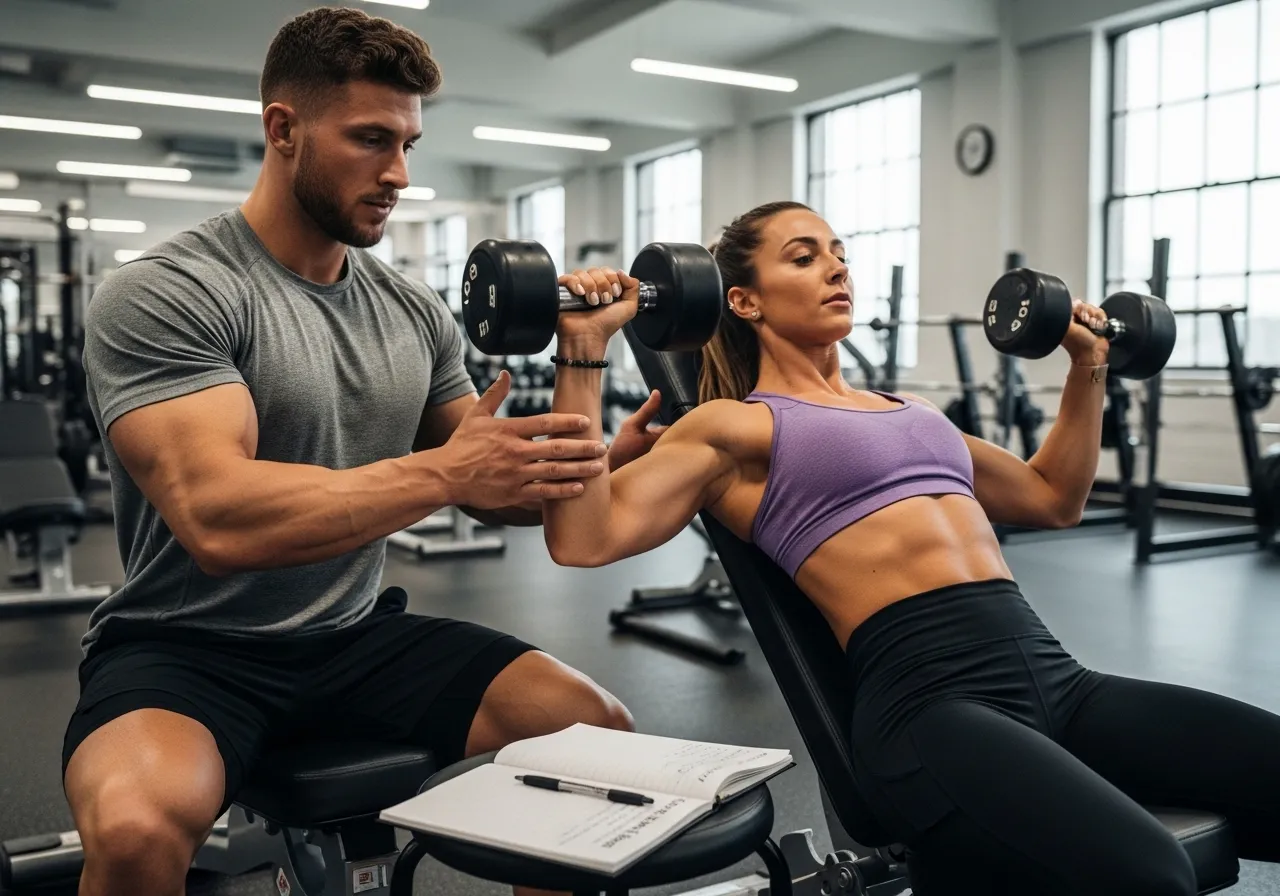
The alternating set method — partners performing sets in sequence, with one partner exercising while the other rests — is the most common and practical partner training structure for strength and hypertrophy workouts. The advantages: the working partner receives full attention and spotting from the resting partner; rest periods are naturally regulated by the time the partner’s set requires; and the structure prevents the extended, unmonitored rest periods that solo training without a timer commonly produces. Optimal execution: the resting partner actively observes every rep for technique, provides cues if needed, and counts reps to confirm completion. The resting partner’s active engagement during the working set is what distinguishes productive alternating sets from the passive waiting that converts partner training into social time between sets. The timing advantage: alternating sets with a partner who takes a similar rest period naturally creates rest intervals of 60–120 seconds (the time for the partner to complete their set), which falls exactly in the hypertrophy-optimal rest range for moderate-load training. For strength work requiring 3–5 minute rest periods, the partner’s set time is insufficient — add explicit rest time between the partner’s completion and your next set.
Timed Partner Circuits: Maximum Efficiency
Partner circuits — structured sequences of exercises performed alternately for time rather than reps — provide the cardiovascular and metabolic conditioning that standard alternating sets do not develop. The structure: Partner A performs exercise 1 for the prescribed time (30–60 seconds); Partner B immediately performs exercise 1 for the same time while Partner A rests; both move to exercise 2 and repeat. This format produces minimal downtime — while one partner rests, the other works — creating the continuous effort that circuit training delivers with the partner engagement that adds accountability and competitive motivation. Effective partner circuit design: pair exercises that use different muscle groups (Partner A: push-ups; Partner B: rows; alternate, then rotate) to allow each partner to recover while the other works; limit total circuit time to 30–45 minutes to maintain quality throughout; and set specific rep or time targets that both partners aim to meet, creating the shared performance standard that activates competitive motivation. Research from the American College of Sports Medicine guidelines on group exercise supports circuit training formats as producing superior cardiovascular adaptation per unit of training time compared to steady-state cardio formats, with partner accountability improving adherence and intensity.
Spotting Protocols: Safety and Performance Enhancement
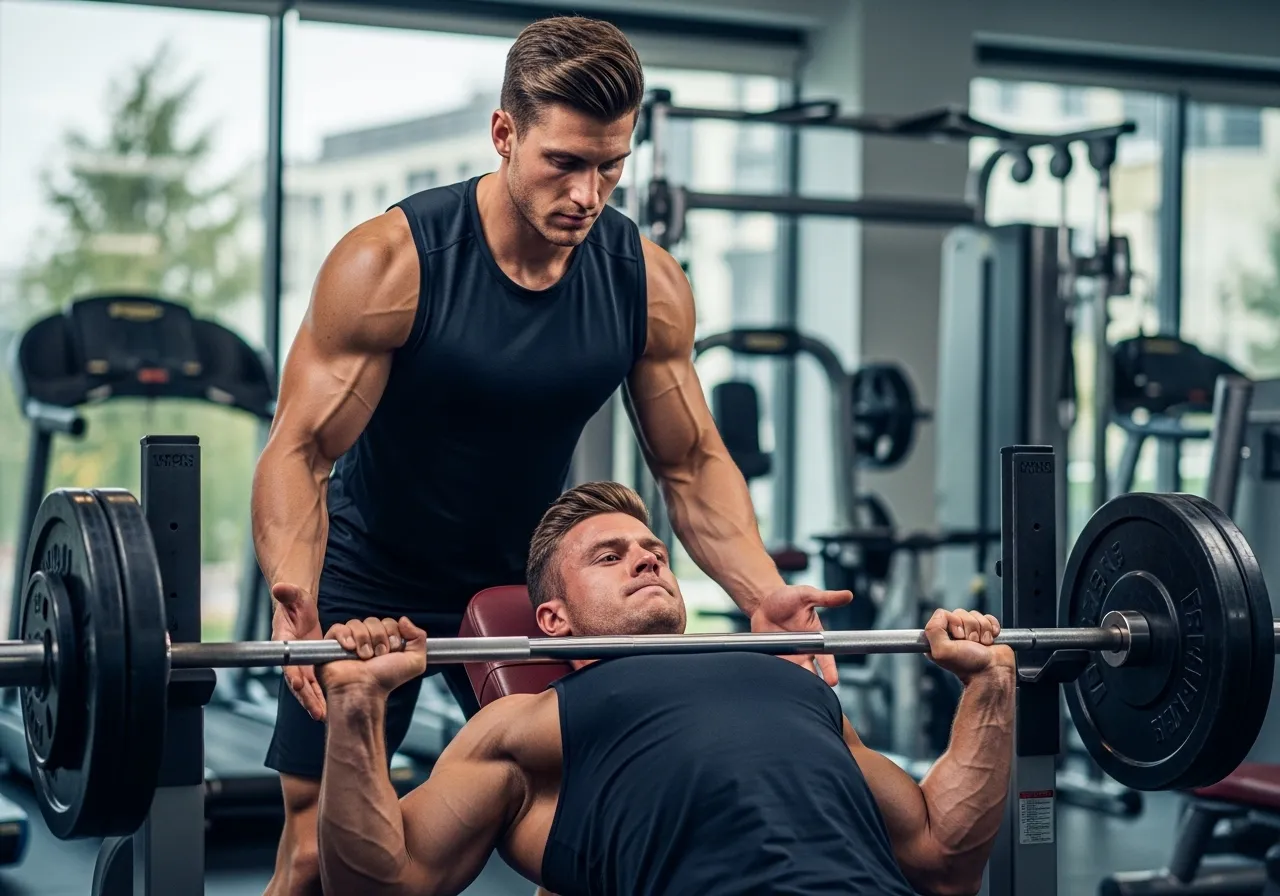
Effective spotting — the partner’s physical assistance during maximal or near-maximal efforts — enables training intensity that safety concerns prevent in solo training. A qualified spotter transforms the risk-limiting factor that solo training requires: without a spotter, most athletes train conservatively to ensure they can safely complete each set without assistance. With a reliable spotter, weights can be pushed to true near-failure while the spotter provides the minimal assistance needed to prevent equipment failure or injury. Spotting techniques by exercise: Bench press — spotter stands directly behind the bar at the head of the bench, hands positioned just outside the lifter’s hands but not touching the bar until assistance is needed; provides the minimum assistance to complete the rep or safely rack the weight. Squat — spotter positions behind the lifter with hands at the hips or under the armpits, ready to provide upward assistance; for heavy squats, two spotters (one at each end of the bar) provide more secure assistance. Shoulder press — spotter behind or to the side, hands positioned at the elbows to provide upward assistance from below the point of mechanical disadvantage. The critical spotting principle: assist only when assistance is genuinely needed — premature spotting removes the training stimulus that near-failure proximity provides. Ask the lifter before the set how many reps they intend, and spot only from the point where the intended reps are completed or form breaks significantly.
Matching and Scaling Partner Workouts
Partners of different fitness levels require deliberate scaling to ensure both receive appropriate training stimulus from the same workout structure. Scaling options: percentage-of-maximum loading (both partners use 75% of their 1RM for the same exercise, ensuring equivalent relative intensity regardless of absolute strength difference); rep adjustments (partner A performs 8 reps at their training weight, partner B performs 12 reps at their training weight, both working near the same relative intensity); time-based equivalence (both partners work for 40 seconds on each exercise, achieving different rep totals but the same time under tension at appropriate loads). The competitive calibration: scaling ensures both partners are working near the same relative effort level — the Köhler effect is maximized when both partners are genuinely challenged by the workout, which requires appropriate individual scaling rather than both working at the same absolute load. Poor scaling (one partner is severely over- or under-challenged) reduces competitive motivation and compromises the training stimulus for the under-challenged partner.
Session Planning: Who Designs the Workouts?
Effective partnerships require deliberate planning for how session design responsibility is managed — leaving session planning to whoever shows up first or making spontaneous decisions in the gym produces the inconsistent, low-quality programming that undermines the consistency benefits of partner training. Options: alternating program design (Partner A designs the week’s sessions, Partner B designs the following week, alternating throughout); shared planning (both partners design sessions together weekly, committed to a shared log); coach-directed (both follow a prescribed program from a coach or program resource, removing the design burden from the partnership); or lead-follow (one partner with more programming experience designs all sessions while the other provides feedback and input). The critical requirement: commit to the session plan before arriving at the gym. Partners who discuss and negotiate the workout after arriving consistently produce shorter, less challenging sessions than those who arrive with a committed plan. Use a shared training log (Google Sheets, Notion, or a dedicated fitness app) that both partners can access and update, providing the written record of planned and completed sessions that prevents the memory-based inconsistency of verbal-only planning.
Advanced Partner Training Techniques
Beyond the foundational alternating set and circuit structures, several advanced techniques use the partner format to produce training stimuli that solo training cannot replicate. Forced repetitions: the partner assists through 2–3 additional reps beyond the point of volitional failure, extending the set into the range where only the partner’s assistance allows continued movement. Research on forced repetitions and hypertrophy finds mixed results — the additional mechanical tension beyond normal failure may provide incremental hypertrophy benefit, but the technique dramatically increases recovery demand and should be used sparingly (1–2 forced rep sets per session maximum, on final working sets only). Negative (eccentric) only sets with partner assist: the partner assists the concentric phase (lifting), and the working athlete controls the eccentric phase (lowering) alone — providing the eccentric-focused training that produces particularly potent hypertrophic stimulus through the muscle damage of loaded lengthening. Use 110–120% of the concentric 1RM for eccentric-only training, with the partner providing the full concentric assistance. Drop sets with partner plate removal: for barbell exercises, the partner rapidly removes plates while the working athlete performs continuous reps, allowing immediate intensity reduction for extended sets without the stopping required by independent plate removal. Pre-exhaustion supersets with partner facilitation: one partner performs an isolation exercise immediately before a compound movement (leg extension before squat, cable fly before bench press), and the partner facilitates the rapid transition between exercises and monitors the fatigued compound exercise for technique and safety.
Partner Training Across Age Groups
Partner training benefits are consistent across age groups but require age-appropriate modifications that acknowledge the different physiological recovery capacities, injury risk profiles, and motivational dynamics of different training populations. Youth athletes (under 18): partner training provides the competitive motivation and technical feedback particularly valuable for young athletes still developing movement patterns and training habits. Emphasize technique feedback over intensity competition — the peer observation of technical errors and corrections accelerates skill acquisition at an age when movement pattern development is the primary training priority. Volume and intensity should be appropriate for developmental stage, and the partner competition should be calibrated to avoid the excessive training loads that overuse injury risk in developing athletes makes particularly dangerous. Masters athletes (over 40): increased recovery time between sessions means partner training frequency may need to reduce from the 3–4 sessions per week optimal for younger athletes to 2–3 sessions per week at higher per-session quality. The accountability and motivation benefits of partner training are particularly valuable for masters athletes, for whom training consistency — the factor most threatened by the competing life demands of mid-to-late adulthood — is the primary determinant of long-term fitness maintenance. Injury risk awareness and exercise selection conservatism should be increased for masters athletes in partner training, with the partner providing additional technique monitoring for the movement compensations that increasing age and accumulated orthopedic history produce.
Digital Tools for Partner Training Management
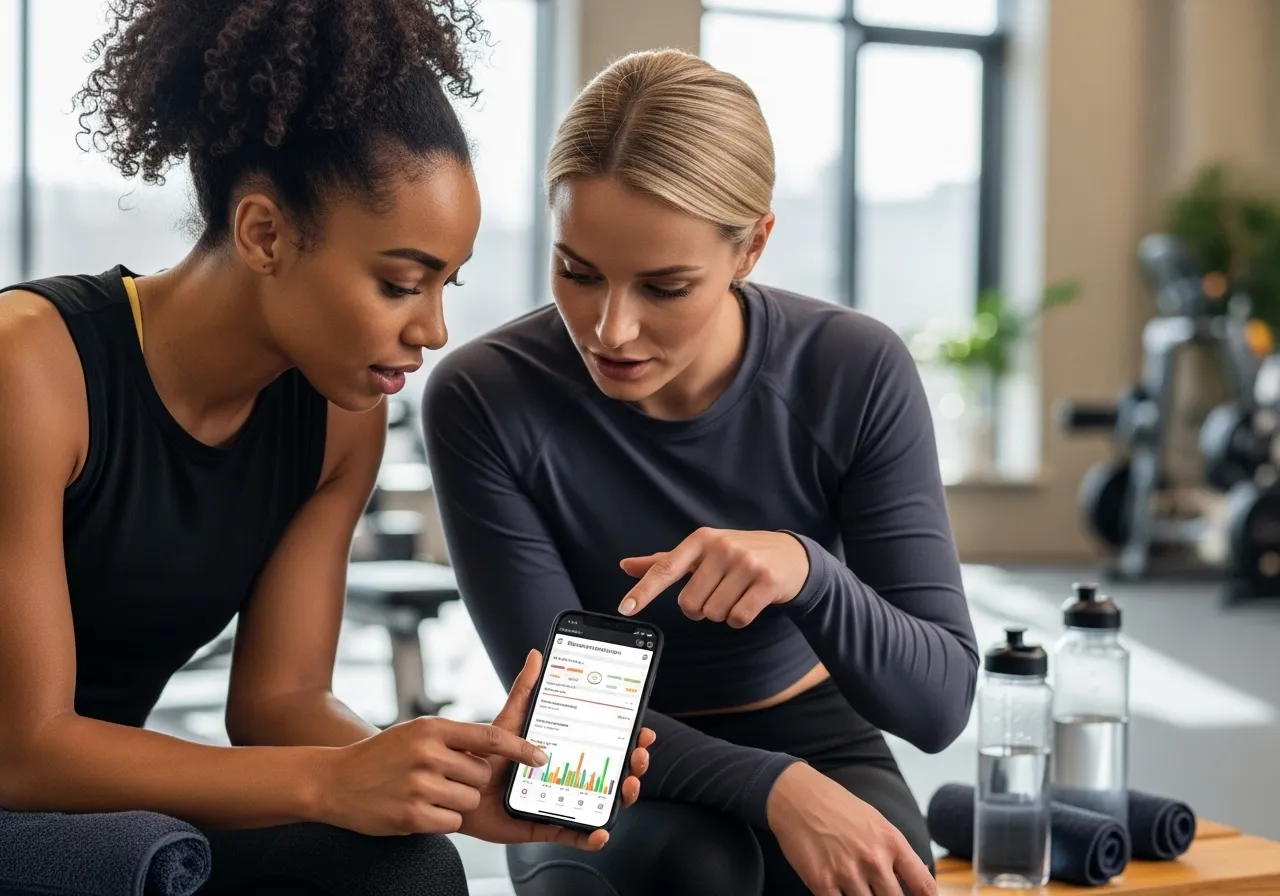
Technology tools that facilitate partner training management — shared training logs, communication platforms, performance tracking apps, and virtual training solutions — have dramatically expanded the infrastructure available for effective training partnerships. Recommended tools: Shared training log — Google Sheets with a pre-built training template both partners fill in after each session; strong.app or Hevy — training log apps with sharing features that allow partners to view each other’s completed workouts; Strava or Garmin Connect — for running and cardiovascular training partners to share GPS-tracked workouts and performance data; WhatsApp or Signal group — for the daily communication that maintains accountability between sessions, sharing workout completions, performance updates, and scheduling coordination. The most important tool principle: use the minimum number of tools that provide the shared tracking and communication the partnership requires. Overly complex technology systems create friction that reduces compliance — partners who must update three different apps and check two messaging platforms lose the behavioral simplicity that makes accountability systems effective.
The evidence is unambiguous and the mechanism is clear: training with a committed, well-matched partner improves adherence by 20–30%, elevates training intensity through social facilitation, enables maximal-effort work through spotting, provides the technical feedback that accelerates skill development, and sustains motivation through the difficult periods that every serious athlete’s training journey includes. The investment in finding and committing to the right training partner is one of the highest-return actions available to any athlete seeking to maximize the results from their training investment. The partnership you build in the gym is not just a training tool — it is one of the most meaningful athletic relationships available to serious athletes, combining the shared pursuit of physical excellence with the interpersonal trust and mutual investment that training together consistently across months and years creates. Begin the search, make the commitment, structure the accountability, and train together with the deliberate effectiveness that this guide provides — the results will exceed what either partner could achieve training alone. Every great athlete has training partners who contributed to their success — the external push on hard days, the technical observation that corrected the error before it became a habit, the accountability that kept the session on the calendar when competing demands would otherwise have removed it. The science of partner training is not abstract — it describes the mechanisms behind the experiences that athletes in every discipline report as transformative. Apply these principles deliberately: select your partner carefully against the criteria that predict long-term partnership success; structure your sessions with the alternating set, circuit, and competitive formats that activate the specific mechanisms of social facilitation and Köhler motivation; establish explicit accountability commitments from day one; communicate technical feedback with the directness and specificity that genuine performance improvement requires; and maintain the partnership through the scheduling and interpersonal challenges that every long-term training relationship navigates. The results are waiting — train with a partner and discover what your training has been missing. Train together. Grow together. Win together. The best training session you have ever had is waiting — it just needs a committed partner to make it happen. Start today.
Partner-Specific Exercises and Training Methods
Beyond the organizational structure of partner training, certain exercises and training methods are specifically enhanced by or require a partner — producing training stimuli that solo training cannot replicate and adding variety that sustains long-term training engagement.
Partner-Assisted Stretching: Flexibility Gains Solo Training Cannot Match
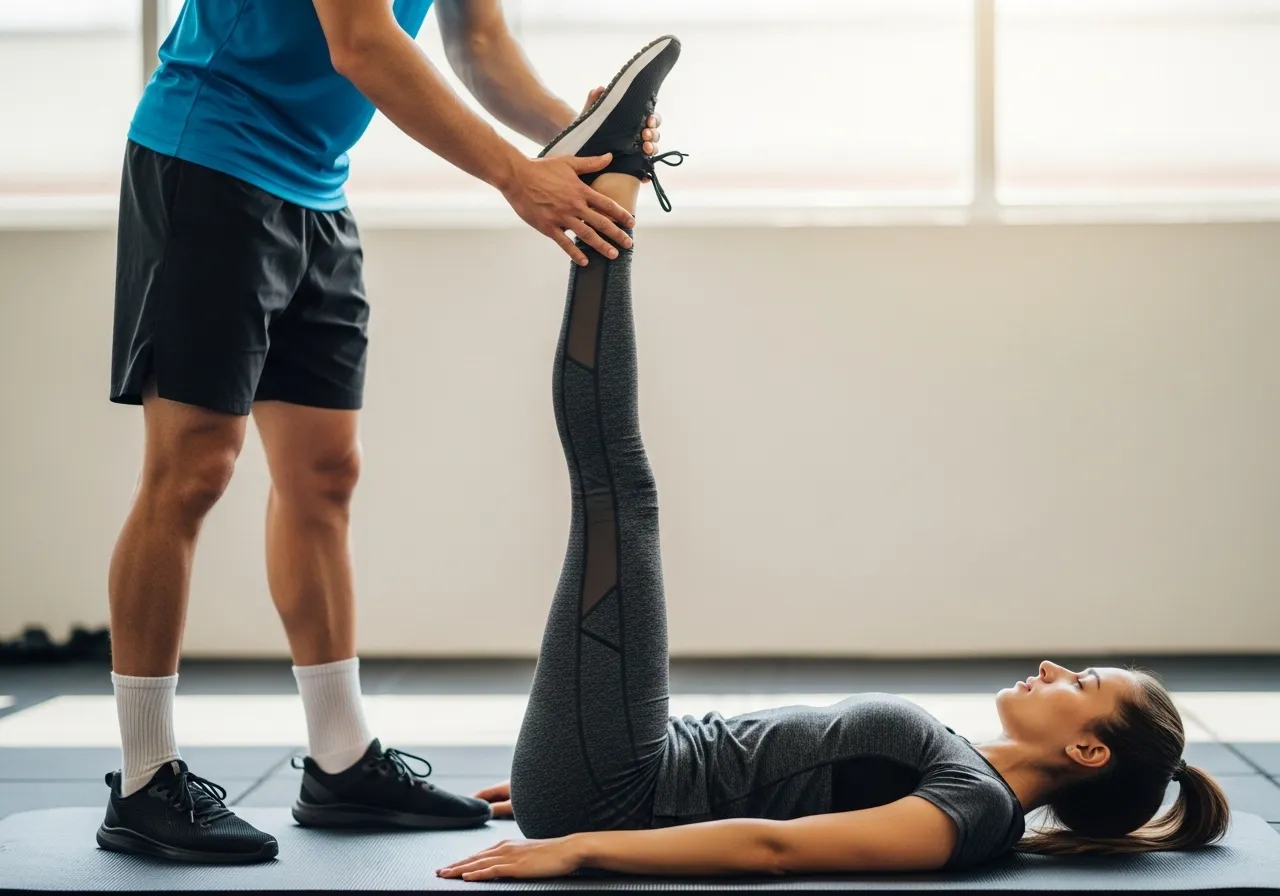
Partner-assisted stretching (proprioceptive neuromuscular facilitation — PNF stretching) uses the partner’s assistance to achieve a deeper stretch than solo stretching produces, improving flexibility at a rate significantly faster than static stretching alone. The PNF technique: the partner applies gentle, steady pressure to move the limb to its end range of stretch; the stretching athlete contracts the muscle being stretched against the partner’s resistance for 6–8 seconds (isometric contraction); the athlete then relaxes completely, and the partner gently increases the stretch to the new, deeper end range. This contract-relax sequence is repeated 3–4 times per muscle, achieving the 20–30% greater range of motion improvements that PNF produces compared to static stretching. Effective partner stretching targets: hamstrings (partner lifts the straight leg to end range while the athlete is supine); hip flexors (partner assists the lunging athlete into a deeper front-back split position); thoracic rotation (partner assists rotation from behind, applying gentle additional rotation at the shoulders); and shoulder internal/external rotation (partner controls the arm position while the athlete rotates against resistance). Include 10–15 minutes of partner PNF stretching at the end of 1–2 sessions per week for flexibility gains that improve performance in strength and athletic movements that limited range of motion otherwise restricts.
Reactive and Medicine Ball Partner Drills
Medicine ball partner drills develop explosive power, rotational strength, and reactive motor skills that conventional resistance training cannot replicate — making them valuable additions for athletes whose sports require rotational power, overhead coordination, or reactive athletic skills. Core partner medicine ball drills: Chest pass (both partners face each other 3–5 meters apart, one passes with a chest throw, partner catches and immediately returns — 15–20 reps at controlled speed progressing to maximal speed); Rotational toss (partners stand side by side 2–3 meters apart, athlete rotates away from partner and back, releasing the ball as they face toward the partner — developing the rotational power sequence used in throwing, swinging, and kicking sports); Overhead toss and catch (develops overhead power and coordination, partners facing each other 3–5 meters apart, toss overhead with two hands); Slam and catch (partner holds the ball overhead, slams it forcefully to the ground, partner catches the bounce — or performs an alternating slam sequence where each catches the other’s slam). Start with a lighter medicine ball (4–6 kg for most athletes) before progressing to heavier implements — the emphasis should be on explosive mechanics and controlled catching rather than maximum weight.
Partner Resistance Training: Human Resistance Variations
Using the partner as direct resistance — resisting specific movements with controlled manual resistance — adds training variety and addresses small muscle groups in athletic movement patterns that equipment-based resistance cannot fully replicate. Partner-resisted exercises: Nordic hamstring curl (athlete kneels on a pad, partner holds firmly at the ankles, athlete slowly lowers the torso toward the floor using eccentric hamstring strength, partner assists the return — one of the most effective posterior chain exercises with direct evidence for hamstring injury prevention); partner-resisted push-up (partner applies light downward pressure on the upper back during the concentric phase, increasing load without equipment); partner-resisted sprint (partner holds the sprinting athlete with a resistance band or manual pressure at the hips, the athlete sprints against the resistance — developing hip flexor power and acceleration mechanics). These exercises provide training variety, require zero equipment, and develop the sport-specific strength patterns that standard resistance exercises may not directly target.
Competitive Training Protocols: Racing to Shared Goals
Competitive partner training protocols — where both partners race against each other or against a shared time or rep target — consistently produce the highest training intensity of any partner training format through the powerful motivational effect of direct competitive comparison. Effective competitive protocols: Rep race (both partners perform the same exercise simultaneously, first to complete the target rep count wins the set — natural intensity maximization from competitive pressure); Time race (both complete maximum reps in the set time, compare scores and use the higher score as the next session’s target); Ladder challenge (both perform 1 rep, then 2, then 3… continuing up the ladder until one cannot match the other’s rep count — identifies strength endurance differences and creates natural progressive overload); Tabata competition (both perform the same Tabata protocol, comparing rep counts in each interval for the session). The competitive formats work best for exercises where both partners are at similar fitness levels — excessive performance disparity reduces competitive motivation and should be addressed through exercise scaling before implementing competitive formats.
Programming Partner-Specific Methods Into Weekly Training
Partner-specific training methods should be deliberately programmed into the training week rather than added spontaneously — ensuring that the partner-dependent exercises and methods are consistently included and appropriately periodized alongside standard training. A practical weekly structure: 2 standard partner sessions (alternating sets, spotting for strength and hypertrophy work); 1 partner circuit or competitive session per week (metabolic and power conditioning with competitive format); PNF partner stretching at the end of 1–2 sessions. This structure uses the 3–4 sessions per week that research identifies as the optimal partner training frequency for the accountability benefits to fully develop, while including the variety of partner-specific methods that sustains long-term engagement. Seasonal periodization: emphasize strength and hypertrophy partner sessions during the base building phase; shift toward more competitive conditioning and power formats as competition season approaches; include PNF flexibility sessions year-round for the cumulative flexibility improvements that consistent practice produces.
Bodyweight Partner Training: No Equipment Required
Bodyweight partner exercises — movements that use the partner as resistance, base, or counterbalance — provide effective training sessions in contexts where gym access is unavailable and require no equipment beyond the two athletes. Essential bodyweight partner exercises: Partner push-up with hand slap (both partners in push-up position facing each other, both perform push-ups and slap right hands at the top, then left hands — adding unilateral instability and coordination demands to the standard push-up); Wheelbarrow push-up (one partner holds the other’s ankles while the lower partner walks on hands and performs push-ups — building shoulder stability and horizontal pushing strength with unusual demands); Partner squat with hand grasp (partners face each other holding forearms, both squat simultaneously, using each other’s weight as counterbalance — allowing deeper squat depth than bodyweight squats without counterbalance while developing coordination); Standing partner row (one partner braces with slight backward lean holding a towel or rope end; the other partner grabs the other end and rows toward them, using the partner’s fixed position as the anchor for a rowing movement); Partner plank pull (both in plank position perpendicular to each other, one partner reaches under to grasp the other’s wrist and pull rhythmically — building anti-rotation core stability in the plank position). These bodyweight partner variations provide training variety and functionality that conventional resistance training does not replicate, and are particularly effective for athletic preparation that develops coordination, stability, and functional movement quality alongside strength.
Competition Preparation With a Training Partner
Athletes preparing for competition — powerlifting, bodybuilding, CrossFit, endurance events, or team sports — benefit from specific partner training approaches that address the unique demands of competition preparation phases. Mock competition practice: for strength sport athletes (powerlifters, weightlifters), performing practice competitions with the training partner as judge and counter — calling lifts to competition standards, providing the command-response training that competition performance requires — builds the competition-specific skill that training without this structure neglects. Peaking phase training: the reduced volume and increased intensity of competition peaking benefits from the partner’s spotting support for the maximal and near-maximal efforts that the peaking phase requires at precisely the time when fatigue-induced technique breakdown makes spotting most important. Mental preparation: a training partner who understands competition demands provides the specific psychological support and performance cue application that coaches and general supporters cannot as effectively deliver — the shared training history means the partner understands exactly what cues and feedback produce the best competitive performance for their specific partner.
Integrating Solo and Partner Training
The most effective long-term training approach for most athletes combines dedicated partner sessions (leveraging the accountability, social facilitation, and spotting benefits) with independent training sessions (developing self-reliance, accommodating schedule flexibility, and allowing individualized programming elements). The optimal integration: use partner sessions for the highest-priority exercises that benefit most from spotting and competitive motivation (compound barbell movements, maximal effort work, competitive conditioning formats); use solo sessions for supplementary work, lower-intensity sessions, and the individualized exercises that the partner’s different needs may not require. This hybrid approach ensures that partner scheduling conflicts do not completely eliminate productive training and that each athlete maintains the independent training capacity that prevents over-dependence on the partnership for training motivation.
The evidence is unambiguous and the mechanism is clear: training with a committed, well-matched partner improves adherence by 20–30%, elevates training intensity through social facilitation, enables maximal-effort work through spotting, provides the technical feedback that accelerates skill development, and sustains motivation through the difficult periods that every serious athlete’s training journey includes. The investment in finding and committing to the right training partner is one of the highest-return actions available to any athlete seeking to maximize the results from their training investment. The partnership you build in the gym is not just a training tool — it is one of the most meaningful athletic relationships available to serious athletes, combining the shared pursuit of physical excellence with the interpersonal trust and mutual investment that training together consistently across months and years creates. Begin the search, make the commitment, structure the accountability, and train together with the deliberate effectiveness that this guide provides — the results will exceed what either partner could achieve training alone. Every great athlete has training partners who contributed to their success — the external push on hard days, the technical observation that corrected the error before it became a habit, the accountability that kept the session on the calendar when competing demands would otherwise have removed it. The science of partner training is not abstract — it describes the mechanisms behind the experiences that athletes in every discipline report as transformative. Apply these principles deliberately: select your partner carefully against the criteria that predict long-term partnership success; structure your sessions with the alternating set, circuit, and competitive formats that activate the specific mechanisms of social facilitation and Köhler motivation; establish explicit accountability commitments from day one; communicate technical feedback with the directness and specificity that genuine performance improvement requires; and maintain the partnership through the scheduling and interpersonal challenges that every long-term training relationship navigates. The results are waiting — train with a partner and discover what your training has been missing. Train together. Grow together. Win together. The best training session you have ever had is waiting — it just needs a committed partner to make it happen. Push on.

Communication, Accountability, and Avoiding Common Partner Training Mistakes
The technical structure of partner training determines what you do together; communication, accountability systems, and mistake avoidance determine how well you do it. The partnerships that produce the best long-term results are those that invest as much in the interpersonal dynamics as in the exercise programming.
Establishing Communication Standards From Day One
Effective partner training communication covers three essential domains: pre-set communication (intensity targets, spotting preferences, technique cues to watch for), during-set communication (real-time technique feedback, encouragement at appropriate intensity), and post-set communication (performance review, set adjustments for subsequent sets). Pre-set communication prevents the ambiguity that impairs spotting effectiveness — before every set, the working partner should communicate the target reps, the point at which spotting assistance should begin (typically at the first rep where form breaks or the partner is stuck, not before), and any specific technique cues the watching partner should monitor. During-set communication should be minimal and action-oriented — “elbows back,” “drive through the heels,” “three more” — rather than general encouragement that does not guide the movement. Post-set communication should be prompt, specific, and constructive: “you lost your bracing on rep 8, try to reset at the top,” not “that looked a bit sketchy at the end.” Establishing these communication standards explicitly during the first training sessions — rather than hoping they develop organically — prevents the ambiguity that causes spotting failures, missed technique cues, and the gradual drift toward social talking during rest periods that reduces training productivity.
Accountability Systems: Beyond Just Showing Up
Accountability in training partnerships functions most effectively when it is formalized into specific commitments and consequences rather than relying on vague social obligation. Effective accountability structures: weekly session commitment (both partners commit to specific days and times, entered in shared calendar, with an explicit cancellation policy — minimum 24-hour notice required, missed sessions have defined consequences like extra sets the following session); performance commitments (both partners commit to specific performance targets for key exercises each week, reviewed at session end); training log requirement (both complete the shared training log within 24 hours of each session — the review of each other’s logs maintains awareness of training progress and creates the social pressure to log honestly); and progress review meetings (monthly 15-minute conversations reviewing the previous month’s training data against targets, setting the following month’s goals). The most effective accountability consequence is not punitive but opportunity-based: the partner who meets the weekly commitment gets to choose the next session’s workout structure — creating positive motivation for consistency rather than negative motivation around punishment.
The Most Common Partner Training Mistakes
Several consistent errors undermine the effectiveness of training partnerships despite good intentions. Mistake 1 — Too much talking, not enough working: the social context of partner training creates the opportunity for conversation that extends rest periods far beyond their intended duration. Use a timer for rest periods and maintain focus on the session during working sets; save extended conversation for the warm-up, cool-down, or post-session. Mistake 2 — Matching partner loads when abilities differ: both partners using the same weight because it simplifies logistics is common but compromises training effectiveness — one partner is always training below or above optimal intensity. Implement appropriate scaling from the first session. Mistake 3 — Premature spotting: the spotter assisting before the lifter genuinely needs help (out of enthusiasm or discomfort watching near-failure effort) removes the training stimulus that near-failure provides. Communicate clearly about spotting trigger points before each set. Mistake 4 — Neglecting individual differences in recovery: partners with different recovery capacities pushing each other to match recovery schedules that are optimal for one but insufficient for the other. Respect individual recovery differences rather than assuming both partners have identical recovery timelines. Mistake 5 — Avoiding difficult conversations about performance: the social discomfort of telling a training partner their performance is declining, their technique is breaking down, or their commitment is inconsistent leads to avoidance that allows problems to compound. Establish early in the partnership that honest performance feedback is a partnership expectation, not a social violation.
Navigating Scheduling and Life Conflicts
The practical challenge that most consistently disrupts effective training partnerships is scheduling conflicts — the competing demands of work, family, and life that make consistent joint availability difficult across months and years of training. Strategies for scheduling resilience: establish primary and backup session times (4 primary sessions per week, 2 backup alternatives if primary sessions conflict — never cancel without booking a backup immediately); maintain an independent training protocol (both partners can train alone effectively when the other cannot attend, preventing a partner’s absence from eliminating the session); use asynchronous accountability for solo sessions (text the partner the completed session log when training alone, maintaining the accountability loop even when not training together); and conduct periodic schedule reviews (monthly check-in on whether the current training schedule remains realistic for both partners’ life demands, adjusting proactively rather than reactively). Research from the Psychology of Sport and Exercise journal on social support and training adherence finds that partners who have explicit plans for maintaining accountability through scheduling disruptions maintain their long-term training adherence significantly better than those who assume scheduling will remain consistent indefinitely.
Conflict Resolution: When Partnership Tensions Arise
Training partnerships create interpersonal tensions that casual gym relationships do not — the proximity of shared goal pursuit, performance comparison, and direct feedback creates friction that requires explicit conflict resolution approaches. Common tensions: one partner perceives they are contributing more effort or commitment; performance differences create frustration or discouragement; scheduling conflicts produce resentment; honest feedback is received as personal criticism. The preemptive approach: discuss potential tension sources before they arise — have an explicit conversation at the beginning of the partnership about how performance feedback will be given and received, how scheduling conflicts will be handled, and how disagreements about program design will be resolved. The reactive approach: when tension does arise, address it directly in a dedicated conversation outside the training session — discussing partnership dynamics during or immediately after training (when competitive stress and physical fatigue are both elevated) is less productive than a calm, planned conversation in a neutral context. The most important principle: preserve the partnership’s long-term value by addressing tensions early rather than allowing them to accumulate to the point where they terminate the partnership.
Building Partnership Culture Over Time
The most effective training partnerships develop a shared culture — implicit norms, communication patterns, and training rituals that evolve over months and years of training together and increasingly differentiate the partnership from simple co-training. Partnership culture elements: training traditions (specific warm-up sequences, session-closing rituals, celebration practices for personal records) that create the continuity and shared identity that long-term partnerships develop; shared vocabulary for technical cues and feedback (abbreviated language that both partners understand instantly reduces communication time while increasing precision); progressive challenge traditions (quarterly physical challenges, monthly rep records, annual strength tests that provide structured competition benchmarks); and mutual goal investment (active interest in the partner’s individual goals alongside the shared training goals, creating the personal stakes in the partner’s success that distinguishes genuine partnership from convenient training co-location). The culture that develops in effective long-term partnerships produces the training environment that motivates continued training investment through periods when individual motivation would otherwise wane — the relationship itself becomes a training asset that produces consistency through its own inertia.
Recovery Monitoring in Partner Training
Partners are uniquely positioned to observe each other’s recovery status through behavioral and performance indicators that solo trainers cannot access — because the partner has a comparison baseline of the other’s typical performance, energy, and movement quality, deviations from normal become immediately apparent. Recovery warning signs a partner can observe: performance declines across consecutive sessions (sets getting worse rather than better across the session, weights that were previously easy feeling heavy); movement quality degradation (technique breakdowns that are uncharacteristic of the partner’s trained movement patterns); energy and engagement changes (unusual disorientation, shortened warm-up, reluctance to push near failure); and mood indicators (irritability, negativity, or unusual social withdrawal during sessions). When these recovery warning signs appear, the partner can suggest reducing session intensity or volume, encourage additional recovery practices (sleep, nutrition, stress management), or recommend a planned deload — providing the external perspective that the overtrained individual cannot reliably provide for themselves due to the cognitive impairment that significant overtraining produces.
Partner Training for Special Populations
Partner training is specifically beneficial for several populations with particular accountability and motivation needs. Injury rehabilitation: athletes returning from injury benefit from a training partner who ensures the rehabilitation protocol is followed precisely — performing the prescribed exercises at prescribed intensities rather than the self-directed shortcuts that impatience with slow rehabilitation progression tends to produce. The partner’s monitoring also catches compensatory movement patterns that develop as the injured athlete unconsciously protects the healing structure. Mental health and training: the social connection of partner training provides mental health benefits (reduced anxiety, improved mood, sense of community) that research on exercise and mental health supports as meaningful adjuncts to standard mental health interventions. Athletes who struggle with the motivational deficits of depression or anxiety often find that partner training appointment commitment is more reliably motivating than solo training when internal motivation is compromised. New gym members: the intimidation and unfamiliarity of a new training environment is dramatically reduced when navigating it with a committed partner — the social support of partner training improves retention of new gym members and accelerates their development of the movement skills and training knowledge that effective solo training eventually requires.
The evidence is unambiguous and the mechanism is clear: training with a committed, well-matched partner improves adherence by 20–30%, elevates training intensity through social facilitation, enables maximal-effort work through spotting, provides the technical feedback that accelerates skill development, and sustains motivation through the difficult periods that every serious athlete’s training journey includes. The investment in finding and committing to the right training partner is one of the highest-return actions available to any athlete seeking to maximize the results from their training investment. The partnership you build in the gym is not just a training tool — it is one of the most meaningful athletic relationships available to serious athletes, combining the shared pursuit of physical excellence with the interpersonal trust and mutual investment that training together consistently across months and years creates. Begin the search, make the commitment, structure the accountability, and train together with the deliberate effectiveness that this guide provides — the results will exceed what either partner could achieve training alone. Every great athlete has training partners who contributed to their success — the external push on hard days, the technical observation that corrected the error before it became a habit, the accountability that kept the session on the calendar when competing demands would otherwise have removed it. The science of partner training is not abstract — it describes the mechanisms behind the experiences that athletes in every discipline report as transformative. Apply these principles deliberately: select your partner carefully against the criteria that predict long-term partnership success; structure your sessions with the alternating set, circuit, and competitive formats that activate the specific mechanisms of social facilitation and Köhler motivation; establish explicit accountability commitments from day one; communicate technical feedback with the directness and specificity that genuine performance improvement requires; and maintain the partnership through the scheduling and interpersonal challenges that every long-term training relationship navigates. The results are waiting — train with a partner and discover what your training has been missing. The best training session you have ever had is waiting — it just needs a committed partner to make it happen. Go.
Choosing the Right Partner and FAQs
The training partner selection is the most important single decision in establishing an effective training partnership — the wrong partner undermines the accountability, social facilitation, and technical feedback benefits even when both individuals are individually motivated and committed. The right partner amplifies every aspect of training effectiveness.
Qualities of an Effective Training Partner
The research on effective training partnerships identifies several partner qualities that most strongly predict partnership success. Reliability: consistent attendance and session commitment is the single most important quality — a partner who cancels frequently eliminates the accountability benefit that is the primary practical advantage of partner training. Evaluate prospective partners on their current training consistency before formalizing the partnership. Shared goals: partners pursuing the same general training goal (both targeting strength development, both training for a specific sport, both focused on body composition) produce better programming alignment and mutual motivation than partners with divergent goals. Similar training times and preferred schedules eliminate the scheduling friction that inconsistent availability produces. Compatible training philosophies: partners with similar approaches to intensity, rest periods, and exercise selection train together more smoothly than those who must constantly negotiate fundamental methodology disagreements. Constructive communication style: the ability to give and receive direct feedback without defensiveness or social awkwardness is essential for the technical feedback benefit of partner training — partners who are conflict-averse cannot provide the honest observation that the partner-as-coach role requires.
Where to Find a Training Partner
Identifying a compatible training partner requires deliberate searching rather than hoping a suitable partner will appear. Effective partner finding approaches: gym community engagement (attending regular classes or training at consistent times builds the familiarity with other regular gym-goers that identifies potential partners with compatible schedules and training levels); social media fitness communities (local fitness groups on Facebook, Reddit fitness communities for your city, Meetup groups for specific activities — all provide access to athletes actively seeking training partners); sport-specific clubs (joining a powerlifting club, CrossFit gym, running club, or sport-specific training group places you with others whose training goals and schedules are already aligned with your own); asking a friend or colleague (the social foundation of an existing relationship accelerates the trust-building that effective partner communication requires, though compatible training goals must still be confirmed before committing). When evaluating a potential partner, propose a 4-week trial period before committing to a long-term partnership — the trial reveals scheduling reliability, communication compatibility, and training goal alignment under real training conditions rather than initial conversation impressions.
Online and Remote Training Partnerships
For athletes without access to a geographically proximate partner with compatible schedules, remote training partnerships provide the accountability benefit of a training partner without requiring shared physical training space. Remote accountability structures: shared training log (both partners use the same digital log — TrainingPeaks, Strava, or a shared Google Sheet — with daily or session-by-session updates that both can review); weekly video check-in (15–20 minute video call reviewing the previous week’s training data, discussing upcoming sessions, and maintaining the interpersonal connection that accountability requires); workout challenges (both complete the same workout independently and compare performance outcomes — the shared challenge and competitive comparison activates the social facilitation and competitive motivation effects even without physical co-presence); and real-time text/app training updates (texting or using a fitness app to share session performance as it happens — “just hit 5×5 at 120kg” generates the social accountability response that motivates the partner to achieve similar in their independent session). Remote partnerships are less effective than in-person training for spotting, technical feedback, and the real-time competitive motivation of direct comparison, but they are meaningfully superior to fully independent training for the accountability and consistency benefits that most athletes gain most from partner training.
When to Change Partners
Not every training partnership produces the intended benefits, and recognizing when a partnership has stopped serving training goals allows timely transitions rather than continued investment in an ineffective arrangement. Signs that a partnership change may be warranted: consistent session cancellations that eliminate the accountability benefit; significant divergence in training goals that makes programming increasingly difficult to reconcile; repeated communication issues that prevent honest technical feedback; performance disparities that have grown so large that appropriate scaling eliminates meaningful competitive motivation; or life circumstances that have made schedules incompatible despite good intentions. Ending a training partnership need not be a social conflict — framing it as a reflection of changed circumstances rather than personal criticism, and doing so in an explicit conversation rather than gradual fade-out, preserves the relationship while freeing both partners to pursue more compatible arrangements. The goal is finding the partnership that produces the training benefits the research documents — maintaining a partnership that no longer provides those benefits out of social obligation serves neither partner’s training progress.
Frequently Asked Questions About Partner Training
Is training with a partner better than training alone? For most people and most training goals, yes — the research consistently finds improved adherence, higher training intensity, and better performance on key exercises when training with a committed partner. The caveat: a poorly structured or mismatched partnership can be worse than effective solo training. What if my partner is significantly stronger than me? Strength difference is manageable through appropriate scaling — use percentage-of-maximum loads so both work at equivalent relative intensities. The Köhler effect actually predicts that the weaker partner benefits most from training with a stronger partner, working harder than they would with an equal. How often should we train together? 3–4 times per week represents the optimal frequency for the accountability benefits to fully develop, while allowing both partners to maintain independent training flexibility. Should we always do the same exercises? Not necessarily — exercises that require spotting or direct assistance benefit most from partner synchronization; supplementary isolation work can diverge based on individual needs. The core compound movements (squat, bench, deadlift, press) are the highest-value exercises to align between partners. What if we have different available training time? Structure the primary session around the shared exercises that most benefit from partnership, complete within the shorter partner’s available time, and use remaining time for individual supplementary work — preserving the core partnership benefit while accommodating different time constraints. Can I train with more than one partner? Yes — rotating between two partners on different training days maintains accountability across more sessions while providing the variety of different training stimuli and competitive comparisons that single-partner training cannot. Ensure all partners are aware of and committed to the shared accountability standards.
Long-Term Partnership Development: The Multi-Year Perspective
Training partnerships that persist for years rather than months produce increasingly valuable training environments as the depth of shared training history, mutual understanding, and refined communication creates a collaborative system that neither partner could replicate with a newer training relationship. The year-one partnership focuses on establishing trust, communication norms, scheduling reliability, and the technical feedback loop that improves technique. The year-two partnership builds on this foundation with the competitive benchmarks, shared training history, and refined accountability systems that deeper mutual understanding enables. The year-three-and-beyond partnership achieves the almost intuitive training coordination — knowing when the partner needs encouragement versus technical feedback, recognizing recovery signs before they are articulated, anticipating scheduling needs — that long-term training relationships develop. Athletes who view training partnerships as long-term investments rather than short-term arrangements produce the most profound benefits from partner training — the compound interest of deepening partnership effectiveness across years far exceeds the linear benefits of the individual session improvements that new partnerships initially provide.
Partner Training Success Stories: What the Research Shows
The empirical research on partner training and exercise adherence provides compelling evidence for the magnitude of benefit that the behavioral and performance mechanisms described throughout this article produce in practice. Key research findings: Feltz et al. (2011) demonstrated that the Köhler motivation gain effect produces 24–65% increases in exercise persistence in partner conditions compared to individual conditions; Wing and Jeffery (1999) found that individuals who recruited friends to join their weight loss program achieved significantly better long-term outcomes than those who participated alone; Irwin et al. (2012) found that partner training increased moderate-to-vigorous physical activity by 78 minutes per week on average compared to individual training controls. These effect sizes are larger than most pharmaceutical or nutritional interventions studied in the same populations — confirming that the social and behavioral benefits of partner training are among the most powerful practical tools available for improving training outcomes without any change in programming, nutrition, or recovery practices. The implication: athletes who are not currently training with a committed partner are leaving one of the most evidence-supported performance improvements available on the table — and the investment required to capture this benefit is finding and committing to the right partner, which costs nothing beyond the time and social effort the search requires.
Building the Ideal Training Partnership: A 30-Day Action Plan
The 30-day action plan for establishing an effective training partnership: Week 1 — Identify 2–3 potential partners from your existing gym community, sport club, or social network; assess their training schedule compatibility, goal alignment, and communication style through informal conversation. Week 2 — Propose a 4-week trial partnership to the most compatible candidate; establish the specific commitments (scheduled sessions, communication expectations, shared log setup) that the trial will follow. Week 3 — Complete the first two trial weeks, providing and receiving feedback, refining the session structure, and confirming that scheduled sessions are being honored. Week 4 — Assess the trial performance against the criteria for long-term commitment: Are sessions happening as planned? Is the communication productive? Are both partners progressing? Is the partnership enjoyable enough to sustain long-term? Commit to or restructure the partnership based on this evidence-based assessment. The partnership that results from this deliberate 30-day process — built on explicit commitments, tested accountability, and honest assessment — is far more likely to produce the long-term training benefits that partner training research documents than partnerships formed casually and maintained by inertia.
The evidence is unambiguous and the mechanism is clear: training with a committed, well-matched partner improves adherence by 20–30%, elevates training intensity through social facilitation, enables maximal-effort work through spotting, provides the technical feedback that accelerates skill development, and sustains motivation through the difficult periods that every serious athlete’s training journey includes. The investment in finding and committing to the right training partner is one of the highest-return actions available to any athlete seeking to maximize the results from their training investment. The partnership you build in the gym is not just a training tool — it is one of the most meaningful athletic relationships available to serious athletes, combining the shared pursuit of physical excellence with the interpersonal trust and mutual investment that training together consistently across months and years creates. Begin the search, make the commitment, structure the accountability, and train together with the deliberate effectiveness that this guide provides — the results will exceed what either partner could achieve training alone. Every great athlete has training partners who contributed to their success — the external push on hard days, the technical observation that corrected the error before it became a habit, the accountability that kept the session on the calendar when competing demands would otherwise have removed it. The science of partner training is not abstract — it describes the mechanisms behind the experiences that athletes in every discipline report as transformative. Apply these principles deliberately: select your partner carefully against the criteria that predict long-term partnership success; structure your sessions with the alternating set, circuit, and competitive formats that activate the specific mechanisms of social facilitation and Köhler motivation; establish explicit accountability commitments from day one; communicate technical feedback with the directness and specificity that genuine performance improvement requires; and maintain the partnership through the scheduling and interpersonal challenges that every long-term training relationship navigates. The results are waiting — train with a partner and discover what your training has been missing. The best training session you have ever had is waiting — it just needs a committed partner to make it happen. Now.