How to Beat Gym Anxiety as a Beginner
⚠️ Disclaimer: The information in this article is for general educational purposes only and does not constitute medical, nutritional, or professional fitness advice. Individual results may vary. Always consult a qualified healthcare professional or certified fitness trainer before starting any new exercise program, changing your diet, or making decisions about injury treatment or recovery. If you experience pain, discomfort, or any unusual symptoms during exercise, stop immediately and seek professional guidance.

Understanding Gym Anxiety: Why It Happens and Why It’s Normal
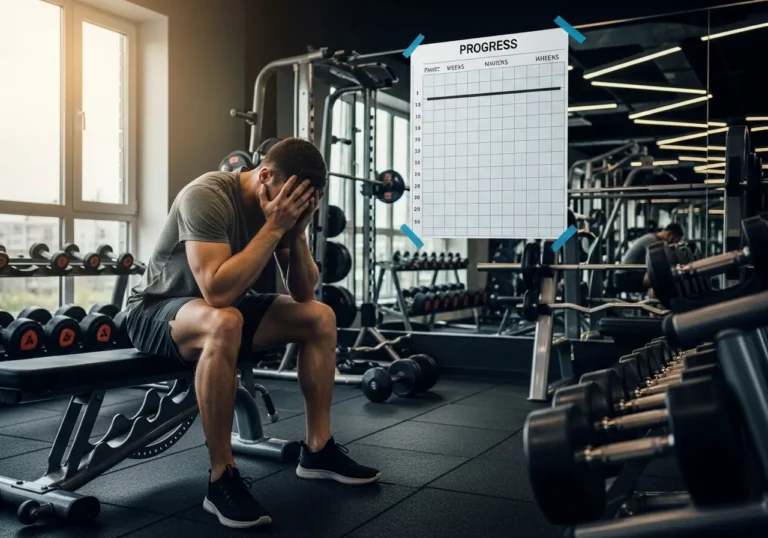
Gym anxiety is so common it has its own informal name in fitness communities: “gymtimidation.” If you’ve ever felt your heart rate spike not from exercise but from the thought of walking into a gym full of strangers, you are in extraordinarily good company. Studies suggest that more than 50% of people who don’t exercise regularly cite intimidation or self-consciousness about the gym environment as a significant barrier.
My hands were literally shaking the first time I walked into a commercial gym — the feeling was completely out of proportion to the actual threat, but that didn’t make it any less real.
Understanding the psychology behind gym anxiety helps depersonalize it. Gym anxiety is primarily driven by two well-documented cognitive biases: the spotlight effect and social comparison. The spotlight effect is the tendency to overestimate how much other people notice and evaluate our behavior. In a gym context, this translates to the persistent feeling that everyone is watching and judging you — noticing your form, your weight selection, your body, your uncertainty. The reality is that most people in the gym are focused almost entirely on themselves.
Social comparison — measuring yourself against others — is the second driver. Gyms concentrate people who have been training for years in a single space, which creates a highly unrepresentative sample of physical fitness. The beginner surrounded by advanced athletes is making the cognitive error of comparing their chapter one to everyone else’s chapter twenty. This comparison is both inevitable and profoundly misleading.
Research published in Social Psychological and Personality Science on the spotlight effect found that people consistently overestimate how much others notice them by a factor of roughly three to four. In plain terms: other gym members are noticing you one-quarter as much as you think they are — and when they do notice, they are far less critical than you assume.
Gym anxiety also has a learning curve component that’s worth acknowledging. Gyms have implicit norms — when to wipe down equipment, how to share machines, what the etiquette around asking for spotters is, which areas are for what purposes — that experienced gym-goers have internalized but beginners haven’t yet. The anxiety that comes from not knowing the unwritten rules is completely reasonable and resolves naturally with exposure. You will learn the norms. Every regular gym-goer went through the same uncertainty.
I vividly remember my first month in a proper gym after years of home workouts. I felt out of place, confused by the equipment, and certain that I was constantly being evaluated negatively. None of that was accurate. The gym is actually a remarkably non-judgmental environment once you’re inside it — the culture of most gyms is far more supportive than the anxiety anticipates.
The Reality Check: What Experienced Gym-Goers Actually Think of Beginners
One of the most effective antidotes to gym anxiety is understanding what experienced gym members actually think when they see a beginner. The answer, consistently, is far more positive than anxious beginners expect.
A veteran lifter once told me that he barely registered beginners because he was too focused on his own training — hearing it from someone actually in the gym was more reassuring than reading it.
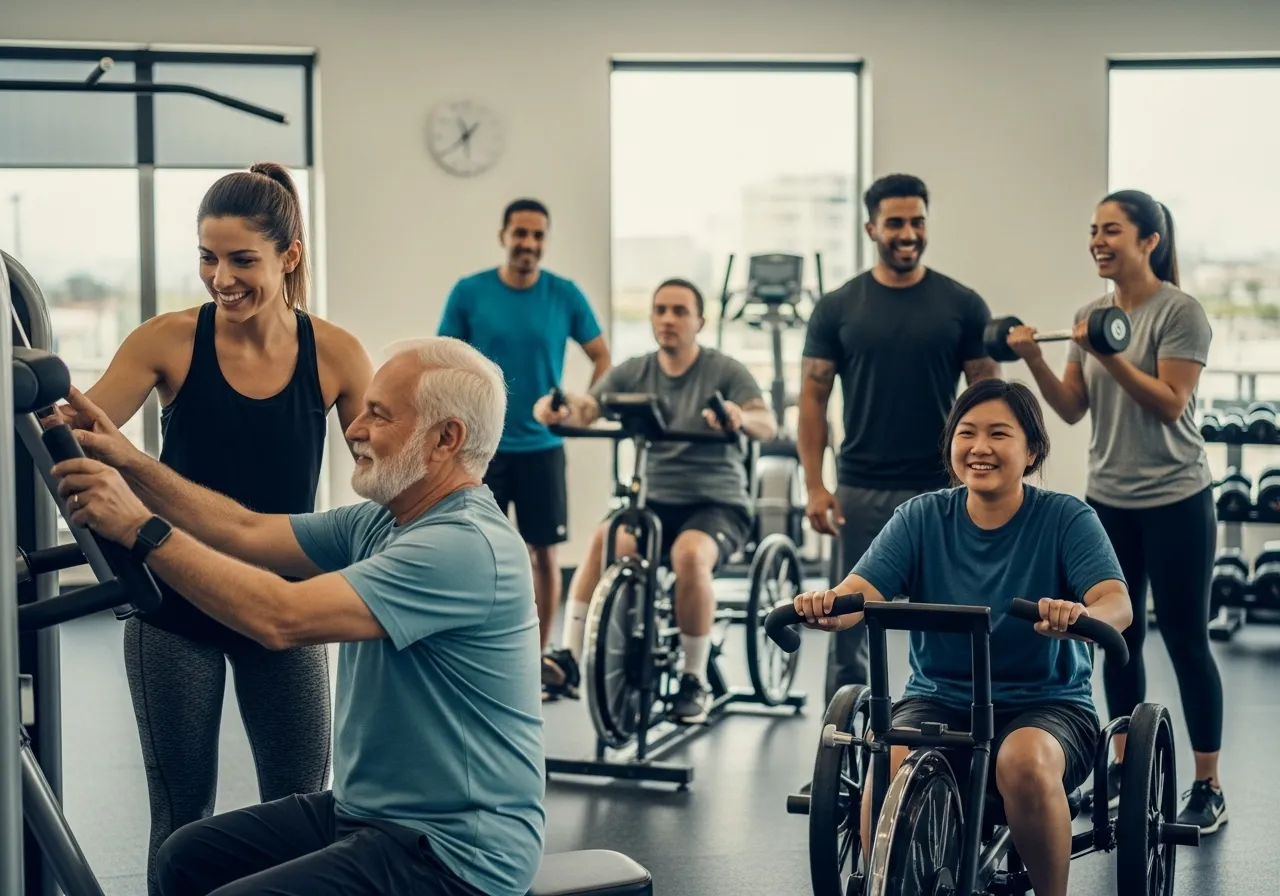
Surveys of regular gym-goers reveal a consistent pattern: most experienced exercisers either don’t notice beginners at all or actively feel positive about seeing them. The most common sentiment expressed is something like respect or appreciation — “good for them for starting.” Many experienced gym members report actively wanting to help beginners if asked, and feeling pleased rather than annoyed when they see newcomers making their first attempts.
The small minority who do judge newcomers negatively are not representative of gym culture, and their judgment says more about their own insecurities than about you. A confident, secure person who is genuinely passionate about fitness does not feel threatened or contemptuous when someone new starts their journey. The “gym bro” stereotype who mocks beginners exists, but is vastly outnumbered by people who are simply focused on their own training.
Consider the perspective of someone who has been training for five years. They remember — clearly, because the experience is uncomfortable and memorable — how uncertain and out of place they felt when they started. They know exactly what you’re going through. And almost universally, that knowledge produces empathy rather than judgment.
The people most likely to be watching and evaluating you critically in a gym are… other beginners who are doing the exact same thing you are. The anxiety is mutual and perfectly symmetrical. Everyone uncertain is watching everyone else, concluding that the others are watching them, and performing elaborate avoidance behaviors — when in reality the anxious newcomers are the only ones paying close attention to each other.
Research on pluralistic ignorance — the phenomenon where everyone privately holds a belief but assumes everyone else doesn’t — applies directly here. Most beginners privately feel like everyone else is confident and they are uniquely out of place. The truth is that this feeling is nearly universal among beginners, and the person who looks confident in your peripheral vision probably felt exactly as you do during their first weeks.
The practical takeaway: the judgment you’re anticipating is almost entirely a product of your own cognitive biases. The gym is not the hostile environment your anxiety is selling you. Give it three or four visits and watch the anxiety systematically reduce as this becomes your direct experience rather than a theoretical claim.

Practical Strategies to Prepare Before Your First Gym Visit
Preparation is one of the most effective anxiety management strategies available, and gym anxiety is particularly amenable to it. The uncertainty that drives most gym anxiety — not knowing where things are, what to do, or how to behave — is completely addressable before you set foot inside.
Watching YouTube videos of how to use every piece of equipment I planned to use before my first session felt over-prepared — it was the single most anxiety-reducing thing I did.
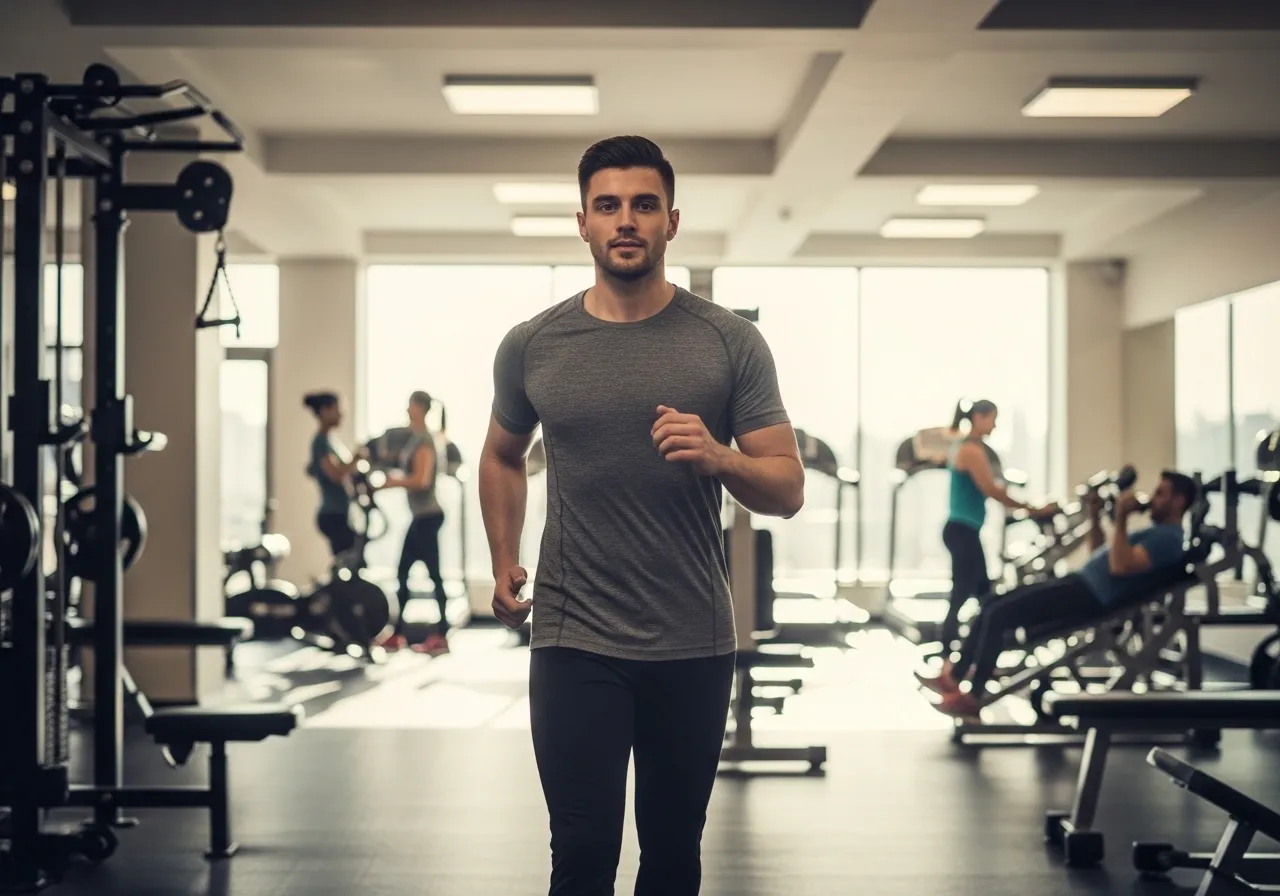
Start with a tour. Most commercial gyms offer free orientation tours for new members. Take it. Use this time not just to see where equipment is located, but to ask questions: How do I reserve a machine? Where are the lockers? Is there a sign-up sheet for the squat racks during peak hours? What’s the policy on bringing in your own weights? Getting answers to these questions in advance removes uncertainty and gives you a mental map of the environment before you’re in it under pressure.
Go during off-peak hours for your first several visits. Peak gym hours — typically 5–8pm on weekdays — are crowded, noisy, and high-social-pressure environments that are genuinely difficult even for experienced gym-goers. Morning sessions, midday visits, and weekend afternoons are typically far quieter. Starting in a less crowded environment lets you figure out equipment, experiment with exercises, and develop your comfort without feeling like you’re on display.
Arrive with a written plan. Walking into a gym without knowing what you’re going to do virtually guarantees the anxious wandering and confused looks that feed self-consciousness. A simple plan — warm-up on the treadmill for 10 minutes, then these 4 exercises in this order, then stretch — gives you a sequence to follow that keeps you moving purposefully rather than standing uncertainly. Apps like Stronglifts, JEFIT, or even a photo on your phone of a written workout can serve this function.
Dress appropriately but without overthinking it. Comfortable athletic wear that allows free movement is all you need. You don’t need branded gear, matching sets, or anything special. Clean shoes with grip, athletic shorts or pants, and a comfortable top covers every situation. The anxiety about fitting in physically at the gym through appearance is real but completely unfounded — gyms contain every conceivable style of athletic wear, and no one cares.
Use headphones strategically. Headphones in the gym serve a dual function: they improve your workout experience through music, and they signal social availability. Headphones on means “I’m in my workout, please don’t interrupt unless necessary” — a perfectly understood gym norm. For anxious beginners, this creates a personal bubble that reduces social overwhelm without being antisocial.
Research from Health Psychology Research on exercise barriers found that preparation behaviors — having a plan, scheduling specific times, laying out gym clothes the night before — were among the strongest predictors of actual gym attendance. Preparation reduces friction between intention and action in measurable ways.

How to Navigate the Gym Floor Without Feeling Lost or Embarrassed
The gym floor is a foreign environment with its own geography, equipment, etiquette, and unwritten rules. Knowing these in advance transforms the experience from confusing and anxiety-provoking to manageable and navigable.
Having a written workout plan in my phone meant I never had to stand around looking unsure about what to do next — that purposeful movement reduced self-consciousness immediately.
Most commercial gyms follow a broadly similar layout. Cardio equipment — treadmills, ellipticals, stationary bikes, rowing machines — is typically at the perimeter or in a dedicated section. Free weights — dumbbells, barbells, and kettlebells — are usually in a central or back area. Resistance machines are typically arranged in a circuit or by muscle group. Stretching and bodyweight areas are usually at the edge of the free weight section. Knowing this pattern helps you orient in any new gym quickly.
Equipment etiquette: wipe down any machine or bench you use with the provided spray and paper towels — this is universally expected and easy. Don’t rest on machines for extended periods during peak hours if others are waiting. Ask before working in on a shared piece of equipment (this is normal and expected, not rude). Return dumbbells and plates to their designated storage after use. These are the core norms, and following them covers 95% of social situations.
The squat rack and bench press areas deserve special mention because they’re the most socially complex zones in most gyms. These pieces of equipment are in high demand, and the etiquette around them is more elaborate. Don’t occupy a squat rack to do exercises that could be done with dumbbells (like bicep curls) during peak hours — this is one of the few genuine sources of gym irritation. Ask if equipment is available before setting up — “Are you using this?” is a completely normal and expected question.
Mirror etiquette: the mirrors in free weight areas are used by people to check their form, not for vanity. Don’t walk between someone and the mirror when they’re actively performing a set — walk behind them instead. This is a small thing that experienced gym-goers notice and appreciate.
When you don’t know how to use a piece of equipment, there are several options. Most commercial gym equipment has a diagram showing its use. Many gyms have staff on the floor whose job is specifically to help with this. YouTube is an immediate resource — searching the equipment name plus “how to use” takes seconds and produces clear demonstrations. And if you see someone using an unfamiliar machine, waiting until they’re done and asking politely is completely acceptable and almost always welcomed.
Form imperfection is not embarrassing — it’s expected. Every experienced gym member has visible form flaws. Perfect form is an asymptote that even elite athletes are always approaching. Doing exercises with imperfect but safe form while learning is entirely appropriate. The only form that warrants concern is form that risks injury — loading a spine in excessive flexion under heavy load, for example. Start with light weights, focus on the movement pattern, and let form improve over time.
Building Gym Confidence Through Small Wins and Routine
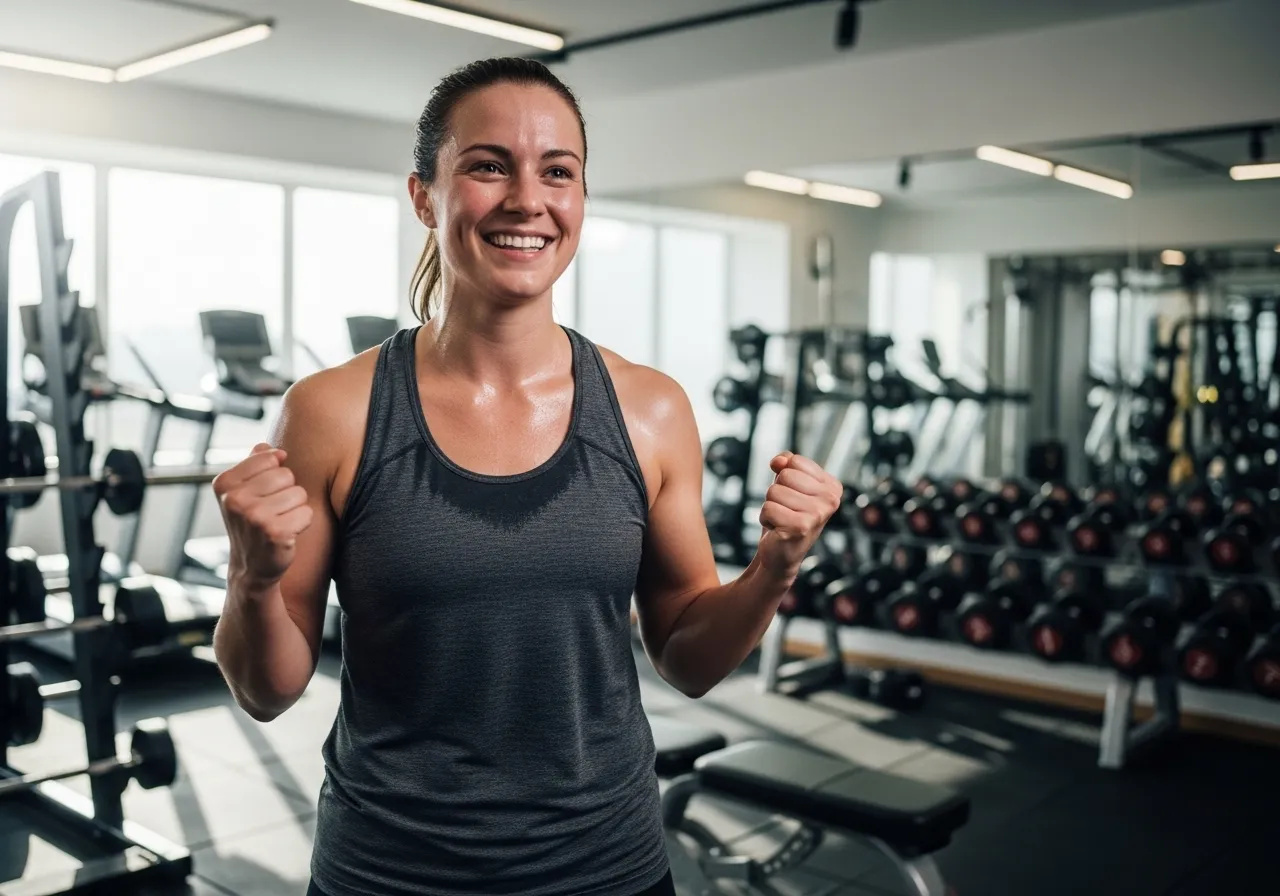
Gym confidence is not a prerequisite for going to the gym — it’s a result of going to the gym. This distinction matters enormously. Many people wait to feel confident before starting, not understanding that the confidence they’re waiting for can only be built by doing the thing they don’t yet feel confident about.
Going to the same gym at the same time three days a week for a month meant familiar faces and familiar rhythms — routine killed far more anxiety than any mindset technique.
Small wins are the mechanism. Every gym visit adds evidence to your experience of the gym as a manageable, non-threatening environment. Every exercise you figure out adds to your sense of gym competency. Every workout you complete adds to your identity as someone who exercises. These accumulations happen gradually and below conscious awareness, but they’re reliable. The person who has completed 50 gym sessions is not the same person as the one who completed the first — not in any dramatic transformation sense, but in the accumulated experience of knowing what to do and feeling entitled to be there.
Set specific, process-oriented goals for your first weeks rather than outcome goals. “Complete three workouts this week” is a process goal that is fully within your control and builds the consistency that produces long-term results. “Lose 10 pounds” is an outcome goal that depends on factors outside any single workout and provides no satisfaction on a session-by-session basis. For anxiety management, process goals win decisively.
Routine is a powerful anxiety reducer in gym contexts. The more automatic the gym experience becomes, the less cognitive and emotional resources it consumes. When you have a standard arrival time, a standard locker, a standard warm-up sequence, and a standard workout structure, the gym becomes a familiar place that requires habit execution rather than navigation of novel situations. This familiarity develops within four to six weeks of consistent attendance.
Track your progress in ways that give you concrete evidence of improvement. Noting the weights you used, the distances you covered, or the reps you completed creates a record of growth that becomes motivating evidence of progress when motivation is low. Seeing that you’re squatting 30% more than you were six weeks ago is genuinely confidence-building in a way that general encouragement isn’t.
Research on habit formation from University College London found that on average, behaviors become automatic after approximately 66 days of consistent repetition — with significant variation depending on complexity. For most people, this means gym attendance becomes genuinely habitual and low-effort somewhere between two and four months of consistent practice. Knowing this timeline helps set realistic expectations: the first two months require deliberate effort, but the investment produces a lasting return.
When to Ask for Help and How to Do It Without Feeling Awkward
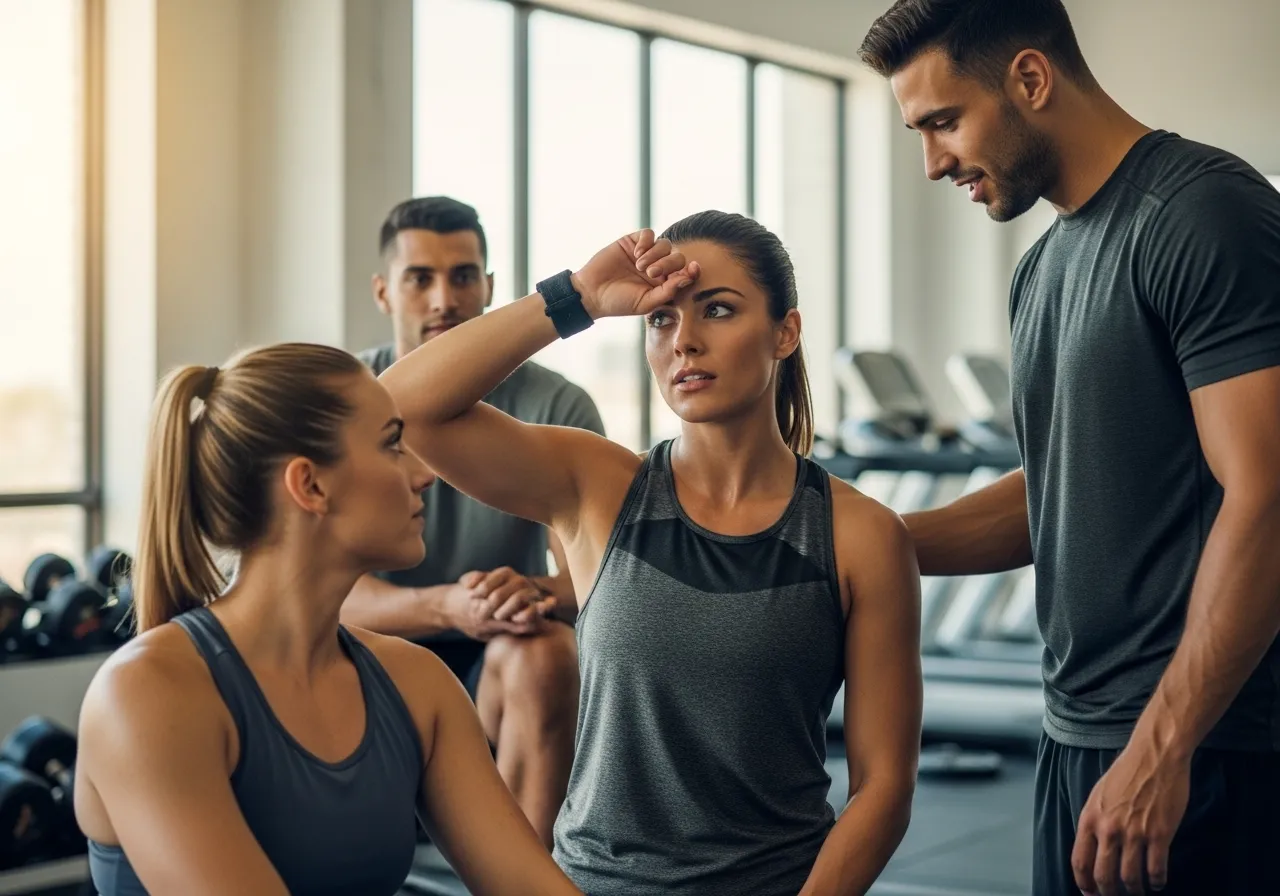
Asking for help in the gym is both more acceptable and more welcomed than gym anxiety makes it seem. Most experienced gym members and all gym staff genuinely want to help beginners — and the culture of the gym floor, despite its intimidating appearances, is broadly one of mutual support for people who ask.
The first time I asked a trainer for a form check I expected judgment and got genuine enthusiasm — most experienced gym-goers love talking about training.
Personal trainers or gym floor staff are the most obvious resource. Many commercial gyms include at least one free session with a personal trainer as part of membership — if yours does, use it. This session is specifically designed to orient beginners to equipment and technique, and the trainer’s entire job is to be helpful and non-judgmental. Even if you don’t continue with paid training, a single orientation session with a knowledgeable trainer can eliminate the uncertainty that drives most gym anxiety.
Asking experienced gym members for help requires a little more navigation, but is usually well-received when done appropriately. The key is timing: never interrupt someone mid-set, mid-rep, or with headphones in unless absolutely necessary. Wait until they’ve completed a set and are resting, make eye contact to confirm they’re approachable, and keep the request brief and specific. “Hey, quick question — is this the right setup for a Romanian deadlift?” is a completely normal gym interaction that most experienced members are happy to respond to.
What you should ask about: equipment setup and adjustment (seat height, cable position, bar placement), safe alternatives when an injury or limitation prevents a standard exercise, and basic programming questions like “what order should I do these exercises in?” What you don’t need to ask about: anything you can quickly look up on your phone. Bringing up YouTube for a quick form check before using unfamiliar equipment is completely normal and self-sufficient.
Group fitness classes offer a structured context for beginners that eliminates most of the navigation anxiety — the instructor tells you exactly what to do, when, and how. Good instructors actively watch for form issues in newcomers and offer corrections that are delivered supportively. The group environment normalizes imperfection. If gym floor anxiety is significant, starting with classes before transitioning to independent training is a legitimate and effective strategy.
Online communities — Reddit’s r/fitness, various Facebook groups, Instagram fitness communities — provide a low-stakes environment for asking questions that feel too embarrassing to ask in person. These communities field beginner questions constantly and the culture is generally supportive. Getting answers online before applying them in the gym reduces the uncertainty that drives in-gym anxiety.

Alternative Environments for Gym-Anxious Beginners
The traditional commercial gym is not the only environment for getting fit, and it may not be the right starting point for everyone. If gym anxiety is severe enough to prevent you from starting an exercise habit, the most pragmatic answer is to start somewhere else — and work toward the gym if and when it makes sense.
Starting with a women-only gym gave me the space to build confidence before transitioning to a mixed facility — there’s no rule that says you have to start in the hardest environment.
Home workouts have become significantly more viable in recent years. YouTube channels like Athlean-X, FitnessBlender, and countless others provide free, well-designed workout programs that require minimal equipment. A set of dumbbells, resistance bands, and a pull-up bar — available for under $100 total — covers an enormous range of effective exercises. Many people who start at home eventually transition to gyms once they’ve built basic fitness, familiarity with exercise patterns, and the habit infrastructure that supports consistent training.
Boutique fitness studios — yoga studios, Pilates studios, boxing gyms, cycling studios — often create more welcoming beginner environments than commercial gyms. The class structure eliminates the navigation problem. The smaller community creates more personal connections. Many people who feel overwhelmed by large commercial gyms thrive in smaller, specialized environments where the culture is more deliberately inclusive.
Outdoor exercise eliminates the social observation component entirely. Running, cycling, hiking, and outdoor calisthenics are all effective training modalities that involve no gym environment, no other people’s judgment, and no navigation of unfamiliar spaces. For people whose anxiety is primarily about the social environment of the gym, outdoor training can build fitness and confidence while completely bypassing the triggering context.
Virtual personal training has grown substantially, providing coaching, programming, and accountability without requiring gym attendance. Working with a trainer remotely to develop a home or outdoor program builds competence and confidence that eventually makes gym environments more accessible.
The research on exercise environments from the CDC’s physical activity guidelines is clear: the best exercise environment is the one you’ll actually use consistently. The objective superiority of any particular gym or training approach is irrelevant if anxiety prevents you from engaging with it. Start where you can start, build the habit, and expand your options from a position of established confidence.
Gym anxiety is not a character flaw, a permanent condition, or a reason to forgo fitness. It is a temporary response to unfamiliarity that resolves with exposure. Whether you address it directly by walking into the gym anyway, or indirectly by building fitness and confidence in lower-anxiety environments first, the trajectory leads to the same place: a sustainable exercise habit that improves your health, fitness, and quality of life.