The Best Workout Clothes for Maximum Performance
⚠️ Disclaimer: The information in this article is for general educational purposes only and does not constitute medical, nutritional, or professional fitness advice. Individual results may vary. Always consult a qualified healthcare professional or certified fitness trainer before starting any new exercise program, changing your diet, or making decisions about injury treatment or recovery. If you experience pain, discomfort, or any unusual symptoms during exercise, stop immediately and seek professional guidance.

Why Workout Clothes Actually Affect Your Performance (It’s Not Just Marketing)
I’ll be honest — for the first two years of serious training, I wore whatever cotton t-shirt and old basketball shorts were clean. I thought the idea that workout clothes affected performance was pure marketing invented to sell expensive gear. Then a training partner convinced me to try a moisture-wicking compression top during a particularly brutal summer conditioning session. The difference was immediate and undeniable. I wasn’t just more comfortable — I moved better, overheated less, and stayed focused longer. That experience sent me down a rabbit hole of the actual research on athletic apparel and performance, and what I found was more substantial than I expected. The science behind workout clothing and performance is real, even if it’s been exaggerated and commercialized beyond recognition.
The relationship between what you wear and how you perform operates through several distinct physiological and psychological mechanisms. Understanding these mechanisms helps you separate the genuinely performance-relevant clothing features from the marketing noise — and make smarter purchasing decisions that actually support your training rather than just looking good in gym selfies.
Thermoregulation: The Most Critical Performance Factor
Body temperature regulation during exercise is one of the most important determinants of performance, and workout clothing directly affects how effectively your body maintains optimal operating temperature. Core body temperature during intense exercise rises rapidly — the metabolic heat generated by working muscles must be dissipated through sweat evaporation, radiation, and convection to prevent the performance impairment and health risks associated with hyperthermia. Clothing that impairs this heat dissipation — thick cotton that absorbs sweat without evaporating it, tightly woven fabrics that prevent airflow, or dark colors that absorb radiant heat — directly impairs the thermoregulatory process and accelerates the rise in core temperature that degrades performance.
Research published through the NIH on thermoregulation and exercise performance demonstrates that even a 1°C rise in core body temperature above the optimal range (approximately 37–38°C) produces measurable reductions in muscular endurance, cognitive function relevant to sport performance, and perceived exertion — meaning the same workload feels harder at elevated core temperature. Clothing that supports efficient sweat evaporation and convective heat loss maintains core temperature closer to the optimal range for longer, directly supporting endurance and performance maintenance across longer training sessions.
The practical implication: fabric choice is not a cosmetic decision. Moisture-wicking synthetic fabrics (polyester, nylon, polypropylene blends) that move sweat away from the skin surface and promote evaporation outperform cotton in any training context where sweating is significant — which includes virtually all exercise above light walking intensity. The performance advantage of moisture-wicking fabrics over cotton is not a small marginal difference; in warm or humid conditions, it can be the difference between completing a workout comfortably and cutting it short due to overheating and discomfort.
Freedom of Movement and Range of Motion
Clothing that restricts joint range of motion directly impairs exercise performance on movements requiring full range. A squat performed in stiff denim jeans reaches a different depth than the same squat in flexible athletic tights — not because of motivation or technique differences, but because the fabric physically limits hip and knee flexion. While the denim example is extreme, even athletic apparel varies significantly in its stretch and mobility characteristics, and these differences affect the quality of movement in compound exercises, dynamic warm-up movements, and sport-specific patterns.
Four-way stretch fabrics — materials that stretch both lengthwise and widthwise — provide the greatest freedom of movement for athletic applications and are the standard for performance-oriented athletic wear. The percentage of elastane (spandex/Lycra) in a fabric blend determines its stretch capacity: blends with 15–25% elastane provide excellent four-way stretch while maintaining structural integrity and shape retention across repeated washing and wearing cycles. Fabrics with under 10% elastane in the blend typically lack sufficient stretch for demanding athletic movements, while fabrics with over 30% may sacrifice durability for elasticity. When evaluating athletic apparel for mobility, perform a simple range of motion test: perform a deep bodyweight squat, reach overhead, and bend at the hip in the clothing before purchasing. Any restriction or pulling indicates insufficient mobility for training use.
Psychological Effects: The “Enclothed Cognition” Phenomenon
Beyond the physiological mechanisms, workout clothing affects performance through psychological pathways that are now well-documented in behavioral science. The concept of “enclothed cognition” — the influence of clothing on the wearer’s psychological state and behavior — has been studied in multiple contexts, with research showing that wearing clothing associated with a particular role or identity activates the psychological characteristics associated with that identity. Wearing athletic apparel that you associate with performance and effort primes the athletic identity and the focused, effortful behavioral patterns that identity involves.
This is not simply a placebo effect — the behavioral consequences are real even if the mechanism is psychological rather than physiological. Athletes who dress in training-specific athletic wear report higher motivation to train, greater perceived readiness, and more focused training sessions than those who train in casual or repurposed clothing, even when all other variables are controlled. The pre-training ritual of changing into workout clothes serves as a behavioral cue that signals the transition from non-training to training mode — a function that casual clothing worn throughout the day cannot serve because it lacks the contextual specificity. This psychological mechanism is part of why experienced athletes often have specific training apparel that they wear only for training, never for casual use — preserving the cue value of the clothing for its intended behavioral context.
Chafing, Skin Irritation, and Physical Distraction
Physical discomfort from clothing — chafing seams, bunching fabric, waistbands that shift during movement, tops that ride up during overhead exercises — creates a consistent distraction from the training task that impairs focus, reduces session quality, and can cause acute discomfort that limits range of motion or movement intensity. Chafing in particular — the skin abrasion caused by repetitive fabric friction during running, cycling, or high-repetition circuit training — can be genuinely painful and becomes progressively worse across longer sessions, eventually limiting the distance or duration of training that can be completed before pain requires stopping.
Flat-lock seam construction — where seams lie flat rather than protruding — is the standard feature in quality athletic apparel for preventing chafe. Seams should be positioned away from high-friction contact zones (inner thighs for shorts and tights, underarm areas for tops, bra straps for sports bras) wherever possible. For endurance training specifically, anti-chafe positioning of seams and the use of smooth, low-friction fabrics against the skin in high-contact zones is a genuine performance feature rather than a comfort luxury — chafe that develops at mile 10 of a long run has real consequences for whether miles 11–13 get completed at planned intensity or walked in pain.
The Research on Clothing and Performance: What We Actually Know
The peer-reviewed research on athletic apparel and performance is more nuanced than either “clothing doesn’t matter” or “performance apparel is transformative.” What the evidence consistently supports: moisture-wicking fabrics maintain lower skin temperature and reduce perceived exertion during moderate-to-high intensity exercise in warm conditions compared to cotton; compression garments improve recovery from training and may modestly improve performance in specific contexts (discussed in detail in the compression section of this article); lightweight, close-fitting athletic apparel produces lower aerodynamic drag than loose, heavy fabrics in speed-dependent sports; and appropriately warm layering in cold conditions prevents the muscular stiffness and reduced neuromuscular performance that cold temperatures produce. What the evidence does not support: that any specific brand’s technology produces dramatic performance improvements beyond what any quality athletic apparel provides; that increasingly expensive gear produces proportionally better performance outcomes; or that clothing can compensate for inadequate training, nutrition, or recovery. The performance contribution of optimal athletic apparel is real but modest — a 2–5% improvement in performance-relevant metrics in the conditions where clothing choice matters most. This is meaningful at competitive levels but should be kept in perspective relative to the much larger performance variables of training quality, nutrition, and recovery.
The Cost-Performance Relationship in Athletic Apparel
One of the most practical questions about workout clothing is how much you need to spend to get the genuine performance benefits that the research supports. The honest answer is that diminishing returns set in quickly — the performance difference between a $30 moisture-wicking athletic top and a $120 version from a premium brand is negligible for most training applications. The $30 version provides the moisture management, four-way stretch, and flat-lock seam construction that deliver the evidence-supported performance benefits; the premium pricing typically reflects brand positioning, marketing investment, and aesthetic design rather than additional functional performance beyond the basics. Budget-conscious trainees can capture 90%+ of the performance benefit of athletic apparel by prioritizing the functional features — moisture-wicking fabric, adequate stretch, minimal friction seams, appropriate fit — rather than brand prestige or fashion appeal. Mid-range athletic brands (typically $25–60 per piece) consistently provide these functional features without the luxury brand premium. The exception where higher investment pays meaningful dividends: footwear. Running shoes, training shoes, and sport-specific footwear have evidence-supported performance and injury prevention differences between quality tiers that justify more selective investment than apparel categories. A $120 quality running shoe provides genuine biomechanical and cushioning features that a $30 knockoff cannot replicate — the reverse of the shirt and shorts calculus where mid-range performance matches premium brand performance closely.
The bottom line on workout clothing and performance: the functional features matter, the brand name largely doesn’t, and the difference between appropriate athletic apparel and inappropriate casual clothing is real and worth the modest investment in mid-range athletic gear that covers the basics. Shop for function first — moisture management, stretch, fit, seam placement — and let aesthetics be a secondary consideration. Within the functional criteria, virtually any mid-range athletic brand provides the performance support the research demonstrates is genuinely beneficial for training quality and session comfort.

The Best Fabrics for Exercise: What to Look For and What to Avoid
Fabric choice is the single most important variable in workout clothing selection, yet most people buy athletic apparel based on appearance or brand name without understanding what the fabric composition actually means for their training experience. The label on the inside of your gym shirt contains information that directly predicts how comfortable, functional, and durable the garment will be — and knowing how to read it makes the difference between a clothing purchase that enhances training and one that creates unnecessary discomfort session after session.
Polyester: The Workhorse of Athletic Fabrics
Polyester is the dominant fabric in modern athletic apparel, and for good reason — its properties align almost perfectly with the demands of exercise clothing. Polyester is hydrophobic (water-repelling at the fiber level), which means it doesn’t absorb sweat but instead allows moisture to pass through the fabric toward the outer surface where it can evaporate. This moisture-wicking behavior keeps the skin drier than cotton, which absorbs and holds moisture against the skin. Polyester is also lightweight, durable across repeated high-temperature washing, and resistant to the shape distortion that cotton experiences when repeatedly stretched and laundered. The main limitation of polyester is its tendency to retain odor-causing bacteria — the synthetic fiber provides a hospitable surface for the bacteria that produce post-exercise odor, which is why polyester gym wear requires thorough washing and benefits from antimicrobial treatments that many athletic fabrics now include.
Most quality athletic apparel uses polyester blends rather than 100% polyester — typically 85–90% polyester combined with 10–15% elastane (spandex/Lycra) for stretch. This combination provides polyester’s moisture management and durability alongside elastane’s four-way stretch and recovery, producing a fabric that moves freely with the body during exercise and returns to its original shape afterward. When evaluating athletic tops, shorts, or tights, a polyester-elastane blend in this composition range is the functional standard to look for.
Nylon: Superior Durability and Softness
Nylon is the premium alternative to polyester in athletic fabrics, offering several advantages that justify its typically higher price point. Nylon has better abrasion resistance than polyester — it wears more slowly under repeated friction and maintains its appearance and structural integrity through more wash cycles. Nylon also has a softer hand feel against the skin, which matters significantly for garments worn in high-contact zones (inner thighs for shorts and tights, under arms, around the bra band). Like polyester, nylon is hydrophobic and moisture-wicking, and it dries quickly after washing or sweating. The primary disadvantages: cost (nylon fabrics typically price 30–50% higher than equivalent polyester blends) and slightly lower elasticity in most constructions, though nylon-elastane blends (typically 80–85% nylon, 15–20% elastane) provide excellent stretch for athletic applications.
Nylon is particularly well-suited for: yoga pants and training tights where skin contact is maximized and softness matters; sports bras where comfort in constant contact with the skin is important; and outdoor athletic apparel where durability and abrasion resistance extend garment life significantly. For general gym training in lower-contact applications (tops, loose shorts), the performance difference between quality nylon and quality polyester is minimal and doesn’t justify the premium for most budgets.
Cotton: Why to Minimize It in Athletic Contexts
Cotton is the natural default for casual clothing and has a long history in athletic apparel — the classic cotton t-shirt has been gym wear since gyms existed. But cotton’s properties, which make it comfortable for casual wear, become liabilities in athletic contexts where moisture management is critical. Cotton is highly hydrophilic (moisture-absorbing) — it absorbs and retains sweat against the skin rather than allowing it to evaporate. A cotton shirt that is 8% of its weight in moisture (from sweating) feels damp and heavy; the same moisture content in a polyester shirt is barely detectable because the moisture has moved to the fabric’s outer surface and partially evaporated. In warm or humid training conditions, a saturated cotton shirt significantly increases the perception of effort and heat, impairs evaporative cooling, and creates the chafing risk of wet fabric rubbing against skin during movement.
The one context where cotton has legitimate athletic apparel value: low-intensity activities in cool, dry conditions where sweating is minimal — a slow yoga session in an air-conditioned studio, light stretching at home, or casual walking. In these contexts, cotton’s breathability and comfort against skin are genuine benefits without the moisture management penalty that higher sweating rates create. For any training that produces significant sweating — most strength training, cardio, HIIT, outdoor exercise in warm weather — moisture-wicking synthetic fabrics are categorically superior to cotton for performance and comfort.
Merino Wool: The Premium Natural Option
Merino wool occupies a unique position in athletic fabric options — it is a natural fiber with performance characteristics that challenge synthetic alternatives in specific applications. Fine-grade merino wool (fiber diameter under 18.5 microns) is soft enough for direct skin contact without the itching associated with coarser wools, and it has remarkable natural moisture management properties. Unlike cotton, merino wool can absorb up to 30% of its weight in moisture before feeling wet, and it continues to provide warmth even when wet — a property that synthetic fabrics do not share. Merino’s most distinctive property is its natural odor resistance: the fiber’s structure and natural antimicrobial properties resist the bacterial colonization that causes odor in polyester, allowing merino garments to be worn for multiple days of use without developing the distinctive synthetic gym wear smell that polyester accumulates within a single session.
Merino is best suited for: base layers in cold-weather training, hiking and outdoor endurance activities where multi-day wear without washing is common, and any application where odor management is a priority. Its limitations — higher cost (quality merino athletic apparel typically runs 3–5× the price of equivalent synthetic garments), more delicate washing requirements, and lower durability than synthetics under abrasive conditions — make it less practical for daily gym training than for specialized outdoor or travel applications where its unique properties provide value that synthetics cannot match.
What the Label Should Say: A Quick Reference Guide
When shopping for athletic apparel, the fabric composition label provides a quick quality filter. Optimal composition for most training applications: 80–90% polyester or nylon, 10–20% elastane — providing moisture management, durability, and stretch. Acceptable for low-intensity training: blends with up to 30% cotton alongside synthetics, which retain some moisture management from the synthetic component while providing the softness of cotton. Avoid for any significant training: 100% cotton, cotton-dominant blends (over 50% cotton), or any natural fiber-only composition. Look for: “moisture wicking,” “quick dry,” “four-way stretch,” and “flatlock seams” as label or marketing descriptors that indicate the functional features relevant to athletic performance. These terms are not regulated industry standards but reliably indicate that the manufacturer designed the garment with performance function as a priority — a reasonable proxy for the fabric and construction quality that the composition label alone cannot fully convey.
The research published in the Textile Research Journal on moisture-wicking fabric performance provides detailed technical comparison of athletic fabric types under standardized sweating and evaporation conditions, confirming that polyester and nylon blends consistently outperform cotton across all metrics relevant to athletic comfort and thermoregulation. This technical literature supports what practical training experience demonstrates anecdotally: the fabric choice matters, and the choice between moisture-wicking synthetics and cotton is not a marginal difference in quality but a categorical difference in how clothing behaves during exercise.
Antimicrobial Treatments and Odor Control Technologies
The most significant practical complaint about synthetic athletic fabrics is their tendency to develop persistent odor after repeated use — a problem that cotton, despite its inferior moisture management, does not share to the same degree. Manufacturers have addressed this through antimicrobial treatments applied to synthetic fabrics that inhibit the bacterial growth responsible for post-exercise odor. Silver-based antimicrobials (silver ions or silver nanoparticles embedded in or applied to the fiber) are the most common and most effective approach, with research supporting their efficacy in reducing the bacterial load on fabric after exercise. Zinc pyrithione and triclosan are alternative antimicrobial agents used in some athletic fabrics, though with varying durability through washing cycles.
The practical limitation of antimicrobial treatments: they degrade with repeated washing and typically lose meaningful efficacy after 20–50 wash cycles depending on the treatment quality and washing conditions. Heat drying accelerates this degradation — air drying synthetic athletic wear extends both antimicrobial treatment life and overall garment durability compared to machine drying at high heat. For odor management in synthetic athletic wear without antimicrobial treatments: washing promptly after use (before odor-causing bacteria have time to colonize the fabric), using sport-specific laundry detergents formulated to penetrate synthetic fiber structures, and avoiding fabric softener (which coats synthetic fibers and reduces both moisture management and antimicrobial efficacy) extend the useful life of synthetic athletic garments and reduce the persistent odor that makes older synthetic gym wear unpleasant to wear.
UV Protection in Outdoor Athletic Apparel
For outdoor training — running, cycling, hiking, outdoor sports — UV protection is a fabric feature with genuine health implications that warrants consideration alongside moisture management and stretch. Tightly woven or UV-treated fabrics carry an Ultraviolet Protection Factor (UPF) rating that quantifies how much UV radiation the fabric blocks. Standard athletic fabrics without UV treatment provide variable protection — white or light-colored loosely woven fabrics may provide UPF 5–15, while darker colors and tighter weaves provide UPF 25–50+. Purpose-designed UV-protective athletic apparel with UPF 50+ ratings blocks 98% of UV radiation and is particularly valuable for athletes training in high-UV environments (high altitude, tropical climates, snow-reflected UV). For regular outdoor training, this feature represents a meaningful skin health investment, particularly for athletes accumulating significant lifetime sun exposure through training and recreational activities.
Understanding fabric science doesn’t require becoming a textile engineer — it requires knowing the key features that matter for your training context and using that knowledge to filter purchasing decisions. Moisture-wicking synthetics for anything involving significant sweating, merino wool for odor-sensitive multi-day outdoor use, and appropriate UV protection for regular outdoor training covers the vast majority of athletic fabric decisions most people need to make. Apply these filters consistently and you’ll build an athletic wardrobe that genuinely supports training rather than working against it.

Top Workout Clothing Picks by Exercise Type
Different training modalities place different demands on clothing — the ideal outfit for a powerlifting session is very different from what works best for a 10-mile run or a hot yoga class. Understanding these exercise-specific requirements allows you to build a training wardrobe that is genuinely optimized for what you actually do, rather than a generic athletic wardrobe that performs adequately across everything but excellently at nothing.
Strength Training and Weightlifting Clothing
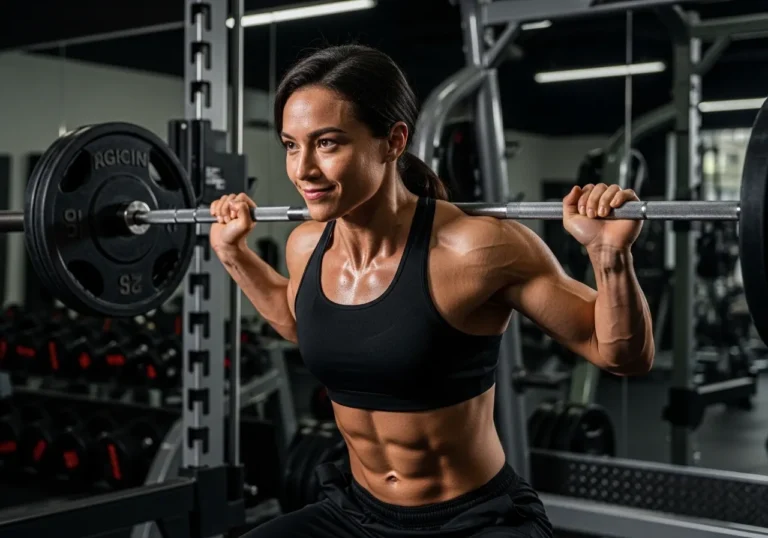
Strength training in a gym environment requires clothing that allows full range of motion through deep squats, hip hinges, overhead presses, and horizontal pulls — while providing enough coverage and structural integrity to remain functional under load. The key features for gym strength training: four-way stretch for unrestricted movement through all planes; a close but not compressive fit for tops (to avoid bunching under a bar during squats) while allowing slight looseness through the shoulder for overhead pressing range; and short or knee-length shorts or training tights (capris or full-length) for lower body training without the restriction or chafing risk of longer shorts during squatting and leg work.
For powerlifting specifically — where maximal loads in competition lifts (squat, bench, deadlift) are the goal — technical singlets, knee sleeves, and belt positioning create specific requirements for the clothing worn underneath. Training in similar proportions to competition equipment (not wearing bulky gym clothes that would be absent in competition) produces more accurate feedback on the movement patterns you’re developing. Many serious powerlifters train in form-fitting compression shorts or tights and a close-fitting top specifically to get accurate proprioceptive feedback on bar position and body alignment without the information distortion of loose fabric.
Footwear for strength training deserves specific attention: flat-soled shoes (Converse Chuck Taylor, Vans, or purpose-built weightlifting shoes) provide the stable, non-compressible base that heavy squatting and deadlifting require. The cushioned, compressible soles of running shoes create an unstable base under heavy load that impairs force transfer and can contribute to ankle instability under maximal loads. Olympic weightlifting shoes (with a raised heel of 0.75–1 inch) improve squat mechanics for athletes with ankle mobility limitations by reducing the dorsiflexion required for upright torso positioning in the squat. The footwear choice for strength training has more measurable impact on performance than almost any clothing choice.
Running Apparel: Built for Miles
Running creates specific clothing demands that other training modalities don’t: extended duration (more sweat accumulation and more chafing potential), repetitive lower body motion (requiring shorts or tights that stay in position without bunching or riding up), and often variable outdoor weather conditions (requiring layering capability and sometimes wind or water resistance). The essential running wardrobe: moisture-wicking shorts or tights with a secure waistband that stays in position during running stride without requiring adjustment; a moisture-wicking, lightweight top with flat-lock seams in underarm and shoulder areas where chafing is most common; and running shoes matched to your foot strike pattern and gait, with appropriate cushioning for the distances you’re running.
Running shorts length preferences vary by personal comfort and running style, but the most commonly performance-relevant consideration is inner thigh chafing — a significant problem for runners whose thighs make contact during stride. Split-leg running shorts (very short, with a split side seam) or compression liner shorts inside slightly longer running shorts prevent inner thigh contact while providing the ventilation and freedom of movement that traditional gym shorts don’t offer. Running tights eliminate inner thigh chafing entirely through full-length coverage and are preferred by many runners, particularly in cooler conditions where the warmth benefit adds to the chafe prevention advantage.
For cold-weather running, layering strategy is as important as individual garment selection. A moisture-wicking base layer against the skin (polyester or merino wool), a mid-layer insulator for temperatures below 45°F (a lightweight fleece or thermal long-sleeve), and a wind-resistant outer layer for windy or wet conditions creates a system that can be adjusted as body temperature rises during the run. Over-dressing for cold-weather running is a common mistake — the target is feeling slightly cool at the start, because the first mile of running will generate enough body heat to bring you to comfortable temperature if appropriately layered. Feeling perfectly comfortable at standstill in cold-weather running clothes typically means over-dressing that will produce uncomfortable overheating by mile 2.
Yoga and Mobility Training Clothing
Yoga and mobility training require the highest degree of multi-directional stretch and body-conforming fit of any training modality — poses involve extreme range of motion positions including deep hip flexion, spinal extension and rotation, shoulder external rotation at end range, and inverted positions that all create maximum stretch demands on clothing. The non-negotiable feature for yoga apparel is four-way stretch with high elastane content (20–30%) that maintains full freedom of movement without restriction at any point in the range of motion.
Fit is particularly important for yoga — loose, flowing clothing creates a trip hazard in balance poses, bunches uncomfortably in inversions (downward dog with a loose top falling over the face is both distracting and functional impairment), and obscures the teacher’s or your own view of body alignment that is important for technique feedback. Form-fitting yoga-specific clothing — tights with a high waistband that stays in position through forward folds, tops that stay tucked or cropped to remain above the waistline — is the practical standard for yoga practice rather than an aesthetic preference.
HIIT and Cross-Training Clothing
High-intensity interval training and cross-training sessions combine the demands of multiple modalities — the range of motion requirements of strength training, the sweating intensity of cardio, and often the lateral movement and agility demands of sport-based conditioning work. The cross-training clothing requirement: maximum versatility. Shorts or tights with four-way stretch and a non-slip waistband that stays in position during burpees, box jumps, and lateral shuffles; a moisture-wicking top with enough structure to stay in place during dynamic movements; and cross-training shoes with lateral support (running shoes lack the lateral stability for side-to-side cutting movements and can contribute to ankle rolling risk).
Sports bras for women performing HIIT deserve specific attention — inadequate breast support during high-impact activity causes discomfort, movement restriction as the wearer compensates to reduce bounce, and long-term ligament stress in the Cooper’s ligaments that support breast tissue. High-impact sports bras (rated for running and jumping activities, not just yoga or walking) with encapsulation design (individual cups rather than compression-only) provide the most effective support for high-impact cross-training. Proper sports bra fit — snug but not restrictive band, cups that contain without spillage, straps that don’t slide — is as important as design category for achieving the intended support level.
Cycling Apparel: Why the Chamois Matters
Cycling creates some of the most specialized clothing requirements in any sport — the combination of sustained saddle contact, extended duration, and the specific aerodynamic demands of road cycling have produced a category of athletic apparel that is among the most technically developed. The defining feature of cycling-specific shorts and bibs is the chamois (pronounced “shammy”) — a padded insert positioned at the saddle contact points that reduces pressure, wicks moisture, and prevents the chafing that makes cycling in non-specific shorts genuinely painful after 45–60 minutes. Quality chamois design (appropriate thickness and density for the cycling duration and saddle type, seamless construction in the contact zone, antimicrobial treatment) makes the difference between comfortable cycling and session-ending discomfort on longer rides.
Cycling jerseys are designed with a close aerodynamic fit, rear pockets for on-ride nutrition and gear storage, and full-length front zippers for ventilation management. The close fit reduces aerodynamic drag meaningfully at speeds above 15mph — at lower speeds and for casual riding, a standard moisture-wicking athletic top performs adequately without the specific investment in cycling apparel. For anyone cycling regularly at performance intensity or distances over 1 hour, cycling-specific shorts with a quality chamois are a genuine performance and comfort investment rather than an optional upgrade.
Cold Weather Training: Layering Done Right
Cold weather training requires a layering system rather than a single garment choice. The three-layer system: a moisture-wicking base layer against the skin (polyester or merino wool) that moves sweat away from the skin even as the outer layers trap warmth; a thermal mid-layer (fleece or thermal fabric) that provides insulation while retaining some breathability; and a wind-resistant outer layer (windbreaker or light shell) that blocks convective heat loss from wind exposure. The key error in cold-weather layering is using cotton as any layer — cotton’s moisture retention becomes genuinely dangerous in cold conditions, where wet-cotton hypothermia risk during endurance activities is real. All layers in a cold-weather training system should be synthetic or merino wool. Starting slightly underdressed relative to the standing temperature and allowing body heat from exercise to bring you to comfortable temperature within the first 10–15 minutes produces more comfortable training than overdressing and overheating progressively as the session continues.
Swimming and Water Sports Apparel
Competitive swimming apparel — tech suits, performance swimwear — represents perhaps the most research-driven athletic apparel category, with documented performance differences between suit types measurable in competition timing. For recreational lap swimming and water-based training, the key clothing considerations are simpler: chlorine-resistant fabric construction (standard polyester degrades quickly in chlorinated pool water; polyester-PBT blends or nylon maintain shape and color through many more pool hours), appropriate compression for hydrodynamic efficiency during competitive or performance-oriented swimming, and fit that prevents drag-creating water pockets or suit displacement during turns and push-offs. Open-water swimming adds UV protection and thermal management considerations — wetsuits for cold water below approximately 65°F provide both buoyancy assistance and thermal insulation that make longer open-water sessions physiologically feasible. For most recreational pool swimmers, a quality chlorine-resistant training suit (not a fashion swimsuit, which lacks the durability and fit for regular pool use) is the primary clothing investment, with competitive-oriented swimwear reserved for those whose performance goals justify the higher cost and limited durability of tech suit fabrics.

Fit, Compression, and Support: Getting the Details Right
Fabric selection determines potential performance; fit and construction details determine whether that potential is realized in actual training. Clothing that uses premium fabrics but fits poorly or lacks appropriate support elements underperforms simpler clothing that fits correctly for the specific training application. Understanding the performance implications of fit, compression level, and support construction allows more informed clothing selection beyond the fabric label.
Finding the Right Fit for Different Body Types and Training Styles
Athletic clothing fit spans a spectrum from compressive (tight against the body with minimal slack) to relaxed (considerable slack between fabric and body). Neither extreme is universally superior — the optimal fit depends on training type, personal preference, and body type. For strength training with barbell contact, a moderately fitted but non-compressive top avoids the bunching and restriction of too-loose fabric while preventing the skin irritation of too-tight fabric against a barbell. For running, a fitted top that doesn’t restrict arm swing and doesn’t billow in wind minimizes aerodynamic drag and chafe at the underarm seam. For yoga, compression-level fit on lower body garments prevents movement and opaque fit issues while fitted but not compressive tops allow movement without distraction.
Body type considerations are underemphasized in generic athletic clothing advice. People with broader shoulders than standard sizing anticipates may find that tops fitting in the chest are too tight in the shoulders — restricting overhead range of motion that a custom or size-up-in-the-shoulders solution would prevent. People with larger thighs relative to waist may find that pants fitting in the waist gap at the thigh — requiring stretching in thigh areas that compromises durability. Brands that offer different sizing options for different body proportions (athletic fit, standard fit, training fit in the same nominal size) address these common fit challenges that single-size-per-measurement approaches cannot.
Compression Garments: Performance vs. Recovery Applications
Compression garments — tights, shorts, and sleeves that apply graduated mechanical pressure to underlying tissues — serve different functions depending on whether they are worn during training or during post-exercise recovery. During training, compression improves proprioception (the body’s awareness of limb position), reduces muscle oscillation during impact activities, provides mild support to soft tissues that can reduce perceived fatigue, and creates a tactile feedback that some athletes find improves movement quality. Research in the Journal of Strength and Conditioning Research shows modest but consistent performance benefits from compression garments during high-intensity exercise — primarily in endurance capacity and perceived exertion rather than peak strength outputs.
During recovery, compression garments improve venous return (the return of blood from the extremities to the heart), reduce post-exercise edema (swelling from fluid accumulation in exercised tissues), and have documented benefits for delayed onset muscle soreness reduction in multiple studies. The recovery benefits of compression are better established than the during-exercise performance benefits — wearing compression tights for 12–24 hours after a hard lower body session consistently produces faster DOMS resolution than no compression in research settings. Athletes who use compression primarily for recovery can use tighter, higher-pressure garments than during-exercise compression because the comfort and range-of-motion demands are lower in a recovery context.
Compression level is measured in mmHg (millimeters of mercury) — the same pressure unit used for blood pressure measurement. Light compression (8–15 mmHg) provides mild proprioceptive benefit and is comfortable for all-day wear. Moderate compression (15–20 mmHg) provides meaningful training performance benefits and is the level found in most sports compression tights. Firm compression (20–30 mmHg) is used in medical-grade recovery garments and advanced sports recovery wear. Very few recreational athletes need firm compression during training — moderate compression provides the majority of the available performance benefit without the discomfort of higher pressures during intense exercise.
Sports Bra Support: Performance and Injury Prevention
Sports bra selection for women is a performance and comfort variable that receives insufficient technical attention relative to its training impact. Inadequate breast support during high-impact training creates pain and discomfort that limits training intensity, impairs running mechanics through the compensatory movement patterns adopted to reduce breast movement, and over long training careers may contribute to Cooper’s ligament stretching that produces permanent breast tissue changes. Research on sports bra performance and training quality consistently shows that higher-support sports bras improve running economy, reduce upper body compensatory movement, and increase the intensity women are willing to sustain during cardiovascular exercise.
Sports bra support levels broadly divide into: low support (compression bras suitable for yoga, pilates, and low-intensity training), medium support (encapsulation or combination bras for cycling, strength training, and moderate-intensity cardio), and high support (encapsulation bras with structured cups for running, HIIT, and high-impact activities). The support level needed scales with both training intensity and cup size — a woman with a small cup size can use lower support levels at higher intensities than someone with a larger cup size whose breast tissue requires more substantial mechanical support at the same intensity. Fitting for sports bras requires the same care as fitting for regular bras — band and cup size both matter, and the best sports bra is one that fits correctly in both dimensions.
Waistbands, Seams, and Construction Details That Matter
The construction details of athletic clothing that most directly affect performance during training are often invisible in product descriptions but immediately apparent in use. Waistband design on shorts and tights determines comfort during exercises with intra-abdominal pressure changes — a narrow, hard waistband digs painfully into the abdomen during heavy squats and deadlifts, while a wide, soft waistband distributes pressure across a larger area and remains comfortable through high-intra-abdominal-pressure exercises. Drawstring waistbands that allow circumference adjustment are more versatile than fixed-circumference waistbands for athletes whose waist measurement doesn’t align with standard sizing increments.
Seam placement and construction at high-contact points determines chafe resistance across high-repetition training. Inner thigh seams in shorts and tights are the highest-stakes seam for chafe risk — a poorly placed or raised seam in this location becomes increasingly irritating with every running stride or squat repetition. Flat-locked seams (where the seam allowance is stitched flat to the fabric rather than raised away from it) dramatically reduce seam friction at all contact points. Seamless construction at the inner thigh, using knitting techniques that eliminate seams entirely in this area, represents the premium solution that many high-quality athletic tights now employ. Pocket placement and security, while primarily functional rather than performance-related, affects whether a training session includes the frustration of items falling out of unsecured pockets — a small but genuine quality-of-training concern for runners and HIIT athletes who carry phones or keys.
The Long-Term Investment Perspective on Athletic Clothing
Framing athletic clothing as an investment rather than an expense changes the cost-per-use calculation that makes quality clothing appear expensive. A $120 pair of quality compression tights that maintains its compression and fabric integrity for three years of twice-weekly wear has a cost-per-use of approximately $0.38. A $40 pair of budget tights that loses meaningful compression and shape after six months of the same use has a cost-per-use of $0.38 as well — but requires replacement three times as often and provides inferior performance during each use. The quality option delivers better performance AND equivalent total cost over the same period. This calculation changes at different price and durability points, but the principle holds: evaluating athletic clothing on upfront cost without considering performance quality and longevity consistently underestimates the value of quality construction. Buying two or three quality pieces that perform well and last is almost always more economical and more performance-beneficial than buying five or six cheaper pieces at the same total spend.

Building a Functional Workout Wardrobe on Any Budget
Quality workout clothing doesn’t require a luxury budget. The performance principles described in this article can be achieved at a range of price points through informed purchasing decisions that prioritize the specific features that matter for your training over brand prestige or fashion trends. Building a functional workout wardrobe is an investment with meaningful return on training quality, but it doesn’t need to be an expensive one.
The Essential Capsule Workout Wardrobe
A fully functional workout wardrobe for most training schedules requires fewer pieces than most people expect. For someone training 3–5 days per week: three to four moisture-wicking training tops (allowing for laundry between sessions), two pairs of training bottoms appropriate to the primary training type, one pair of appropriate training shoes, three to four pairs of athletic socks, and one sports bra per training day for women (bras require daily washing to maintain support structure). This capsule wardrobe covers all training sessions without the repetition that demotivates, can be laundered efficiently on a weekly basis, and represents a total investment that is achievable at virtually any clothing budget level through appropriate brand and retailer selection.
Priority purchasing order for building this wardrobe from scratch: shoes first (the highest-impact performance item, as wrong footwear actively undermines training mechanics and injury risk), then training bottoms (direct skin contact over large body surface area, chafe risk highest, range of motion most affected), then sports bras for women (support directly affects training quality and comfort), then training tops (lowest impact on performance relative to the other items, most room for budget compromise). This priority sequence ensures that limited budgets are allocated to the highest-performance-impact items first.
Budget vs. Premium: Where the Difference Matters
The performance difference between budget and premium workout clothing is not uniform across all garment types. Where the premium price is most justified: training shoes (durability, support technology, and fit quality differences are significant and directly affect injury risk), compression tights (fabric quality determines how well compression and shape are maintained over time), and sports bras (support structure quality determines both effectiveness and longevity). Where budget options perform comparably to premium: basic moisture-wicking t-shirts (the performance of moisture-wicking polyester is not significantly improved by luxury pricing beyond a basic quality threshold), training shorts (fit and fabric are the key variables, not brand prestige), and basic athletic socks (technical construction matters more than brand at equivalent price points).
Specific budget-friendly sources that provide genuine performance quality: Costco, Target (All in Motion), Amazon Essentials athletic line, and discount athletic retailers all carry moisture-wicking polyester and nylon-spandex garments that meet the technical performance requirements described in this article at significantly lower price points than name-brand equivalents. Outlet stores for premium athletic brands (Nike Clearance, Adidas Outlet, Under Armour Outlet) offer genuine performance products at 40–60% discounts from retail. End-of-season sales from quality brands provide another high-value purchasing window. The goal is performance specifications at the most accessible price — brand marketing has limited correlation with actual performance once the basic technical requirements (moisture-wicking, 4-way stretch, appropriate construction) are met.
Caring for Athletic Clothing to Maximize Longevity
Proper athletic clothing care significantly extends the functional lifespan of quality garments — particularly the stretch and moisture-wicking properties that degrade with improper washing. Key care principles: wash synthetic athletic wear in cold water (hot water degrades spandex elasticity and can set odors into synthetic fibers), use a gentle cycle or hand wash for compression garments (aggressive agitation causes fiber stress that accelerates elasticity loss), avoid fabric softener entirely (softener coats synthetic fibers and significantly reduces moisture-wicking performance — a treated garment feels soft but loses the wicking capability that makes it functional athletic wear), and air dry whenever possible (dryer heat degrades spandex at accelerated rates — hang drying extends compression garment life by 2–3x compared to regular machine drying).
Odor management in synthetic athletic wear is a persistent challenge because synthetic fibers provide better attachment sites for odor-causing bacteria than natural fibers. Pre-soaking in diluted white vinegar before washing, or using sports-specific detergents that contain enzymes targeting the specific bacteria responsible for athletic odor, addresses the bacteria at the source rather than simply masking the smell. Athletic-specific detergents (Tide Sport, Hex Performance) are formulated for the specific challenges of synthetic athletic fabrics and are worth the modest price premium for heavily used training clothing.
Seasonal Wardrobe Adjustments
Training clothing requirements change significantly with seasons for athletes who train outdoors or in facilities with variable temperature control. Building seasonal variations into the workout wardrobe rather than trying to manage all temperature conditions with a single set of clothing produces better training experiences and protects against the comfort and safety issues of training in inappropriate clothing. Summer additions: lightweight, high-ventilation options for outdoor training; moisture-wicking caps for sun protection; UV-protective fabrics for extended outdoor sessions. Winter additions: base layer thermal tops and tights for outdoor training; wind-resistant outer layer; thermal gloves and hat for extremities that lose heat disproportionately during outdoor cold-weather training. These seasonal additions don’t require replacing the core wardrobe — they supplement the year-round pieces with weather-specific items that expand the conditions under which comfortable, safe training is possible.
Specific Product Categories Worth Investing In
Within the workout wardrobe, certain product categories deliver the highest return on investment for most training profiles. Training shoes — particularly activity-specific shoes for the primary training type — produce more measurable performance and injury-prevention benefit per dollar than any other clothing investment. A $120–150 activity-appropriate shoe outperforms a $60 general athletic shoe in a way that a $120 performance top rarely outperforms a $40 basic moisture-wicking alternative. Compression tights for lower body training are the second highest-return investment — the combined benefits of muscle support, proprioceptive improvement, and chafe prevention during lower-body-intensive training produce daily quality-of-training improvements that justify their cost. Sports bras for women are third — support quality directly affects training comfort and intensity in a measurable way that lower-quality options cannot replicate regardless of price management. These three investment priorities — shoes, compression tights, and sports bras — are where athletic clothing budget is most efficiently allocated for training performance.
Technology Integration in Modern Athletic Wear
The newest frontier in athletic clothing performance is technology integration — garments with embedded sensors that monitor heart rate, muscle activation, movement quality, or environmental conditions during training. Smart clothing that provides biometric feedback without the need for separate wearable devices represents a genuinely new performance tool category. Hexoskin biometric shirts monitor heart rate, breathing rate, and activity; Athos compression garments include EMG sensors that monitor muscle activation patterns during exercise; and various brands have introduced UV-monitoring and temperature-regulating technologies. The practical maturity of these technologies varies — heart rate monitoring in garments is now reliable and competitively priced, while EMG-based muscle activation monitoring remains expensive and primarily research-grade. For most recreational athletes, the performance improvements available from optimizing clothing fabric, fit, and construction basics are larger than those available from technology-integrated garments at current price points. Technology integration is a meaningful future direction for athletic wear, but optimizing the fundamentals described in this article remains the higher priority for immediate performance improvement.

Common Mistakes and Frequently Asked Questions
After covering the research and practical recommendations for workout clothing selection, addressing the most common mistakes and questions provides the practical troubleshooting guide that helps translate these principles into better real-world clothing decisions.
The Five Most Common Workout Clothing Mistakes
Mistake 1: Training in cotton. As discussed throughout this article, cotton’s moisture retention actively impairs training performance through heat accumulation, increased chafe risk, and the distracting discomfort of wet, heavy fabric. Replacing cotton training tops and bottoms with basic moisture-wicking synthetics is the single highest-impact clothing change most people can make, and the cost difference between cotton and synthetic athletic wear is negligible at most retail price points.
Mistake 2: Wrong shoes for the training type. Running shoes for strength training, casual sneakers for running, and fashion athletic shoes for any serious training all compromise training mechanics and injury risk in ways specific to the mismatch. Maintaining at least two training shoe categories — a stable flat or minimal shoe for lifting, and a cushioned running shoe for cardiovascular training — prevents the compromise of using a single shoe for all training types. The investment in appropriate footwear for specific training demands is among the highest-return athletic equipment investments available.
Mistake 3: Prioritizing fashion over function. The athletic wear market has become dominated by fashion considerations — colors, patterns, brand logos, and aesthetic trends — at the expense of functional performance features. The most fashionable workout outfit at a given moment is not necessarily the most functional one. Evaluating clothing against the performance criteria described in this article (fabric type, moisture management, range of motion, appropriate fit) rather than aesthetic criteria produces better training experiences. Looking good while training is a completely legitimate goal — but it should be achieved through clothing that also performs well, not at the expense of performance.
Mistake 4: Wearing compression garments that are too tight. Compression that is significantly tighter than the moderate 15–20 mmHg range impairs circulation rather than supporting it, creates discomfort that distracts from training, and can restrict breathing during high-intensity work. If a compression garment leaves marks on the skin after wearing, causes numbness or tingling, or feels restrictive during training, it is too tight for training use. Saving ultra-high-compression garments for post-workout recovery use rather than wearing them during intense exercise addresses this common error.
Mistake 5: Neglecting sock and underwear selection. The clothing items closest to the skin have disproportionate impact on comfort and chafe prevention relative to their size. Technical athletic socks and moisture-wicking underwear (for men) or moisture-wicking briefs under training shorts (for women who prefer briefs under shorts) prevent the moisture accumulation and friction at high-contact skin areas that cause the most training-disruptive discomfort. These small-item investments produce large comfort returns at minimal cost.
Frequently Asked Questions About Workout Clothes
Do I need different shoes for different types of training? Ideally, yes. The biomechanical demands of running (cushioned heel, forward propulsion optimization), strength training (flat, stable platform, minimal compression), and court or lateral sports (lateral support, torsional stability) are different enough that shoes optimized for one type actively compromise performance in the others. At minimum, maintaining separate shoes for running and lifting produces meaningful performance and injury-prevention benefits. A single cross-training shoe that performs adequately at both (not optimally at either) is a reasonable compromise for athletes on a constrained footwear budget.
Does expensive workout clothing actually perform better? Above a basic quality threshold, price has diminishing correlation with performance. The most important performance variables — moisture-wicking fabric, appropriate fit, quality construction — are available at moderate price points from multiple brands. Premium pricing in athletic wear largely reflects brand prestige, fashion positioning, and marketing investment rather than additional performance technology. Research the specific technical features (fabric composition, construction details, moisture management claims) rather than price as the primary performance indicator.
How often should I replace workout clothing? Compression garments lose meaningful compression after 6–12 months of regular use as spandex elasticity degrades. Moisture-wicking tops and shorts maintain their performance properties longer — typically 1–2 years of regular use before the wicking performance noticeably degrades. Shoes have the most well-established replacement timeline: running shoes should be replaced every 300–500 miles; strength training shoes, which experience less compressive loading, can last 2–3 years of regular use. Signs that clothing needs replacement: the stretch has become baggy and non-returning, moisture-wicking garments feel wet and heavy during training (lost wicking capability), or compression garments no longer provide the tactile compression sensation that characterizes their function.
What should I wear for a gym trial session or first gym visit? For a first gym visit, prioritize comfort and range of motion over performance optimization. Any moisture-wicking athletic top (even basic polyester), comfortable training bottoms with adequate stretch for squatting movements, and athletic shoes with flat or minimal heel drop work adequately for introductory training. The performance gains from optimized athletic clothing are meaningful over months of regular training but are negligible for a single introductory session — focusing on what feels comfortable and allows movement freedom rather than matching specific technical recommendations is the right priority for the first visit. As training becomes regular, the clothing recommendations in this article become increasingly relevant and worth the investment.
Is there specific clothing that helps with weight loss? Clothing does not directly cause weight loss. Claims about “sweat suits” or non-breathable compression garments accelerating fat loss by increasing sweat production are scientifically unsupported — sweat loss represents water weight that is immediately replaced upon rehydration, not fat tissue reduction. The indirect relationship between clothing and weight loss is through training quality: clothing that improves comfort, reduces distraction, and allows better movement quality supports higher training intensity and consistency, which does support caloric expenditure and body composition improvement over time. The best “weight loss clothing” is the clothing that makes training most comfortable and sustainable — which is exactly the moisture-wicking, well-fitted athletic wear described throughout this article.
Making Your Clothing Work for Your Specific Training Goals
The final practical consideration in building a workout wardrobe is aligning clothing choices with specific training goals rather than generic athletic wear recommendations. Someone training primarily for powerlifting competition has different clothing priorities than someone training for a marathon, a physique competition, or general health and fitness. The powerlifter needs flat-soled shoes, high-socks for deadlift shin protection, a belt-compatible training top, and potentially knee sleeves and wrist wraps as supportive equipment that falls in the boundary between clothing and equipment. The marathon runner needs high-mileage shoes with appropriate heel-to-toe drop for their gait pattern, anti-chafe long-run tights, technical socks, and weather-appropriate layering options. The physique competitor needs posing trunks or suit, practice posing attire that allows visual assessment of muscle development, and high-quality training clothing that photographs well for progress documentation. Each goal creates a specific clothing profile that generic athletic wear recommendations don’t fully address. Identifying your specific training goals and the clothing requirements they create, then building the wardrobe to meet those specific requirements rather than a generic “fitness” profile, produces the best return on athletic clothing investment for your particular training context.
Putting It All Together: Your Workout Clothing Action Plan
The research and practical recommendations in this article converge on a clear action plan for building a workout wardrobe that genuinely supports training performance. Start by replacing any cotton training tops with basic moisture-wicking polyester alternatives — this single change produces the most immediate and universal comfort improvement for the lowest cost. Invest in activity-appropriate shoes for your primary training type, accepting that the right footwear for lifting is different from the right footwear for running and that trying to use one shoe for both compromises performance in both. Build the lower-body wardrobe around 4-way stretch fabrics that allow full range of motion for your primary training patterns — squat-depth hip flexion for strength trainers, full hip extension stride for runners, full hip opening for yoga practitioners. Add compression tights as the first premium item in the wardrobe, selecting a moderate 15–20 mmHg compression level that provides performance benefits during training and recovery benefits after. Build out the wardrobe with additional tops and socks to cover your weekly training frequency without requiring laundering between every session. Review the wardrobe seasonally and add weather-specific items as training moves outdoors or temperatures change significantly. And most importantly, wear the clothing regularly in training rather than preserving it for special occasions — workout clothing only delivers its performance benefits when it is actually worn during training sessions where those benefits matter. The wardrobe you build following these principles will make every training session more comfortable, more effective, and more enjoyable — a compounding investment in training quality that pays returns with every session across years of consistent training.

Workout Clothing Care, Longevity, and Frequently Asked Questions
The most expensive athletic wear loses its performance properties quickly if cared for incorrectly, while even budget athletic wear maintains its functionality for years with appropriate laundering and storage practices. Understanding how to care for performance athletic fabrics extends the lifespan of your training wardrobe and maintains the functional properties that justify the purchase in the first place.
Washing Performance Athletic Wear Correctly
The most common mistakes in washing athletic wear that accelerate functional degradation: washing with fabric softener (fabric softener coats the fibers of moisture-wicking fabrics with a hydrophobic waxy layer that impairs the wicking action, progressively destroying the moisture management property of performance fabrics over multiple washings); washing in hot water (heat degrades the elastic properties of spandex content and can cause heat-set wrinkling in synthetic fabrics that permanently alters their appearance); and machine drying on high heat (the most damaging laundry practice for athletic wear — heat degrades spandex dramatically, causes polyester to pill, and can cause shrinkage in fabrics with cotton content). The correct protocol: cold water wash, no fabric softener, and air drying or tumble dry on the lowest heat setting. Turning garments inside out before washing reduces surface pilling and preserves print and color integrity.
Odor management in performance athletic wear requires specific attention beyond standard laundering because the bacterial biofilm that causes persistent odors in polyester fabrics is more resistant to standard detergent than the odors that cotton fabrics produce. Specialized sports wash detergents (Hex Performance, WIN Sports Detergent, Defunkify) contain enzymes that break down the bacterial biofilm more effectively than standard detergents. An alternative home remedy: soaking odor-affected garments in a mixture of cold water and white vinegar (1 cup vinegar per gallon water) for 30 minutes before washing neutralizes many persistent athletic odors that standard detergent cannot remove. Washing athletic wear promptly after training — not allowing sweat-damp garments to sit in a gym bag for days before laundering — prevents the bacterial biofilm from establishing the deep colonization that makes odors difficult to remove.
When to Replace Athletic Wear
Performance athletic wear should be replaced when it has lost the functional characteristics that make it appropriate for training — not simply when it looks worn or when a new colorway is released. Specific replacement indicators: compression garments that have lost their compression (the fabric no longer feels firmly supportive during movement, or the garment is loose and shifting during exercise); moisture-wicking shirts that have developed persistent odors that survive laundering (bacterial biofilm has colonized the fabric beyond the point where cleaning restores it to an acceptable state); shoes that have lost their cushioning (the midsole foam is visibly compressed and no longer rebounds, or the training sessions in those shoes produce more joint fatigue and impact discomfort than they used to); and any garment that has developed tears, holes, or seam failures that affect either function or safety during training. Aesthetic wear — fading colors, minor pilling, small blemishes — is not a functional replacement indicator unless the aesthetic degradation creates training distraction or self-consciousness that impairs training focus.
Storage and Organization for Training Gear
Storing athletic wear correctly between sessions extends its lifespan and makes training preparation faster and more automatic. Designated storage for clean, folded or hung athletic wear — separate from casual clothing — makes training gear immediately accessible when the training window opens, removing the preparation friction that can contribute to missed sessions. Hanging compression garments rather than folding prevents the crease-set that can affect the compression characteristics of tightly fitted items. Storing shoes with cedar shoe trees or crumpled newspaper absorbs residual moisture and helps them maintain their shape between sessions. These small organizational habits take minutes to establish and provide ongoing benefits in gear longevity and training preparation efficiency.
Frequently Asked Questions About Workout Clothes
Does expensive workout clothing actually perform better? In specific categories, yes — compression garments, footwear, and weather-protection outerwear show meaningful performance differences between budget and premium options that justify higher prices for athletes who use these items extensively. For basic training shirts and shorts, the performance difference between budget and premium is primarily aesthetic and durability-related rather than functional during training. Allocate premium budget toward the categories where it matters most.
Can I wear running shoes for weightlifting? Running shoes are among the worst options for weightlifting due to their thick, cushioned, compressible midsoles. The cushioning that absorbs impact forces during running creates an unstable platform for loaded lifting — the sole compresses under barbell load, reducing stability and proprioceptive feedback and allowing ankle movement that can compromise squat mechanics. For regular strength training, a flat-soled shoe (Converse Chuck Taylor, Vans Old Skool), a cross-training shoe, or a dedicated weightlifting shoe provides substantially better stability and performance than running shoes.
How often should I replace my running shoes? Running shoe midsole foam loses its cushioning and impact absorption properties with use regardless of visible wear — the general guideline is 300–500 miles of running before replacement, which for someone running 15–20 miles per week means approximately 4–6 months. Signs that replacement is due before the mileage guideline: increased joint discomfort during or after runs, visible compression of the midsole that doesn’t rebound when you press it with your thumb, or asymmetric wear of the outsole that has created an uneven platform. Rotating between two pairs of running shoes extends the life of each by allowing the midsole foam to fully decompress between sessions.
Is there a difference between men’s and women’s athletic wear beyond aesthetics? Beyond the obvious anatomical differences (sports bra design, hip and waist proportions in fitted garments), genuinely performance-meaningful design differences exist in a few categories. Women’s running shoes are not simply smaller versions of men’s shoes in reputable brands — they are designed with narrower heel widths, different arch profiles, and different cushioning tuning that reflects the documented biomechanical differences in running gait between average male and female runners. Women’s compression garments are sized and pressure-graded for different limb proportions. For basic training shirts and shorts, the performance differences are minimal — the primary difference is the cut and proportions of the garment rather than the fabric technology or functional design features.
What should I wear for outdoor winter training? Winter outdoor training requires the layering system described earlier in this article: moisture-wicking base layer (merino wool is particularly effective for cold-weather base layers due to its insulating-while-damp property), insulating mid layer (lightweight fleece or synthetic insulation), and weather-protective outer layer (windproof and water-resistant shell). The base layer should be fitted; the mid layer can be slightly more relaxed; the outer layer needs room for the layers beneath without restricting movement. Extremity protection — moisture-wicking gloves, a running hat or headband — is more important in cold training than many athletes realize, as the head and hands are major heat loss areas and their protection significantly affects whole-body thermal comfort during outdoor exercise in cold conditions.
Special Considerations for Masters Athletes (40+) and Clothing
Athletes over 40 face some specific clothing considerations that younger athletes don’t encounter. Joint support in footwear becomes more important as the connective tissue changes of aging reduce natural joint cushioning — investing in higher-quality, more supportive footwear is a higher return on investment for masters athletes than for younger ones. Temperature regulation clothing becomes more important for outdoor training as the thermoregulatory efficiency that allows younger athletes to handle temperature extremes with less physiological cost declines with age. Compression garments for recovery become more valuable as the slower recovery rates of older athletes benefit more from any intervention that accelerates the recovery process.
Sun protection in outdoor training clothing is a genuine health consideration for masters athletes — cumulative UV exposure from years of outdoor training represents a meaningful skin cancer risk that UV-protective clothing addresses more reliably than repeated sunscreen application during training. UPF-rated athletic wear (UPF 30+ blocks 97% of UV radiation) is available from multiple athletic brands in lightweight, moisture-wicking fabrics that add no meaningful thermal burden while providing continuous sun protection that doesn’t wash off or sweat off the way sunscreen does. For athletes who spend significant time training outdoors, UPF-rated clothing is a health investment that pays dividends in long-term skin health independent of any athletic performance considerations.
Training Gear as a Long-Term Investment in Your Health Practice
Viewed over a decade of consistent training, the total cost of appropriate workout clothing and footwear is remarkably modest relative to the training investment it supports. A $140 pair of cross-training shoes replaced every 2–3 years costs approximately $50–70 per year. A functional training wardrobe replaced gradually over 2–3 years costs perhaps $100–150 per year. The total annual investment in appropriate training gear — $150–250 for most recreational athletes — is less than most people spend on a single supplement protocol or a month of gym membership fees. Yet it directly supports the quality, consistency, and safety of every training session throughout the year. This perspective reframes training clothing from an optional aesthetic expense into a foundational investment in the training practice that it supports. Buy what serves your training, maintain it properly to extend its life, and replace it strategically when functional degradation warrants rather than cosmetic wear demands. The training gear that supports thousands of productive sessions over years earns its cost many times over through the health, performance, and wellbeing outcomes that consistent, comfortable, well-equipped training produces.
Ultimately, the best workout clothing is the clothing that removes every barrier and distraction between you and your best possible training effort — clothing that keeps you comfortable across the thermal demands of the session, moves freely with every compound movement, stays in position without requiring attention, and makes you feel ready to train when you put it on. That combination, achieved through the informed selection described throughout this article, is the practical definition of maximum performance workout clothing regardless of brand, price, or aesthetic design.
The Relationship Between Clothing Confidence and Training Consistency
One practical factor in workout clothing selection that deserves acknowledgment alongside the performance science is the simple reality that feeling good in your training clothing improves the experience of training and supports the habit consistency that drives long-term results. Athletes who feel confident, comfortable, and appropriately equipped in their training clothing are more likely to look forward to training sessions, less likely to find reasons to skip, and more likely to perform at high effort levels than those who feel self-conscious, uncomfortable, or underprepared in their clothing choices. This psychological dimension is real and measurable — it connects to the enclothed cognition research discussed earlier — and it means that finding training clothing that you genuinely like and feel good wearing is not a vanity consideration but a legitimate adherence and performance consideration. The best workout clothing is both technically optimized for performance and personally appealing enough that wearing it feels like a positive part of the training experience rather than a neutral or negative one. These two criteria — technical performance and personal appeal — are not mutually exclusive, and the range of options available across price points makes finding clothing that satisfies both achievable for virtually any training profile and budget.
Summary: Five Rules for Smarter Workout Clothing Choices
Distilling everything covered in this article into five actionable rules: Rule one — never train in cotton for anything above light activity; moisture-wicking synthetic fabric is the non-negotiable foundation of performance athletic wear. Rule two — match shoes to training type; flat and stable for lifting, cushioned and appropriate drop for running, lateral support for court and HIIT activities. Rule three — prioritize fit over brand; clothing that fits correctly and allows full range of motion for your specific training patterns outperforms premium-branded clothing with poor fit. Rule four — invest most in the items that contact skin most and last least — shoes, compression tights, and sports bras — where quality differences are most significant and most directly affect training experience. Rule five — care for athletic clothing properly; cold wash, no fabric softener, air dry where possible extends the functional life of performance garments and protects the spandex elasticity that makes compression clothing functional. Apply these five rules consistently and the workout clothing decisions that once required detailed research become automatic, good-value choices that support training performance across every session and every season of training.
The athlete who takes workout clothing seriously — who understands that fabric choice affects thermoregulation, that fit affects movement quality, that footwear affects mechanics, and that compression affects both performance and recovery — trains in an environment where every piece of equipment is working for them rather than against them. In a sport where marginal gains compound over hundreds of sessions into meaningful differences in performance and results, optimizing the equipment you wear for every session is one of the highest-return investments available. Start with the basics, build toward the specifics, and wear clothing that makes training both more effective and more enjoyable every time you step into the gym or out onto the road.
Your training deserves clothing that performs as hard as you do. Make the investment, wear it consistently, and experience the difference that proper athletic wear makes in every session from the first rep to the last.