
Cheat Meals: Do They Help or Hurt Your Progress?
⚠️ Disclaimer: The information in this article is for general educational purposes only and does not constitute medical, nutritional, or professional fitness advice. Individual results may vary. Always consult a qualified healthcare professional or certified fitness trainer before starting any new exercise program, changing your diet, or making decisions about injury treatment or recovery. If you experience pain, discomfort, or any unusual symptoms during exercise, stop immediately and seek professional guidance.
The Science of Cheat Meals: Do They Boost Your Metabolism or Derail Your Progress?
The cheat meal is one of the most debated concepts in fitness nutrition — celebrated by some as a metabolic tool that enhances fat loss and dismissed by others as a self-deception mechanism that undermines caloric deficits and dietary discipline. The research tells a more nuanced story than either extreme position: cheat meals have real physiological effects (both beneficial and detrimental depending on execution), specific psychological benefits for dietary adherence, and a legitimate place in the dietary strategy of athletes who understand how to use them correctly. I spent two years of caloric restriction without planned dietary flexibility, experiencing the progressive metabolic adaptation and psychological burnout that eventually collapsed my dietary adherence entirely — and then discovered that strategic planned flexibility produced better long-term results than the rigid approach that failed through accumulated psychological fatigue.
What Happens Physiologically During a Cheat Meal
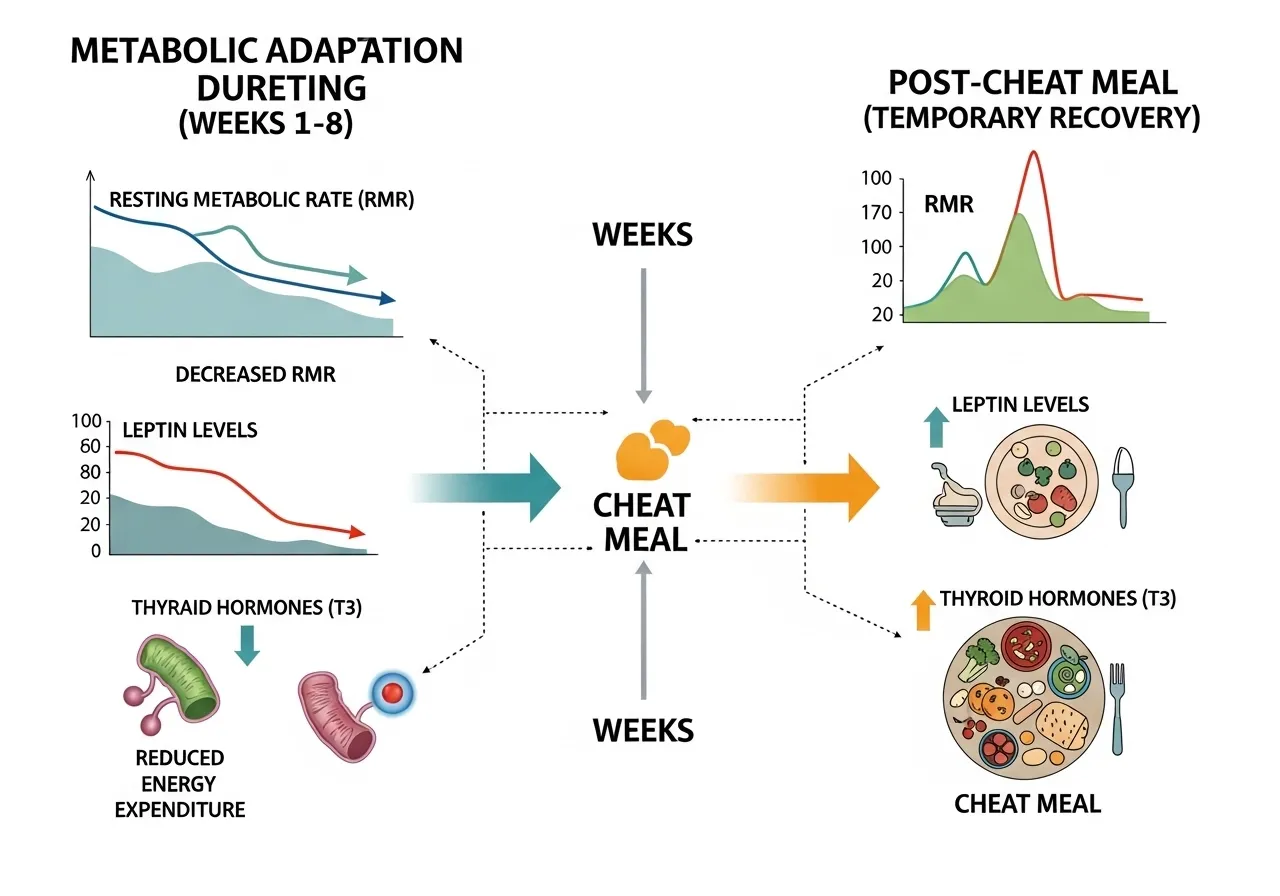
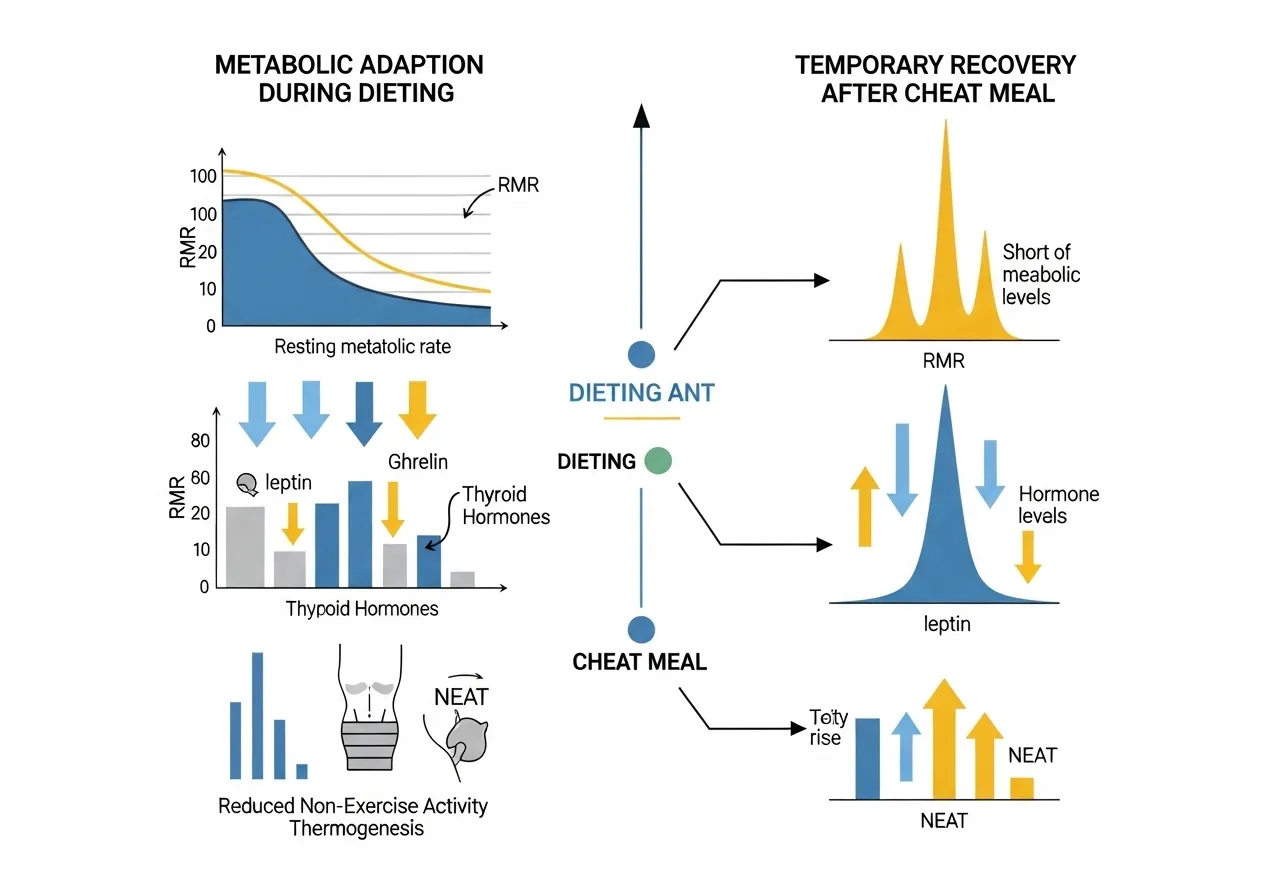
When an athlete in caloric restriction consumes a significant caloric surplus (a cheat meal or cheat day), several measurable physiological responses occur that have implications for both short-term metabolism and long-term diet adherence. Leptin response: leptin — the satiety hormone produced by adipose tissue that also serves as the primary signal regulating metabolic rate during caloric restriction — falls with caloric deficit and rises with caloric surplus. The leptin decline during dieting drives the metabolic adaptations (reduced resting metabolic rate, decreased non-exercise activity thermogenesis, increased appetite) that make progressive fat loss increasingly difficult over time. A significant overfeeding episode (cheat meal) produces a temporary leptin increase that partially reverses these adaptations — with research showing leptin elevation within 24 hours of significant overfeeding that persists for 24–72 hours before returning to the reduced baseline of the caloric restriction state. The practical significance: this temporary leptin elevation may partially restore the diet-suppressed metabolic rate and reduce the appetite drive for 1–2 days following the cheat meal, potentially making the subsequent days of caloric restriction more physiologically and psychologically manageable. However, the leptin response to a single meal is modest compared to the leptin elevation from the accumulated body fat that preceded dieting — the metabolic adaptation reversal from a single cheat meal is real but modest in magnitude.
Glycogen Replenishment: The Performance Benefit
For athletes who maintain caloric restriction and moderate-to-low carbohydrate intake, muscle glycogen stores are partially depleted — reducing training performance in high-intensity activities that depend on glycogen as their primary fuel source. A cheat meal featuring significant carbohydrate intake (the characteristic composition of most cheat meals — pizza, pasta, burgers with buns, desserts) provides the carbohydrate substrate for muscle glycogen replenishment that training performance requires. Research from the American Journal of Clinical Nutrition on glycogen resynthesis and carbohydrate loading confirms that glycogen stores can be substantially replenished within 24 hours of high-carbohydrate intake — with training performance in the sessions following significant carbohydrate intake measurably better than performance in a glycogen-depleted state. For athletes whose cheat meals occur the day before high-intensity training sessions, the glycogen replenishment benefit is the most concrete physiological advantage of the cheat meal — the performance improvement in the subsequent training session is a direct and measurable outcome. This performance benefit is most significant for athletes in moderate-to-low carbohydrate dietary phases (below 3g/kg body weight daily carbohydrate) where glycogen depletion meaningfully impacts training quality.
The Metabolic Adaptation Problem: Does a Cheat Meal “Reset” Your Metabolism?
The popular claim that cheat meals “reset” metabolism or “kick-start” fat loss by preventing or reversing metabolic adaptation is the most overstated benefit attributed to the cheat meal in popular fitness culture. The research on metabolic adaptation during caloric restriction and the effects of overfeeding episodes on that adaptation provides important context for evaluating this claim. Metabolic adaptation is real and significant: extended caloric restriction produces measurable reductions in resting metabolic rate (5–15% below what body composition would predict), reduced non-exercise activity thermogenesis (unconscious reduction in fidgeting, posture changes, and incidental movement), and altered thyroid function — collectively reducing total daily energy expenditure by 100–400 calories compared to what an equivalently-lean non-dieting individual would expend. Research from the International Journal of Obesity on metabolic adaptation and refeed protocols finds that the reversal of this adaptation requires sustained periods of adequate caloric intake (diet breaks of 1–2 weeks at maintenance, not single cheat meals) to produce meaningful metabolic rate restoration. A single cheat meal produces a temporary 24–72 hour partial reversal of the leptin-mediated aspects of metabolic adaptation — but does not meaningfully reverse the deeper hormonal and metabolic adaptations that accumulate over weeks and months of restriction. The cheat meal’s metabolic benefit is real but modest and temporary — not the dramatic metabolism “reset” that popular fitness culture claims.
The Caloric Reality: Can a Cheat Meal Erase a Week’s Deficit?
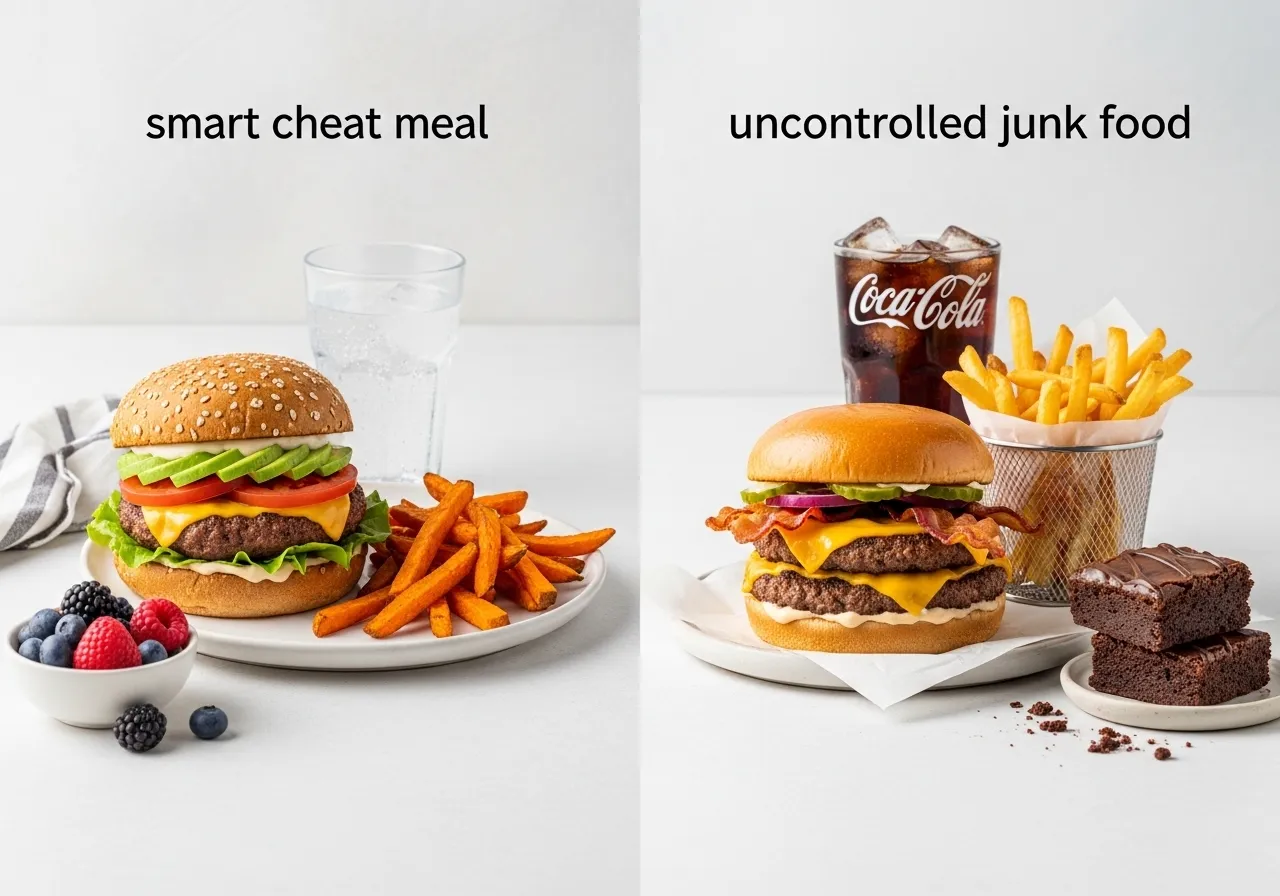
The most concrete risk of unstructured cheat meals is simple caloric arithmetic — the caloric content of a genuinely unrestricted cheat meal is frequently large enough to erase a significant portion of the weekly caloric deficit that drives fat loss. A moderate cheat meal — a restaurant burger (750 calories), large fries (500 calories), and a milkshake (700 calories) — totals approximately 1,950 calories in a single sitting. A large cheat meal that includes appetizers, a main course, dessert, and several drinks can easily reach 3,000–5,000 calories. For an athlete maintaining a 500-calorie daily deficit (3,500 calories weekly), a 3,000-calorie cheat meal eliminates 86% of the weekly deficit in a single eating occasion. This is not an argument against cheat meals — it is an argument for understanding the caloric content of cheat meals to structure them in ways that preserve the weekly deficit required for the fat loss rate that the athlete’s goals require. Quantified cheat meals (a planned higher-calorie day that still falls within a target caloric range) produce the psychological and physiological benefits of dietary flexibility while maintaining the weekly caloric deficit that drives fat loss — unquantified “anything goes” cheat days frequently do not.
Cheat Meal vs. Cheat Day vs. Diet Break: Understanding the Spectrum
The spectrum of planned dietary flexibility ranges from a single higher-calorie meal (cheat meal), to a full day of unrestricted or maintenance-calorie eating (cheat day), to a sustained period of maintenance-calorie eating lasting 1–2 weeks (diet break). Each point on this spectrum has different physiological effects and appropriate use cases. Cheat meal: the smallest dietary flexibility unit — a single meal with higher caloric and/or carbohydrate content than the diet’s standard meals. Minimal impact on weekly caloric deficit if modest in size; provides psychological relief and partial glycogen replenishment; appropriate frequency 1–2 times per week for most dieters without derailing fat loss progress. Cheat day: a full day of maintenance or modestly above-maintenance calorie intake — produces more significant glycogen replenishment and leptin response than a single cheat meal; carries higher risk of erasing the weekly caloric deficit if executed without attention to total intake. Diet break: 1–2 weeks at maintenance calories within an extended fat loss phase — produces the most significant reversal of metabolic adaptation, preserves lean mass better than continuous restriction, and resets the psychological and physiological drive for continued restriction; evidence from the Journal of the Academy of Nutrition and Dietetics on planned diet breaks supports their use in extended fat loss phases of 12+ weeks for better long-term outcomes than continuous restriction.
Insulin Sensitivity and the Cheat Meal Window
Insulin sensitivity — the efficiency with which cells respond to insulin’s signal to uptake glucose from the bloodstream — is a critical variable in determining how the body partitions the excess calories from a cheat meal. When insulin sensitivity is high (immediately post-exercise, in the morning, after a period of caloric restriction), consumed carbohydrates are more efficiently directed toward muscle glycogen replenishment rather than fat storage. When insulin sensitivity is low (sedentary periods, chronic overfeeding states, in individuals with metabolic dysfunction), the same carbohydrates are more likely to contribute to fat storage. This insulin sensitivity context explains why the timing recommendations for cheat meals (post-exercise, on training days) are not arbitrary preferences but have direct metabolic justification — the post-exercise insulin sensitivity elevation creates the most favorable metabolic environment for the cheat meal’s excess carbohydrates. For athletes who time their cheat meals post-training consistently, a greater proportion of the excess caloric load from the cheat meal contributes to glycogen replenishment (which is metabolically neutral in terms of fat storage) rather than adipose deposition. This partitioning advantage does not eliminate the caloric impact of the cheat meal — excess calories above glycogen storage capacity still contribute to fat stores — but it meaningfully improves the body composition outcome from the same cheat meal compared to consuming it during a sedentary, low insulin sensitivity window.
The Thermic Effect of Food and Cheat Meal Composition
The thermic effect of food (TEF) — the caloric expenditure required to digest, absorb, and metabolize consumed nutrients — varies significantly by macronutrient composition and influences the net caloric impact of different cheat meal compositions. Protein has the highest TEF (20–30% of protein calories are expended in metabolism), carbohydrates have intermediate TEF (5–10%), and fats have the lowest TEF (0–3%). A cheat meal featuring a significant protein component (a steak dinner, a high-protein pizza with chicken, a burger with extra protein) has a higher thermic effect than an equivalent-calorie meal composed primarily of fat and refined carbohydrates — meaning that the net caloric impact of a protein-rich cheat meal is meaningfully lower than its gross caloric content suggests. The practical implication: including a substantial protein portion in the cheat meal (targeting the same 0.4–0.5g/kg protein per meal that optimizes muscle protein synthesis) simultaneously reduces the net caloric impact through higher TEF and maintains the protein synthesis stimulus that supports muscle retention during the fat loss phase. A high-protein cheat meal approach — prioritizing protein-rich versions of preferred foods (chicken pizza, protein-added pasta, protein burger over standard burger) — represents a meaningful quality upgrade over protein-deficient cheat meal choices at the same caloric level.
Long-Term Metabolic Health and Dietary Flexibility
The long-term metabolic health outcomes of flexible versus rigid dietary approaches have implications beyond immediate body composition — the chronic stress of dietary rigidity and the psychological strain of prohibited food relationships produce measurable negative health effects that the fitness community inadequately acknowledges. Cortisol elevation from dietary restriction stress: the psychological stress of rigid caloric restriction elevates cortisol, which promotes fat storage (particularly visceral fat deposition), muscle protein catabolism, impaired sleep quality, and suppressed immune function — physiological consequences that partially offset the body composition benefits of the caloric deficit producing them. Research on the health outcomes of restrained eating (characterized by rigid dietary rules and high anxiety around dietary transgressions) versus flexible eating (characterized by general caloric awareness without categorical food prohibition) consistently finds worse metabolic health outcomes in highly restrained eaters — including higher cortisol levels, poorer body composition outcomes despite equivalent reported caloric restriction, and higher rates of metabolic dysfunction. The cheat meal, as a tool for reducing dietary rigidity and providing planned permission for preferred foods, may produce health benefits that extend beyond the immediate caloric arithmetic — reducing the cortisol load of dietary restriction stress and improving the psychological relationship with food that sustainable dietary adherence requires.
The cheat meal, executed with the scientific understanding and practical structure this article provides, is not a concession to dietary weakness — it is a sophisticated nutritional tool that bridges the gap between dietary precision and psychological sustainability, enabling the long-term adherence that produces the body composition and performance outcomes that consistent, intelligent dieting delivers to every athlete who masters the balance between structure and flexibility. Plan your cheat meal, execute it deliberately, enjoy it fully, and return to your dietary structure the next meal — that is the complete cheat meal protocol that produces results without the guilt, restriction cycles, or dietary collapse that unplanned indulgence consistently causes. Start this week. Get results.
How to Do Cheat Meals Correctly: Timing, Frequency, and What to Eat
The difference between a cheat meal that supports long-term progress and one that undermines it lies almost entirely in execution — the timing, frequency, composition, and quantification of the cheat meal determine whether it functions as the strategic dietary tool it can be or the progress-derailing indulgence that gives cheat meals their mixed reputation among fitness professionals.
Optimal Timing: When to Schedule Your Cheat Meal
The timing of a cheat meal relative to training sessions significantly influences the proportion of the extra calories that is directed toward muscle glycogen replenishment (which supports recovery and performance) versus fat storage (which does not). Post-training cheat meals capitalize on the elevated insulin sensitivity and muscle glucose uptake that intense training creates — the carbohydrates and excess calories consumed in the post-training window are preferentially directed toward muscle glycogen resynthesis rather than fat storage, making the post-training period the optimal window for the carbohydrate-heavy foods that cheat meals typically feature. The research on post-exercise nutrient partitioning confirms that the same meal consumed immediately post-training versus hours before training produces different body composition outcomes — with the post-training timing associated with better glycogen replenishment and lower fat storage from the excess caloric load. The practical recommendation: schedule cheat meals on training days, in the post-workout window (within 2 hours of completing training), rather than on rest days where the carbohydrate and caloric load has no glycogen replenishment destination and is more directly directed toward adipose storage. Among training days, schedule the cheat meal after the most intense session of the week — typically a heavy lower body session (squats, deadlifts) that depletes more glycogen than upper body or lighter sessions and therefore has the highest glycogen replenishment demand from dietary carbohydrate.
Frequency: How Often Can You Have Cheat Meals?
The appropriate cheat meal frequency depends on the overall dietary goal, the current phase of the diet, and the individual’s relationship with dietary flexibility — the frequency that supports long-term adherence differs meaningfully between individuals. For fat loss phases: 1 cheat meal per week (not a full cheat day) is the maximum frequency that consistently maintains the weekly caloric deficit required for meaningful fat loss progress in most athletes. Research on flexible dieting and body composition finds that one planned higher-calorie meal per week does not significantly impact fat loss rate compared to continuous strict caloric restriction, while providing the psychological benefit that improves adherence to the remaining 20 weekly meals. For maintenance phases or body recomposition: 2 cheat meals per week is generally compatible with maintaining body composition when the remaining meals are appropriately structured — the lower urgency of maintaining a specific caloric deficit in maintenance allows more dietary flexibility without negative body composition consequences. The frequency escalation mistake: athletes who begin with one cheat meal per week and gradually escalate to cheat weekends or multiple cheat days per week (a pattern driven by the dopamine reward cycle that high-sugar, high-fat cheat meal foods activate) transform a strategic dietary tool into habitual overeating that eliminates the caloric deficit the cheat meal strategy was designed to preserve around.
What to Eat: Cheat Meal Food Composition
The food composition of the cheat meal influences both the psychological satisfaction it provides and the physiological outcomes it produces — not all cheat meals are created equal in their contribution to the glycogen replenishment, leptin response, and dietary satisfaction that make cheat meals strategically valuable. Carbohydrate-dominant cheat meals (pizza, pasta, rice dishes, sandwiches, bread-based foods): produce the most significant glycogen replenishment and the most robust leptin response — the carbohydrate substrate is the primary driver of both the post-training glycogen replenishment benefit and the leptin spike that partially reverses metabolic adaptation. For athletes who train intensely and whose primary goal is performance and body composition, carbohydrate-dominant cheat meals around training days provide the best return on the dietary flexibility expenditure. Fat and protein-dominant cheat meals (burgers, steaks, full-fat dairy): provide the sensory satisfaction of rich, high-flavor foods without the carbohydrate load for glycogen replenishment. These cheat meal compositions are more appropriate for athletes in ketogenic or very low-carbohydrate phases who would experience unwanted carbohydrate metabolism restoration from high-carbohydrate cheat meals. Combined fat-and-carbohydrate cheat meals (fast food, pizza with extra cheese, desserts): the combination of high fat and high carbohydrate produces the most calorically dense meals and the most significant potential caloric overshoot — the palatable reward system activation from fat-carbohydrate combinations drives consumption beyond satiety more reliably than either macronutrient alone. These meals produce the most psychological satisfaction (high dopaminergic reward value) and the highest caloric risk — portion awareness is most important for this cheat meal category.
Quantifying the Cheat Meal: Staying in Strategic Range
The most effective cheat meal strategy maintains caloric awareness without destroying the psychological freedom that makes the cheat meal beneficial — a middle path between untracked caloric excess and the restrictive calorie counting that eliminates the psychological benefit of dietary flexibility. A practical quantification framework: allow total daily calories on cheat meal day to reach maintenance calories (the caloric intake that maintains current body weight without loss or gain). For a 75kg athlete with a TDEE of 2,800 calories who maintains a 500-calorie daily deficit (eating 2,300 calories normally), a cheat meal day that reaches 2,800 total calories allows enjoyment of a 500-calorie bonus meal without creating a caloric surplus. This maintenance-day approach provides meaningful dietary flexibility (a restaurant meal, a dessert, foods normally avoided) while preserving the weekly caloric balance required for ongoing progress. The estimation approach: pre-logging the cheat meal (entering anticipated foods in a calorie tracking app before eating) provides the specific caloric context that allows informed decisions about portion sizes and food choices during the cheat meal occasion — preventing the uninformed excess that post-hoc regret follows.
Alcohol and Cheat Meals: The Compounding Risk
Alcohol consumption frequently accompanies cheat meals in social dining contexts — and the combination of alcohol with high-calorie cheat foods creates a compounding caloric and metabolic risk that significantly elevates the total impact of the cheat occasion. Alcohol provides 7 calories per gram (between carbohydrate at 4 cal/g and fat at 9 cal/g), and drinks consumed during a cheat meal add 100–500 calories depending on type and quantity — adding a significant caloric load on top of the already elevated cheat meal calories. Beyond the caloric contribution, alcohol impairs the fat oxidation that would otherwise continue during the cheat meal period — for the duration of alcohol metabolism (2–4 hours per drink), the body prioritizes ethanol oxidation and essentially halts fat burning. The combination effect: a cheat meal that includes 4 drinks adds 400–600 alcohol calories to the meal calories, halts fat oxidation for 8–16 hours, impairs the post-meal muscle protein synthesis from any protein consumed with the meal, and reduces sleep quality (by suppressing slow-wave sleep) in the recovery night that follows. For athletes who choose to include alcohol in their cheat meal occasion, limiting to 1–2 drinks minimizes the metabolic interference while allowing the social enjoyment that the occasion represents — and non-alcoholic alternatives that provide similar social engagement without the metabolic cost are increasingly available in most dining contexts.
Pre-Workout Nutrition on Cheat Meal Days
The training session that precedes the cheat meal requires specific nutritional consideration — the pre-workout meal on a cheat meal day determines the training quality that creates the glycogen-depleted, high-insulin-sensitivity environment that makes the post-workout cheat meal most effective. Maintain the standard pre-workout nutrition protocol (30–45g carbohydrates, 20–30g protein, 60–90 minutes before training) rather than reducing intake in anticipation of the upcoming cheat meal — the pre-workout nutrition directly impacts training quality, and reducing it to “make room” for the cheat meal reduces training stimulus without meaningfully affecting the cheat meal’s caloric impact. The training session itself should be the most intense session of the week when possible — the greater the glycogen depletion from high-intensity training, the higher the subsequent glycogen replenishment demand for the cheat meal’s carbohydrates, and the better the metabolic partitioning from the caloric surplus toward glycogen rather than fat stores. Complete training to genuine fatigue (appropriate for goal-specific intensity) before consuming the cheat meal, and allow 15–30 minutes post-training before beginning the cheat meal to ensure adequate hydration restoration before adding the sodium-rich foods that cheat meals typically include.
Water Retention After Cheat Meals: Normal vs. Concerning
The scale weight increase that follows a cheat meal — often 1–3 kg above the pre-cheat baseline, visible the morning after the cheat meal day — is almost entirely water retention rather than fat gain and resolves within 2–4 days of returning to normal dietary intake. Understanding this physiology prevents the panic and compensatory restriction that the post-cheat weight spike frequently triggers in athletes who interpret it as fat gain. The water retention mechanisms: each gram of stored glycogen binds approximately 3–4 grams of water in muscle tissue — replenishing 300–400g of muscle glycogen from a high-carbohydrate cheat meal creates 900g–1.6 kg of associated water storage that appears immediately on the scale. Additionally, the higher sodium content of typical cheat meal foods (restaurant meals, processed foods) drives osmotic water retention in the extracellular fluid that adds to the scale weight increase. The expected timeline for post-cheat weight normalization: with return to normal dietary intake, the glycogen stored water is progressively utilized during training, and the sodium-driven water retention resolves as sodium is excreted — weight typically returns to pre-cheat baseline within 2–4 days without any compensatory intervention. Treating the post-cheat weight spike as physiologically expected (rather than a crisis requiring compensation) maintains the dietary consistency and psychological equilibrium that the cheat meal strategy is designed to support.
Cheat Meals and Hormonal Optimization
Beyond the leptin and insulin effects discussed in the physiological section, cheat meals influence several additional hormones that have implications for athletic performance and body composition. Thyroid hormones: extended caloric restriction reduces T3 (triiodothyronine, the active thyroid hormone) as a metabolic adaptation — the same overfeeding that transiently increases leptin also transiently increases T3, contributing to the metabolic rate restoration that high-calorie refeeds produce. Ghrelin: the primary appetite-stimulating hormone produced by the stomach, ghrelin rises with caloric restriction and falls with adequate caloric intake — a cheat meal that brings daily calories to maintenance provides the sustained caloric intake that suppresses ghrelin, reducing appetite for 12–24 hours following the higher-calorie day. Testosterone: meaningful caloric restriction (below 75% of TDEE) and very low dietary fat intake are associated with reduced testosterone, which impairs muscle building and recovery. Cheat meals that include adequate dietary fat (fat provides the cholesterol substrate for testosterone synthesis) on a weekly basis may help maintain testosterone at levels that support anabolic adaptation, even during moderate fat loss phases. The collective hormonal environment that cheat meals transiently improve — leptin, T3, ghrelin, testosterone — represents a genuine physiological benefit that complements the psychological adherence benefits that make cheat meals a legitimate tool in the comprehensive dietary strategy of serious athletes.
The cheat meal, executed with the scientific understanding and practical structure this article provides, is not a concession to dietary weakness — it is a sophisticated nutritional tool that bridges the gap between dietary precision and psychological sustainability, enabling the long-term adherence that produces the body composition and performance outcomes that consistent, intelligent dieting delivers to every athlete who masters the balance between structure and flexibility. Your best body composition results come not from perfect compliance but from the sustainable approach that strategic flexibility enables across months and years of consistent training and nutrition. Enjoy every bite. Always.

Psychological Benefits of Cheat Meals: Sustainability, Cravings, and Adherence
The psychological dimension of cheat meals may be more important than the physiological dimension for most athletes — the research on dietary adherence consistently finds that long-term adherence (maintaining the dietary structure across weeks, months, and years) is the primary determinant of body composition outcomes, and that psychological sustainability is the primary determinant of long-term adherence. Cheat meals, when used correctly, are a psychological adherence tool as much as a physiological one.
Dietary Adherence: The Primary Variable in Long-Term Results
Research on dietary interventions for body composition consistently demonstrates that the specific macronutrient ratios, meal timing protocols, or food selection rules of a diet are less important to outcome than adherence to that diet over extended time periods. A theoretically optimal diet that is abandoned after 6 weeks because of psychological unsustainability produces worse outcomes than a theoretically suboptimal diet maintained consistently for 6 months — the adherence advantage of the less optimal diet outweighs its theoretical nutritional disadvantages. This finding has profound implications for the role of dietary flexibility strategies like cheat meals: if planned dietary flexibility improves adherence to an otherwise appropriate diet, the adherence improvement produces real body composition benefits that justify the planned caloric flexibility. Research from the Examine.com analysis of flexible vs. rigid dieting research finds that flexible dieting approaches (which include planned higher-calorie occasions) produce equivalent or superior body composition outcomes to rigid dieting approaches over extended periods, while producing significantly better psychological outcomes — lower dietary restraint stress, less preoccupation with food, better mood, and lower rates of binge eating episodes. The mechanism: rigid dietary restriction that allows no flexibility creates a psychological pressure that eventually produces the unplanned, uncontrolled dietary lapses (true binge episodes) that do more damage to weekly caloric balance and dietary psychology than a strategically planned cheat meal would have.
Craving Management: The Deprivation-Binge Cycle
Food cravings during caloric restriction are an almost universal experience — driven by the combination of dopaminergic food reward reduction (the reduced hedonic response to food during restriction that makes previously satisfying foods less satisfying), the hypothalamic appetite drive elevation that accompanies caloric deficit, and the psychological salience of forbidden foods (the ironic process theory finding that cognitive suppression of a thought actually increases its mental frequency and intensity). The classic deprivation-binge cycle: rigid dietary restriction that categorically prohibits specific foods → increased psychological salience of prohibited foods → accumulated craving pressure → eventual unplanned, uncontrolled consumption of prohibited foods in excessive quantities → guilt and re-imposition of rigid restriction → repeat. Planned cheat meals interrupt this cycle by removing the “forbidden fruit” psychology from specific foods — when a specific food is prohibited, its desirability is psychologically amplified; when the same food is permitted on a scheduled basis, its psychological salience normalizes to a manageable level. Athletes who have scheduled cheat meals frequently report that the intensity of food cravings during restricted eating days decreases significantly compared to their experience with rigid dieting — the knowledge that the craved food is coming in a defined future window reduces the urgency of the craving in the present moment.
Social Eating and Dietary Flexibility
Social eating occasions — restaurants, family meals, parties, celebrations — represent one of the most practically significant adherence challenges of structured dietary approaches, because the food environment of social settings frequently does not accommodate the specific caloric and macronutrient targets of active dietary programs. Athletes following rigid dietary approaches in social settings face the choice between adherence (with the social awkwardness and relationship cost of refusing or dramatically modifying social meals) and departure from the diet (with associated guilt and potential abandonment of the dietary structure that the departure represents). Planned dietary flexibility — scheduling social meals as cheat meal occasions — resolves this dilemma by designating the social meal as a planned part of the dietary strategy rather than a failure of discipline. Athletes who plan for social eating occasions (family dinners, date nights, team celebrations) as their scheduled cheat meals maintain both dietary and social commitments without the conflict that rigid approaches create. The social dimension of dietary adherence is underappreciated in the fitness nutrition literature — the long-term sustainability of any dietary approach is significantly determined by its compatibility with the social and relational life that training nutrition must coexist with, and dietary approaches that require social isolation or constant dietary special treatment are less sustainable than those that accommodate normal social food participation on a planned basis.
The Psychological Risk: When Cheat Meals Become Binges
The psychological benefits of cheat meals require specific conditions to materialize — and under specific circumstances, planned cheat meals can exacerbate rather than mitigate the disordered eating patterns they are intended to prevent. The cheat meal to binge escalation pattern: athletes with a history of restrictive eating or disordered eating relationships with food may find that a planned cheat meal triggers uncontrolled eating that extends well beyond the planned occasion — the “permission structure” of the cheat meal activating the all-or-nothing eating psychology that characterizes binge eating. Signs that cheat meals are harmful rather than helpful: inability to stop eating after the planned cheat meal ends; guilt and shame following cheat meals that exceed the planned parameters; compensatory restriction or excessive exercise following cheat meals; cheat meals that escalate in size and frequency over time without voluntary control; and cheat meals that trigger multi-day dietary disruption rather than one-meal planned flexibility. For athletes who observe these patterns, the cheat meal approach is contraindicated — a different dietary flexibility strategy (higher baseline caloric targets, less rigid dietary structure, working with a registered dietitian specializing in sports nutrition and disordered eating) addresses the underlying adherence challenge more appropriately than the cheat meal framework that is incompatible with this psychological profile.
Mindful Eating During Cheat Meals
The psychological benefit of a cheat meal is maximized when the meal is eaten mindfully — with full attention to the eating experience, genuine enjoyment of the food’s sensory qualities, and absence of guilt or anxiety — rather than eaten rapidly and distractedly in an anxious rush to consume as much as possible within the permitted window. Mindful eating principles applied to cheat meals: eat slowly (the satiety response to food reaches the brain approximately 20 minutes after eating begins, meaning rapid eating consistently produces consumption beyond the satiety point before the satiety signal arrives); engage all senses with the food experience (taste, texture, temperature, aroma) to extract maximum satisfaction from each bite; eat in a relaxed social environment rather than alone with a screen (social eating produces greater psychological satisfaction and better satiety regulation than distracted solo eating); and stop when satisfied rather than continuing to physical discomfort. Athletes who eat cheat meals mindfully report greater psychological satisfaction from smaller caloric quantities than those who eat rapidly and distractedly — meaning that mindful eating during cheat meals simultaneously improves the psychological experience and reduces the caloric excess that unminful cheat eating produces.
The Dopamine System and Food Reward
The neurological basis of food cravings during caloric restriction — and the mechanism through which cheat meals address these cravings — involves the brain’s dopamine reward system and its response to caloric restriction. Caloric restriction reduces the overall activation of the dopamine reward system (the same system responsible for the motivation and reward experience of eating), leading to the characteristic increased preoccupation with food, heightened sensory appeal of high-calorie foods, and reduced satisfaction from standard diet meals that dieting athletes universally experience. The dopaminergic reward value of specific foods — particularly the high-fat, high-sugar combination that characterizes most cheat meal foods — is driven by the activation of reward pathways that evolved to motivate caloric acquisition in energy-scarce environments. During caloric restriction, this system is further sensitized — making high-reward foods more psychologically compelling than they are in non-restricted states. A planned cheat meal provides sufficient dopaminergic activation to temporarily restore the reward system’s baseline, reducing the sensitized craving drive for 1–3 days following the cheat meal before the restriction state and associated reward sensitization re-establish. Understanding this neurological mechanism — rather than moralizing food restriction and cheat meals as matters of discipline or weakness — provides the psychological distance from food cravings that allows more skillful management of the restriction experience across the full duration of a dieting phase.
Flexible Dieting Research: What the Studies Actually Show
The research directly comparing flexible and rigid dieting approaches provides empirical grounding for the psychological benefits of dietary flexibility that practical experience suggests. Key research findings: a study by Smith and colleagues (published in the Journal of the Academy of Nutrition and Dietetics) comparing flexible and rigid dieting in 245 women found that flexible dieters had lower BMI, lower rates of eating disturbance, and better mood compared to rigid dieters — with flexible dieters reporting equivalent or lower caloric intake despite greater dietary freedom. Research on all-or-nothing thinking patterns in dieters (the cognitive pattern that transforms small dietary deviations into “blown diet” episodes) finds that this pattern is significantly associated with higher total caloric intake over time than flexible dietary approaches that normalize modest dietary deviations without catastrophizing them. The practical implication: building dietary flexibility into a nutrition plan from the beginning — rather than adding it as a response to the inevitable dietary lapses that rigid approaches produce — produces better long-term adherence and equivalent or superior body composition outcomes to rigid approaches that depend on perfect compliance.
Intuitive Eating and Cheat Meal Integration
Intuitive eating — an eating framework that emphasizes internal hunger and satiety cues over external caloric rules — and strategic cheat meal planning represent different points on the dietary flexibility continuum that can be integrated thoughtfully for athletes who want both metabolic precision and psychological sustainability. Pure intuitive eating without any caloric structure is generally incompatible with aggressive body composition goals (fat loss or lean muscle building) that require specific caloric targets — the research on intuitive eating outcomes finds benefit for disordered eating recovery and general health but not consistent fat loss in athletes with specific body composition goals. However, the core intuitive eating principles — eating without guilt, stopping when satisfied, enjoying all foods without moral judgment — are directly applicable to the cheat meal experience and improve both the psychological outcome (reduced guilt and food anxiety) and potentially the caloric outcome (eating to satisfaction rather than eating to discomfort) of the cheat meal occasion. The integration: maintain caloric and macronutrient targets for standard dietary days (where metabolic precision is the priority) while applying intuitive eating principles to the cheat meal occasion (where psychological enjoyment and sustainability are the priority) — a hybrid approach that captures the precision benefits of structured dieting and the psychological benefits of intuitive eating within a coherent overall framework.
The cheat meal, executed with the scientific understanding and practical structure this article provides, is not a concession to dietary weakness — it is a sophisticated nutritional tool that bridges the gap between dietary precision and psychological sustainability, enabling the long-term adherence that produces the body composition and performance outcomes that consistent, intelligent dieting delivers to every athlete who masters the balance between structure and flexibility. Enjoy the cheat meal. Return to the plan. Repeat for results. No guilt needed.

When Cheat Meals Hurt Progress: Warning Signs and Better Alternatives
Despite the real benefits of appropriately executed cheat meals, specific circumstances make cheat meals counterproductive — and identifying these circumstances prevents the misapplication of a dietary flexibility strategy that works well under some conditions and fails under others.
Signs Your Cheat Meals Are Hurting Your Progress
The objective evidence that a cheat meal strategy is working appears in progress metrics: consistent fat loss (0.5–1% body weight per week), improving training performance, maintained energy levels, and stable mood across the diet week. When these metrics are absent despite adequate training and otherwise appropriate nutrition, the cheat meal strategy may be the limiting factor. Objective warning signs that cheat meals are impeding progress: weekly caloric surplus despite seemingly appropriate daily eating (confirming that cheat meals are erasing the deficit the daily eating creates); fat loss stall despite consistent training and non-cheat-meal compliance (suggesting that cheat meals are larger than estimated or more frequent than intended); progressive cheat meal caloric escalation over weeks without voluntary moderation; and the emergence of the binge-restriction cycle described in the previous section. The most diagnostic tool: tracking total calories on cheat meal days specifically, comparing against maintenance calories, and calculating whether weekly caloric balance (the sum of all daily calories across the week) produces the deficit required for the target fat loss rate. Athletes who discover through this tracking that their weekly caloric balance is at or above maintenance despite 6 days of caloric restriction have identified the specific problem — the cheat meal(s) are too large or too frequent to preserve the weekly deficit.
The All-or-Nothing Mindset: The Biggest Cheat Meal Mistake
The all-or-nothing thinking pattern that characterizes many athletes’ approach to dietary adherence transforms cheat meals from strategic dietary flexibility into the trigger for multi-day dietary collapse. The all-or-nothing pattern in practice: a planned Saturday cheat meal — if it exceeds its intended parameters (eating more than planned, or eating something unplanned on Sunday morning after the Saturday cheat) — triggers the cognitive response “I’ve already blown my diet this week, so I might as well enjoy the rest of the weekend and restart Monday.” This cognitive distortion transforms a single cheat meal into a 3-day dietary excess that effectively eliminates the entire week’s caloric deficit — and the weekly pattern of strict weekday eating and excessive weekend eating that many athletes unconsciously establish eliminates the weekly caloric deficit that drives fat loss. The cognitive correction: a single dietary deviation from the plan is not a dietary failure requiring compensatory restriction or necessitating a dietary restart — it is a single meal that has exactly as much caloric impact as its actual caloric content, regardless of whether it was planned. The most effective response to an unplanned dietary excess is to resume the dietary plan at the next meal — not to compensate by restricting subsequent meals (which often triggers rebound overeating) or to abandon the plan until an arbitrary restart date.
Cheat Meals During Specific Diet Phases: When to Avoid Them
Certain dietary phases are incompatible with cheat meal strategies — either because the physiological effects of dietary flexibility undermine the specific goal of the phase or because the caloric/carbohydrate content of cheat meals disrupts metabolic states that the dietary phase requires. Ketogenic adaptation phases: athletes adapting to a ketogenic diet (first 3–4 weeks) are establishing the metabolic machinery for ketone production and fat oxidation that takes weeks to fully develop. A cheat meal featuring significant carbohydrate (100+ grams) during this adaptation phase kicks the body out of the emerging ketotic state and restarts the adaptation timeline from the beginning — extending the adaptation discomfort and delaying the performance benefits that full ketotic adaptation provides. For ketogenic athletes who want dietary flexibility, planned higher-fat (not carbohydrate) meals or a distinct cyclical ketogenic approach (planned carbohydrate refeeds on specific training days) provides flexibility within the ketogenic framework without disrupting ketosis. Very short diet phases (2–4 week contest prep finishers): the final weeks of contest preparation for physique athletes involve severe caloric restriction and water manipulation where any caloric flexibility significantly impacts the conditioning outcome — cheat meals are inappropriate in these phases where every caloric excess appears on stage.
Better Alternatives for Different Situations
Athletes for whom traditional cheat meals are problematic — either because of psychological incompatibility or phase-specific physiological concerns — have several evidence-based alternatives that provide the adherence and performance benefits of dietary flexibility without the specific downsides of the cheat meal approach. Higher caloric base with lower deficit rate: instead of eating 500 calories below maintenance 6 days and 500+ above maintenance 1 day, eating 250 calories below maintenance every day produces the same weekly deficit with more daily dietary flexibility and without the all-or-nothing psychology of the cheat meal structure. This approach — sometimes called “flexible dieting” or “IIFYM” (If It Fits Your Macros) — allows daily incorporation of preferred foods within caloric targets rather than prohibiting them until a cheat occasion. Planned refeed days (carbohydrate refeeds): replacing the unstructured cheat meal with a structured refeed day — returning carbohydrates to maintenance or modestly above-maintenance levels (while maintaining normal protein and lower fat) — captures the leptin response, glycogen replenishment, and performance benefits of overfeeding without the combined fat-carbohydrate excess that cheat meals typically involve. Diet breaks: for athletes in extended restriction phases (12+ weeks), planned 1–2 week diet breaks at maintenance calories produce better long-term outcomes than continuous restriction with weekly cheat meals, by producing more substantial metabolic adaptation reversal and psychological reset than single-meal flexibility can provide.
Adjusting for Body Composition Goals
The optimal cheat meal strategy differs by body composition goal — what works for fat loss differs from what works for muscle building or body recomposition, and applying the wrong strategy to the wrong goal produces poor outcomes regardless of execution quality. For fat loss: the priority is preserving the weekly caloric deficit — cheat meals must be sized and frequented to maintain the weekly caloric balance required for the target fat loss rate. One cheat meal per week at or below maintenance total daily calories preserves the weekly deficit while providing dietary flexibility. For muscle building (lean bulk): the goal is a modest caloric surplus for muscle building without excessive fat accumulation — the dietary constraint is a ceiling (don’t eat too much above maintenance) rather than a floor. Cheat meals in a lean bulk context may not be necessary if the overall caloric target is already permissive enough to include preferred foods — the concept of a cheat meal is less meaningful when the baseline dietary approach is already relatively flexible. For body recomposition: maintenance calories with high protein — cheat meals that bring total calories to or modestly above maintenance on training days (while staying at maintenance on rest days) are compatible with the body recomposition goal and provide the training day carbohydrate availability that recomposition training requires.
Recognizing Disordered Eating Patterns in Cheat Meal Behavior
The intersection of cheat meals and disordered eating requires careful attention — the fitness culture that normalizes cheat meals also normalizes some dietary behaviors that, in clinical context, represent the early stages of disordered eating patterns that professional support addresses more effectively than nutritional strategy. The specific patterns that warrant professional evaluation: experiencing significant distress, guilt, or self-criticism following cheat meals that stay within planned parameters (emotional response disproportionate to the dietary behavior); planning cheat meals with a level of anticipatory excitement that interferes with daily function or consumes excessive mental bandwidth; using compensatory behaviors following cheat meals (restricting calories the following day, excessive exercise to “burn off” the cheat meal, laxative use) that indicate restriction-compensation cycling; and finding that cheat meals consistently escalate beyond planned parameters despite genuine intention to maintain control. These patterns are not character flaws or failures of discipline — they are clinical behaviors that respond well to professional intervention from a registered dietitian with eating disorder specialization or a psychologist familiar with sport and exercise psychology. The fitness community’s framing of these behaviors as motivation or discipline problems (requiring more willpower or better planning) rather than as clinical behaviors requiring professional support delays appropriate treatment and allows the patterns to entrench into more severe disordered eating that is harder to address later.
Cheat Meals for Different Athlete Types
The optimal cheat meal approach varies meaningfully across different athlete profiles — what works for a recreational gym-goer differs from what works for a competitive bodybuilder or an endurance athlete, and applying the wrong framework to the wrong athlete produces poor outcomes. Recreational athletes (training 3–4 days per week, general fitness goals): the most permissive cheat meal approach is appropriate — 1–2 planned higher-calorie meals per week within a maintenance or modest deficit framework. The lower training volume and intensity of recreational athletes means glycogen replenishment demands are lower, reducing the performance-specific timing importance that competitive athletes must observe. Competitive bodybuilders and physique athletes: the most structured cheat meal approach is required — specific macronutrient targets on cheat meal days (rather than unstructured caloric freedom), precise timing relative to training, and phase-specific modification (cheat meals eliminated in final contest prep weeks). Endurance athletes (marathon runners, cyclists, triathletes): the high training volumes and carbohydrate requirements of endurance sports mean that the “cheat meal” concept may not apply — the higher carbohydrate targets for performance fueling naturally provide the dietary flexibility and carbohydrate availability that other athlete types must strategically schedule into cheat meal occasions. Team sport athletes: the irregular competition and travel schedule of team sports creates unpredictable eating environments where flexible dietary approaches (general caloric awareness without rigid meal-by-meal prescription) work better than cheat-meal-based approaches that depend on schedule predictability.
Combining Cheat Meals with Intermittent Fasting
Athletes who practice intermittent fasting (IF) as their dietary structure face specific considerations when integrating cheat meals — the eating window constraints of IF interact with cheat meal timing recommendations in ways that require thoughtful adaptation. The standard recommendation of post-workout cheat meal timing may conflict with the fasting window if training occurs during the fasted period — athletes who train fasted (before the eating window opens) must choose between maintaining the fasting protocol (delaying the cheat meal until the eating window opens, potentially hours post-workout) or opening the eating window early for the cheat meal (departing from the IF structure on the cheat meal day). The research-supported resolution: for IF practitioners, scheduling the eating window to encompass the post-workout period on cheat meal days is the most practical approach — opening the eating window 30–60 minutes post-workout on cheat meal training days captures both the post-workout nutrient partitioning advantage and the IF eating window structure. The overall caloric and weekly deficit considerations for cheat meals within IF remain identical to those for standard dietary structures — the eating window constraint affects timing within the day but not the fundamental caloric arithmetic that determines weekly progress.
The cheat meal, executed with the scientific understanding and practical structure this article provides, is not a concession to dietary weakness — it is a sophisticated nutritional tool that bridges the gap between dietary precision and psychological sustainability, enabling the long-term adherence that produces the body composition and performance outcomes that consistent, intelligent dieting delivers to every athlete who masters the balance between structure and flexibility. The science supports strategic flexibility. Use it wisely. Plan ahead.
Building Your Personal Cheat Meal Strategy: Practical Framework and FAQs
The cheat meal strategy that works best for any individual athlete integrates the physiological principles, psychological considerations, and practical constraints described in the preceding sections into a personalized approach that fits their specific goals, dietary history, and relationship with food. This section provides the actionable framework for building a cheat meal strategy that is sustainable, effective, and adapted to individual circumstances.
The 4-Step Personal Cheat Meal Framework
Building an effective personal cheat meal strategy requires four sequential decisions that, when made deliberately rather than by default, produce a cheat meal approach that supports rather than undermines dietary goals. Step 1 — Define the goal: confirm the specific dietary goal (fat loss at what rate, muscle building at what surplus rate, maintenance) and calculate the weekly caloric balance that the goal requires. This calculation determines the maximum caloric flexibility available for cheat meals without compromising the goal. Step 2 — Select frequency and timing: based on the goal-determined caloric budget, decide whether one or two planned flexibility occasions fit within the weekly caloric structure; then schedule those occasions on training days (preferably post-workout) that maximize the glycogen replenishment benefit and minimize fat storage from excess calories. Step 3 — Set the caloric parameters: determine the total daily caloric target for cheat meal days (typically maintenance calories for fat loss phases) and identify the approximate composition of the intended cheat meal against that target. This step can be done through rough estimation rather than precise tracking while still maintaining the order-of-magnitude awareness that prevents dramatic caloric excess. Step 4 — Monitor and adjust: track body weight weekly average, training performance, and energy levels across 4 weeks of the cheat meal strategy — if fat loss is occurring at the target rate and training performance is good, the strategy is working; if fat loss has stalled, the cheat meal frequency or size requires adjustment.
Practical Cheat Meal Examples by Goal
The following examples illustrate how the cheat meal framework applies in specific goal contexts. Fat loss phase example (75kg athlete, 2,300 calorie deficit target, 2,800 TDEE): normal days at 2,300 calories (6 days); cheat meal day at 2,800 calories total (1 day) — the cheat meal is a 500-calorie dinner addition to a standard eating day, not a complete dietary departure. Weekly caloric total: 6×2,300 + 1×2,800 = 16,600 calories. Average: 2,371 calories/day vs. 2,800 TDEE = 429-calorie daily deficit maintained. Muscle building example (80kg athlete, 3,100 calorie maintenance target, 300-calorie surplus goal = 3,400 daily target): all days at 3,400 calories — the concept of a “cheat meal” is less relevant when the base caloric target is already permissive. Dietary flexibility exists within the daily target naturally. Body recomposition example: training days at 2,800 calories (maintenance) with higher carbohydrate; rest days at 2,500 calories (modest deficit) — the higher training day calorie allocation allows the preferred foods that make training days enjoyable without the rigid deficit that makes rest days feel unnecessarily restrictive.
Restaurant and Social Eating Strategies
Applying the cheat meal framework to restaurant and social eating occasions — the most common real-world context for dietary flexibility — requires specific strategies that balance social enjoyment with caloric awareness. Pre-research the menu: most restaurants post menus online, and reviewing options before arrival allows informed selection of the most satisfying choice within the intended caloric range — preventing the in-the-moment decision-making that consistently produces higher-calorie choices than deliberate pre-planning would. Order composition strategy: for restaurants with less accessible nutritional information (independent restaurants, ethnic cuisine), the general principles of lower fat (request sauces and dressings on the side, choose grilled over fried), higher protein (protein-forward dishes provide satiety at lower caloric density than carbohydrate or fat-dominant dishes), and controlled portions (sharing dishes, ordering half portions) allow rough caloric management without requiring precise tracking. The one-item upgrade approach: allow one specific premium food item at a restaurant (the dessert, the gourmet burger, the fried appetizer) rather than upgrading every course — the focused indulgence provides the psychological satisfaction of the cheat occasion while keeping total caloric excess modest compared to across-the-board higher-calorie ordering.
Tracking Cheat Meal Impact: A Simple Monitoring System
The feedback loop that confirms whether the cheat meal strategy is working requires specific monitoring practices that provide actionable data without creating the obsessive tracking that destroys the psychological benefit of dietary flexibility. Weekly weigh-in protocol: weigh daily (same conditions — morning, after bathroom, before food) and calculate the 7-day average each week. Compare weekly averages rather than day-to-day weights — body weight on the morning after a cheat meal reflects water retention from higher carbohydrate and sodium intake rather than fat gain, and can be 1–3 kg higher than the pre-cheat-meal weight without representing any fat change. The weekly average smooths this daily variance to reveal the actual fat loss trend. Monthly progress photo and measurement: circumference measurements (waist, hip) and progress photos provide the body composition data that scale weight alone cannot — confirming that weight loss includes fat loss rather than just lean mass reduction, and capturing the visible body composition changes that motivate continued adherence. Training performance tracking: the most sensitive indicator of whether the cheat meal strategy is supporting or impeding progress is training performance — maintaining or improving key performance metrics (primary lifts, endurance benchmarks) confirms adequate fueling and recovery, while declining performance despite adequate sleep suggests caloric or nutritional inadequacy that the cheat meal strategy may need to address.
Frequently Asked Questions About Cheat Meals
Can I have a cheat meal every week? For most athletes in fat loss phases, one cheat meal per week that stays within the maintenance calorie total for that day is compatible with ongoing fat loss progress. The key is the weekly caloric balance, not the frequency of any single meal type — one well-sized cheat meal per week that brings total daily calories to maintenance preserves the weekly deficit that drives fat loss. Will a cheat meal kick me out of ketosis? Yes — any cheat meal featuring more than 30–50 grams of net carbohydrates will exit ketosis, with the duration depending on the total carbohydrate consumed and individual carbohydrate sensitivity. For ketogenic athletes, a structured cyclical approach (planned carbohydrate days) or targeted ketogenic approach (carbohydrates only around training) provides planned flexibility within a framework that acknowledges the ketosis disruption rather than expecting to maintain ketosis through typical cheat meals. How do I avoid overeating during a cheat meal? Eat slowly (20+ minutes for the meal), pre-decide the endpoint before beginning (this dessert is the cheat meal, not dessert plus a second entree), drink water throughout the meal to maintain hydration-based satiety, and avoid eating the cheat meal in front of a screen (distracted eating consistently produces larger portions without additional satisfaction). Is a cheat day or cheat meal better? For most athletes in fat loss phases, a single cheat meal produces better weekly caloric balance outcomes than a full cheat day — a cheat day that includes multiple unrestricted meals consistently erases more of the weekly deficit than the metabolic or glycogen benefits justify. What if I feel guilty after a cheat meal? Guilt following a planned, appropriately sized cheat meal indicates that the psychological relationship with food around dietary restriction warrants attention — a registered dietitian specializing in sports nutrition and eating behavior can address the psychological dimensions of dietary flexibility that are outside the scope of caloric calculations and meal timing strategies. The cheat meal, when executed as planned, represents dietary adherence to a flexible dietary strategy — not a failure that warrants guilt.
Advanced Cheat Meal Periodization: Aligning With Training Cycles
Advanced athletes who periodize their training (alternating between higher-volume accumulation phases and higher-intensity intensification phases) can align cheat meal strategy with these training cycles for enhanced physiological benefits. During accumulation phases (higher volume, moderate intensity, higher training caloric demand): more frequent cheat meals (2 per week) or higher-calorie cheat occasions are compatible with the higher caloric expenditure of high-volume training and provide the carbohydrate availability that high-volume training sessions require. During intensification phases (lower volume, higher intensity): reduce cheat meal frequency to 1 per week, prioritizing post-heaviest-session timing for the glycogen replenishment and leptin response that the highest-intensity sessions most benefit from. During deload weeks: a structured diet break (returning to maintenance calories for the deload week) rather than a standard cheat meal provides the more substantial metabolic adaptation reversal that a full recovery week supports — treating the deload week as a nutritional recovery period that parallels its physical recovery purpose. The competition peak phase: eliminate cheat meals entirely in the final 2–4 weeks before a physique competition or the final taper period before a performance event — the precision required in these phases is incompatible with the caloric variability of cheat meal occasions, however well-managed.
Cheat Meal Meal Planning: A Weekly Template
A practical weekly meal planning template that incorporates a strategic cheat meal demonstrates how the framework applies in practice. Sample week for a fat loss phase athlete (2,300 calorie daily target, 1 cheat meal Saturday post-workout): Monday through Friday — standard dietary days at 2,300 calories with planned protein targets (170g for a 75kg athlete), standard whole food-based meals with occasional treat foods within caloric targets. Saturday — training day with highest-intensity session of week; post-workout cheat meal that brings total Saturday calories to approximately 2,800 (maintenance); cheat meal composition: preferred high-carbohydrate foods (pizza, burger, pasta dish) with protein component; enjoy without guilt as a planned dietary element. Sunday — return to 2,300 calorie standard day; expect 1–2 kg weight spike from glycogen and water retention (completely normal, not fat); normal eating without compensation for Saturday cheat meal. Weekly total: 6×2,300 + 1×2,800 = 16,600 calories; weekly average: 2,371 calories; daily deficit versus 2,800 TDEE: 429 calories/day; expected weekly fat loss: approximately 0.4–0.5 kg (within healthy range). This template maintains sustainable fat loss progress while providing the planned dietary flexibility that psychological adherence requires across the weeks and months of a fat loss phase.
Frequently Asked Questions: Cheat Meals
Will one cheat meal ruin my diet? No — a single cheat meal, regardless of its caloric content, does not erase weeks of accumulated fat loss. Even a 1,500-calorie cheat meal adds approximately 0.2 kg of potential fat storage (far less if post-workout glycogen replenishment absorbs most of the excess) — an amount that a single additional day of caloric deficit completely offsets. The psychological impact of the cheat meal (guilt-driven dietary abandonment following an unplanned excess) produces far more dietary disruption than the cheat meal’s caloric content. How many calories should a cheat meal be? For fat loss phases, target cheat meal day total calories at or below maintenance (TDEE) — the cheat meal should be the majority of the day’s calories rather than being added on top of an otherwise standard eating day. A 500–800 calorie cheat meal that replaces a standard 400–500 calorie dinner maintains the day’s caloric total near the standard range. Is it okay to cheat twice a week? Two cheat meals per week is compatible with fat loss progress only if both meals stay within maintenance-level total daily calories for those days, and the remaining 5 days maintain the deficit target. For aggressive fat loss phases, two cheat meals per week leave insufficient deficit accumulation for meaningful weekly fat loss rate. Should I track macros on my cheat meal? Rough caloric awareness (estimation rather than precise tracking) is appropriate for most athletes — the goal is order-of-magnitude awareness that prevents dramatic caloric excess, not the precise tracking that destroys the psychological benefit of the cheat meal. Does a cheat meal increase metabolism long-term? The metabolic effects of a cheat meal (leptin normalization, T3 increase, ghrelin suppression) are real but temporary — lasting 24–72 hours before returning to the restriction-adapted baseline. Long-term metabolic rate maintenance requires more sustained caloric adequacy (diet breaks of 1–2 weeks) rather than single-meal interventions. The cheat meal’s value is primarily psychological adherence and performance nutrition rather than long-term metabolic management.
The cheat meal, executed with the scientific understanding and practical structure this article provides, is not a concession to dietary weakness — it is a sophisticated nutritional tool that bridges the gap between dietary precision and psychological sustainability, enabling the long-term adherence that produces the body composition and performance outcomes that consistent, intelligent dieting delivers to every athlete who masters the balance between structure and flexibility. Now you have the complete framework to make cheat meals work for — not against — your goals. Trust the process.

