
How to Track Macros Without Losing Your Mind
⚠️ Disclaimer: The information in this article is for general educational purposes only and does not constitute medical, nutritional, or professional fitness advice. Individual results may vary. Always consult a qualified healthcare professional or certified fitness trainer before starting any new exercise program, changing your diet, or making decisions about injury treatment or recovery. If you experience pain, discomfort, or any unusual symptoms during exercise, stop immediately and seek professional guidance.
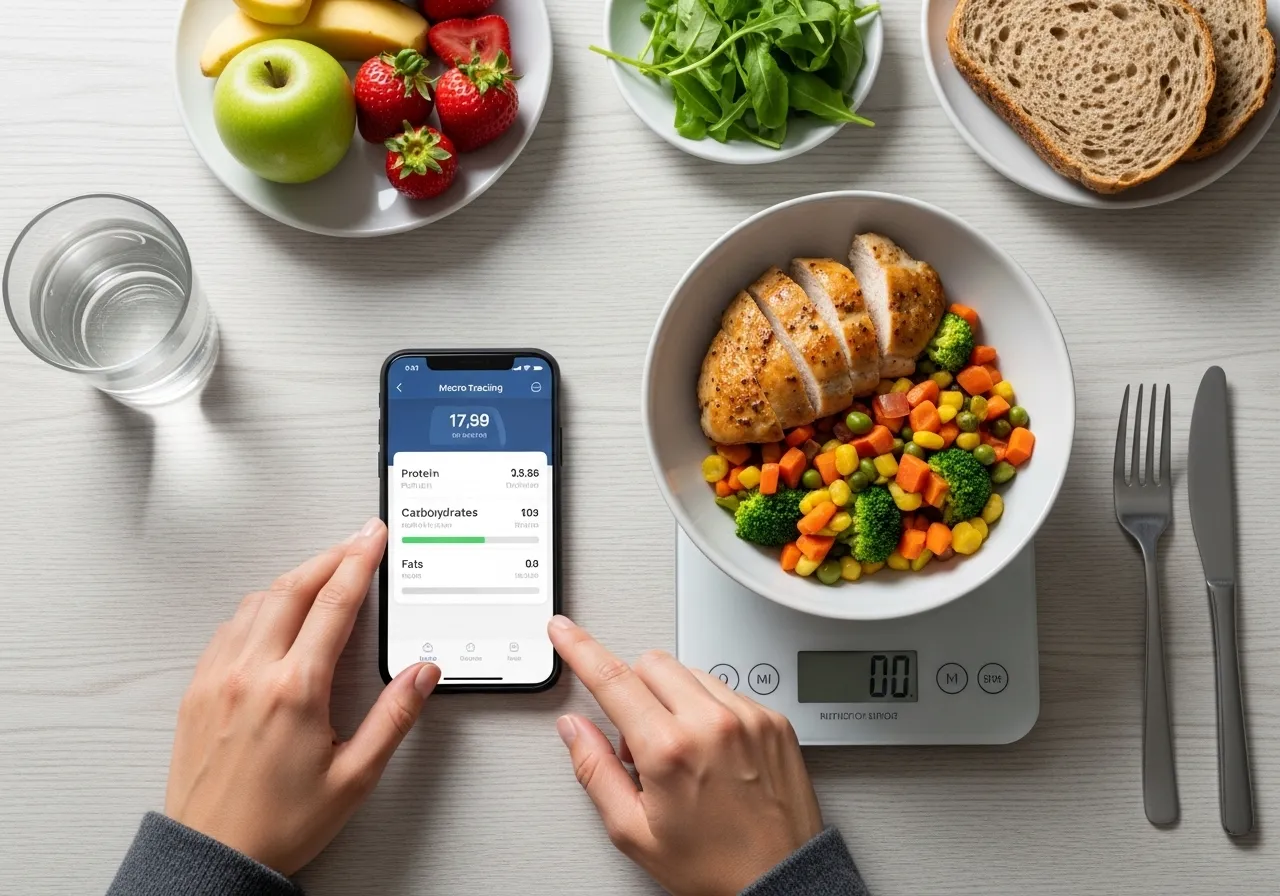
Why Track Macros and How It Actually Works
Macro tracking — recording the grams of protein, carbohydrates, and fat you consume daily against specific targets calibrated to your body composition and performance goals — is simultaneously one of the most effective nutritional interventions available and one of the most commonly abandoned after a few weeks of frustrated food logging. I tracked macros inconsistently for a year before learning the specific skills that make it sustainable: the food weighing shortcuts, the meal planning frameworks, the restaurant strategies, and the psychological approach that prevents tracking from becoming the obsessive relationship with food that its critics (legitimately) worry it can create. The difference between tracking that transforms body composition and tracking that creates anxiety is almost entirely a skills and mindset issue — not an inherent property of the practice itself.
What Macros Are and Why They Matter More Than Calories Alone
Macronutrients — protein, carbohydrates, and fat — are the three categories of energy-providing nutrients that together account for all dietary calories. Calories determine whether you gain, maintain, or lose weight (the energy balance principle that decades of metabolism research confirms); macronutrient composition determines what that weight change is made of (muscle, fat, or a mixture), how your training performance responds to the dietary pattern, how hungry you feel, and how your hormonal environment supports or impairs your goals. Two individuals eating identical calorie totals but different macronutrient compositions can have dramatically different body composition outcomes: the athlete eating 2,500 calories with 200g protein, 250g carbohydrates, and 67g fat will preserve more lean mass during a caloric deficit than the athlete eating 2,500 calories with 75g protein, 350g carbohydrates, and 90g fat — because the protein target drives the muscle protein synthesis that resists the lean mass loss that caloric restriction would otherwise produce. Tracking macros rather than just calories provides the specific nutritional information that allows deliberate optimization of not just total energy balance but the quality and composition of that balance. Research from the American Journal of Clinical Nutrition on dietary tracking and body composition consistently finds that individuals who track macronutrient intake achieve superior body composition outcomes compared to those who track only calories or use approximate portion control, with the protein tracking component showing the strongest independent association with lean mass preservation during weight management.
The Three Macronutrients: What Each Does
Protein (4 calories per gram): the macronutrient with the most direct impact on muscle mass, satiety, and the thermic effect of food (TEF — the caloric cost of digesting and processing the macronutrient, which is 25–30% for protein vs. 6–8% for carbohydrates and 2–3% for fat). Protein provides the amino acid substrates for muscle protein synthesis and supports the preservation of lean mass during caloric restriction. For athletes, protein is the most important macronutrient to track precisely because its effect on body composition is the most sensitive to getting the target right. Carbohydrates (4 calories per gram): the primary fuel for high-intensity exercise, the substrate for muscle glycogen that powers resistance training and interval cardio, and the macronutrient most directly responsible for training performance, recovery speed, and the anabolic hormonal environment of post-training recovery. Carbohydrate needs vary most widely based on training volume and intensity — high-volume strength and endurance athletes require significantly more than sedentary individuals, making carbohydrate tracking essential for performance optimization. Fat (9 calories per gram): the most calorie-dense macronutrient, critical for fat-soluble vitamin absorption (A, D, E, K), hormone production (testosterone and estrogen require adequate dietary fat for synthesis), and essential fatty acid intake (omega-3 and omega-6 polyunsaturated fats that cannot be synthesized endogenously). The minimum fat intake for hormonal health is approximately 0.5–0.8g per kilogram of body weight — falling below this threshold can impair reproductive hormone production in both men and women with measurable effects on training adaptation.
Food Databases and Tracking Apps: The Infrastructure of Macro Tracking
Macro tracking requires a food database (the reference library of macronutrient information for foods) and a tracking platform (the interface for logging and calculating daily totals). MyFitnessPal remains the most widely used tracking app — its database of 14+ million foods is the most comprehensive available, and the barcode scanning feature eliminates manual data entry for packaged foods. Cronometer is the preferred alternative for athletes prioritizing micronutrient tracking alongside macros — its database is smaller but more verified for accuracy than MyFitnessPal’s user-submitted database, which contains errors in a meaningful fraction of entries. Macro Factor and Carbon Diet Coach use algorithm-based macro adjustments that automatically recalibrate targets based on weekly weight tracking data — removing the manual recalculation that static macro targets require as body composition changes. The barcode scanner is the single most time-saving tracking feature — a scan of the product barcode populates all macronutrient information automatically, reducing packaged food logging to 5–10 seconds per item. Kitchen scale integration: most tracking apps allow entry in grams (the most accurate measurement for all solid foods), making a digital kitchen scale (available for $10–$20) the most important physical tool for accurate macro tracking. Research from the Journal of the Academy of Nutrition and Dietetics on dietary tracking accuracy finds that volume-based measurements (cups, tablespoons) underestimate actual intake by 20–30% compared to weight-based measurements — confirming the kitchen scale as the investment that makes tracking meaningful rather than approximate.
The Psychology of Tracking: Avoiding the Obsession Trap
The most important distinction in macro tracking is between flexible tracking (using macros as a daily budget that accommodates any food choices within the target) and rigid tracking (treating any deviation from plan as a failure requiring compensation or punishment). Flexible tracking — the approach supported by the research on dietary adherence and psychological wellbeing — produces superior long-term outcomes because it accommodates the social, spontaneous, and culturally meaningful aspects of eating that rigid approaches systematically conflict with. The cognitive framework: macros are a budget, not a moral framework. Eating a slice of birthday cake does not violate the macro budget — it uses a portion of the day’s carbohydrate and fat allocation, and the remainder of the day’s eating adjusts accordingly. The problem arises when deviation from the plan triggers the “I’ve already ruined today, might as well eat whatever” cognitive distortion that converts a small deviation into a complete dietary breakdown. Preventing this requires deliberate practice of the “adjust and continue” response — when a high-macro meal occurs, log it, see the remaining daily balance, and plan the next meal to bring the day back toward target. Research from the PubMed literature on flexible dieting and psychological outcomes finds that flexible dietary restraint is associated with lower rates of eating disorder symptoms, better mood, and superior long-term dietary adherence compared to rigid dietary restraint — confirming that the approach to tracking is as important as the tracking itself.
When Macro Tracking Is Most Valuable — and When to Skip It
Macro tracking is most valuable during specific phases and for specific goals: when body composition change is the primary objective (cutting for fat loss, bulking for mass gain, recomposition); when transitioning to a new nutritional approach (learning portion sizes and macronutrient content of new foods); when performance is stagnating and nutritional factors are the suspected cause; and when accurate data is needed to make informed adjustments to a current plan. Macro tracking adds less value for individuals with fully established eating habits that already achieve their nutritional goals intuitively (some experienced athletes can estimate and hit their targets accurately without logging); individuals in whom tracking reliably triggers disordered eating patterns or food anxiety; and situations where tracking is chronically inaccurate due to frequent restaurant meals, shared cooking, or high food variety that defeats systematic weighing. The goal of macro tracking is ultimately nutritional awareness — the detailed understanding of the macronutrient content of your regular diet that eventually makes accurate estimation possible without constant logging. Athletes who track consistently for 6–12 months typically develop sufficient awareness to transition to estimation-based approaches that maintain most of the benefits of tracking with significantly less cognitive load.
Macro tracking is not a diet — it is a nutritional measurement system that makes any diet more effective by replacing guesswork with data. The athletes who consistently achieve their body composition goals over years and decades are not those with the most willpower or the strictest dietary rules, but those who have developed the accurate nutritional awareness that tracking builds and the psychological flexibility that prevents tracking from becoming a source of stress rather than a tool for progress. Understanding macros — what they are, how they affect body composition differently, and how to track them with appropriate accuracy — is the foundational nutritional education that every serious athlete benefits from investing in. The weeks of learning the tracking system pay returns across the years of informed nutritional decision-making that the awareness it builds supports. The food database knowledge, the portion size calibration, the macronutrient estimation accuracy — all of these skills transfer to every nutritional context, whether the athlete is actively tracking or using the intuitive estimation that tracking experience enables. Start tracking, build the skills, and develop the nutritional intelligence that separates the athletes who consistently achieve their body composition goals from those who pursue them indefinitely without the data-informed approach that reliable progress requires. The discipline of macro tracking, applied consistently and intelligently across months and years of training, produces the compound nutritional benefit that mirrors the compound training benefit of progressive overload — each week of accurate data informs better decisions, each month of consistent protein targets preserves more lean mass, each year of informed dietary management produces the body composition that sporadic, untracked eating cannot achieve regardless of the effort invested in training. The athletes who look the way they train deserve to look are usually the ones who take nutrition as seriously as training — and macro tracking is the tool that makes taking nutrition seriously practical, measurable, and effective. Begin tracking today. Build the skill. Achieve the outcomes that your training deserves. Macro tracking is the nutritional foundation that separates athletes who consistently progress toward their goals from those who train hard but eat blindly — the data it provides converts subjective dietary beliefs into objective information that informs every nutritional decision with the accuracy that meaningful body composition change requires. The investment in the skill is modest; the return in outcomes is substantial. Track your macros. Transform your body. Trust the process. Every gram of protein tracked, every meal logged with accuracy, every weekly average reviewed with honest assessment is a step toward the nutritional mastery that elite athletes develop and that recreational athletes can access through the same systematic approach. The tools are available, the knowledge is accessible, and the practice is learnable — the only variable is whether you commit to the learning curve that converts tracking from an unfamiliar obligation into the automatic nutritional awareness that informs your best body composition outcomes. Start with protein. Add calories. Build the full tracking habit. The body you are training toward is waiting on the other side of the nutritional discipline that macro tracking enables. Log it. Learn from it. Grow because of it. Every gram counts.
The Macro Tracking Learning Curve: What to Expect
New macro trackers consistently encounter a predictable learning curve in their first 2–4 weeks — and understanding the specific challenges and milestones of this period prevents the premature abandonment that occurs when the initial difficulty is misinterpreted as a permanent feature of macro tracking rather than the temporary learning phase it represents. The first week challenge: the combination of learning the food database interface, developing the habit of logging before or immediately after eating, and confronting the often-shocking reality of actual macros versus perceived macros creates genuine cognitive load. Most new trackers underestimate this first-week difficulty and either give up when it feels overwhelming or conclude that their dietary choices must change dramatically — when in most cases, 2–3 targeted food swaps address the largest macro imbalances and the tracking process itself becomes substantially faster as food database familiarity grows. Week 2–3 acceleration: the time required to log a typical day drops from 20–30 minutes in week 1 to 5–10 minutes by week 3, as frequently eaten foods are saved in the “recent” category, meals are saved as “recipes” for one-tap logging, and the database search speed improves with familiarity. The behavioral habit formation of logging — triggered by the same contextual cues (sitting down to eat, finishing a meal, preparing food) — becomes increasingly automatic across weeks 2–4. Month 1 milestone: by the end of the first month, experienced trackers spend 3–5 minutes daily on logging while maintaining nutritional accuracy within 5–10% of targets — a completely sustainable time investment that produces the precision that body composition goals require.
Macro tracking is the most evidence-based nutritional tool available for athletes pursuing specific body composition goals — providing the objective precision that subjective dietary management cannot achieve and the feedback loop that converts nutrition from guesswork into a systematic, adjustable variable in the total training system. Begin with a two-week tracking audit of current eating, identify the specific macro gaps relative to research-based targets, implement the targeted corrections that the audit reveals, and experience the body composition changes that nutritional precision reliably produces when combined with the consistent, progressive training that provides the adaptive stimulus the nutrition supports. Track. Adjust. Transform. Go.

Setting Your Macro Targets: The Right Numbers for Your Goal
The specific macro targets that produce optimal outcomes depend on body composition goals, training volume, and individual metabolic factors — and the process of setting them correctly is more nuanced than the generic “40/40/20 protein/carb/fat split” that many introductory nutrition resources provide. The right targets for a 90kg powerlifter bulking are dramatically different from those appropriate for a 60kg recreational runner cutting for a race season.
Step 1: Calculate Your TDEE
Total daily energy expenditure (TDEE) is the total number of calories your body burns in a day across all activities — resting metabolic rate, the thermic effect of food, exercise, and non-exercise activity thermogenesis (NEAT). TDEE is the reference point from which caloric targets for all goals are derived. The Mifflin-St Jeor equation is the most accurate general TDEE estimation formula: for men, BMR = (10 × weight in kg) + (6.25 × height in cm) − (5 × age) + 5; for women, BMR = (10 × weight in kg) + (6.25 × height in cm) − (5 × age) − 161. Multiply BMR by the activity factor: 1.2 (sedentary, desk job, minimal exercise); 1.375 (lightly active, 1–3 days exercise per week); 1.55 (moderately active, 3–5 days per week); 1.725 (very active, 6–7 days per week of hard training); 1.9 (extremely active, physical job plus daily intense training). The resulting number is the estimated TDEE — but individual metabolic variation means this is an estimate with ±10–15% accuracy. Use the estimated TDEE as the starting point and calibrate based on 2–3 weeks of tracking data: if weight is stable at the calculated intake, the estimate is accurate; if weight is changing unexpectedly, adjust the caloric target accordingly.
Step 2: Set Protein — The Most Critical Macro
Set protein target first, as it is the highest priority macronutrient for athletes in all phases. The evidence-based protein targets by goal: muscle building (caloric surplus): 1.6–2.2g per kilogram of body weight daily — the upper range for athletes training at high volumes or for naturally lean individuals who benefit from higher protein intakes. Fat loss (caloric deficit): 2.0–2.8g per kilogram of body weight daily — protein requirements increase during caloric restriction because the reduced energy availability increases the risk of protein being oxidized for fuel rather than used for muscle protein synthesis; higher protein targets during deficits specifically protect lean mass. Maintenance (caloric balance): 1.4–2.0g per kilogram per day — the lower end of this range supports adequate MPS for muscle maintenance; the upper end provides additional satiety and metabolic rate support from the high thermic effect of protein. Practical translation for a 75kg athlete in a fat loss phase: 2.2g × 75kg = 165g protein daily = 660 calories from protein. This becomes the fixed allocation that carbohydrates and fat fill the remaining caloric budget around. Distribute protein across 4–5 meals with 30–40g per meal to maximally stimulate MPS at each eating occasion — the leucine threshold of 2.5–3g per meal is achievable from approximately 30g of complete animal protein or 35–40g of plant protein sources.
Step 3: Set Fat — The Hormonal Floor
After establishing protein, set the minimum fat allocation required to support hormonal health and fat-soluble vitamin absorption. The minimum fat target for hormonal health: 0.7–1.0g per kilogram of body weight daily. For a 75kg athlete: 53–75g of fat daily = 477–675 calories from fat. Athletes who reduce fat below this minimum risk impairment of testosterone and estrogen production, reduced fat-soluble vitamin absorption, and inadequate essential fatty acid intake — all of which impair training adaptation and health. During fat loss phases, fat is often reduced to the minimum threshold to maximize the carbohydrate allocation that preserves training performance; during muscle building phases, fat can be increased above the minimum to accommodate the higher caloric intake without requiring excessive carbohydrate volume. Practical fat sources: olive oil (14g fat per tablespoon), whole eggs (5g fat per egg), fatty fish like salmon (13g per 100g), avocado (15g per 100g), nuts (14–18g per 30g serving). Prioritize unsaturated fats (olive oil, avocado, fish, nuts) and minimize saturated fat to approximately 30% of total fat intake for cardiovascular health alongside the performance and body composition benefits of adequate total fat intake.
Step 4: Fill Remaining Calories with Carbohydrates
After protein and fat targets are established, carbohydrates fill the remaining caloric budget. Carbohydrates = (Total daily calories − protein calories − fat calories) ÷ 4. For a 75kg athlete targeting 2,200 calories with 165g protein (660cal) and 65g fat (585cal): remaining calories = 2,200 − 660 − 585 = 955 calories from carbohydrate = 955 ÷ 4 = 239g carbohydrates daily. The carbohydrate allocation is the most flexible macro — it can be reduced during phases where fat loss is prioritized (as long as training performance remains adequate) and increased during mass building phases when the higher caloric target creates additional carbohydrate budget. Carbohydrate timing matters more for this macronutrient than for protein or fat: concentrate 50–60% of daily carbohydrates in the meals surrounding training (pre-training meal 1–2 hours before; post-training meal within 2 hours) for the glycogen availability and post-training anabolic environment that performance and recovery require. The remaining carbohydrates distribute across other meals according to preference and satiety management needs.
Adjusting Targets Over Time: The Dynamic Approach
Macro targets are not permanent — they require periodic adjustment as body composition changes, training demands shift, and metabolic adaptation to dietary patterns occurs. Adjustment triggers and protocols: weight loss plateau (2+ weeks without weight change during a deficit despite verified tracking accuracy): reduce daily calories by 150–200 (primarily from carbohydrates, maintaining protein and fat floors); weight gain too rapid during bulk (gaining more than 0.5kg per week consistently): reduce daily calories by 100–200; training performance declining significantly during a deficit: increase carbohydrate allocation by 20–30g daily (adding 80–120 calories) while reducing fat slightly to maintain caloric target; body weight change requiring macro recalculation: recalculate TDEE based on new body weight every 5–10kg of weight change in either direction. The recalculation principle: a 75kg athlete’s TDEE differs meaningfully from their TDEE after gaining or losing 10kg, because the body composition change alters the resting metabolic rate and the activity caloric expenditure. Failing to recalculate allows the original macro targets to become progressively less appropriate as body composition changes.
The macro target setting process is a starting framework that reality refines — the initial calculations provide the best available estimate, and the subsequent weeks of tracking against those targets with regular body weight monitoring provide the feedback that converts the estimate into calibrated targets specific to the individual’s metabolism. No formula predicts individual TDEE with perfect accuracy because individual variation in metabolic efficiency, NEAT, and training energy expenditure is significant. The two-week trial-and-adjust protocol — setting targets based on the formula, tracking consistently for two weeks, and adjusting based on the weight trend versus the intended direction — converts the population-based formula into individually calibrated targets with a simple feedback loop. Athletes who understand this calibration process approach the initial calculation as a starting point rather than a ground truth, making the adjustment when body weight data indicates that reality differs from the formula prediction. The most successful macro trackers are those who trust the process enough to track consistently through the calibration period rather than abandoning the approach when the initial targets do not immediately produce the expected outcomes. Recalculate, adjust, and continue — the iterative process of macro target refinement is the pathway from population-average estimates to individually optimized nutritional targets that produce the body composition outcomes the tracking is designed to achieve. The discipline of macro tracking, applied consistently and intelligently across months and years of training, produces the compound nutritional benefit that mirrors the compound training benefit of progressive overload — each week of accurate data informs better decisions, each month of consistent protein targets preserves more lean mass, each year of informed dietary management produces the body composition that sporadic, untracked eating cannot achieve regardless of the effort invested in training. The athletes who look the way they train deserve to look are usually the ones who take nutrition as seriously as training — and macro tracking is the tool that makes taking nutrition seriously practical, measurable, and effective. Begin tracking today. Build the skill. Achieve the outcomes that your training deserves. Macro tracking is the nutritional foundation that separates athletes who consistently progress toward their goals from those who train hard but eat blindly — the data it provides converts subjective dietary beliefs into objective information that informs every nutritional decision with the accuracy that meaningful body composition change requires. The investment in the skill is modest; the return in outcomes is substantial. Track your macros. Transform your body. Trust the process. Every gram of protein tracked, every meal logged with accuracy, every weekly average reviewed with honest assessment is a step toward the nutritional mastery that elite athletes develop and that recreational athletes can access through the same systematic approach. The tools are available, the knowledge is accessible, and the practice is learnable — the only variable is whether you commit to the learning curve that converts tracking from an unfamiliar obligation into the automatic nutritional awareness that informs your best body composition outcomes. Start with protein. Add calories. Build the full tracking habit. The body you are training toward is waiting on the other side of the nutritional discipline that macro tracking enables. The numbers tell the truth your eyes cannot see. Track well. Live well.
Protein Tracking Priority: The Non-Negotiable Macro
While tracking all three macronutrients provides the most comprehensive nutritional management, athletes who find full macro tracking overwhelming can prioritize protein as the single most impactful macro to track with precision. The evidence for protein tracking priority: the research on macronutrients and body composition finds that protein intake is the variable most strongly and consistently associated with muscle retention during fat loss and muscle building during surplus — and it is also the macro most commonly and most severely underestimated by people who don’t track. Fat and carbohydrate intake have more flexible optimal ranges that different dietary approaches accommodate differently (low-fat, low-carb, and moderate approaches all produce equivalent outcomes when protein and calories are matched); protein has a narrower optimal range (1.6–2.2g/kg body weight for active individuals) that subjective eating “pretty well” reliably fails to hit. The simplified tracking approach for protein priority: use a kitchen food scale to weigh protein sources (the highest-protein foods in your diet — chicken, fish, eggs, Greek yogurt, protein powder) and log only protein-dense foods in detail, tracking fat and carbohydrate loosely by meal category (light meal, moderate meal, high-carb meal) rather than gram-precise logging. This simplified approach captures 80% of the benefit of full macro tracking at 40% of the effort — making it the sustainable starting point for athletes who cannot commit to comprehensive daily logging but need nutritional precision to break through body composition plateaus.
Macro tracking is the most evidence-based nutritional tool available for athletes pursuing specific body composition goals — providing the objective precision that subjective dietary management cannot achieve and the feedback loop that converts nutrition from guesswork into a systematic, adjustable variable in the total training system. Begin with a two-week tracking audit of current eating, identify the specific macro gaps relative to research-based targets, implement the targeted corrections that the audit reveals, and experience the body composition changes that nutritional precision reliably produces when combined with the consistent, progressive training that provides the adaptive stimulus the nutrition supports. The results follow the precision. Now.

How to Track Macros Without Obsession or Overwhelm
The practical skills that make macro tracking sustainable — rather than the time-consuming, anxiety-producing experience that causes most beginners to quit within weeks — are learnable and become increasingly automatic with practice. The investment of focused skill development in the first 4–6 weeks of tracking pays dividends for the entire period of dietary management that follows.
The Kitchen Scale: Making Accuracy Automatic
A digital kitchen scale (capacity 5kg, accuracy 1g, available for $10–$20) is the single most important tool for accurate macro tracking. Volume measurements (cups, tablespoons, handfuls) introduce 20–40% error relative to weight measurements for solid foods — an error that compounds across meals to produce a daily tracking error of 300–600 calories that defeats the purpose of precise macro targeting. The weighing workflow: place the container or plate on the scale, press tare (zero), add the food, record the weight in grams in the tracking app. For cooked foods: weigh after cooking for the most convenient workflow (the macronutrient database entries for cooked chicken, cooked rice, etc. match the cooked weight); for consistency, choose either raw or cooked and stick with the same convention. Foods that do not require weighing: tracked items with reliable portion information (eggs — count them; protein bars — scan the barcode; restaurant meals — use the restaurant’s provided nutrition information or established estimates). Build the habit of weighing by integrating the scale into the meal preparation workflow — placing it permanently on the counter rather than in a cabinet eliminates the friction of retrieving and setting up the scale for each use.
Meal Prep and Planning: Reducing Daily Tracking Burden
The most time-efficient approach to macro tracking is batch cooking and systematic meal preparation that converts the daily tracking task from a per-meal calculation into a per-week planning exercise. The practical approach: prepare 3–5 meals on Sunday that together account for 70–80% of the week’s eating — weigh and log these prepared meals once during preparation, then log portions at each eating occasion without repeated calculation. Staple meal rotation: maintaining 5–8 established meals with known macronutrient content that constitute the core of weekly eating eliminates the need to research and calculate macros for new foods daily. Once these staple meals are logged in the tracking app as custom meals or recipes, adding them to the daily log requires a single tap rather than the individual ingredient entry that new meal tracking requires. The 80/20 tracking approach: 80% of eating is planned, weighed, and tracked accurately; 20% is estimated with reasonable accuracy for social and spontaneous eating situations — this ratio maintains the nutritional accuracy that results require while reducing the cognitive load that 100% precision tracking creates. Research on dietary adherence consistently finds that moderate flexibility in tracking approach produces better long-term adherence than the all-or-nothing perfectionism that leads to abandonment when any deviation occurs.
Restaurant and Social Eating: Tracking Without a Kitchen Scale
Restaurant meals are the most common obstacle to macro tracking consistency — the absence of nutritional information for most independent restaurant meals, the inability to weigh portions, and the social pressure to not visibly track at the table all create friction that tracking beginners frequently resolve by abandoning tracking on restaurant days entirely. Better approaches: chain restaurant apps and websites — Chipotle, Subway, McDonald’s, Starbucks, and most major chains provide complete nutritional information that can be logged in tracking apps; use these resources for chain restaurant meals rather than estimating. For independent restaurants: use the “build from components” approach — identify the main protein source (grilled chicken breast ≈ 30–35g protein, 3–5g fat per 150g portion), the carbohydrate source (1 cup cooked pasta ≈ 40g carbohydrates), and the fat additions (tablespoon of butter ≈ 11g fat, tablespoon of olive oil ≈ 14g fat) to construct a reasonable estimate. For restaurant meals that are genuinely difficult to estimate: the strategy of simply logging the meal as “restaurant meal, estimated 700 calories, 40g protein, 60g carbs, 25g fat” with a deliberate caloric overestimate (restaurant portions and preparation methods add more fat than home cooking) is more productive than abandoning tracking entirely. The key principle: an imperfect log on restaurant days is vastly more useful than no log — the accumulated data of mostly-accurate tracking across weeks produces the trend information that informs dietary adjustments even when individual entries have estimation error.
Dealing With Tracking Fatigue: The Long-Term Sustainability Challenge
Tracking fatigue — the progressive decrease in motivation to log food carefully as the novelty of the practice diminishes and the cognitive load of daily tracking becomes increasingly burdensome — is the primary reason that macro tracking abandonment rates are high beyond 4–6 weeks. Evidence-based strategies for managing tracking fatigue: reduce tracking frequency as accuracy improves (track 5 days per week rather than 7, choosing the days most representative of normal eating patterns — the data quality of 5 well-tracked days is superior to 7 inconsistently tracked days); use tracking “sprints” rather than continuous logging (3–4 week intensive tracking periods alternating with 1–2 week estimation periods that use the awareness developed during tracking); expand the staple meal library so that tracking familiar foods requires minimal new calculation; and remind yourself of the specific goals that motivate tracking — the connection between the daily logging practice and the body composition or performance outcomes it serves reduces fatigue more reliably than optimizing the logistics of the tracking process alone.
Protein First Strategy: Simplifying Tracking for Beginners
For beginners overwhelmed by simultaneous tracking of all three macronutrients, the protein-first approach provides a simplified entry point that captures most of the body composition benefit with significantly less cognitive complexity. The strategy: track only protein intake for the first 2–4 weeks, hitting the daily protein target (1.6–2.2g/kg for muscle building, 2.0–2.8g/kg for fat loss) while eating to satiety for carbohydrates and fat. Research finds that hitting protein targets is the single highest-impact nutritional behavior for body composition — the muscle mass preservation during fat loss and the MPS stimulation during muscle building that protein enables are the outcomes most strongly associated with superior body composition outcomes compared to tracking carbohydrates and fat alone. Once protein tracking is habitual and accurate (typically 3–4 weeks), add calorie tracking as the second layer; then carbohydrate and fat breakdown as the third layer once calorie tracking is established. This progressive complexity approach prevents the information overload that causes early abandonment and builds the tracking skills in the order of their impact on outcomes.
The practical skills of macro tracking — weighing food, scanning barcodes, logging restaurant meals, managing tracking fatigue — are learnable by any motivated athlete within the 4–6 week learning curve that the initial practice requires. The athletes who successfully build the tracking habit past this initial learning period report that the skills become automatic within 2–3 months, reducing the daily tracking time to 5–10 minutes for most meals and producing the nutritional accuracy that body composition goals require. The key insight from long-term successful trackers: the goal is not perfect tracking but consistent, good-enough tracking that produces the data trend required for informed nutritional decisions. A tracking log that is 90% accurate across 7 days per week produces meaningfully superior outcomes and decision-making information than a tracking log that is 100% accurate for 3 days and absent for 4. Consistency at a reasonable accuracy level beats perfection at an unsustainable frequency — and the practical skills described in this section are the infrastructure that makes consistent tracking possible for athletes navigating the full complexity of modern eating environments. Research from the International Society of Sports Nutrition position stand on dietary tracking confirms that self-monitoring of dietary intake is one of the most consistently supported behavioral strategies for achieving dietary goals — a finding that validates the investment in tracking skill development that this section describes. The discipline of macro tracking, applied consistently and intelligently across months and years of training, produces the compound nutritional benefit that mirrors the compound training benefit of progressive overload — each week of accurate data informs better decisions, each month of consistent protein targets preserves more lean mass, each year of informed dietary management produces the body composition that sporadic, untracked eating cannot achieve regardless of the effort invested in training. The athletes who look the way they train deserve to look are usually the ones who take nutrition as seriously as training — and macro tracking is the tool that makes taking nutrition seriously practical, measurable, and effective. Begin tracking today. Build the skill. Achieve the outcomes that your training deserves. Macro tracking is the nutritional foundation that separates athletes who consistently progress toward their goals from those who train hard but eat blindly — the data it provides converts subjective dietary beliefs into objective information that informs every nutritional decision with the accuracy that meaningful body composition change requires. The investment in the skill is modest; the return in outcomes is substantial. Track your macros. Transform your body. Trust the process. Nutrition done right changes everything. Start tracking today. Track smarter. Eat better. Look the way you train.
Restaurant Macro Tracking: Practical Strategies
Restaurant meals represent the most challenging macro tracking context because ingredient quantities, preparation methods, and portion sizes are not directly observable — requiring estimation strategies that balance accuracy with the practical constraint that food is being prepared by others. The restaurant tracking hierarchy from most to least accurate: chain restaurants with published nutrition data (fast food, casual dining chains like Chipotle, Panera, Subway) where the nutrition database entry is based on standardized recipes; similar restaurant meals compared to home-cooked equivalents with known macros (a restaurant grilled chicken salad compared to a homemade grilled chicken salad with estimated ingredient quantities); and complete estimation using the portion-and-protein-source method for independent restaurants where no nutritional data exists. The high-accuracy chain restaurant approach: major chains now provide comprehensive nutritional information through their apps, websites, and in-store materials — logging from the official source rather than a database approximation provides the most accurate macro data available for these meals. The protein-first estimation for independent restaurants: identify the primary protein source and estimate its cooked weight (a palm-sized piece of chicken breast ≈ 3–4oz; a restaurant-sized steak ≈ 6–8oz), use this as the anchor macro, then estimate fat and carbohydrate from the preparation method (fried adds substantial fat, sauced dishes add variable fat and sugar, steamed/grilled adds minimal fat). The systematic overestimation approach: consistently add 10–15% to restaurant meal estimates to account for the generous oil, butter, and calorie-dense ingredients that restaurant cooking routinely uses in excess of standard recipe quantities.
Macro tracking is the most evidence-based nutritional tool available for athletes pursuing specific body composition goals — providing the objective precision that subjective dietary management cannot achieve and the feedback loop that converts nutrition from guesswork into a systematic, adjustable variable in the total training system. Begin with a two-week tracking audit of current eating, identify the specific macro gaps relative to research-based targets, implement the targeted corrections that the audit reveals, and experience the body composition changes that nutritional precision reliably produces when combined with the consistent, progressive training that provides the adaptive stimulus the nutrition supports. Every gram tracked is progress confirmed. Act.
Common Tracking Mistakes and How to Fix Them
Certain tracking errors consistently undermine macro tracking accuracy to the degree that the dietary data becomes misleading rather than informative. Identifying and correcting these errors is essential for macro tracking to produce the results that accurate tracking enables.
Mistake 1: Not Weighing Cooking Oils and Fats
Cooking oils, butter, and added fats are the most consistently underreported foods in dietary tracking — and the most calorie-dense, making their omission or underestimation the largest source of tracking error for most athletes. A tablespoon of olive oil (14g) provides 120 calories and 14g fat — a cooking session using “a splash” that actually delivers 3–4 tablespoons adds 360–480 calories to the meal that most athletes do not log. The solution: weigh all cooking oils and fats using the kitchen scale before adding to the pan — the 5 seconds this takes produces the largest accuracy improvement available per unit of effort for most tracking beginners. Alternatively, use spray oils (providing 0.25g fat per 1-second spray) in contexts where portioning cooking oil accurately is inconvenient. Log butter, mayonnaise, salad dressings, and other fat-containing condiments with the same precision as protein sources — a tablespoon of mayonnaise (14g) provides 95 calories and 10g fat, an addition that meaningfully affects daily fat and calorie totals.
Mistake 2: Using Database Entries Without Verification
MyFitnessPal’s user-submitted database contains significant errors in a non-trivial fraction of entries — incorrect macronutrient values, wrong serving sizes, and duplicated entries with conflicting data that make accurate logging unreliable without entry verification. The verification habit: when adding a new food to the database, compare the entry’s macronutrient values to the nutrition label on the product — if they match within 5%, the entry is reliable; if they diverge, search for alternative entries or create a custom entry from the label data. For restaurant meals estimated from the restaurant’s website, verify that the entry in the tracking app matches the restaurant’s posted values rather than using a potentially outdated or inaccurate database entry. The custom food feature in all major tracking apps allows creating entries from nutrition label data with verified accuracy — building a library of verified custom entries for regularly consumed foods eliminates the verification burden of repeated database searches.
Mistake 3: Forgetting Beverages, Condiments, and Tastes
The cumulative macro contribution of beverages, condiments, and cooking tastes is consistently underestimated — and for some athletes, contributes 200–400 calories daily that effective tracking must capture. Milk in coffee: 30ml of whole milk (approximately 20 calories, 1g protein, 1g fat, 1.5g carbs) across 3–4 coffees adds 60–80 calories; cream adds 30–50 calories per coffee from the higher fat content. Juice and non-diet beverages: a 250ml glass of orange juice contains approximately 110 calories and 26g carbohydrates — equivalent to a piece of fruit, and a significant addition to the daily carbohydrate allocation. Alcohol: a standard drink (14g pure alcohol) provides 98 calories that most tracking apps categorize as carbohydrates (the tracking convention for alcohol calories) — a social evening with 3–4 drinks adds 300–400 calories that accurate tracking must include. Cooking tastes and bites: the small amounts tasted during cooking, the handful of nuts grabbed passing the kitchen, the bite of a partner’s dessert — these “invisible” eating occasions can add 100–200 calories daily. The solution is not perfect tracking of every bite but honest logging of the regular habits that consistently add calories that the logged total does not capture.
Mistake 4: Tracking Planned Meals Rather Than Actual Intake
Pre-logging planned meals (entering what you intend to eat before eating it) is a useful planning strategy but becomes a tracking error when the actual intake differs from the plan and the log is not updated to reflect reality. The most common form of this error: pre-logging a planned dinner that ends up being a larger portion than logged, or a meal out that differs from the pre-planned meal, without updating the log after eating. The accurate tracking protocol: log foods as they are eaten (or immediately after the meal) rather than pre-logging the entire day in the morning. If pre-logging is used for planning purposes, treat the pre-log as a template that requires review and update against actual intake at the end of the day. The end-of-day review: spend 2 minutes reviewing the day’s log before closing the tracking app each evening — this habit catches the logging omissions and estimation errors that the moment-by-moment tracking misses and allows same-day correction before the data becomes inaccurate historical record.
Mistake 5: Ignoring Weekly Averages in Favor of Daily Perfection
Macro tracking achieves its goal through weekly average consistency, not daily perfection — yet most tracking beginners evaluate success on a daily basis, producing the anxiety and perceived failure that triggers tracking abandonment when individual days deviate from targets. The weekly average framework: total the week’s macronutrient intake and divide by seven — if the weekly average protein hits 90%+ of the daily target, the weekly carbohydrate and fat averages are within 10–15% of target, and the weekly caloric average matches the intended surplus or deficit, the tracking has achieved its purpose regardless of individual day variation. A day 500 calories over target followed by a day 300 calories under target produces a 2-day average that is close to the intended balance — a normal variation pattern that requires no compensatory restriction beyond awareness of the short-term surplus. This weekly perspective reduces the daily scoring mentality that makes tracking feel like pass-fail performance rather than information collection, and dramatically improves the psychological sustainability of the practice.
The tracking mistakes described in this section are not character flaws — they are predictable systematic errors that arise from the gap between how most people conceptualize food portions and the actual macronutrient content that precise measurement reveals. Correcting these errors does not require perfectionism but awareness — the deliberate attention to the specific high-error food categories (cooking fats, beverages, condiments, restaurant meals) that produce the largest discrepancy between perceived and actual intake. Athletes who identify their personal high-error categories through the occasional full-precision tracking day (weighing and logging everything, including every cooking oil addition and every beverage) are often surprised by the gap between their estimated and actual daily intake — a revelation that recalibrates their estimation accuracy for all subsequent tracking. The correction of tracking errors is the difference between tracking that produces actionable nutritional data and tracking that produces data confirming the athlete’s existing beliefs about their intake — and the body composition outcomes that accurate tracking enables versus the stagnation that inaccurate tracking conceals by providing false reassurance of dietary compliance. The discipline of macro tracking, applied consistently and intelligently across months and years of training, produces the compound nutritional benefit that mirrors the compound training benefit of progressive overload — each week of accurate data informs better decisions, each month of consistent protein targets preserves more lean mass, each year of informed dietary management produces the body composition that sporadic, untracked eating cannot achieve regardless of the effort invested in training. The athletes who look the way they train deserve to look are usually the ones who take nutrition as seriously as training — and macro tracking is the tool that makes taking nutrition seriously practical, measurable, and effective. Begin tracking today. Build the skill. Achieve the outcomes that your training deserves. Macro tracking is the nutritional foundation that separates athletes who consistently progress toward their goals from those who train hard but eat blindly — the data it provides converts subjective dietary beliefs into objective information that informs every nutritional decision with the accuracy that meaningful body composition change requires. The investment in the skill is modest; the return in outcomes is substantial. Track your macros. Transform your body. Trust the process. Accurate data produces accurate results. Track with intention. Begin now. Results follow.
Flexible Dieting vs. Rigid Meal Planning: Which Works Better
The psychological approach to macro tracking — flexible dieting (hitting macro targets through any food combination) versus rigid meal planning (following a fixed meal schedule with identical daily foods) — significantly influences both adherence and the psychological relationship with food that determines long-term dietary sustainability. Flexible dieting (IIFYM — If It Fits Your Macros): the approach that prioritizes hitting daily macro targets regardless of the specific foods used, allowing any food to be incorporated as long as it contributes to the targets within overall caloric limits. Research on dietary flexibility and adherence consistently finds that flexible approaches produce equivalent or superior body composition outcomes to rigid approaches while producing significantly lower rates of eating disorder symptoms, food anxiety, and dietary lapse — the psychological freedom of knowing that any food can be accommodated within targets prevents the all-or-nothing thinking that rigid dieting produces when an unplanned food deviates from the meal plan. Rigid meal planning: the approach that specifies exact meals and quantities for each day, removing decision fatigue and simplifying tracking to a one-time setup with daily repetition. Research finds that rigid planning produces higher daily tracking accuracy and lower decision fatigue for individuals who find constant food decision-making cognitively draining — but also produces higher rates of complete dietary abandonment when the meal plan is disrupted. The optimal hybrid: develop a flexible “template” of typical meals that hit macro targets on a standard day (providing the structure of meal planning without rigid prescription), while maintaining the flexible mindset that adapts to non-standard days without viewing them as dietary failures.
Macro tracking is the most evidence-based nutritional tool available for athletes pursuing specific body composition goals — providing the objective precision that subjective dietary management cannot achieve and the feedback loop that converts nutrition from guesswork into a systematic, adjustable variable in the total training system. Begin with a two-week tracking audit of current eating, identify the specific macro gaps relative to research-based targets, implement the targeted corrections that the audit reveals, and experience the body composition changes that nutritional precision reliably produces when combined with the consistent, progressive training that provides the adaptive stimulus the nutrition supports. Start now. Win later.

Flexible Dieting, Social Eating, and Long-Term Sustainability
The ultimate purpose of macro tracking is not the tracking itself but the body composition and performance outcomes it enables — and those outcomes are only achievable through the long-term dietary consistency that sustainable tracking practices support. The transition from tracking as a strict daily obligation to tracking as an integrated nutritional awareness practice is the evolution that separates long-term successful trackers from those who cycle through intense tracking and complete abandonment.
If It Fits Your Macros (IIFYM): The Flexible Dieting Philosophy
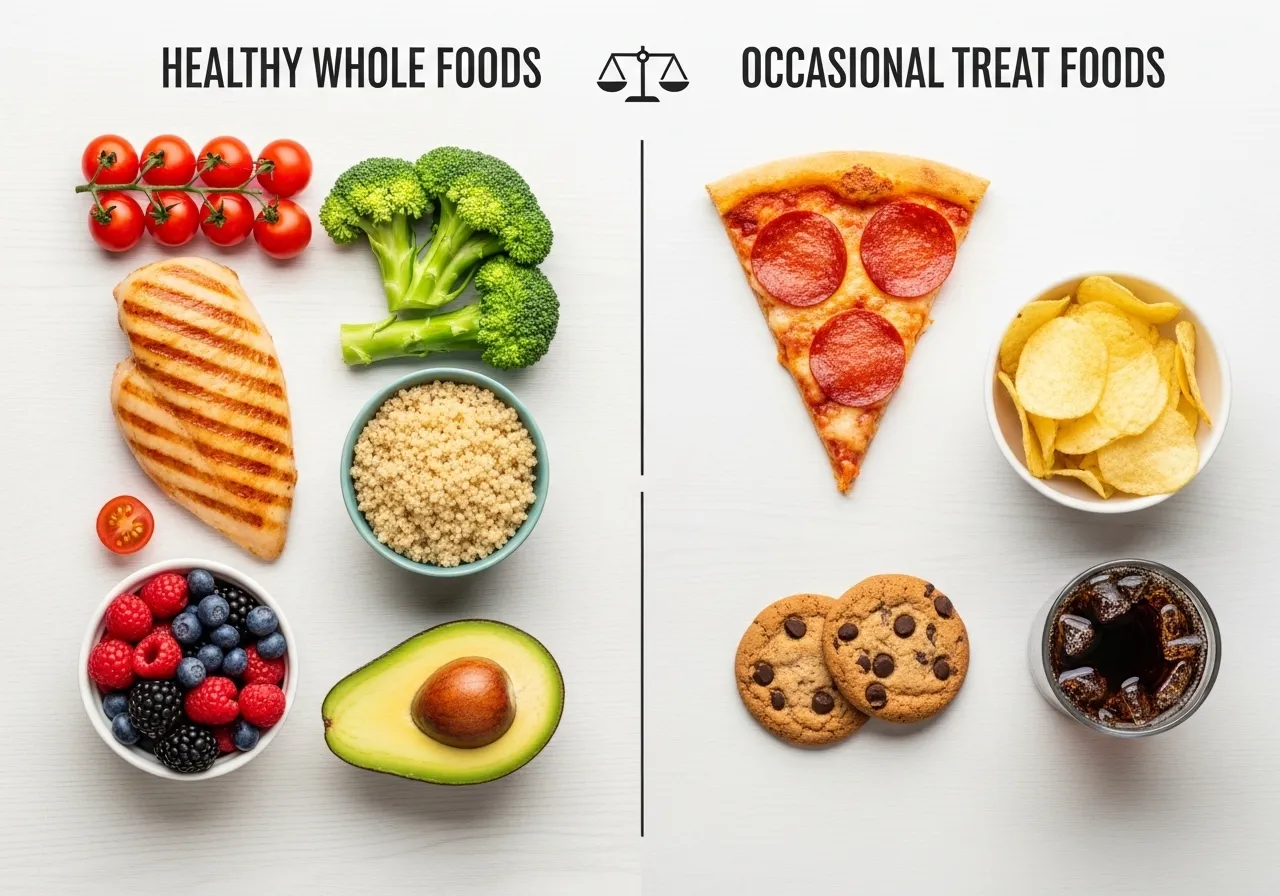
“If It Fits Your Macros” — the colloquial name for flexible dieting — is the nutritional philosophy that any food can be included in a diet as long as it fits within the daily macro and caloric budget. The research support for flexible dieting over rigid “clean eating” approaches is robust: the Examine.com synthesis of flexible dieting research finds that flexible dietary restraint consistently produces equal or superior body composition outcomes compared to rigid clean eating approaches, with significantly lower rates of dietary lapse, binge eating, and psychological distress. The mechanism: when no food is categorically forbidden, the psychological deprivation and subsequent overconsumption cycle that rigid restriction creates is eliminated — making the flexible approach more sustainable over the months and years that meaningful body composition change requires. The practical application of IIFYM: 80–90% of the daily macro budget comes from nutrient-dense whole foods (lean proteins, vegetables, fruits, whole grains, healthy fats) that provide the micronutrient density, fiber, and satiety that performance and health require; 10–20% of the budget is allocated to preference foods (desserts, processed snacks, social food) that provide the flexibility and enjoyment that dietary adherence requires. This ratio ensures adequate micronutrient intake while eliminating the psychological burden of complete food restriction.
Social Eating: Maintaining Tracking and Social Connection Simultaneously
The conflict between social eating occasions (dinners out, celebrations, vacations) and macro tracking consistency is one of the most frequently cited reasons for tracking abandonment — and one of the most solvable with the right strategic framework. Strategies for maintaining tracking without sacrificing social participation: the caloric buffer strategy (eat below TDEE by 200–300 calories on the 1–2 days before a known social occasion, creating a small caloric buffer that accommodates a higher-calorie social meal without exceeding the weekly average target); the protein priority approach at social events (prioritize protein-containing foods at the social event to meet the day’s protein target, then allow carbohydrates and fat to fill remaining social eating without obsessive tracking); the estimation and log approach for restaurant meals (described in Section 3); and the “one-day deviation” acceptance framework (recognize that a single day of dietary deviation has negligible impact on weekly averages and zero impact on long-term body composition when surrounded by 6 days of accurate tracking). The athletes who maintain the best long-term tracking consistency are those who have explicitly resolved that social eating is valued and non-negotiable, and have built the strategies that accommodate it within their tracking framework — rather than those who attempt to track perfectly in all social situations and eventually abandon tracking entirely when social pressure repeatedly overcomes tracking discipline.
Tracking Vacations and Diet Breaks: Strategic Maintenance Periods
Planned tracking breaks (periods of eating to satiety or at maintenance without detailed macro logging) serve several important functions for the long-term tracker: they reduce the cognitive burden of continuous tracking before it accumulates to the tracking fatigue that causes abandonment; they provide psychological relief from the dietary structure that sustained tracking creates; and they allow the reverse hormonal adaptation that prolonged caloric restriction produces (reduced leptin, elevated ghrelin, reduced metabolic rate) to partially reverse before resuming the deficit. The structured diet break: 1–2 weeks of eating at estimated maintenance (not tracking macros precisely, but avoiding significantly positive or negative caloric balance) every 8–12 weeks of active caloric deficit. Research on diet breaks and metabolic adaptation finds that athletes who implement structured maintenance periods maintain higher metabolic rates and better hormonal profiles than those who maintain continuous deficits of equal duration — producing superior long-term fat loss despite the temporary halt in the deficit. The tracking framework for diet break periods: continue tracking protein (the habit most worth maintaining to preserve lean mass during the maintenance period) while relaxing carbohydrate and fat tracking to rough estimation — this maintains the most important tracking habit while reducing the cognitive burden that makes the break genuinely restorative.
Transitioning to Intuitive Eating: The End Goal of Tracking
The long-term goal of macro tracking is not indefinite precision logging but the development of nutritional awareness accurate enough to support intuitive eating — consuming appropriate macronutrient amounts and caloric balance through developed food knowledge and hunger-satiety awareness rather than continuous measurement. Experienced trackers who have tracked consistently for 12–24 months typically develop the ability to estimate their macro intake accurately enough (within 10–15% of actual values) that continuous tracking adds minimal accuracy benefit relative to its ongoing cognitive cost. The transition protocol: reduce tracking to 3–4 days per week (the days most representative of habitual eating) and use estimation on the remaining days; compare estimation accuracy against actual values on tracked days to calibrate estimation skills; progressively reduce tracked days as estimation accuracy improves; maintain periodic tracking “check-ins” (1 week of full tracking every 2–3 months) to recalibrate estimation accuracy as dietary patterns, food choices, or goals change. The tracking-to-intuition transition is not the end of nutritional awareness but the graduation from a structured learning period to the application of developed nutritional intelligence — a transition that benefits from the solid foundation of accurate tracking experience that makes the estimation reliable.
Frequently Asked Questions About Macro Tracking
How long does it take to get good at tracking? Most people find tracking becomes significantly faster and less stressful within 3–4 weeks as the food database familiarity, weighing habits, and macro estimation skills develop. Full proficiency — where tracking feels automatic and requires minimal cognitive effort — typically develops within 8–12 weeks of consistent practice. Do I need to track on rest days? Yes — tracking on rest days maintains the weekly average accuracy that the approach depends on. Some athletes use lower carbohydrate targets on rest days (25–50g less than training days) and higher carbohydrates on training days (carbohydrate cycling) — a strategy that matches carbohydrate availability to training demand rather than spreading it evenly across the week. What if I go over my macros? Log it, see the actual deviation (which is usually smaller than the anxiety about it suggests), and eat accordingly for the remainder of the day and the following days. Going over macros on any single day has no meaningful impact on the weekly averages that determine body composition outcomes. Is tracking macros the same as counting calories? Macro tracking includes calorie tracking as a natural consequence (since macronutrient grams convert to calories by fixed factors) but provides additional information about the composition of those calories that influences body composition quality, hormonal health, and training performance. How precise does tracking need to be? Within 10% of daily targets is sufficient for meaningful results — perfect precision is neither achievable nor necessary. The research on tracking accuracy and body composition outcomes finds diminishing returns on accuracy improvements beyond 10% precision, confirming that good-enough tracking beats perfect-tracking attempts that fail due to their burden. Should I track fiber? Fiber does not need to be separately targeted in most cases — meeting vegetable, fruit, legume, and whole grain intake naturally achieves adequate fiber as a secondary consequence. Athletes on very low-carbohydrate diets may need to monitor fiber specifically to ensure adequate intake despite restricted carbohydrate sources.
The long-term sustainability of macro tracking depends less on the tracking system itself than on the psychological relationship with food and dietary structure that the tracker cultivates. Athletes who experience tracking as a tool for achieving valued goals — the body composition, the performance, the health outcomes that motivate the dietary structure — sustain the practice through the inevitable periods of fatigue and inconvenience because the connection between the practice and the outcomes remains motivationally salient. Athletes who experience tracking as an obligation imposed by external expectation or as evidence of their own dietary inadequacy experience it as burdensome from the beginning and are vulnerable to complete abandonment when any obstacle arises. The reframing that makes tracking sustainable: tracking is not punishment for eating the wrong things — it is measurement of fuel intake for a high-performance biological system that functions optimally with appropriate fuel management. The same precision that athletes apply to training programming (sets, reps, progression) applied to nutritional programming (macros, timing, quality) is what elevates results from adequate to optimal. The decision to track macros is the decision to take nutrition as seriously as training — and the athletes who make both commitments consistently are the ones who achieve the body composition and performance outcomes that selective commitment to training alone rarely produces. Track your macros. Know your numbers. Achieve your goals. The discipline of macro tracking, applied consistently and intelligently across months and years of training, produces the compound nutritional benefit that mirrors the compound training benefit of progressive overload — each week of accurate data informs better decisions, each month of consistent protein targets preserves more lean mass, each year of informed dietary management produces the body composition that sporadic, untracked eating cannot achieve regardless of the effort invested in training. The athletes who look the way they train deserve to look are usually the ones who take nutrition as seriously as training — and macro tracking is the tool that makes taking nutrition seriously practical, measurable, and effective. Begin tracking today. Build the skill. Achieve the outcomes that your training deserves. Macro tracking is the nutritional foundation that separates athletes who consistently progress toward their goals from those who train hard but eat blindly — the data it provides converts subjective dietary beliefs into objective information that informs every nutritional decision with the accuracy that meaningful body composition change requires. The investment in the skill is modest; the return in outcomes is substantial. Track your macros. Transform your body. Trust the process. Your goals are achievable. Your macros make them measurable. Commit fully. Win completely.
Long-Term Macro Tracking: Building Nutritional Intuition
The goal of macro tracking is not permanent reliance on an app and food scale for every eating decision — it is the development of accurate nutritional intuition that eventually allows informed dietary choices without constant measurement. Research on the long-term effects of dietary tracking confirms that individuals who track macros consistently for 3–6 months develop substantially more accurate intuitive eating patterns than those who never track — the tracking period calibrates the internal estimation system that then operates more accurately without tracking than it did before the tracking experience. The tracking graduation process: most athletes find that tracking with full precision for 8–16 weeks of active body composition change (fat loss or muscle building phase) is followed by a maintenance phase where intuitive eating informed by tracking experience maintains the dietary quality that precision tracking produced. Returning to full tracking for new body composition goals — a new fat loss phase, a muscle building cycle — applies the recalibrated estimation skills that make the reintroduction of tracking faster and more accurate than the initial learning period. The permanent daily tracking that social media “macro tracking” culture sometimes promotes is unnecessary and potentially counterproductive for long-term dietary health — the goal is permanent nutritional intelligence, not permanent dependence on external measurement tools. Use tracking as the educational and corrective tool it was designed to be: intensively during body composition change phases, intermittently for recalibration when dietary drift occurs, and minimally during stable maintenance when the intuitive eating skills that tracking developed are performing adequately.
Macro tracking is the most evidence-based nutritional tool available for athletes pursuing specific body composition goals — providing the objective precision that subjective dietary management cannot achieve and the feedback loop that converts nutrition from guesswork into a systematic, adjustable variable in the total training system. Begin with a two-week tracking audit of current eating, identify the specific macro gaps relative to research-based targets, implement the targeted corrections that the audit reveals, and experience the body composition changes that nutritional precision reliably produces when combined with the consistent, progressive training that provides the adaptive stimulus the nutrition supports. Done.