How to Eat Healthy on a Tight Budget
⚠️ Disclaimer: The information in this article is for general educational purposes only and does not constitute medical, nutritional, or professional fitness advice. Individual results may vary. Always consult a qualified healthcare professional or certified fitness trainer before starting any new exercise program, changing your diet, or making decisions about injury treatment or recovery. If you experience pain, discomfort, or any unusual symptoms during exercise, stop immediately and seek professional guidance.

Why Budget Eating Is a Skill, Not a Sacrifice
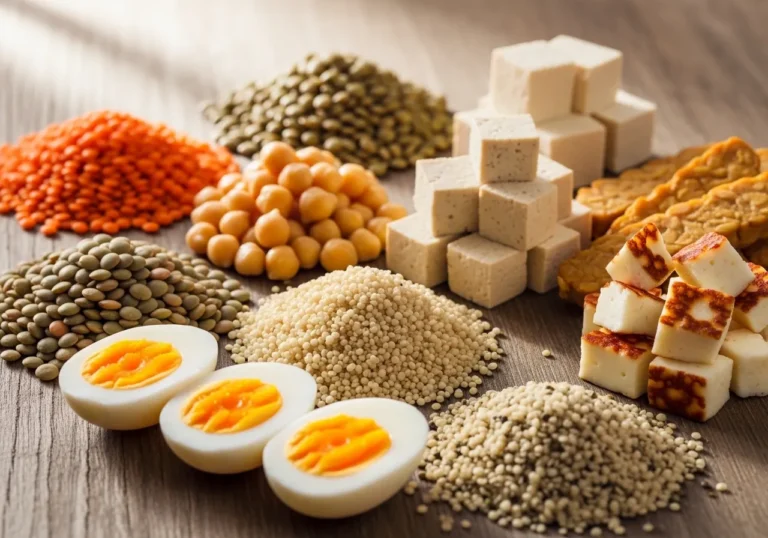
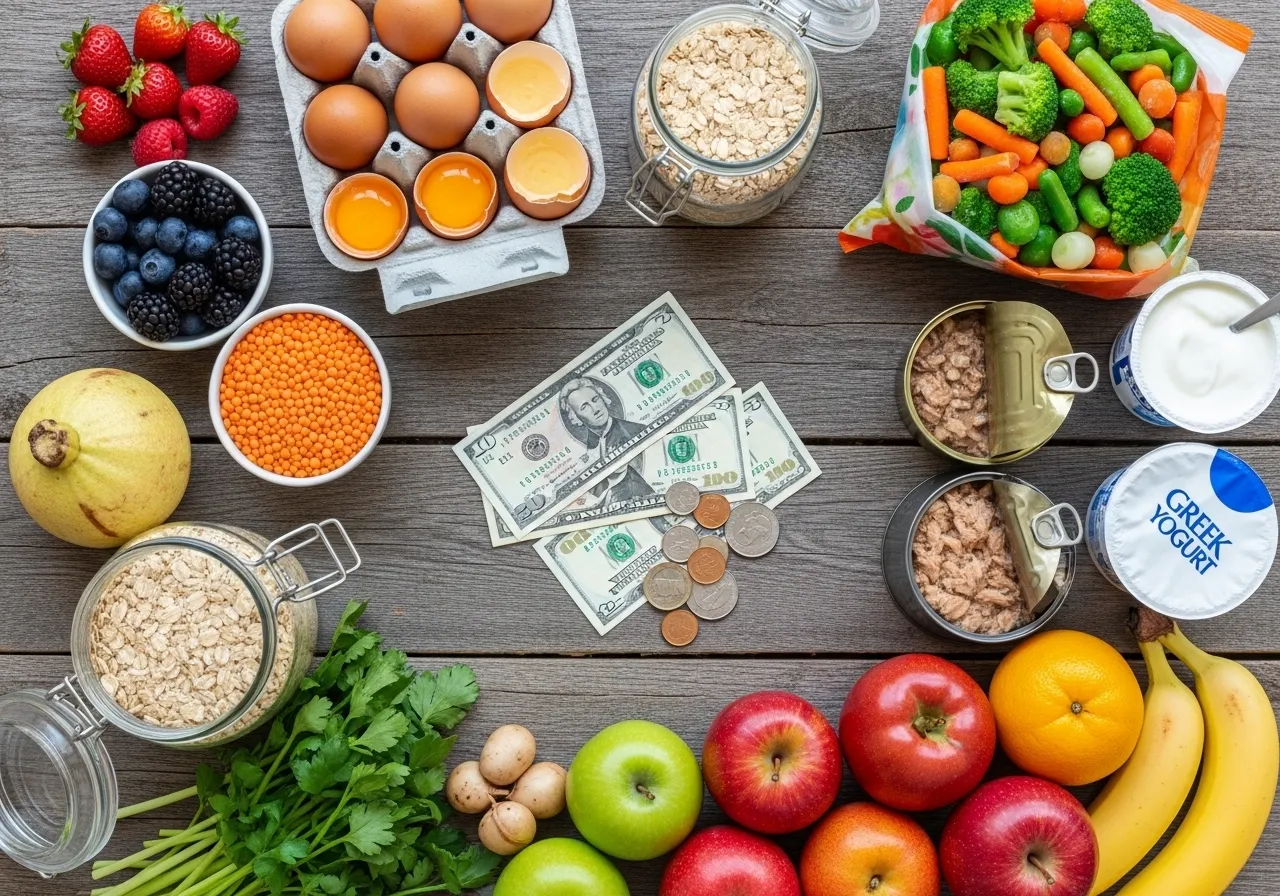
The belief that healthy eating is inevitably expensive is one of the most persistent and damaging myths in nutritional discourse. It is perpetuated by fitness media that showcases premium superfoods, specialty supplements, and gourmet meal prep products as the standard of healthy eating — a framing that makes healthy eating appear financially inaccessible to anyone not earning a comfortable income. The reality, supported by extensive nutritional economics research, is that the most nutritionally dense foods available are consistently among the cheapest: eggs, lentils, canned sardines, oats, frozen vegetables, and dried beans provide nutrition profiles that expensive specialty foods cannot meaningfully improve upon, at fractions of the cost.
Budget eating is a skill — specifically, the skill of maximizing nutritional value per dollar spent — and like all skills, it improves with practice, knowledge, and the right frameworks. Research published by the Harvard T.H. Chan School of Public Health found that the healthiest dietary patterns (Mediterranean-style, whole food plant-forward) can be maintained at costs comparable to or lower than the processed food diets they replace, when meal planning and ingredient selection are optimized for cost. The premium is not in eating healthy food but in convenience, packaging, and marketing — remove those, and healthy eating is accessible at virtually any income level.
The Real Cost of Unhealthy Eating
The apparent cost savings of cheap processed food are significantly offset by downstream health costs that are less visible but financially substantial: increased healthcare utilization, lost productivity from energy crashes and illness, reduced physical performance that limits income-generating activities, and the compounding health costs of the chronic diseases associated with poor nutritional quality over decades. Research consistently finds that the lifetime healthcare cost differential between people who maintain good nutritional habits and those who don’t exceeds $100,000 — making the small per-meal premium of whole food over processed food the highest-return financial investment available to most people, regardless of income level.
Reframing Value in Food Choices
The most useful reframing for budget-constrained healthy eating is shifting from cost per package to cost per gram of protein and cost per complete meal. A $4 pack of chicken thighs provides 4 to 5 servings of complete protein at $0.80 to $1.00 per serving. A $3 bag of lentils provides 10 to 12 servings of substantial plant protein at $0.25 to $0.30 per serving. A $6 bag of rolled oats provides 30 to 40 servings of complex carbohydrates with fiber and micronutrients at $0.15 to $0.20 per serving. These cost-per-serving calculations reveal that whole food nutrition is not only affordable but frequently cheaper per nutritional unit than the processed alternatives that carry a perception of cost-effectiveness due to low shelf prices despite low nutritional density.
Seasonal and Regional Cost Variations
Food costs vary significantly with season and region in ways that can be leveraged to maintain nutritional quality while minimizing cost. Seasonal produce — purchased at peak supply when prices are lowest — provides the highest nutritional density at the lowest prices of the year. Farmers markets at closing time offer significant discounts on produce that vendors would rather sell than transport back. Ethnic grocery stores (Asian, Latin, South Asian) consistently offer lower prices on produce, legumes, and whole grains than mainstream supermarkets in most urban areas, often with greater variety and freshness. Joining a food cooperative or community supported agriculture (CSA) program provides premium produce at wholesale prices. Building awareness of these seasonal and local cost variations — and adjusting purchasing accordingly — is one of the highest-leverage budget eating skills.
The Budget Eating Mindset Shift
The most important budget eating mindset shift is from “what can I afford?” to “how do I maximize nutrition per dollar?” The former produces a passive approach that defaults to whatever is cheapest without strategic consideration of nutritional value. The latter produces a proactive approach that identifies the specific foods offering the best nutritional value at the lowest cost and builds meal plans around those foods. This mindset shift doesn’t require more spending — it requires more thinking, planning, and skill development. The 30 to 60 minutes per week invested in strategic meal planning around high-value, low-cost foods produces better nutritional outcomes at lower total cost than shopping without a plan at any income level.
Deepening Your Knowledge
The nutritional economics of healthy eating is a well-researched area with actionable findings for people at every income level. The core finding — that whole food nutrition is not inherently more expensive than processed food nutrition — has been validated across multiple countries, economic contexts, and demographic groups. The barrier to budget healthy eating is almost never absolute cost; it is the skill, knowledge, and habit gaps that make expensive convenience food appear to be the only practical option for busy people with limited resources.
Research from the American Journal of Clinical Nutrition found that diet quality scores do not significantly correlate with food expenditure when cooking skill and meal planning behavior are controlled for — people with high cooking skill and consistent meal planning maintain high-quality diets at the same cost as people with low cooking skill maintain poor-quality diets. This finding is both encouraging (diet quality is more a matter of skill than money) and motivating (developing cooking and planning skills produces permanent, income-independent improvements in nutritional quality). The investment in learning to cook well and plan meals effectively pays more consistent and compounding returns than any other budget eating strategy.
For practical next steps, I recommend beginning with the Sunday meal prep habit described in this article — 90 minutes of batch cooking that provides the foundation for a week of nutritious eating — and building the pantry staples list over the course of a month. These two habits, established consecutively over 4 to 6 weeks, produce the behavioral infrastructure from which all other budget healthy eating strategies build naturally.
Real-World Budget Eating Success Stories
The principles in this article are not theoretical — they are practiced daily by millions of people around the world who achieve exceptional nutritional quality on modest food budgets. Traditional food cultures — Mediterranean, Japanese, Indian, West African — that are internationally recognized for both their health outcomes and their culinary satisfaction are primarily built on the cheap staple ingredients (legumes, whole grains, vegetables, eggs, modest fish) that modern fitness marketing overlooks. The “poverty foods” that these cultures elevated into culinary traditions are the most nutritionally complete, most sustainably affordable, and — when prepared with skill and seasoning — most delicious foods available.
Adopting a budget healthy eating approach does not require abandoning culinary enjoyment; it requires developing the cooking skills to make inexpensive ingredients taste exceptional. A well-seasoned lentil dal, a perfectly spiced bean stew, or a beautifully prepared rice bowl with soft-boiled egg can be genuinely more satisfying than an expensive restaurant meal — and costs a fraction of the price to prepare. The investment in cooking skill is the investment that transforms budget eating from deprivation into abundance.
FAQ: Budget Healthy Eating
Is healthy eating really affordable?
Yes, when built around whole food staples. The cheapest diets in the world — built on lentils, beans, rice, oats, eggs, and seasonal vegetables — are also among the most nutritionally complete. The expensive diets are typically those built around processed convenience foods, restaurant meals, and premium branded supplements. Shifting spending from these categories to whole food cooking produces better nutrition at lower cost for virtually everyone in developed countries with access to basic grocery stores.
What’s the cheapest complete protein source?
Dried lentils provide the cheapest protein per gram of any accessible food — approximately $0.007 to $0.011 per gram at current prices in most markets. While not complete in methionine, combining with any grain (the combination consumed by billions of people worldwide as traditional cuisine) provides a complete amino acid profile at essentially zero additional cost. Eggs provide the cheapest animal-complete protein source at $0.05 to $0.07 per gram with the highest biological value of any whole food protein.
How do I eat healthy when I’m too tired to cook?
Batch cooking on less-tired days for use on exhausted days is the primary solution: a Sunday prep session that produces a week’s worth of cooked grains, legumes, and proteins means that Monday evening dinner is 10 minutes of reheating and assembling rather than 30 minutes of cooking from scratch. Additionally, having always-available no-cook healthy foods as backup (hard-boiled eggs, canned tuna, Greek yogurt, fruit, nut butter with whole grain crackers) ensures that fatigue never forces a choice between expensive takeout and skipping a nutritious meal entirely.
The Cheapest High-Protein Foods Per Dollar
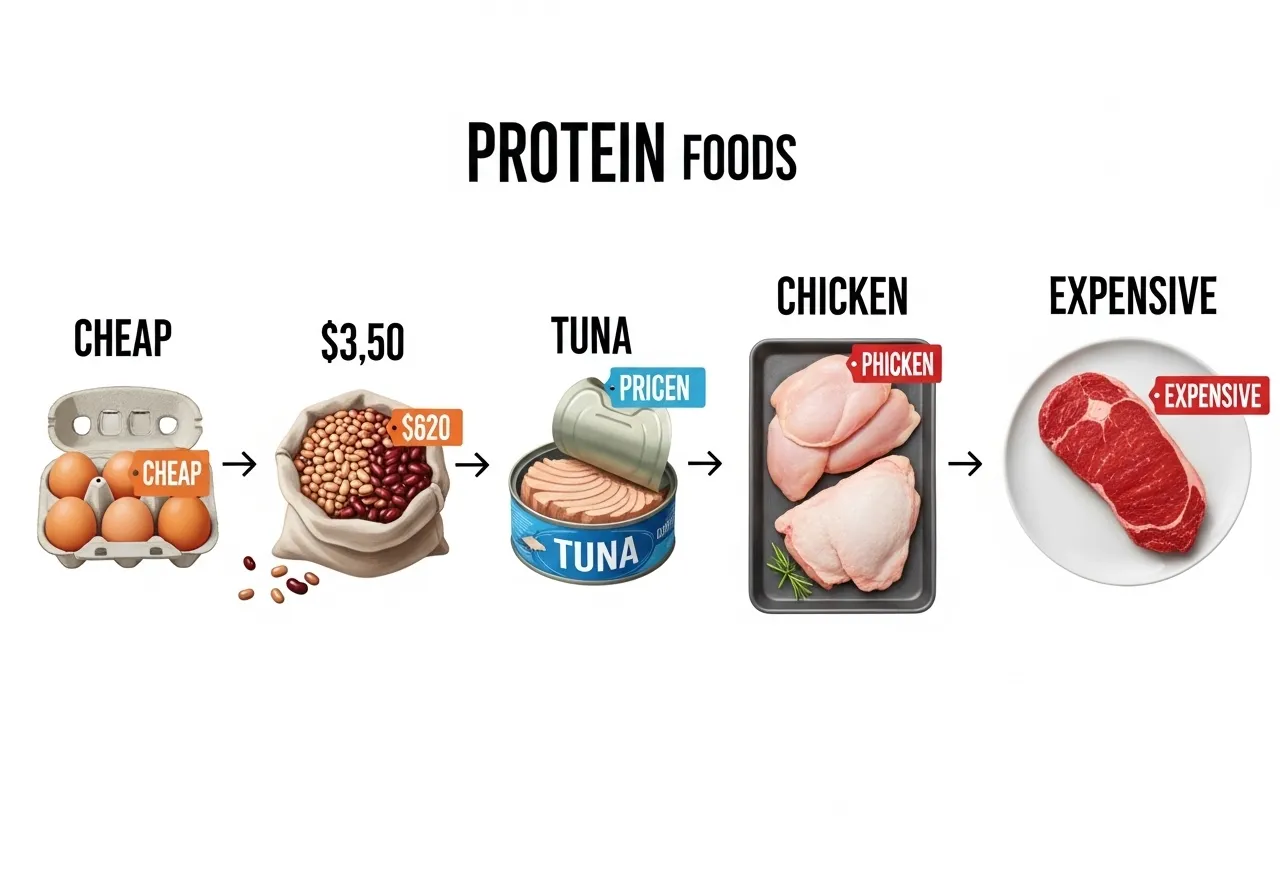
Protein is typically the most expensive macronutrient per calorie, making protein optimization the highest-leverage aspect of budget nutrition. Identifying the protein sources that provide the most grams of complete or near-complete protein per dollar spent — and building meal plans around these foods — dramatically reduces nutritional costs without compromising protein intake.
Animal Protein Rankings by Cost Efficiency
Eggs consistently rank as the most cost-effective animal protein source available in most markets: at current average prices of $4 to $6 per dozen (varying by region and egg type), a dozen eggs provides approximately 84 grams of complete, high-biological-value protein at $0.05 to $0.07 per gram — a cost efficiency that premium protein sources like steak ($0.40 to $0.80 per gram) and salmon ($0.20 to $0.30 per gram) cannot match. Canned tuna and sardines provide cost-efficient marine protein at $0.08 to $0.12 per gram while adding the omega-3 fatty acids that expensive fresh fish provides at 3 to 5 times the cost. Bone-in chicken thighs and drumsticks are significantly cheaper per gram of protein than boneless chicken breast (a convenience premium that provides no nutritional advantage), providing 25 grams of protein per 100g at approximately $0.06 to $0.10 per gram in most markets.
Dairy proteins offer strong cost efficiency with additional nutritional density: milk ($0.03 to $0.05 per gram of protein), cottage cheese ($0.05 to $0.08 per gram), and plain Greek yogurt ($0.06 to $0.10 per gram) provide complete protein with calcium, phosphorus, and the dual whey-casein protein combination that makes dairy uniquely effective for both post-workout and pre-sleep recovery.
Plant Protein Rankings by Cost Efficiency
Dried lentils are the most cost-efficient protein source available at any price point: at $1.50 to $2.50 per kilogram (dried), a kilogram of dried lentils provides approximately 220 grams of protein at $0.007 to $0.011 per gram — 5 to 10 times more cost-efficient than even the most affordable animal proteins. The limitation is amino acid completeness: lentils and other legumes are low in the essential amino acid methionine, but this deficiency is fully compensated by combining with any grain protein source (rice, oats, bread) in the same meal or throughout the same day, as the body maintains an amino acid pool rather than requiring perfect amino acid balance in every individual meal.
Dried chickpeas, black beans, kidney beans, and split peas all provide protein at similar cost efficiencies to lentils, with the advantage of greater culinary versatility. Tofu provides complete soy protein at approximately $0.02 to $0.04 per gram — significantly more expensive per gram than dried legumes but more affordable than most animal proteins. Oats and whole grains, while primarily carbohydrate sources, contribute meaningful protein quantities (5 to 8 grams per 100g) at extremely low cost, adding to daily protein totals without dedicated protein food expenditure.
Strategic Protein Combining for Budget Maximization
The most cost-effective protein strategy combines cheap, high-volume plant proteins with small amounts of high-quality animal proteins to achieve complete amino acid profiles at minimal cost. Classic examples: rice and beans (a globally ubiquitous combination that provides complete protein cheaply), oatmeal with milk (complete amino acid profile at extremely low cost), lentil soup with a single egg stirred in (the egg provides the methionine that lentils lack, transforming plant protein into complete protein at minimal added cost). These hybrid strategies provide the complete amino acid profiles needed for muscle recovery at costs that pure animal protein sources cannot match.
Deepening Your Knowledge
The nutritional economics of healthy eating is a well-researched area with actionable findings for people at every income level. The core finding — that whole food nutrition is not inherently more expensive than processed food nutrition — has been validated across multiple countries, economic contexts, and demographic groups. The barrier to budget healthy eating is almost never absolute cost; it is the skill, knowledge, and habit gaps that make expensive convenience food appear to be the only practical option for busy people with limited resources.
Research from the American Journal of Clinical Nutrition found that diet quality scores do not significantly correlate with food expenditure when cooking skill and meal planning behavior are controlled for — people with high cooking skill and consistent meal planning maintain high-quality diets at the same cost as people with low cooking skill maintain poor-quality diets. This finding is both encouraging (diet quality is more a matter of skill than money) and motivating (developing cooking and planning skills produces permanent, income-independent improvements in nutritional quality). The investment in learning to cook well and plan meals effectively pays more consistent and compounding returns than any other budget eating strategy.
For practical next steps, I recommend beginning with the Sunday meal prep habit described in this article — 90 minutes of batch cooking that provides the foundation for a week of nutritious eating — and building the pantry staples list over the course of a month. These two habits, established consecutively over 4 to 6 weeks, produce the behavioral infrastructure from which all other budget healthy eating strategies build naturally.
Budget Nutrition for Muscle Building
Building muscle on a budget requires the same nutritional foundations as premium nutrition muscle building — adequate total protein (1.8 to 2.2g/kg/day), caloric surplus (200 to 300 calories above maintenance), and consistent carbohydrate intake to support training performance — all achievable at genuinely low cost. A daily muscle-building nutrition plan at under $5 total food cost: Breakfast — oatmeal with milk and 3 eggs ($0.80). Lunch — chicken thigh with rice and frozen vegetables ($1.50). Snack — Greek yogurt with banana ($0.70). Dinner — lentil and rice bowl with additional egg ($0.90). Pre-sleep — cottage cheese ($0.50). Total: approximately $4.40 per day, providing 160 to 180 grams of complete protein and 2,800 to 3,000 calories — adequate for muscle building for most men of average size. This is not a compromise nutrition plan; it is an excellent nutrition plan that happens to be extremely affordable.
The only supplement that meaningfully improves muscle building outcomes at any nutrition budget is creatine monohydrate — $20 to $30 per kilogram from unflavored bulk suppliers (enough for 6 to 12 months of use), providing 3 to 5 grams daily. At this cost, creatine represents less than $0.10 per day added to the food budget — a genuinely cost-effective performance investment that provides real and well-documented benefits without requiring any other supplement expenditure.
FAQ: Budget Healthy Eating
Is healthy eating really affordable?
Yes, when built around whole food staples. The cheapest diets in the world — built on lentils, beans, rice, oats, eggs, and seasonal vegetables — are also among the most nutritionally complete. The expensive diets are typically those built around processed convenience foods, restaurant meals, and premium branded supplements. Shifting spending from these categories to whole food cooking produces better nutrition at lower cost for virtually everyone in developed countries with access to basic grocery stores.
What’s the cheapest complete protein source?
Dried lentils provide the cheapest protein per gram of any accessible food — approximately $0.007 to $0.011 per gram at current prices in most markets. While not complete in methionine, combining with any grain (the combination consumed by billions of people worldwide as traditional cuisine) provides a complete amino acid profile at essentially zero additional cost. Eggs provide the cheapest animal-complete protein source at $0.05 to $0.07 per gram with the highest biological value of any whole food protein.
How do I eat healthy when I’m too tired to cook?
Batch cooking on less-tired days for use on exhausted days is the primary solution: a Sunday prep session that produces a week’s worth of cooked grains, legumes, and proteins means that Monday evening dinner is 10 minutes of reheating and assembling rather than 30 minutes of cooking from scratch. Additionally, having always-available no-cook healthy foods as backup (hard-boiled eggs, canned tuna, Greek yogurt, fruit, nut butter with whole grain crackers) ensures that fatigue never forces a choice between expensive takeout and skipping a nutritious meal entirely.
Budget Meal Planning Strategies That Actually Work
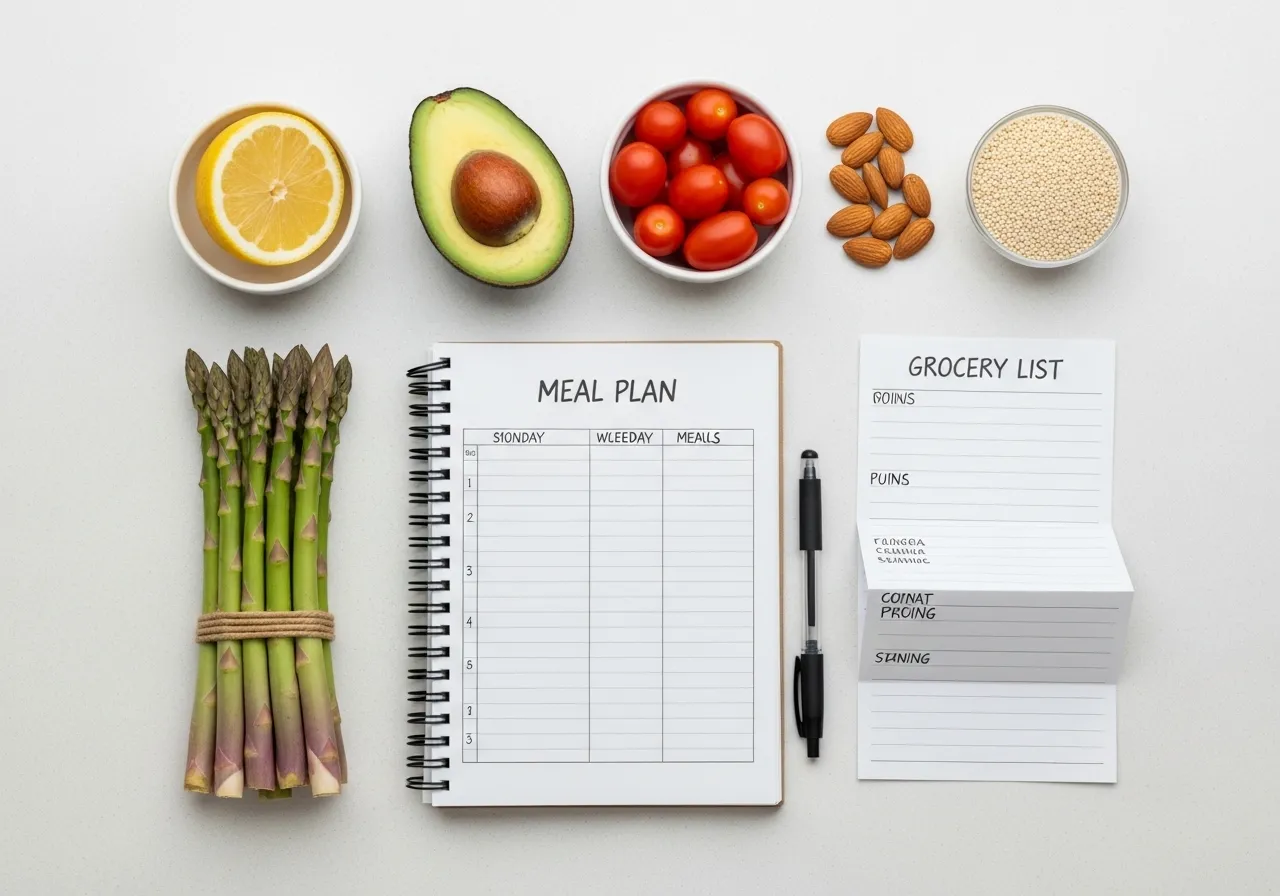
Meal planning is the single most impactful budget eating strategy available — research consistently shows that households with regular meal planning spend 15 to 25 percent less on food while eating more nutritiously than households that shop and cook without a plan. The efficiency gains come from reduced food waste (planning prevents buying ingredients that go unused), bulk purchasing of high-use items at lower per-unit cost, and avoiding the expensive emergency food decisions (takeout, convenience foods, premium grab-and-go items) that fill the gaps when planning fails.
The Weekly Meal Planning Template
An effective weekly meal planning template for budget healthy eating identifies 5 to 7 dinner recipes for the week, determines which ingredients are shared across multiple recipes (which can be purchased in larger quantities at lower per-unit cost), checks current pantry and freezer inventory before shopping, and builds a shopping list organized by store section that prevents impulse purchases and ensures nothing is forgotten. The planning session itself takes 15 to 20 minutes once per week — a time investment that saves 3 to 5 hours of week-long decision-making and significantly reduces the cumulative cost of unplanned food purchases.
The “Anchor Ingredient” Strategy
The anchor ingredient strategy selects one or two cheap, high-nutrition, versatile ingredients to use in multiple meals throughout the week, maximizing bulk purchasing efficiency and reducing per-meal costs. Examples: a kilogram of dried lentils cooked at the start of the week becomes lentil soup (Monday), lentil tacos (Wednesday), lentil salad (Friday), and lentil rice bowls (Sunday) — four distinct meals from one $1.50 ingredient purchase. A batch of hard-boiled eggs prepared weekly provides instant high-protein snacks, breakfast additions, and salad protein for the entire week at minimal cost. A large pot of bean and rice base can be seasoned differently across the week to create variety from the same inexpensive ingredients.
Freezer-Based Budget Strategies
The freezer is the most underutilized tool in budget healthy eating. Purchasing protein sources in large quantities when prices are lowest (sales, bulk purchasing at warehouse stores, marked-down near-expiration meats) and immediately freezing the surplus provides high-quality protein at costs 20 to 40 percent below regular retail prices. Batch-cooking grains, legumes, soups, and stews for the freezer extends the labor efficiency of batch cooking across weeks and months, providing ready-made healthy meals at home-cooked prices that eliminate the temptation to order expensive takeout on busy evenings. A well-stocked freezer is emergency food insurance that prevents the expensive convenience food decisions that budget eating plans most commonly fail on.
The Pantry Stocking Priority List
A budget-healthy pantry stocked with the following shelf-stable items provides the foundation for nutritious meals at any time without fresh ingredient dependency: dried lentils and split peas ($1.50 to $2.50/kg), dried beans of various types ($2 to $3/kg), rolled oats ($1 to $2/kg), brown rice ($1.50 to $2.50/kg), canned tomatoes ($0.50 to $1 per can), canned tuna and sardines ($1 to $2 per can), olive oil ($8 to $15/liter, used in small quantities so low per-meal cost), garlic and onions (fresh, $0.50 to $1/week), a basic spice collection ($1 to $2 per spice jar, lasting months). This pantry list, assembled once and replenished as needed, provides the ingredients for dozens of complete, nutritious meals at costs well under $3 per serving.
Deepening Your Knowledge
The nutritional economics of healthy eating is a well-researched area with actionable findings for people at every income level. The core finding — that whole food nutrition is not inherently more expensive than processed food nutrition — has been validated across multiple countries, economic contexts, and demographic groups. The barrier to budget healthy eating is almost never absolute cost; it is the skill, knowledge, and habit gaps that make expensive convenience food appear to be the only practical option for busy people with limited resources.
Research from the American Journal of Clinical Nutrition found that diet quality scores do not significantly correlate with food expenditure when cooking skill and meal planning behavior are controlled for — people with high cooking skill and consistent meal planning maintain high-quality diets at the same cost as people with low cooking skill maintain poor-quality diets. This finding is both encouraging (diet quality is more a matter of skill than money) and motivating (developing cooking and planning skills produces permanent, income-independent improvements in nutritional quality). The investment in learning to cook well and plan meals effectively pays more consistent and compounding returns than any other budget eating strategy.
For practical next steps, I recommend beginning with the Sunday meal prep habit described in this article — 90 minutes of batch cooking that provides the foundation for a week of nutritious eating — and building the pantry staples list over the course of a month. These two habits, established consecutively over 4 to 6 weeks, produce the behavioral infrastructure from which all other budget healthy eating strategies build naturally.
Real-World Budget Eating Success Stories
The principles in this article are not theoretical — they are practiced daily by millions of people around the world who achieve exceptional nutritional quality on modest food budgets. Traditional food cultures — Mediterranean, Japanese, Indian, West African — that are internationally recognized for both their health outcomes and their culinary satisfaction are primarily built on the cheap staple ingredients (legumes, whole grains, vegetables, eggs, modest fish) that modern fitness marketing overlooks. The “poverty foods” that these cultures elevated into culinary traditions are the most nutritionally complete, most sustainably affordable, and — when prepared with skill and seasoning — most delicious foods available.
Adopting a budget healthy eating approach does not require abandoning culinary enjoyment; it requires developing the cooking skills to make inexpensive ingredients taste exceptional. A well-seasoned lentil dal, a perfectly spiced bean stew, or a beautifully prepared rice bowl with soft-boiled egg can be genuinely more satisfying than an expensive restaurant meal — and costs a fraction of the price to prepare. The investment in cooking skill is the investment that transforms budget eating from deprivation into abundance.
Smart Grocery Shopping: Where to Spend and Where to Save
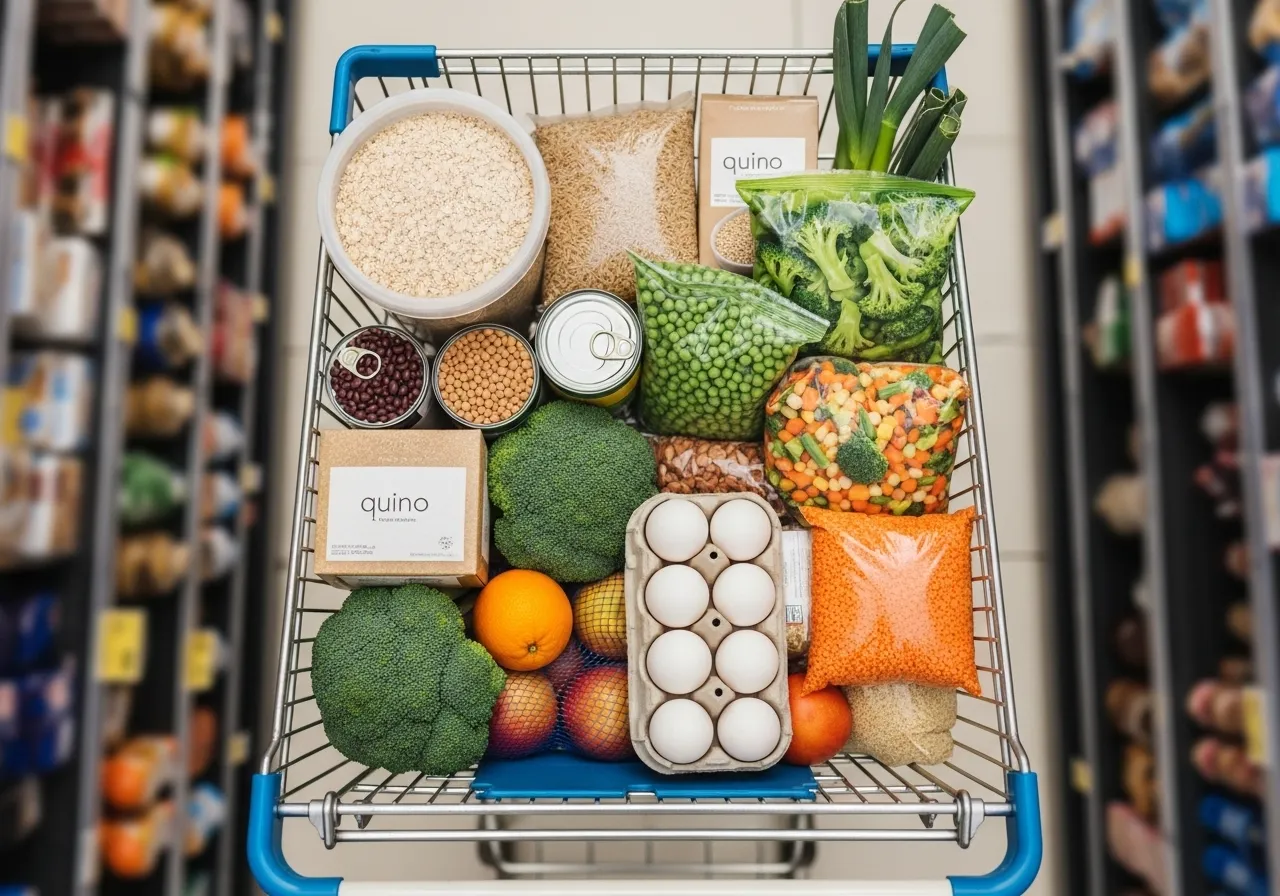
Budget grocery shopping requires a differentiated approach to different food categories — applying maximum cost-minimization to some foods while accepting higher costs for others based on the nutritional impact of the quality difference. Understanding which premium food costs are justified by meaningful nutritional differences and which are purely marketing premiums guides spending allocation toward maximum nutritional value per dollar.
Where the Premium Is Worth Paying
Fatty fish: the omega-3 content varies significantly between farmed and wild-caught fish, making the small premium for wild-caught salmon meaningful for anti-inflammatory nutrition. Eggs: pastured or omega-3 enriched eggs have meaningfully higher omega-3, vitamin D, and vitamin K2 content than conventionally raised eggs — a premium of $1 to $2 per dozen for a nutritionally significant difference. Whole grains vs. refined grains: the fiber, micronutrient, and satiety benefits of whole grains over refined grains are nutritionally significant enough to justify the small premium, despite refined grains being slightly cheaper. Organic produce for the “Dirty Dozen” (strawberries, spinach, apples, bell peppers) — produce with the highest pesticide residue in conventional form — is the only category where the organic premium has meaningful evidence for consumer benefit.
Where Saving Maximally Makes Sense
Frozen vegetables are nutritionally equivalent to or superior to fresh vegetables in most cases (frozen immediately after harvest at peak ripeness versus fresh that has been in transit and storage for days to weeks) at 30 to 50 percent lower cost. Store-brand staples (oats, canned goods, dried legumes, cooking oils, whole grains) are nutritionally identical to premium branded equivalents. Organic produce for the “Clean 15” (avocados, sweet corn, pineapple, onions, cabbage) — produce with minimal pesticide residue in conventional form — provides no meaningful benefit over conventional equivalents at significantly higher cost. Protein supplements: generic whey protein concentrate from warehouse stores costs 40 to 60 percent less than premium branded supplements with identical nutritional profiles.
Shopping Timing and Discount Strategies
Most grocery stores mark down meat, seafood, and bakery items approaching their sell-by dates by 30 to 50 percent — typically in the early morning and late evening. Purchasing these reduced-price items and immediately freezing them provides high-quality protein at substantial discounts. Weekly sales cycles, where each store’s featured sale items rotate, reward shoppers who plan meals around what’s on sale each week rather than buying consistent items at regular prices. Price comparison apps and loyalty card programs provide additional 5 to 15 percent savings that compound meaningfully over a year of consistent shopping.
Warehouse Store Economics for Fitness Nutrition
Warehouse stores (Costco, Sam’s Club) offer legitimate cost savings for specific fitness nutrition staples that are consumed in large quantities: bulk rolled oats (30 to 50 percent cheaper than grocery store prices), large containers of Greek yogurt (30 to 40 percent cheaper), bulk nuts and seeds (30 to 50 percent cheaper), large containers of olive oil (25 to 35 percent cheaper), and protein powder (40 to 60 percent cheaper than premium retail brands). The warehouse membership cost ($60 to $100 annually) is recovered within 2 to 3 months of regular purchasing for households that consume these items consistently, making it the best single financial investment for budget-healthy eaters who shop regularly.
Deepening Your Knowledge
The nutritional economics of healthy eating is a well-researched area with actionable findings for people at every income level. The core finding — that whole food nutrition is not inherently more expensive than processed food nutrition — has been validated across multiple countries, economic contexts, and demographic groups. The barrier to budget healthy eating is almost never absolute cost; it is the skill, knowledge, and habit gaps that make expensive convenience food appear to be the only practical option for busy people with limited resources.
Research from the American Journal of Clinical Nutrition found that diet quality scores do not significantly correlate with food expenditure when cooking skill and meal planning behavior are controlled for — people with high cooking skill and consistent meal planning maintain high-quality diets at the same cost as people with low cooking skill maintain poor-quality diets. This finding is both encouraging (diet quality is more a matter of skill than money) and motivating (developing cooking and planning skills produces permanent, income-independent improvements in nutritional quality). The investment in learning to cook well and plan meals effectively pays more consistent and compounding returns than any other budget eating strategy.
For practical next steps, I recommend beginning with the Sunday meal prep habit described in this article — 90 minutes of batch cooking that provides the foundation for a week of nutritious eating — and building the pantry staples list over the course of a month. These two habits, established consecutively over 4 to 6 weeks, produce the behavioral infrastructure from which all other budget healthy eating strategies build naturally.
Budget Nutrition for Muscle Building
Building muscle on a budget requires the same nutritional foundations as premium nutrition muscle building — adequate total protein (1.8 to 2.2g/kg/day), caloric surplus (200 to 300 calories above maintenance), and consistent carbohydrate intake to support training performance — all achievable at genuinely low cost. A daily muscle-building nutrition plan at under $5 total food cost: Breakfast — oatmeal with milk and 3 eggs ($0.80). Lunch — chicken thigh with rice and frozen vegetables ($1.50). Snack — Greek yogurt with banana ($0.70). Dinner — lentil and rice bowl with additional egg ($0.90). Pre-sleep — cottage cheese ($0.50). Total: approximately $4.40 per day, providing 160 to 180 grams of complete protein and 2,800 to 3,000 calories — adequate for muscle building for most men of average size. This is not a compromise nutrition plan; it is an excellent nutrition plan that happens to be extremely affordable.
The only supplement that meaningfully improves muscle building outcomes at any nutrition budget is creatine monohydrate — $20 to $30 per kilogram from unflavored bulk suppliers (enough for 6 to 12 months of use), providing 3 to 5 grams daily. At this cost, creatine represents less than $0.10 per day added to the food budget — a genuinely cost-effective performance investment that provides real and well-documented benefits without requiring any other supplement expenditure.
Batch Cooking and Meal Prep on a Budget
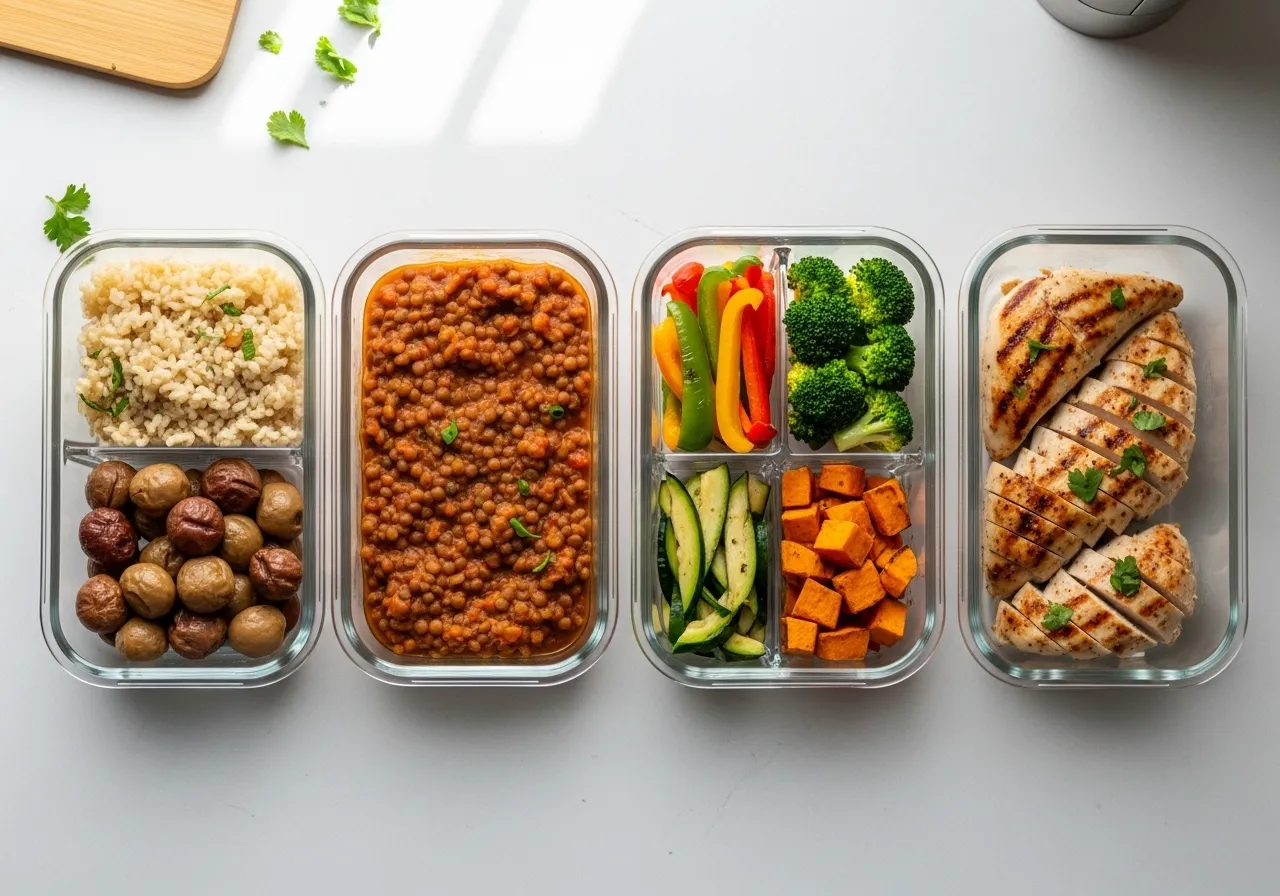
Batch cooking — preparing large quantities of food in a single session for consumption across multiple days — is the practical mechanism that makes budget healthy eating sustainable alongside a busy schedule. Without batch cooking, the time cost of preparing nutritious food from scratch daily creates the convenience gap that expensive processed food fills. With batch cooking, nutritious whole food meals are available at home-cooked costs without daily cooking time investment.
The 90-Minute Sunday Prep Session
A 90-minute Sunday meal prep session that addresses the week’s major cooking tasks provides the foundation for nutritious weekday eating without daily cooking: cook a large batch of a grain (2 to 3 cups dry, providing 6 to 8 servings), cook a large batch of legumes or a protein-dominant dish (roasted chicken thighs, batch of lentil soup, or hard-boiled eggs), roast or steam a large batch of vegetables, and portion out overnight oats for weekday breakfasts. These four tasks, performed in parallel using all available kitchen equipment simultaneously, complete in 90 minutes and provide the primary components of 5 to 7 days of nutritious eating at the cost of 2 to 3 hours of the cheaper per-serving food these bulk preparations provide.
Equipment That Makes Budget Batch Cooking Efficient
A slow cooker or instant pot dramatically reduces the active time required for batch cooking legumes and tougher cuts of meat that are significantly cheaper than quick-cooking alternatives: dried beans that require 3 hours of stovetop attention cook unattended in a slow cooker overnight or in 30 minutes in an instant pot. Pork shoulder and beef chuck — budget proteins that are 40 to 60 percent cheaper than premium cuts — become fork-tender in a slow cooker, transforming cheap tough cuts into nutritious, versatile proteins at minimal effort. A large sheet pan enables batch roasting of multiple vegetables simultaneously in 25 minutes — the most time-efficient vegetable cooking method and one that improves flavor significantly over steaming or boiling.
Budget-Optimized Batch Cooking Recipes
The following batch recipes provide multiple servings of complete nutrition at under $1.50 per serving: Red Lentil Dal: 500g dried red lentils ($1.25), 2 cans diced tomatoes ($1.50), 1 head of garlic ($0.50), onion ($0.30), spices ($0.20). Total: $3.75 for 8 to 10 servings at $0.38 to $0.47 per serving. Overnight Oat Base: 500g rolled oats ($0.75), 1 liter milk ($1.25), cinnamon and vanilla ($0.20). Total: $2.20 for 10 servings at $0.22 per serving (add fruit and protein for complete meal). Sheet Pan Chicken and Vegetables: 1.5kg chicken thighs ($5), 1kg mixed frozen vegetables ($2), olive oil and spices ($0.50). Total: $7.50 for 5 to 6 servings at $1.25 to $1.50 per serving.
Food Safety in Batch Cooking
Batch-cooked foods require proper storage to prevent the bacterial growth that food safety guidelines address: cool cooked foods to room temperature within 2 hours before refrigerating, divide large quantities into smaller containers that cool faster, refrigerate for up to 4 days or freeze immediately for longer storage, and reheat thoroughly to 74°C (165°F) before consuming. Following these guidelines allows safe batch cooking that provides a full week of prepared food from a single Sunday session without food safety concerns.
Deepening Your Knowledge
The nutritional economics of healthy eating is a well-researched area with actionable findings for people at every income level. The core finding — that whole food nutrition is not inherently more expensive than processed food nutrition — has been validated across multiple countries, economic contexts, and demographic groups. The barrier to budget healthy eating is almost never absolute cost; it is the skill, knowledge, and habit gaps that make expensive convenience food appear to be the only practical option for busy people with limited resources.
Research from the American Journal of Clinical Nutrition found that diet quality scores do not significantly correlate with food expenditure when cooking skill and meal planning behavior are controlled for — people with high cooking skill and consistent meal planning maintain high-quality diets at the same cost as people with low cooking skill maintain poor-quality diets. This finding is both encouraging (diet quality is more a matter of skill than money) and motivating (developing cooking and planning skills produces permanent, income-independent improvements in nutritional quality). The investment in learning to cook well and plan meals effectively pays more consistent and compounding returns than any other budget eating strategy.
For practical next steps, I recommend beginning with the Sunday meal prep habit described in this article — 90 minutes of batch cooking that provides the foundation for a week of nutritious eating — and building the pantry staples list over the course of a month. These two habits, established consecutively over 4 to 6 weeks, produce the behavioral infrastructure from which all other budget healthy eating strategies build naturally.
Real-World Budget Eating Success Stories
The principles in this article are not theoretical — they are practiced daily by millions of people around the world who achieve exceptional nutritional quality on modest food budgets. Traditional food cultures — Mediterranean, Japanese, Indian, West African — that are internationally recognized for both their health outcomes and their culinary satisfaction are primarily built on the cheap staple ingredients (legumes, whole grains, vegetables, eggs, modest fish) that modern fitness marketing overlooks. The “poverty foods” that these cultures elevated into culinary traditions are the most nutritionally complete, most sustainably affordable, and — when prepared with skill and seasoning — most delicious foods available.
Adopting a budget healthy eating approach does not require abandoning culinary enjoyment; it requires developing the cooking skills to make inexpensive ingredients taste exceptional. A well-seasoned lentil dal, a perfectly spiced bean stew, or a beautifully prepared rice bowl with soft-boiled egg can be genuinely more satisfying than an expensive restaurant meal — and costs a fraction of the price to prepare. The investment in cooking skill is the investment that transforms budget eating from deprivation into abundance.

Budget-Friendly Meal Ideas for Every Time of Day
Translating budget nutrition principles into specific meal ideas removes the practical uncertainty that causes decision paralysis and expensive convenience food purchases. The following meal ideas prioritize low cost, high nutrition, and minimal preparation time — the three variables that determine real-world adherence to budget healthy eating plans.
Budget Breakfasts (Under $1 per serving)
Overnight oats with banana: 80g rolled oats + 200ml milk + 1 banana + cinnamon. Approximately $0.50 per serving, 35g carbohydrate, 10g protein. Scrambled eggs with whole grain toast: 2 eggs + 1 slice whole grain bread + butter. Approximately $0.75, 20g protein, complete amino acid profile. Greek yogurt with frozen berries: 200g plain Greek yogurt + 100g frozen berries + drizzle of honey. Approximately $0.90, 17g protein, probiotics, antioxidants. Lentil porridge (South Asian style): 100g red lentils cooked with spices + fried egg on top. Approximately $0.60, 25g protein, high fiber.
Budget Lunches (Under $2 per serving)
Bean and rice bowl: 200g cooked brown rice + 150g black beans + salsa + lime. Approximately $0.80, complete protein, high fiber. Canned tuna salad wrap: 1 can tuna + mayo + celery + whole grain wrap. Approximately $1.50, 30g protein, omega-3s. Lentil soup with bread: 300ml lentil soup (batch-cooked) + 2 slices whole grain bread. Approximately $0.70 per serving plus bread, 20g protein. Egg fried rice: 200g cooked rice + 2 eggs + frozen vegetables + soy sauce. Approximately $0.90, 18g protein, versatile and filling.
Budget Dinners (Under $3 per serving)
Chicken thighs with sweet potato: 2 chicken thighs (roasted) + 200g sweet potato + green vegetables. Approximately $2.50, 40g protein, complete meal. Lentil dal with rice: 300ml lentil dal (batch-cooked) + 200g cooked rice + raita (yogurt). Approximately $1.00, 25g protein, complete nutrition. Sardine pasta: 100g pasta + 1 can sardines + canned tomatoes + garlic + olive oil. Approximately $1.80, 30g protein, omega-3s. Bean burrito: 2 whole wheat tortillas + 200g black beans + cheese + salsa + 1 egg. Approximately $1.50, 25g protein, high fiber.
Budget Snacks (Under $0.50 per serving)
Hard-boiled eggs ($0.25 per egg, 6g complete protein). Banana with peanut butter ($0.40, 8g protein, potassium, carbohydrates). Homemade trail mix (oats + raisins + peanuts, $0.30 per serving). Cottage cheese with cucumber ($0.50, 15g casein protein). Plain yogurt with honey ($0.50, 10g protein, probiotics).
Deepening Your Knowledge
The nutritional economics of healthy eating is a well-researched area with actionable findings for people at every income level. The core finding — that whole food nutrition is not inherently more expensive than processed food nutrition — has been validated across multiple countries, economic contexts, and demographic groups. The barrier to budget healthy eating is almost never absolute cost; it is the skill, knowledge, and habit gaps that make expensive convenience food appear to be the only practical option for busy people with limited resources.
Research from the American Journal of Clinical Nutrition found that diet quality scores do not significantly correlate with food expenditure when cooking skill and meal planning behavior are controlled for — people with high cooking skill and consistent meal planning maintain high-quality diets at the same cost as people with low cooking skill maintain poor-quality diets. This finding is both encouraging (diet quality is more a matter of skill than money) and motivating (developing cooking and planning skills produces permanent, income-independent improvements in nutritional quality). The investment in learning to cook well and plan meals effectively pays more consistent and compounding returns than any other budget eating strategy.
For practical next steps, I recommend beginning with the Sunday meal prep habit described in this article — 90 minutes of batch cooking that provides the foundation for a week of nutritious eating — and building the pantry staples list over the course of a month. These two habits, established consecutively over 4 to 6 weeks, produce the behavioral infrastructure from which all other budget healthy eating strategies build naturally.
Budget Nutrition for Muscle Building
Building muscle on a budget requires the same nutritional foundations as premium nutrition muscle building — adequate total protein (1.8 to 2.2g/kg/day), caloric surplus (200 to 300 calories above maintenance), and consistent carbohydrate intake to support training performance — all achievable at genuinely low cost. A daily muscle-building nutrition plan at under $5 total food cost: Breakfast — oatmeal with milk and 3 eggs ($0.80). Lunch — chicken thigh with rice and frozen vegetables ($1.50). Snack — Greek yogurt with banana ($0.70). Dinner — lentil and rice bowl with additional egg ($0.90). Pre-sleep — cottage cheese ($0.50). Total: approximately $4.40 per day, providing 160 to 180 grams of complete protein and 2,800 to 3,000 calories — adequate for muscle building for most men of average size. This is not a compromise nutrition plan; it is an excellent nutrition plan that happens to be extremely affordable.
The only supplement that meaningfully improves muscle building outcomes at any nutrition budget is creatine monohydrate — $20 to $30 per kilogram from unflavored bulk suppliers (enough for 6 to 12 months of use), providing 3 to 5 grams daily. At this cost, creatine represents less than $0.10 per day added to the food budget — a genuinely cost-effective performance investment that provides real and well-documented benefits without requiring any other supplement expenditure.

Building Long-Term Healthy Eating on Any Income
The difference between budget healthy eating as a temporary strategy and as a permanent lifestyle lies in the development of skills, habits, and systems that make nutritious food the path of least resistance rather than the path of most effort. Short-term budget eating — motivated by financial pressure and executed through willpower — fails when motivation decreases. Long-term budget healthy eating — built on skills, established habits, and automated systems — maintains itself independent of motivation because the skills and systems do the work that willpower previously had to.
Building the Core Skills
The skills that make budget healthy eating sustainable: basic cooking proficiency (the ability to prepare legumes, grains, eggs, and simple protein dishes from scratch), meal planning (the weekly habit of planning meals and creating focused shopping lists), shopping pattern recognition (knowing which items are on sale each week, which stores have the best prices for specific categories), and food waste reduction (using all purchased ingredients before they spoil, incorporating odds and ends into improvisational meals). Each of these skills is learnable through deliberate practice over 4 to 8 weeks of consistent application — an investment that pays permanent returns in reduced food costs and improved nutritional quality.
Community Resources That Support Budget Healthy Eating
Several underutilized community resources support budget healthy eating beyond individual shopping and cooking strategies: food banks and community pantries (which in many regions now carry fresh produce, whole grains, and proteins alongside processed staples), community gardens (which provide free produce in exchange for volunteer labor), food sharing apps and community groups (which redistribute surplus food from restaurants, bakeries, and households), and cooking clubs (where members pool ingredients and cooking skills to prepare bulk meals more efficiently than individual cooking). These resources reduce individual food costs while building community connections around food that make nutritious eating more enjoyable and sustainable.
The Progressive Investment Model
As income increases, the budget healthy eating skills and habits remain valuable — they provide the foundation for allocating increased food spending toward genuine quality improvements (wild-caught fish, pastured eggs, organic produce for high-pesticide crops) rather than toward marketing premiums and convenience features that don’t improve nutritional outcomes. The person who developed budget healthy eating skills out of necessity and then increased their income has the best of both worlds: the nutritional knowledge to eat excellently on a limited budget and the financial capacity to invest in the quality improvements that genuinely matter. Budget eating is not a temporary coping strategy but a permanent skill set that remains valuable regardless of financial circumstances.
Motivating Yourself to Cook More at Home
The primary barrier to home cooking for most people is not skill or money but motivation and time — or more precisely, the perceived difficulty and time cost of cooking relative to the convenience of processed food and restaurant alternatives. Reducing this barrier requires redesigning the cooking environment: keeping the most frequently used ingredients prominently accessible, maintaining a well-stocked pantry that eliminates “there’s nothing to cook” moments, investing in a few excellent basic kitchen tools that make cooking faster and more enjoyable (a sharp knife, a large cutting board, a good skillet), and creating simple default recipes that can be prepared in 15 to 20 minutes without deliberate decision-making. The investment in creating a cooking-friendly environment — once made — reduces the ongoing effort of home cooking to a level that most people find sustainable as a daily habit.
Budget Eating and Athletic Performance
Athletes and serious recreational trainees often fear that budget constraints require compromising performance nutrition. This fear is unfounded when budget eating principles are properly applied. The foundational requirements of sports nutrition — adequate protein, carbohydrates, and micronutrients — are fully achievable at any reasonable food budget using the strategies described in this article. Elite athletes eat eggs, oats, rice, legumes, canned fish, and seasonal vegetables alongside their premium foods because these foods are genuinely the best nutritional foundations available, not because they cannot afford better. The performance edge of premium nutrition over excellent budget nutrition is marginal; the performance difference between consistent budget nutrition and inconsistent premium nutrition is enormous. Consistency, not cost, is the primary determinant of nutritional performance benefits.
Deepening Your Knowledge
The nutritional economics of healthy eating is a well-researched area with actionable findings for people at every income level. The core finding — that whole food nutrition is not inherently more expensive than processed food nutrition — has been validated across multiple countries, economic contexts, and demographic groups. The barrier to budget healthy eating is almost never absolute cost; it is the skill, knowledge, and habit gaps that make expensive convenience food appear to be the only practical option for busy people with limited resources.
Research from the American Journal of Clinical Nutrition found that diet quality scores do not significantly correlate with food expenditure when cooking skill and meal planning behavior are controlled for — people with high cooking skill and consistent meal planning maintain high-quality diets at the same cost as people with low cooking skill maintain poor-quality diets. This finding is both encouraging (diet quality is more a matter of skill than money) and motivating (developing cooking and planning skills produces permanent, income-independent improvements in nutritional quality). The investment in learning to cook well and plan meals effectively pays more consistent and compounding returns than any other budget eating strategy.
For practical next steps, I recommend beginning with the Sunday meal prep habit described in this article — 90 minutes of batch cooking that provides the foundation for a week of nutritious eating — and building the pantry staples list over the course of a month. These two habits, established consecutively over 4 to 6 weeks, produce the behavioral infrastructure from which all other budget healthy eating strategies build naturally.
Adapting Budget Eating for Dietary Restrictions
Budget healthy eating adapts well to common dietary restrictions without compromising either cost or nutritional quality. Lactose intolerance: plant milks (fortified oat milk and soy milk provide protein and calcium comparable to dairy at moderate cost), eggs and legumes replace dairy as protein sources. Gluten intolerance or celiac: rice, oats (gluten-free certified), potatoes, corn, and legumes are all naturally gluten-free and inexpensive. Vegetarian: eliminating meat actually reduces the most expensive component of most diets, with eggs and dairy filling the protein gap at lower cost. Vegan: dried legumes, tofu, and whole grains provide protein at the lowest cost per gram of any dietary pattern, though supplementation with B12 is required regardless of budget.
The shared principle across all dietary restrictions is that whole food, plant-based staples — legumes, grains, vegetables, fruits — are both the cheapest and the most universally applicable foods across dietary patterns, making them the natural foundation of budget healthy eating regardless of specific dietary requirements. Any dietary restriction that is accommodated by shifting emphasis toward these staples rather than away from them produces both better nutrition and lower cost simultaneously.
FAQ: Budget Healthy Eating
Is healthy eating really affordable?
Yes, when built around whole food staples. The cheapest diets in the world — built on lentils, beans, rice, oats, eggs, and seasonal vegetables — are also among the most nutritionally complete. The expensive diets are typically those built around processed convenience foods, restaurant meals, and premium branded supplements. Shifting spending from these categories to whole food cooking produces better nutrition at lower cost for virtually everyone in developed countries with access to basic grocery stores.
What’s the cheapest complete protein source?
Dried lentils provide the cheapest protein per gram of any accessible food — approximately $0.007 to $0.011 per gram at current prices in most markets. While not complete in methionine, combining with any grain (the combination consumed by billions of people worldwide as traditional cuisine) provides a complete amino acid profile at essentially zero additional cost. Eggs provide the cheapest animal-complete protein source at $0.05 to $0.07 per gram with the highest biological value of any whole food protein.
How do I eat healthy when I’m too tired to cook?
Batch cooking on less-tired days for use on exhausted days is the primary solution: a Sunday prep session that produces a week’s worth of cooked grains, legumes, and proteins means that Monday evening dinner is 10 minutes of reheating and assembling rather than 30 minutes of cooking from scratch. Additionally, having always-available no-cook healthy foods as backup (hard-boiled eggs, canned tuna, Greek yogurt, fruit, nut butter with whole grain crackers) ensures that fatigue never forces a choice between expensive takeout and skipping a nutritious meal entirely.