The Best Supplements for Joint Health and Recovery

Why Joint Health Supplements Matter for Active People
Joint health is the silent determinant of training longevity — the cartilage, tendon, ligament, and synovial tissue that allow pain-free, full-range-of-motion movement through decades of training are the structural assets that no amount of muscle development compensates for when they fail. I began taking joint health seriously in my third year of consistent resistance training, when the accumulation of small nagging discomforts in my knees and elbows during heavy loading prompted the research that this article summarizes. What I found was both reassuring and practically useful: the joint supplement evidence is stronger than fitness industry skepticism suggests, weaker than supplement marketing claims imply, and most importantly, specific — particular compounds at particular doses show genuine clinical evidence, while others show little beyond placebo effects and marketing investment. Understanding the evidence base lets the athlete make informed decisions rather than spending money on the impressive-label formulations that often include underdosed versions of the effective compounds alongside the ineffective ones that fill the ingredient list.
The Anatomy of Joint Health: What You’re Actually Trying to Protect
Effective joint supplementation requires understanding the specific tissues that supplements target — cartilage, tendons, ligaments, and synovial membrane each have different compositions, different nutritional requirements, and different supplement response profiles. Articular cartilage: the avascular, aneural connective tissue that lines joint surfaces and absorbs compressive forces during movement is composed primarily of type II collagen (approximately 60% of dry weight) and proteoglycans (particularly aggrecan, which provides the water-retention capacity that cartilage’s compressive load absorption depends on). Cartilage has no direct blood supply — it receives nutrients through the synovial fluid and the subchondral bone beneath it — making its repair capacity limited and its nutritional support dependent on the systemic delivery of nutrients that diffuse through the synovial fluid into the cartilage matrix. Tendons and ligaments: the dense regular connective tissues that attach muscle to bone (tendons) and bone to bone (ligaments) are composed primarily of type I collagen in a parallel fibrillar arrangement that provides the tensile strength these tissues require. Tendon and ligament collagen synthesis and remodeling is the primary target of the supplement compounds with the strongest connective tissue evidence. The synovial membrane and synovial fluid: the joint lining that produces the lubricating fluid that reduces friction between articular surfaces and provides nutrients to the cartilage — the glucosamine and chondroitin that populate many joint supplement formulations have their most mechanistically plausible effects on synovial fluid composition and cartilage proteoglycan synthesis. From PubMed research on articular cartilage composition and nutritional requirements, the cartilage’s nutrient delivery dependence on synovial fluid diffusion means that systemic nutritional interventions can influence cartilage matrix composition — the mechanistic basis for the nutritional supplement effects on joint tissue that the clinical evidence for specific compounds supports.
Who Benefits Most From Joint Supplements: The Evidence-Based Target Populations
The clinical evidence for joint supplements is not uniformly distributed across all athlete types — the compounds with the strongest evidence show their most significant effects in specific populations and contexts that the blanket marketing claims do not reflect. The populations with the strongest evidence for joint supplement benefit: athletes over 35 whose natural collagen synthesis rate has declined from the peak of the third decade; athletes with a history of joint injuries whose cartilage and connective tissue have undergone the structural disruption that impairs self-repair; high-volume athletes in high-impact sports (running, jumping, court sports) whose joint loading rates exceed the repair capacity that normal training loads allow; and athletes entering periods of rapid training load increase where the connective tissue adaptation lag creates the greatest mismatch between loading and structural readiness. The populations where supplement evidence is most limited: young athletes (under 25) in early training who have not yet accumulated the loading history or age-related collagen decline that supplements most directly address; athletes with predominantly psychological or training-management causes of joint discomfort who require loading modification rather than nutritional supplementation; and athletes whose joint complaints reflect acute inflammatory episodes that anti-inflammatory medical management addresses more effectively than the slow-acting structural supplements that long-term connective tissue support provides. The evidence-informed supplement decision: joint supplements are most valuable as long-term connective tissue support strategies rather than acute symptom relief treatments — they work over months of consistent use to support the structural integrity that training maintains, rather than providing the rapid symptom reduction that the impatient athlete loading through joint discomfort expects.
The Joint Health Investment Mindset: Prevention vs. Rehabilitation
The economic and practical argument for joint health supplementation is most compelling when framed through the prevention versus rehabilitation lens — the cost comparison between consistent preventive supplementation and the treatment costs, training interruptions, and performance losses that joint injury and degeneration produce over a training career that extends decades. A comprehensive joint health supplement stack (collagen, omega-3, glucosamine, Vitamin D) costs approximately $60-100 per month — a meaningless figure compared to the cumulative physiotherapy costs, sports medicine consultations, imaging, and potential surgical interventions that significant joint degeneration or injury produces. More importantly, no amount of medical rehabilitation fully restores the cartilage and connective tissue function that prevention maintains — the scar tissue that replaces organized tendon collagen after significant tendinopathy, the cartilage surface that does not regenerate after injury, and the proprioceptive changes that joint damage produces permanently alter the tissue quality that preventive care would have maintained. The prevention investment framing that makes the supplement cost calculation clear: $100/month for preventive joint support versus $200-500/month for physiotherapy treatment after injury — and the treatment is catch-up management rather than restoration to the pre-injury state. The athlete who begins joint health supplementation at age 25 arrives at age 45 with 20 years of consistent connective tissue nutritional support — the cumulative investment that the structural integrity of continued high-performance training depends on. This is not supplementation marketing; it is the straightforward mathematics of biological maintenance that the collagen synthesis decline research consistently documents as beginning in the third decade and accelerating through the fourth and fifth.
Supplement Quality and Testing: Choosing Products You Can Trust
The supplement industry’s limited regulatory oversight means that the label claims and actual contents of joint health supplements vary substantially — the athlete who invests in quality supplement selection reduces the risk of purchasing products with incorrect doses, undisclosed contaminants, or falsely labeled ingredients. The third-party testing certifications that identify quality supplement manufacturers: NSF Certified for Sport (the most rigorous certification for athletes, testing for label accuracy and banned substance contamination); Informed Sport (UK-based certification with similar standards to NSF); and USP Verified (confirms label accuracy and manufacturing standards for the general supplement market). The fish oil quality considerations specific to omega-3 supplements: oxidation of the omega-3 fatty acids produces the rancid taste and smell that poor-quality fish oil develops, and oxidized omega-3 may provide reduced benefits compared to fresh product — choosing encapsulated fish oil with antioxidant (Vitamin E or rosemary extract) protection, stored refrigerated after opening, and consumed within the labeled period maintains the product quality that the clinical evidence reflects. The collagen product quality indicator: molecular weight confirmation that the product contains actual hydrolyzed collagen peptides (typically 1000-5000 Daltons for good solubility and absorption) rather than lower-quality gelatin that has not been enzymatically hydrolyzed — the reputable collagen brands provide molecular weight specifications that confirm the hydrolysis that absorption requires.
Starting Simple: The One-Supplement Introduction
For the athlete overwhelmed by the complexity of the full stack, the single most impactful starting point is the pre-exercise collagen protocol: 15g collagen peptides with 50mg Vitamin C, consumed 30-60 minutes before training, every training day. This single intervention provides the connective tissue synthesis substrate at the mechanistically optimal timing and represents the compound with the most compelling recent clinical evidence for athletic joint health. Add omega-3 in week 2, glucosamine in week 3, and the Tier 3 compounds only after the foundation is established and the response to the primary compounds has been assessed. The simplest beginning is the most sustainable one.
Collagen: The Most Evidence-Backed Joint Supplement
Collagen supplementation has accumulated the most compelling recent evidence among joint health supplements — the specific mechanism of action, the clinical trial data, and the practical application protocol make it the first-priority supplement for the athlete seeking evidence-based joint support. The collagen research evolution over the past decade has moved from the early basic science mechanistic studies to multiple randomized controlled trials in athletic populations that provide the clinical evidence base that the earlier mechanistic plausibility alone could not.
The Mechanism: How Collagen Supplementation Supports Connective Tissue
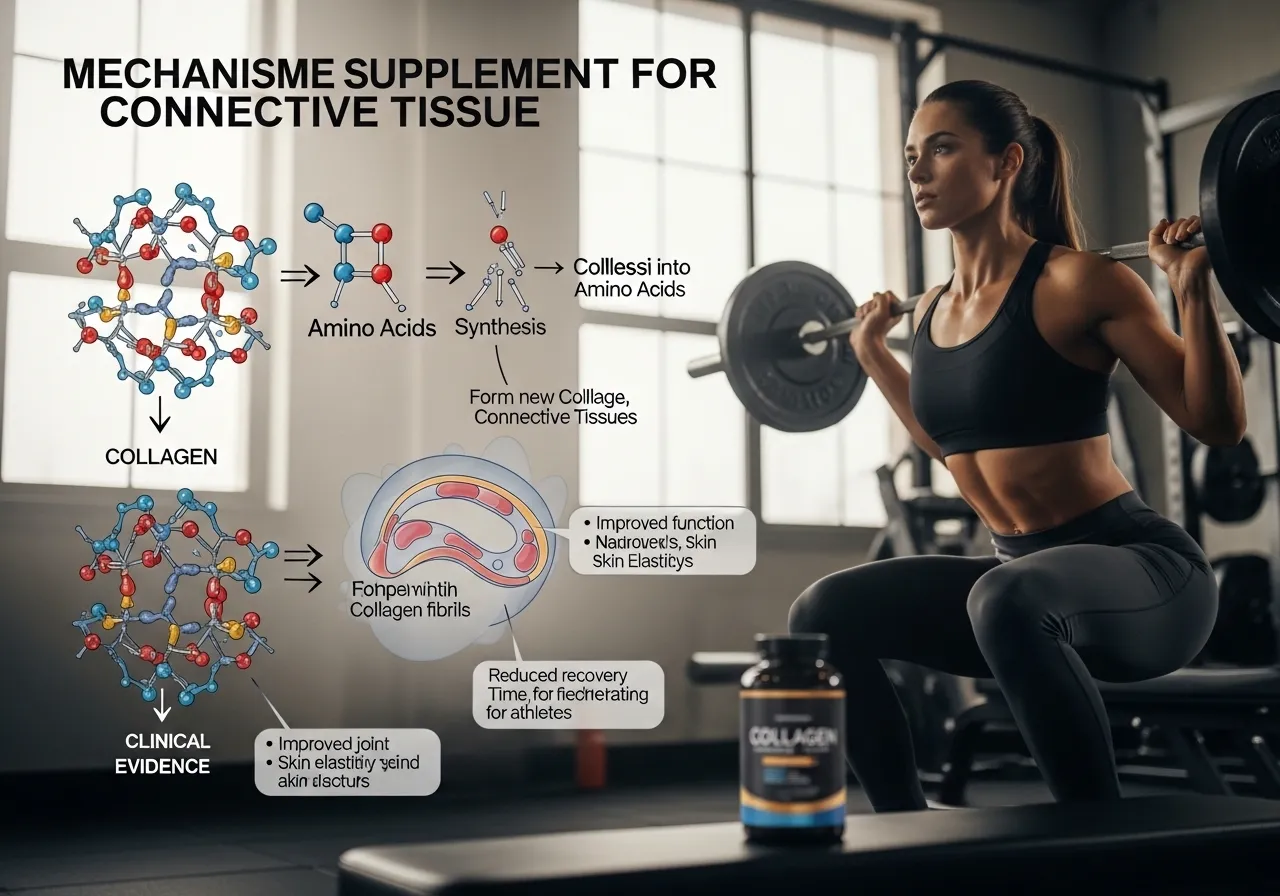
The collagen supplementation mechanism operates through a specific protocol that the research has identified as critical for efficacy — and the failure to apply this protocol explains much of the inconsistency in older collagen research that used different timing and dosing than the current evidence supports. The mechanism: orally consumed hydrolyzed collagen (collagen peptides) is digested into amino acids and small dipeptides and tripeptides that are absorbed into circulation and reach the tissues that are actively synthesizing collagen — including tendons, ligaments, cartilage, and bone — where they provide the substrate for the new collagen formation that mechanical loading stimulates. The critical protocol element identified by Dr. Keith Baar’s research: consuming 15-20g of vitamin C-enriched collagen peptides (or gelatin, which provides the same amino acid profile) 30-60 minutes before the exercise or loading session that stimulates connective tissue collagen synthesis produces significantly greater connective tissue collagen synthesis than the same supplementation at other times. The timing mechanism: the amino acid peak from the collagen supplement coincides with the loading-stimulated upregulation of collagen synthesis genes in the loaded connective tissue — the supplement arrives when the tissue is most responsive to the substrate. The Vitamin C requirement: ascorbic acid is a cofactor for prolyl hydroxylase, the enzyme that cross-links proline residues in the collagen molecule — without adequate Vitamin C (50mg consumed with the collagen supplement), the collagen synthesis that the amino acid substrate enables cannot be completed into the mature, mechanically functional collagen molecule. From PubMed landmark collagen and connective tissue synthesis research by Shaw et al., 15g of gelatin with Vitamin C consumed 1 hour before exercise doubled the collagen synthesis rate in ligament explants compared to placebo — providing the mechanistic evidence that subsequent clinical trials have translated into practical supplementation protocols for athletic connective tissue support.
Clinical Evidence: What Collagen Supplementation Actually Achieves
The clinical evidence base for collagen supplementation in athletic populations has grown substantially since the initial mechanistic studies — multiple randomized controlled trials now provide the controlled evidence that distinguishes genuine supplementation effects from the placebo, regression-to-mean, and lifestyle-change confounders that uncontrolled observation cannot separate. The Zdzieblik et al. (2017) trial in athletes with activity-related knee pain showed significantly greater pain reduction and functional improvement in the collagen peptide group versus placebo over 24 weeks of supplementation — the first adequately powered RCT in physically active individuals demonstrating clinically meaningful benefits for the joint pain that active populations most commonly experience. The McAlindon et al. (2011) trial in mild-to-moderate knee osteoarthritis showed structural cartilage preservation (measured by MRI) in the collagen supplement group versus placebo over 24 weeks — suggesting that the cartilage matrix support that collagen supplementation provides operates at the structural level rather than purely the symptomatic level. The tendon application: emerging trials in Achilles and patellar tendinopathy patients using the pre-exercise collagen protocol show promising results for the pain reduction and functional improvement that the connective tissue loading research predicts — the most practically relevant application for the strength and endurance athlete whose tendon health is the most common connective tissue limitation. The practical supplementation protocol that the current evidence supports: 15-20g of hydrolyzed collagen peptides (or gelatin, which is more economical and provides the same amino acid profile) with 50mg Vitamin C, consumed 30-60 minutes before the training session or loading period, on training days — this protocol provides the pre-exercise substrate peak that the mechanistic research identifies as critical for efficacy.
Collagen Types and Product Selection: Navigating the Market
The collagen supplement market’s complexity — multiple collagen types, multiple source animals, multiple product forms, and the marketing claims that often conflate these variables — makes product selection confusing for the athlete who wants to apply the research evidence. The relevant distinction for joint health supplementation: Type I collagen (the primary collagen of tendons, ligaments, skin, and bone) is the dominant component of most hydrolyzed collagen products derived from bovine or marine sources — the appropriate form for tendon, ligament, and general joint connective tissue support. Type II collagen (the primary cartilage collagen) is specifically included in undenatured type II collagen (UC-II) supplements that target articular cartilage — a different mechanism (oral tolerance induction rather than structural substrate provision) than the hydrolyzed collagen peptide approach. The product form comparison: hydrolyzed collagen peptides (collagen hydrolysate) have the most evidence for the pre-exercise connective tissue synthesis protocol; undenatured type II collagen (40mg dose) has separate evidence specifically for joint pain and cartilage support; and gelatin provides the same amino acid profile as hydrolyzed collagen at substantially lower cost (food-grade gelatin contains the same hydroxyproline and glycine that connective tissue synthesis requires) at the cost of slightly less convenient solubility. The source consideration: bovine-derived collagen (from hide or bones) provides predominantly Type I and III collagen; marine collagen (from fish skin) provides primarily Type I with the higher absorption kinetics that the smaller peptide size of marine-sourced hydrolysate provides; and porcine collagen provides similar profiles to bovine. The practical recommendation for the budget-conscious athlete: plain food-grade gelatin (unflavored) consumed with Vitamin C in the pre-exercise window provides the same evidence-backed substrate as premium collagen peptide products at 20-30% of the cost — the amino acid profile that the connective tissue research uses is not materially different between gelatin and expensive branded collagen peptide formulations.
The Vegetarian and Vegan Athlete’s Joint Health Supplement Approach
The plant-based athlete faces specific challenges in the joint health supplement context — the primary source of the most evidence-backed compounds (collagen peptides from animal connective tissue, EPA+DHA from fish oil) is animal-derived, requiring the alternative sourcing strategies that plant-based athletes need to maintain equivalent joint health nutritional support. The vegan collagen alternative: no plant source provides the pre-formed hydroxyproline and hydroxylysine that animal-derived collagen contains — the building blocks that connective tissue synthesis most efficiently uses. The practical vegan substitute for the pre-exercise collagen protocol: a combination of the amino acids that collagen synthesis requires (glycine 5-8g, proline 3-5g, lysine 2-3g) taken with Vitamin C 50mg in the pre-exercise window provides the substrate that plant-based athletes can approximate from individual amino acid supplements. Alternatively, Vitamin C-enriched fruit consumed with a high-protein meal 60-90 minutes before training provides the substrate that the whole-food approach to the collagen protocol achieves at lower precision. The vegan omega-3 source: algal oil (derived from the microalgae that fish consume, and the original source of the EPA+DHA that fish accumulate) provides direct EPA+DHA in the 2-3g daily dose that the anti-inflammatory mechanism requires — without the fish consumption that standard fish oil supplementation involves. Algal oil typically costs more than fish oil but provides equivalent EPA+DHA content and is increasingly available from major supplement retailers. The glucosamine source consideration: standard glucosamine is derived from shellfish; vegan glucosamine (from corn-fermented sources) is available and provides the same compound — confirming that all the joint health supplement compounds in the stack can be sourced through plant-based or shellfish-free alternatives for the athlete whose dietary choices require it.
Glucosamine and Chondroitin: The Established Classics Re-Examined
Glucosamine and chondroitin are the most commercially established joint supplements — decades of clinical research, a substantial trial evidence base, and the mainstream medical community’s conditional endorsement for osteoarthritis management make them the most studied joint supplements available. The athletic application of the osteoarthritis evidence base, however, requires the nuance that the different pathology and different joint tissue state of the athletic versus osteoarthritic population demands.
The Evidence Base: What the Research Actually Shows
The glucosamine and chondroitin research landscape is genuinely mixed — large, well-powered trials show clear benefits in specific populations and modest or absent benefits in others, and the systematic reviews that attempt to synthesize this evidence reflect the heterogeneity rather than providing the definitive verdict that simpler questions receive. The GAIT trial (Glucosamine/chondroitin Arthritis Intervention Trial), the largest and most rigorous glucosamine/chondroitin RCT conducted in the United States, found no significant benefit of glucosamine or chondroitin versus placebo on the primary pain outcome in the full trial population — but found significant benefit in the subgroup with moderate-to-severe knee pain at baseline. This subgroup finding has been interpreted as suggesting that the supplements benefit the more severely affected joints rather than the mild joint discomfort that athletes most commonly experience, and that their application in athletic populations without significant established joint disease has less evidence support than their use in the symptomatic osteoarthritis population where the most compelling evidence lies. The mechanism: glucosamine is a precursor to glycosaminoglycans — the structural components of cartilage proteoglycans that provide cartilage’s water-retention and compressive load absorption properties — and the hypothesis that supplemental glucosamine increases cartilage glycosaminoglycan synthesis has biological plausibility. Chondroitin sulfate is itself a glycosaminoglycan that provides substrate for cartilage matrix synthesis and may inhibit the cartilage-degrading enzymes that osteoarthritic inflammation upregulates. The athletic application evidence: the specific trials in physically active populations without established osteoarthritis are fewer and less consistent than the osteoarthritis trials — the most honest evidence-based recommendation for athletes without significant established joint disease is that glucosamine and chondroitin may provide modest symptom relief for joint discomfort and possibly some structural support, at doses of 1500mg glucosamine sulfate and 1200mg chondroitin sulfate daily, with the 12-week trial period before assessing response that the slow-acting mechanism requires. From PubMed systematic review of glucosamine and chondroitin for joint health, the most consistent benefit appears in individuals with established moderate joint pathology rather than healthy joint maintenance — confirming the targeted application approach over the universal supplement recommendation that marketing suggests.
Glucosamine Sulfate vs. Glucosamine HCl: The Form Matters
The glucosamine research evidence is largely derived from studies using glucosamine sulfate rather than glucosamine hydrochloride — and the clinical data suggesting superior outcomes for glucosamine sulfate versus HCl makes the form selection practically significant despite the products’ similar-sounding names. The mechanistic rationale for the sulfate superiority: the sulfate component of glucosamine sulfate may provide the additional sulfate substrate that glycosaminoglycan synthesis (which requires sulfation of the glucosamine residues in the proteoglycan chain) needs — the HCl form provides the glucosamine without the sulfate that the biosynthesis of chondroitin sulfate and keratan sulfate requires as a co-substrate. The practical product selection implication: choosing glucosamine sulfate formulations rather than glucosamine HCl products aligns with the evidence that produced the most positive clinical outcomes — the label distinction that is worth checking on the supplement facts panel. The dose that clinical evidence supports: 1500mg glucosamine sulfate daily, which can be taken as 500mg three times daily with meals or as a single 1500mg dose — the pharmacokinetic data does not strongly favor either distribution schedule, and the single-dose convenience that maintains supplementation consistency may be practically superior to the theoretically more bioavailable but less consistently taken divided dose.
Exercise as Joint Medicine: The Movements That Build Cartilage and Tendon Resilience
The most evidence-consistent intervention for long-term joint health is not supplementation but appropriately dosed progressive exercise — the mechanical loading that stimulates cartilage, tendon, and ligament adaptation in ways that nutritional support alone cannot replace. The counterintuitive but well-established research finding: moderate-intensity progressive exercise protects articular cartilage from degeneration rather than accelerating it — the long-term runners and weight-training athletes show cartilage health equal to or better than sedentary controls, contrary to the popular belief that loading joints wears them out faster. The mechanism: moderate joint loading triggers chondrocyte responses that upregulate proteoglycan synthesis, maintain cartilage water content, and stimulate the hyaluronic acid production that lubricates the joint surface — the metabolic maintenance that the avascular cartilage receives primarily through loading-driven fluid exchange rather than direct blood supply. The specific exercise types with strongest evidence for joint health protection: resistance training at progressive moderate loads provides the compressive and tensile loading that bone density, cartilage metabolism, and connective tissue remodeling require; low-impact aerobic exercise (cycling, swimming, elliptical) maintains the synovial fluid circulation that cartilage nutrition requires without the repetitive impact loading that high-volume running accumulates; and the specific tendon loading protocols (heavy slow resistance, isometric holds, eccentric loading) that the tendinopathy rehabilitation research has identified as the most potent stimuli for tendon collagen synthesis and structural remodeling apply equally to the preventive loading context that healthy tendon maintenance represents. The loading dose that joint health research supports: the U-shaped dose-response relationship between loading and joint health means that both too little loading (the sedentary deconditioning that atrophies periarticular musculature and reduces cartilage metabolic activity) and too much loading (the chronic overuse that exceeds repair capacity) produce worse joint health outcomes than the moderate progressive loading that falls in the optimal zone — the principle that underlies the progressive overload with adequate recovery that the training approach this article series advocates throughout.

Omega-3 and Curcumin: Anti-Inflammatory Support for Joint Recovery
The anti-inflammatory mechanisms that omega-3 fatty acids and curcumin provide differ from the structural substrate support of collagen and the proteoglycan synthesis support of glucosamine/chondroitin — they address the inflammatory component of joint pain and connective tissue stress that exercise-induced joint loading produces, rather than the structural matrix composition that the structural supplements target. The combination of structural support (collagen, glucosamine) and anti-inflammatory support (omega-3, curcumin) represents the most comprehensive nutritional joint health approach that the current evidence supports.
Omega-3 Fatty Acids: The Well-Evidenced Anti-Inflammatory
The omega-3 fatty acids EPA (eicosapentaenoic acid) and DHA (docosahexaenoic acid) are the most extensively researched anti-inflammatory nutritional compounds — their mechanisms of action in inflammation resolution are well-characterized, their safety profile at supplementation doses is excellent, and the breadth of their health effects (cardiovascular, cognitive, metabolic, and musculoskeletal) makes them among the highest-value supplements for any athlete. The joint-specific mechanisms: EPA and DHA are incorporated into cell membrane phospholipids in joint tissues including synovial membrane, cartilage chondrocytes, and tendon fibroblasts — from this membrane position, they displace the arachidonic acid that would otherwise be converted to the pro-inflammatory prostaglandin E2 and leukotriene B4 by COX and LOX enzymes. The omega-3 derivatives resolvin D1 and protectin D1 actively resolve inflammatory episodes rather than merely blocking their initiation — making omega-3 fatty acids genuine pro-resolution compounds rather than only anti-inflammatory ones. The clinical evidence for athletic joint applications: multiple trials show reduced exercise-induced joint pain and stiffness with omega-3 supplementation in both osteoarthritic and healthy athletic populations; the muscle damage research shows attenuated DOMS and reduced inflammatory markers in omega-3 supplemented athletes versus placebo — relevant to the joint inflammation that heavy loading produces alongside muscle damage. The effective dose: 2-3g of combined EPA+DHA daily produces the cell membrane EPA+DHA levels that the anti-inflammatory mechanism requires — below 1.5g EPA+DHA, the membrane composition changes are insufficient to produce meaningful anti-inflammatory effects. The product selection: fish oil, krill oil, and algal oil (the vegan source derived from the algae that fish consume) all provide EPA+DHA, with algal oil providing the direct EPA+DHA that fish oil provides without the fish consumption that ethical or dietary constraints limit. From PubMed meta-analysis of omega-3 supplementation and joint pain in exercise, omega-3 supplementation at 2-3g EPA+DHA daily consistently reduces exercise-associated joint pain and inflammatory markers across multiple athletic populations — confirming its role as the most evidence-backed anti-inflammatory supplement for the active athlete’s joint health stack.
Curcumin: The Bioavailability Problem and Its Solutions
Curcumin — the primary bioactive polyphenol in turmeric — has generated substantial research interest for its anti-inflammatory properties and presents one of the most instructive examples in sports supplementation of the distinction between a promising mechanism and a practically effective supplement. The curcumin mechanism: curcumin inhibits NF-κB (the master transcription factor for pro-inflammatory gene expression), inhibits COX-2 and 5-LOX enzymes (reducing prostaglandin and leukotriene production), and inhibits the NLRP3 inflammasome (a key driver of chronic low-grade inflammation) — multiple anti-inflammatory mechanisms that the extensive in vitro and animal research has consistently demonstrated. The critical challenge: standard curcumin is extremely poorly absorbed from the gastrointestinal tract, with bioavailability of less than 1% in most studies of unformulated curcumin — the effective concentration in joint tissues from standard turmeric or curcumin supplements is too low to produce the in vitro-demonstrated effects. The bioavailability solutions that the research has validated: piperine (the black pepper alkaloid) increases curcumin absorption by 2000% through CYP3A4 and P-glycoprotein inhibition — the combination of 500-1000mg curcumin with 5-10mg piperine (BioPiperine) provides the blood concentration that produces clinically meaningful anti-inflammatory effects; phospholipid complexes (Meriva, Phytosome) increase curcumin absorption through the lipophilic membrane permeability enhancement that the phospholipid carrier provides; and nano-particle and liposomal formulations (Theracurmin, Longvida) provide high-absorption curcumin at lower absolute doses with greater consistency. The clinical evidence for the well-absorbed formulations: the Meriva phospholipid-complexed curcumin trials in knee osteoarthritis show significant pain and functional improvement versus placebo — the evidence that prompted the sports application interest. The practical recommendation: 500mg of standard curcumin with 5mg piperine twice daily, or 500mg of a high-bioavailability formulation (Meriva, Theracurmin) once daily provides the tissue concentration that the clinical evidence for anti-inflammatory benefit requires — significantly less expensive than the premium formulations while delivering equivalent absorption when the piperine combination is used correctly.
Managing Existing Joint Discomfort While Continuing to Train
The athlete with existing joint discomfort — the chronic knee nagging, the shoulder discomfort during overhead pressing, the Achilles tendon stiffness on waking — faces the specific challenge of maintaining training progress while managing the tissue state that the discomfort reflects. The principle that guides this management: pain during movement indicates the loading is exceeding the current tissue tolerance; pain after movement or on waking indicates accumulated loading that has exceeded the recovery capacity; and pain at rest or night pain indicates the more significant inflammatory or structural involvement that medical evaluation should precede continued training. The training modification hierarchy for existing joint discomfort: reduce the load on the affected tissue by 30-50% and maintain the movement pattern — loading through pain-free range of motion at tolerable loads maintains the metabolic activity that joint tissues require while avoiding the pain-amplifying loading that tissue sensitization produces; substitute the specific exercise that provokes the symptom with a pain-free alternative that loads the same movement pattern at a different joint angle or through different leverage that the symptomatic structure tolerates; and implement the specific loading protocol (isometric holds, heavy slow resistance, blood flow restriction training) that the connective tissue rehabilitation research identifies as most effective for the specific tissue type involved. The supplement application for existing joint discomfort: the anti-inflammatory compounds (omega-3, curcumin, Boswellia) provide the fastest symptom response timeline for the acute and sub-acute inflammatory component of joint discomfort; the structural compounds (collagen pre-exercise, glucosamine sulfate) provide the slower-acting matrix support that the underlying tissue quality requires; and the combination of modified loading, anti-inflammatory supplementation, and structural support supplementation provides the most comprehensive management of the training-while-injured situation that the motivated athlete who cannot fully stop training requires.
MSM, Vitamin D, and Supporting Compounds for Joint Health
Beyond the primary joint health compounds, several supporting nutrients and supplements show evidence relevant to the complete joint health picture that the serious athlete’s supplement strategy should consider. These compounds are not primary joint supplements but address specific nutritional gaps and metabolic functions that complete joint health requires.
MSM (Methylsulfonylmethane): Sulfur for Connective Tissue
MSM is an organosulfur compound that provides bioavailable sulfur — the mineral that is essential for the synthesis of the sulfur-containing amino acids (methionine, cysteine) that collagen and connective tissue proteins incorporate, and for the sulfation of glycosaminoglycans (chondroitin sulfate, keratan sulfate) that cartilage matrix requires. The MSM research for joint health: multiple small RCTs in knee osteoarthritis show significant pain and stiffness reduction with 3-6g MSM daily versus placebo, with an acceptable safety profile and the gradual onset (6-8 weeks) that the slow-acting connective tissue mechanism produces. The exercise-related application: one small RCT in healthy male athletes showed reduced exercise-induced muscle damage markers and joint pain with 3g MSM daily compared to placebo — suggesting that the anti-oxidant and anti-inflammatory properties that MSM’s sulfur donation to glutathione synthesis provides may have applications beyond the osteoarthritis context. The practical consideration: the sulfur substrate that MSM provides complements the glucosamine sulfate approach — both provide sulfate for glycosaminoglycan synthesis through different delivery mechanisms, and their combination at moderate doses (1500mg glucosamine sulfate + 1500-3000mg MSM) represents a well-rationalized sulfur-sufficiency approach to cartilage matrix nutrition. The dose that trials support: 1500-3000mg MSM daily, divided across two doses with meals, for the 8-12 week trial period that the gradual mechanism requires before response assessment. From PubMed systematic review of MSM for joint health outcomes, MSM supplementation at 3g daily shows consistent modest benefits for joint pain and physical function in both osteoarthritic and athletic populations — confirming its position as a reasonable supporting compound in the joint health supplement stack.
Vitamin D: The Underappreciated Joint Health Nutrient
Vitamin D deficiency — prevalent in 40-70% of indoor-training athletes in northern latitudes during winter months — is among the most commonly overlooked contributors to musculoskeletal pain, reduced muscle function, and impaired connective tissue healing in athletic populations. The Vitamin D mechanism in musculoskeletal health: Vitamin D receptors are present in skeletal muscle, tendons, and bone cells — the VDR-mediated gene expression that adequate Vitamin D enables regulates muscle protein synthesis, the fast-twitch fiber composition that power and strength depend on, and the calcium absorption that bone density maintenance requires. The joint-specific Vitamin D effects: synovial membrane and chondrocyte cells express Vitamin D receptors, and Vitamin D deficiency is associated with increased synovial inflammation and impaired cartilage repair — the mechanisms that may explain the consistent epidemiological association between Vitamin D deficiency and musculoskeletal pain symptoms in athletic populations. The deficiency prevalence and testing: blood 25-hydroxyvitamin D measurement is the appropriate assessment — levels below 50nmol/L indicate frank deficiency requiring active supplementation; levels of 50-75nmol/L indicate insufficiency that supplementation optimizes; and levels of 75-125nmol/L are the athletic performance-optimal range that most sports medicine practitioners target. The supplementation dose: 2000-4000 IU Vitamin D3 daily during the October-April period provides the deficiency prevention for the indoor athlete in temperate climates, with blood level monitoring every 6-12 months confirming the adequacy that the dose should achieve. Vitamin D3 (cholecalciferol) demonstrates superior potency and durability compared to Vitamin D2 (ergocalciferol) and is the appropriate form for supplementation.
Boswellia Serrata: The Herbal Anti-Inflammatory With Genuine Evidence
Boswellia serrata extract — derived from the resin of the Boswellia tree — has accumulated a more substantial clinical evidence base for joint health than most herbal anti-inflammatory compounds, making it a legitimate consideration for the athlete seeking anti-inflammatory support beyond the omega-3 and curcumin primary compounds. The mechanism: Boswellic acids (particularly AKBA, 3-O-acetyl-11-keto-β-boswellic acid) specifically inhibit 5-lipoxygenase (5-LOX) — the enzyme that converts arachidonic acid to pro-inflammatory leukotrienes — at a different mechanistic point than the omega-3 and curcumin interventions that primarily target COX enzymes and NF-κB. This different inhibition target makes Boswellia a potentially complementary rather than redundant addition to the omega-3 + curcumin anti-inflammatory stack. The clinical evidence: multiple RCTs in osteoarthritis and one in sports-related joint pain show significant pain reduction and functional improvement with standardized Boswellia extract (30-40% AKBA content) at 100-250mg daily — notably rapid onset (within 7 days in some trials) compared to the slower-acting structural supplements. The practical recommendation: 100-200mg of standardized Boswellia extract (standardized to minimum 30% AKBA) daily provides the anti-inflammatory dose that the clinical evidence supports, as a complementary compound alongside the primary joint health stack rather than as a replacement for the higher-evidence compounds that should anchor the supplement strategy.
Supplement Interactions and Contraindications: What to Know Before Starting
The joint health supplement stack is well-tolerated in the healthy athletic population, but the specific interactions and contraindications relevant to the compounds discussed deserve attention before beginning the protocol. Omega-3 and anticoagulation: omega-3 fatty acids at doses above 3g EPA+DHA daily show mild antiplatelet effects — athletes on warfarin, aspirin, or other anticoagulant medications should discuss high-dose omega-3 supplementation with their physician before beginning. The interaction is well-documented but requires clinical dose-dependent context: the 2-3g daily dose that the anti-inflammatory protocol recommends is generally safe in healthy athletes without coagulation concerns. Glucosamine and blood glucose: early case reports suggested glucosamine might affect insulin sensitivity, but subsequent controlled trials in patients with diabetes and metabolic syndrome have not confirmed a clinically significant blood glucose effect at standard doses — the concern, while historically raised in supplement cautionary literature, is not supported by the controlled evidence. Athletes with insulin resistance or type 2 diabetes may wish to monitor blood glucose if adding glucosamine, but clinical necessity for this monitoring in healthy athletes is not supported by the current evidence. Curcumin with piperine and medication absorption: piperine is a broad inhibitor of drug-metabolizing enzymes (CYP3A4 and P-gp) — this is the mechanism that increases curcumin absorption, and it applies equally to any medications the athlete takes that use the same metabolic pathways. Athletes on prescription medications should review potential piperine interactions with their pharmacist before using curcumin/piperine combinations. The practical supplement introduction approach: adding one new supplement per week rather than beginning the complete stack simultaneously allows the identification of any individual adverse response before the multi-compound introduction obscures the source. Most athletes tolerates the joint health stack without adverse effects — these precautions address the edge-case populations whose specific health context warrants the additional consideration that the broad healthy athletic population does not require.
Building Your Joint Health Supplement Stack: A Practical Guide
The practical implementation of joint health supplementation requires prioritizing the compounds with the strongest evidence, budgeting appropriately, and applying the correct timing and dosing protocols that the research specifies — not simply purchasing the most expensive multi-ingredient joint formula that combines multiple underdosed compounds into an impressive-label product.
The Evidence-Ranked Joint Supplement Stack
The stack prioritization based on evidence quality and practical value: Tier 1 (strongest evidence, highest priority): hydrolyzed collagen peptides at 15-20g with 50mg Vitamin C, 30-60 minutes before training; omega-3 fatty acids at 2-3g EPA+DHA daily. These two compounds provide the structural substrate support and anti-inflammatory benefit with the most consistent clinical evidence across athletic and active populations. Tier 2 (good evidence, recommend for athletes with joint discomfort history or elevated risk): glucosamine sulfate at 1500mg daily; Vitamin D3 at 2000-4000 IU daily (especially October-April for northern hemisphere athletes). Tier 3 (supportive evidence, reasonable additions for athletes with specific needs or budget allowing): curcumin at 500mg with 5mg piperine twice daily (or 500mg high-bioavailability form once daily); MSM at 1500-3000mg daily; Boswellia extract at 100-200mg daily (standardized to 30%+ AKBA). The minimum effective stack for the budget-constrained athlete: collagen + Vitamin C pre-training and omega-3 daily provides the most evidence per dollar of the available joint health compounds. The comprehensive stack for the athlete with significant joint health investment: all Tier 1 and Tier 2 compounds plus the Tier 3 compounds most relevant to the specific joint issues present — the athlete with tendinopathy emphasizing the collagen pre-exercise protocol; the athlete with synovial inflammation emphasizing the omega-3, curcumin, and Boswellia anti-inflammatory compounds; and the athlete with cartilage concerns (from impact history or imaging findings) emphasizing the glucosamine sulfate and chondroitin. The multi-ingredient formula assessment: most commercially available joint health formulas include the relevant compounds at underdosed levels relative to the evidence-supported doses — the label that shows 500mg collagen, 300mg glucosamine, and 100mg chondroitin per serving provides a fraction of the dose that evidence-supported supplementation requires, regardless of how many additional trademarked ingredients fill the formula. Building the stack from individual compounds purchased at the correct doses is almost always more economical and effective than pre-formulated joint complexes.
Timing, Cycling, and Long-Term Supplement Management
The timing protocols for the joint supplement stack require specific attention — the collagen pre-exercise timing is the most evidence-critical, while the other compounds show less timing sensitivity. The daily supplement schedule for the complete joint health stack: morning (with breakfast) — glucosamine sulfate 1500mg, Vitamin D3 2000-4000 IU, omega-3 2-3g EPA+DHA; 30-60 minutes before training — collagen peptides 15-20g with Vitamin C 50mg (dissolved in water or juice); with dinner — curcumin 500mg with piperine 5mg, MSM 1500mg, Boswellia 100-200mg. The cycling consideration: unlike some supplements where cycling is recommended to prevent tolerance, the structural and anti-inflammatory joint supplements are used continuously throughout the training year — the collagen synthesis support and anti-inflammatory management are ongoing physiological requirements that the consistent loading of training continuously generates, rather than acute stimuli that periodic supplementation addresses. The response timeline expectation: collagen protocol effects on pain and joint function typically require 8-12 weeks of consistent pre-exercise use; glucosamine and chondroitin typically require 6-12 weeks; omega-3 anti-inflammatory effects develop over 4-6 weeks of consistent dosing as the cell membrane phospholipid composition gradually shifts toward the higher EPA+DHA ratio that the anti-inflammatory mechanism requires. The long-term safety profile of the joint supplement stack: all the compounds discussed have excellent long-term safety records at the recommended doses — omega-3 at high doses (above 3g EPA+DHA) carries a modest blood-thinning effect that athletes on anticoagulant medications should discuss with their physician, and glucosamine (rarely) may affect blood glucose regulation in insulin-sensitive individuals, but these are edge-case concerns rather than primary safety considerations for the healthy athletic population. From PubMed comprehensive review of nutritional supplements for joint health in athletes, the combination of structural matrix support (collagen, glucosamine) and anti-inflammatory support (omega-3, curcumin) provides the most comprehensive joint health nutritional approach, with the evidence strongest for the combination than for any single compound alone — confirming the multi-compound stack approach over the single-supplement strategy.
Frequently Asked Questions: Joint Health Supplements
Q: How long before I notice effects from joint supplements? A: The anti-inflammatory compounds (omega-3, curcumin, Boswellia) may show effects within 4-6 weeks; structural compounds (collagen, glucosamine, chondroitin) typically require 8-12 weeks for noticeable effects. Plan for a 12-week trial before assessing response. Q: Can I get enough collagen from food without supplementing? A: Bone broth, skin-on chicken, and other gelatin-rich foods provide the same amino acid profile as collagen supplements, but the quantity required for the 15-20g protocol is difficult to achieve consistently from dietary sources alone — supplemental collagen peptides or gelatin provide a more practical and consistent protocol. Q: Should I take joint supplements even if I don’t have joint pain? A: The preventive application (collagen + omega-3 for athletes without current joint complaints) has the most evidence for the high-volume or high-impact athlete in the over-35 age group where the age-related collagen synthesis decline and the loading history together elevate future joint health risk. For the under-30 athlete without joint history, the evidence priority is lower — optimizing training load management and movement quality provides more joint protection per investment than supplementation in this population. Q: Is marine collagen better than bovine collagen? A: Marine collagen may have slightly higher absorption kinetics due to the smaller peptide size, but the clinical outcome differences between marine and bovine hydrolyzed collagen are minimal — the practical cost difference (marine is typically more expensive) makes bovine collagen the more pragmatic choice for the evidence-supported pre-exercise protocol.
Emerging Research: The Next Generation of Joint Health Supplements
The joint health supplement research landscape continues to evolve, with several emerging compounds showing promising early evidence that the next generation of evidence-based joint health protocols may incorporate. Creatine for connective tissue: beyond its established role in muscle energy metabolism, creatine monohydrate shows emerging evidence for tendon and bone health through the phosphocreatine energy provision that connective tissue cells require for the active biosynthesis of collagen and proteoglycans — the mechanistic rationale for the indirect joint health benefit that creatine supplementation may provide through the connective tissue metabolic support that an already-established supplement delivers. Hyaluronic acid: the primary lubricating component of synovial fluid, oral hyaluronic acid supplementation shows emerging evidence for joint lubrication improvement and pain reduction — multiple recent small RCTs show benefits for knee joint comfort and mobility, suggesting that oral HA may complement the injectable HA that orthopedic medicine has used for osteoarthritis management. Astaxanthin: the potent carotenoid antioxidant from microalgae shows anti-inflammatory properties in preliminary trials, with several small studies in athletes showing reduced muscle damage markers and joint discomfort — preliminary but intriguing evidence for an antioxidant compound with an excellent safety profile. The evidence-critical reminder for emerging compounds: the preliminary positive trials that generate supplement marketing claims precede the larger, better-controlled trials that sometimes overturn initial enthusiasm — the collagen, omega-3, and glucosamine evidence bases took years of repeated trials to reach their current strength, and the emerging compounds deserve the same evidence standard before achieving the priority of the established compounds in the stack hierarchy. Following the systematic review publications rather than single trial results or supplement company communications provides the most reliable signal for when emerging compound evidence has matured to the recommendation-worthy stage.

Beyond Supplements: The Lifestyle Factors That Determine Joint Health
Supplements support the joint health foundation that lifestyle practices build — the athlete who relies on supplements to compensate for inadequate sleep, poor nutrition, excessive loading without adequate recovery, and dysfunctional movement patterns will find that no supplement stack substitutes for the fundamentals that joint health primarily depends on.
Sleep, Hydration, and Connective Tissue Repair
Sleep is the primary connective tissue repair window — the growth hormone secretion during slow-wave sleep activates the IGF-1 signaling that tendon and ligament collagen synthesis requires, and the systemic anti-inflammatory environment of adequate sleep reduces the chronic low-grade joint inflammation that poor sleep perpetuates. The hydration consideration for cartilage specifically: articular cartilage is approximately 65-80% water by weight, and the water content that cartilage’s proteoglycan matrix retains is what provides the compressive load absorption that the cartilage function requires. Dehydration reduces cartilage hydration and consequently the compressive load absorption capacity that loaded cartilage must provide — making consistent adequate hydration (35-40ml per kg body weight daily) a direct joint health practice rather than merely a general health recommendation. The practical hydration strategy for joint health: consistent water intake throughout the day rather than large boluses at training time maintains the systemic hydration status that cartilage water retention continuously depends on — the cartilage that begins training already dehydrated from inadequate daily intake faces greater compressive stress than the consistently hydrated cartilage that full water content provides. The sleep duration and quality optimization for connective tissue: the 8-9 hours that active athletes require includes the full slow-wave sleep cycles that growth hormone secretion requires — consistent sleep restriction to 6-7 hours, even when total fatigue is tolerated, truncates the growth hormone pulses that connective tissue repair during sleep depends on. This makes the sleep optimization priority for joint health not merely a general recovery recommendation but a specific connective tissue repair investment that no supplement substitutes for.
Movement Quality, Load Management, and the Lifestyle Joint Health Framework
The movement quality and load management practices described throughout this article series — proper technique, progressive loading increments, adequate recovery between sessions, mobility maintenance — are the primary determinants of long-term joint health that supplementation supports but does not replace. The integrated joint health framework that combines optimal training practices with the evidence-based supplement stack provides the most complete long-term joint health strategy: progressive loading that provides the mechanical stimulus for connective tissue adaptation without exceeding the tissue’s current structural tolerance; technique quality that distributes joint loading appropriately across the anatomical structures designed to bear it; mobility maintenance that preserves the full range of motion that joint health and mechanical function requires; recovery adequacy that allows the connective tissue repair that training-induced loading damage requires; and the nutritional support of the supplement stack that provides the substrate, anti-inflammatory management, and structural support that the training and recovery practices optimally utilize. The athlete who applies this integrated framework — consistently, over years of training — builds the joint resilience that training longevity requires. The supplements in this framework are not the primary intervention but the supporting strategy that amplifies the benefit of the fundamental practices they accompany. From PubMed research on integrated approaches to musculoskeletal health in athletes, the combination of training load management, movement quality, recovery practices, and targeted nutritional supplementation consistently outperforms any single intervention strategy for long-term joint health outcomes in active populations — confirming that the comprehensive approach that this article describes is the evidence-based standard rather than a simple single-supplement recommendation. The investment in joint health is the investment in training longevity — the capacity to train, move, and perform through the decades that the short-term investment in structural integrity enables.
My Personal Joint Health Protocol and Final Recommendations
The joint health supplement protocol that I have developed over years of research and personal experimentation reflects the evidence hierarchy described in this article alongside the practical constraints of consistent daily supplementation in a demanding training and life schedule. My current daily protocol: upon waking — Vitamin D3 3000 IU with the first meal; morning training days — 15g collagen peptides with 200mg Vitamin C dissolved in water or juice, consumed 45 minutes before training; with lunch — omega-3 fish oil 2.5g EPA+DHA (3 standard 1g fish oil capsules with EPA+DHA approximately 600mg each); with dinner — glucosamine sulfate 1500mg, MSM 1500mg, curcumin 500mg with 5mg piperine. This protocol adds approximately 5-7 minutes to the daily routine across meal timing and the pre-training preparation — a negligible time investment for the connective tissue support it provides. The results from 3 years of this consistent protocol: the chronic elbow discomfort that had accompanied my pressing movements for two years prior resolved within 4 months; the knee stiffness that extended training sessions produced is significantly reduced; and the shoulder mobility that the mobility work and omega-3 anti-inflammatory protocol together maintain allows the overhead pressing range that I had progressively lost in the year preceding the protocol start. I am not able to attribute these improvements to supplementation alone — the training load modification, technique refinement, and mobility work that I implemented simultaneously also contributed — but the consistency of the improvement since the protocol implementation is more than I achieved in the two years prior to it with training and technique work alone.
The Final Evidence-Based Recommendation
The joint health supplement field has matured beyond the early-stage evidence that characterized it a decade ago — multiple well-designed clinical trials across multiple compounds now provide the basis for evidence-ranked supplement selection rather than the category-wide skepticism that the absence of early rigorous trials justified. The recommendation that the evidence supports: begin with the two highest-evidence compounds (collagen pre-exercise + omega-3 daily), add the Tier 2 compounds (glucosamine sulfate, Vitamin D) if the budget allows, and consider the Tier 3 compounds (curcumin, MSM, Boswellia) for the athlete with significant existing joint concerns or elevated joint health risk. Apply the correct dosing protocols that the research specifies, maintain the supplements consistently for the 8-12 week trial period that slow-acting structural compounds require, and evaluate the response against the baseline that pre-supplementation training tolerances and symptom levels represent. Most importantly, integrate the supplement protocol into the comprehensive joint health framework — progressive loading, technique quality, adequate recovery, sleep, and hydration — that supplements support and amplify but cannot replace. From PubMed expert consensus on nutritional supplementation for musculoskeletal injury prevention and recovery, the evidence-based approach to joint health supplementation in athletes supports targeted use of specific compounds at correct doses within a comprehensive training and recovery framework — the integrated strategy that this article has described and that the serious athlete’s long-term training career demands as its nutritional foundation.