Why Your Neck Hurts After Working Out (And What to Do)
Understanding Why Neck Pain After Working Out Happens
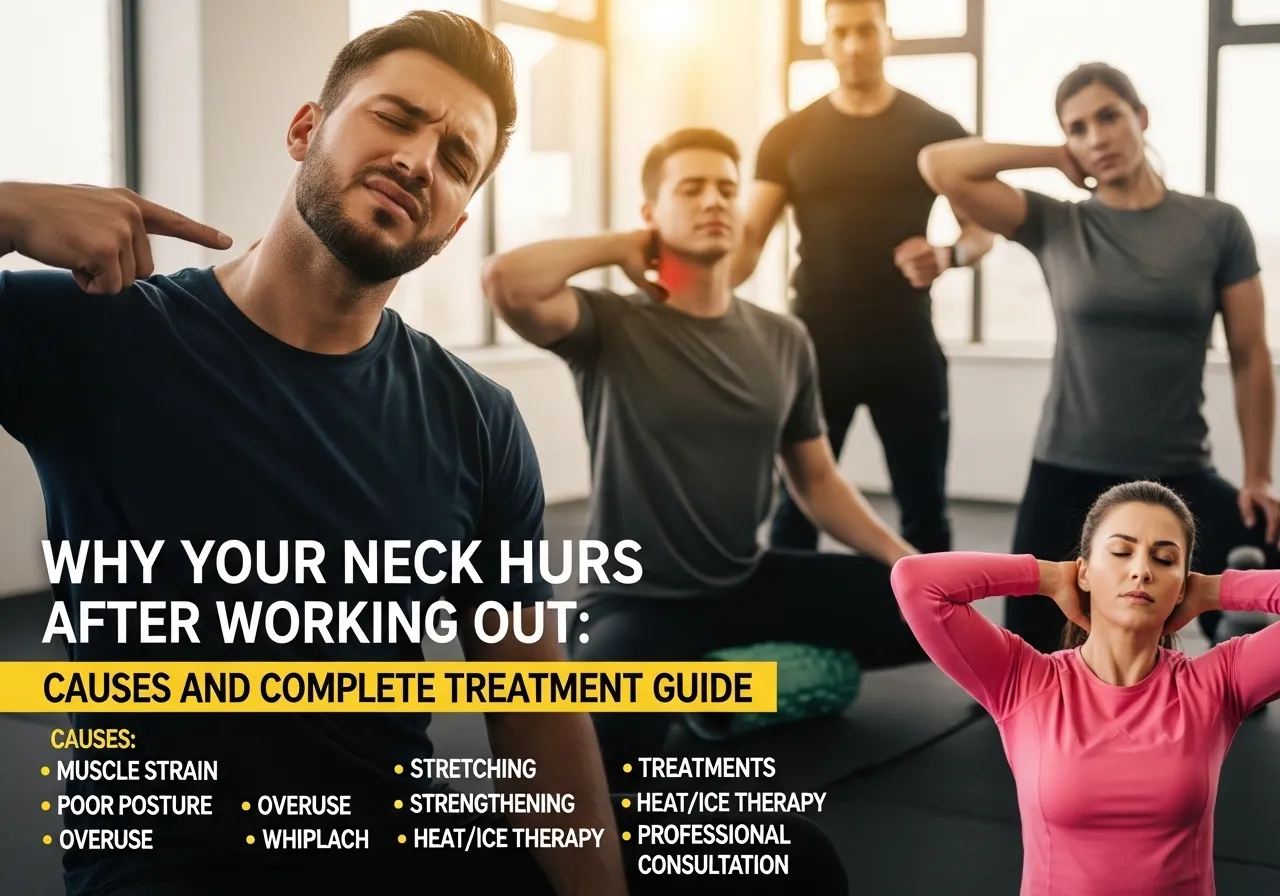
Neck pain after training is one of those problems that most people try to ignore until it becomes genuinely difficult to ignore — the stiffness that develops overnight after a heavy session, the sharp catch on one side that announces itself during overhead pressing, or the persistent ache behind the skull that coffee and ibuprofen temporarily address but does not resolve. I have experienced each of these in different training phases, and the consistent lesson was that the neck pain was never random — it was a diagnostic signal from specific technique, mobility, or structural factors that the training was exposing. This article covers the most common causes of post-workout neck pain, how to identify which one applies to your situation, and the specific interventions that address each cause rather than masking the symptom without solving the problem.
The Anatomy of Workout-Related Neck Pain
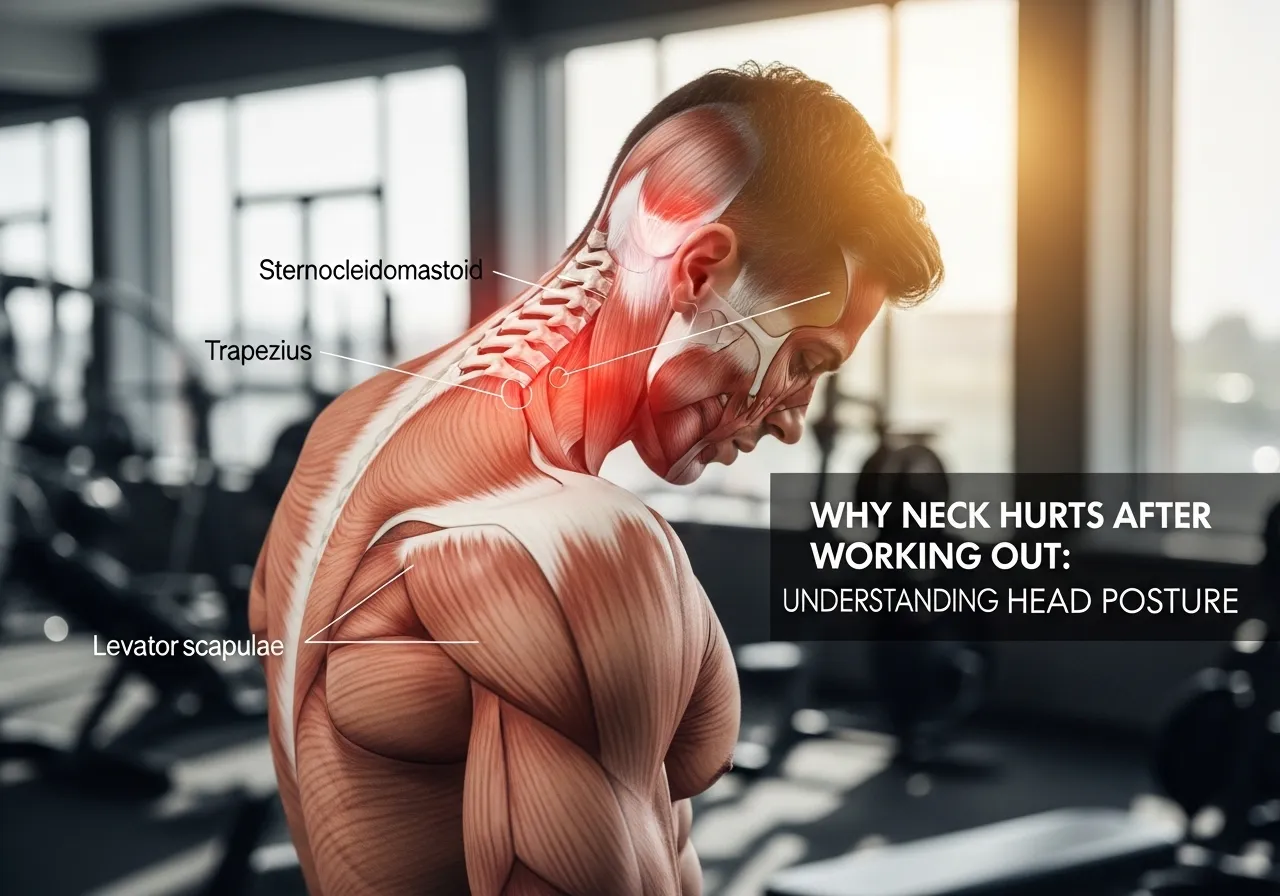
The cervical spine — the seven vertebrae of the neck — is the most mobile segment of the spine and the one most exposed to the compressive, shear, and rotational forces that weight training generates at the head-neck junction. The structures that produce pain when loaded beyond their tolerance or positioned suboptimally during training: the cervical facet joints (the paired articular joints at each vertebral level that guide and limit cervical movement) develop pain and restricted motion when loaded in extension or rotation under compressive load — the position that head position errors in squatting, deadlifting, and pressing consistently create; the cervical intervertebral discs (the fibrocartilaginous shock absorbers between vertebral bodies) are vulnerable to the combined compressive-flexion loading that poor deadlift head position, rounded upper back, and excessive forward head position in pressing create; the posterior cervical muscles — specifically the semispinalis, splenius capitis, and upper trapezius — develop the acute and chronic myofascial pain syndromes that sustained isometric contraction in poor head positions during training and daily posture produce; and the suboccipital muscles at the base of the skull (the obliquus capitis, rectus capitis posterior) become chronically shortened and irritated in individuals whose forward head posture compensates for thoracic kyphosis that the thoracic spine’s stiffness has established. Understanding which anatomical structure is the primary pain generator requires examining the specific movement patterns and training contexts in which the pain appears — the diagnostic information that post-pain contextual reflection and targeted movement testing provides without the clinical examination that persistent or neurological neck pain warrants. From Spine Health cervical spine and exercise-related neck pain overview, the majority of exercise-related neck pain episodes involve the cervical facet joints and posterior cervical musculature rather than disc pathology — confirming that the technique-correction and mobility-restoration approaches this article describes address the structural sources of most training-related neck pain.
The Forward Head Posture Problem in Training
Forward head posture — the anterior translation of the skull relative to the thoracic spine that modern screen use has made nearly universal — is the single postural deviation most consistently associated with cervical pain across the epidemiological research, and its presence in the training environment amplifies the loading forces on the posterior cervical structures that weight training already applies. The biomechanical calculation that explains forward head posture’s consequences: for every centimeter of anterior head translation beyond the neutral balanced position above the shoulders, the effective weight of the head increases by approximately 4.5 kg (a principle sometimes simplified as “the 5-kilogram rule” for the compressive increase per centimeter of forward translation). The average adult head weighs 4.5-5.5 kg in neutral; at 5 cm of forward translation — a modest forward head posture that is common in recreational gym athletes — the effective cervical spine loading increases to approximately 27-30 kg, a 500% increase in the compressive force that the posterior cervical muscles must resist during any head-neutral exercise. Applied to training: the athlete performing barbell squats with forward head posture is asking their posterior cervical musculature to resist 25-30 kg of effective head weight isometrically through the full squat movement, accumulating the fatigue and strain in these muscles that post-training cervical pain reflects. Addressing forward head posture as a prerequisite to neck pain prevention in training requires both the corrective exercise approach that restores cervical and thoracic alignment and the technique corrections that prevent the training-specific posture errors from compounding the existing structural deviation that daily posture habits have established.
The Role of Thoracic Kyphosis in Cervical Pain During Training
Thoracic kyphosis — the increased rounding of the upper and mid-back that desk work, prolonged sitting, and the anterior-dominant resistance training programs that many gym-goers follow progressively develop — is the upstream structural driver that generates the majority of training-related cervical pain through the compensation mechanism it creates. The biomechanical chain: when the thoracic spine is excessively kyphosed, the visual horizon demands that daily life and training impose require the cervical spine to extend beyond its neutral range to bring the eyes to horizontal — the head-forward, chin-up compensation that thoracic kyphosis forces. This compensatory cervical position is the same one that the training loads then find, and the loaded extension that training applies to a cervical spine that is already in maximum compensatory extension is the structural overload that pain consistently reveals. Quantifying the thoracic-cervical relationship: research measuring cervical position change in response to thoracic mobility restriction consistently shows that each 5-degree increase in thoracic flexion angle (kyphosis) produces approximately 3-4 degrees of compensatory cervical extension — meaning that the athlete with 20 degrees of excess thoracic kyphosis is experiencing approximately 12-16 degrees of additional cervical extension even at rest, before training loads are applied. The corrective exercise priority for cervical pain from this mechanism is therefore thoracic mobility first, cervical corrections second — the upstream structural problem that produces the downstream cervical compensation is the primary lever, and the cervical exercises that address only the symptomatic end of the chain produce less durable improvement than the thoracic mobility work that removes the compensatory demand from the cervical structures entirely. Practical thoracic extension work for the gym athlete: the foam roller thoracic extension (described elsewhere in this series) performed daily for 90 seconds, the bench thoracic stretch (lying supine over a rolled towel or foam roller at the thoracic level with arms extended overhead), and the cat-cow mobility exercise performed slowly through the full thoracic range in 10 repetitions per set across 2-3 daily sets — these three exercises together produce meaningful thoracic extension improvement within 4-6 weeks of consistent practice.
Neck Pain and Breathing Mechanics: The Overlooked Connection
The relationship between breathing mechanics and cervical pain is one of the least-discussed contributors to training-related neck pain despite the consistent anatomical and biomechanical link between the two. The accessory breathing muscles — the scalenes (anterior, medial, and posterior) and the sternocleidomastoid — attach to the cervical vertebrae and the first and second ribs, and when recruited as primary breathing muscles rather than the accessory role their name implies, they generate sustained isometric tension on the cervical structures that accumulates across the thousands of breaths that a training session and daily life together produce. Diaphragm-dominant breathing — the natural abdominal breathing pattern where the diaphragm descends during inhalation and the abdomen expands — uses the accessory cervical breathing muscles only during high-intensity exercise where the diaphragm’s capacity is exceeded and additional inspiratory volume is needed. The chest-breathing pattern that stress, poor posture, and the conscious abdominal bracing that heavy lifting teaches can override — where the ribcage elevates and the scalenes and SCM contract with each breath rather than the abdomen expanding — recruits the accessory muscles at low-intensity breathing rates throughout the day, creating the chronic cervical tension that sensitizes the structures that training loads subsequently irritate. The breathing correction that addresses this cervical pain contributor: diaphragmatic breathing retraining, performed in supine (lying on back with one hand on the chest and one on the abdomen, practicing the abdomen-rise-on-inhalation pattern that confirms diaphragm activation) for 5 minutes daily, restores the breathing pattern that reduces the accessory muscle tension that chest-dominant breathing chronically maintains in the cervical structures. Applying this diaphragmatic pattern to the intra-training breathing strategy — the intra-abdominal pressure bracing of heavy lifts performed with diaphragmatic mechanics rather than purely chest-elevating breath — simultaneously improves spinal stability, reduces cervical accessory muscle recruitment, and maintains the intra-abdominal pressure that core stability during loading requires.
Neck Pain from Squatting: The Most Common Strength Training Cause
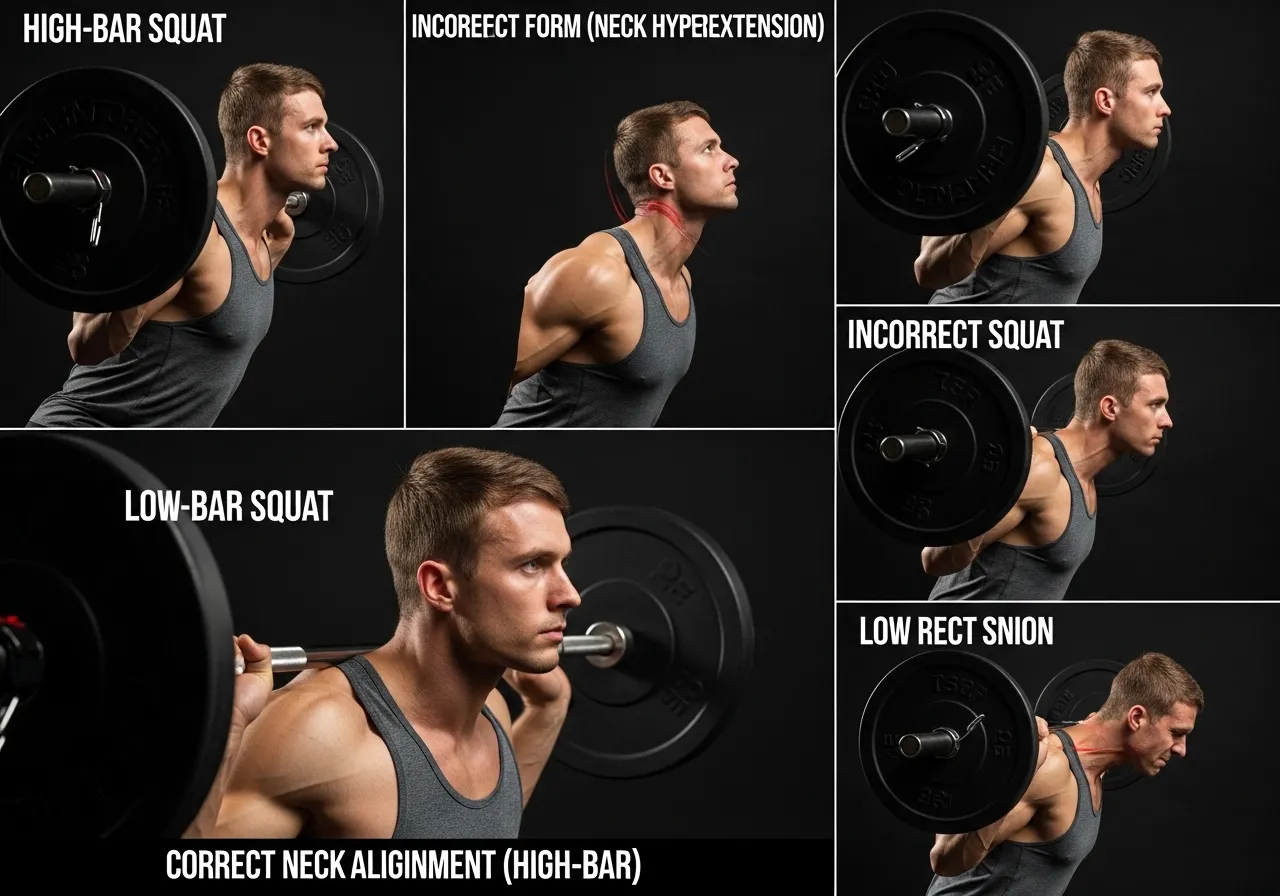
Barbell squatting — the most compressive loading the cervical spine typically encounters in a gym training context — is the exercise most frequently associated with workout-related neck pain, and the specific mechanism varies between the high-bar and low-bar squat positions in ways that the corrective approach must account for.
High Bar vs Low Bar Squat: Different Neck Pain Mechanisms
The high-bar squat (barbell resting on the upper trapezius at the base of the neck) places the bar directly adjacent to the cervical-thoracic junction, and the head position that high-bar squatters adopt to maintain balance and forward gaze interacts with this proximal bar placement to produce the specific cervical pain pattern of this technique. The high-bar squat’s most common cervical pain mechanism: excessive cervical extension to maintain a forward gaze while the thoracic spine lacks the extension mobility to accommodate the upright torso that the high-bar squat requires — the compensatory extension that the cervical spine performs for the thoracic extension it cannot provide creates the compressive loading of the posterior cervical facets that the pain pattern reveals. The low-bar squat (barbell resting across the rear deltoids, approximately 5-7 cm below the high-bar position) creates a different cervical loading pattern: the forward lean that low-bar squat mechanics involve positions the cervical spine in a more horizontal orientation than high-bar, and the neck extension required to look forward in this position creates the cervical hyperextension that is the classic pain mechanism of the powerlifting-style squat. The correction for both: the neutral head cue — “make a double chin” or “tuck the chin slightly” while looking at a point on the floor 2-3 meters ahead — maintains the cervical spine in the neutral-to-slight-flexion position that minimizes posterior joint and muscular loading in both squat variants. A gaze at the floor rather than horizontal forward-facing reduces cervical extension by 10-15 degrees in the low-bar squat — enough to meaningfully reduce the posterior cervical compression that the uncorrected forward gaze produces. From NSCA back squat technique and injury prevention guidelines, neutral cervical spine alignment throughout the squat movement is the recommended head position for minimizing cervical loading and injury risk across both high-bar and low-bar squat variants.
Bar Placement and Neck Pad Considerations
Bar placement on the shoulders is the most immediately modifiable squat variable for athletes experiencing cervical pain from squatting — and the specific placement that causes pain versus the position that eliminates it is individual enough to require personal experimentation guided by the understanding of the general principles involved. For high-bar squatters experiencing upper trapezius and cervical pain: the bar should sit on the upper traps with the hands positioned just outside the shoulder-width grip that allows the upper arm to create a “shelf” of muscle that the bar rests on — if the bar is sitting on the vertebrae themselves or on the neck rather than the upper trapezius muscle belly, the immediate solution is finding the correct fleshy resting position through grip width adjustment. A squat bar pad — the foam sleeve that wraps around the bar — reduces the direct pressure concentration on the bar-skin contact area and is an appropriate short-term accommodation while the upper trap development that provides natural bar support builds. For athletes experiencing pain at the C7-T1 junction specifically: the “buffalo bar” or safety squat bar alternatives distribute the load across the shoulders and eliminate the direct cervical contact that straight barbell squatting requires, providing the same training stimulus without the cervical loading mechanism that pain-producing straight barbell placement creates. The goblet squat and front squat variants eliminate the posterior cervical bar contact entirely, making them appropriate squat alternatives during active cervical rehabilitation periods where the compressive cervical loading of barbell back squatting should be reduced while maintaining lower body training volume.
Training Modifications During Cervical Pain Episodes
The athlete managing an active cervical pain episode needs the specific guidance on which training modifications allow continued training with reduced cervical loading — rather than the binary choice between training normally (risking escalation) and stopping entirely (losing the training continuity that the pain-free approach would preserve). The cervical-load hierarchy of common training exercises, from lowest to highest cervical demand: cable and machine exercises where the neck is not directly loaded and can be held in neutral without challenge — leg press, cable row, lat pulldown, leg curl, chest press machine — represent the training that continues during acute cervical pain episodes without meaningful cervical loading contribution. Dumbbell exercises performed seated or lying where the head is supported — dumbbell bench press, dumbbell shoulder press with back support, seated cable rows — represent the intermediate loading category where neutral head position can be maintained with body position support assistance. Barbell compound exercises where cervical loading is a significant component — squat, deadlift, overhead press — are the high cervical-load category that should be reduced in intensity (not eliminated, but performed at 50-70% of normal working weight) during active pain episodes, using the technique corrections described throughout this article to minimize cervical loading within the reduced loading context. This three-tier modification approach allows the athlete to maintain 70-80% of their normal training volume during a cervical pain episode by continuing the low and moderate cervical-load exercises at normal intensity while reducing but not eliminating the high cervical-load exercises — preventing the detraining from complete rest while removing the provocative loading that full-intensity training at these movements would produce. The return-to-full-loading criterion: full-range pain-free cervical mobility in all directions, absence of pain with the chin-tuck-under-load test (performing the loaded cervical retraction with a light band or manual resistance), and gradual progressive loading that confirms tolerance before returning to maximal training weights.
Pillow and Sleeping Setup for Faster Cervical Recovery
The cervical spine spends approximately a third of every 24-hour period in the sleep position, and the pillow and sleeping setup that supports — or fails to support — cervical neutral alignment during sleep either accelerates or slows the recovery from training-related cervical pain episodes. The optimal pillow configuration for cervical health: a pillow whose height matches the distance between the shoulder and the ear in side-lying position (the “fill-the-shoulder-gap” principle) allows the cervical spine to continue the natural lateral curve of the thoracic and lumbar spine rather than drooping below or elevating above neutral. For back-sleepers, a lower profile pillow that supports the cervical lordosis without forcing the head into forward flexion is appropriate — the pillow should contact the cervical spine’s full length rather than only the head, supporting the natural curve rather than flattening it. Memory foam and contoured cervical support pillows that have a raised ridge for side-sleeping and a lower center for back-sleeping are designed to accommodate both sleep positions simultaneously. The practical test for pillow appropriateness: if you regularly wake with cervical stiffness that resolves within 60-90 minutes of morning activity, the pillow is likely inadequate for your sleep position and body proportions; if the stiffness requires the full morning and persists into mid-morning, the pillow and sleep position combination is creating the chronic cervical loading overnight that the daytime corrective work is fighting to reverse. Replacing an inadequate pillow is one of the highest return-on-investment changes that an athlete with recurrent morning-onset cervical stiffness can make — the 24-hour recovery window that training demands includes the overnight cervical position that the sleeping setup either supports or disrupts.
Neck Pain from Deadlifting and Pressing: Diagnosis and Fix
The deadlift and pressing movements produce cervical pain through mechanisms distinct from the squatting compressive loading — the specific loading patterns of these movements create the cervical conditions that technique correction and mobility work must address to resolve the pain that they produce.
Deadlift Head Position: The “Look Up” Error
The deadlift head position error is among the most consistently and emphatically coached in strength training communities — the instruction to “look up” or “chest up” during the pull creates the cervical hyperextension that concentrates compressive load on the posterior cervical facets at the same time that the heavy axial load of the deadlift maximizes the total compression magnitude. The physics of deadlift cervical loading: with 150-200 kg on the bar in a moderately advanced deadlift, the cervical compression from combined axial spinal loading plus the lever-arm effect of head-forward hyperextension can exceed 600-800 Newtons of posterior cervical facet compression — a loading magnitude well above what the clinical literature identifies as the threshold for facet pain production in mechanically sensitive individuals. The neutral head cue for deadlifts: the cervical spine should continue the natural curve of the thoracic spine at the start of the pull, with the eyes looking at a point on the floor approximately 1-2 meters ahead rather than looking up at the mirror or the plates on the bar. This neutral-to-slight-flexion head position reduces posterior facet compression by 40-60% compared to the hyperextended “look up” position at equivalent loading — a mechanical correction that directly addresses the pain-generating loading mechanism without sacrificing the neural activation or mechanical advantage that the misguided “look up” instruction claimed to provide. For athletes whose deadlift technique has included the “look up” cue for years: the corrective head position initially feels counterintuitive and produces the sensation of being less stable — a proprioceptive adaptation period of 4-8 weeks of practice at moderate loads before the neutral position feels as familiar and confident as the previously established hyperextended position is appropriate and expected. From Physiopedia cervical spine biomechanics and sport-related loading, neutral cervical spine position during heavy axial loading significantly reduces facet joint compressive forces compared to hyperextended head positions — confirming the mechanical basis for the neutral head cue that replaces the cervical-loading “look up” instruction in evidence-based deadlift technique coaching.
Neck Pain from Overhead Pressing and Bench Pressing
Overhead pressing produces cervical pain through the cervical extension that full overhead reach requires when thoracic extension mobility is insufficient for the shoulder elevation that the movement demands. The specific pattern: as the barbell passes above the head in the overhead press, the athlete whose thoracic spine cannot extend sufficiently to accommodate the shoulder-ear alignment that efficient overhead reach requires will compensate by extending the cervical spine instead — the “forward head poke” under the bar that concentrates the movement’s required extension at the most mobile (and now loaded) cervical segments. The mobility prerequisite for pain-free overhead pressing: thoracic extension of at least 25-30 degrees and shoulder flexion above 160 degrees with minimal cervical compensation are the range of motion minimums that biomechanically safe overhead pressing requires. Athletes who cannot achieve overhead reach with a neutral cervical spine are not ready for heavy overhead pressing from a cervical health perspective — and the thoracic mobility and shoulder elevation work that addresses these mobility deficits is the prerequisite that overhead pressing progression must follow rather than the afterthought that training programs typically treat corrective work as. The overhead press cue that prevents cervical extension pain: as the bar passes the forehead, actively drive the head through the window between the arms — the “head through” cue that positions the ears in front of the upper arms at lockout, achieving the shoulder-over-ear alignment without the cervical hyperextension that the bar-chasing technique produces. Bench pressing’s cervical pain mechanism is less direct but still significant: the extreme cervical extension that some bench pressers adopt to bridge the upper back (the powerlifting arch technique) combined with maximum-weight cervical retraction against the pad creates the cervical loading that the performance technique is not specifically designed to protect. For athletes experiencing cervical pain from benching: reducing the arch height to a moderate degree that maintains some thoracic extension benefit without the extreme cervical position that maximum arching requires is the practical balance between performance technique and cervical health.
Supplements and Nutrition for Cervical Recovery
The nutritional factors that support connective tissue health and reduce the inflammatory processes that cervical pain episodes involve are worth addressing as adjuncts to the exercise and technique interventions that form the primary management approach. Collagen peptide supplementation — 10-15 grams of hydrolyzed collagen consumed with vitamin C 30-60 minutes before exercise — has emerging research support for its role in stimulating the fibroblast activity that tendon and ligament repair and maintenance requires. The specific mechanism: orally consumed collagen peptides increase the concentration of hydroxyproline and proline (the collagen-specific amino acids) in blood plasma, with the exercise-stimulus window producing the greatest fibroblast uptake of these substrates when the supplementation is timed to precede exercise. Vitamin C (50-100mg alongside the collagen supplement) is the cofactor for the hydroxylase enzymes that convert proline to hydroxyproline during collagen synthesis — the supplementation pairing that the research protocols consistently use for the synergistic collagen synthesis enhancement. Omega-3 fatty acids (EPA and DHA at 2-4 grams per day from fish oil) reduce the inflammatory prostaglandin production that acute tissue irritation involves — the anti-inflammatory mechanism that consistently produces measurable reductions in joint pain, morning stiffness, and the inflammatory markers that chronic low-level cervical inflammation maintains. Magnesium glycinate (300-400mg before sleep) addresses the muscular tension component of cervical pain through its role in muscle relaxation and the sleep quality improvement that adequate magnesium produces — the dual benefit for both the direct muscle tension and the sleep-mediated tissue repair that the cervical recovery environment requires. These nutritional interventions are adjuncts rather than primary treatments for cervical pain — they support the tissue repair environment that the exercise interventions are producing, and their combined effect with consistent corrective exercise and technique modification is greater than either approach alone would achieve.
Working With a Coach or Trainer: Getting Your Technique Assessed
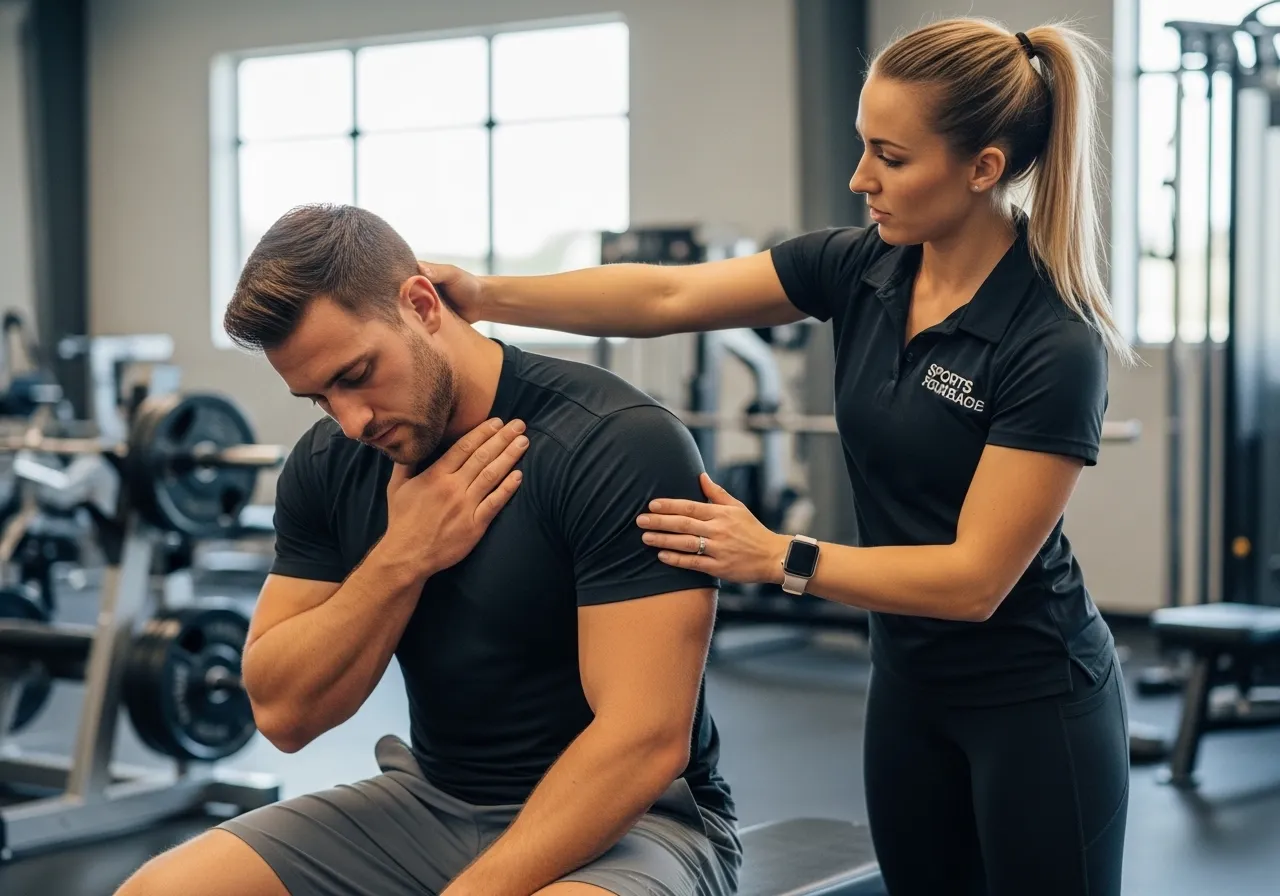
The technique corrections described in this article can be self-applied by athletes who have a clear understanding of the target positions and access to mirrors or video feedback that confirms whether the intended correction is actually being achieved. However, the discrepancy between perceived and actual head position during loaded exercise is often significant enough that professional technique assessment adds substantial value beyond what self-correction from description alone can reliably produce. A qualified strength coach or personal trainer who specializes in technique assessment and has experience with lifting-related injury prevention can identify the specific loading mechanism producing the cervical pain in 2-3 sets of observed movement at conversational weights — a session investment that the weeks of frustrated self-experimentation that cervical pain without accurate feedback diagnosis often requires replaces with the targeted correction that immediately addresses the actual mechanism rather than the suspected one. When seeking technique coaching for cervical pain: specify the complaint explicitly and ask the coach to observe head position and the thoracic spine contribution specifically; use video from the side angle that shows the cervical-thoracic alignment clearly; and record the corrected technique that the coaching session produces for reference during the sessions where the coach is not present. The athlete who combines the understanding of cervical pain mechanics this article provides with the external feedback that quality coaching supplies has the complete diagnostic and corrective toolkit that the majority of training-related neck pain cases respond to — without the passive medical management that unnecessary pain medication, cervical collars, or the training avoidance that unguided neck pain typically defaults to.
Upper Trapezius Tension and the Stress-Cervical Pain Connection
The upper trapezius — the superficial muscle spanning from the skull base and cervical spine to the outer shoulder — is the primary muscular driver of the stress-related cervical pain pattern that athletes who train hard, work demanding jobs, and manage high life stress simultaneously experience. The upper trapezius responds to psychological stress through the same muscle tension pathway that threat-response physiology activates — the shoulder-elevation and neck-tension pattern that the sympathetic nervous system’s “brace for impact” response produces is mediated through upper trapezius activation, creating the chronic resting tension that the stressed individual carries in their shoulders and neck even during activities that require no upper trapezius contribution. For training athletes, this stress-mediated upper trapezius tension means that the shoulder and neck region enters the training session already under elevated muscular tension — the muscle that the heavy squat, deadlift, and overhead press will further load is starting from a pre-tensioned state rather than the resting baseline, and the cumulative loading on an already-tension-loaded upper trapezius produces the acute and chronic pain that the stress-free athlete’s same training program does not generate. The practical interventions for stress-cervical pain: the deliberate shoulder drop and retraction that breaks the sympathetic-driven shoulder elevation throughout the day; the progressive muscle relaxation technique of intentional shoulder elevation followed by complete release (the “shrug and drop” practice that 10 repetitions of conscious elevation and full release performs before training and during desk work breaks) specifically targets the upper trapezius tension pattern; and the stress management practices that reduce the sympathetic activation driving the tension in the first place — exercise, adequate sleep, social connection, and brief daily relaxation practice — address the root cause rather than the muscular manifestation that cervical pain represents. The athlete who recognizes their upper trapezius tension as stress signal as much as mechanical signal has the broader management perspective that complete cervical pain resolution requires for the significant proportion of training-related neck pain that psychological and physiological stress substantially contributes to.

Neck Pain from Cardio, Posture, and Daily Habits That Compound Training Stress
The neck pain that appears after training is often not caused by training alone — it reflects the cumulative loading of training stress combined with the chronic postural and movement patterns of daily life that have reduced the cervical spine’s tolerance for training load before the training itself is reached.
Treadmill Running, Cycling, and Cardio Machine Neck Pain
Cardio equipment use generates specific cervical pain patterns that equipment adjustment and posture correction can address without modifying the training itself. Treadmill running with an incline produces the forward lean that compensates for the uphill grade — and the head position that most treadmill runners adopt on an inclined treadmill combines forward trunk lean with cervical extension to maintain a horizontal gaze, creating the same posterior cervical compressive mechanism as the deadlift “look up” error at lower loading magnitudes but over much longer sustained durations. The inclined treadmill neck pain correction: maintain a gaze directed 2-3 meters ahead on the belt rather than horizontally forward, which aligns the head with the trunk’s forward lean rather than compensating for it through cervical extension. Stationary cycling — particularly the aerodynamic forward-lean position of road cycling and time-trial bikes — produces the most extreme cervical-thoracic loading of any common cardio modality: maintaining a horizontal head position while the thorax is flexed to 30-60 degrees requires the cervical spine to extend through 30-60 degrees to achieve the same visual horizon angle that neutral cycling produces, applying sustained isometric posterior cervical contraction for the full cycling session duration. The cervical cycling adaptation for gym training: upright stationary bikes and the more upright cycling posture that discomfort-guided adjustment produces significantly reduce the cervical extension demand, making the seated position adjustment the most immediately effective intervention for cycling-related cervical pain. The rowing ergometer neck position: many rowers extend the neck at the catch position (the forward reach before the pull) as they extend the lower back — the combined lumbar and cervical extension at the catch is a technique error that neutral spine coaching addresses, reducing the cervical loading that the rower often does not recognize as a technique component until pain reveals it. From ACSM exercise technique and musculoskeletal health guidelines, maintaining neutral cervical spine alignment during cardio equipment use is as important as during resistance training for preventing the cumulative cervical loading that sustained posture errors in endurance exercise contexts produce at lower intensity but longer duration than resistance training.
Screen Time, Sleep Position, and How Daily Habits Amplify Training Neck Pain
The cervical spine that is already irritated and restricted from poor daily posture has less mechanical reserve for the training loads that gym sessions impose — meaning that daily habit corrections that reduce the cumulative cervical loading outside the gym are a necessary component of the complete neck pain solution alongside technique corrections within it. The forward head posture that screen use produces — the head-forward shoulder-rounded position that desk work and smartphone use create over hours of daily exposure — places the posterior cervical muscles in sustained isometric contraction, progressively building the myofascial tension that training loads find an already-sensitized cervical system when the gym session begins. The ergonomic corrections for training athletes with cervical pain: monitor height at eye level rather than below (raising a laptop on a stand, positioning a desktop monitor at the height that allows a neutral head position without downward gaze); smartphone use held at eye level rather than the 30-50 degree downward angle that lap-held phone use creates (each 10-degree forward cervical angle adds approximately 5 kg of effective head weight to the cervical structures); and the seated posture at a desk that maintains lumbar support and allows the shoulders to sit naturally below a neutral cervical spine rather than the slumped forward posture that chair height or desk angle mismatches produce. Sleep position is a frequently overlooked contributor to morning cervical stiffness that training sessions then exacerbate: sleeping prone (face down) with the head rotated to one side for extended periods creates sustained rotational cervical loading at the facet joints that the hours of sleep accumulate into the morning stiffness and restricted rotation that active people experience as “I must have slept wrong.” Side sleeping with a pillow at shoulder-width height (allowing the cervical spine to continue the neutral spinal curve rather than dropping or elevating the head) is the sleep position that most consistently preserves cervical alignment across the overnight period, reducing the morning-onset restriction that the day’s and subsequent training session’s cervical load then encounters from an already-compromised baseline.
Understanding Cervicogenic Headache vs Post-Exertional Headache
Post-workout headache is among the most alarming symptoms that the athlete who has just completed a heavy training session can experience — and the differential diagnosis between the benign cervicogenic headache that poor neck mechanics during training produces and the exertional headache subtypes that cardiovascular or intracranial causes require medical evaluation for is a distinction that this article would be incomplete without addressing. Cervicogenic headache — headache with its origin in the cervical facet joints, posterior cervical muscles, and the upper cervical dura that these structures share pain referral pathways with — presents characteristically as a unilateral headache that begins at the base of the skull or upper neck, radiates toward the forehead or eye on one side, is reproduced or worsened by neck movements (particularly ipsilateral rotation toward the symptomatic side), and is associated with the neck stiffness and restricted rotation that the cervical pain source’s mechanical restriction produces. This headache type is the direct consequence of the cervical loading mechanisms this article has described — the facet joint irritation, posterior cervical muscle overload, and suboccipital trigger point activation that training errors produce. Primary exertional headache — the headache subtype that vigorous exercise triggers through the elevated intracranial pressure and cerebrovascular changes that maximal effort produces — presents as a bilateral, pulsating, severe headache that develops during or immediately after maximal intensity exercise and resolves within 48 hours with rest and analgesia. This headache type typically has no cervical component (no neck stiffness, not reproduced by neck movement) and is not associated with neurological symptoms. It is generally benign and responds to pre-exercise NSAID prophylaxis when it is consistently exercise-triggered. The headache that requires immediate medical evaluation: a severe headache with sudden onset (“thunderclap headache” — the worst headache of one’s life, developing within seconds during exercise), headache associated with neurological symptoms (visual disturbance, speech difficulty, arm weakness, confusion), or headache accompanied by fever, vomiting, and meningism signs represents a medical emergency that requires emergency department evaluation before any other management is considered. The clinical urgency of correctly categorizing post-exercise headache is one of the specific reasons that any recurring severe headache following intense exercise warrants professional medical assessment rather than the self-management that most exercise-related musculoskeletal complaints appropriately receive.
Long-Term Outcomes: What Consistent Cervical Care Actually Produces Over Years
The long-term picture for athletes who address training-related cervical pain with the systematic approach this article describes — technique correction, mobility restoration, cervical strengthening, and daily habit modification — is consistently positive. The clinical outcome research on cervicogenic pain and mechanical neck pain treated with exercise-based approaches shows: 60-80% of patients with non-specific mechanical neck pain achieve clinically significant pain reduction with exercise-based management within 12 weeks; the recurrence rate at one year for patients who continue their corrective exercises is significantly lower than for those who discontinue at symptom resolution; and the functional outcome of consistent exercise-based management (improved mobility, reduced pain intensity and frequency, improved training capacity) is equivalent to or superior to manual therapy alone in the majority of the randomized controlled trials that have directly compared these approaches. The athlete-specific long-term outcome: the consistent application of the cervical health principles in this article across years of training produces the structural adaptation — improved thoracic mobility, stronger deep cervical flexors, better scapular stability, and habituated neutral head position under load — that makes the cervical spine progressively more rather than less tolerant of training demands over time. The counterintuitive truth about cervical pain and training: the athlete who experiences training-related cervical pain and responds with the corrective exercise investment this article prescribes typically ends up with better cervical structure and function than the athlete who never experienced pain and never addressed the underlying deficits that the pain would have revealed. Pain as teacher, with the right curriculum, produces the structural outcome that both training performance and lifelong cervical health benefit from.

Cervical Mobility Work and Strengthening: The Corrective Exercise Solution
The long-term solution to workout-related neck pain addresses the underlying mobility restrictions and muscular imbalances that technique corrections alone cannot fully resolve — the mobility work and cervical strengthening that creates the structural capacity for pain-free training under load.
Cervical Mobility Exercises for Training Athletes
Cervical mobility exercises address the range of motion restrictions that poor posture, sustained isometric loading, and previous injury create in the neck — the movement limitations that force compensations elsewhere and that generate pain when training loads expose their boundaries. The most evidence-supported cervical mobility exercises for training athletes: cervical retraction (the “chin tuck” exercise that glides the skull posteriorly to restore the neutral cervical lordosis that forward head posture disrupts) — performed for 10-15 repetitions in 2-3 sets daily, with 2-second holds at maximum retraction, this exercise directly counteracts the anterior head translation that is the most common cervical pain contributor. Cervical rotation mobility (turning the head to each side to the maximum comfortable range, with progressive over-pressure using the hand on the opposite side at the end range to gently increase available rotation) performed daily in the 2-3 sets of 10 repetitions format is particularly important for athletes whose squatting and pressing technique errors have produced the rotational restriction that facet joint loading creates. Cervical lateral flexion (ear to shoulder movement in each direction) addresses the scalene and sternocleidomastoid tightness that rotational sport and loaded carrying creates. Thoracic extension over a foam roller (described in the foam rolling section of other articles in this series) is the indirectly cervical mobility exercise that produces the greatest cervical mobility improvement — because the thoracic extension deficit that thoracic kyphosis creates forces compensatory cervical mobility demands, and restoring thoracic extension removes the movement demand from the cervical structures that its absence was placing there. The combination of direct cervical mobility work and thoracic extension restoration addresses both the primary and secondary contributors to the restricted cervical mobility that training loads expose as pain-generating deficits. From Physiopedia cervical spine exercise rehabilitation evidence, cervical retraction (chin tuck) exercises consistently reduce forward head posture displacement and associated posterior cervical pain in multiple randomized controlled trials — establishing it as the first-line cervical corrective exercise for postural and training-related cervical pain.
Cervical Strengthening: Building the Muscular Support That Prevents Recurrence
Cervical mobility restoration addresses the movement restriction dimension of neck pain; cervical strengthening addresses the muscular support capacity that prevents the recurrence of pain when training loads are subsequently applied to the restored mobility. The cervical muscles most relevant to training-related neck pain prevention: the deep cervical flexors (longus colli and longus capitis — the muscles that produce the chin tuck motion and stabilize the cervical spine against extension forces) are consistently weak and inhibited in individuals with chronic cervical pain and poor head posture; the deep cervical extensors (semispinalis cervicis and multifidus of the cervical spine) provide the posterior stability that loaded training positions demand; and the scapular stabilizers (lower trapezius, serratus anterior, and rhomboids) support the shoulder position that removes the cervical compensation that inadequate scapular control forces. The deep cervical flexor training protocol: performed in a supine position, the chin tuck with gentle skull lift off the floor (lifting only enough to clear the surface by 2-3 cm while maintaining the chin tuck — preventing the superficial flexor substitution of head flexion without cervical retraction) for 8-10 repetitions of 10-second holds, performed 2-3 times per week, is the most consistently recommended deep cervical flexor activation exercise in the cervical rehabilitation literature. For athletes who want to add direct cervical resistance training to their program: cervical flexion and extension with manual resistance (the athlete providing resistance with their own hand against the head) in the range of 20-30 repetitions at moderate effort provides the strength stimulus that the small, endurance-oriented cervical musculature responds to better than the heavy brief-exertion approach that limb muscles respond to. The neck flexion and extension machine available in some gyms provides the same stimulus more conveniently for athletes who want programmed cervical strengthening alongside their other resistance training.
Warm-Up Protocols for Neck Pain Prevention During Training
The targeted warm-up for training sessions that have previously produced cervical pain reduces the training session’s cervical loading impact by improving the tissue temperature, range of motion, and neuromuscular activation that loaded exercise then encounters from a better-prepared structural state. The pre-training cervical warm-up sequence (5-7 minutes total): cervical retraction with 10 repetitions and 2-second holds at maximum retraction to activate deep cervical flexors and restore neutral cervical lordosis before loading; cervical rotation to each side for 10 rotations per side with gentle end-range 3-second holds to restore rotational mobility and lubricate the facet joints; thoracic foam rolling for 90 seconds across the full thoracic spine to restore the extension mobility that compensatory cervical extension requires when thoracic mobility is restricted; shoulder CARs (controlled articular rotations) for 5 complete rotations in each direction to warm the glenohumeral joint and activate the scapular stabilizers that support cervical neutral during overhead and pressing movements; and band pull-aparts for 2-3 sets of 15-20 repetitions to activate the posterior shoulder and middle trapezius that provide the scapular retraction cue that improves upper body neutral alignment during pressing. This 5-7 minute cervical-specific warm-up adds negligible time to the pre-training preparation relative to its value for athletes with established cervical pain histories — and the athletes who perform it consistently report the subjective difference in cervical comfort and confidence under load that the baseline cervical preparation provides before heavy squat, deadlift, and pressing work begins.
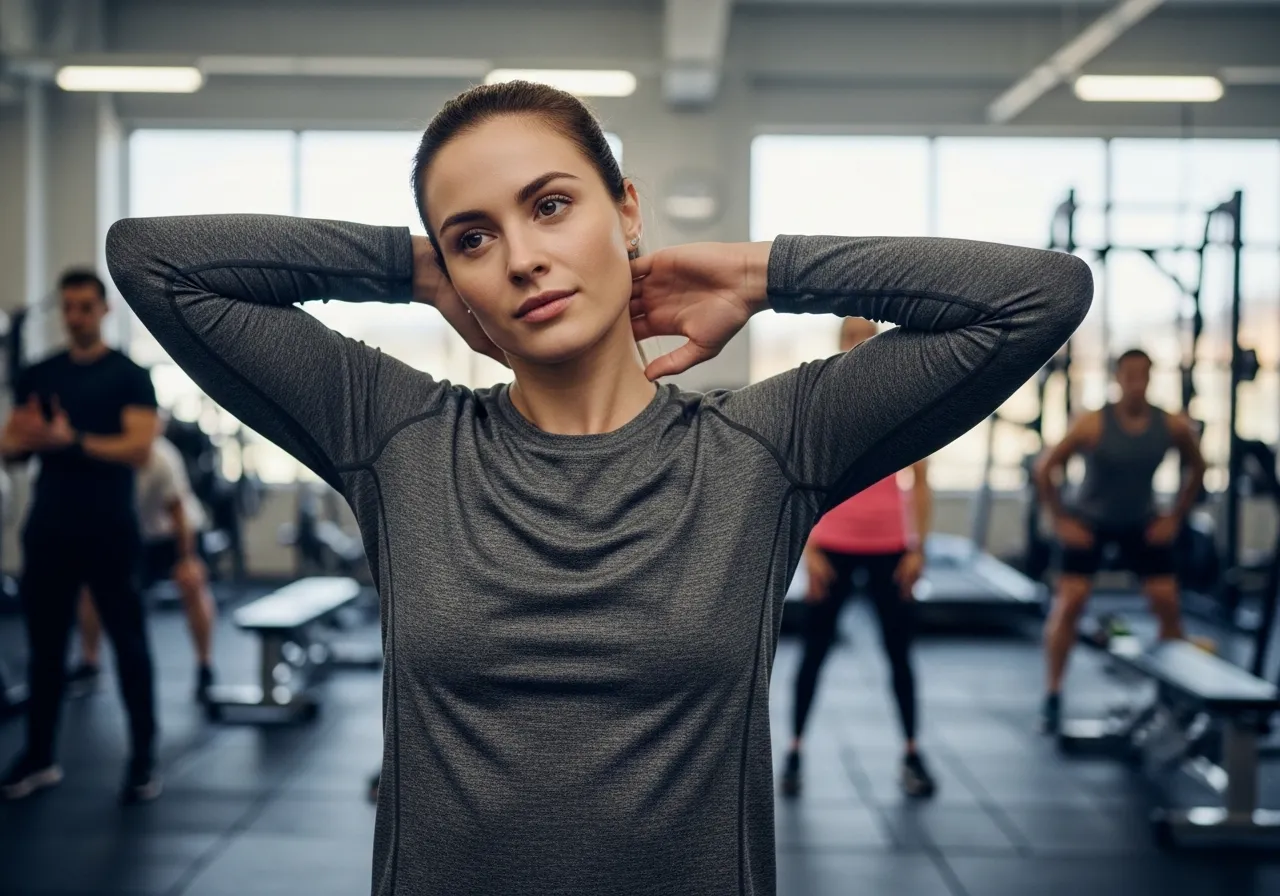
Treating Acute Neck Pain After Working Out: What Actually Helps
When neck pain occurs despite technique and mobility work — or before these preventive measures have been established — the acute management approach determines how quickly the pain resolves and whether the structural environment is set up for the recovery that prevents recurrence.
Immediate Post-Training Neck Pain Management
The 24-48 hours following the training session that produces acute cervical pain are the window where appropriate acute management produces the fastest resolution and where inappropriate management (ignoring it, aggressive manipulation, or continuing training without modification) produces the extended recovery and potential structural escalation that poor acute care enables. The evidence-based acute cervical pain management principles: movement is medicine — gentle cervical range of motion through the pain-free range (not aggressive stretching into pain), performed frequently (every 1-2 hours for 5-10 repetitions in each pain-free direction) maintains the fluid dynamics and tissue mobility that joint rest allows to deteriorate; ice for the first 24-48 hours (cold application for 15-20 minutes at a time, with at minimum 45 minutes between applications) reduces the acute inflammatory response that trauma-induced cervical pain reflects; heat after 48-72 hours (once the acute inflammatory phase has resolved) increases local blood flow and muscle relaxation that chronic muscular tension and guarding maintains; and the cervical retraction exercise that is simultaneously the most important preventive exercise is also the most appropriate active therapy for facet-mediated acute cervical pain — performing chin tucks frequently in the acute pain period maintains the joint mobility and deep flexor activation that pain-induced inhibition allows to decline. What to avoid in the acute period: aggressive cervical rotation and lateral flexion into pain (the common “crack the neck” approach that applies high-velocity force to already-irritated facet joints can escalate the joint irritation); sustained cervical static stretching that maintains end-range tension on inflamed tissues; and the “push through it” approach of training at normal loads through the first 72 hours that allows the mechanical reinforcement of the pain mechanism before the inflammation has resolved enough for normal loading to be tissue-appropriate. From Cochrane Library systematic review on exercise and manual therapy for neck pain, exercise-based management is the most consistently evidence-supported intervention for acute and chronic non-specific neck pain, with movement-based approaches producing superior outcomes to passive rest and equivalent or better outcomes than manual therapy alone across the range of neck pain presentations studied.
When to See a Doctor or Physiotherapist
The large majority of training-related neck pain episodes resolve within 7-14 days with the conservative management described above and do not require professional medical intervention. However, specific presentations warrant prompt medical or physiotherapy assessment because they suggest structural involvement that conservative self-management is insufficient for: neurological symptoms including pain radiating into the arm or hand, numbness or tingling in the arm, hand, or fingers, or arm weakness suggest cervical nerve root or spinal cord involvement that requires imaging and clinical assessment to rule out the structural pathology that these symptoms indicate; neck pain following a direct trauma (collision, fall, or impact during contact sport or an accident) requires cervical spine clearance by a clinician before any return to loading; severe pain that is not relieved by rest, analgesics, or gentle movement — particularly pain that is worse at night or associated with fever, unexplained weight loss, or progressive neurological symptoms — suggests non-mechanical causes of cervical pain that require medical investigation rather than fitness-based management; and neck pain that does not meaningfully improve within 2-3 weeks of conservative management, or that recurs immediately on return to training despite technique corrections, benefits from physiotherapy assessment to identify the specific mechanical diagnosis that guides the targeted intervention. A physiotherapist with sports medicine or musculoskeletal specialization can perform the clinical examination that distinguishes facet-mediated pain (most common, most responsive to the exercise-based approach) from disc-mediated pain (less common, requiring specific direction-preference assessment) from upper cervical pain (least common, most complex, requiring specialist assessment) — the diagnostic precision that determines whether the self-directed approach this article describes is sufficient or whether the professional-guided management that structural complexity warrants is needed.
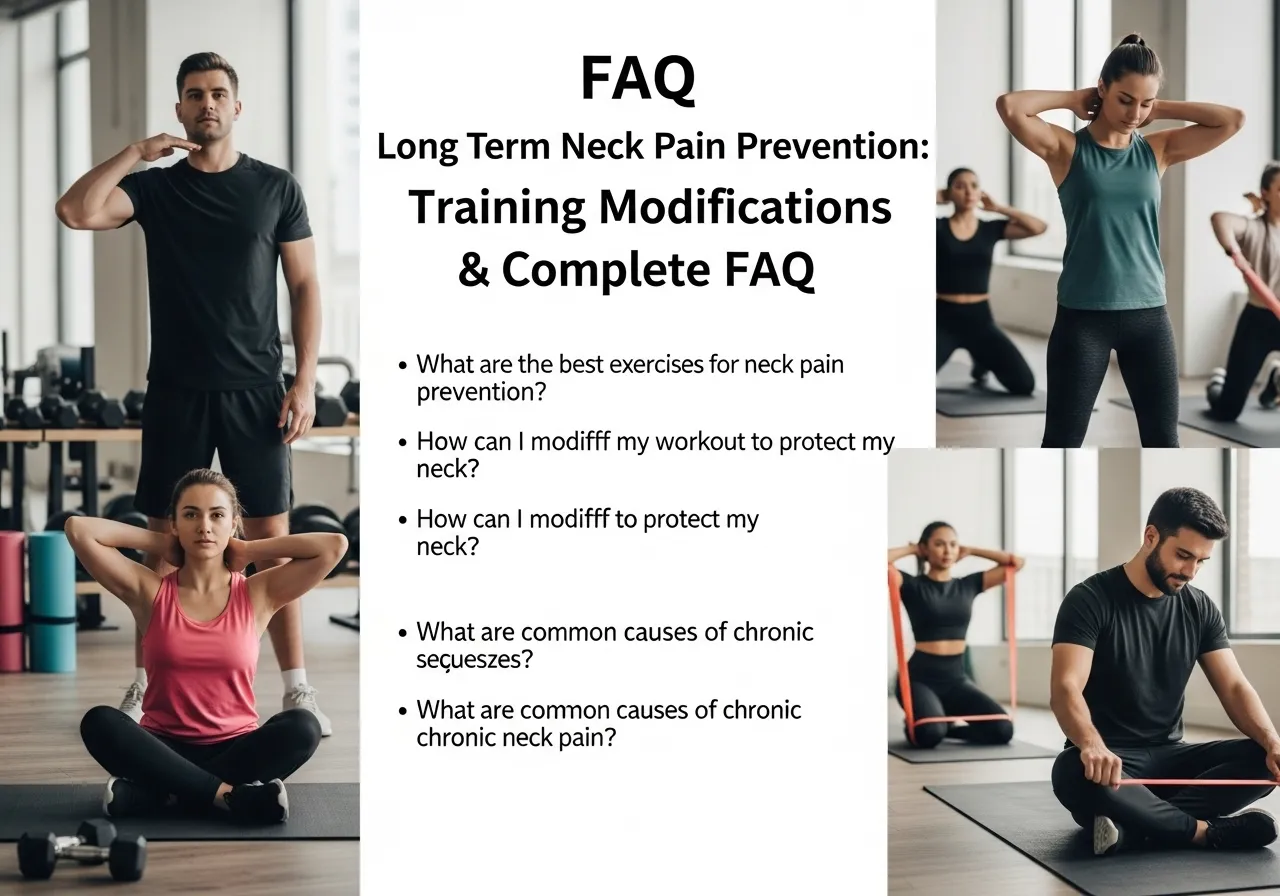
Long-Term Prevention Strategies, Training Modifications, and FAQ
The goal is not to manage recurring neck pain more effectively but to build the movement quality, cervical capacity, and training practice that prevents it from recurring — the long-term structural investment that turns a pain-driven reactive approach into a proactive injury-prevention foundation.
Programming Cervical Health Into Your Training Year
Cervical health maintenance should be integrated into training programming with the same intentionality as the progressive overload that drives strength and hypertrophy development — because the cervical capacity to tolerate the training load is as much a determinant of long-term training progress as the muscular capacity to generate force. The practical programming integration: include the cervical retraction and thoracic extension exercises in the warm-up of every training session that includes cervical-loading movements (squat, deadlift, overhead press) — the 3-4 minutes this requires is a recoverable time investment against the days and weeks of training disruption that recurring cervical pain costs. Schedule the cervical strengthening work (deep cervical flexor activation, scapular stabilizer exercises) as 5-10 minute finisher blocks on the 2-3 training sessions per week where upper body work or heavy lower body work are the primary focus — the same training session that produces the cervical loading stimulus also receives the strengthening work that builds the cervical capacity to tolerate future loading at higher magnitudes. Periodize the cervical-loading intensity alongside the general training intensity periodization — the deload weeks that manage general training fatigue should also reduce the cervical-loading specific work (reduce squat and overhead press volume and intensity during deloads, reduce the duration of cervical-extended cardio if cycling or rowing is part of the deload week’s lighter training). Annual assessment: a quarterly check of the cervical mobility tests described in this article — chin retraction range, rotation symmetry, and the overhead reach assessment that reveals thoracic-cervical compensation — confirms that the corrective work is maintaining the mobility improvements and identifies new restrictions before they accumulate into the pain-generating deficits that require reactive management. The athlete who treats cervical health as a programmed training priority sustains the training continuity that recurring pain would periodically interrupt — a performance investment whose value reveals itself in the uninterrupted progression that the annually sustained training plan produces.
Frequently Asked Questions About Workout-Related Neck Pain
Q: Is it safe to train through neck pain? A: For mild muscular soreness and stiffness without neurological symptoms, modified training (reducing loads and volumes that load the cervical spine, substituting cervical-neutral exercises) is generally appropriate. For moderate-to-severe pain, pain with neurological symptoms, or pain from trauma, stop training and seek assessment before returning. Q: Can massage help neck pain from training? A: Yes — massage of the posterior cervical muscles and upper trapezius can provide meaningful acute relief for myofascially-mediated cervical pain through the same neurological inhibition mechanisms as foam rolling and targeted manual pressure. Massage should not be applied over actively inflamed joints (the facet joint pain that is distinctly localized to one side of the spine with sharp quality on specific movements) during the acute inflammatory phase. Q: Should I use a neck brace or collar after training neck pain? A: Generally no for training-related non-traumatic cervical pain — immobilization with a collar allows the muscular deconditioning and joint stiffening that worsens the underlying mechanical problem rather than addressing it. Movement within the comfortable range is preferable to immobilization. Q: How do I know if my headache after training is coming from my neck? A: Cervicogenic headache — headache originating from cervical joint and muscular sources rather than the brain or vascular structures — typically presents at the base of the skull, radiates toward the forehead or eye on one side, is reproduced by pressure on the upper cervical joints, and is associated with neck stiffness and restricted rotation on the same side as the headache. Post-exercise headaches that are bilateral, pulsating, and very severe warrant medical assessment to rule out the exertional headache conditions that cardiovascular causes produce. Q: How long before neck pain from training resolves? A: Acute muscular neck pain typically resolves in 3-7 days with appropriate management. Facet-joint mediated pain typically resolves in 7-14 days. Chronic cervical pain from sustained poor mechanics and posture requires 4-12 weeks of consistent corrective exercise for meaningful improvement. Q: Can weak shoulders cause neck pain during training? A: Yes — the scapular stabilizer weakness that allows the shoulders to round forward under load forces cervical compensations that produce pain over time. Strengthening the lower trapezius, serratus anterior, and external rotators as part of any program that includes heavy pressing and overhead work is a direct cervical pain prevention strategy. From PubMed systematic review on exercise interventions for neck pain prevention and treatment, targeted exercise addressing cervical deep flexors, scapular stabilizers, and thoracic extension consistently reduces both current cervical pain intensity and recurrence rates compared to general exercise or no intervention in non-specific neck pain populations — confirming the evidence base for the specific exercise approach this article describes.
My Experience: From Chronic Squat Neck Pain to Pain-Free Training
My personal neck pain history in training was a two-year education in how technique errors, mobility deficits, and daily posture habits combine to make heavy training feel like it is injuring what it should be strengthening. The squat cervical pain that plagued my early heavy lifting phase was 100% addressable — the combination of the neutral head cue, daily chin retraction practice, and the thoracic foam rolling that restored the extension mobility my thoracic kyphosis had eliminated over years of desk work eliminated the post-squat cervical stiffness within six weeks of consistent implementation. The overhead pressing pain took longer because the thoracic mobility limitation it exposed required more dedicated work to meaningfully improve — but the three months of daily thoracic rolling, cat-cow mobility, and the shoulder CARs that the physiotherapist I eventually consulted prescribed produced a measurable improvement in overhead reach that the pain-free overhead pressing that followed confirmed. The lesson that those experiences consolidated: cervical pain during training is almost never a sign that you should stop the training. It is a sign that the training has identified a structural capacity that requires development, and that the development of that capacity — through mobility restoration, strengthening, and technique correction — produces a cervical structure that handles the training that previously hurt it without pain. Pursue the development. Respect the diagnostic information that the pain is providing. And build the cervical capacity that makes decades of heavy training not just possible but comfortable.
Creating Your Neck Pain Prevention Checklist
A simple pre-session and post-session checklist converts the information in this article into the daily practice that prevents recurrence for the athlete with a history of training-related cervical pain: Pre-session — perform 10 chin retractions with 2-second holds; roll the thoracic spine for 90 seconds; check that bar placement on the squat is on the upper trap shelf (not on the vertebrae); review the neutral head cue for each barbell movement in the session. Post-session — perform 5 minutes of gentle cervical mobility in all pain-free directions; apply ice if any acute pain developed during the session; note in the training log which exercises or head positions produced any discomfort (the pattern that identifies the mechanism before it becomes the recurring pain). Weekly — assess the chin-to-chest, ear-to-shoulder, and rotation range bilaterally and compare with previous assessments to confirm that the corrective work is maintaining or improving mobility. Monthly — perform the overhead reach test with a PVC pipe overhead squat to assess the thoracic extension and shoulder elevation capacity that cervical compensation reflects when either is deficient. The athlete who maintains this simple structured approach to cervical health management in training will — with high probability — experience the gradual elimination of workout-related neck pain and the sustainable heavy training that the cervical capacity it builds produces for years to come.

